
Public Health Update
  • Home
  • Public Health Update
  • Nepal Health Jobs
    • Public Health Job Board
    • Organization List
  • Opportunities
    • Fellowships, Studentship & Scholarships
    • Grants and Funding Opportunities
    • Fully funded
    • Conference
  • Downloads
    • International Plan, Policy & Guidelines
    • National Plan, Policy & Guidelines
    • Reports
    • Public Health Notes
    • Syllabus
    • Form Formats
  • School of Public Health
    • PhD
    • Master’s Degree
    • Online Courses
  • Notice
  • Home
  • Public Health Update
  • Nepal Health Jobs
    • Public Health Job Board
    • Organization List
  • Opportunities
    • Fellowships, Studentship & Scholarships
    • Grants and Funding Opportunities
    • Fully funded
    • Conference
  • Downloads
    • International Plan, Policy & Guidelines
    • National Plan, Policy & Guidelines
    • Reports
    • Public Health Notes
    • Syllabus
    • Form Formats
  • School of Public Health
    • PhD
    • Master’s Degree
    • Online Courses
  • Notice
LOGIN / REGISTER
Public Health Update
SUBSCRIBE
Public Health Update
  • Home
  • Public Health Update
  • Nepal Health Jobs
    • Public Health Job Board
    • Organization List
  • Opportunities
    • Fellowships, Studentship & Scholarships
    • Grants and Funding Opportunities
    • Fully funded
    • Conference
  • Downloads
    • International Plan, Policy & Guidelines
    • National Plan, Policy & Guidelines
    • Reports
    • Public Health Notes
    • Syllabus
    • Form Formats
  • School of Public Health
    • PhD
    • Master’s Degree
    • Online Courses
  • Notice

All Right Reserved. Designed and Developed by PenciDesign

National List of Essential Medicines Nepal, Sixth revision (2021)
National Plan, Policy & GuidelinesPublic Health UpdateResearch & Publication

National List of Essential Medicines Nepal, Sixth revision (2021)

by Public Health Update November 18, 2021
written by Public Health Update

Milestone

  • National List of Essential Medicines first published in 1986
  • First revision 1992
  • Second revision 1997
  • Third revision 2002
  • Fourth revision 2011
  • Fifth revision 2016
  • Sixth revision 2021

Overview

The core list presents a list of minimum medicine needs for a basic health-care system, listing the most efficacious, safe and cost–effective medicines for priority conditions. Priority conditions are selected on the basis of current and estimated future public health relevance, and potential for safe and cost-effective treatment.

Where the [c] symbol is placed next to an individual medicine or strength of medicine on the core list it signifies that there is a specific indication for restricting its use to children.

The complementary list presents essential medicines for priority diseases, for which specialized diagnostic or monitoring facilities, and/ or specialist medical care, and/or specialist training are needed. In case of doubt medicines may also be listed as Complementary on the basis of consistent higher costs or less attractive cost-effectiveness in a variety of settings.

Where the [c] symbol is placed next to an individual medicine or strength of medicine on the complementary list it signifies that the medicine(s) require(s) specialist, diagnostic or monitoring facilities, and/or specialist medical care, and/or specialist training for their use in children.

The [a] symbol indicates that there is an age or weight restriction on use of the medicine; details for each medicine can be found in Annex II Medicines and dosage forms are listed in alphabetical order within each section and there is no implication of preference for one form over another. Standard treatment guidelines should be consulted for information on appropriate dosage forms.

Download

National List of Essential Medicines Nepal, Sixth revision (2021)


Do you have a website? Looking for the best hosting provider? Here’s a discount code.

Latest Public Health Jobs

Latest Posts

  • International Wellness Day: Promoting Global Wellness for All
  • Summit Declaration: The 12th National Summit of Health and Population Scientists in Nepal
  • Joint political declaration on the reform of the global health architecture
  • World Health Day 2026: Together for Health. Stand with Science.
  • World Water Day 2026 | Water & Gender Equality

Thanks for visiting us.
Disclaimer: The resources, documents, guidelines, and information on this blog have been collected from various sources and are intended for informational purposes only. Information published on or through this website and affiliated social media channels does not represent the intention, plan, or strategies of an organization that the initiator is associated with in a professional or personal capacity, unless explicitly indicated.
If you have any complaints, information, or suggestions about the content published on Public Health Update, please feel free to contact us at blog.publichealthupdate@gmail.com.
#StayUpdated
  • WordPress
  • Link
  • Facebook
  • Mail
  • Facebook
  • Twitter
  • Twitter
  • LinkedIn
  • Instagram
  • Facebook
November 18, 2021 0 comments
0 FacebookTwitterPinterestLinkedinTumblrVKOdnoklassnikiRedditStumbleuponWhatsappTelegramLINEPocketSkypeViberEmail
World Prematurity Day: Zero Separation Act now!
PH Important DayGlobal Health NewsPublic Health EventsPublic Health News

World Prematurity Day 2021: Zero Separation Act now!

by Public Health Update November 17, 2021
written by Public Health Update

Overview

The World Prematurity Day (WPD) is observed each year on 17 November. This day is one of the most important days in the year to raise awareness of the challenges and burden of preterm birth globally. The colour purple has come to stand for WPD because it symbolises sensitivity and exceptionality.

World Prematurity day was initiated by EFCNI and partnering European parent organisations in 2008. This day encourages to commit to action to help address preterm birth and improve the situation of preterm babies and their families.

Facts

According to the widely used and accepted WHO definition, every baby born before the completion of 37 weeks of pregnancy is considered preterm. A preterm birth is further categorized as follows:
– late preterm: babies born between 32 and 37 weeks of pregnancy
– very preterm: babies born between 28 and 32 weeks of pregnancy
– extremely preterm: babies born before 28 weeks of pregnancy

  • generally speaking, the earlier a baby is born, the more intensive care they require and the more likely adverse health outcomes and life-long disabilities become.
  • in low-resource countries, the rates of survival of preterm babies are lower than they are in high-resource countries to this day, health outcomes in preterm birth are contingent on where a baby is born globally, some 15 million babies are born too soon each year preterm birth complications are the leading cause of death among children under 5 years of age
  • 75% of these deaths could be prevented if current interventions were used.

Theme 2021

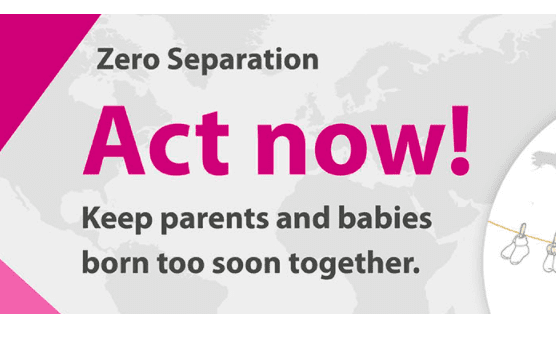
The global theme for World Prematurity Day 2021 is: Zero Separation: Act now! Keep parents and babies born too soon together.

Source of info: European Foundation for the Care of Newborn Infants (EFCNI) 


World Prematurity Day 2018 #WorldPrematurityDay

“Let them thrive!”- World Prematurity Day 2017

Together for babies born too soon – Caring for the future


Do you have a website? Looking for the best hosting provider? Here’s a discount code.

Latest Public Health Jobs

Latest Posts

  • International Wellness Day: Promoting Global Wellness for All
  • Summit Declaration: The 12th National Summit of Health and Population Scientists in Nepal
  • Joint political declaration on the reform of the global health architecture
  • World Health Day 2026: Together for Health. Stand with Science.
  • World Water Day 2026 | Water & Gender Equality

Thanks for visiting us.
Disclaimer: The resources, documents, guidelines, and information on this blog have been collected from various sources and are intended for informational purposes only. Information published on or through this website and affiliated social media channels does not represent the intention, plan, or strategies of an organization that the initiator is associated with in a professional or personal capacity, unless explicitly indicated.
If you have any complaints, information, or suggestions about the content published on Public Health Update, please feel free to contact us at blog.publichealthupdate@gmail.com.
#StayUpdated


  • WordPress
  • Link
  • Facebook
  • Mail
  • Facebook
  • Twitter
  • Twitter
  • LinkedIn
  • Instagram
  • Facebook
November 17, 2021 0 comments
0 FacebookTwitterPinterestLinkedinTumblrVKOdnoklassnikiRedditStumbleuponWhatsappTelegramLINEPocketSkypeViberEmail
World COPD Day
PH Important DayActivitiesNon- Communicable Diseases (NCDs)Public HealthPublic Health EventsPublic Health Update

World COPD Day 2021: ‘Healthy Lungs -Never More important’

by Public Health Update November 16, 2021
written by Public Health Update

Overview

World COPD Day has been organized by Global Initiative for Chronic Obstructive Lung Disease (GOLD) in collaboration with the World Health Organization each year in November since 2002. The goal of World COPD Day is to raise awareness and present new knowledge and novel therapeutic strategies for COPD worldwide.

World COPD Day 2021

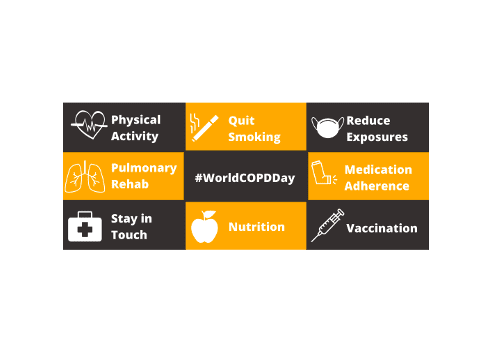
The 20th annual World COPD Day will take place on November 17, 2021. This year’s theme, “Healthy Lungs -Never More important” looks to emphasize that the burden of COPD has not gone away, even during COVID. COPD remains a leading cause of death worldwide. This campaign aims to promote lung health by highlighting the importance of staying active, keeping appointments with providers, reducing exposures, maintaining good nutrition, and taking medications correctly.

COPD

Chronic obstructive pulmonary disease (COPD) is a preventable and treatable disease that causes breathlessness,
chronic sputum production and cough, there are 300 million current cases of COPD in the world. COPD is currently the 3rd leading cause of death globally and is highly prevalent in low resource countries. Exposure to tobacco smoke and other inhaled toxic particles and gases are the main risk factors for COPD, although recent research has identified that suboptimal lung growth before and after birth can also increase the risk of COPD later in life.

Source: Global Initiative for Chronic Obstructive Lung Disease


  • GOLD International COPD Conference 2021
  • World COPD Day: “Living Well with COPD – Everybody, Everywhere”
  • World COPD Day “All Together to End COPD”
  • Never Too Early, Never Too Late! #WorldCOPDDay
  • The top 10 causes of death
  • The Global Burden of Disease (GBD) 2019 Country Profile: Nepal
  • World Lung Day 2020: Healthy Lungs for All
  • Package of Essential Noncommunicable (PEN) disease interventions in Nepal


Do you have a website? Looking for the best hosting provider? Here’s a discount code.

Latest Public Health Jobs

Latest Posts

  • International Wellness Day: Promoting Global Wellness for All
  • Summit Declaration: The 12th National Summit of Health and Population Scientists in Nepal
  • Joint political declaration on the reform of the global health architecture
  • World Health Day 2026: Together for Health. Stand with Science.
  • World Water Day 2026 | Water & Gender Equality

Thanks for visiting us.
Disclaimer: The resources, documents, guidelines, and information on this blog have been collected from various sources and are intended for informational purposes only. Information published on or through this website and affiliated social media channels does not represent the intention, plan, or strategies of an organization that the initiator is associated with in a professional or personal capacity, unless explicitly indicated.
If you have any complaints, information, or suggestions about the content published on Public Health Update, please feel free to contact us at blog.publichealthupdate@gmail.com.
#StayUpdated


  • WordPress
  • Link
  • Facebook
  • Mail
  • Facebook
  • Twitter
  • Twitter
  • LinkedIn
  • Instagram
  • Facebook
November 16, 2021 0 comments
0 FacebookTwitterPinterestLinkedinTumblrVKOdnoklassnikiRedditStumbleuponWhatsappTelegramLINEPocketSkypeViberEmail
Notice for Common Entrance Examination for Postgraduate Level in Health Professional Education
NoticeNational Health NewsSyllabus

Notice for Common Entrance Examination for Postgraduate Level in Health Professional Education

by Public Health Update November 16, 2021
written by Public Health Update

Overview

The Medical Education Commission (MEC) calls for online application for postgraduate common entrance examination 2021 for the following professional programs run by Universities, affiliated colleges and Health Science Academies throughout the Country.

Application is opened to eligible Nepalese and Foreign candidates from 21st November 2021, 10:00 AM to 26th December 2021, 4:00 PM (Nepal time) through online application portal.

Available courses

  • MD/MS (Doctor of Medicine/ Master of Surgery)/NBMS Specialities
  • MD Ayurveda (Kayachikitsa)
  • Master in Nursing/Msc Nursing/ Msc. Midwifery
  • MPH (Master of Public Health)/ Msc PH (Master of Science in Public Health), MPHN, MHPC, MPH (Public Health Service Management)
  • MPhil in Clinical Psychology
  • MDS
  • Master in Pharmacy, MSc Pharmacy, Master of pharmaceutical Science
  • MSc MIT MSc Clinical/ Medical Biochemistry and MSc Clinical/Medical Microbiology
  • M Optometry

Application submission portal: https://entrance.mec.gov.np


DETAIL NOTICE: ENGLISH NEPALI

Syllabus for Postgraduate Integrated Entrance Examination

Recommended readings

  • Medical Education Commission Matching Procedure 2078
  • Syllabus for Postgraduate Integrated Entrance Examination
  • Medical Education Commission (MEC) Eligibility Certificate
  • Sample Questions for MEC Common Entrance Examination
  • Medical Education Commission Act 2075 and Regulation (Revised)
  • Medical Education Commission Post Graduate Seats 2020
  • MEC ACT 2075 (DOWNLOAD)
  • Sample Questions for MEC Common Entrance Examination
  • Medical Education Commission (MEC)
  • Medical Education Commission (MEC) Eligibility Certificate
  • MEC Eligibility Guideline for Course in Foreign University/Institution 2077
  • Organogram and Reporting Mechanism of Nepalese Health System in Federal Context
  • Syllabus for Licensing Examination of Master of Public Health (MPH) 2021
  • Syllabus for Licensing Examination of Certificate in Medical Laboratory Technology 2021
  • Syllabus for Licensing Examination of PCL in Ophthalmic Science
  • Syllabus for Licensing Examination of Certificate Level in General Medicine 2021
  • Medical Education Commission Post Graduate Seats 2020
  • Medical Colleges & Academic Institutions in Nepal
  • Bachelor of Public Health (BPH) – Faculty of Medical and Allied Science, Purbanchal University
  • National Health Education, Information and Communication Centre (NHEICC)
  • Public Service Commission Syllabus Health Education Teaching Administrator
  • List of Registered Postgraduate Medical (Health Professionals) Programs in Nepal

Related readings

  • Preventive Medicine & Community Health MCQs, Master of Public Health
  • 100 MCQs for Master of Public Health
  • Sociology MCQs, Master of Public Health
  • Health Management and Health Economics MCQs, Master of Public Health
  • Environmental & Occupational Health MCQs, Master of Public Health
  • Demography MCQs, Master of Public Health
  • Research Methodology & Bio-stat MCQs, Master of Public Health
  • Health Education MCQs, Master of Public Health
  • Sample Questions for MEC Common Entrance Examination
  • 100 MCQs for Master of Public Health
  • Primary Health Care & Nutrition MCQs, Master of Public Health
  • Sociology MCQs, Master of Public Health
  • Health Management and Health Economics MCQs, Master of Public Health
  • Health Education MCQs, Master of Public Health
  • Epidemiology MCQs, Master of Public Health
  • Environmental & Occupational Health MCQs, Master of Public Health
  • Demography MCQs, Master of Public Health
  • Research Methodology & Bio-stat MCQs, Master of Public Health

Reference materials for entrance preparation

  • Department of Health Services (DoHS) Annual Report 2074/75 (2017/18)
  • Key Indicators: The Nepal Demographic and Health Survey (1996 NDHS- 2016 NDHS)
  • The 2016 Nepal Demographic and Health Survey (2016 NDHS)
  • Nepal Multiple Indicator Cluster Survey 2019 (NMICS 2019): Key findings
  • National Tuberculosis Programme Annual Report 2018
  • Organogram and Reporting Mechanism of Nepalese Health System in Federal Context
  • The Ministry of Health and Population (MoHP), Nepal
  • Department of Health Services (DoHS), Ministry of Health and Population
  • Department of Ayurveda and Alternative Medicine (DoAA)
  • Curative Service Division (CSD)- Department of Health Services
  • Department of Drug Administration (DDA), Ministry of Health and Population
  • National Immunization Schedule, Nepal (Revised)
  • What is Public Health Emergency of International Concern (PHEIC)?
  • Epidemiology and Disease Control Division, Department of Health Services

  • Master in Nursing (MN), Master of Science (MSc) Nursing and Midwifery Colleges in Nepal
  • Master of Public Health (MPH) Colleges in Nepal
  • M. Pharm, M.Optom, Clinical Psychology & MSc. MIT Colleges in Nepal
  • Master of Public Health (MPH) Colleges in Nepal
  • Document Required & Application Process for No Objection Certification
  • Medical Education Commission (MEC) Eligibility Certificate
November 16, 2021 0 comments
0 FacebookTwitterPinterestLinkedinTumblrVKOdnoklassnikiRedditStumbleuponWhatsappTelegramLINEPocketSkypeViberEmail
World Diabetes Day
PH Important DayLife Style & Public Health NutritionNon- Communicable Diseases (NCDs)Public HealthPublic Health Events

World Diabetes Day 2021: Access to Diabetes Care – If Not Now, When?

by Public Health Update November 13, 2021
written by Public Health Update

Overview

World Diabetes Day (WDD) was initiated in 1991 by International Diabetes Federation (IDF) and the World Health Organization (WHO) in response to growing concerns about the escalating health threat posed by diabetes. WDD became an official United Nations Day in 2006 with the passage of United Nation Resolution 61/225.

It is marked every year on 14 November, the birthday of Sir Frederick Banting, who co-discovered insulin along with Charles Best in 1922.

Aims

WDD is the world’s largest diabetes awareness campaign reaching a global audience of over 1 billion people in more than 160 countries. The campaign draws attention to issues of paramount importance to the diabetes world and keeps diabetes firmly in the public and political spotlight.

The World Diabetes Day campaign aims to be the:

  • Platform to promote IDF advocacy efforts throughout the year.
  • Global driver to promote the importance of taking coordinated and concerted actions to confront diabetes as a critical global health issue.

Theme

Every year, the World Diabetes Day campaign focuses on a dedicated theme that runs for one or more years. The theme for World Diabetes Day 2021-23 is Access to Diabetes Care – If Not Now, When?.

Facts

  • 463 million adults (1-in-11) were living with diabetes in 2019 The number of people living with diabetes is expected rise to 578 million by 2030.
  • 1 in 2 adults with diabetes remain undiagnosed (232 million). The majority have type 2 diabetes.
  • More than 3 in 4 people with diabetes live in low and middle-income countries.
  • 1 in 6 live births (20 million) are affected by high blood glucose (hyperglycaemia) in pregnancy.
  • Two-thirds of people with diabetes live in urban areas and three-quarters are of working age.
  • 1 in 5 people with diabetes (136 million) are above 65 years old.
  • Diabetes caused 4.2 million deaths in 2019.
  • Diabetes was responsible for at least $760 billion in health expenditure in 2019 – 10% of the global total spent on healthcare.

Diabetes Around the World in 2021 (Key global findings)

Key Messages

Fundamental components of diabetes care include:

  • Access to insulin
  • Access to oral medicines
  • Access to self-monitoring
  • Access to education and psychological support.
  • Access to healthy food and a safe place to exercise.

Source of info: http://worlddiabetesday.org/resources/


Recommended readings

  • Diabetes Around the World in 2021 (Key global findings)
  • International Diabetes Federation 2021 Diabetic Foot Training
  • Exercises for the Cure of Diabetes Mellitus-2 at Home
  • World Diabetes Day 2020! “Diabetes: Nurses Make The Difference”
  • World Diabetes Day 2019! Diabetes: Protect your Family”
  • To tackle diabetes, strengthen primary health care and empower families
  • World Diabetes Day 2018! Diabetes Concern Every Family!
  • Women and diabetes – our right to a healthy future – World Diabetes Day 2017
  • Eyes on Diabetes – World Diabetes Day 2016
  • Type 2 Diabetes and Its correlates: A Cross Sectional Study in a Tertiary Hospital of Nepal
  • World Diabetes Day 2014 : ”Diabetes and Healthy Life”
  • ‘WORLD DIABETES DAY-2012- Nov-14th”
  • Health and Education Ministers, heads of partner agencies commit to health promoting schools for all in WHO South-East Asia Region
  • The Global Week for Action on NCDs 2021 #ActOnNCDs


Do you have a website? Looking for the best hosting provider? Here’s a discount code.

Latest Public Health Jobs

Latest Posts

  • International Wellness Day: Promoting Global Wellness for All
  • Summit Declaration: The 12th National Summit of Health and Population Scientists in Nepal
  • Joint political declaration on the reform of the global health architecture
  • World Health Day 2026: Together for Health. Stand with Science.
  • World Water Day 2026 | Water & Gender Equality

Thanks for visiting us.
Disclaimer: The resources, documents, guidelines, and information on this blog have been collected from various sources and are intended for informational purposes only. Information published on or through this website and affiliated social media channels does not represent the intention, plan, or strategies of an organization that the initiator is associated with in a professional or personal capacity, unless explicitly indicated.
If you have any complaints, information, or suggestions about the content published on Public Health Update, please feel free to contact us at blog.publichealthupdate@gmail.com.
#StayUpdated


  • WordPress
  • Link
  • Facebook
  • Mail
  • Facebook
  • Twitter
  • Twitter
  • LinkedIn
  • Instagram
  • Facebook
November 13, 2021 0 comments
0 FacebookTwitterPinterestLinkedinTumblrVKOdnoklassnikiRedditStumbleuponWhatsappTelegramLINEPocketSkypeViberEmail
World Pneumonia Day! Every breath counts. Stop pneumonia now.
Public HealthActivitiesPH Important DayPublic Health Events

World Pneumonia Day: Championing the Fight against Pneumonia!

by Public Health Update November 11, 2021
written by Public Health Update

Overview

World Pneumonia Day is marked every year on November 12th to raise awareness about pneumonia. It was established in 2009 to:

  • Raise awareness about pneumonia, the world’s leading killer of children under the age of five;
  • Promote interventions to protect against, prevent and treat pneumonia; and
  • Generate action to combat pneumonia.

Pneumonia is the single biggest infectious killer of adults and children – claiming the lives of 2.5 million, including 672,000 children, in 2019.

Deaths from COVID-19 will add two million more in 2020, bringing the total to more than four million. No other infection causes anywhere near this burden of death.

Facts

  • A child dies of pneumonia every 39 seconds.
  • Pneumonia kills more children than any other infectious disease, claiming the lives of over 800,000 children under five every year, or around 2,200 every day.
  • This includes over 153,000 newborns. Almost all of these deaths are preventable.
  • Globally, there are over 1,400 cases of pneumonia per 100,000 children, or 1 case per 71 children every year, with the greatest incidence occurring in South Asia (2,500 cases per 100,000 children) and West and Central Africa (1,620 cases per 100,000 children).

Data Source: UNICEF

World Pneumonia Day 2021

This year, World Pneumonia Day, on 12 November 2021, is held during COP 26 – the UN Climate Change Conference.

This is a critical moment to bring together the health, air quality and climate community to tackle the biggest infectious killer on the planet.

Air pollution is the leading risk factor for death from pneumonia across all age groups. Almost a third of all pneumonia deaths were attributable to polluted air, killing around 749,200 in 2019. Household air pollution contributed to 423,000 of these deaths while outdoor air pollution contributed to 326,000.

It is the very young and the very old who are at greatest risk. Children are more susceptible to household air pollution in homes that regularly use polluting fuels and technologies for cooking, heating and lighting. While outdoor air pollution, especially from pollutants emitted by industries and car exhaust smoke, disproportionately affects respiratory health among older adults.

Ninety percent of air pollution-related deaths are concentrated in 40 low- and middle-income countries. In many African countries, air pollution contributes to more than 50 percent of all pneumonia deaths. And while pneumonia deaths from household air pollution are declining in Africa, they are tragically increasing as a result of outdoor air pollution. This is also true for Asia.

The need for clean air action is clear. Reducing air pollution will deliver significant benefits to health and the environment.

This World Pneumonia Day, Every Breath Counts is calling on governments with heavy burdens of pneumonia and air pollution to commit to reducing air pollution-related pneumonia deaths by 50 percent by 2030.

Major actions

To end the preventable burden of pneumonia we must work together to:

  • Raise awareness about pneumonia, the leading killer of young children.
  • Strengthen, accelerate and sustain interventions to prevent and treat pneumonia.
  • Raise awareness about pneumonia, the leading killer of young children.
  • Strengthen, accelerate and sustain interventions to prevent and treat pneumonia.
  • Focus on equitable access to, and delivery of, comprehensive pneumonia prevention and control programmes.
  • Design strategies to reach vulnerable populations to improve their access to available interventions.

Source of info:

  • https://stoppneumonia.org/
  • https://www.apsresp.org/
  • https://www.worldpneumoniaday.org/

World Pneumonia days
  • World Pneumonia Day! Every breath counts. Stop pneumonia now.
  • World Pneumonia Day– We are championing the fight against pneumonia!
  • World Pneumonia Day: Promoting health through the life-course
  • Stop Pneumonia: Invest in Child health- World Pneumonia Day 2017
  • Keep the Promise, Stop Pneumonia Now !! – World Pneumonia Day 2016: #StopPneumonia
  • World Pneumonia Day 2014 : “Innovate to End Child Pneumonia”.
  • A Global call to action on childhood pneumonia #WorldPneumoniaDay
  • International days, weeks and years of Public Health Concern

Do you have a website? Looking for the best hosting provider? Here’s a discount code.

Latest Public Health Jobs

Latest Posts

  • International Wellness Day: Promoting Global Wellness for All
  • Summit Declaration: The 12th National Summit of Health and Population Scientists in Nepal
  • Joint political declaration on the reform of the global health architecture
  • World Health Day 2026: Together for Health. Stand with Science.
  • World Water Day 2026 | Water & Gender Equality

Thanks for visiting us.
Disclaimer: The resources, documents, guidelines, and information on this blog have been collected from various sources and are intended for informational purposes only. Information published on or through this website and affiliated social media channels does not represent the intention, plan, or strategies of an organization that the initiator is associated with in a professional or personal capacity, unless explicitly indicated.
If you have any complaints, information, or suggestions about the content published on Public Health Update, please feel free to contact us at blog.publichealthupdate@gmail.com.
#StayUpdated


  • WordPress
  • Link
  • Facebook
  • Mail
  • Facebook
  • Twitter
  • Twitter
  • LinkedIn
  • Instagram
  • Facebook

November 11, 2021 0 comments
0 FacebookTwitterPinterestLinkedinTumblrVKOdnoklassnikiRedditStumbleuponWhatsappTelegramLINEPocketSkypeViberEmail
Syllabus for Pharmacy Officer- Gandaki Province PSC
SyllabusPublic Health NotesResearch & Publication

Syllabus for Pharmacy Officer- Gandaki Province PSC

by Public Health Update November 10, 2021
written by Public Health Update

Course content

Section A- 20 Marks

  1. Development of Pharmacy and Drug Legislation in Nepal.
    1.1 Pharmaceutical development in Nepal.
    1.2 Pharmaceutical institution in Nepal.
    1.3 Drug legislation in Nepal.
    1.4 National Health Policy, National Drug Policy and their relation.
    1.5 Role and Responsibility of Nepal Pharmacy Council
  2. Pharmaceutical analysis
    2.1 Fundamental titrimetric analysis: Acid-base, Oxidation-reduction, Nonaqueous, Complexometric and potentiometric titrations; Ion selective electrodes.
    2.2 Spectroscopic methods of analysis, Absorption, Visible, IR, UV spectroscopy, Fluorimetry, Polarimetry, Atomic absorption and Emission spectroscopy.
    2.3 Gravimetric analytical methods and their applications.
    2.4 Separation techniques: Column, Paper, Thin layer, Ion exchange, Gel and Gas chromatography; High Performance Liquid Chromatography, High Performance Thin Layer Chromatography, Electrophoreses, and Mass Spectrometry
    2.5 Extraction and Importance of partition coefficient.
    2.6 Principles and application of microbiological assay of antibiotics and vitamins.
    2.7 Good Laboratory Practices, validation, references standards.
    2.8 Statistical analysis, sampling technique, analysis of variance.

    Section B- 20 Marks
  3. Pharmaceutics
    3.1. Prescription, proper handling of prescription, incompatibilities.
    3.2. Pharmaceutical dosage form: Fast, Immediate, Sustained/controlled release
    including novel drug delivery system. e.g. mucosal drug delivery systems.
    3.3. Manufacturing; Elements of Good Manufacturing Practice; WHO Certification Scheme on the Quality of Pharmaceutical Products Moving in International Commerce and its usefulness for quality assurance; packaging and stability of pharmaceutical products, costing of pharmaceutical formulation and prediction of maximum retail price.
    3.4. Pharmaceutical additives.
    3.5. Layout plan of pharmaceutical manufacturing plant including quality control, good manufacturing practice and safety measures in factories.
    3.6. Physical pharmacy; application of thermodynamics; rate and order of reaction; accelerated stability testing and shelf-life of drugs; pH; buffered and isotonic solution; solution of electrolytes; micromeritics; colloidal system; theology.
    3.7. Bioavailability and Bioequivalence studies.
  4. Microbiology and Immunology
    4.1 Scope of microbiology with special reference to pharmaceutical sciences, basic principles of sterility and pyrogen testing
    4.2 Microbial contamination test in pharmaceuticals, food, water and environment; classification of pathogenic microorganisms.
    4.3 Methodology of sterilization.
    4.4 Fundamental of Immunology, Testing of vaccines used in Extended Programme of Immunization.
    4.5 Basic Principles of Biotechnology

    Section C- 30 Marks
  1. Pharmacognosy
    5.1 Medicinal herbs of Nepal: Origin, distribution, cultivation, drying, pulverization, storage, and quality control.
    5.2 Plant analysis, types of plant constituents and physico-chemical standards.
    5.3 Plant based drugs in modern medicine.
    5.4 Extraction process and isolation of active ingredients, pilot plant processing.
  2. Pharmacology
    6.1 Mechanism and action of drugs, their safety, uses and mode of administration.
    6.2 Pharmacokinetics, pharmacodynamics and pharmacological evaluation of drugs.
    6.3 Poisoning: control and treatment.
    6.4 Adverse drug reaction and drug interactions.
  3. Medicinal Chemistry
    7.1 Characterization of organic compounds of pharmaceutical interest and specific reactions.
    7.2 Synthesis of important pharmaceuticals, their pharmacological action and antimicrobial activities.
    7.3 Structure Activity relationship of the drugs: Drug affecting Nervous system, NSAIDs, Cardiovascular drugs and Diuretics, Antimicrobial Drugs, Endocrinology and related drugs

    Section D- 30 Marks
  4. Drug Act & Pharmacopoeia
    8.1 Legislation
    8.1.1 DRUG ACT 2035
    8.1.2 Drug Registration Regulation 2038
    8.1.3 Drug Consultative Council and Drug Advisory Committee Regulation 2037
    8.1.4 Drug Investigation and Inspection Rules 2040
    8.1.5 Drug Standard Regulation 2043
    8.1.6 Ausadi Utpatad Sahita 2041
    8.1.7 Narcotic Drugs Control Act 2033
    8.2 Pharmacopoeia; Pharmacopoeial standards and their needs; importance and application of pharmacopoeial specification.
  5. Pharmaceutical Care and Drug Supply Management
    9.1 Comprehensive knowledge of clinical and hospital pharmacy; patient counseling and dosage adjustment in elderly, impaired liver and kidney; use of drug in neonates, children, pregnancy and lactation.
    9.2 Logistics management (selection, procurement, storage and distribution).
    9.3 Drug Financing Schemes (cost recovery, sharing and insurance).
    9.4 Concept of Essential Drugs, National Formulary, Hospital Formulary and Drug & Therapeutics Committee.
    9.5 Standard Treatment Schedules and rational use of drugs.
    9.6 Role of Pharmacist in hospital and community.
    9.7 Basic Principles of Pharmacoeconomics and Pharmaceutical Management.

Download PDF

Recommended reading materials

  • National Health Policy-2019, Nepal
  • Department of Health Services Annual Report- 2076/77 (2019/20)
  • National Mental Health Survey, Nepal-2020 Fact Sheet
  • Nepal Multiple Indicator Cluster Survey 2019 (NMICS 2019): Key findings
  • National TB Prevalence Survey, 2018-19 Key findings
  • Nepal STEPS Survey 2019- Province wise Fact Sheets
  • Nepal National Micronutrient Status Survey 2016
  • Key Indicators: The Nepal Demographic and Health Survey (1996 NDHS- 2016 NDHS)
  • Key Findings (Nepali & English) – The 2016 Nepal Demographic and Health Survey (2016 NDHS)
  • The 2016 Nepal Demographic and Health Survey (2016 NDHS)
  • Key findings – The 2015 Nepal Health Facility Survey (2015 NHFS)
  • National Climate Change Policy, 2076 (2019)
  • National Oral Health Policy-2070, NEPAL
  • Strategy for Skilled Health Personnel and Skilled Birth Attendants 2020-2025
  • National Strategy for Reaching the Unreached 2016- 2030
  • National Mental Health Strategy & Action Plan 2077
  • National Adolescent Development and Health Strategy 2075
  • National e-Health Strategy 2017, Ministry of Health and Population
  • National Female Community Health Volunteer Program Strategy (First Revision 2076)
  • Microplanning for immunization service delivery using the Reaching Every District (RED) strategy
  • Nepal Health Sector Strategy(NHSS) Implementation Plan 2016-21
  • NATIONAL HEALTH CARE WASTE MANAGEMENT: STANDARDS AND OPERATING PROCEDURES 2020
  • GUIDANCE FOR LOCAL LEVEL AWPB (HEALTH AND POPULATION SECTOR)
  • PROGRAM IMPLEMENTATION GUIDELINE FOR EXTENDED HOSPITAL SERVICE 2077
  • GUIDELINE FOR PLANNING & BUDGET FORMULATION IN HEALTH SECTOR
  • HIV STANDARD SERVICE PACKAGE (SSP) FOR KEY POPULATIONS
  • NATIONAL MEDICAL STANDARD FOR MATERNAL AND NEWBORN CARE VOLUME III
  • NEPAL SAFE MOTHERHOOD AND NEWBORN HEALTH ROAD MAP 2030
  • NATIONAL HEALTH POLICY-2019, NEPAL
  • GUIDELINE FOR INTEGRATED AMBULANCE AND PRE-HOSPITAL SERVICE OPERATION 2077
  • TOR FOR PREPARATION OF DPR FOR CONSTRUCTION OF PRIMARY HOSPITALS
  • GUIDELINE FOR COVID19 FACILITATION GROUP MOBILIZATION
  • GUIDELINE FOR ISOLATION KIT DISTRIBUTION
  • THE RIGHT TO SAFE MOTHERHOOD AND REPRODUCTIVE HEALTH REGULATION, 2020
  • PUBLIC HEALTH SERVICE REGULATION, 2077
  • NATIONAL TESTING-GUIDELINES FOR COVID-19 (VERSION 5), NEPAL
November 10, 2021 0 comments
0 FacebookTwitterPinterestLinkedinTumblrVKOdnoklassnikiRedditStumbleuponWhatsappTelegramLINEPocketSkypeViberEmail
Syllabus for Nursing Officer-Gandaki Province PSC
Public HealthPublic Health NotesSyllabus

Syllabus for Nursing Officer-Gandaki Province PSC

by Public Health Update November 10, 2021
written by Public Health Update

Technical outline

First paper

1 Nursing concept & Principles 20%
1.1 Nursing Theory
1.1.1. V. Henderson
1.1.2. D. Orem
1.1.3. Roy’s
1.1.4. Florence Nightingale
1.1.5. Peplau’s Interpersonal Theory,
1.1.6 Cultural Care Theory
1.2. Nursing Process
1.2.1 Steps of Nursing process
1.3. Pain and Stress management
1.3.1 Nursing Management
1.3.2 Medical Management
1.4. Holistic Health Care
1.4.1 Components of holistic health care
1.4.2 Methods of holistic care
1.4.3 Alternative medicines
1.5 Creativity in Nursing
1.5.1 Methods of creativity
1.5.2 Barriers of creativity
1.6. Professional Development
1.6.1 Nursing ethics
1.6.2 Trends
1.6.3 Professional and clients right
1.6.4 Legal Right
1.6.5 Human Right, Child Right and Women’s Right
1.6.6 ICN code of Nursing
1.6.7 ICM code of Nursing
1.6.8 (N.A.N.) Nursing Association of Nepal
1.6.9 (N.N.C.) Nepal Nursing Council
1.6.10 Laws related to health and nursing
1.6.10.1 Medico legal case
1.6.10.2 Disposal of dead body
1.6.10.3 Organ transplantation
1.6.10.4 Narcotic Drugs
1.6.10.5 Abortion

2 Behavioral Science and Psychology applied in Nursing 10%
2.1 Major cultural groups and their health seeking behaviour.
2.2 Factors affecting health of the people.
2.2.1 Socio economic conditions
2.2.2 Education
2.2.3 Politics
2.2.4 Gender
2.2.5 Physical environment
2.2.6 Social Cultural Background
2.3 Social problems in Nepal
2.3.1 Population explosion and migration

2.3.2 Poverty
2.3.3 Unemployment
2.3.4 Substance abuse
2.3.5 Suicide and other mental health problems
2.3.6 Prostitution
2.3.7 Violence
2.3.8 Child abuse / Exploitation
2.3.9 Gender bias
2.3.10 Girl trafficking
2.4 Psychology applied to Nursing
2.4.1 Characteristics of human behavior
2.4.2 Causes of behavioral changes
2.4.3 Emotional development
2.4.4 Control of emotions

3 Education Science in Nursing 15%
3.1 Teaching and Learning
3.1.1 Principles
3.1.2 Factors which affect Teaching / Learning
3.2 Roles and Responsibilities of a Teacher.
3.3 Ethics in Teaching/Learning
3.4 Teaching Methods and Media
3.4.1 Teaching methods
3.4.1.1 Microteaching problems
3.4.1.2 Evidenced based learning
3.4.1.3 Self directed learning
3.4.1.4 Seminar/Symposium exhibition
3.4.1.5 Case study presentation
3.4.2 Media
3.4.2.1 Audio Aids
3.4.2.2 Video Aids
3.4.2.3 Audio / Video Aids
3.5 In-service Education
3.5.1 Need Assessment
3.5.2 Planning, organizing & conducting
3.5.3 Class room teaching
3.5.4 Clinical Teaching
3.5.5 Evaluation and Feedback
3.6 Components of Curriculum Development
3.7 Evaluation
3.7.1 Types
3.7.2 Characteristics of evaluation tools

4 Health Care Management 20%
4.1 Trends of Healthcare delivery system in Nepal
4.2 Management:
4.2.1 Concept, principles, theories
4.2.2 Resource management
4.3 Planning:
4.3.1 Elements, process
4.3.2 Benefits and Limitation
4.4 Organization
4.4.1 Types, Principles, elements
4.5 Organizational behavior
4.5.1 Group Dynamic
4.5.2 Communication
4.5.3 Organizational conflict and management (Problem solving)
4.6 Organizational structures of Health Care Delivery system in Nepal (MoHP, Provincial and Local Level Health Institution)
4.7 Leadership
4.7.1 Theories
4.7.2 Types
4.7.3 Functions
4.7.4 Characteristics
4.8 Supervision and monitoring
4.8.1 Concept
4.8.2 Purpose
4.9 Personnel development
4.9.1 Motivation
4.9.2 Morale and Discipline
4.9.3 Leadership and decision making
4.10Human Recourse Development
4.10.1 Elements, steps
4.10.2 Production/distribution
4.11 Health Economics
4.11.1 Concepts
4.11.2 Demand and supply
4.11.3 Cost benefit and cost effectiveness in Nursing Management
4.11.4 Application in Nursing service
4.12 Health Information Management
4.13 Disaster Management
4.14 Quality Assurance Management
4.15 Job description
4.16 National Policies
4.16.1 Health Provision in Constitution
4.16.2 Health Act 2053, Regulation 2055
4.16.3 National Health Policy 2076
4.16.4 Strategy
4.16.2.1 Priority
4.17 Current fifth five- year plan
4.18 Millennium development goal/sustainable development health.
4.19 Second long-term health plan

5 Research & Statistics 15%
5.1 Research Terminology
5.1.1 Variables
5.1.2 Principles
5.1.3 Hypothesis
5.1.4 Operational definitions
5.1.5 Limitations & Delimitations
5.1.6 Validity & Reliability
5.2 Ethics & Regulations in Health & Nursing Research
5.2.1 Ethics in Research.

5.2.2 National Ethical guidelines in Health research in Nepal (NHRC)
5.3 Methodology
5.3.1 Types of research
5.3.2 Sampling Techniques
5.3.3 Method of data collection
5.3.4 Development of Instrument
5.3.5 Statistical Data analysis
5.3.6 Report writing & Dissemination
5.4 Importance of Research in Nursing services .

6 Applied Health Sciences 10%
6.1 Anatomy and physiology of :
6.1.1 Cardiovascular System
6.1.2 Respiratory system
6.1.3 Digestive system
6.1.4 Muscular skeletal system
6.1.5 Nervous system
6.1.6 Special senses
6.1.7 Reproductive system
6.1.8 Endocrine system
6.2 Pharmacology
6.2.1 Principles of pharmacokinetics and pharmacodynamic
6.2.2 Important Drugs and their actions
6.2.3 List of essential Drugs as specified by WHO/ DDA ( Department of Drug Administration)
6.2.4 Life saving drugs
6.3 Patho-physiology
6.3.1 General concepts of necrosis
6.3.2 Inflammation
6.3.3 Thrombosis
6.3.4 Embolism
6.3.5 wound – healing (oedema )
6.3.6 Neoplasms
6.3.7 Antigens and antibodies
6.4 Microbiology
6.4.1 Classification of Micro – organism
6.4.2 Microbial Morphology and the process of :
6.4.2.1 Drug sensitivity testing
6.4.2.2 Important terminologies
6.4.2.3 Opportunistic infections
6.4.2.4 Pathogens
6.4.2.5 Bacterial toxins
6.4.3 Sterilization
6.4.3.1 Different methods and Types
6.5 Biochemistry
6.5.1 Digestion and absorption of carbohydrate, protein and fat
6.5.2 Malabsorption
6.5.3 Classifications of vitamins and requirement of different age group
6.6 Nutrition
6.6.1 Assessment of Nutrition status
6.6.2 Therapeutic diet in various medical conditions
6.6.3 Menu planning & calculation of calorie for different age group
6.6.4 Food belief & practice/food safety
6.6.5 Common Nutritional deficiency diseases .

7 Mental Health 10%
7.1 Concept of mental health / Illness
7.1.1 Neuroses
7.1.2 Psychoses
7.1.3 Mental Retardation
7.1.4 Epilepsy
7.1.5 Alcohols and Drug abuse
7.1.6 Psychosexual problems
7.2 Role and Responsibilities of Nurse in :
7.2.1 Primodial Prevention
7.2.2 Primary Prevention
7.2.3 Secondary Prevention
7.2.4 Tertiary prevention
7.3 Modality of Treatment
7.3.1 Drug therapy
7.3.2 ECT
7.3.3 Counseling
7.3.4 Diversional Therapy
7.3.5 Legal Responsibilities
7.3.6 Emergency management of violent patient
7.4 Common Mental Health problems in Nepal

Second paper

Section A – 30 Marks

  1. History of community health Nursing in Nepal; Changing Concept in public health/disease/ health illness continuum /PHC 10%
    1.1 Determinants of health
    1.2 Responsibilities of Individual, family, group, & community
    1.3 Concept of PHC
    1.4 Principles of PHC
    1.5 Elements of PHC
  2. Community diagnosis and Community participation 10%
    2.1 Concept and Process of Community diagnosis
    2.2 Concept, Process, Purpose, Barriers and resource mobilization in community participation
  3. Community health Nursing Management 10%
    3.1 Planning
    3.2 Organizing
    3.3 Implementing/follow up
    3.4 Supervision & monitoring
    3.5 Evaluating
    3.6 Referral

    Section B – 30 Marks
  4. Recording/Reporting Family Health & Reproductive Health 20%
    4.1 Role and responsibilities of Nurse in providing Family Health Care.
    4.2 Importance of Home visit.
    4.3 Reproductive Health
    4.3.1 Concept
    4.3.2 Components
    4.3.3 Life span reproductive health care
    4.3.4 Safe motherhood
    4.3.5 Family planning
    4.3.6 Care and Prevention of HIV/AIDS /STI
  5. Domiciliary midwifery services & Responsibilities 10%
    5.1 Domiciliary midwifery services
    5.1.1 Birth preparedness package
    5.1.2 Basic Emergency Obstetric Care
    5.1.3 Clean, home delivery services
    5.1.4 Supervision and guidance in domiciliary midwifery service
    5.1.5 Postnatal care
    5.1.6 Post abortion care
    5.2 Role and Responsibilities of following professionals
    5.2.1 RHD (Regional Health Director)
    5.2.2 Senior Public Health Nurse
    5.2.3 Community Nursing Officer
    5.2.4 Public Health Nurse
    5.2.5 Staff Nurse (PHCC)
    5.2.6 ANM/AHW
    5.2.7 MCHW
    5.2.8 FCHW
  6. Epidemiology and vital health statistics. 10%
    3.1 Health, economics and socio-indicators.
    3.2 Epidemiological approach & methods.
  7. Occupational Health 10%
    5.1 Occupational health hazards
    5.2 Preventive measures

    Section D – 20 Marks
  8. Special health program in Nepal 10%
    8.1 Nutrition
    8.2 ARI (Acute Respiratory Infection)
    8.3 CDD (Control of Diarrhoeal Disease)
    8.4 Maternal and child health care Family Planning
  9. Common communicable and Non-communicable diseases 10%
    9.1 Communicable diseases
    9.1.1 TB
    9.1.2 Malaria, Kala Azar, Encephalitis
    9.1.3 HIV/AIDS, STI
    9.1.4 Hepatitis ‘B’
    9.1.5 Water borne diseases
    9.1.6 Covid-19
    9.2 Non-communicable diseases
    9.2.1 Heart Disease
    9.2.2 Diabetes
    9.2.3 Cancer
    9.2.4 Mental Problems
    9.2.5 Hypertension

DOWNLOAD PDF FILE


Recommended reading materials

  • National Health Policy-2019, Nepal
  • Department of Health Services Annual Report- 2076/77 (2019/20)
  • National Mental Health Survey, Nepal-2020 Fact Sheet
  • Nepal Multiple Indicator Cluster Survey 2019 (NMICS 2019): Key findings
  • National TB Prevalence Survey, 2018-19 Key findings
  • Nepal STEPS Survey 2019- Province wise Fact Sheets
  • Nepal National Micronutrient Status Survey 2016
  • Key Indicators: The Nepal Demographic and Health Survey (1996 NDHS- 2016 NDHS)
  • Key Findings (Nepali & English) – The 2016 Nepal Demographic and Health Survey (2016 NDHS)
  • The 2016 Nepal Demographic and Health Survey (2016 NDHS)
  • Key findings – The 2015 Nepal Health Facility Survey (2015 NHFS)
  • National Climate Change Policy, 2076 (2019)
  • National Oral Health Policy-2070, NEPAL
  • Strategy for Skilled Health Personnel and Skilled Birth Attendants 2020-2025
  • National Strategy for Reaching the Unreached 2016- 2030
  • National Mental Health Strategy & Action Plan 2077
  • National Adolescent Development and Health Strategy 2075
  • National e-Health Strategy 2017, Ministry of Health and Population
  • National Female Community Health Volunteer Program Strategy (First Revision 2076)
  • Microplanning for immunization service delivery using the Reaching Every District (RED) strategy
  • Nepal Health Sector Strategy(NHSS) Implementation Plan 2016-21
  • NATIONAL HEALTH CARE WASTE MANAGEMENT: STANDARDS AND OPERATING PROCEDURES 2020
  • GUIDANCE FOR LOCAL LEVEL AWPB (HEALTH AND POPULATION SECTOR)
  • PROGRAM IMPLEMENTATION GUIDELINE FOR EXTENDED HOSPITAL SERVICE 2077
  • GUIDELINE FOR PLANNING & BUDGET FORMULATION IN HEALTH SECTOR
  • HIV STANDARD SERVICE PACKAGE (SSP) FOR KEY POPULATIONS
  • NATIONAL MEDICAL STANDARD FOR MATERNAL AND NEWBORN CARE VOLUME III
  • NEPAL SAFE MOTHERHOOD AND NEWBORN HEALTH ROAD MAP 2030
  • NATIONAL HEALTH POLICY-2019, NEPAL
  • GUIDELINE FOR INTEGRATED AMBULANCE AND PRE-HOSPITAL SERVICE OPERATION 2077
  • TOR FOR PREPARATION OF DPR FOR CONSTRUCTION OF PRIMARY HOSPITALS
  • GUIDELINE FOR COVID19 FACILITATION GROUP MOBILIZATION
  • GUIDELINE FOR ISOLATION KIT DISTRIBUTION
  • THE RIGHT TO SAFE MOTHERHOOD AND REPRODUCTIVE HEALTH REGULATION, 2020
  • PUBLIC HEALTH SERVICE REGULATION, 2077
  • NATIONAL TESTING-GUIDELINES FOR COVID-19 (VERSION 5), NEPAL
November 10, 2021 0 comments
0 FacebookTwitterPinterestLinkedinTumblrVKOdnoklassnikiRedditStumbleuponWhatsappTelegramLINEPocketSkypeViberEmail
Performance Monitoring and Evidence Working Group Early Career Fellowship
Public Health OpportunitiesFellowships, Studentship & ScholarshipsPublic Health Opportunity

Call for Applications: Performance Monitoring and Evidence Working Group Early Career Fellowship

by Public Health Update November 10, 2021
written by Public Health Update

The FP2030 Performance Monitoring and Evidence working group is offering a volunteer professional development fellowship for young professionals in the field of family planning measurement. The youth fellows will participate in PME WG meetings, work on areas of future work/small group activities and grow professionally in the global family planning measurement field. The youth fellows will be able to communicate with all PME WG members and the FP2030 team to build networks and expand leadership in this field. The youth fellowship is a rotational seat on the PME WG with a two-year term.

Youth fellows of the PME WG are responsible for:

  • Providing technical and strategic advice in their areas of expertise. Sharing their specific global health knowledge and experience, based off prior employments or their graduate school experience.
  • Working towards stakeholder alignment in their respective spheres of influence, including youth stakeholder groups.
  • Promoting the principles and activities of FP2030 while participating in meetings, collaborating with mentors, and networking with all PME WG members.
  • Liaising with their communities of practice, building relationships, and encouraging engagement with the FP2030 movement, especially within their organization.
  • Serving as a point person for their organization/institution and sharing knowledge gained from the PME WG with their professors and colleagues.

Main Qualifications:

  • Be under the age of 30 
  • Currently enrolled or graduated within 2 years of a PhD or DrPH graduate program related to global health, public health, demography, etc.
  • Have 3-5 years of experience working and/or studying in global family planning and sexual and reproductive health measurement. 
  • Have a strong understanding and interest in the Family Planning 2030 partnership and measurement agenda such as the FP2020 core indicators, the FP2020 results framework, and annual progress report. 
  • Demonstrate a broad range of technical skills, experience analyzing quantitative or qualitative data, and thematic expertise on areas of the FP2030 measurement agenda. 
  • Demonstrate professional proficiency in English. Please note that Working Group activities are conducted in English.

Applicants will be reviewed with an eye towards technical expertise and institutional representation while also striving for geographical diversity (both in terms of fellows’ university affiliations and where they are from), gender diversity, and representation from traditionally underrepresented groups. Students or recent graduates from Africa, Asia, or the LAC region are encouraged to apply.

The youth fellowship is a voluntary position with the PME Working Group and FP2030 will aim provide a stipend for students. However, we cannot confirm this at this time. We will confirm this possibility with the selected youth fellows in 2022. We encourage those who would require a stipend to participate to still apply.

The application will close on December 13, 2021. The selected youth fellows will be notified in early 2022 and invited to join the Spring PME WG meeting.

November 10, 2021 0 comments
0 FacebookTwitterPinterestLinkedinTumblrVKOdnoklassnikiRedditStumbleuponWhatsappTelegramLINEPocketSkypeViberEmail
Syllabus for Public Health Officer-Gandaki Province PSC
Public HealthPublic Health NotesResearch & PublicationSyllabus

Syllabus for Public Health Officer-Gandaki Province PSC

by Public Health Update November 10, 2021
written by Public Health Update

Technical content of syllabus

First Paper

  1. Health and Public Health 5%
    1.1. Meaning of health and disease, Factors that influence health, concept of health and disease, Dimension of disease, Measurement of health, disease and well being
    1.2 Public health concept, Historical development and changing concept
  2. Health Planning and Management 20%
    2.1 Approaches, models, methods and practices
    2.2 Need assessment, planning cycle, Planning, monitoring and evaluation
    2.3 Strategic and operational planning
    2.4 Inventory management
    2.5 Drug management
    2.6 Financial management
    2.7 Health economics, Health care financing: Basic concepts and economic evaluation of health care services
    2.8 Health care need assessment
    2.9 Decentralization in health management
    2.10 Quality assurance in health care
  3. General Epidemiology 10%
    3.1 Definition, concepts, approaches, aims, and use of epidemiology
    3.2 Epidemiological methods, Incidence, Prevalence, association and causation, disease prevention and control
    3.3 Epidemiology of communicable and non- communicable diseases
    3.4 Dynamics of disease transmission
    3.5 Investigation of an epidemics
    3.6 Screening of diseases
    3.7 Health indicators
  4. Health Statistics 5%
    4.1 Sources of health information, Health information system
    4.2 Tabulation, graphic and diagrammatic presentation of data
    4.3 Statistical methods; Measures of central tendency, Measures of variability
    4.4 Sampling size, Sampling survey and test of significance, correlation and
    regression
  5. Demography 5%
    5.1 Population trends-world and national
    5.2 Measures of population dynamics
    5.3 Factors affecting fertility, mortality and migration
    5.4 Urbanization, Life expectancy
  6. Applied Epidemiology and Disease Control 20%
    6.1 Epidemiology, Prevention and control of communicable diseases including: Measles, Diphtheria, Whooping cough, Acute respiratory tract infection, Rubella, Mumps, Influenza, Tuberculosis, Viral hepatitis, Food poisoning, Typhoid fever, Intestinal worms, Acute diarrhoeal diseases, Filaria, Leishmaniasis, Malaria, Japanese encephalitis, Rabies, Tetanus, Trachoma, Leprosy, STD and HIV/AIDS, COVID-19
    6.2 Prevention and control of non-communicable diseases
    6.3 Concept of Control, elimination and eradication of diseases
  7. Food and Nutrition 5%
    7.1 Nutritional profiles
    7.2 Nutritional problems
    7.3 Assessment of nutritional status
    7.4 Food toxication, additives and fortification;
    7.5 Multisectoral nutrition plan and intervention
    8 Environmental Health 5%
    8.1 Management and control of basic and fundamental factors; Water, Air, Lighting, Noise, Housing
    8.2 Solid waste disposal and control – Medical Health Care Waste Management
    8.3 Excreta disposal and control
    8.4 Medical entomology -Mosquito, housefly, sand fly, lice, fleas, bugs etc. control
    8.5 Insecticides safe use and resistance, control of insecticides and pesticides and food safety
    8.5 Rodents control
  8. Occupational Health 5%
    9.1 Occupational environment and safety
    9.2 Occupational hazards
    9.3 Management and prevention of occupational hazards
    9.4 Measures for general health protection of workers
    9.5 Health ergonomics
  9. Health Education and Health Promotion 10%
    10.1 Concept, Objectives and principles and their importance
    10.2 Methods of health education
    10.3 Health education medias and production
    10.4 Behavior change communication (BCC) & Social behavior change communication (SBCC)
    10.5 Community organization and participation
    10.6 Communication and information: concepts and importance
    10.7 School health program: concepts, areas and importance
    10.8 Media management for health promotion and risk communication management
  10. Universal Health Coverage (UHC), Primary Health Care (PHC), Essential Health Care Services (EHCS), Basic Health Service Package, and Sustainable Development Goals (SDGs) 5%
    11.1 Concept, Components, Status and Prospects
  11. International Health and Global Health 5%
    12.1 External development partners, International Non-Governmental Organizations (INGOs) and their priorities
    12.2 UN agencies: WHO, UNICEF, UNDP, UNFPA, UNAIDS and World Bank
    12.3 Bilateral agencies working in Nepal: USAID, JICA, GTZ, DFID, SDC, CIDA, AUSAID, NORAD, FINIDA, KOIKA

2nd Paper

Section A- 30 Marks

  1. Health & Population Plan and Policies Issues 10%
    1.1 National and Gandaki Province Health and Population Policies
    1.2 Long term Health plans
    1.3 Current National and Gandaki Province Five Year Plan (Health Sector)
  2. Health Issues and Regulations 20%
    4.1 Public Health Service Act, 2075 and Regulation 2077
    4.2 Health Service-related Act and Regulation
    4.3 Financial procedure and financial accountability Act and Regulation (Federal & Gandaki Province)
    4.4 Health Service in Federal context
    4.5 General knowledge of Health Education related universities/colleges/institutions and their programme
    4.6 Professional councils and related Regulations
    4.7 Ethical issues in health
    4.8 Health and human right

    Section B- 30 Marks
  3. Introduction, Objectives, Strategies, Targets and Current Status of National Health programs 30%
    2.1 Family Planning, Safe Motherhood, Immunization Program, Nutrition, Integrated management of Childhood illness (IMCI), Malaria, Tuberculosis, Leprosy, Sexually transmitted Infections (STI) and HIV/AIDS
    2.2 National and Gandaki Province health training center: basic, refresher and other continuous medical education programme and continue professional development (CPD) programme
    2.3 National Health Education Information and Communication Center: Critical overview of functions and roles
    2.4 Development of Local/District/Provincial/National Health Profiles
    2.5 Female Community Health Volunteers Programme (FCHV)
    2.6 Primary Health Care Outreach Programme (PHC-ORC)
    2.7 Disaster Management and Early Warning Reporting System (EWARS)
    2.8 Health Sector Reform Program: Strategy and planning programs
    2.9 Health Economics and Financing Unit (HEFU)
    2.10 Integrated Health Information Management System (IHIMS)
    2.11 Logistic Management Information System (LMIS)
    2.12 Human Resource Information Center (HURIC)

    Section C- 20 Marks
    3.Management of Public Health Programme in the Local/District/Provincial/National level 20%
    3.1 Family Planning, Safe Motherhood, Immunization Program, Nutrition, Integrated management of Childhood illness (IMCI), Malaria, Kala-azar, J.E. and other Vector borne diseases, Tuberculosis, Leprosy, Sexual transmission diseases (STD) and HIV/AIDS.
    3.2 Training activities in the Local/District/Provincial/National level;
    3.3 Health education, information and communication activities in the Local/District/Provincial/National level
    3.4 Management of Health Camps, Public Health Campaigns and Health screening programme

    Section D- 20 Marks
  4. Management Issues in Nepal Health Services 20%
    5.1 Personnel management: concept, principles, nature
    5.2 Human resource management: concept, functions and different aspects
    5.3 Community organization: Concepts, principles and process
    5.4 Supervision, monitoring and evaluation of health care system: Principles, practice and importance
    5.5 Inter and intra-sectoral coordination in health services
    5.6 Indigenous and traditional health care system including Ayurveda and other system: Concepts, status and their analytical study
    5.7 Analytical study of organizational structure and functions of Federal and Gandaki Province Ministry of Health and Population (MoHP) and below structure/units.

Sample questions

  1. Discuss briefly the objectives and strategies of second long term health plan (1997-2017).
  2. Write the objective, strategy, targets and current status of Tuberculosis programme of Nepal.
  3. What is early warning reporting system (EWARS)? Discuss its importance and applications.

DOWNLOAD PDF FILE


Recommended reading materials

  • National Health Policy-2019, Nepal
  • Department of Health Services Annual Report- 2076/77 (2019/20)
  • National Mental Health Survey, Nepal-2020 Fact Sheet
  • Nepal Multiple Indicator Cluster Survey 2019 (NMICS 2019): Key findings
  • National TB Prevalence Survey, 2018-19 Key findings
  • Nepal STEPS Survey 2019- Province wise Fact Sheets
  • Nepal National Micronutrient Status Survey 2016
  • Key Indicators: The Nepal Demographic and Health Survey (1996 NDHS- 2016 NDHS)
  • Key Findings (Nepali & English) – The 2016 Nepal Demographic and Health Survey (2016 NDHS)
  • The 2016 Nepal Demographic and Health Survey (2016 NDHS)
  • Key findings – The 2015 Nepal Health Facility Survey (2015 NHFS)
  • National Climate Change Policy, 2076 (2019)
  • National Oral Health Policy-2070, NEPAL
  • Strategy for Skilled Health Personnel and Skilled Birth Attendants 2020-2025
  • National Strategy for Reaching the Unreached 2016- 2030
  • National Mental Health Strategy & Action Plan 2077
  • National Adolescent Development and Health Strategy 2075
  • National e-Health Strategy 2017, Ministry of Health and Population
  • National Female Community Health Volunteer Program Strategy (First Revision 2076)
  • Microplanning for immunization service delivery using the Reaching Every District (RED) strategy
  • Nepal Health Sector Strategy(NHSS) Implementation Plan 2016-21
  • NATIONAL HEALTH CARE WASTE MANAGEMENT: STANDARDS AND OPERATING PROCEDURES 2020
  • GUIDANCE FOR LOCAL LEVEL AWPB (HEALTH AND POPULATION SECTOR)
  • PROGRAM IMPLEMENTATION GUIDELINE FOR EXTENDED HOSPITAL SERVICE 2077
  • GUIDELINE FOR PLANNING & BUDGET FORMULATION IN HEALTH SECTOR
  • HIV STANDARD SERVICE PACKAGE (SSP) FOR KEY POPULATIONS
  • NATIONAL MEDICAL STANDARD FOR MATERNAL AND NEWBORN CARE VOLUME III
  • NEPAL SAFE MOTHERHOOD AND NEWBORN HEALTH ROAD MAP 2030
  • NATIONAL HEALTH POLICY-2019, NEPAL
  • GUIDELINE FOR INTEGRATED AMBULANCE AND PRE-HOSPITAL SERVICE OPERATION 2077
  • TOR FOR PREPARATION OF DPR FOR CONSTRUCTION OF PRIMARY HOSPITALS
  • GUIDELINE FOR COVID19 FACILITATION GROUP MOBILIZATION
  • GUIDELINE FOR ISOLATION KIT DISTRIBUTION
  • THE RIGHT TO SAFE MOTHERHOOD AND REPRODUCTIVE HEALTH REGULATION, 2020
  • PUBLIC HEALTH SERVICE REGULATION, 2077
  • NATIONAL TESTING-GUIDELINES FOR COVID-19 (VERSION 5), NEPAL

Read More: NATIONAL PLAN, POLICY & GUIDELINES

November 10, 2021 0 comments
0 FacebookTwitterPinterestLinkedinTumblrVKOdnoklassnikiRedditStumbleuponWhatsappTelegramLINEPocketSkypeViberEmail
Newer Posts
Older Posts

Search

Follow Us

Facebook Twitter Instagram Pinterest Linkedin Youtube

Categories

  • Abstracts (25)
  • Activities (91)
  • Adolescent Sexual and Reproductive Health (ASRH) (25)
  • Advice & Tips (4)
  • African Region (5)
  • AI and Health (1)
  • Annual Meeting (6)
  • Antimicrobial Resistance (AMR) (21)
  • Award (19)
  • Awards (16)
  • Books (9)
  • Call for Proposal, EOI & RFP (103)
  • Call for Research Participants (8)
  • Clinical Doctor Jobs (6)
  • Communicable Diseases (107)
  • Competition (20)
  • Conference (129)
  • Consultant (1)
  • Courses (205)
  • Dashboard (2)
  • Digital Health & Health Informatics (10)
  • Drug and Medicine (18)
  • Eastern Mediterranean Region (3)
  • Education (15)
  • Environment (3)
  • Environmental Health & Climate Change (47)
  • European Region (42)
  • Exchange Program (1)
  • Fact Sheet (117)
  • FCHVs (1)
  • Fellowships, Studentship & Scholarships (168)
  • Financial Aid (13)
  • Form Formats (2)
  • Fully funded (22)
  • Global Health News (434)
  • Grants and Funding Opportunities (193)
  • Guest Post (44)
  • Health Assistant Jobs (1)
  • Health Equity (7)
  • Health Financing and Economics (24)
  • Health in Data (115)
  • Health Insurance (5)
  • Health Jobs (52)
  • Health Literacy, Health Education & Promotion (50)
  • Health Organization Profile (42)
  • Health Systems (83)
  • Human Resource for Health (33)
  • Humanitarian Health & Emergency Response (44)
  • Hypertension (5)
  • Implementation Research (48)
  • International Health (3)
  • International Jobs & Opportunities (373)
  • International Plan, Policy & Guidelines (210)
  • Internships (4)
  • Jobs Vacancies (56)
  • Journals (8)
  • Life Style & Public Health Nutrition (39)
  • Live (10)
  • Master's Degree (48)
  • Maternal, Newborn and Child Health (88)
  • Mentorship Program (2)
  • Miscellaneous (16)
  • National Health News (158)
  • National Plan, Policy & Guidelines (468)
  • Neglected Tropical Diseases (NTDs) (51)
  • Non- Communicable Diseases (NCDs) (121)
  • Notice (103)
  • Nursing Jobs (6)
  • Nutritionist Jobs (1)
  • One Health (18)
  • Online & Distance Learning (22)
  • Online Courses (90)
  • Op-Ed Article (3)
  • Opportunities by Region (83)
  • Outbreak News (213)
  • Partially funded (6)
  • PCL Health Science Jobs (3)
  • PH Important Day (534)
  • Pharmacist Jobs (3)
  • PhD (54)
  • Photos (5)
  • Planetary Health (4)
  • PostDoc (14)
  • Presentation Slides (26)
  • Primary Health Care (25)
  • Provincial Plan, Policies and Guidelines (14)
  • Public Health (1,283)
  • Public Health Epidemiology & Biostatistics (13)
  • Public Health Events (306)
  • Public Health Information (20)
  • Public Health Innovation (9)
  • Public Health Jobs (52)
  • Public Health News (554)
  • Public Health Notes (120)
  • Public Health Opportunities (507)
  • Public Health Opportunity (491)
  • Public Health Programs (108)
  • Public Health Seminar (2)
  • Public Health Tools (1)
  • Public Health Update (564)
  • Quality Improvement & Infection Prevention (20)
  • Region of America (8)
  • Reports (184)
  • Research & Project Grants (39)
  • Research & Project Grants (32)
  • Research & Publication (647)
  • Research Articles (10)
  • Road Traffic Accidents (RTA) (9)
  • School of Public Health (60)
  • Self funded (2)
  • South-East Asia Region (26)
  • Success Stories (17)
  • Summer and Winter Courses (40)
  • Summer Courses (28)
  • Sustainable Development Goals (SDGs) (14)
  • Syllabus (61)
  • Symposium (9)
  • Tobacco Control (35)
  • Training (40)
  • Travel Grants (15)
  • Trick, Technique & Skills (8)
  • Uncategorized (3)
  • Undergraduate Degree (7)
  • Universal Health Coverage (36)
  • Universities (29)
  • Universities & School of Public Health (58)
  • Vacancy Announcement (26)
  • Vaccine Preventable Diseases (40)
  • Vector-Borne Diseases(VBDs) (30)
  • Videos (3)
  • View Points (1)
  • Webinar (4)
  • Western Pacific Region (13)
  • Workshop (18)
  • World News (117)
Post New Jobs: Vacancy Announcement Service

Public Health Update (Sagun’s Blog) is a popular public health portal in Nepal. Thousands of health professionals are connected with Public Health Update to get up-to-date public health updates, search for jobs, and explore opportunities.
#1 Public Health Blog for sharing Job opportunities and updates in Nepal

”Public Health Information For All”
– – Sagun Paudel, Founder

  • HOT JOBS
    • Public Health Jobs
    • Medical Doctor Jobs
    • Nursing Jobs
    • Health Assistant Jobs
    • Pharmacist Jobs
    • NGOs Jobs
    • Government Jobs
  • Top Categories
    • National Plan, Policy & Guidelines Top
    • Public Health Calendar
    • Fellowships & Scholarships
    • Health Systems
    • Health Organization Profiles
    • International Jobs & Opportunities
    • Public Health Opportunity

PUBLIC HEALTH INITIATIVE

    • Submit your Vacancies New
    • Partnership Opportunities

Contact: blog.publichealthupdate@gmail.com

https://wa.me/+9779856036932

Public Health Initiative, A Registered Non-profit organization – All Right Reserved. 2011-2024. Contact us. 

Facebook Twitter Instagram Youtube Envelope
Public Health Update
  • Home
  • Public Health
    • Home 1
      • Adolescent Sexual and Reproductive Health (ASRH)
      • Antimicrobial Resistance (AMR)
      • Communicable Diseases
      • Digital Health & Health Informatics
      • Environmental Health & Climate Change
      • Health Financing and Economics
      • Health Equity
    • Home 2
      • Health Literacy, Health Education & Promotion
      • Human Resource for Health
      • Humanitarian Health & Emergency Response
      • Implementation Research
      • International Health
      • Life Style & Public Health Nutrition
      • Maternal, Newborn and Child Health
    • Home 3
      • Neglected Tropical Diseases (NTDs)
      • Non- Communicable Diseases (NCDs)
      • One Health
      • Planetary Health
      • Public Health Epidemiology & Biostatistics
      • Primary Health Care
      • Quality Improvement & Infection Prevention
    • Home 4
      • Road Traffic Accidents (RTA)
      • Sustainable Development Goals (SDGs)
      • Tobacco Control
      • Universal Health Coverage
      • Vaccine Preventable Diseases
      • Vector-Borne Diseases(VBDs)
      • Notices
  • Public Health Update
    • Home 1
      • Public Health News
      • Global Health News
      • Outbreak News
      • National Health News
      • COVID-19
    • Home 2
      • Fact Sheet
      • Health in Data
      • PH Important Day
      • Public Health Events
      • Public Health Programs
    • Home 3
      • Health Systems
      • Health Insurance
      • Health Organization Profile
      • Success Stories
      • Public Health Innovation
  • Public Health Opportunities
    • Fully funded
    • Travel Grants
    • Grants and Funding Opportunities
    • Opportunities by Region
    • International Jobs & Opportunities
    • Research & Project Grants
    • Fellowships, Studentship & Scholarships
    • Conference
  • Jobs
    • Home 1
      • Health Jobs
      • Public Health Jobs
      • Clinical doctor Jobs
      • Health Assistant Jobs
      • Nursing Jobs
      • PCL Health Science Jobs
    • Home 2
      • Dental Jobs
      • Pharmacist Jobs
      • TSLC (Health Jobs)
      • Laboratory Jobs
      • Nutritionist Jobs
  • Downloads
    • International Plan, Policy & Guidelines
    • National Plan, Policy & Guidelines
    • Reports
    • Books
    • Research Articles
  • School of Public Health
    • Home 1
      • Courses
      • Master’s Degree
      • Undergraduate Degree
      • PhD
    • Home 2
      • Universities
      • Syllabus
      • Public Health Notes
      • Mentorship Program
      • Startup Project
    • Home
      • Summer and Winter Courses
      • Summer Courses
      • Online Courses
      • Workshop
      • Training
Public Health Update
  • Home
  • Public Health
    • Home 1
      • Adolescent Sexual and Reproductive Health (ASRH)
      • Antimicrobial Resistance (AMR)
      • Communicable Diseases
      • Digital Health & Health Informatics
      • Environmental Health & Climate Change
      • Health Financing and Economics
      • Health Equity
    • Home 2
      • Health Literacy, Health Education & Promotion
      • Human Resource for Health
      • Humanitarian Health & Emergency Response
      • Implementation Research
      • International Health
      • Life Style & Public Health Nutrition
      • Maternal, Newborn and Child Health
    • Home 3
      • Neglected Tropical Diseases (NTDs)
      • Non- Communicable Diseases (NCDs)
      • One Health
      • Planetary Health
      • Public Health Epidemiology & Biostatistics
      • Primary Health Care
      • Quality Improvement & Infection Prevention
    • Home 4
      • Road Traffic Accidents (RTA)
      • Sustainable Development Goals (SDGs)
      • Tobacco Control
      • Universal Health Coverage
      • Vaccine Preventable Diseases
      • Vector-Borne Diseases(VBDs)
      • Notices
  • Public Health Update
    • Home 1
      • Public Health News
      • Global Health News
      • Outbreak News
      • National Health News
      • COVID-19
    • Home 2
      • Fact Sheet
      • Health in Data
      • PH Important Day
      • Public Health Events
      • Public Health Programs
    • Home 3
      • Health Systems
      • Health Insurance
      • Health Organization Profile
      • Success Stories
      • Public Health Innovation
  • Public Health Opportunities
    • Fully funded
    • Travel Grants
    • Grants and Funding Opportunities
    • Opportunities by Region
    • International Jobs & Opportunities
    • Research & Project Grants
    • Fellowships, Studentship & Scholarships
    • Conference
  • Jobs
    • Home 1
      • Health Jobs
      • Public Health Jobs
      • Clinical doctor Jobs
      • Health Assistant Jobs
      • Nursing Jobs
      • PCL Health Science Jobs
    • Home 2
      • Dental Jobs
      • Pharmacist Jobs
      • TSLC (Health Jobs)
      • Laboratory Jobs
      • Nutritionist Jobs
  • Downloads
    • International Plan, Policy & Guidelines
    • National Plan, Policy & Guidelines
    • Reports
    • Books
    • Research Articles
  • School of Public Health
    • Home 1
      • Courses
      • Master’s Degree
      • Undergraduate Degree
      • PhD
    • Home 2
      • Universities
      • Syllabus
      • Public Health Notes
      • Mentorship Program
      • Startup Project
    • Home
      • Summer and Winter Courses
      • Summer Courses
      • Online Courses
      • Workshop
      • Training
Public Health Initiative, A Registered Non-profit organization – All Right Reserved. 2011-2023