Public Health Update
  • Home
  • Public Health Update
  • Nepal Health Jobs
    • Public Health Job Board
    • Organization List
  • Opportunities
    • Fellowships, Studentship & Scholarships
    • Grants and Funding Opportunities
    • Fully funded
    • Conference
  • Downloads
    • International Plan, Policy & Guidelines
    • National Plan, Policy & Guidelines
    • Reports
    • Public Health Notes
    • Syllabus
    • Form Formats
  • School of Public Health
    • PhD
    • Master’s Degree
    • Online Courses
  • Notice
  • Home
  • Public Health Update
  • Nepal Health Jobs
    • Public Health Job Board
    • Organization List
  • Opportunities
    • Fellowships, Studentship & Scholarships
    • Grants and Funding Opportunities
    • Fully funded
    • Conference
  • Downloads
    • International Plan, Policy & Guidelines
    • National Plan, Policy & Guidelines
    • Reports
    • Public Health Notes
    • Syllabus
    • Form Formats
  • School of Public Health
    • PhD
    • Master’s Degree
    • Online Courses
  • Notice
LOGIN / REGISTER
Public Health Update
SUBSCRIBE
Public Health Update
  • Home
  • Public Health Update
  • Nepal Health Jobs
    • Public Health Job Board
    • Organization List
  • Opportunities
    • Fellowships, Studentship & Scholarships
    • Grants and Funding Opportunities
    • Fully funded
    • Conference
  • Downloads
    • International Plan, Policy & Guidelines
    • National Plan, Policy & Guidelines
    • Reports
    • Public Health Notes
    • Syllabus
    • Form Formats
  • School of Public Health
    • PhD
    • Master’s Degree
    • Online Courses
  • Notice

All Right Reserved. Designed and Developed by PenciDesign

BSc. Nursing, B. Midwifery and BN Colleges in Nepal
UniversitiesCoursesUniversities & School of Public Health

BSc. Nursing, B. Midwifery and BN Colleges in Nepal

by Public Health Update September 4, 2021
written by Public Health Update

The Medical Education Commission published a available seats for BSc. Nursing, B. Midwifery and BN program for this academic year. Here are the list of BSc. Nursing, B. Midwifery and BN colleges and available seats.

Related readings

  • BSc. Nursing, B. Midwifery and BN Colleges in Nepal
  • List of BPH Colleges and Available Seats in Nepal 
  • B.Optometry Colleges and Available Seats in Nepal
  • List of B.Pharm Colleges and Available Seats in Nepal
  • List of Colleges and Seat Distribution for MBBS Program in Nepal
  • Bachelor of Dental Surgery (BDS) Colleges and Available Seats in Nepal
  • Master in Nursing (MN), Master of Science (MSc) Nursing and Midwifery Colleges in Nepal
  • Master of Public Health (MPH) Colleges in Nepal

BSc. Nursing Colleges in Nepal

S.No.CollegeProgramTOTAL
1B. P. Koirala Institute of Health SciencesBSc. Nursing40
2Madhesh Institute of Health SciencesBSc. Nursing20
3Birat Medical CollegeBSc. Nursing20
4Nobel Medical College Teaching HospitalBSc. Nursing40
5College of Medical Sciences Teaching HospitalBSc. Nursing40
6Kathmandu Medical CollegeBSc. Nursing40
7Nepal Medical CollegeBSc. Nursing40
8KU School of Medical SciencesBSc. Nursing40
9Scheer Memorial Adventist Hospital Medical Institute, College of NursingBSc. Nursing40
10Manipal College of Medical SciencesBSc. Nursing40
11Nepalgunj Medical CollegeBSc. Nursing20
12Lumbini Medical College & Teaching HospitalBSc. Nursing40
13National Academy of Medical SciencesBSc. Nursing20
14Lalitpur Nursing CampusBSc. Nursing40
15Nobel CollegeBSc. Nursing40
16School of Health And Allied SciencesBSc. Nursing40
17Hamro School of NursingBSc. Nursing30
18Purbanchal University School of Health SciencesBSc. Nursing40
19Shree Medical & Technical CollegeBSc. Nursing30
20N.P.I.Narayani Samudayik HospitalBSc. Nursing20
21Everest College of NursingBSc. Nursing20
22Kantipur Academy of Health ScienceBSc. Nursing20
23Kathmandu Model Hospital School of NursingBSc. Nursing20
24Nagarik College of Health SciencesBSc. Nursing20
25Norvic Institute of Nursing EducationBSc. Nursing30
26Om Health CampusBSc. Nursing30
27Asian Foundation of Education & Research Pvt.Ltd.BSc. Nursing20
28B&B Medical InstituteBSc. Nursing30
29Biratnagar Nursing CampusBSc. Nursing40
30Janaki Medical CollegeBSc. Nursing20
31Birgunj Nursing CampusBSc. Nursing30
32National Medical CollegeBSc. Nursing30
33Chitwan Medical CollegeBSc. Nursing40
34Maharajgunj Nursing CampusBSc. Nursing40
35Manmohan Memorial Institute of Health SciencesBSc. Nursing40
36Nepalese Army Institute of Health SciencesBSc. Nursing40
37Gandaki Medical CollegeBSc. Nursing40
38Pokhara Nursing CampusBSc. Nursing20
39Nepalgunj Nursing CampusBSc. Nursing30
40Universal College of Medical Sciences and Teaching HospitalBSc. Nursing40

BN Colleges in Nepal (BNS (Including BNS Critical care Nursing Adult and BNS Critical care Nursing Paediatric)/ B. Midwifery)

S.No.CollegeProgramTOTAL
1B. P. Koirala Institute of Health SciencesBNS Mid Wifery20
2Madhesh Institute of Health SciencesBNS20
3Karnali Academy of Health SciencesBNS20
4Karnali Academy of Health SciencesBNS Mid Wifery10
5Nobel Medical College Teaching HospitalBNS30
6Kathmandu Medical CollegeBNS20
7KU School of Medical SciencesBNS30
8KU School of Medical SciencesBNS Mid Wifery20
9Bharatpur Hospital Nursing CollegeBNS40
10National Academy of Medical SciencesBNS60
11National Academy of Medical SciencesBNS Mid Wifery20
12Lalitpur Nursing CampusBNS40
13B.P. Koirala Memorial Cancer Hospital Nursing CollegeBNS40
14Nobel CollegeBNS40
15Koshi Health And Science CampusBNS40
16Purbanchal University School of Health SciencesBNS40
17Shree Medical & Technical CollegeBNS40
18Everest College of NursingBNS40
19Innovative College of Health ScienceBNS40
20Kantipur Academy of Health ScienceBNS40
21Kathmandu Model Hospital School of NursingBNS40
22Nagarik College of Health SciencesBNS40
23Norvic Institute of Nursing EducationBNS40
24Om Health CampusBNS40
25Alka Hospital Pvt. Ltd.BNS40
26Asian Foundation of Education & Research Pvt.Ltd.BNS40
27B&B Medical InstituteBNS40
28Biratnagar Nursing CampusBNS25
29Janaki Medical CollegeBNS15
30Birgunj Nursing CampusBNS25
31National Medical CollegeBNS40
32Chitwan Medical CollegeBNS40
33Maharajgunj Nursing CampusBNS50
34Manmohan Memorial Institute of Health SciencesBNS40
35Nepalese Army Institute of Health SciencesBNS40
36JF Institute of Health ScienceBNS30
37Gandaki Medical CollegeBNS40
38Pokhara Nursing CampusBNS40
39Nepalgunj Nursing CampusBNS30
40Universal College of Medical Sciences and Teaching HospitalBNS40

Recommended readings

  • List of Registered Postgraduate Medical (Health Professionals) Programs in Nepal
  • M. Pharm, M.Optom, Clinical Psychology & MSc. MIT Colleges in Nepal
  • Medical Colleges & Academic Institutions in Nepal
  • Master in Nursing (MN), Master of Science (MSc) Nursing and Midwifery Colleges in Nepal
  • Master of Public Health (MPH) Colleges in Nepal
  • Bachelor of Public Health (BPH) Colleges in Nepal
  • Fee for Bachelor Level and Postgraduate Programs in Nepal
  • Bachelor in Public Health (BPH) Programme- IOM, Tribhuvan University
  • Medical Education Commission Act 2075 and Regulation (Revised)
  • Medical Education Commission Post Graduate Seats 2020
  • Medical Education Commission Matching Procedure 2078
  • Medical Education Commission (MEC) Eligibility Certificate
  • Medical Education Commission Act 2075 and Regulation (Revised)
  • Medical Education Commission Post Graduate Seats 2020
  • MEC ACT 2075 (DOWNLOAD)
  • Sample Questions for MEC Common Entrance Examination
  • Medical Education Commission (MEC)
  • Medical Education Commission (MEC) Eligibility Certificate
  • MEC Eligibility Guideline for Course in Foreign University/Institution 2077
  • Organogram and Reporting Mechanism of Nepalese Health System in Federal Context
  • Syllabus for Licensing Examination of Master of Public Health (MPH) 2021
  • Syllabus for Licensing Examination of Certificate in Medical Laboratory Technology 2021
  • Syllabus for Licensing Examination of PCL in Ophthalmic Science
  • Syllabus for Licensing Examination of Certificate Level in General Medicine 2021
  • Medical Education Commission Post Graduate Seats 2020
  • Medical Colleges & Academic Institutions in Nepal
  • Bachelor of Public Health (BPH) – Faculty of Medical and Allied Science, Purbanchal University
  • National Health Education, Information and Communication Centre (NHEICC)
  • Public Service Commission Syllabus Health Education Teaching Administrator
  • List of Registered Postgraduate Medical (Health Professionals) Programs in Nepal
  • Bachelor of Public Health (BPH) – Faculty of Medical and Allied Science, Purbanchal University
  • Sample Questions for MEC Common Entrance Examination
  • Syllabus for Licensing Examination of M.Sc. MLT/Medical/Clinical Biochemistry 2021
  • Syllabus for 5th Level Positions (Health)- Bagmati Province Public Service Commission
  • Document Required & Application Process for No Objection Certification
  • Public Service Commission Syllabus Health Assistant
  • Public Service Commission Syllabus for General Health Services 9th Level
  • List of application form & formats for Government Officials, Nepal

Related courses

  • Bachelor of Public Health Program- Karnali Academy of Health Sciences
  • Bachelor in Public Health (BPH) Programme- IOM, Tribhuvan University
  • Bachelor of Public Health (BPH) colleges in Nepal
  • Bachelor of Public Health (BPH) – Faculty of Medical and Allied Science, Purbanchal University
  • Bachelor of Public Health (BPH) Program, Pokhara University
Further readings
  • Master of Science In Public Health (Msc.PH Program), Kathmandu University
  • Central Department of Public Health (CDPH)
  • Master of Public Health (Public Health Service Management & Health Promotion and Education) –Pokhara University
  • Masters in Public Health (MPH) in BPKIHS
  • Syllabus for Postgraduate Integrated Entrance Examination
  • Syllabus for Bachelor in Public Health (BPH) Common Entrance Examination
  • Sample Questions for MEC Common Entrance Examination
  • Syllabus for Bachelor in Public Health (BPH) Common Entrance Examination
  • Sample Questions for MEC Common Entrance Examination
  • 100 MCQs for Master of Public Health
  • Primary Health Care & Nutrition MCQs, Master of Public Health
  • Sociology MCQs, Master of Public Health
  • Health Management and Health Economics MCQs, Master of Public Health
  • Health Education MCQs, Master of Public Health
  • Epidemiology MCQs, Master of Public Health
  • Environmental & Occupational Health MCQs, Master of Public Health
  • Demography MCQs, Master of Public Health
  • Research Methodology & Bio-stat MCQs, Master of Public Health
September 4, 2021 0 comments
0 FacebookTwitterPinterestLinkedinTumblrVKOdnoklassnikiRedditStumbleuponWhatsappTelegramLINEPocketSkypeViberEmail
List of B.Pharm Colleges and Available Seats in Nepal
CoursesUniversitiesUniversities & School of Public Health

List of B.Pharm Colleges and Available Seats in Nepal

by Public Health Update September 4, 2021
written by Public Health Update

The Medical Education Commission published a available seats for B.Pharm program for this academic year. Here are the list of B.Pharm colleges and available seats.

Related readings

  • BSc. Nursing, B. Midwifery and BN Colleges in Nepal
  • List of BPH Colleges and Available Seats in Nepal 
  • B.Optometry Colleges and Available Seats in Nepal
  • List of B.Pharm Colleges and Available Seats in Nepal
  • List of Colleges and Seat Distribution for MBBS Program in Nepal
  • Bachelor of Dental Surgery (BDS) Colleges and Available Seats in Nepal
  • Master in Nursing (MN), Master of Science (MSc) Nursing and Midwifery Colleges in Nepal
  • Master of Public Health (MPH) Colleges in Nepal
S.No.CollegeProgramTOTAL
1Gandaki UniversityB.Pharm20
2Madan Bhandari Academy of Health SciencesB.Pharm30
3Karnali Academy of Health SciencesB.Pharm20
4KU School of ScienceB.Pharm60
5CIST CollegeB.Pharm40
6Nobel CollegeB.Pharm40
7Modern Technical CollegeB.Pharm40
8School of Health And Allied SciencesB.Pharm40
9Crimson College of TechnologyB.Pharm40
10Purbanchal University School of Health SciencesB.Pharm30
11Shree Medical & Technical CollegeB.Pharm30
12Kantipur Academy of Health ScienceB.Pharm30
13Karnali College of Health SciencesB.Pharm30
14Little Buddha College of Health ScienceB.Pharm30
15Valley College of Technical SciencesB.Pharm30
16Asian Foundation of Education & Research Pvt.Ltd.B.Pharm30
17Hope International CollegeB.Pharm30
18Sunsari Technical CollegeB.Pharm40
19Chitwan Medical CollegeB.Pharm40
20Maharajgunj Medical CampusB.Pharm30
21Manmohan Memorial Institute of Health SciencesB.Pharm38
22National Model College For Advance LearningB.Pharm36
23JF Institute of Health ScienceB.Pharm40
24KIST Medical CollegeB.Pharm10
25Gandaki Medical CollegeB.Pharm38
26Universal College of Medical Sciences and Teaching HospitalB.Pharm40
27Pakistan ScholarshipB.Pharm8

Recommended readings

  • List of Registered Postgraduate Medical (Health Professionals) Programs in Nepal
  • M. Pharm, M.Optom, Clinical Psychology & MSc. MIT Colleges in Nepal
  • Medical Colleges & Academic Institutions in Nepal
  • Master in Nursing (MN), Master of Science (MSc) Nursing and Midwifery Colleges in Nepal
  • Master of Public Health (MPH) Colleges in Nepal
  • Bachelor of Public Health (BPH) Colleges in Nepal
  • Fee for Bachelor Level and Postgraduate Programs in Nepal
  • Bachelor in Public Health (BPH) Programme- IOM, Tribhuvan University
  • Medical Education Commission Act 2075 and Regulation (Revised)
  • Medical Education Commission Post Graduate Seats 2020
  • Medical Education Commission Matching Procedure 2078
  • Medical Education Commission (MEC) Eligibility Certificate
  • Medical Education Commission Act 2075 and Regulation (Revised)
  • Medical Education Commission Post Graduate Seats 2020
  • MEC ACT 2075 (DOWNLOAD)
  • Sample Questions for MEC Common Entrance Examination
  • Medical Education Commission (MEC)
  • Medical Education Commission (MEC) Eligibility Certificate
  • MEC Eligibility Guideline for Course in Foreign University/Institution 2077
  • Organogram and Reporting Mechanism of Nepalese Health System in Federal Context
  • Syllabus for Licensing Examination of Master of Public Health (MPH) 2021
  • Syllabus for Licensing Examination of Certificate in Medical Laboratory Technology 2021
  • Syllabus for Licensing Examination of PCL in Ophthalmic Science
  • Syllabus for Licensing Examination of Certificate Level in General Medicine 2021
  • Medical Education Commission Post Graduate Seats 2020
  • Medical Colleges & Academic Institutions in Nepal
  • Bachelor of Public Health (BPH) – Faculty of Medical and Allied Science, Purbanchal University
  • National Health Education, Information and Communication Centre (NHEICC)
  • Public Service Commission Syllabus Health Education Teaching Administrator
  • List of Registered Postgraduate Medical (Health Professionals) Programs in Nepal
  • Bachelor of Public Health (BPH) – Faculty of Medical and Allied Science, Purbanchal University
  • Sample Questions for MEC Common Entrance Examination
  • Syllabus for Licensing Examination of M.Sc. MLT/Medical/Clinical Biochemistry 2021
  • Syllabus for 5th Level Positions (Health)- Bagmati Province Public Service Commission
  • Document Required & Application Process for No Objection Certification
  • Public Service Commission Syllabus Health Assistant
  • Public Service Commission Syllabus for General Health Services 9th Level
  • List of application form & formats for Government Officials, Nepal

Related courses

  • Bachelor of Public Health Program- Karnali Academy of Health Sciences
  • Bachelor in Public Health (BPH) Programme- IOM, Tribhuvan University
  • Bachelor of Public Health (BPH) colleges in Nepal
  • Bachelor of Public Health (BPH) – Faculty of Medical and Allied Science, Purbanchal University
  • Bachelor of Public Health (BPH) Program, Pokhara University
Further readings
  • Master of Science In Public Health (Msc.PH Program), Kathmandu University
  • Central Department of Public Health (CDPH)
  • Master of Public Health (Public Health Service Management & Health Promotion and Education) –Pokhara University
  • Masters in Public Health (MPH) in BPKIHS
  • Syllabus for Postgraduate Integrated Entrance Examination
  • Syllabus for Bachelor in Public Health (BPH) Common Entrance Examination
  • Sample Questions for MEC Common Entrance Examination
  • Syllabus for Bachelor in Public Health (BPH) Common Entrance Examination
  • Sample Questions for MEC Common Entrance Examination
  • 100 MCQs for Master of Public Health
  • Primary Health Care & Nutrition MCQs, Master of Public Health
  • Sociology MCQs, Master of Public Health
  • Health Management and Health Economics MCQs, Master of Public Health
  • Health Education MCQs, Master of Public Health
  • Epidemiology MCQs, Master of Public Health
  • Environmental & Occupational Health MCQs, Master of Public Health
  • Demography MCQs, Master of Public Health
  • Research Methodology & Bio-stat MCQs, Master of Public Health
September 4, 2021 0 comments
0 FacebookTwitterPinterestLinkedinTumblrVKOdnoklassnikiRedditStumbleuponWhatsappTelegramLINEPocketSkypeViberEmail
The Medical Education Commission published a available seats for Bachelor in Public Health (BPH) program for this academic year. Here are the list of BPH colleges and available seats.
UniversitiesCoursesUniversities & School of Public Health

List of BPH Colleges and Available Seats in Nepal

by Public Health Update September 4, 2021
written by Public Health Update

The Medical Education Commission published a available seats for Bachelor in Public Health (BPH) program for this academic year. Here are the list of BPH colleges and available seats.

Related readings

  • BSc. Nursing, B. Midwifery and BN Colleges in Nepal
  • List of BPH Colleges and Available Seats in Nepal 
  • B.Optometry Colleges and Available Seats in Nepal
  • List of B.Pharm Colleges and Available Seats in Nepal
  • List of Colleges and Seat Distribution for MBBS Program in Nepal
  • Bachelor of Dental Surgery (BDS) Colleges and Available Seats in Nepal
  • Master in Nursing (MN), Master of Science (MSc) Nursing and Midwifery Colleges in Nepal
  • Master of Public Health (MPH) Colleges in Nepal
S.No.CollegeProgramTOTAL
1Madan Bhandari Academy of Health SciencesBPH20
2Madhesh Institute of Health SciencesBPH20
3University CampusBPH30
4Karnali Academy of Health SciencesBPH20
5National Open CollegeBPH70
6CIST CollegeBPH70
7Nobel CollegeBPH80
8Modern Technical CollegeBPH40
9La Grandee International CollegeBPH40
10School of Health And Allied SciencesBPH40
11Edenburgh International CollegeBPH40
12Koshi Health And Science CampusBPH40
13Purbanchal University School of Health SciencesBPH40
14Birat Health CollegeBPH40
15Unique Medical College & Teaching HospitalBPH40
16Saptarishi Health Science CollegeBPH40
17Chakrabarti Habi Education Academy, College of Nursing ScienceBPH40
18Shree Medical & Technical CollegeBPH40
19Kantipur Academy of Health ScienceBPH40
20Karnali College of Health SciencesBPH40
21Little Buddha College of Health ScienceBPH40
22National Academy For Medical ScienceBPH40
23Nepal Institute of Health SciencesBPH40
24Om Health CampusBPH40
25Valley College of Technical SciencesBPH40
26Yeti Health Science AcademyBPH40
27Asian Foundation of Education & Research Pvt.Ltd.BPH40
28Hope International CollegeBPH40
29Sanjeevani College of Medical SciencesBPH40
30Janaki Medical CollegeBPH10
31Chitwan Medical CollegeBPH40
32Manmohan Memorial Institute of Health SciencesBPH40
33Nepalese Army Institute of Health SciencesBPH20
34People’S Dental College & Hospital Pvt. LtdBPH10
35Central Department of Public HealthBPH50
36Gandaki Medical CollegeBPH40
37Universal College of Medical Sciences and Teaching HospitalBPH40

Recommended readings

  • List of Registered Postgraduate Medical (Health Professionals) Programs in Nepal
  • M. Pharm, M.Optom, Clinical Psychology & MSc. MIT Colleges in Nepal
  • Medical Colleges & Academic Institutions in Nepal
  • Master in Nursing (MN), Master of Science (MSc) Nursing and Midwifery Colleges in Nepal
  • Master of Public Health (MPH) Colleges in Nepal
  • Bachelor of Public Health (BPH) Colleges in Nepal
  • Fee for Bachelor Level and Postgraduate Programs in Nepal
  • Bachelor in Public Health (BPH) Programme- IOM, Tribhuvan University
  • Medical Education Commission Act 2075 and Regulation (Revised)
  • Medical Education Commission Post Graduate Seats 2020
  • Medical Education Commission Matching Procedure 2078
  • Medical Education Commission (MEC) Eligibility Certificate
  • Medical Education Commission Act 2075 and Regulation (Revised)
  • Medical Education Commission Post Graduate Seats 2020
  • MEC ACT 2075 (DOWNLOAD)
  • Sample Questions for MEC Common Entrance Examination
  • Medical Education Commission (MEC)
  • Medical Education Commission (MEC) Eligibility Certificate
  • MEC Eligibility Guideline for Course in Foreign University/Institution 2077
  • Organogram and Reporting Mechanism of Nepalese Health System in Federal Context
  • Syllabus for Licensing Examination of Master of Public Health (MPH) 2021
  • Syllabus for Licensing Examination of Certificate in Medical Laboratory Technology 2021
  • Syllabus for Licensing Examination of PCL in Ophthalmic Science
  • Syllabus for Licensing Examination of Certificate Level in General Medicine 2021
  • Medical Education Commission Post Graduate Seats 2020
  • Medical Colleges & Academic Institutions in Nepal
  • Bachelor of Public Health (BPH) – Faculty of Medical and Allied Science, Purbanchal University
  • National Health Education, Information and Communication Centre (NHEICC)
  • Public Service Commission Syllabus Health Education Teaching Administrator
  • List of Registered Postgraduate Medical (Health Professionals) Programs in Nepal
  • Bachelor of Public Health (BPH) – Faculty of Medical and Allied Science, Purbanchal University
  • Sample Questions for MEC Common Entrance Examination
  • Syllabus for Licensing Examination of M.Sc. MLT/Medical/Clinical Biochemistry 2021
  • Syllabus for 5th Level Positions (Health)- Bagmati Province Public Service Commission
  • Document Required & Application Process for No Objection Certification
  • Public Service Commission Syllabus Health Assistant
  • Public Service Commission Syllabus for General Health Services 9th Level
  • List of application form & formats for Government Officials, Nepal

Related courses

  • Bachelor of Public Health Program- Karnali Academy of Health Sciences
  • Bachelor in Public Health (BPH) Programme- IOM, Tribhuvan University
  • Bachelor of Public Health (BPH) colleges in Nepal
  • Bachelor of Public Health (BPH) – Faculty of Medical and Allied Science, Purbanchal University
  • Bachelor of Public Health (BPH) Program, Pokhara University
Further readings
  • Master of Science In Public Health (Msc.PH Program), Kathmandu University
  • Central Department of Public Health (CDPH)
  • Master of Public Health (Public Health Service Management & Health Promotion and Education) –Pokhara University
  • Masters in Public Health (MPH) in BPKIHS
  • Syllabus for Postgraduate Integrated Entrance Examination
  • Syllabus for Bachelor in Public Health (BPH) Common Entrance Examination
  • Sample Questions for MEC Common Entrance Examination
  • Syllabus for Bachelor in Public Health (BPH) Common Entrance Examination
  • Sample Questions for MEC Common Entrance Examination
  • 100 MCQs for Master of Public Health
  • Primary Health Care & Nutrition MCQs, Master of Public Health
  • Sociology MCQs, Master of Public Health
  • Health Management and Health Economics MCQs, Master of Public Health
  • Health Education MCQs, Master of Public Health
  • Epidemiology MCQs, Master of Public Health
  • Environmental & Occupational Health MCQs, Master of Public Health
  • Demography MCQs, Master of Public Health
  • Research Methodology & Bio-stat MCQs, Master of Public Health
September 4, 2021 0 comments
0 FacebookTwitterPinterestLinkedinTumblrVKOdnoklassnikiRedditStumbleuponWhatsappTelegramLINEPocketSkypeViberEmail
List of Colleges and Seat Distribution for MBBS Program in Nepal
CoursesUniversitiesUniversities & School of Public Health

List of Colleges and Seat Distribution for MBBS Program in Nepal

by Public Health Update September 4, 2021
written by Public Health Update

The Medical Education Commission published a available seats for MBBS program for this academic year. Here are the list of colleges and available seats.

Related readings

  • BSc. Nursing, B. Midwifery and BN Colleges in Nepal
  • List of BPH Colleges and Available Seats in Nepal 
  • B.Optometry Colleges and Available Seats in Nepal
  • List of B.Pharm Colleges and Available Seats in Nepal
  • List of Colleges and Seat Distribution for MBBS Program in Nepal
  • Bachelor of Dental Surgery (BDS) Colleges and Available Seats in Nepal
  • Master in Nursing (MN), Master of Science (MSc) Nursing and Midwifery Colleges in Nepal
  • Master of Public Health (MPH) Colleges in Nepal
S.No.CollegeProgramTOTAL
1B. P. Koirala Institute of Health SciencesMBBS100
2Karnali Academy of Health SciencesMBBS20
3Birat Medical CollegeMBBS100
4Nobel Medical College Teaching HospitalMBBS100
5College of Medical Sciences Teaching HospitalMBBS100
6Kathmandu Medical CollegeMBBS100
7Nepal Medical CollegeMBBS100
8KU School of Medical SciencesMBBS100
9Manipal College of Medical SciencesMBBS100
10Nepalgunj Medical CollegeMBBS100
11Lumbini Medical College & Teaching HospitalMBBS100
12Patan Academy of Health SciencesMBBS65
13Janaki Medical CollegeMBBS50
14National Medical CollegeMBBS100
15Chitwan Medical CollegeMBBS100
16Maharajgunj Medical CampusMBBS100
17Nepalese Army Institute of Health SciencesMBBS100
18KIST Medical CollegeMBBS100
19Gandaki Medical CollegeMBBS100
20Universal College of Medical Sciences and Teaching HospitalMBBS100
21Pakistan ScholarshipMBBS10

Recommended readings

  • List of Registered Postgraduate Medical (Health Professionals) Programs in Nepal
  • M. Pharm, M.Optom, Clinical Psychology & MSc. MIT Colleges in Nepal
  • Medical Colleges & Academic Institutions in Nepal
  • Master in Nursing (MN), Master of Science (MSc) Nursing and Midwifery Colleges in Nepal
  • Master of Public Health (MPH) Colleges in Nepal
  • Bachelor of Public Health (BPH) Colleges in Nepal
  • Fee for Bachelor Level and Postgraduate Programs in Nepal
  • Bachelor in Public Health (BPH) Programme- IOM, Tribhuvan University
  • Medical Education Commission Act 2075 and Regulation (Revised)
  • Medical Education Commission Post Graduate Seats 2020
  • Medical Education Commission Matching Procedure 2078
  • Medical Education Commission (MEC) Eligibility Certificate
  • Medical Education Commission Act 2075 and Regulation (Revised)
  • Medical Education Commission Post Graduate Seats 2020
  • MEC ACT 2075 (DOWNLOAD)
  • Sample Questions for MEC Common Entrance Examination
  • Medical Education Commission (MEC)
  • Medical Education Commission (MEC) Eligibility Certificate
  • MEC Eligibility Guideline for Course in Foreign University/Institution 2077
  • Organogram and Reporting Mechanism of Nepalese Health System in Federal Context
  • Syllabus for Licensing Examination of Master of Public Health (MPH) 2021
  • Syllabus for Licensing Examination of Certificate in Medical Laboratory Technology 2021
  • Syllabus for Licensing Examination of PCL in Ophthalmic Science
  • Syllabus for Licensing Examination of Certificate Level in General Medicine 2021
  • Medical Education Commission Post Graduate Seats 2020
  • Medical Colleges & Academic Institutions in Nepal
  • Bachelor of Public Health (BPH) – Faculty of Medical and Allied Science, Purbanchal University
  • National Health Education, Information and Communication Centre (NHEICC)
  • Public Service Commission Syllabus Health Education Teaching Administrator
  • List of Registered Postgraduate Medical (Health Professionals) Programs in Nepal
  • Bachelor of Public Health (BPH) – Faculty of Medical and Allied Science, Purbanchal University
  • Sample Questions for MEC Common Entrance Examination
  • Syllabus for Licensing Examination of M.Sc. MLT/Medical/Clinical Biochemistry 2021
  • Syllabus for 5th Level Positions (Health)- Bagmati Province Public Service Commission
  • Document Required & Application Process for No Objection Certification
  • Public Service Commission Syllabus Health Assistant
  • Public Service Commission Syllabus for General Health Services 9th Level
  • List of application form & formats for Government Officials, Nepal

Related courses

  • Bachelor of Public Health Program- Karnali Academy of Health Sciences
  • Bachelor in Public Health (BPH) Programme- IOM, Tribhuvan University
  • Bachelor of Public Health (BPH) colleges in Nepal
  • Bachelor of Public Health (BPH) – Faculty of Medical and Allied Science, Purbanchal University
  • Bachelor of Public Health (BPH) Program, Pokhara University
Further readings
  • Master of Science In Public Health (Msc.PH Program), Kathmandu University
  • Central Department of Public Health (CDPH)
  • Master of Public Health (Public Health Service Management & Health Promotion and Education) –Pokhara University
  • Masters in Public Health (MPH) in BPKIHS
  • Syllabus for Postgraduate Integrated Entrance Examination
  • Syllabus for Bachelor in Public Health (BPH) Common Entrance Examination
  • Sample Questions for MEC Common Entrance Examination
  • Syllabus for Bachelor in Public Health (BPH) Common Entrance Examination
  • Sample Questions for MEC Common Entrance Examination
  • 100 MCQs for Master of Public Health
  • Primary Health Care & Nutrition MCQs, Master of Public Health
  • Sociology MCQs, Master of Public Health
  • Health Management and Health Economics MCQs, Master of Public Health
  • Health Education MCQs, Master of Public Health
  • Epidemiology MCQs, Master of Public Health
  • Environmental & Occupational Health MCQs, Master of Public Health
  • Demography MCQs, Master of Public Health
  • Research Methodology & Bio-stat MCQs, Master of Public Health

September 4, 2021 0 comments
0 FacebookTwitterPinterestLinkedinTumblrVKOdnoklassnikiRedditStumbleuponWhatsappTelegramLINEPocketSkypeViberEmail
Health Ministers from WHO South-East Asia Region to discuss pandemic, rebuilding essential health services for UHC
Global Health NewsPublic Health EventsPublic Health NewsPublic Health Update

Health Ministers from WHO South-East Asia Region to discuss pandemic, rebuilding essential health services for UHC

by Public Health Update September 3, 2021
written by Public Health Update

3 September 2021 News release SEARO

SEAR/PR/1760

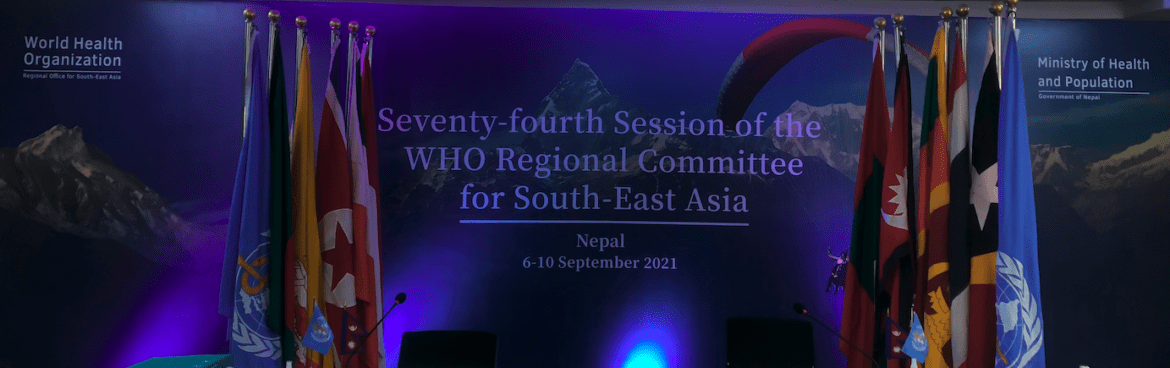
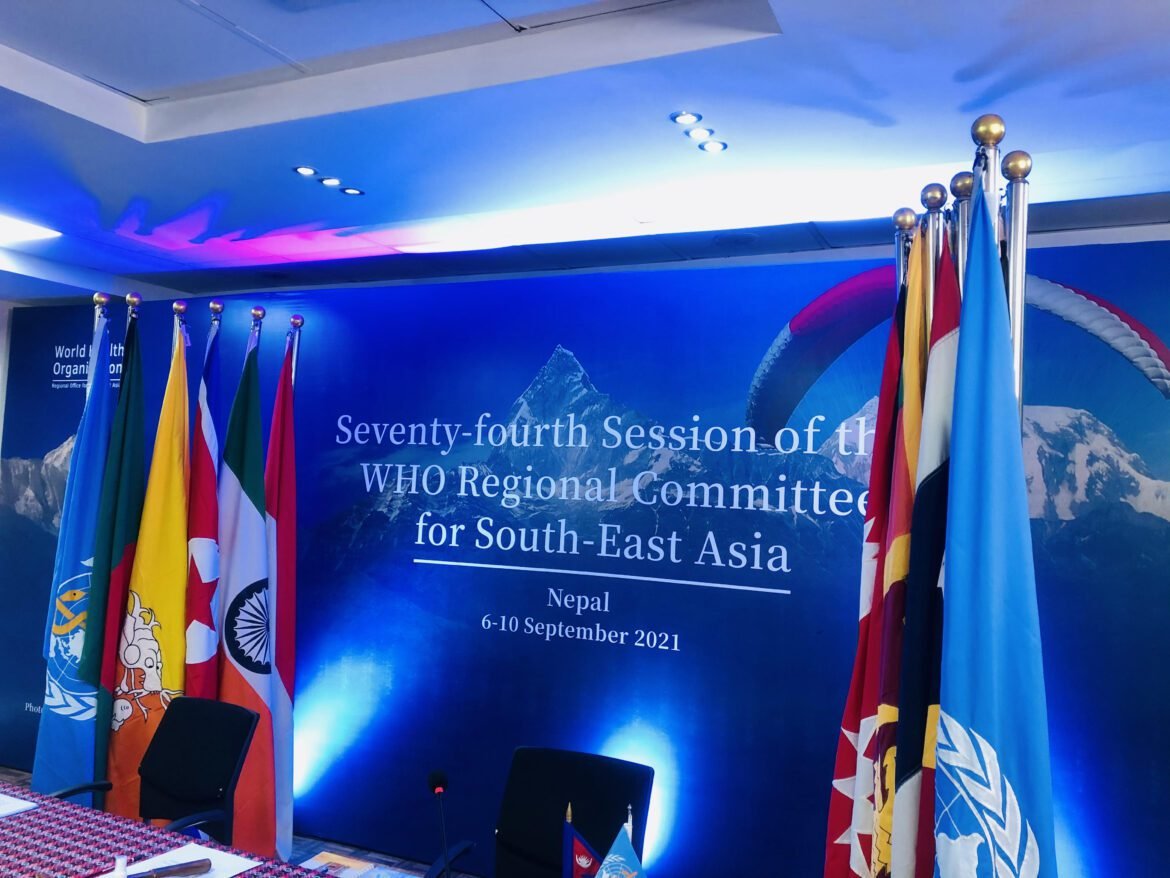
New Delhi/Kathmandu:  The ongoing pandemic and measures to ‘build back better’ essential health services to achieve universal health coverage are among the key issues that health ministers of Member countries of WHO South-East Asia Region will deliberate upon next week.The Seventy Fourth Regional Committee Session of WHO South-East Asia, the annual governing body meeting of WHO in the Region, is being hosted by Nepal from 6 to 10 September.

The meeting will be attended by WHO Director-General Dr Tedros Adhanom Ghebreyesus, Regional Director Dr Poonam Khetrapal Singh, Health Ministers and senior health officials of Member countries of the Region, UN Agencies, partners, donors, and civil society representatives.

Strengthening public health emergency preparedness and response, accelerating progress for prevention and control of non-communicable diseases, and ending viral hepatitis, HIV and STI are among other key issues to be discussed at the annual meeting which is being held virtually for the second consecutive year in view of the pandemic.

Monitoring progress on universal health coverage, revitalizing school-health, and the regional framework for vaccine action plan for vaccine preventable diseases would also be discussed.

The meeting will also take stock of the progress being made in the Region on resolutions adopted at previous Regional Committee meetings. Measles and rubella elimination by 2023, improving access to essential medical products, the South-East Asia Regional Health Emergency Fund and strengthening health systems to accelerate delivery of services for non-communicable diseases at the primary health care level, would come up at the meeting.

While responding to the ongoing pandemic, countries in the Region are also making efforts around the eight regional flagship priorities – to eliminate measles and rubella by 2023, address noncommunicable diseases through multisectoral policies and plans, accelerate reduction of maternal, neonatal and under-five mortality, advance universal health coverage, reverse antimicrobial resistance, scale-up emergency risk management capacities and eliminate neglected tropical diseases and TB.

Home to one-fourth of the global population, the Region continues to sustain the impressive progress made around the priority programs. WHO South-East Asia Region eradicated polio in 2014 and eliminated maternal and neonatal tetanus in 2016. Maldives and Sri Lanka have eliminated both measles and rubella, while Bhutan, DPR Korea and Timor-Leste have achieved measles elimination. Maldives, Sri Lanka and Thailand have eliminated lymphatic filariasis. Nepal and Myanmar have eliminated trachoma. India is yaws-free. Sri Lanka and Maldives have eliminated malaria.  Thailand, Sri Lanka and Maldives have eliminated mother-to-child transmission of HIV and Syphilis. Bangladesh, Bhutan, Nepal and Thailand have controlled Hepatitis B.

Official news link (WHO)


Do you have a website? Looking for the best hosting provider? Here’s a discount code.

Latest Public Health Jobs

Latest Posts

  • World Water Day 2026 | Water & Gender Equality
  • Nepal Antimicrobial Resistance (AMR) Bulletin FY 2081/82
  • Call for applications! Short Course on Qualitative Research Methods in Public Health, 2026
  • World Obesity Day 2026 | 8 Billion Reasons to Act on Obesity
  • Salim Yusuf Emerging Leaders Programme 2026

Thanks for visiting us.
Disclaimer: The resources, documents, guidelines, and information on this blog have been collected from various sources and are intended for informational purposes only. Information published on or through this website and affiliated social media channels does not represent the intention, plan, or strategies of an organization that the initiator is associated with in a professional or personal capacity, unless explicitly indicated.
If you have any complaints, information, or suggestions about the content published on Public Health Update, please feel free to contact us at blog.publichealthupdate@gmail.com.
#StayUpdated
  • WordPress
  • Link
  • Facebook
  • Mail
  • Facebook
  • Twitter
  • Twitter
  • LinkedIn
  • Instagram
  • Facebook
September 3, 2021 1 comment
0 FacebookTwitterPinterestLinkedinTumblrVKOdnoklassnikiRedditStumbleuponWhatsappTelegramLINEPocketSkypeViberEmail
World Suicide Prevention Day (WSPD)
PH Important DayActivitiesNon- Communicable Diseases (NCDs)Public Health Events

World Suicide Prevention Day 2021: ‘Creating Hope Through Action’

by Public Health Update September 2, 2021
written by Public Health Update

Overview

World Suicide Prevention Day (WSPD) was established in 2003 in conjunction with the World Health Organisation (WHO) and is a significant advocacy and communication based event aimed at reaching national organisations, governments and the general public, giving a singular message that suicide can be prevented. The first World Suicide Prevention Day was successfully launched in Stockholm, on 10 September 2003 as an initiative of IASP and the World Health Organisation (WHO), designating the day as a way of focusing attention on the problem world-wide and confirming the message.

World Suicide Prevention Day is an opportunity to raise awareness of suicide and to promote action through proven means that will reduce the number of suicides and suicide attempts globally.

Problem

One in every 100 deaths worldwide is the result of suicide. It can affect every one of us. Each and every suicide is devastating and has a profound impact on those around them. However, by raising awareness, reducing the stigma around suicide and encouraging well-informed action, we can reduce instances of suicide around the world.

Every year, 160 million people worldwide contemplate suicide and, tragically, 800,000 of them die by suicide. This means that more than 159 million people survive suicide related crises every year.

  • An estimated 703,000 people die by suicide worldwide each year. (WHO)
  • Over one in every 100 deaths (1.3%) in 2019 were the result of suicide. (WHO)
  • The global suicide rate is over twice as high among men than women. (WHO)
  • Over half (58%) of all deaths by suicide occur before the age of 50 years old. (WHO)
  • Suicide occurs across all regions in the world, however, over three quarters (77%) of global suicides in 2019 occurred in low and middle income countries. (WHO)

2021 theme:‘Creating Hope Through Action’

‘Creating Hope Through Action’ is a reminder that there is an alternative to suicide and aims to inspire confidence and light in all of us; that our actions, no matter how big or small, may provide hope to those who are struggling. Preventing suicide is often possible and you are a key player in its prevention. Through action, you can make a difference to someone in their darkest moments – as a member of society, as a child, as a parent, as a friend, as a colleague or as a neighbour. We can all play a role in supporting those experiencing a suicidal crisis or those bereaved by suicide.

Source of info: The International Association for Suicide Prevention (IASP)


Related
  • Depression and Suicide: The Hidden Crisis
  • World Suicide Prevention Day 2020
  • Develop and implement strategies to prevent suicide and promote mental health
  • World Suicide Prevention Day 2019: Working Together to Prevent Suicide!
  • ”Working Together to Prevent Suicide” World Suicide Prevention Day 2018
  • ”Take a minute, change a life”- World Suicide Prevention Day 2017
  • World Suicide Prevention Day – 10 September, 2016
  • “Preventing suicide: a global imperative”- WHO
  • Preventing Suicide: Reaching Out and Saving Lives #World_Suicide_Prevention_Day
  • World Suicide Prevention Day -2014; Suicide Prevention: One World Connected.’

Do you have a website? Looking for the best hosting provider? Here’s a discount code.

Latest Public Health Jobs

Latest Posts

  • World Water Day 2026 | Water & Gender Equality
  • Nepal Antimicrobial Resistance (AMR) Bulletin FY 2081/82
  • Call for applications! Short Course on Qualitative Research Methods in Public Health, 2026
  • World Obesity Day 2026 | 8 Billion Reasons to Act on Obesity
  • Salim Yusuf Emerging Leaders Programme 2026

Thanks for visiting us.
Disclaimer: The resources, documents, guidelines, and information on this blog have been collected from various sources and are intended for informational purposes only. Information published on or through this website and affiliated social media channels does not represent the intention, plan, or strategies of an organization that the initiator is associated with in a professional or personal capacity, unless explicitly indicated.
If you have any complaints, information, or suggestions about the content published on Public Health Update, please feel free to contact us at blog.publichealthupdate@gmail.com.
#StayUpdated


  • WordPress
  • Link
  • Facebook
  • Mail
  • Facebook
  • Twitter
  • Twitter
  • LinkedIn
  • Instagram
  • Facebook
September 2, 2021 1 comment
0 FacebookTwitterPinterestLinkedinTumblrVKOdnoklassnikiRedditStumbleuponWhatsappTelegramLINEPocketSkypeViberEmail
Non- Communicable Diseases (NCDs)International Plan, Policy & GuidelinesReportsResearch & Publication

Global Status Report on the Public Health Response to Dementia

by Public Health Update September 2, 2021
written by Public Health Update

Summary

Dementia is a leading cause of disability and dependency globally. Lack of awareness and understanding lead to widespread stigmatization and discrimination against people with dementia, which may prevent them from accessing diagnosis and care.

The Global action plan on the public health response to dementia 2017-2025 represents the formal commitment by WHO Member States to develop comprehensive multisectoral responses to address dementia worldwide. It contributes to WHO’s Triple Billion Targets and achieving the United Nations Sustainable Development Goals (SDGs) by improving timely diagnosis, treatment, (long-term) care and rehabilitation for people with dementia; promoting population-wide risk reduction efforts for dementia; and ensuring that the needs of people with dementia and their carers are met within the context of humanitarian crises and emergencies, such as the ongoing COVID-19 pandemic which has had a disproportionate impact on older people and especially people living with dementia.

Halfway into the implementation of the Global dementia action plan, the Global status report on the public health response to dementia aims to provide essential information to assess the global progress. It takes stock of actions driven by Member States, WHO and civil society since the adoption of the Global dementia action plan in 2017, identifies barriers to its implementation especially in light of the COVID-19 pandemic, and highlights areas where urgent, accelerated action is required. It is hoped that the report will lead to increased international and national advocacy efforts and the prioritization of dementia on the global health agenda.

Target audience

This report is written for national and state policy-makers, health-sector planners, academics and researchers, organizations involved in dementia education and service provision, as well as people living with dementia, their carers and families.

Key message

World failing to address dementia challenge

  • At the same time, the number of people living with dementia is growing according to the report: WHO estimates that more than 55 million people (8.1 % of women and 5.4% of men over 65 years) are living with dementia. This number is estimated to rise to 78 million by 2030 and to 139 million by 2050.
  • Dementia is caused by a variety of diseases and injuries that affect the brain, such as Alzheimer’s disease or stroke.
  • It affects memory and other cognitive functions, as well as the ability to perform everyday tasks.
  • The disability associated with dementia is a key driver of costs related to the condition.
  • In 2019, the global cost of dementia was estimated to be US$ 1.3 trillion. The cost is projected to increase to US$ 1.7 trillion by 2030, or US$ 2.8 trillion if corrected for increases in care costs.
  • The report highlights the urgent need to strengthen support at national level, both in terms of care for people with dementia, and in support for the people who provide that care, in both formal and informal settings.

DOWNLOAD REPORT (WHO)


Do you have a website? Looking for the best hosting provider? Here’s a discount code.

Latest Public Health Jobs

Latest Posts

  • World Water Day 2026 | Water & Gender Equality
  • Nepal Antimicrobial Resistance (AMR) Bulletin FY 2081/82
  • Call for applications! Short Course on Qualitative Research Methods in Public Health, 2026
  • World Obesity Day 2026 | 8 Billion Reasons to Act on Obesity
  • Salim Yusuf Emerging Leaders Programme 2026

Thanks for visiting us.
Disclaimer: The resources, documents, guidelines, and information on this blog have been collected from various sources and are intended for informational purposes only. Information published on or through this website and affiliated social media channels does not represent the intention, plan, or strategies of an organization that the initiator is associated with in a professional or personal capacity, unless explicitly indicated.
If you have any complaints, information, or suggestions about the content published on Public Health Update, please feel free to contact us at blog.publichealthupdate@gmail.com.
#StayUpdated


  • WordPress
  • Link
  • Facebook
  • Mail
  • Facebook
  • Twitter
  • Twitter
  • LinkedIn
  • Instagram
  • Facebook
September 2, 2021 0 comments
0 FacebookTwitterPinterestLinkedinTumblrVKOdnoklassnikiRedditStumbleuponWhatsappTelegramLINEPocketSkypeViberEmail
WHO Announces 3rd Global Infodemic Manager Training
Outbreak NewsInternational Jobs & OpportunitiesPublic Health OpportunitiesPublic Health OpportunityTraining

WHO Announces 3rd Global Infodemic Manager Training

by Public Health Update September 2, 2021
written by Public Health Update

Online training over 4 weeks during 15 November – 15 December 2021

WHO is continuing to advance support for country pandemic preparedness and mitigating the COVID-19 pandemic which is accompanied by an infodemic. There continues to be an urgent need to boost capacity for infodemic management globally to help ensure universal access to credible health information. 

Application to the training will be extended through a wide range of partner organisations who will be asked to nominate experts to take part. WHO, US CDC, UNICEF, GAVI, Rockefeller Foundation, IFRC, US CDC, Mercy Corps, USAID, the RCCE Collective Service and partners will nominate experienced professionals from the fields of epidemiology, behavioural science, risk communication, health service delivery/health care workers, digital health, policy making, and other relevant disciplines, who are responding to COVID-19 and the accompanying infodemic at country-level.

Purpose

Objectives of the training:

  • Build a curriculum and apply it in delivering a training of the 3rd cohort of cross-disciplinary infodemic managers that can be deployed to the field for infodemic preparedness and response
  • Build skills of health authority staff and other relevant experts in infodemic management
  • Offer opportunity for UN staff to learn about infodemic management
  • Create a theoretical and practical foundation for future infodemic training modules.

Nominees must meet the following selection criteria to be considered for inclusion in the 3rd cohort of trained infodemic managers that support response in countries. 

Nomination criteria:

  • A laptop/desktop computer and reliable internet connection is required to be able to participate for the entire course. You cannot access this course with only a mobile phone.
  • CV should be shared in this format
  • Letter of Recommendation from a past, current employer or sponsoring organisation is required
  • Commitment to be available for the training sessions as well as the assignments and group work (time estimate: 44 hours spread over four weeks)
  • Previous experience working respectfully in multicultural settings.

Desirable:

  • Video justification explaining why you wish to participate in the training and how you will implement and grow infodemic management in your country — share link to video of 3 minutes maximum duration
  • Ability to use digital tools such as Google sheets, Miro, and social media
  • Familiar with basics of data analysis
  • Previous exposure to implementation science or research, or evaluation of programmes.

After the training: 

  • Trainees will apply their new skills in national preparedness and response to infodemics and support the development of networks for knowledge and resource exchange
  • Those trainees who are freelance consultants can be included in WHO pool of suitably qualified consultants to support national infodemic management through technical assistance assignments in countries.

Scope of the training

The intent is to cover a spectrum of infodemic management skills and topics focused on how to apply infodemic management interventions and practice to promote resilience of individuals and communities to the infodemic, including misinformation, and to promote self-efficacy of individuals for self-protective health behaviours. The training will encompass global and region-specific topics in the infodemic and health misinformation.
 

Target competencies – infodemic managers should be able to:

  • Build infodemic management teams and networks
  • Establish infodemic preparedness and response plans
  • Measure and monitor the impact of infodemics during health emergencies
  • Detect and understand the spread and impact of infodemics
  • Respond and deploy interventions that mitigate the infodemic and its harmful effects
  • Evaluate infodemic interventions and strengthen resilience of individuals and communities to infodemics
  • Promote the development, adaptation and application of tools for the management of infodemics
  • Be aware and supportive of infodemiology research and implementation of best practices for infodemic management.

The nominees will be included in the training by a selection panel based on eligibility criteria and acceptance of WHO Code of Conduct.

Participation in the training is free.

The 3rd infodemic manager training will take place in English so trainees must have working proficiency in this language. Trainees will be placed in one of two cohorts based on their time zone.

Planned time commitment of trainees and achievement of course completion:

  • 48 hours of lectures/discussions/group work/assignments over the course of 15 November – 15 December 2021 (live 8 sessions ~3 hours each plus quizzes/assignments, and group work) 
  • Sessions will take place virtually, in form of lectures and SkillsLabs and breakout working groups/discussions 
  • During the training, trainees will work in groups via chat platform to discuss and deliver recommendations for action for an infodemic case study 

Trainees need to be present at minimum 80% of sessions, demonstrate active uptake of skills and knowledge in evaluations, and actively contribute to the group work in case study in order to receive a certificate of completion.

The training will take place over four weeks starting 15 November 2021, across two time zones. 

Application to the training will be extended through a wide range of partner organizations who will be asked to nominate individuals to take part. Nominations are open until 1 October 2021 at 17:00 CET (Geneva).

Deadline for nomination by sponsoring organization: 1 October 2021 at 17:00 CET (Geneva)


OFFICIAL LINK


Do you have a website? Looking for the best hosting provider? Here’s a discount code.

Latest Public Health Jobs

Latest Posts

  • World Water Day 2026 | Water & Gender Equality
  • Nepal Antimicrobial Resistance (AMR) Bulletin FY 2081/82
  • Call for applications! Short Course on Qualitative Research Methods in Public Health, 2026
  • World Obesity Day 2026 | 8 Billion Reasons to Act on Obesity
  • Salim Yusuf Emerging Leaders Programme 2026

Thanks for visiting us.
Disclaimer: The resources, documents, guidelines, and information on this blog have been collected from various sources and are intended for informational purposes only. Information published on or through this website and affiliated social media channels does not represent the intention, plan, or strategies of an organization that the initiator is associated with in a professional or personal capacity, unless explicitly indicated.
If you have any complaints, information, or suggestions about the content published on Public Health Update, please feel free to contact us at blog.publichealthupdate@gmail.com.
#StayUpdated


  • WordPress
  • Link
  • Facebook
  • Mail
  • Facebook
  • Twitter
  • Twitter
  • LinkedIn
  • Instagram
  • Facebook
September 2, 2021 0 comments
0 FacebookTwitterPinterestLinkedinTumblrVKOdnoklassnikiRedditStumbleuponWhatsappTelegramLINEPocketSkypeViberEmail
World Field Epidemiology Day
Public Health EventsPH Important DayPublic HealthPublic Health Epidemiology & Biostatistics

World Field Epidemiology Day: Strengthening health surveillance systems to detect public health threats early

by Public Health Update September 2, 2021
written by Public Health Update

World Field Epidemiology Day: Strengthening health surveillance systems to detect public health threats early

The World Field Epidemiology Day (#WorldFieldEpidemiologyDay) is a global movement to recognize and raise awareness of the vital role of field epidemiologists in protecting the health of populations and advancing global health security, and to advocate for increased investment in field epidemiology training, research, and professionals. It is initiated and organized by TEPHINET(the global network of Field Epidemiology Training Programs).

Why September 7?

On this date in 1854, John Snow took his findings from his now-famous investigation of the Broad Street cholera outbreak to local officials, leading them to take action and remove the handle of the offending water pump.

Key Messages

Key Messages on Field Epidemiology

  • As the COVID-19 pandemic has demonstrated, diseases know no borders. Globally, we are more interconnected and mobile than ever before, making a health threat anywhere a health threat everywhere.
  • To safeguard and promote the health of its citizens, every country must have effective field epidemiology capacity.
  • Field epi capacity means we can detect, investigate and control health threats; carry out health surveys; conduct disease surveillance; establish/evaluate surveillance systems; perform applied field research, and evaluate prevention/control efforts.
  • Field epidemiology (AKA applied, interventional, or “shoe leather” epidemiology) is conducted with the aim of taking action to address a public health problem—linked to human, animal or environmental health—to reduce illness, injury or death.
  • Field epidemiology links data to action to design or improve policies and interventions to protect population health, especially in response to unexpected health problems when rapid on-site investigation is necessary.
  • The traditional concept of field epidemiology and the roles of field epidemiologists are expanding. More than ever, field epidemiologists are directly involved in developing innovative solutions to public health problems.
  • The International Health Regulations (IHR) and the Global Health Security Agenda (GHSA) call for at least 1 trained field epidemiologist per 200,000 people in every country to detect, respond to, and contain public health emergencies.
  • Field epidemiology is key to strengthening epidemiologic and surveillance capacity at all levels of the health system, mitigating public health threats, and leading to reduced mortality and case numbers, epidemic duration, and potential for spread.
  • Increased field epidemiology capacity allows for quicker outbreak response, making it possible to break chains of transmission, decrease the number of cases and deaths, and mitigate the socioeconomic consequences.
  • Field epidemiology requires a systematic approach to solving problems, enabling effective outbreak management and emergency response.
  • Increasing investment in field epidemiology training and technology is crucial to ensuring high-quality health information for strong decision-making and the development of evidence-informed policies. 
  • Field epidemiology cuts across public health, environmental health, medicine (human and veterinary), microbiology, laboratory science, anthropology, and communication.
  • Increasing investment in multidisciplinary field epidemiology training can have lasting and positive effects on the structure and coordination of health agencies.
  • Infectious diseases with pandemic potential can spread more easily due to the effects of climate change, deforestation, and urbanization, including increased human-animal contact due to habitat loss of wild animals.
  • Field epidemiology is key to addressing public health problems caused by climate change and the effects of temperature, humidity, and seasonality on infectious disease dynamics and on the multiplication of disease vectors like mosquitoes and ticks.
  • Field epidemiology advances global health security by allowing placement of strategies for improvement at all levels of the health system.

#WorldFieldEpidemiologyDay

  • Field epidemiology is key to strengthening epidemiologic and surveillance capacity at all levels of the health system, mitigating public health threats, and leading to reduced mortality and case numbers, epidemic duration, and potential for spread.
  • Field epidemiology requires a systematic approach to solving problems, enabling effective outbreak management and emergency response.
  • Increased field epidemiology capacity allows for quicker outbreak response, making it possible to break chains of transmission, decrease the number of cases and deaths, and mitigate the socioeconomic consequences.
  • Increasing investment in field epidemiology training and technology is crucial to ensuring high-quality health information for strong decision-making and the development of evidence-informed policies.
  • Field epidemiologists help establish sustainable surveillance systems today to prevent complex health emergencies in the future.
  • Surveys and investigations conducted by field epidemiologists have led to improvements in public health service delivery: for example, improvement of sanitation systems and increased vaccination coverage.
  • Increasing investment in multidisciplinary field epidemiology training can have lasting and positive effects on the structure and coordination of health agencies.
  • To safeguard and promote the health of its citizens, every country must have effective field epidemiology capacity.

Read more: https://www.worldfieldepidemiologyday.org/


Do you have a website? Looking for the best hosting provider? Here’s a discount code.

Latest Public Health Jobs

Latest Posts

  • World Water Day 2026 | Water & Gender Equality
  • Nepal Antimicrobial Resistance (AMR) Bulletin FY 2081/82
  • Call for applications! Short Course on Qualitative Research Methods in Public Health, 2026
  • World Obesity Day 2026 | 8 Billion Reasons to Act on Obesity
  • Salim Yusuf Emerging Leaders Programme 2026

Thanks for visiting us.
Disclaimer: The resources, documents, guidelines, and information on this blog have been collected from various sources and are intended for informational purposes only. Information published on or through this website and affiliated social media channels does not represent the intention, plan, or strategies of an organization that the initiator is associated with in a professional or personal capacity, unless explicitly indicated.
If you have any complaints, information, or suggestions about the content published on Public Health Update, please feel free to contact us at blog.publichealthupdate@gmail.com.
#StayUpdated


  • WordPress
  • Link
  • Facebook
  • Mail
  • Facebook
  • Twitter
  • Twitter
  • LinkedIn
  • Instagram
  • Facebook
September 2, 2021 1 comment
0 FacebookTwitterPinterestLinkedinTumblrVKOdnoklassnikiRedditStumbleuponWhatsappTelegramLINEPocketSkypeViberEmail
Official UN General Assembly Side Event on progress and multisectoral action towards achieving global targets to End TB
Public Health EventsActivitiesPublic Health OpportunityWebinar

Official UN General Assembly Side Event on progress and multisectoral action towards achieving global targets to End TB

by Public Health Update September 2, 2021
written by Public Health Update

Background:

Despite progress over the last decades, TB remains among the leading infectious killers worldwide, claiming nearly 4000 lives a day. To accelerate action to end TB, Heads of State came together at the first-ever UN high-level meeting on TB in September 2018. The meeting resulted in an action-oriented political declaration that included bold targets to close gaps in prevention and care. In 2020, a progress report of the UN Secretary-General to the General Assembly showed that high-level commitments and targets have galvanized global and national progress towards ending TB, but that urgent and more ambitious investments and actions are required to put the world on track to reach targets, especially in the context of the COVID-19 pandemic. New data from over 90 countries collated by WHO highlights that the progress made in the fight against TB is at risk with COVID-19 disruptions leading to 1.4 million additional people missing out on access to TB care in 2020 alone, and over half a million deaths.

The side event will bring together Heads of State, Ministers of Health and other ministries, WHO leadership, Heads of Agencies, partners and civil society, to review progress towards reaching global TB targets, advance multisectoral action and accountability, and discuss preparations for the 2023 UN High Level Meeting on TB. It will build upon the successes of two high level UNGA side events held in 2019 and 2020 with the support of the Russian Federation, as well as the 2018 UN High Level Meeting on TB and the 2017 Moscow Ministerial Conference on ending TB.

Join for a special UN General Assembly virtual side event to review progress towards reaching global TB targets, advance multisectoral action & accountability, and discuss preparations for the 2023 UN High Level Meeting on TB.

The side event is co-organized by the Permanent Mission of the Russian Federation to the United Nations and the World Health Organization.

Event date: 24 September from 10:00H – 12:00H EDT (16:00H-18:00H CEST). 

Key speakers will include Heads of State, Ministers of Health and other ministries, WHO leadership, Heads of Agencies, partners and civil society representatives.

REGISTER NOW

Recommended readings

  • Global Tuberculosis Report 2019: Latest status of the tuberculosis epidemic
  • Dissemination of Findings and Recommendations of Joint External Monitoring Mission(JEMM) of Nepal National Tuberculosis Program
  • National Tuberculosis Programme Annual Report 2018
  • National Strategic Plan for Tuberculosis Prevention, Care and Control 2016 – 2021
  • NTP, Nepal: New TB Treatment Algorithm & Regimen (Updated)
  • WHO announces landmark changes in MDR-TB treatment regimens
  • TB Vaccine results announce a promising step towards ending the emergency
  • 7 million people receive record levels of lifesaving TB treatment but 3 million still miss out

More

  • The impact of COVID-19 on the TB epidemic: A community perspective
  • Global Tuberculosis Report 2019: Latest status of the tuberculosis epidemic
  • Global Tuberculosis Report 2018
  • New WHO recommendations to prevent tuberculosis aim to save millions of lives
  • South-East Asia Regional Action Plan on the Programmatic Management of Latent TB Infection launched
  • South-East Asia Regional Action Plan on the Programmatic Management of Latent TB Infection launched
  • NTP, Nepal: New TB Treatment Algorithm & Regimen (Updated)
  • World Tuberculosis Day 2019 – It’s time ! ”Find Treat All #EndTB”
  • Global Tuberculosis Report 2018
  • WHO Global Tuberculosis report 2015
  • Dissemination of Findings and Recommendations of Joint External Monitoring Mission(JEMM) of Nepal National Tuberculosis Program
  • National Tuberculosis Programme Annual Report 2018


Do you have a website? Looking for the best hosting provider? Here’s a discount code.

Latest Public Health Jobs

Latest Posts

  • World Water Day 2026 | Water & Gender Equality
  • Nepal Antimicrobial Resistance (AMR) Bulletin FY 2081/82
  • Call for applications! Short Course on Qualitative Research Methods in Public Health, 2026
  • World Obesity Day 2026 | 8 Billion Reasons to Act on Obesity
  • Salim Yusuf Emerging Leaders Programme 2026

Thanks for visiting us.
Disclaimer: The resources, documents, guidelines, and information on this blog have been collected from various sources and are intended for informational purposes only. Information published on or through this website and affiliated social media channels does not represent the intention, plan, or strategies of an organization that the initiator is associated with in a professional or personal capacity, unless explicitly indicated.
If you have any complaints, information, or suggestions about the content published on Public Health Update, please feel free to contact us at blog.publichealthupdate@gmail.com.
#StayUpdated


  • WordPress
  • Link
  • Facebook
  • Mail
  • Facebook
  • Twitter
  • Twitter
  • LinkedIn
  • Instagram
  • Facebook
September 2, 2021 0 comments
0 FacebookTwitterPinterestLinkedinTumblrVKOdnoklassnikiRedditStumbleuponWhatsappTelegramLINEPocketSkypeViberEmail
Newer Posts
Older Posts

Search

Follow Us

Facebook Twitter Instagram Pinterest Linkedin Youtube

Categories

  • Abstracts (25)
  • Activities (91)
  • Adolescent Sexual and Reproductive Health (ASRH) (25)
  • Advice & Tips (3)
  • African Region (5)
  • AI and Health (1)
  • Annual Meeting (6)
  • Antimicrobial Resistance (AMR) (21)
  • Award (19)
  • Awards (16)
  • Books (9)
  • Call for Proposal, EOI & RFP (103)
  • Call for Research Participants (8)
  • Clinical Doctor Jobs (6)
  • Communicable Diseases (107)
  • Competition (20)
  • Conference (128)
  • Consultant (1)
  • Courses (205)
  • Dashboard (2)
  • Digital Health & Health Informatics (10)
  • Drug and Medicine (18)
  • Eastern Mediterranean Region (3)
  • Education (15)
  • Environment (3)
  • Environmental Health & Climate Change (47)
  • European Region (42)
  • Exchange Program (1)
  • Fact Sheet (117)
  • FCHVs (1)
  • Fellowships, Studentship & Scholarships (168)
  • Financial Aid (13)
  • Form Formats (2)
  • Fully funded (22)
  • Global Health News (433)
  • Grants and Funding Opportunities (193)
  • Guest Post (44)
  • Health Assistant Jobs (1)
  • Health Equity (7)
  • Health Financing and Economics (24)
  • Health in Data (115)
  • Health Insurance (5)
  • Health Jobs (52)
  • Health Literacy, Health Education & Promotion (49)
  • Health Organization Profile (42)
  • Health Systems (83)
  • Human Resource for Health (33)
  • Humanitarian Health & Emergency Response (44)
  • Hypertension (5)
  • Implementation Research (48)
  • International Health (3)
  • International Jobs & Opportunities (373)
  • International Plan, Policy & Guidelines (210)
  • Internships (4)
  • Jobs Vacancies (56)
  • Journals (8)
  • Life Style & Public Health Nutrition (39)
  • Live (10)
  • Master's Degree (48)
  • Maternal, Newborn and Child Health (88)
  • Mentorship Program (2)
  • Miscellaneous (16)
  • National Health News (157)
  • National Plan, Policy & Guidelines (468)
  • Neglected Tropical Diseases (NTDs) (51)
  • Non- Communicable Diseases (NCDs) (120)
  • Notice (103)
  • Nursing Jobs (6)
  • Nutritionist Jobs (1)
  • One Health (17)
  • Online & Distance Learning (22)
  • Online Courses (90)
  • Op-Ed Article (3)
  • Opportunities by Region (83)
  • Outbreak News (213)
  • Partially funded (6)
  • PCL Health Science Jobs (3)
  • PH Important Day (533)
  • Pharmacist Jobs (3)
  • PhD (54)
  • Photos (5)
  • Planetary Health (4)
  • PostDoc (14)
  • Presentation Slides (26)
  • Primary Health Care (25)
  • Provincial Plan, Policies and Guidelines (14)
  • Public Health (1,281)
  • Public Health Epidemiology & Biostatistics (13)
  • Public Health Events (306)
  • Public Health Information (20)
  • Public Health Innovation (9)
  • Public Health Jobs (52)
  • Public Health News (552)
  • Public Health Notes (120)
  • Public Health Opportunities (507)
  • Public Health Opportunity (491)
  • Public Health Programs (108)
  • Public Health Seminar (2)
  • Public Health Tools (1)
  • Public Health Update (561)
  • Quality Improvement & Infection Prevention (20)
  • Region of America (8)
  • Reports (184)
  • Research & Project Grants (39)
  • Research & Project Grants (32)
  • Research & Publication (647)
  • Research Articles (10)
  • Road Traffic Accidents (RTA) (9)
  • School of Public Health (60)
  • Self funded (2)
  • South-East Asia Region (26)
  • Success Stories (17)
  • Summer and Winter Courses (40)
  • Summer Courses (28)
  • Sustainable Development Goals (SDGs) (14)
  • Syllabus (61)
  • Symposium (9)
  • Tobacco Control (35)
  • Training (40)
  • Travel Grants (15)
  • Trick, Technique & Skills (8)
  • Uncategorized (3)
  • Undergraduate Degree (7)
  • Universal Health Coverage (36)
  • Universities (29)
  • Universities & School of Public Health (58)
  • Vacancy Announcement (26)
  • Vaccine Preventable Diseases (40)
  • Vector-Borne Diseases(VBDs) (30)
  • Videos (3)
  • View Points (1)
  • Webinar (4)
  • Western Pacific Region (13)
  • Workshop (18)
  • World News (116)
Post New Jobs: Vacancy Announcement Service

Public Health Update (Sagun’s Blog) is a popular public health portal in Nepal. Thousands of health professionals are connected with Public Health Update to get up-to-date public health updates, search for jobs, and explore opportunities.
#1 Public Health Blog for sharing Job opportunities and updates in Nepal

”Public Health Information For All”
– – Sagun Paudel, Founder

  • HOT JOBS
    • Public Health Jobs
    • Medical Doctor Jobs
    • Nursing Jobs
    • Health Assistant Jobs
    • Pharmacist Jobs
    • NGOs Jobs
    • Government Jobs
  • Top Categories
    • National Plan, Policy & Guidelines Top
    • Public Health Calendar
    • Fellowships & Scholarships
    • Health Systems
    • Health Organization Profiles
    • International Jobs & Opportunities
    • Public Health Opportunity

PUBLIC HEALTH INITIATIVE

    • Submit your Vacancies New
    • Partnership Opportunities

Contact: blog.publichealthupdate@gmail.com

https://wa.me/+9779856036932

Public Health Initiative, A Registered Non-profit organization – All Right Reserved. 2011-2024. Contact us. 

Facebook Twitter Instagram Youtube Envelope
Public Health Update
  • Home
  • Public Health
    • Home 1
      • Adolescent Sexual and Reproductive Health (ASRH)
      • Antimicrobial Resistance (AMR)
      • Communicable Diseases
      • Digital Health & Health Informatics
      • Environmental Health & Climate Change
      • Health Financing and Economics
      • Health Equity
    • Home 2
      • Health Literacy, Health Education & Promotion
      • Human Resource for Health
      • Humanitarian Health & Emergency Response
      • Implementation Research
      • International Health
      • Life Style & Public Health Nutrition
      • Maternal, Newborn and Child Health
    • Home 3
      • Neglected Tropical Diseases (NTDs)
      • Non- Communicable Diseases (NCDs)
      • One Health
      • Planetary Health
      • Public Health Epidemiology & Biostatistics
      • Primary Health Care
      • Quality Improvement & Infection Prevention
    • Home 4
      • Road Traffic Accidents (RTA)
      • Sustainable Development Goals (SDGs)
      • Tobacco Control
      • Universal Health Coverage
      • Vaccine Preventable Diseases
      • Vector-Borne Diseases(VBDs)
      • Notices
  • Public Health Update
    • Home 1
      • Public Health News
      • Global Health News
      • Outbreak News
      • National Health News
      • COVID-19
    • Home 2
      • Fact Sheet
      • Health in Data
      • PH Important Day
      • Public Health Events
      • Public Health Programs
    • Home 3
      • Health Systems
      • Health Insurance
      • Health Organization Profile
      • Success Stories
      • Public Health Innovation
  • Public Health Opportunities
    • Fully funded
    • Travel Grants
    • Grants and Funding Opportunities
    • Opportunities by Region
    • International Jobs & Opportunities
    • Research & Project Grants
    • Fellowships, Studentship & Scholarships
    • Conference
  • Jobs
    • Home 1
      • Health Jobs
      • Public Health Jobs
      • Clinical doctor Jobs
      • Health Assistant Jobs
      • Nursing Jobs
      • PCL Health Science Jobs
    • Home 2
      • Dental Jobs
      • Pharmacist Jobs
      • TSLC (Health Jobs)
      • Laboratory Jobs
      • Nutritionist Jobs
  • Downloads
    • International Plan, Policy & Guidelines
    • National Plan, Policy & Guidelines
    • Reports
    • Books
    • Research Articles
  • School of Public Health
    • Home 1
      • Courses
      • Master’s Degree
      • Undergraduate Degree
      • PhD
    • Home 2
      • Universities
      • Syllabus
      • Public Health Notes
      • Mentorship Program
      • Startup Project
    • Home
      • Summer and Winter Courses
      • Summer Courses
      • Online Courses
      • Workshop
      • Training
Public Health Update
  • Home
  • Public Health
    • Home 1
      • Adolescent Sexual and Reproductive Health (ASRH)
      • Antimicrobial Resistance (AMR)
      • Communicable Diseases
      • Digital Health & Health Informatics
      • Environmental Health & Climate Change
      • Health Financing and Economics
      • Health Equity
    • Home 2
      • Health Literacy, Health Education & Promotion
      • Human Resource for Health
      • Humanitarian Health & Emergency Response
      • Implementation Research
      • International Health
      • Life Style & Public Health Nutrition
      • Maternal, Newborn and Child Health
    • Home 3
      • Neglected Tropical Diseases (NTDs)
      • Non- Communicable Diseases (NCDs)
      • One Health
      • Planetary Health
      • Public Health Epidemiology & Biostatistics
      • Primary Health Care
      • Quality Improvement & Infection Prevention
    • Home 4
      • Road Traffic Accidents (RTA)
      • Sustainable Development Goals (SDGs)
      • Tobacco Control
      • Universal Health Coverage
      • Vaccine Preventable Diseases
      • Vector-Borne Diseases(VBDs)
      • Notices
  • Public Health Update
    • Home 1
      • Public Health News
      • Global Health News
      • Outbreak News
      • National Health News
      • COVID-19
    • Home 2
      • Fact Sheet
      • Health in Data
      • PH Important Day
      • Public Health Events
      • Public Health Programs
    • Home 3
      • Health Systems
      • Health Insurance
      • Health Organization Profile
      • Success Stories
      • Public Health Innovation
  • Public Health Opportunities
    • Fully funded
    • Travel Grants
    • Grants and Funding Opportunities
    • Opportunities by Region
    • International Jobs & Opportunities
    • Research & Project Grants
    • Fellowships, Studentship & Scholarships
    • Conference
  • Jobs
    • Home 1
      • Health Jobs
      • Public Health Jobs
      • Clinical doctor Jobs
      • Health Assistant Jobs
      • Nursing Jobs
      • PCL Health Science Jobs
    • Home 2
      • Dental Jobs
      • Pharmacist Jobs
      • TSLC (Health Jobs)
      • Laboratory Jobs
      • Nutritionist Jobs
  • Downloads
    • International Plan, Policy & Guidelines
    • National Plan, Policy & Guidelines
    • Reports
    • Books
    • Research Articles
  • School of Public Health
    • Home 1
      • Courses
      • Master’s Degree
      • Undergraduate Degree
      • PhD
    • Home 2
      • Universities
      • Syllabus
      • Public Health Notes
      • Mentorship Program
      • Startup Project
    • Home
      • Summer and Winter Courses
      • Summer Courses
      • Online Courses
      • Workshop
      • Training
Public Health Initiative, A Registered Non-profit organization – All Right Reserved. 2011-2023