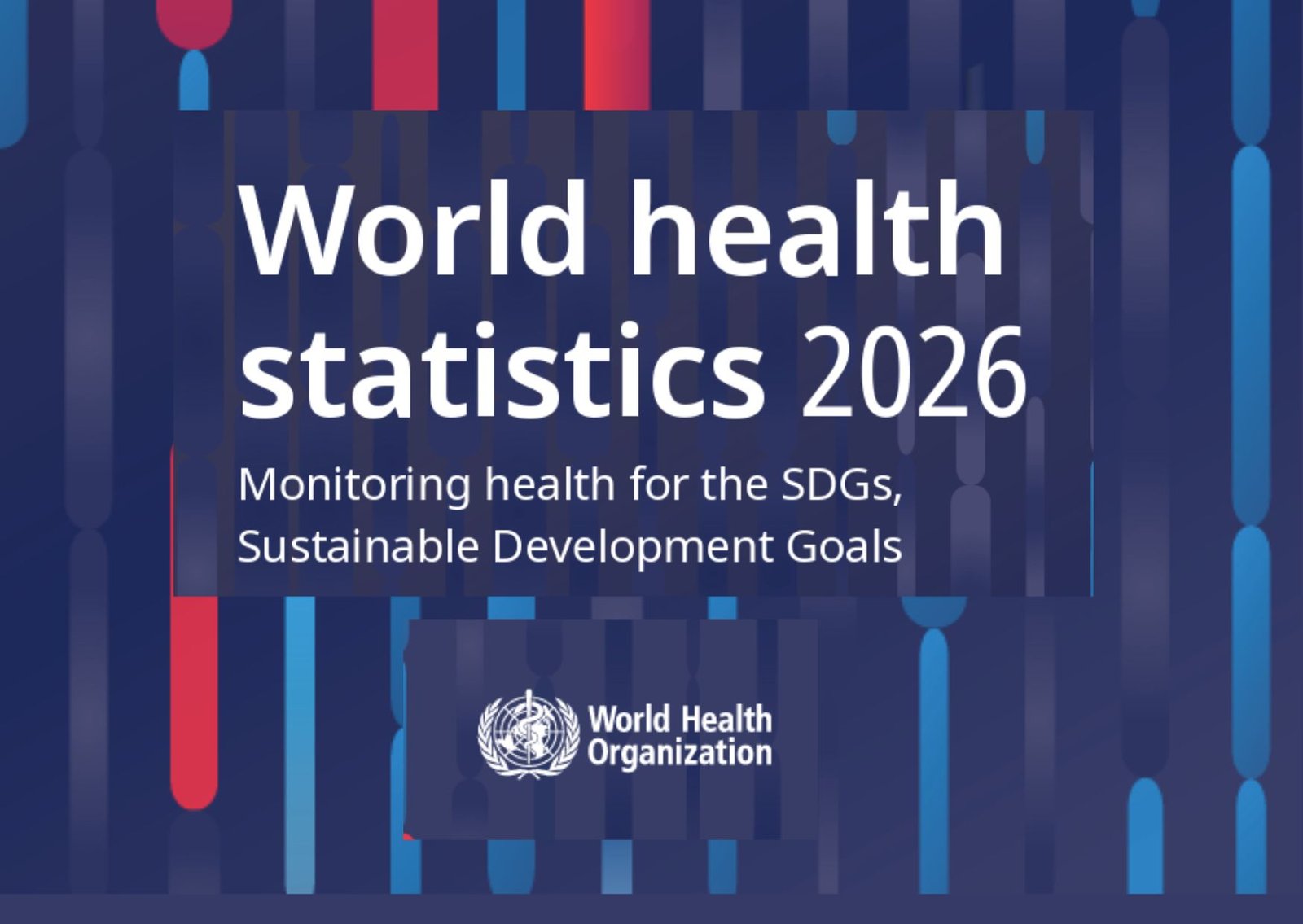
The World Health Statistics 2026 report from the World Health Organization (WHO) provides an updated overview of global health progress toward the health-related Sustainable Development Goals (SDGs). With fewer than five years remaining until the 2030 deadline, the report shows that progress is uneven and in many areas too slow to meet global targets.
Overall Global Progress
Progress toward health-related SDGs remains inconsistent. In some areas, important gains have been made. In others, progress has slowed or stalled. In addition, data gaps in many countries limit the ability to fully assess global progress.
Infectious Diseases: Long-Term Improvements, but Setbacks Remain
There have been clear long-term reductions in several infectious diseases:
- HIV infections fell by 40% between 2010 and 2024
- Tuberculosis incidence decreased by 12% since 2015
- People requiring interventions for neglected tropical diseases fell by 36% since 2010
Some regions performed better than the global average. The African Region achieved faster reductions in HIV and tuberculosis, while the South-East Asia Region is on track to meet malaria reduction milestones.
However, not all trends are positive. Malaria incidence increased by 8.5% since 2015, moving away from global targets.
Health Risk Factors Remain a Major Concern
Several preventable risk factors continue to affect global health:
- Anaemia among women of reproductive age increased slightly to 30.7% in 2023
- Overweight in children under five reached 5.5% in 2024
- Violence against women remains widespread, affecting nearly one in four women globally
At the same time, some improvements are noted:
- Tobacco use has declined since 2010
- Alcohol consumption has also decreased
Access to essential services has improved significantly since 2015:
- 961 million more people gained access to safe drinking water
- 1.2 billion gained access to sanitation
- 1.6 billion gained access to basic hygiene services
- 1.4 billion gained access to clean cooking fuels
However, large inequalities remain, especially between urban and rural areas.
Maternal, Child, and Noncommunicable Diseases
Maternal mortality has fallen by 40% and under-five mortality by 51% since 2000. However, progress has slowed in recent years, and many countries are not on track to meet SDG targets.
Noncommunicable diseases remain the leading cause of death globally. Although premature mortality from these diseases has declined by over 20% since 2000, progress has slowed since 2015, and no WHO region is currently on track to meet the 2030 target.
Environmental risks also remain significant. Air pollution caused an estimated 6.6 million deaths in 2021.
Impact of COVID-19
The COVID-19 pandemic had a major impact on global health:
- An estimated 22.1 million excess deaths occurred between 2020 and 2023
- Life expectancy and healthy life expectancy declined significantly during the pandemic
- Recovery has begun, but many countries have not yet returned to pre-pandemic levels
Older adults and men were most affected. The impact was also higher in many lower-income settings.
Gaps in Health Data Systems
Reliable health data remains a major challenge:
- Only 18% of countries report mortality data within one year
- 32% of countries have never submitted cause-of-death data to WHO
- Only about one-third of countries meet WHO standards for high-quality mortality data
Of an estimated 61 million global deaths in 2023, only 21 million were reported with cause-of-death information, and only 12 million had usable ICD-coded data.
Efforts are ongoing to improve civil registration systems, digital reporting, and use of ICD-11 coding.
The World Health Statistics 2026 report shows both progress and persistent challenges. While gains have been made in infectious disease control, service coverage, and some risk factors, overall progress is not fast enough to meet the 2030 SDG targets.
Stronger health systems, reduced inequalities, improved prevention, and better health data systems are urgently needed to sustain and accelerate global health progress.
World health statistics 2026: monitoring health for the SDGs, sustainable development goals
⚡ Looking for expert analysis, policy briefs, and high-level reviews on Nepal's health sector?

We are now offering premium subscription services to deliver timely, evidence-backed policy briefs, comprehensive technical reviews, and strategic analysis straight to your inbox. Tap into specialized consultant expertise and stay ahead on Nepal's emerging health strategies.

👉 [Contact Us]
Do you have a website? Looking for the best hosting provider? Here’s a discount code.
Latest Public Health Jobs
Latest Posts
- Call for Registration! National Health Promotion Conference 2026
- World Atopic Eczema Day 2026: Breaking the Invisible Burden
- DEVASTATING FLOODS IN NEPAL: PUBLIC HEALTH IMPACT AND A CALL FOR HUMANITARIAN SUPPORT
- PEN-Plus Orientation Manual for Mid-Level Health Care Workers
- National Health Training Strategy 2082
Thanks for visiting us.
Disclaimer: The resources, documents, guidelines, and information on this blog have been collected from various sources and are intended for informational purposes only. Information published on or through this website and affiliated social media channels does not represent the intention, plan, or strategies of an organization that the initiator is associated with in a professional or personal capacity, unless explicitly indicated.
If you have any complaints, information, or suggestions about the content published on Public Health Update, please feel free to contact us at blog.publichealthupdate@gmail.com.
#StayUpdated