Public Health Update
  • Home
  • Public Health Update
  • Nepal Health Jobs
    • Public Health Job Board
    • Organization List
  • Opportunities
    • Fellowships, Studentship & Scholarships
    • Grants and Funding Opportunities
    • Fully funded
    • Conference
  • Downloads
    • International Plan, Policy & Guidelines
    • National Plan, Policy & Guidelines
    • Reports
    • Public Health Notes
    • Syllabus
    • Form Formats
  • School of Public Health
    • PhD
    • Master’s Degree
    • Online Courses
  • Notice
  • Home
  • Public Health Update
  • Nepal Health Jobs
    • Public Health Job Board
    • Organization List
  • Opportunities
    • Fellowships, Studentship & Scholarships
    • Grants and Funding Opportunities
    • Fully funded
    • Conference
  • Downloads
    • International Plan, Policy & Guidelines
    • National Plan, Policy & Guidelines
    • Reports
    • Public Health Notes
    • Syllabus
    • Form Formats
  • School of Public Health
    • PhD
    • Master’s Degree
    • Online Courses
  • Notice
LOGIN / REGISTER
Public Health Update
SUBSCRIBE
Public Health Update
  • Home
  • Public Health Update
  • Nepal Health Jobs
    • Public Health Job Board
    • Organization List
  • Opportunities
    • Fellowships, Studentship & Scholarships
    • Grants and Funding Opportunities
    • Fully funded
    • Conference
  • Downloads
    • International Plan, Policy & Guidelines
    • National Plan, Policy & Guidelines
    • Reports
    • Public Health Notes
    • Syllabus
    • Form Formats
  • School of Public Health
    • PhD
    • Master’s Degree
    • Online Courses
  • Notice

All Right Reserved. Designed and Developed by PenciDesign

Job Description of Various Health Positions (Government)
National Plan, Policy & GuidelinesHuman Resource for HealthResearch & Publication

Job Description of Various Health Positions (Government)

by Public Health Update May 8, 2021
written by Public Health Update

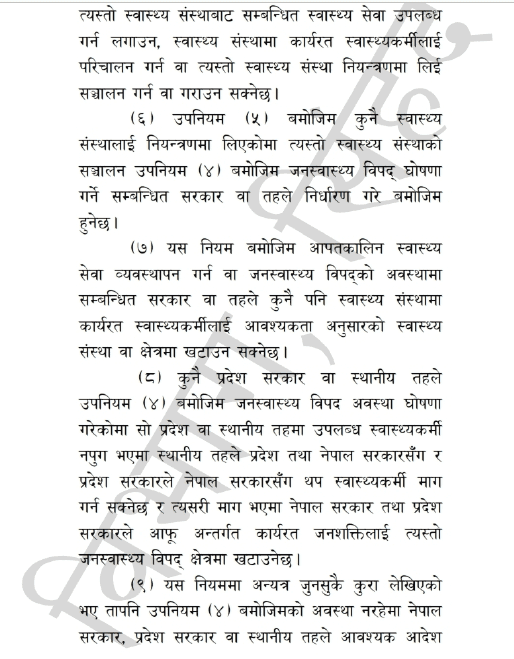
Job description: The job description of a post in the service shall be prepared as per Schedule-5 and enforced by the Ministry. One copy of such job description shall be sent to the Ministry of General Administration. (As per Nepal Health Service Rules, 2055 (1999), Clause 9)

This list consists of Job Description of following positions;

  • ANM
  • Chief Consultant Anesthesiologist
  • Chief Consultant Psychiatrist
  • Chief Hospital Nursing Administrator
  • Community Nursing Administrator
  • Community Nursing Officer
  • Consultant Anesthesiologist
  • Consultant Psychiatrist
  • Dark Room Assistant
  • Deputy Chief Physiotherapist
  • Hospital Nursing Administrator
  • Junior Medical Recorder
  • Medical Recorder
  • Medical Recorder Officer
  • Nursing Officer
  • Physiotherapist
  • Physiotherapy Assistant
  • Public Health Nurse  
  • Radiographer
  • Radiography Technologist Staff Nurse

JD of other positions will be updated soon.

DOWNLOAD PDF FILE
MERGED PDF
DOWNLOAD PDF FILE
MERGED PDF

Recommended

  • NATIONAL HEALTH CARE WASTE MANAGEMENT: STANDARDS AND OPERATING PROCEDURES 2020
  • GUIDANCE FOR LOCAL LEVEL AWPB (HEALTH AND POPULATION SECTOR)
  • PROGRAM IMPLEMENTATION GUIDELINE FOR EXTENDED HOSPITAL SERVICE 2077
  • GUIDELINE FOR PLANNING & BUDGET FORMULATION IN HEALTH SECTOR
  • HIV STANDARD SERVICE PACKAGE (SSP) FOR KEY POPULATIONS
  • NATIONAL MEDICAL STANDARD FOR MATERNAL AND NEWBORN CARE VOLUME III
  • NEPAL SAFE MOTHERHOOD AND NEWBORN HEALTH ROAD MAP 2030
  • NATIONAL HEALTH POLICY-2019, NEPAL
  • GUIDELINE FOR INTEGRATED AMBULANCE AND PRE-HOSPITAL SERVICE OPERATION 2077
  • TOR FOR PREPARATION OF DPR FOR CONSTRUCTION OF PRIMARY HOSPITALS
  • GUIDELINE FOR COVID19 FACILITATION GROUP MOBILIZATION
  • GUIDELINE FOR ISOLATION KIT DISTRIBUTION
  • THE RIGHT TO SAFE MOTHERHOOD AND REPRODUCTIVE HEALTH REGULATION, 2020
  • PUBLIC HEALTH SERVICE REGULATION, 2077
  • NATIONAL TESTING-GUIDELINES FOR COVID-19 (VERSION 5), NEPAL
May 8, 2021 2 comments
0 FacebookTwitterPinterestLinkedinTumblrVKOdnoklassnikiRedditStumbleuponWhatsappTelegramLINEPocketSkypeViberEmail
Standard for Medical Oxygen
Public HealthHumanitarian Health & Emergency ResponseNational Plan, Policy & GuidelinesResearch & Publication

Standard for Medical Oxygen Use and Requirements 2078

by Public Health Update May 8, 2021
written by Public Health Update

The Ministry of Health & Population (MoHP) Nepal has endorsed a Standard for Medical Oxygen Use and Requirements 2078 for the determination of oxygen required for patients.

DOWNLOAD STANDARD
PDF FILE

Recommended

  • NATIONAL HEALTH CARE WASTE MANAGEMENT: STANDARDS AND OPERATING PROCEDURES 2020
  • GUIDANCE FOR LOCAL LEVEL AWPB (HEALTH AND POPULATION SECTOR)
  • PROGRAM IMPLEMENTATION GUIDELINE FOR EXTENDED HOSPITAL SERVICE 2077
  • GUIDELINE FOR PLANNING & BUDGET FORMULATION IN HEALTH SECTOR
  • HIV STANDARD SERVICE PACKAGE (SSP) FOR KEY POPULATIONS
  • NATIONAL MEDICAL STANDARD FOR MATERNAL AND NEWBORN CARE VOLUME III
  • NEPAL SAFE MOTHERHOOD AND NEWBORN HEALTH ROAD MAP 2030
  • NATIONAL HEALTH POLICY-2019, NEPAL
  • GUIDELINE FOR INTEGRATED AMBULANCE AND PRE-HOSPITAL SERVICE OPERATION 2077
  • TOR FOR PREPARATION OF DPR FOR CONSTRUCTION OF PRIMARY HOSPITALS
  • GUIDELINE FOR COVID19 FACILITATION GROUP MOBILIZATION
  • GUIDELINE FOR ISOLATION KIT DISTRIBUTION
  • THE RIGHT TO SAFE MOTHERHOOD AND REPRODUCTIVE HEALTH REGULATION, 2020
  • PUBLIC HEALTH SERVICE REGULATION, 2077
  • NATIONAL TESTING-GUIDELINES FOR COVID-19 (VERSION 5), NEPAL
More
Guidelines
May 8, 2021 0 comments
0 FacebookTwitterPinterestLinkedinTumblrVKOdnoklassnikiRedditStumbleuponWhatsappTelegramLINEPocketSkypeViberEmail
Geriatric Care Center Operation Guideline and Standards
National Plan, Policy & GuidelinesResearch & Publication

Geriatric Care Center Operation Guideline and Standards

by Public Health Update May 8, 2021
written by Public Health Update

The Department of Health Services (DoHS) has endorsed a operation guideline and standards for Geriatric Care Center in Nepal.

READ MORE
DOWNLOAD

Recommended

  • NATIONAL HEALTH CARE WASTE MANAGEMENT: STANDARDS AND OPERATING PROCEDURES 2020
  • GUIDANCE FOR LOCAL LEVEL AWPB (HEALTH AND POPULATION SECTOR)
  • PROGRAM IMPLEMENTATION GUIDELINE FOR EXTENDED HOSPITAL SERVICE 2077
  • GUIDELINE FOR PLANNING & BUDGET FORMULATION IN HEALTH SECTOR
  • HIV STANDARD SERVICE PACKAGE (SSP) FOR KEY POPULATIONS
  • NATIONAL MEDICAL STANDARD FOR MATERNAL AND NEWBORN CARE VOLUME III
  • NEPAL SAFE MOTHERHOOD AND NEWBORN HEALTH ROAD MAP 2030
  • NATIONAL HEALTH POLICY-2019, NEPAL
  • GUIDELINE FOR INTEGRATED AMBULANCE AND PRE-HOSPITAL SERVICE OPERATION 2077
  • TOR FOR PREPARATION OF DPR FOR CONSTRUCTION OF PRIMARY HOSPITALS
  • GUIDELINE FOR COVID19 FACILITATION GROUP MOBILIZATION
  • GUIDELINE FOR ISOLATION KIT DISTRIBUTION
  • THE RIGHT TO SAFE MOTHERHOOD AND REPRODUCTIVE HEALTH REGULATION, 2020
  • PUBLIC HEALTH SERVICE REGULATION, 2077
  • NATIONAL TESTING-GUIDELINES FOR COVID-19 (VERSION 5), NEPAL
More
Guidelines


Do you have a website? Looking for the best hosting provider? Here’s a discount code.

Latest Public Health Jobs

Latest Posts

  • Multisectoral Action Plan for the Prevention and Control of NCDs, 2026-2030 (Draft)
  • National Standard Operating Procedure for Early Warning, Alert and Response System (EWARS), 2025
  • Priority Infectious Diseases for Community-Based Surveillance in Nepal
  • Community Based Disease Surveillance Guideline, 2082
  • Political declaration of the fourth high-level meeting of the General Assembly on the prevention and control of NCDs and the promotion of mental health and well-being

Thanks for visiting us.
Disclaimer: The resources, documents, guidelines, and information on this blog have been collected from various sources and are intended for informational purposes only. Information published on or through this website and affiliated social media channels does not represent the intention, plan, or strategies of an organization that the initiator is associated with in a professional or personal capacity, unless explicitly indicated.
If you have any complaints, information, or suggestions about the content published on Public Health Update, please feel free to contact us at blog.publichealthupdate@gmail.com.
#StayUpdated


  • WordPress
  • Link
  • Facebook
  • Mail
  • Facebook
  • Twitter
  • Twitter
  • LinkedIn
  • Instagram
  • Facebook
May 8, 2021 0 comments
0 FacebookTwitterPinterestLinkedinTumblrVKOdnoklassnikiRedditStumbleuponWhatsappTelegramLINEPocketSkypeViberEmail
The Public Health Association of BC: Public Health Summer Institute 2021
Online CoursesCoursesRegion of AmericaSummer and Winter CoursesSummer Courses

The Public Health Association of BC: Public Health Summer Institute 2021

by Public Health Update May 8, 2021
written by Public Health Update

Public Health Summer Institute 2021 Fake or Fact? Promoting Digital Health Literacy in an Era of New Media and Misinformation

The Public Health Association of BC, Saskatchewan Public Health Association, Yukon Public Health Community of Practice, and the Public Health Agency of Canada is proud to announce our 12th annual public health summer institute, “Fake or Fact? Promoting Digital Health Literacy in an Era of New Media and Misinformation,” happening Thursday June 24th and Friday June 25th, 2021. Due to the ongoing COVID-19 pandemic we will once again be hosting the summer institute virtually.

Over the last twelve years, the summer institute has provided excellent opportunities for continuing education and professional development via a unique evidence-based program where participants can actively learn, evaluate and test the principles of the curriculum through keynote presentations, best practice examples and case studies, team building exercises, and hands-on activities. We strive to bring together public health professionals who work directly or indirectly with public health issues across numerous social service sectors and help to foster innovative solutions to the identified issues.

The institute endeavors to bring together public health professionals and providers, students and researchers across numerous health and social service sectors to explore the population health challenges and opportunities related to the dissemination, diffusion and promotion of health information in the digital age. Using a health promotion lens, the 2021 Summer Institute will identify effective interventions, strategies and practices that participants can employ to promote digital health literacy in the general population. Special attention will be paid to threats posed by misinformation/disinformation and strategies to isolate, control and manage these threats.

Some topics to be discussed include:

  • Vaccine hesitancy & vaccine safety
  • Climate change & environmental health
  • Social & political movements
  • Misinformation across time
  • From advocacy to action – operationalizing social media
  • Misinformation & marginalized communities
  • Digital inequality & digital health literacy

Register today for this informative and interactive summer institute! As an added bonus, registrants who are located within BC, Saskatchewan or Yukon will receive a complimentary one-year membership to their region’s public health association.

More information will be released in the coming weeks and will be made available on our event page at: phabc.org/public-health-summer-institute-2021/


Do you have a website? Looking for the best hosting provider? Here’s a discount code.

Latest Public Health Jobs

Latest Posts

  • Multisectoral Action Plan for the Prevention and Control of NCDs, 2026-2030 (Draft)
  • National Standard Operating Procedure for Early Warning, Alert and Response System (EWARS), 2025
  • Priority Infectious Diseases for Community-Based Surveillance in Nepal
  • Community Based Disease Surveillance Guideline, 2082
  • Political declaration of the fourth high-level meeting of the General Assembly on the prevention and control of NCDs and the promotion of mental health and well-being

Thanks for visiting us.
Disclaimer: The resources, documents, guidelines, and information on this blog have been collected from various sources and are intended for informational purposes only. Information published on or through this website and affiliated social media channels does not represent the intention, plan, or strategies of an organization that the initiator is associated with in a professional or personal capacity, unless explicitly indicated.
If you have any complaints, information, or suggestions about the content published on Public Health Update, please feel free to contact us at blog.publichealthupdate@gmail.com.
#StayUpdated


  • WordPress
  • Link
  • Facebook
  • Mail
  • Facebook
  • Twitter
  • Twitter
  • LinkedIn
  • Instagram
  • Facebook
May 8, 2021 0 comments
0 FacebookTwitterPinterestLinkedinTumblrVKOdnoklassnikiRedditStumbleuponWhatsappTelegramLINEPocketSkypeViberEmail
COVID19 Pandemic
Outbreak NewsGlobal Health NewsPublic Health News

WHO listed the Sinopharm COVID-19 vaccine for emergency use

by Public Health Update May 7, 2021
written by Public Health Update

7 May 2021 News release (WHO)

WHO today listed the Sinopharm COVID-19 vaccine for emergency use, giving the green light for this vaccine to be rolled out globally. The Sinopharm vaccine is produced by Beijing Bio-Institute of Biological Products Co Ltd, subsidiary of China National Biotec Group (CNBG). 

“The addition of this vaccine has the potential to rapidly accelerate COVID-19 vaccine access for countries seeking to protect health workers and populations at risk,” said Dr Mariângela Simão, WHO Assistant-Director General for Access to Health Products. “We urge the manufacturer to participate in the COVAX Facility and contribute to the goal of more equitable vaccine distribution.”

WHO’s Emergency Use Listing (EUL) is a prerequisite for COVAX Facility vaccine supply. It also allows countries to expedite their own regulatory approval to import and administer COVID-19 vaccines. 

The EUL assesses the quality, safety and efficacy of COVID-19 vaccines, as well as risk management plans and programmatic suitability, such as cold chain requirements. The assessment is performed by the product evaluation group, composed by regulatory experts from around the world and a Technical Advisory Group (TAG), in charge of performing the risk-benefit assessment for an independent recommendation on whether a vaccine can be  listed for emergency use and, if so, under which conditions.

In the case of the Sinopharm vaccine, the WHO assessment included on-site inspections of the production facility. 

The Sinopharm product is an inactivated vaccine called SARS-CoV-2 Vaccine (Vero Cell). Its easy storage requirements make it highly suitable for low-resource settings. It is the also first vaccine that will carry a vaccine vial monitor, a small sticker on the vaccine vials that change color as the vaccine is exposed to heat, letting health workers know whether the vaccine can be safely used.

WHO’s Strategic Advisory Group of Experts on Immunization (SAGE) has also completed its review of the vaccine. On the basis of all available evidence, WHO recommends the vaccine for adults 18 years and older, in a two-dose schedule with a spacing of three to four weeks. Vaccine efficacy for symptomatic and hospitalized disease was estimated to be 79%, all age groups combined.  

Few older adults (over 60 years) were enrolled in clinical trials, so efficacy could not be estimated in this age group.  Nevertheless, WHO is not recommending an upper age limit for the vaccine because preliminary data and supportive immunogenicity data suggest the vaccine is likely to have a protective effect in older persons.  There is no theoretical reason to believe that the vaccine has a different safety profile in older and younger populations.  WHO therefore recommends that countries using the vaccine in older age groups conduct safety and effectiveness monitoring to make the recommendation more robust.


Do you have a website? Looking for the best hosting provider? Here’s a discount code.

Latest Public Health Jobs

Latest Posts

  • Multisectoral Action Plan for the Prevention and Control of NCDs, 2026-2030 (Draft)
  • National Standard Operating Procedure for Early Warning, Alert and Response System (EWARS), 2025
  • Priority Infectious Diseases for Community-Based Surveillance in Nepal
  • Community Based Disease Surveillance Guideline, 2082
  • Political declaration of the fourth high-level meeting of the General Assembly on the prevention and control of NCDs and the promotion of mental health and well-being

Thanks for visiting us.
Disclaimer: The resources, documents, guidelines, and information on this blog have been collected from various sources and are intended for informational purposes only. Information published on or through this website and affiliated social media channels does not represent the intention, plan, or strategies of an organization that the initiator is associated with in a professional or personal capacity, unless explicitly indicated.
If you have any complaints, information, or suggestions about the content published on Public Health Update, please feel free to contact us at blog.publichealthupdate@gmail.com.
#StayUpdated


  • WordPress
  • Link
  • Facebook
  • Mail
  • Facebook
  • Twitter
  • Twitter
  • LinkedIn
  • Instagram
  • Facebook
May 7, 2021 0 comments
0 FacebookTwitterPinterestLinkedinTumblrVKOdnoklassnikiRedditStumbleuponWhatsappTelegramLINEPocketSkypeViberEmail
The CIHLMU Center for International Health
Online CoursesCoursesHealth SystemsInternational Jobs & OpportunitiesPublic Health OpportunitiesPublic Health Opportunity

Advanced Module: Public Health Systems – Challenges and Opportunities: The Case of Nepal

by Public Health Update May 7, 2021
written by Public Health Update

The CIHLMU Center for International Health at the Ludwig-Maximilians-Universität München currently offers 8 Advanced Modules.

Course title: Advanced Module – Public Health Systems – Challenges and Opportunities: The Case of Nepal.

This course has been accredited by tropEd Network for Higher Education Institutions in International Health.

Content:

  • An overview of the Public Health delivery system in Nepal
  • Comparison of health care systems in different resource settings
  • Health related challenges from supply side and demand side
  • Public health interventions to address health problems
  • Socio-cultural determinants of health care seeking behaviour in Nepal

Learning Objectives:

At the end of the module, the participants will be able to:

  • Describe health care delivery system in Nepal and major sources of health information
  • Explain major health problems including challenges and opportunities
  • Identify socio-cultural aspects of care seeking, service delivery and health behaviors
  • Identify innovations and initiatives to address health problems from supply side and demand side
  • Assess and discuss possible health system solutions in a resource constrained system

Location:

Online via Zoom

Steps to enroll in the course:

To register, please complete the CIHLMU Advanced Module Registration Form

Course Coordinators in Nepal:

Dr. Deepak Paudel – Save the Children (Nepal)
Dr. Kedar Prasad Baral – Department of Community Health Sciences, Patan Academy of Health Sciences (Nepal)

Date: 17. – 21.05.2021
Course credits: 3 ECTS
Location: online (tutor facilitated)

Registration fee: Free for Nepalese professionals

OFFICIAL INFO
REGISTRATION LINK

Do you have a website? Looking for the best hosting provider? Here’s a discount code.

Latest Public Health Jobs

Latest Posts

  • Multisectoral Action Plan for the Prevention and Control of NCDs, 2026-2030 (Draft)
  • National Standard Operating Procedure for Early Warning, Alert and Response System (EWARS), 2025
  • Priority Infectious Diseases for Community-Based Surveillance in Nepal
  • Community Based Disease Surveillance Guideline, 2082
  • Political declaration of the fourth high-level meeting of the General Assembly on the prevention and control of NCDs and the promotion of mental health and well-being

Thanks for visiting us.
Disclaimer: The resources, documents, guidelines, and information on this blog have been collected from various sources and are intended for informational purposes only. Information published on or through this website and affiliated social media channels does not represent the intention, plan, or strategies of an organization that the initiator is associated with in a professional or personal capacity, unless explicitly indicated.
If you have any complaints, information, or suggestions about the content published on Public Health Update, please feel free to contact us at blog.publichealthupdate@gmail.com.
#StayUpdated


  • WordPress
  • Link
  • Facebook
  • Mail
  • Facebook
  • Twitter
  • Twitter
  • LinkedIn
  • Instagram
  • Facebook

May 7, 2021 0 comments
0 FacebookTwitterPinterestLinkedinTumblrVKOdnoklassnikiRedditStumbleuponWhatsappTelegramLINEPocketSkypeViberEmail
Sustainably improving water supply, sanitation and hygiene behavior in rural areas of Nepal
Guest PostResearch & Publication

Sustainably improving water supply, sanitation and hygiene behavior in rural areas of Nepal

by Public Health Update May 7, 2021
written by Public Health Update

Prasharam BC

Access to safe drinking water supply, sanitation services and improved hygiene behaviors are fundamental for improving public health. Safe water and sanitation facilities are fundamental human rights but many people in Nepal don’t have access to them. Many people both in rural and urban areas, are affected by water borne and water related diseases due to use of unsafe water, poor hygiene and inadequate sanitation facilities. According to UNICEF, “10.8 million people in Nepal don’t have access to improved sanitation and 3.5 million don’t have access to basic water services.” Particularly rural people have lack of access to these essential basic services which contributes substantially to the high burden of diseases.

The Sustainable Development Goals addresses the urgent need to improve water and sanitation standards throughout the world with SDG 6 calling for access to water to clean water and sanitation for all. The Department of Water Supply and Sewerage Management (DWSSM) under Ministry of Water Supply, with responsibility of planning, implementation, operation, repair and maintenance of water supply and sanitation systems throughout the country, is the lead implementing agency of the WASH sector whereas the Ministry is the lead executing agency.

Key issues to be addressed with regard to water supply include the need for improved management and maintenance of water points. In most of the areas the lack of water is a key constraint for improving sanitation and hygiene behavior, so that at first the access to water should be improved and it should be followed by promotion of improved hygiene and sanitation practices. The activities and programmes should be conducted in a manner that takes into consideration the socio-cultural factors (lifestyles, taboos and beliefs), economic and physical constraints that people are facing.

The following activities and programs can be conducted for sustainably improving water supply, sanitation and hygiene behaviors in rural areas of Nepal:

  1. Raising awareness on the importance of water resources management, sanitation and hygiene behaviors in the communities through community leaders and local administrator.
  2. Renovating, upgrading and constructing appropriate drinking water infrastructure.
  3. Finding and promoting locally appropriate and feasible methods for water treatment at household level.
  4. Conducting community based sanitation and hygiene promotion programs with maximum community participation.
  5. Conducting school health education and hygiene promotion programs.
  6. Supporting sanitation related small businesses and enhancing coordination and collaboration among different sectors.
  7. Conducting sanitation and hygiene promotion program utilizing local resources with participation of local people of the community.
  8. Supporting and strengthening the actions of Non-government organizations (NGOs) and International Non-Government Organizations (INGOs) in WASH sector.
  9. Strengthening the Monitoring and Evaluation of the WASH related programs.

References:

  • Water and sanitation, unicef.org.np
  • National water supply and sanitation sector policy, 2014

Prasharam BC, BPH 7th semester

National Academy for Medical Sciences (NAMS), Purbanchal University

For suggestion & feedback: prasharambc@gmail.com


Do you have a website? Looking for the best hosting provider? Here’s a discount code.

Latest Public Health Jobs

Latest Posts

  • Multisectoral Action Plan for the Prevention and Control of NCDs, 2026-2030 (Draft)
  • National Standard Operating Procedure for Early Warning, Alert and Response System (EWARS), 2025
  • Priority Infectious Diseases for Community-Based Surveillance in Nepal
  • Community Based Disease Surveillance Guideline, 2082
  • Political declaration of the fourth high-level meeting of the General Assembly on the prevention and control of NCDs and the promotion of mental health and well-being

Thanks for visiting us.
Disclaimer: The resources, documents, guidelines, and information on this blog have been collected from various sources and are intended for informational purposes only. Information published on or through this website and affiliated social media channels does not represent the intention, plan, or strategies of an organization that the initiator is associated with in a professional or personal capacity, unless explicitly indicated.
If you have any complaints, information, or suggestions about the content published on Public Health Update, please feel free to contact us at blog.publichealthupdate@gmail.com.
#StayUpdated


  • WordPress
  • Link
  • Facebook
  • Mail
  • Facebook
  • Twitter
  • Twitter
  • LinkedIn
  • Instagram
  • Facebook
May 7, 2021 0 comments
0 FacebookTwitterPinterestLinkedinTumblrVKOdnoklassnikiRedditStumbleuponWhatsappTelegramLINEPocketSkypeViberEmail
International Day of the Midwife
PH Important DayActivitiesMaternal, Newborn and Child Health

International Day of the Midwife (IDM):Follow the Data: Invest in Midwives

by Public Health Update May 5, 2021
written by Public Health Update

Background

The International Day of the Midwife (IDM) is observed globally on 5th May to advocate for investment in quality midwifery care around the world, improving sexual, reproductive, maternal, newborn, child and adolescent health in the process. 

Theme 2021

The theme of the International Day of the Midwife in 2021 is Follow the Data: Invest in Midwives.

This year on 5th May, International Day of the Midwife (IDM) coincides with the launch of the State of the World’s Midwifery (SoWMy) Report 2021. Co-led by ICM, UNFPA, and WHO SoWMy 2021 brings the latest evidence on the critical importance of investing in quality midwifery care to the forefront of global health discussions.

The State of the World’s Midwifery 2021

The IDM 2021 calls on midwives, women, partners and midwifery advocates globally to hold governments, decision-makers, and policymakers accountable for following the SoWMy data and investing in midwives. As the data shows, investment in midwives is a cost-effective approach to improving health outcomes for mothers and babies and reducing maternal and neonatal mortality and stillbirth. Midwife-led models of care result in excellent maternal and neonatal outcomes and quality care.

Key messages

General

  • The evidence is in: investing in midwives saves lives, improves health and strengthens health systems.
  • Increased investment in midwives could save up to 4.3 million lives every year by averting 67% of maternal deaths, 64% of neonatal deaths, and 65% of stillbirths.
  • We are experiencing a global shortage of 900,000 midwives. Of the midwives we do have, substantial barriers are preventing them from achieving their full potential.
  • To close the gap by 2030, 1.3 million new SRMNAH workers (mostly midwives and mostly in Africa) are needed in the next 10 years. Currently we are experiencing a global shortage of 900,000 midwives.
  • There is a global needs-based shortage of 900,000 midwives. There is a shortage of all types of SRMNAH workers, but the largest shortage is of midwives.
  • The midwife shortage cannot be filled by other occupations because there are global shortages of these other occupations too. More midwives would not only give more women, adolescents and newborns access to their unique skills, but would also free up doctors and nurses to focus on other health needs.
  • The rate of progress in building the SRMNAH workforce is not improving at the rate required to meet SDG 3, and the gap between high- and low-income countries is projected to widen.

Lives saved

  • Increasing coverage of midwife-delivered interventions (health interventions that can be delivered in their entirety by midwives) by 25% every 5 years could avert 41% of maternal deaths, 39% of neonatal deaths, and 26% of stillbirths by 2035. That’s 2.2 million deaths averted per year.
  • A modest increase in coverage of midwife-delivered interventions – 10% every 5 years – could avert 22% of maternal deaths, 23% of neonatal deaths, and 14% of stillbirths, equating to 1·3 million deaths averted per year.
  • Universal (95%) coverage of midwife-delivered interventions would avert 67% of maternal deaths, 64% of neonatal deaths, and 65% of stillbirths, allowing 4·3 million lives to be saved annually by 2035.
  • The impact of midwives — 4.3 million lives saved. Every single year.

Improved health

  • It’s not just a matter of life or death. Midwives can improve health, too.
  • Midwives could provide up to 90% of essential sexual, reproductive, maternal newborn, and adolescent health care across the lifespan. Despite this, they currently account for less than 10% of the global SRMNAH care workforce.
  • Investing in midwives leads to healthier families, more productive communities, and more robust health systems.

COVID-19

  • Midwives are critical – even and especially during a global pandemic.
  • COVID-19 has dramatically impacted all aspects of health systems, including sexual, reproductive, maternal, newborn, and adolescent health care. Service disruption risks eroding hard-fought gains in health outcomes and increasing unintended pregnancies, sexually transmitted infections, unsafe abortions and increased health risks for mothers, newborns and adolescents.
  • COVID-19 has worsened the existing global shortage of midwives.
  • Midwives can provide care for women, children and adolescents outside of health facilities and near where they live, which is particularly important now amid the pandemic since this can prevent medical services from being overrun.
  • Homebirths protect women and families from exposure to COVID inside health facilities. Midwives working in communities can provide care to women where they live.
  • We must avoid drafting midwives into the COVID response in health care facilities. Deploying midwives from midwifery to nursing services to provide care to general patients with COVID-19 takes them away from their essential role with women and makes the midwife shortage even worse.

Do you have a website? Looking for the best hosting provider? Here’s a discount code.

Latest Public Health Jobs

Latest Posts

  • Multisectoral Action Plan for the Prevention and Control of NCDs, 2026-2030 (Draft)
  • National Standard Operating Procedure for Early Warning, Alert and Response System (EWARS), 2025
  • Priority Infectious Diseases for Community-Based Surveillance in Nepal
  • Community Based Disease Surveillance Guideline, 2082
  • Political declaration of the fourth high-level meeting of the General Assembly on the prevention and control of NCDs and the promotion of mental health and well-being

Thanks for visiting us.
Disclaimer: The resources, documents, guidelines, and information on this blog have been collected from various sources and are intended for informational purposes only. Information published on or through this website and affiliated social media channels does not represent the intention, plan, or strategies of an organization that the initiator is associated with in a professional or personal capacity, unless explicitly indicated.
If you have any complaints, information, or suggestions about the content published on Public Health Update, please feel free to contact us at blog.publichealthupdate@gmail.com.
#StayUpdated


  • WordPress
  • Link
  • Facebook
  • Mail
  • Facebook
  • Twitter
  • Twitter
  • LinkedIn
  • Instagram
  • Facebook
May 5, 2021 0 comments
0 FacebookTwitterPinterestLinkedinTumblrVKOdnoklassnikiRedditStumbleuponWhatsappTelegramLINEPocketSkypeViberEmail
The State of the World's Midwifery 2021
ReportsAdolescent Sexual and Reproductive Health (ASRH)International Plan, Policy & GuidelinesMaternal, Newborn and Child HealthResearch & Publication

The State of the World’s Midwifery 2021

by Public Health Update May 5, 2021
written by Public Health Update

The State of the World’s Midwifery (SoWMy) 2021 presents findings on the Sexual, Reproductive, Maternal, Newborn and Adolescent Health (SRMNAH) workforce from 194 countries. The report, produced by UNFPA, the International Confederation of Midwives (ICM), the World Health Organization (WHO) and Novametrics, shows the progress and trends since the inaugural 2011 edition and identifies the barriers and challenges to future advancement. The report establishes a global shortage of 1.1 million SRMNAH workers, the largest shortage (900,000) being midwives.

International Day of the Midwife (IDM):Follow the Data: Invest in Midwives

Investment is urgently needed in education and training; management, regulation and work environment; leadership and governance, and service delivery. Analysis indicates that fully educated, licensed and integrated midwives supported by interdisciplinary teams can deliver about 90 per cent of the essential SRMNAH interventions across the life course, yet they account for less than 10 per cent of the global SRMNAH workforce. For midwives to achieve their full potential, bold investments by governments, policymakers, regulatory authorities, educational institutions, professional associations, international organisations, global partnerships, donor agencies, civil society organisations and researchers are needed at country, regional and global levels.

Highlights

  • Midwives can provide about 90% of the sexual, reproductive, maternal, newborn and adolescent health (SRMNAH) care needed, yet they account for less than 10% of the global SRMNAH workforce.
  • The world needs 900,000 more midwives, mostly in low-income countries and in Africa.
  • At current rates, there will still be a shortage of 750,000 midwives in 2030.
  • Without additional investment the gap between rich and poor countries is projected to widen by 2030.

Investment is urgently needed in four areas:

Health workforce planning, management and working environment

  • Optimize midwives’ autonomy and scope of practise.
  • Provide an enabling work environment, free from gender-related stigma, violence and discrimination.

High-quality education and training

  • Competent educators and trainers, equitably distributed.
  • Well-resourced education and training institutions.

Midwife-led improvements to service delivery

  • Midwife-led models of care
  • Optimized roles for midwives

Midwifery leadership and governance

  • Senior midwife positions in government, research and education
  • Midwives drive SRMNAH policy
DOWNLOAD
FULL REPORT


Do you have a website? Looking for the best hosting provider? Here’s a discount code.

Latest Public Health Jobs

Latest Posts

  • Multisectoral Action Plan for the Prevention and Control of NCDs, 2026-2030 (Draft)
  • National Standard Operating Procedure for Early Warning, Alert and Response System (EWARS), 2025
  • Priority Infectious Diseases for Community-Based Surveillance in Nepal
  • Community Based Disease Surveillance Guideline, 2082
  • Political declaration of the fourth high-level meeting of the General Assembly on the prevention and control of NCDs and the promotion of mental health and well-being

Thanks for visiting us.
Disclaimer: The resources, documents, guidelines, and information on this blog have been collected from various sources and are intended for informational purposes only. Information published on or through this website and affiliated social media channels does not represent the intention, plan, or strategies of an organization that the initiator is associated with in a professional or personal capacity, unless explicitly indicated.
If you have any complaints, information, or suggestions about the content published on Public Health Update, please feel free to contact us at blog.publichealthupdate@gmail.com.
#StayUpdated


  • WordPress
  • Link
  • Facebook
  • Mail
  • Facebook
  • Twitter
  • Twitter
  • LinkedIn
  • Instagram
  • Facebook

May 5, 2021 0 comments
0 FacebookTwitterPinterestLinkedinTumblrVKOdnoklassnikiRedditStumbleuponWhatsappTelegramLINEPocketSkypeViberEmail
World Health Summit Regional Meeting 2021
ConferenceActivitiesAnnual MeetingPublic Health Events

World Health Summit Regional Meeting 2021

by Public Health Update May 1, 2021
written by Public Health Update

The World Health Summit is the annual conference of the M8 Alliance of Academic Health Centres, Universities, and National Academies. Through the Inter-Academy Partnership (IAP) for Health, it is organized in collaboration with all National Academies of Medicine and Science.

The World Health Summit aims to improve health all over the planet, catalyzing that process through collaboration and open dialogue, and steering tomorrow’s agenda to improve research, education, healthcare, and policy outcomes. It brings together the Academia, researchers, physicians, government officials, industry, Civil society as well as NGOs and healthcare systems all over the world to address the most pressing issues facing every facet of Global health and medicine in the world now and in the future and beyond.

The World Health Summit is built on the stable foundation of academic excellence provided by the M8 Alliance and has strong political support from a variety of partners at global, national, and Institutional levels.

Goals

  • Bring together all stakeholders at the level of equals
  • Establish a unique and sustainable high-level forum and network
  • Help define the future of medicine, research, and healthcare
  • Find answers to major health challenges – both today and tomorrow
  • Make global recommendations and set health agendas worldwide

Central topics will be: The Health of the African Youth, Advancing Technology for Health in Africa, Infectious Diseases and Global Health Security, Stemming the Tide of Non-Communicable Diseases in Low- and Middle-Income Countries and Inter-Sectoral Action for Health.

Date:

  • Regional Meeting 2021, Kampala, Uganda & Digital June 27-30, 2021
  • World Health Summit 2021 Berlin, Germany & DigitalOctober 24-26, 2021

More info: https://regionalmeetinguganda.com/m8-alliance/


Do you have a website? Looking for the best hosting provider? Here’s a discount code.

Latest Public Health Jobs

Latest Posts

  • Multisectoral Action Plan for the Prevention and Control of NCDs, 2026-2030 (Draft)
  • National Standard Operating Procedure for Early Warning, Alert and Response System (EWARS), 2025
  • Priority Infectious Diseases for Community-Based Surveillance in Nepal
  • Community Based Disease Surveillance Guideline, 2082
  • Political declaration of the fourth high-level meeting of the General Assembly on the prevention and control of NCDs and the promotion of mental health and well-being

Thanks for visiting us.
Disclaimer: The resources, documents, guidelines, and information on this blog have been collected from various sources and are intended for informational purposes only. Information published on or through this website and affiliated social media channels does not represent the intention, plan, or strategies of an organization that the initiator is associated with in a professional or personal capacity, unless explicitly indicated.
If you have any complaints, information, or suggestions about the content published on Public Health Update, please feel free to contact us at blog.publichealthupdate@gmail.com.
#StayUpdated


  • WordPress
  • Link
  • Facebook
  • Mail
  • Facebook
  • Twitter
  • Twitter
  • LinkedIn
  • Instagram
  • Facebook
May 1, 2021 0 comments
0 FacebookTwitterPinterestLinkedinTumblrVKOdnoklassnikiRedditStumbleuponWhatsappTelegramLINEPocketSkypeViberEmail
Newer Posts
Older Posts

Search

Follow Us

Facebook Twitter Instagram Pinterest Linkedin Youtube

Categories

  • Abstracts (25)
  • Activities (91)
  • Adolescent Sexual and Reproductive Health (ASRH) (25)
  • Advice & Tips (3)
  • African Region (5)
  • AI and Health (1)
  • Annual Meeting (6)
  • Antimicrobial Resistance (AMR) (20)
  • Award (19)
  • Awards (16)
  • Books (9)
  • Call for Proposal, EOI & RFP (103)
  • Call for Research Participants (8)
  • Clinical Doctor Jobs (6)
  • Communicable Diseases (107)
  • Competition (20)
  • Conference (128)
  • Consultant (1)
  • Courses (204)
  • Dashboard (2)
  • Digital Health & Health Informatics (10)
  • Drug and Medicine (18)
  • Eastern Mediterranean Region (3)
  • Education (15)
  • Environment (3)
  • Environmental Health & Climate Change (47)
  • European Region (42)
  • Exchange Program (1)
  • Fact Sheet (116)
  • FCHVs (1)
  • Fellowships, Studentship & Scholarships (165)
  • Financial Aid (13)
  • Form Formats (2)
  • Fully funded (22)
  • Global Health News (433)
  • Grants and Funding Opportunities (192)
  • Guest Post (44)
  • Health Assistant Jobs (1)
  • Health Equity (7)
  • Health Financing and Economics (24)
  • Health in Data (113)
  • Health Insurance (5)
  • Health Jobs (52)
  • Health Literacy, Health Education & Promotion (49)
  • Health Organization Profile (42)
  • Health Systems (81)
  • Human Resource for Health (32)
  • Humanitarian Health & Emergency Response (44)
  • Hypertension (5)
  • Implementation Research (48)
  • International Health (3)
  • International Jobs & Opportunities (369)
  • International Plan, Policy & Guidelines (208)
  • Internships (4)
  • Jobs Vacancies (56)
  • Journals (8)
  • Life Style & Public Health Nutrition (39)
  • Live (10)
  • Master's Degree (48)
  • Maternal, Newborn and Child Health (87)
  • Mentorship Program (2)
  • Miscellaneous (16)
  • National Health News (157)
  • National Plan, Policy & Guidelines (468)
  • Neglected Tropical Diseases (NTDs) (51)
  • Non- Communicable Diseases (NCDs) (120)
  • Notice (103)
  • Nursing Jobs (6)
  • Nutritionist Jobs (1)
  • One Health (17)
  • Online & Distance Learning (22)
  • Online Courses (90)
  • Op-Ed Article (3)
  • Opportunities by Region (82)
  • Outbreak News (213)
  • Partially funded (6)
  • PCL Health Science Jobs (3)
  • PH Important Day (532)
  • Pharmacist Jobs (3)
  • PhD (53)
  • Photos (5)
  • Planetary Health (4)
  • PostDoc (14)
  • Presentation Slides (26)
  • Primary Health Care (25)
  • Provincial Plan, Policies and Guidelines (14)
  • Public Health (1,278)
  • Public Health Epidemiology & Biostatistics (13)
  • Public Health Events (305)
  • Public Health Information (20)
  • Public Health Innovation (9)
  • Public Health Jobs (52)
  • Public Health News (552)
  • Public Health Notes (120)
  • Public Health Opportunities (502)
  • Public Health Opportunity (486)
  • Public Health Programs (108)
  • Public Health Seminar (2)
  • Public Health Tools (1)
  • Public Health Update (557)
  • Quality Improvement & Infection Prevention (20)
  • Region of America (8)
  • Reports (182)
  • Research & Project Grants (38)
  • Research & Project Grants (31)
  • Research & Publication (647)
  • Research Articles (10)
  • Road Traffic Accidents (RTA) (9)
  • School of Public Health (60)
  • Self funded (2)
  • South-East Asia Region (26)
  • Success Stories (17)
  • Summer and Winter Courses (39)
  • Summer Courses (27)
  • Sustainable Development Goals (SDGs) (14)
  • Syllabus (61)
  • Symposium (9)
  • Tobacco Control (35)
  • Training (40)
  • Travel Grants (15)
  • Trick, Technique & Skills (8)
  • Uncategorized (3)
  • Undergraduate Degree (7)
  • Universal Health Coverage (36)
  • Universities (29)
  • Universities & School of Public Health (57)
  • Vacancy Announcement (26)
  • Vaccine Preventable Diseases (40)
  • Vector-Borne Diseases(VBDs) (30)
  • Videos (3)
  • View Points (1)
  • Webinar (4)
  • Western Pacific Region (13)
  • Workshop (18)
  • World News (116)
Post New Jobs: Vacancy Announcement Service

Public Health Update (Sagun’s Blog) is a popular public health portal in Nepal. Thousands of health professionals are connected with Public Health Update to get up-to-date public health updates, search for jobs, and explore opportunities.
#1 Public Health Blog for sharing Job opportunities and updates in Nepal

”Public Health Information For All”
– – Sagun Paudel, Founder

  • HOT JOBS
    • Public Health Jobs
    • Medical Doctor Jobs
    • Nursing Jobs
    • Health Assistant Jobs
    • Pharmacist Jobs
    • NGOs Jobs
    • Government Jobs
  • Top Categories
    • National Plan, Policy & Guidelines Top
    • Public Health Calendar
    • Fellowships & Scholarships
    • Health Systems
    • Health Organization Profiles
    • International Jobs & Opportunities
    • Public Health Opportunity

PUBLIC HEALTH INITIATIVE

    • Submit your Vacancies New
    • Partnership Opportunities

Contact: blog.publichealthupdate@gmail.com

https://wa.me/+9779856036932

Public Health Initiative, A Registered Non-profit organization – All Right Reserved. 2011-2024. Contact us. 

Facebook Twitter Instagram Youtube Envelope
Public Health Update
  • Home
  • Public Health
    • Home 1
      • Adolescent Sexual and Reproductive Health (ASRH)
      • Antimicrobial Resistance (AMR)
      • Communicable Diseases
      • Digital Health & Health Informatics
      • Environmental Health & Climate Change
      • Health Financing and Economics
      • Health Equity
    • Home 2
      • Health Literacy, Health Education & Promotion
      • Human Resource for Health
      • Humanitarian Health & Emergency Response
      • Implementation Research
      • International Health
      • Life Style & Public Health Nutrition
      • Maternal, Newborn and Child Health
    • Home 3
      • Neglected Tropical Diseases (NTDs)
      • Non- Communicable Diseases (NCDs)
      • One Health
      • Planetary Health
      • Public Health Epidemiology & Biostatistics
      • Primary Health Care
      • Quality Improvement & Infection Prevention
    • Home 4
      • Road Traffic Accidents (RTA)
      • Sustainable Development Goals (SDGs)
      • Tobacco Control
      • Universal Health Coverage
      • Vaccine Preventable Diseases
      • Vector-Borne Diseases(VBDs)
      • Notices
  • Public Health Update
    • Home 1
      • Public Health News
      • Global Health News
      • Outbreak News
      • National Health News
      • COVID-19
    • Home 2
      • Fact Sheet
      • Health in Data
      • PH Important Day
      • Public Health Events
      • Public Health Programs
    • Home 3
      • Health Systems
      • Health Insurance
      • Health Organization Profile
      • Success Stories
      • Public Health Innovation
  • Public Health Opportunities
    • Fully funded
    • Travel Grants
    • Grants and Funding Opportunities
    • Opportunities by Region
    • International Jobs & Opportunities
    • Research & Project Grants
    • Fellowships, Studentship & Scholarships
    • Conference
  • Jobs
    • Home 1
      • Health Jobs
      • Public Health Jobs
      • Clinical doctor Jobs
      • Health Assistant Jobs
      • Nursing Jobs
      • PCL Health Science Jobs
    • Home 2
      • Dental Jobs
      • Pharmacist Jobs
      • TSLC (Health Jobs)
      • Laboratory Jobs
      • Nutritionist Jobs
  • Downloads
    • International Plan, Policy & Guidelines
    • National Plan, Policy & Guidelines
    • Reports
    • Books
    • Research Articles
  • School of Public Health
    • Home 1
      • Courses
      • Master’s Degree
      • Undergraduate Degree
      • PhD
    • Home 2
      • Universities
      • Syllabus
      • Public Health Notes
      • Mentorship Program
      • Startup Project
    • Home
      • Summer and Winter Courses
      • Summer Courses
      • Online Courses
      • Workshop
      • Training
Public Health Update
  • Home
  • Public Health
    • Home 1
      • Adolescent Sexual and Reproductive Health (ASRH)
      • Antimicrobial Resistance (AMR)
      • Communicable Diseases
      • Digital Health & Health Informatics
      • Environmental Health & Climate Change
      • Health Financing and Economics
      • Health Equity
    • Home 2
      • Health Literacy, Health Education & Promotion
      • Human Resource for Health
      • Humanitarian Health & Emergency Response
      • Implementation Research
      • International Health
      • Life Style & Public Health Nutrition
      • Maternal, Newborn and Child Health
    • Home 3
      • Neglected Tropical Diseases (NTDs)
      • Non- Communicable Diseases (NCDs)
      • One Health
      • Planetary Health
      • Public Health Epidemiology & Biostatistics
      • Primary Health Care
      • Quality Improvement & Infection Prevention
    • Home 4
      • Road Traffic Accidents (RTA)
      • Sustainable Development Goals (SDGs)
      • Tobacco Control
      • Universal Health Coverage
      • Vaccine Preventable Diseases
      • Vector-Borne Diseases(VBDs)
      • Notices
  • Public Health Update
    • Home 1
      • Public Health News
      • Global Health News
      • Outbreak News
      • National Health News
      • COVID-19
    • Home 2
      • Fact Sheet
      • Health in Data
      • PH Important Day
      • Public Health Events
      • Public Health Programs
    • Home 3
      • Health Systems
      • Health Insurance
      • Health Organization Profile
      • Success Stories
      • Public Health Innovation
  • Public Health Opportunities
    • Fully funded
    • Travel Grants
    • Grants and Funding Opportunities
    • Opportunities by Region
    • International Jobs & Opportunities
    • Research & Project Grants
    • Fellowships, Studentship & Scholarships
    • Conference
  • Jobs
    • Home 1
      • Health Jobs
      • Public Health Jobs
      • Clinical doctor Jobs
      • Health Assistant Jobs
      • Nursing Jobs
      • PCL Health Science Jobs
    • Home 2
      • Dental Jobs
      • Pharmacist Jobs
      • TSLC (Health Jobs)
      • Laboratory Jobs
      • Nutritionist Jobs
  • Downloads
    • International Plan, Policy & Guidelines
    • National Plan, Policy & Guidelines
    • Reports
    • Books
    • Research Articles
  • School of Public Health
    • Home 1
      • Courses
      • Master’s Degree
      • Undergraduate Degree
      • PhD
    • Home 2
      • Universities
      • Syllabus
      • Public Health Notes
      • Mentorship Program
      • Startup Project
    • Home
      • Summer and Winter Courses
      • Summer Courses
      • Online Courses
      • Workshop
      • Training
Public Health Initiative, A Registered Non-profit organization – All Right Reserved. 2011-2023