Public Health Update
  • Home
  • Public Health Update
  • Nepal Health Jobs
    • Public Health Job Board
    • Organization List
  • Opportunities
    • Fellowships, Studentship & Scholarships
    • Grants and Funding Opportunities
    • Fully funded
    • Conference
  • Downloads
    • International Plan, Policy & Guidelines
    • National Plan, Policy & Guidelines
    • Reports
    • Public Health Notes
    • Syllabus
    • Form Formats
  • School of Public Health
    • PhD
    • Master’s Degree
    • Online Courses
  • Notice
  • Home
  • Public Health Update
  • Nepal Health Jobs
    • Public Health Job Board
    • Organization List
  • Opportunities
    • Fellowships, Studentship & Scholarships
    • Grants and Funding Opportunities
    • Fully funded
    • Conference
  • Downloads
    • International Plan, Policy & Guidelines
    • National Plan, Policy & Guidelines
    • Reports
    • Public Health Notes
    • Syllabus
    • Form Formats
  • School of Public Health
    • PhD
    • Master’s Degree
    • Online Courses
  • Notice
LOGIN / REGISTER
Public Health Update
SUBSCRIBE
Public Health Update
  • Home
  • Public Health Update
  • Nepal Health Jobs
    • Public Health Job Board
    • Organization List
  • Opportunities
    • Fellowships, Studentship & Scholarships
    • Grants and Funding Opportunities
    • Fully funded
    • Conference
  • Downloads
    • International Plan, Policy & Guidelines
    • National Plan, Policy & Guidelines
    • Reports
    • Public Health Notes
    • Syllabus
    • Form Formats
  • School of Public Health
    • PhD
    • Master’s Degree
    • Online Courses
  • Notice

All Right Reserved. Designed and Developed by PenciDesign

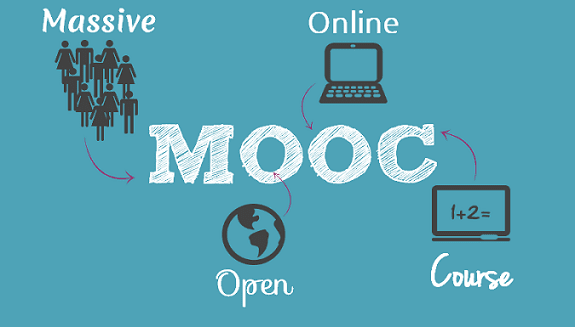
MOOC (Massive Open Online Course)
CoursesImplementation ResearchOnline Courses

Massive open online course on implementation research

by Public Health Update March 29, 2022
written by Public Health Update

TDR and the University of Ghana’s School of Public Health, the TDR-supported Regional Training Centre for the WHO African Region, are organizing a new session in English of the TDR Massive Open Online Course (MOOC) on Implementation Research (IR).

This free course is a step-by-step online training for public health researchers and decision-makers, disease control programme managers, academics and others, that focuses on how to design and demonstrate robust IR projects to improve control of infectious diseases of poverty and generate better health outcomes.

This course is open to all applicants. No technical or scientific background is required, though a health background would be an advantage.

Language: English with subtitles in English, Spanish and French

The course starts on 11 April 2022.

This course is by invitation only.

To register, please send a request to: artc@ug.edu.gh

Consult the course flyer for more information.

More information about TDR MOOC


Massive open online course (MOOC) Implementation Research 2022


Do you have a website? Looking for the best hosting provider? Here’s a discount code.

Latest Public Health Jobs

Latest Posts

  • International Wellness Day: Promoting Global Wellness for All
  • Summit Declaration: The 12th National Summit of Health and Population Scientists in Nepal
  • Joint political declaration on the reform of the global health architecture
  • World Health Day 2026: Together for Health. Stand with Science.
  • World Water Day 2026 | Water & Gender Equality

Thanks for visiting us.
Disclaimer: The resources, documents, guidelines, and information on this blog have been collected from various sources and are intended for informational purposes only. Information published on or through this website and affiliated social media channels does not represent the intention, plan, or strategies of an organization that the initiator is associated with in a professional or personal capacity, unless explicitly indicated.
If you have any complaints, information, or suggestions about the content published on Public Health Update, please feel free to contact us at blog.publichealthupdate@gmail.com.
#StayUpdated
  • WordPress
  • Link
  • Facebook
  • Mail
  • Facebook
  • Twitter
  • Twitter
  • LinkedIn
  • Instagram
  • Facebook
March 29, 2022 0 comments
0 FacebookTwitterPinterestLinkedinTumblrVKOdnoklassnikiRedditStumbleuponWhatsappTelegramLINEPocketSkypeViberEmail
World Health Day 2022
Public HealthActivitiesEnvironmental Health & Climate ChangeFact SheetPH Important DayPublic Health EventsPublic Health NewsPublic Health Update

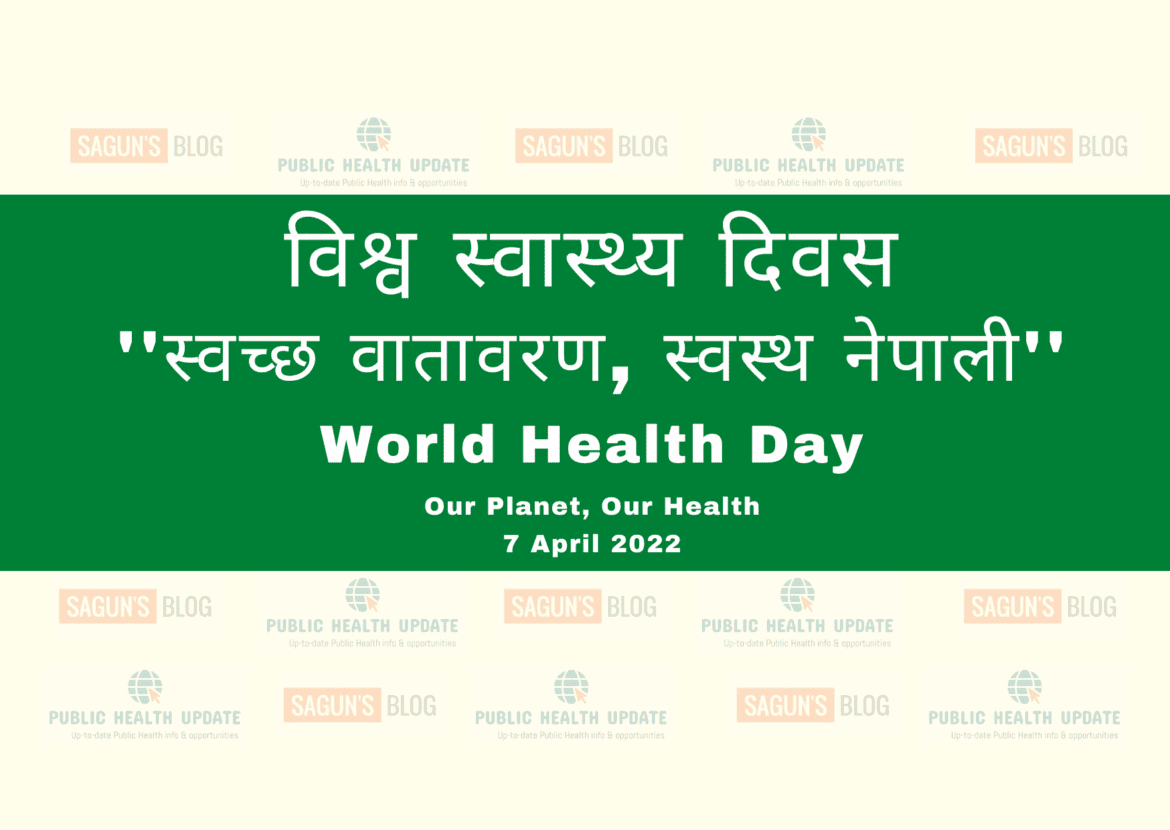
World Health Day 2022: Our Planet, Our Health

by Public Health Update March 29, 2022
written by Public Health Update

Overview

World Health Day is celebrated annually and each year draws attention to a specific health topic of concern to people all over the world. The date of 7 April marks the anniversary of the founding of WHO in 1948.

The celebration has aimed to create awareness of a specific health theme to highlight a priority area of concern for the World Health Organization.

World Health Day is a global campaign, inviting everyone – from global leaders to the public in all countries – to focus on a single health challenge with global impact. Focusing on new and emerging health issues, World Health Day provides an opportunity to start collective action to protect people’s health and well-being.

World Health Day 2022

World Health Day 2022

The theme for 2022 is Our planet, our health.

In the midst of a pandemic, a polluted planet, and increasing diseases like cancer, asthma and heart disease, WHO will focus global attention this World Health Day 2022 on urgent actions needed to keep humans and the planet healthy and foster a movement to create societies focused on well-being.   

Facts/ Social media messages

  • Air pollution kills 13 people every minute due to lung cancer, heart disease and strokes. Stop burning fossil fuels like oil, coal and natural gas.
  • Nine out of ten people breathe polluted air. Stop burning fossil fuels like oil, coal and natural gas. #HealthierTomorrow
  • Burning fossil fuels like oil, coal and natural gas causes air pollution. Keep fossil fuels in the ground for a healthy planet and a healthy me.
  • Climate change is a threat to human health driving diseases like cancer, asthma, heart disease, and mosquito-borne diseases like Dengue.
  • 3.6 billion people lack safe toilets globally. Untreated human waste degrades ecosystems and human health.
  • 2 billion people lack safe drinking-water globally. Protect water sources by preventing sewage, waste and chemicals from entering our lakes, rivers, or groundwater.
  • 829 000 people die from diarrhoeal disease every year caused by polluted water and poor sanitation.
  • Manage medical waste safely. Needlestick injuries from discarded syringes can cause Hepatitis B, C and infectious diseases. Emissions from burning of health care can increase cancers.
  • Tobacco kills more than 8 million people every year & is highly addictive. It is a major risk factor for cancer, heart, lung diseases. 600 Million trees are chopped down to make 6 trillion cigarettes every year, decreasing the clean air we breathe. No tobacco.
  • Tobacco kills; growing tobacco harms the planet. Keep your bodies and the environment free from tobacco.
  • Our planet, our health: clean our air, water and food.
  • Our planet, our health: Reimagine our economy, society, health.
  • Rising temperatures and floods caused by climate change will place an additional 2 billion people at risk of dengue infection.
  • Nitrogen dioxide pollution can aggravate respiratory diseases, particularly asthma. Well planned public transport systems, including safe walking and cycling, can improve air quality, mitigate climate change, and deliver additional health gains.

#HealthierTomorrow

Source of info: WHO


World Health Day Slogans

  • WORLD HEALTH DAY 2021: BUILDING A FAIRER, HEALTHIER WORLD FOR EVERYONE
  • World Health Day 2020: #SupportNursesAndMidwives #COVID19
  • World Health Day 2019 marked in Nepal
  • World Health Day : Health for all – everyone, everywhere
  • World Health Day 2018 (#WorldHealthDay) marked
  • World Health Day 2018: 70th anniversary year of WHO
  • Key messages for World Health Day 2018
  • World Health Day 2016: Beat diabetes : Activities @ Pokhara
  • Depression: let’s talk – 7 April 2017 | World Health Day
  • World Health Day-2014 (Small Bite : Big Threat) (Past Event)
  • World Health Day 2016: Beat diabetes : Activities @ Pokhara
  • World Health Day 2012 – ”Ageing and health: Good health adds life to years”
  • World Health Day 2015: Food safety
March 29, 2022 0 comments
0 FacebookTwitterPinterestLinkedinTumblrVKOdnoklassnikiRedditStumbleuponWhatsappTelegramLINEPocketSkypeViberEmail
Traditional Medicine
Global Health NewsPublic Health News

WHO establishes the Global Centre for Traditional Medicine in India

by Public Health Update March 27, 2022
written by Public Health Update

25 March 2022 News release Geneva

The World Health Organization (WHO) and the Government of India today signed an agreement to establish the WHO Global Centre for Traditional Medicine. This global knowledge centre for traditional medicine, supported by an investment of USD 250 million from the Government of India, aims to harness the potential of traditional medicine from across the world through modern science and technology to improve the health of people and the planet.

Around 80% of the world’s population is estimated to use traditional medicine. To date, 170 of the 194 WHO Member States have reported the use of traditional medicine, and their governments have asked for WHO’s support in creating a body of reliable evidence and data on traditional medicine practices and products.

“For many millions of people around the world, traditional medicine is the first port of call to treat many diseases,” said Dr Tedros Adhanom Ghebreyesus, WHO Director-General. “Ensuring all people have access to safe and effective treatment is an essential part of WHO’s mission, and this new center will help to harness the power of science to strengthen the evidence base for traditional medicine. I’m grateful to the Government of India for its support, and we look forward to making it a success.”

The term traditional medicine describes the total sum of the knowledge, skills and practices indigenous and different cultures have used over time to maintain health and prevent, diagnose and treat physical and mental illness. Its reach encompasses ancient practices such as acupuncture, ayurvedic medicine and herbal mixtures as well as modern medicines.

But today, national health systems and strategies do not yet fully integrate the millions of traditional medicine workers, accredited courses, health facilities, and health expenditures.

“It is heartening to learn about the signing of the Host Country Agreement for the establishment of Global Centre for Traditional Medicine (GCTM). The agreement between Ministry of Ayush and World Health Organization (WHO) to establish the WHO-GCTM at Jamnagar, Gujarat, is a commendable initiative,” said HE (Mr) Narendra Modi, Prime Minister of India.

“Through various initiatives, our government has been tireless in its endeavour to make preventive and curative healthcare, affordable and accessible to all. May the global centre at Jamnagar help in providing the best healthcare solutions to the world.”

Traditional medicine is also increasingly prominent in the world of modern science.

Some 40% of approved pharmaceutical products in use today derive from natural substances, highlighting the vital importance of conserving biodiversity and sustainability. For example, the discovery of aspirin drew on traditional medicine formulations using the bark of the willow tree, the contraceptive pill was developed from the roots of wild yam plants and child cancer treatments have been based on the rosy periwinkle. Nobel-prize winning research on artemisinin for malaria control started with a review of ancient Chinese medicine texts.

There has been a rapid modernization of the ways traditional medicine is being studied. Artificial intelligence is now used to map evidence and trends in traditional medicine and to screen natural products for pharmacokinetic properties. Functional magnetic resonance imaging is used to study brain activity and the relaxation response that is part of some traditional medicine therapies such as meditation and yoga, which are increasingly drawn on for mental health and wellbeing in stressful times.

In addition, traditional medicine use has also been updated by mobile phone apps, online classes, and other technologies.

The new WHO centre will be established in Jamnagar, Gujarat, India. While Jamnagar will serve as the hub, the new centre is being designed to engage and benefit all regions of the world.

It will concentrate on building a solid evidence base for policies and standards on traditional medicine practices and products and help countries integrate it as appropriate into their health systems and regulate its quality and safety for optimal and sustainable impact.

The new centre focuses on four main strategic areas: evidence and learning; data and analytics; sustainability and equity; and innovation and technology to optimize the contribution of traditional medicine to global health and sustainable development.

The onsite launch of the new WHO global centre for traditional medicine in Jamnagar, Gujarat, India will take place on April 21, 2022.For more information, see: who.int/initiatives/who-global-centre-for-traditional-medicine/ 

WHO NEWS


Do you have a website? Looking for the best hosting provider? Here’s a discount code.

Latest Public Health Jobs

Latest Posts

  • International Wellness Day: Promoting Global Wellness for All
  • Summit Declaration: The 12th National Summit of Health and Population Scientists in Nepal
  • Joint political declaration on the reform of the global health architecture
  • World Health Day 2026: Together for Health. Stand with Science.
  • World Water Day 2026 | Water & Gender Equality

Thanks for visiting us.
Disclaimer: The resources, documents, guidelines, and information on this blog have been collected from various sources and are intended for informational purposes only. Information published on or through this website and affiliated social media channels does not represent the intention, plan, or strategies of an organization that the initiator is associated with in a professional or personal capacity, unless explicitly indicated.
If you have any complaints, information, or suggestions about the content published on Public Health Update, please feel free to contact us at blog.publichealthupdate@gmail.com.
#StayUpdated


  • WordPress
  • Link
  • Facebook
  • Mail
  • Facebook
  • Twitter
  • Twitter
  • LinkedIn
  • Instagram
  • Facebook
March 27, 2022 0 comments
0 FacebookTwitterPinterestLinkedinTumblrVKOdnoklassnikiRedditStumbleuponWhatsappTelegramLINEPocketSkypeViberEmail
Guideline for Typhoid Vaccination Campaign and Launching typhoid vaccine into Routine Immunization Programme
National Plan, Policy & GuidelinesNational Health NewsResearch & Publication

Guideline for Typhoid Vaccination Campaign and Launching typhoid vaccine into Routine Immunization Programme

by Public Health Update March 25, 2022
written by Public Health Update

The Ministry of Health and Population (MoHP) decided to launch a typhoid vaccination campaign in Nepal from April 08, 2022, to May 01, 2022 (Chitra 25, 2078 to Baishakh 18, 2079) to vaccinate 15 months to 15 years-aged children in Nepal. A single dose of Typhoid Conjugate Vaccine (TCV) produced by TYPHIBEV (Biological E Ltd.) is 96.95% effective to protect from Typhoid Fever. For more information please download ‘Guideline for Typhoid Vaccination Campaign and Launching typhoid vaccine into Routine Immunization Programme’.

DOWNLOAD GUIDELINE

DOWNLOAD GUIDELINE

NATIONAL IMMUNIZATION SCHEDULE, NEPAL (UPDATED)


Do you have a website? Looking for the best hosting provider? Here’s a discount code.

Latest Public Health Jobs

Latest Posts

  • International Wellness Day: Promoting Global Wellness for All
  • Summit Declaration: The 12th National Summit of Health and Population Scientists in Nepal
  • Joint political declaration on the reform of the global health architecture
  • World Health Day 2026: Together for Health. Stand with Science.
  • World Water Day 2026 | Water & Gender Equality

Thanks for visiting us.
Disclaimer: The resources, documents, guidelines, and information on this blog have been collected from various sources and are intended for informational purposes only. Information published on or through this website and affiliated social media channels does not represent the intention, plan, or strategies of an organization that the initiator is associated with in a professional or personal capacity, unless explicitly indicated.
If you have any complaints, information, or suggestions about the content published on Public Health Update, please feel free to contact us at blog.publichealthupdate@gmail.com.
#StayUpdated


  • WordPress
  • Link
  • Facebook
  • Mail
  • Facebook
  • Twitter
  • Twitter
  • LinkedIn
  • Instagram
  • Facebook
March 25, 2022 0 comments
0 FacebookTwitterPinterestLinkedinTumblrVKOdnoklassnikiRedditStumbleuponWhatsappTelegramLINEPocketSkypeViberEmail
World TB Day
Global Health NewsPH Important DayPublic Health News

On World TB day WHO calls for increased investments into TB services and research

by Public Health Update March 24, 2022
written by Public Health Update

21 March 2022 News release 

On World TB Day, WHO calls for an urgent investment of resources, support, care and information into the fight against tuberculosis (TB). Although 66 million lives have been saved since 2000, the COVID-19 pandemic has reversed those gains. For the first time in over a decade, TB deaths increased in 2020. Ongoing conflicts across Eastern Europe, Africa and the Middle East have further exacerbated the situation for vulnerable populations.

Global spending on TB diagnostics, treatments and prevention in 2020 were less than half of the global target of US$ 13 billion annually by 2022. For research and development, an extra US$ 1.1 billion per year is needed. “Urgent investments are needed to develop and expand access to the most innovative services and tools to prevent, detect and treat TB that could save millions of lives each year, narrow inequities and avert huge economic losses,” said Dr Tedros Adhanom Ghebreyesus. “These investments offer huge returns for countries and donors, in averted health care costs and increased productivity.”

Investments in TB programmes have demonstrated benefits not just for people with TB but for health systems and pandemic preparedness. Building on lessons learnt from COVID-19 research, there is a need to catalyse investment and action to accelerate the development of new tools, especially new TB vaccines.

Progress towards reaching the 2022 targets set in the UN High Level Meeting political declaration and the WHO Director-General’s Flagship Initiative Find.Treat.All is at risk mainly due to lack of funding. Between 2018–2020, 20 million people were reached with TB treatment. This is 50% of the 5-year target of 40 million people reached with TB treatment for 2018-2022. During the same period 8.7 million people were provided TB preventive treatment. This is 29% of the target of 30 million for 2018-2022.

The situation is even worse for children and adolescents with TB. In 2020, an estimated 63 % of children and young adolescents below 15 years with TB were not reached with or not officially reported to have accessed life-saving TB diagnosis and treatment services; the proportion was even higher – 72% – for children under 5 years. Almost two thirds of eligible children under 5 did not receive TB preventive treatment and therefore remain at risk of illness.

COVID-19 has had a further negative and disproportionate impact on children and adolescents with TB or at risk, with increased TB transmission in the household, lower care-seeking and access to health services. WHO is sounding the alarm on World TB Day for countries to urgently restore access to TB services, disrupted due to COVID-19 pandemic for all people with TB, especially children and adolescents.

“Children and adolescents with TB are lagging behind adults in access to TB prevention and care”, said Dr Tereza Kasaeva, Director of WHO’s Global TB Programme. “The WHO guidelines issued today are a gamechanger for children and adolescents, helping them get diagnosed and access care sooner, leading to better outcomes and cutting transmission. The priority now is to rapidly expand implementation of the guidance across countries to save young lives and avert suffering”

Updated guidelines for the management of TB in children and adolescents 

Updated guidelines for the management of TB in children and adolescents released by WHO today highlight new patient-centred recommendations for diagnosis, treatment and prevention.  The most recent recommendations are:

  • Diagnostic testing has expanded to include non-invasive specimens, such as stools.
  • Rapid molecular diagnostics are recommended as the initial test for TB diagnosis for children and adolescents.
  • Children and adolescents who have non-severe forms of drug-susceptible TB are now recommended to be treated for four months instead of six months, as well as TB meningitis, where a six-month regimen is now recommended instead of 12 months. This promotes a patient-centred approach that will reduce the costs of TB care for children, adolescents and their families.  
  • Two of the newest TB medicines to treat drug resistant TB (bedaquiline and delamanid) are now recommended for use in children of all ages, making it possible for children with drug-resistant TB to receive all-oral treatment regimens regardless of their age.
  • New models of decentralized and integrated TB care are also recommended, which will allow more children and adolescents to access TB care or preventive treatment, closer to where they live.

TB remains one of the world’s deadliest infectious killers. Each day, over 4 100 people lose their lives to TB and close to 30 000 people fall ill with this preventable and curable disease. Ending TB requires concerted action by all sectors. On World TB Day, WHO calls on everyone- individuals, communities, societies, donors and governments to do their part to end TB.

21 March 2022 News release


Recommended readings
  • National Strategic Plan to End Tuberculosis in Nepal
  • Global Tuberculosis Report 2021
  • Global Tuberculosis Report 2020
  • World Tuberculosis Day
  • Tuberculosis Free Nepal Declaration Initiative Implementation Guideline
  • National Tuberculosis Program Update in Nepal #WorldTBDay #EndTB
  • National TB Prevalence Survey, 2018-19 Key findings
  • World Tuberculosis Day 2020! It’s time to End TB!
  • National Guideline on Drug Resistant TB Management 2019, Nepal
  • National Tuberculosis Management Guideline 2019, Nepal
  • Global Tuberculosis Report 2019: Latest status of the tuberculosis epidemic
  • National TB Prevalence Survey, 2018-19 Key findings
  • New WHO recommendations to prevent tuberculosis aim to save millions of lives
  • World Health Organization (WHO) Information Note Tuberculosis and COVID-19
  • World Tuberculosis Day 2020! It’s time to End TB!
  • People-centred framework for tuberculosis programme planning and prioritization, User guide
  • Global Tuberculosis Report 2019: Latest status of the tuberculosis epidemic
  • Dissemination of Findings and Recommendations of Joint External Monitoring Mission(JEMM) of Nepal National Tuberculosis Program
  • National Tuberculosis Programme Annual Report 2018
  • National Strategic Plan for Tuberculosis Prevention, Care and Control 2016 – 2021
  • NTP, Nepal: New TB Treatment Algorithm & Regimen (Updated)
  • WHO announces landmark changes in MDR-TB treatment regimens
  • TB Vaccine results announce a promising step towards ending the emergency
  • 7 million people receive record levels of lifesaving TB treatment but 3 million still miss out

Similar days

  • World Tuberculosis Day 2021: The Clock Is Ticking
  • World Tuberculosis Day 2020! It’s time to End TB!
  • World Tuberculosis Day Observed with theme “It’s Time”
  • World Tuberculosis Day 2019 – It’s time ! ”Find Treat All #EndTB”
  • Important Message – World Tuberculosis Day 2018
  • World Tuberculosis Day – 24 March 2015
  • World Tuberculosis Day 2012 – ‘Stopping TB in My Lifetime’
  • Theme for World TB Day 2074- National Tuberculosis Centre
March 24, 2022 0 comments
0 FacebookTwitterPinterestLinkedinTumblrVKOdnoklassnikiRedditStumbleuponWhatsappTelegramLINEPocketSkypeViberEmail
World Tuberculosis Day 2022
ActivitiesCommunicable DiseasesPH Important DayPublic Health

WHO Calls for Urgent, Sustained and Adequate Investments in Ending TB

by Public Health Update March 23, 2022
written by Public Health Update

Media statement on World TB Day, 24 March 2022
Dr Poonam Khetrapal Singh, Regional Director, WHO South-East Asia

Invest to End TB. Save Lives On World TB Day, WHO is highlighting the urgent need for national, international and global stakeholders to invest at least US$ 3 billion annually in the South-East Asia Region to avert nearly 4.5 million new TB cases and prevent more than 1.5 million TB deaths by 2025. Globally, TB kills more than 4100 people every day. It makes close to 28,000 sick. In 2020, amid the COVID-19 response, TB caused an estimated 1.5 million deaths globally, up from 1.4 million in 2019. In the Region, estimated TB and TB-HIV mortality increased by nearly 10% in 2020, to over 700,000 lives lost – a trend that is likely to continue, if not worsen, unless urgent action is taken. In all countries of the Region, WHO continues to accelerate efforts to end TB, in line with its Flagship Priorities, the global End TB Strategy, the UN Political Declaration on the Fight Against TB, and Sustainable Development Goal target 3.3.

The Region continues to galvanize political momentum to achieve the End TB milestones. In October 2021, India, Indonesia and Nepal co-hosted a high-level meeting at which Member States committed to renew the TB response, building on the legacy of the 2018 Delhi End TB Summit and the Region’s Statement of Action. At the meeting, Member States endorsed a new Regional Strategic Plan (2021–2025), which among other features, provides a detailed account of funding shortfalls for priority interventions. Between 2015 and 2021, domestic budgets for national TB programmes tripled, from US$ 168 million to US$ 558 million.Throughout the COVID-19 response, countries have made commendable efforts to maintain essential health services, including for TB. In 2020, India launched a “Jan Andolan”, or people’s movement, against TB.

In 2021, Indonesia issued a Presidential Decree to End TB, while both Nepal and Timor-Leste launched high-level initiatives to accelerate towards the End TB milestones. 

Achieving the Region’s US$ 3 billion annual investment target is especially important given the impact of the COVID-19 pandemic. In addition to the 10% increase in TB mortality in the Region in 2020, case notification dropped from 3.6 million to 2.6 million – the same level as in 2015. After five years of growth, the Region suffered an economic contraction of -5.4% pushing tens of millions of people into extreme poverty and exacerbating the social determinants of health. In 2019 almost 23% of new TB cases in the Region were attributable to undernutrition, which has since intensified among the poorest and most vulnerable. In all countries of the Region, social and economic support for TB patients must be enhanced, better integrated into social protection services, and delineated into measures that are TB-specific, TB-inclusive and TB-sensitive.

In the months and years ahead, the Region has several priorities.First, translating political momentum into on-the-ground action and results. To do that, WHO will support Member States to operationalize empowered TB mechanisms based on the principles of the multi-stakeholder accountability framework for TB.Second, increasing human resource allocations and engaging all care providers. Not only will this reduce TB mortality itself, but also increase the strength and reach of key TB interventions, from active case-finding and contact-tracing, to the provision of TB preventive therapy, improved support for TB treatment adherence, and a rapid vaccine roll-out as soon as next-generation TB vaccines are developed and approved for use.Third, intensifying community engagement in planning, monitoring and implementing national TB programmes, ensuring that TB services are close to where people live and work and sensitive to their needs.Fourth, strengthening ongoing research, including Phase 3 clinical trials of a TB preventive vaccine for household contacts of TB patients, as well as a post-TB vaccine to prevent TB recurrence. Increased South-South collaboration for technology transfer and commodity support is especially needed. Our momentum must not be halted. Since 2017, accelerating efforts to end TB by 2030 has been one of eight Flagship Priorities in the Region. 

Amid the COVID-19 response, and in the recovery that will follow, it will continue to be a critical concern. Increased investments in ending TB will not only avert new TB cases and deaths, but also avoid the loss of more than 31 million disability-adjusted life years in the Region between now and 2025. Across the Region, traditional and innovative financing mechanisms must be explored. Our network of TB financing agencies must be expanded. Together, we must achieve the highest attainable standards of rights-based, stigma-free, quality-assured, people-centric TB preventive, diagnostic, treatment, rehabilitative and palliative care. 

On World TB Day, WHO calls for urgent, sustained and adequate investments in ending TB to save lives and secure a more equitable and sustainable future for all.  


National Tuberculosis Control Centre (NTCC)

Recommended readings
  • National Strategic Plan to End Tuberculosis in Nepal
  • Global Tuberculosis Report 2021
  • Global Tuberculosis Report 2020
  • World Tuberculosis Day
  • Tuberculosis Free Nepal Declaration Initiative Implementation Guideline
  • National Tuberculosis Program Update in Nepal #WorldTBDay #EndTB
  • National TB Prevalence Survey, 2018-19 Key findings
  • World Tuberculosis Day 2020! It’s time to End TB!
  • National Guideline on Drug Resistant TB Management 2019, Nepal
  • National Tuberculosis Management Guideline 2019, Nepal
  • Global Tuberculosis Report 2019: Latest status of the tuberculosis epidemic
  • National TB Prevalence Survey, 2018-19 Key findings
  • New WHO recommendations to prevent tuberculosis aim to save millions of lives
  • World Health Organization (WHO) Information Note Tuberculosis and COVID-19
  • World Tuberculosis Day 2020! It’s time to End TB!
  • People-centred framework for tuberculosis programme planning and prioritization, User guide
  • Global Tuberculosis Report 2019: Latest status of the tuberculosis epidemic
  • Dissemination of Findings and Recommendations of Joint External Monitoring Mission(JEMM) of Nepal National Tuberculosis Program
  • National Tuberculosis Programme Annual Report 2018
  • National Strategic Plan for Tuberculosis Prevention, Care and Control 2016 – 2021
  • NTP, Nepal: New TB Treatment Algorithm & Regimen (Updated)
  • WHO announces landmark changes in MDR-TB treatment regimens
  • TB Vaccine results announce a promising step towards ending the emergency
  • 7 million people receive record levels of lifesaving TB treatment but 3 million still miss out

Similar days

  • World Tuberculosis Day 2021: The Clock Is Ticking
  • World Tuberculosis Day 2020! It’s time to End TB!
  • World Tuberculosis Day Observed with theme “It’s Time”
  • World Tuberculosis Day 2019 – It’s time ! ”Find Treat All #EndTB”
  • Important Message – World Tuberculosis Day 2018
  • World Tuberculosis Day – 24 March 2015
  • World Tuberculosis Day 2012 – ‘Stopping TB in My Lifetime’
  • Theme for World TB Day 2074- National Tuberculosis Centre
March 23, 2022 0 comments
0 FacebookTwitterPinterestLinkedinTumblrVKOdnoklassnikiRedditStumbleuponWhatsappTelegramLINEPocketSkypeViberEmail
World Tuberculosis Day 2022
PH Important DayCommunicable DiseasesPublic HealthPublic Health EventsPublic Health NewsPublic Health Update

World Tuberculosis Day 2022: Invest to End TB. Save Lives

by Public Health Update March 22, 2022
written by Public Health Update

Overview

World Tuberculosis Day (World TB Day) is celebrated each year on March 24 to raise public awareness and understanding about tuberculosis.

Objective

The main objective of World tuberculosis Day is to educate the public about the impact of TB around the world. It is an opportunity to raise awareness about the burden of tuberculosis (TB) worldwide and the status of TB prevention and care efforts. It is also an opportunity to mobilize political and social commitment for further progress in efforts to end TB.

World TB Day 2022

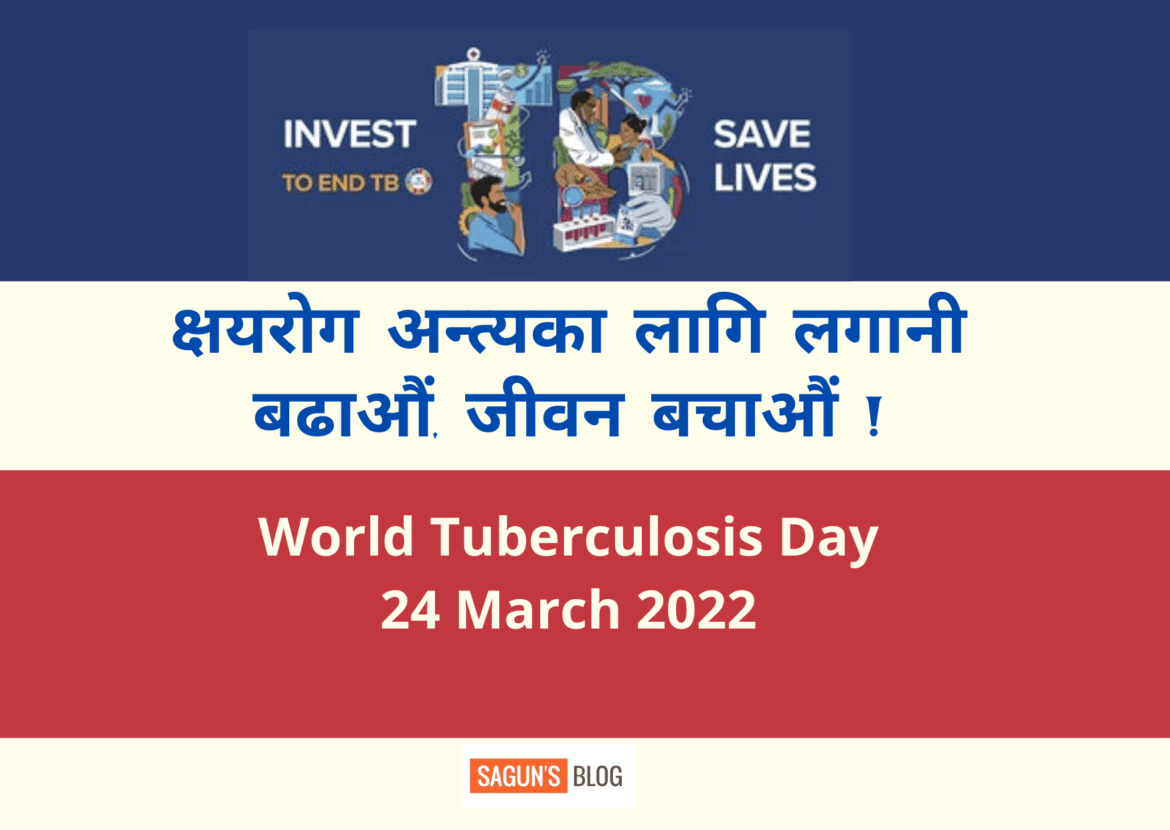
The theme of World TB Day 2022 – ‘Invest to End TB. Save Lives.’ –conveys the urgent need to invest resources to ramp up the fight against TB and achieve the commitments to end TB made by global leaders.

This is especially critical in the context of the COVID-19 pandemic that has put End TB progress at risk, and to ensure equitable access to prevention and care in line with WHO’s drive towards achieving Universal Health Coverage.

World Tuberculosis Day 2022
World TB Day

Facts

  • 66,000,000 lives saved since 2000 by global efforts to end TB
  • 9,900,000 people fell ill with TB in 2020
  • 1,500,000 people died of TB in 2020
  • In 2020, an estimated 10 million people fell ill with tuberculosis(TB) worldwide. 5.6 million men, 3.3 million women and 1.1 million children. TB is present in all countries and age groups. But TB is curable and preventable.
  •  A total of 1.5 million people died from TB in 2020 (including 214 000 people with HIV). Worldwide, TB is the 13th leading cause of death and the second leading infectious killer after COVID-19 (above HIV/AIDS).
  • In 2020, the 30 high TB burden countries accounted for 86% of new TB cases. Eight countries account for two thirds of the total, with India leading the count, followed by China, Indonesia, the Philippines, Pakistan, Nigeria, Bangladesh and South Africa. 
  • In 2020, 1.1 million children fell ill with TB globally. Child and adolescent TB is often overlooked by health providers and can be difficult to diagnose and treat. 
  • TB is the leading killer of people with HIV. In 2020, there were 375 962 people who had TB and HIV were notified, of whom 88% were on antiretroviral therapy.  Most of the gaps in detection and treatment were in the WHO African Region, where the burden of HIV associated TB is highest.
  • Multidrug-resistant TB (MDR-TB) remains a public health crisis and a health security threat. Only about one in three people with drug resistant TB accessed treatment in 2020. In some cases an even more severe form of multi-drug resistant TB may develop with bad treatment. Pre-extensively drug-resistant TB (pre-XDR-TB) and (XDR-TB) are forms of TB that responds to even fewer available medicines.
  • TB treatment saved about 66 million lives globally between 2000 and 2020, but important diagnostic and treatment gaps persist. The treatment success rate for people with TB was 86% in 2019.
  • Globally, TB incidence is falling at about 2% per year (1.9% from 2019 to 2020). This is much slower than the 4–5% annual decline that was required to achieve the 2020 milestones of the WHO End TB Strategy.
  • Funding for the provision of TB prevention, diagnostic and treatment services increased from 2010 to 2019, but spending in low and middle-income countries fell from US$ 5.8 billion in 2019 to US$5.3 billion in 2020. This falls far short of the target of US$13 billion per year by 2022 that was set at the first UN high-level meeting on TB.  For research and development, at least an extra US$ 1.1 billion per year is needed to accelerate the development of new tools.

Source of Info: World Health Organization, STOP TB, Global Tuberculosis Report 2020, Global Tuberculosis Report 2021.

National Tuberculosis Control Centre (NTCC)

Recommended readings
  • National Strategic Plan to End Tuberculosis in Nepal
  • Global Tuberculosis Report 2021
  • Global Tuberculosis Report 2020
  • World Tuberculosis Day
  • Tuberculosis Free Nepal Declaration Initiative Implementation Guideline
  • National Tuberculosis Program Update in Nepal #WorldTBDay #EndTB
  • National TB Prevalence Survey, 2018-19 Key findings
  • World Tuberculosis Day 2020! It’s time to End TB!
  • National Guideline on Drug Resistant TB Management 2019, Nepal
  • National Tuberculosis Management Guideline 2019, Nepal
  • Global Tuberculosis Report 2019: Latest status of the tuberculosis epidemic
  • National TB Prevalence Survey, 2018-19 Key findings
  • New WHO recommendations to prevent tuberculosis aim to save millions of lives
  • World Health Organization (WHO) Information Note Tuberculosis and COVID-19
  • World Tuberculosis Day 2020! It’s time to End TB!
  • People-centred framework for tuberculosis programme planning and prioritization, User guide
  • Global Tuberculosis Report 2019: Latest status of the tuberculosis epidemic
  • Dissemination of Findings and Recommendations of Joint External Monitoring Mission(JEMM) of Nepal National Tuberculosis Program
  • National Tuberculosis Programme Annual Report 2018
  • National Strategic Plan for Tuberculosis Prevention, Care and Control 2016 – 2021
  • NTP, Nepal: New TB Treatment Algorithm & Regimen (Updated)
  • WHO announces landmark changes in MDR-TB treatment regimens
  • TB Vaccine results announce a promising step towards ending the emergency
  • 7 million people receive record levels of lifesaving TB treatment but 3 million still miss out

Similar days

  • World Tuberculosis Day 2021: The Clock Is Ticking
  • World Tuberculosis Day 2020! It’s time to End TB!
  • World Tuberculosis Day Observed with theme “It’s Time”
  • World Tuberculosis Day 2019 – It’s time ! ”Find Treat All #EndTB”
  • Important Message – World Tuberculosis Day 2018
  • World Tuberculosis Day – 24 March 2015
  • World Tuberculosis Day 2012 – ‘Stopping TB in My Lifetime’
  • Theme for World TB Day 2074- National Tuberculosis Centre
March 22, 2022 2 comments
0 FacebookTwitterPinterestLinkedinTumblrVKOdnoklassnikiRedditStumbleuponWhatsappTelegramLINEPocketSkypeViberEmail
World Oral Health Day
PH Important DayActivitiesPublic Health Events

World Oral Health Day 2022: Be Proud of Your Mouth for your happiness and well-being

by Public Health Update March 20, 2022
written by Public Health Update

Background

Oral diseases are a major health concern for many countries and negatively impact people throughout their lives. Oral diseases lead to pain and discomfort, social isolation and loss of self-confidence, and they are often linked to other serious health issues. And yet, there is no reason to suffer: most oral health conditions are largely preventable and can be treated in their early stages.  

World Oral Health Day 2022: Be Proud of Your Mouth for your happiness and well-being

This year, help us spread the word to encourage as many people as possible to look after their mouth and protect their quality of life. Because an unhealthy mouth not only impacts general health but it can have a severe impact on people’s emotional, social, mental, and overall physical well-being; and that’s why we are calling on people to Be Proud of their Mouth for their happiness and well-being.

Facts

  • Oral Diseases affect nearly 3.5 billion people globally.
  • More than 530 million children suffer from Tooth Decay in their Primary Teeth, which can lead to pain, infection, Tooth Loss and missed school days. 
  • There is so much everyone can do to reduce their risk of Oral Diseases as well as other serious health conditions. 
  • Good oral hygiene habits learned at a young age will help keep a child’s mouth healthy throughout life.
  • Tooth Decay is preventable, yet millions of people suffer because of it. Be Proud of Your Mouth.
  • Oral Health is vital for your happiness and well-being. The good news is that oral health can be maintained by being aware of your risk factors and taking action to prevent disease.
  • Practicing a good oral hygiene routine at home, combined with regular visits to the dentist, is one of the most important things you can do for your oral and overall health.

World Oral Health Day


[MEC id=”77146″]
March 20, 2022 1 comment
0 FacebookTwitterPinterestLinkedinTumblrVKOdnoklassnikiRedditStumbleuponWhatsappTelegramLINEPocketSkypeViberEmail
University of Southern Denmark (SDU)
PhDEuropean RegionInternational Jobs & OpportunitiesPublic Health OpportunitiesPublic Health Opportunity

Declaration of interest regarding PhD project, University of Southern Denmark (SDU)

by Public Health Update March 20, 2022
written by Public Health Update

Psychiatric Research Unit, Department of Psychiatry, University Hospital Southern Denmark and Institute of Clinical Research, University of Southern Denmark (SDU) is looking for applicants for a PhD scholarship within the field of epidemiology, reproduction, and mental health.

Research environment

The candidate will join a research group at Psychiatric Research Unit, Department of Psychiatry, University Hospital Southern Denmark and Institute of Clinical Research, University of Southern Denmark (SDU), and be affiliated with the pharmacoepidemiology group at Clinical Pharmacology, Pharmacy and Environmental Medicine, Department of Public Health, University of Denmark.

Jointly these research environments will provide the fundaments for the PACE project representing expertise in perinatal mental health, reproductive and psychiatric epidemiology, as well as pharmacoepidemiology and method development.

Project description

Postpartum depression (PPD) is observed in 10-15% of all new mothers, directly inferring PPDs are triggered by some component either of pregnancy, delivery, or the postpartum period. However, it is not clear to which extent the biological aspect of pregnancy and childbirth vs. the psychological impact of motherhood explains PPD risk, and further how genetic vulnerability or environmental factors individually or in combination explain the increased risk of PPD.

The PACE project will apply a triangulation approach to understand the underlying causality and etiology behind PPD. Leveraging the unique Danish registers, we will address why motherhood is associated with increased risk of depression including unique study designs, including a twin study, a natural experiment and applying the use of negative controls.

The PACE project is funded by Novo Nordisk Foundation and among others covers a fully funded 3-year PhD position. The applicant is however expected to apply for own funding to cover costs related to research stay at another research institution and costs related to conference participation.

The outlined work for the PhD project will be done by the PhD candidate in collaboration and after coordination with co-supervisors (to be determined) and professor Trine Munk-Olsen (main supervisor). More specifically, the project should focus on to which extent is biology of pregnancy and childbirth related to risk of PPD and consider how genetic vulnerability (measured as family history of various mental disorders) influence PPD risk.

Specific studies could focus on:

  • Comparison of risk of PPD in mothers having a biological child vs. mothers adopting a child
  • Comparison of risk of and risk factors for PPD in mothers vs. fathers
  • Risk of PPD in mothers with family history of PPD, depression or PTSD

Qualifications

We are looking for a candidate with a master’s degree in health science, public health, pharmacology, or similar degrees. Students expecting to finish their degree in the summer (2022) are also invited to apply.

We invite motivated candidates with interest in quantitative research within the field of epidemiology and mental health to apply and will specifically look for candidates with documented experience in research and scientific manuscript writing, as well as interests and/or hands-on experience with e.g., systematic reviews or meta-analyses, register-based research and coding/statistical analyses in e.g. Stata.

The successful applicant will join a new dynamic research team with both national and international collaborators and will be introduced and included in relevant discussions, research projects and collaborations.

Suitable candidates will be invited for an informal interview after the application deadline.

For further information about the project, please contact:

Professor Trine Munk-Olsen
Psychiatric Research Unit
Department of Psychiatry, University Hospital Southern Denmark
Institute of Clinical Research
University of Southern Denmark (SDU)

Phone number: +45 24 46 62 97 
E-mail: tmun@sdu.dkApplications must include:

  • At letter stating the interest, motivation, and qualifications for the project (max. 2 pages) – upload under “Application form”.
  • Detailed CV, including personal contact information
  • Certified copy of diploma (Master’s degree in a relevant field)

Applications must be submitted electronically using the link “Apply online”.

Attached files must be in Adobe PDF or Word format. Each box can only contain a single file of max. 10 Mb.

Incomplete applications and applications received after the deadline will neither be considered nor evaluated. This also applies to reference letters.

Application deadline: April 4, 2022.

Successful candidates will be asked to send an application to the PhD Secretariat, Faculty of Health Sciences, to be enrolled as PhD students.

The PhD programme will be carried out in accordance with Faculty regulations and the Danish Ministerial Order on the PhD Programme at the Universities (PhD order)

The terms of employment as a salaried PhD Research Fellow are stated in the Agreement between the Ministry of Finance and the Danish Confederation of Professional Associations (AC).

The University wishes our staff to reflect the diversity of society and thus welcomes applications from all qualified candidates regardless of personal background.

Read more and apply


Do you have a website? Looking for the best hosting provider? Here’s a discount code.

Latest Public Health Jobs

Latest Posts

  • International Wellness Day: Promoting Global Wellness for All
  • Summit Declaration: The 12th National Summit of Health and Population Scientists in Nepal
  • Joint political declaration on the reform of the global health architecture
  • World Health Day 2026: Together for Health. Stand with Science.
  • World Water Day 2026 | Water & Gender Equality

Thanks for visiting us.
Disclaimer: The resources, documents, guidelines, and information on this blog have been collected from various sources and are intended for informational purposes only. Information published on or through this website and affiliated social media channels does not represent the intention, plan, or strategies of an organization that the initiator is associated with in a professional or personal capacity, unless explicitly indicated.
If you have any complaints, information, or suggestions about the content published on Public Health Update, please feel free to contact us at blog.publichealthupdate@gmail.com.
#StayUpdated


  • WordPress
  • Link
  • Facebook
  • Mail
  • Facebook
  • Twitter
  • Twitter
  • LinkedIn
  • Instagram
  • Facebook
March 20, 2022 0 comments
0 FacebookTwitterPinterestLinkedinTumblrVKOdnoklassnikiRedditStumbleuponWhatsappTelegramLINEPocketSkypeViberEmail
end TB
Public Health OpportunityCall for Proposal, EOI & RFPPublic Health Opportunities

Call for applications for members to serve on Strategic and Technical Advisory Group on Tuberculosis (STAG-TB)

by Public Health Update March 14, 2022
written by Public Health Update

Call for applications for members to serve on Strategic and Technical Advisory Group on Tuberculosis (STAG-TB)

14 March 2022 (Call for experts)

The World Health Organization’s (WHO) Global Tuberculosis (TB) Programme is seeking qualified individuals to serve as members of the Strategic and Technical Advisory Group on Tuberculosis (STAG-TB). This “Call for experts” provides information about the above advisory group, the expert profiles being sought, the process to express interest, and the process of selection.

Background

As part of the United Nations Sustainable Development Goals and WHO’s End TB Strategy, Member States committed to ending the global TB epidemic by 2030. The first United Nations high-level meeting on TB held in 2018 resulted in a political declaration with ambitious targets and commitments to contribute to this goal. The UN Secretary General’s 2020 progress report for this political declaration noted that the high-level commitments and targets have galvanized global and national progress towards ending TB, but urgent and more ambitious investments and actions are required, especially in the context of the COVID-19 pandemic. The pandemic has resulted in an annual increase in the number of people dying from TB for the first time in a decade, coupled with reductions in the number of people diagnosed and treated for TB.  

WHO is committed to working with countries, partners and civil society in ensuring access to TB prevention and care services. The Strategic and Technical Advisory Group for Tuberculosis was established in 2001 and provides advice to WHO on ending TB.

Operations and membership of the STAG-TB

Members of the STAG-TB are appointed by the Director-General based on their scientific and technical competence. In the selection of the members, consideration is given to attaining a  balance of technical expertise as well as geographical and gender representation. Members serve in their personal capacities, for a term of three years, to represent the range of disciplines relevant to public policy development and implementation for ending TB.    

STAG-TB meetings are organized annually, and ad-hoc meetings may be organized from time to time to address any urgent issues. Members may also be requested to provide input into online documents between scheduled meetings. The current membership and terms of reference of the STAG-TB are available here.

Who can express interest?

This call for expression of interest is open to experts with high-level experience and demonstrated results in providing strategic leadership on public health and global development. We are inviting experts in the following areas to complement the existing STAG-TB membership: governance, financing, ethics, human rights, social protection and multisectoral collaboration. Given the need for multisectoral action to combat TB, as outlined in the UN High Level Meeting Political Declaration and SDGs, special consideration will be given to applicants with expertise beyond TB. As the distribution of the global burden of tuberculosis, expertise and experience relevant to low- and middle- income settings is particularly important. 

Submitting your expression of interest

To register your interest to be considered for the STAG-TB, please submit the following documents by 25 March, 2022 to gtbprogramme@who.int, using the subject line “Expression of interest for the STAG-TB”:

·  A cover letter, indicating your motivation to apply and how you satisfy the selection criteria. Please note that, if selected, membership will be in a personal capacity. Therefore, do not use the letterhead or other identification of your employer;

·  Please include in the cover letter, the primary and secondary (if any) workstream(s) you would like to be considered for (i.e. monitoring and surveillance, operational research, affected communities and civil society engagement, health system strengthening, wider global health issues) and describe any content areas in which you have particular interest and expertise (e.g. such as health care financing, ethics, human rights, and social protection, palliative care, disability, mental health);

·  Your curriculum vitae;

· A signed and completed Declaration of Interests (DOI) form for WHO Experts, available at here.

The 2022 STAG-TB meeting is scheduled for 6-8 June 2022 in Geneva, Switzerland; interested individuals should be available for this meeting.

After submission, your expression of interest will be reviewed by WHO. Due to an expected high volume of interest, only selected individuals will be informed.

Important information about the selection processes and conditions of appointment

Members of WHO advisory groups (AGs) must be free of any real, potential or apparent conflicts of interest. To this end, applicants are required to complete the WHO Declaration of Interests for WHO Experts, and the selection as a member of an AG is, among other things, dependent on WHO determining that there is no conflict of interest or that any identified conflicts could be appropriately managed (in addition to WHO’s evaluation of an applicant’s experience, expertise and motivation and other criteria). 

All AG members will serve in their individual expert capacity and shall not represent any governments, any commercial industries or entities, any research, academic or civil society organizations, or any other bodies, entities, institutions or organizations. They are expected to fully comply with the Code of Conduct for WHO Experts. AG members will be expected to sign and return a completed confidentiality undertaking prior to the beginning of the first meeting. 

At any point during the selection process, telephone interviews may be scheduled between an applicant and the WHO Secretariat to enable WHO to ask questions relating to the applicant’s experience and expertise and/or to assess whether the applicant meets the criteria for membership in the relevant AG. 

The selection of members of the AGs will be made by WHO in its sole discretion, taking into account  the following (non-exclusive) criteria: relevant technical expertise; experience in international and country policy work; communication skills; and ability to work constructively with people from different cultural backgrounds and orientations. The selection of AG members will also take account of the need for diverse perspectives from different regions, especially from low and middle-income countries, and for gender balance. 

If selected by WHO, proposed members will be sent an invitation letter and a Memorandum of Agreement. Appointment as a member of a AG will be subject to the proposed member returning to WHO the countersigned copy of these two documents.

WHO reserves the right to accept or reject any expression of interest to annul the open call process and reject all expressions of interest at any time without incurring any liability to the affected applicant or applicants and without any obligation to inform the affected applicant or applicants of the grounds for WHO’s action. WHO may also decide, at any time, not to proceed with the establishment of the AG, disband an existing TAG or modify the work of the AG.

WHO shall not in any way be obliged to reveal, or discuss with any applicant, how an expression of interest was assessed, or to provide any other information relating to the evaluation/selection process or to state the reasons for not choosing a member.

WHO may publish the names and a short biography of the selected individuals on the WHO internet.

AG members will not be remunerated for their services in relation to the AG or otherwise. Travel and accommodation expenses of AG members to participate in AG meetings will be covered by WHO in accordance with its applicable policies, rules and procedures.

The appointment will be limited in time as indicated in the letter of appointment.

Official info: WHO


Do you have a website? Looking for the best hosting provider? Here’s a discount code.

Latest Public Health Jobs

Latest Posts

  • International Wellness Day: Promoting Global Wellness for All
  • Summit Declaration: The 12th National Summit of Health and Population Scientists in Nepal
  • Joint political declaration on the reform of the global health architecture
  • World Health Day 2026: Together for Health. Stand with Science.
  • World Water Day 2026 | Water & Gender Equality

Thanks for visiting us.
Disclaimer: The resources, documents, guidelines, and information on this blog have been collected from various sources and are intended for informational purposes only. Information published on or through this website and affiliated social media channels does not represent the intention, plan, or strategies of an organization that the initiator is associated with in a professional or personal capacity, unless explicitly indicated.
If you have any complaints, information, or suggestions about the content published on Public Health Update, please feel free to contact us at blog.publichealthupdate@gmail.com.
#StayUpdated


  • WordPress
  • Link
  • Facebook
  • Mail
  • Facebook
  • Twitter
  • Twitter
  • LinkedIn
  • Instagram
  • Facebook
March 14, 2022 0 comments
0 FacebookTwitterPinterestLinkedinTumblrVKOdnoklassnikiRedditStumbleuponWhatsappTelegramLINEPocketSkypeViberEmail
Newer Posts
Older Posts

Search

Follow Us

Facebook Twitter Instagram Pinterest Linkedin Youtube

Categories

  • Abstracts (25)
  • Activities (91)
  • Adolescent Sexual and Reproductive Health (ASRH) (25)
  • Advice & Tips (4)
  • African Region (5)
  • AI and Health (1)
  • Annual Meeting (6)
  • Antimicrobial Resistance (AMR) (21)
  • Award (19)
  • Awards (16)
  • Books (9)
  • Call for Proposal, EOI & RFP (103)
  • Call for Research Participants (8)
  • Clinical Doctor Jobs (6)
  • Communicable Diseases (107)
  • Competition (20)
  • Conference (129)
  • Consultant (1)
  • Courses (205)
  • Dashboard (2)
  • Digital Health & Health Informatics (10)
  • Drug and Medicine (18)
  • Eastern Mediterranean Region (3)
  • Education (15)
  • Environment (3)
  • Environmental Health & Climate Change (47)
  • European Region (42)
  • Exchange Program (1)
  • Fact Sheet (117)
  • FCHVs (1)
  • Fellowships, Studentship & Scholarships (168)
  • Financial Aid (13)
  • Form Formats (2)
  • Fully funded (22)
  • Global Health News (434)
  • Grants and Funding Opportunities (193)
  • Guest Post (44)
  • Health Assistant Jobs (1)
  • Health Equity (7)
  • Health Financing and Economics (24)
  • Health in Data (115)
  • Health Insurance (5)
  • Health Jobs (52)
  • Health Literacy, Health Education & Promotion (50)
  • Health Organization Profile (42)
  • Health Systems (83)
  • Human Resource for Health (33)
  • Humanitarian Health & Emergency Response (44)
  • Hypertension (5)
  • Implementation Research (48)
  • International Health (3)
  • International Jobs & Opportunities (373)
  • International Plan, Policy & Guidelines (210)
  • Internships (4)
  • Jobs Vacancies (56)
  • Journals (8)
  • Life Style & Public Health Nutrition (39)
  • Live (10)
  • Master's Degree (48)
  • Maternal, Newborn and Child Health (88)
  • Mentorship Program (2)
  • Miscellaneous (16)
  • National Health News (158)
  • National Plan, Policy & Guidelines (468)
  • Neglected Tropical Diseases (NTDs) (51)
  • Non- Communicable Diseases (NCDs) (121)
  • Notice (103)
  • Nursing Jobs (6)
  • Nutritionist Jobs (1)
  • One Health (18)
  • Online & Distance Learning (22)
  • Online Courses (90)
  • Op-Ed Article (3)
  • Opportunities by Region (83)
  • Outbreak News (213)
  • Partially funded (6)
  • PCL Health Science Jobs (3)
  • PH Important Day (534)
  • Pharmacist Jobs (3)
  • PhD (54)
  • Photos (5)
  • Planetary Health (4)
  • PostDoc (14)
  • Presentation Slides (26)
  • Primary Health Care (25)
  • Provincial Plan, Policies and Guidelines (14)
  • Public Health (1,283)
  • Public Health Epidemiology & Biostatistics (13)
  • Public Health Events (306)
  • Public Health Information (20)
  • Public Health Innovation (9)
  • Public Health Jobs (52)
  • Public Health News (554)
  • Public Health Notes (120)
  • Public Health Opportunities (507)
  • Public Health Opportunity (491)
  • Public Health Programs (108)
  • Public Health Seminar (2)
  • Public Health Tools (1)
  • Public Health Update (564)
  • Quality Improvement & Infection Prevention (20)
  • Region of America (8)
  • Reports (184)
  • Research & Project Grants (39)
  • Research & Project Grants (32)
  • Research & Publication (647)
  • Research Articles (10)
  • Road Traffic Accidents (RTA) (9)
  • School of Public Health (60)
  • Self funded (2)
  • South-East Asia Region (26)
  • Success Stories (17)
  • Summer and Winter Courses (40)
  • Summer Courses (28)
  • Sustainable Development Goals (SDGs) (14)
  • Syllabus (61)
  • Symposium (9)
  • Tobacco Control (35)
  • Training (40)
  • Travel Grants (15)
  • Trick, Technique & Skills (8)
  • Uncategorized (3)
  • Undergraduate Degree (7)
  • Universal Health Coverage (36)
  • Universities (29)
  • Universities & School of Public Health (58)
  • Vacancy Announcement (26)
  • Vaccine Preventable Diseases (40)
  • Vector-Borne Diseases(VBDs) (30)
  • Videos (3)
  • View Points (1)
  • Webinar (4)
  • Western Pacific Region (13)
  • Workshop (18)
  • World News (117)
Post New Jobs: Vacancy Announcement Service

Public Health Update (Sagun’s Blog) is a popular public health portal in Nepal. Thousands of health professionals are connected with Public Health Update to get up-to-date public health updates, search for jobs, and explore opportunities.
#1 Public Health Blog for sharing Job opportunities and updates in Nepal

”Public Health Information For All”
– – Sagun Paudel, Founder

  • HOT JOBS
    • Public Health Jobs
    • Medical Doctor Jobs
    • Nursing Jobs
    • Health Assistant Jobs
    • Pharmacist Jobs
    • NGOs Jobs
    • Government Jobs
  • Top Categories
    • National Plan, Policy & Guidelines Top
    • Public Health Calendar
    • Fellowships & Scholarships
    • Health Systems
    • Health Organization Profiles
    • International Jobs & Opportunities
    • Public Health Opportunity

PUBLIC HEALTH INITIATIVE

    • Submit your Vacancies New
    • Partnership Opportunities

Contact: blog.publichealthupdate@gmail.com

https://wa.me/+9779856036932

Public Health Initiative, A Registered Non-profit organization – All Right Reserved. 2011-2024. Contact us. 

Facebook Twitter Instagram Youtube Envelope
Public Health Update
  • Home
  • Public Health
    • Home 1
      • Adolescent Sexual and Reproductive Health (ASRH)
      • Antimicrobial Resistance (AMR)
      • Communicable Diseases
      • Digital Health & Health Informatics
      • Environmental Health & Climate Change
      • Health Financing and Economics
      • Health Equity
    • Home 2
      • Health Literacy, Health Education & Promotion
      • Human Resource for Health
      • Humanitarian Health & Emergency Response
      • Implementation Research
      • International Health
      • Life Style & Public Health Nutrition
      • Maternal, Newborn and Child Health
    • Home 3
      • Neglected Tropical Diseases (NTDs)
      • Non- Communicable Diseases (NCDs)
      • One Health
      • Planetary Health
      • Public Health Epidemiology & Biostatistics
      • Primary Health Care
      • Quality Improvement & Infection Prevention
    • Home 4
      • Road Traffic Accidents (RTA)
      • Sustainable Development Goals (SDGs)
      • Tobacco Control
      • Universal Health Coverage
      • Vaccine Preventable Diseases
      • Vector-Borne Diseases(VBDs)
      • Notices
  • Public Health Update
    • Home 1
      • Public Health News
      • Global Health News
      • Outbreak News
      • National Health News
      • COVID-19
    • Home 2
      • Fact Sheet
      • Health in Data
      • PH Important Day
      • Public Health Events
      • Public Health Programs
    • Home 3
      • Health Systems
      • Health Insurance
      • Health Organization Profile
      • Success Stories
      • Public Health Innovation
  • Public Health Opportunities
    • Fully funded
    • Travel Grants
    • Grants and Funding Opportunities
    • Opportunities by Region
    • International Jobs & Opportunities
    • Research & Project Grants
    • Fellowships, Studentship & Scholarships
    • Conference
  • Jobs
    • Home 1
      • Health Jobs
      • Public Health Jobs
      • Clinical doctor Jobs
      • Health Assistant Jobs
      • Nursing Jobs
      • PCL Health Science Jobs
    • Home 2
      • Dental Jobs
      • Pharmacist Jobs
      • TSLC (Health Jobs)
      • Laboratory Jobs
      • Nutritionist Jobs
  • Downloads
    • International Plan, Policy & Guidelines
    • National Plan, Policy & Guidelines
    • Reports
    • Books
    • Research Articles
  • School of Public Health
    • Home 1
      • Courses
      • Master’s Degree
      • Undergraduate Degree
      • PhD
    • Home 2
      • Universities
      • Syllabus
      • Public Health Notes
      • Mentorship Program
      • Startup Project
    • Home
      • Summer and Winter Courses
      • Summer Courses
      • Online Courses
      • Workshop
      • Training
Public Health Update
  • Home
  • Public Health
    • Home 1
      • Adolescent Sexual and Reproductive Health (ASRH)
      • Antimicrobial Resistance (AMR)
      • Communicable Diseases
      • Digital Health & Health Informatics
      • Environmental Health & Climate Change
      • Health Financing and Economics
      • Health Equity
    • Home 2
      • Health Literacy, Health Education & Promotion
      • Human Resource for Health
      • Humanitarian Health & Emergency Response
      • Implementation Research
      • International Health
      • Life Style & Public Health Nutrition
      • Maternal, Newborn and Child Health
    • Home 3
      • Neglected Tropical Diseases (NTDs)
      • Non- Communicable Diseases (NCDs)
      • One Health
      • Planetary Health
      • Public Health Epidemiology & Biostatistics
      • Primary Health Care
      • Quality Improvement & Infection Prevention
    • Home 4
      • Road Traffic Accidents (RTA)
      • Sustainable Development Goals (SDGs)
      • Tobacco Control
      • Universal Health Coverage
      • Vaccine Preventable Diseases
      • Vector-Borne Diseases(VBDs)
      • Notices
  • Public Health Update
    • Home 1
      • Public Health News
      • Global Health News
      • Outbreak News
      • National Health News
      • COVID-19
    • Home 2
      • Fact Sheet
      • Health in Data
      • PH Important Day
      • Public Health Events
      • Public Health Programs
    • Home 3
      • Health Systems
      • Health Insurance
      • Health Organization Profile
      • Success Stories
      • Public Health Innovation
  • Public Health Opportunities
    • Fully funded
    • Travel Grants
    • Grants and Funding Opportunities
    • Opportunities by Region
    • International Jobs & Opportunities
    • Research & Project Grants
    • Fellowships, Studentship & Scholarships
    • Conference
  • Jobs
    • Home 1
      • Health Jobs
      • Public Health Jobs
      • Clinical doctor Jobs
      • Health Assistant Jobs
      • Nursing Jobs
      • PCL Health Science Jobs
    • Home 2
      • Dental Jobs
      • Pharmacist Jobs
      • TSLC (Health Jobs)
      • Laboratory Jobs
      • Nutritionist Jobs
  • Downloads
    • International Plan, Policy & Guidelines
    • National Plan, Policy & Guidelines
    • Reports
    • Books
    • Research Articles
  • School of Public Health
    • Home 1
      • Courses
      • Master’s Degree
      • Undergraduate Degree
      • PhD
    • Home 2
      • Universities
      • Syllabus
      • Public Health Notes
      • Mentorship Program
      • Startup Project
    • Home
      • Summer and Winter Courses
      • Summer Courses
      • Online Courses
      • Workshop
      • Training
Public Health Initiative, A Registered Non-profit organization – All Right Reserved. 2011-2023