Public Health Update
  • Home
  • Public Health Update
  • Nepal Health Jobs
    • Public Health Job Board
    • Organization List
  • Opportunities
    • Fellowships, Studentship & Scholarships
    • Grants and Funding Opportunities
    • Fully funded
    • Conference
  • Downloads
    • International Plan, Policy & Guidelines
    • National Plan, Policy & Guidelines
    • Reports
    • Public Health Notes
    • Syllabus
    • Form Formats
  • School of Public Health
    • PhD
    • Master’s Degree
    • Online Courses
  • Notice
  • Home
  • Public Health Update
  • Nepal Health Jobs
    • Public Health Job Board
    • Organization List
  • Opportunities
    • Fellowships, Studentship & Scholarships
    • Grants and Funding Opportunities
    • Fully funded
    • Conference
  • Downloads
    • International Plan, Policy & Guidelines
    • National Plan, Policy & Guidelines
    • Reports
    • Public Health Notes
    • Syllabus
    • Form Formats
  • School of Public Health
    • PhD
    • Master’s Degree
    • Online Courses
  • Notice
LOGIN / REGISTER
Public Health Update
SUBSCRIBE
Public Health Update
  • Home
  • Public Health Update
  • Nepal Health Jobs
    • Public Health Job Board
    • Organization List
  • Opportunities
    • Fellowships, Studentship & Scholarships
    • Grants and Funding Opportunities
    • Fully funded
    • Conference
  • Downloads
    • International Plan, Policy & Guidelines
    • National Plan, Policy & Guidelines
    • Reports
    • Public Health Notes
    • Syllabus
    • Form Formats
  • School of Public Health
    • PhD
    • Master’s Degree
    • Online Courses
  • Notice

All Right Reserved. Designed and Developed by PenciDesign

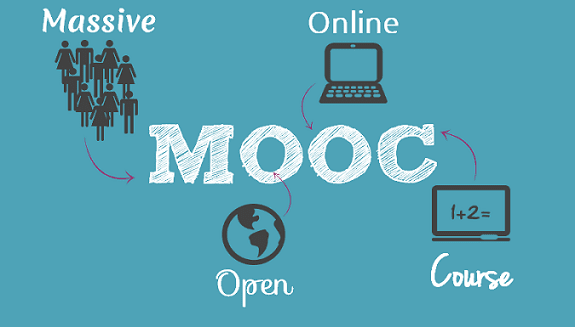
MOOC (Massive Open Online Course)
CoursesImplementation ResearchOnline & Distance LearningOnline Courses

Massive open online course (MOOC) Implementation Research 2022

by Public Health Update March 14, 2022
written by Public Health Update

Overview

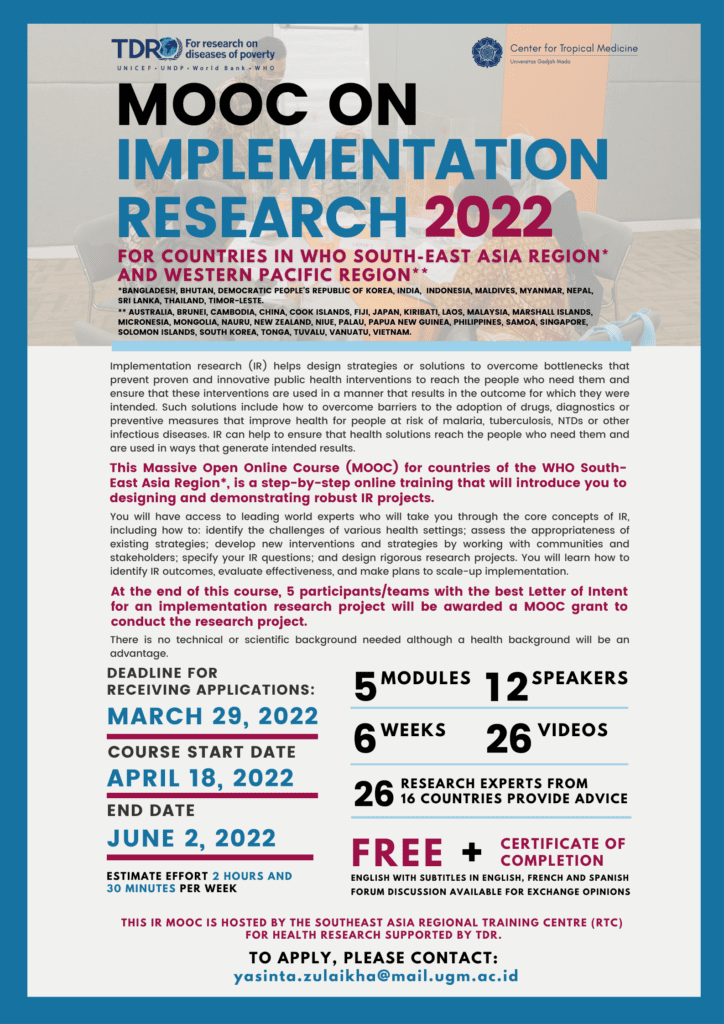
A new session of the TDR Massive Open Online Course (MOOC) is the Implementation Research on infectious diseases in the low/middle-income countries at WHO-SEARO and WHO-WPRO organized by WHO in collaboration with the Center for Tropical Medicine UGM as a regional training center supported by the Special Program for Research and Training in Tropical Diseases (TDR).

This course is provided free of charge to introduce participants to Implementation Research to provide proven health interventions needed for people at risk and vulnerable to poverty. The 5 participants/teams with the best applications will be awarded a grant to carry out their research project.
unnamed


Application process

All participants with various educational backgrounds can participate in this course. However, a health education background will be prioritized. Applications are accepted until March 29, 2022, and the course will start on April 18, 2022. Registration can be sent via email to yasinta.zulaikha@mail.ugm.ac.id
March 14, 2022 0 comments
0 FacebookTwitterPinterestLinkedinTumblrVKOdnoklassnikiRedditStumbleuponWhatsappTelegramLINEPocketSkypeViberEmail
ReportsResearch & Publication

Lumbini Province Annual Health Report 2077/078

by Public Health Update March 13, 2022
written by Public Health Update

Overview

The Annual Report of the Lumbini Province, Ministry of Health, Population and Family Welfare, Health Directorate, for fiscal year 2077/078 is the fourth consecutive report after its establishment. The report mentions the health programs’ aims, targets, and strategies, as well as their significant achievements and trends in service coverage during three fiscal years in the province. This report also outlines difficulties, problems, and constraints, as well as activities that health institutions can take to enhance their performance.

Highlights

  • The provincial coverage of BCG was 94.1% which has increased by 2.3 % point from 2076-77 to FY 2077-78.
  • MR2 coverage (94.1%).
  • Eleven of the province’s 12 districts have been declared fully immunized by the end of FY 2077-78.
  • In Lumbini 20 hospitals have been providing CEONC services and there are 32 BEONC service sites and 406 birthing centers.
  • Provincial level ANC 4th visit (as per protocol) as percentage of expected pregnancy was 60.7%. The proportion of births attended by SBA has decreased slightly from 78.5% in FY 2076-77 to 77% in FY 2077-78.
  • Percentage of institutional deliveries in Lumbini province in FY 2077-78 was 79.6%.
  • Provincial mCPR has dropped from 43 to 36% between FY 2075-76 to FY 2077-78. The mCPR is either stagnant or declining steadily in most of the district.
  • In the fiscal year 2077-78, 150 health facilities in Lumbini provided at least one safe abortion service. Rukum -East does not have any safe abortion service sites, whereas Palpa has the most (23) safe abortion service sites.
  • In fiscal year 2077-78 three health facilities in Lumbini province, received certification for adolescent friendly health facility from the Family Welfare Division.
  • Confirmed malaria cases decreased from 219, 141 and 85 in 2075-76, 2076-77 and 2077-78 respectively.
  • At the end of FY2077-78 (2020/21), 518 leprosy cases were receiving MDT in Lumbini Province which makes a registered prevalence rate of 1.01 per 10,000 populations at the Provincial Level.
  • This rate is above the cut-off point of 1 case per 10,000 set by WHO to indicate the elimination of leprosy as a public health problem.
  • The case notification rate (all forms) of Lumbini Province in 2077-78 is 113.9/100,000 population which was slightly increased than previous fiscal year. The district having highest CNR is Dang (137.8) and with lowest CNR is Gulmi (71.2) and there are nearly half of districts having CNR less than 100/100,000 population.
  • Provincial TB treatment success rate of TB in 2077-78 was 90.2 percent which is decreased from 93.2 of last fiscal year but treatment success rate (TSR) has been maintained as per National Strategic targets of TSR at least 90% in each year.
  • The TB mortality rate is slightly increased into 4.1% than last fiscal year which was 3.6%.
  • Overall DR TB treatment success rate is 76 %.
  • In FY 2077-78, URTI ranked highest morbidities in Lumbini province in past three years followed by Gastritis and Headache and the cases related to backache and hypertension has increased in this FY 2077-78 when comparing to FY 2075-76.
  • Bed occupancy rate has reached to 51.3 in FY 2077-78 which was 30.5 in FY 2076-77.
  • MSS has been implemented among 19 hospitals including local and federal level hospitals. All hospital of Lumbini province except Rukum west has implemented MPDSR program.
  • The total maternal mortality is 72 in Lumbini province of which 49 death is reported from hospital.
  • Only 46% of human resources were fulfilled against the sanctioned position.
  • There are nine Clinical training sites in Lumbini Province to deliver different clinical and competency-based trainings.

Contents

Chapter 1: Introduction

  • Background
  • Organizational Structure of Ministry of Health, Population and Family Welfare
  • Functions of Ministry of Health Population and Family Welfare
  • Organogram of Health Directorate
  • Health Service Delivery Units
  • Sources of Information in the Report
  • Structure of the Report

Chapter 2: Family Welfare

Child Health and Immunization

  • Integrated Management of Neonatal and Childhood Illnesses
  • Nutrition
  • Safe Motherhood and Newborn Health
  • Family Planning
  • Safe Abortion
  • Adolescent Sexual and Reproductive Health

Chapter 3: Epidemiology and Disease Control

  • Tuberculosis Control Program
  • HIV/AIDS and STI Control Program
  • Malaria Control Program
  • Dengue
  • Leprosy
  • Kala-azar
  • Lymphatic Filariasis

Chapter 4: Hospital Services

  • Background
  • Hospital Management Strengthening Program
  • Outpatients and Inpatient Services
  • Emergency Services
  • Radiology Services
  • Major and Minor Surgeries conducted by hospitals
  • Postmortem conducted in hospital
  • Maternal and Perinatal Death Surveillance and Response

Chapter 5: Social Security and Other Public Health Programs

  • One-Stop Crisis Management Center
  • Social Service Unit (SSU)
  • Suicide Prevention
  • Financial assistance program for the treatment of asthma and bronchitis of poor citizens
  • Home-based treatment to citizens above 84 years of age
  • Road Traffic Accidents

Chapter 6: COVID 19 Emergency and Response

  • Background of COVID 19
  • COVID 19 Situation in FY 2076-77 & 2077-78 at Lumbini Province
  • Strategic approaches and key interventions

Chapter 7: Supporting Programs

  • Health Service Governance and Management
  • Health Information Management
  • Human Resource for Health
  • Logistic Management
  • Health Training

Chapter 8: Ayurveda and Alternative Medicine

Chapter 9: Performance Evaluation

Chapter 10: Development Partners

DOWNLOAD PDF FILE


Do you have a website? Looking for the best hosting provider? Here’s a discount code.

Latest Public Health Jobs

Latest Posts

  • International Wellness Day: Promoting Global Wellness for All
  • Summit Declaration: The 12th National Summit of Health and Population Scientists in Nepal
  • Joint political declaration on the reform of the global health architecture
  • World Health Day 2026: Together for Health. Stand with Science.
  • World Water Day 2026 | Water & Gender Equality

Thanks for visiting us.
Disclaimer: The resources, documents, guidelines, and information on this blog have been collected from various sources and are intended for informational purposes only. Information published on or through this website and affiliated social media channels does not represent the intention, plan, or strategies of an organization that the initiator is associated with in a professional or personal capacity, unless explicitly indicated.
If you have any complaints, information, or suggestions about the content published on Public Health Update, please feel free to contact us at blog.publichealthupdate@gmail.com.
#StayUpdated


  • WordPress
  • Link
  • Facebook
  • Mail
  • Facebook
  • Twitter
  • Twitter
  • LinkedIn
  • Instagram
  • Facebook
March 13, 2022 0 comments
0 FacebookTwitterPinterestLinkedinTumblrVKOdnoklassnikiRedditStumbleuponWhatsappTelegramLINEPocketSkypeViberEmail
Author AID
CoursesOnline CoursesPublic Health OpportunitiesPublic Health Opportunity

Enrolment open: AuthorAID Course on ‘Research Writing in the Sciences’

by Public Health Update March 9, 2022
written by Public Health Update

Who is this course for?
AuthorAID’s award-winning online courses are designed for researchers and scientists in low- and middle-income countries. This course is designed for those working in a scientific field (life sciences / natural sciences / other related fields). It is suitable for early career researchers, or those with limited experience in publishing papers in reputable peer-reviewed journals.

Course duration:  6 weeks

Main topics covered in the course: 

  • Understanding previous research
  • Knowing the ethics of research
  • Preparing to write your research paper
  • Writing your research paper
  • Publishing your paper in a peer-reviewed journal

Course dates: 5th April to 16th May 2021

Course leaders:  INASP team – Andy Nobes, Ravi Murugesan – along with experienced guest facilitators from the AuthorAID network.

How do I enrol?
Complete information about the course along with enrolment instructions are available on the INASP Moodle website: https://moodle.inasp.info/course/view.php?name=RW_Sci_2022. You will need to create an INASP Moodle account if you don’t already have one. Please follow the instructions carefully (you may need to click on the above link again after registering your account).

Please note that although this is an open course, we may have to limit enrolment due to server capacity. We suggest that you enrol in the course as soon as possible if you are interested.

INASP designs and runs capacity development activities that cater for both women and men’s interests and needs. We use methods that increase active participation and an inclusive learning environment, adopting attitudes and behaviours that value differential experiences and perspectives and ensuring listening and respect for each other’s experiences and views.


Do you have a website? Looking for the best hosting provider? Here’s a discount code.

Latest Public Health Jobs

Latest Posts

  • International Wellness Day: Promoting Global Wellness for All
  • Summit Declaration: The 12th National Summit of Health and Population Scientists in Nepal
  • Joint political declaration on the reform of the global health architecture
  • World Health Day 2026: Together for Health. Stand with Science.
  • World Water Day 2026 | Water & Gender Equality

Thanks for visiting us.
Disclaimer: The resources, documents, guidelines, and information on this blog have been collected from various sources and are intended for informational purposes only. Information published on or through this website and affiliated social media channels does not represent the intention, plan, or strategies of an organization that the initiator is associated with in a professional or personal capacity, unless explicitly indicated.
If you have any complaints, information, or suggestions about the content published on Public Health Update, please feel free to contact us at blog.publichealthupdate@gmail.com.
#StayUpdated


  • WordPress
  • Link
  • Facebook
  • Mail
  • Facebook
  • Twitter
  • Twitter
  • LinkedIn
  • Instagram
  • Facebook
March 9, 2022 0 comments
0 FacebookTwitterPinterestLinkedinTumblrVKOdnoklassnikiRedditStumbleuponWhatsappTelegramLINEPocketSkypeViberEmail
Waling Municipality Public Health Act 2078
Provincial Plan, Policies and GuidelinesNational Plan, Policy & GuidelinesResearch & Publication

Waling Municipality Public Health Act 2078

by Public Health Update March 7, 2022
written by Public Health Update

Office of Municipal Executive, Waling Municipality, Syangja has released it’s local public health act as per the mandate of Constitution of Nepal, Public Health Service Act, 2075 (2018), and Local Government Operation Act, 2074. Waling Municipality Public Health Act aims to guide and manage all public health related activities within Municipality. This act envisions to ensure the provision of free basic health care services to all citizens and provide emergency healthcare services as per the constitution of Nepal.

Establishment and management of health institutions, quality assurance, monitoring and supervision of local health activities and overall management of all public health activities in an integrated approach are incorporated within this document.

DOWNLOAD PDF FILE

DOWNLOAD PDF FILE


Do you have a website? Looking for the best hosting provider? Here’s a discount code.

Latest Public Health Jobs

Latest Posts

  • International Wellness Day: Promoting Global Wellness for All
  • Summit Declaration: The 12th National Summit of Health and Population Scientists in Nepal
  • Joint political declaration on the reform of the global health architecture
  • World Health Day 2026: Together for Health. Stand with Science.
  • World Water Day 2026 | Water & Gender Equality

Thanks for visiting us.
Disclaimer: The resources, documents, guidelines, and information on this blog have been collected from various sources and are intended for informational purposes only. Information published on or through this website and affiliated social media channels does not represent the intention, plan, or strategies of an organization that the initiator is associated with in a professional or personal capacity, unless explicitly indicated.
If you have any complaints, information, or suggestions about the content published on Public Health Update, please feel free to contact us at blog.publichealthupdate@gmail.com.
#StayUpdated


  • WordPress
  • Link
  • Facebook
  • Mail
  • Facebook
  • Twitter
  • Twitter
  • LinkedIn
  • Instagram
  • Facebook
March 7, 2022 0 comments
0 FacebookTwitterPinterestLinkedinTumblrVKOdnoklassnikiRedditStumbleuponWhatsappTelegramLINEPocketSkypeViberEmail
ActivitiesPH Important DayPublic HealthPublic Health Update

World Glaucoma Week, March 6-12, 2022

by Public Health Update March 7, 2022
written by Public Health Update

Overview

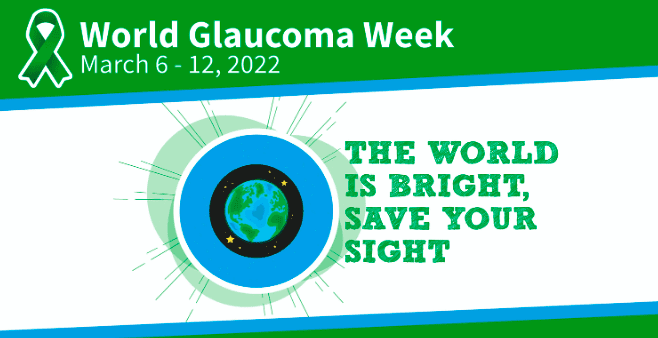
World Glaucoma Week is celebrated on March 6-12, 2022. World Glaucoma Week is a global initiative of the World Glaucoma Association (WGA) aims to raise awareness on glaucoma.

‘The world is bright, save your sight’

Facts

  • Glaucoma is a chronic, progressive, degenerative disorder of the optic nerve that produces characteristic visual field damage. Glaucoma is the second cause of blindness, and importantly: it is irreversible.
  • It is estimated that around 80 million people have glaucoma worldwide. Approximately 50% of the individuals with glaucoma are unaware that they have the disease, and this number may be even higher in underdeveloped countries.
  • Glaucoma is the first cause of irreversible blindness worldwide.
  • It is estimated that approximately 50% of glaucoma cases are undiagnosed.
  • While it is true that the disease is incurable, it is also true that 90% of the blindness caused by glaucoma could be prevented by early detection and treatment.
  • In its early stages, glaucoma is asymptomatic.
  • If untreated, glaucoma may progress to blindness.
  • Periodic testing allows early diagnosis to prevent visual disability.

Message

“World Glaucoma Week is a unique initiative that puts a spotlight on glaucoma as the leading cause of preventable irreversible blindness worldwide. The prompt diagnosis and treatment of glaucoma can prevent needless vision impairment, however, so many are unaware they have the disease or may not have access to much-needed care. As the numbers are expected to increase exponentially, it is a growing public health concern that needs more attention and effective eye health systems. The active coming together of the international community with colleagues and key stakeholders through events to stimulate awareness and dialogue is a show of our shared commitment to improving glaucoma care for patients around the world.” – Neeru Gupta MD PhD MBA, President, World Glaucoma Association


Source of info: Institut Català de Retina, World Glaucoma Week, World Glaucoma Association (WGA), www.glaucomapatients.org


Recommended readings
  • World Glaucoma Week: ‘The world is bright, save your sight’
  • World Sight Day 2021: Love Your Eyes!
  • Syllabus for Licensing Examination of PCL in Ophthalmic Science
  • International days, weeks and years of Public Health Concern
  • World Sight Day 2020: Hope In Sight
[MEC id=”77142″]
March 7, 2022 0 comments
0 FacebookTwitterPinterestLinkedinTumblrVKOdnoklassnikiRedditStumbleuponWhatsappTelegramLINEPocketSkypeViberEmail
World Obesity Day 2022: Everybody Needs to Act!
ActivitiesLife Style & Public Health NutritionNon- Communicable Diseases (NCDs)PH Important DayPublic Health

World Obesity Day 2022: Everybody Needs to Act!

by Public Health Update March 3, 2022
written by Public Health Update

Overview

The World Obesity Day is a unified day of action that calls for a cohesive, cross-sector response to the obesity crisis takes place on 4 March. It was convened by the World Obesity Federation in collaboration with its global members. Aim of World Obesity Day is to increase awareness, encourage advocacy, improve policies and share experiences around obesity.

More than one in three low- and middle-income countries face both extremes of malnutrition

The mission of World Obesity Day is to

  • Increase awareness
  • Encourage advocacy
  • Improve policies
  • Share experiences

Obesity is defined by the World Health Organisation as ‘abnormal or excessive fat accumulation that presents a risk to health’. It is most commonly measured by BMI, though there are other methods such as waist and height rations, that taken with BMI, can be more accurate.

Facts

  • Obesity affects nearly one in six adults worldwide.
  • 800 million people around the world are aected by obesity.
  • It is caused by a variety of factors, including biology, mental health, genetic risk, environment, healthcare access, and access to ultra-processed food.
  • Its medical consequences will cost over $1 trillion by 2025. Improved investment in treatment and prevention is needed to reduce these costs.
  • People living with obesity are twice as likely to be hospitalized if tested positive for Covid-19.
  • The number of children living with obesity is predicted to increase by 60% worldwide over the next decade, reaching 250 million by 2030.

Key Findings (Nepali & English) – The 2016 Nepal Demographic and Health Survey (2016 NDHS)

Prevention

  • Lowering the risk of overweight and obesity includes reducing the number of calories consumed from fats and sugars, increasing the portion of daily intake of fruit, vegetables, legumes, whole grains and nuts, and engaging in regular physical activity (60 minutes per day for children and 150 minutes per week for adults).
  • In babies, studies have shown that exclusive breastfeeding from birth to 6 months of age reduces the risk of infants becoming overweight or obese.

Source of info: World Obesity Day & WHO.


Recommended readings

  • COVID-19 and Obesity: The 2021 Atlas
  • World Obesity Day: We need to act together, now!
  • Portugal brings down obesity by taxing sugary drinks
  • World Obesity Day: The Roots of Obesity Run Deep
  • Obesity-Related Diseases Among Top Three Killers in Most Countries, World Bank Says
  • Nepal Demographic and Health Survey 2016 Key Indicators Report

Do you have a website? Looking for the best hosting provider? Here’s a discount code.

Latest Public Health Jobs

Latest Posts

  • International Wellness Day: Promoting Global Wellness for All
  • Summit Declaration: The 12th National Summit of Health and Population Scientists in Nepal
  • Joint political declaration on the reform of the global health architecture
  • World Health Day 2026: Together for Health. Stand with Science.
  • World Water Day 2026 | Water & Gender Equality

Thanks for visiting us.
Disclaimer: The resources, documents, guidelines, and information on this blog have been collected from various sources and are intended for informational purposes only. Information published on or through this website and affiliated social media channels does not represent the intention, plan, or strategies of an organization that the initiator is associated with in a professional or personal capacity, unless explicitly indicated.
If you have any complaints, information, or suggestions about the content published on Public Health Update, please feel free to contact us at blog.publichealthupdate@gmail.com.
#StayUpdated


  • WordPress
  • Link
  • Facebook
  • Mail
  • Facebook
  • Twitter
  • Twitter
  • LinkedIn
  • Instagram
  • Facebook
March 3, 2022 0 comments
0 FacebookTwitterPinterestLinkedinTumblrVKOdnoklassnikiRedditStumbleuponWhatsappTelegramLINEPocketSkypeViberEmail
Public Health Update | Up to date public health info & Opportunities
Global Health NewsPublic Health News

Singapore medicines regulator world’s first to achieve highest maturity level in WHO classification

by Public Health Update March 2, 2022
written by Public Health Update

Out of 28 countries formally assessed by WHO, Singapore is the first to have achieved the highest maturity level (ML 4) in WHO’s classification of regulatory authorities for medical products. Achieving ML 4 brings Singapore closer to becoming a WHO listed authority, a new scheme that will be operational later this year and will list the world’s regulators of reference.

“This is great recognition of Singapore’s achievement and very good news for the broader region,” said Martin Taylor, WHO Western Pacific Region Director of Health Systems & Services and acting Director for Data, Strategy & Innovation. “Singapore already helps several neighbouring countries to expedite their medicines assessments and this WHO classification may also encourage other countries and areas to continue strengthening their medicines oversight.”

Regulation of medical products is extremely important for all health systems and for access to quality vaccines, medicines and other health products. Apart from ensuring the quality, safety and efficacy of medical products, regulatory authorities that function well also perform critical functions such as faster authorization of products and drug safety monitoring after authorization.

WHO’s assessment of regulatory authorities is based on the ‘Global Benchmarking Tool’ – an evaluation tool that checks regulatory functions against a set of more than 260 indicators – covering core regulatory functions such as product authorization, testing of products, market surveillance and the ability to detect adverse events – to establish their level of maturity and functionality. Regulatory authorities that reach maturity levels 3 and 4 will be considered eligible for inclusion among WHO-listed authorities, after additional evaluation of their performance.

The benchmarking of Singapore’s Health Sciences Authority (HSA) was carried out by a WHO-led team of international experts. In late 2021, WHO conducted a formal evaluation of the Authority and the HSA was found to perform well against the indicators of the Global Benchmarking Tool.

“The Health Sciences Authority of Singapore is honoured to have achieved maturity level 4 in WHO’s recent global benchmarking assessment,” said Dr Choong May Ling, Mimi, Chief Executive Officer, Health Sciences Authority, Singapore. “This achievement is a significant milestone and affirmation for Singapore as the first WHO Member State to have reached this highest maturity level for our medicines regulatory system. I believe this achievement will boost public confidence and trust in the system. I look forward to HSA sustaining our culture of operational excellence and continuous improvement and continuing our strong collaboration with WHO in regulatory systems strengthening.”

Fewer than 30% of the world’s medicines regulatory authorities are considered to have the capacity to perform the functions required to ensure medicines, vaccines and other health products work and do not harm patients. For that reason, WHO has intensified efforts to bolster the capacity to regulate medical products in all regions and is working to strengthen regulatory networks where the most advanced regulatory authorities can act as lighthouses for regulators with fewer resources or which have not yet reached maturity.

“The core of WHO’s work is to empower countries through support and knowledge sharing so that they can expand access to health services for their populations,” said Mariângela Simão, WHO Assistant Director General for Access to Medicines and Other Health Products. “If countries want to improve health outcomes, if they want to be able to address health emergencies and expand local production, they first need to be able to ensure access to safe and quality medical products that actually work and benefit patients.”

WHO NEWS


Do you have a website? Looking for the best hosting provider? Here’s a discount code.

Latest Public Health Jobs

Latest Posts

  • International Wellness Day: Promoting Global Wellness for All
  • Summit Declaration: The 12th National Summit of Health and Population Scientists in Nepal
  • Joint political declaration on the reform of the global health architecture
  • World Health Day 2026: Together for Health. Stand with Science.
  • World Water Day 2026 | Water & Gender Equality

Thanks for visiting us.
Disclaimer: The resources, documents, guidelines, and information on this blog have been collected from various sources and are intended for informational purposes only. Information published on or through this website and affiliated social media channels does not represent the intention, plan, or strategies of an organization that the initiator is associated with in a professional or personal capacity, unless explicitly indicated.
If you have any complaints, information, or suggestions about the content published on Public Health Update, please feel free to contact us at blog.publichealthupdate@gmail.com.
#StayUpdated


  • WordPress
  • Link
  • Facebook
  • Mail
  • Facebook
  • Twitter
  • Twitter
  • LinkedIn
  • Instagram
  • Facebook
March 2, 2022 0 comments
0 FacebookTwitterPinterestLinkedinTumblrVKOdnoklassnikiRedditStumbleuponWhatsappTelegramLINEPocketSkypeViberEmail
World Hearing Day
PH Important DayActivitiesPublic HealthPublic Health Events

World Hearing Day 2022: To hear for life, listen with care!

by Public Health Update March 2, 2022
written by Public Health Update

Overview

The World Hearing Day is held on 3 March each year aims to raise awareness on how to prevent deafness and hearing loss and promote safe listening. The World Hearing Day 2022 is focused on the importance of safe listening as a means of maintaining good hearing across the life course. The theme for 2022 is “To hear for life, listen with care” will focus on the importance and means of hearing loss prevention through safe listening.

Facts & key messages

  • More than 5% of the global population lives with hearing loss. The majority of these people live in low- and middle-income countries.
  • Many causes of hearing loss, including noise-induced hearing loss, are avoidable. Among children (aged 0–14 years), as much as 60% of hearing loss is attributed to preventable causes.
  • Nearly 50% of teenagers and young adults (12–35 years of age) – i.e., 1.1 billion young people– are at risk of hearing loss due to prolonged exposure to loud sounds, through listening to music on smartphones and audio players, or at music gigs and clubs.
  • It is estimated that by 2050 this number could increase by over 50% to 700 million.
  • It is possible to have good hearing across the life course through ear and hearing care​
  • Many common causes of hearing loss can be prevented, including hearing loss caused by exposure to loud sounds​
  • ‘Safe listening’ can mitigate the risk of hearing loss associated with recreational sound exposure​
  • WHO calls upon governments, industry partners and civil society to raise awareness for and implement evidence-based standards that promote safe listening.

Unsafe listening

Unsafe listening refers to the common practices of listening to music or other audio content at loud levels or for prolonged time periods. Sensory cells in the ears can start to become damaged by prolonged exposure to loud sounds. Listening to sounds at 80 dB for 40 hours a week is the limit of safe listening.

How can hearing be protected?

  • Keeping the volume down.
  • Limiting time spent engaged in noisy activities
  • Monitoring listening levels.
  • Protecting ears from loud sounds.
  • Heeding the warning signs of hearing loss.
  • Regular hearing checks are recommended – especially for those listening to music regularly or visiting loud entertainment venues.

Recommended readings

  • 1 in 4 people projected to have hearing problems by 2050
  • World Hearing Day 2021: Hearing Care for ALL! Screen, Rehabilitate, Communicate
  • World Hearing Day 2020! Hearing for life: don’t let hearing loss limit you
  • World Hearing Day 2019: Check your hearing!
  • hearWHO-Check your hearing… An app to check your hearing!
  • International days, weeks and years of Public Health Concern

Source of info: World Health Organization.

#safelistening #worldhearingday #hearingcare


  • International Wellness Day: Promoting Global Wellness for All
  • Summit Declaration: The 12th National Summit of Health and Population Scientists in Nepal
  • Joint political declaration on the reform of the global health architecture
  • World Health Day 2026: Together for Health. Stand with Science.
  • World Water Day 2026 | Water & Gender Equality
March 2, 2022 0 comments
0 FacebookTwitterPinterestLinkedinTumblrVKOdnoklassnikiRedditStumbleuponWhatsappTelegramLINEPocketSkypeViberEmail
World Birth Defect Day
PH Important DayMaternal, Newborn and Child HealthPublic HealthPublic Health EventsPublic Health Update

World Birth Defects Day: “Many Birth Defects, One Voice”

by Public Health Update March 2, 2022
written by Public Health Update

By Dr Poonam Khetrapal Singh, WHO Regional Director for South-East Asia

On World Birth Defects Day, WHO and its Member States in the South-East Asia Region and globally are raising their collective voice to increase awareness for all birth defects and improve access to quality care and treatment. In 2019 birth defects accounted for more than 530 000 deaths globally, including more than 117 000 deaths in the Region – around 22% of the global total. They were the third most common cause of child mortality in the Region, and the fourth most common cause of neonatal mortality, constituting 12% of all neonatal deaths.

In addition to mortality, birth defects can cause long term morbidity and disability, which in low- and middle-income countries, can strain health system, social and family resources. In all countries of the Region, WHO will continue to intensify efforts to increase birth defect prevention, surveillance, care and research, accelerating the World Birth Defects Day (WBDD) movement. 

Amid the COVID-19 response, WHO continues to support all countries of the Region to protect, defend and advance progress in all areas of health, including to accelerate reductions of maternal, neonatal and under-five mortality – since 2014, a Flagship Priority. All Member States have in place national action plans to prevent and control birth defects, and have initiated hospital-based birth defects surveillance. Six Member States – Bangladesh, Bhutan, India, Maldives, Myanmar and Nepal – continue to provide high-quality data to a WHO-supported online surveillance database, which by the end of 2021, had registered more than 4 million births, including around 45 000 babies born with birth defects. As part of Region-wide efforts to eliminate measles and rubella by 2023 – another Flagship Priority – all countries of the Region have introduced rubella vaccination of girls, reporting an average 83% coverage. Several Member States now fortify foods such as wheat flour with folic acid, vitamin B-12 and iron, and include interventions for common birth defect management and care within national child health programmes. For the Region to achieve key targets and goals – including a 35% reduction in folic acid-preventable neural tube defects, a 50% reduction in thalassemia births, and to eliminate congenital syphilis – several priorities must be addressed.

First, gaps in rubella immunization must be closed, and access to good quality antenatal care improved. Such care should incorporate counselling that encourages pregnant women to avoid unnecessary medications and X-rays, prevent exposure to toxic environmental elements, and avoid harmful products such as tobacco and alcohol.

Second, access to pre-natal screening technologies such as ultrasound must be increased, in addition to clinical and laboratory screening of newborns and infants. Primary health care providers should be trained to support diagnosis and referral, which in most health systems is feasible.

Third, the quality of medical therapy, surgery, rehabilitation and palliative care services must be enhanced, and referral pathways better defined and utlilized. Affected children and their families must have ongoing access to appropriate mental health and psycho-social support services, and be free of stigma and discrimination. Fourth, data collection, monitoring and evaluation must continue to be strengthened, and policies and programmes assessed on an ongoing basis. Equity, efficiency and impact must continue to define all we do.

Our WBDD movement must continue to build. Birth defects are common, costly, and critical. Across the Region, they account for an increasingly large proportion of under-five mortality as other causes continue to decline. Together, we must continue to integrate interventions to increase birth defect prevention, surveillance, care and research across programme areas, accelerating progress towards our Flagship Priorities and “Sustain. Accelerate. Innovate” vision. On World Birth Defects Day, WHO reaffirms its commitment to ensuring every woman and child can survive and thrive, and transform our Region and world.

WHO SEARO

World Birth Defects Day: Calls for More Prevention, Research and Care for Babies


Do you have a website? Looking for the best hosting provider? Here’s a discount code.

Latest Public Health Jobs

Latest Posts

  • International Wellness Day: Promoting Global Wellness for All
  • Summit Declaration: The 12th National Summit of Health and Population Scientists in Nepal
  • Joint political declaration on the reform of the global health architecture
  • World Health Day 2026: Together for Health. Stand with Science.
  • World Water Day 2026 | Water & Gender Equality

Thanks for visiting us.
Disclaimer: The resources, documents, guidelines, and information on this blog have been collected from various sources and are intended for informational purposes only. Information published on or through this website and affiliated social media channels does not represent the intention, plan, or strategies of an organization that the initiator is associated with in a professional or personal capacity, unless explicitly indicated.
If you have any complaints, information, or suggestions about the content published on Public Health Update, please feel free to contact us at blog.publichealthupdate@gmail.com.
#StayUpdated


  • WordPress
  • Link
  • Facebook
  • Mail
  • Facebook
  • Twitter
  • Twitter
  • LinkedIn
  • Instagram
  • Facebook
March 2, 2022 0 comments
0 FacebookTwitterPinterestLinkedinTumblrVKOdnoklassnikiRedditStumbleuponWhatsappTelegramLINEPocketSkypeViberEmail
World Birth Defect Day
PH Important DayMaternal, Newborn and Child HealthPublic HealthPublic Health Events

World Birth Defects Day: Calls for More Prevention, Research and Care for Babies

by Public Health Update March 2, 2022
written by Public Health Update

Overview

The World Birth Defects Day (WBDD) is observed on March 3 each year. WBDD unites stakeholders working in the field of birth defects, also known as congenital anomalies, congenital disorders or congenital conditions to raise awarenss. The first WBDD was observed on 2015 with the aim to provide one global voice and a platform to all organizations and institutions engaged in birth defects related surveillance, research, prevention and care activities.

The major objectives of World Birth Defects Day are;

  • to prevent birth defects
  • To Improve care of all individuals with any birth defect and related disabilities
  • To Increase knowledge of the burden and causes of birth defects through epidemiologic and basic research.

Birth Defects and facts

  • Birth defects, or congenital anomalies, are conditions that cause structural or functional abnormalities present at birth that can be identified at different stages of infancy. A specific birth defect may be caused by genetics, environmental exposures, infections, maternal nutrition, or other risk factors.
  • An estimated 240 000 newborns die worldwide within 28 days of birth every year due to birth defects. Birth defects cause a further 170 000 deaths of children between the ages of 1 month and 5 years.
  • Nine of ten children born with a serious birth defect are in low- and middle-income countries.
  • Birth defects affect nearly 8 million infants, or 6% of all infants, born globally each year.
  • The most common severe birth defects are heart defects, neural tube defects and Down syndrome.
  • Babies who survive may have a good quality of life with appropriate treatment or care, however many infants are at an increased risk for long-term disabilities.
  • Many birth defects can be prevented and treated. Help spread global awareness for World Birth Defects Day.

Key Message

  • Birth defects are common, costly and critical.
  • Folic acid can help prevent birth defects of the brain and spine
  • Taking 400ug of folic acid daily before and during pregnancy can prevent birth defects.
  • Consult with your healthcare provider before starting or stopping any medications during pregnancy.
  • Attend prenatal care appointments and become up-to-date on all vaccines.
  • Avoid smoking, drinking alcohol, and taking other drugs during pregnancy.
  • Birth defects surveillance and research can help improve pregnancy and infant outcomes.

Source of Info: World Birth Defects Day Official website.

#WorldBDDay #ManyBirthDefects1Voice


Do you have a website? Looking for the best hosting provider? Here’s a discount code.

Latest Public Health Jobs

Latest Posts

  • International Wellness Day: Promoting Global Wellness for All
  • Summit Declaration: The 12th National Summit of Health and Population Scientists in Nepal
  • Joint political declaration on the reform of the global health architecture
  • World Health Day 2026: Together for Health. Stand with Science.
  • World Water Day 2026 | Water & Gender Equality

Thanks for visiting us.
Disclaimer: The resources, documents, guidelines, and information on this blog have been collected from various sources and are intended for informational purposes only. Information published on or through this website and affiliated social media channels does not represent the intention, plan, or strategies of an organization that the initiator is associated with in a professional or personal capacity, unless explicitly indicated.
If you have any complaints, information, or suggestions about the content published on Public Health Update, please feel free to contact us at blog.publichealthupdate@gmail.com.
#StayUpdated


  • WordPress
  • Link
  • Facebook
  • Mail
  • Facebook
  • Twitter
  • Twitter
  • LinkedIn
  • Instagram
  • Facebook
March 2, 2022 1 comment
0 FacebookTwitterPinterestLinkedinTumblrVKOdnoklassnikiRedditStumbleuponWhatsappTelegramLINEPocketSkypeViberEmail
Newer Posts
Older Posts

Search

Follow Us

Facebook Twitter Instagram Pinterest Linkedin Youtube

Categories

  • Abstracts (25)
  • Activities (91)
  • Adolescent Sexual and Reproductive Health (ASRH) (25)
  • Advice & Tips (4)
  • African Region (5)
  • AI and Health (1)
  • Annual Meeting (6)
  • Antimicrobial Resistance (AMR) (21)
  • Award (19)
  • Awards (16)
  • Books (9)
  • Call for Proposal, EOI & RFP (103)
  • Call for Research Participants (8)
  • Clinical Doctor Jobs (6)
  • Communicable Diseases (107)
  • Competition (20)
  • Conference (129)
  • Consultant (1)
  • Courses (205)
  • Dashboard (2)
  • Digital Health & Health Informatics (10)
  • Drug and Medicine (18)
  • Eastern Mediterranean Region (3)
  • Education (15)
  • Environment (3)
  • Environmental Health & Climate Change (47)
  • European Region (42)
  • Exchange Program (1)
  • Fact Sheet (117)
  • FCHVs (1)
  • Fellowships, Studentship & Scholarships (168)
  • Financial Aid (13)
  • Form Formats (2)
  • Fully funded (22)
  • Global Health News (434)
  • Grants and Funding Opportunities (193)
  • Guest Post (44)
  • Health Assistant Jobs (1)
  • Health Equity (7)
  • Health Financing and Economics (24)
  • Health in Data (115)
  • Health Insurance (5)
  • Health Jobs (52)
  • Health Literacy, Health Education & Promotion (50)
  • Health Organization Profile (42)
  • Health Systems (83)
  • Human Resource for Health (33)
  • Humanitarian Health & Emergency Response (44)
  • Hypertension (5)
  • Implementation Research (48)
  • International Health (3)
  • International Jobs & Opportunities (373)
  • International Plan, Policy & Guidelines (210)
  • Internships (4)
  • Jobs Vacancies (56)
  • Journals (8)
  • Life Style & Public Health Nutrition (39)
  • Live (10)
  • Master's Degree (48)
  • Maternal, Newborn and Child Health (88)
  • Mentorship Program (2)
  • Miscellaneous (16)
  • National Health News (158)
  • National Plan, Policy & Guidelines (468)
  • Neglected Tropical Diseases (NTDs) (51)
  • Non- Communicable Diseases (NCDs) (121)
  • Notice (103)
  • Nursing Jobs (6)
  • Nutritionist Jobs (1)
  • One Health (18)
  • Online & Distance Learning (22)
  • Online Courses (90)
  • Op-Ed Article (3)
  • Opportunities by Region (83)
  • Outbreak News (213)
  • Partially funded (6)
  • PCL Health Science Jobs (3)
  • PH Important Day (534)
  • Pharmacist Jobs (3)
  • PhD (54)
  • Photos (5)
  • Planetary Health (4)
  • PostDoc (14)
  • Presentation Slides (26)
  • Primary Health Care (25)
  • Provincial Plan, Policies and Guidelines (14)
  • Public Health (1,283)
  • Public Health Epidemiology & Biostatistics (13)
  • Public Health Events (306)
  • Public Health Information (20)
  • Public Health Innovation (9)
  • Public Health Jobs (52)
  • Public Health News (554)
  • Public Health Notes (120)
  • Public Health Opportunities (507)
  • Public Health Opportunity (491)
  • Public Health Programs (108)
  • Public Health Seminar (2)
  • Public Health Tools (1)
  • Public Health Update (564)
  • Quality Improvement & Infection Prevention (20)
  • Region of America (8)
  • Reports (184)
  • Research & Project Grants (39)
  • Research & Project Grants (32)
  • Research & Publication (647)
  • Research Articles (10)
  • Road Traffic Accidents (RTA) (9)
  • School of Public Health (60)
  • Self funded (2)
  • South-East Asia Region (26)
  • Success Stories (17)
  • Summer and Winter Courses (40)
  • Summer Courses (28)
  • Sustainable Development Goals (SDGs) (14)
  • Syllabus (61)
  • Symposium (9)
  • Tobacco Control (35)
  • Training (40)
  • Travel Grants (15)
  • Trick, Technique & Skills (8)
  • Uncategorized (3)
  • Undergraduate Degree (7)
  • Universal Health Coverage (36)
  • Universities (29)
  • Universities & School of Public Health (58)
  • Vacancy Announcement (26)
  • Vaccine Preventable Diseases (40)
  • Vector-Borne Diseases(VBDs) (30)
  • Videos (3)
  • View Points (1)
  • Webinar (4)
  • Western Pacific Region (13)
  • Workshop (18)
  • World News (117)
Post New Jobs: Vacancy Announcement Service

Public Health Update (Sagun’s Blog) is a popular public health portal in Nepal. Thousands of health professionals are connected with Public Health Update to get up-to-date public health updates, search for jobs, and explore opportunities.
#1 Public Health Blog for sharing Job opportunities and updates in Nepal

”Public Health Information For All”
– – Sagun Paudel, Founder

  • HOT JOBS
    • Public Health Jobs
    • Medical Doctor Jobs
    • Nursing Jobs
    • Health Assistant Jobs
    • Pharmacist Jobs
    • NGOs Jobs
    • Government Jobs
  • Top Categories
    • National Plan, Policy & Guidelines Top
    • Public Health Calendar
    • Fellowships & Scholarships
    • Health Systems
    • Health Organization Profiles
    • International Jobs & Opportunities
    • Public Health Opportunity

PUBLIC HEALTH INITIATIVE

    • Submit your Vacancies New
    • Partnership Opportunities

Contact: blog.publichealthupdate@gmail.com

https://wa.me/+9779856036932

Public Health Initiative, A Registered Non-profit organization – All Right Reserved. 2011-2024. Contact us. 

Facebook Twitter Instagram Youtube Envelope
Public Health Update
  • Home
  • Public Health
    • Home 1
      • Adolescent Sexual and Reproductive Health (ASRH)
      • Antimicrobial Resistance (AMR)
      • Communicable Diseases
      • Digital Health & Health Informatics
      • Environmental Health & Climate Change
      • Health Financing and Economics
      • Health Equity
    • Home 2
      • Health Literacy, Health Education & Promotion
      • Human Resource for Health
      • Humanitarian Health & Emergency Response
      • Implementation Research
      • International Health
      • Life Style & Public Health Nutrition
      • Maternal, Newborn and Child Health
    • Home 3
      • Neglected Tropical Diseases (NTDs)
      • Non- Communicable Diseases (NCDs)
      • One Health
      • Planetary Health
      • Public Health Epidemiology & Biostatistics
      • Primary Health Care
      • Quality Improvement & Infection Prevention
    • Home 4
      • Road Traffic Accidents (RTA)
      • Sustainable Development Goals (SDGs)
      • Tobacco Control
      • Universal Health Coverage
      • Vaccine Preventable Diseases
      • Vector-Borne Diseases(VBDs)
      • Notices
  • Public Health Update
    • Home 1
      • Public Health News
      • Global Health News
      • Outbreak News
      • National Health News
      • COVID-19
    • Home 2
      • Fact Sheet
      • Health in Data
      • PH Important Day
      • Public Health Events
      • Public Health Programs
    • Home 3
      • Health Systems
      • Health Insurance
      • Health Organization Profile
      • Success Stories
      • Public Health Innovation
  • Public Health Opportunities
    • Fully funded
    • Travel Grants
    • Grants and Funding Opportunities
    • Opportunities by Region
    • International Jobs & Opportunities
    • Research & Project Grants
    • Fellowships, Studentship & Scholarships
    • Conference
  • Jobs
    • Home 1
      • Health Jobs
      • Public Health Jobs
      • Clinical doctor Jobs
      • Health Assistant Jobs
      • Nursing Jobs
      • PCL Health Science Jobs
    • Home 2
      • Dental Jobs
      • Pharmacist Jobs
      • TSLC (Health Jobs)
      • Laboratory Jobs
      • Nutritionist Jobs
  • Downloads
    • International Plan, Policy & Guidelines
    • National Plan, Policy & Guidelines
    • Reports
    • Books
    • Research Articles
  • School of Public Health
    • Home 1
      • Courses
      • Master’s Degree
      • Undergraduate Degree
      • PhD
    • Home 2
      • Universities
      • Syllabus
      • Public Health Notes
      • Mentorship Program
      • Startup Project
    • Home
      • Summer and Winter Courses
      • Summer Courses
      • Online Courses
      • Workshop
      • Training
Public Health Update
  • Home
  • Public Health
    • Home 1
      • Adolescent Sexual and Reproductive Health (ASRH)
      • Antimicrobial Resistance (AMR)
      • Communicable Diseases
      • Digital Health & Health Informatics
      • Environmental Health & Climate Change
      • Health Financing and Economics
      • Health Equity
    • Home 2
      • Health Literacy, Health Education & Promotion
      • Human Resource for Health
      • Humanitarian Health & Emergency Response
      • Implementation Research
      • International Health
      • Life Style & Public Health Nutrition
      • Maternal, Newborn and Child Health
    • Home 3
      • Neglected Tropical Diseases (NTDs)
      • Non- Communicable Diseases (NCDs)
      • One Health
      • Planetary Health
      • Public Health Epidemiology & Biostatistics
      • Primary Health Care
      • Quality Improvement & Infection Prevention
    • Home 4
      • Road Traffic Accidents (RTA)
      • Sustainable Development Goals (SDGs)
      • Tobacco Control
      • Universal Health Coverage
      • Vaccine Preventable Diseases
      • Vector-Borne Diseases(VBDs)
      • Notices
  • Public Health Update
    • Home 1
      • Public Health News
      • Global Health News
      • Outbreak News
      • National Health News
      • COVID-19
    • Home 2
      • Fact Sheet
      • Health in Data
      • PH Important Day
      • Public Health Events
      • Public Health Programs
    • Home 3
      • Health Systems
      • Health Insurance
      • Health Organization Profile
      • Success Stories
      • Public Health Innovation
  • Public Health Opportunities
    • Fully funded
    • Travel Grants
    • Grants and Funding Opportunities
    • Opportunities by Region
    • International Jobs & Opportunities
    • Research & Project Grants
    • Fellowships, Studentship & Scholarships
    • Conference
  • Jobs
    • Home 1
      • Health Jobs
      • Public Health Jobs
      • Clinical doctor Jobs
      • Health Assistant Jobs
      • Nursing Jobs
      • PCL Health Science Jobs
    • Home 2
      • Dental Jobs
      • Pharmacist Jobs
      • TSLC (Health Jobs)
      • Laboratory Jobs
      • Nutritionist Jobs
  • Downloads
    • International Plan, Policy & Guidelines
    • National Plan, Policy & Guidelines
    • Reports
    • Books
    • Research Articles
  • School of Public Health
    • Home 1
      • Courses
      • Master’s Degree
      • Undergraduate Degree
      • PhD
    • Home 2
      • Universities
      • Syllabus
      • Public Health Notes
      • Mentorship Program
      • Startup Project
    • Home
      • Summer and Winter Courses
      • Summer Courses
      • Online Courses
      • Workshop
      • Training
Public Health Initiative, A Registered Non-profit organization – All Right Reserved. 2011-2023