Public Health Update
  • Home
  • Public Health Update
  • Nepal Health Jobs
    • Public Health Job Board
    • Organization List
  • Opportunities
    • Fellowships, Studentship & Scholarships
    • Grants and Funding Opportunities
    • Fully funded
    • Conference
  • Downloads
    • International Plan, Policy & Guidelines
    • National Plan, Policy & Guidelines
    • Reports
    • Public Health Notes
    • Syllabus
    • Form Formats
  • School of Public Health
    • PhD
    • Master’s Degree
    • Online Courses
  • Notice
  • Home
  • Public Health Update
  • Nepal Health Jobs
    • Public Health Job Board
    • Organization List
  • Opportunities
    • Fellowships, Studentship & Scholarships
    • Grants and Funding Opportunities
    • Fully funded
    • Conference
  • Downloads
    • International Plan, Policy & Guidelines
    • National Plan, Policy & Guidelines
    • Reports
    • Public Health Notes
    • Syllabus
    • Form Formats
  • School of Public Health
    • PhD
    • Master’s Degree
    • Online Courses
  • Notice
LOGIN / REGISTER
Public Health Update
SUBSCRIBE
Public Health Update
  • Home
  • Public Health Update
  • Nepal Health Jobs
    • Public Health Job Board
    • Organization List
  • Opportunities
    • Fellowships, Studentship & Scholarships
    • Grants and Funding Opportunities
    • Fully funded
    • Conference
  • Downloads
    • International Plan, Policy & Guidelines
    • National Plan, Policy & Guidelines
    • Reports
    • Public Health Notes
    • Syllabus
    • Form Formats
  • School of Public Health
    • PhD
    • Master’s Degree
    • Online Courses
  • Notice

All Right Reserved. Designed and Developed by PenciDesign

Nepal Demographic and Health Survey 2022 Key Indicators Report
Health in DataPublic HealthReportsResearch & Publication

Nepal Demographic and Health Survey 2022 Key Indicators Report

by Public Health Update November 24, 2022
written by Public Health Update

Overview

The 2022 Nepal Demographic and Health Survey (NDHS) was implemented by New ERA under the aegis of the Ministry of Health and Population (MOHP). Data collection took place from January 5 to June 22, 2022. ICF provided technical assistance through The DHS Program, which is funded by the United States Agency for International Development (USAID) and offers financial support and technical assistance for population and health surveys in countries worldwide. Suaahara II, USAID’s integrated nutrition activity, supported the ethical review process of the survey in Nepal.
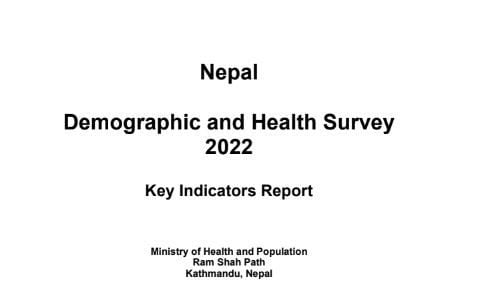
This Key Indicators Report presents a first look at selected findings from the 2022 NDHS. A comprehensive analysis of the data will be presented in a final report in 2023.

Survey Objectives

The primary objective of the 2022 NDHS is to present up-to-date estimates of basic demographic and health indicators. The NDHS provides a comprehensive overview of population, maternal, and child health issues in Nepal. Specifically, the 2022 NDHS collected information on fertility levels, marriage, fertility preferences, awareness and use of family planning methods, breastfeeding practices, nutrition, maternal and child health, childhood mortality, awareness and behavior regarding HIV and other sexually transmitted infections (STIs), women’s empowerment and domestic violence, fistula, mental health, accident and injury, disability, food insecurity, and other health-related issues such as smoking, knowledge of tuberculosis, and prevalence of hypertension.

The information collected through the 2022 NDHS is intended to assist policymakers and program managers in designing and evaluating programs and strategies for improving the health of Nepal’s population. The 2022 NDHS also provides indicators relevant to the Nepal Health Sector Strategy 2016– 22, the next health sector strategic plan under development, and the Sustainable Development Goals (SDGs) for Nepal.

Sample Design

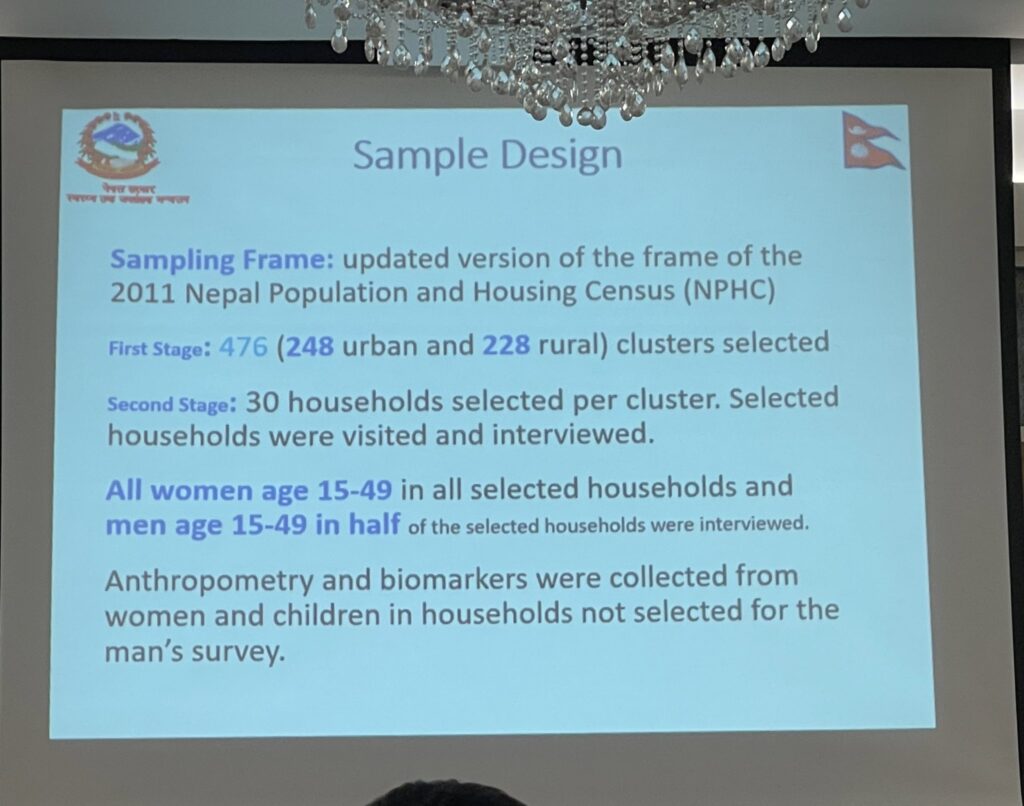
The sampling frame used for the 2022 NDHS is an updated version of the frame of the Nepal Population and Housing Census (NPHC) conducted in 2011, provided by the Central Bureau of Statistics. The smallest administrative unit in Nepal is the sub ward. The census frame includes a complete list of Nepal’s 36,020 sub-wards. Each sub-ward has a residence type (urban or rural) and a measure of size is the number of households.

Facts & trends

Nepal Demographic and Health Survey 2022 Key Indicators Report

Fertility

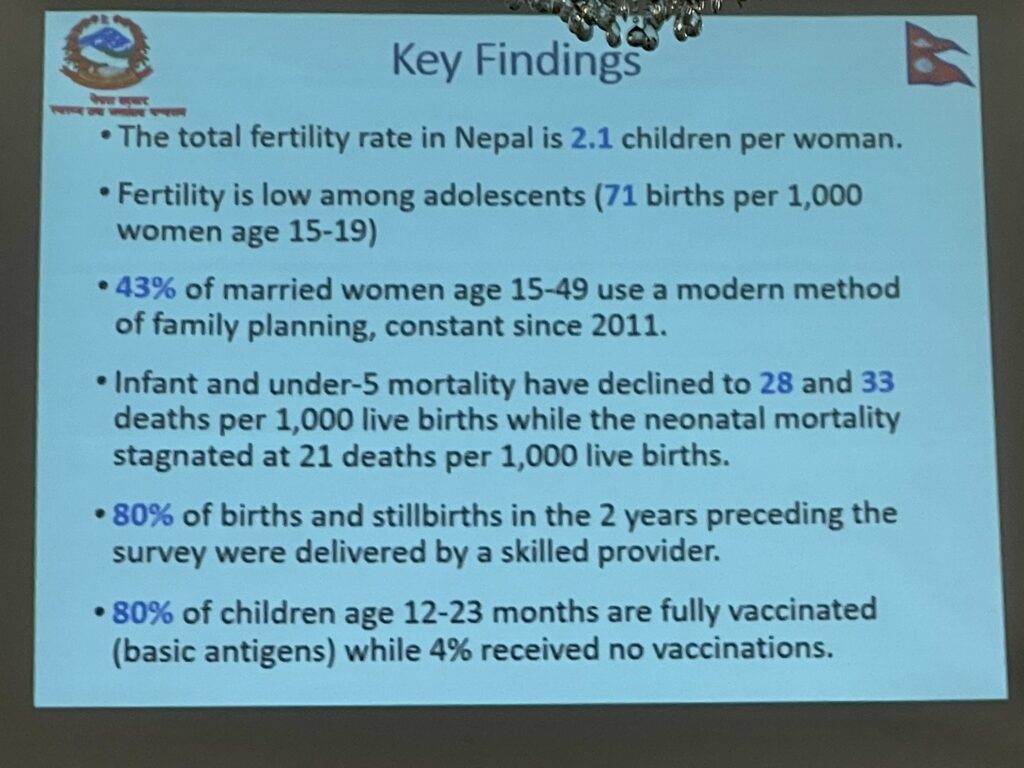
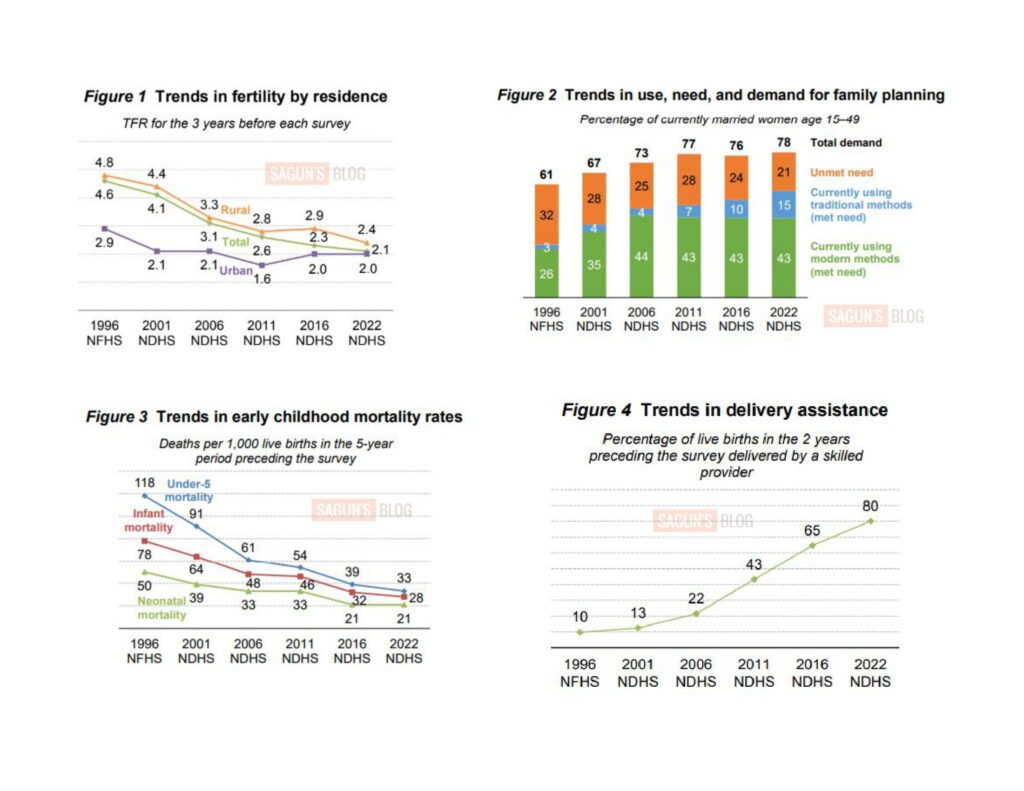
There has been a steady decline in the Total Fertility Rate from 4.8 births per woman in the 1996 NFHS to 2.1 births per woman in the 2022 NDHS.

Fertility is low among adolescents (71 births per 1,000 women age 15–19), peaks at 160 births per1,000 among women age 20–24, and then deceases thereafter.

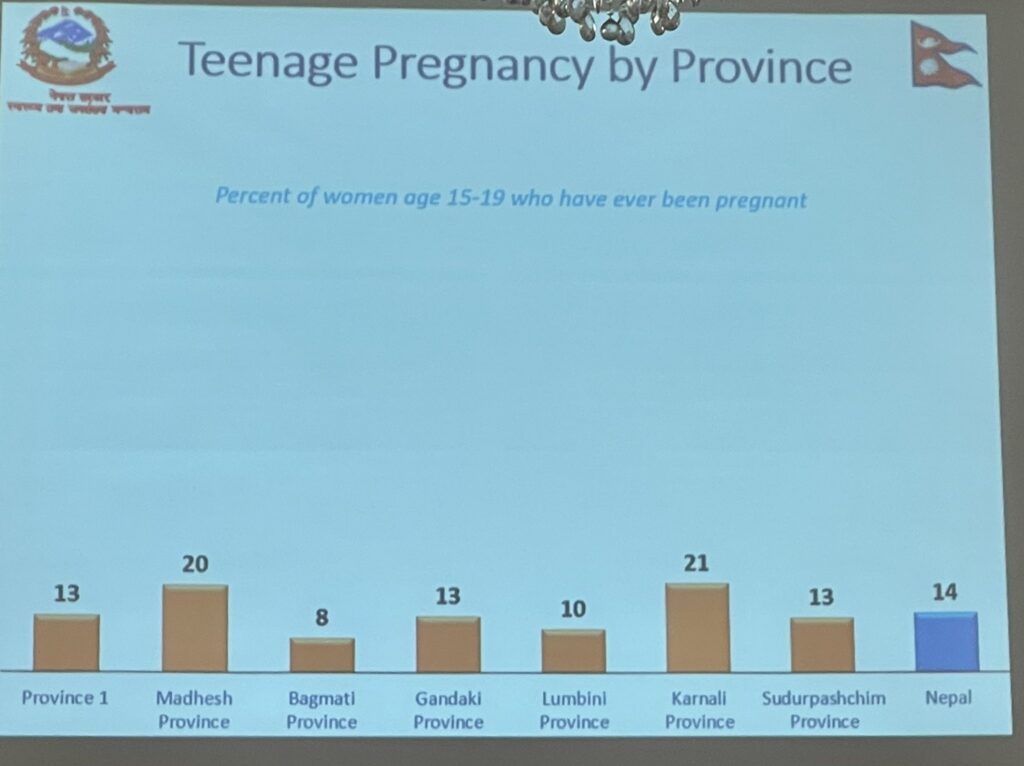
Overall, 14% of women age 15–19 have ever been pregnant, including 10% who have had a live birth, 2% who have had a pregnancy loss, and 4% who are currently pregnant.

Teenage pregnancy is highest in Karnali Province (21%), followed by Madhesh Province (20%), and lowest in Bagmati Province (8%).

Ten percent (10%) of women want another child soon (within the next 2 years), 13% want to have another child later (in 2 or more years), and 1% want another child but have not decided when.

Fifty-three percent (53%) of women want no more children, 17% are sterilized, and 3% stated that they are infecund.

Family Planning

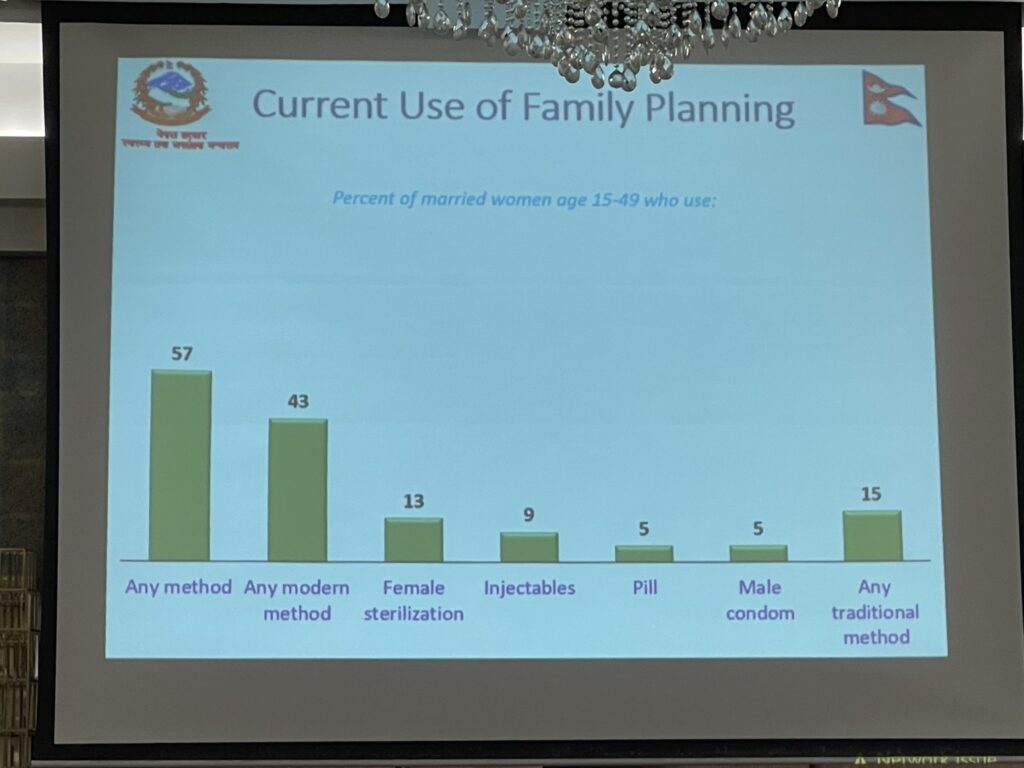
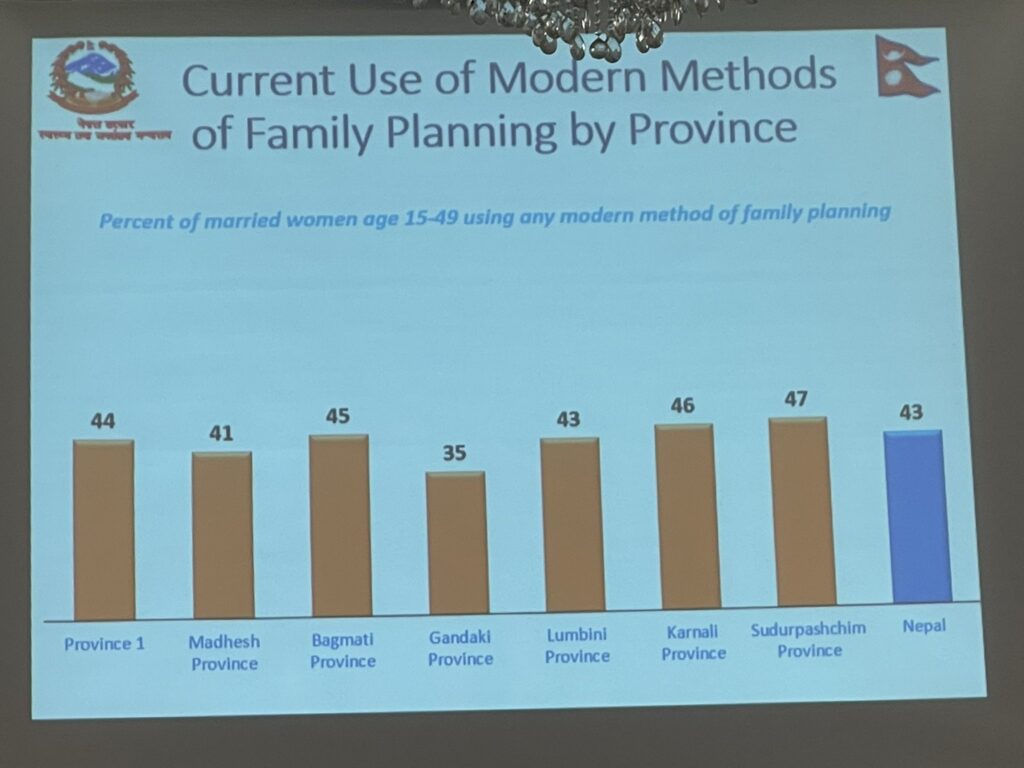
Use of any family planning method among currently married women rose from 29% in 1996 to 57% in 2022. Over the same period, use of modern methods of contraception increased from 26% in 1996 to 44% in 2006. It has held steady at 43% from 2011 through 2022.

Fifty-seven (57%) of currently married women are using a method of contraception; 43% are using a modern method, and 15% are using a traditional method.

The most popular modern methods used are female sterilization (13%), injectables (9%), and implants (6%).

Withdrawal is by far the most common traditional method used; 13% of currently married women use this method compared with 2% who use the rhythm method.

Twenty-one percent (21%) of currently married women in Nepal have an unmet need for family planning services.

Early Childhood Mortality

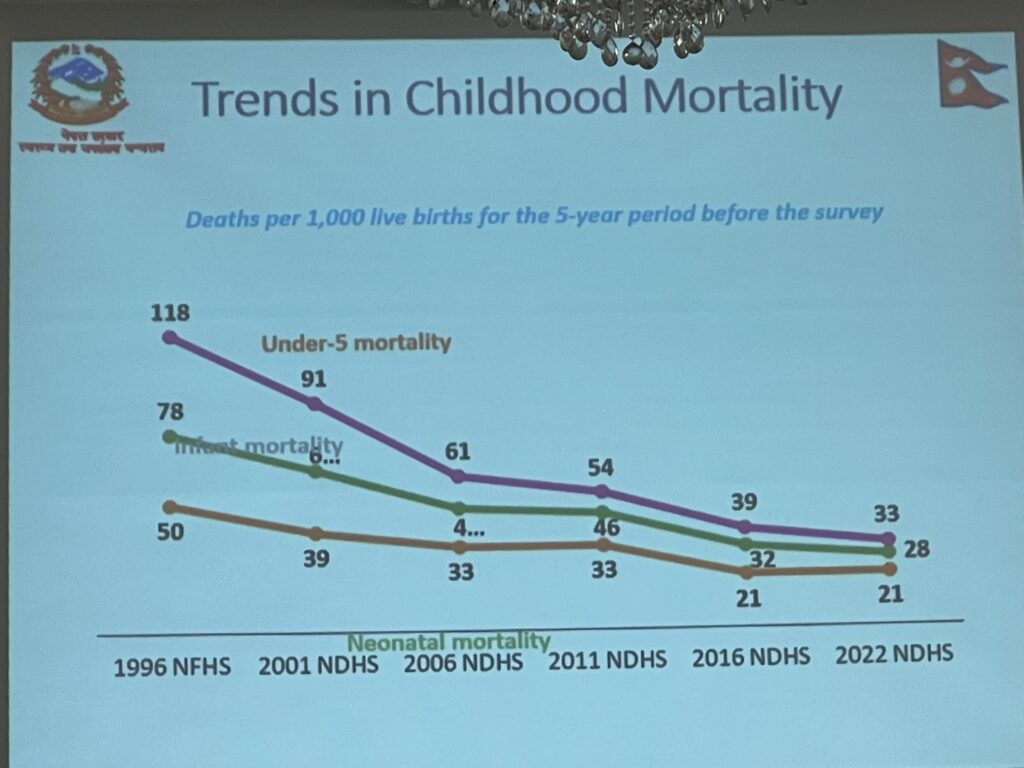
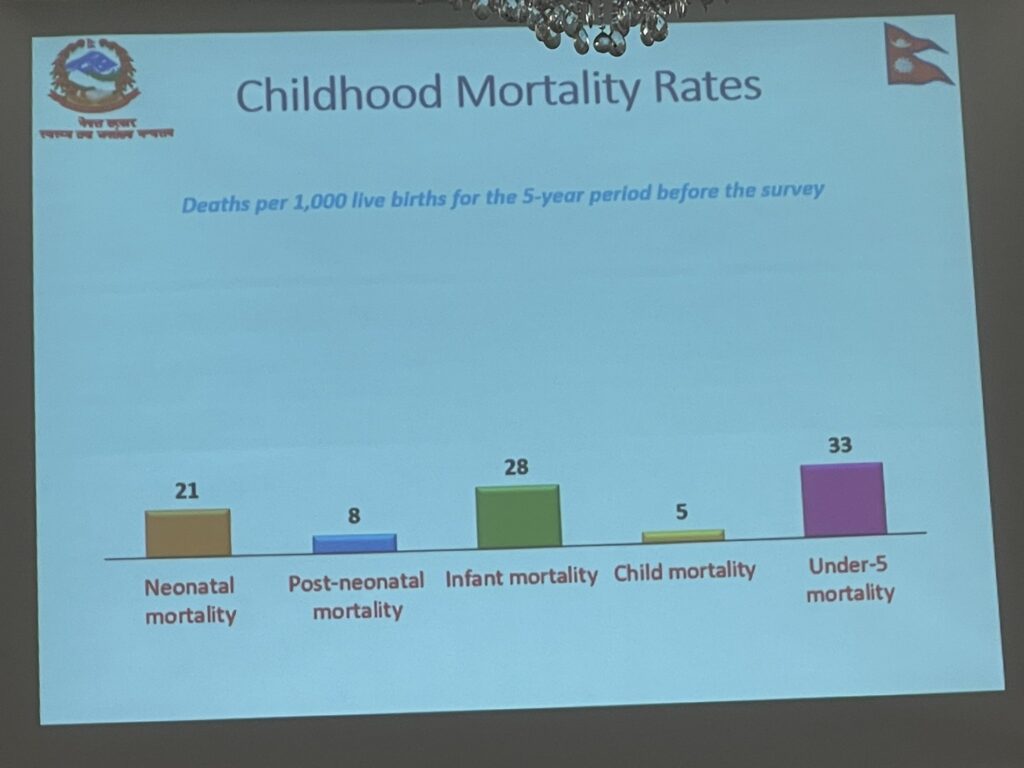
Between the 1996 NFHS and the 2022 NDHS surveys, under-5 mortality declined from 118 to 33 deaths per 1,000 live births, infant mortality declined from 78 to 28 deaths per 1,000 live births, and neonatal mortality declined from 50 to 21 deaths per 1,000 live births. Notably, however, between the 2016 and 2022 NDHS the neonatal mortality did not change.

  • During the 5 years immediately preceding the survey, the overall under-5 mortality rate was 33 deaths per 1,000 live births.
  • The infant mortality rate was 28 deaths per 1,000 live births.
  • The child mortality rate was 5 deaths per 1,000 children surviving to age 12 months.
  • The neonatal mortality rate was 21 deaths per 1,000 live births, during the 5 years immediately preceding the survey.
  • Eighty-five percent (85%) of all deaths among children under age 5 in Nepal take place before a child’s first birthday, with 64% occurring during the first month of life.

Maternal Care

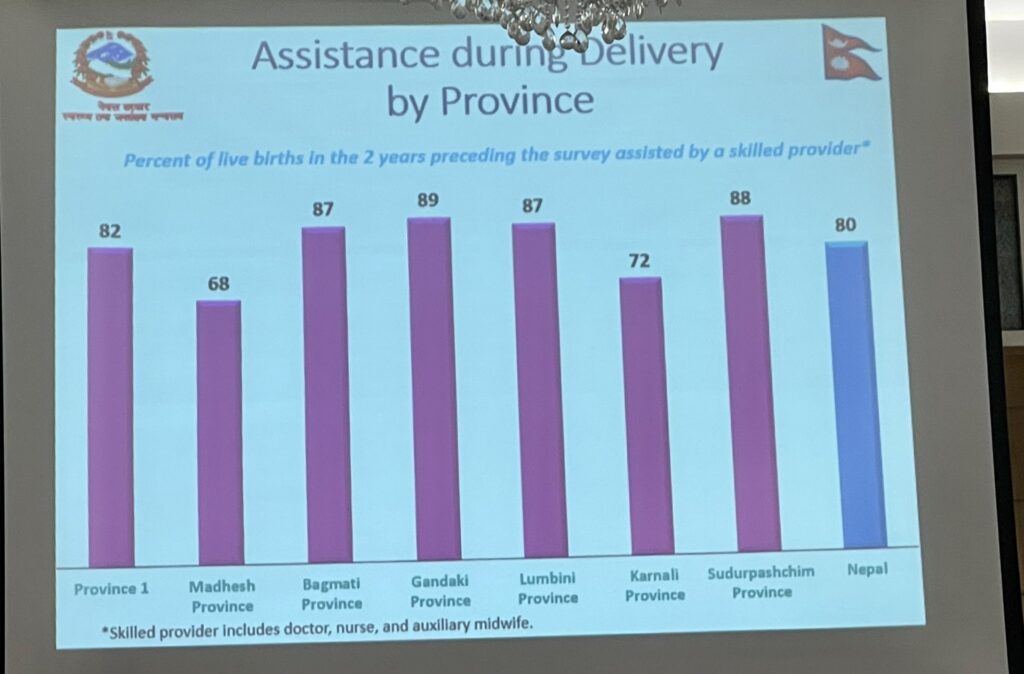
The percentage of women who received antenatal care from skilled provider for their most recent live birth in the 2 years preceding the survey increased from 25% in 1996 to 94% in 2022. Similarly, those who made four or more ANC visits increased from 9% in 1996 to 81% in 2022. The percentage of live births that are assisted by a skilled provider has increased markedly, from 10% in 1996 to 80% in 2022).

  • Ninety-four percent (94%) of women reported receiving antenatal care from a skilled provider for their most recent live birth or stillbirth in the 2-year period preceding the survey.
  • Four in five women (81%) had at least four ANC visits for their most recent live birth.
  • Overall, 96% of women took iron-containing supplements during their most recent pregnancy.
  • Overall, 93% of women with a live birth in the 2 years preceding the survey received sufficient doses of tetanus toxoid injections to protect their baby against neonatal tetanus.
  • Overall, 79% of live births and still births in the 2 years preceding the survey were delivered in health facilities.
  • Four in five (80%) live births and stillbirths were delivered by skilled providers.
  • Overall, 70% of women with a live birth or stillbirth in the 2 years preceding the survey received a postnatal check within the 2 days after delivery.

Vaccination coverage

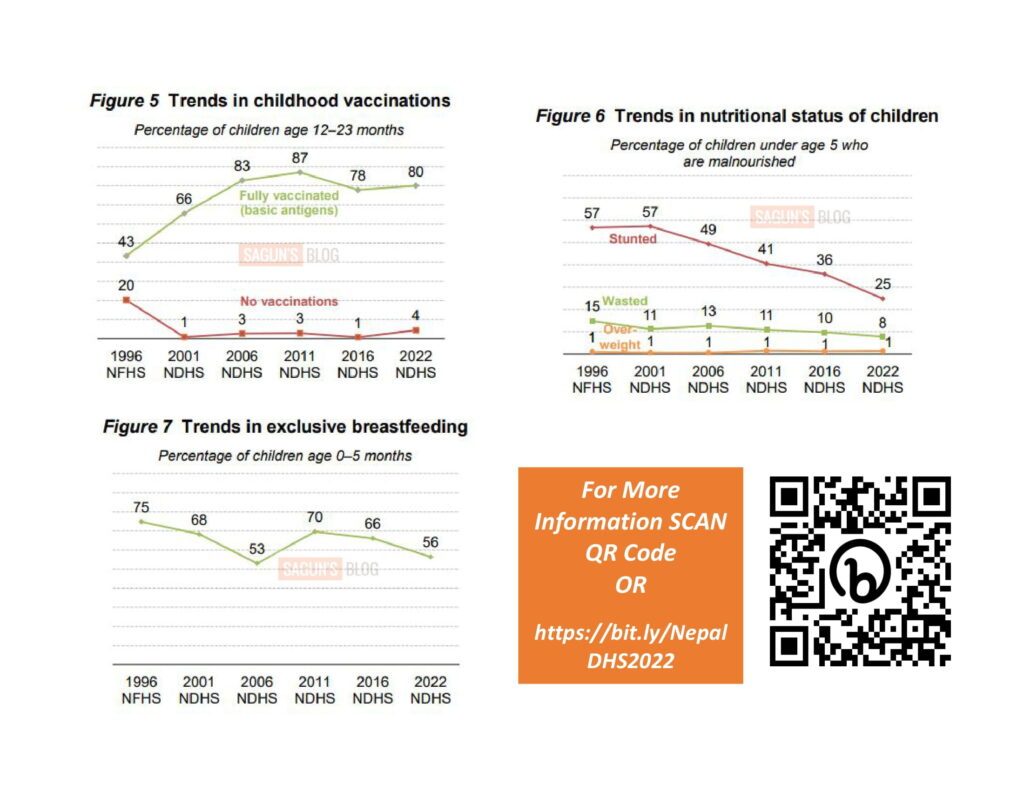
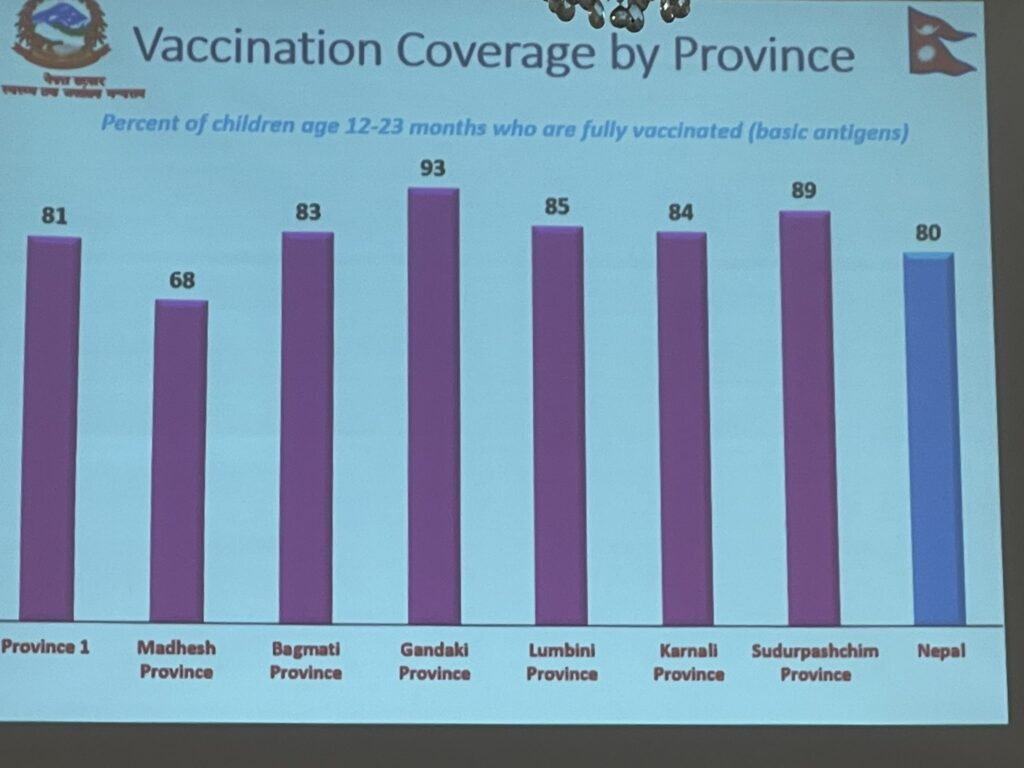
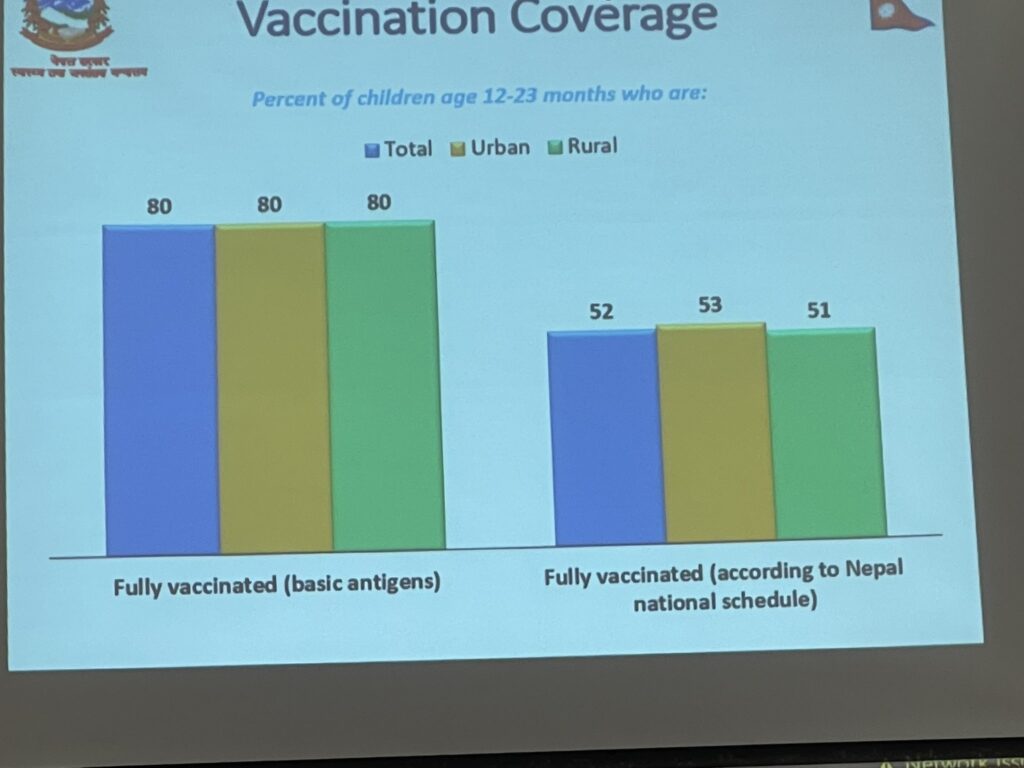
The percentage of children age 12–23 months who are fully vaccinated (received all the basic antigens) has fluctuated over time, rising from 43% in 1996 to a peak of 87% in 2011, then decreasing to 78% in 2016, and increasing slightly to 80% in 2022. The percentage of children age 12–23 months who did not receive any vaccinations has also fluctuated, notably increasing slightly from 1% in 2016 to 4% in 2022.

  • Overall, 80% of children age 12–23 months are fully vaccinated with basic antigens.
  • Ninety-five percent (95%) of children age 12–23 months received BCG vaccine, 89% received the third dose of DTP-HepB-Hib, 86% received the third dose of OPV, and 89% received a dose of MR.
  • Slightly more than half of the children age 12–23 months (52%) are fully vaccinated according to the national schedule.
  • Eighty-five percent (85%) of children received the second dose of fIPV, 81% received the third dose of PCV, 72% received the 2nd dose of RV, and 81% received a dose of JE vaccine.
  • Four percent (4%) of children age 12–23 months have received no vaccinations.

Child Nutrition Status

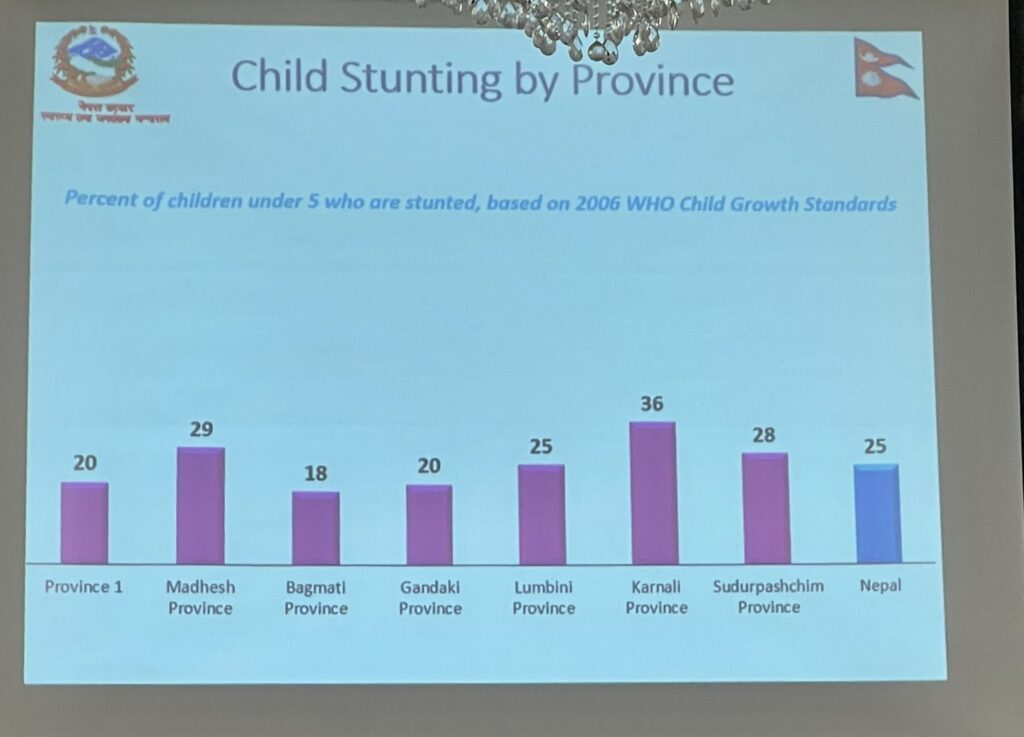
The prevalence of stunting has declined from 57% in 1996 to 25% in 2022. During this same period, the prevalence of wasting declined from 15% to 8%, and the prevalence of overweight was steady at 1%.

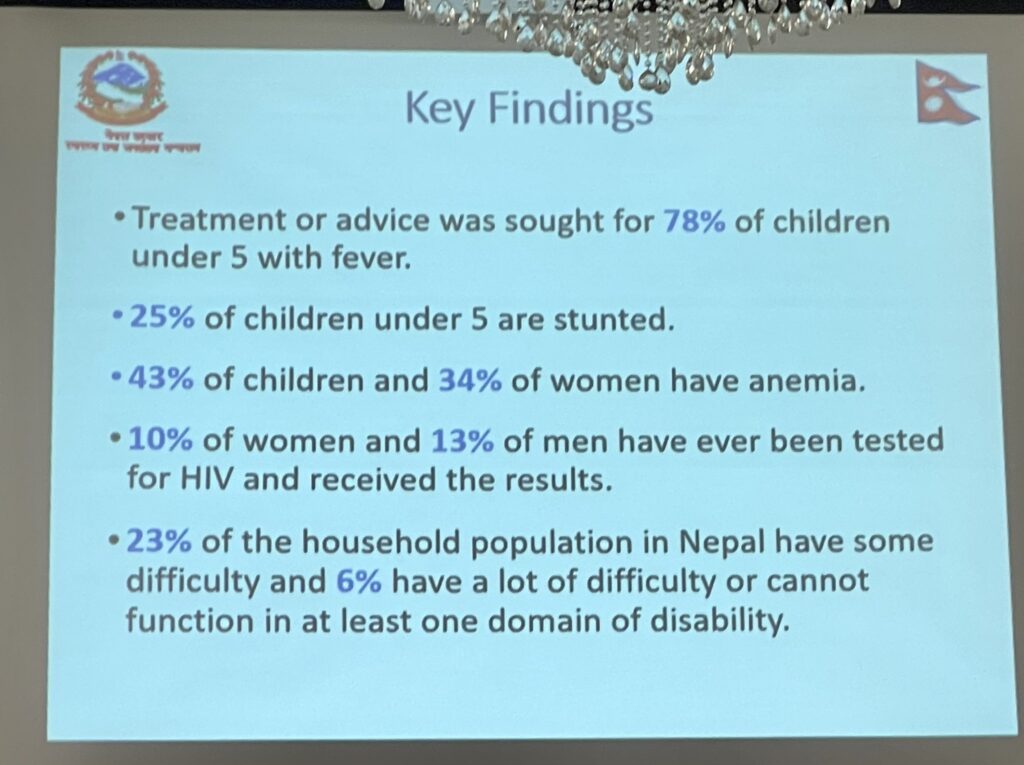
  • According to the three anthropometric indices: 25% of children under age 5 are stunted, 8% are wasted, and 19% are underweight. One percent of children under 5 are overweight.

Infant and Young Child feeding

Exclusive breastfeeding among children age 0–5 months has fluctuated widely—declining from 75% in 1996 to 53% in 2006, then rising to 70% in 2011, and declining to 56% in 2022.

  • Fifty-five percent (55%) of children age 0–23 months engaged in early initiation of breastfeeding.
  • Seventy-eight percent (78%) of children age 6–23 months met the minimum dietary diversity requirement.
  • Fifty-six percent (56%) of children under 6 months were exclusively breastfeed.
  • Forty-three percent (43%) of children age 6–23 months were fed a sweet beverage.
  • Sixty-nine percent (69%) of children age 6–23 months consumed unhealthy foods.

Anemia

The prevalence of anemia among children age 6–59 months has decreased from 48% in 2006 to 43% in 2022. However, the trend has not been consistently downward—in 2016, 53% of children were anemic. The prevalence of anemia among women age 15–49 increased from 36% in 2006 to 41% in 2016 and declined to 34% in 2022.

  • Fourty three (43)% of children age 6–59 months are anemic, including 25% who are mildly anemic, 18% who are moderately anemic, and less than 1% who are severely anemic.
  • Thirty four (34)% of women are anemic, including 18% who are mildly anemic, 15% who
  • are moderately anemic, and 1% who are severely anemic.
  • Women living in the terai ecological zone are more likely to be anemic (45%) than those living in hills (20%) and mountain (23%) regions. More than half of the women (52%) are anemic in Madhesh Province, which is in the terai ecological zone.

HIV

  • Sixty-five percent (65%) of young women and 88% of young men know that consistent use of condoms can reduce the risk of getting HIV.
  • Sixty-nine percent (69%) of young women and 85% of young men know that having just one uninfected partner can reduce the chance of getting HIV.
  • Only 16% of young women and 27% of young men have a thorough knowledge of HIV prevention methods.
  • Overall, 10% of women and 13% of men age 15–49 have ever been tested for HIV.
  • Three percent (3%) of women and 2% of men age 15–49 were tested for HIV in the 12-month period preceding the survey and received the results of the last test they took.

Disability

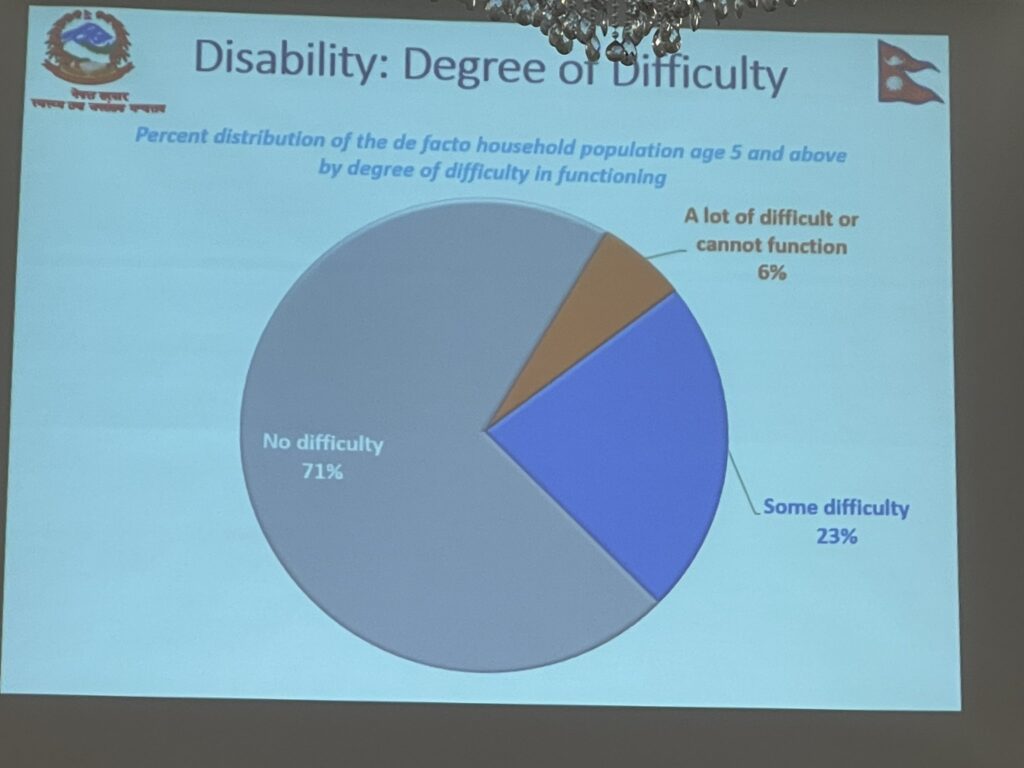
  • Overall, 71% of the de facto household population age 5 or older have no difficulty in any of the functional domains.
  • Among the de facto household population age 5 or older 23% have some difficulty in at least one functional domain, 5% have a lot of difficulty, and 1% cannot do at least one domain.
  • Six percent (6%) of the de facto household members age 5 or older have a lot of difficulty or cannot function at all in at least one of the functional domains.
  • Among the de facto household population age 5 and older, the most common disability reported is difficulty seeing (15% ) followed by difficulty walking or climbing steps (12%).

Ministry of Health and Population, Nepal; New ERA; and ICF. 2022. Nepal Demographic and Health Survey 2022: Key Indicators Report. Kathmandu, Nepal: Ministry of Health and Population, Nepal.

Download Report

Download Report

Recommended reading

  • NEPAL DEMOGRAPHIC AND HEALTH SURVEY (NDHS) 2022 | KEY INDICATORS
  • Nepal Health Facility Survey 2021 Preliminary Data Tables
  • Preliminary Findings: Nepal Health Facility Survey 2021
  • Second Round Seroprevalence Survey for SARS-COV-2
  • The 2nd National Sero-prevalence Survey of Nepal for COVID-19
  • Waste Management Baseline Survey of Nepal 2020
  • National Mental Health Survey, Nepal-2020 Fact Sheet
  • Nepal Multiple Indicator Cluster Survey 2019 (NMICS 2019): Key findings
  • National TB Prevalence Survey, 2018-19 Key findings
  • Nepal STEPS Survey 2019- Province wise Fact Sheets
  • NEPAL–NCDs risk factors STEPS Survey 2019 – Tobacco Factsheet
  • Nepal STEPS Survey 2019 Alcohol Consumption and Policy Fact Sheet
  • National NCD Risk Factor Survey (WHO-STEP Survey) 2019,Nepal
  • Nepal National Micronutrient Status Survey 2016
  • The 2015 Nepal Health Facility Survey: Further Analysis Reports
  • Key Indicators: The Nepal Demographic and Health Survey (1996 NDHS- 2016 NDHS)
  • Key Findings (Nepali & English) – The 2016 Nepal Demographic and Health Survey (2016 NDHS)
  • Nepal Demographic and Health Survey 2016 Key Indicators Report
  • Nepal Demographic and Health Survey 2016 Key Indicators Report (Short Notes)
  • The 2016 Nepal Demographic and Health Survey (2016 NDHS)
  • Key findings – The 2015 Nepal Health Facility Survey (2015 NHFS)
  • Nepal Health Facility Survey (2015 NHFS) Preliminary Report
  • Nepal Multiple Indicator Cluster Survey (MICS 2014) Final Report
November 24, 2022 0 comments
0 FacebookTwitterPinterestLinkedinTumblrVKOdnoklassnikiRedditStumbleuponWhatsappTelegramLINEPocketSkypeViberEmail
Nepal Demographic and Health Survey (NDHS) 2022 | Key Indicators
Health in DataMaternal, Newborn and Child HealthPublic HealthReports

Nepal Demographic and Health Survey (NDHS) 2022 | Key Indicators

by Public Health Update November 24, 2022
written by Public Health Update

The Ministry of Health and Population (MoHP) Nepal disseminated the key indicators of the Nepal Demographic and Health Survey (NDHS) 2022.
IMG 7747
Photo: Madhav Chaulagain @madhavjee
NDHS 2022
NDHS 2022: Photo: Madhav Chaulagain @madhavjee

Recommended: NEPAL HEALTH FACILITY SURVEY 2021(FINAL REPORT)

IMG 7759
Photo: Madhav Chaulagain @madhavjee
IMG 7760
Photo: Madhav Chaulagain @madhavjee
IMG 7756
Photo: Madhav Chaulagain @madhavjee
IMG 7755
Photo: Madhav Chaulagain @madhavjee
IMG 7757
Photo: Madhav Chaulagain @madhavjee
IMG 7758
Photo: Madhav Chaulagain @madhavjee
IMG 7753
Photo: Madhav Chaulagain @madhavjee
IMG 7752
Photo: Madhav Chaulagain @madhavjee
IMG 7750
Photo: Madhav Chaulagain @madhavjee
IMG 7751
Photo: Madhav Chaulagain @madhavjee
IMG 7749
Photo: Madhav Chaulagain @madhavjee
IMG 7754
Photo: Madhav Chaulagain @madhavjee
IMG 7744
Photo: Madhav Chaulagain @madhavjee

Nepal Demographic and Health Survey 2022 Key Indicators Report

Recommended reading

  • Nepal Health Facility Survey 2021 Preliminary Data Tables
  • Preliminary Findings: Nepal Health Facility Survey 2021
  • Second Round Seroprevalence Survey for SARS-COV-2
  • The 2nd National Sero-prevalence Survey of Nepal for COVID-19
  • Waste Management Baseline Survey of Nepal 2020
  • National Mental Health Survey, Nepal-2020 Fact Sheet
  • Nepal Multiple Indicator Cluster Survey 2019 (NMICS 2019): Key findings
  • National TB Prevalence Survey, 2018-19 Key findings
  • Nepal STEPS Survey 2019- Province wise Fact Sheets
  • NEPAL–NCDs risk factors STEPS Survey 2019 – Tobacco Factsheet
  • Nepal STEPS Survey 2019 Alcohol Consumption and Policy Fact Sheet
  • National NCD Risk Factor Survey (WHO-STEP Survey) 2019,Nepal
  • Nepal National Micronutrient Status Survey 2016
  • The 2015 Nepal Health Facility Survey: Further Analysis Reports
  • Key Indicators: The Nepal Demographic and Health Survey (1996 NDHS- 2016 NDHS)
  • Key Findings (Nepali & English) – The 2016 Nepal Demographic and Health Survey (2016 NDHS)
  • Nepal Demographic and Health Survey 2016 Key Indicators Report
  • Nepal Demographic and Health Survey 2016 Key Indicators Report (Short Notes)
  • The 2016 Nepal Demographic and Health Survey (2016 NDHS)
  • Key findings – The 2015 Nepal Health Facility Survey (2015 NHFS)
  • Nepal Health Facility Survey (2015 NHFS) Preliminary Report
  • Nepal Multiple Indicator Cluster Survey (MICS 2014) Final Report
November 24, 2022 0 comments
0 FacebookTwitterPinterestLinkedinTumblrVKOdnoklassnikiRedditStumbleuponWhatsappTelegramLINEPocketSkypeViberEmail
Nearly 40 million children are dangerously susceptible to growing measles threat
Global Health NewsOutbreak NewsPublic HealthPublic Health NewsVaccine Preventable Diseases

Nearly 40 million children are dangerously susceptible to growing measles threat

by Public Health Update November 24, 2022
written by Public Health Update

23 November 2022 Joint News Release

Measles vaccination coverage has steadily declined since the beginning of the COVID-19 pandemic. In 2021, a record high of nearly 40 million children missed a measles vaccine dose: 25 million children missed their first dose and an additional 14.7 million children missed their second dose, a joint publication by the World Health Organization (WHO) and the United States Centers for Disease Control and Prevention (CDC) reports. This decline is a significant setback in global progress towards achieving and maintaining measles elimination and leaves millions of children susceptible to infection.

In 2021, there were an estimated 9 million cases and 128 000 deaths from measles worldwide. Twenty-two countries experienced large and disruptive outbreaks. Declines in vaccine coverage, weakened measles surveillance, and continued interruptions and delays in immunization activities due to COVID-19, as well as persistent large outbreaks in 2022, mean that measles is an imminent threat in every region of the world. 

“The paradox of the pandemic is that while vaccines against COVID-19 were developed in record time and deployed in the largest vaccination campaign in history, routine immunization programmes were badly disrupted, and millions of kids missed out on life-saving vaccinations against deadly diseases like measles,” said WHO Director-General Dr Tedros Adhanom Ghebreyesus. “Getting immunization programmes back on track is absolutely critical. Behind every statistic in this report is a child at risk of a preventable disease.”

The situation is grave: measles is one of the most contagious human viruses but is almost entirely preventable through vaccination. Coverage of 95% or greater of 2 doses of measles-containing vaccine is needed to create herd immunity in order to protect communities and achieve and maintain measles elimination. The world is well under that, with only 81% of children receiving their first measles-containing vaccine dose, and only 71% of children receiving their second measles-containing vaccine dose. These are the lowest global coverage rates of the first dose of measles vaccination since 2008, although coverage varies by country.

Urgent global action needed

Measles anywhere is a threat everywhere, as the virus can quickly spread to multiple communities and across international borders. No WHO region has achieved and sustained measles elimination. Since 2016, 10 countries that had previously eliminated measles experienced outbreaks and reestablished transmission.

“The record number of children under-immunized and susceptible to measles shows the profound damage immunization systems have sustained during the COVID-19 pandemic,” said CDC Director Dr. Rochelle P. Walensky. “Measles outbreaks illustrate weaknesses in immunization programs, but public health officials can use outbreak response to identify communities at risk, understand causes of under-vaccination, and help deliver locally tailored solutions to ensure vaccinations are available to all.”  

In 2021, nearly 61 million measles vaccine doses were postponed or missed due to COVID-19-related delays in immunization campaigns in 18 countries. Delays increase the risk of measles outbreaks, so the time for public health officials to accelerate vaccination efforts and strengthen surveillance is now. CDC and WHO urge coordinated and collaborative action from all partners at global, regional, national, and local levels to prioritize efforts to find and immunize all unprotected children, including those who were missed during the last two years.

Measles outbreaks illustrate weaknesses in immunization programs and other essential health services. To mitigate risk of outbreaks, countries and global stakeholders must invest in robust surveillance systems. Under the Immunization Agenda 2030 global immunization strategy, global immunization partners remain committed to supporting investments in strengthening surveillance as a means to detect outbreaks quickly, respond with urgency, and immunize all children who are not yet protected from vaccine-preventable diseases. 

WHO News Release


Recommended readings

  • Emergency Call to Action for Measles and Polio Outbreak Prevention and Response
  • Maldives, Sri Lanka eliminate measles and rubella, ahead of 2023 target
  • Measles-Rubella (MR) Vaccination Campaign 2076/77
  • WHO South-East Asia Region sets 2023 target to eliminate measles, rubella
  • Sri Lanka eliminates measles
  • Substantial decline in global measles deaths, but disease still kills 90 000 per year
  • Bhutan, Maldives eliminate measles
  • National Immunization Programme Measles Rubella Campaign 2068-69
  • WHO releases first data on global vaccine market since COVID-19
  • WHO South-East Asia Region commits to inclusive, equitable and resilient health systems
  • Countries in WHO South-East Asia Region endorse health promoting schools, safe school operations during pandemic
November 24, 2022 0 comments
0 FacebookTwitterPinterestLinkedinTumblrVKOdnoklassnikiRedditStumbleuponWhatsappTelegramLINEPocketSkypeViberEmail
Oral Health Country Profile 2022: Nepal
Health in DataNon- Communicable Diseases (NCDs)Public Health UpdateReportsResearch & Publication

Oral Health Country Profile 2022: Nepal

by Public Health Update November 23, 2022
written by Public Health Update

Overview

WHO’s Global oral health status report (GOHSR) provides the first-ever comprehensive picture of oral disease burden and highlights challenges and opportunities to accelerate progress towards universal coverage for oral health. This includes introducing oral health profiles of countries based on the latest available data from the Global Burden of Disease (GBD) project, the International Agency for Research on Cancer (IARC) and global WHO surveys. It emphasizes the global impact of oral disease on our health and well-being and highlights stark inequalities, with a higher disease burden for the most vulnerable and disadvantaged population groups within and across societies.

The Oral Health Nepal 2022 country profile will serve as a reference for policy-makers and an orientation for a wide range of stakeholders across different sectors to guide advocacy towards better prioritization of oral health in national context.

Oral Disease Burden: Prevalence of oral diseases (2019)

  • Prevalence of untreated caries of deciduous teeth in children 1-9 years: 51.2%
  • Prevalence of untreated caries of permanent teeth in people 5+ years: 31.5%
  • Prevalence of severe periodontal disease in people 15+ years: 14.8 %
  • Prevalence of edentulism in people 20+ years: 1.4%

Lip and oral cavity cancer, all ages (2020)

  • Total Number of new cases: Female (236), Male (608), Total (844)
  • Incidence rate (per 100 000 population): Female (1.7), Male (5.5), Total ( 3.4)
Risk Factors for Oral Diseases
  • Per capita availability of sugar (g/day): Total (18.5)
  • Prevalence of current tobacco use, 15+ years (%): Female (13.8), Male (49.1), Total (31.5)
  • Per capita alcohol consumption, 15+ years (liters of pure alcohol/year): Female (0.3), Male (1.1), Total (0.6)
Economic impact related to treatment and prevention of oral diseases (2019)
  • Total expenditure on dental healthcare in million: 89 US$
  • Per capita expenditure on dental healthcare: 3.1 US$
  • Total productivity losses due to 5 oral diseases in million: 54 US$
  • Affordability of fluoride toothpaste: unaffordable
  • Number of labour days needed to buy annual supply of fluoride toothpaste per person: 1.8

Please refer WHO Global oral health status report for source of data with proper referencing.

Download Country Profile (PDF File)

WHO Global oral health status report 

Recommended readings

  • WHO Global oral health status report 
  • EYE, ENT and Oral Health Manual for Health Workers
  • EYE, ENT and Oral Health Manual for School Teachers and FCHVs
  • World Oral Health Day 2022: Be Proud of Your Mouth for your happiness and well-being
  • World Oral Health Day
  • World Oral Health Day 2021: Be Proud Of Your Mouth
  • World Oral Health Day: ”Say Ahh: Think Mouth Think Health”
  • National Oral Health Policy-2070, NEPAL
  • World Oral Health Day – ”Live MOUTH SMART” #WOHD17
November 23, 2022 0 comments
0 FacebookTwitterPinterestLinkedinTumblrVKOdnoklassnikiRedditStumbleuponWhatsappTelegramLINEPocketSkypeViberEmail
Global Oral Health Status Report: Towards UHC for Oral Health by 2030
International Plan, Policy & GuidelinesNon- Communicable Diseases (NCDs)Public HealthPublic Health UpdateReports

Global Oral Health Status Report: Towards UHC for Oral Health by 2030

by Public Health Update November 23, 2022
written by Public Health Update

Overview

The WHO Global oral health status report reviews the most recent data on major oral diseases, risk factors, health system challenges and opportunities for reform. The report’s clear conclusion is that the status of global oral health is alarming and requires urgent action. The report will serve as a reference for policy-makers and an orientation for a wide range of stakeholders across different sectors to guide advocacy towards better prioritization of oral health in global, regional and national contexts. In addition, the report provides, as a separate online resource, the first-ever country oral health profiles for all 194 WHO Member States, giving unique insights into key areas and markers of oral health that are relevant for decision-makers.

Aims

The report has three broad aims:

  1. outline the global public health importance and impact of oral diseases over the life course;
  2. contribute to the process of implementing the World Health Assembly 74.5 resolution on oral health at global, regional and country levels by providing baseline information; and
  3. encourage commitment and action from governments, United Nations (UN) organizations and nonstate actors such as nongovernmental organizations (NGOs), academic institutions, philanthropic foundations, private-sector entities and other stakeholders to address oral diseases in the context of global health agendas.

Highlights

  • The report shows that almost half of the world’s population (45% or 3.5 billion people) suffer from oral diseases, with 3 out of every 4 affected people living in low- and middle-income countries. Global cases of oral diseases have increased by 1 billion over the last 30 years—a clear indication that many people do not have access to prevention and treatment of oral diseases.
  • The most common oral diseases are dental caries (tooth decay), severe gum disease, tooth loss and oral cancers.  Untreated dental caries is the single most common condition globally, affecting an estimated 2.5 billion people. Severe gum disease  ̶  a major cause of total tooth loss  ̶  is estimated to affect 1 billion people worldwide.  About 380 000 new cases of oral cancers are diagnosed every year.
  • The report underscores the glaring inequalities in access to oral health services, with a huge burden of oral diseases and conditions affecting the most vulnerable and disadvantaged populations. People on low incomes, people living with disabilities, older people living alone or in care homes, those living in remote and rural communities and people from minority groups carry a higher burden of oral diseases.
  • This pattern of inequalities is similar to other noncommunicable diseases such as cancers, cardiovascular diseases, diabetes, and mental disorders. Risk factors common to noncommunicable diseases such as high sugar intake, all forms of tobacco use, and harmful use of alcohol all contribute to the global oral health crisis.
Barriers to delivering oral health services

Only a small percentage of the global population is covered by essential oral health services, and those with the greatest need often have the least access to services. The key barriers to delivering access to oral health services for all include:

  1. Oral health care requires high out-of-pocket expenditures. This often leads to catastrophic costs and significant financial burden for families and communities.
  2. The provision of oral health services largely relies on highly specialized providers using expensive high-tech equipment and materials, and these services are not well integrated with primary health care models.
  3. Poor information and surveillance systems, combined with low priority for public oral health research are major bottlenecks to developing more effective oral health interventions and policies.
Opportunities to improve global oral health

The report showcases many promising opportunities to improve the state of global oral health including:

  • adopting a public health approach by addressing common risk factors through promoting a well-balanced diet low in sugars, stopping use of all forms of tobacco, reducing alcohol consumption and improving access to effective and affordable fluoride toothpaste.
  • planning oral health services as part of national health and improving integration of oral health services in primary health care as part of universal health coverage.
  • redefining oral health workforce models to respond to population needs and expanding competencies of non-dental healthcare workers to expand oral health service coverage; and
  • strengthening information systems by collecting and integrating oral health data into national health monitoring systems.

DOWNLOAD REPORT (Global Oral Health Status Report)


Recommended readings

  • EYE, ENT and Oral Health Manual for Health Workers
  • EYE, ENT and Oral Health Manual for School Teachers and FCHVs
  • World Oral Health Day 2022: Be Proud of Your Mouth for your happiness and well-being
  • World Oral Health Day
  • World Oral Health Day 2021: Be Proud Of Your Mouth
  • World Oral Health Day: ”Say Ahh: Think Mouth Think Health”
  • National Oral Health Policy-2070, NEPAL
  • World Oral Health Day – ”Live MOUTH SMART” #WOHD17
November 23, 2022 0 comments
0 FacebookTwitterPinterestLinkedinTumblrVKOdnoklassnikiRedditStumbleuponWhatsappTelegramLINEPocketSkypeViberEmail
World Antimicrobial Awareness Week 2020
Antimicrobial Resistance (AMR)Global Health NewsPublic Health NewsPublic Health Update

Quadripartite launches a new platform to tackle antimicrobial resistance threat to human and animal health and ecosystems

by Public Health Update November 23, 2022
written by Public Health Update

The Antimicrobial Resistance Multi-Stakeholder Partnership Platform was launched today to ensure the growing threats and impacts of antimicrobial resistance are addressed globally.

The Food and Agriculture Organization of the United Nations (FAO), the UN Environment Programme (UNEP), the World Health Organization ( WHO) and the World Organisation for Animal Health (WOAH), known as the Quadripartite  are joining forces on this initiative to underscore the threat AMR presents to humans, animals, plants, ecosystems and livelihoods.

An estimated 1.3 million people around the world die each year directly due to bacterial antimicrobial resistance ( AMR). If no action is taken, that number could soar dramatically, bringing higher public health costs and pushing more people into poverty, especially in low-income countries, underscoring the need for the Platform to mobilise further coordinated efforts.

Antibiotics and other antimicrobials play a key role in the success of modern medicine and have greatly improved the health of humans and animals. But overuse and misuse has reduced their efficacy, with more pathogens developing the ability to survive the antimicrobials designed to eliminate them.

AMR occurs when bacteria, viruses, fungi and parasites no longer respond to antimicrobial agents. As a result of drug resistance, antibiotics and other antimicrobial agents become ineffective and infections become difficult or impossible to treat, increasing the risk of disease spread, severe illness and death. Moreover, 1.3 billion people rely on livestock for their livelihoods and 20 million people depend on aquaculture, especially in low and middle-income countries. The spread of resistant strains of pathogens inexorably affects their livelihoods, as it increases animal suffering and losses. Applications to crops, as well as unproper disposal of unused and expired drugs and waste from industries and communities can lead to pollution of soils and streams that spread the trigger for unwanted microorganisms to develop resistance to tools meant to contain and eliminate them.

The new Antimicrobial Resistance Multi-Stakeholder Partnership Platform is an inclusive and international forum bringing together voices from all areas, sectors and perspectives through a holistic and system-wide One Health approach, for a shared vision responding to the need to improve coordination of efforts by a large number of stakeholders.

The Platform is a way to redouble collective efforts to save millions of lives and preserve the efficacy of antimicrobials for current and future generations by using them sustainably. The new Platform will engage and empower stakeholders across the One Health spectrum in an inclusive, transparent way to build consensus among public and private stakholders on the global AMR vision, gain knowledge to foster a collective understanding of AMR challenges and opportunities, and take multi-stakeholder actions to contain, combat and reverse AMR in line with the Global Action Plan and National Action Plans.

18 November 2022 News release Rome/Nairobi/Geneva/Paris


Recommended readings

  • WORLD ANTIBIOTIC AWARENESS WEEK: PRESCRIPTION FOR ACTION FROM WHO
  • Think Twice. Seek Advice: World Antibiotic Awareness Week, 13-19 November 2017
  • ANTIBIOTICS: HANDLE WITH CARE – WORLD ANTIBIOTIC AWARENESS WEEK 2016 (14-20 NOVEMBER 2016)
  • Lack of new antibiotics threatens global efforts to contain drug-resistant infections
  • World Antibiotic Awareness Week: Prescription for action from WHO
  • Adopt and implement high-impact interventions to secure the future of antibiotics and rollback the global AMR crisis
  • Change Can’t Wait. Our Time with Antibiotics is Running Out! 
  • Think Twice. Seek Advice: World Antibiotic Awareness Week, 13-19 November 2017
  • National Antibiotic Treatment Guideline-2014
  • WHO priority pathogens list for research and development (R&D) of new antibiotics
  • WHO’s list of urgent global health challenges for the new decade
  • World Antibiotic Awareness Week: Prescription for action from WHO
  • Think Twice. Seek Advice: World Antibiotic Awareness Week, 13-19 November 2017
November 23, 2022 1 comment
0 FacebookTwitterPinterestLinkedinTumblrVKOdnoklassnikiRedditStumbleuponWhatsappTelegramLINEPocketSkypeViberEmail
Public Service Commission (Lok Sewa Aayog) Syllabus for Health Services
Public HealthPublic Health NotesSyllabus

Public Service Commission (Lok Sewa Aayog) Syllabus for Health Services

by Public Health Update November 21, 2022
written by Public Health Update

Public Service Commission (Lok Sewa Aayog) Syllabus for Health Services

The Public Service Commission (PSC) was established in Nepal for selecting meritorious candidates required by Government of Nepal for various vacant posts of the civil service. Public Service Commission as an independent constitutional body of Government. The syllabus for various positions under health services are enlisted here.

Federal PSC Syllabus

S. NoLevelGroupSub-groupPosition1st Paper2nd PaperSeats
18thOthersBiomedical Engineeringbiomedical engineer1st PaperOpen
29thMedicineEndocrinologyConsultant Endocrinologist1st Paper2nd PaperOpen/Internal Competition
37thMedical Laboratory TechnologyMedical MicrobiologyMicrobiologist1st PaperOpen/Internal Competition
48thHomeopathy–Homeopathic Doctor1st PaperOpen
59thSurgeryKidney TransplantConsultant Kidney Transplant1st Paper2nd PaperOpen/Internal Competition
611thPathologyMicrobiologistChief Consultant Microbiologist1st Paper2nd PaperOpen/Internal Competition
79thMedical Laboratory TechnologyMedical MicrobiologyChief Microbiologist1st Paper2nd PaperOpen/Internal Competition
89thMedicineClinical GeneticsConsultant Clinical Genetics1st Paper2nd PaperOpen/Internal Competiiton
99thSurgerySports and Arthroscopic SurgeryConsultant Sports and Arthroscopic surgery1st Paper2nd PaperOpen/Internal Competition
109thSurgeryOrthoplasty and Reconstruction Surgeon SurgeryConsultant Orthoplasty and Reconstruction Surgeon1st Paper2nd PaperOpen/Internal Competition
119thMedicinePulmonologyConsultant Pulmonologist1st Paper2nd PaperOpen/Internal Competition
129thDentistryOral and maxillofacial SurgeryConsultant Oral and maxillofacial Surgeon1st Paper2nd PaperOpen/Internal Competition
139thSurgerySpinal SurgeryConsultant Spinal Surgeon1st Paper2nd PaperOpen/Internal Competition
149thDentistryGeneral Dental–1st Paper2nd PaperOpen  Internal Competition
154thMedical records–Junior Medical Recorders Assistant1st PaperOpen/Internal Competition
169thPhysiotherapy–उप-Chief Physiotherapist1st Paper2nd PaperOpenInternal Competition
1711thCommunity/Public HealthNursing––1st Paper2nd PaperOpen/Internal Competition
1811thSurgeryNeuro SurgeryChief Consultant Neuro Surgeon1st Paper2nd PaperOpenInternal
1911thMedicineTropical MedicineChief Consultant Tropical Medicine1st Paper2nd PaperOpenInternal
2011thMedicineMedical oncology11th1st Paper2nd PaperOpen & Internal
2111thMedicineForensic Medicine11th1st Paper2nd PaperOpen & Internal
225thHealth Education–Health Education Technician1st PaperOpen/Internal Competition
239thAyurvedaSalya and Sanghyaharan–1st Paper2nd PaperOpen & Internal
249thAyurvedaShalakya–1st Paper2nd PaperOpen & Internal
2511thPharmacy––1st Paper2nd PaperOpen & Internal
269thSurgeryGeneral Surgery–1st Paper2nd PaperOpen & Internal
279thPathologyHisto-Pathology–1st Paper2nd PaperOpen & Internal
289thPathologyHematology–1st Paper2nd PaperOpen & Internal
2911thSurgeryCardiothoracic–1st Paper2nd PaperOpen & Internal
3011thMedicineNeurology–1st Paper2nd PaperOpen & Internal

Pages: 1 2 3 4 5 6 7 8 9

Pages: 1 2 3 4 5 6 7 8 9

November 21, 2022 0 comments
0 FacebookTwitterPinterestLinkedinTumblrVKOdnoklassnikiRedditStumbleuponWhatsappTelegramLINEPocketSkypeViberEmail
World Antibiotic Awareness Week
Antimicrobial Resistance (AMR)PH Important DayPublic Health News

World Antimicrobial Awareness Week: Prevent antimicrobial resistance together

by Public Health Update November 18, 2022
written by Public Health Update

World Antimicrobial Awareness Week: Prevent antimicrobial resistance together By Dr Poonam Khetrapal Singh, WHO Regional Director for South-East Asia.

Today, and throughout World Antimicrobial Awareness Week (WAAW), WHO is highlighting the urgent need for sustained multisectoral action to prevent and contain antimicrobial resistance (AMR), which occurs when bacteria, viruses, fungi and parasites change over time and no longer respond to medicines, making infections harder to treat and increasing the risk of disease spread, severe illness and death. New global estimates show that in 2019, nearly 5 million human deaths worldwide were associated with bacterial AMR, of which 1.3 million human deaths were directly attributable to bacterial AMR. In a high-impact scenario, AMR will reduce global annual GDP by 3.8% by 2050. If left unchecked, in the next decade, it could result in a GDP shortfall of US$ 3.4 trillion annually, pushing 24 million more people into extreme poverty. Since 2014, preventing and combating AMR has been one of eight Flagship Priorities of the WHO South-East Asia Region, which is at high risk for the emergence and spread of AMR. All Member States continue to implement national action plans to address AMR, and in each Member State, a multisectoral working group or coordination committee on AMR has been established, in alignment with the Global Action Plan on AMR, adopted in 2015. Most Member States continue to implement national monitoring systems for resistance pathogens and antimicrobial consumption as well as foster stewardship in human health. All Member States are enrolled in the Global Antimicrobial Resistance Surveillance System (GLASS) AMR and the South-East Asia Region is the only WHO Region in which all countries carry out the annual Tracking AMR Country Self-Assessment Surveys, which this year was expanded to include the environment sector for the first time. Despite this progress, countries of the Region continue to face an array of multisectoral challenges, as highlighted in a review of progress launched at the Seventy-fifth Session of the WHO Regional Committee for South-East Asia in September 2022.

Such challenges include unsafe disposal of medicine and pharmaceutical waste, inadequate regulation of antimicrobial use in food production, insufficient infection prevention and control in health facilities, and inadequate access to safe water, sanitation and hygiene in homes and health facilities. The climate crisis is creating additional breeding grounds for antimicrobial-resistant bacteria. In recognition of these and other challenges, for this year’s WAAW, the One Health Quadripartite – which includes WHO, the Food and Agriculture Organization of the United Nations (FAO), the World Organization for Animal Health (WOAH), and the United Nations Environment Programme (UNEP) – is highlighting the urgent need to increase One Health action to address AMR, with the theme ‘preventing antimicrobial resistance together’. The Region has several priorities.First, accelerating implementation of national multisectoral action plans, for which adequate, sustained and reliable financing must be allocated – domestic, international and global. Second, improving surveillance of antimicrobial-resistant infections and strengthening laboratory capacity. This is critical to know the true extent of the problem, and to effectively target energy and resources. Third, developing and enforcing regulations on the appropriate use of antimicrobial medicines in all relevant sectors – human, animal, plant, food safety and environment – while ensuring such regulations promote and facilitate access for appropriate antimicrobial use. Fourth, stepping-up investments in adequate water, sanitation and hygiene, a critical health intervention in and of itself, but which will also have significant impact on the tsunami of environmental pollution and contamination-driven antimicrobial resistance. Time is of the essence.

The development of a new antimicrobial can take 10-15 years and cost more than US$ 1 billion. Few are in the pipeline. For the foreseeable future, we must accelerate One Health action while continuing to increase national, Regional, international and global awareness and support – precisely as Indonesia achieved during its presidency of the G20 group of nations, which resulted in a Call to Action to increase One Health efforts to address AMR. Today, throughout WAAW and beyond, WHO reaffirms its commitment to support all countries of the Region to prevent and contain AMR together, across sectors, partners, stakeholders and the public.


Recommended readings

  • WORLD ANTIBIOTIC AWARENESS WEEK: PRESCRIPTION FOR ACTION FROM WHO
  • Think Twice. Seek Advice: World Antibiotic Awareness Week, 13-19 November 2017
  • ANTIBIOTICS: HANDLE WITH CARE – WORLD ANTIBIOTIC AWARENESS WEEK 2016 (14-20 NOVEMBER 2016)
  • Lack of new antibiotics threatens global efforts to contain drug-resistant infections
  • World Antibiotic Awareness Week: Prescription for action from WHO
  • Adopt and implement high-impact interventions to secure the future of antibiotics and rollback the global AMR crisis
  • Change Can’t Wait. Our Time with Antibiotics is Running Out! 
  • Think Twice. Seek Advice: World Antibiotic Awareness Week, 13-19 November 2017
  • National Antibiotic Treatment Guideline-2014
  • WHO priority pathogens list for research and development (R&D) of new antibiotics
  • WHO’s list of urgent global health challenges for the new decade
  • World Antibiotic Awareness Week: Prescription for action from WHO
  • Think Twice. Seek Advice: World Antibiotic Awareness Week, 13-19 November 2017
November 18, 2022 1 comment
0 FacebookTwitterPinterestLinkedinTumblrVKOdnoklassnikiRedditStumbleuponWhatsappTelegramLINEPocketSkypeViberEmail
Universal Health Coverage
CompetitionPublic HealthPublic Health EventsPublic Health UpdateUniversal Health Coverage

WHO Art and Creative Contest “UHC We Want”

by Public Health Update November 17, 2022
written by Public Health Update

To celebrate International Day for Universal Health Coverage 2022, World Health Organization Regional Office for South-East Asia is organizing an art competition “UHC We Want” to promote ownership and engagement of youth in the Region for UHC; and to raise public awareness on the significance of UHC for health, well-being and quality of human capital. 

Concept

Universal Health Coverage (UHC) means that “all individuals and communities receive the health services they need without suffering financial hardship. It includes the full spectrum of essential, quality health services, from health promotion to prevention, treatment, rehabilitation, and palliative care across the life course”. 

The campaign “UHC We Want” reflects visionary demand of youth for the current and future universal health coverage system and practices, including access to care, quality of care, financial protection. It may include gaps between current and desirable universal health coverage. 

Competition Categories

  1. Drawing & Painting (Submission of photograph of original work in high resolution). Please explain how the photo illustrates UHC in 50 words.
  2. Digital Art and photograph (in JPG format-under 5 MB). Please explain how the photo illustrates UHC in 50 words.
  3. Short Video clip (must not exceed 2 minutes in length with minimum resolution of 1080 pixels and must be communicative and easy for international audiences)

Competition criteria

  • Participants must be under-25 youth, national and resident of Member countries of WHO South-East Asia Region.
  • A participant can submit only one artwork in each category.
  • Entrant must be individual, except for the Short Video Clip category which allows a team of maximum three youth members. 
  • Artwork must be original and must not contain any component with intellectual property protection.
  • Artwork must be relevant to the theme “UHC We Want”.
  • Entries will be judged by three age groups: under 12, 13–18, and 19–25
  • Winners will be selected by a WHO panel in the Regional Office for South-East Asia
  • WHO reserves the right to use the submitted artwork in its not-for-profit information products.
  • In each age group and category, three winners will be selected, and will be awarded in addition to a certificate of merit.
  • The deadline for submissions is Wednesday, 07 December 2022.
  • Submit your entry at https://bit.ly/UHC-We-Want
  • For inquiries, please write to sehsd@who.int or call on +91 11 43040147
November 17, 2022 0 comments
0 FacebookTwitterPinterestLinkedinTumblrVKOdnoklassnikiRedditStumbleuponWhatsappTelegramLINEPocketSkypeViberEmail
WHO releases first data on global vaccine market since COVID-19
Global Health NewsOutbreak NewsPublic Health News

WHO releases first data on global vaccine market since COVID-19

by Public Health Update November 14, 2022
written by Public Health Update

9 November 2022  News release (WHO)

  • This is the first report to capture the implications of COVID-19 for vaccine markets. 
  • Despite progress in recent decades, global market vaccine dynamics are not fully conducive to the development, supply and access for vital vaccines for public health.
  • Vaccines prioritized by WHO are not being developed or fully invested in due to limited profit potential.
  • Lower-income countries have struggled to access critical vaccines – such as against COVID-19 in 2021 and cervical cancer vaccine – that are in-demand by wealthier countries.
  • Some regions depend almost entirely on others for vaccine supply.
  • WHO calls on governments, manufacturers and partners to take ambitious action to guarantee equitable access to vaccines and improve responses to future pandemics.

WHO’s Global Vaccine Market Report 2022, shows that inequitable distribution is not unique to COVID-19 vaccines, with poorer countries consistently struggling to access vaccines that are in-demand by wealthier countries.

Limited vaccine supply and unequal distribution drive global disparities. The human papillomavirus (HPV) vaccine against cervical cancer has only been introduced in 41% of low-income countries, even though they represent much of the disease burden, compared to 83% of high-income countries.

Affordability is also an obstacle to vaccine access. While prices tend to be tiered by income, price disparities see middle-income countries paying as much – or even more – than wealthier ones for several vaccine products.

“The right to health includes the right to vaccines,” said Dr Tedros Adhanom Ghebreyesus, WHO Director-General. “And yet this new report shows that free-market dynamics are depriving some of the world’s poorest and most vulnerable people of that right. WHO is calling for much-needed changes to the global vaccine market to save lives, prevent disease and prepare for future crises.”

Approximately 16 billion vaccine doses, worth US$ 141 billion, were supplied in 2021, almost three times the 2019 market volume (5.8 billion) and nearly three-and-a-half times the 2019 market value (US$ 38 billion). The increase was primarily driven by COVID-19 vaccines, showing the incredible potential of how vaccine manufacturing can be scaled up in response to health needs.

Although manufacturing capacity worldwide has increased, it remains highly concentrated. Ten manufacturers alone provide 70% of vaccine doses (excluding COVID-19). Several of the top 20 most widely used vaccines (such as PCV, HPV, measles and rubella containing vaccines) each currently rely mainly on two suppliers.

This concentrated manufacturing base leads to risk of shortages as well as regional supply insecurity. In 2021, the African and Eastern Mediterranean regions were dependent on manufacturers headquartered elsewhere for 90% of their procured vaccines. Entrenched intellectual property monopolies and limited technology transfer further limit the ability of building and using local manufacturing capacity.

The health of markets is also concerning for several of the vaccines commonly needed for emergencies, such as against cholera, typhoid, smallpox/monkeypox, Ebola, meningococcal disease, where demand surges with outbreaks and is hence less predictable. The continued limited investment in these vaccines could be devastating for people’s lives.

The report highlights the opportunities for more alignment of vaccine development, production and distribution with a public health agenda, towards achieving the Immunization Agenda 2030 (IA2030) goals and informing pandemic prevention, preparedness, and response efforts.

COVID-19 proved that vaccines can be developed and distributed rapidly, with a process lasting an average of ten years but never less than four years, compressed to 11 months. The pandemic also exposed the long-standing need to recognise vaccines as a fundamental and cost-effective public good rather than a commodity.

To drive ambitious action to deliver equitable access to vaccines, the report calls on governments to act on: clear immunization plans and more aggressive investment and stronger oversight of vaccine development, production and distribution; regional research and manufacturing hubs; and pre-agreeing rules for government collaboration in times of scarcity on issues such as vaccine distribution, intellectual property and the circulation of inputs and goods.

Recommended actions for industry include: focusing research efforts on WHO priority pathogens, ensuring transparency, facilitating technology transfer, and committing to specific equity-driven allocation measures. International organizations and partners should prioritize Immunization Agenda 2030 goals, support country-driven initiatives and push for the application of resolutions on market transparency.

9 November 2022  News release (WHO)

DOWNLOAD: Global Vaccine Market Report 2022


Do you have a website? Looking for the best hosting provider? Here’s a discount code.

Latest Public Health Jobs

Latest Posts

  • International Wellness Day: Promoting Global Wellness for All
  • Summit Declaration: The 12th National Summit of Health and Population Scientists in Nepal
  • Joint political declaration on the reform of the global health architecture
  • World Health Day 2026: Together for Health. Stand with Science.
  • World Water Day 2026 | Water & Gender Equality

Thanks for visiting us.
Disclaimer: The resources, documents, guidelines, and information on this blog have been collected from various sources and are intended for informational purposes only. Information published on or through this website and affiliated social media channels does not represent the intention, plan, or strategies of an organization that the initiator is associated with in a professional or personal capacity, unless explicitly indicated.
If you have any complaints, information, or suggestions about the content published on Public Health Update, please feel free to contact us at blog.publichealthupdate@gmail.com.
#StayUpdated


  • WordPress
  • Link
  • Facebook
  • Mail
  • Facebook
  • Twitter
  • Twitter
  • LinkedIn
  • Instagram
  • Facebook
November 14, 2022 0 comments
0 FacebookTwitterPinterestLinkedinTumblrVKOdnoklassnikiRedditStumbleuponWhatsappTelegramLINEPocketSkypeViberEmail
Newer Posts
Older Posts

Search

Follow Us

Facebook Twitter Instagram Pinterest Linkedin Youtube

Categories

  • Abstracts (25)
  • Activities (91)
  • Adolescent Sexual and Reproductive Health (ASRH) (25)
  • Advice & Tips (4)
  • African Region (5)
  • AI and Health (1)
  • Annual Meeting (6)
  • Antimicrobial Resistance (AMR) (21)
  • Award (19)
  • Awards (16)
  • Books (9)
  • Call for Proposal, EOI & RFP (103)
  • Call for Research Participants (8)
  • Clinical Doctor Jobs (6)
  • Communicable Diseases (107)
  • Competition (20)
  • Conference (129)
  • Consultant (1)
  • Courses (205)
  • Dashboard (2)
  • Digital Health & Health Informatics (10)
  • Drug and Medicine (18)
  • Eastern Mediterranean Region (3)
  • Education (15)
  • Environment (3)
  • Environmental Health & Climate Change (47)
  • European Region (42)
  • Exchange Program (1)
  • Fact Sheet (117)
  • FCHVs (1)
  • Fellowships, Studentship & Scholarships (168)
  • Financial Aid (13)
  • Form Formats (2)
  • Fully funded (22)
  • Global Health News (434)
  • Grants and Funding Opportunities (193)
  • Guest Post (44)
  • Health Assistant Jobs (1)
  • Health Equity (7)
  • Health Financing and Economics (24)
  • Health in Data (115)
  • Health Insurance (5)
  • Health Jobs (52)
  • Health Literacy, Health Education & Promotion (50)
  • Health Organization Profile (42)
  • Health Systems (83)
  • Human Resource for Health (33)
  • Humanitarian Health & Emergency Response (44)
  • Hypertension (5)
  • Implementation Research (48)
  • International Health (3)
  • International Jobs & Opportunities (373)
  • International Plan, Policy & Guidelines (210)
  • Internships (4)
  • Jobs Vacancies (56)
  • Journals (8)
  • Life Style & Public Health Nutrition (39)
  • Live (10)
  • Master's Degree (48)
  • Maternal, Newborn and Child Health (88)
  • Mentorship Program (2)
  • Miscellaneous (16)
  • National Health News (158)
  • National Plan, Policy & Guidelines (468)
  • Neglected Tropical Diseases (NTDs) (51)
  • Non- Communicable Diseases (NCDs) (121)
  • Notice (103)
  • Nursing Jobs (6)
  • Nutritionist Jobs (1)
  • One Health (18)
  • Online & Distance Learning (22)
  • Online Courses (90)
  • Op-Ed Article (3)
  • Opportunities by Region (83)
  • Outbreak News (213)
  • Partially funded (6)
  • PCL Health Science Jobs (3)
  • PH Important Day (534)
  • Pharmacist Jobs (3)
  • PhD (54)
  • Photos (5)
  • Planetary Health (4)
  • PostDoc (14)
  • Presentation Slides (26)
  • Primary Health Care (25)
  • Provincial Plan, Policies and Guidelines (14)
  • Public Health (1,283)
  • Public Health Epidemiology & Biostatistics (13)
  • Public Health Events (306)
  • Public Health Information (20)
  • Public Health Innovation (9)
  • Public Health Jobs (52)
  • Public Health News (554)
  • Public Health Notes (120)
  • Public Health Opportunities (507)
  • Public Health Opportunity (491)
  • Public Health Programs (108)
  • Public Health Seminar (2)
  • Public Health Tools (1)
  • Public Health Update (564)
  • Quality Improvement & Infection Prevention (20)
  • Region of America (8)
  • Reports (184)
  • Research & Project Grants (39)
  • Research & Project Grants (32)
  • Research & Publication (647)
  • Research Articles (10)
  • Road Traffic Accidents (RTA) (9)
  • School of Public Health (60)
  • Self funded (2)
  • South-East Asia Region (26)
  • Success Stories (17)
  • Summer and Winter Courses (40)
  • Summer Courses (28)
  • Sustainable Development Goals (SDGs) (14)
  • Syllabus (61)
  • Symposium (9)
  • Tobacco Control (35)
  • Training (40)
  • Travel Grants (15)
  • Trick, Technique & Skills (8)
  • Uncategorized (3)
  • Undergraduate Degree (7)
  • Universal Health Coverage (36)
  • Universities (29)
  • Universities & School of Public Health (58)
  • Vacancy Announcement (26)
  • Vaccine Preventable Diseases (40)
  • Vector-Borne Diseases(VBDs) (30)
  • Videos (3)
  • View Points (1)
  • Webinar (4)
  • Western Pacific Region (13)
  • Workshop (18)
  • World News (117)
Post New Jobs: Vacancy Announcement Service

Public Health Update (Sagun’s Blog) is a popular public health portal in Nepal. Thousands of health professionals are connected with Public Health Update to get up-to-date public health updates, search for jobs, and explore opportunities.
#1 Public Health Blog for sharing Job opportunities and updates in Nepal

”Public Health Information For All”
– – Sagun Paudel, Founder

  • HOT JOBS
    • Public Health Jobs
    • Medical Doctor Jobs
    • Nursing Jobs
    • Health Assistant Jobs
    • Pharmacist Jobs
    • NGOs Jobs
    • Government Jobs
  • Top Categories
    • National Plan, Policy & Guidelines Top
    • Public Health Calendar
    • Fellowships & Scholarships
    • Health Systems
    • Health Organization Profiles
    • International Jobs & Opportunities
    • Public Health Opportunity

PUBLIC HEALTH INITIATIVE

    • Submit your Vacancies New
    • Partnership Opportunities

Contact: blog.publichealthupdate@gmail.com

https://wa.me/+9779856036932

Public Health Initiative, A Registered Non-profit organization – All Right Reserved. 2011-2024. Contact us. 

Facebook Twitter Instagram Youtube Envelope
Public Health Update
  • Home
  • Public Health
    • Home 1
      • Adolescent Sexual and Reproductive Health (ASRH)
      • Antimicrobial Resistance (AMR)
      • Communicable Diseases
      • Digital Health & Health Informatics
      • Environmental Health & Climate Change
      • Health Financing and Economics
      • Health Equity
    • Home 2
      • Health Literacy, Health Education & Promotion
      • Human Resource for Health
      • Humanitarian Health & Emergency Response
      • Implementation Research
      • International Health
      • Life Style & Public Health Nutrition
      • Maternal, Newborn and Child Health
    • Home 3
      • Neglected Tropical Diseases (NTDs)
      • Non- Communicable Diseases (NCDs)
      • One Health
      • Planetary Health
      • Public Health Epidemiology & Biostatistics
      • Primary Health Care
      • Quality Improvement & Infection Prevention
    • Home 4
      • Road Traffic Accidents (RTA)
      • Sustainable Development Goals (SDGs)
      • Tobacco Control
      • Universal Health Coverage
      • Vaccine Preventable Diseases
      • Vector-Borne Diseases(VBDs)
      • Notices
  • Public Health Update
    • Home 1
      • Public Health News
      • Global Health News
      • Outbreak News
      • National Health News
      • COVID-19
    • Home 2
      • Fact Sheet
      • Health in Data
      • PH Important Day
      • Public Health Events
      • Public Health Programs
    • Home 3
      • Health Systems
      • Health Insurance
      • Health Organization Profile
      • Success Stories
      • Public Health Innovation
  • Public Health Opportunities
    • Fully funded
    • Travel Grants
    • Grants and Funding Opportunities
    • Opportunities by Region
    • International Jobs & Opportunities
    • Research & Project Grants
    • Fellowships, Studentship & Scholarships
    • Conference
  • Jobs
    • Home 1
      • Health Jobs
      • Public Health Jobs
      • Clinical doctor Jobs
      • Health Assistant Jobs
      • Nursing Jobs
      • PCL Health Science Jobs
    • Home 2
      • Dental Jobs
      • Pharmacist Jobs
      • TSLC (Health Jobs)
      • Laboratory Jobs
      • Nutritionist Jobs
  • Downloads
    • International Plan, Policy & Guidelines
    • National Plan, Policy & Guidelines
    • Reports
    • Books
    • Research Articles
  • School of Public Health
    • Home 1
      • Courses
      • Master’s Degree
      • Undergraduate Degree
      • PhD
    • Home 2
      • Universities
      • Syllabus
      • Public Health Notes
      • Mentorship Program
      • Startup Project
    • Home
      • Summer and Winter Courses
      • Summer Courses
      • Online Courses
      • Workshop
      • Training
Public Health Update
  • Home
  • Public Health
    • Home 1
      • Adolescent Sexual and Reproductive Health (ASRH)
      • Antimicrobial Resistance (AMR)
      • Communicable Diseases
      • Digital Health & Health Informatics
      • Environmental Health & Climate Change
      • Health Financing and Economics
      • Health Equity
    • Home 2
      • Health Literacy, Health Education & Promotion
      • Human Resource for Health
      • Humanitarian Health & Emergency Response
      • Implementation Research
      • International Health
      • Life Style & Public Health Nutrition
      • Maternal, Newborn and Child Health
    • Home 3
      • Neglected Tropical Diseases (NTDs)
      • Non- Communicable Diseases (NCDs)
      • One Health
      • Planetary Health
      • Public Health Epidemiology & Biostatistics
      • Primary Health Care
      • Quality Improvement & Infection Prevention
    • Home 4
      • Road Traffic Accidents (RTA)
      • Sustainable Development Goals (SDGs)
      • Tobacco Control
      • Universal Health Coverage
      • Vaccine Preventable Diseases
      • Vector-Borne Diseases(VBDs)
      • Notices
  • Public Health Update
    • Home 1
      • Public Health News
      • Global Health News
      • Outbreak News
      • National Health News
      • COVID-19
    • Home 2
      • Fact Sheet
      • Health in Data
      • PH Important Day
      • Public Health Events
      • Public Health Programs
    • Home 3
      • Health Systems
      • Health Insurance
      • Health Organization Profile
      • Success Stories
      • Public Health Innovation
  • Public Health Opportunities
    • Fully funded
    • Travel Grants
    • Grants and Funding Opportunities
    • Opportunities by Region
    • International Jobs & Opportunities
    • Research & Project Grants
    • Fellowships, Studentship & Scholarships
    • Conference
  • Jobs
    • Home 1
      • Health Jobs
      • Public Health Jobs
      • Clinical doctor Jobs
      • Health Assistant Jobs
      • Nursing Jobs
      • PCL Health Science Jobs
    • Home 2
      • Dental Jobs
      • Pharmacist Jobs
      • TSLC (Health Jobs)
      • Laboratory Jobs
      • Nutritionist Jobs
  • Downloads
    • International Plan, Policy & Guidelines
    • National Plan, Policy & Guidelines
    • Reports
    • Books
    • Research Articles
  • School of Public Health
    • Home 1
      • Courses
      • Master’s Degree
      • Undergraduate Degree
      • PhD
    • Home 2
      • Universities
      • Syllabus
      • Public Health Notes
      • Mentorship Program
      • Startup Project
    • Home
      • Summer and Winter Courses
      • Summer Courses
      • Online Courses
      • Workshop
      • Training
Public Health Initiative, A Registered Non-profit organization – All Right Reserved. 2011-2023