Public Health Update
  • Home
  • Public Health Update
  • Nepal Health Jobs
    • Public Health Job Board
    • Organization List
  • Opportunities
    • Fellowships, Studentship & Scholarships
    • Grants and Funding Opportunities
    • Fully funded
    • Conference
  • Downloads
    • International Plan, Policy & Guidelines
    • National Plan, Policy & Guidelines
    • Reports
    • Public Health Notes
    • Syllabus
    • Form Formats
  • School of Public Health
    • PhD
    • Master’s Degree
    • Online Courses
  • Notice
  • Home
  • Public Health Update
  • Nepal Health Jobs
    • Public Health Job Board
    • Organization List
  • Opportunities
    • Fellowships, Studentship & Scholarships
    • Grants and Funding Opportunities
    • Fully funded
    • Conference
  • Downloads
    • International Plan, Policy & Guidelines
    • National Plan, Policy & Guidelines
    • Reports
    • Public Health Notes
    • Syllabus
    • Form Formats
  • School of Public Health
    • PhD
    • Master’s Degree
    • Online Courses
  • Notice
LOGIN / REGISTER
Public Health Update
SUBSCRIBE
Public Health Update
  • Home
  • Public Health Update
  • Nepal Health Jobs
    • Public Health Job Board
    • Organization List
  • Opportunities
    • Fellowships, Studentship & Scholarships
    • Grants and Funding Opportunities
    • Fully funded
    • Conference
  • Downloads
    • International Plan, Policy & Guidelines
    • National Plan, Policy & Guidelines
    • Reports
    • Public Health Notes
    • Syllabus
    • Form Formats
  • School of Public Health
    • PhD
    • Master’s Degree
    • Online Courses
  • Notice

All Right Reserved. Designed and Developed by PenciDesign

National Health NewsPublic Health News

World Population Day was marked across the country

by Public Health Update July 12, 2018
written by Public Health Update

World Population Day was marked across the country

 July 11, 2018
As World Population Day was marked across the country by organising various programmes today, 24 per cent of married women in the country continue to be deprived of access to modern essential modern contraception.
Family planning methods are considered key solution  to control population growth and this year’s World Population Day was celebrated with the theme ‘Family Planning is a Human Right’
According to Nepal Demographic and Health Survey 2016, around 1.5 million (24 per cent) married women have an unmet need for family planning services. With large numbers of women still deprived of such facilities, the country’s population growth rate is 1.35, which according to experts will lead to double the population in 53 years if the situation persists.
Subash Chandra Shrestha, acting executive director of Family Planning Association of Nepal, said, “Population and family planning are directly interrelated. Family planning plays a crucial role in improving the health of infants and mothers.” He said Nepal’s fertility rate was 2.3, which needed to be brought down to 2.0.
DhzXwNyUwAACh7t

Photo : Twitter/Dr. Krishna Aryal (Follow)

News: HIMALAYAN NEWS SERVICE, Kathmandu, July 11 (Original Source)

July 12, 2018 0 comments
0 FacebookTwitterPinterestLinkedinTumblrVKOdnoklassnikiRedditStumbleuponWhatsappTelegramLINEPocketSkypeViberEmail
PH Important DayPublic Health

World Population Day 2018 – "Family Planning is a Human Right"

by Public Health Update July 11, 2018
written by Public Health Update

World Population Day 2018 – “Family Planning is a Human Right”

World Population Day 2018 – “Family Planning is a Human Right”: World Population Day, which seeks to focus attention on the urgency and importance of population issues, was established by the then-Governing Council of the United Nations Development Programme in 1989, an outgrowth of the interest generated by the Day of Five Billion, which was observed on 11 July 1987. By resolution 45/216 of December 1990, the United Nations General Assembly decided to continue World Population Day to enhance awareness of population issues, including their relations to the environment and development. The Day was first marked on 11 July 1990 in more than 90 countries. Since then, a number of UNFPA Country Offices and other organizations and institutions commemorate World Population Day, in partnership with governments and civil society. 

2018 theme: “Family Planning is a Human Right”

This year marks the 50th anniversary of the 1968 International Conference on Human Rights, where family planning was, for the first time, globally affirmed to be a human right.
The conference’s outcome document, known as the Teheran Proclamation, stated unequivocally: “Parents have a basic human right to determine freely and responsibly the number and spacing of their children.”
Embedded in this legislative language was a game-changing realization: Women and girls have the right to avoid the exhaustion, depletion and danger of too many pregnancies, too close together. Men and women have the right to choose when and how often to embrace parenthood — if at all. Every individual has the human right to determine the direction and scope of his or her future in this fundamental way.

Nine standards to uphold the human right to family planning:

  • Non-discrimination: Family planning information and services cannot be restricted on the basis of race, sex, language, religion, political affiliation, national origin, age, economic status, place of residence, disability status, marital status, sexual orientation or gender identity.
  • Available: Countries must ensure that family planning commodities and services are accessible to everyone.
  • Accessible: Countries must ensure that family planning commodities and services are accessible to everyone.
  • Acceptable: Contraceptive services and information must be provided in a dignified manner, respecting both modern medical ethics and the cultures of those being accommodated.
  • Good quality: Family planning information must be clearly communicated and scientifically accurate.
  • Informed decision-making: Every person must be empowered to make reproductive choices with full autonomy, free of pressure, coercion or misrepresentation.
  • Privacy and confidentiality: All individuals must enjoy the right to privacy when seeking family planning information and services.
  • Participation: Countries have an obligation to ensure the active and informed participation of individuals in decisions that affect them, including health issues.
  • Accountability: Health systems, education systems, leaders and policymakers must be accountable to the people they serve in all efforts to realize the human right to family planning.

UNITED NATIONS


Current estimates indicate that roughly 83 million people are being added to the world’s population every year. The global population is expected to reach almost 10 billion in 2050.
Family planning allows people to attain their desired number of children and determine the spacing of pregnancies. Access to safe, voluntary family planning is a human right.

Family planning is central to gender equality and women’s empowerment, and is a key factor in reducing poverty. Investments in making family planning available also yields economic and other gains that can propel development forward.
Some family planning methods, such as condoms, help prevent the transmission of HIV and other sexually transmitted infections. By preventing unintended pregnancy and unsafe abortions, family planning also prevents deaths of mothers and children.
Parents have a basic human right to determine freely and responsibly the number and spacing of their children. WHO SEARO

National Family Planning Costed Implementation Plan (2015-2020)

Nepal FP2020 Commitment -2017

Family Planning : A Global Handbook for Provider, The 2018 edition

The International Conference on Family Planning 2018

Barriers to Family Planning Use in Eastern Nepal: Results from a Mixed Methods Study

World Population Day: ‘Investing in teenage girls (Pokhara Activities)

World Population Day- 2015 activities- Pokhara

Family Planning: Empowering People, Developing Nations – World Population Day 2017

July 11, 2018 1 comment
0 FacebookTwitterPinterestLinkedinTumblrVKOdnoklassnikiRedditStumbleuponWhatsappTelegramLINEPocketSkypeViberEmail
Health Financing and EconomicsNational Plan, Policy & GuidelinesPublic Health NotesPublic Health ProgramsReportsResearch & Publication

National Family Planning Costed Implementation Plan (2015-2020)

by Public Health Update July 11, 2018
written by Public Health Update

National Costed Implementation Plan for Family Planning

This National Family Planning Costed Implementation Plan outlines national strategies and interventions that Nepal must adopt to ensure that high quality family planning serves are available and accessible to all Nepali people as well as the resources required to realize this vision. 

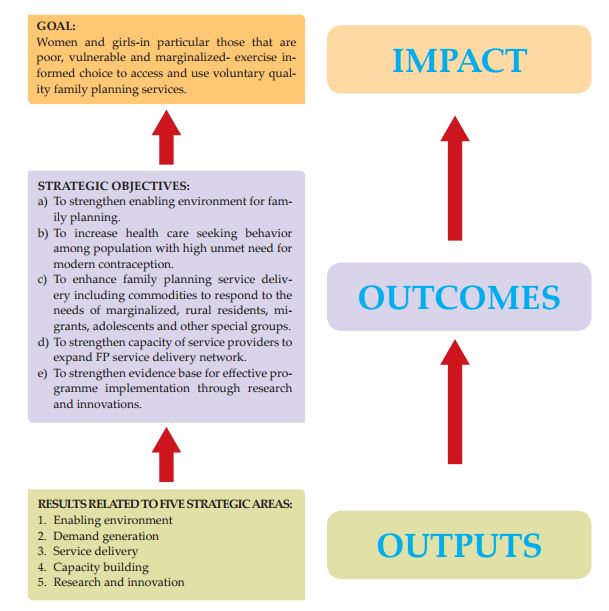
In addition, the CIP is intended to serve as a reference document for external development partners including donors and implementing agencies to understand and contribute to the national priorities on family planning outlined in the Plan to ensure coherence and harmonization of efforts in advancing family planning in Nepal. To address the existing challenges and opportunities for scaling up rights-based FP in the country, the CIP focuses on five strategic areas. They are Enabling Environment, Demand Generation, Service Delivery, Capacity Building and Research & Innovation.

Purpose

Recognizing the need to revive and scale up FP in Nepal, the Government has developed the Costed Implementation Plan (CIP) on FP. The development of the plan has been guided by the strategic directions developed through extensive consultations with relevant stakeholders at national, regional and district levels and is in line with the National Health Sector Program (NHSP III 2015-2020) which is currently being finalized. As did the previous health sector plans (NHSP I and II) the upcoming NHSP III has also recognized FP as a priority, and it is considered as a component of reproductive health package and essential health care services.
The purpose of the CIP is to strengthen the foundation for FP programming and service delivery at national and districts levels as well as to identify the activities to be implemented and resources needed for achieving the results. The CIP clearly defines priorities for strategic actions, delineates the activities and inputs needed to achieve them, and estimates the costs associated with each as a basis for budgeting and mobilizing resources required for implementation at different levels by organizations and institutions over the 2015-2020 period. In addition, CIP is intended to serve as a guide for development partners and implementing agencies on areas of need to ensure the success of the national FP program.
More specifically, it will be used to: 
  • Inform policy dialogue, planning and budgeting to strengthen FP as a priority area 
  • Prioritize strategies on FP to be adopted over the next 6 years.
  • Enable FHD, NHTC, LMD and NHEICC to develop their respective implementation plans with effective, efficient and actionable interventions/activities and timelines identified.
  • Support Government and national partners to understand financial and technical support needs for scaling up FP in the country.
  • Support advocacy efforts for FP with clear messages on impact of FP on health & non health sectors including cost-savings to justify investments.
  • Set benchmarks that can be used by the MoHP and external development partners to monitor and support the national FP programme. 

Vision 

  • Healthy, happy and prosperous individuals and families through fulfillment of their reproductive and sexual rights and needs 

Goal

  • Women and girls – in particular those that are poor, vulnerable and marginalized – exercise informed choice to access and use voluntary FP (through increased and equitable access to quality FP information and services). 

Strategic Action Area and Objectives: 

The Costed Implementation Plan on FP has five strategic areas for action to achieve its objectives in order to scale up FP in the country with a focus on rights of women and girls. 
  1. Enabling Environment:
    Strengthen enabling environment for family planning
    Key Interventions:

    • Increase Advocacy for Family Planning
    • Address legal and socio-cultural barriers to access to FP services for young people and other special groups.
    • Advocate for integration of FP services
    • Promoting task shifting and sharing. 
  2. Demand Generation:
    Increase health care seeking behavior among population with high unmet need for modern contraception
    Key Interventions:

    • Support integration and implementation of Comprehensive Sexuality Education (CSE) in schools secondary and higher level
    • Reach adolescents with FP messages using innovative approaches.
    • Design, implement and evaluate special programme to increase access and utilization of FP among adolescents and young people
    • Increase knowledge about FP among individuals/couples to facilitate decision – making on contraceptive use. 
    • Reduce socio-cultural barriers to access FP services. 
    • Reduce fear of side effects, myths and misconceptions about FP. 
    • Develop and implement micro-plans for specific groups. 
    • Develop and implement a programme focused on needs for FP among migrants and their spouses. 
    • Develop and implement FP programme targeting hard-to-reach people. 
    • Provide information on FP to women in post-partum and post-abortion period. 
  3. Service Delivery:
    Enhance FP service delivery including commodities to respond to the needs of marginalized, rural residents, migrants, adolescents and other special groups.
    Key Interventions:

    • Improve FP integrated services at FCHV/ Community Level.
    • Improve services at PHC/ORC clinics.
    • Improve services at HP/PHCs, including birthing centers. 
    • Improve services in District Hospitals.
    • Improve services in Zonal and Regional Hospitals.
    • Social marketing. 
    • Support NGOs providing FP services.
    • Support Medical College Teaching Hospitals
    • Strengthen coordination of private sector
    • Improve integration of FP services with other services like immunization, HIV, Postpartum, Post-abortion, morbidities, urban health. 
    • Improve facility recording and reporting.
    • Establish Quality of Care unit. 
    • Improve Quality of Contraceptives. 
    • Strengthen management capacity of FP Officers. 
    • Support contraceptive security
    • Enhance coordination at the central and district levels.  
  4. Capacity Building:
    Strengthen capacity of service providers to expand FP service delivery network
    Key Interventions:

    • Strengthen training on contraceptive technology for service providers.
    • Task-shifting/sharing of Non Scalpel Vasectomy (NSV) training.
    •  Strengthen national FP training capacity
    • Development of pool of FP trainers.
    • Re canalization training, 
    • Strengthen Post training follow up.  
  5. Research and Innovation:
    Strengthen evidence base for effective programme implementation through research and innovations
    Key Interventions: 

    • Generate evidence through operational research, to promote innovations in FP.
      Source : National Family Planning Costed Implementation Plan 2015-2020 (Page No. 12-18)
FPCIP
Monitoring and Evaluation Framework : Snapping; Page No. 26 (National Family Planning Costed Implementation Plan 2015-2020)
DOWNLOAD AND READ DETAIL PLAN : CLICK HERE


July 11, 2018 2 comments
0 FacebookTwitterPinterestLinkedinTumblrVKOdnoklassnikiRedditStumbleuponWhatsappTelegramLINEPocketSkypeViberEmail
CTEVT
CoursesSyllabus

TSLC programs ; Certificate level Health programs after SEE

by Public Health Update July 8, 2018
written by Public Health Update

TSLC programs & Certificate level Health programs after SEE

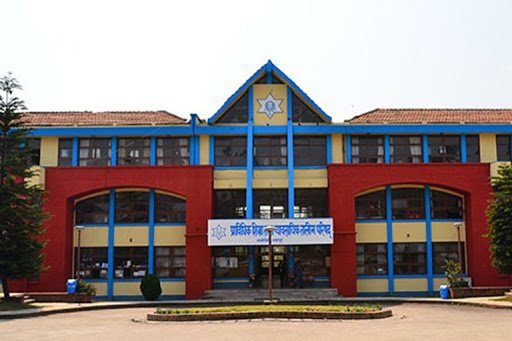
The Council for Technical Education and Vocational Training (CTEVT) constituted in 1989 (2045 BS) is a national autonomous apex body of Technical and Vocational Education and Training (TVET) sector committed for the production of technical and skillful human resources required to the nation. It mainly involves in policy formulation, quality control, preparation of competency based curriculum, developing skill standards of various occupations and testing the skills of the people, conduct various research studies and training needs assessment etc. 

Explore Colleges for Health Science in Nepal


It has an assembly consisting of 24 members and a governing board known as Council comprising nine members. Minister of Education chairs both the Assembly and the Council. The Council has a full time Vice-Chairperson and a Member-Secretary. 
CTEVT through its constituted and other affiliated schools has been running various courses on health in diploma level or proficiency certificate level. TSLC level programs are offered in health & various other sectors. On the other hand, the entry requirement for TSCL level is SLC passed candidates for the course of 15 months, whereas, under SLC for the course of 29 months. By the end of December 2010 total enrollment capacity under CTEVT schools (managed as well as affiliated) is 8403 for diploma level and 10332 for TSLC level. TSLC and proficiency/diploma level programs are mentioned in details as follows:

Certificate/Diploma level programs:

The entry requirement for 3 years certificate/diploma level programs is SLC passed at least in second division:

  • Proficiency Certificate in General Medicine
  • Proficiency Certificate in Nursing
  • Proficiency Certificate in Medical Lab Technology
  • Proficiency Certificate in Radiography
  • Proficiency Certificate in Ayurvedic Science
  • Diploma in Pharmacy
  • Diploma in Dental Science
  • Diploma in Ophthalmic Science

Those who completed General Medicine course can be eligible to sit in the entrance examination of Bachelor in Public Health (BPH) and other disciplines, but need to complete deficiency course of science conducted by Higher Secondary Education Board (HSEB) to be eligible for MBBS entrance examination. In order to study Bachelor in Nursing (BN) two years of job experience is required. In addition, graduates of Diploma in Pharmacy and Proficiency in Medical Lab Technology courses can be eligible for the  bachelor level in respective subjects.

TSLC programs:

The entry requirement for following TSLC programs is SLC passed for the course of 15  and 18 months, whereas, under SLC for the course of 29 months. 

  • CMA: opportunities for upper level study
  • ANM: opportunities for upper level study
  • AAHW: opportunities for upper level study

TSLC and PCL Diploma Colleges in Nepal

  • TSLC programs ; Certificate level Health programs after SEE
  • Certificate in General Medicine (Health Assistant) Colleges in Nepal
  • Certificate in Ayurved General Science Colleges in Nepal
  • List of Diploma in Pharmacy Colleges in Nepal
  • List of Diploma in Ophthalmic Science Colleges in Nepal
  • Certificate in Dental Science Colleges in Nepal
  • Certificate in Medical Laboratory Technology Colleges in Nepal
  • List of Colleges for Proficiency Certificate Level in Nursing (PCL Nursing)

Colleges for Undergraduate and Graduate Courses in Nepal

  • BSc. Nursing, B. Midwifery and BN Colleges in Nepal
  • List of BPH Colleges and Available Seats in Nepal 
  • B.Optometry Colleges and Available Seats in Nepal
  • List of B.Pharm Colleges and Available Seats in Nepal
  • List of Colleges and Seat Distribution for MBBS Program in Nepal
  • Bachelor of Dental Surgery (BDS) Colleges and Available Seats in Nepal
  • Master in Nursing (MN), Master of Science (MSc) Nursing and Midwifery Colleges in Nepal
  • Master of Public Health (MPH) Colleges in Nepal
  • List of Registered Postgraduate Medical (Health Professionals) Programs in Nepal
  • M. Pharm, M.Optom, Clinical Psychology & MSc. MIT Colleges in Nepal
  • Medical Colleges & Academic Institutions in Nepal
  • Master in Nursing (MN), Master of Science (MSc) Nursing and Midwifery Colleges in Nepal
  • Master of Public Health (MPH) Colleges in Nepal
  • Bachelor of Public Health (BPH) Colleges in Nepal
  • Fee for Bachelor Level and Postgraduate Programs in Nepal
  • Bachelor in Public Health (BPH) Programme- IOM, Tribhuvan University
  • Medical Education Commission Act 2075 and Regulation (Revised)
  • Medical Education Commission Post Graduate Seats 2020
  • Medical Education Commission Matching Procedure 2078
  • Medical Education Commission (MEC) Eligibility Certificate
  • Medical Education Commission Act 2075 and Regulation (Revised)
  • Medical Education Commission Post Graduate Seats 2020
  • MEC ACT 2075 (DOWNLOAD)
  • Sample Questions for MEC Common Entrance Examination
  • Medical Education Commission (MEC)
  • Medical Education Commission (MEC) Eligibility Certificate
  • MEC Eligibility Guideline for Course in Foreign University/Institution 2077
  • Organogram and Reporting Mechanism of Nepalese Health System in Federal Context
  • Syllabus for Licensing Examination of Master of Public Health (MPH) 2021
  • Syllabus for Licensing Examination of Certificate in Medical Laboratory Technology 2021
  • Syllabus for Licensing Examination of PCL in Ophthalmic Science
  • Syllabus for Licensing Examination of Certificate Level in General Medicine 2021
  • Medical Education Commission Post Graduate Seats 2020
  • Medical Colleges & Academic Institutions in Nepal
  • Bachelor of Public Health (BPH) – Faculty of Medical and Allied Science, Purbanchal University
  • National Health Education, Information and Communication Centre (NHEICC)
  • Public Service Commission Syllabus Health Education Teaching Administrator
  • List of Registered Postgraduate Medical (Health Professionals) Programs in Nepal
  • Bachelor of Public Health (BPH) – Faculty of Medical and Allied Science, Purbanchal University
  • Sample Questions for MEC Common Entrance Examination
  • Syllabus for Licensing Examination of M.Sc. MLT/Medical/Clinical Biochemistry 2021
  • Syllabus for 5th Level Positions (Health)- Bagmati Province Public Service Commission
  • Document Required & Application Process for No Objection Certification
  • Public Service Commission Syllabus Health Assistant
  • Public Service Commission Syllabus for General Health Services 9th Level
  • List of application form & formats for Government Officials, Nepal

Related courses

  • Bachelor of Public Health Program- Karnali Academy of Health Sciences
  • Bachelor in Public Health (BPH) Programme- IOM, Tribhuvan University
  • Bachelor of Public Health (BPH) colleges in Nepal
  • Bachelor of Public Health (BPH) – Faculty of Medical and Allied Science, Purbanchal University
  • Bachelor of Public Health (BPH) Program, Pokhara University
Further readings
  • Master of Science In Public Health (Msc.PH Program), Kathmandu University
  • Central Department of Public Health (CDPH)
  • Master of Public Health (Public Health Service Management & Health Promotion and Education) –Pokhara University
  • Masters in Public Health (MPH) in BPKIHS
  • Syllabus for Postgraduate Integrated Entrance Examination
  • Syllabus for Bachelor in Public Health (BPH) Common Entrance Examination
  • Sample Questions for MEC Common Entrance Examination
  • Syllabus for Bachelor in Public Health (BPH) Common Entrance Examination
  • Sample Questions for MEC Common Entrance Examination
  • 100 MCQs for Master of Public Health
  • Primary Health Care & Nutrition MCQs, Master of Public Health
  • Sociology MCQs, Master of Public Health
  • Health Management and Health Economics MCQs, Master of Public Health
  • Health Education MCQs, Master of Public Health
  • Epidemiology MCQs, Master of Public Health
  • Environmental & Occupational Health MCQs, Master of Public Health
  • Demography MCQs, Master of Public Health
  • Research Methodology & Bio-stat MCQs, Master of Public Health
July 8, 2018 1 comment
0 FacebookTwitterPinterestLinkedinTumblrVKOdnoklassnikiRedditStumbleuponWhatsappTelegramLINEPocketSkypeViberEmail
International Plan, Policy & GuidelinesPublic HealthResearch & Publication

Budget matters for health: key formulation and classification issues- WHO

by Public Health Update July 8, 2018
written by Public Health Update

Budget matters for health: key formulation and classification issues- WHO

Authors:
Helene Barroy, Elina Dale, Susan Sparkes, Joe Kutzin
This policy brief aims to raise awareness on the role of public budgeting – specifically aspects of budget formulation – for non-PFM specialists working in health. As part of an overall WHO programme of work on budgeting in health, it helps to clarify the characteristics and implications of various budgeting approaches for the health sector.

KEY MESSAGE 

  • Robust public budgeting in the health sector is a necessary condition to enable the effective implementation of health financing reforms towards universal health coverage.
  • Moving from input-based budgeting to health budgets that are formulated and executed on the basis of goal-oriented programmes can help build stronger linkages between budget allocations and sector priorities. This can also enable the implementation of strategic purchasing and incentivize accountability for sector performance.
  • While budget classification reforms relate to overall fiscal management, health ministries have a critical role in defining the scope, content and coverage of budgetary programmes as a unique way to better align allocations with sector needs.
  • The process, design and implementation of programme-based budgeting reforms in the health sector have varied greatly both between and within countries. Country budgets vary in terms of the relevance of budgetary programmes definition, their scope and structure, as well as the quality of performance monitoring frameworks.
  • Despite past reform efforts, many countries plan health budgets by programmes but continue to spend by inputs. Several countries use hybrid or dual budget classification systems that mix health inputs, programmes and other classification methods, making it more complex to pool resources, spend and strategically purchase health services.
  • Institutionalizing budget formulation changes alone is not enough. It should be coordinated with other elements of overall public financial management reform (e.g. multi-year budgeting, cash management, financial information and reporting systems) to ensure that changes in budget formulation are consistent with the rest of the financial management system.
  • The interplay between budget classification systems and provider contracting and payment arrangements is a key issue from a health financing perspective. A change in budget formulation is likely to be one of the necessary conditions for implementing strategic purchasing of health services.
  • The introduction of programme budgeting should be sequenced appropriately in the health sector, especially where basic public financial management foundations are not in place to safeguard against the misuse of public resources in the sector.

Implementation of budget classification reform in health: 10 key considerations for health ministries

  1. Ensure good understanding and clear definition of reform motivation and expectations for the sector (e.g. better alignment with sector priorities, more flexibility in spending, capacity to pool resources and purchase services from the budget).
  2. Equip health authorities with the needed capacity and skills to shift from classic planning by inputs to programming by outputs across the different levels of administration.
  3. Determine priority-setting mechanisms to enable translation of national health priorities into budgetary programmes.
  4. Ensure continuous coordination mechanisms between health and finance, and within health ministries, to reduce inconsistency in programming and secure alignment between reform goals and implementation.
  5. Sequence implementation of programme-based budgeting reform and ensure that existing rules are known and used by health authorities, even during a transitory phase.
  6. Consider from the start the implications of programme-based budgeting for strategic purchasing, making sure that programmatic classification simplifies, and makes more flexible, the choice of provider payment mechanisms.
  7. Ensure that the reform provides sufficient flexibility to programme directors to manage funds according to an output logic, not ending with only a presentational change of budget documents.
  8. Pay attention to the design of the performance framework to allow relevant monitoring and evaluation of expenditure and be able to inform future allocation decisions
  9. Tailor financial information systems to the needs of performance monitoring without overloading health authorities with the tracking of unnecessary and fragmented information.
  10. Connect with and integrate programme-based budgeting reforms with other aspects of PFM agendas (e.g. by revisiting the role of a multi-year spending framework); the effectiveness and consistency of the reform depends on the overall strength of the PFM underlying system.

Barroy H, Dale E, Sparkes S, Kutzin J: Budget matters for health: key formulation and classification issues. Geneva: World Health Organization; 2018. Licence: CC BY-NC-SA 3.0 IGO.

DOWNLOAD

July 8, 2018 0 comments
0 FacebookTwitterPinterestLinkedinTumblrVKOdnoklassnikiRedditStumbleuponWhatsappTelegramLINEPocketSkypeViberEmail
Public Health

MIS Assistant – STEP – NEPAL

by Public Health Update July 6, 2018
written by Public Health Update

MIS Assistant – STEP – NEPAL

Society for Empowerment-Nepal (STEP-Nepal), a non-governmental organization, is seeking a qualified and experienced Nepali citizen for the following position for the USAID Funded Project.

Position: MIS Assistant
36706321 2140464766172759 2115676357156405248 n


Tips

Basic components for cover letter;

  • Greeting: Address your cover letter to the proper person.
  • Opening: Write a personable, inviting opening paragraph that notes how your skills are a perfect fit to the job and displays your enthusiasm.
  • Hook: Highlight your past achievements as they relate to the job you’re applying for.
  • Skills: Emphasize additional relevant skills, such as computer languages or certifications.
  • Close: Briefly recap your strengths as a candidate, and include your contact information.

Things you should always say during interview;

  • You know the organization really well
  • You have the experience to do the job
  • You work well with others
  • You are constantly seeking to learn
  • You are motivated
  • You are excited about this job
  • You have a plan
  • You want to build a career in the company


Tips on answering Interview Questions Effectively;

  • Consider the employer’s perspective: Why are they asking the question?
  • Listen to ensure that you really understand the question and can answer effectively
  •  Provide a concise and complete response
  • Prove your experience with examples and factual statements
  • Ensure that you optimize on your transferable skills
  • Volunteer key information about yourself that you might not otherwise be asked about
  • Demonstrate your knowledge in the organization and interest in the position
  • Respond positively to questions
  • Show interest not desperation
  • Honesty is the best policy

Source: different job portals 

July 6, 2018 0 comments
0 FacebookTwitterPinterestLinkedinTumblrVKOdnoklassnikiRedditStumbleuponWhatsappTelegramLINEPocketSkypeViberEmail
List of Diploma in Pharmacy Colleges in Nepal
Courses

List of Diploma in Pharmacy Colleges in Nepal

by Public Health Update June 30, 2018
written by Public Health Update

Diploma in Pharmacy (D.Pharm) – CTEVT

The Government of Nepal (GoN) is committed to bringing about tangible changes in access and utilization of Essential Health Care Services (EHCS), thereby improving the health status of the Nepalese population through health sector development process. Access to health care facilities continues to be a problem in rural areas as well as urban areas, especially for the most disadvantaged. Nepal’s health policy and strategy documents over the past several decades repeatedly identify issues regarding the deployment and retention of health sector human resource as a major problem that our country is facing.
The Council for Technical Education and Vocational Training (CTEVT) has been contributing towards the development of different middle level of health human resource. In this connection, CTEVT is producing Diploma in Pharmacy professional – as middle level pharmaceutical service providers. The CTEVT will award certificate of “Diploma in Pharmacy” to the candidates who successfully complete the requirements as prescribed by the council. The Diploma in Pharmacy professional will be able to work as Pharmacy Assistant in the Community Pharmacy, Hospitals and other Pharmaceutical services providing sites.

Explore Colleges for Health Science in Nepal

Philosophy

The philosophy of the Diploma in Pharmacy curriculum should be based on the development of pharmacy, as a profession for fulfilling the healthcare needs of the people with its socio-cultural impact on health. It should be based on code of conduct of Nepal Pharmacy Council. The approach should focus on pharmaceutical services for better health of the people.

Program Description

This course is based on the job required to perform by a pharmacy assistants at different levels of public and private health institutions in Nepal. The Diploma in Pharmacy program extends over three years. The first year focuses on basic science subjects; the second year focuses on basic medical science and pharmaceutical sciences. Similarly, the third year focuses on the professional practice focus courses and application of acquired knowledge and skills through comprehensive field practices in hospital, community pharmacies, drug manufacturing, regulation and quality assurance. The professionals are eligible for registration as pharmacy assistants in the Nepal Pharmacy Council. The contents of individual subjects prescribed in the curriculum are incorporated in the light of skills required for professional practice.

Aims and Objectives

The course aims to produce middle level pharmacy human resource with perfect technical skills that can face real life situation at the level they are aimed at.

The course enables students:

  • To prepare technically competent middle level pharmacy human resource who will demonstrate excellent service attitude and respect for the profession and socio-cultural values.
  • To develop middle level pharmacy human resource for good pharmacy practice in the hospitals as well as in the community settings.
  • To demonstrate leadership in managing quality supply of pharmaceuticals and to promote rational use of medicine within the healthcare facilities and at the community pharmacies.
  • To develop middle level pharmacy human resource in order to assist in production and quality assurance of pharmaceuticals.

The course should reflect:

  • The need of pharmaceutical service for the proper care of a patient.
  • The roles and responsibilities of pharmacy assistant to improve the pharmaceutical supply system and to promote rational use of medicine.
  • The development of professionalism in pharmaceutical sector by addressing simple to complex ideas those are associated with epistemology, ontology and methodology in pharmacy.
  • Target Group SLC pass candidates and/or equivalent.

Group Size 40(Forty) students in a batch

Entry Criteria

The entry criteria are:

  • SLC or equivalent with English, Science and Mathematics as compulsory subjects. (Minimum C grade in English, Science and Mathematicsand overall ”GPA 2”)
  • Passed entrance examination organized by CTEVT.

Applicant should submit along with the following documents at the time of application:

  • SLC pass certificate or equivalent certificate
  • Character certificate
  • Citizenship certificate (for the name, parents name, age, date of birth and address verification purpose only).
  • Medical fitness certificate (at the time of admission)

Student quota for different category of students as per the policy of Nepal Pharmacy Council and CTEVT. Medium of Instruction English and/or Nepali Course

Duration of course

  • The diploma in Pharmacy program extends over three academic years.
  • One academic year consists of maximum of 39 academic weeks and one academic week consists of maximum of 40 hrs.

Those who completed General Medicine course can be eligible to sit in the entrance examination of Bachelor in Public Health (BPH) and other disciplines, but need to complete deficiency course of science conducted by Higher Secondary Education Board (HSEB) to be eligible for MBBS entrance examination. In order to study Bachelor in Nursing (BN) two years of job experience is required. In addition, graduates of Diploma in Pharmacy and Proficiency in Medical Lab Technology courses can be eligible for the  bachelor level in respective subjects.

List of Diploma in Pharmacy Colleges in Nepal

  1. All Nepal College  of Technical Education pvt.
  2. Amargadhi Polytechnic Institute
  3. Asian College of Medical Science
  4. Bhageswari Academy of Health Science
  5. Bheri Nursing College.
  6. Bheri Technical School, Banke.
  7. Bhimdatta Polytechnic Institute
  8. Binayak College of Health Science.
  9. Birat Health College
  10. Chhinnamasta Educational Academy
  11. Farwest School of Medicine
  12. Holyvision Technical Campus
  13. Iwamura College of Health Science, Sallaghari.
  14. Jay Govinda Sah Polytechnic Institute
  15. Kantipur College of Medical Science
  16. Kantipur College Teaching Hospital & R Center
  17. Karnali Technical School,Jumla.
  18. Koshi Health Institute, Biratnagar.
  19. LITS College,Butwal
  20. Littile Budhha College of Health Science.
  21. Lord Budhha College, Gongbu
  22. Lumbini Institute of Technical Sciences Butwal
  23. Madhya Paschim Technical School.
  24. Mahakali Polytechnic Institute
  25. Mahalaxmi Polytechnic Institute
  26. Mahanagar Polytechnic Institute
  27. Manmohan Memorial Institute of Health Science
  28. Mansrowar Institute of Health Science&Technology
  29. Mayadevi Technical College Pvt.
  30. Model  College of Technical Education
  31. National Academy of Medical Science
  32. Nepal Institute of Health Science,Baudhha
  33. Nepal Institute of Medical Science.
  34. Nepalgunj Health Campus.
  35. Nepali Sena Swasthya Bigyan Sasthan.
  36. NIRMAL LAMA POLYTECHNIC INSTITUTE
  37. Nobel  Medical College
  38. Nobel College of Medical Science
  39. Pinacle Technical College.
  40. Posta Bahadur Bogati Polytechnical Institute
  41. Rapti Technical School,Lalmatiya.
  42. Ratna Kumar Bantawa Polytechnic Institute
  43. Sagarmatha Technical College, bharatpur.
  44. SAHID KRISHNASEN ICHCHHUK POLYTECHNIC
  45. Sahid Smrak Janswastha Sahakari Sastha
  46. Sardhha Institute of Health Science.
  47. School of Health Science, Bhartpur
  48. School of Medical Sciences Pvt. Khusiboo.
  49. Seti Technical School
  50. Shuklaphanta Polytechnic Institute
  51. Sunsari Technical School, Laxmi-sadak Dharan
  52. Unique College of Medical Science & Hospital Pvt
  53. Western Health Science Academy

TSLC and PCL Diploma Colleges in Nepal

  • TSLC programs ; Certificate level Health programs after SEE
  • Certificate in General Medicine (Health Assistant) Colleges in Nepal
  • Certificate in Ayurved General Science Colleges in Nepal
  • List of Diploma in Pharmacy Colleges in Nepal
  • List of Diploma in Ophthalmic Science Colleges in Nepal
  • Certificate in Dental Science Colleges in Nepal
  • Certificate in Medical Laboratory Technology Colleges in Nepal
  • List of Colleges for Proficiency Certificate Level in Nursing (PCL Nursing)

Colleges for Undergraduate and Graduate Courses in Nepal

  • BSc. Nursing, B. Midwifery and BN Colleges in Nepal
  • List of BPH Colleges and Available Seats in Nepal 
  • B.Optometry Colleges and Available Seats in Nepal
  • List of B.Pharm Colleges and Available Seats in Nepal
  • List of Colleges and Seat Distribution for MBBS Program in Nepal
  • Bachelor of Dental Surgery (BDS) Colleges and Available Seats in Nepal
  • Master in Nursing (MN), Master of Science (MSc) Nursing and Midwifery Colleges in Nepal
  • Master of Public Health (MPH) Colleges in Nepal
  • List of Registered Postgraduate Medical (Health Professionals) Programs in Nepal
  • M. Pharm, M.Optom, Clinical Psychology & MSc. MIT Colleges in Nepal
  • Medical Colleges & Academic Institutions in Nepal
  • Master in Nursing (MN), Master of Science (MSc) Nursing and Midwifery Colleges in Nepal
  • Master of Public Health (MPH) Colleges in Nepal
  • Bachelor of Public Health (BPH) Colleges in Nepal
  • Fee for Bachelor Level and Postgraduate Programs in Nepal
  • Bachelor in Public Health (BPH) Programme- IOM, Tribhuvan University
  • Medical Education Commission Act 2075 and Regulation (Revised)
  • Medical Education Commission Post Graduate Seats 2020
  • Medical Education Commission Matching Procedure 2078
  • Medical Education Commission (MEC) Eligibility Certificate
  • Medical Education Commission Act 2075 and Regulation (Revised)
  • Medical Education Commission Post Graduate Seats 2020
  • MEC ACT 2075 (DOWNLOAD)
  • Sample Questions for MEC Common Entrance Examination
  • Medical Education Commission (MEC)
  • Medical Education Commission (MEC) Eligibility Certificate
  • MEC Eligibility Guideline for Course in Foreign University/Institution 2077
  • Organogram and Reporting Mechanism of Nepalese Health System in Federal Context
  • Syllabus for Licensing Examination of Master of Public Health (MPH) 2021
  • Syllabus for Licensing Examination of Certificate in Medical Laboratory Technology 2021
  • Syllabus for Licensing Examination of PCL in Ophthalmic Science
  • Syllabus for Licensing Examination of Certificate Level in General Medicine 2021
  • Medical Education Commission Post Graduate Seats 2020
  • Medical Colleges & Academic Institutions in Nepal
  • Bachelor of Public Health (BPH) – Faculty of Medical and Allied Science, Purbanchal University
  • National Health Education, Information and Communication Centre (NHEICC)
  • Public Service Commission Syllabus Health Education Teaching Administrator
  • List of Registered Postgraduate Medical (Health Professionals) Programs in Nepal
  • Bachelor of Public Health (BPH) – Faculty of Medical and Allied Science, Purbanchal University
  • Sample Questions for MEC Common Entrance Examination
  • Syllabus for Licensing Examination of M.Sc. MLT/Medical/Clinical Biochemistry 2021
  • Syllabus for 5th Level Positions (Health)- Bagmati Province Public Service Commission
  • Document Required & Application Process for No Objection Certification
  • Public Service Commission Syllabus Health Assistant
  • Public Service Commission Syllabus for General Health Services 9th Level
  • List of application form & formats for Government Officials, Nepal

Related courses

  • Bachelor of Public Health Program- Karnali Academy of Health Sciences
  • Bachelor in Public Health (BPH) Programme- IOM, Tribhuvan University
  • Bachelor of Public Health (BPH) colleges in Nepal
  • Bachelor of Public Health (BPH) – Faculty of Medical and Allied Science, Purbanchal University
  • Bachelor of Public Health (BPH) Program, Pokhara University
Further readings
  • Master of Science In Public Health (Msc.PH Program), Kathmandu University
  • Central Department of Public Health (CDPH)
  • Master of Public Health (Public Health Service Management & Health Promotion and Education) –Pokhara University
  • Masters in Public Health (MPH) in BPKIHS
  • Syllabus for Postgraduate Integrated Entrance Examination
  • Syllabus for Bachelor in Public Health (BPH) Common Entrance Examination
  • Sample Questions for MEC Common Entrance Examination
  • Syllabus for Bachelor in Public Health (BPH) Common Entrance Examination
  • Sample Questions for MEC Common Entrance Examination
  • 100 MCQs for Master of Public Health
  • Primary Health Care & Nutrition MCQs, Master of Public Health
  • Sociology MCQs, Master of Public Health
  • Health Management and Health Economics MCQs, Master of Public Health
  • Health Education MCQs, Master of Public Health
  • Epidemiology MCQs, Master of Public Health
  • Environmental & Occupational Health MCQs, Master of Public Health
  • Demography MCQs, Master of Public Health
  • Research Methodology & Bio-stat MCQs, Master of Public Health
June 30, 2018 0 comments
0 FacebookTwitterPinterestLinkedinTumblrVKOdnoklassnikiRedditStumbleuponWhatsappTelegramLINEPocketSkypeViberEmail
CoursesSyllabus

List of Colleges for Proficiency Certificate Level in Nursing (PCL Nursing)

by Public Health Update June 30, 2018
written by Public Health Update

Proficiency Certificate Level in Nursing (PCL Nursing)-CTEVT

The CTEVT started PCL Nursing in 1999 AD (2056 BS). However, to provide vertical and horizontal access to PCL nursing graduates, with kind permission of TU IOM, CTEVT started using the TU IOM curriculum for PCL nursing. With the changing health needs as well as Nepal government’s health policy, CTEVT took action to respond to these needs; as result CTEVT has developed a curriculum for PCL nursing. PCL nursing is one of the prominent and popular disciplines within the Nursing profession.

Explore Colleges for Health Science in Nepal


The nursing profession has been helping the world for the all-round development of health and it has also been creating salary base employment and self employment opportunities in public and private sectors. This curriculum is designed with the purpose of producing middle level technical nursing workforce equipped with knowledge and skills related to the field of nursing so as to meet the demand of such workforce in the country to contribute in the national economic development of Nepal. The knowledge and skills incorporated in this curriculum will be helpful to deliver the individual needs as well as national needs in the field of Nursing Profession. Nepal Government has adopted a national policy for the attainment of “Health for All beyond the Year 2000 A.D” through the use of the primary health care approach. As a result CTEVT got the mandate to produce middle level trained workforce through CTEVT as well as CTEVT affiliated institutions.

Course Objectives:

To produce a middle level nursing work force who is independent and competent to assume the responsibility to carry out the function of preventive, primitive, curative, rehabilitative and holistic care of an individual/group at hospital and in community settings. This curriculum has following objectives to: Upon completion of the program the graduate will be able to:

  • Utilize a sound knowledge base in giving care to well and sick individuals, families and communities.
  • Perform preventive and therapeutic measure directed toward promotion, maintenance and restoration of health.
  • Utilize communication skills effectively with individuals and groups in a variety of settings.
  • Utilize the nursing process in providing and improving health care.
  • Assume leadership for planning and improving health care.
  • Teach and supervise individuals, families and groups including health care workers.
  • Collaborate with multispectral groups to develop a healthful environment, including safe drinking water, sanitation and other holistic approach of the community.
  • Mobilize the community to participate in the activities of the village health post.
  • Demonstrate a positive attitude and respect for cultural values in working to meet needs and solve problems.
  • Continue to seek new knowledge for personal and professional growth.

This course is based on the job required to perform by the Staff Nurse at different levels in public and private sector’s health field in relation to nursing jobs in Nepal. Therefore, this curriculum is designed to provide knowledge and skills focusing on nursing related occupation.

Duration:

  • The total duration of this curricular program is three years.
  • The program is based on yearly system. Moreover, one year consist of around 45 academic weeks including evaluation period.
  • Actual teaching learning hours will be not less than 40 weeks in each year.

Target group:

  • The target group for this program will be all interested individuals who passed School Leaving Certificate (SLC) in 2nd division (45%) with English, Science, and Mathematics (Minimum C grade and overall ”GPA 2” or SLC passed with Auxiliary Nurse Midwife (ANM)/TSLC passed with minimum scoring of 68.33%.

Group size:

  • The group size will be maximum of 40 (Forty) students in a batch.

Entry qualification:

  • Entry qualification of the applicant for proficiency certificate level in nursing programme should be SLC passed in 2nd division with English, Science, and Compulsory Mathematics (Minimum C grade  and overall ”GPA 2”) or SLC passed in 3rd division plus Auxiliary Nurse Midwife (ANM) with 68.33% or as per provisions mentioned on CTEVT admission guidelines.

Entry criteria:

  • The candidate should submit the SLC or equivalent certificate
  • The candidate should pass the entrance examination as administered by CTEVT

Those who completed General Medicine course can be eligible to sit in the entrance examination of Bachelor in Public Health (BPH) and other disciplines, but need to complete deficiency course of science conducted by Higher Secondary Education Board (HSEB) to be eligible for MBBS entrance examination. In order to study Bachelor in Nursing (BN) two years of job experience is required. In addition, graduates of Diploma in Pharmacy and Proficiency in Medical Lab Technology courses can be eligible for the  bachelor level in respective subjects.


TSLC and PCL Diploma Colleges in Nepal

  • TSLC programs ; Certificate level Health programs after SEE
  • Certificate in General Medicine (Health Assistant) Colleges in Nepal
  • Certificate in Ayurved General Science Colleges in Nepal
  • List of Diploma in Pharmacy Colleges in Nepal
  • List of Diploma in Ophthalmic Science Colleges in Nepal
  • Certificate in Dental Science Colleges in Nepal
  • Certificate in Medical Laboratory Technology Colleges in Nepal
  • List of Colleges for Proficiency Certificate Level in Nursing (PCL Nursing)

Colleges for Undergraduate and Graduate Courses in Nepal

  • BSc. Nursing, B. Midwifery and BN Colleges in Nepal
  • List of BPH Colleges and Available Seats in Nepal 
  • B.Optometry Colleges and Available Seats in Nepal
  • List of B.Pharm Colleges and Available Seats in Nepal
  • List of Colleges and Seat Distribution for MBBS Program in Nepal
  • Bachelor of Dental Surgery (BDS) Colleges and Available Seats in Nepal
  • Master in Nursing (MN), Master of Science (MSc) Nursing and Midwifery Colleges in Nepal
  • Master of Public Health (MPH) Colleges in Nepal
  • List of Registered Postgraduate Medical (Health Professionals) Programs in Nepal
  • M. Pharm, M.Optom, Clinical Psychology & MSc. MIT Colleges in Nepal
  • Medical Colleges & Academic Institutions in Nepal
  • Master in Nursing (MN), Master of Science (MSc) Nursing and Midwifery Colleges in Nepal
  • Master of Public Health (MPH) Colleges in Nepal
  • Bachelor of Public Health (BPH) Colleges in Nepal
  • Fee for Bachelor Level and Postgraduate Programs in Nepal
  • Bachelor in Public Health (BPH) Programme- IOM, Tribhuvan University
  • Medical Education Commission Act 2075 and Regulation (Revised)
  • Medical Education Commission Post Graduate Seats 2020
  • Medical Education Commission Matching Procedure 2078
  • Medical Education Commission (MEC) Eligibility Certificate
  • Medical Education Commission Act 2075 and Regulation (Revised)
  • Medical Education Commission Post Graduate Seats 2020
  • MEC ACT 2075 (DOWNLOAD)
  • Sample Questions for MEC Common Entrance Examination
  • Medical Education Commission (MEC)
  • Medical Education Commission (MEC) Eligibility Certificate
  • MEC Eligibility Guideline for Course in Foreign University/Institution 2077
  • Organogram and Reporting Mechanism of Nepalese Health System in Federal Context
  • Syllabus for Licensing Examination of Master of Public Health (MPH) 2021
  • Syllabus for Licensing Examination of Certificate in Medical Laboratory Technology 2021
  • Syllabus for Licensing Examination of PCL in Ophthalmic Science
  • Syllabus for Licensing Examination of Certificate Level in General Medicine 2021
  • Medical Education Commission Post Graduate Seats 2020
  • Medical Colleges & Academic Institutions in Nepal
  • Bachelor of Public Health (BPH) – Faculty of Medical and Allied Science, Purbanchal University
  • National Health Education, Information and Communication Centre (NHEICC)
  • Public Service Commission Syllabus Health Education Teaching Administrator
  • List of Registered Postgraduate Medical (Health Professionals) Programs in Nepal
  • Bachelor of Public Health (BPH) – Faculty of Medical and Allied Science, Purbanchal University
  • Sample Questions for MEC Common Entrance Examination
  • Syllabus for Licensing Examination of M.Sc. MLT/Medical/Clinical Biochemistry 2021
  • Syllabus for 5th Level Positions (Health)- Bagmati Province Public Service Commission
  • Document Required & Application Process for No Objection Certification
  • Public Service Commission Syllabus Health Assistant
  • Public Service Commission Syllabus for General Health Services 9th Level
  • List of application form & formats for Government Officials, Nepal

Related courses

  • Bachelor of Public Health Program- Karnali Academy of Health Sciences
  • Bachelor in Public Health (BPH) Programme- IOM, Tribhuvan University
  • Bachelor of Public Health (BPH) colleges in Nepal
  • Bachelor of Public Health (BPH) – Faculty of Medical and Allied Science, Purbanchal University
  • Bachelor of Public Health (BPH) Program, Pokhara University
Further readings
  • Master of Science In Public Health (Msc.PH Program), Kathmandu University
  • Central Department of Public Health (CDPH)
  • Master of Public Health (Public Health Service Management & Health Promotion and Education) –Pokhara University
  • Masters in Public Health (MPH) in BPKIHS
  • Syllabus for Postgraduate Integrated Entrance Examination
  • Syllabus for Bachelor in Public Health (BPH) Common Entrance Examination
  • Sample Questions for MEC Common Entrance Examination
  • Syllabus for Bachelor in Public Health (BPH) Common Entrance Examination
  • Sample Questions for MEC Common Entrance Examination
  • 100 MCQs for Master of Public Health
  • Primary Health Care & Nutrition MCQs, Master of Public Health
  • Sociology MCQs, Master of Public Health
  • Health Management and Health Economics MCQs, Master of Public Health
  • Health Education MCQs, Master of Public Health
  • Epidemiology MCQs, Master of Public Health
  • Environmental & Occupational Health MCQs, Master of Public Health
  • Demography MCQs, Master of Public Health
  • Research Methodology & Bio-stat MCQs, Master of Public Health
June 30, 2018 3 comments
0 FacebookTwitterPinterestLinkedinTumblrVKOdnoklassnikiRedditStumbleuponWhatsappTelegramLINEPocketSkypeViberEmail
Ophthalmic Science Colleges in Nepal
CoursesSyllabus

List of Diploma in Ophthalmic Science Colleges in Nepal

by Public Health Update June 30, 2018
written by Public Health Update

Certificate in Ophthalmic Science- CTEVT

Government of Nepal has called for the provision of basic health care for all persons by establishing a network of services in remote villages and urban population centers. The Council for Technical Education and Vocational Training (CTEVT) has been contributing towards the development of different level of health personnel. In this context, CTEVT has planned to produce middle level Eye Health Cadre Ophthalmic Assistant with a view to provide curative, preventive and promotive eye health services to the community. Initially this cadre of human resource were used to certify through CTEVT/Skill test department and considered as a vocational training. This kind of certification though was catering the immediate need of eye care programme in the country, the trained ophthalmic assistant has limited horizon to grow and limited career ladder to upgrade themselves.
This has contributed for the increasing demand of academic training which will allow them to grow further after completion of this certificate level course. In this regards, the CTEVT has decided to start certificate level programme leading to degree “Certificate in Ophthalmic Science” to the candidates who successfully complete the requirements as prescribed by the CTEVT.

Explore Colleges for Health Science in Nepal


The trained Ophthalmic Assistant is a professional Ophthalmic Health Worker, who has been given three full years training in Ophthalmology and related health sciences. The aim of this three years training is to produce compassionate mid level ophthalmic human resource who can help and play important role in eye care delivery system within the hospital and in the community. The graduates would be eligible for registration with the Nepal Health Professional Council in the category as mentioned in the Act of the Council. The registered graduates would be then eligible for the job at different level health institutions to the position as prescribed by the Public Service Commission or the concerned authority.

Mission

The mission of the curriculum is to educate and train the quality middle level ophthalmic health personnel equipped with sound knowledge and skills of Ophthalmology along with general medicine.

Philosophy

The philosophy of the curriculum should be based on the development of both clinical and public health service provider as a profession for fulfilling the health needs of the people with its socio-cultural impact on health. It should be based on code of conduct of Nepal Health Professional Council. The approach should focus on providing curative, preventive and promotive primary eye health services in better way.

Course Description

This course is based on the job required to perform by a middle level Ophthalmic health personnel at different level eye/health institutions in Nepal. The Certificate in Ophthalmic Science on Ophthalmology program extends over three years. The first year focuses on basic sciences and foundational subjects, the second on medical sciences, and the third year is given to the application of learned theory and skill development within comprehensive practice settings, both hospital and community.

Aim and Objectives

The course aims to produce middle level Ophthalmic personnel with equipped sound knowledge and perfect skills of Ophthalmology along with knowledge and skills of general medicine at the level they are aimed at. The course enable students: 

  • To acquire sound knowledge and perfect skills of Ophthalmology and general medicine 
  • To demonstrate competency in identifying and resolving community health problems by applying Ophthalmic and modern procedure and medicines taking in consideration of nature of the diseases and condition of the patients
  • To demonstrate basic knowledge and clinical skills necessary to diagnose and manage primary eye/health problems of patients
  • To exhibit leadership skills and professional characteristics and attitudes required as the role of Ophthalmic health personnel or primary eye/health care manager.
  • To demonstrate the necessary knowledge and skills to work in a variety of eye/health care settings  To promote Ophthalmology system of medicine with modern knowledge and skills Conceptual Framework

The course should reflect: 

  • The need of ophthalmic service in proper care of a eye patient. 
  • The need of proper curative, preventive and promotive care services in improving Ophthalmic and general medicine  The respect gained from the community through professional service 
  • The roles and responsibilities of Ophthalmic health personnel to improve the eye/health care system 
  • The development of professionalism in Ophthalmology sector by addressing simple to complex ideas those are associated with epistemology, ontology and methodology in Ophthalmic and general medicine

Target group

  • SLC pass youths (Minimum C grade in English, Science and Mathematics and overall ”GPA 2”)

Group size 40 nos. in a batch

Entry criteria

The entry criteria are:

  • SLC with minimum of 45% in aggregate with English, Science and Mathematics as compulsory subjects or as per CTEVT entrance policy
  • Candidates who pass SLC with optional Ophthalmology will be preferable
  • Should pass entrance examination administered by CTEVT
  • Final selection will be made on the basis merit list.

Candidates should submit the following documents at the time of application

  • SLC pass certificate
  • Character certificate
  • Citizenship certificate (for the name, parents’ name, age, date of birth and address verification purpose only)

Medium of Instruction

  • The medium of instruction will be in English and/or Nepali language.

Course Duration

  • The Certificate in Ophthalmic Science (Ophthalmology) program extends over three academic years.
  • One academic year consists of maximum of 39 academic weeks and one academic week consists of maximum of 40 hrs.

Those who completed General Medicine course can be eligible to sit in the entrance examination of Bachelor in Public Health (BPH) and other disciplines, but need to complete deficiency course of science conducted by Higher Secondary Education Board (HSEB) to be eligible for MBBS entrance examination. In order to study Bachelor in Nursing (BN) two years of job experience is required. In addition, graduates of Diploma in Pharmacy and Proficiency in Medical Lab Technology courses can be eligible for the  bachelor level in respective subjects.


List of Diploma in Ophthalmic Science Colleges in Nepal

  1. Amargadhi Polytechnic Institute
  2. Balaju School of Engineering Technology, Balaju
  3. Karnali Technical School,Jumla.
  4. Lahan Technical School, Lahan.
  5. Mahakali Polytechnic Institute
  6. Nepal Netra Jyoti Sangh, College of Ophthalmic Health Science – Fattewal Aankha Hospital Nepalgunj,
  7. Nepal Netra Jyoti Sangh.
  8. Nirmal Lama Polytechnic Institute
  9. Pokhara Technical School
  10. Rapti Technical School,Lalmatiya.
  11. School of Health Science, Bhartpur
  12. Tilganga Aakha Hospital

TSLC and PCL Diploma Colleges in Nepal

  • TSLC programs ; Certificate level Health programs after SEE
  • Certificate in General Medicine (Health Assistant) Colleges in Nepal
  • Certificate in Ayurved General Science Colleges in Nepal
  • List of Diploma in Pharmacy Colleges in Nepal
  • List of Diploma in Ophthalmic Science Colleges in Nepal
  • Certificate in Dental Science Colleges in Nepal
  • Certificate in Medical Laboratory Technology Colleges in Nepal
  • List of Colleges for Proficiency Certificate Level in Nursing (PCL Nursing)

Colleges for Undergraduate and Graduate Courses in Nepal

  • BSc. Nursing, B. Midwifery and BN Colleges in Nepal
  • List of BPH Colleges and Available Seats in Nepal 
  • B.Optometry Colleges and Available Seats in Nepal
  • List of B.Pharm Colleges and Available Seats in Nepal
  • List of Colleges and Seat Distribution for MBBS Program in Nepal
  • Bachelor of Dental Surgery (BDS) Colleges and Available Seats in Nepal
  • Master in Nursing (MN), Master of Science (MSc) Nursing and Midwifery Colleges in Nepal
  • Master of Public Health (MPH) Colleges in Nepal
  • List of Registered Postgraduate Medical (Health Professionals) Programs in Nepal
  • M. Pharm, M.Optom, Clinical Psychology & MSc. MIT Colleges in Nepal
  • Medical Colleges & Academic Institutions in Nepal
  • Master in Nursing (MN), Master of Science (MSc) Nursing and Midwifery Colleges in Nepal
  • Master of Public Health (MPH) Colleges in Nepal
  • Bachelor of Public Health (BPH) Colleges in Nepal
  • Fee for Bachelor Level and Postgraduate Programs in Nepal
  • Bachelor in Public Health (BPH) Programme- IOM, Tribhuvan University
  • Medical Education Commission Act 2075 and Regulation (Revised)
  • Medical Education Commission Post Graduate Seats 2020
  • Medical Education Commission Matching Procedure 2078
  • Medical Education Commission (MEC) Eligibility Certificate
  • Medical Education Commission Act 2075 and Regulation (Revised)
  • Medical Education Commission Post Graduate Seats 2020
  • MEC ACT 2075 (DOWNLOAD)
  • Sample Questions for MEC Common Entrance Examination
  • Medical Education Commission (MEC)
  • Medical Education Commission (MEC) Eligibility Certificate
  • MEC Eligibility Guideline for Course in Foreign University/Institution 2077
  • Organogram and Reporting Mechanism of Nepalese Health System in Federal Context
  • Syllabus for Licensing Examination of Master of Public Health (MPH) 2021
  • Syllabus for Licensing Examination of Certificate in Medical Laboratory Technology 2021
  • Syllabus for Licensing Examination of PCL in Ophthalmic Science
  • Syllabus for Licensing Examination of Certificate Level in General Medicine 2021
  • Medical Education Commission Post Graduate Seats 2020
  • Medical Colleges & Academic Institutions in Nepal
  • Bachelor of Public Health (BPH) – Faculty of Medical and Allied Science, Purbanchal University
  • National Health Education, Information and Communication Centre (NHEICC)
  • Public Service Commission Syllabus Health Education Teaching Administrator
  • List of Registered Postgraduate Medical (Health Professionals) Programs in Nepal
  • Bachelor of Public Health (BPH) – Faculty of Medical and Allied Science, Purbanchal University
  • Sample Questions for MEC Common Entrance Examination
  • Syllabus for Licensing Examination of M.Sc. MLT/Medical/Clinical Biochemistry 2021
  • Syllabus for 5th Level Positions (Health)- Bagmati Province Public Service Commission
  • Document Required & Application Process for No Objection Certification
  • Public Service Commission Syllabus Health Assistant
  • Public Service Commission Syllabus for General Health Services 9th Level
  • List of application form & formats for Government Officials, Nepal

Related courses

  • Bachelor of Public Health Program- Karnali Academy of Health Sciences
  • Bachelor in Public Health (BPH) Programme- IOM, Tribhuvan University
  • Bachelor of Public Health (BPH) colleges in Nepal
  • Bachelor of Public Health (BPH) – Faculty of Medical and Allied Science, Purbanchal University
  • Bachelor of Public Health (BPH) Program, Pokhara University
Further readings
  • Master of Science In Public Health (Msc.PH Program), Kathmandu University
  • Central Department of Public Health (CDPH)
  • Master of Public Health (Public Health Service Management & Health Promotion and Education) –Pokhara University
  • Masters in Public Health (MPH) in BPKIHS
  • Syllabus for Postgraduate Integrated Entrance Examination
  • Syllabus for Bachelor in Public Health (BPH) Common Entrance Examination
  • Sample Questions for MEC Common Entrance Examination
  • Syllabus for Bachelor in Public Health (BPH) Common Entrance Examination
  • Sample Questions for MEC Common Entrance Examination
  • 100 MCQs for Master of Public Health
  • Primary Health Care & Nutrition MCQs, Master of Public Health
  • Sociology MCQs, Master of Public Health
  • Health Management and Health Economics MCQs, Master of Public Health
  • Health Education MCQs, Master of Public Health
  • Epidemiology MCQs, Master of Public Health
  • Environmental & Occupational Health MCQs, Master of Public Health
  • Demography MCQs, Master of Public Health
  • Research Methodology & Bio-stat MCQs, Master of Public Health
June 30, 2018 2 comments
0 FacebookTwitterPinterestLinkedinTumblrVKOdnoklassnikiRedditStumbleuponWhatsappTelegramLINEPocketSkypeViberEmail
Certificate in Dental Science Colleges in Nepal
CoursesPublic HealthSyllabus

Certificate in Dental Science Colleges in Nepal

by Public Health Update June 29, 2018
written by Public Health Update

Certificate in Dental Science (Dental Hygiene)- CTEVT

The Government of Nepal has called for the provision of basic health service to all by establishing a network of health services in remote and urban areas. In this regard the Council for Technical Education and Vocational Training (CTEVT) has been contributing towards the development of different level of health personnel. In the field of dental health, CTEVT has planned to produce middle level dental service providers in the form of Dental Hygienist. The Council will award “Certificate in Dental Science (Dental Hygiene)” to those candidates who successfully complete the requirements as prescribed by this curriculum. The Certificate in Dental Science (Dental Hygiene) graduates will be able to work as Dental Hygienist in the hospital and clinical settings under the supervision of the Dental Surgeon and also will be able to in the community.

Philosophy

The philosophy of this curriculum is based on the development of Dental Science (Dental Hygiene) as a profession for fulfilling the basic dental/oral health care needs of the people with its socio-cultural impact on health. The approach focuses on dental health care and services for better human health. It is based on the code of conduct of Health Professional Council of Nepal.

Explore Colleges for Health Science in Nepal

Course Description

The course is based on the job required to be performed by a Dental Hygienist at different health institutions in the country. The Certificate in Dental Science (Dental Hygiene) program extends over three academic years. The first year focuses on core subjects, the second year focuses on the subjects of dental Science and public health, and the third year focuses on the application of acquired knowledge and skills through comprehensive practices in hospital, and in community settings. The graduates are eligible for registration as Dental Hygienist (Grade-B) in the Health Professional Council of Nepal.

Aims and Objectives

  • The course aims to produce certificate level Dental Hygienists with sound academic knowledge combined with related technical skills, which can face real life situation at the level they are aimed at. The course enables:
  • To prepare technically competent middle level human resource who will demonstrate positive attitude and respect to the profession and to the socio-cultural values
  • To develop quality & ethical dental Science practice in the hospitals as well as in the community settings 3 Certificate in Dental Science, 2006
  • To develop the attitude to educate and motivate the patients and community to practice plaque control measures to maintain oral Science
  • To acquire the skill to perform diagnosis & dental scaling of common periodontal disease
  • To use periodontal instruments for basic periodontal therapy and maintenance of the same
  • To develop attitude to impart preventive measures of oral health, especially preventing the periodontal diseases
  • To conserve the tooth to the maximum possible extent by maintaining periodontal health & ART procedure.
  • To develop an attitude to perform the procedures under full aseptic measures
  • To develop attitude to prevent iatrogenic disease, and ¾ To perform dental X-rays and Photography and refer for final diagnosis to dental surgeon
  • To refer the patients who require specialized care to Dental Surgeon / specialist.
  • To provide Extended Services.

Target Group

  • SLC pass candidates (Minimum C grade in English, Science and Mathematics and overall ”GPA 2”)

Group Size

  • Maximum of 40 students in a batch

Entry Criteria

The entry criteria are:

  • SLC with 45% in aggregate with English, Science and Mathematics as compulsory subjects (Minimum C grade in English, Science and Mathematics and overall ”GPA 2”)
  • Pass entrance examination conducted by CTEVT

Applicant should submit the following documents at the time of application:

  • SLC pass certificate
  • Character certificate
  • Citizenship certificate
  • Student quota for different category of students as per the policy of CTEVT.

Medium of Instruction

  • English and Nepali

Course Duration

  • The Certificate in Dental Science (Dental Hygiene) program extends over three academic years.
  • An academic year consists of maximum of 39 academic weeks and one academic week consists of maximum of 40 hours.

Those who completed General Medicine course can be eligible to sit in the entrance examination of Bachelor in Public Health (BPH) and other disciplines, but need to complete deficiency course of science conducted by Higher Secondary Education Board (HSEB) to be eligible for MBBS entrance examination. In order to study Bachelor in Nursing (BN) two years of job experience is required. In addition, graduates of Diploma in Pharmacy and Proficiency in Medical Lab Technology courses can be eligible for the  bachelor level in respective subjects.


Certificate in Dental Science Colleges in Nepal

  1. Amargadhi Polytechnic Institute
  2. College of Medical Science
  3. Himal Dental hospital& Institute.
  4. Kantipur College Teaching Hospital & R Center
  5. Kantipur Institute of Dental Health Science.
  6. Kantipur School of Dendstry
  7. Karnali Technical School,Jumla.
  8. Kathmandu Model Hospital (School of Oral Health)
  9. Mahakali Polytechnic Institute
  10. Nepal Dental Hospital and Research Institute
  11. NIRMAL LAMA POLYTECHNIC INSTITUTE
  12. Nobel  Medical College
  13. Samaj School of Dentistry
  14. School of Health Science, Bhartpur

TSLC and PCL Diploma Colleges in Nepal

  • TSLC programs ; Certificate level Health programs after SEE
  • Certificate in General Medicine (Health Assistant) Colleges in Nepal
  • Certificate in Ayurved General Science Colleges in Nepal
  • List of Diploma in Pharmacy Colleges in Nepal
  • List of Diploma in Ophthalmic Science Colleges in Nepal
  • Certificate in Dental Science Colleges in Nepal
  • Certificate in Medical Laboratory Technology Colleges in Nepal
  • List of Colleges for Proficiency Certificate Level in Nursing (PCL Nursing)

Colleges for Undergraduate and Graduate Courses in Nepal

  • BSc. Nursing, B. Midwifery and BN Colleges in Nepal
  • List of BPH Colleges and Available Seats in Nepal 
  • B.Optometry Colleges and Available Seats in Nepal
  • List of B.Pharm Colleges and Available Seats in Nepal
  • List of Colleges and Seat Distribution for MBBS Program in Nepal
  • Bachelor of Dental Surgery (BDS) Colleges and Available Seats in Nepal
  • Master in Nursing (MN), Master of Science (MSc) Nursing and Midwifery Colleges in Nepal
  • Master of Public Health (MPH) Colleges in Nepal
  • List of Registered Postgraduate Medical (Health Professionals) Programs in Nepal
  • M. Pharm, M.Optom, Clinical Psychology & MSc. MIT Colleges in Nepal
  • Medical Colleges & Academic Institutions in Nepal
  • Master in Nursing (MN), Master of Science (MSc) Nursing and Midwifery Colleges in Nepal
  • Master of Public Health (MPH) Colleges in Nepal
  • Bachelor of Public Health (BPH) Colleges in Nepal
  • Fee for Bachelor Level and Postgraduate Programs in Nepal
  • Bachelor in Public Health (BPH) Programme- IOM, Tribhuvan University
  • Medical Education Commission Act 2075 and Regulation (Revised)
  • Medical Education Commission Post Graduate Seats 2020
  • Medical Education Commission Matching Procedure 2078
  • Medical Education Commission (MEC) Eligibility Certificate
  • Medical Education Commission Act 2075 and Regulation (Revised)
  • Medical Education Commission Post Graduate Seats 2020
  • MEC ACT 2075 (DOWNLOAD)
  • Sample Questions for MEC Common Entrance Examination
  • Medical Education Commission (MEC)
  • Medical Education Commission (MEC) Eligibility Certificate
  • MEC Eligibility Guideline for Course in Foreign University/Institution 2077
  • Organogram and Reporting Mechanism of Nepalese Health System in Federal Context
  • Syllabus for Licensing Examination of Master of Public Health (MPH) 2021
  • Syllabus for Licensing Examination of Certificate in Medical Laboratory Technology 2021
  • Syllabus for Licensing Examination of PCL in Ophthalmic Science
  • Syllabus for Licensing Examination of Certificate Level in General Medicine 2021
  • Medical Education Commission Post Graduate Seats 2020
  • Medical Colleges & Academic Institutions in Nepal
  • Bachelor of Public Health (BPH) – Faculty of Medical and Allied Science, Purbanchal University
  • National Health Education, Information and Communication Centre (NHEICC)
  • Public Service Commission Syllabus Health Education Teaching Administrator
  • List of Registered Postgraduate Medical (Health Professionals) Programs in Nepal
  • Bachelor of Public Health (BPH) – Faculty of Medical and Allied Science, Purbanchal University
  • Sample Questions for MEC Common Entrance Examination
  • Syllabus for Licensing Examination of M.Sc. MLT/Medical/Clinical Biochemistry 2021
  • Syllabus for 5th Level Positions (Health)- Bagmati Province Public Service Commission
  • Document Required & Application Process for No Objection Certification
  • Public Service Commission Syllabus Health Assistant
  • Public Service Commission Syllabus for General Health Services 9th Level
  • List of application form & formats for Government Officials, Nepal

Related courses

  • Bachelor of Public Health Program- Karnali Academy of Health Sciences
  • Bachelor in Public Health (BPH) Programme- IOM, Tribhuvan University
  • Bachelor of Public Health (BPH) colleges in Nepal
  • Bachelor of Public Health (BPH) – Faculty of Medical and Allied Science, Purbanchal University
  • Bachelor of Public Health (BPH) Program, Pokhara University
Further readings
  • Master of Science In Public Health (Msc.PH Program), Kathmandu University
  • Central Department of Public Health (CDPH)
  • Master of Public Health (Public Health Service Management & Health Promotion and Education) –Pokhara University
  • Masters in Public Health (MPH) in BPKIHS
  • Syllabus for Postgraduate Integrated Entrance Examination
  • Syllabus for Bachelor in Public Health (BPH) Common Entrance Examination
  • Sample Questions for MEC Common Entrance Examination
  • Syllabus for Bachelor in Public Health (BPH) Common Entrance Examination
  • Sample Questions for MEC Common Entrance Examination
  • 100 MCQs for Master of Public Health
  • Primary Health Care & Nutrition MCQs, Master of Public Health
  • Sociology MCQs, Master of Public Health
  • Health Management and Health Economics MCQs, Master of Public Health
  • Health Education MCQs, Master of Public Health
  • Epidemiology MCQs, Master of Public Health
  • Environmental & Occupational Health MCQs, Master of Public Health
  • Demography MCQs, Master of Public Health
  • Research Methodology & Bio-stat MCQs, Master of Public Health
June 29, 2018 1 comment
0 FacebookTwitterPinterestLinkedinTumblrVKOdnoklassnikiRedditStumbleuponWhatsappTelegramLINEPocketSkypeViberEmail
Newer Posts
Older Posts

Search

Follow Us

Facebook Twitter Instagram Pinterest Linkedin Youtube

Categories

  • Abstracts (25)
  • Activities (91)
  • Adolescent Sexual and Reproductive Health (ASRH) (25)
  • Advice & Tips (3)
  • African Region (5)
  • AI and Health (1)
  • Annual Meeting (6)
  • Antimicrobial Resistance (AMR) (21)
  • Award (19)
  • Awards (16)
  • Books (9)
  • Call for Proposal, EOI & RFP (103)
  • Call for Research Participants (8)
  • Clinical Doctor Jobs (6)
  • Communicable Diseases (107)
  • Competition (20)
  • Conference (128)
  • Consultant (1)
  • Courses (205)
  • Dashboard (2)
  • Digital Health & Health Informatics (10)
  • Drug and Medicine (18)
  • Eastern Mediterranean Region (3)
  • Education (15)
  • Environment (3)
  • Environmental Health & Climate Change (47)
  • European Region (42)
  • Exchange Program (1)
  • Fact Sheet (117)
  • FCHVs (1)
  • Fellowships, Studentship & Scholarships (168)
  • Financial Aid (13)
  • Form Formats (2)
  • Fully funded (22)
  • Global Health News (433)
  • Grants and Funding Opportunities (193)
  • Guest Post (44)
  • Health Assistant Jobs (1)
  • Health Equity (7)
  • Health Financing and Economics (24)
  • Health in Data (115)
  • Health Insurance (5)
  • Health Jobs (52)
  • Health Literacy, Health Education & Promotion (49)
  • Health Organization Profile (42)
  • Health Systems (83)
  • Human Resource for Health (33)
  • Humanitarian Health & Emergency Response (44)
  • Hypertension (5)
  • Implementation Research (48)
  • International Health (3)
  • International Jobs & Opportunities (373)
  • International Plan, Policy & Guidelines (210)
  • Internships (4)
  • Jobs Vacancies (56)
  • Journals (8)
  • Life Style & Public Health Nutrition (39)
  • Live (10)
  • Master's Degree (48)
  • Maternal, Newborn and Child Health (88)
  • Mentorship Program (2)
  • Miscellaneous (16)
  • National Health News (157)
  • National Plan, Policy & Guidelines (468)
  • Neglected Tropical Diseases (NTDs) (51)
  • Non- Communicable Diseases (NCDs) (120)
  • Notice (103)
  • Nursing Jobs (6)
  • Nutritionist Jobs (1)
  • One Health (17)
  • Online & Distance Learning (22)
  • Online Courses (90)
  • Op-Ed Article (3)
  • Opportunities by Region (83)
  • Outbreak News (213)
  • Partially funded (6)
  • PCL Health Science Jobs (3)
  • PH Important Day (533)
  • Pharmacist Jobs (3)
  • PhD (54)
  • Photos (5)
  • Planetary Health (4)
  • PostDoc (14)
  • Presentation Slides (26)
  • Primary Health Care (25)
  • Provincial Plan, Policies and Guidelines (14)
  • Public Health (1,281)
  • Public Health Epidemiology & Biostatistics (13)
  • Public Health Events (306)
  • Public Health Information (20)
  • Public Health Innovation (9)
  • Public Health Jobs (52)
  • Public Health News (552)
  • Public Health Notes (120)
  • Public Health Opportunities (507)
  • Public Health Opportunity (491)
  • Public Health Programs (108)
  • Public Health Seminar (2)
  • Public Health Tools (1)
  • Public Health Update (561)
  • Quality Improvement & Infection Prevention (20)
  • Region of America (8)
  • Reports (184)
  • Research & Project Grants (39)
  • Research & Project Grants (32)
  • Research & Publication (647)
  • Research Articles (10)
  • Road Traffic Accidents (RTA) (9)
  • School of Public Health (60)
  • Self funded (2)
  • South-East Asia Region (26)
  • Success Stories (17)
  • Summer and Winter Courses (40)
  • Summer Courses (28)
  • Sustainable Development Goals (SDGs) (14)
  • Syllabus (61)
  • Symposium (9)
  • Tobacco Control (35)
  • Training (40)
  • Travel Grants (15)
  • Trick, Technique & Skills (8)
  • Uncategorized (3)
  • Undergraduate Degree (7)
  • Universal Health Coverage (36)
  • Universities (29)
  • Universities & School of Public Health (58)
  • Vacancy Announcement (26)
  • Vaccine Preventable Diseases (40)
  • Vector-Borne Diseases(VBDs) (30)
  • Videos (3)
  • View Points (1)
  • Webinar (4)
  • Western Pacific Region (13)
  • Workshop (18)
  • World News (116)
Post New Jobs: Vacancy Announcement Service

Public Health Update (Sagun’s Blog) is a popular public health portal in Nepal. Thousands of health professionals are connected with Public Health Update to get up-to-date public health updates, search for jobs, and explore opportunities.
#1 Public Health Blog for sharing Job opportunities and updates in Nepal

”Public Health Information For All”
– – Sagun Paudel, Founder

  • HOT JOBS
    • Public Health Jobs
    • Medical Doctor Jobs
    • Nursing Jobs
    • Health Assistant Jobs
    • Pharmacist Jobs
    • NGOs Jobs
    • Government Jobs
  • Top Categories
    • National Plan, Policy & Guidelines Top
    • Public Health Calendar
    • Fellowships & Scholarships
    • Health Systems
    • Health Organization Profiles
    • International Jobs & Opportunities
    • Public Health Opportunity

PUBLIC HEALTH INITIATIVE

    • Submit your Vacancies New
    • Partnership Opportunities

Contact: blog.publichealthupdate@gmail.com

https://wa.me/+9779856036932

Public Health Initiative, A Registered Non-profit organization – All Right Reserved. 2011-2024. Contact us. 

Facebook Twitter Instagram Youtube Envelope
Public Health Update
  • Home
  • Public Health
    • Home 1
      • Adolescent Sexual and Reproductive Health (ASRH)
      • Antimicrobial Resistance (AMR)
      • Communicable Diseases
      • Digital Health & Health Informatics
      • Environmental Health & Climate Change
      • Health Financing and Economics
      • Health Equity
    • Home 2
      • Health Literacy, Health Education & Promotion
      • Human Resource for Health
      • Humanitarian Health & Emergency Response
      • Implementation Research
      • International Health
      • Life Style & Public Health Nutrition
      • Maternal, Newborn and Child Health
    • Home 3
      • Neglected Tropical Diseases (NTDs)
      • Non- Communicable Diseases (NCDs)
      • One Health
      • Planetary Health
      • Public Health Epidemiology & Biostatistics
      • Primary Health Care
      • Quality Improvement & Infection Prevention
    • Home 4
      • Road Traffic Accidents (RTA)
      • Sustainable Development Goals (SDGs)
      • Tobacco Control
      • Universal Health Coverage
      • Vaccine Preventable Diseases
      • Vector-Borne Diseases(VBDs)
      • Notices
  • Public Health Update
    • Home 1
      • Public Health News
      • Global Health News
      • Outbreak News
      • National Health News
      • COVID-19
    • Home 2
      • Fact Sheet
      • Health in Data
      • PH Important Day
      • Public Health Events
      • Public Health Programs
    • Home 3
      • Health Systems
      • Health Insurance
      • Health Organization Profile
      • Success Stories
      • Public Health Innovation
  • Public Health Opportunities
    • Fully funded
    • Travel Grants
    • Grants and Funding Opportunities
    • Opportunities by Region
    • International Jobs & Opportunities
    • Research & Project Grants
    • Fellowships, Studentship & Scholarships
    • Conference
  • Jobs
    • Home 1
      • Health Jobs
      • Public Health Jobs
      • Clinical doctor Jobs
      • Health Assistant Jobs
      • Nursing Jobs
      • PCL Health Science Jobs
    • Home 2
      • Dental Jobs
      • Pharmacist Jobs
      • TSLC (Health Jobs)
      • Laboratory Jobs
      • Nutritionist Jobs
  • Downloads
    • International Plan, Policy & Guidelines
    • National Plan, Policy & Guidelines
    • Reports
    • Books
    • Research Articles
  • School of Public Health
    • Home 1
      • Courses
      • Master’s Degree
      • Undergraduate Degree
      • PhD
    • Home 2
      • Universities
      • Syllabus
      • Public Health Notes
      • Mentorship Program
      • Startup Project
    • Home
      • Summer and Winter Courses
      • Summer Courses
      • Online Courses
      • Workshop
      • Training
Public Health Update
  • Home
  • Public Health
    • Home 1
      • Adolescent Sexual and Reproductive Health (ASRH)
      • Antimicrobial Resistance (AMR)
      • Communicable Diseases
      • Digital Health & Health Informatics
      • Environmental Health & Climate Change
      • Health Financing and Economics
      • Health Equity
    • Home 2
      • Health Literacy, Health Education & Promotion
      • Human Resource for Health
      • Humanitarian Health & Emergency Response
      • Implementation Research
      • International Health
      • Life Style & Public Health Nutrition
      • Maternal, Newborn and Child Health
    • Home 3
      • Neglected Tropical Diseases (NTDs)
      • Non- Communicable Diseases (NCDs)
      • One Health
      • Planetary Health
      • Public Health Epidemiology & Biostatistics
      • Primary Health Care
      • Quality Improvement & Infection Prevention
    • Home 4
      • Road Traffic Accidents (RTA)
      • Sustainable Development Goals (SDGs)
      • Tobacco Control
      • Universal Health Coverage
      • Vaccine Preventable Diseases
      • Vector-Borne Diseases(VBDs)
      • Notices
  • Public Health Update
    • Home 1
      • Public Health News
      • Global Health News
      • Outbreak News
      • National Health News
      • COVID-19
    • Home 2
      • Fact Sheet
      • Health in Data
      • PH Important Day
      • Public Health Events
      • Public Health Programs
    • Home 3
      • Health Systems
      • Health Insurance
      • Health Organization Profile
      • Success Stories
      • Public Health Innovation
  • Public Health Opportunities
    • Fully funded
    • Travel Grants
    • Grants and Funding Opportunities
    • Opportunities by Region
    • International Jobs & Opportunities
    • Research & Project Grants
    • Fellowships, Studentship & Scholarships
    • Conference
  • Jobs
    • Home 1
      • Health Jobs
      • Public Health Jobs
      • Clinical doctor Jobs
      • Health Assistant Jobs
      • Nursing Jobs
      • PCL Health Science Jobs
    • Home 2
      • Dental Jobs
      • Pharmacist Jobs
      • TSLC (Health Jobs)
      • Laboratory Jobs
      • Nutritionist Jobs
  • Downloads
    • International Plan, Policy & Guidelines
    • National Plan, Policy & Guidelines
    • Reports
    • Books
    • Research Articles
  • School of Public Health
    • Home 1
      • Courses
      • Master’s Degree
      • Undergraduate Degree
      • PhD
    • Home 2
      • Universities
      • Syllabus
      • Public Health Notes
      • Mentorship Program
      • Startup Project
    • Home
      • Summer and Winter Courses
      • Summer Courses
      • Online Courses
      • Workshop
      • Training
Public Health Initiative, A Registered Non-profit organization – All Right Reserved. 2011-2023