Public Health Update
  • Home
  • Public Health Update
  • Nepal Health Jobs
    • Public Health Job Board
    • Organization List
  • Opportunities
    • Fellowships, Studentship & Scholarships
    • Grants and Funding Opportunities
    • Fully funded
    • Conference
  • Downloads
    • International Plan, Policy & Guidelines
    • National Plan, Policy & Guidelines
    • Reports
    • Public Health Notes
    • Syllabus
    • Form Formats
  • School of Public Health
    • PhD
    • Master’s Degree
    • Online Courses
  • Notice
  • Home
  • Public Health Update
  • Nepal Health Jobs
    • Public Health Job Board
    • Organization List
  • Opportunities
    • Fellowships, Studentship & Scholarships
    • Grants and Funding Opportunities
    • Fully funded
    • Conference
  • Downloads
    • International Plan, Policy & Guidelines
    • National Plan, Policy & Guidelines
    • Reports
    • Public Health Notes
    • Syllabus
    • Form Formats
  • School of Public Health
    • PhD
    • Master’s Degree
    • Online Courses
  • Notice
LOGIN / REGISTER
Public Health Update
SUBSCRIBE
Public Health Update
  • Home
  • Public Health Update
  • Nepal Health Jobs
    • Public Health Job Board
    • Organization List
  • Opportunities
    • Fellowships, Studentship & Scholarships
    • Grants and Funding Opportunities
    • Fully funded
    • Conference
  • Downloads
    • International Plan, Policy & Guidelines
    • National Plan, Policy & Guidelines
    • Reports
    • Public Health Notes
    • Syllabus
    • Form Formats
  • School of Public Health
    • PhD
    • Master’s Degree
    • Online Courses
  • Notice

All Right Reserved. Designed and Developed by PenciDesign

World Health Worker Week 2025: 'Health Workers: The Heart of Health'
Human Resource for HealthPH Important DayPublic HealthPublic Health Update

World Health Worker Week 2025: ‘Health Workers: The Heart of Health’

by Public Health Update April 5, 2025
written by Public Health Update

Overview

World Health Worker Week (WHWWeek) is an annual global advocacy campaign dedicated to recognizing the vital contributions of health workers and mobilizing support for greater investments in the health workforce. Founded in 2013 by the Frontline Health Workers Coalition (FHWC), WHWWeek serves as a platform to elevate the voices of health workers across all cadres and to emphasize their critical role as the backbone of health systems worldwide. World Health Worker Week (WHWWeek) will be observed from April 1 to 7, 2025, under the theme “Health Workers: The Heart of Health.”

The campaign aligns with ongoing efforts to achieve Universal Health Coverage (UHC) and strengthen health systems through sustainable health workforce development. It provides an opportunity for governments, civil society, and global health partners to unite in advocating for policies and investments that support, protect, and empower health workers—particularly those serving in primary health care settings and underserved communities.

By 2030, there will be a shortage of 11 million health workers. Increased investment in the health workforce is not only necessary; it is a wise and worthwhile strategy to strengthen global health and achieve development targets. Well-trained, protected, and fairly compensated health workers lie at the core of effective health care. 

Key messages

Strengthen the health workforce.

  • WHO predicts a global shortage of 11 million health workers by 2030, greatly impacting the global capacity for health resource provision. 
  • Studies show that for every dollar invested in the health workforce, there is a 9-fold economic return.
  • A persistent lack of resources, protections, and support greatly inhibits health workers’ ability to provide sustainable health services. Advocacy must be translated into action– namely, policymakers must prioritize greater strategic investment in the global health workforce. 

Investments in health workers deliver returns.

New and traditional donors, including philanthropic organizations, foundations, multilaterals, banks, and the private sector need to step up to close the existing gap in health workforce investment. Increased investment in health workers is good for business, the economy, and the advancement of broader development goals. 

  • To build resilient, sustainable health systems for the future, we must prioritize long-term investment in health workers– providing them with the resources, training and support needed to deliver reliable, high-quality care.
  • Approximately 15% of the global real GDP is lost each year due to poor health. Investment in health has long-term economic yields.
  • Investment in health workers may increase global life expectancy by up to 3.7 years and could save 60 million lives by 2030. 

Top Policy Recommendations to Invest in Health Workers

Protect health workers, who protect our health.

Health workers are the first line of prevention, as well as the principal providers of ongoing health services. The physical and mental health of health workers need to be guarded so that they, in turn, can provide optimal care to their communities.

  • A robust health workforce is vital to the achievement of SDG 3 (Good Health and Well-Being). Collaborative, cross-sectoral efforts must be made to align global health financing and implementation strategies with the needs of health workers everywhere. 
  •  More than 60% of health workers have experienced some form of violence in their career. This threat, alongside additional obstacles such as unsustainable working conditions and inadequate compensation, leads to poor rates of workforce retention. 

Value health workers, who facilitate good health and contribute to economic growth.

  • Health workers are the heart of global health security, playing a crucial role in preventing and responding to pandemics, as well as addressing HIV/AIDS and other infectious diseases, noncommunicable diseases (NCDs), and maternal and child health challenges.
  • Health workers don’t just improve community wellbeing – they are active contributors to global GDP. Healthier communities mean a more robust, productive workforce and lessened absenteeism in schools and employees, thus protecting and supporting global economies. 
  • Women comprise approximately 70% of health and are responsible for more than 75% of unpaid healthcare labor. All health workers must be fairly compensated so they are better able to provide for their families. Furthermore, health workers need to be given access to advancement opportunities, such as training and representation in leadership positions. 

#WHWWeek #healthworkerssavelives

Official #WHWWeek Info


Recommended readings

  • Health practitioner regulation: Design, reform and implementation guidance
  • Procedure for Nepal Health Workforce Management Information System (NHWMIS) 2024
  • Registration Status of Medical Doctors in Nepal
  • Human Resources for Health (HRH) Projection in Nepal (2079-2087)
  • Top Policy Recommendations to Invest in Health Workers
  • WHO convenes the Fifth Global Forum on Human Resources for Health
  • Fifth Global Forum on Human Resources for Health
  • WHO renews alert on safeguards for health worker recruitment
  • World Health Worker Week 2022: Build the Health Workforce Back Better!
  • National Human Resources for Health (HRH) Strategy 2021-2030, Nepal
  • Strategy for Skilled Health Personnel and Skilled Birth Attendants 2020-2025
  • WHO and partners call for urgent investment in nurses

April 5, 2025 0 comments
0 FacebookTwitterPinterestLinkedinTumblrVKOdnoklassnikiRedditStumbleuponWhatsappTelegramLINEPocketSkypeViberEmail
Nepal Public Health Conference 2025
ConferencePublic Health EventsPublic Health OpportunitiesPublic Health Opportunity

Nepal Public Health Conference 2025

by Public Health Update April 1, 2025
written by Public Health Update

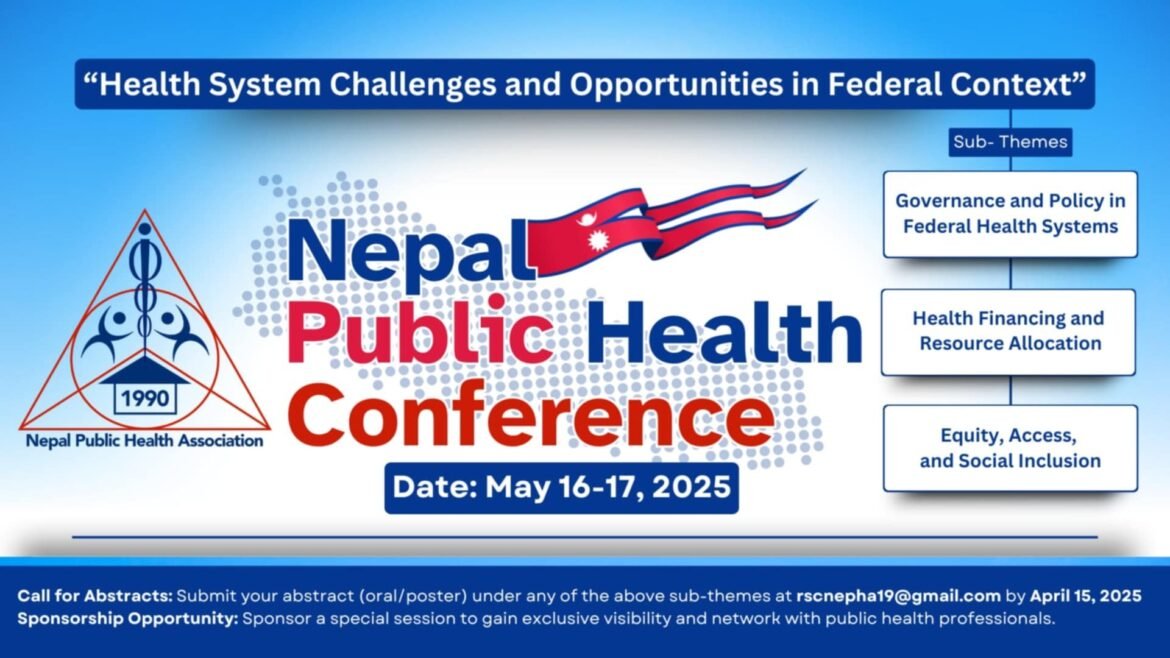
The Nepal Public Health Association (NEPHA) announces the Nepal Public Health Conference 2025, to be held on May 16-17, 2025 with the theme “Health System Challenges and Opportunities in the Federal Context.

Related: The 11th National Summit of Health and Population Scientists in Nepal

Sub-themes

This year’s conference will explore critical sub-themes including:

  • Governance and Policy in the Federal Health System
  • Health Financing and Resource Allocation
  • Equity, Access, and Social Inclusion

Call for Abstracts:

Public health researchers are invited to submit abstracts for oral or poster presentations under any of the above sub-themes. The deadline for abstract submission is April 15, 2025*.

Abstract Guidelines:

  • Title Page: Short title, author name(s), affiliation(s), sub-theme, and presentation type (oral/poster).
  • Abstract Sections: Introduction, Methods, Results, and Conclusion.
  • Word Limit: 250 words (MS Word format).
  • Submission Email: nephaconference2025@gmail.com

Registration

We invite public health professionals, researchers, policymakers, students, and other stakeholders to join this important event and contribute to meaningful discussions on strengthening Nepal’s health system in the federal context.

Registration form

Embedded Google Form

Registration Form

Registration Fee: The conference will not charge any fee for registration.

Registration deadline: 30 April, 2025.

Stay tuned for more details on conference venue!


  • World Atopic Eczema Day 2026: Breaking the Invisible Burden
  • DEVASTATING FLOODS IN NEPAL: PUBLIC HEALTH IMPACT AND A CALL FOR HUMANITARIAN SUPPORT
  • PEN-Plus Orientation Manual for Mid-Level Health Care Workers
  • National Health Training Strategy 2082
  • Simulation Accreditation Manual for Clinical Training Sites

April 1, 2025 0 comments
0 FacebookTwitterPinterestLinkedinTumblrVKOdnoklassnikiRedditStumbleuponWhatsappTelegramLINEPocketSkypeViberEmail
World Oral Health Day 2025: A Happy Mouth is a Happy Mind”
Non- Communicable Diseases (NCDs)PH Important DayPublic HealthPublic Health EventsPublic Health Update

World Oral Health Day 2025: A Happy Mouth is a Happy Mind

by Public Health Update March 20, 2025
written by Public Health Update

Overview

World Oral Health Day is observed each year on the 20 March. It is an initiative of FDI World Dental Federation. World Oral Health Day calls to unite to help reduce the burden of oral diseases, which affect individuals, health systems and economies everywhere. World Oral Health Day aims to empower people with the knowledge, tools and confidence to secure good oral health. 

Oral Health Country Profile 2022: Nepal

Message by Saima Wazed, Regional Director for WHO South-East Asia

World Oral Health Day, marked annually on 20 March, draws attention to oral health being a key indicator of overall health, well-being and quality of life.

Oral diseases are among the most common noncommunicable diseases worldwide, affecting an estimated 3.5 billion people.The World Health Organization is calling on the countries of the South-East Asia Region and partners for accelerated action, reiterating the commitments of the Bangkok Declaration “No Health Without Oral Health“, adopted at the WHO Global Oral Health Meeting in November 2024.

Oral diseases and conditions cause physical symptoms, functional limitations, and a detrimental impact on emotional, mental and social well-being. Among the six WHO regions, South-East Asia reports the highest number – approximately 900 million cases of oral diseases and conditions – reflecting the region’s large population. Our region also has the highest burden of oral cancer among all WHO regions. This is the leading cancer among males in the region, accounting for 11.2% of all cases.

South-East Asia is also home to countries which are major consumers of proven carcinogens causing oral cancer, such as smokeless tobacco or areca nut. A recent analysis revealed that one in two cases of oral cancer in our region is attributable to smokeless tobacco or areca nut consumption. This essentially indicates the number of cases that could be prevented if smokeless tobacco or areca nut consumption were eliminated from the population, emphasizing the potential impact of primary prevention.

Against this backdrop of high burden of oral diseases and conditions, I reaffirm our commitment to provide actionable guidance and technical support to all countries to implement the WHO South-East Asia Regional Action Plan for Oral Health 2023-2030, and to steer the region towards universal health coverage for oral health by 2030.

The first ever Global Oral Health Meeting, held in Bangkok in November 2024, was a valuable platform for Members States to share knowledge and to learn from experiences of other countries. The National Oral Health Roadmaps formulated at the meeting are strategic planning tools to guide countries in translating their identified priorities into actionable steps in the coming years.

Responding the request of the Member States to WHO for technical support to address the high burden of oral cancer attributable to smokeless tobacco and areca nut consumption, WHO is in the process of formulating a WHO South-East Asia regional roadmap to address the burden of oral cancer. The aim of this tool is to guide Member States in regionally relevant strategies to address the burden of oral cancer and other health outcomes.

While pledging the continued technical support of WHO, I urge all oral health stakeholders to leverage the guidance in accelerating progress towards universal oral health by 2030 in the region.As we are reminded on World Oral Health Day 2025, “ A Happy Mouth is a Happy Mind.”


World Oral Health Day 2025: “A Happy Mouth is… A Happy Mind”

Facts

🦷 Oral diseases affect nearly 3.7 billion people worldwide.
🦷 Nearly 390,000 cases of oral cancers are diagnosed annually.
🦷 Severe periodontal diseases affect more than 1 billion people worldwide.
🦷 Oral diseases, though largely preventable, pose a major global health burden.
🦷 Prevention and treatment for oral health conditions is expensive and usually not part of national UHC benefit packages.
🦷 Most LMICs do not have sufficient services available to prevent and treat oral health conditions.

Protect your oral health:
🪥 Brush twice daily with fluoride toothpaste
🥗 Eat a well-balanced diet, low in free sugars
💧 Drink water instead of sugary drinks
🚭 Quit smoking
🚫 Avoid alcohol consumption
⛑️ Wear protective gear during sports and while riding bikes or motorcycles to prevent facial injuries


Related readings

  • World Oral Health Day
  • World Oral Health Day 2021: Be Proud Of Your Mouth
  • Global Oral Health Status Report: Towards UHC for Oral Health by 2030
  • Accelerate action to achieve universal coverage for oral health
  • 10 tips to look after your teeth – Public Health Update
  • World Oral Health Day: Be Proud of Your Mouth!
  • Global Oral Health Status Report
  • Oral Health Country Profile
  • WHO Global oral health status report 
  • EYE, ENT and Oral Health Manual for Health Workers
  • EYE, ENT and Oral Health Manual for School Teachers and FCHVs
  • World Oral Health Day 2022: Be Proud of Your Mouth for your happiness and well-being
  • World Oral Health Day
  • World Oral Health Day 2021: Be Proud Of Your Mouth
  • World Oral Health Day: ”Say Ahh: Think Mouth Think Health”
  • National Oral Health Policy-2070, NEPAL
  • World Oral Health Day – ”Live MOUTH SMART” #WOHD17 
March 20, 2025 0 comments
0 FacebookTwitterPinterestLinkedinTumblrVKOdnoklassnikiRedditStumbleuponWhatsappTelegramLINEPocketSkypeViberEmail
Report and Action Plan of the Health Insurance Reform Advisory Committee, 2024
Health Financing and EconomicsHealth InsurancePublic HealthReportsResearch & Publication

Report and Action Plan of the Health Insurance Reform Advisory Committee, 2024

by Public Health Update March 16, 2025
written by Public Health Update

Overview

The Ministry of Health and Population has disseminated the long-awaited report of the Health Insurance Reform Advisory Committee, 2024 (2081 BS). The committee was formed by the MoHP to improve health insurance and enhance citizens’ access to healthcare services. It was tasked with assessing Nepal’s health insurance program through a SWOT analysis, identifying challenges, and proposing solutions.
The report presents a review of the committee’s work, recommendations to streamline the program through a single-door system, suggestions to enroll all citizens, expand benefits, and ensure resource sustainability through policy interventions.

Key recommendations

The committee advised the Government of Nepal to implement comprehensive policy and legal reforms, effective resource management, along with determining appropriate service packages and premium rates. The committee also recommended strengthening risk management strategies and implementing structural reforms to improve the system. It suggested enhancing collaboration across all three levels of government to ensure seamless service delivery. Further, the committee highlighted the importance of service improvements, better implementation practices, defining premium slabs, and promoting good governance within the health insurance program.

For more details, read the full report.

Download report

Similarly, another committee was formed by the MoHP to review and prepare an action plan based on the Report and Action Plan of the Health Insurance Reform Advisory Committee, 2024. This committee has developed a 50-point action plan, aimed to be implemented within six months to a year. The plan includes legal revisions, policy-level decisions, ministerial decisions, and activities related to the Health Insurance Board’s decisions.


Download action plan


Related readings

  • Health Insurance Board (HIB) of Nepal 
  • Social Health Security (Health Insurance) Program in Nepal
  • Health Insurance
  • Health Insurance Board Benefit Package: Medicine List
  • Health benefit packages of Life Insurance companies in Nepal
  • Health benefit packages of Life Insurance companies in Nepal
  • Health Insurance Packages of Non-life Insurance Companies in Nepal
  • Health Insurance Board (HIB)
  • E-Learning Course on Health Insurance System of Nepal
  • Lawmakers demand health insurance for all
March 16, 2025 0 comments
0 FacebookTwitterPinterestLinkedinTumblrVKOdnoklassnikiRedditStumbleuponWhatsappTelegramLINEPocketSkypeViberEmail
World Kidney day
Non- Communicable Diseases (NCDs)PH Important DayPublic HealthPublic Health Update

World Kidney Day 2025: Are Your Kidneys OK? Detect early, protect kidney health

by Public Health Update March 14, 2025
written by Public Health Update

Overview

World Kidney Day is a global health awareness campaign jointly organized by the International Society of Nephrology (ISN) and the International Federation of Kidney Foundations – World Kidney Alliance (IFKF-WKA). It aims to raise awareness about kidney health, promote prevention strategies, and reduce the impact of kidney disease worldwide.

Theme 2025

The World Kidney Day Joint Steering Committee has declared 2025 to be the year of “Are Your Kidneys OK? – Detect early, protect kidney health”.

Facts

  • Kidney disease is a growing global concern, affecting 850 million people worldwide and causing 5 to 11 million deaths annually.
  • This burden disproportionately impacts vulnerable populations in lowerincome countries, exacerbating health inequalities.
  • With kidney disease being projected to become the 5th leading cause of death in the coming years, it represents a major public health challenge.
  • The good news is that timely testing and intervention can not only reduce healthcare costs but, most importantly, save lives.

Facts: World Kidney Day

Recommended readings

  • World Kidney Day 
  • World Kidney Day 2021: Living Well with Kidney Disease
  • Kidney Health for Everyone Everywhere
  • World Kidney Day: Kidney Health for Everyone Everywhere
  • “Kidney Disease & Obesity. Healthy Lifestyle for Healthy Kidneys”
  • Kidneys & Women’s Health: Include, Value, Empower
  • Kidney transplant sees remarkable success rate
  • Guideline to Provide Medical Treatment Expenses for for transplant, under kidney dialysis services, cancer patients and spinal injury.
  • NCD Detection Campaign Guideline 2081


March 14, 2025 0 comments
0 FacebookTwitterPinterestLinkedinTumblrVKOdnoklassnikiRedditStumbleuponWhatsappTelegramLINEPocketSkypeViberEmail
World Glaucoma Week 2025: Uniting for a Glaucoma-Free World
Fact SheetHealth Literacy, Health Education & PromotionPH Important DayPublic Health Update

World Glaucoma Week 2025: Uniting for a Glaucoma-Free World

by Public Health Update March 14, 2025
written by Public Health Update

Overview

World Glaucoma Week, organized by the World Glaucoma Association (WGA), is a global initiative aimed at raising awareness about glaucoma. Through a range of interactive activities worldwide, it encourages patients, eye-care professionals, health authorities, and the public to take part in efforts to protect vision. The primary objective is to emphasize the importance of regular eye and optic nerve examinations for early glaucoma detection. This year, World Glaucoma Week will be observed globally from March 9 to 15, 2025, with various events and initiatives.

National Eye Health Strategy 2079-2086

Theme 2025

This year’s theme “Uniting for a Glaucoma-Free World” focuses on bringing communities worldwide to fight together against glaucoma blindness. Become involved and be a part of the activities organized over the globe. Help us raise awareness worldwide and learn more about glaucoma.

Facts (WGA)

  • Glaucoma remains the leading cause of preventable irreversible blindness worldwide.
  • Currently, an estimated 78 million people are diagnosed with glaucoma globally, and this number is projected to rise to 111.8 million by 2040.
  • One in 200 individuals aged 40 has glaucoma, with the prevalence increasing to one in eight by age 80.
  • As the global population ages, the incidence of glaucoma is expected to escalate, making it a growing public health concern. 
  • Early detection through regular eye examinations is crucial, as glaucoma often presents without symptoms in its early stages.
  • Once vision is lost due to glaucoma, it cannot be restored; however, early diagnosis and treatment can prevent further damage. 

World Glaucoma Association


Related readings

  • Eye Care Situation Analysis of Nepal
  • Rapid Assessment of Avoidable Blindness (RAAB) Survey in Nepal
  • World Glaucoma Week
  • World Glaucoma Day
  • World Glaucoma Week 2021: ‘The world is bright, save your sight’
  • World Glaucoma Week March 6-12, 2022
  • World Glaucoma Week
  • National Eye Health Strategy 2079-2086
  • World Sight Day 2021: Love Your Eyes!
  • World Sight Day 2022: LoveYourEyes
  • EYE, ENT and Oral Health Manual for School Teachers and FCHVs
March 14, 2025 0 comments
0 FacebookTwitterPinterestLinkedinTumblrVKOdnoklassnikiRedditStumbleuponWhatsappTelegramLINEPocketSkypeViberEmail
CoursesFellowships, Studentship & ScholarshipsInternational Jobs & OpportunitiesOnline CoursesPublic Health OpportunitiesPublic Health OpportunitySummer and Winter CoursesSummer Courses

Gender and Health Summer Course 2025

by Public Health Update March 12, 2025
written by Public Health Update

Overview

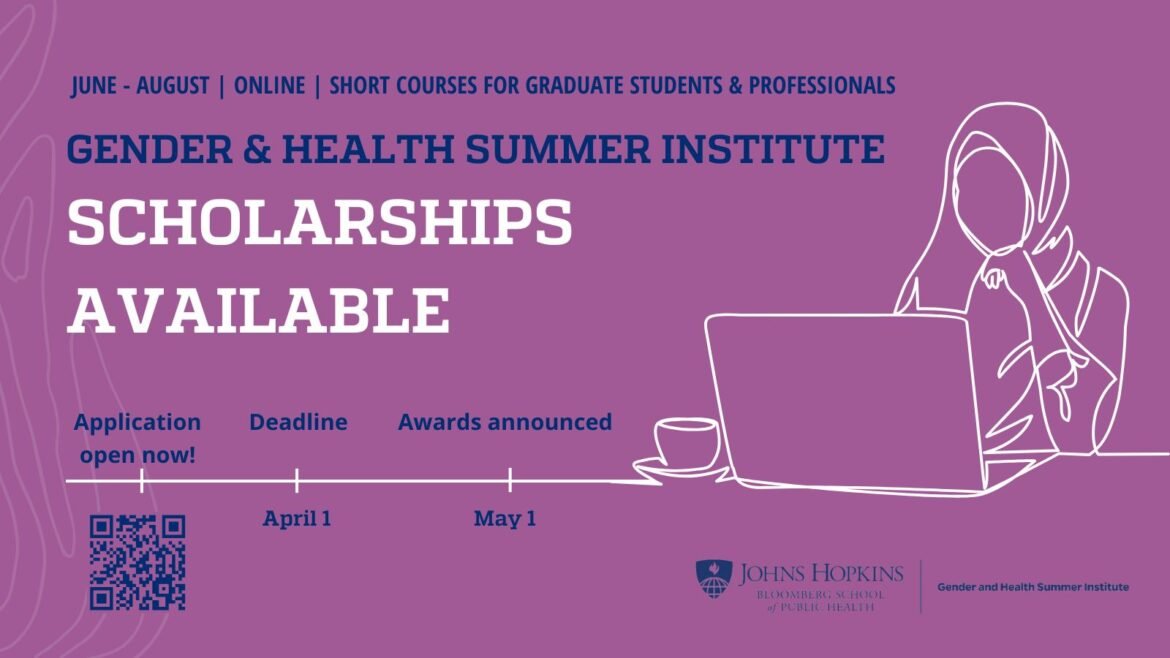
The Johns Hopkins Bloomberg School of Public Health’s Gender and Health Summer Institute is now accepting applications for its upcoming short course on Gender and Health. A number of full-tuition scholarships are available for participants interested in enrolling in a course as part of the Gender and Health Summer Institute

The Gender and Health Summer Institute is an exciting opportunity to build or refresh your skills in various aspects of gender and equity analysis. Featuring teaching by global experts, the Institute usually attracts students and those seeking professional development. It’s a great primer for learners seeking to integrate a gendered approach in their current thinking or practice, or those who wish to advise on gender within health organizations.

All health programs should take gender into consideration and integrate it to have an impact on health outcomes and equity. The Gender and Health Summer Institute features an applied educational curriculum to advance research and implementation skills for gender analysis. 

The Gender and Health Summer Institute is composed of a series of short, focused, online courses that provide training in gender and health equity. Courses focus on applied methods and are grounded in real-world challenges. While many of the Gender and Health Summer Institute courses are new offerings, there are also a few well-established courses moving over from other Summer Institutes or departments. This Institute targets current and future global public health professionals around the world seeking applied gender skills.

Summer Institute

The Summer Institute is designed for students as well as working professionals, both within and outside of Johns Hopkins University. 

  • Tuition discounts and scholarships available: We are excited to offer a substantial discount for non-credit courses and a limited number of full scholarships for non-credit and for-credit courses. Please scroll down to the green box for more information on tuition and scholarships!
  • Applied skills: Courses will use knowledge and skills-based competencies, key foundations, and case studies from existing research and programs to build and enhance skills in applying gender-related analyses and programming.
  • Flexible schedule: Fully online with a blend of asynchronous materials and synchronous lectures. All courses are between two and five half days long and offered from 8 am to 12 pm EST in order to accommodate different time zones. Students can take as many of the courses as they would like — there is no minimum or maximum requirement. Specific course dates can be found on the Course Offerings page.
  • Diverse and international student body: Join students from around the world! Past students have represented a range of academic and professional backgrounds and come from dozens of countries, including Australia, Brazil, Ethiopia, India, Indonesia, Lebanon, Mexico, Myanmar, Nigeria, South Korea, Thailand, Uganda, UK, and Ukraine.

Curriculum: Courses are taught by leading faculty who have extensive interdisciplinary experience and expertise in the field of gender and health. 

Areas of interest

  • Using data to promote gender equity and health
  • Gender transformative interventions
  • Gender budgeting
  • Conducting gender situational analyses
  • Gender-responsive monitoring and evaluation (M&E)
  • Adapting health programs for sexual and gender minorities
  • Advocacy and communication for gender and health equity
  • Essential skills in women’s leadership
  • Integrating men into global health programming
  • Gender in emergencies
  • Women’s health
  • Implementation research
  • … and more!
Tuition and Fees

The Gender and Health Summer Institute is pleased to be able to offer a discount of $464.50 per credit to all participants who take courses not-for-credit in our Summer Institute. This discount will only apply to courses in the Gender and Health Summer Institute and it will only apply for non-credit participants. Please contact our Summer Institute Coordinator, Katherine Banchoff, at kbanchoff@jhu.edu if you have questions about the non-credit Summer Institute discount.

Please refer to the Tuition and Fees page for current non-credit and for-credit Summer Institute tuition rates, scrolling down to the section on Summer, Fall and Winter Institute tuition.

Scholarships

We’re excited to announce we have several full scholarships available for our courses. Scholarships will be determined through a competitive application process and awarded to a limited number of students. Learn more about eligibility criteria and how to apply. 

Applicants will be informed of their success by email by early May. Please wait to be informed about if you have been awarded a scholarship before going through the registration process.  

Deadline for applications: April 1, 2025

Official announcement


  • World Atopic Eczema Day 2026: Breaking the Invisible Burden
  • DEVASTATING FLOODS IN NEPAL: PUBLIC HEALTH IMPACT AND A CALL FOR HUMANITARIAN SUPPORT
  • PEN-Plus Orientation Manual for Mid-Level Health Care Workers
  • National Health Training Strategy 2082
  • Simulation Accreditation Manual for Clinical Training Sites

March 12, 2025 0 comments
0 FacebookTwitterPinterestLinkedinTumblrVKOdnoklassnikiRedditStumbleuponWhatsappTelegramLINEPocketSkypeViberEmail
Training Manual for Medical Doctors – Drug Resistant (DR) TB 2024
Communicable DiseasesNational Plan, Policy & GuidelinesResearch & Publication

Training Manual for Medical Doctors – Drug Resistant (DR) TB 2024

by Public Health Update March 12, 2025
written by Public Health Update

Overview

The Training Manual for Medical Doctors – Drug Resistant (DR) TB 2024 is designed to assist medical doctors in comprehending and managing Drug-Resistant Tuberculosis (DR-TB). It functions as an all-encompassing resource for diagnosing and treating DR-TB, offering practical case management skills through real-life scenarios. The manual highlights essential aspects such as diagnostic algorithms, tools, treatment plans, infection control, patient-focused care, and managing adverse drug reactions, ensuring healthcare professionals are thoroughly equipped to handle DR-TB cases effectively.

World Tuberculosis Day 2025: ‘Yes! We Can End TB: Commit, Invest, Deliver’

Objectives

  • Describe the global and Nepal-specific situation of DR TB epidemic, END TB strategy and National Strategic plan (NSP), 2021/22 – 2025/26.
  • Define DR TB, identify types and explain the causes of drug resistance and role of different levels in PMDT.
  • Explain diagnostic tests for DR TB, sputum specimen collection and transportation and diagnostic algorithms for DR TB
  • List different types of DR TB treatment regimen, drugs and explain the principles for treating MDR/RR-TB cases
  • Initiate the most appropriate regimen promptly, perform clinical and laboratory assessments per national guidelines, and optimize case management.
  • Monitor the follow up and treatment of DR TB patients and learn about aDSM.
  • Manage the DR-TB patients with comorbidities and in special situation.
  • Apply good IPC practices in his/her workplace, promote treatment adherence of patients by education and counseling sessions as well as provision of (available) social economic support.
  • Record and Report PMDT data per national guidelines.

Target Audience

  • This is a 3-day training program with site visits (DR TB treatment centers and Reference laboratories) designed for medical doctors and other healthcare professionals who are involved in the treatment, care, and management of DR TB patients.

Download Training Manual

Download Training Manual


Recommended readings

  • National TB Preventive Treatment Protocol 2024
  • National Guide for use of digital x-ray with AI in camp settings
  • National Tuberculosis Programme Annual Report 2018
  • National Tuberculosis Program Update in Nepal #WorldTBDay #EndTB
  • National TB Prevalence Survey, 2018-19 Key findings
  • World Tuberculosis Day 2020! It’s time to End TB!
  • National Guideline on Drug Resistant TB Management 2019, Nepal
  • National Tuberculosis Management Guideline 2019, Nepal
  • Global Tuberculosis Report 2019: Latest status of the tuberculosis epidemic
  • National TB Prevalence Survey, 2018-19 Key findings
  • New WHO recommendations to prevent tuberculosis aim to save millions of lives
  • World Health Organization (WHO) Information Note Tuberculosis and COVID-19
  • World Tuberculosis Day 2020! It’s time to End TB!
  • People-centred framework for tuberculosis programme planning and prioritization, User guide
  • Global Tuberculosis Report 2019: Latest status of the tuberculosis epidemic
  • Dissemination of Findings and Recommendations of Joint External Monitoring Mission(JEMM) of Nepal National Tuberculosis Program
  • National Tuberculosis Programme Annual Report 2018
  • National Strategic Plan for Tuberculosis Prevention, Care and Control 2016 – 2021
  • NTP, Nepal: New TB Treatment Algorithm & Regimen (Updated)
  • WHO announces landmark changes in MDR-TB treatment regimens
  • TB Vaccine results announce a promising step towards ending the emergency
  • 7 million people receive record levels of lifesaving TB treatment but 3 million still miss out

Related reports

  • Global Tuberculosis Report 2024
  • Global tuberculosis report 2023
  • Global Tuberculosis Report 2022
  • Global Tuberculosis Report 2021
  • Global Tuberculosis Report 2020
  • National Strategic Plan to End Tuberculosis in Nepal
  • Global Tuberculosis Report 2019: Latest status of the tuberculosis epidemic
  • Global Tuberculosis Report 2018
  • WHO Global Tuberculosis report 2015
  • Global tuberculosis report 2014: Improved data reveals higher global burden of tuberculosis
March 12, 2025 0 comments
0 FacebookTwitterPinterestLinkedinTumblrVKOdnoklassnikiRedditStumbleuponWhatsappTelegramLINEPocketSkypeViberEmail
Clinical Handbook of TB management Protocols 2024
Communicable DiseasesNational Health NewsNational Plan, Policy & GuidelinesPublic Health Update

Clinical Handbook of TB management Protocols 2024

by Public Health Update March 9, 2025
written by Public Health Update

Overview

The Clinical Handbook of TB management Protocols 2024 offers an overview of tuberculosis and provides insights into national diagnostic and treatment protocols, highlighting recent advancements, especially in managing drug-resistant TB (DR-TB) with shorter, all-oral treatment regimens. This handbook includes guides on the following topics.

Screening and Diagnosis

  • Methods of screening and diagnosis
  • Suggested screening strategies for presumptive TB cases
  • WHO recommended tools for TB screening
  • Laboratory tests of tuberculosis
  • Methods of obtaining a respiratory specimen
  • Diagnostic algorithm and treatment initiation for new presumptive TB patients
  • Diagnostic algorithm and treatment initiation for previously treated TB patients and interpretation of X-pert MTB/RIF/Ultra results
  • Interpretation of X-pert MTB/RIF and/or X-pert MTB/RIF/Ultra results
  • Interpretation of drug susceptibility test by LPA Result and treatment decision
  • Diagnosis of extrapulmonary TB in adults
  • Identifying presumptive TB in children
  • Critical signs requiring urgent hospital referral
  • Diagnostic algorithm of TB in Children (<15 years of age)
  • Screening and management of TB in Severe Acute Malnutrition (SAM) children
  • Systematic Screening for the Diagnosis of active pulmonary TB disease among PLHIV, Diabetes and other immune suppressant co-morbid conditions

Drug susceptible (DS) TB treatment and management

  • DS TB treatment and anti-TB drug regimens
  • Summary of extrapulmonary TB (EPTB) treatment
  • Dosing for DS TB treatment (Adults and Children)
  • Monitoring and follow up management of DS TB
  • Flow Chart for management and follow up of Pulmonary Bacteriologically Confirmed (PBC) TB patients
  • Management of patients who interrupted treatment

Drug Resistant (DR) TB Treatment and Management

  • Type of drug resistant (DR) TB
  • Treatment of isoniazid resistant TB (Hr-TB)
  • Decision tree for the diagnosis and treatment of MDR/RR TB
  • Treatment of multi-drug/rifampicin resistant (MDR/RR) TB
  • Weight based dosing of medicines used in multidrug resistant TB regimens, adults, and children
  • Follow up and monitoring of DR TB patients

Monitoring and Management of adverse events

  • Side effects of first line TB medicines and management
  • Side effects of second line TB medicines
  • Approach to hepatotoxicity caused by first-line anti- tuberculous drugs in adult
  • Dose adjustment in renal impairment

TB treatment in special circumstances

  • TB in people with HIV infection
  • TB in pregnancy and breast feeding
  • TB and diabetes mellitus (DM)
  • TB and tobacco Use

TB Infection Control and Prevention

  • TB Infection Control
  • TB Preventive Treatment (TPT)

Download guideline

Download guideline

Recommended readings

  • National TB Preventive Treatment Protocol 2024
  • National Guide for use of digital x-ray with AI in camp settings
  • National Tuberculosis Programme Annual Report 2018
  • National Tuberculosis Program Update in Nepal #WorldTBDay #EndTB
  • National TB Prevalence Survey, 2018-19 Key findings
  • World Tuberculosis Day 2020! It’s time to End TB!
  • National Guideline on Drug Resistant TB Management 2019, Nepal
  • National Tuberculosis Management Guideline 2019, Nepal
  • Global Tuberculosis Report 2019: Latest status of the tuberculosis epidemic
  • National TB Prevalence Survey, 2018-19 Key findings
  • New WHO recommendations to prevent tuberculosis aim to save millions of lives
  • World Health Organization (WHO) Information Note Tuberculosis and COVID-19
  • World Tuberculosis Day 2020! It’s time to End TB!
  • People-centred framework for tuberculosis programme planning and prioritization, User guide
  • Global Tuberculosis Report 2019: Latest status of the tuberculosis epidemic
  • Dissemination of Findings and Recommendations of Joint External Monitoring Mission(JEMM) of Nepal National Tuberculosis Program
  • National Tuberculosis Programme Annual Report 2018
  • National Strategic Plan for Tuberculosis Prevention, Care and Control 2016 – 2021
  • NTP, Nepal: New TB Treatment Algorithm & Regimen (Updated)
  • WHO announces landmark changes in MDR-TB treatment regimens
  • TB Vaccine results announce a promising step towards ending the emergency
  • 7 million people receive record levels of lifesaving TB treatment but 3 million still miss out

Related reports

  • Global Tuberculosis Report 2024
  • Global tuberculosis report 2023
  • Global Tuberculosis Report 2022
  • Global Tuberculosis Report 2021
  • Global Tuberculosis Report 2020
  • National Strategic Plan to End Tuberculosis in Nepal
  • Global Tuberculosis Report 2019: Latest status of the tuberculosis epidemic
  • Global Tuberculosis Report 2018
  • WHO Global Tuberculosis report 2015
  • Global tuberculosis report 2014: Improved data reveals higher global burden of tuberculosis
March 9, 2025 0 comments
0 FacebookTwitterPinterestLinkedinTumblrVKOdnoklassnikiRedditStumbleuponWhatsappTelegramLINEPocketSkypeViberEmail
AI and HealthCommunicable DiseasesDigital Health & Health InformaticsNational Health NewsNational Plan, Policy & GuidelinesPublic Health NewsPublic Health UpdateResearch & Publication

National Guide for use of digital x-ray with AI in camp settings

by Public Health Update March 9, 2025
written by Public Health Update

Overview

The National Tuberculosis Control Center endorses the National Guide for using Digital X-rays with AI in Camp Settings. This guide aims to provide step by step process to Health workers, social mobilizers, officers, implementers, and planners engaged in ACF activities to support the effective deployment of digital X-ray technology, enhanced by artificial intelligence, for tuberculosis screening in camp settings across Nepal.

National TB Preventive Treatment Protocol 2024

This guide is the first of its kind, providing standardized procedures and operational guidelines to ensure accurate and timely TB diagnosis, especially in remote and high-risk populations. By integrating digital X-rays with AI into our TB control efforts, we aim to enhance early detection and improve outcomes, contributing to our goal of eliminating TB in Nepal.

Target population

The target population for TB screening using X-ray aims to prioritize those most vulnerable to TB infection and least likely to access regular, or existing healthcare services, ensuring that TB control efforts reach those who need them most, which are mostly vulnerable populations, mapped as detailed below.

  • Higher Prevalence of TB: Those within populations with an increased likelihood of TB transmission and infection.
  • Limited Access to Healthcare: Individuals facing difficulties accessing healthcare services due to geographical constraints, cultural barriers, socioeconomic challenges, or political barriers.
  • Congregate Settings: Individuals living in communal environments such as urban slums, monasteries, prisons, and other congregate settings where TB transmission rates may be elevated.
  • Hard-to-Reach Areas: Individuals residing in secluded or geographically isolated areas where access to healthcare services is particularly challenging.
  • Secluded Indigenous Population: Indigenous communities living in remote or isolated areas where healthcare resources may be scarce and TB prevalence may be higher.

Inclusion criteria

  • Population in target sites: 15 years and older, regardless of symptoms.
  • Contacts of bacteriologically confirmed TB: 5 years and older, regardless of symptoms.
  • Children aged 5-14 with prolonged cough (more than two weeks, on and off) and or malnutrition

Exclusion criteria CXR screening

  • Pregnant women.
  • TB patients under treatment
  • Children under 5 years old.

Assure radiation safety

Setting up of chest x-ray screening procedure:

  • Preferably conduct X-ray procedures in enclosed areas with a 2-meter safety zone.
  • If conducted in open air, maintain a minimum distance of 2 meters between individuals and the X-ray tube.
  • Use lead curtains to shield personnel from scattered X-rays and post appropriate radiation warning signs.

Worker’s safety:

  • Install lead curtains or barriers between the X-ray machine and personnel.
  • Ensure radiographers wear lead protectors as per the manufacturer’s instructions.
  • Monitor radiation exposure levels regularly using dosimeters.

Participant safety:

  • Obtain informed consent from all participants before X-ray examination.
  • Inform female participants about the risks of chest X-ray during pregnancy and exclude pregnant women from screening.
  • Educate participants on the minimal health risks associated with chest X-ray radiation exposure.

Infection control:

  • Staff should wear N95 masks/surgical masks when working close to participants.
  • Encourage hand hygiene practices among staff and participants.
  • Minimize contact between participants during ACF activities.

Reporting: All program data should be reported monthly in the HMIS 9.3 and NTPMIS (NTP Service Tracker – SR Reporting) and regularly updated in the eTB register.

For more info: Download Guide

For more info: Download Guide

Recommended readings

  • National Tuberculosis Programme Annual Report 2018
  • National Tuberculosis Program Update in Nepal #WorldTBDay #EndTB
  • National TB Prevalence Survey, 2018-19 Key findings
  • World Tuberculosis Day 2020! It’s time to End TB!
  • National Guideline on Drug Resistant TB Management 2019, Nepal
  • National Tuberculosis Management Guideline 2019, Nepal
  • Global Tuberculosis Report 2019: Latest status of the tuberculosis epidemic
  • National TB Prevalence Survey, 2018-19 Key findings
  • New WHO recommendations to prevent tuberculosis aim to save millions of lives
  • World Health Organization (WHO) Information Note Tuberculosis and COVID-19
  • World Tuberculosis Day 2020! It’s time to End TB!
  • People-centred framework for tuberculosis programme planning and prioritization, User guide
  • Global Tuberculosis Report 2019: Latest status of the tuberculosis epidemic
  • Dissemination of Findings and Recommendations of Joint External Monitoring Mission(JEMM) of Nepal National Tuberculosis Program
  • National Tuberculosis Programme Annual Report 2018
  • National Strategic Plan for Tuberculosis Prevention, Care and Control 2016 – 2021
  • NTP, Nepal: New TB Treatment Algorithm & Regimen (Updated)
  • WHO announces landmark changes in MDR-TB treatment regimens
  • TB Vaccine results announce a promising step towards ending the emergency
  • 7 million people receive record levels of lifesaving TB treatment but 3 million still miss out

Related reports

  • Global Tuberculosis Report 2024
  • Global tuberculosis report 2023
  • Global Tuberculosis Report 2022
  • Global Tuberculosis Report 2021
  • Global Tuberculosis Report 2020
  • National Strategic Plan to End Tuberculosis in Nepal
  • Global Tuberculosis Report 2019: Latest status of the tuberculosis epidemic
  • Global Tuberculosis Report 2018
  • WHO Global Tuberculosis report 2015
  • Global tuberculosis report 2014: Improved data reveals higher global burden of tuberculosis
March 9, 2025 0 comments
0 FacebookTwitterPinterestLinkedinTumblrVKOdnoklassnikiRedditStumbleuponWhatsappTelegramLINEPocketSkypeViberEmail
Newer Posts
Older Posts

Search

Follow Us

Facebook Twitter Instagram Pinterest Linkedin Youtube

Categories

  • Abstracts (25)
  • Activities (91)
  • Adolescent Sexual and Reproductive Health (ASRH) (25)
  • Advice & Tips (4)
  • African Region (5)
  • AI and Health (1)
  • Annual Meeting (6)
  • Antimicrobial Resistance (AMR) (21)
  • Award (20)
  • Awards (17)
  • Books (9)
  • Call for Proposal, EOI & RFP (103)
  • Call for Research Participants (8)
  • Clinical Doctor Jobs (6)
  • Communicable Diseases (107)
  • Competition (20)
  • Conference (129)
  • Consultant (1)
  • Courses (206)
  • Dashboard (2)
  • Digital Health & Health Informatics (10)
  • Drug and Medicine (18)
  • Eastern Mediterranean Region (3)
  • Education (16)
  • Environment (3)
  • Environmental Health & Climate Change (47)
  • European Region (42)
  • Exchange Program (1)
  • Fact Sheet (118)
  • FCHVs (1)
  • Fellowships, Studentship & Scholarships (168)
  • Financial Aid (13)
  • Form Formats (2)
  • Fully funded (22)
  • Global Health News (440)
  • Grants and Funding Opportunities (193)
  • Guest Post (44)
  • Health Assistant Jobs (1)
  • Health Equity (7)
  • Health Financing and Economics (24)
  • Health in Data (118)
  • Health Insurance (5)
  • Health Jobs (52)
  • Health Literacy, Health Education & Promotion (51)
  • Health Organization Profile (42)
  • Health Systems (85)
  • Human Resource for Health (33)
  • Humanitarian Health & Emergency Response (45)
  • Hypertension (5)
  • Implementation Research (49)
  • International Health (3)
  • International Jobs & Opportunities (374)
  • International Plan, Policy & Guidelines (212)
  • Internships (5)
  • Jobs Vacancies (57)
  • Journals (8)
  • Life Style & Public Health Nutrition (39)
  • Live (10)
  • Master's Degree (48)
  • Maternal, Newborn and Child Health (88)
  • Mentorship Program (2)
  • Miscellaneous (16)
  • National Health News (160)
  • National Plan, Policy & Guidelines (473)
  • Neglected Tropical Diseases (NTDs) (51)
  • Non- Communicable Diseases (NCDs) (123)
  • Notice (103)
  • Nursing Jobs (6)
  • Nutritionist Jobs (1)
  • One Health (18)
  • Online & Distance Learning (22)
  • Online Courses (91)
  • Op-Ed Article (3)
  • Opportunities by Region (83)
  • Outbreak News (213)
  • Partially funded (6)
  • PCL Health Science Jobs (3)
  • PH Important Day (538)
  • Pharmacist Jobs (3)
  • PhD (54)
  • Photos (5)
  • Planetary Health (4)
  • PostDoc (14)
  • Presentation Slides (26)
  • Primary Health Care (25)
  • Provincial Plan, Policies and Guidelines (17)
  • Public Health (1,288)
  • Public Health Epidemiology & Biostatistics (14)
  • Public Health Events (307)
  • Public Health Information (21)
  • Public Health Innovation (9)
  • Public Health Jobs (52)
  • Public Health News (558)
  • Public Health Notes (120)
  • Public Health Opportunities (509)
  • Public Health Opportunity (493)
  • Public Health Programs (108)
  • Public Health Seminar (2)
  • Public Health Tools (2)
  • Public Health Update (574)
  • Quality Improvement & Infection Prevention (20)
  • Region of America (8)
  • Reports (187)
  • Research & Project Grants (39)
  • Research & Project Grants (33)
  • Research & Publication (651)
  • Research Articles (10)
  • Road Traffic Accidents (RTA) (9)
  • School of Public Health (60)
  • Self funded (2)
  • South-East Asia Region (26)
  • Success Stories (17)
  • Summer and Winter Courses (40)
  • Summer Courses (28)
  • Sustainable Development Goals (SDGs) (14)
  • Syllabus (61)
  • Symposium (9)
  • Tobacco Control (35)
  • Training (40)
  • Travel Grants (15)
  • Trick, Technique & Skills (8)
  • Uncategorized (3)
  • Undergraduate Degree (7)
  • Universal Health Coverage (36)
  • Universities (29)
  • Universities & School of Public Health (58)
  • Vacancy Announcement (26)
  • Vaccine Preventable Diseases (40)
  • Vector-Borne Diseases(VBDs) (31)
  • Videos (3)
  • View Points (1)
  • Webinar (4)
  • Western Pacific Region (13)
  • Workshop (18)
  • World News (120)
Post New Jobs: Vacancy Announcement Service

Search Box

Public Health Update (Sagun’s Blog) is a popular public health portal in Nepal. Thousands of health professionals are connected with Public Health Update to get up-to-date public health updates, search for jobs, and explore opportunities.
#1 Public Health Blog for sharing Job opportunities and updates in Nepal

”Public Health Information For All”
– – Sagun Paudel, Founder

  • HOT JOBS
    • Public Health Jobs
    • Medical Doctor Jobs
    • Nursing Jobs
    • Health Assistant Jobs
    • Pharmacist Jobs
    • NGOs Jobs
    • Government Jobs
  • Top Categories
    • National Plan, Policy & Guidelines Top
    • Public Health Calendar
    • Fellowships & Scholarships
    • Health Systems
    • Health Organization Profiles
    • International Jobs & Opportunities
    • Public Health Opportunity

PUBLIC HEALTH INITIATIVE

    • Submit your Vacancies New
    • Partnership Opportunities

Contact: blog.publichealthupdate@gmail.com

https://wa.me/+9779856036932

All Right Reserved. 2011-2026. Contact us. 

Facebook Twitter Instagram Youtube Envelope
Public Health Update
  • Home
  • Public Health
    • Home 1
      • Adolescent Sexual and Reproductive Health (ASRH)
      • Antimicrobial Resistance (AMR)
      • Communicable Diseases
      • Digital Health & Health Informatics
      • Environmental Health & Climate Change
      • Health Financing and Economics
      • Health Equity
    • Home 2
      • Health Literacy, Health Education & Promotion
      • Human Resource for Health
      • Humanitarian Health & Emergency Response
      • Implementation Research
      • International Health
      • Life Style & Public Health Nutrition
      • Maternal, Newborn and Child Health
    • Home 3
      • Neglected Tropical Diseases (NTDs)
      • Non- Communicable Diseases (NCDs)
      • One Health
      • Planetary Health
      • Public Health Epidemiology & Biostatistics
      • Primary Health Care
      • Quality Improvement & Infection Prevention
    • Home 4
      • Road Traffic Accidents (RTA)
      • Sustainable Development Goals (SDGs)
      • Tobacco Control
      • Universal Health Coverage
      • Vaccine Preventable Diseases
      • Vector-Borne Diseases(VBDs)
      • Notices
  • Public Health Update
    • Home 1
      • Public Health News
      • Global Health News
      • Outbreak News
      • National Health News
      • COVID-19
    • Home 2
      • Fact Sheet
      • Health in Data
      • PH Important Day
      • Public Health Events
      • Public Health Programs
    • Home 3
      • Health Systems
      • Health Insurance
      • Health Organization Profile
      • Success Stories
      • Public Health Innovation
  • Public Health Opportunities
    • Fully funded
    • Travel Grants
    • Grants and Funding Opportunities
    • Opportunities by Region
    • International Jobs & Opportunities
    • Research & Project Grants
    • Fellowships, Studentship & Scholarships
    • Conference
  • Jobs
    • Home 1
      • Health Jobs
      • Public Health Jobs
      • Clinical doctor Jobs
      • Health Assistant Jobs
      • Nursing Jobs
      • PCL Health Science Jobs
    • Home 2
      • Dental Jobs
      • Pharmacist Jobs
      • TSLC (Health Jobs)
      • Laboratory Jobs
      • Nutritionist Jobs
  • Downloads
    • International Plan, Policy & Guidelines
    • National Plan, Policy & Guidelines
    • Reports
    • Books
    • Research Articles
  • School of Public Health
    • Home 1
      • Courses
      • Master’s Degree
      • Undergraduate Degree
      • PhD
    • Home 2
      • Universities
      • Syllabus
      • Public Health Notes
      • Mentorship Program
      • Startup Project
    • Home
      • Summer and Winter Courses
      • Summer Courses
      • Online Courses
      • Workshop
      • Training
Public Health Update
  • Home
  • Public Health
    • Home 1
      • Adolescent Sexual and Reproductive Health (ASRH)
      • Antimicrobial Resistance (AMR)
      • Communicable Diseases
      • Digital Health & Health Informatics
      • Environmental Health & Climate Change
      • Health Financing and Economics
      • Health Equity
    • Home 2
      • Health Literacy, Health Education & Promotion
      • Human Resource for Health
      • Humanitarian Health & Emergency Response
      • Implementation Research
      • International Health
      • Life Style & Public Health Nutrition
      • Maternal, Newborn and Child Health
    • Home 3
      • Neglected Tropical Diseases (NTDs)
      • Non- Communicable Diseases (NCDs)
      • One Health
      • Planetary Health
      • Public Health Epidemiology & Biostatistics
      • Primary Health Care
      • Quality Improvement & Infection Prevention
    • Home 4
      • Road Traffic Accidents (RTA)
      • Sustainable Development Goals (SDGs)
      • Tobacco Control
      • Universal Health Coverage
      • Vaccine Preventable Diseases
      • Vector-Borne Diseases(VBDs)
      • Notices
  • Public Health Update
    • Home 1
      • Public Health News
      • Global Health News
      • Outbreak News
      • National Health News
      • COVID-19
    • Home 2
      • Fact Sheet
      • Health in Data
      • PH Important Day
      • Public Health Events
      • Public Health Programs
    • Home 3
      • Health Systems
      • Health Insurance
      • Health Organization Profile
      • Success Stories
      • Public Health Innovation
  • Public Health Opportunities
    • Fully funded
    • Travel Grants
    • Grants and Funding Opportunities
    • Opportunities by Region
    • International Jobs & Opportunities
    • Research & Project Grants
    • Fellowships, Studentship & Scholarships
    • Conference
  • Jobs
    • Home 1
      • Health Jobs
      • Public Health Jobs
      • Clinical doctor Jobs
      • Health Assistant Jobs
      • Nursing Jobs
      • PCL Health Science Jobs
    • Home 2
      • Dental Jobs
      • Pharmacist Jobs
      • TSLC (Health Jobs)
      • Laboratory Jobs
      • Nutritionist Jobs
  • Downloads
    • International Plan, Policy & Guidelines
    • National Plan, Policy & Guidelines
    • Reports
    • Books
    • Research Articles
  • School of Public Health
    • Home 1
      • Courses
      • Master’s Degree
      • Undergraduate Degree
      • PhD
    • Home 2
      • Universities
      • Syllabus
      • Public Health Notes
      • Mentorship Program
      • Startup Project
    • Home
      • Summer and Winter Courses
      • Summer Courses
      • Online Courses
      • Workshop
      • Training
Public Health Initiative, A Registered Non-profit organization – All Right Reserved. 2011-2023