
Public Health Update
  • Home
  • Public Health Update
  • Nepal Health Jobs
    • Public Health Job Board
    • Organization List
  • Opportunities
    • Fellowships, Studentship & Scholarships
    • Grants and Funding Opportunities
    • Fully funded
    • Conference
  • Downloads
    • International Plan, Policy & Guidelines
    • National Plan, Policy & Guidelines
    • Reports
    • Public Health Notes
    • Syllabus
    • Form Formats
  • School of Public Health
    • PhD
    • Master’s Degree
    • Online Courses
  • Notice
  • Home
  • Public Health Update
  • Nepal Health Jobs
    • Public Health Job Board
    • Organization List
  • Opportunities
    • Fellowships, Studentship & Scholarships
    • Grants and Funding Opportunities
    • Fully funded
    • Conference
  • Downloads
    • International Plan, Policy & Guidelines
    • National Plan, Policy & Guidelines
    • Reports
    • Public Health Notes
    • Syllabus
    • Form Formats
  • School of Public Health
    • PhD
    • Master’s Degree
    • Online Courses
  • Notice
LOGIN / REGISTER
Public Health Update
SUBSCRIBE
Public Health Update
  • Home
  • Public Health Update
  • Nepal Health Jobs
    • Public Health Job Board
    • Organization List
  • Opportunities
    • Fellowships, Studentship & Scholarships
    • Grants and Funding Opportunities
    • Fully funded
    • Conference
  • Downloads
    • International Plan, Policy & Guidelines
    • National Plan, Policy & Guidelines
    • Reports
    • Public Health Notes
    • Syllabus
    • Form Formats
  • School of Public Health
    • PhD
    • Master’s Degree
    • Online Courses
  • Notice

All Right Reserved. Designed and Developed by PenciDesign

Global Tuberculosis Report 2021
Global Health NewsCommunicable DiseasesPublic Health NewsPublic Health Update

Tuberculosis deaths rise for the first time in more than a decade due to the COVID-19 pandemic

by Public Health Update October 15, 2021
written by Public Health Update

14 October 2021 – The COVID-19 pandemic has reversed years of global progress in tackling tuberculosis and for the first time in over a decade, TB deaths have increased, according to the World Health Organization’s 2021 Global TB report. 

In 2020, more people died from TB, with far fewer people being diagnosed and treated or provided with TB preventive treatment compared with 2019, and overall spending on essential TB services falling.

Global Tuberculosis Report 2021

The first challenge is disruption in access to TB services and a reduction in resources. In many countries, human, financial and other resources have been reallocated from tackling TB to the COVID-19 response, limiting the availability of essential services. 

The second is that people have struggled to seek care in the context of lockdowns. 

“This report confirms our fears that the disruption of essential health services due to the pandemic could start to unravel years of progress against tuberculosis,” said Dr Tedros Adhanom Ghebreyesus, WHO Director-General. “This is alarming news that must serve as a global wake-up call to the urgent need for investments and innovation to close the gaps in diagnosis, treatment and care for the millions of people affected by this ancient but preventable and treatable disease.”

TB services are among many others disrupted by the COVID-19 pandemic in 2020, but the impact on TB has been particularly severe.

For example, approximately, 1.5 million people died from TB in 2020 (including 214 000 among HIV positive people). 

The increase in the number of TB deaths occurred mainly in the 30 countries with the highest burden of TB. WHO modelling projections suggest the number of people developing TB and dying from the disease could be much higher in 2021 and 2022.

Challenges with providing and accessing essential TB services have meant that many people with TB were not diagnosed in 2020. The number of people newly diagnosed with TB and those reported to national governments fell from 7.1 million in 2019 to 5.8 million in 2020. 

WHO estimates that some 4.1 million people currently suffer from TB but have not been diagnosed with the disease or have not officially reported to national authorities. This figure is up from 2.9 million in 2019. 

The countries that contributed most to the global reduction in TB notifications between 2019 and 2020 were India (41%), Indonesia (14%), the Philippines (12%) and China (8%). These and 12 other countries accounted for 93% of the total global drop in notifications. 

There was also a reduction in provision of TB preventive treatment. Some 2.8 million people accessed this in 2020, a 21% reduction since 2019.  In addition, the number of people treated for drug-resistant TB fell by 15%, from 177 000 in 2019 to 150 000 in 2020, equivalent to only about 1 in 3 of those in need.

Global investment for TB falls

Funding in the low- and middle-income countries (LMICs) that account for 98% of reported TB cases remains a challenge. Of the total funding available in 2020, 81% came from domestic sources, with the BRICS countries (Brazil, Russian Federation, India, China and South Africa) accounting for 65% of total domestic funding. 

The largest bilateral donor is the Government of the United States of America. The biggest international donor is the Global Fund to Fight AIDS, Tuberculosis and Malaria.

The report notes a fall in global spending on TB diagnostic, treatment and prevention services, from US$ 5.8 billion to US$ 5.3 billion, which is less than half of the global target for fully funding the TB response of US$ 13 billion annually by 2022.  

Meanwhile, although there is progress in the development of new TB diagnostics, drugs and vaccines, this is constrained by the overall level of R&D investment, which at US$ 0.9 billion in 2019 falls far short of the global target of US$ 2 billion per year.

Global TB targets off track

Reversals in progress mean that the global TB targets are off track and appear increasingly out of reach, however there are some successes.  Globally, the reduction in the number of TB deaths between 2015 and 2020 was only 9.2% – about one quarter of the way to the 2020 milestone of 35%.

Globally, the number of people falling ill with TB each year (relative to population) dropped 11% from 2015 to 2020, just over half-way to the 2020 milestone of 20%. 

However, the WHO European Region exceeded the 2020 milestone, with a reduction of 25%. This was mostly driven by the decline in the Russian Federation, where incidence fell by 6% per year between 2010 to 2020. The WHO African Region came close to reaching the milestone, with a reduction of 19%, which reflects impressive reductions of 4–10% per year in South Africa and  several other countries in southern Africa, following a peak in the HIV epidemic and the expansion of TB and HIV prevention and care.  

“We have just one year left to reach the historic 2022 TB targets committed by Heads of State at the first UN High Level Meeting on TB. The report provides important information and a strong reminder to countries to urgently fast-track their TB responses and save lives,” said Dr Tereza Kasaeva, Director of WHO’s Global TB Programme. “This will be crucial as preparations begin for the 2nd UN High Level Meeting on TB mandated for 2023.”

The report calls on countries to put in place urgent measures to restore access to essential TB services. It further calls for a doubling of investments in TB research and innovation as well as concerted action across the health sector and others to address the social, environmental and economic determinants of TB and its consequences.

The new report features data on disease trends and the response to the epidemic from 197 countries and areas, including 182 of the 194 World Health Organization (WHO) Member States.

The UN Political Declaration on TB also included 4 new targets for the period 2018-2022:

  • Treat 40 million people for TB disease
  • Reach at least 30 million people with TB preventive treatment for a latent TB infection
  • Mobilize at least US$13 billion annually for universal access to TB diagnosis, treatment and care
  • Mobilize at least US$2 billion annually for TB research

Source: WHO News Flash


Recommended readings

  • Global Tuberculosis Report 2020
  • Global Tuberculosis Report 2019: Latest status of the tuberculosis epidemic
  • Global Tuberculosis Report 2018
  • WHO Global Tuberculosis report 2015
  • Global tuberculosis report 2014: Improved data reveals higher global burden of tuberculosis
  • National Tuberculosis Programme Annual Report 2018
  • National Tuberculosis Program Update in Nepal #WorldTBDay #EndTB
  • National TB Prevalence Survey, 2018-19 Key findings
  • World Tuberculosis Day 2020! It’s time to End TB!
  • National Guideline on Drug Resistant TB Management 2019, Nepal
  • National Tuberculosis Management Guideline 2019, Nepal
  • Global Tuberculosis Report 2019: Latest status of the tuberculosis epidemic
  • National TB Prevalence Survey, 2018-19 Key findings
  • New WHO recommendations to prevent tuberculosis aim to save millions of lives
  • World Health Organization (WHO) Information Note Tuberculosis and COVID-19
  • World Tuberculosis Day 2020! It’s time to End TB!
  • People-centred framework for tuberculosis programme planning and prioritization, User guide
  • Global Tuberculosis Report 2019: Latest status of the tuberculosis epidemic
  • Dissemination of Findings and Recommendations of Joint External Monitoring Mission(JEMM) of Nepal National Tuberculosis Program
  • National Tuberculosis Programme Annual Report 2018
  • National Strategic Plan for Tuberculosis Prevention, Care and Control 2016 – 2021
  • NTP, Nepal: New TB Treatment Algorithm & Regimen (Updated)
  • WHO announces landmark changes in MDR-TB treatment regimens
  • TB Vaccine results announce a promising step towards ending the emergency
  • 7 million people receive record levels of lifesaving TB treatment but 3 million still miss out


Do you have a website? Looking for the best hosting provider? Here’s a discount code.

Latest Public Health Jobs

Latest Posts

  • International Wellness Day: Promoting Global Wellness for All
  • Summit Declaration: The 12th National Summit of Health and Population Scientists in Nepal
  • Joint political declaration on the reform of the global health architecture
  • World Health Day 2026: Together for Health. Stand with Science.
  • World Water Day 2026 | Water & Gender Equality

Thanks for visiting us.
Disclaimer: The resources, documents, guidelines, and information on this blog have been collected from various sources and are intended for informational purposes only. Information published on or through this website and affiliated social media channels does not represent the intention, plan, or strategies of an organization that the initiator is associated with in a professional or personal capacity, unless explicitly indicated.
If you have any complaints, information, or suggestions about the content published on Public Health Update, please feel free to contact us at blog.publichealthupdate@gmail.com.
#StayUpdated

  • WordPress
  • Link
  • Facebook
  • Mail
  • Facebook
  • Twitter
  • Twitter
  • LinkedIn
  • Instagram
  • Facebook
October 15, 2021 0 comments
0 FacebookTwitterPinterestLinkedinTumblrVKOdnoklassnikiRedditStumbleuponWhatsappTelegramLINEPocketSkypeViberEmail
Global Handwashing Day 2021: Our Future is at Hand – Let’s Move Forward Together.
PH Important DayActivitiesPublic Health EventsPublic Health NewsPublic Health Update

Global Handwashing Day 2021: Our Future is at Hand – Let’s Move Forward Together.

by Public Health Update October 14, 2021
written by Public Health Update

Overview

Global Handwashing Day is an annual global advocacy day celebrated every year on October 15th to advocate for handwashing with soap as an easy, effective, and affordable way to prevent diseases and save lives. It was founded by the Global Handwashing Partnership, and is an opportunity to design, test, and replicate creative ways to encourage people to wash their hands with soap at critical times.

WORLD HAND HYGIENE DAY 2021! SECONDS SAVE LIVES–CLEAN YOUR HANDS!

Theme

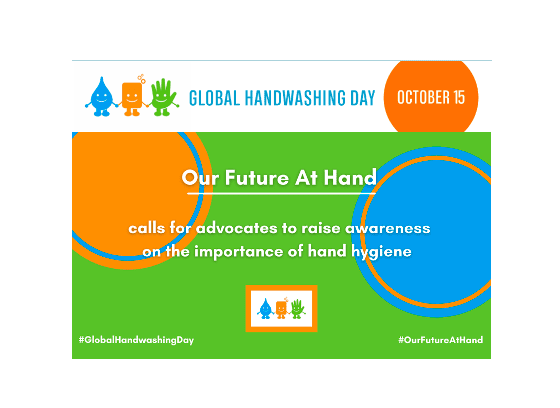
The theme for Global Handwashing Day 2021 is “Our Future is at Hand – Let’s Move Forward Together.”

The unprecedented nature of the ongoing COVID-19 pandemic continues to highlight the critical role hand hygiene plays in disease transmission. Therefore, this year’s theme is a call to action which asks us to leverage experiences during the COVID-19 pandemic in order to address the historic neglect of hand hygiene investments, policies, and programs once and for all. As we enter a new normal beyond COVID-19, the future state of hygiene is in our hands. A lot has been learned about promoting hand hygiene at scale, but much work is needed for the current momentum to be sustained.

Key points

  • Handwashing with soap is an easy, effective, affordable do-it-yourself practice that prevents infections and saves lives.
  • Handwashing with soap is easy.
  • Handwashing with soap is effective.
  • Handwashing with soap is affordable.
Benefits of hand hygiene

Handwashing with soap can reduce the transmission of a range of diseases:

  • Hand washing can reduce diarrheal diseases by 30%.
  • Hand washing can reduce acute respiratory infections by up to 20%.
  • Handwashing plays an important role in reducing the transmission of outbreak-related pathogens
  • such as cholera, Ebola, shigellosis, SARS and hepatitis E.
  • Hand hygiene is protective against healthcare associated infections and reduces the spread of antimicrobial resistance.
  • Hand hygiene may contribute to the reduction of Neglected Tropical Diseases.

Key advocacy and action messages

  • Handwashing is key to reducing the burden of many diseases which pose chronic challenges to population health and development.
  • Handwashing contributes to mitigating the transmission of COVID-19 and will remain an essential prevention measure while vaccines are being rolled out.
  • Handwashing is a ‘first-line’ defense in preventing outbreaks and reducing the toll of both current and future pandemics.
  • Handwashing rates have increased during the pandemic and now need to be sustained and supported.
  • Handwashing practices have not increased equally, and people living in fragile settings or LMIC countries have continued to face barriers to handwashing during the pandemic.
  • Increases in handwashing with soap have been driven by fear during the early stage of the pandemic, but fear-based changes are likely to be short-lived. There is therefore a need to use additional motives.
  • There is now a window of opportunity to sustain behavior change by addressing a broader array of behavioral determinants.
  • Handwashing promotion initiatives should assess all factors that may influence behavior and design programs which focus on addressing context-specific motivations, opportunities or barriers and creating an enabling physical and social environment for handwashing to take place.
  • When communicating about handwashing use behavioral theory, draw attention to new norms, and emphasize that it is a behavior that is done to protect others as well as yourself.

Source of info: https://globalhandwashing.org

#GlobalHandwashingDay #OurFutureAtHand


Recommended readings

  • Global Handwashing Day 2020: Hand Hygiene for All
  • Global Handwashing Day 2019: ”Clean Hands for All”
  • Global Handwashing Day 2018: Clean hands- a recipe for health
  • ‘Our Hands, Our Future’ – Global Handwashing Day 2017
  • Global Handwashing Day
  • 7th annual Global Handwashing Day 2014
  • “Make Handwashing a Habit!” – Global Hand washing Day 2016
  • World Hand Hygiene Day 2021! Seconds save lives–clean your hands!
  • Hand Hygiene Day! Nurses and midwives, clean care is in your hands!
  • 5 moments for hand hygiene
  • The science of hand sanitizers
  • Instant Hand Sanitizer (Alcohol Based) Standard 2076
  • COVID-19 Handbook for Health Workers |NHTC (Updated)
  • Global Handwashing Day 2019: ”Clean Hands for All”
  • Clean Your Hands ! ”Clean care for all – it’s in your hands”
October 14, 2021 0 comments
0 FacebookTwitterPinterestLinkedinTumblrVKOdnoklassnikiRedditStumbleuponWhatsappTelegramLINEPocketSkypeViberEmail
School health
Global Health NewsPublic Health News

Health and Education Ministers, heads of partner agencies commit to health promoting schools for all in WHO South-East Asia Region

by Public Health Update October 12, 2021
written by Public Health Update

New Delhi, 12 October 2021 – To build back better from the ongoing pandemic, health and education ministers of countries in WHO South-East Asia Region, and heads of UN agencies today committed to Health Promoting Schools for healthier generations and societies, and for schools to remain operational during public health emergencies and be resilient and well prepared for future emergencies.

“The pandemic is a strong reminder of the importance of maintaining strong education systems that support the interlinked objectives of education and health for all children and adolescents leaving no one behind, in normal circumstances as well as during emergency situations like this pandemic,” said Dr Poonam Khetrapal Singh, Regional Director WHO South-East Asia, who convened a meeting of heads of partner agencies UNESCO, UNFPA, UNICEF and WFP, and health and education ministers from the Region on Health Promoting Schools.

At the three-day inter-ministerial meeting that began this morning, health and education ministers from countries in WHO South-East Asia Region adopted a ‘Call to Action’ to scale up the implementation of comprehensive school health programmes that promote the health and wellbeing of children and adolescents.

As a prelude to the ministerial meeting, the Regional leadership of UNESCO, UNFPA, UNICEF, WFP, WHO held a Summit and deliberated on strengthening school health programmes in the Region and signed a ‘Joint UN statement on strengthening education, school health, nutrition and well-being’ to collectively advocate for a healthier generation and provide harmonized joint technical support to countries.

The Health Promoting School approach aims at advancing health, nutrition, mental health and the overall wellbeing of school-age children and adolescents, teachers and other staff members. As children and adolescents spend most of their formative years in schools, promoting healthy behavior from early childhood through the school setting will benefit their immediate and later health in their adult life, as well as the health and wellbeing of their families and wider communities.

“The pandemic has exacerbated inequities and is disproportionately affecting the most marginalized and disadvantaged children in the region. Children are learning less and numerous health and nutrition services that were once provided from schools have stopped. School closures and isolation have taken a severe toll on children’s mental health and is exposing them to exploitation and harm. We must act urgently to safely reintroduce children back to school while making sure learning continues uninterrupted for children everywhere,” said George Laryea-Adjei, UNICEF Regional Director for South Asia.

With the pandemic and prolonged school closures significantly impacting education, health, and nutrition, the Member countries and partners discussed prioritizing reopening of schools, where possible, and their safe operations and preparedness for future outbreaks.

“‘Building forward better’ from COVID-19, and pursuing a mission to recover education, requires us to rethink how we deliver quality and inclusive education to all children and adolescents in the Asia-Pacific region. Among other things, this necessitates urgent investment in school health and nutrition programmes and creating the overall conditions for learners to lead healthy lives,” said Shigeru Aoyagi, Director, UNESCO Asia and Pacific Regional Bureau for Education.

Adequate public health and social measures should be ensured while reopening schools such as wearing of masks, physical distancing, provisions of soap and running water to facilitate hand washing and use of open and well-ventilated spaces.  

Measures should be in place to immediately control any outbreak in the school along with long-term preparedness plan to deal with future emergencies.

Member countries and partner agencies discussed measures to enhance collaboration between health, education, and other relevant ministries, local governments and stakeholders including adolescents to ensure implementation of the Health Promoting Schools initiative.

“For many of the millions of students across the Asia region who receive school meals, it’s often the most substantial and nourishing meal they have each day,” said John Aylieff, WFP Regional Director for Asia and the Pacific. “WFP welcomes the renewed commitment of countries in the region to give their children access to the nutrition they need to grow, mentally and physically. We have an opportunity to strengthen our school systems so that no child is forced to drop out of school because of hunger or illness again.”

The initiative also supports the immediate need to continue nutrition and health services in schools, foster youth engagement for safe reopening and safe operations of schools and deliver an integrated school curriculum including adolescent sexual and reproductive health for enhanced health literacy and life skills.  

“As children traverse the journey from childhood to adolescence, they must have a conducive environment in schools which support them to make informed choices on life-changing matters, including some of the most personal issues in their lives. When young people are equipped with skills to make informed decisions and exercise their rights, they are able to realize their fullest potential and contribute to society meaningfully as responsible adults”, said Björn Andersson, Regional Director of UNFPA Asia and the Pacific.

The global standards for health promoting schools and its implementation were developed collaboratively by WHO, UNESCO, and expert groups to support health and education as a community-centered approach. WHO and UNESCO launched a new initiative “Making Every School a Health Promoting School” on 22 June 2021 led by the Director-General of WHO and UNESCO.

The Health Promoting Schools initiative is expected to serve over 2.3 billion school-age children and 362 million adolescents (10–19 years) in the WHO South-East Asia Region and will contribute to the achievement of the Sustainable Development Goals in the fields of education and health

WHO News/Press release 1769


Related

  • Countries in WHO South-East Asia Region endorse health promoting schools, safe school operations during pandemic
  • Accelerate action to prevent and control non-communicable diseases: WHO
  • Strengthening health emergency security systems top priority: WHO
  • Scale-up routine immunization along with COVID-19 vaccination: WHO
  • WHO South-East Asia countries resolve to reorient and strengthen health systems
  • WHO’s 10 calls for climate action to assure sustained recovery from COVID-19
  • WHO recommends groundbreaking malaria vaccine for children at risk
  • The WHO and Angry Birds Friends team up for World Mental Health Day
  • WHO and partners call for urgent action on meningitis (Global Roadmap to Defeat Meningitis)
  • WHO Model List of Essential Medicines: 22nd List (‎2021)
  • WHO Global Air Quality Guidelines: Particulate matter (‎PM2.5 and PM10)‎, ozone, nitrogen dioxide, sulfur dioxide and carbon monoxide
  • Health Ministers from WHO South-East Asia Region to discuss pandemic, rebuilding essential health services for UHC
October 12, 2021 0 comments
0 FacebookTwitterPinterestLinkedinTumblrVKOdnoklassnikiRedditStumbleuponWhatsappTelegramLINEPocketSkypeViberEmail
Global TB symposium
SymposiumPublic Health EventsPublic Health OpportunitiesPublic Health Opportunity

Global Tuberculosis Symposium 2021

by Public Health Update October 12, 2021
written by Public Health Update

Overview

The World Health Organization (WHO) is organizing a special symposium to mark the launch of the 2021 Global Tuberculosis Report. The symposium will also showcase the work undertaken by countries, partners, civil society and WHO across all three levels, to ramp up the TB response, especially in the context of the COVID-19 pandemic.

TB remains one of the top infectious killers in the world. This year’s Global Tuberculosis Report highlights the extent to which the COVID-19 pandemic has reversed years of progress and disrupted access to essential TB services. It also presents the status of progress towards targets set at the first-ever United Nations General Assembly high-level meeting on TB in 2018 as well as the targets of the WHO End TB Strategy and the Sustainable Development Goals.

Objective

The symposium will bring together countries, partners and civil society linked to the TB response globally and nationally to discuss how the TB response can be accelerated in the coming 12 months to reach the 2022 UN High Level Meeting targets, and discuss preparations for the 2023 UN High Level Meeting on TB.

Date

Date: OCTOBER 18, 2021 12:30H-15:00H CEST
Event type: Virtual

Registration and more info: Download flyer  here.


Recommended readings
  • Global Tuberculosis Report 2020
  • National Tuberculosis Program Update in Nepal #WorldTBDay #EndTB
  • National TB Prevalence Survey, 2018-19 Key findings
  • World Tuberculosis Day 2020! It’s time to End TB!
  • National Guideline on Drug Resistant TB Management 2019, Nepal
  • National Tuberculosis Management Guideline 2019, Nepal
  • Global Tuberculosis Report 2019: Latest status of the tuberculosis epidemic
  • National TB Prevalence Survey, 2018-19 Key findings
  • New WHO recommendations to prevent tuberculosis aim to save millions of lives
  • World Health Organization (WHO) Information Note Tuberculosis and COVID-19
  • World Tuberculosis Day 2020! It’s time to End TB!
  • People-centred framework for tuberculosis programme planning and prioritization, User guide
  • Global Tuberculosis Report 2019: Latest status of the tuberculosis epidemic
  • Dissemination of Findings and Recommendations of Joint External Monitoring Mission(JEMM) of Nepal National Tuberculosis Program
  • National Tuberculosis Programme Annual Report 2018
  • National Strategic Plan for Tuberculosis Prevention, Care and Control 2016 – 2021
  • NTP, Nepal: New TB Treatment Algorithm & Regimen (Updated)
  • WHO announces landmark changes in MDR-TB treatment regimens
  • TB Vaccine results announce a promising step towards ending the emergency
  • 7 million people receive record levels of lifesaving TB treatment but 3 million still miss out
October 12, 2021 0 comments
0 FacebookTwitterPinterestLinkedinTumblrVKOdnoklassnikiRedditStumbleuponWhatsappTelegramLINEPocketSkypeViberEmail
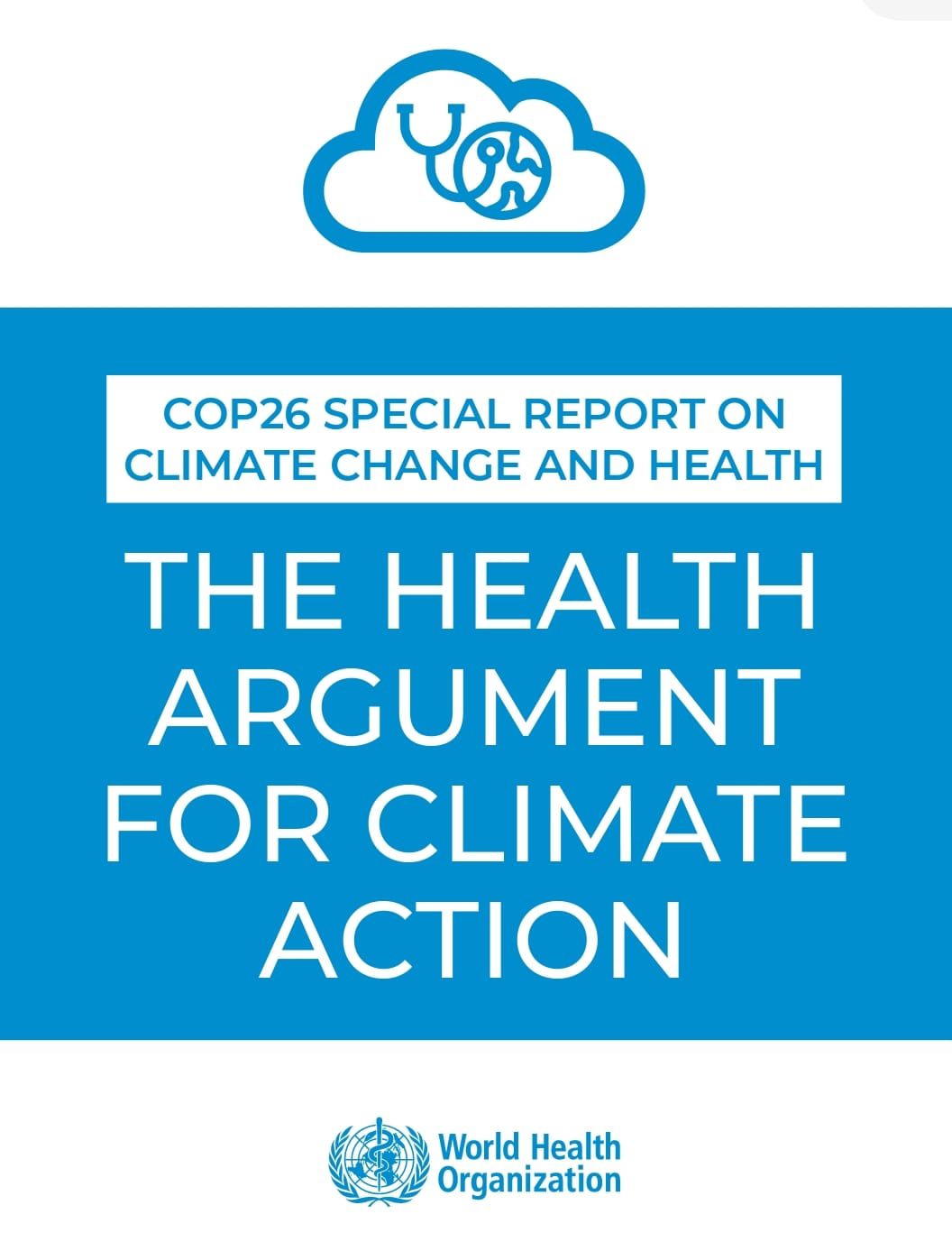
COP26 Special Report on Climate Change and Health
Environmental Health & Climate ChangeGlobal Health NewsPublic Health News

WHO’s 10 calls for climate action to assure sustained recovery from COVID-19

by Public Health Update October 12, 2021
written by Public Health Update

Global health workforce urges action to avert health catastrophe

11 October 2021 News release (WHO)

Countries must set ambitious national climate commitments if they are to sustain a healthy and green recovery from the COVID-19 pandemic.

The WHO COP26 Special Report on Climate Change and Health, launched today, in the lead-up to the United Nations Climate Change Conference (COP26) in Glasgow, Scotland, spells out the global health community’s prescription for climate action based on a growing body of research that establishes the many and inseparable links between climate and health.

“The COVID-19 pandemic has shone a light on the intimate and delicate links between humans, animals and our environment,” said Dr Tedros Adhanom Ghebreyesus, WHO Director-General. “The same unsustainable choices that are killing our planet are killing people. WHO calls on all countries to commit to decisive action at COP26 to limit global warming to 1.5°C – not just because it’s the right thing to do, but because it’s in our own interests. WHO’s new report highlights 10 priorities for safeguarding the health of people and the planet that sustains us.”

The WHO report is launched at the same time as an open letter, signed by over two thirds of the global health workforce – 300 organizations representing at least 45 million doctors and health professionals worldwide, calling for national leaders and COP26 country delegations to step up climate action.

“Wherever we deliver care, in our hospitals, clinics and communities around the world, we are already responding to the health harms caused by climate change,” the letter from health professionals reads. “We call on the leaders of every country and their representatives at COP26 to avert the impending health catastrophe by limiting global warming to 1.5°C, and to make human health and equity central to all climate change mitigation and adaptation actions.”

The report and open letter come as unprecedented extreme weather events and other climate impacts are taking a rising toll on people’s lives and health. Increasingly frequent extreme weather events, such as heatwaves, storms and floods, kill thousands and disrupt millions of lives, while threatening healthcare systems and facilities when they are needed most. Changes in weather and climate are threatening food security and driving up food-, water- and vector-borne diseases, such as malaria, while climate impacts are also negatively affecting mental health. 

The WHO report states: “The burning of fossil fuels is killing us. Climate change is the single biggest health threat facing humanity. While no one is safe from the health impacts of climate change, they are disproportionately felt by the most vulnerable and disadvantaged.”

Meanwhile, air pollution, primarily the result of burning fossil fuels, which also drives climate change, causes 13 deaths per minute worldwide.

The report concludes that protecting people’s health requires transformational action in every sector, including on energy, transport, nature, food systems and finance. And it states clearly that the public health benefits from implementing ambitious climate actions far outweigh the costs.

“It has never been clearer that the climate crisis is one of the most urgent health emergencies we all face,” said Dr Maria Neira, WHO Director of Environment, Climate Change and Health. “Bringing down air pollution to WHO guideline levels, for example, would reduce the total number of global deaths from air pollution by 80% while dramatically reducing the greenhouse gas emissions that fuel climate change. A shift to more nutritious, plant-based diets in line with WHO recommendations, as another example, could reduce global emissions significantly, ensure more resilient food systems, and avoid up to 5.1 million diet-related deaths a year by 2050.”

Achieving the goals of the Paris Agreement would save millions of lives every year due to improvements in air quality, diet, and physical activity, among other benefits. However, most climate decision-making processes currently do not account for these health co-benefits and their economic valuation.   

Details;

WHO’s COP26 Special Report on Climate Change and Health, The Health Argument for Climate Action, provides 10 recommendations for governments on how to maximize the health benefits of tackling climate change in a variety of sectors, and avoid the worst health impacts of the climate crisis.

The recommendations are the result of extensive consultations with health professionals, organizations and stakeholders worldwide, and represent a broad consensus statement from the global health community on the priority actions governments need to take to tackle the climate crisis, restore biodiversity, and protect health.

Climate and Health Recommendations

The COP26 report includes ten recommendations that highlight the urgent need and numerous opportunities for governments to prioritize health and equity in the international climate regime and sustainable development agenda.

  1. Commit to a healthy recovery. Commit to a healthy, green and just recovery from COVID-19.
  2. Our health is not negotiable. Place health and social justice at the heart of the UN climate talks.
  3. Harness the health benefits of climate action. Prioritize those climate interventions with the largest health-, social- and economic gains.
  4. Build health resilience to climate risks. Build climate resilient and environmentally sustainable health systems and facilities, and support health adaptation and resilience across sectors.
  5. Create energy systems that protect and improve climate and health. Guide a just and inclusive transition to renewable energy to save lives from air pollution, particularly from coal combustion. End energy poverty in households and health care facilities.
  6. Reimagine urban environments, transport and mobility. Promote sustainable, healthy urban design and transport systems, with improved land-use, access to green and blue public space, and priority for walking, cycling and public transport.
  7. Protect and restore nature as the foundation of our health. Protect and restore natural systems, the foundations for healthy lives, sustainable food systems and livelihoods.
  8. Promote healthy, sustainable and resilient food systems. Promote sustainable and resilient food production and more affordable, nutritious diets that deliver on both climate and health outcomes.
  9. Finance a healthier, fairer and greener future to save lives. Transition towards a wellbeing economy.
  10. Listen to the health community and prescribe urgent climate action. Mobilize and support the health community on climate action.

Open Letter – Healthy Climate Prescription

The health community around the world (300 organizations representing at least 45 million doctors and health professionals) signed an open letter to national leaders and COP26 country delegations, calling for real action to address the climate crisis.

The letter states the following demands:

  • “We call on all nations to update their national climate commitments under the Paris Agreement to commit to their fair share of limiting warming to 1.5°C; and we call on them to build health into those plans;
  • We call on all nations to deliver a rapid and just transition away from fossil fuels, starting with immediately cutting all related permits, subsidies and financing for fossil fuels, and to completely shift current financing into development of clean energy;
  • We call on high income countries to make larger cuts to greenhouse gas emissions, in line with a 1.5°C temperature goal;
  • We call on high income countries to also provide the promised transfer of funds to low-income countries to help achieve the necessary mitigation and adaptation measures;
  • We call on governments to build climate resilient, low-carbon, sustainable health systems; and
  • We call on governments to also ensure that pandemic recovery investments support climate action and reduce social and health inequities.”

COP26 Special Report on Climate Change and Health


Do you have a website? Looking for the best hosting provider? Here’s a discount code.

Latest Public Health Jobs

Latest Posts

  • International Wellness Day: Promoting Global Wellness for All
  • Summit Declaration: The 12th National Summit of Health and Population Scientists in Nepal
  • Joint political declaration on the reform of the global health architecture
  • World Health Day 2026: Together for Health. Stand with Science.
  • World Water Day 2026 | Water & Gender Equality

Thanks for visiting us.
Disclaimer: The resources, documents, guidelines, and information on this blog have been collected from various sources and are intended for informational purposes only. Information published on or through this website and affiliated social media channels does not represent the intention, plan, or strategies of an organization that the initiator is associated with in a professional or personal capacity, unless explicitly indicated.
If you have any complaints, information, or suggestions about the content published on Public Health Update, please feel free to contact us at blog.publichealthupdate@gmail.com.
#StayUpdated


  • WordPress
  • Link
  • Facebook
  • Mail
  • Facebook
  • Twitter
  • Twitter
  • LinkedIn
  • Instagram
  • Facebook
October 12, 2021 1 comment
0 FacebookTwitterPinterestLinkedinTumblrVKOdnoklassnikiRedditStumbleuponWhatsappTelegramLINEPocketSkypeViberEmail
COP26 Special Report on Climate Change and Health
Environmental Health & Climate ChangeGlobal Health NewsInternational Plan, Policy & GuidelinesReports

COP26 Special Report on Climate Change and Health

by Public Health Update October 12, 2021
written by Public Health Update

The Health Argument for Climate Action

The 10 recommendations in the COP26 Special Report on Climate Change and Health propose a set of priority actions from the global health community to governments and policy makers, calling on them to act with urgency on the current climate and health crises.

WHO’s 10 calls for climate action to assure sustained recovery from COVID-19

The recommendations were developed in consultation with over 150 organizations and 400 experts and health professionals. They are intended to inform governments and other stakeholders ahead of the 26th Conference of the Parties (COP26) of the United Nations Framework Convention on Climate Change (UNFCCC) and to highlight various opportunities for governments to prioritize health and equity in the international climate movement and sustainable development agenda. Each recommendation comes with a selection of resources and case studies to help inspire and guide policymakers and practitioners in implementing the suggested solutions.

DOWNLOAD REPORT (PDF)


Related

  • Infectious Disease and Climate Change Forum 2021
  • National Climate Change Policy, 2076 (2019)
  • WHO South-East Asia Region commits to building health systems resilience to climate change
  • Health Ministers from WHO South-East Asia meeting next week; climate change, access to medicines high on agenda
  • WHO Guidance for Climate Resilient and Environmentally Sustainable Health Care Facilities
  • WHO Global Air Quality Guidelines: Particulate matter (‎PM2.5 and PM10)‎, ozone, nitrogen dioxide, sulfur dioxide and carbon monoxide

Do you have a website? Looking for the best hosting provider? Here’s a discount code.

Latest Public Health Jobs

Latest Posts

  • International Wellness Day: Promoting Global Wellness for All
  • Summit Declaration: The 12th National Summit of Health and Population Scientists in Nepal
  • Joint political declaration on the reform of the global health architecture
  • World Health Day 2026: Together for Health. Stand with Science.
  • World Water Day 2026 | Water & Gender Equality

Thanks for visiting us.
Disclaimer: The resources, documents, guidelines, and information on this blog have been collected from various sources and are intended for informational purposes only. Information published on or through this website and affiliated social media channels does not represent the intention, plan, or strategies of an organization that the initiator is associated with in a professional or personal capacity, unless explicitly indicated.
If you have any complaints, information, or suggestions about the content published on Public Health Update, please feel free to contact us at blog.publichealthupdate@gmail.com.
#StayUpdated


  • WordPress
  • Link
  • Facebook
  • Mail
  • Facebook
  • Twitter
  • Twitter
  • LinkedIn
  • Instagram
  • Facebook
October 12, 2021 0 comments
0 FacebookTwitterPinterestLinkedinTumblrVKOdnoklassnikiRedditStumbleuponWhatsappTelegramLINEPocketSkypeViberEmail
World Sight Day 2021: Love Your Eyes!
Public HealthActivitiesPH Important DayPublic Health EventsPublic Health Update

World Sight Day 2021: Love Your Eyes!

by Public Health Update October 10, 2021
written by Public Health Update

Overview

The World Sight Day (WSD) is an international day of awareness, held annually on the second Thursday of October to focus attention on the global issue of eye health. This year World Sight Day falls on 14 October 2021. WSD is coordinated by the International Agency for the Prevention of Blindness (IAPB). WSD became an official IAPB event in the year 2000 and has been marked in many different ways in countries around the world each year.

WSD is the focal advocacy and PR event for IAPB and its members and partners each year, highlighting the fact that at least 1 billion people have a vision impairment that could have been prevented or has yet to be addressed.

Objective

  • Raise public awareness of blindness and vision impairment as major international public health issues.
  • Influence Governments/Ministers of Health to participate in and designate funds for national blindness prevention
    programmes.
  • Educate target audiences about blindness prevention.

World Sight Day 2021

  • This year’s WSD theme is: Love Your Eyes
  • Our Call to Action is: EVERYONE COUNTS

#LOVEYOUREYES

Nearly everyone on the planet will experience an eye health issue in their lifetime and more than a billion people worldwide do not have access to eye care services. Before, we can look at the bigger picture at the country or global level, we need to make sure that we are aware of our own eye health, and so our theme for 2021 is all about #LoveYourEyes.

LoveYourEyes is all about being aware of your own eye health and if you are able, to get a sight test.

EVERYONE COUNTS
For World Sight Day 2021 EVERYONE COUNTS and so in the month leading up to World Sight Day we are calling on everyone who can to book a sight test / exam / screening.

KEY MESSAGES

  • 1.1 billion people experience vision loss primarily because they do not have access to eye care services.
    – Over 90% of those with vision loss live in low- and middle income countries.
    – 73% of people with vision loss are over 50 years old.
    – 55% of people with vision loss are women.
  • The number of people with vision loss will rise from 1.1 billion to 1.7 billion people by 2050, mainly due to population growth and population ageing.
  • Unaddressed poor vision results in a global economic productivity loss of $411 billion per annum.
  • Over 90% of vision loss could have been prevented.
  • The leading causes of vision loss include:
    – Uncorrected refractive error
    – Unoperated cataracts
    – Age-related macular degeneration (AMD), glaucoma and diabetic retinopathy
  • Poor eye health leads to an increased risk (up to 2.6 times) of mortality.
  • Children with a vision impairment are up to 5 times less likely to be in formal education and often achieve poorer outcomes.
  • Vast inequities exist in the distribution of vision impairment; the prevalence in many low- and middle-income regions is estimated to be four times higher than in high-income regions
  • The burden tends to be greater in rural areas and for older people, women, people with disabilities, ethnic minorities and indigenous populations.

Source of info: The International Agency for the Prevention of Blindness (IAPB)


Recommended readings

  • World Sight Day is: Eyecare Everywhere! 
  • Trachoma is a disease of the eye caused by Chlamydia trachomatis
  • Eyes on Diabetes – World Diabetes Day 2016
  • B.Optometry Colleges and Available Seats in Nepal


Do you have a website? Looking for the best hosting provider? Here’s a discount code.

Latest Public Health Jobs

Latest Posts

  • International Wellness Day: Promoting Global Wellness for All
  • Summit Declaration: The 12th National Summit of Health and Population Scientists in Nepal
  • Joint political declaration on the reform of the global health architecture
  • World Health Day 2026: Together for Health. Stand with Science.
  • World Water Day 2026 | Water & Gender Equality

Thanks for visiting us.
Disclaimer: The resources, documents, guidelines, and information on this blog have been collected from various sources and are intended for informational purposes only. Information published on or through this website and affiliated social media channels does not represent the intention, plan, or strategies of an organization that the initiator is associated with in a professional or personal capacity, unless explicitly indicated.
If you have any complaints, information, or suggestions about the content published on Public Health Update, please feel free to contact us at blog.publichealthupdate@gmail.com.
#StayUpdated


  • WordPress
  • Link
  • Facebook
  • Mail
  • Facebook
  • Twitter
  • Twitter
  • LinkedIn
  • Instagram
  • Facebook
October 10, 2021 0 comments
0 FacebookTwitterPinterestLinkedinTumblrVKOdnoklassnikiRedditStumbleuponWhatsappTelegramLINEPocketSkypeViberEmail
Maternal, Newborn and Child HealthReportsResearch & Publication

Assess impact of COVID-19 pandemic in selected health services with estimation of ‘excess maternal deaths’

by Public Health Update October 10, 2021
written by Public Health Update

Overview

The Department of Health Services (DoHS) has conducted a mixed method study to understand the understand the initial impacts of COVID-19 on routine reporting systems, availability and utilisation of services on selected key indicators and excess maternal deaths. The final report of this study was published by DoHS.

Executive Summary

The Government of Nepal (GoN) adopted a complete lockdown strategy to contain and curb the spread of the Coronavirus Disease 2019 (COVID-19) pandemic from 24 March 2020 to 21 July 2020, which led to closures of Outpatient Departments(OPDs) and widespread fear of COVID-19 transmission in institutional settings. This has threatened the progress made by Nepal in health care in the last three decades, with early evidence suggesting reduced coverage of institutional births, low utilisation of Reproductive Health (RH) services and increased institutional stillbirth and neonatal mortality rates.

This study aimed to understand the initial impacts of COVID-19 on routine reporting systems, availability and utilisation of services on selected key indicators and excess maternal deaths so as to help the GoN to plan actions that can strengthen its response strategy and evaluate its response for the future.

A mixed-method approach was used with secondary analysis of routine health information system (Health Management Information System (HMIS), Maternal and Perinatal Death Surveillance and Response (MPDSR) and One-stop Crisis Management Centres (OCMCs), monitoring data of health facilities and qualitative interviews with key stakeholders. The study analysed trends of service utilisation from Falgun 2075 to Bhadra 2077, with Falgun 2076 taken as the cut-off point to distinguish the pre-COVID-19 and COVID-19 periods. Descriptive statistics were used to examine the change, i.e., difference from the same month of the previous year and monthly rate of change. A local polynomial regression with smoothing curve was used to examine the trend. The Autoregressive Integrated Moving Average (ARIMA) model was used to estimate the excess maternal deaths by forecasting the maternal deaths after Falgun 2076 in the absence of pandemic. Key results are summarised below by themes.

Availability of services

Antenatal Care (ANC) and Family Planning (FP) services were unavailable in a higher proportion of referral facilities(25–80%) and for several days compared to fewer days in peripheral facilities (14–50%). In peripheral facilities, delivery services were unavailable (36–80%), drugs were stocked out (20–100%) and ambulance services were unavailable (17–80%) for several days. Fifty percent or more of Birthing Centres (BCs) and Basic Emergency Obstetric and Neonatal Care (BEONC) facilities were closed for delivery services, while all referral hospitals remained open for institutional delivery, except for a couple of days in the early lockdown period.

Service utilisation

The monthly rate of change for all service utilisation indicators from Falgun 2076 to Chaitra 2076 was negative at national level. The magnitude of decline varied from 56 per cent to 7 percent and by province and type of health facility, with a greater decline in peripheral health facilities. However, there was strong rebound over the following couple of months (Baisakh 2077 to Asar 2077) as the average returned to pre-COVID-19 levels or higher for several indicators. Institutional delivery services declined by 18 per cent between Falgun 2076 and Chaitra 2076 but increased by 19 per cent from Jestha 2077 to Asar 2077. The gain was even higher for postnatal services, with the average returning above preCOVID-19 levels. The FP method with the biggest decline was permanent sterilisation, with a 56 per cent decline in the number of procedures. New users of long-acting reversible contraceptives declined in
Chaitra 2076, with the average returning to higher than pre-COVID-19 levels in the following few months.

There was a sharp decline (36% decline in the first month) in abortion procedures performed, with the national average well below pre-COVID-19 level in subsequent months. The number of children immunised with three doses of the combined diphtheria, tetanus toxoid and pertussis vaccine (DPT3) declined by 55 per cent in the first COVID-19 month but there was a strong rebound, with an increase in the next three months.

Excess maternal deaths

A total of 153 maternal deaths were reported in the COVID-19 months (Chaitra 2076 to Bhadra 2077). The equivalent period of last year (Chaitra 2075 to Bhadra 2076) recorded 104 deaths. The preliminary estimates from modelling suggest that there were 47 excess maternal deaths in COVID-19 months.

Functioning of routine reporting system: No noticeable impact was observed in the timeliness of HMIS reporting in COVID-19 months, with an improvement seen in the long term (Falgun 2075 to Bhadra 2077). A small increase in the percentage of non-reporting facilities was observed (4.5 percentage points from Shrawan 2077 to Asar 2077). Qualitative findings suggested that despite initial difficulties alternative approaches (virtual communication) were used for normal functioning of HMIS. Overall, improvements in timeliness of reporting as well as the percentage of facilities reporting to HMIS were attributed to regular monitoring and mentoring support from the Integrated Health Management Information System (IHIMS) to the provincial, local and hospital focal persons. There has been a gradual increase in the number of OCMC reporting sites over the years. However, disaggregated data on how many sites were listed by Fiscal Year (FY) was unavailable for all FYs, limiting the ability to gain a full picture on the reporting situation. The functionality of MPDSR systems in peripheral hospitals was more adversely affected by COVID-19 (e.g., no separate discussion of maternal deaths, inability of verbal autopsy due to feasibility issues) than in federal-level hospitals. Inadequate institutionalisation of systems, poor access to internet facilities, and inadequate human resources and monitoring systems were identified as the major factors influencing the poor functionality of the MPDSR during the pandemic period.

Health Sector Response

The Ministry of Health and Population (MoHP) has developed more than 50 plans, guidelines, standards and protocols for effective response to COVID-19 and continuity of regular services. These have been made public through the MoHP website. Some of the key documents include the Health Sector Emergency Response Plan for COVID-19 Pandemic, Rapid Action Plans and Interim Guidelines for continuity of specific health services, such as Reproductive, Maternal, Newborn and Child Health (RMNCH), leprosy, geriatric health care services, rehabilitation and physiotherapy of persons with COVID-19 in acute care settings, services for people with disabilities, dental services, ambulance services and Ayurveda and alternative medicine services. In addition to these, the MoHP has circulated several ‘circulars and directives’ for specific purposes, such as human resource management, case management and compliance to the developed guidelines. Qualitative findings suggest that the development of guidelines, setting up of COVID-19 dedicated hospitals and follow-up of maternal deaths were some of the key initiatives undertaken by the clusters and sub-clusters as support to the MoHP in continuing health service delivery during the pandemic. However, study results also showed that there was a lack of clear communication of service provision, not only to consumers but also within the health care system, contributing to service utilisation decline.

In conclusion, this mixed-method study showed that there were interruptions to public health care service availability and utilisation in Nepal immediately after the introduction of lockdown. This is not surprising as literature suggests that previous pandemics or outbreaks have resulted in service utilisation decline in resource-constrained settings like Nepal.

The health care system has shown signs of resilience, as some of the indicators have returned to pre-COVID-19 levels. However, preliminary estimates of maternal deaths suggest that the pandemic may have taken away some of the progress made in the last three decades. Further analysis to estimate the net effect of missed childhood vaccinations, unplanned pregnancies and lost primary care visits may show a clearer picture. The magnitude of impact varied by province and type of health facility. Further research is needed to fully understand the reasons and the extent of disruptions to public health care delivery and the population groups they have affected the most.


READ MORE: DOWNLOAD REPORT

(Assess impact of COVID-19 pandemic in selected health services with estimation of ‘excess maternal deaths’)


Do you have a website? Looking for the best hosting provider? Here’s a discount code.

Latest Public Health Jobs

Latest Posts

  • International Wellness Day: Promoting Global Wellness for All
  • Summit Declaration: The 12th National Summit of Health and Population Scientists in Nepal
  • Joint political declaration on the reform of the global health architecture
  • World Health Day 2026: Together for Health. Stand with Science.
  • World Water Day 2026 | Water & Gender Equality

Thanks for visiting us.
Disclaimer: The resources, documents, guidelines, and information on this blog have been collected from various sources and are intended for informational purposes only. Information published on or through this website and affiliated social media channels does not represent the intention, plan, or strategies of an organization that the initiator is associated with in a professional or personal capacity, unless explicitly indicated.
If you have any complaints, information, or suggestions about the content published on Public Health Update, please feel free to contact us at blog.publichealthupdate@gmail.com.
#StayUpdated


  • WordPress
  • Link
  • Facebook
  • Mail
  • Facebook
  • Twitter
  • Twitter
  • LinkedIn
  • Instagram
  • Facebook
October 10, 2021 0 comments
0 FacebookTwitterPinterestLinkedinTumblrVKOdnoklassnikiRedditStumbleuponWhatsappTelegramLINEPocketSkypeViberEmail
International Plan, Policy & GuidelinesNon- Communicable Diseases (NCDs)Public Health UpdateResearch & Publication

The Mental Health Atlas 2020

by Public Health Update October 9, 2021
written by Public Health Update

Overview

The Mental Health Atlas, released every three years, is a compilation of data provided by countries around the world on mental health policies, legislation, financing, human resources, availability and utilization of services and data collection systems. It serves as a guide for countries for the development and planning of mental health services.

The Mental Health Atlas 2020 includes information and data on the progress made towards achieving mental health targets for 2020 set by the global health community and included in WHO’s Comprehensive Mental Health Action Plan. It includes data on newly-added indicators on service coverage, mental health integration into primary health care, preparedness for the provision of mental health and psychosocial support in emergencies and research on mental health. It also includes new targets for 2030.

Key findings

171 of WHO’s 194 Member States (88%) at least partially completed the Mental Health Atlas 2020 questionnaire;
the submission rate exceeded 73% in all WHO regions.

INFORMATION SYSTEMS AND RESEARCH FOR MENTAL HEALTH

  • 31% of WHO Member States regularly compile mental health-specific data covering at least the public sector in their country. In addition, 40% of Member States reported the compilation of mental health data as part of general health statistics only.
  • The percentage of countries reporting no mental health data compiled in the last two years has declined from 19% of responding countries in 2014 to 15% of responding countries in 2020.
  • 76% of Member States were able to report on a set of five selected indicators that covered mental health policy, mental health law, promotion and prevention programmes, service availability and the mental health workforce. This is an increase from 60% of Member States in 2014.
  • 64 646 articles on mental health were published in 2019. The global percentage of research output on mental health relative to total research output was 4.6% in 2019.

MENTAL HEALTH SYSTEM GOVERNANCE

  • 75% of Member States have a stand-alone policy or plan for mental health, which is an increase from 68% in 2014.
  • 57% of Member States have a stand-alone mental health law, which is an increase from 51% in 2014.
  • 46% of WHO Member States have updated their mental health policy or plan and 27% have updated their mental health law since 2017.
  • 99 countries, equivalent to 67% of responding countries, or 51% of WHO Member States, reported full alignment of their policy or plan for mental health with international and regional human rights instruments.
  • 74 countries, equivalent to 64% of responding countries, or 39% of WHO Member States, reported full alignment of their law for mental health with international and regional human rights instruments.
  • Human and financial resources allocated for the implementation of policies/plans are limited. In addition, only 19% of WHO Member States reported that indicators were available and used to monitor implementation of a majority of the components of their policies/plans.
  • 45% of WHO Member States reported that a dedicated authority or independent body undertakes inspections of mental health services and responds to complaints about human rights violations.
  • 21% of WHO Member States have a mental health policy or plan that is in the process of implementation and is fully compliant with human rights instruments.
  • 28% of WHO Member States have a mental health law that is in the process of implementation and fully compliant with human rights instruments.
  • 76% of responding countries have ongoing formal collaboration with at least one stakeholder group. Levels of collaboration with service users and family/caregiver advocacy groups are low (35% of responding countries).

FINANCIAL AND HUMAN RESOURCES

  • Levels of public expenditure on mental health are low (a global median of 2.1% of government health expenditure) and particularly meagre in low- and middle-income countries.
  • 80% of responding countries reported that care and treatment of persons with severe mental health conditions are included in national health insurance or reimbursement schemes and in insurance coverage for inpatient/outpatient mental health services.
  • Globally, the median number of mental health workers is 13 per 100 000 population. There continues to be extreme variation between World Bank income groups (from below two workers per 100 000 population in low-income countries to over 60 in high-income countries).

SERVICE AVAILABILITY AND UPTAKE

  • Only 49 countries, equivalent to 31% of responding countries, or 25% of WHO Member States, reported the integration of mental health into primary health care. This was estimated based on the adoption of guidelines forintegration into primary care, the provision of pharmacological interventions, psychosocial interventions and training for mental health conditions at primary care level, and the involvement of mental health specialists in training and supervision of primary care professionals.
  • The median number of mental hospital beds per 100 000 population ranges from below two in low-income countries to over 25 in high-income countries. Globally, the median number of mental hospital beds reported per 100 000 population increased from 6.5 beds in 2014 to 11 beds in 2020, while the median admission rate per 100 000 population increased from 36 admissions in 2014 to 72 admissions in 2020.
  • Outpatient visits per 100 000 population ranged from 100 visits in low-income countries to over 5000 visits in high income countries. Globally, the median rate of reported visits increased from 2014 to 2020, along with the median number of outpatient facilities.
  • Globally, the median number of child and adolescent inpatient facilities is less than 0.5 per 100 000 population and less than two outpatient facilities per 100 000 population.
  • 112 countries reported that, on average, 0.64 community-based mental health facilities exist per 100 000 population. There is extreme variation between income groups, with 0.11 facilities per 100 000 population in low-income countries and 5.1 facilities per 100 000 population in high-income countries.
  • The service utilization rate for persons with psychosis per 100 000 population was 212.4, with considerable variation between high- and low-income countries.
  • Service coverage for psychosis was estimated at 29% using 12-month service utilization data data collected for the Mental Health Atlas 2020. Service coverage for depression was estimated at 40% using the World Mental Health Surveys.

MENTAL HEALTH PROMOTION AND PREVENTION

  • 101 countries, equivalent to 68% of those countries that responded, or 52% of WHO Member States, have at least two functioning national, multisectoral mental health promotion and prevention programmes. This is an increase from 41% of Member States in 2014.
  • Of 420 reported functioning programmes, 18% were aimed at improving mental health awareness or combating stigma, 17% were school-based mental health prevention and promotion programmes and 15% were aimed at suicide prevention.
  • 54 countries, corresponding to 39% of responding countries, or 28% of WHO Member States, reported programmes for mental health and psychosocial support integrated as a component of disaster preparedness and/or disaster risk reduction. The global age-standardized suicide rate in 2019 was estimated to be 9.0 per 100 000 population. This represents a 10% reduction in the rate of suicide since the 2013 baseline of 10 per 100 000 population.

READ MORE DOWNLOAD PDF FILE(WHO)


Recommended readings

  • World Mental Health Day 2021: Mental health care for all: let’s make it a reality!
  • Mental Health Policy, Nepal
  • Standard Treatment Protocol for mental health services into the Primary Health Care System
  • The WHO and Angry Birds Friends team up for World Mental Health Day
  • Comprehensive Mental Health Action Plan 2013 – 2030
  • National Mental Health Strategy & Action Plan 2077
  • Mental Health for All! Greater Investment–Greater Access.
  • National Mental Health Survey, Nepal-2020 Fact Sheet
  • Mental health status among health workers in Nepal during COVID-19 pandemic (Policy brief)
  • COVID19 & Mental Health: Effects and tips to keep our mind healthy!
  • Mental Health and Coronavirus disease (COVID19)
  • Policy Brief: COVID-19 and the Need for Action on Mental Health
  • Mental Health for All! Greater Investment–Greater Access.
  • National Mental Health Survey, Nepal-2020 Fact Sheet
  • Mental health status among health workers in Nepal during COVID-19 pandemic (Policy brief)
  • Mental Health and Coronavirus disease (COVID19)
  • Policy Brief: COVID-19 and the Need for Action on Mental Health
  • Mental health and psychosocial considerations during the COVID-19 outbreak
  • Recommendation of International Mental Health Conference Nepal (IMHCN) 2018
  • Informing the World: How to Change Public Attitudes to Mental Health
October 9, 2021 0 comments
0 FacebookTwitterPinterestLinkedinTumblrVKOdnoklassnikiRedditStumbleuponWhatsappTelegramLINEPocketSkypeViberEmail
Lung Science Conference 2022
ConferencePublic Health EventsPublic Health OpportunitiesPublic Health Opportunity

Lung Science Conference 2022

by Public Health Update October 8, 2021
written by Public Health Update

Overview

The ERS Lung Science Conference (LSC) is at the forefront of basic and translational respiratory science and it is an essential event for budding respiratory researchers looking to boost their career. It offers a unique opportunity to network with peers from across the globe and will present cutting-edge abstracts on novel experimental lung research.

Conference date & venue

20th Lung Science Conference | 10–13 March, 2022 | Estoril, Portugal

Abstract submission for the Lung Science Conference 2022 is now open. The deadline to submit abstracts is 12 November at 23:59 CET.

The following features are organised every year:

Awards

Three prizes will be awarded during the conference:

  • William MacNee Award – Young Investigator Session – recognising your presenters (40 years of age or less at the time of the conference) who submitted and outstanding abstract
  • Geoffrey Laurent Award – Best oral presentation
  • Distinguished Poster Awards

Mentorship programme

Each abstract author receiving a bursary is selected to the mentorship programme. Together with an appointed mentor, they will have the opportunity to discuss both scientific and career questions during a dedicated mentorship lunch on the second day of the conference.

Early career session

A special session for early career delegates is organised each year, taking place on Saturday afternoon during the conference.

Abstract submission

Abstract submission for the Lung Science Conference 2022 is now open. The deadline to submit abstracts is 12 November at 23:59 CET. Submit an abstract.


Do you have a website? Looking for the best hosting provider? Here’s a discount code.

Latest Public Health Jobs

Latest Posts

  • International Wellness Day: Promoting Global Wellness for All
  • Summit Declaration: The 12th National Summit of Health and Population Scientists in Nepal
  • Joint political declaration on the reform of the global health architecture
  • World Health Day 2026: Together for Health. Stand with Science.
  • World Water Day 2026 | Water & Gender Equality

Thanks for visiting us.
Disclaimer: The resources, documents, guidelines, and information on this blog have been collected from various sources and are intended for informational purposes only. Information published on or through this website and affiliated social media channels does not represent the intention, plan, or strategies of an organization that the initiator is associated with in a professional or personal capacity, unless explicitly indicated.
If you have any complaints, information, or suggestions about the content published on Public Health Update, please feel free to contact us at blog.publichealthupdate@gmail.com.
#StayUpdated



  • WordPress
  • Link
  • Facebook
  • Mail
  • Facebook
  • Twitter
  • Twitter
  • LinkedIn
  • Instagram
  • Facebook
October 8, 2021 0 comments
0 FacebookTwitterPinterestLinkedinTumblrVKOdnoklassnikiRedditStumbleuponWhatsappTelegramLINEPocketSkypeViberEmail
Newer Posts
Older Posts

Search

Follow Us

Facebook Twitter Instagram Pinterest Linkedin Youtube

Categories

  • Abstracts (25)
  • Activities (91)
  • Adolescent Sexual and Reproductive Health (ASRH) (25)
  • Advice & Tips (4)
  • African Region (5)
  • AI and Health (1)
  • Annual Meeting (6)
  • Antimicrobial Resistance (AMR) (21)
  • Award (19)
  • Awards (16)
  • Books (9)
  • Call for Proposal, EOI & RFP (103)
  • Call for Research Participants (8)
  • Clinical Doctor Jobs (6)
  • Communicable Diseases (107)
  • Competition (20)
  • Conference (129)
  • Consultant (1)
  • Courses (205)
  • Dashboard (2)
  • Digital Health & Health Informatics (10)
  • Drug and Medicine (18)
  • Eastern Mediterranean Region (3)
  • Education (15)
  • Environment (3)
  • Environmental Health & Climate Change (47)
  • European Region (42)
  • Exchange Program (1)
  • Fact Sheet (117)
  • FCHVs (1)
  • Fellowships, Studentship & Scholarships (168)
  • Financial Aid (13)
  • Form Formats (2)
  • Fully funded (22)
  • Global Health News (434)
  • Grants and Funding Opportunities (193)
  • Guest Post (44)
  • Health Assistant Jobs (1)
  • Health Equity (7)
  • Health Financing and Economics (24)
  • Health in Data (115)
  • Health Insurance (5)
  • Health Jobs (52)
  • Health Literacy, Health Education & Promotion (50)
  • Health Organization Profile (42)
  • Health Systems (83)
  • Human Resource for Health (33)
  • Humanitarian Health & Emergency Response (44)
  • Hypertension (5)
  • Implementation Research (48)
  • International Health (3)
  • International Jobs & Opportunities (373)
  • International Plan, Policy & Guidelines (210)
  • Internships (4)
  • Jobs Vacancies (56)
  • Journals (8)
  • Life Style & Public Health Nutrition (39)
  • Live (10)
  • Master's Degree (48)
  • Maternal, Newborn and Child Health (88)
  • Mentorship Program (2)
  • Miscellaneous (16)
  • National Health News (158)
  • National Plan, Policy & Guidelines (468)
  • Neglected Tropical Diseases (NTDs) (51)
  • Non- Communicable Diseases (NCDs) (121)
  • Notice (103)
  • Nursing Jobs (6)
  • Nutritionist Jobs (1)
  • One Health (18)
  • Online & Distance Learning (22)
  • Online Courses (90)
  • Op-Ed Article (3)
  • Opportunities by Region (83)
  • Outbreak News (213)
  • Partially funded (6)
  • PCL Health Science Jobs (3)
  • PH Important Day (534)
  • Pharmacist Jobs (3)
  • PhD (54)
  • Photos (5)
  • Planetary Health (4)
  • PostDoc (14)
  • Presentation Slides (26)
  • Primary Health Care (25)
  • Provincial Plan, Policies and Guidelines (14)
  • Public Health (1,283)
  • Public Health Epidemiology & Biostatistics (13)
  • Public Health Events (306)
  • Public Health Information (20)
  • Public Health Innovation (9)
  • Public Health Jobs (52)
  • Public Health News (554)
  • Public Health Notes (120)
  • Public Health Opportunities (507)
  • Public Health Opportunity (491)
  • Public Health Programs (108)
  • Public Health Seminar (2)
  • Public Health Tools (1)
  • Public Health Update (564)
  • Quality Improvement & Infection Prevention (20)
  • Region of America (8)
  • Reports (184)
  • Research & Project Grants (39)
  • Research & Project Grants (32)
  • Research & Publication (647)
  • Research Articles (10)
  • Road Traffic Accidents (RTA) (9)
  • School of Public Health (60)
  • Self funded (2)
  • South-East Asia Region (26)
  • Success Stories (17)
  • Summer and Winter Courses (40)
  • Summer Courses (28)
  • Sustainable Development Goals (SDGs) (14)
  • Syllabus (61)
  • Symposium (9)
  • Tobacco Control (35)
  • Training (40)
  • Travel Grants (15)
  • Trick, Technique & Skills (8)
  • Uncategorized (3)
  • Undergraduate Degree (7)
  • Universal Health Coverage (36)
  • Universities (29)
  • Universities & School of Public Health (58)
  • Vacancy Announcement (26)
  • Vaccine Preventable Diseases (40)
  • Vector-Borne Diseases(VBDs) (30)
  • Videos (3)
  • View Points (1)
  • Webinar (4)
  • Western Pacific Region (13)
  • Workshop (18)
  • World News (117)
Post New Jobs: Vacancy Announcement Service

Public Health Update (Sagun’s Blog) is a popular public health portal in Nepal. Thousands of health professionals are connected with Public Health Update to get up-to-date public health updates, search for jobs, and explore opportunities.
#1 Public Health Blog for sharing Job opportunities and updates in Nepal

”Public Health Information For All”
– – Sagun Paudel, Founder

  • HOT JOBS
    • Public Health Jobs
    • Medical Doctor Jobs
    • Nursing Jobs
    • Health Assistant Jobs
    • Pharmacist Jobs
    • NGOs Jobs
    • Government Jobs
  • Top Categories
    • National Plan, Policy & Guidelines Top
    • Public Health Calendar
    • Fellowships & Scholarships
    • Health Systems
    • Health Organization Profiles
    • International Jobs & Opportunities
    • Public Health Opportunity

PUBLIC HEALTH INITIATIVE

    • Submit your Vacancies New
    • Partnership Opportunities

Contact: blog.publichealthupdate@gmail.com

https://wa.me/+9779856036932

Public Health Initiative, A Registered Non-profit organization – All Right Reserved. 2011-2024. Contact us. 

Facebook Twitter Instagram Youtube Envelope
Public Health Update
  • Home
  • Public Health
    • Home 1
      • Adolescent Sexual and Reproductive Health (ASRH)
      • Antimicrobial Resistance (AMR)
      • Communicable Diseases
      • Digital Health & Health Informatics
      • Environmental Health & Climate Change
      • Health Financing and Economics
      • Health Equity
    • Home 2
      • Health Literacy, Health Education & Promotion
      • Human Resource for Health
      • Humanitarian Health & Emergency Response
      • Implementation Research
      • International Health
      • Life Style & Public Health Nutrition
      • Maternal, Newborn and Child Health
    • Home 3
      • Neglected Tropical Diseases (NTDs)
      • Non- Communicable Diseases (NCDs)
      • One Health
      • Planetary Health
      • Public Health Epidemiology & Biostatistics
      • Primary Health Care
      • Quality Improvement & Infection Prevention
    • Home 4
      • Road Traffic Accidents (RTA)
      • Sustainable Development Goals (SDGs)
      • Tobacco Control
      • Universal Health Coverage
      • Vaccine Preventable Diseases
      • Vector-Borne Diseases(VBDs)
      • Notices
  • Public Health Update
    • Home 1
      • Public Health News
      • Global Health News
      • Outbreak News
      • National Health News
      • COVID-19
    • Home 2
      • Fact Sheet
      • Health in Data
      • PH Important Day
      • Public Health Events
      • Public Health Programs
    • Home 3
      • Health Systems
      • Health Insurance
      • Health Organization Profile
      • Success Stories
      • Public Health Innovation
  • Public Health Opportunities
    • Fully funded
    • Travel Grants
    • Grants and Funding Opportunities
    • Opportunities by Region
    • International Jobs & Opportunities
    • Research & Project Grants
    • Fellowships, Studentship & Scholarships
    • Conference
  • Jobs
    • Home 1
      • Health Jobs
      • Public Health Jobs
      • Clinical doctor Jobs
      • Health Assistant Jobs
      • Nursing Jobs
      • PCL Health Science Jobs
    • Home 2
      • Dental Jobs
      • Pharmacist Jobs
      • TSLC (Health Jobs)
      • Laboratory Jobs
      • Nutritionist Jobs
  • Downloads
    • International Plan, Policy & Guidelines
    • National Plan, Policy & Guidelines
    • Reports
    • Books
    • Research Articles
  • School of Public Health
    • Home 1
      • Courses
      • Master’s Degree
      • Undergraduate Degree
      • PhD
    • Home 2
      • Universities
      • Syllabus
      • Public Health Notes
      • Mentorship Program
      • Startup Project
    • Home
      • Summer and Winter Courses
      • Summer Courses
      • Online Courses
      • Workshop
      • Training
Public Health Update
  • Home
  • Public Health
    • Home 1
      • Adolescent Sexual and Reproductive Health (ASRH)
      • Antimicrobial Resistance (AMR)
      • Communicable Diseases
      • Digital Health & Health Informatics
      • Environmental Health & Climate Change
      • Health Financing and Economics
      • Health Equity
    • Home 2
      • Health Literacy, Health Education & Promotion
      • Human Resource for Health
      • Humanitarian Health & Emergency Response
      • Implementation Research
      • International Health
      • Life Style & Public Health Nutrition
      • Maternal, Newborn and Child Health
    • Home 3
      • Neglected Tropical Diseases (NTDs)
      • Non- Communicable Diseases (NCDs)
      • One Health
      • Planetary Health
      • Public Health Epidemiology & Biostatistics
      • Primary Health Care
      • Quality Improvement & Infection Prevention
    • Home 4
      • Road Traffic Accidents (RTA)
      • Sustainable Development Goals (SDGs)
      • Tobacco Control
      • Universal Health Coverage
      • Vaccine Preventable Diseases
      • Vector-Borne Diseases(VBDs)
      • Notices
  • Public Health Update
    • Home 1
      • Public Health News
      • Global Health News
      • Outbreak News
      • National Health News
      • COVID-19
    • Home 2
      • Fact Sheet
      • Health in Data
      • PH Important Day
      • Public Health Events
      • Public Health Programs
    • Home 3
      • Health Systems
      • Health Insurance
      • Health Organization Profile
      • Success Stories
      • Public Health Innovation
  • Public Health Opportunities
    • Fully funded
    • Travel Grants
    • Grants and Funding Opportunities
    • Opportunities by Region
    • International Jobs & Opportunities
    • Research & Project Grants
    • Fellowships, Studentship & Scholarships
    • Conference
  • Jobs
    • Home 1
      • Health Jobs
      • Public Health Jobs
      • Clinical doctor Jobs
      • Health Assistant Jobs
      • Nursing Jobs
      • PCL Health Science Jobs
    • Home 2
      • Dental Jobs
      • Pharmacist Jobs
      • TSLC (Health Jobs)
      • Laboratory Jobs
      • Nutritionist Jobs
  • Downloads
    • International Plan, Policy & Guidelines
    • National Plan, Policy & Guidelines
    • Reports
    • Books
    • Research Articles
  • School of Public Health
    • Home 1
      • Courses
      • Master’s Degree
      • Undergraduate Degree
      • PhD
    • Home 2
      • Universities
      • Syllabus
      • Public Health Notes
      • Mentorship Program
      • Startup Project
    • Home
      • Summer and Winter Courses
      • Summer Courses
      • Online Courses
      • Workshop
      • Training
Public Health Initiative, A Registered Non-profit organization – All Right Reserved. 2011-2023