Public Health Update
  • Home
  • Public Health Update
  • Nepal Health Jobs
    • Public Health Job Board
    • Organization List
  • Opportunities
    • Fellowships, Studentship & Scholarships
    • Grants and Funding Opportunities
    • Fully funded
    • Conference
  • Downloads
    • International Plan, Policy & Guidelines
    • National Plan, Policy & Guidelines
    • Reports
    • Public Health Notes
    • Syllabus
    • Form Formats
  • School of Public Health
    • PhD
    • Master’s Degree
    • Online Courses
  • Notice
  • Home
  • Public Health Update
  • Nepal Health Jobs
    • Public Health Job Board
    • Organization List
  • Opportunities
    • Fellowships, Studentship & Scholarships
    • Grants and Funding Opportunities
    • Fully funded
    • Conference
  • Downloads
    • International Plan, Policy & Guidelines
    • National Plan, Policy & Guidelines
    • Reports
    • Public Health Notes
    • Syllabus
    • Form Formats
  • School of Public Health
    • PhD
    • Master’s Degree
    • Online Courses
  • Notice
LOGIN / REGISTER
Public Health Update
SUBSCRIBE
Public Health Update
  • Home
  • Public Health Update
  • Nepal Health Jobs
    • Public Health Job Board
    • Organization List
  • Opportunities
    • Fellowships, Studentship & Scholarships
    • Grants and Funding Opportunities
    • Fully funded
    • Conference
  • Downloads
    • International Plan, Policy & Guidelines
    • National Plan, Policy & Guidelines
    • Reports
    • Public Health Notes
    • Syllabus
    • Form Formats
  • School of Public Health
    • PhD
    • Master’s Degree
    • Online Courses
  • Notice

All Right Reserved. Designed and Developed by PenciDesign

National Medical Standard for Maternal and Newborn Care Volume III
Maternal, Newborn and Child HealthNational Plan, Policy & GuidelinesPublic HealthPublic Health UpdateResearch & Publication

National Medical Standard for Maternal and Newborn Care Volume III

by Public Health Update December 24, 2020
written by Public Health Update

The Government of Nepal (GoN), in commitment to international goals, aims to improve the quality of maternal and newborn care in all levels of health facility. The provision of standard protocols and job aids at service delivery sites could reduce risks and improve quality of care. In Nepal, there are many standards and protocols for Reproductive, Maternal, Newborn, Child and Adolescent Health (RMNCAH) services. However, several are outdated and do not fully align with other existing and emerging policies and strategies at the policy level. To ensure evidence-based high-quality care, standards for care must be regularly updated. The World Health Organization (WHO) Guideline Development Group (GDG) has recommended that standards, guidelines and protocols be revised at least every five years.

In Nepal, reproductive health care is delivered within the framework of the three volumes of National Medical Standards (NMS) on Reproductive Health Care. Volume I (1991) Contraceptive Services is designed to provide policy makers, district health officers, hospital directors, clinical supervisors and service providers with accessible, clinically oriented information to guide the provision of reproductive health services.

The “National Medical Standard for Contraceptive Services” was first published in 1991. This was further reviewed and published in 1995 as “National Medical Standard for Reproductive Health Volume I: Contraceptive Services. It was again reviewed and published in 2001 and 2010 to accommodate new technology, and in the process of further revision in 2020.

“National Medical Standard for Reproductive Health Volume II: Other Reproductive Health Issues” is a continuum of “National Medical Standard for Reproductive Health Volume I: Contraceptive Services”. It was endorsed in 8th January 2004. This volume serves as a standard reference document for essential clinical materials and tools that support patient care and service provision on other reproductive issues. However, to date, this volume has not been revised. Volume III, National Medical Standard (NMS) for Maternal and Newborn Care Volume III, was developed in 2007 and has once been revised, in 2009. Since the development of the first revision of NMS Volume III in 2009, the international, regional and national legislative and policy landscape has changed.

Download now
PDF File
Download now
PDF File


Do you have a website? Looking for the best hosting provider? Here’s a discount code.

Latest Public Health Jobs

Latest Posts

  • Multisectoral Action Plan for the Prevention and Control of NCDs, 2026-2030 (Draft)
  • National Standard Operating Procedure for Early Warning, Alert and Response System (EWARS), 2025
  • Priority Infectious Diseases for Community-Based Surveillance in Nepal
  • Community Based Disease Surveillance Guideline, 2082
  • Political declaration of the fourth high-level meeting of the General Assembly on the prevention and control of NCDs and the promotion of mental health and well-being

Thanks for visiting us.
Disclaimer: The resources, documents, guidelines, and information on this blog have been collected from various sources and are intended for informational purposes only. Information published on or through this website and affiliated social media channels does not represent the intention, plan, or strategies of an organization that the initiator is associated with in a professional or personal capacity, unless explicitly indicated.
If you have any complaints, information, or suggestions about the content published on Public Health Update, please feel free to contact us at blog.publichealthupdate@gmail.com.
#StayUpdated
  • WordPress
  • Link
  • Facebook
  • Mail
  • Facebook
  • Twitter
  • Twitter
  • LinkedIn
  • Instagram
  • Facebook
December 24, 2020 2 comments
0 FacebookTwitterPinterestLinkedinTumblrVKOdnoklassnikiRedditStumbleuponWhatsappTelegramLINEPocketSkypeViberEmail
Nepal Safe Motherhood and Newborn Health Road Map 2030
Public Health UpdateMaternal, Newborn and Child HealthNational Plan, Policy & GuidelinesPublic Health ProgramsResearch & Publication

Nepal Safe Motherhood and Newborn Health Road Map 2030

by Public Health Update December 24, 2020
written by Public Health Update

Nepal’s Safe Motherhood and Newborn Health (SMNH) Road Map 2030 aims to ensure a healthy life for, and the well-being of, all mothers and newborns. The Road Map is aligned with the Sustainable Development Goals (SDGs) to reduce the current Maternal Mortality Ratio (MMR) from 239 to 70 deaths per 100,000 live births (or at least two-thirds from the 2010 baseline) by 2030. It also aims to reduce the Newborn Mortality Rate (NMR) from the current 21 to less than 12 deaths per 1,000 live births, and the stillbirth rate from the current 18 to below 12.5 deaths per 1,000 live births by 2030.

The Road Map also provides the framework to realise Nepal’s commitments in the Safe Motherhood and Reproductive Health Act 2018.

The Road Map builds upon the review findings of Nepal’s SMNH Programme under the Nepal Health Sector Strategy (NHSS, 2015–2020) and other national and international experiences and recommendations. The NHSS has an overall focus on Universal Health Coverage (UHC), with four strategic areas of direction: equitable access, high-quality health services, health systems reform and a multisectoral approach.

The Road Map is a national document with key recommendations for Maternal and Newborn Health (MNH) for the first five years of implementation. Based on the national-level recommendations presented in the Road Map it is expected that Provincial and Local Governments will develop context-specific five-year activity-level plans. The Road Map will be reviewed after five years and, if necessary, recommendations and targets will be adjusted.

Key Maternal and Newborn Health Issues

  • There is little change in the leading causes of maternal deaths over time
  • Causes of newborn mortality have also not changed
  • Women’s awareness about maternal health issues remains limited
  • Short birth-intervals persist
  • Rate of pregnancies is high and contraceptive use is low among teenagers
  • Fertility rates reduced and FP increased, but low contraceptive prevalence continues among some groups
  • Overall ANC coverage has increased, but quality has been relatively weak
  • Institutional deliveries and skilled birth attendance increased
  • Awareness about legality of abortions and compliance with service standards is low
  • PNC is crucial for preventing maternal and newborn deaths, but current coverage levels are low
  • Access to health services has improved but quality of care is still poor
  • Patient satisfaction and respectful and high-quality care are low across facilities

Vision, Mission, Goal
The Road Map contributes to deliver Nepal’s 2030 vision: ‘Nepal as an enterprise-friendly middle-income country, peopled by a vibrant and youthful middle class living in a healthy environment, with absolute poverty in the low single digits and decreasing.’
But more directly, the Road Map will help deliver the vision and mission of the National Health Policy 2014.
Vision: All Nepali citizens have the physical, mental, social and spiritual health to lead productive and high-quality lives.
Mission: Ensure citizens’ fundamental rights to stay healthy by optimally utilising the available resources and fostering strategic cooperation between health service providers, service users and other stakeholders.
Goal: Ensuring healthy lives and promoting wellbeing for all mothers and newborns.

Major recommendations

  • Ongoing Safe Motherhood and Reproductive Health Programmes should be strengthened, with a focus on improving quality and equity and a particular focus on the specific needs of the community. For example, in the mountain and hills, the focus should be on strengthening access to services, whereas in the more accessible Terai regions, the focus should be on improving utilisation of available services by removing sociocultural barriers.
  • A life-cycle approach is to be encouraged, with a focus on reducing early marriage, on adolescent reproductive health, and on continuum of care through pre-pregnancy, pregnancy, labour, delivery and PNC for both mothers and newborns, focussing on promoting the physiological process of birth and minimising complications. In this context, it is recommended that the government focuses on providing four high-quality ANC visits and encourages a further four ANC contacts with a health worker, improves delivery services and closely monitors CS rates by using Robson’s criteria.
  • All women should be encouraged to give birth in a BEONC/CEONC site; such sites should be easily accessed and within two hours’ walking distance of the woman’s home. The existing BEONC sites should be made fully functional and selected existing BCs should be upgraded to BEONC sites. While this is being done, a few BCs that are most accessible to communities but far from BEONC/CEONC sites should be made functional 24 hours a day (strategic BC), with strong referral facilities, including ambulances, means of communication and linkages with pre-identified fully functional CEONC sites.
  • It is recommended that the capacity of the local and provincial governments is enhanced for planning and monitoring. Using the Geographic Information System (GIS) the Provincial and Local Governments complete a profile of their population, health HR, infrastructure and caseload for each existing health facility and develop a joint five-year plan. This plan outlines which HPs or health facilities will become strategically located BCs or BEONC sites and formalises clear referral pathways from these strategically located BCs to pre-identified CEONC sites.
  • Since the majority of maternal and newborn deaths occur in the postnatal period when mothers are mostly unsupervised by skilled healthcare providers, it is important that mothers and newborns are encouraged to stay in health facilities for at least 24 hours after an institutional childbirth and be monitored closely for complications. This will mean that health facilities where deliveries are conducted are further strengthened to accommodate the needs of postnatal mothers, newborns and their families.
  • Capacity for prevention and management of PPH should be increased through the promotion and strengthening of the PPH Bundle, including temperature regulation of oxytocin storage (provision of refrigerator with electric/solar power back-up), making ergometrine, tranexaminic acid and prostacycline available, improving blood transfusion services, and enhancing surgical skills of doctors. The oral misoprostol programme must be scaled up and made available where SBAs are unlikely to be available at home births.
  • Arrangements should be made for postnatal home visits for women who have given birth at home and for continued supervision of all postnatal mothers and newborns. To start with, the HR necessary for PNC can be made available by relocating existing ANMs after analysing their workload, providing resources to facility-based ANMs to also cover postnatal home visits if feasible, or by hiring extra ANMs/SNs on contract. Such health personnel should be given orientation on community approaches and guidance on their function at postnatal mothers’ homes and in the community. In the longer term a cadre of Community Nurses should be developed, who not only take care of reproductive and maternal health but of other health services and the sanitation and nutrition information needs of the community.
  • To improve the quality of midwifery care, it is recommended that the Federal government finalise the draft National Nursing and Midwifery Strategy and Action Plan (2020 – 30) and both Federal and Provincial governments ensure the production of midwives (Proficiency Certificate Level (PCL) and Bachelor-level) as projected by the Nursing and Midwifery Strategic Plan (—2020-30). While production is going on, the GoN should prioritise deployment and transition plans for relevant health personnel, including revising the SBA Policy 2006.
  • High-caseload CEONC service sites with more than 300 deliveries per month should have on-site birthing units led by midwives or by SBA-trained nurses. A protocol should be developed by a technical team of senior midwives and obstetricians.
  • Care of newborns should be strengthened using feedback from studies that review the effectiveness of implementation of NeNAP.
  • To make maternal and perinatal death reviews more effective, health care providers’ concerns, including confidentiality, must be addressed to ensure more accurate and complete reporting. Including analysis of near misses in the review mechanism could boost the morale of health workers. The review system should be scaled up across the country and used to monitor the conditions that contributed to deaths and whether improvements have been made in health system response to critical cases. One aspect of the Accountability Mechanism will be for the Health Facility Management Committee (HFOMC) to follow up if, how and what preventive actions have been taken after Maternal and Perinatal Death Surveillance and Response (MPDSR), and make necessary provisions to support the implementation of the recommendations.
  • The Road Map further recommends that Peoples’ Representatives have the tools and use them to advocate to the government for greater investment in MNH. The leaders should be encouraged to use the tools to develop sound plans for their constituencies as well as to advocate to stakeholders about the economic benefits of investing in the health system, especially for MNH and other social and environmental determinants of health.
  • Recommendations are made to foster collaboration between the public and private sector and improve utilisation of innovative approaches in service delivery, eHealth and mHealth to ensure an effective and efficient health system that takes into account the voices of the people and enhances accountability at all levels.
STRATEGIC APPROACHES

The strategic approaches build on NHSS 2015–2020, and include the following:

  • Health systems reform: high priority will be given to strengthening current programmes and introducing new elements where necessary, keeping in view the structural reforms due to federalisation.
  • Multisectoral approach: this approach recognises the importance of social determinants and other sectors that will contribute to the reduction of maternal and newborn deaths, such as education, economic and social upliftment, including for gender, agriculture and nutrition, roads and transport, water, sanitation and hygiene, legal and administrative etc. will continue to receive priority engagement and support.
  • Partnerships: private sector, non-governmental organisation, academic and research institutions, professional bodies and civil society will continue to have important roles for MNH in the Road Map
  • Innovations: innovative technology, such as distance learning, electronic and mobile phone applications for patient follow-up and education, and data generation, management and utilisation will be increasingly strengthened and used.
  • Capacity building: while the technical capacity of health staff will continue to be enhanced, an additional focus will be held on the planning, implementation and monitoring of programmes in the federal context, where roles and responsibilities are being defined for all levels of the government. In addition, the Road Map will also engage with and build the capacity of peoples’ representatives and civil society to demand greater investment in MNH.
Download now
PDF FILE

  • The Right to Safe Motherhood and Reproductive Health Regulation, 2020
  • International Safe Abortion Day- “Self-Managed Abortion”
  • COVID-19 and Maternal Health: Tips for Pregnant Women need to do during Lockdown
  • Interim Guidance for RMNCH services in COVID 19 Pandemic
  • Shining a spotlight on maternal and neonatal sepsis: World Sepsis Day 2017


Do you have a website? Looking for the best hosting provider? Here’s a discount code.

Latest Public Health Jobs

Latest Posts

  • Multisectoral Action Plan for the Prevention and Control of NCDs, 2026-2030 (Draft)
  • National Standard Operating Procedure for Early Warning, Alert and Response System (EWARS), 2025
  • Priority Infectious Diseases for Community-Based Surveillance in Nepal
  • Community Based Disease Surveillance Guideline, 2082
  • Political declaration of the fourth high-level meeting of the General Assembly on the prevention and control of NCDs and the promotion of mental health and well-being

Thanks for visiting us.
Disclaimer: The resources, documents, guidelines, and information on this blog have been collected from various sources and are intended for informational purposes only. Information published on or through this website and affiliated social media channels does not represent the intention, plan, or strategies of an organization that the initiator is associated with in a professional or personal capacity, unless explicitly indicated.
If you have any complaints, information, or suggestions about the content published on Public Health Update, please feel free to contact us at blog.publichealthupdate@gmail.com.
#StayUpdated


  • WordPress
  • Link
  • Facebook
  • Mail
  • Facebook
  • Twitter
  • Twitter
  • LinkedIn
  • Instagram
  • Facebook
December 24, 2020 0 comments
0 FacebookTwitterPinterestLinkedinTumblrVKOdnoklassnikiRedditStumbleuponWhatsappTelegramLINEPocketSkypeViberEmail
COVAX
Outbreak NewsPublic HealthPublic Health NewsVaccine Preventable Diseases

COVAX Advance Market Commitment (AMC)-Eligible economies

by Public Health Update December 20, 2020
written by Public Health Update

COVAX Advance Market Commitment (AMC)-Eligible economies. The 92 low- and middle-income economies are eligible to have their participation in the COVAX Facility supported by the COVAX AMC.

What is COVAX? Why we need COVAX? What COVAX offers?

Low income

  • Afghanistan
  • Benin
  • Burkina
  • Faso
  • Burundi
  • Central African Republic
  • Chad
  • Congo,
  • Dem. Rep., Eritrea
  • Ethiopia
  • Gambia
  • The Guinea
  • Guinea-Bissau
  • Haiti
  • Korea, Dem.
  • People’s Rep., Liberia
  • Madagascar
  • Malawi
  • Mali
  • Mozambique
  • Nepal
  • Niger
  • Rwanda
  • Sierra Leone
  • Somalia
  • South Sudan
  • Syrian Arab
  • Republic
  • Tajikistan
  • Tanzania
  • Togo
  • Uganda
  • Yemen, Rep.

What is COVAX? Why we need COVAX? What COVAX offers?

Lower-middle income

  • Angola
  • Algeria
  • Bangladesh
  • Bhutan
  • Bolivia
  • Cabo Verde
  • Cambodia
  • Cameroon
  • Comoros
  • Congo, Rep.
  • Côte d’Ivoire
  • Djibouti
  • Egypt
  • Arab Rep., El
  • Salvador
  • Eswatini
  • Ghana
  • Honduras
  • India
  • Indonesia
  • Kenya
  • Kiribati
  • Kyrgyz Republic Lao
  • PDR
  • Lesotho
  • Mauritania
  • Micronesia, Fed.
  • Sts., Moldova
  • Mongolia
  • Morocco
  • Myanmar
  • Nicaragua
  • Nigeria
  • Pakistan
  • Papua New
  • Guinea
  • Philippines
  • São Tomé and Principe
  • Senegal
  • Solomon Islands
  • Sri Lanka
  • Sudan
  • Timor-Leste
  • Tunisia
  • Ukraine
  • Uzbekistan
  • Vanuatu
  • Vietnam
  • West Bank and Gaza
  • Zambia
  • Zimbabwe

Additional IDA eligible

  • Dominica
  • Fiji
  • Grenada,
  • Guyana
  • Kosovo
  • Maldives
  • Marshall Islands,
  • Samoa
  • St. Lucia, St.
  • Vincent and the Grenadines,
  • Tonga
  • Tuvalu.

Update:15 December 2020 (GAVI)


What is COVAX? Why we need COVAX? What COVAX offers?

Principles for sharing COVID-19 Vaccine doses with COVAX


Do you have a website? Looking for the best hosting provider? Here’s a discount code.

Latest Public Health Jobs

Latest Posts

  • Multisectoral Action Plan for the Prevention and Control of NCDs, 2026-2030 (Draft)
  • National Standard Operating Procedure for Early Warning, Alert and Response System (EWARS), 2025
  • Priority Infectious Diseases for Community-Based Surveillance in Nepal
  • Community Based Disease Surveillance Guideline, 2082
  • Political declaration of the fourth high-level meeting of the General Assembly on the prevention and control of NCDs and the promotion of mental health and well-being

Thanks for visiting us.
Disclaimer: The resources, documents, guidelines, and information on this blog have been collected from various sources and are intended for informational purposes only. Information published on or through this website and affiliated social media channels does not represent the intention, plan, or strategies of an organization that the initiator is associated with in a professional or personal capacity, unless explicitly indicated.
If you have any complaints, information, or suggestions about the content published on Public Health Update, please feel free to contact us at blog.publichealthupdate@gmail.com.
#StayUpdated


  • WordPress
  • Link
  • Facebook
  • Mail
  • Facebook
  • Twitter
  • Twitter
  • LinkedIn
  • Instagram
  • Facebook
December 20, 2020 4 comments
0 FacebookTwitterPinterestLinkedinTumblrVKOdnoklassnikiRedditStumbleuponWhatsappTelegramLINEPocketSkypeViberEmail
Principles for sharing COVID-19 Vaccine doses with COVAX
Public Health NewsOutbreak NewsPublic HealthPublic Health InnovationVaccine Preventable Diseases

Principles for sharing COVID-19 Vaccine doses with COVAX

by Public Health Update December 20, 2020
written by Public Health Update

COVAX is a bold international initiative to ensure fair and equitable access to COVID-19 vaccines for all countries regardless of wealth. The COVAX Facility (Facility) is responsible for securing the vaccines. Donors have contributed an initial US$2.4bn for the Gavi COVAX Advance Market Commitment (AMC) to accelerate access to safe, efficacious, and early doses of COVID-19 vaccines.

Gavi is seeking at least US$4.6bn in additional funding in early 2021 to ensure the purchase of COVID-19 vaccines for at least 20% of the population of all AMC-eligible economies in 2021. Access to early doses will enable these countries
to build capacity to roll out vaccines and immunize their health workers and highest risk populations as soon as possible.

[quads id=11]

Given the increasing number of emergency use authorizations for COVID-19 vaccines by stringent regulatory authorities (SRAs), some countries
have secured sufficient doses to begin sharing a portion of those doses rapidly with other countries. Consequently, the Facility is accelerating its work with potential dose-sharing countries, and vaccine manufacturers, to include these doses in the Facility and facilitate their equitable global distribution. These shared doses will complement the early doses procured through the Facility. They can accelerate the Facility’s goal of ensuring participating countries – primarily AMC-eligible countries, but potentially others – achieve coverage of up to 20% of their population as soon as possible in 2021 and can expand coverage beyond that in 2021. To maximize impact, the Facility promotes the following principles for shared doses:

  1. Safe and effective: shared doses must be of assured quality with, at a minimum, WHO prequalification/emergency use listing or licensure/authorization from an SRA. Vaccine doses could be transferred to countries most rapidly if they are already in the COVAX Portfolio; other vaccines can be considered if they meet WHO’s Target Product Profile and the standards set by the Independent Product Group for vaccines in the COVAX portfolio.
  2. Early availability: shared doses should be made available as soon as possible and ideally concurrently by the sharing country as it receives vaccines to increase equitable access and have maximum impact. Dose sharing should begin very early in 2021. Doses provided later in 2021 and beyond could still help increase coverage in countries and impact the pandemic.
  3. Rapidly deployable: sharing of doses should be signaled as early as possible in the manufacturing process, with the dose-sharing country facilitating authorizations, so that doses are shipped directly from the manufacturer with universal labelling and packaging, allowing rapid deployment and maximizing shelf-life.
  4. Unearmarked: to facilitate equitable access and in keeping with COVAX’s allocation mechanism, doses should not be earmarked for specific geographies or populations.
  5. Substantive quantity: shared doses should be of sufficient and predictable volumes to have a substantive impact in achieving the goals of the Facility.

Shared COVID-19 doses would ideally be fully paid for by the dose-sharing country, including ancillary costs where possible. When shared vaccines are being provided to AMC-eligible economies, the Facility may also consider contributing to the costs of doses or options for doses at Facility prices (for example, for doses that are available early in 2021). These principles will be implemented in consultation with dose-sharing countries and vaccine manufacturers.


In keeping with the Facility’s goals, principles, and operations, the Facility will ensure that shared doses are distributed equitably, effectively, and transparently through the COVAX Allocation Mechanism. In parallel, COVAX is supporting AMC-eligible economies to optimize readiness for vaccination and ensure that ‘no dose sits idle’. For AMC-eligible economies, shared doses would be eligible for the Indemnity and Liability provisions for these economies.
The COVAX Facility welcomes commitments by potential dose-sharing countries and manufacturers to adopt these principles, which are in line with the overall principles of COVAX, and to partner with COVAX to provide additional
doses for equitable distribution.

Source of info: GAVI

Recommended readings

  • VACCINES DEVELOPMENT PROCESS & CLINICAL TRIALS
  • Call to Action: Vaccine Equity Declaration
  • WHO lists two additional COVID-19 vaccines for emergency use and COVAX roll-out
  • COVID-19 Vaccine FAQs (Nepali)
  • DDA approves ‘COVISHIELD’ vaccine for emergency use in Nepal
  • Orientation to National Deployment and Vaccination Planning for COVID-19 Vaccines
  • WHO issues its first emergency use validation for a COVID-19 vaccine
  • Principles for sharing COVID-19 Vaccine doses with COVAX
  • Online Course: Vaccine Economics Online Course
  • WHO convenes manufacturers, regulatory authorities meet on COVID-19 vaccines
  • WHO ADDS JANSSEN VACCINE TO LIST OF SAFE AND EFFECTIVE EMERGENCY TOOLS AGAINST COVID-19

What is COVAX? Why we need COVAX? What COVAX offers?

December 20, 2020 2 comments
0 FacebookTwitterPinterestLinkedinTumblrVKOdnoklassnikiRedditStumbleuponWhatsappTelegramLINEPocketSkypeViberEmail
COVAX
Vaccine Preventable DiseasesOutbreak NewsPublic HealthPublic Health NotesPublic Health Update

What is COVAX? Why we need COVAX? What COVAX offers?

by Public Health Update December 20, 2020
written by Public Health Update

WHAT IS COVAX?

COVAX is the vaccines pillar of the Access to COVID-19 Tools (ACT) Accelerator

COVAX is one of three pillars of the Access to COVID-19 Tools (ACT) Accelerator, which was launched in April by the World Health Organization (WHO), the European Commission and France in response to this pandemic. Bringing together governments, global health organisations, manufacturers, scientists, private sector, civil society and philanthropy, with the aim of providing innovative and equitable access to COVID-19 diagnostics, treatments and vaccines.

The COVAX pillar is focussed on the latter. It is the only truly global solution to this pandemic because it is the only effort to ensure that people in all corners of the world will get access to COVID-19 vaccines once they are available, regardless of their wealth.

Principles for sharing COVID-19 Vaccine doses with COVAX

Coordinated by Gavi, the Vaccine Alliance, the Coalition for Epidemic Preparedness Innovations (CEPI) and the WHO, COVAX will achieve this by acting as a platform that will support the research, development and manufacturing of a wide range of COVID-19 vaccine candidates, and negotiate their pricing. All participating countries, regardless of income levels, will have equal access to these vaccines once they are developed. The initial aim is to have 2 billion doses available by the end of 2021, which should be enough to protect high risk and vulnerable people, as well as frontline healthcare workers.

For lower-income funded nations, who would otherwise be unable to afford these vaccines, as well as a number of higher-income self-financing countries that have no bilateral deals with manufacturers, COVAX is quite literally a lifeline and the only viable way in which their citizens will get access to COVID-19 vaccines. For the wealthiest self-financing countries, some of which may also be negotiating bilateral deals with vaccine manufacturers, it serves as an invaluable insurance policy to protect their citizens, both directly and indirectly.

On the one hand it will provide direct protection by increasing their chances of securing vaccine doses. Yet, at the same time by procuring COVID-19 vaccines through COVAX, these nations will also indirectly protect their citizens by reducing the chances of resurgence by ensuring that the rest of the world gets access to doses too.

WHY WE NEED COVAX

COVAX is necessary because without it there is a very real risk that the majority of people in the world will go unprotected against SARS-CoV-2, and this would allow the virus and its impact to continue unabated. COVAX has been created to maximise our chances of successfully developing COVID-19 vaccines and manufacture them in the quantities needed to end this crisis, and in doing so ensure that ability to pay does not become a barrier to accessing them.

To do this, first we need COVID-19 vaccines that are both safe and effective, which is by no means a certainty. There are currently more than 170 candidate vaccines in development, but the vast majority of these efforts are likely to fail. Based on previous vaccine development, those at the preclinical trial stage have roughly a 7% chance of succeeding, while the ones that make it to clinical trials have about a 20% chance. To increase the chances of success, COVAX has created the world’s largest and most diverse portfolio of these vaccines, with nine candidate vaccines already in development and a further nine under evaluation.

By joining COVAX, both self-financing countries and funded countries will gain access to this portfolio of vaccines, as and when they prove to be both safe and effective. Self-financing countries will be guaranteed sufficient doses to protect a certain proportion of their population, depending upon how much they buy into it. Subject to funding availability, funded countries will receive enough doses to vaccinate up to 20 per cent of their population in the longer term. Since demand is initially likely to exceed supply once vaccines do become available, allocation will be spread across countries based on the number of doses that are available and increase as that availability increases.

To make all this a reality, Gavi has created the COVAX Facility through which self-financing economies and funded economies can participate. Within this also sits an entirely separate funding mechanism, the Gavi COVAX Advance Market Commitment (AMC), which will support access to COVID-19 vaccines for lower-income economies. Combined, these make possible the participation of all countries, regardless of ability to pay.

What COVAX offers

  • Doses for at least 20% of countries’ populations
  • Diverse and actively managed portfolio of vaccines
  • Vaccines delivered as soon as they are available
  • End the acute phase of the pandemic
  • Rebuild economies
Why we need COVAX

Developing a vaccine against COVID-19 is the most pressing challenge of our time – and nobody wins the race until everyone wins.

The global pandemic has already caused the loss of hundreds of thousands of lives and disrupted the lives of billions more. As well as reducing the tragic loss of life and helping to get the pandemic under control, introduction of a vaccine will prevent the loss of US$ 375 billion to the global economy every month. Global equitable access to a vaccine, particularly protecting health care workers and those most-at-risk is the only way to mitigate the public health and economic impact of the pandemic.

WHAT IS THE COVAX FACILITY?

The Facility continually monitors the COVID-19 vaccine landscape to identify the most suitable vaccine candidates, based on scientific merit and scalability.

The principal role of the COVAX Facility is to maximise the chances of people in participating countries getting access to COVID-19 vaccines as quickly, fairly and safely as possible. By joining the Facility, participating countries and economies will not only get access to the world’s largest and most diverse portfolio of COVID-19 vaccines, but also an actively managed portfolio. The Facility continually monitors the COVID-19 vaccine landscape to identify the most suitable vaccine candidates, based on scientific merit and scalability, and works with manufacturers to incentivise them to expand their production capacity in advance of vaccines receiving regulatory approval.

Normally, manufacturers are reluctant to risk making the significant investments needed to build or scale-up vaccine manufacturing facilities until they have received approval for a vaccine. But in the context of the current pandemic, which is costing the global economy US$ 375 billion every month, this would inevitably lead to significant delay and initially vaccine shortages once vaccines are licensed.

To avoid this, the Facility is working with manufacturers to provide investments and incentives to ensure that manufacturers are ready to produce the doses we need as soon as a vaccine is approved. The Facility will also use the collective purchasing power that comes from having so many countries participate in order to negotiate highly competitive prices from manufacturers that are then passed on to participants.

Source of info: GAVI & WHO

Principles for sharing COVID-19 Vaccine doses with COVAX


Do you have a website? Looking for the best hosting provider? Here’s a discount code.

Latest Public Health Jobs

Latest Posts

  • Multisectoral Action Plan for the Prevention and Control of NCDs, 2026-2030 (Draft)
  • National Standard Operating Procedure for Early Warning, Alert and Response System (EWARS), 2025
  • Priority Infectious Diseases for Community-Based Surveillance in Nepal
  • Community Based Disease Surveillance Guideline, 2082
  • Political declaration of the fourth high-level meeting of the General Assembly on the prevention and control of NCDs and the promotion of mental health and well-being

Thanks for visiting us.
Disclaimer: The resources, documents, guidelines, and information on this blog have been collected from various sources and are intended for informational purposes only. Information published on or through this website and affiliated social media channels does not represent the intention, plan, or strategies of an organization that the initiator is associated with in a professional or personal capacity, unless explicitly indicated.
If you have any complaints, information, or suggestions about the content published on Public Health Update, please feel free to contact us at blog.publichealthupdate@gmail.com.
#StayUpdated


  • WordPress
  • Link
  • Facebook
  • Mail
  • Facebook
  • Twitter
  • Twitter
  • LinkedIn
  • Instagram
  • Facebook
December 20, 2020 5 comments
0 FacebookTwitterPinterestLinkedinTumblrVKOdnoklassnikiRedditStumbleuponWhatsappTelegramLINEPocketSkypeViberEmail
National Health Care Waste Management: Standards and Operating Procedures 2020
Public Health ProgramsNational Plan, Policy & GuidelinesQuality Improvement & Infection PreventionResearch & Publication

National Health Care Waste Management: Standards and Operating Procedures 2020

by Public Health Update December 18, 2020
written by Public Health Update

The Department of Health Services (DoHS), MoHP published a new Standards and Operating Procedures for National Health Care Waste Management. This document is developed based on the Health Care Waste Management Guideline 2071 (2014), The Public Health Service Act, 2075 (2018), Public Health Service Regulation 2071 (2020) and National Health Policy, 2076 (2019).

Download now
PDF FILE
Download now
PDF FILE

Related documents

  • Health Care Waste Management Guideline 2071 (2014)
  • The Public Health Service Act, 2075 (2018)
  • Public Health Service Regulation 2071 (2020)
  • National Health Policy, 2076 (2019)
  • Health Care Waste Management Guideline 2014
  • Management Division, Department of Health Services
  • HEALTH CARE WASTE MANAGEMENT IN THE CONTEXT OF COVID-19 EMERGENCY (INTERIM GUIDANCE)


Do you have a website? Looking for the best hosting provider? Here’s a discount code.

Latest Public Health Jobs

Latest Posts

  • Multisectoral Action Plan for the Prevention and Control of NCDs, 2026-2030 (Draft)
  • National Standard Operating Procedure for Early Warning, Alert and Response System (EWARS), 2025
  • Priority Infectious Diseases for Community-Based Surveillance in Nepal
  • Community Based Disease Surveillance Guideline, 2082
  • Political declaration of the fourth high-level meeting of the General Assembly on the prevention and control of NCDs and the promotion of mental health and well-being

Thanks for visiting us.
Disclaimer: The resources, documents, guidelines, and information on this blog have been collected from various sources and are intended for informational purposes only. Information published on or through this website and affiliated social media channels does not represent the intention, plan, or strategies of an organization that the initiator is associated with in a professional or personal capacity, unless explicitly indicated.
If you have any complaints, information, or suggestions about the content published on Public Health Update, please feel free to contact us at blog.publichealthupdate@gmail.com.
#StayUpdated


  • WordPress
  • Link
  • Facebook
  • Mail
  • Facebook
  • Twitter
  • Twitter
  • LinkedIn
  • Instagram
  • Facebook
December 18, 2020 0 comments
0 FacebookTwitterPinterestLinkedinTumblrVKOdnoklassnikiRedditStumbleuponWhatsappTelegramLINEPocketSkypeViberEmail
Medical Education Commission
Notice

Important Notice for the Common PG Entrance Examination

by Public Health Update December 17, 2020
written by Public Health Update

Medical Education Commission published a revised date for Common PG Entrance Examination.

Medical Education Commission

Recommended readings

  • Syllabus for Undergraduate Common Entrance Examination 2020
  • List of Registered Postgraduate Medical (Health Professionals) Programs in Nepal
  • Medical Education Commission Syllabus for Postgraduate Entrance Examination (2020)
  • Syllabus for Postgraduate Integrated Entrance Examination
  • Syllabus for Bachelor in Public Health (BPH) Common Entrance Examination
  • Syllabus for MBBS/BDS/BSc Nursing/BASLP/B Perfusion Technology Common Entrance Examination
  • Syllabus for Bachelor in Nursing Science (BNS) Common Entrance Examination
  • Syllabus for BAMS/BSc MLT/BSc MIT/BPT/B Pharm/B Optometry Common Entrance Examination
  • Seat Distribution for Post Graduate Programmes 2020
  • Syllabus for Postgraduate Integrated Entrance Examination
  • List of Registered Postgraduate Medical (Health Professionals) Programs in Nepal


Do you have a website? Looking for the best hosting provider? Here’s a discount code.

Latest Public Health Jobs

Latest Posts

  • Multisectoral Action Plan for the Prevention and Control of NCDs, 2026-2030 (Draft)
  • National Standard Operating Procedure for Early Warning, Alert and Response System (EWARS), 2025
  • Priority Infectious Diseases for Community-Based Surveillance in Nepal
  • Community Based Disease Surveillance Guideline, 2082
  • Political declaration of the fourth high-level meeting of the General Assembly on the prevention and control of NCDs and the promotion of mental health and well-being

Thanks for visiting us.
Disclaimer: The resources, documents, guidelines, and information on this blog have been collected from various sources and are intended for informational purposes only. Information published on or through this website and affiliated social media channels does not represent the intention, plan, or strategies of an organization that the initiator is associated with in a professional or personal capacity, unless explicitly indicated.
If you have any complaints, information, or suggestions about the content published on Public Health Update, please feel free to contact us at blog.publichealthupdate@gmail.com.
#StayUpdated


  • WordPress
  • Link
  • Facebook
  • Mail
  • Facebook
  • Twitter
  • Twitter
  • LinkedIn
  • Instagram
  • Facebook
December 17, 2020 0 comments
0 FacebookTwitterPinterestLinkedinTumblrVKOdnoklassnikiRedditStumbleuponWhatsappTelegramLINEPocketSkypeViberEmail
The top 10 causes of death
Communicable DiseasesGlobal Health NewsNon- Communicable Diseases (NCDs)Public HealthPublic Health News

The top 10 causes of death

by Public Health Update December 9, 2020
written by Public Health Update

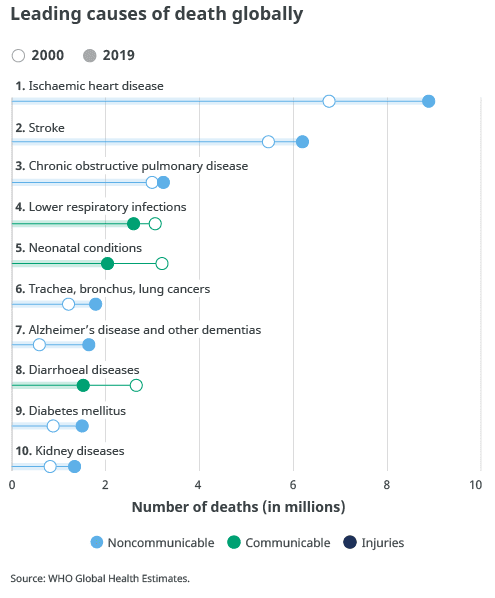
Noncommunicable diseases now make up 7 of the world’s top 10 causes of death, according to WHO’s 2019 Global Health Estimates, published today. This is an increase from 4 of the 10 leading causes in 2000. The new data cover the period from 2000 to 2019 inclusive.

In 2019, the top 10 causes of death accounted for 55% of the 55.4 million deaths worldwide.

The top global causes of death, in order of total number of lives lost, are associated with three broad topics: cardiovascular (ischaemic heart disease, stroke), respiratory (chronic obstructive pulmonary disease, lower respiratory infections) and neonatal conditions – which include birth asphyxia and birth trauma, neonatal sepsis and infections, and preterm birth complications.

Causes of death can be grouped into three categories: communicable (infectious and parasitic diseases and maternal, perinatal and nutritional conditions), noncommunicable (chronic) and injuries. 

Leading Causes of death globally

  • Ischaemic heart diseases
  • Stroke
  • Chronic Obstructive Pulmonary Diseases
  • Lower Respiratory Infections
  • Neonatal conditions
  • Trachea, bronchus, lung cancers
  • Alzheimer’s disease and other dementias
  • Diarrhoeal diseases
  • Diabetes mellitus
  • Kidney diseases
Top 10

Global decline in deaths from communicable diseases, but still a major challenge in low- and middle-income countries

In 2019, pneumonia and other lower respiratory infections were the deadliest group of communicable diseases and together ranked as the fourth leading cause of death. However, compared to 2000, lower respiratory infections were claiming fewer lives than in the past, with the global number of deaths decreasing by nearly half a million.

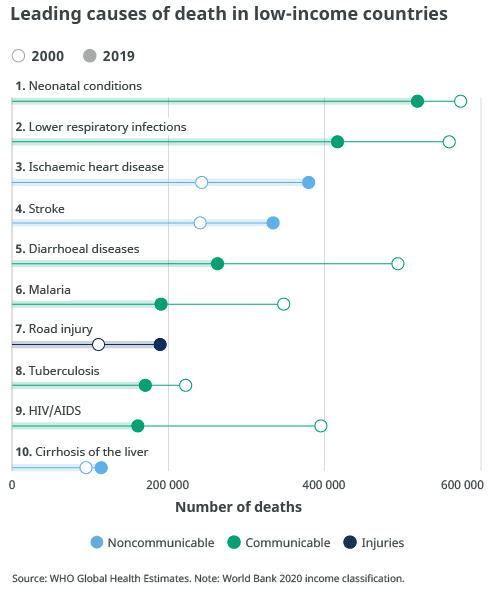
Leading causes of death in low-income countries

  • Neonatal conditions
  • Lower respiratory infections
  • Stroke
  • Diarrhoeal diseases
  • Malaria
  • Road injury
  • Tuberculosis
  • HIV/AIDS
  • Cirrhosis of the Liver
LMICs

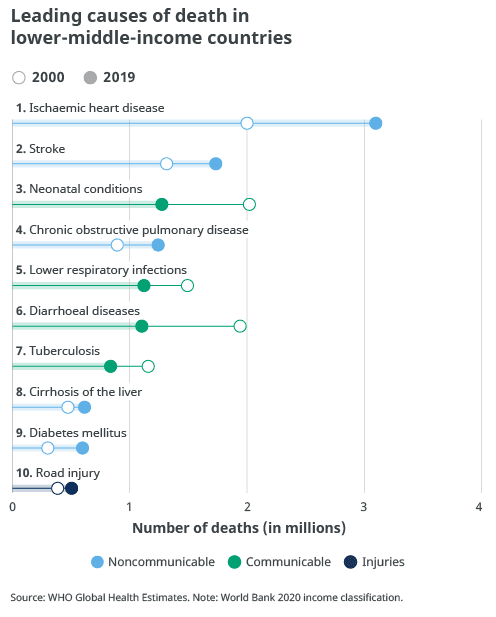
Leading causes of death in lower-middle-income countries

  • Ischaemic heart diseases
  • Neonatal conditions
  • COPD
  • Lower respiratory infections
  • Diarrhoeal diseases
  • Tuberculosis
  • Cirrhosis of the liver
  • Diabetes mellitus
  • Road injury
image4

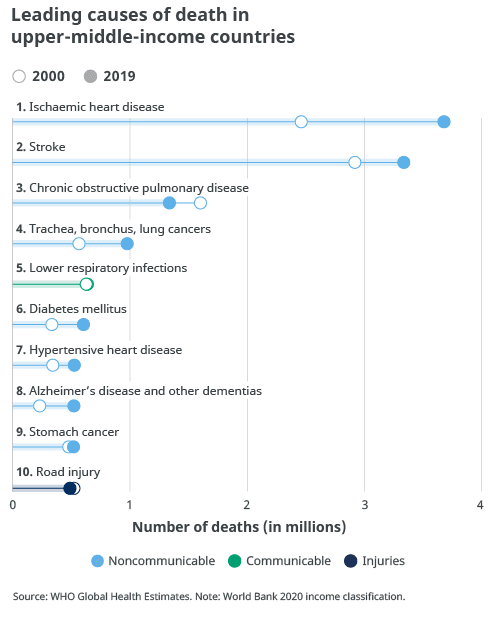
Leading causes of death in upper-middle-income countries

  • Ischemic heart diseases
  • Stroke
  • COPD
  • Trachea, bronchus, lung cancers
  • Lower respiratory infections
  • Diabetes mellitus
  • Hypertensive heart disease
  • Alzheimer’s disease and other dementias
  • Stomach cancer
  • Road injury
LMIC

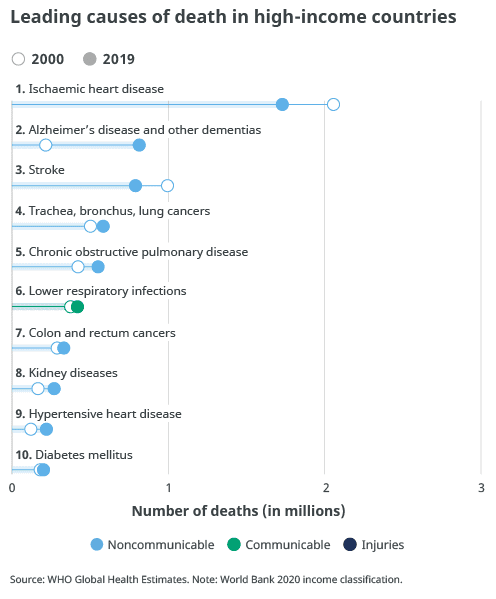
Leading causes of death in high-income countries

  • Ischaemic heart disease
  • Alzheimer’s diseases and other dementias
  • Trachea, bronchus, lung cancers
  • COPD
  • Lower respiratory infections
  • Colon and rectum cancers
  • Kidney diseases
  • Hypertensive heart disease
  • Diabetes Mellitus
High Income

OFFICIAL LINK: WHO


Do you have a website? Looking for the best hosting provider? Here’s a discount code.

Latest Public Health Jobs

Latest Posts

  • Multisectoral Action Plan for the Prevention and Control of NCDs, 2026-2030 (Draft)
  • National Standard Operating Procedure for Early Warning, Alert and Response System (EWARS), 2025
  • Priority Infectious Diseases for Community-Based Surveillance in Nepal
  • Community Based Disease Surveillance Guideline, 2082
  • Political declaration of the fourth high-level meeting of the General Assembly on the prevention and control of NCDs and the promotion of mental health and well-being

Thanks for visiting us.
Disclaimer: The resources, documents, guidelines, and information on this blog have been collected from various sources and are intended for informational purposes only. Information published on or through this website and affiliated social media channels does not represent the intention, plan, or strategies of an organization that the initiator is associated with in a professional or personal capacity, unless explicitly indicated.
If you have any complaints, information, or suggestions about the content published on Public Health Update, please feel free to contact us at blog.publichealthupdate@gmail.com.
#StayUpdated


  • WordPress
  • Link
  • Facebook
  • Mail
  • Facebook
  • Twitter
  • Twitter
  • LinkedIn
  • Instagram
  • Facebook
December 9, 2020 0 comments
0 FacebookTwitterPinterestLinkedinTumblrVKOdnoklassnikiRedditStumbleuponWhatsappTelegramLINEPocketSkypeViberEmail
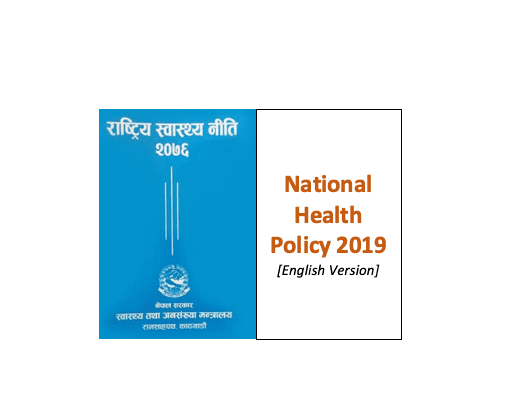
National Health Policy-2019, Nepal
National Plan, Policy & GuidelinesHealth SystemsResearch & Publication

National Health Policy-2019, Nepal

by Public Health Update December 9, 2020
written by Public Health Update

The Constitution of Nepal has established basic health care as a fundamental right of its citizens. As country has moved to federal governance system, it it the responsibility of the state to ensure the access of quality health services for all citizens based on contextual norms of federal system.

This National Health policy, 2019 has been formulated on the basis of the lists of exclusive and concurrent powers and functions of federal, state and local levels as per the constitution; the policies and programmes of the Government of Nepal; the international commitments made by Nepal at different times; and the problems, challenges, available resources and evidences in the health sector.

Vision

Healthy, alert and conscious citizens oriented to happy life.

Mission

To ensure fundamental health rights of citizens through optimum and effective use of resources, collaboration and participations.

Goal

To develop and expand a health system for all citizens in the federal structure based on social justice and good governance and ensure access to and utilization of quality health services.

Objectives

  • To create opportunities for all citizens to use their constitutional rights to health.
  • To develop, expand and improve all types of health systems as per the federal structure.
  • To improve the quality of health services delivered by health institutions of all levels and to ensure easy access to those services.
  • To strengthen social health protection system by integrating the most marginalised sections.
  • To promote multi-sectoral partnership and collaboration between governmental, non-governmental and private sectors and to promote community involvement, and
  • To transform the health sector from profit-orientation to service-orientation.
Download now
PDF File (English)
Download now
PDF File (English)
Nepali Version (PDF FILE)

  • National Health Policy 2076- MoHP
  • National Oral Health Policy-2070, NEPAL
  • Health Policy 2076 | MoSD, Karnali Province- Nepal


Do you have a website? Looking for the best hosting provider? Here’s a discount code.

Latest Public Health Jobs

Latest Posts

  • Multisectoral Action Plan for the Prevention and Control of NCDs, 2026-2030 (Draft)
  • National Standard Operating Procedure for Early Warning, Alert and Response System (EWARS), 2025
  • Priority Infectious Diseases for Community-Based Surveillance in Nepal
  • Community Based Disease Surveillance Guideline, 2082
  • Political declaration of the fourth high-level meeting of the General Assembly on the prevention and control of NCDs and the promotion of mental health and well-being

Thanks for visiting us.
Disclaimer: The resources, documents, guidelines, and information on this blog have been collected from various sources and are intended for informational purposes only. Information published on or through this website and affiliated social media channels does not represent the intention, plan, or strategies of an organization that the initiator is associated with in a professional or personal capacity, unless explicitly indicated.
If you have any complaints, information, or suggestions about the content published on Public Health Update, please feel free to contact us at blog.publichealthupdate@gmail.com.
#StayUpdated


  • WordPress
  • Link
  • Facebook
  • Mail
  • Facebook
  • Twitter
  • Twitter
  • LinkedIn
  • Instagram
  • Facebook
December 9, 2020 5 comments
0 FacebookTwitterPinterestLinkedinTumblrVKOdnoklassnikiRedditStumbleuponWhatsappTelegramLINEPocketSkypeViberEmail
Guideline for Integrated Ambulance and Pre-hospital service operation 2077
National Plan, Policy & GuidelinesHumanitarian Health & Emergency ResponseResearch & Publication

Guideline for Integrated Ambulance and Pre-hospital service operation 2077

by Public Health Update December 9, 2020
written by Public Health Update

The Ministry of Health & Population endorsed new guideline for Integrated Ambulance and Pre-hospital service operation 2077.

Download now
PDF FILE
Download now
PDF FILE

  • Guideline for Integrated Ambulance and Pre-hospital service operation 2077
  • Ambulance Service Operation Guidelines- MoHP
  • Preparedness and Readiness of Government of Nepal Designated COVID Hospitals

Do you have a website? Looking for the best hosting provider? Here’s a discount code.

Latest Public Health Jobs

Latest Posts

  • Multisectoral Action Plan for the Prevention and Control of NCDs, 2026-2030 (Draft)
  • National Standard Operating Procedure for Early Warning, Alert and Response System (EWARS), 2025
  • Priority Infectious Diseases for Community-Based Surveillance in Nepal
  • Community Based Disease Surveillance Guideline, 2082
  • Political declaration of the fourth high-level meeting of the General Assembly on the prevention and control of NCDs and the promotion of mental health and well-being

Thanks for visiting us.
Disclaimer: The resources, documents, guidelines, and information on this blog have been collected from various sources and are intended for informational purposes only. Information published on or through this website and affiliated social media channels does not represent the intention, plan, or strategies of an organization that the initiator is associated with in a professional or personal capacity, unless explicitly indicated.
If you have any complaints, information, or suggestions about the content published on Public Health Update, please feel free to contact us at blog.publichealthupdate@gmail.com.
#StayUpdated


  • WordPress
  • Link
  • Facebook
  • Mail
  • Facebook
  • Twitter
  • Twitter
  • LinkedIn
  • Instagram
  • Facebook
December 9, 2020 0 comments
0 FacebookTwitterPinterestLinkedinTumblrVKOdnoklassnikiRedditStumbleuponWhatsappTelegramLINEPocketSkypeViberEmail
Newer Posts
Older Posts

Search

Follow Us

Facebook Twitter Instagram Pinterest Linkedin Youtube

Categories

  • Abstracts (25)
  • Activities (91)
  • Adolescent Sexual and Reproductive Health (ASRH) (25)
  • Advice & Tips (3)
  • African Region (5)
  • AI and Health (1)
  • Annual Meeting (6)
  • Antimicrobial Resistance (AMR) (20)
  • Award (19)
  • Awards (16)
  • Books (9)
  • Call for Proposal, EOI & RFP (103)
  • Call for Research Participants (8)
  • Clinical Doctor Jobs (6)
  • Communicable Diseases (107)
  • Competition (20)
  • Conference (128)
  • Consultant (1)
  • Courses (204)
  • Dashboard (2)
  • Digital Health & Health Informatics (10)
  • Drug and Medicine (18)
  • Eastern Mediterranean Region (3)
  • Education (15)
  • Environment (3)
  • Environmental Health & Climate Change (47)
  • European Region (42)
  • Exchange Program (1)
  • Fact Sheet (116)
  • FCHVs (1)
  • Fellowships, Studentship & Scholarships (165)
  • Financial Aid (13)
  • Form Formats (2)
  • Fully funded (22)
  • Global Health News (433)
  • Grants and Funding Opportunities (192)
  • Guest Post (44)
  • Health Assistant Jobs (1)
  • Health Equity (7)
  • Health Financing and Economics (24)
  • Health in Data (113)
  • Health Insurance (5)
  • Health Jobs (52)
  • Health Literacy, Health Education & Promotion (49)
  • Health Organization Profile (42)
  • Health Systems (81)
  • Human Resource for Health (32)
  • Humanitarian Health & Emergency Response (44)
  • Hypertension (5)
  • Implementation Research (48)
  • International Health (3)
  • International Jobs & Opportunities (369)
  • International Plan, Policy & Guidelines (208)
  • Internships (4)
  • Jobs Vacancies (56)
  • Journals (8)
  • Life Style & Public Health Nutrition (39)
  • Live (10)
  • Master's Degree (48)
  • Maternal, Newborn and Child Health (87)
  • Mentorship Program (2)
  • Miscellaneous (16)
  • National Health News (157)
  • National Plan, Policy & Guidelines (468)
  • Neglected Tropical Diseases (NTDs) (51)
  • Non- Communicable Diseases (NCDs) (120)
  • Notice (103)
  • Nursing Jobs (6)
  • Nutritionist Jobs (1)
  • One Health (17)
  • Online & Distance Learning (22)
  • Online Courses (90)
  • Op-Ed Article (3)
  • Opportunities by Region (82)
  • Outbreak News (213)
  • Partially funded (6)
  • PCL Health Science Jobs (3)
  • PH Important Day (532)
  • Pharmacist Jobs (3)
  • PhD (53)
  • Photos (5)
  • Planetary Health (4)
  • PostDoc (14)
  • Presentation Slides (26)
  • Primary Health Care (25)
  • Provincial Plan, Policies and Guidelines (14)
  • Public Health (1,278)
  • Public Health Epidemiology & Biostatistics (13)
  • Public Health Events (305)
  • Public Health Information (20)
  • Public Health Innovation (9)
  • Public Health Jobs (52)
  • Public Health News (552)
  • Public Health Notes (120)
  • Public Health Opportunities (502)
  • Public Health Opportunity (486)
  • Public Health Programs (108)
  • Public Health Seminar (2)
  • Public Health Tools (1)
  • Public Health Update (557)
  • Quality Improvement & Infection Prevention (20)
  • Region of America (8)
  • Reports (182)
  • Research & Project Grants (38)
  • Research & Project Grants (31)
  • Research & Publication (647)
  • Research Articles (10)
  • Road Traffic Accidents (RTA) (9)
  • School of Public Health (60)
  • Self funded (2)
  • South-East Asia Region (26)
  • Success Stories (17)
  • Summer and Winter Courses (39)
  • Summer Courses (27)
  • Sustainable Development Goals (SDGs) (14)
  • Syllabus (61)
  • Symposium (9)
  • Tobacco Control (35)
  • Training (40)
  • Travel Grants (15)
  • Trick, Technique & Skills (8)
  • Uncategorized (3)
  • Undergraduate Degree (7)
  • Universal Health Coverage (36)
  • Universities (29)
  • Universities & School of Public Health (57)
  • Vacancy Announcement (26)
  • Vaccine Preventable Diseases (40)
  • Vector-Borne Diseases(VBDs) (30)
  • Videos (3)
  • View Points (1)
  • Webinar (4)
  • Western Pacific Region (13)
  • Workshop (18)
  • World News (116)
Post New Jobs: Vacancy Announcement Service

Public Health Update (Sagun’s Blog) is a popular public health portal in Nepal. Thousands of health professionals are connected with Public Health Update to get up-to-date public health updates, search for jobs, and explore opportunities.
#1 Public Health Blog for sharing Job opportunities and updates in Nepal

”Public Health Information For All”
– – Sagun Paudel, Founder

  • HOT JOBS
    • Public Health Jobs
    • Medical Doctor Jobs
    • Nursing Jobs
    • Health Assistant Jobs
    • Pharmacist Jobs
    • NGOs Jobs
    • Government Jobs
  • Top Categories
    • National Plan, Policy & Guidelines Top
    • Public Health Calendar
    • Fellowships & Scholarships
    • Health Systems
    • Health Organization Profiles
    • International Jobs & Opportunities
    • Public Health Opportunity

PUBLIC HEALTH INITIATIVE

    • Submit your Vacancies New
    • Partnership Opportunities

Contact: blog.publichealthupdate@gmail.com

https://wa.me/+9779856036932

Public Health Initiative, A Registered Non-profit organization – All Right Reserved. 2011-2024. Contact us. 

Facebook Twitter Instagram Youtube Envelope
Public Health Update
  • Home
  • Public Health
    • Home 1
      • Adolescent Sexual and Reproductive Health (ASRH)
      • Antimicrobial Resistance (AMR)
      • Communicable Diseases
      • Digital Health & Health Informatics
      • Environmental Health & Climate Change
      • Health Financing and Economics
      • Health Equity
    • Home 2
      • Health Literacy, Health Education & Promotion
      • Human Resource for Health
      • Humanitarian Health & Emergency Response
      • Implementation Research
      • International Health
      • Life Style & Public Health Nutrition
      • Maternal, Newborn and Child Health
    • Home 3
      • Neglected Tropical Diseases (NTDs)
      • Non- Communicable Diseases (NCDs)
      • One Health
      • Planetary Health
      • Public Health Epidemiology & Biostatistics
      • Primary Health Care
      • Quality Improvement & Infection Prevention
    • Home 4
      • Road Traffic Accidents (RTA)
      • Sustainable Development Goals (SDGs)
      • Tobacco Control
      • Universal Health Coverage
      • Vaccine Preventable Diseases
      • Vector-Borne Diseases(VBDs)
      • Notices
  • Public Health Update
    • Home 1
      • Public Health News
      • Global Health News
      • Outbreak News
      • National Health News
      • COVID-19
    • Home 2
      • Fact Sheet
      • Health in Data
      • PH Important Day
      • Public Health Events
      • Public Health Programs
    • Home 3
      • Health Systems
      • Health Insurance
      • Health Organization Profile
      • Success Stories
      • Public Health Innovation
  • Public Health Opportunities
    • Fully funded
    • Travel Grants
    • Grants and Funding Opportunities
    • Opportunities by Region
    • International Jobs & Opportunities
    • Research & Project Grants
    • Fellowships, Studentship & Scholarships
    • Conference
  • Jobs
    • Home 1
      • Health Jobs
      • Public Health Jobs
      • Clinical doctor Jobs
      • Health Assistant Jobs
      • Nursing Jobs
      • PCL Health Science Jobs
    • Home 2
      • Dental Jobs
      • Pharmacist Jobs
      • TSLC (Health Jobs)
      • Laboratory Jobs
      • Nutritionist Jobs
  • Downloads
    • International Plan, Policy & Guidelines
    • National Plan, Policy & Guidelines
    • Reports
    • Books
    • Research Articles
  • School of Public Health
    • Home 1
      • Courses
      • Master’s Degree
      • Undergraduate Degree
      • PhD
    • Home 2
      • Universities
      • Syllabus
      • Public Health Notes
      • Mentorship Program
      • Startup Project
    • Home
      • Summer and Winter Courses
      • Summer Courses
      • Online Courses
      • Workshop
      • Training
Public Health Update
  • Home
  • Public Health
    • Home 1
      • Adolescent Sexual and Reproductive Health (ASRH)
      • Antimicrobial Resistance (AMR)
      • Communicable Diseases
      • Digital Health & Health Informatics
      • Environmental Health & Climate Change
      • Health Financing and Economics
      • Health Equity
    • Home 2
      • Health Literacy, Health Education & Promotion
      • Human Resource for Health
      • Humanitarian Health & Emergency Response
      • Implementation Research
      • International Health
      • Life Style & Public Health Nutrition
      • Maternal, Newborn and Child Health
    • Home 3
      • Neglected Tropical Diseases (NTDs)
      • Non- Communicable Diseases (NCDs)
      • One Health
      • Planetary Health
      • Public Health Epidemiology & Biostatistics
      • Primary Health Care
      • Quality Improvement & Infection Prevention
    • Home 4
      • Road Traffic Accidents (RTA)
      • Sustainable Development Goals (SDGs)
      • Tobacco Control
      • Universal Health Coverage
      • Vaccine Preventable Diseases
      • Vector-Borne Diseases(VBDs)
      • Notices
  • Public Health Update
    • Home 1
      • Public Health News
      • Global Health News
      • Outbreak News
      • National Health News
      • COVID-19
    • Home 2
      • Fact Sheet
      • Health in Data
      • PH Important Day
      • Public Health Events
      • Public Health Programs
    • Home 3
      • Health Systems
      • Health Insurance
      • Health Organization Profile
      • Success Stories
      • Public Health Innovation
  • Public Health Opportunities
    • Fully funded
    • Travel Grants
    • Grants and Funding Opportunities
    • Opportunities by Region
    • International Jobs & Opportunities
    • Research & Project Grants
    • Fellowships, Studentship & Scholarships
    • Conference
  • Jobs
    • Home 1
      • Health Jobs
      • Public Health Jobs
      • Clinical doctor Jobs
      • Health Assistant Jobs
      • Nursing Jobs
      • PCL Health Science Jobs
    • Home 2
      • Dental Jobs
      • Pharmacist Jobs
      • TSLC (Health Jobs)
      • Laboratory Jobs
      • Nutritionist Jobs
  • Downloads
    • International Plan, Policy & Guidelines
    • National Plan, Policy & Guidelines
    • Reports
    • Books
    • Research Articles
  • School of Public Health
    • Home 1
      • Courses
      • Master’s Degree
      • Undergraduate Degree
      • PhD
    • Home 2
      • Universities
      • Syllabus
      • Public Health Notes
      • Mentorship Program
      • Startup Project
    • Home
      • Summer and Winter Courses
      • Summer Courses
      • Online Courses
      • Workshop
      • Training
Public Health Initiative, A Registered Non-profit organization – All Right Reserved. 2011-2023