Public Health Update
  • Home
  • Public Health Update
  • Nepal Health Jobs
    • Public Health Job Board
    • Organization List
  • Opportunities
    • Fellowships, Studentship & Scholarships
    • Grants and Funding Opportunities
    • Fully funded
    • Conference
  • Downloads
    • International Plan, Policy & Guidelines
    • National Plan, Policy & Guidelines
    • Reports
    • Public Health Notes
    • Syllabus
    • Form Formats
  • School of Public Health
    • PhD
    • Master’s Degree
    • Online Courses
  • Notice
  • Home
  • Public Health Update
  • Nepal Health Jobs
    • Public Health Job Board
    • Organization List
  • Opportunities
    • Fellowships, Studentship & Scholarships
    • Grants and Funding Opportunities
    • Fully funded
    • Conference
  • Downloads
    • International Plan, Policy & Guidelines
    • National Plan, Policy & Guidelines
    • Reports
    • Public Health Notes
    • Syllabus
    • Form Formats
  • School of Public Health
    • PhD
    • Master’s Degree
    • Online Courses
  • Notice
LOGIN / REGISTER
Public Health Update
SUBSCRIBE
Public Health Update
  • Home
  • Public Health Update
  • Nepal Health Jobs
    • Public Health Job Board
    • Organization List
  • Opportunities
    • Fellowships, Studentship & Scholarships
    • Grants and Funding Opportunities
    • Fully funded
    • Conference
  • Downloads
    • International Plan, Policy & Guidelines
    • National Plan, Policy & Guidelines
    • Reports
    • Public Health Notes
    • Syllabus
    • Form Formats
  • School of Public Health
    • PhD
    • Master’s Degree
    • Online Courses
  • Notice

All Right Reserved. Designed and Developed by PenciDesign

List of Elected Health Workers in Local Level Election of Nepal 2079
Public Health NewsNational Health NewsPublic Health

List of Elected Health Workers in Local Level Election of Nepal 2079

by Public Health Update May 19, 2022
written by Public Health Update

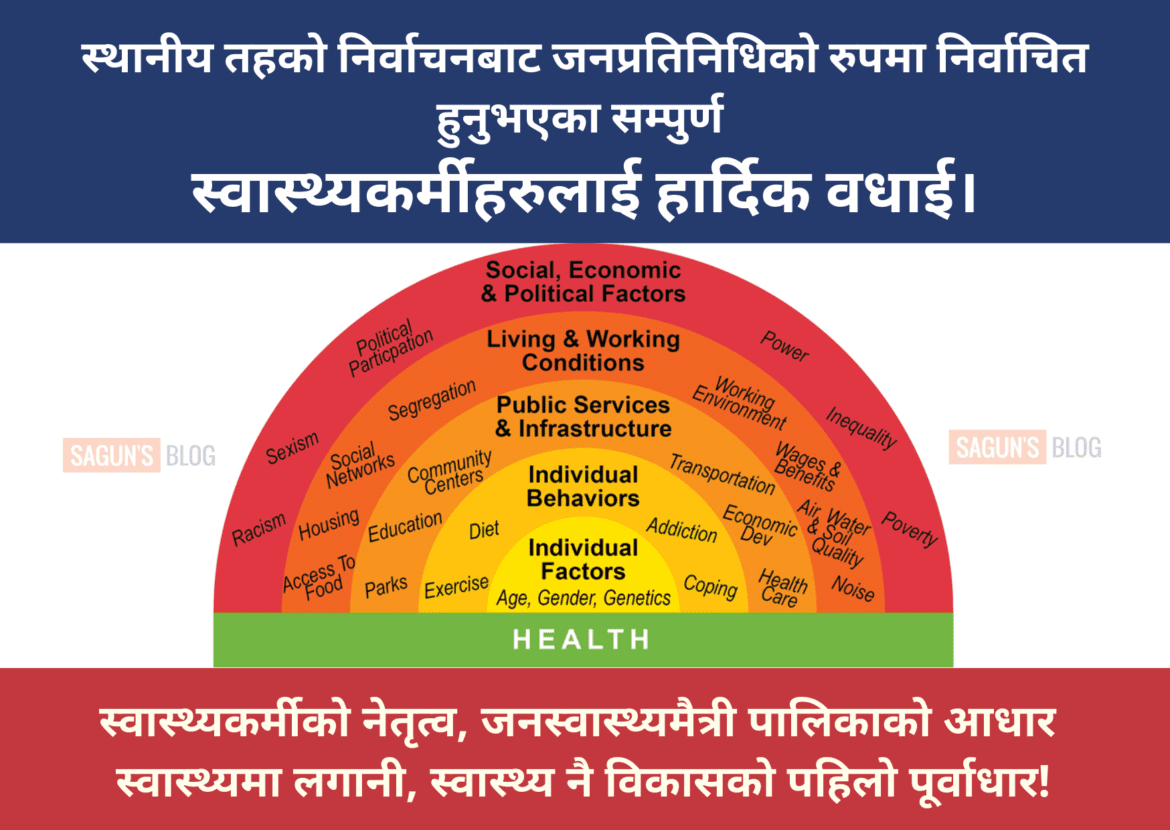
Here is the name list of the health professionals elected in local level election.

  1. Bhakta Gc, Deputy Chair, Banglachuli Rural Municipality, Dang
  2. Bishnu Lungche, Deputy Chair, Mathagadi Rural Municipality, Palpa
  3. Bishwo Paudel, Chair, Aandhikhola Rural Municipality, Syangja
  4. Buddhadeo Chaudhary, Ward Chair 03, Lalbandi Municipality, Sarlahi
  5. Damodar Acharya, Chair, Kankasundari Rural Municipality, Jumla
  6. Dr. Binod Yadav, Ward Chair 03, Chakraghatta Rural Municipality, Sarlahi
  7. Dr. Navin Yadav, Chair, Siraha Municipality, Siraha
  8. Durga Timisaina, Ward Chair 01, Panchadew al Binayak Municipality, Accham
  9. Jiwan Kharel, Chair, Musikot Municipality, Gulmi
  10. Jogram Chaudhary, Deputy Chair, Belauri Municipality, Kanchanpur
  11. Juna Thapa, Deputy Chair, Marsyangdi Rural Municipality, Lamjung
  12. Krishna Rana Bhat, Ward Chair 08, Rainas Municipality, Lamjung
  13. Kuber Bhattarai, Ward Chair 09, Damak Municipality, Jhapa
  14. Mina Tiwari, Deputy Chair, Bihadi Rural Municipality, Parbat
  15. Prakash Bista, Chair, Rapti Rural Municipality, Dang
  16. Punam Kumari Chaudhari, Duhabi Municipality, Sunsari
  17. Raj Kumar Mahato, Chairman, Chandra Nagar Rural Municipality, Sarlahi
  18. Raju Loppa, Ward Chair 02, Jwalamukhi Rural Municipality, Dhading
  19. Santosh Prakash Joshi, Chair, Dilashaini Rural Municipality, Baitadi
  20. Shankar Pandey, Chhatradev Rural Municipality, Arghakhanchi
  21. Tilak Mishra, Ward Chair 05, Malarani Rural Municipality, Arghakhanchi District
  22. Yam Bahadur Chidi, Chair, Mathagadi Rural Municipality, Palpa
  23. Updating………………….

What we need to know about Health in All Policies (HiAP)?

May 19, 2022 0 comments
0 FacebookTwitterPinterestLinkedinTumblrVKOdnoklassnikiRedditStumbleuponWhatsappTelegramLINEPocketSkypeViberEmail
Call for Applications! IIHMR University India TDR Postgraduate Scholarship in Implementation Research
Implementation ResearchGrants and Funding OpportunitiesOpportunities by RegionPublic Health OpportunitiesPublic Health OpportunitySouth-East Asia Region

Call for Applications! IIHMR University India TDR Postgraduate Scholarship in Implementation Research

by Public Health Update May 10, 2022
written by Public Health Update

SD Gupta School of Public Health, IIHMR University, Jaipur, India is pleased to announce the Call for Applications for the award of TDR Postgraduate Training Scholarships for a two-year Master of Public Health (MPH) postgraduate program with specialization in Implementation Science, for the Academic session 2022-24, beginning in October 2022.

This full scholarship is supported by TDR, the Special Programme for Research and Training in Tropical Diseases, based at the World Health Organization in Geneva, Switzerland (https://tdr.who.int/). Candidates and residents in low- and middle-income countries (LMICs) of WHO South-East Asia and Eastern Mediterranean regions are eligible to apply.

The training will specifically focus on subjects and courses relevant to implementation science. Implementation science is a growing field that supports the identification of health system bottlenecks and approaches to address them and is particularly useful in low- and middle-income countries (LMICs) where many health interventions do not reach those who could benefit from them. The goal of this scheme is to enhance graduate training capacity and augment the number and quality of researchers in LMICs. The TDR Postgraduate Training Scheme has a focus on implementation research on infectious diseases of poverty, including neglected tropical diseases, malaria, tuberculosis and COVID-19. Further information on implementation research is available at https://tdr.who.int/home/our-work/strengthening-research-capacity/implementation-research-trainingmaterials.

Study Areas for Scholarship
Scholarships will be offered for academic session 2022-24, for a two-year MPH Program with specialization in Implementation Science. This will be a full-time program to promote problem-based experiential learning. Ideally, the scholarship recipients will be offered on-campus teaching and their thesis project on implementation research on infectious diseases of poverty, including neglected tropical diseases, malaria, tuberculosis and COVID-19, will be undertaken in recipients’ respective home countries. However, if the current COVID-19 pandemic related confinement and/or travel restrictions continue, the course will be delivered through an online platform. The Master’s Program will be taught in English. Recipients will be enrolled as postgraduate students. The fellows will be required to register on the TDR Global platform (https://tdr.who.int/activities/tdr-global) designed to provide networking opportunities for all TDR alumni and stakeholders.

Eligibility for Scholarship
The applicant should:

  • Be nationals of and residents in low-and middle income countries (as defined by the World Bank) of WHO South East Asia or Eastern Mediterranean regions;
  • Be under age 35 at the time of application for the Master’s programme;
  • Have Bachelor and/or Masters degree(s) in Health Sciences (Medicine, Nursing, Midwifery, including allied
  • Health Sciences) or in Social Sciences (Anthropology, Public Health, Food and Nutrition, Sociology, Psychology or any other Social Sciences Discipline);
  • Have excellent academic track records with GPA 3.0 or above;
  • Have proficiency in oral and written English and basic Mathematics;
  • Have basic computer skills including Microsoft Office and Data Analysis Software;

The applicant is expected to:

  • Meet the University requirements for international postgraduate students
  • Submit a statement of purpose and letter of recommendation from current or previous supervisor;
  • Be interested in developing a career in implementation research on infectious diseases of poverty;
  • Submit a No Objection Certificate from department / employer and documented permission to obtain study leave from employment (if applicable) before commencement of programme; and
  • Agree to meet health requirements in line with the regulations of Government of India and IIHMR University.

The TDR scholarship covers:

  • Economy airfare between the home country of the student and India;
  • Tuition and academic fees;
  • Basic medical and accident insurance;
  • Boarding and lodging for the duration of stay at IIHMR campus (On campus in-residence will be compulsory)
  • IT lab and on campus Wi-Fi facilities; and
  • Support for thesis project expenses during data collection.
  • Note: Those candidates not having their TOEFL / IELTS scores can submit the same by 20 June 2022.

Applying for MPH (IS) Program at IIHMR University
Candidates should submit their application online at IIHMR University portal. Complete details of the IIHMR MPH (IS) program, admission process and registration for application is available at IIHMR university website : https://iihmr.edu.in/admissionsopen

To apply for the program, you must complete the following two steps:

Step 1. Register and Create Login Credentials on IIHMR University Website

Please log in or sign up at https://iihmr.edu.in/admissionsopen and choose Master of Public Health under Discipline and click on “Master of Public Health (Implementation Science)” under “Select Program” drop down . To apply, the candidates will be required to click the link APPLY NOW, and create log in credentials

Step 2. Complete and Submit the Application form online
Please fill the application form and upload required documents. Submit the completed form online.

Only completed forms accompanied with required documents will be processed further. Shortlisted applications will only be contacted for further assessment through interview. Final selection of candidates will be done in conjunction with TDR, considering gender and geographic representation of candidates from the regions. Selected candidates will receive a letter of offer from IIHMR University. Candidates will need to confirm the acceptance within 7 days after the notification. IIHMR University reserves the right to refuse admission or end attribution of scholarship if any of the information provided by the candidate is proven false.

Application deadline: 10 June 2022 Last date for submission of complete applications

For more information on the scheme at SDG SPH, IIHMR University, please contact:
Program Coordinator, Master of Public Health (Implementation Science) Program, SD Gupta School of Public Health
IIHMR University, 1, Prabhu Dayal Marg, Near Sanganer Airport, Jaipur – 302 029, Rajasthan , India.

Dean In-charge SD Gupta School of Public Health, IIHMR University, Prabhu Dayal Marg, Near Sanganer
Airport, Jaipur – 302 029, Rajasthan , India, Phone: 91-141-3924700 , Fax: 91-141-3924738
Email:
For guidance and support with regard to application process and filling of admission forms : ismphadmissions@iihmr.edu.in, For all other queries related to MPH (IS) program : ismph@iihmr.edu.in


If you are seeking guidance and local supervisor for your Implementation research (thesis project), please feel free to write us.

implementationsciencenepal@gmail.com. 

IMPLEMENTATION RESEARCH (IR) INITIATIVE IN NEPAL
May 10, 2022 0 comments
0 FacebookTwitterPinterestLinkedinTumblrVKOdnoklassnikiRedditStumbleuponWhatsappTelegramLINEPocketSkypeViberEmail
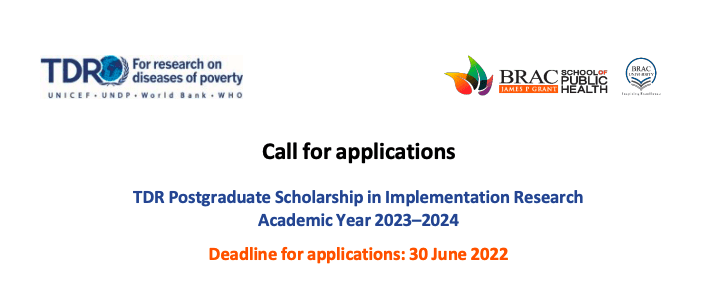
Call for applications TDR Postgraduate Scholarship in Implementation Research Academic Year 2023–2024
Implementation ResearchGrants and Funding OpportunitiesPublic Health OpportunitiesPublic Health OpportunitySouth-East Asia RegionWestern Pacific Region

Call for applications! BRAC University TDR Postgraduate Scholarship in Implementation Research 2023–2024

by Public Health Update May 10, 2022
written by Public Health Update

The BRAC James P. Grant School of Public Health (BRAC JPGSPH) at BRAC University in Dhaka, Bangladesh announces a Call for Applications for the award of TDR Postgraduate Training Scholarships for the one-year Master of Public Health (MPH) 2023–2024 Programme, beginning in January 2023. The International MPH Programme is a 12-month full-time programme which is taught in English with a focus on promoting problem-based experiential learning. To access the prospectus for the current 2022-2023 academic year.

The scholarship is supported by TDR, the UNICEF/UNDP/World Bank/WHO Special Programme for Research and Training in Tropical Diseases, based at the World Health Organization in Geneva, Switzerland. Candidates and residents in low- and middle-income countries (LMICs) of WHO WHO South-East Asia and Eastern Mediterranean regions are eligible to apply.

The training will focus on modules relevant to a career in implementation research, which is a growing field that supports the identification of health system bottlenecks and approaches to addressing them. It is particularly useful in LMICs, where many health interventions do not reach those who could be benefitting from them. The goal of this scheme is to enhance graduate training capacity and boost the number and quality of researchers in LMICs.

Further information on implementation research is available on the TDR website.
A limited number of scholarships will be offered to both national and international candidates for the 2023–2024 academic year for the Master of Public Health Programme.

Scholarship recipients will be enrolled as postgraduate students and conduct their Thesis/Summative Learning Project (SLP) on implementation research on infectious diseases of poverty, which includes Neglected Tropical Diseases, TB/HIV, Malaria, other vector-borne diseases and COVID-19. Recipients will be enrolled as postgraduate students, and their careers will be tracked through the TDR postgraduate alumni platform, IR Connect, which monitors the impact of the programme and provides networking and opportunities to increase visibility for students and alumni. The programme provides on-campus teaching. However, depending on regulations related to the COVID-19 pandemic, the course may be adjusted, for example with entirely online delivery.

THE SCHOLARSHIP PACKAGE

  • One return economy airfare between the home country of the student and Dhaka, Bangladesh
  • Tuition and academic fees
  • Basic medical and accident insurance
  • Monthly stipend to cover living expenses, including accommodation equivalent to local cost of living
  • Support for Thesis/Summative Learning Project expenses during data collection.

ELIGIBILITY FOR THE SCHOLARSHIP

  • Candidates must be eligible for both the MPH Programme and TDR Scholarship. Applicants must meet BRAC
  • University post-graduation admission criteria.
  • Applicants should: Meet standard minimum university requirements for international postgraduate students at
  • https://www.bracu.ac.bd/admissions/postgraduate
  • Minimum GPA of 3.0 out of 4.0 for Bachelor’s Degree
  • Minimum GPA of 3.0 in O-Levels/SSC/Equivalent in five subjects and A-Levels/HSC/Equivalent in two subjects or equivalent as per BRAC University scale (A=5, B=4, C=3, D=2 & E=1)
  • Proficiency in oral and written English and basic Mathematics
  • Basic Computer skills including Microsoft Office and Data Analysis Software
  • Have a 4-years Bachelor Degree or 3-years Bachelor Degree and 1-year Master/Postgraduate Diploma
  • Degree in Health Sciences (Medicine, Nursing, Midwifery, including Allied Health Sciences)/Life Sciences/Social Sciences (Anthropology, Public Health, Food and Nutrition, Sociology, Psychology or any
  • other Social Sciences Discipline);
  • Be a national of and resident in a low- and middle-income country (as defined by the World Bank) of either the WHO South-East Asia or Eastern Mediterranean region;
  • Be under 35 years of age at the time of application for the Master’s programme;
  • Be interested in developing a career in implementation research on infectious diseases of poverty, including neglected tropical diseases; and
  • Submit a statement of purpose on the reason for pursuing a career in infectious diseases of poverty.
  • Priority will be given to applicants with 1 to 2 years of professional public health experience in infectious diseases of poverty, including neglected tropical diseases, malaria and tuberculosis. TDR is committed to Equality, Diversity and Inclusivity in science. Applicants are encouraged to apply irrespective of gender identity, sexual orientation, ethnicity, religious, cultural and social backgrounds, or (dis)ability status.

APPLYING FOR THE TDR POSTGRADUATE SCHOLARSHIP SCHEME AT BRAC UNIVERSITY

To apply, you must complete the following two steps:

Step 1. Complete the TDR postgraduate scholarship application form and email it to: jpgsphmph@bracu.ac.bd with a copy to humayra.anwar@bracu.ac.bd and tahsin.hossain@bracu.ac.bd

Step 2. Apply for the Master’s Programme. Call for Applications for the MPH 2023-2024 academic year will open in April 2022.

Students must submit their online application for the MPH Programme at BRAC JPGSPH at

https://bracjpgsph.org/mph-admission.php or https://admissions.bracu.ac.bd/academia/admissionProcess/listAvailablePublishedCircularForAdmission

(Only completed forms will be further processed)

APPLICATION AND SELECTION PROCESS

Candidates are required to apply online for both the MPH Programme and TDR scholarship. Once the online application has been successfully completed, it will be reviewed based on MPH programme requirements. If all requirements are met, candidates will be contacted for assessment through a written test and viva. The written test and viva can take place virtually by panel of experts.

Due to the COVID-19 pandemic situation, the assessment will be done online. Qualifications will be reviewed based on TDR Scholarship requirements. If the candidate successfully fulfils the requirements, they will be invited to participate in a TDR scholarship specific interview carried out by BRAC JPGSPH.

The final approval of this scholarship and placement of students will depend on the situation of COVID-19 in the respective region.

Finally, selected students will be required to confirm acceptance of the offer by submitting a Statement of Undertaking and a Fitness Certificate, as per BRAC University requirements.

APPLICATION DEADLINE

The deadline for receipt of applications is 30 June 2022. However, the selection and placement of candidates will depend on the COVID-19 pandemic situation in the regions.

For more information on the scheme at BRAC JPGSPH, please contact:

Humayra Binte Anwar, Lecturer

Focal point, WHO TDR Postgraduate Training Scheme on Implementation Research, BRAC James P. Grant School of Public Health, Email: humayra.anwar@bracu.ac.bd, Phone: +880 2 48812213 18

Tahsin Madani Hossain

Assistant Coordinator, Master of Public Health, Programme, BRAC James P. Grant School of Public Health, Email: tahsin.hossain@bracu.ac.bd, Phone: +880 2 48812213 18.


If you are seeking guidance and local supervisor for your Implementation research (thesis project), please feel free to write us.

implementationsciencenepal@gmail.com. 

IMPLEMENTATION RESEARCH (IR) INITIATIVE IN NEPAL

May 10, 2022 0 comments
0 FacebookTwitterPinterestLinkedinTumblrVKOdnoklassnikiRedditStumbleuponWhatsappTelegramLINEPocketSkypeViberEmail
International Thalassaemia Day
PH Important DayPublic HealthPublic Health Events

International Thalassaemia Day 2022: Be Aware. Share. Care

by Public Health Update May 8, 2022
written by Public Health Update

Overview

The International Thalassaemia Day (ITD) is marked annually on 8 May and it is devoted to raising awareness amongst the general public and decision-makers about thalassaemia, and helping the global thalassaemia community to connect and call for changes towards the improvement of patients lives and well-being.

Facts

  • 8 out of 10 people with thalassaemia across the world are unaware that they have the mutated gene that causes the disease and that they could have a child with a severe form of thalassaemia, if their partner is also a carrier of the disease.
  • More than half a million children are expected to be born with thalassaemia and other haemoglobin disorders worldwide by 2030.

Theme 2022

International Thalassaemia Day 2022: 2022: Be Aware. Share. Care

The International Thalassaemia Day (ITD) 2022 theme, “Be Aware. Share. Care: Working with the global community as one to improve thalassaemia knowledge”, is an open call to action to all supporters to promote awareness about thalassaemia and its global impact and share essential information and knowledge to support the best possible health, social and other care of people affected by this disease.

The theme seeks to inspire every individual to contribute, at the personal level, to the fight against thalassaemia and serves as a powerful reminder that everyone has a substantial role to play and a responsibility to act.

The Thalassaemia International Federation (TIF)


[MEC id=”77143″]
May 8, 2022 0 comments
0 FacebookTwitterPinterestLinkedinTumblrVKOdnoklassnikiRedditStumbleuponWhatsappTelegramLINEPocketSkypeViberEmail
Public HealthQuality Improvement & Infection PreventionReports

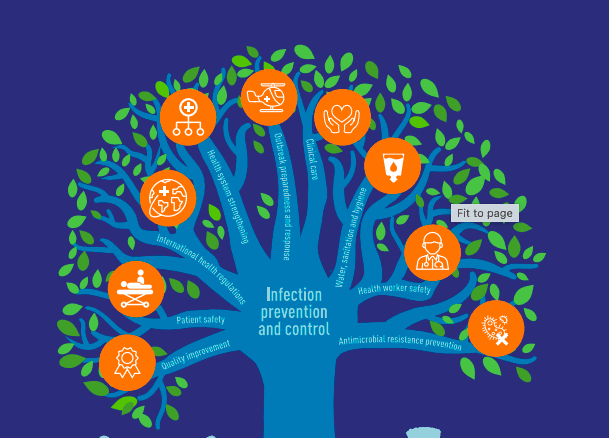
WHO launches first ever global report on Infection Prevention and Control

by Public Health Update May 6, 2022
written by Public Health Update

6 May 2022 News release Geneva 

Reveals that good IPC programmes can reduce health care infections by 70%

The COVID-19 pandemic and other recent large disease outbreaks have highlighted the extent to which health care settings can contribute to the spread of infections, harming patients, health workers and visitors, if insufficient attention is paid to infection prevention and control (IPC). But a new report from the World Health Organization (WHO) shows that were good hand hygiene and other cost-effective practices are followed, 70% of those infections can be prevented. 

Today, out of every 100 patients in acute-care hospitals, seven patients in high-income countries and 15 patients in low- and middle-income countries will acquire at least one health care-associated infection (HAI) during their hospital stay. On average, 1 in every 10 affected patients will die from their HAI.

People in intensive care and newborns are particularly at risk. And the report reveals that approximately one in four hospital-treated sepsis cases and almost half of all cases of sepsis with organ dysfunction treated in adult intensive-care units are health care-associated.

On the eve of World Hand Hygiene Day, WHO is previewing the first ever Global Report on Infection Prevention and Control which brings together evidence from scientific literature and various reports, and new data from WHO studies.

“The COVID-19 pandemic has exposed many challenges and gaps in IPC in all regions and countries, including those which had the most advanced IPC programmes,” said Dr Tedros Adhanom Ghebreyesus, WHO Director General. “It has also provided an unprecedented opportunity to take stock of the situation and rapidly scale up outbreak readiness and response through IPC practices, as well as strengthening IPC programmes across the health system. Our challenge now is to ensure that all countries are able to allocate the human resources, supplies and infrastructures this requires.”

The new WHO report provides the first-ever global situation analysis of how IPC programmes are being implemented in countries around the world, including regional and country focuses. While highlighting the harm to patients and healthcare workers caused by HAIs and antimicrobial resistance, the report also addresses the impact and cost-effectiveness of infection prevention and control programmes and the strategies and resources available to countries to improve them.

The impact of healthcare associated infections and antimicrobial resistance on people’s lives is incalculable. Over 24% of patients affected by health care-associated sepsis and 52.3% of those patients treated in an intensive care unit die each year. Deaths are increased two to threefold when infections are resistant to antimicrobials.

In the last five years, WHO has conducted global surveys and country joint evaluations to assess the implementation status of national IPC programmes. Comparing data from the 2017-18 and the 2021-22 surveys, the percentage of countries having a national IPC programme did not improve; furthermore in 2021-22 only four out of 106 assessed countries (3.8%) had all minimum requirements for IPC in place at the national level. This is reflected in inadequate implementation of IPC practices at the point of care, with only 15.2% of health care facilities meeting all of the IPC minimum requirements, according to a WHO survey in 2019.

However, encouraging progress has been made in some areas, with a significant increase being seen in the percentage of countries having an appointed IPC focal point, a dedicated budget for IPC and curriculum for front-line health care workers’ training; developing national IPC guidelines and a national programme or plan for HAI surveillance; using multimodal strategies for IPC interventions; and establishing hand hygiene compliance as a key national indicator.

Many countries are demonstrating strong engagement and progress in scaling-up actions to put in place minimum requirements and core components of IPC programmes. Progress is being strongly supported by WHO and other key players. Sustaining and further expanding this progress in the long-term is a critical need that requires urgent attention and investments.

The report reveals that high-income countries are more likely to be progressing their IPC work, and are eight times more likely to have a more advanced IPC implementation status than low-income countries. Indeed, little improvement was seen between 2018 and 2021 in the implementation of IPC national programmes in low-income countries, despite increased attention being paid generally to IPC due to the COVID-19 pandemic. WHO will continue to support countries to ensure IPC programmes can be improved in every region.

WHO is calling on all countries around the globe to increase their investment in IPC programmes to ensure quality of care and patient and health workers’ safety. This will not only protect their populations, increased investment in IPC has also demonstrated to improve health outcomes and reduce health-care costs and out-of-pocket expenses.

6 May 2022 News release Geneva 


DOWNLOAD REPORT


Do you have a website? Looking for the best hosting provider? Here’s a discount code.

Latest Public Health Jobs

Latest Posts

  • International Wellness Day: Promoting Global Wellness for All
  • Summit Declaration: The 12th National Summit of Health and Population Scientists in Nepal
  • Joint political declaration on the reform of the global health architecture
  • World Health Day 2026: Together for Health. Stand with Science.
  • World Water Day 2026 | Water & Gender Equality

Thanks for visiting us.
Disclaimer: The resources, documents, guidelines, and information on this blog have been collected from various sources and are intended for informational purposes only. Information published on or through this website and affiliated social media channels does not represent the intention, plan, or strategies of an organization that the initiator is associated with in a professional or personal capacity, unless explicitly indicated.
If you have any complaints, information, or suggestions about the content published on Public Health Update, please feel free to contact us at blog.publichealthupdate@gmail.com.
#StayUpdated


  • WordPress
  • Link
  • Facebook
  • Mail
  • Facebook
  • Twitter
  • Twitter
  • LinkedIn
  • Instagram
  • Facebook
May 6, 2022 0 comments
0 FacebookTwitterPinterestLinkedinTumblrVKOdnoklassnikiRedditStumbleuponWhatsappTelegramLINEPocketSkypeViberEmail
excess deaths associated with the COVID-19 pandemic
Outbreak NewsGlobal Health NewsPublic Health News

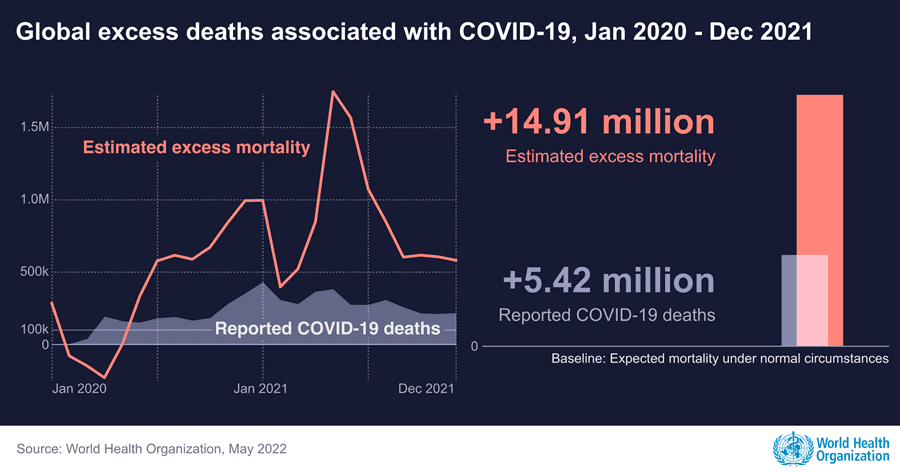
14.9 million excess deaths associated with the COVID-19 pandemic in 2020 and 2021

by Public Health Update May 6, 2022
written by Public Health Update

5 May 2022 News release (WHO)

New estimates from the World Health Organization (WHO) show that the full death toll associated directly or indirectly with the COVID-19 pandemic (described as “excess mortality”) between 1 January 2020 and 31 December 2021 was approximately 14.9 million (range 13.3 million to 16.6 million).  

“These sobering data not only point to the impact of the pandemic but also to the need for all countries to invest in more resilient health systems that can sustain essential health services during crises, including stronger health information systems,” said Dr Tedros Adhanom Ghebreyesus, WHO Director-General. “WHO is committed to working with all countries to strengthen their health information systems to generate better data for better decisions and better outcomes.”

Excess mortality is calculated as the difference between the number of deaths that have occurred and the number that would be expected in the absence of the pandemic based on data from earlier years. 

Excess mortality includes deaths associated with COVID-19 directly (due to the disease) or indirectly (due to the pandemic’s impact on health systems and society). Deaths linked indirectly to COVID-19 are attributable to other health conditions for which people were unable to access prevention and treatment because health systems were overburdened by the pandemic. The estimated number of excess deaths can be influenced also by deaths averted during the pandemic due to lower risks of certain events, like motor-vehicle accidents or occupational injuries. 

Most of the excess deaths (84%) are concentrated in South-East Asia, Europe, and the Americas. Some 68% of excess deaths are concentrated in just 10 countries globally. Middle-income countries account for 81% of the 14.9 million excess deaths (53% in lower-middle-income countries and 28% in upper-middle-income countries) over the 24-month period, with high-income and low-income countries each accounting for 15% and 4%, respectively. 

The estimates for a 24-month period (2020 and 2021) include a breakdown of excess mortality by age and sex. They confirm that the global death toll was higher for men than for women (57% male, 43% female) and higher among older adults. The absolute count of the excess deaths is affected by the population size. The number of excess deaths per 100,000 gives a more objective picture of the pandemic than reported COVID-19 mortality data.

“Measurement of excess mortality is an essential component to understand the impact of the pandemic. Shifts in mortality trends provide decision-makers information to guide policies to reduce mortality and effectively prevent future crises. Because of limited investments in data systems in many countries, the true extent of excess mortality often remains hidden,” said Dr Samira Asma, Assistant Director-General for Data, Analytics and Delivery at WHO. “These new estimates use the best available data and have been produced using a robust methodology and a completely transparent approach.”

“Data is the foundation of our work every day to promote health, keep the world safe, and serve the vulnerable. We know where the data gaps are, and we must collectively intensify our support to countries, so that every country has the capability to track outbreaks in real-time, ensure delivery of essential health services, and safeguard population health,” said Dr Ibrahima Socé Fall, Assistant Director-General for Emergency Response. 

The production of these estimates is a result of a global collaboration supported by the work of the Technical Advisory Group for COVID-19 Mortality Assessment and country consultations. 

This group, convened jointly by the WHO and the United Nations Department of Economic and Social Affairs (UN DESA), consists of many of the world’s leading experts, who developed an innovative methodology to generate comparable mortality estimates even where data are incomplete or unavailable. 

This methodology has been invaluable as many countries still lack capacity for reliable mortality surveillance and therefore do not collect and generate the data needed to calculate excess mortality. Using the publicly available methodology, countries can use their own data to generate or update their own estimates. 

“The United Nations system is working together to deliver an authoritative assessment of the global toll of lives lost from the pandemic. This work is an important part of UN DESA’s ongoing collaboration with WHO and other partners to improve global mortality estimates,” said Mr Liu Zhenmin, United Nations Under-Secretary-General for Economic and Social Affairs. 

Mr Stefan Schweinfest, Director of the Statistics Division of UN DESA, added: “Data deficiencies make it difficult to assess the true scope of a crisis, with serious consequences for people’s lives. The pandemic has been a stark reminder of the need for better coordination of data systems within countries and for increased international support for building better systems, including for the registration of deaths and other vital events.”

The methods were developed by the Technical Advisory Group for COVID-19 Mortality Assessment, co-chaired by Professor Debbie Bradshaw and Dr. Kevin McCormack with extensive support from Professor Jon Wakefield at the University of Washington. The methods rely on a statistical model derived using information from countries with adequate data; the model is used to generate estimates for countries with little or no data available. The methods and estimates will continue to be updated as additional data become available and in consultation with countries.

5 May 2022 News release (WHO)
  • Summary on excess deaths associated with COVID-19, January 2020 – December 2021
  • Methods
  • Download the data files
  • Frequently Asked Questions on excess deaths associated with the COVID-19 pandemic

excess deaths associated with the COVID-19 pandemic
Excess deaths associated with the COVID-19 pandemic

Do you have a website? Looking for the best hosting provider? Here’s a discount code.

Latest Public Health Jobs

Latest Posts

  • International Wellness Day: Promoting Global Wellness for All
  • Summit Declaration: The 12th National Summit of Health and Population Scientists in Nepal
  • Joint political declaration on the reform of the global health architecture
  • World Health Day 2026: Together for Health. Stand with Science.
  • World Water Day 2026 | Water & Gender Equality

Thanks for visiting us.
Disclaimer: The resources, documents, guidelines, and information on this blog have been collected from various sources and are intended for informational purposes only. Information published on or through this website and affiliated social media channels does not represent the intention, plan, or strategies of an organization that the initiator is associated with in a professional or personal capacity, unless explicitly indicated.
If you have any complaints, information, or suggestions about the content published on Public Health Update, please feel free to contact us at blog.publichealthupdate@gmail.com.
#StayUpdated


  • WordPress
  • Link
  • Facebook
  • Mail
  • Facebook
  • Twitter
  • Twitter
  • LinkedIn
  • Instagram
  • Facebook
May 6, 2022 0 comments
0 FacebookTwitterPinterestLinkedinTumblrVKOdnoklassnikiRedditStumbleuponWhatsappTelegramLINEPocketSkypeViberEmail
WHO recommends groundbreaking malaria vaccine for children at risk
Global Health NewsCommunicable DiseasesPublic Health News

Countries in WHO South-East Asia Region renew commitment to eliminate malaria by 2030

by Public Health Update May 5, 2022
written by Public Health Update

Press release 1783

New Delhi | 5 May 2022 – The WHO South-East Asia Region today renewed its commitment to eliminate malaria by 2030, with countries pledging accelerated action and greater efforts at the sub-national and community levels. “We need support of all leaders, policy makers, development partners, donors, the private sector, non-governmental organizations, civil society, and the public to actively support commitments to accelerate progress toward a malaria-free Region,” said Dr Poonam Khetrapal Singh, addressing a seminar on ‘Malaria High Burden to High Impact’. At the seminar, ministers of health and WHO endorsed a Statement on Renewed Commitment for Malaria Elimination.

The renewed commitment calls for greater efforts to get back on track, with ownership and governance of actions towards elimination being devolved to sub-national and community levels. It calls for urgently scaling up proven implementation strategies, and adopting newer, innovative strategies such new investments, vector control approaches, diagnostics, antimalarial medicines, and other tools to speed the pace of progress against malaria. In 2020, the Region had 5 million estimated cases and 8900 estimated deaths – 80% less cases and 77% less deaths compared to 2010 – and the largest decline in any of the WHO regions. While applauding efforts made by countries that enabled WHO South-East Asia to become the only WHO Region to achieve 2020 global milestone of reducing malaria cases and deaths by 40% against 2015 levels, the Statement cautioned that the achievements so far were not enough to reach the elimination targets. Maldives and Sri Lanka have maintained their malaria-free status. Eliminating malaria by 2025 continues to be a real possibility in Bhutan, DPR Korea, Nepal, Thailand, and Timor–Leste. “We have a long way to go to eliminate malaria in all countries. The Region is at a crossroads in the response to malaria elimination.

Over the years, we have witnessed either a stagnation or at times reduction in overall funding, contrary to the undeniable need for an increase in funding necessary for malaria elimination,” Dr Khetrapal Singh said. The Regional Director called for accelerating efforts to attain and maintain malaria elimination in all countries by implementing key strategic interventions outlined in the Regional Action Plan 2017–2030. These include – ensuring universal access to malaria diagnosis and treatment by enhancing and optimizing case management; universal access to malaria prevention by enhancing and optimizing vector control and increasing sensitivity and specificity of malaria surveillance. High-burden countries with diverse geographical and population contexts must adopt subnational and locally relevant approaches, ensuring a speedier trajectory that prioritizes the hard-to-reach and underserved, and those at risk of being left behind, Dr Singh said. “Across each of these areas, investment and innovation will continue to be crucial, with a focus on new vector control approaches, as well as better diagnostics and antimalarial medicines. Drug resistance must be addressed sooner rather than later,” she said. The renewed commitment statement calls for consistently high level of tailored elimination efforts and focused actions at the sub-national levels to prevent resurgence of cases, cross-border transmission, and achieve malaria elimination. 

It also emphasizes on greater domestic funding and diversification of funding sources for malaria elimination along with increased political leadership and new partners to join in the malaria elimination efforts. Today’s renewed commitment follows earlier pledges by Member countries to eliminate malaria from the Region before or by 2030, made in the 2017 Ministerial Declaration for Accelerating and Sustaining Malaria Elimination and the 2018 Ministerial Call for Action to eliminate malaria in the Greater Mekong Subregion.   Experts and partners, and representatives from The Global Fund, Gates Foundation, USAID, Roll Back Malaria, Asia Pacific Leaders Malaria Alliance and Asia Pacific Malaria Elimination Network, Medicines for Malaria Venture, BRAC (Bangladesh), Save The Children, UNICEF and WHO Collaborating Centres, attended the virtual seminar.

WHO Press release 1783

May 5, 2022 0 comments
0 FacebookTwitterPinterestLinkedinTumblrVKOdnoklassnikiRedditStumbleuponWhatsappTelegramLINEPocketSkypeViberEmail
World Hand Hygiene Day
Public HealthPH Important DayPublic Health Events

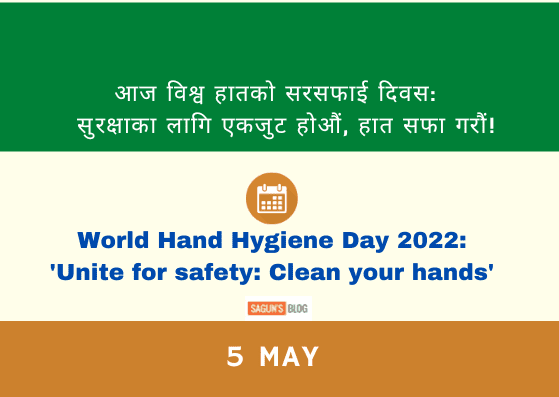
World Hand Hygiene Day 2022: Unite for safety: clean your hands

by Public Health Update May 5, 2022
written by Public Health Update

Overview

The World Hand Hygiene Day aims to maintain global promotion, visibility and sustainability of hand hygiene in health care and to ‘bring people together’ in support of hand hygiene improvement around the world. The SAVE LIVES: Clean Your Hands global campaign was launched in 2009 and celebrated annually on 5 May.
Read More (Public Health Events)

Calls to action

  • Health care workers: thank you for leading by example and encouraging others to clean their hands.
  • IPC practitioners: thank you for engaging health workers to be part of new hand hygiene initiatives.
  • Quality and safety leads: thank you for working with infection prevention colleagues to support hand hygiene improvement.
  • Facility managers: thank you for promoting a quality and safety culture to ensure clean hands.
  • Policy makers: thank you for prioritizing resources, training and programmes on hand hygiene.
  • People who use health care: thank you for getting involved in local hand hygiene campaigns and activities.

Source of info: WHO

5 key actions

To speed up progress, governments should prioritize 5 key actions:

  • Good governance through leadership, effective coordination and regulation, including clear policies on handwashing services and behaviours in all settings.
  • Smart public finance to ensure maximum impact and stimulate investments from households and the private sector.
  • Assessment of current capacity with respect to their hand hygiene policy and strategies, identification of gaps and development of capacity-building strategies based on the rigorous application of best practice.
  • Governments should address the need for consistent data on hand hygiene in order to inform decision-making and make investments strategic.
  • Governments and supporting agencies should encourage innovation, particularly on the part of the private sector, in order to roll out hand hygiene in all settings.

Download: State of the world’s hand hygiene


Recommended

  • World Hand Hygiene Day 2021! Seconds save lives–clean your hands!
  • Global Handwashing Day 2020: Hand Hygiene for All
  • Hand Hygiene Day! Nurses and midwives, clean care is in your hands!
  • World Hand Hygiene Day!! SAVE LIVES: Clean Your Hands 5 May 2017 : ‘Fight antibiotic resistance – it’s in your hands’
  • 5 moments for hand hygiene
  • Global Handwashing Day 2021: Our Future is at Hand – Let’s Move Forward Together.
  • Global Handwashing Day 2019: ”Clean Hands for All”
  • Clean Your Hands ! ”Clean care for all – it’s in your hands”
  • Global Handwashing Day 2018: Clean hands- a recipe for health
  • ‘Our Hands, Our Future’ – Global Handwashing Day 2017

Screen Shot 2022 05 03 at 10.00.23
WORLD HAND HYGIENE DAY
May 5, 2022 0 comments
0 FacebookTwitterPinterestLinkedinTumblrVKOdnoklassnikiRedditStumbleuponWhatsappTelegramLINEPocketSkypeViberEmail
WHO issues rapid communication on updated guidance for the treatment of drug-resistant tuberculosis
Public Health UpdateCommunicable DiseasesInternational Plan, Policy & Guidelines

WHO issues rapid communication on updated guidance for the treatment of drug-resistant tuberculosis

by Public Health Update May 3, 2022
written by Public Health Update

02 May 2022 | Geneva: A rapid communication released by the World Health Organization (WHO) Global Tuberculosis Programme has announced upcoming updates to the guidance on the treatment of drug-resistant tuberculosis (DR-TB). These updates include shorter novel 6-month all-oral regimens for the treatment of multidrug- and rifampicin-resistant TB (MDR/RR-TB), with or without additional resistance to fluoroquinolones (pre-XDR-TB) as well as an alternative 9-month all-oral regimen for the treatment of MDR/RR-TB.

All treatment should be delivered under WHO-recommended standards, including patient-centred care and support, informed consent where necessary, principles of good clinical practice, active drug safety monitoring and management, and regular monitoring of patients and of drug resistance to assess regimen effectiveness.

“We now have more and much better treatment options for people with drug-resistant TB thanks to research generating new evidence. This is major progress compared to what was available even a few years ago, and will be of great benefit for people struggling with TB and drug-resistant TB, resulting in better outcomes, saving lives and reducing suffering.”, said Dr Tereza Kasaeva, Director of WHO’s Global TB Programme. “We now need all hands on deck to enable the rapid uptake of these guidelines, and to enable access to the new treatment options  for those in need.”

The Rapid Communication is released in advance of updated WHO consolidated guidelines expected later in 2022, to inform national TB programmes and other stakeholders of key changes in the treatment of DR-TB and to allow for rapid transition and planning at the country level. 

Download Updated Guidance

Recommended readings
  • National Strategic Plan to End Tuberculosis in Nepal
  • Global Tuberculosis Report 2021
  • Global Tuberculosis Report 2020
  • World Tuberculosis Day
  • Tuberculosis Free Nepal Declaration Initiative Implementation Guideline
  • National Tuberculosis Program Update in Nepal #WorldTBDay #EndTB
  • National TB Prevalence Survey, 2018-19 Key findings
  • World Tuberculosis Day 2020! It’s time to End TB!
  • National Guideline on Drug Resistant TB Management 2019, Nepal
  • National Tuberculosis Management Guideline 2019, Nepal
  • Global Tuberculosis Report 2019: Latest status of the tuberculosis epidemic
  • National TB Prevalence Survey, 2018-19 Key findings
  • New WHO recommendations to prevent tuberculosis aim to save millions of lives
  • World Health Organization (WHO) Information Note Tuberculosis and COVID-19
  • World Tuberculosis Day 2020! It’s time to End TB!
  • People-centred framework for tuberculosis programme planning and prioritization, User guide
  • Global Tuberculosis Report 2019: Latest status of the tuberculosis epidemic
  • Dissemination of Findings and Recommendations of Joint External Monitoring Mission(JEMM) of Nepal National Tuberculosis Program
  • National Tuberculosis Programme Annual Report 2018
  • National Strategic Plan for Tuberculosis Prevention, Care and Control 2016 – 2021
  • NTP, Nepal: New TB Treatment Algorithm & Regimen (Updated)
  • WHO announces landmark changes in MDR-TB treatment regimens
  • TB Vaccine results announce a promising step towards ending the emergency
  • 7 million people receive record levels of lifesaving TB treatment but 3 million still miss out

Similar days

  • World Tuberculosis Day 2021: The Clock Is Ticking
  • World Tuberculosis Day 2020! It’s time to End TB!
  • World Tuberculosis Day Observed with theme “It’s Time”
  • World Tuberculosis Day 2019 – It’s time ! ”Find Treat All #EndTB”
  • Important Message – World Tuberculosis Day 2018
  • World Tuberculosis Day – 24 March 2015
  • World Tuberculosis Day 2012 – ‘Stopping TB in My Lifetime’
  • Theme for World TB Day 2074- National Tuberculosis Centre
May 3, 2022 0 comments
0 FacebookTwitterPinterestLinkedinTumblrVKOdnoklassnikiRedditStumbleuponWhatsappTelegramLINEPocketSkypeViberEmail
World Asthma Day 2022: Closing Gaps in Asthma Care
PH Important DayPublic HealthPublic Health Events

World Asthma Day 2022: Closing Gaps in Asthma Care

by Public Health Update May 3, 2022
written by Public Health Update

Overview

World Asthma Day (WAD) is organized by the Global Initiative for Asthma, (GINA), a WHO collaborative organization founded in 1993.  WAD is held each May to raise awareness of Asthma worldwide.

WAD 2022

GINA has chosen ‘Closing Gaps in Asthma Care’ as the theme for the 2022 World Asthma Day.

There are a number of gaps in asthma care which require intervention in order to reduce preventable suffering as well as the costs incurred by treating uncontrolled asthma.

Current gaps in asthma care include:

  • in equal access to diagnosis and treatment (medicine)
  • between care for different socioeconomic, ethnic and age groups
  • between wealthy and poorer communities and countries;
  • in communication and care across the primary/secondary/tertiary care interface
  • in communication and education provided for people with asthma, (quality of asthma care plans vs)
  • in asthma knowledge and asthma awareness between health care providers
  • in prioritization between asthma and other long term conditions
  • between prescribing inhalers and monitoring adherence and ability to use these devices;
  • exist for the general public’s (non-asthmatics) and health care professional’s awareness and understanding that asthma is a chronic (not acute) disease.
  • between scientific evidence and actual delivery of care for people with asthma.

More info: Global Initiative for Asthma (GINA)


World Asthma Day

Key facts 

  • Asthma is one of the major noncommunicable diseases. It is a chronic disease of the the air passages of the lungs which inflames and narrows them.
  • Some 235 million people currently suffer from asthma. It is a common disease among children.
  • Most asthma-related deaths occur in low- and lower-middle income countries.
  • According to the latest WHO estimates, released in December 2016, there were 383000 deaths due to asthma in 2015.
  • The strongest risk factors for developing asthma are inhaled substances and particles that may provoke allergic reactions or irritate the airways.
  • Medication can control asthma. Avoiding asthma triggers can also reduce the severity of asthma.
  • Appropriate management of asthma can enable people to enjoy a good quality of life.

WHO FACT SHEET (31 August 2017)

May 3, 2022 0 comments
0 FacebookTwitterPinterestLinkedinTumblrVKOdnoklassnikiRedditStumbleuponWhatsappTelegramLINEPocketSkypeViberEmail
Newer Posts
Older Posts

Search

Follow Us

Facebook Twitter Instagram Pinterest Linkedin Youtube

Categories

  • Abstracts (25)
  • Activities (91)
  • Adolescent Sexual and Reproductive Health (ASRH) (25)
  • Advice & Tips (4)
  • African Region (5)
  • AI and Health (1)
  • Annual Meeting (6)
  • Antimicrobial Resistance (AMR) (21)
  • Award (19)
  • Awards (16)
  • Books (9)
  • Call for Proposal, EOI & RFP (103)
  • Call for Research Participants (8)
  • Clinical Doctor Jobs (6)
  • Communicable Diseases (107)
  • Competition (20)
  • Conference (129)
  • Consultant (1)
  • Courses (205)
  • Dashboard (2)
  • Digital Health & Health Informatics (10)
  • Drug and Medicine (18)
  • Eastern Mediterranean Region (3)
  • Education (15)
  • Environment (3)
  • Environmental Health & Climate Change (47)
  • European Region (42)
  • Exchange Program (1)
  • Fact Sheet (117)
  • FCHVs (1)
  • Fellowships, Studentship & Scholarships (168)
  • Financial Aid (13)
  • Form Formats (2)
  • Fully funded (22)
  • Global Health News (434)
  • Grants and Funding Opportunities (193)
  • Guest Post (44)
  • Health Assistant Jobs (1)
  • Health Equity (7)
  • Health Financing and Economics (24)
  • Health in Data (115)
  • Health Insurance (5)
  • Health Jobs (52)
  • Health Literacy, Health Education & Promotion (50)
  • Health Organization Profile (42)
  • Health Systems (83)
  • Human Resource for Health (33)
  • Humanitarian Health & Emergency Response (44)
  • Hypertension (5)
  • Implementation Research (48)
  • International Health (3)
  • International Jobs & Opportunities (373)
  • International Plan, Policy & Guidelines (210)
  • Internships (4)
  • Jobs Vacancies (56)
  • Journals (8)
  • Life Style & Public Health Nutrition (39)
  • Live (10)
  • Master's Degree (48)
  • Maternal, Newborn and Child Health (88)
  • Mentorship Program (2)
  • Miscellaneous (16)
  • National Health News (158)
  • National Plan, Policy & Guidelines (468)
  • Neglected Tropical Diseases (NTDs) (51)
  • Non- Communicable Diseases (NCDs) (121)
  • Notice (103)
  • Nursing Jobs (6)
  • Nutritionist Jobs (1)
  • One Health (18)
  • Online & Distance Learning (22)
  • Online Courses (90)
  • Op-Ed Article (3)
  • Opportunities by Region (83)
  • Outbreak News (213)
  • Partially funded (6)
  • PCL Health Science Jobs (3)
  • PH Important Day (534)
  • Pharmacist Jobs (3)
  • PhD (54)
  • Photos (5)
  • Planetary Health (4)
  • PostDoc (14)
  • Presentation Slides (26)
  • Primary Health Care (25)
  • Provincial Plan, Policies and Guidelines (14)
  • Public Health (1,283)
  • Public Health Epidemiology & Biostatistics (13)
  • Public Health Events (306)
  • Public Health Information (20)
  • Public Health Innovation (9)
  • Public Health Jobs (52)
  • Public Health News (554)
  • Public Health Notes (120)
  • Public Health Opportunities (507)
  • Public Health Opportunity (491)
  • Public Health Programs (108)
  • Public Health Seminar (2)
  • Public Health Tools (1)
  • Public Health Update (564)
  • Quality Improvement & Infection Prevention (20)
  • Region of America (8)
  • Reports (184)
  • Research & Project Grants (39)
  • Research & Project Grants (32)
  • Research & Publication (647)
  • Research Articles (10)
  • Road Traffic Accidents (RTA) (9)
  • School of Public Health (60)
  • Self funded (2)
  • South-East Asia Region (26)
  • Success Stories (17)
  • Summer and Winter Courses (40)
  • Summer Courses (28)
  • Sustainable Development Goals (SDGs) (14)
  • Syllabus (61)
  • Symposium (9)
  • Tobacco Control (35)
  • Training (40)
  • Travel Grants (15)
  • Trick, Technique & Skills (8)
  • Uncategorized (3)
  • Undergraduate Degree (7)
  • Universal Health Coverage (36)
  • Universities (29)
  • Universities & School of Public Health (58)
  • Vacancy Announcement (26)
  • Vaccine Preventable Diseases (40)
  • Vector-Borne Diseases(VBDs) (30)
  • Videos (3)
  • View Points (1)
  • Webinar (4)
  • Western Pacific Region (13)
  • Workshop (18)
  • World News (117)
Post New Jobs: Vacancy Announcement Service

Public Health Update (Sagun’s Blog) is a popular public health portal in Nepal. Thousands of health professionals are connected with Public Health Update to get up-to-date public health updates, search for jobs, and explore opportunities.
#1 Public Health Blog for sharing Job opportunities and updates in Nepal

”Public Health Information For All”
– – Sagun Paudel, Founder

  • HOT JOBS
    • Public Health Jobs
    • Medical Doctor Jobs
    • Nursing Jobs
    • Health Assistant Jobs
    • Pharmacist Jobs
    • NGOs Jobs
    • Government Jobs
  • Top Categories
    • National Plan, Policy & Guidelines Top
    • Public Health Calendar
    • Fellowships & Scholarships
    • Health Systems
    • Health Organization Profiles
    • International Jobs & Opportunities
    • Public Health Opportunity

PUBLIC HEALTH INITIATIVE

    • Submit your Vacancies New
    • Partnership Opportunities

Contact: blog.publichealthupdate@gmail.com

https://wa.me/+9779856036932

Public Health Initiative, A Registered Non-profit organization – All Right Reserved. 2011-2024. Contact us. 

Facebook Twitter Instagram Youtube Envelope
Public Health Update
  • Home
  • Public Health
    • Home 1
      • Adolescent Sexual and Reproductive Health (ASRH)
      • Antimicrobial Resistance (AMR)
      • Communicable Diseases
      • Digital Health & Health Informatics
      • Environmental Health & Climate Change
      • Health Financing and Economics
      • Health Equity
    • Home 2
      • Health Literacy, Health Education & Promotion
      • Human Resource for Health
      • Humanitarian Health & Emergency Response
      • Implementation Research
      • International Health
      • Life Style & Public Health Nutrition
      • Maternal, Newborn and Child Health
    • Home 3
      • Neglected Tropical Diseases (NTDs)
      • Non- Communicable Diseases (NCDs)
      • One Health
      • Planetary Health
      • Public Health Epidemiology & Biostatistics
      • Primary Health Care
      • Quality Improvement & Infection Prevention
    • Home 4
      • Road Traffic Accidents (RTA)
      • Sustainable Development Goals (SDGs)
      • Tobacco Control
      • Universal Health Coverage
      • Vaccine Preventable Diseases
      • Vector-Borne Diseases(VBDs)
      • Notices
  • Public Health Update
    • Home 1
      • Public Health News
      • Global Health News
      • Outbreak News
      • National Health News
      • COVID-19
    • Home 2
      • Fact Sheet
      • Health in Data
      • PH Important Day
      • Public Health Events
      • Public Health Programs
    • Home 3
      • Health Systems
      • Health Insurance
      • Health Organization Profile
      • Success Stories
      • Public Health Innovation
  • Public Health Opportunities
    • Fully funded
    • Travel Grants
    • Grants and Funding Opportunities
    • Opportunities by Region
    • International Jobs & Opportunities
    • Research & Project Grants
    • Fellowships, Studentship & Scholarships
    • Conference
  • Jobs
    • Home 1
      • Health Jobs
      • Public Health Jobs
      • Clinical doctor Jobs
      • Health Assistant Jobs
      • Nursing Jobs
      • PCL Health Science Jobs
    • Home 2
      • Dental Jobs
      • Pharmacist Jobs
      • TSLC (Health Jobs)
      • Laboratory Jobs
      • Nutritionist Jobs
  • Downloads
    • International Plan, Policy & Guidelines
    • National Plan, Policy & Guidelines
    • Reports
    • Books
    • Research Articles
  • School of Public Health
    • Home 1
      • Courses
      • Master’s Degree
      • Undergraduate Degree
      • PhD
    • Home 2
      • Universities
      • Syllabus
      • Public Health Notes
      • Mentorship Program
      • Startup Project
    • Home
      • Summer and Winter Courses
      • Summer Courses
      • Online Courses
      • Workshop
      • Training
Public Health Update
  • Home
  • Public Health
    • Home 1
      • Adolescent Sexual and Reproductive Health (ASRH)
      • Antimicrobial Resistance (AMR)
      • Communicable Diseases
      • Digital Health & Health Informatics
      • Environmental Health & Climate Change
      • Health Financing and Economics
      • Health Equity
    • Home 2
      • Health Literacy, Health Education & Promotion
      • Human Resource for Health
      • Humanitarian Health & Emergency Response
      • Implementation Research
      • International Health
      • Life Style & Public Health Nutrition
      • Maternal, Newborn and Child Health
    • Home 3
      • Neglected Tropical Diseases (NTDs)
      • Non- Communicable Diseases (NCDs)
      • One Health
      • Planetary Health
      • Public Health Epidemiology & Biostatistics
      • Primary Health Care
      • Quality Improvement & Infection Prevention
    • Home 4
      • Road Traffic Accidents (RTA)
      • Sustainable Development Goals (SDGs)
      • Tobacco Control
      • Universal Health Coverage
      • Vaccine Preventable Diseases
      • Vector-Borne Diseases(VBDs)
      • Notices
  • Public Health Update
    • Home 1
      • Public Health News
      • Global Health News
      • Outbreak News
      • National Health News
      • COVID-19
    • Home 2
      • Fact Sheet
      • Health in Data
      • PH Important Day
      • Public Health Events
      • Public Health Programs
    • Home 3
      • Health Systems
      • Health Insurance
      • Health Organization Profile
      • Success Stories
      • Public Health Innovation
  • Public Health Opportunities
    • Fully funded
    • Travel Grants
    • Grants and Funding Opportunities
    • Opportunities by Region
    • International Jobs & Opportunities
    • Research & Project Grants
    • Fellowships, Studentship & Scholarships
    • Conference
  • Jobs
    • Home 1
      • Health Jobs
      • Public Health Jobs
      • Clinical doctor Jobs
      • Health Assistant Jobs
      • Nursing Jobs
      • PCL Health Science Jobs
    • Home 2
      • Dental Jobs
      • Pharmacist Jobs
      • TSLC (Health Jobs)
      • Laboratory Jobs
      • Nutritionist Jobs
  • Downloads
    • International Plan, Policy & Guidelines
    • National Plan, Policy & Guidelines
    • Reports
    • Books
    • Research Articles
  • School of Public Health
    • Home 1
      • Courses
      • Master’s Degree
      • Undergraduate Degree
      • PhD
    • Home 2
      • Universities
      • Syllabus
      • Public Health Notes
      • Mentorship Program
      • Startup Project
    • Home
      • Summer and Winter Courses
      • Summer Courses
      • Online Courses
      • Workshop
      • Training
Public Health Initiative, A Registered Non-profit organization – All Right Reserved. 2011-2023