Public Health Update
  • Home
  • Public Health Update
  • Nepal Health Jobs
    • Public Health Job Board
    • Organization List
  • Opportunities
    • Fellowships, Studentship & Scholarships
    • Grants and Funding Opportunities
    • Fully funded
    • Conference
  • Downloads
    • International Plan, Policy & Guidelines
    • National Plan, Policy & Guidelines
    • Reports
    • Public Health Notes
    • Syllabus
    • Form Formats
  • School of Public Health
    • PhD
    • Master’s Degree
    • Online Courses
  • Notice
  • Home
  • Public Health Update
  • Nepal Health Jobs
    • Public Health Job Board
    • Organization List
  • Opportunities
    • Fellowships, Studentship & Scholarships
    • Grants and Funding Opportunities
    • Fully funded
    • Conference
  • Downloads
    • International Plan, Policy & Guidelines
    • National Plan, Policy & Guidelines
    • Reports
    • Public Health Notes
    • Syllabus
    • Form Formats
  • School of Public Health
    • PhD
    • Master’s Degree
    • Online Courses
  • Notice
LOGIN / REGISTER
Public Health Update
SUBSCRIBE
Public Health Update
  • Home
  • Public Health Update
  • Nepal Health Jobs
    • Public Health Job Board
    • Organization List
  • Opportunities
    • Fellowships, Studentship & Scholarships
    • Grants and Funding Opportunities
    • Fully funded
    • Conference
  • Downloads
    • International Plan, Policy & Guidelines
    • National Plan, Policy & Guidelines
    • Reports
    • Public Health Notes
    • Syllabus
    • Form Formats
  • School of Public Health
    • PhD
    • Master’s Degree
    • Online Courses
  • Notice

All Right Reserved. Designed and Developed by PenciDesign

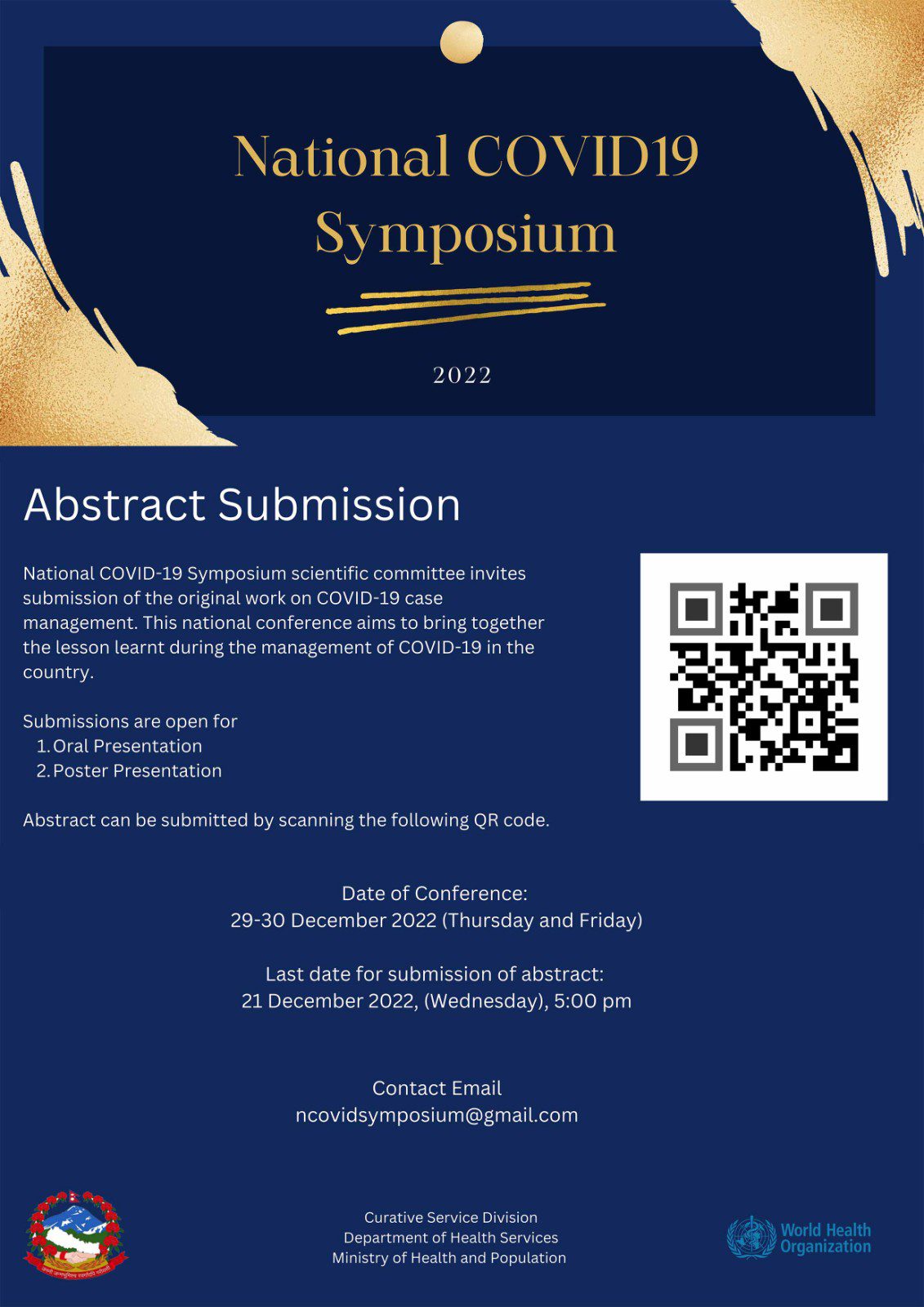
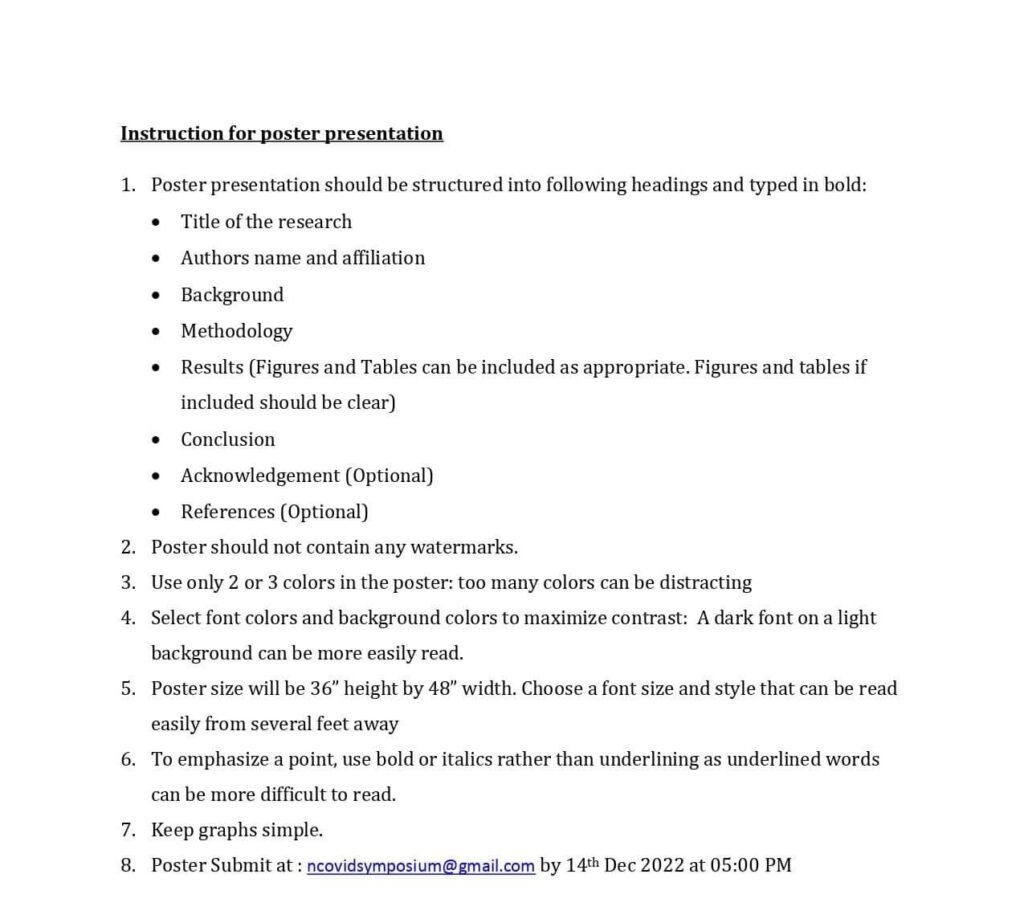
Call for Abstracts! National COVID-19 Symposium
ConferenceNoticePublic HealthSymposium

Call for Abstracts! National COVID-19 Symposium

by Public Health Update December 13, 2022
written by Public Health Update

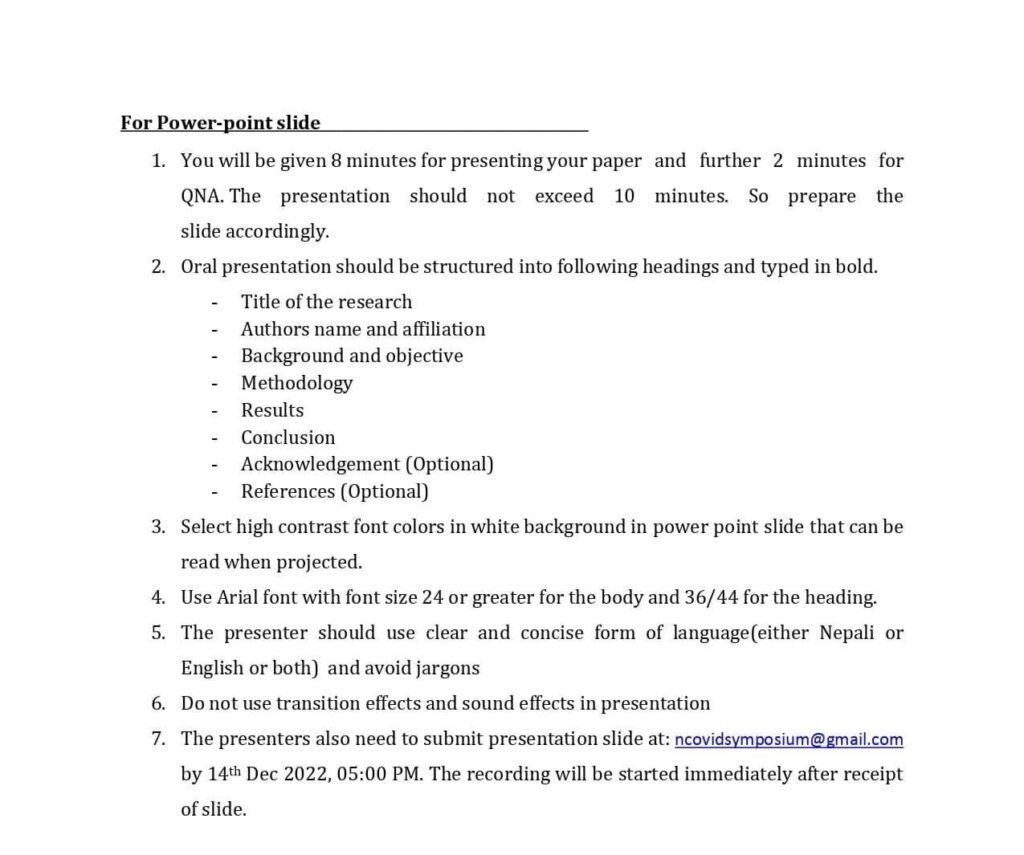
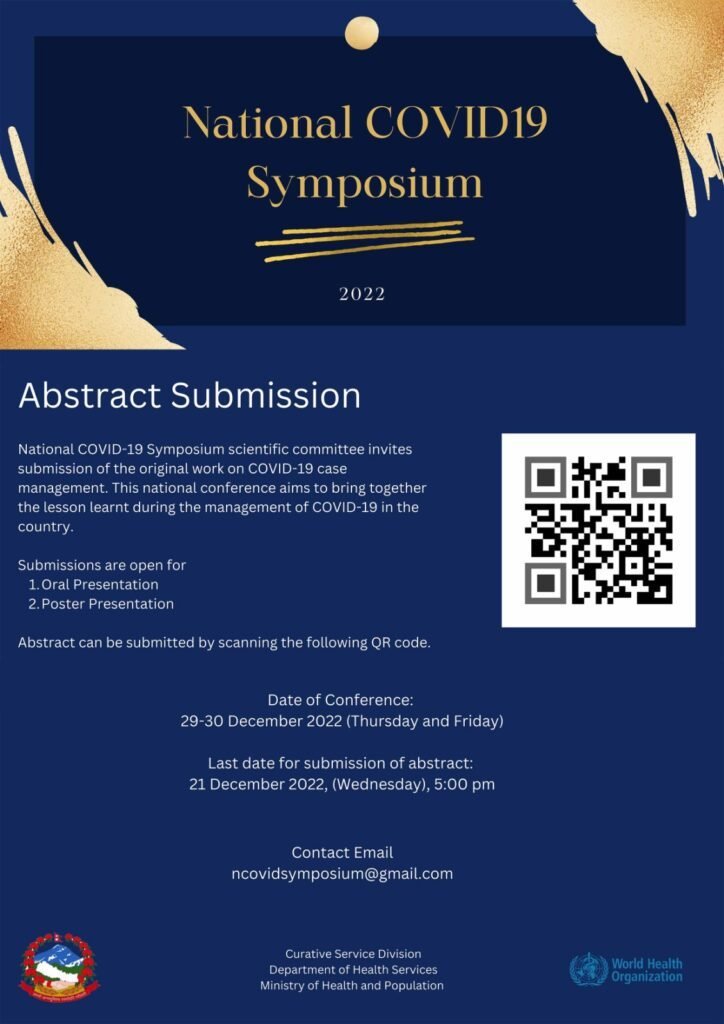
The National COVID-19 symposium scientific committee invites submission of the original work on COVID-19 case management. The National Conference aims to bring together the lesson learnt during the management of COVID-19 in Nepal.

Submission are open for;

  • Oral presentation
  • Poster presentation

Abstract can submitted by scanning the QR code or via email or GOOGLE FORM.

Date of conference: 29-30 December 2022 (Thursday and Friday)

Last date for submission: 21 December 2022, (Wednesday), 5:00 PM

Contact: ncovidsymposium@gmail.com

COVID
COVID 19 in Nepal
319736328 873706793662905 290113205002501755 n


Do you have a website? Looking for the best hosting provider? Here’s a discount code.

Latest Public Health Jobs

Latest Posts

  • International Wellness Day: Promoting Global Wellness for All
  • Summit Declaration: The 12th National Summit of Health and Population Scientists in Nepal
  • Joint political declaration on the reform of the global health architecture
  • World Health Day 2026: Together for Health. Stand with Science.
  • World Water Day 2026 | Water & Gender Equality

Thanks for visiting us.
Disclaimer: The resources, documents, guidelines, and information on this blog have been collected from various sources and are intended for informational purposes only. Information published on or through this website and affiliated social media channels does not represent the intention, plan, or strategies of an organization that the initiator is associated with in a professional or personal capacity, unless explicitly indicated.
If you have any complaints, information, or suggestions about the content published on Public Health Update, please feel free to contact us at blog.publichealthupdate@gmail.com.
#StayUpdated


  • WordPress
  • Link
  • Facebook
  • Mail
  • Facebook
  • Twitter
  • Twitter
  • LinkedIn
  • Instagram
  • Facebook
December 13, 2022 0 comments
0 FacebookTwitterPinterestLinkedinTumblrVKOdnoklassnikiRedditStumbleuponWhatsappTelegramLINEPocketSkypeViberEmail
Universal Health Coverage
Public Health

International Universal Health Coverage Day: Achieve Health for All through All for Health

by Public Health Update December 12, 2022
written by Public Health Update

International Universal Health Coverage Day: Achieve Health for All through All for Health By Dr Poonam Khetrapal Singh, WHO Regional Director for South-East Asia

On International Universal Health Coverage (UHC) Day, WHO and its Member States in the South-East Asia Region are highlighting the urgent need for whole-of-government, whole-of-society action to reorient health systems towards quality, accessible, affordable and comprehensive primary health care (PHC), which provides the strongest, most efficient foundation to achieve UHC and health security. 

Globally, at least half of all people do not receive health services they need. Over 996 million people spend at least 10% of their household income on health care. In 2017, around 299 million people in the Region faced catastrophic health spending, and an estimated 117 million people in the Region were pushed or further pushed below the purchasing power parity poverty line of US$ 1.90 a day. 

Since 2014, the South-East Asia Region has sought to achieve UHC as a Flagship Priority, recognizing that UHC is central to improve population health and well-being and enhance human capital for sustainable social and economic growth. Between 2010 and 2019, the Region increased its UHC service coverage index from 47 to 61. Between 2000 and 2018, the Region reduced out-of-pocket (OOP) spending on health from 50% to 40%, and between 2000 and 2017, reduced the number of households impoverished or further impoverished from OOP spending from 30% to 6%. Since 2014, the density of doctors, nurses and midwives in the Region has improved by over 30%, with nine countries now above the first WHO threshold of 22.8 health workers per 10 000 population, compared with six in 2014. 

Five countries of the Region have already achieved the Sustainable Development Goal targets for under-five and neonatal mortality. Between 2000 and 2020, the Region achieved a 34% decline in TB incidence rates, and by the end of 2020, had met each of the Global Technical Strategy for Malaria milestones for mortality and morbidity. Since 2016, six countries of the Region have eliminated at least one neglected tropical disease, and all countries continue to strengthen PHC services to prevent, detect, control and treat noncommunicable diseases. This is in accordance with Region-wide efforts to reorient health systems towards quality, accessible, affordable and comprehensive PHC, as per the Region’s Strategy for PHC, launched on 12 December 2021, as well as its newly adopted Roadmap on Health Security and Health System Resilience for Emergencies 2023–2027.   

Gaps and challenges nevertheless persist and have been exacerbated by the COVID-19 crisis and other global events. Today, tens of millions more people in the Region have been pushed into extreme poverty, aggravating the social and economic determinants of health, and increasing the risk of catastrophic health spending and foregone care. In some programme areas, health service disruptions have halted and even reversed progress. 

Intense macro-fiscal pressures mean that in the recovery from the COVID-19 crisis, there is no guarantee that health will be prioritized. Now more than ever, whole-of-government, whole-of-society action is needed to protect, promote and support health and well-being, recognizing that Health for All will only be achieved if together we are All for Health. 

For that, WHO is calling for action in several key areas. First, multisectoral action to protect, promote and support health and well-being must be strengthened, and WHO’s health-in-all-policies approach adopted. Across all sectors, and in all settings, decision-makers must be sensitized and empowered to promote health and well-being and help mitigate its social and economic determinants. Second, social participation must be mainstreamed within health system governance and decision-making. It is imperative that policy makers and health service providers directly engage with the people they serve, including through spaces and mechanisms that are participatory and inclusive, that minimize power asymmetries, and are oriented towards those who are at-risk of or already being left behind.    

Third, legal frameworks must be developed and implemented to assist populations to enjoy the Right to Health through UHC. Evidence shows that well-designed legislation that protects and promotes population health increases social participation, and with it, accountability. It can also help ensure that whatever the fiscal outlook, health and well-being is allocated adequate, sustained and reliable public funds.     

Fourth, amid the COVID-19 response and recovery, financing for health and well-being generally, and PHC specifically, must be maintained and increased. For this, among other evidence-based strategies, WHO is calling for increased taxation of unhealthy products such as tobacco, alcohol, highly processed food and sugar-sweetened beverages. 

We have a once-in-a-century opportunity to build the Region and world we want – a Region and world that is healthier, more equitable, resilient, sustainable and health-secure. Towards that goal, WHO will continue to provide Member States its ongoing and unmitigated support, for a South-East Asia Region in which all people can access quality health services, when and where they need them, without financial hardship. 


Recommended readings

  • Critical considerations and actions for achieving universal access to sexual and reproductive health in the context of universal health coverage through a primary health care approach
  • Universal Health Coverage Day 2020! Health For All: Protect Everyone!
  • Bridging a Gap in Universal Health Coverage for the Poorest Billion
  • Political Declaration of the High-level Meeting on Universal Health Coverage
  • Countries must invest at least 1% more of GDP on PHC to eliminate glaring coverage gaps
  • Astana Declaration on Primary Health Care 2018
  • WHO establishes Council on the Economics of Health for All
  • Health: A Political Choice – Act Now, Together [Book]
  • Bridging a Gap in Universal Health Coverage for the Poorest Billion
  • New evaluation of universal health coverage shows that the world will likely fall short of WHO goal
  • World Health Statistics 2020: Monitoring health for the SDGs
  • International Universal Health Coverage Day: Keep the Promise!
  • 2019 Monitoring Report: Primary Health Care on the Road to Universal Health Coverage
December 12, 2022 1 comment
0 FacebookTwitterPinterestLinkedinTumblrVKOdnoklassnikiRedditStumbleuponWhatsappTelegramLINEPocketSkypeViberEmail
TB Vaccine Advocacy Fellowship 2023
Communicable DiseasesFellowships, Studentship & ScholarshipsInternational Jobs & OpportunitiesPublic Health OpportunitiesPublic Health Opportunity

TB Vaccine Advocacy Fellowship 2023

by Public Health Update December 11, 2022
written by Public Health Update

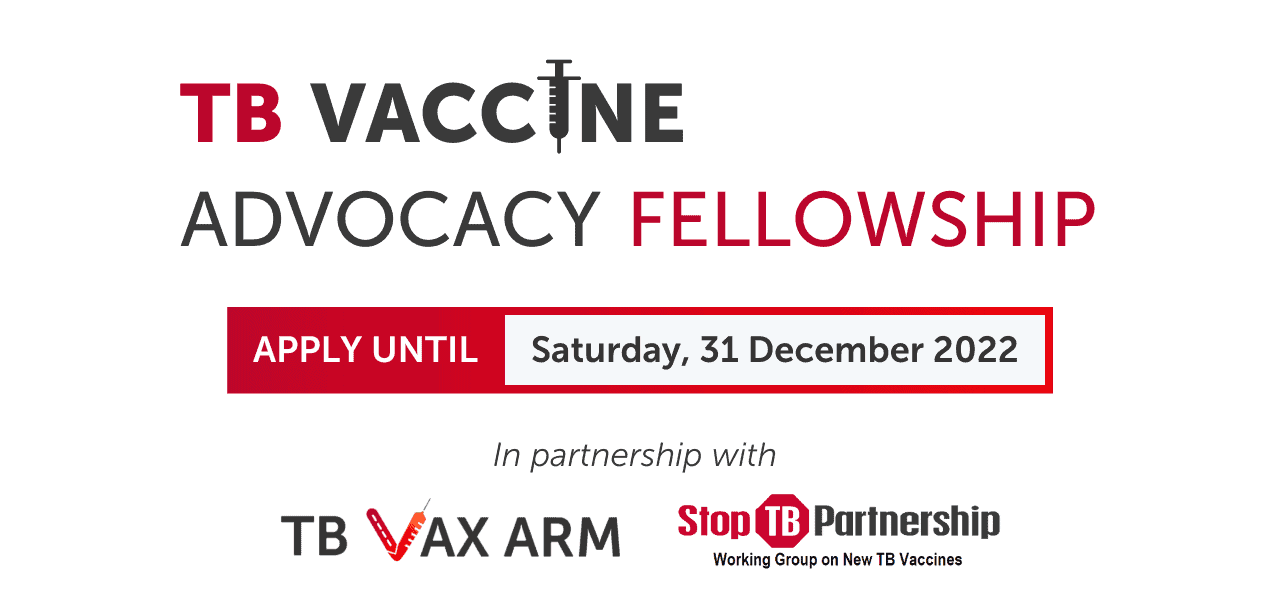
The TB Vaccine Advocacy Roadmap (TB Vax ARM) and Stop TB Partnership Working Group on New TB Vaccines are pleased to announce a new advocacy fellowship program, set to take place in February 2023 in the run up to World TB Day. The program will convene six fellows representing TB affected communities, advocates, and early career researchers from high TB burden countries for an online skill building and co-learning program. The goal of the program is to help cultivate a new generation of TB vaccine R&D advocates and stimulate more diverse advocacy efforts for TB vaccine R&D ahead of the UNHLM on TB in September 2023 and beyond.

Starting during the first week of February, the fellowship will feature approximately 15 hours of guided and self-guided working sessions over the course of four weeks, ending in the first week of March. Colleagues from the TB Vax ARM network will provide the fellows with learning moments throughout and short pre-session  assignments. Fellows will work together to develop an actionable campaign that can be implemented for World TB Day and hone their skills to develop and contribute to future advocacy campaigns.

Who can apply?

  • Do you want to strengthen your knowledge and understanding of TB vaccine R&D?
  • Are you interested in developing your advocacy skills in different formats and across stakeholder groups?
  • Are you a member of an affected community, an advocate, or an Early Career Researcher and from a high TB burden country?

How to apply

  • You can apply for the fellowship by clicking the Apply Now button below. The application should take no more than 30-45 minutes!
  • Applications close 23 December at 23:59 Eastern Time
  • Short-listed candidates will be asked to participate in a brief interview over Zoom during the first weeks of January 2023

What will fellows receive?

  • A stipend (fixed payment)
  • An opportunity to build their social media and advocacy skills
  • Advocacy opportunities via the TB Vax ARM network and the WGNV

APPLY NOW: CLICK HERE


Do you have a website? Looking for the best hosting provider? Here’s a discount code.

Latest Public Health Jobs

Latest Posts

  • International Wellness Day: Promoting Global Wellness for All
  • Summit Declaration: The 12th National Summit of Health and Population Scientists in Nepal
  • Joint political declaration on the reform of the global health architecture
  • World Health Day 2026: Together for Health. Stand with Science.
  • World Water Day 2026 | Water & Gender Equality

Thanks for visiting us.
Disclaimer: The resources, documents, guidelines, and information on this blog have been collected from various sources and are intended for informational purposes only. Information published on or through this website and affiliated social media channels does not represent the intention, plan, or strategies of an organization that the initiator is associated with in a professional or personal capacity, unless explicitly indicated.
If you have any complaints, information, or suggestions about the content published on Public Health Update, please feel free to contact us at blog.publichealthupdate@gmail.com.
#StayUpdated


  • WordPress
  • Link
  • Facebook
  • Mail
  • Facebook
  • Twitter
  • Twitter
  • LinkedIn
  • Instagram
  • Facebook
December 11, 2022 1 comment
0 FacebookTwitterPinterestLinkedinTumblrVKOdnoklassnikiRedditStumbleuponWhatsappTelegramLINEPocketSkypeViberEmail
MRC London Intercollegiate Doctoral Training Partnership Studentships
Grants and Funding OpportunitiesInternational Jobs & OpportunitiesPhDPublic HealthPublic Health OpportunitiesPublic Health Opportunity

MRC London Intercollegiate Doctoral Training Partnership Studentships

by Public Health Update December 10, 2022
written by Public Health Update

The London Intercollegiate Doctoral Training Partnership (MRC LID) is a partnership between St George’s, University of London (SGUL) and London School of Hygiene & Tropical Medicine (LSHTM), funded by the Medical Research Council (MRC).

MRC LID brings together two outstanding specialist schools to provide integrated skills training to develop a cohort of biomedical and public health scientists with world-class expertise in areas of strategic importance to UK and global medical research.

MRC LID has made widening participation and cultivating a supportive, inclusive, and diverse community of future scientific leaders core aspects of our approach to developing the DTP. MRC LID Equity, Diversity and Inclusion.

MRC LID is overseen by the board of management which comprises academics from both institutions.

TO APPLY

All applicants must follow this application process, regardless of whether they are applying for a research project based at SGUL or LSHTM.

To apply, complete an MRC LID Scholarship Online Application and submit the complete application with all required supplementary documents by 23:59 (GMT) on Sunday 15 January 2023.

Please use the MRC LID Application Guidance and FAQs and the MRC LID Online Application Portal Guide for this task. Do not submit until you are certain that you have nothing further to add to your application.

Please note: Applicants should not apply for admission to either LSHTM or SGUL at this stage.

Studentship Funding

For the duration of the award each MRC LID Studentship will provide :

  • tuition fees at the UKRI Studentship rate +
  • annual stipend at the UKRI Studentship rate with London weighting +
  • additional support for research and training.

MRC LID Studentships are set at the UKRI Studentship rates. All amounts are shown at the full-time (FTE) rate. These are pro-rated for periods of registration and mode of study.

STIPEND

The stipend is a tax-free living allowance. The MRC LID Studentship stipend is paid at the MRC stipend rate (including the London weighting of GBP 2,000.00 pa).

ADDITIONAL SUPPORT

Each studentship award includes annual allowances of

  • GBP 5,000.00 FTE research training and support grant (RTSG)
  • GBP 300.00 FTE travel and conference.

In addition, flexible funding is available for students who may need further funding. This funding is assessed and allocated on a competitive basis.

Eligibility Criteria

Qualifications

Applicants must hold, or expect to obtain before September 2023, an undergraduate degree (or equivalent qualifications gained outside the UK) in a relevant area. Ideally, the DTP would expect applicants to hold a 1st or 2.1 Honours undergraduate degree. Where applicants hold a 2.2 undergraduate degree (or equivalent), they should very clearly show their relevant prior experience and skills, and their suitability to undertake a PhD, in their application to provide a competitive comparison.

Those applying for +4 Studentships should also preferably hold, or expect to obtain, a relevant Masters, or have a combination of relevant qualifications and experience which demonstrates equivalent ability and attainment. This may include a period of employment or internship in a relevant environment. Both transcripts and employment history will be reviewed.

Some projects have more specific requirements. These are outlined in the project’s detailed information available via links from the Projects List.

Nationality

All applicants can apply for these studentships, regardless of nationality.

International students should note, though, that there some differences in awards offered to those who do not meet Home fee status requirements (mostly non-UK nationals) because of funder rules. These are:

  • MRC LID is limited to awarding up to two studentships per year to applicants who do not meet ‘Home’ fee status requirements. This means that competition is very strong.
  • The funder only provides tuition fees at the ‘Home’ fee rate. This means that further funds are required to cover the remainder of fees.

Please see MRC LID Applicant Guidance and FAQs for further information.

For further information on Home or Overseas Fee Status
UKCISA: Clear outline of UK government regulations which universities use to make fee status assessments.
UKRI: Information to prospective applicants from UKRI, which funds MRC LID awards

English Language Proficiency

International students may be required to show that they meet the English language requirements of their primary institution (where their proposed primary/lead supervisor is based).

  • LSHTM English language requirements
  • SGUL English language requirements for international students

Applicants who are offered a studentship award will be expected to provide relevant proof at that stage.

Read more and Apply


Do you have a website? Looking for the best hosting provider? Here’s a discount code.

Latest Public Health Jobs

Latest Posts

  • International Wellness Day: Promoting Global Wellness for All
  • Summit Declaration: The 12th National Summit of Health and Population Scientists in Nepal
  • Joint political declaration on the reform of the global health architecture
  • World Health Day 2026: Together for Health. Stand with Science.
  • World Water Day 2026 | Water & Gender Equality

Thanks for visiting us.
Disclaimer: The resources, documents, guidelines, and information on this blog have been collected from various sources and are intended for informational purposes only. Information published on or through this website and affiliated social media channels does not represent the intention, plan, or strategies of an organization that the initiator is associated with in a professional or personal capacity, unless explicitly indicated.
If you have any complaints, information, or suggestions about the content published on Public Health Update, please feel free to contact us at blog.publichealthupdate@gmail.com.
#StayUpdated


  • WordPress
  • Link
  • Facebook
  • Mail
  • Facebook
  • Twitter
  • Twitter
  • LinkedIn
  • Instagram
  • Facebook
December 10, 2022 0 comments
0 FacebookTwitterPinterestLinkedinTumblrVKOdnoklassnikiRedditStumbleuponWhatsappTelegramLINEPocketSkypeViberEmail
Global antimicrobial resistance and use surveillance system (‎GLASS)‎ report: 2022
Antimicrobial Resistance (AMR)Global Health NewsPublic HealthPublic Health NewsReports

Global antimicrobial resistance and use surveillance system (‎GLASS)‎ report: 2022

by Public Health Update December 10, 2022
written by Public Health Update

Overview

The WHO Global Antimicrobial Resistance and Use Surveillance System (GLASS) was launched in 2015 to foster AMR surveillance and inform strategies to contain AMR. The system started with surveillance of AMR in bacteria causing common human infections and has expanded its scope to include surveillance of antimicrobial consumption (AMC), invasive fungal infections, and a One Health surveillance model relevant to human health. To meet future challenges, it is in continuous evolution to enhance the quality and representativeness of data to inform the AMR burden accurately. As of the end of 2022, 127 countries, territories and areas participate in GLASS. 

The fifth GLASS report, produced in collaboration with Member States, summarizes 2020 data on AMR rates in common bacteria from countries, territories, and areas. The report brings new features, including analyses of population testing coverage or AMR trends. For the first time, the report presents 2020 data on AMC at the national level. A new interactive dashboard allow users to explore AMR and AMC global data, country profiles and download the data.

This report marks the end of the early implementation phase of GLASS. In addition to presenting data collected through the latest data call, this report provides a summary of five years of national AMR surveillance data contributed to GLASS from its initiation, presents AMR findings in the context of progress of country participation in GLASS and in global AMR surveillance coverage and laboratory quality assurance systems at (sub)national level.

Patterns of antimicrobial consumption are presented by country with a particular focus on antibacterials. The report also presents the antimicrobial consumption according to the WHO AWaRe antibiotic classification, for penicillins and cephalosporines. From a One Health perspective, the report presents antimicrobial consumption data in the human sector expressed in tons to allow a comparison with antimicrobial consumption from other sectors (not included in this report). 

Download GLASS Report

Report signals increasing resistance to antibiotics in bacterial infections in humans and need for better data

A new World Health Organization (WHO) report reveals high levels of resistance in bacteria, causing life-threatening bloodstream infections, as well as increasing resistance to treatment in several bacteria causing common infections in the community based on data reported by 87 countries in 2020. 

For the first time, the Global Antimicrobial Resistance and Use Surveillance System (GLASS) report provides analyses for antimicrobial resistance (AMR) rates in the context of national testing coverage, AMR trends since 2017, and data on antimicrobial consumption in humans in 27 countries. Within six years, GLASS achieved participation from 127 countries with 72% of the world’s population. The report includes an innovative interactive digital format to facilitate data extraction and graphics. 

The report shows high levels (above 50%) of resistance were reported in bacteria frequently causing bloodstream infections in hospitals, such as Klebsiella pneumoniae and Acinetobacter spp. These life-threatening infections require treatment with last-resort antibiotics, such as carbapenems. However, 8% of bloodstream infections caused by Klebsiella pneumoniae were reported as resistant to carbapenems, increasing the risk of death due to unmanageable infections. 

Common bacterial infections are becoming increasingly resistant to treatments. Over 60% of Neisseria gonorrhoea isolates, a common sexually transmitted disease, have shown resistance to one of the most used oral antibacterials, ciprofloxacin. Over 20% of E.coli isolates – the most common pathogen in urinary tract infections – were resistant to both first-line drugs (ampicillin and co-trimoxazole) and second-line treatments (fluoroquinolones). 

“Antimicrobial resistance undermines modern medicine and puts millions of lives at risk,” said Dr Tedros Adhanom Ghebreyesus, WHO Director-General. “To truly understand the extent of the global threat and mount an effective public health response to AMR, we must scale up microbiology testing and provide quality-assured data across all countries, not just wealthier ones.” 

Although most resistance trends have remained stable over the past 4 years, bloodstream infections due to resistant Escherichia coli and Salmonella spp. and resistant gonorrhoea infections increased by at least 15% compared to rates in 2017. More research is needed to identify the reasons behind the observed AMR increase and to what extent it is related to raised hospitalizations and increased antibiotic treatments during the COVID-19 pandemic. The pandemic also meant that several countries were unable to report data for 2020.

New analyses show that countries with a lower testing coverage, mostly low- and middle-income countries (LMICs), are more likely to report significantly higher AMR rates for most “bug-drug” combinations. This may be (partly) due to the fact that in many LMICs, a limited number of referral hospitals report to GLASS. These hospitals often care for the sickest patients who may have received previous antibiotic treatment.

For example, the global median AMR levels were 42% (E. Coli) and 35% (Methicilin-resistant Staphylococcus aureus – MRSA) – the two AMR Sustainable Development Goal indicators. But when only countries with high testing coverage were considered, these levels were markedly lower at 11% and 6.8%, respectively. 

As for antimicrobial consumption in humans, 65% of 27 reporting countries met WHO’s target of ensuring that at least 60% of antimicrobials consumed are from the ‘ACCESS’ group of antibiotics, i.e. antibiotics which – according to the WHO AWaRE classification – are effective in a wide range of common infections and have a relatively low risk of creating resistance.

AMR rates remain difficult to interpret due to insufficient testing coverage and weak laboratory capacity, particularly in low- and middle-income countries. To overcome this critical gap, WHO will follow a two-pronged approach aiming at short-term evidence generation through surveys and long-term capacity building for routine surveillance. This will entail the introduction of representative national AMR prevalence surveys to generate AMR baseline and trend data for policy development and monitoring of interventions and an increase of quality-assured laboratories reporting representative AMR data at all levels of the health system.

Responding to trends of antimicrobial resistance requires high-level commitment from countries to boost surveillance capacity and provide quality assured data as well as action by all people and communities. By strengthening the collection of standardized quality AMR and AMC data, the next phase of GLASS will underpin effective data-driven action to stop the emergence and spread of AMR and protect the use of antimicrobial medicines for future generations.


Recommended

  • Quadripartite launches a new platform to tackle antimicrobial resistance threat to human and animal health and ecosystems
  • World Antimicrobial Awareness Week: Prevent antimicrobial resistance together
  • Urgent call for better use of existing vaccines and development of new vaccines to tackle AMR
  • Virtual AMR Innovation Mission UK 2021
  • Global Action Plan on Antimicrobial Resistance
  • World Antimicrobial Awareness Week 2020! United to preserve antimicrobials
  • Lack of new antibiotics threatens global efforts to contain drug-resistant infections
  • World Antibiotic Awareness Week: Prescription for action from WHO
  • Adopt and implement high-impact interventions to secure the future of antibiotics and rollback the global AMR crisis
  • Antimicrobial stewardship programmes in health-care facilities in low- and middle-income countries. A WHO practical toolkit
December 10, 2022 0 comments
0 FacebookTwitterPinterestLinkedinTumblrVKOdnoklassnikiRedditStumbleuponWhatsappTelegramLINEPocketSkypeViberEmail
World Malaria Report 2022
Communicable DiseasesPublic HealthReportsResearch & Publication

World Malaria Report 2022

by Public Health Update December 8, 2022
written by Public Health Update

Overview

Each year, WHO’s World malaria report offers in-depth information on the latest trends in malaria control and elimination at global, regional and country levels. The report highlights progress towards global targets and describes opportunities and challenges for curbing and eliminating the disease.

This year’s report includes 3 new sections on:

  • global and regional initiatives launched in 2021 and 2022;
  • global malaria surveillance and country-level case studies on surveillance systems assessments; and
  • research and development.

The report also includes an expanded section on threats to malaria control, with a focus on the declining effectiveness of insecticide-treated mosquito nets.

Highlights

  • No further increase in malaria deaths in 2021: in 2019, before the pandemic struck, there were an estimated 568 000 deaths worldwide. This estimate rose to 625 000 in the first year of the pandemic (2020) and then fell to 619 000 in 2021.
  • Malaria cases continued to rise between 2020 and 2021, although at a much slower rate than from 2019 to 2020: cases stood at an estimated 247 million in 2021, compared to 245 million in 2020 and 232 million in 2019.
  • The African Region shoulders the heaviest malaria burden: with an estimated 234 million cases and 593 000 deaths in 2021, the WHO African Region continues to be hardest hit by the disease (95% of cases and 96% of deaths globally).
  • Two-year impact of COVID disruptions on malaria cases and deaths: during the two peak years of the pandemic (2020 and 2021), COVID-related disruptions led to an additional 63 000 malaria deaths and an additional 13 million cases. The impact of disruptions on the delivery of key malaria services and interventions varied for different tools and contexts.
  • Disruptions in diagnosis and treatment: globally, an estimated 435 million diagnostic tests were performed in 2021 compared to 398 million in 2020 and 450 million in 2019. WHO surveys have shown that disruptions in diagnosis and treatment in the African Region eased considerably in the latter part of 2021, with seven countries reporting disruptions, compared to 16 in the second quarter of 2020.
  • Millions of malaria cases and deaths averted: an estimated 177 million cases and 949 000 deaths were averted in 2020, and a further 185 million cases and 997 000 deaths in 2021, compared with the estimated burden if case incidence and mortality rates had remained at the levels of 2000.

Tracking progress and gaps in the global response to malaria

The 2022 edition of the report finds that, despite disruptions to prevention, diagnostic and treatment services during the pandemic, countries around the world have largely held the line against further setbacks to malaria control. There were an estimated 619 000 malaria deaths globally in 2021 compared to 625 000 in the first year of the pandemic. In 2019, before the pandemic struck, the number of deaths stood at 568 000. Malaria cases continued to rise between 2020 and 2021, but at a slower rate than in the period 2019 to 2020. The global tally of malaria cases reached 247 million in 2021 compared to 245 million in 2020 and 232 million in 2019. 

Global messaging: World malaria report 2022

Response
Despite COVID-related disruptions to malaria prevention, testing and treatment services, and the often devastating impacts of the pandemic on health, social and economic systems, national malaria programmes and their partners largely held the line against further setbacks to malaria control in 2021.

Resilience
Despite these challenges, national malaria programmes have demonstrated their resilience through the worst of times. Targeted new strategies, restored funding and strengthened health systems could help countries regain lost ground and build an even more resilient response to malaria.

Risks
Efforts to curb malaria continue to face a convergence of threats, particularly in the African Region, which carries the heaviest burden of the disease. Disruptions during the pandemic together with other humanitarian crises, health system challenges, restricted funding, rising biological threats and a decline in the effectiveness of core disease-cutting tools are undermining progress towards global malaria goals.

Research
A promising R&D pipeline is poised to bring nextgeneration malaria control tools that could help accelerate progress towards global targets.

DOWNLOAD FULL REPORT

download Global messaging: World malaria report 2022
  • Countries in WHO South-East Asia Region renew commitment to eliminate malaria by 2030
  • World Malaria Day: “Harness innovation to reduce the malaria disease burden and save lives”
  • World Malaria Day
  • World Malaria Report 2021: Tracking progress against Malaria
  • Self-audit of the National Malaria Program using the Malaria Elimination Audit Tool
  • WHO recommends groundbreaking malaria vaccine for children at risk
  • National Malaria Laboratory Plan (2020-2025) and Malaria Laboratory Manual-2021
  • From 30 million cases to zero: China is certified malaria-free by WHO
  • Interim Guideline for Malaria Program During COVID-19 in Nepal (Updated)
  • WHO launches effort to stamp out malaria in 25 more countries by 2025
  • World Malaria Day 2021: Reaching the zero malaria target
  • El Salvador certified as malaria-free by WHO
  • WHO Guidelines for Malaria (Consolidated Guidelines for Malaria)
  • Malaria Risk Areas Micro-stratification 2020
December 8, 2022 1 comment
0 FacebookTwitterPinterestLinkedinTumblrVKOdnoklassnikiRedditStumbleuponWhatsappTelegramLINEPocketSkypeViberEmail
Progress of Health and Population Sector 2021/22 (2078/79 BS) [National Joint Annual Review Report]
Health SystemsNational Plan, Policy & GuidelinesPublic HealthReports

Progress of Health and Population Sector 2021/22 (2078/79 BS)

by Public Health Update December 7, 2022
written by Public Health Update

Progress of Health and Population Sector 2021/22 (2078/79 BS) [National Joint Annual Review Report]

Overview

This report highlights the major progress of the health and population sector against its outcomes particularly over the last NHSS implementation year (Fiscal Year [FY] 2021/22), summarises lessons learned, and sets out the way forward for the next implementation period. Nepal has seen steady progress in health outcomes, particularly in life expectancy, child survival and maternal health during the NHSS implementation period. During FY 2021/22 priority was given to establishing new health facilities, strengthening existing facilities, enhancing quality related interventions such as minimum service standards (MSS) and roll out of standard treatment protocol for basic health services, and equitable distribution of health services.

National Joint Annual Review Meeting Presentation Slides

Progress in major health indicators

Capture 6
Progress in major health indicators- Nepal

Major achievements

The major achievements of the health and population sector in the FY 2021/22 were:
Strategies

  • Finalisation of the “Nepal Health Sector-Strategic Plan (NHS-SP) 2022-2030” which has been proceeded for the endorsement. This sets the priorities and implementation framework for the sector as an operational plan of the National Health Policy, 2019 and an instrument of the SWAp in alignment with the sustainable development goals (SDGs)
  • Final draft of National Health Financing Strategy was developed in November 2021 through a participatory approach adopting rapid results initiatives and was proceeded for the endorsement.
  • National Strategy on Human Resources for Health 2020/21- 2029/30 was endorsed by the FMoHP in 2021. This new strategy assesses the situation of the HRH in Nepal and sets roadmap for the management of the human resources for future.

Information Management and surveys

  • The Integrated Health Information Management System (IHMIS) roadmap (2022-2030) has been endorsed in 2021. The roadmap aims to initiate coordinated mechanism for health information management for various health information systems and increase the use of information and digital technology management.
  • As envisioned in the IHMIS Roadmap, all HMIS tools have been revised after 9 years to align with ongoing health sector programmes and services, and their implementation have also been initiated from current FY.
  • The FMoHP continued to expand the electronic reporting of service data from HFs. In FY 2021/22, altogether 2,970 public health facilities submitted HMIS monthly reports electronically.
  • The final report of the Nepal Health Facility Survey (NHFS) 2021 has been published. The NHFS 2021 collected information from all different types of public, private and non governmental facilities covering all 77 districts of the country.
  • The Nepal Demographic and Health Survey (NDHS) 2022 has been completed, and its major findings has been disseminated in November 2022.
  • MoHP has been conducting a maternal mortality study basing on the Nepal Population and Housing Census (NPHC). While the data collection was accomplished following the population census, data analysis is being done. This study is expected to provide the robust estimates of the maternal mortality in Nepal and can be supportive to design necessary interventions to reduce such mortalities.

Epidemic response (COVID-19 and Dengue)

  • The daily monitoring, reporting and dissemination of COVID-19 (and Dengue for the latest months) status is being continued by the national Health Emergency Operations Centres (HEOCs) in coordination with concerned entities. Provincial HEOCs are functional in each of seven provinces.
  • The number of reported cases of COVID-19 has reduced. Progress has been made in vaccine coverage after the vaccination campaign officially started on 27 January 2021. The booster dose of COVID-19 was initiated in January 2022. The guideline for vaccination against COVID-19 among the group 5 to 11 years was developed, and the vaccination was initiated to that age group.
  • As of September 2022, 99.5% of the target population above 12 years (23,208,483) have received the first dose of the COVID-19 vaccine, and 95.7% (22,324,933) have received the full dose.

Procurement and supply chain management

  • The Public Procurement Strategic Framework (PPSF) for Management of Medicines and Medical Goods (2022/23-2026/27) has been endorsed to address the challenges related to procurement and supply chain management.
  • The process of developing Consolidated Annual Procurement Plan (CAPP) has been institutionalised at the Department of Health Services (DoHS). The electronic CAPP for the FY 2021/22 was prepared on time.
  • After the transformation of the federal procurement implementation plan (PIP) into the PPSF, the three provinces (Madhesh, Lumbini and Sudurpaschim) prepared their respective PIPs coherent with the federal PPSF.
  • The capacity development of the officials working on procurement and supply chain management through facilitation, procurement clinics, on-site coaching, and distance support were continued throughout the year. The orientation sessions were organised on costestimate, specification preparation, and bid evaluation in health sector procurement to the officials of Departments, Centres and Hospitals.

Infrastructure, assets management and service standards

  • A total of 467 designs were received for the establishment of Basic hospitals (primary level) by the end of October 2022, of which 178 have been approved; the rest are being updated for resubmission of revised drawings.
  • The inventory audit of 54 hospitals was conducted using Planning and Management of Assets in Health Services (PLAMAHS) in the FY 2021/22 and audit of additional 80 hospitals has been planned for the FY 2022/23.
  • Over the period from July 2021 to April 2022, FMoHP conducted various capacity enhancement events on health infrastructure, involving a total of 146 participants despite the restrictions created by the COVID-19 pandemic
  • Public hospitals and health facilities were assessed using MSS to improve the quality of health services. A digital data system was established to monitor the MSS score in FY 2021/22. The MSS score of a total of 118 hospitals comprising of federal, provincial and local level hospitals has been systematically monitored.
  • The Department of Ayurveda and Alternative Medicine (DoAA) developed the MSS for different levels of Ayurveda institutions (Federal, Provincial, District and Aaushadhalaya) and their implementation has been initiated Standard treatment protocols (STP) for basic health services and emergency health services were finalised was endorsed in 2021 and orientation was conducted for their implementation
  • A guideline for the disposal of medicine and medicinal waste has been developed to address the emerging issue of environmental and health hazards, and has been endorsed and distributed to all health institutions, provincial and local governments.

One-stop Crisis Management Centres (OCMCs), Social Service Units (SSUs) and Geriatric Health

  • Eight additional One-stop Crisis Management Centres (OCMCs) were established in 2021/22 which makes a total of 88 OCMC sites in 77 districts. In FY 2020/21, 11,400 survivors received services from the OCMCs. Six more OCMCs are planned for 2022/23. SSUs are operationalised in 58 hospitals and FMoHP has planned for an additional 29 SSUs in FY 2022/23.
  • The OCMCs provide free hospital-based health services including identification of survivors, treatment, psychosocial counselling, and medico-legal services, and coordinate with multisectoral agencies that provide survivors access to safe homes, legal protection, personal security and rehabilitation. They also refer clients for specialist health services as required.
  • Fifty OCMC staff nurses have been certified as psychosocial counsellors after successful completion of six-month long psychosocial counselling training from the National Health Training Centre (NHTC) and 40 OCMC focal persons are in-process to complete the counselling course to become certified counsellors.
  • Fifteen new Social Service Units (SSUs) were established in referral and district-level hospitals; the total number of SSUs has gone up to 58. More than 200,000 beneficiaries (Female 50%; Poor 47%, Senior Citizens 39%, People with disabilities 4%, Destitute 3.8%; GBV survivors 0.6% and others) received free or partially free service in 2021/22 from 58 SSUs. The FMoHP plans to establish new SSUs in 29 hospitals in FY 2022/23.
  • An additional twenty-five geriatric wards were established in different-level hospitals in 2021/22 making a total of 49 hospitals with geriatric wards. The FMoHP has the plan to establish new geriatric health services in 12 hospitals in FY 2022/23.
  • Geriatric Health Service Strategy (2078), Leave No One Behind (LNOB) Budget Marker Guideline for the health sector (2078), SSU Operational Guideline (2078), Geriatric Health Service Operational Guideline (2077), Geriatric Health Service Protocol (2079) have been developed/revised and endorsed.

Training and mentoring

  • The National Nursing and Midwifery Strategic Action Plan 2020-2030 has been developed with a projection of the nursing and midwifery workforce required to provide quality services
  • The NHTC developed training materials for 13 different areas; essential critical care, paediatric essential critical care, integrated training for vector-borne diseases, screening for infertility, ambulance driver, basic emergency medical technician training, social accountability, disability-related training for medical officers, management training for health section chiefs at the local level, orientation for elected bodies at the local level, acute respiratory distress syndrome management, public health leadership.
  • The NHTC has revised five existing training materials: Rural obstetric ultrasound training, infection prevention (IP) training, Voluntary Surgical Contraception (VSC)/minilap training for MDGP/OBGYN/Surgeons, basic Intensive Care Unit (ICU) training for nurses, first-trimester safe abortion training for MDGP/OBGYN.
  • NHTC conducted 29 different types of training of trainers and basic training through which 10,882 human resources were trained.
  • The Family Welfare Division (FWD) and NHTC/ Provincial Health Training Centre (PHTC) trained 61 MNH clinical mentors from province one, Gandaki, Karnali, Madhesh, Sudurpashchim and Lumbini province, and established clinical mentors training sites at Surkhet provincial hospital Karnali province, Pokhara academy of Health Science, Gandaki Province and Janakpur Provincial hospital.
  • The Nursing and Social Security Division (NSSD) started clinical mentoring of nursing staff on routine nursing care at six federal hospitals. A learning resource package for nursing mentoring covering nine areas was developed, thirteen mentors were developed, and 165 nursing staff received in-house mentoring.
  • The training package on Gender Responsive Budgeting (GRB) and LNOB Budget Marker was finalised and approved by FMoHP. Based on this training package, training was provided to health staff from 5 provincial health ministries at NHTC.

Service expansion

  • The health insurance scheme is being implemented in all 77 districts with exception of some local levels in Kathmandu. Approximately 20.4% of the population have enrolled in the scheme by the end of 2021/22 while there was 28.9% drop out. Health Insurance Board (HIB) has initiated online systems for the renewal and has planned to initiate online enrolment.
  • The National Ambulance Guideline 2021 has been developed and endorsed to facilitate effective and timely referral of complicated cases. The guideline aims to strengthen prehospital care services and defines different categories of ambulance services.
  • The Department of Ayurveda and Alternative Medicine (DoAA) published the implementation plan and handbook for the effective implementation of Citizen Wellbeing Programme (Nagarik Aarogya Karyakram). Healthy lifestyle management programme under Nagarik Aarogya Karyakram (Citizen Wellbeing Programme) was conducted from 380 Ayurveda health institutions and 298 citizen wellbeing centres.
  • Around 7,700,000 children received vaccination against Typhoid through Typhoid vaccination campaign, and Typhoid vaccination has been integrated to routine immunisation programme
  • The TB Free Nepal Declaration Initiative was initiated in 25 local governments based on the TB Free Nepal Declaration Guideline 2020/21.
  • A non-Communicable Diseases (NCD) multisector action plan has been endorsed and a guideline has been prepared to facilitate the NCD screening.
  • The National Health Education, Information and Communication Centre (NHEICC) launched the SAFER initiative that include: Strengthening restrictions on alcohol availability; Advancing and enforcing drink driving counter measures; Facilitating access to screening, brief interventions and treatment; Enforcing bans or comprehensive restrictions on alcohol advertising, sponsorship, and promotion; and Raising prices on alcohol through excise taxes and pricing policies;
  • The Gender Equality and Social Inclusion (GESI) strategy of Madhesh province was developed and approved by the provincial government. A number of activities in the strategy were included in the Annual Workplan and Budget (AWPB) for implementation.
  • Lumbini province conducted an assessment on disability-inclusive health services at hospitals and health centres. The findings of the assessment were included in the current AWPB on a priority basis.

Download full report


Recommended readings

  • Progress of the Health and Population Sector, 2019/20
  • Progress of the Health and Population Sector, 2020/21 (NJAR Report)
  • Annual Report of the Department of Health Services (DoHS) 2077/78 (2020/2021)
  • Nepal Health Sector Strategy (NHSS) Mid Term Review Report
  • Preliminary Findings: Nepal Health Facility Survey 2021
December 7, 2022 0 comments
0 FacebookTwitterPinterestLinkedinTumblrVKOdnoklassnikiRedditStumbleuponWhatsappTelegramLINEPocketSkypeViberEmail
United States Embassy Youth Council Nepal
Public HealthPublic Health OpportunitiesPublic Health Opportunity

Application Open! United States Embassy Youth Council Nepal 2023

by Public Health Update December 4, 2022
written by Public Health Update

The United States Embassy Youth Council (USYC) is now accepting applications for the 2023 cohort. The deadline for submitting the application is 11:59 PM (GMT +5:45), December 10, 2022. The U.S. Mission designed the USYC as a professional development and mentoring program to assist the council members in developing leadership skills to solve critical issues in their communities. Throughout the duration of their membership term, council members participate in networking opportunities, work on community engagement projects, and attend essential strategic events. The U.S. Embassy in Kathmandu has a cooperative agreement with We Inspire Nepal (WIN), a youth-led social change non-profit organization, to manage the USYC program.

Approximately fifty-five individuals, between 20-30 years old, are accepted to the Council every year. We strongly encourage as many people to apply as possible for this upcoming cohort. Priority will be given to applicants from marginalized and underrepresented communities in Nepal.
Who can apply?

a. Nepalese citizens between the ages of 20-30 years old. 
b. Students, professionals, opinion leaders, and activists willing to make a difference.
c. Applicants willing to commit to active involvement in the Council for one year. We understand that people have professional, academic, and personal commitments; full participation in the program will demand a degree of active engagement outside of your regular and ongoing activities.
d. Applicants from LGBTQI+, Dalit, religious, and/or ethnic minority communities. 

Selection Methods: After the initial round of applications closes, the U.S. Embassy and WIN will recommend the strongest candidates to proceed to the second phase. During this phase, applicants will be requested to provide additional information on their strengths, suitability for the program, and achievements. Finally, a panel will select the top 50-55 applicants to be members of the USYC for the 2023 cohort.
FAQs: http://www.usycn.org/faq.html
Website: http://www.usycn.org/ 
Additionally, see the list of activities of previous USYC cohorts on our Facebook page:
https://www.facebook.com/usycn

December 4, 2022 1 comment
0 FacebookTwitterPinterestLinkedinTumblrVKOdnoklassnikiRedditStumbleuponWhatsappTelegramLINEPocketSkypeViberEmail
Call for Application for Master in Health Informatics
Call for Proposal, EOI & RFPCoursesNoticePublic Health

Call for Application for Master in Health Informatics

by Public Health Update December 4, 2022
written by Public Health Update

Kathmandu University (KU), School of Engineering, calls for application for admission in following Master Degree Programs for the academic year 2022/2023.

Master in Health Informatics

updated master admission notice SoE 20221669189728

Department responsible: Computer Science & Engineering
Intake capacity: 10
Application Eligibility Criteria: Candidates with score of at least 50% in aggregate or CGPA 2.0 out of 4.0 grading system from any recognized institution, and

  • Undergraduate degree in Medicine, Nursing, Public Health, Pharmacy, Medical Lab Technology or
  • Undergraduate degree in Engineering/Science and Technology/Computer Application
  • With a total of at least 16 years of education with science background, or
  • M.Sc. in Physics, Chemistry, Mathematics, Statistics or any other related field are considered eligible for the admission to the master degree program in Health Informatics.

Note: The applicants must have science background in their PCL/+2 level.

Duration: 2 years (4 semesters) full-time study program which will run in the Lungs Center, Chaukot, Dhulikhel, KU. The admission is open for Nepalese as well as foreign students.

Selection procedure:

  • Admission Test/Interview: Selection procedure will be based on the Interview.

Apply online: http://apply.ku.edu.np/admission/

Application form in word format: [Link to File]

Information for Applicants: [Link to File]

Attachments:

Program_Specific_Application_Eligibility_Nov_20221669110962.pdf

SoE-Application_Form_Masters_SoE-20221669110971.docx

December 4, 2022 1 comment
0 FacebookTwitterPinterestLinkedinTumblrVKOdnoklassnikiRedditStumbleuponWhatsappTelegramLINEPocketSkypeViberEmail
List of Federal Hospitals in Nepal
Public HealthPublic Health NotesPublic Health Update

List of Federal Hospitals in Nepal

by Public Health Update December 4, 2022
written by Public Health Update

Here is the list of federal hospitals in Nepal.

  1. Ayurved Hospital, Naradevi
  2. B.P Koirala Memorial Cancer Hospital
  3. Bhaktapur Cancer hospital
  4. Bharatpur Hospital
  5. Bheri Hospital
  6. Birendra Hospital, Chhauni
  7. Center Jail Hospital
  8. Civil Hospital
  9. Dadeldhura Hospital
  10. G.P. Koirala National Center for Respiratory Disease
  11. Gajendra Narayan Singh Hospital
  12. Human Organ Transplant Center
  13. Kanti Children’s Hospital
  14. Koshi Hospital
  15. Manmohan Cardiothoracic Vascular and Transplant Center
  16. Mental Hospital
  17. Shahid Gangalal National Heart Center
  18. Narayani Hospital
  19. National Trauma Center
  20. Nepal Armed Police Force Hospital
  21. Nepal Police Hospital
  22. Paropakar Maternity and Women’s Hospital
  23. Sukraraj Tropical and Infectious Disease Hospital
  24. Sushil Koirala Prakhar Cancer Hospital
  25. Tribhuvan University Teaching Hospital

Source of Information: NATIONAL JOINT ANNUAL REVIEW MEETING PRESENTATION SLIDES


Federal Government

Ministry of Health & Population

Divisions:

  1. Policy, Planning & Monitoring Division
  2. Health Coordination Division 
  3. Quality Assurance & Regulation Division
  4. Population Management Division
  5. Administration Division

Unit

  • Health Emergency and Disaster Management Unit (Health Emergency Operation Center -HEOC)

Councils

  1. Nepal Medical Council
  2. Nepal Nursing Council
  3. Nepal Ayurvedic Medical Council
  4. Nepal Health Professional Council
  5. Nepal Pharmacy Council and
  6. Nepal Health Research Council

Central Hospitals

Departments

  • Department of Health Services (DoHS)
  • Department of Drug Administration (DDA)
  • Department of Ayurveda and Alternative Medicine (DoAA)

Vector Borne Disease Research and Training Center (VBDRTC)

Department of Health Services (DoHS)
Centres

  • National Health Education, Information and Communication Centre (NHEICC)
  • National Health Training Centre (NHTC)
  • National Centre for AIDS and STD Control (NCASC)
  • National Tuberculosis Control Centre (NTC)
  • National Public Health Laboratory (NPHL)

Divisions

  • Management Division
  • Family Welfare Division
  • Curative Service Division
  • Nursing and Social Security Division
  • Epidemiology and Diseases Control Division (EDCD)

Sections

  • Administration Section
  • Finance Administration Section

Department of Drug Administration (DDA)

  1. Drug Evaluation and Registration Division
  2. Planning, Coordination and Management Division
  3. Inspection, Evaluation and Law Enforcement DivisionNational Medicines Laboratory (NML)
Department of Ayurveda and Alternative Medicine (DoAA)
  1. Herbs, Medicine and Research Division
  2. Ayurveda Medicine Division
  3. Alternative Medicine Division
  4. Administration Section
December 4, 2022 0 comments
0 FacebookTwitterPinterestLinkedinTumblrVKOdnoklassnikiRedditStumbleuponWhatsappTelegramLINEPocketSkypeViberEmail
Newer Posts
Older Posts

Search

Follow Us

Facebook Twitter Instagram Pinterest Linkedin Youtube

Categories

  • Abstracts (25)
  • Activities (91)
  • Adolescent Sexual and Reproductive Health (ASRH) (25)
  • Advice & Tips (4)
  • African Region (5)
  • AI and Health (1)
  • Annual Meeting (6)
  • Antimicrobial Resistance (AMR) (21)
  • Award (19)
  • Awards (16)
  • Books (9)
  • Call for Proposal, EOI & RFP (103)
  • Call for Research Participants (8)
  • Clinical Doctor Jobs (6)
  • Communicable Diseases (107)
  • Competition (20)
  • Conference (129)
  • Consultant (1)
  • Courses (205)
  • Dashboard (2)
  • Digital Health & Health Informatics (10)
  • Drug and Medicine (18)
  • Eastern Mediterranean Region (3)
  • Education (15)
  • Environment (3)
  • Environmental Health & Climate Change (47)
  • European Region (42)
  • Exchange Program (1)
  • Fact Sheet (117)
  • FCHVs (1)
  • Fellowships, Studentship & Scholarships (168)
  • Financial Aid (13)
  • Form Formats (2)
  • Fully funded (22)
  • Global Health News (434)
  • Grants and Funding Opportunities (193)
  • Guest Post (44)
  • Health Assistant Jobs (1)
  • Health Equity (7)
  • Health Financing and Economics (24)
  • Health in Data (115)
  • Health Insurance (5)
  • Health Jobs (52)
  • Health Literacy, Health Education & Promotion (50)
  • Health Organization Profile (42)
  • Health Systems (83)
  • Human Resource for Health (33)
  • Humanitarian Health & Emergency Response (44)
  • Hypertension (5)
  • Implementation Research (48)
  • International Health (3)
  • International Jobs & Opportunities (373)
  • International Plan, Policy & Guidelines (210)
  • Internships (4)
  • Jobs Vacancies (56)
  • Journals (8)
  • Life Style & Public Health Nutrition (39)
  • Live (10)
  • Master's Degree (48)
  • Maternal, Newborn and Child Health (88)
  • Mentorship Program (2)
  • Miscellaneous (16)
  • National Health News (158)
  • National Plan, Policy & Guidelines (468)
  • Neglected Tropical Diseases (NTDs) (51)
  • Non- Communicable Diseases (NCDs) (121)
  • Notice (103)
  • Nursing Jobs (6)
  • Nutritionist Jobs (1)
  • One Health (18)
  • Online & Distance Learning (22)
  • Online Courses (90)
  • Op-Ed Article (3)
  • Opportunities by Region (83)
  • Outbreak News (213)
  • Partially funded (6)
  • PCL Health Science Jobs (3)
  • PH Important Day (534)
  • Pharmacist Jobs (3)
  • PhD (54)
  • Photos (5)
  • Planetary Health (4)
  • PostDoc (14)
  • Presentation Slides (26)
  • Primary Health Care (25)
  • Provincial Plan, Policies and Guidelines (14)
  • Public Health (1,283)
  • Public Health Epidemiology & Biostatistics (13)
  • Public Health Events (306)
  • Public Health Information (20)
  • Public Health Innovation (9)
  • Public Health Jobs (52)
  • Public Health News (554)
  • Public Health Notes (120)
  • Public Health Opportunities (507)
  • Public Health Opportunity (491)
  • Public Health Programs (108)
  • Public Health Seminar (2)
  • Public Health Tools (1)
  • Public Health Update (564)
  • Quality Improvement & Infection Prevention (20)
  • Region of America (8)
  • Reports (184)
  • Research & Project Grants (39)
  • Research & Project Grants (32)
  • Research & Publication (647)
  • Research Articles (10)
  • Road Traffic Accidents (RTA) (9)
  • School of Public Health (60)
  • Self funded (2)
  • South-East Asia Region (26)
  • Success Stories (17)
  • Summer and Winter Courses (40)
  • Summer Courses (28)
  • Sustainable Development Goals (SDGs) (14)
  • Syllabus (61)
  • Symposium (9)
  • Tobacco Control (35)
  • Training (40)
  • Travel Grants (15)
  • Trick, Technique & Skills (8)
  • Uncategorized (3)
  • Undergraduate Degree (7)
  • Universal Health Coverage (36)
  • Universities (29)
  • Universities & School of Public Health (58)
  • Vacancy Announcement (26)
  • Vaccine Preventable Diseases (40)
  • Vector-Borne Diseases(VBDs) (30)
  • Videos (3)
  • View Points (1)
  • Webinar (4)
  • Western Pacific Region (13)
  • Workshop (18)
  • World News (117)
Post New Jobs: Vacancy Announcement Service

Public Health Update (Sagun’s Blog) is a popular public health portal in Nepal. Thousands of health professionals are connected with Public Health Update to get up-to-date public health updates, search for jobs, and explore opportunities.
#1 Public Health Blog for sharing Job opportunities and updates in Nepal

”Public Health Information For All”
– – Sagun Paudel, Founder

  • HOT JOBS
    • Public Health Jobs
    • Medical Doctor Jobs
    • Nursing Jobs
    • Health Assistant Jobs
    • Pharmacist Jobs
    • NGOs Jobs
    • Government Jobs
  • Top Categories
    • National Plan, Policy & Guidelines Top
    • Public Health Calendar
    • Fellowships & Scholarships
    • Health Systems
    • Health Organization Profiles
    • International Jobs & Opportunities
    • Public Health Opportunity

PUBLIC HEALTH INITIATIVE

    • Submit your Vacancies New
    • Partnership Opportunities

Contact: blog.publichealthupdate@gmail.com

https://wa.me/+9779856036932

Public Health Initiative, A Registered Non-profit organization – All Right Reserved. 2011-2024. Contact us. 

Facebook Twitter Instagram Youtube Envelope
Public Health Update
  • Home
  • Public Health
    • Home 1
      • Adolescent Sexual and Reproductive Health (ASRH)
      • Antimicrobial Resistance (AMR)
      • Communicable Diseases
      • Digital Health & Health Informatics
      • Environmental Health & Climate Change
      • Health Financing and Economics
      • Health Equity
    • Home 2
      • Health Literacy, Health Education & Promotion
      • Human Resource for Health
      • Humanitarian Health & Emergency Response
      • Implementation Research
      • International Health
      • Life Style & Public Health Nutrition
      • Maternal, Newborn and Child Health
    • Home 3
      • Neglected Tropical Diseases (NTDs)
      • Non- Communicable Diseases (NCDs)
      • One Health
      • Planetary Health
      • Public Health Epidemiology & Biostatistics
      • Primary Health Care
      • Quality Improvement & Infection Prevention
    • Home 4
      • Road Traffic Accidents (RTA)
      • Sustainable Development Goals (SDGs)
      • Tobacco Control
      • Universal Health Coverage
      • Vaccine Preventable Diseases
      • Vector-Borne Diseases(VBDs)
      • Notices
  • Public Health Update
    • Home 1
      • Public Health News
      • Global Health News
      • Outbreak News
      • National Health News
      • COVID-19
    • Home 2
      • Fact Sheet
      • Health in Data
      • PH Important Day
      • Public Health Events
      • Public Health Programs
    • Home 3
      • Health Systems
      • Health Insurance
      • Health Organization Profile
      • Success Stories
      • Public Health Innovation
  • Public Health Opportunities
    • Fully funded
    • Travel Grants
    • Grants and Funding Opportunities
    • Opportunities by Region
    • International Jobs & Opportunities
    • Research & Project Grants
    • Fellowships, Studentship & Scholarships
    • Conference
  • Jobs
    • Home 1
      • Health Jobs
      • Public Health Jobs
      • Clinical doctor Jobs
      • Health Assistant Jobs
      • Nursing Jobs
      • PCL Health Science Jobs
    • Home 2
      • Dental Jobs
      • Pharmacist Jobs
      • TSLC (Health Jobs)
      • Laboratory Jobs
      • Nutritionist Jobs
  • Downloads
    • International Plan, Policy & Guidelines
    • National Plan, Policy & Guidelines
    • Reports
    • Books
    • Research Articles
  • School of Public Health
    • Home 1
      • Courses
      • Master’s Degree
      • Undergraduate Degree
      • PhD
    • Home 2
      • Universities
      • Syllabus
      • Public Health Notes
      • Mentorship Program
      • Startup Project
    • Home
      • Summer and Winter Courses
      • Summer Courses
      • Online Courses
      • Workshop
      • Training
Public Health Update
  • Home
  • Public Health
    • Home 1
      • Adolescent Sexual and Reproductive Health (ASRH)
      • Antimicrobial Resistance (AMR)
      • Communicable Diseases
      • Digital Health & Health Informatics
      • Environmental Health & Climate Change
      • Health Financing and Economics
      • Health Equity
    • Home 2
      • Health Literacy, Health Education & Promotion
      • Human Resource for Health
      • Humanitarian Health & Emergency Response
      • Implementation Research
      • International Health
      • Life Style & Public Health Nutrition
      • Maternal, Newborn and Child Health
    • Home 3
      • Neglected Tropical Diseases (NTDs)
      • Non- Communicable Diseases (NCDs)
      • One Health
      • Planetary Health
      • Public Health Epidemiology & Biostatistics
      • Primary Health Care
      • Quality Improvement & Infection Prevention
    • Home 4
      • Road Traffic Accidents (RTA)
      • Sustainable Development Goals (SDGs)
      • Tobacco Control
      • Universal Health Coverage
      • Vaccine Preventable Diseases
      • Vector-Borne Diseases(VBDs)
      • Notices
  • Public Health Update
    • Home 1
      • Public Health News
      • Global Health News
      • Outbreak News
      • National Health News
      • COVID-19
    • Home 2
      • Fact Sheet
      • Health in Data
      • PH Important Day
      • Public Health Events
      • Public Health Programs
    • Home 3
      • Health Systems
      • Health Insurance
      • Health Organization Profile
      • Success Stories
      • Public Health Innovation
  • Public Health Opportunities
    • Fully funded
    • Travel Grants
    • Grants and Funding Opportunities
    • Opportunities by Region
    • International Jobs & Opportunities
    • Research & Project Grants
    • Fellowships, Studentship & Scholarships
    • Conference
  • Jobs
    • Home 1
      • Health Jobs
      • Public Health Jobs
      • Clinical doctor Jobs
      • Health Assistant Jobs
      • Nursing Jobs
      • PCL Health Science Jobs
    • Home 2
      • Dental Jobs
      • Pharmacist Jobs
      • TSLC (Health Jobs)
      • Laboratory Jobs
      • Nutritionist Jobs
  • Downloads
    • International Plan, Policy & Guidelines
    • National Plan, Policy & Guidelines
    • Reports
    • Books
    • Research Articles
  • School of Public Health
    • Home 1
      • Courses
      • Master’s Degree
      • Undergraduate Degree
      • PhD
    • Home 2
      • Universities
      • Syllabus
      • Public Health Notes
      • Mentorship Program
      • Startup Project
    • Home
      • Summer and Winter Courses
      • Summer Courses
      • Online Courses
      • Workshop
      • Training
Public Health Initiative, A Registered Non-profit organization – All Right Reserved. 2011-2023