Public Health Update
  • Home
  • Public Health Update
  • Nepal Health Jobs
    • Public Health Job Board
    • Organization List
  • Opportunities
    • Fellowships, Studentship & Scholarships
    • Grants and Funding Opportunities
    • Fully funded
    • Conference
  • Downloads
    • International Plan, Policy & Guidelines
    • National Plan, Policy & Guidelines
    • Reports
    • Public Health Notes
    • Syllabus
    • Form Formats
  • School of Public Health
    • PhD
    • Master’s Degree
    • Online Courses
  • Notice
  • Home
  • Public Health Update
  • Nepal Health Jobs
    • Public Health Job Board
    • Organization List
  • Opportunities
    • Fellowships, Studentship & Scholarships
    • Grants and Funding Opportunities
    • Fully funded
    • Conference
  • Downloads
    • International Plan, Policy & Guidelines
    • National Plan, Policy & Guidelines
    • Reports
    • Public Health Notes
    • Syllabus
    • Form Formats
  • School of Public Health
    • PhD
    • Master’s Degree
    • Online Courses
  • Notice
LOGIN / REGISTER
Public Health Update
SUBSCRIBE
Public Health Update
  • Home
  • Public Health Update
  • Nepal Health Jobs
    • Public Health Job Board
    • Organization List
  • Opportunities
    • Fellowships, Studentship & Scholarships
    • Grants and Funding Opportunities
    • Fully funded
    • Conference
  • Downloads
    • International Plan, Policy & Guidelines
    • National Plan, Policy & Guidelines
    • Reports
    • Public Health Notes
    • Syllabus
    • Form Formats
  • School of Public Health
    • PhD
    • Master’s Degree
    • Online Courses
  • Notice

All Right Reserved. Designed and Developed by PenciDesign

Nepal Health Sector Strategy (NHSS) Mid Term Review Report
ReportsResearch & Publication

Nepal Health Sector Strategy (NHSS) Mid Term Review Report

by Public Health Update June 19, 2022
written by Public Health Update

Introduction

The Nepal Health Sector Strategy (NHSS) aims for universal health coverage with four strategic pillars: equitable access, quality health services, health systems reform and a multi-sectoral approach. The strategy explicitly states its ambition for the progressive expansion of health packages and services with continuous improvement in quality of care being delivered, making these services more affordable and covering the larger vulnerable and poor populations.

To achieve these ends, the NHSS has defined nine outcomes (with 28 outputs) which encapsulate the different components of the health system. The nine outcomes are:

  1. Rebuilt and strengthened health systems: Infrastructure, Human resource or health
    management, Procurement and supply chain management.
  2. Improved quality of care at point-of-delivery
  3. Equitable utilisation of health care services
  4. Strengthened decentralised planning and budgeting
  5. Improved sector management and governance
  6. Improved sustainability of health-sector financing
  7. Improved healthy lifestyles and environment
  8. Strengthened management of public health emergencies
  9. Improved availability and use of evidence in decision-making processes at all levels

The strategy was finalised in 2015, and was revised in 2016 to address the needs and the impact caused by the earthquakes in 2015. Implementation of NHSS is taking place not only as the country continues to rebuild after the earthquakes, but also during the transition from a ‘unitary’ system of government to a ‘federal’ one – requiring major reorganisation and realignment of government functions in general and in Nepal’s health sector in particular.

This Mid-Term Review (MTR) was carried out by a group of independent consultants under the guidance of the Technical Working Group (TWG) formed by the Ministry of Health and Population (MOHP). It draws on information from face to face interaction with wide range of stakeholders at federal, provincial and local level as well as review of key health sector reports to take stock of progress against expected results. The review also assesses the relevance, efficiency, effectiveness of NHSS in relation to health sector priorities. The review and further discussions at the MOHP identifies key gaps and challenges faced and makes key recommendations to relevant actors to address these.

This brief is prepared by theMid-Term Review TWG, based on the report submitted by the independent consultants and further review of health sector data and information from other sources and updates since the review was conducted in early 2019.

Key Findings

This MTR showed the evidence of significant progress in some areas (e.g. setting federal level policies and guidance, improvement in some health indicators) and notably no significant deterioration in health indicators or breakdown of health services. Clarity between the tiers of government over roles, responsibilities, processes and procedures in the new structureneeds to be further addressed.Expansion of services to deliver equitable services, capacity building of providers for quality of care and ensuring proper recording, reporting and use of data for programmatic use should be further strengthened.

During the NHSS period, Nepal has developed good policies and plans, and now should focus on effective implementation. Strong performance was observed in policy and plans at the national level; however, it was apparent that translation of these policy and plans to relevant instruments at the provincial and municipality levels was a work in progress. The situation was encouraging at federal level, and now focus should be at provincial and local levels for effective communication and implementation.

The chart below summarises the findings at each level of government, assessing (appropriate to each level) achievement of global aims, national goals, development of legislation, regulation, policy, strategy and strategic plan, operational plan and guidance.

Key recommendations

  • A legislative/regulatory framework covering accountabilities of all governments need to be strengthened and greater focus put on dissemination and awareness raising of these frameworks; roles and responsibilities across all levels of government.
  • Multi-sectoral coordination among line ministries should to be strengthened and multisectoral platforms for lower tiers of government need to be established.
  • To ensure equitable distribution of funding, resource-based formulas need to be developed.
  • Continuous increases in annual government health expenditure are needed to ensure an adequate flow of funds to health services delivered at all levels of government.
  • Expansion of services to deliver equitable services, capacity building of providers for quality of care and ensuring proper recording, reporting and use of data for programmatic use should be further strengthened.
  • Improvedavailability and use of health sector data is needed for all levels. Tailored planning tools with process support are needed to promote bottom up approaches and evidence-based planning and budgeting.
  • Further training and capacity development is needed to make budgeting and management systems effective.
  • MoHP could consider appropriate models to optimise resource use and ensure specialist services reach all levels.
  • MoHP should plan next health sector strategy in a federal context and the federal strategy should serve as the umbrella one for provincial strategic plan and the development should be driven from the local to provincial to federal level.
Conclusions

Over the last twenty years the people of Nepal have undergone a set of profound transitions in their social, economic and political circumstances – notably for the health sector, the transition from centralised, unitary government to a decentralised, federal model. Federalism demands for more accountable, responsive governance, however it also bears the risk of less consistent or effective monitoring and implementation. There is a need for clarification of roles and responsibilities across the different government levels – and for systems and processes.

Despite the changes and challenges, Nepal has made remarkable progress on improving the basic health, economic and social indicators, however these benefits have not been enjoyed equally or fairly by poor and marginalized. Some progresson the major outputs has been seen, although the progress has been limited over the last two years. Better access to and use of health data is needed to support the development of evidence-based decision making at all levels. Prioritized and focused actions based on the findings and recommendations of this review will help the MOHP toward the attainment of NHSS objectives andNepal’s SDG ambitions.

DOWNLOAD REPORT: MOHP


Do you have a website? Looking for the best hosting provider? Here’s a discount code.

Latest Public Health Jobs

Latest Posts

  • International Wellness Day: Promoting Global Wellness for All
  • Summit Declaration: The 12th National Summit of Health and Population Scientists in Nepal
  • Joint political declaration on the reform of the global health architecture
  • World Health Day 2026: Together for Health. Stand with Science.
  • World Water Day 2026 | Water & Gender Equality

Thanks for visiting us.
Disclaimer: The resources, documents, guidelines, and information on this blog have been collected from various sources and are intended for informational purposes only. Information published on or through this website and affiliated social media channels does not represent the intention, plan, or strategies of an organization that the initiator is associated with in a professional or personal capacity, unless explicitly indicated.
If you have any complaints, information, or suggestions about the content published on Public Health Update, please feel free to contact us at blog.publichealthupdate@gmail.com.
#StayUpdated

  • WordPress
  • Link
  • Facebook
  • Mail
  • Facebook
  • Twitter
  • Twitter
  • LinkedIn
  • Instagram
  • Facebook
June 19, 2022 0 comments
0 FacebookTwitterPinterestLinkedinTumblrVKOdnoklassnikiRedditStumbleuponWhatsappTelegramLINEPocketSkypeViberEmail
WHO highlights urgent need to transform mental health and mental health care
Research & PublicationInternational Plan, Policy & GuidelinesNon- Communicable Diseases (NCDs)Reports

WHO highlights urgent need to transform mental health and mental health care

by Public Health Update June 17, 2022
written by Public Health Update

Overview

The World Health Organization today released its largest review of world mental health since the turn of the century. The detailed work provides a blueprint for governments, academics, health professionals, civil society and others with an ambition to support the world in transforming mental health.

Mental health is critically important to everyone, everywhere. All over the world, mental health needs are high but responses are insufficient and inadequate. The World mental health report: transforming mental health for all is designed to inspire and inform better mental health for everyone everywhere. Drawing on the latest evidence available, showcasing examples of good practice from around the world, and voicing people’s lived experience, it highlights why and where change is most needed and how it can best be achieved. It calls on all stakeholders to work together to deepen the value and commitment given to mental health, reshape the environments that influence mental health, and strengthen the systems that care for mental health.

National Mental Health Strategy & Action Plan 2077

The report urges all countries to accelerate their implementation of the Comprehensive mental health action plan 2013–2030. It makes several recommendations for action, which are grouped into three ‘paths to transformation’ that focus on shifting attitudes to mental health, addressing risks to mental health and strengthening systems of care for mental health. They are:

1. Deepen the value and commitment we give to mental health. For example:

Stepping up investments in mental health, not just by securing appropriate funds and human resources across health and other sectors to meet mental health needs, but also through committed leadership, pursuing evidence-based policies and practice, and establishing robust information and monitoring systems.

Including people with mental health conditions in all aspects of society and decision-making to overcome stigma and discrimination, reduce disparities and promote social justice.

2. Reshape environments that influence mental health, including homes, communities, schools, workplaces, health care services, natural environments. For example:

Intensifying engagement across sectors, including to understand the social and structural determinants of mental health and intervening in ways that reduce risks, build resilience and dismantle barriers that stop people with mental health conditions participating fully in society.

Implementing concrete actions to improve environments for mental health such as stepping up action against intimate partner violence and abuse and neglect of children and older people; enabling nurturing care for early childhood development, making available livelihood support for people with mental health conditions, introducing social and emotional learning programmes while countering bullying in schools, shifting attitudes and strengthen rights in mental health care,  increasing access to green spaces, and banning highly hazardous pesticides that are associated with one fifth of all suicides in the world.

3. Strengthen mental health care by changing where, how, and by whom mental health care is delivered and received.

Building community-based networks of interconnected services that move away from custodial care in psychiatric hospitals and cover a spectrum of care and support through a combination of mental health services that are integrated in general health care; community mental health services; and services beyond the health sector.

Diversifying and scaling up care options for common mental health conditions such as depression and anxiety, which has a 5 to 1 benefit – cost ratio. Such scale up includes adopting a task-sharing approach that expands the evidence-based care to be offered also by general health workers and community providers. It also includes using digital technologies to support guided and unguided self-help and to deliver remote care.

DOWNLOAD World Mental Health Report


Recommended reading

  • The Mental Health Atlas 2020
  • World Mental Health Day 2021: Mental health care for all: let’s make it a reality!
  • The WHO and Angry Birds Friends team up for World Mental Health Day
  • Comprehensive Mental Health Action Plan 2013 – 2030
  • National Mental Health Strategy & Action Plan 2077
  • National Mental Health Survey, Nepal-2020 Fact Sheet
  • Mental health status among health workers in Nepal during COVID-19 pandemic (Policy brief)
  • Mental health and psychosocial considerations during the COVID-19 outbreak
June 17, 2022 0 comments
0 FacebookTwitterPinterestLinkedinTumblrVKOdnoklassnikiRedditStumbleuponWhatsappTelegramLINEPocketSkypeViberEmail
Fellowships, Studentship & ScholarshipsGrants and Funding OpportunitiesInternational Jobs & OpportunitiesPublic Health OpportunitiesPublic Health OpportunitySouth-East Asia Region

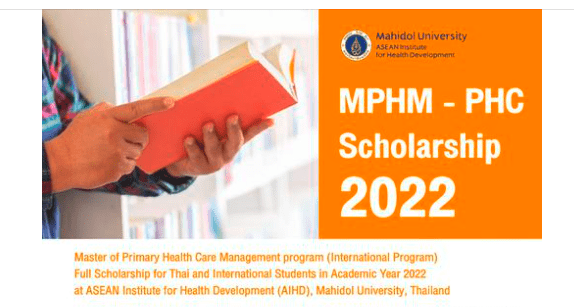
Scholarships Opportunity! Master of Primary Health Care Management program, Mahidol University

by Public Health Update June 16, 2022
written by Public Health Update

ASEAN Institute for Health Development, Mahidol University, Thailand invites application for scholarships for students in the Master of Primary Health Care Management program (International Program) Academic Year 2022.

According to the Master of Primary Health Care Management program (International Program), ASEAN Institute for Health Development (AIHD), Mahidol University will offer scholarships for outstanding students at the graduate level to support their education and research.

Objective

  1. To promote and support education at the graduate level and to support highly motivated students for performing ASEAN Institute for Health Development research
  2. To support and develop capacity in Health Service Management, based on Primary Health Care Management in collaboration with the office of the Permanent Secretary of the Ministry of Public Health: MOPH, which would lead to effective healthcare services and integrate lifelong health services by using Primary Health Care Services and develop Social Health Protection

Offering Scholarships

  1. Scholarships for Thai studentsThere will be 2 scholarships for Thai students in the Primary Health Care Management program (International Program)1.1   Education Services Fee
    1.2   Student Activities Fee
    1.3   Graduate Studies Fee
    1.4   Internet Fee
    1.5   Graduate Tuition Fee
    1.6   Field Trip Fee
    1.7   Thesis Registration Fee
  2. Scholarships for International studentsThere will be 1 scholarship for International students in the Primary Health Care Management program (International Program)1.1   Education Services Fee
    1.2   Student Activities Fee
    1.3   Graduate Studies Fee
    1.4   Internet Fee
    1.5   Health Insurance for International students
    1.6   Graduate Tuition Fee
    1.7   Field Trip Fee
    1.8   Thesis Registration Fee

Qualifications

  1. Studying in Master of Primary Health Care Management program (International Program), ASEAN Institute for Health Development, Mahidol University in Plan A, A(1) or Plan A, A(1) i
  2. Obtained a Bachelor’s degree with a GPA of at least 3.00 or gained working experience in the field of Health Science, Public Health, Health Management, or related program
  3. English proficiency with evidence according to Mahidol University regulation
  4. Intend to apply knowledge to develop their career
  5. Having a positive attitude towards ASEAN Institute for Health Development and Mahidol University
  6. Submit a Motivational letter for scholarship (English Version) with 1,000 words about Primary Health Care, Primary Care Services, and Health Insurance, and give self-expression about thesis introduction on the interview day.

Selection Process and Announcement

The selection committee for student recruitment, for the academic year 2022 (B.E.2565) will review and determine the successful candidates.

Application Deadline: 22 June 2022

The scholarship will be provided from 1 August 2022 – 31 July 2023.

Application: Download the application

Submit related document to :  Submit Document

Contact Person

Mr. Jeevan Bhatta;
Foreign Instructor
Email: jeevan.bha@mahidol.edu

Official link: Mahidol University


Do you have a website? Looking for the best hosting provider? Here’s a discount code.

Latest Public Health Jobs

Latest Posts

  • International Wellness Day: Promoting Global Wellness for All
  • Summit Declaration: The 12th National Summit of Health and Population Scientists in Nepal
  • Joint political declaration on the reform of the global health architecture
  • World Health Day 2026: Together for Health. Stand with Science.
  • World Water Day 2026 | Water & Gender Equality

Thanks for visiting us.
Disclaimer: The resources, documents, guidelines, and information on this blog have been collected from various sources and are intended for informational purposes only. Information published on or through this website and affiliated social media channels does not represent the intention, plan, or strategies of an organization that the initiator is associated with in a professional or personal capacity, unless explicitly indicated.
If you have any complaints, information, or suggestions about the content published on Public Health Update, please feel free to contact us at blog.publichealthupdate@gmail.com.
#StayUpdated


  • WordPress
  • Link
  • Facebook
  • Mail
  • Facebook
  • Twitter
  • Twitter
  • LinkedIn
  • Instagram
  • Facebook
June 16, 2022 0 comments
0 FacebookTwitterPinterestLinkedinTumblrVKOdnoklassnikiRedditStumbleuponWhatsappTelegramLINEPocketSkypeViberEmail
Author AID
Call for Proposal, EOI & RFPCoursesOnline & Distance LearningOnline CoursesSummer and Winter CoursesSummer Courses

Enrolment open: AUTHORAID Research Writing in the Social Sciences 2022

by Public Health Update June 15, 2022
written by Public Health Update

AuthorAID calls for enrolment on ‘Research Writing in the Social Sciences’ online course 2022.

Who is this course for?
AuthorAID’s award-winning online courses are designed for researchers and scientists in low- and middle-income countries. This course is designed for those working in a field in the social sciences. It is suitable for early career researchers, or those with limited experience in publishing papers in reputable peer-reviewed journals. (Researchers working in the life, health, or physical sciences, please see below*)

Course duration: 7 weeks

Main topics covered in the course: 

  • Embarking on a research project
  • Doing and reporting research ethically
  • Developing an evidence base for your research
  • Preparing to write your research paper
  • Writing your research paper
  • Publishing your paper in a peer-reviewed journal

Course dates: 5th July to 22nd August 2022

Course leaders: INASP team – Alejandra Arreola, Andy Nobes and Ravi Murugesan – along with experienced guest facilitators from the AuthorAID network.

How do I enrol?
Complete information about the course along with enrolment instructions are available on the INASP Moodle website: https://moodle.inasp.info/course/view.php?name=RW_SoSci_2022. You will need to create an INASP Moodle account if you don’t already have one. Please follow the instructions carefully (you may need to click on the above link again after registering your account).

Please note that although this is an open course, we may have to limit enrolment due to server capacity. We suggest that you enrol in the course as soon as possible if you are interested.


June 15, 2022 0 comments
0 FacebookTwitterPinterestLinkedinTumblrVKOdnoklassnikiRedditStumbleuponWhatsappTelegramLINEPocketSkypeViberEmail
Post COVID-19 Conditions Management Protocol
Outbreak NewsNational Plan, Policy & GuidelinesResearch & Publication

Post COVID-19 Conditions Management Protocol

by Public Health Update June 14, 2022
written by Public Health Update

The Curative Service Division, DoHS has released a new guideline on Post COVID-19 conditions Management Protocol.

Scope of the document

  • This document contains information for Healthcare workers who are providing care for patients previously diagnosed as COVID-19 (tested positive for SARS-CoV-2 or history suggestive of COVID-19 but not tested) or those who are at risk of developing Post COVID-19 conditions.
  • This document will be updated as and when new evidence becomes available.

Objectives

  1. This document provides a plan of action for a comprehensive multidisciplinary approach and coordinated care for patients with Post COVID-19 conditions.
  2. It makes recommendations about Post COVID-19 care in all healthcare settings from community level health care settings to tertiary level.
  3. It makes recommendations about Post COVID-19 care for adults, children, elderly and pregnant women.

Summary and Recommendations

For Healthcare providers

  • Suspect Post COVID-19 conditions if patients present with new or ongoing symptoms
  • Use screening questionnaire along with clinical assessment – comprehensive clinical history (physical, cognitive, psychiatric symptoms) and appropriate examinations.
  • Assess functional abilities and limitations – Listen emphatically
  • Use holistic, patient-centered approach
  • Shared decision – Involve patients in the decision making process
  • Provide support for people with disabilities, underserved and vulnerable groups
  • Offer tests and investigations tailored to patient’s symptoms and signs
  • Rule out other differentials and manage pre-existing comorbidities
  • Provide time for follow up in person/remotely of admitted patients during discharge
  • Refer if patient can’t be managed at the facility or doesn’t improve with treatment
  • Refer urgently, after initial resuscitation, if – hypoxemia or severe respiratory distress, cardiac chest pain, pediatric inflammatory multisystem syndrome or organ dysfunction requiring acute care, sudden deterioration and worsening of symptoms
  • Ensure effective information sharing between services – maintaining clinical records.

For Policy makers

  • Special multidisciplinary Post COVID-19 clinics (‘one stop’ clinics) or special hours, dedicated patient care pathways or online support tools
  • Surveillance and record keeping – using standardized questionnaires and assessment tools, as well as International Collaboration for research
  • Use of telemedicine and non-profit organizations for patient support
  • Funding for Post COVID-19 programs
  • Educational documents, videos both for public and health care providers through national portals and trainings of healthcare personnel for Post COVID-19 care and rehabilitation.
  • Feedback of Post COVID-19 care and care pathways and updates as required.

Download Guideline


Related

  • Guideline for Clinical Audit | Curative Service Division
  • Curative Service Division (CSD)- Department of Health Services
  • Standard Treatment Protocol (STP) For Basic Health Services (BHS) Package 2078
  • Standard Treatment Protocol of Emergency Health Service Package
  • Implementation Guide for Minimum Service Standards (MSS)-2077
  • EYE, ENT and Oral Health Manual for Health Workers
  • EYE, ENT and Oral Health Manual for School Teachers and FCHVs
  • Process & Timeframe for Health Sector Budget and Programme Formulation in Nepal
June 14, 2022 0 comments
0 FacebookTwitterPinterestLinkedinTumblrVKOdnoklassnikiRedditStumbleuponWhatsappTelegramLINEPocketSkypeViberEmail
Public Health UpdateCommunicable DiseasesGlobal Health NewsPublic Health News

Updated WHO recommendations for malaria chemoprevention and elimination

by Public Health Update June 14, 2022
written by Public Health Update

3 June 2022

WHO published today in the consolidated guidelines for malaria a package of new and updated recommendations across a number of technical areas – from malaria chemoprevention and mass drug administration to elimination. The guidelines encourage countries to tailor the recommendations to local disease settings for maximum impact.

Clear, evidence-informed WHO recommendations guide managers of national malaria programmes as they develop polices and strategic plans to combat the disease; they support decisions around “what to do”. WHO also develops implementation guidance, such as operational and field manuals, to advise countries on “how to” deliver the recommended tools and strategies.

WHO Guidelines for Malaria (Consolidated Guidelines for Malaria)

New and updated guidance

Intermittent preventive treatment of malaria in pregnancy (ITPp)

Malaria infection during pregnancy poses substantial risks not only to the mother, but also to her fetus and the newborn. Available evidence continues to show that intermittent preventive treatment in pregnancy (IPTp) with sulfadoxine-pyrimethamine (SP) is a safe and highly cost-effective strategy for reducing the disease burden in pregnancy as well as adverse pregnancy and birth outcomes.

In updated guidance published today, WHO has reaffirmed its strong recommendation for the use of IPTp-SP in areas of moderate to high P. falciparum malaria transmission. The recommendation does not limit the delivery of IPT-SP to antenatal care (ANC) settings; where inequities in access to ANC services exist, other delivery methods, such as the use of community health workers, may be explored. IPT-SP is now recommended for all pregnant women, regardless of the number of pregnancies; previously, it was recommended only during a woman’s first and second pregnancies.

Perennial malaria chemoprevention (PMC) and seasonal malaria chemoprevention (SMC)

WHO has also updated its recommendations for 2 key malaria chemoprevention strategies: seasonal malaria chemoprevention (SMC) and perennial malaria chemoprevention (PMC – previously known as intermittent preventive treatment in infants, or IPTi). When given to young children, malaria chemoprevention has been shown to be a safe, effective and cost-effective strategy for reducing the disease burden and saving lives.

The updated WHO recommendations on SMC and PMC, published today, are less restrictive than the original recommendations; they do not specify strict age groups, transmission intensity thresholds, numbers of doses or cycles, or specific drugs. As such, they will support the broader use of chemoprevention among young children at high risk of severe malaria in areas with both seasonal and year-round transmission.

Intermittent preventive treatment of malaria in school-aged children (IPTsc)

WHO is also issuing a new recommendation for the use of intermittent preventive treatment of malaria in school-aged children (IPTsc) living in settings with moderate-to-high perennial or seasonal malaria transmission. The strategy and dosing schedule for IPTsc should cover children aged 5–15 years, and its introduction should not compromise chemoprevention interventions for children under 5 years of age, who are at highest risk of severe malaria.

Post-discharge malaria chemoprevention (PDMC)

WHO is issuing today a recommendation in favor of post-discharge malaria chemoprevention (PDMC). This is a strategy aimed at preventing malaria among children with severe anemia living in areas of moderate-to-high transmission after they are discharged from a hospital, when they are at high risk of re-admission or death. Through PDMC, children are given a full antimalarial treatment course at regular intervals.

Mass drug administration

WHO has also issued new guidance on mass drug administration (MDA), another chemoprevention strategy. Through MDA, all individuals in a target population are given a treatment course of antimalarial drugs, regardless of whether they are infected with malaria. The medication treats any existing malaria infections as well as new infections for a specific period of time.

The new recommendations on malaria MDA provide specific guidance to rapidly reduce the malaria disease burden in emergency settings and in areas of moderate to high transmission. They also provide guidance on the use of MDA to reduce P. falciparum malaria in very low to low transmission settings, and to reduce P. vivax transmission. The full set of MDA recommendations and supporting evidence can be found in the consolidated guidelines.

Elimination

The WHO global malaria strategy urges all malaria-endemic countries to accelerate progress towards the goal of elimination. In settings approaching elimination, interventions will be most effective at reducing transmission if they are tailored to detect and treat the residual foci of malaria transmission.

WHO has issued a new set of recommendations for the final phase of malaria elimination. Some of the recommendations are also relevant to areas that have achieved elimination and are working to prevent re-establishment of transmission. Based on available evidence, some recommendations are in favor of specific interventions (positive recommendations) and others against specific interventions (negative recommendations). The recommendations are divided into 3 categories:

  • “mass” strategies applied to the entire population of a delimited geographical area, whether a hamlet, township or district, including: mass drug administration (described above); mass testing and treatment (MTaT); and mass relapse prevention (MRP).
  • “targeted” strategies applied to people at increased risk of infection compared to the general population, including: targeted drug administration (TDA); targeted testing and treatment (TTaT); routine testing and treatment at points of entry (border screening); and malaria testing of organized or identifiable groups arriving or returning from malaria-endemic areas.
  • “reactive” strategies triggered in response to individual cases, including: reactive drug administration (RDA); reactive case detection and treatment to reduce transmission of malaria (RACDT); and reactive indoor residual spraying (IRS).

Additional details can be found in the consolidated WHO Guidelines for malaria.


  • Countries in WHO South-East Asia Region renew commitment to eliminate malaria by 2030
  • World Malaria Day: “Harness innovation to reduce the malaria disease burden and save lives”
  • World Malaria Day
  • World Malaria Report 2021: Tracking progress against Malaria
  • Self-audit of the National Malaria Program using the Malaria Elimination Audit Tool
  • WHO recommends groundbreaking malaria vaccine for children at risk
  • National Malaria Laboratory Plan (2020-2025) and Malaria Laboratory Manual-2021
  • From 30 million cases to zero: China is certified malaria-free by WHO
  • Interim Guideline for Malaria Program During COVID-19 in Nepal (Updated)
  • WHO launches effort to stamp out malaria in 25 more countries by 2025
  • World Malaria Day 2021: Reaching the zero malaria target
  • El Salvador certified as malaria-free by WHO
  • WHO Guidelines for Malaria (Consolidated Guidelines for Malaria)
  • Malaria Risk Areas Micro-stratification 2020
June 14, 2022 0 comments
0 FacebookTwitterPinterestLinkedinTumblrVKOdnoklassnikiRedditStumbleuponWhatsappTelegramLINEPocketSkypeViberEmail
World Blood Donor Day
PH Important DayPublic HealthPublic Health Events

World Blood Donor Day 2022: Donating blood is an act of solidarity. Join the effort and save lives

by Public Health Update June 14, 2022
written by Public Health Update

Background

World Blood Donor Day takes place on 14 June each year. The Day was created to a) raise global awareness of the need for safe blood and blood products for transfusionñ b) highlight the critical contribution voluntary, unpaid blood donors make to national health systemsñ, and c) support national blood transfusion services, blood donor organizations, and other non-governmental organizations in strengthening and expanding their voluntary blood donor programs by reinforcing national and local campaigns.

Who can give blood? Safe blood saves lives!

Focus of this year’s campaign

For 2022, the World Blood Donor Day slogan is “Donating blood is an act of solidarity. Join the effort and save lives” to draw attention to the roles that voluntary blood donations play in saving lives and enhancing solidarity within communities.

The specific objectives of this year’s campaign are to:

  • thank blood donors in the world and create wider public awareness of the need for regular, unpaid blood donation;
  • highlight the need for committed, year-round blood donation, to maintain adequate supplies and achieve universal and timely access to safe blood transfusion;
  • recognize and promote the values of voluntary unpaid blood donation in enhancing community solidarity and social cohesion;
  • raise awareness of the need for increased investment from governments to build a sustainable and resilient national blood system and increase collection from voluntary non-remunerated blood donors.

A particular activity that countries in the world are encouraged to implement for this year’s campaign is to disseminate to various media outlets stories of people whose lives have been saved through blood donation as a way of motivating regular blood donors to continue giving blood, and to motivate people in good health who have never given blood to begin doing so.

Other activities that would help promote the slogan of this year’s World Blood Donor Day may include donor appreciation ceremonies, social networking campaigns, special media broadcasts, social media posts featuring individual blood donors with the slogan, meetings and workshops, musical and artistic events to thank blood donors and celebrate solidarity, and colouring iconic monuments red.

Your involvement and support will help to ensure greater impact for World Blood Donor Day 2022, increasing recognition worldwide that giving blood is a life-saving act of solidarity and that services providing safe blood and blood products are an essential element of every health care system. Participation of interested partners is welcome at all levels to make World Blood Donor Day 2022 a global success.

Source of info: World Health Organization


  • World Blood Donor Day
  • Free Blood and Blood Related Services Management Guideline, 2078
  • World Blood Donor Day: Give blood and keep the world beating
  • World Blood Donor Day: Give blood and keep the world beating
  • World Blood Donor Day: Safe blood saves lives! Give blood and make the world a healthier place
  • World Blood Donor Day 2019: Safe Blood for all!
  • Blood Connects us All – World Blood Donor Day
  • What can you do? Give blood. Give now. Give often – World Blood Donor Day, 14 June 2017
  • “Thank you for saving my life”- World Blood Donor Day, 14 June 2015
June 14, 2022 0 comments
0 FacebookTwitterPinterestLinkedinTumblrVKOdnoklassnikiRedditStumbleuponWhatsappTelegramLINEPocketSkypeViberEmail
Provincial Plan, Policies and GuidelinesNational Plan, Policy & GuidelinesResearch & Publication

Guidelines for Holding Effective Meetings

by Public Health Update June 11, 2022
written by Public Health Update

Background

A ‘Guidelines for Holding Effective Meetings‘ is a publication of the Western Regional Health Directorate, Pokhara and the Nepal Health Sector Support Programme, which was prepared by Dr Giridhari Sharma Paudel in January 2013. This document presents a series of good practices and guidelines for conducting meetings in Nepal’s public health sector. This guidelines identify the eight types of meetings that commonly take place in Nepal’s public health system; but recommend that meetings are only called where a meeting is the most effective way of disseminating or gathering information or arriving at a decision. This guidelines show regional, district, sub-district and community health leaders how to prepare for, hold and follow-up on meetings.

Objectives and rationale

The objectives of these guidelines are:

  • to guide regional, district, and sub-district (ilaka) health personnel and community health leaders to plan and organize meetings and other meeting-like events;
  • to encourage the timely and effective follow-up on decisions taken at meetings.

Types of meetings

  1. Information sharing meetings
  2. Information collection meetings
  3. Instructional or training meetings
  4. Attitude creating meetings
  5. Planning meetings
  6. Coordination meetings
  7. Decision-making meetings
  8. Problem solving meetings
Types of decision making styles
  • Consensus
  • Consultation
  • Convenience
  • Command
Conducting Effective Meetings
  • Assign responsibilities
  • Develop the objectives and agenda
  • Check the minutes of previous meeting
  • Distribute the agenda
  • Appropriate place, time and length
  • Logistical support
  • Prepared participants
  • Meeting setup

The six type of setups for meetings

  1. Auditorium (This setup is usually used for presentations where two-way discussions are minimal and questions are accommodated via an audience microphone.)
  2. Boardroom (This setup is suitable for senior level director or focus group meetings. It facilitates high levels of interaction and good face-to-face contact. Participants communicate directly without needing a microphone.)
  3. Classroom (This setup is suitable for instructional or information sharing meetings where intensive interactions are not needed. It is appropriate for relatively large groups.)
  4. U shaped (This setup is suitable for medium-sized groups (20-30 participants) and enables interaction between participants.)
  5. Cluster (This type of setup is used to run group sessions.)
  6. Open theatre in the round (In rural areas where rooms may not be available, meetings can he held in the open with participants sitting in a circle.)

Meeting norms (Key norms for public health meetings):

  • Timely attendance
  • Mobile switch off
  • Equal participation
  • Stick to the agenda
  • Respectful communication
  • Careful listening and no side talk
  • Conflict resolution
  • Leaving the room (Participants should only leave for an urgent reason such as going to the toilet or making an urgent phone call after taking permission from the chairperson.)
  • End on time ( Chairpersons should strive to address all important issues within the agreed time and finish the meeting on time.)

The nine types of supportive meeting participants

  • The tension reliever
  • The compromiser
  • The clarifier
  • The tester
  • The summarizer
  • The harmonizer
  • The encourager
  • The gate keeper
  • The rationalist

The 11 types of disruptive meeting participants

  • The aggressor
  • The blocker
  • The withdrawer
  • The recognition seeker
  • The topic jumper
  • The dominator
  • The special pleader
  • The playboy/girl
  • The chatterer
  • The sleeper
  • The trapper

MINUTING AND POST MEETING FOLLOW UP

  • Writing minutes
  • Post-meeting follow up

Meeting action points should be followed up in the following ways:

  • Remove confusion on decisions
  • Make an implementation plan
  • Arrange resources
  • Appoint focal persons
  • Delegate authority and set deadlines
  • Monitor action points
  • Set review dates

Download PDF File

June 11, 2022 0 comments
0 FacebookTwitterPinterestLinkedinTumblrVKOdnoklassnikiRedditStumbleuponWhatsappTelegramLINEPocketSkypeViberEmail
Call for Abstracts: 4th Global Nepali Health Conference 2022
ConferenceCall for Proposal, EOI & RFPPublic Health Events

Call for Abstracts: 4th Global Nepali Health Conference 2022

by Public Health Update June 11, 2022
written by Public Health Update

The 4th Global Nepali Health Conference is being held in Sydney, Australia during September 16-18, 2022. This is an annual event of the Non-Resident Nepali Association (NRNA).

This conference is the largest gathering of people, stakeholders, organizations who have stakes in the health of Nepali outside and inside Nepal. This conference is the largest gathering of people, stakeholders, organizations who have stakes in the health of Nepali outside and inside Nepal. This conference will bring together health care professionals who manage all major components of health, medical and surgical health professionals, nurses, public health professionals, medical care specialists, paramedics, policy makers, scientists, allied health care workers, health advocates and other professionals associated in ensuring health of Nepali community.

Call For Abstract

4GNHC invites abstracts scholars, researchers, practitioners of medicine, public health, health policy, nursing, health informatics as well as the general public to participate for the 4th Global Nepali Health Conference. We welcome abstracts for contributions that share research findings related to improving and maintaining the health of people of Nepali origin from around the world as well as in Nepal. Research from all disciplines will be considered. Conference organizing committee particularly invite submissions for scientific presentations, symposium/panel discussion and skills building workshops.

Theme: Mental Health For All And Strengthened Healthcare Delivery Systems!
Sub-themes:
  • Health & wellbeing Prevention
  • Mental Health for the Vulnerable Group Suicide Prevention
  • Chronic Disease Prevention
  • Tele-Health
  • Public Health
  • Heart Disease and Diabetes Prevention & Management
  • Women Health
  • Children health
  • Heath Institutions: Clinics, Health Posts, Hospitals
  • Partners of Health
  • Determinants of Health
  • Prevention of Covid-19
  • Treatment & Management of Individuals with Covid-19
  • Post-Covid-19 Care and Recovery Support
  • Holistic healthcare and Covid-19
  • Epidemiology
  • Strengthening Laboratory Systems
  • Investing Health
  • Health Economics
  • Health Informatics
  • Alternative Medicine including Ayurveda
  • Physical Activity and Health
  • Nutrition and Health
  • Maternal and Child Health
  • Geriatrics Health
  • Environment & Health
  • Health Policy
  • Ageing
  • Racism and its impact on Health
  • Food security and Health
  • Housing and Health
  • Equitable Vaccine Distribution
  • Vaccine Production
  • Health Literacy
  • Health Education
  • Global Health
  • Migrant Health
  • Health and Safety of Health Professionals, Doctors and Nurses and
  • other Impacts of Covid-19 on treatment and care of other health issues or disease.

Invited abstract or proposal for following headings    

  • Abstract for Scientific Session
  • Abstract for Symposium and Panel Discussion
  • Proposal for Skills Building Workshops

Deadlines:

  • Abstract submission: 1st of July 2022
  • Notification of acceptance: 15th July 2022
  • Conference registration by: 1st August 2022

Please send your abstract or proposal in this email address: abstract@nrna.org

READ MORE: OFFICIAL CONFERENCE WEBSITE

June 11, 2022 0 comments
0 FacebookTwitterPinterestLinkedinTumblrVKOdnoklassnikiRedditStumbleuponWhatsappTelegramLINEPocketSkypeViberEmail
The 2022 GACD Implementation Science School
Implementation ResearchCoursesOnline CoursesPublic Health OpportunitiesPublic Health OpportunitySummer and Winter CoursesSummer CoursesTraining

The 2022 GACD Implementation Science School

by Public Health Update June 11, 2022
written by Public Health Update

The GACD Implementation Science School is a one-of-a-kind opportunity for early- and mid-career researchers to build their knowledge, skills, and confidence in the fields of implementation science and non-communicable diseases in low- and middle-income countries.

The GACD will deliver an Implementation Science School over two and a half weeks between 26 September and 12 October 2022. The training will be accessible entirely online, run in synchronous and asynchronous sessions to accommodate different time zones.

This two and a half-week intensive training event will be facilitated by some of the field’s most prominent global experts and aims to train early- and mid-career researchers who have an interest in non-communicable diseases about the field of implementation science in low- and middle-income countries.

Through expert-led lectures, small group sessions, facilitated group work, and panel discussions, trainees will learn how to study and implement research findings into policy and practice, select and apply theories, models, and frameworks, and create a professional network for future collaborations.

Contributing expert faculty include

  • Prof Brian Oldenburg – Baker Heart and Diabetes Institute and La Trobe University
  • Dr Ed Gregg – Imperial College London, United Kingdom
  • Prof Lijing Yan – Duke Kunshan University, China
  • Prof Pilvikki Absetz – Tampere University, Finland
  • Dr Vilma Irazola – Instituto de Efectividad Clinica y Sanitaria (IECS), Argentina & Harvard T.H.Chan School of Public Health, USA
  • Dr Rachel Sturke – Fogarty International Center, NIH, USA
  • Dr Rajesh Vedanthan – NYU Langone School of Medicine, USA
  • Dr Zahra Aziz – Monash University, Australia

Eligibility

Up to 40 international trainees will be selected for the 2022 Implementation Science School through a competitive application process. The 2022 Implementation Science School is being offered at no cost to trainees.

Eligible applicants include people who meet one of the following criteria:

  • Have completed or are undertaking postgraduate coursework or research related to health science or public health (or a related field)
  • Have recently completed a PhD relevant to implementation science
  • Are other relevant graduates with up to 5 years research experience

Preference will be given to:

  • Applicants whose research or studies are connected with GACD projects or are focused on non-communicable diseases.
  • Applicants from low- and middle-income countries.
  • Early- and mid-career applicants undertaking their research within low- and middle-income countries or in vulnerable Indigenous populations.

To ensure international diversity, trainees from any one institution may be limited. Attendees from previous GACD Implementation Science Schools will not be eligible for this event.

Dates and times

As a global training event, the programme will be delivered across multiple time zones and there is a possibility that plenary sessions will be either very early in the morning or late at night for some trainees. Selected trainees are expected to demonstrate a commitment to this activity and attend all the required sessions during the programme.

Below are the schedule dates and time of the six plenary sessions and five group sessions. Selected trainees are expected to attend ALL plenary sessions. Trainees will be split into two groups based on their local time zone; trainees are expected to attend ALL the relevant group sessions (A or B).

Trainee orientation session: Thursday 22 September @ 11:30 to 12:30 UTC

Session 1 Introduction to implementation science
Plenary session 1: Monday 26 September 11:30 to 13:00 UTC | Group session 1A: Monday 26 September 13:30 UTC (up to 2 hours) | Group session 1B: Tuesday 27 September @ 06:00 UTC (up to 2 hours)

Session 2 The nuts and bolts of implementation science
Plenary session 2: Wednesday 28 September 11:30 to 13:00 UTC | Group session 2A: Wednesday 28 September 13:30 UTC (up to 2 hours) | Group session 2B: Thursday 29 September @ 06:00 UTC (up to 2 hours)

Session 3 Stakeholder engagement
Plenary session 3: Monday 3 October 11:30 to 13:00 UTC | Group session 3A: Monday 3 October 13:30 UTC (up to 2 hours) | Group session 3B: Tuesday 4 October @ 06:00 UTC (up to 2 hours)

Session 4 A population perspective for implementation research
Plenary session 4: Wednesday 5 October 11:30 to 13:00 UTC | Group session 4A: Wednesday 5 October 13:30 UTC (up to 2 hours) | Group session 4B: Thursday 6 October @ 06:00 UTC (up to 2 hours)

Session 5 Research funding, capacity strengthening, and career development
Plenary session 5: Monday 10 October 11:30 to 13:00 UTC | Group session 5A: Monday 10 October 13:30 UTC (up to 2 hours) | Group session 5B: Tuesday 11 October @ 06:00 UTC (up to 2 hours)

Session 6 Team presentations and reflections
Plenary session 6: Wednesday 12 October @ 11:30 to 13:00 UTC

All times are given in Universal Coordinated Time (UTC).

Times and dates are subject to change. We will do our best to minimise sessions being scheduled in the middle of the night and the above timings may change depending on the location of the selected trainees.

Required preparation for selected trainees

Selected trainees are asked to watch all the lecture recording under the Fundamentals of Implementation Science Programme on the GACD Implementation Science e-Hub in advance of the School start date. This consists of 23 lectures across seven modules.

Applications

Applicants will be asked to submit the following information during the application process for consideration by the selection committee:

1. Your personal details.
2. A structured abstract of an implementation science project you are working on or would like to work on in the future, detailing:

  • Project title and associated institution or organisation.
  • The implementation problem or gap that your project is seeking to address.
  • The extent of the problem or issue in your location of interest, or similar locations (local, regional, national).
  • The barriers and enablers to your identified evidence-implementation gap.
  • Implementation strategies you are considering / planning to use / currently using to overcome the problem.
  • Research methods you are considering / planning to use / currently using to evaluate these strategies.
  • Your curriculum vitae (CV) / resume (two pages, maximum).
  • Letter of support from your mentor or supervisor describing your suitability for this school, confirming your time commitment to the course, and how the skills you acquire will be applied after this training (one page, maximum).
  • A photograph of yourself for inclusion in a handbook shared with other trainees (PNG, JPG, JPEG files only).

Should you be accepted for the GACD Implementation Science School 2022, your abstract will be included in a handbook that will be shared with the other trainees. It is important that this information be shared to maximise the benefits of the group work components.

Applicants will be informed of the outcome of their application in the week beginning 15 August 2022.

Apply now via the online application form here.

June 11, 2022 0 comments
0 FacebookTwitterPinterestLinkedinTumblrVKOdnoklassnikiRedditStumbleuponWhatsappTelegramLINEPocketSkypeViberEmail
Newer Posts
Older Posts

Search

Follow Us

Facebook Twitter Instagram Pinterest Linkedin Youtube

Categories

  • Abstracts (25)
  • Activities (91)
  • Adolescent Sexual and Reproductive Health (ASRH) (25)
  • Advice & Tips (4)
  • African Region (5)
  • AI and Health (1)
  • Annual Meeting (6)
  • Antimicrobial Resistance (AMR) (21)
  • Award (19)
  • Awards (16)
  • Books (9)
  • Call for Proposal, EOI & RFP (103)
  • Call for Research Participants (8)
  • Clinical Doctor Jobs (6)
  • Communicable Diseases (107)
  • Competition (20)
  • Conference (129)
  • Consultant (1)
  • Courses (205)
  • Dashboard (2)
  • Digital Health & Health Informatics (10)
  • Drug and Medicine (18)
  • Eastern Mediterranean Region (3)
  • Education (15)
  • Environment (3)
  • Environmental Health & Climate Change (47)
  • European Region (42)
  • Exchange Program (1)
  • Fact Sheet (117)
  • FCHVs (1)
  • Fellowships, Studentship & Scholarships (168)
  • Financial Aid (13)
  • Form Formats (2)
  • Fully funded (22)
  • Global Health News (434)
  • Grants and Funding Opportunities (193)
  • Guest Post (44)
  • Health Assistant Jobs (1)
  • Health Equity (7)
  • Health Financing and Economics (24)
  • Health in Data (115)
  • Health Insurance (5)
  • Health Jobs (52)
  • Health Literacy, Health Education & Promotion (50)
  • Health Organization Profile (42)
  • Health Systems (83)
  • Human Resource for Health (33)
  • Humanitarian Health & Emergency Response (44)
  • Hypertension (5)
  • Implementation Research (48)
  • International Health (3)
  • International Jobs & Opportunities (373)
  • International Plan, Policy & Guidelines (210)
  • Internships (4)
  • Jobs Vacancies (56)
  • Journals (8)
  • Life Style & Public Health Nutrition (39)
  • Live (10)
  • Master's Degree (48)
  • Maternal, Newborn and Child Health (88)
  • Mentorship Program (2)
  • Miscellaneous (16)
  • National Health News (158)
  • National Plan, Policy & Guidelines (468)
  • Neglected Tropical Diseases (NTDs) (51)
  • Non- Communicable Diseases (NCDs) (121)
  • Notice (103)
  • Nursing Jobs (6)
  • Nutritionist Jobs (1)
  • One Health (18)
  • Online & Distance Learning (22)
  • Online Courses (90)
  • Op-Ed Article (3)
  • Opportunities by Region (83)
  • Outbreak News (213)
  • Partially funded (6)
  • PCL Health Science Jobs (3)
  • PH Important Day (534)
  • Pharmacist Jobs (3)
  • PhD (54)
  • Photos (5)
  • Planetary Health (4)
  • PostDoc (14)
  • Presentation Slides (26)
  • Primary Health Care (25)
  • Provincial Plan, Policies and Guidelines (14)
  • Public Health (1,283)
  • Public Health Epidemiology & Biostatistics (13)
  • Public Health Events (306)
  • Public Health Information (20)
  • Public Health Innovation (9)
  • Public Health Jobs (52)
  • Public Health News (554)
  • Public Health Notes (120)
  • Public Health Opportunities (507)
  • Public Health Opportunity (491)
  • Public Health Programs (108)
  • Public Health Seminar (2)
  • Public Health Tools (1)
  • Public Health Update (564)
  • Quality Improvement & Infection Prevention (20)
  • Region of America (8)
  • Reports (184)
  • Research & Project Grants (39)
  • Research & Project Grants (32)
  • Research & Publication (647)
  • Research Articles (10)
  • Road Traffic Accidents (RTA) (9)
  • School of Public Health (60)
  • Self funded (2)
  • South-East Asia Region (26)
  • Success Stories (17)
  • Summer and Winter Courses (40)
  • Summer Courses (28)
  • Sustainable Development Goals (SDGs) (14)
  • Syllabus (61)
  • Symposium (9)
  • Tobacco Control (35)
  • Training (40)
  • Travel Grants (15)
  • Trick, Technique & Skills (8)
  • Uncategorized (3)
  • Undergraduate Degree (7)
  • Universal Health Coverage (36)
  • Universities (29)
  • Universities & School of Public Health (58)
  • Vacancy Announcement (26)
  • Vaccine Preventable Diseases (40)
  • Vector-Borne Diseases(VBDs) (30)
  • Videos (3)
  • View Points (1)
  • Webinar (4)
  • Western Pacific Region (13)
  • Workshop (18)
  • World News (117)
Post New Jobs: Vacancy Announcement Service

Public Health Update (Sagun’s Blog) is a popular public health portal in Nepal. Thousands of health professionals are connected with Public Health Update to get up-to-date public health updates, search for jobs, and explore opportunities.
#1 Public Health Blog for sharing Job opportunities and updates in Nepal

”Public Health Information For All”
– – Sagun Paudel, Founder

  • HOT JOBS
    • Public Health Jobs
    • Medical Doctor Jobs
    • Nursing Jobs
    • Health Assistant Jobs
    • Pharmacist Jobs
    • NGOs Jobs
    • Government Jobs
  • Top Categories
    • National Plan, Policy & Guidelines Top
    • Public Health Calendar
    • Fellowships & Scholarships
    • Health Systems
    • Health Organization Profiles
    • International Jobs & Opportunities
    • Public Health Opportunity

PUBLIC HEALTH INITIATIVE

    • Submit your Vacancies New
    • Partnership Opportunities

Contact: blog.publichealthupdate@gmail.com

https://wa.me/+9779856036932

Public Health Initiative, A Registered Non-profit organization – All Right Reserved. 2011-2024. Contact us. 

Facebook Twitter Instagram Youtube Envelope
Public Health Update
  • Home
  • Public Health
    • Home 1
      • Adolescent Sexual and Reproductive Health (ASRH)
      • Antimicrobial Resistance (AMR)
      • Communicable Diseases
      • Digital Health & Health Informatics
      • Environmental Health & Climate Change
      • Health Financing and Economics
      • Health Equity
    • Home 2
      • Health Literacy, Health Education & Promotion
      • Human Resource for Health
      • Humanitarian Health & Emergency Response
      • Implementation Research
      • International Health
      • Life Style & Public Health Nutrition
      • Maternal, Newborn and Child Health
    • Home 3
      • Neglected Tropical Diseases (NTDs)
      • Non- Communicable Diseases (NCDs)
      • One Health
      • Planetary Health
      • Public Health Epidemiology & Biostatistics
      • Primary Health Care
      • Quality Improvement & Infection Prevention
    • Home 4
      • Road Traffic Accidents (RTA)
      • Sustainable Development Goals (SDGs)
      • Tobacco Control
      • Universal Health Coverage
      • Vaccine Preventable Diseases
      • Vector-Borne Diseases(VBDs)
      • Notices
  • Public Health Update
    • Home 1
      • Public Health News
      • Global Health News
      • Outbreak News
      • National Health News
      • COVID-19
    • Home 2
      • Fact Sheet
      • Health in Data
      • PH Important Day
      • Public Health Events
      • Public Health Programs
    • Home 3
      • Health Systems
      • Health Insurance
      • Health Organization Profile
      • Success Stories
      • Public Health Innovation
  • Public Health Opportunities
    • Fully funded
    • Travel Grants
    • Grants and Funding Opportunities
    • Opportunities by Region
    • International Jobs & Opportunities
    • Research & Project Grants
    • Fellowships, Studentship & Scholarships
    • Conference
  • Jobs
    • Home 1
      • Health Jobs
      • Public Health Jobs
      • Clinical doctor Jobs
      • Health Assistant Jobs
      • Nursing Jobs
      • PCL Health Science Jobs
    • Home 2
      • Dental Jobs
      • Pharmacist Jobs
      • TSLC (Health Jobs)
      • Laboratory Jobs
      • Nutritionist Jobs
  • Downloads
    • International Plan, Policy & Guidelines
    • National Plan, Policy & Guidelines
    • Reports
    • Books
    • Research Articles
  • School of Public Health
    • Home 1
      • Courses
      • Master’s Degree
      • Undergraduate Degree
      • PhD
    • Home 2
      • Universities
      • Syllabus
      • Public Health Notes
      • Mentorship Program
      • Startup Project
    • Home
      • Summer and Winter Courses
      • Summer Courses
      • Online Courses
      • Workshop
      • Training
Public Health Update
  • Home
  • Public Health
    • Home 1
      • Adolescent Sexual and Reproductive Health (ASRH)
      • Antimicrobial Resistance (AMR)
      • Communicable Diseases
      • Digital Health & Health Informatics
      • Environmental Health & Climate Change
      • Health Financing and Economics
      • Health Equity
    • Home 2
      • Health Literacy, Health Education & Promotion
      • Human Resource for Health
      • Humanitarian Health & Emergency Response
      • Implementation Research
      • International Health
      • Life Style & Public Health Nutrition
      • Maternal, Newborn and Child Health
    • Home 3
      • Neglected Tropical Diseases (NTDs)
      • Non- Communicable Diseases (NCDs)
      • One Health
      • Planetary Health
      • Public Health Epidemiology & Biostatistics
      • Primary Health Care
      • Quality Improvement & Infection Prevention
    • Home 4
      • Road Traffic Accidents (RTA)
      • Sustainable Development Goals (SDGs)
      • Tobacco Control
      • Universal Health Coverage
      • Vaccine Preventable Diseases
      • Vector-Borne Diseases(VBDs)
      • Notices
  • Public Health Update
    • Home 1
      • Public Health News
      • Global Health News
      • Outbreak News
      • National Health News
      • COVID-19
    • Home 2
      • Fact Sheet
      • Health in Data
      • PH Important Day
      • Public Health Events
      • Public Health Programs
    • Home 3
      • Health Systems
      • Health Insurance
      • Health Organization Profile
      • Success Stories
      • Public Health Innovation
  • Public Health Opportunities
    • Fully funded
    • Travel Grants
    • Grants and Funding Opportunities
    • Opportunities by Region
    • International Jobs & Opportunities
    • Research & Project Grants
    • Fellowships, Studentship & Scholarships
    • Conference
  • Jobs
    • Home 1
      • Health Jobs
      • Public Health Jobs
      • Clinical doctor Jobs
      • Health Assistant Jobs
      • Nursing Jobs
      • PCL Health Science Jobs
    • Home 2
      • Dental Jobs
      • Pharmacist Jobs
      • TSLC (Health Jobs)
      • Laboratory Jobs
      • Nutritionist Jobs
  • Downloads
    • International Plan, Policy & Guidelines
    • National Plan, Policy & Guidelines
    • Reports
    • Books
    • Research Articles
  • School of Public Health
    • Home 1
      • Courses
      • Master’s Degree
      • Undergraduate Degree
      • PhD
    • Home 2
      • Universities
      • Syllabus
      • Public Health Notes
      • Mentorship Program
      • Startup Project
    • Home
      • Summer and Winter Courses
      • Summer Courses
      • Online Courses
      • Workshop
      • Training
Public Health Initiative, A Registered Non-profit organization – All Right Reserved. 2011-2023