
Public Health Update
  • Home
  • Public Health Update
  • Nepal Health Jobs
    • Public Health Job Board
    • Organization List
  • Opportunities
    • Fellowships, Studentship & Scholarships
    • Grants and Funding Opportunities
    • Fully funded
    • Conference
  • Downloads
    • International Plan, Policy & Guidelines
    • National Plan, Policy & Guidelines
    • Reports
    • Public Health Notes
    • Syllabus
    • Form Formats
  • School of Public Health
    • PhD
    • Master’s Degree
    • Online Courses
  • Notice
  • Home
  • Public Health Update
  • Nepal Health Jobs
    • Public Health Job Board
    • Organization List
  • Opportunities
    • Fellowships, Studentship & Scholarships
    • Grants and Funding Opportunities
    • Fully funded
    • Conference
  • Downloads
    • International Plan, Policy & Guidelines
    • National Plan, Policy & Guidelines
    • Reports
    • Public Health Notes
    • Syllabus
    • Form Formats
  • School of Public Health
    • PhD
    • Master’s Degree
    • Online Courses
  • Notice
LOGIN / REGISTER
Public Health Update
SUBSCRIBE
Public Health Update
  • Home
  • Public Health Update
  • Nepal Health Jobs
    • Public Health Job Board
    • Organization List
  • Opportunities
    • Fellowships, Studentship & Scholarships
    • Grants and Funding Opportunities
    • Fully funded
    • Conference
  • Downloads
    • International Plan, Policy & Guidelines
    • National Plan, Policy & Guidelines
    • Reports
    • Public Health Notes
    • Syllabus
    • Form Formats
  • School of Public Health
    • PhD
    • Master’s Degree
    • Online Courses
  • Notice

All Right Reserved. Designed and Developed by PenciDesign

Chevening Scholarships
Fellowships, Studentship & ScholarshipsGrants and Funding OpportunitiesInternational Jobs & OpportunitiesMaster's DegreePublic Health OpportunitiesPublic Health Opportunity

Chevening Scholarships: UK Government’s International Scholarships Programme 2023

by Public Health Update July 2, 2022
written by Public Health Update

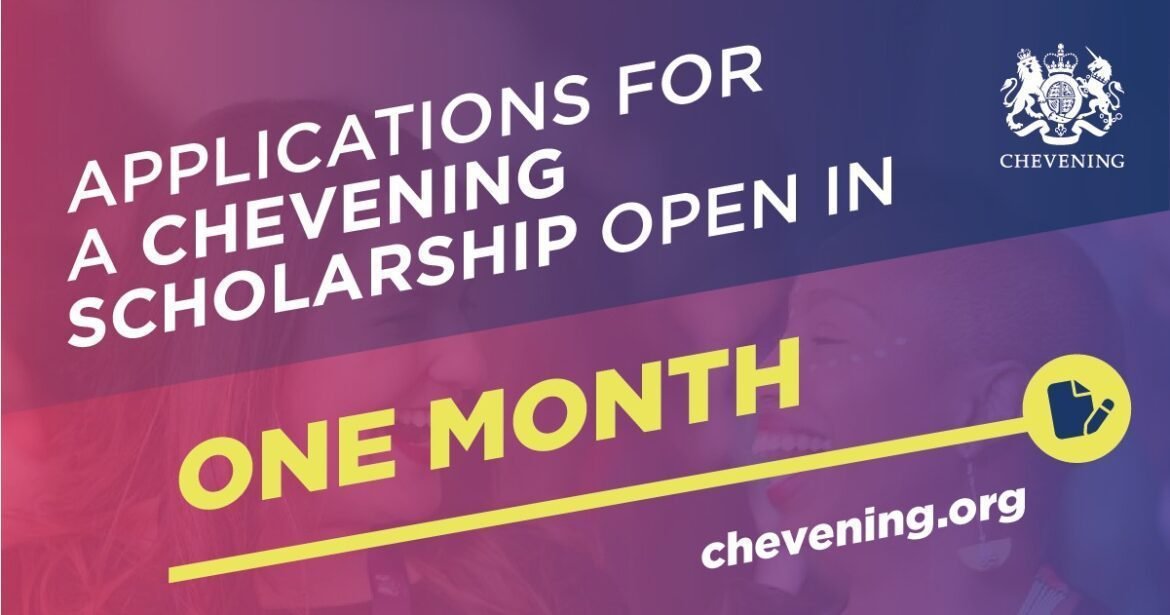
Chevening Scholarships enable outstanding emerging leaders from all over the world to pursue one-year master’s degrees in the UK. Whilst there is no ‘typical’ Chevening Scholar, we are looking for the kind of people who have the passion, ideas, and influence to provide the solutions and leadership needed to create a better future.

To be eligible for a Chevening Scholarship you must:

  • Be a citizen of a Chevening-eligible country or territory.
  • Return to your country of citizenship for a minimum of two years after your award has ended.
  • Have completed all components of an undergraduate degree that will enable you to gain entry onto a postgraduate programme at a UK university by the time you submit your application. This is typically equivalent to an upper second-class 2:1 honours degree in the UK but may be different depending on your course and university choice.
  • Have at least two years (equivalent to 2,800 hours) of work experience.
  • Apply to three different eligible UK university courses and have received an unconditional offer from one of these choices by 14 July 2022.

Public Health Courses in UK (For Chevening Applicants)

You are not eligible for a Chevening Scholarship if you:

  • Hold British or dual British citizenship (unless you are a citizen of a British Overseas Territory or hold BN(O) and are applying from Hong Kong).
  • Hold refugee status in a non-Chevening eligible country. Applicants who are citizens of a Chevening-eligible country and who hold refugee status in a Chevening-eligible country are eligible for a scholarship.
  • Are an employee, a former employee, or relative of an employee of Her Majesty’s Government, or have been within the last two years from the opening of Chevening applications  (including the Foreign, Commonwealth and Development Office, all British Embassies/High Commissions, the Home Office, the Ministry of Defence, the Department for Business, Energy and Industrial Strategy, the Department for International Trade and the UKVI), the British Council, a sponsoring UK university, or a staff member of the Association of Commonwealth Universities.
  • Employees, former employees, or relatives of an employee of Chevening Partner organisations are eligible to apply, but if the employment took place within the last two years, you cannot receive a Chevening Partner Award from the organisation from which you work, previously worked, or are affiliated with through relatives.
  • Have previously studied in the UK with funding from a UK Government-funded scholarship.

Having a master’s degree does not prevent you from applying for a Chevening Award to study for a second master’s degree in the UK, as long as you can clearly explain why it will help you fulfil your career plan to influence positive change in your home country.

Once submitted, applications undergo an electronic sift against our eligibility criteria. Any applications deemed ineligible will be removed from the selection process. Please see the list of common errors here. If you make these errors in your application form, your application will be ineligible. Please note that once your application has been submitted, it is not possible to change it retrospectively.

Eligible types of work experience

The types of work experience that are eligible for Chevening can include:

  • Full-time employment
  • Part-time employment
  • Voluntary work
  • Paid or unpaid internships

Work experience can be completed before, during, or after graduating from your undergraduate studies, however, any mandatory employment that counted towards your undergraduate or postgraduate course would not be eligible.

Guidance

Preparation is key to giving yourself the best chance of being awarded a fully funded Chevening Scholarship to study in the UK. To help you, we’ve collated our best guidance and advice.

It will enable you to:

  • Find the right courses
  • Choose appropriate references
  • Avoid common mistakes that other applicants make.

All Chevening applications must be submitted through our online application system (OAS). This system will be used throughout the application and selection process, and you may be asked to log back in at various points during the process to receive updates on your application status, or to submit documents.

Eligible courses

In order to be eligible, the courses you choose must be full-time, and:

  • Start in the autumn term (usually September/October)
  • Taught master’s (i.e. not research-focused MRes programmes)
  • Lead to a master’s degree qualification
  • Based in the UK

Courses cannot be:

  • Part-time
  • Distance learning
  • Less than nine months in duration
  • More than 12 months in duration
  • PhD or DPhil
  • Taught with more than one month of study outside the UK.

Applications are now open.

OFFICIAL LINK


Recommended Links

  • Public Health Courses in UK (For Chevening Applicants)
  • Chevening Fully-funded UK Government Scholarships 2020/2021
  • Postgraduate Public Health courses in United Kingdom (UK)
  • List of Universities for Master of Public Health in Australia
  • MPH – Entrance Examination :syllabus & sample questions -MPH Program POKHARA UNIVERSITY
  • Chevening Scholarships Program 2019/2020, UK
  • Master in Public Health (MPH) Program in BPKIHS: Eligibility, Fee & Entrance Model
  • Call for Application: MPH Program- BRAC JPGSPH (Scholarships available)

July 2, 2022 0 comments
0 FacebookTwitterPinterestLinkedinTumblrVKOdnoklassnikiRedditStumbleuponWhatsappTelegramLINEPocketSkypeViberEmail
World Health Summit
Call for Proposal, EOI & RFPConferenceInternational Jobs & OpportunitiesPublic Health OpportunitiesPublic Health Opportunity

Registration open! World Health Summit 2022, Berlin

by Public Health Update July 2, 2022
written by Public Health Update

The World Health Summit strengthens exchange, stimulates innovative solutions to health challenges, fosters global health as a key political issue and promotes the global health debate in the spirit of the UN Sustainable Development Goals: SDG 17 “Partnership for the Goals”.

WHS 2022 will focus on “Making the Choice for Health” by reflecting on the most pressing topics, including:

  • Investment for Health and Well-Being
  • Climate Change and Planetary Health
  • Architecture for Pandemic Preparedness
  • Digital Transformation for Health
  • Food Systems and Health
  • Health Systems Resilience and Equity
  • Global Health for Peace

World Health Summit 2022
Together with the World Health Organization (WHO)

World Health Summit and WHO join forces to bring you the world’s leading international, inter-
sectoral and inclusive global health conference that will set the agenda for a healthier future.

October, 16-18
Hotel Berlin Central District
Stauffenbergstraße 26
10785 Berlin
& Digital

3 Days | 100+ Nations | 400+ Speakers | 6000+ Participants
With ceremonial opening and reception on Sunday, October 16

The World Health Summit’s central topics in 2022 include:

  • Investment for Health and Well-Being
  • Climate Change and Planetary Health
  • Architecture for Pandemic Preparedness
  • Digital Transformation for Health
  • Food Systems and Health
  • Health Systems Resilience and Equity
  • Global Health for Peace

Digital participation of the entire World Health Summit program will be available throughout our website with no prior registration needed. Registration for on-site participation is only possible with a registration code. The registration codes for the contingents of our partners will be distributed by our partner organizations directly.

MORE INFO: OFFICIAL WEBSITE


Do you have a website? Looking for the best hosting provider? Here’s a discount code.

Latest Public Health Jobs

Latest Posts

  • International Wellness Day: Promoting Global Wellness for All
  • Summit Declaration: The 12th National Summit of Health and Population Scientists in Nepal
  • Joint political declaration on the reform of the global health architecture
  • World Health Day 2026: Together for Health. Stand with Science.
  • World Water Day 2026 | Water & Gender Equality

Thanks for visiting us.
Disclaimer: The resources, documents, guidelines, and information on this blog have been collected from various sources and are intended for informational purposes only. Information published on or through this website and affiliated social media channels does not represent the intention, plan, or strategies of an organization that the initiator is associated with in a professional or personal capacity, unless explicitly indicated.
If you have any complaints, information, or suggestions about the content published on Public Health Update, please feel free to contact us at blog.publichealthupdate@gmail.com.
#StayUpdated


  • WordPress
  • Link
  • Facebook
  • Mail
  • Facebook
  • Twitter
  • Twitter
  • LinkedIn
  • Instagram
  • Facebook
July 2, 2022 0 comments
0 FacebookTwitterPinterestLinkedinTumblrVKOdnoklassnikiRedditStumbleuponWhatsappTelegramLINEPocketSkypeViberEmail
Grants and Funding OpportunitiesInternational Jobs & OpportunitiesPhDPublic Health OpportunitiesPublic Health Opportunity

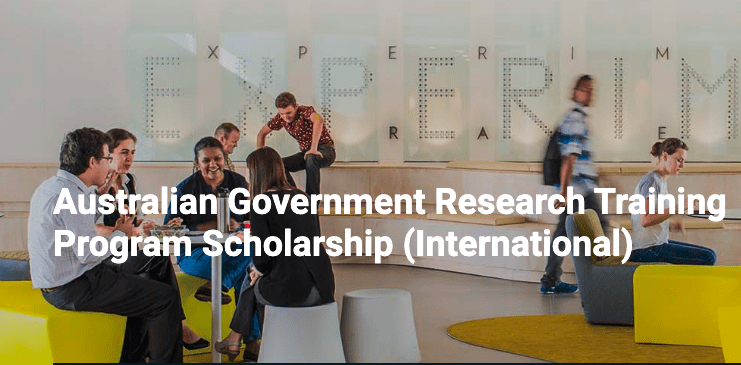
Australian Government Research Training Program Scholarship (International)

by Public Health Update July 2, 2022
written by Public Health Update

Description

The Australian Government Research Training Program Scholarships (AGRTPS) (International) are specifically intended to support international students to undertake a Higher Degree by research at Flinders University. The AGRTPS includes an international tuition fee offset, a living stipend and Overseas Health Care cover.

Please note:  For visa purposes, the AGRTPS is a Commonwealth Sponsored Scholarship.

A limited number (up to 5) of AGRTPS are available each year and the scholarship round is highly competitive.  The AGRTPS is awarded to candidates who demonstrate outstanding aptitude for independent research. AGRTPS are considered on the basis of academic merit, academic research training and research indicators and performance.

The scholarship is tenable for up to three years for a Research Doctorate degree and up to two years for a Research Masters degree. Successful applicants are required to undertake full time study and must be commencing a higher degree by research in Australia for the first time.

Benefits

The AGRTPS pays a stipend at the standard rate set by the Australian Government of $28,854 pa tax free (2022 full time rate). The AGRTPS also includes a Research Training Program place (RTP), which provides an off set for tuition fees for up to 4 years.

An AGRTPS student who moves to Adelaide from overseas is eligible for an establishment allowance (after arrival at Flinders) of up to $1,485 to assist with relocation costs and airfares, provided receipts can be produced by the student.

Eligibility

Awards will normally only be available to those who:

  • Be a citizen of any overseas country except New Zealand, and not hold Australian citizenship, Australian permanent resident status or New Zealand citizenship; and
  • Intend to commence full-time study for a higher degree by research in Australia for the first time, in the year for which the award is to offered. Students who commenced their higher degree by research in the previous year but who, due to the timing of their application for admission and subsequent enrolment, were unable to apply for an AGRTPS in that year, or, commenced a higher degree by research and terminated that enrolment within six months of commencement, may be considered; and
  • Intend to enrol in an area of research concentration.  These are areas in which the University has particular strength, has concentrated its research resources and has attracted external funding; and
  • Satisfy all entry requirements for a higher degree by research, including the English proficiency levels in accordance with the English Language Proficiency Requirements for HDR Candidature

Please see the Conditions of Award for full eligibility criteria.

Selection Criteria

Selection of award holders will be undertaken by the Scholarships Committee based on academic merit and research potential. 

Applications will be ranked according to the University’s Guidelines for Ranking Postgraduate Research Scholarship Applications

The University will give priority to students undertaking a higher degree by research for the first time.

Please see the Conditions of Award for full selection criteria.

Conditions of Award

Conditions of Award

Application information

IMPORTANT APPLICATION INFORMATION

All applicants are required to read the application guidelines provided below before submitting an application.


Incomplete applications will not be accepted.

To ensure your application is complete and competitive, please read and attend to the following:

Research Supervisor
You must make contact with an academic staff member  and have an informal agreement from that person to supervise you if successful. Email evidence of the supervisor’s agreement should be included with your application. Applicants who do not have a supervisor at the time of application will not be considered for an AGRTPS/FIPRS.

Publications
You must include evidence that you have published; you may include up to five of your publications with your application.
Each publication must be accompanied with a completed coversheet; publications without coversheets will not be considered. Publications will be used to judge the quality of previous research in the area that you intend to study at Flinders University. Applicants with more than five publications should consult with their Flinders University supervisor and select the top five. Explain briefly why these five were chosen. Do not provide more than five publications. Additional publications may be noted on your CV or in a separate list. Coversheets are not required for publications listed on the CV but not included among the top five.

Typically, only publications in English should be included among the top five. Publications in other languages will be accepted only if the nature of the publication (for example, a report to a government agency) dictates that another language is most appropriate.

Publications must not be more than 5 years old

Please note, due to the highly competitive nature of the AGRTPS, applicants who have not published are unlikely to be competitive.

Academic Transcripts
You must provide certified copies of all university level academic transcripts, translated into English, please do not provide secondary school certificates or non educational certificates or awards.

Research Proposal
You must include a research proposal of approximately 500 words in length, outlining the problem, hypothesis or question and the methodology or approach.

Academic Referees
Complete Section A of two copies of the Academic Referee’s Confidential Report forms and forward them to two appropriate referees of your choice.  If possible the referees should have an informed, personal and professional knowledge of your academic ability and be able to exercise judgment of your research potential. Indicate on your application form who the Referee Report forms have been sent to. Academic Referee reports must be returned to rhdscholarships@flinders.edu.au by 5 August 2022.

Curriculum Vitae
An updated CV outlining your work experience, all research experience, and a full list of cited publications should be included with your application.

Format & Language
All documents must be uploaded via the application portal, and should be in English.  Please save as a PDF and scan and save in the correct orientation. Please name all documents with your family name and document name, for example: name_Transcript, name_publication 1.

APPLICATION

To apply for an AGRTPS and FIPRS, you will need to first submit an application for admission to a Higher Degree by research (PhD or Master of Arts by research) followed by an application for the International RHD Scholarship Group.

If you already have a valid offer for admission to a Higher Degree by Research, you no not need to apply for admission again.

To apply for admission

International applicants – apply via Studylink and details about international admission can be found https://www.flinders.edu.au/international/apply/apply-research-degree/how-to-apply

Once you have read the information you should complete a registration https://student-flinders.studylink.com/index.cfm?event=security.showLogin&msg=eventsecured&fr=sp&en=default

Once you have completed a registration, you will be able to log back into that portal to complete your application for admission.

A Flinders student ID is created within 1 hour after a registration has been submitted – you will need to take note of this number.

How to apply for Scholarship

You will need to activate your account using the Student ID from your registration and your date of birth provided at time of registration: https://activate.flinders.edu.au/main

Once you have activated your account, you will receive a Flinders Authentication Name (FAN), you can then submit your application for the international HDR scholarship group.

  • log in to your OKTA dashboard via the quick links on the Flinders website 
  • Select Student System
  • Select the My Scholarship tab
  • Select the Create a new scholarship application button
  • Select 2023 from the search and select the International RHD Scholarship Group

If you have studied at Flinders University but graduated more than 12 months ago you will need to reactive your FAN via the FAN reactivation page.  With an active FAN you will then be able to submit your application for scholarship via the Student Information System as advised above.

If you have previously applied to study at Flinders, you will be able to reactive your FAN via the FAN reactivation page, you will need to enter your Fist name, Last name, date of birth and your student ID, normally found on any letters sent by the university to you.  The system will be able to identify you more accurately if you can enter your student ID.

Once your application is complete, including all mandatory questions and documentation, your application will be assessed.  Assessment will commence once applications have closed.

Applications close Friday 5 August 2022 at 5pm Australia, Adelaide local time.

Any questions about the application process should be directed to the Student Finance Office via email at rhdscholarships@flinders.edu.au

Any questions about the candidature application process should be directed to the International Centre via email at agrtps.international@flinders.edu.au

July 2, 2022 0 comments
0 FacebookTwitterPinterestLinkedinTumblrVKOdnoklassnikiRedditStumbleuponWhatsappTelegramLINEPocketSkypeViberEmail
Calls for application! 2022 Pacific NCD Youth Ambassadors initiative
Public Health OpportunitiesEastern Mediterranean RegionPublic Health Opportunity

Calls for application! 2022 Pacific NCD Youth Ambassadors initiative

by Public Health Update July 2, 2022
written by Public Health Update

The Pacific Community (SPC) calls for application for the 2022 Pacific NCD Youth Ambassadors initiative. The initiative provides opportunities for the Pacific youth to share creative ideas, using their own language and creative thinking that could help improve the health and wellbeing in their communities and contribute to addressing non-communicable diseases (NCDs). 

As the leading cause of preventable death accounting for 60 to 75% in the region, NCDs, principally diabetes, cardiovascular and respiratory diseases as well as cancers, constitute a crisis of epidemic proportion with major implications for the future development of Pacific Islands Countries and Territories. Tobacco, harmful use of alcohol, poor diets (e.g., diets rich in sugar, salt, fats, and processed foods and low in fruits and vegetables) combined with lack of physical activity, are the leading risk factors for NCDs.

In 2011, due to the significant and growing burden of NCDs, Pacific Island leaders declared that NCDs had become “a human, social and economic crisis” in the region, that required an urgent and comprehensive response.

Convinced that youth are the future of our islands and play a critical role in adopting healthy lifestyle, SPC invites youth aged between 18 and 30 years to become the Pacific NCD Youth Ambassadors to contribute to Pacific people wellbeing. “Through this initiative, those selected will receive technical guidance and professional support to implement Youth’s innovative activities designed to prevent and control NCDs in their communities”, said Solène Bertand-Protat, NCD adviser.

Application to the 2022 Pacific NCD Youth Ambassadors:

Who can apply and join the programme?
Youth aged 18–30 from one of the SPC’s member Pacific Island Countries and Territories can apply. Youth will need to form teams of 3 to 5 people.

How to apply?
To apply, please complete the attached entry form and email it to the following address: Health-Enquiries@spc.int. It will take only a few minutes to complete. Only successful candidates will be notified the outcome of the applications.  
Deadline: Entries close 31 July 2022.

July 2, 2022 0 comments
0 FacebookTwitterPinterestLinkedinTumblrVKOdnoklassnikiRedditStumbleuponWhatsappTelegramLINEPocketSkypeViberEmail
Political Declaration of the High-Level Meeting on Improving Global Road Safety
Global Health NewsRoad Traffic Accidents (RTA)

Political Declaration of the High-Level Meeting on Improving Global Road Safety

by Public Health Update July 1, 2022
written by Public Health Update

Political Declaration of the High-Level Meeting on Improving Global Road Safety “The 2030 horizon for road safety: securing a decade of action and delivery”

  • PP.1 We, […] Ministers and other representatives of States and Governments, assembled at the United Nations on 30 June and 1 July 2022, for a high-level meeting with a dedicated focus on improving global road safety:
  • PP.2 Recognize that road safety is an urgent development priority, a major public health problem, and a social equity issue, particularly in low- and middle-income countries where over 90 percent of road traffic deaths and injuries occur inter alia, a result of rising traffic, rapid infrastructure expansion and heterogeneous traffic mix, and that road safety is both an enabler and a part of our common goal for the achievement of sustainable development, having cross-cutting implications requiring collaborative cross-sectoral actions, and stressing in this regard, the importance of strengthening international cooperation in raising awareness and addressing road safety issues;
  • PP.3 Recall General Assembly resolutions on improving global road safety; acknowledge the importance of the past three editions of the Global Ministerial Conferences on Road Safety and their outcome documents; and welcome the proclamation of the First Decade of Action for Road Safety (2011-2020), and the Second Decade of Action for Road Safety (2021-2030);
  • PP.4 Reaffirm further the importance of timely implementation, in this decade of action and delivery for sustainable development, of the 2030 Agenda and the Addis Ababa Action Agenda of the Third International Conference on Financing for Development, as well as reaffirm the United Nations Framework Convention on Climate Change and the Paris Agreement adopted under the Convention;
  • PP.5 Reaffirm the decision by the General Assembly to invite the World Health Organization (WHO), working in close cooperation with the United Nations regional commissions to act as a coordinator on road safety issues within the United Nations system; recall resolution 57.10 of 22 May 2004 adopted by the World Health Assembly in which it accepted the invitation of the General Assembly; and also recall the appointment of a Special Envoy for Road Safety to the Secretary General and the establishment of the UN Road Safety Fund;
  • PP.6 Reaffirm also the importance of continued action through 2030 on all road safety-related targets of the 2030 Agenda for Sustainable Development, such as target 3.6 and target 11.2; and recognize their importance in enabling the achievement of SDG3 and SDG 11 and in catalyzing action on other SDGs, including on poverty eradication, gender equality, climate change, decent jobs, innovation, and transport;
  • PP.7 Recognize the tremendous global burden that road traffic crashes continue to place on society both in terms of human suffering with nearly 1.3 million preventable deaths and an estimated 50 million injuries each year and average costs to countries of 3 to 5 percent of their annual gross domestic product, which makes road safety an urgent public health and development priority;
  • PP.8 Reaffirm the right of every human being, without distinction of any kind, to the enjoyment of the highest attainable standard of physical and mental health;
  • PP.9 Recognize the impact of road traffic crashes on children and youth and emphasize the importance of taking into account their needs and those of road users who are in vulnerable situations including older persons and persons with disabilities;
  • PP.10 Recognize also that addressing road safety is primarily a responsibility of Governments, while also recognizing the shared responsibility among relevant stakeholders such as public and private sectors, academia, professional organizations, non-governmental organizations, citizens and the media, to move towards a world free from road traffic fatalities and serious injuries;
  • PP.11 Acknowledge the need to promote road safety and sustainable transport to ensure the resilience and efficient functioning of global supply chain connectivity, including for medical supplies, as well as facilitating travel for a sustainable, resilient and inclusive recovery from the COVID-19 pandemic;
  • PP.12 Welcome the elaboration of the Global Plan for the Second Decade of Action for Road Safety 2021-2030, which provides a set of options and strategies for use by Governments and other relevant stakeholders while recognizing that implementation of dedicated actions at national and international levels should be supported through commitment, leadership and partnerships, longterm sustained financing including public and private, appropriate legislation, strengthened institutions, enabling environment at all levels, education and training, capacity-building, knowledge-sharing and advocacy, and should be guided by technology and innovation, data, evidence and best practices;
  • PP.13 Also acknowledge that there is no one-size-fits-all formula and that the global level of ambition necessitates considering the specific situation of each country with its needs, different national realities, capacities, policies and priorities, and encourage the strengthening of efforts, including, inter alia, through the sharing of best practices and effective implementation mechanisms and the provision of relevant technical support to support and promote the accelerated achievement of all road safety-related SDGs;

Commit to scale up our efforts and undertake the following actions:

  1. Drive the implementation of the Global Plan for the Decade of Action for Road Safety 2021- 2030, which describes key suggested actions to achieve the reduction in road traffic deaths of at least 50% by 2030 and calls for setting national targets to reduce fatalities and serious injuries for all road users with special attention given to the safety needs of those road users who are the most vulnerable to road-related crashes, including pedestrians, cyclists, motorcyclists and users of public transport, taking into account national circumstances, policies and strategies.
  2. Develop and implement regional, national and sub-national plans that may include road safety targets or other evidence-based indicators where they have been set and put in place evidence-based implementation processes by adopting a whole-of-government and whole-of-society approach and designating national focal points for road safety with the establishment of their networks in order to facilitate cooperation with WHO to track progress towards the implementation of the Second Decade of Action for Road Safety 2021-2030.
  3. Promote systematic engagement with relevant stakeholders, including from transport, health, education, finance, environmental and infrastructure areas, and encourage Member States to consider becoming contracting parties to the United Nations legal instruments* on road safety and, beyond accession, applying, implementing and promoting their provisions or safety regulations.
    References to UN legal instruments relating to regulations or standards do not imply that regulations developed under these agreements are “international standards” within the meaning of the WTO Technical Barriers to Trade (TBT) agreement and relevant decisions by the WTO Committee on TBT.
  4. Implement a Safe System approach through policies that foster safe urban and rural road infrastructure design and engineering; set safe adequate speed limits supported by appropriate speed management measures; enable multi modal transport and active mobility; establish, where possible, an optimal mix of motorized and non-motorized transport, with a particular emphasis on public transport, walking and cycling, including bike-sharing services, safe pedestrian infrastructure and level crossings, especially in urban areas.
  5. Adopt evidence-and/or science-based good practices for addressing key risk factors including the non-use of seat belts, child restraints and helmets, medical conditions and medicines that affect safe driving, driving under the influence of alcohol, narcotic drugs and psychotropic and psychoactive substances, inappropriate use of mobile phones and other electronic devices including texting while driving, speed driving, driving in low visibility conditions, driver fatigue, as well as the lack of appropriate infrastructure; and for enforcement efforts including road policing coupled with awareness and education initiatives, supported by infrastructure designs that are intuitive and favour compliance with the legislation and a robust emergency response and post-crash care system.
  6. Ensure that road infrastructure improvements and investments are guided by an integrated road safety approach that inter alia takes into account the connections between road safety and eradication of poverty in all its dimensions, physical health including visual impairment and mental health issues, the achievement of universal health coverage, economic growth, quality education, reducing inequalities within and among countries, gender equality and women’s empowerment, decent work, sustainable cities, environment and climate change, as
    well as the broader social determinants of road safety and the interdependence between SDGs and targets that are integrated, interlinked and indivisible and assures minimum safety performance standards for all road users.
  7. Ensure appropriate road user insurance schemes and enhance support for all victims of road traffic crashes and their families; strengthen pre-hospital care and post-crash response; and encourage access for persons with injuries and disabilities to appropriate services for early rehabilitation and social reintegration.
  8. Improve the working conditions of professional drivers, particularly commercial vehicle drivers including by pursuing the implementation of high standards on safety and health at work, road safety and adequate road and vehicle conditions, and invite Member States to implement professional driver qualification frameworks established on the basis of recognized standards for training, certification, licensing, fitness and driving assessment.
  9. Integrate a gender perspective into all policymaking and implementing transport policies that provide for safe, secure, inclusive, accessible, reliable and sustainable mobility, and nondiscriminatory participation in transport; and ensure that policies cater to road users who might be in vulnerable situations, in particular children, youth, older persons and persons with disabilities.
  10. Deliver evidence-based road safety knowledge and awareness programmes to promote a culture of safety among all road users and to address high-risk behaviours especially among youth, and the broader road using community through advocacy, training and education and encourage private sector participation in supplementing national efforts in promoting greater road safety awareness as part of corporate social responsibility.
  11. Strengthen international cooperation on road safety through sharing of good practices, successful implementation mechanisms, and technical standards; ensuring that used vehicles comply with relevant national safety and emissions standards, striving to ensure that all vehicles produced and sold for every market by 2030 are equipped with appropriate levels of safety performance, and that incentives are provided where possible for use of vehicles with enhanced safety performance; encouraging provision of consumer information on vehicle safety through new car assessment programmes, that are independent from vehicle manufacturers and encouraging the sharing of such consumer information with the WHO and other countries, in particular developing countries, including the least developed countries; and harmonization of practices where appropriate, pertaining to training, driving hours and working conditions, vehicle registration, certification and licensing.
  12. Acknowledge the importance of adequate, predictable, sustainable and timely international financing without conditionalities in complementing the efforts of countries in mobilizing resources domestically, especially in low and middle-income countries; support the demands of financing in developing countries by leveraging the United Nations Road Safety Fund and other dedicated mechanisms, as appropriate, for promoting safe road transport infrastructure and for supporting implementation of measures required to meet the voluntary global performance targets, including by supporting the voluntary replenishment of all UN system road safety funds and mechanisms.
  13. Promote capacity building, knowledge sharing, technical support and technology transfer programs and initiatives on mutually agreed terms in the area of road safety especially in developing countries which confront unique challenges, and where possible, the integration of such programs and initiatives into sustainable development assistance programmes through North-South, South-South and Triangular cooperation formats, as well as public private collaboration.
  14. Promote the development, knowledge sharing, and deployment of vehicle automation and new technologies in traffic management using both intelligent transport systems and cooperative intelligent transport systems, in line with national requirements, to improve accessibility and all aspects of road safety while also monitoring, assessing, managing and mitigating challenges associated with rapid technological change and increasing connectivity.
  15. Contribute to international and national road safety by encouraging research, and improving and harmonizing disaggregated data collection on road safety including data on road traffic crashes, resulting deaths and injuries, and road infrastructure, including those gathered from regional road safety observatories to better inform policies and actions; strengthen road safety data capacity including in low- and middle-income countries and improve the quality of systematic and consolidated data collection and comparability at the international level for effective and evidence-based policymaking and implementation while taking into account privacy and national security considerations; and request the World Health Organization to continue monitoring and reporting progress towards the achievement of the goals of the Decade of Action.
  16. Leverage the full potential of the multilateral system, in particular, the World Health Organization, good offices of the Secretary General’s Special Envoy for Road Safety, the United Nations Regional Commissions and relevant UN entities as well as other stakeholders including the Global Road Safety Partnership, to support Member States with dedicated technical assistance and upon their request in applying voluntary global performance targets for road safety when appropriate.
  17. Request the Secretary-General to provide, in consultation with the World Health Organization and other relevant agencies, a progress report during the seventy eighth and eightieth sessions of the General Assembly, including recommendations on the implementation of the declaration towards improving global road safety, which will serve to inform the high-level meeting to be convened in 2026.
  18. Decide to convene a high-level meeting on improving global road safety in 2026 in New York, to undertake a comprehensive mid-term review on the implementation of the present declaration to identify gaps and solutions to accelerate progress towards the achievement of the road safety- related SDG targets by 2030, the scope and modalities of which shall be decided no later than the eightieth session of the General Assembly, taking into account the revitalization of the work of the General Assembly.

New political declaration to halve road traffic deaths and injuries by 2030 is a milestone achievement


Do you have a website? Looking for the best hosting provider? Here’s a discount code.

Latest Public Health Jobs

Latest Posts

  • International Wellness Day: Promoting Global Wellness for All
  • Summit Declaration: The 12th National Summit of Health and Population Scientists in Nepal
  • Joint political declaration on the reform of the global health architecture
  • World Health Day 2026: Together for Health. Stand with Science.
  • World Water Day 2026 | Water & Gender Equality

Thanks for visiting us.
Disclaimer: The resources, documents, guidelines, and information on this blog have been collected from various sources and are intended for informational purposes only. Information published on or through this website and affiliated social media channels does not represent the intention, plan, or strategies of an organization that the initiator is associated with in a professional or personal capacity, unless explicitly indicated.
If you have any complaints, information, or suggestions about the content published on Public Health Update, please feel free to contact us at blog.publichealthupdate@gmail.com.
#StayUpdated


  • WordPress
  • Link
  • Facebook
  • Mail
  • Facebook
  • Twitter
  • Twitter
  • LinkedIn
  • Instagram
  • Facebook
July 1, 2022 0 comments
0 FacebookTwitterPinterestLinkedinTumblrVKOdnoklassnikiRedditStumbleuponWhatsappTelegramLINEPocketSkypeViberEmail
Global Plan for the Decade of Action for Road Safety 2021-2030
Road Traffic Accidents (RTA)Global Health NewsPublic Health News

New political declaration to halve road traffic deaths and injuries by 2030 is a milestone achievement

by Public Health Update July 1, 2022
written by Public Health Update

30 June 2022 News release New York

The World Health Organization (WHO) welcomes the political declaration to be adopted by Member States during the High-level Meeting of the UN General Assembly on Global Road Safety. It commits to cut road traffic deaths and injuries by 50% by 2030, a milestone for road safety and sustainable mobility.

The meeting takes place on 30 June – 1 July 2022 under the theme “The 2030 horizon for road safety: securing a decade of action and delivery”.

Road safety affects everyone. We step from our homes every day onto roads that take us to our jobs, schools and to meet our vital daily needs. Yet our transport systems remain far too dangerous. No death should be acceptable on our roads. The future of mobility should promote health and well-being, protect the environment and benefit all,” said Dr Tedros Adhanom Ghebreyesus, Director-General, WHO. “It will require transformative leadership from the highest levels of government to act on the Political Declaration to make that vision a reality.”

Worldwide, road crashes currently kill around 1.3 million people each year – more than 2 every minute, and more than 90% occur in low- and middle-income countries. Crashes are the biggest killer of children and young people globally. More than 50 million people have died on the world’s roads since the invention of the automobile, more than the number of deaths in the First World War or in some of the worst global epidemics.

WHO is the lead agency for road safety in the United Nations and supported the President of the UN General Assembly in preparing this High-Level Meeting in collaboration with other UN agencies.

Through the declaration governments from around the world commit to provide leadership and coordination at the highest level of government to ensure all parts of the society are included to act on road safety and commit to boost policies and actions to reduce deaths and injuries. The declaration calls for the development and funding of national and local plans with clear targets and funding.

“Road traffic deaths upend countless lives and cost countries around 3% of GDP each year,” notes Dr Etienne Krug, Director of the Department for Social Determinants of Health, WHO. “This is an unacceptable price to pay for mobility. Putting safety at the heart of our mobility systems is an urgent health, economic and moral imperative. Let’s work together to scale up what works, save lives and build streets for life.”

In September 2020, the UN General Assembly adopted a resolution to proclaim the Decade of Action for Road Safety 2021–2030. WHO and the UN regional commissions, in cooperation with other partners in the UN Road Safety Collaboration, have developed a Global Plan for the Decade of Action, which was released in October 2021.  

The plan calls for continued improvements in the design of roads and vehicles, enhancement of laws and law enforcement, and provision of timely, life-saving emergency care for the injured. In addition, it promotes healthy and environmentally sound modes of transport.

It also highlights that responsibility for road safety stretches far beyond health and transport. Urban planners and engineers must prioritize safety as a core value in all transport infrastructure while businesses can influence and contribute to strengthening road safety by applying safety-first principles to their entire value chains.

Countries and cities guided by the plan are seeing dramatic reductions in deaths. For example, the Colombian capital of Bogota halved deaths over 10 years through a set of integrated actions, including wide-ranging technical improvements and regulatory reforms that were driven by strong leadership.

30 June 2022 News release New York

July 1, 2022 0 comments
0 FacebookTwitterPinterestLinkedinTumblrVKOdnoklassnikiRedditStumbleuponWhatsappTelegramLINEPocketSkypeViberEmail
Quality Health Services: A Planning Guide (WHO Quality Toolkit)
Quality Improvement & Infection PreventionInternational Plan, Policy & GuidelinesResearch & Publication

Quality Health Services: A Planning Guide (WHO Quality Toolkit)

by Public Health Update June 29, 2022
written by Public Health Update

Overview

The guide is for staff working at all levels of the health system who have a role in enhancing the quality of health services. It is also relevant to all stakeholders initiating and supporting action at facility, district and/or national levels both in the public and private sectors.

Quality health services: a planning guide supports implementation of key actions at the national, district and facility levels to enhance the quality of health services. It highlights the need for a health systems approach to enhancing quality of care, and for a common understanding of the essential activities among all stakeholders.

Activities within the guide are categorized as either ‘start-up’ or ‘ongoing’, although in practice these phases tend to overlap. Activities that can be conducted during the initial stages of improvement – and that will help make progress faster – are listed as start-up activities. Activities that either take a longer time to carry out, or are needed on an ongoing basis for sustainability, are listed as ongoing activities.

The litmus test for any health system is the quality of health services that are delivered at the point of care and the health outcomes that the system achieves for its populations. The guide helps to organize thinking on the multi-level actions required for quality health services.

Guiding Principles

To avoid quality improvement efforts becoming a vertical, this standalone initiative requires building quality-related capacity among the existing health system leadership at all levels, with a strong emphasis on primary health care. These system considerations are critical for the sustainability of the actions taken to enhance quality, and together contribute to a set of guiding principles that underpin the guidance described in this resource:

1. Start fast. The only way to reduce mortality and improve experience of care is to change what is happening at facilities and communities; therefore, the focus should be on initiating improvement activities as soon as possible. Planning is most effective when it is informed by implementation..

2. Build on existing structures and functions. Improving quality is a fundamental activity of the health system. The responsibility for quality must lie with system leadership, managers and frontline staff. Sustainability of quality activities is dependent on how aligned they are to existing structures and functions.

3. Support health workers. Health workers often work in conditions that are difficult, under-resourced and that hinder excellence. Systemic conditions – such as poor organization of care, unclear goals, wasteful rules, inadequate information flows – prevent health workers from carrying out their tasks successfully. Thus, a clear focus is required to support health workers.

4. Improve care for people. All efforts to improve service delivery must be directed towards improving clinical outcomes and patient experience of care. Effective and compassionate care for patients and the community should be central to all activities. Changes in systems and processes of service delivery should aim to put people at the centre of care.

5. Adapt to context. Activity plans should be adapted based on evidence from implementation as well as local context. We need to learn what different levels of the system need to do to enhance quality. There is always room for doing things better. It is only when we identify problems that they can be addressed. Good ideas should be shared across the system to support further adaptation.

Five foundational requirements for quality health services are relevant to national, district and facility levels.

  • Onsite support 
  • Measurement
  • Sharing and learning
  • Stakeholder and community engagement
  • Management

Quality health services: a planning guide (DIGITAL VERSION) (PDF VERSION)


Health Facility Quality Improvement Module (QI Tool) for Health Services Strengthening

June 29, 2022 0 comments
0 FacebookTwitterPinterestLinkedinTumblrVKOdnoklassnikiRedditStumbleuponWhatsappTelegramLINEPocketSkypeViberEmail
Hospital Pharmacy Service Guideline 2078
Research & PublicationNational Plan, Policy & Guidelines

Hospital Pharmacy Service Guideline 2078

by Public Health Update June 26, 2022
written by Public Health Update

The Ministry of Health and Population (MoHP) has endorsed a new Hospital Pharmacy Service Guideline 2078 to ensure quality health care services by mobilizing pharmacy professionals at hospital. The new guideline has prepared as per the mandate of Public Health Service Act 2075, rule 64. This guideline replaces the previous guideline on Hospital Pharmacy Service Guideline, 2072.

The Drug and Therapeutic Committee: The following Drug and Therapeutic Committee shall be formed to operate the service delivered through medicines and medicinal substances or materials in the Hospital effectively and systematically.

  • Hospital Chief or a Senior Physician authorized by him/her – Chairperson
  • Chiefs of medical departments or units – Member
  • Chief Nursing – Member
  • Administration Section Chief – Member
  • Financial Administration Section Chief – Member
  • Hospital Pharmacy Chief – Member Secretary

DOWNLOAD PDF FILE

DOWNLOAD PDF FILE

June 26, 2022 0 comments
0 FacebookTwitterPinterestLinkedinTumblrVKOdnoklassnikiRedditStumbleuponWhatsappTelegramLINEPocketSkypeViberEmail
Global Health Grant
Opportunities by RegionConferenceGrants and Funding OpportunitiesInternational Jobs & OpportunitiesPublic Health OpportunitiesPublic Health Opportunity

Call for Applications! BMJ Global Health Grant

by Public Health Update June 24, 2022
written by Public Health Update

Overview

BMJ has always strived to support early career researchers in low-income and lower-middle-income countries (LMICs). Established in 2019, the BMJ Global Health Grant recognises early career researchers from LMICs working in the field of global health and is awarded to the applicant whose abstract describes the most original methodological contribution to the field of global health and whose summary demonstrates the greatest importance and potential impact in advancing the field.

This year the successful applicant will receive funding of up to GBP 5,000 to support attendance at the 7th Global Symposium on Health Systems Research (HSR 2022) in Bogota, Colombia (31 October-4 November 2022), and the opportunity to publish a full paper in BMJ Global Health at no cost (article processing charge waived). Find out more in the section below on eligibility criteria, how to apply and details of previous recipients of the Grant.

The deadline for applications is 15 July 2022.

BMJ Global Health Grant

The aim of the BMJ Global Health Grant is to recognise the contributions of early career researchers from low-income and lower-middle-income countries working in the field of global health.

The grant is awarded to the applicant who describes the most original methodological contribution, and that shows the greatest importance or potential impact in advancing the field of global health.

Eligibility criteria

In order to apply for the grant you must, at the time of application, be:

  1. An early career researcher, within 10 years of completing your PhD or equivalent professional qualification or training (working in healthcare, academia or industry), undertaking research in global health; and
  2. A national of a low-income or lower-middle-income country in accordance with the current  World Bank classification. If you have a dual nationality of which one is not of a low-income or lower-middle-income country, you may not apply for this grant.

In order to apply, you must fulfil both requirements listed. We will request a letter of support from your department or institution confirming your current role as part of the application.

Criteria for selection

The grant will be awarded to the applicant whose abstract describes the most original methodological contribution to the field of global health and whose summary demonstrates the greatest importance and potential impact in advancing the field.

Prize

The winner of the BMJ Global Health grant will receive a maximum of GBP 5,000 to cover the applicant’s conference registration fee, return travel and accommodation costs, visa application fee and subsistence for the days on which the conference is held. The choice of the conference is reserved for the organizers of the BMJ Global Health grant.

Contact and further information

BMJ Global Health Editorial Office BMJ Publishing Group Limited BMA House Tavistock Square London WC1H 9JR, UK Email: info.bmjgh@bmj.com

BMJ Global Health Grant Terms and Conditions

Please read these carefully before starting your application. 1. Applicants may apply for a maximum of GBP 5,000 to cover the applicant’s conference registration fee, return travel and accommodation costs, visa application fee and subsistence for the days on which the conference is held. 2. Applicants may only apply once for the grant and for only one grant from BMJ in one calendar year. 3. A grant is available for early-career researchers within 10 years of completing their PhD or equivalent professional qualification or training (working in healthcare, academia or industry) undertaking research in global health and who are nationals of low-income or lower-middle-income countries in accordance with the World Bank classification as at the date of application. 4. Applicants must submit an abstract (maximum 500 words) describing an original research project and its relevance to global health. The work may be published already in a peer-reviewed journal, or be unpublished. The abstract should be accompanied by a statement (maximum 500 words) in which the applicant describes the impact of their work and why it warrants the award. All entries must be submitted in English. 5. Applicants will be asked to provide a letter from the applicant’s department or institution confirming the applicant’s current role as part of his/her application. 6. The grant will be awarded to the applicant whose abstract describes the most original methodological contribution to the field of global health; and whose summary demonstrates the greatest importance and potential impact in advancing the field. 7. BMJ will notify the successful applicant via email to the email address submitted in the application form by no later than 31 August 2022. 8. Within 14 days of notification, the successful applicant is required to email confirmation of his/her acceptance of the grant. In the event that the successful applicant does not provide the required confirmation within 14 days, an alternative applicant may be chosen for the grant. 9. Following receipt of confirmation in accordance with clause 8, BMJ will liaise with the successful applicant regarding attendance at the conference and book his/her registration at the conference. The applicant will be solely responsible for making all travel and accommodation bookings together with completing any entry requirements, such as obtaining a visa (if required) to attend the conference. Any travel costs should be reasonable such as travelling in economy for short-haul or economy/premium economy for long-haul flights.

10. The grant will be paid in a single payment to the successful applicant upon selection and following successful visa application (if required). In the event an invitation letter is required to support the successful applicant’s visa application, please contact the BMJ Global Health editorial office at info.bmjgh@bmj.com. 11. Following attendance at the conference, the successful applicant will submit to BMJ a short financial report outlining the breakdown of the grant monies spent, with accompanying receipts. Any unused funds remaining following attendance at the conference must be returned to BMJ by no later than 30 days after the end of the conference. 12. The successful applicant must inform BMJ as soon as possible of any changes to his/her eligibility to apply for the grant or any other information requested in his/her application between submission of his/her application and the dates of the conference. 13. In the event that the successful applicant is unable to attend the conference, he/she must notify BMJ as soon as possible by email to info.bmjgh@bmj.com.

The applicant will use his/her best efforts to obtain refunds in relation to all bookings he/she has made and to reimburse the same to BMJ together with returning all unspent monies to BMJ. 14. The applicant is solely responsible for ensuring he/she is not under any obligation which prevents him/her from applying for and for receiving the funds applied for and from attending the chosen conference. 15. Employees of BMJ Publishing Group Limited or any associated companies and immediate members of their families are not eligible to apply for the grant. 16. These terms and conditions are governed by the laws of England and Wales and any disputes in connection with these terms and conditions shall be governed exclusively by the courts of England and Wales. 17. In the event that any terms and condition(s) are deemed invalid, illegal or otherwise unenforceable, they shall be severed from these terms and conditions and the remaining clauses will remain in force.

June 24, 2022 0 comments
0 FacebookTwitterPinterestLinkedinTumblrVKOdnoklassnikiRedditStumbleuponWhatsappTelegramLINEPocketSkypeViberEmail
Call for Application- The Climate Action Champions Network
Call for Proposal, EOI & RFPEnvironmental Health & Climate ChangeGrants and Funding OpportunitiesInternational Jobs & OpportunitiesPublic Health OpportunitiesPublic Health Opportunity

Call for Application- The Climate Action Champions Network

by Public Health Update June 22, 2022
written by Public Health Update

The Climate Action Champions Network aims to harness the potential of the youth in the region by bringing together 100 individuals from the countries of Bangladesh, Bhutan, India, Nepal, and Sri Lanka, over 30 months to discuss and deliberate about creating a climate action vision for South Asia and the Indo-Pacific.

The objective of the program is to inspire the South Asian young leaders to champion an ambitious climate action agenda in their respective countries and in the wider Indo-Pacific region using an in-depth thematic understanding of climate change mitigation and adaptation. The selected climate champions should be actively engaged in and advocating for climate action and creating a network of individuals/organizations that works towards climate change mitigation and adaptation. A collaborative framework for a cohesive vision on climate action can help in shaping national and regional policies and in bringing about innovative youth-led solutions.

Time Commitment

The Climate Action Champions Network will include a few surveys, virtual and in-person sessions, and a group project with a small grant for the teams with the best ideas.

Duration

The Climate Action Champions Network program will run from August 2022 for a period of 12 months and includes a virtual icebreaker session, two in-person sessions, one virtual session and a small grants program.

Who should apply?

Prospective climate champions between the ages of 18 and 35, who are passionate about climate action, are encouraged to apply. The selected cohort will hail from across a range of roles and industries, bringing together individuals from the public sector, private industry, academia, media, and civil society, to form a truly diverse cohort that can learn from varied perspectives.

Eligibility Criteria

  • The candidate must be between the ages of 18 and 35
  • The candidate must be a citizen of one of the five countries (Bangladesh, Bhutan, India, Nepal and Sri Lanka) that are a part of the program
  • The candidate must be motivated to further the cause of climate action.
  • The candidate must be possess good analytical skills
  • The candidate must be demonstrate leadership abilities
  • The candidate must be an innovative thinker
  • 50% of the final cohort members will be United States Government Program alumni
  • 50% of the final cohort members will be women
  • Must be willing to travel internationally.

Enthusiastic individuals between the age group 18 and 35, who are passionate about climate action and advocacy, are analytical, demonstrate leadership qualities and innovativeness are strongly encouraged to apply.

Please have the following information ready before filling out the application form:-

  • Personal, Education and Employment Details
  • *Curriculum Vitae (Max 2-3 Pages):
  • * Statement of Motivation – What is your interest and motivation to further the cause of climate action? Briefly describe why you think you are a good fit for the program. (Limit: 500 words)
  • *Innovativeness – List any relevant innovation you have spearheaded. Examples include awards/certificates recognizing innovative products and services, publications, ideas converted to projects, patents, social media campaigns, and information campaigns. (Limit: 250 words)
  • *Soft skills – Describe a situation where you have exhibited any of the following skills: Critical thinking, problem-solving, and/or teamwork. (Limit: 250 words)
  • *Analytical skills – Describe any key initiative in which you have participated that addresses climate change (mitigation and/or adaptation) in areas such as ecology, green transitions, climate change and sustainability, climate governance, climate finance, or any other area. (Limit: 250 words)
  • *Leadership skills – List any assignments, projects, or campaigns for which you have led a team. Point out any instances where you displayed exemplary leadership.

Applications are open! Click on this link (https://www.orfonline.org/climate-action-champions-network/application-checklist/) to start the application process.

The deadline for submitting completed applications is July 15th, 2022 at 11.59 pm IST.

For any queries, please contact suyash.das@orfonline.org.

June 22, 2022 0 comments
0 FacebookTwitterPinterestLinkedinTumblrVKOdnoklassnikiRedditStumbleuponWhatsappTelegramLINEPocketSkypeViberEmail
Newer Posts
Older Posts

Search

Follow Us

Facebook Twitter Instagram Pinterest Linkedin Youtube

Categories

  • Abstracts (25)
  • Activities (91)
  • Adolescent Sexual and Reproductive Health (ASRH) (25)
  • Advice & Tips (4)
  • African Region (5)
  • AI and Health (1)
  • Annual Meeting (6)
  • Antimicrobial Resistance (AMR) (21)
  • Award (19)
  • Awards (16)
  • Books (9)
  • Call for Proposal, EOI & RFP (103)
  • Call for Research Participants (8)
  • Clinical Doctor Jobs (6)
  • Communicable Diseases (107)
  • Competition (20)
  • Conference (129)
  • Consultant (1)
  • Courses (205)
  • Dashboard (2)
  • Digital Health & Health Informatics (10)
  • Drug and Medicine (18)
  • Eastern Mediterranean Region (3)
  • Education (15)
  • Environment (3)
  • Environmental Health & Climate Change (47)
  • European Region (42)
  • Exchange Program (1)
  • Fact Sheet (117)
  • FCHVs (1)
  • Fellowships, Studentship & Scholarships (168)
  • Financial Aid (13)
  • Form Formats (2)
  • Fully funded (22)
  • Global Health News (434)
  • Grants and Funding Opportunities (193)
  • Guest Post (44)
  • Health Assistant Jobs (1)
  • Health Equity (7)
  • Health Financing and Economics (24)
  • Health in Data (115)
  • Health Insurance (5)
  • Health Jobs (52)
  • Health Literacy, Health Education & Promotion (50)
  • Health Organization Profile (42)
  • Health Systems (83)
  • Human Resource for Health (33)
  • Humanitarian Health & Emergency Response (44)
  • Hypertension (5)
  • Implementation Research (48)
  • International Health (3)
  • International Jobs & Opportunities (373)
  • International Plan, Policy & Guidelines (210)
  • Internships (4)
  • Jobs Vacancies (56)
  • Journals (8)
  • Life Style & Public Health Nutrition (39)
  • Live (10)
  • Master's Degree (48)
  • Maternal, Newborn and Child Health (88)
  • Mentorship Program (2)
  • Miscellaneous (16)
  • National Health News (158)
  • National Plan, Policy & Guidelines (468)
  • Neglected Tropical Diseases (NTDs) (51)
  • Non- Communicable Diseases (NCDs) (121)
  • Notice (103)
  • Nursing Jobs (6)
  • Nutritionist Jobs (1)
  • One Health (18)
  • Online & Distance Learning (22)
  • Online Courses (90)
  • Op-Ed Article (3)
  • Opportunities by Region (83)
  • Outbreak News (213)
  • Partially funded (6)
  • PCL Health Science Jobs (3)
  • PH Important Day (534)
  • Pharmacist Jobs (3)
  • PhD (54)
  • Photos (5)
  • Planetary Health (4)
  • PostDoc (14)
  • Presentation Slides (26)
  • Primary Health Care (25)
  • Provincial Plan, Policies and Guidelines (14)
  • Public Health (1,283)
  • Public Health Epidemiology & Biostatistics (13)
  • Public Health Events (306)
  • Public Health Information (20)
  • Public Health Innovation (9)
  • Public Health Jobs (52)
  • Public Health News (554)
  • Public Health Notes (120)
  • Public Health Opportunities (507)
  • Public Health Opportunity (491)
  • Public Health Programs (108)
  • Public Health Seminar (2)
  • Public Health Tools (1)
  • Public Health Update (564)
  • Quality Improvement & Infection Prevention (20)
  • Region of America (8)
  • Reports (184)
  • Research & Project Grants (39)
  • Research & Project Grants (32)
  • Research & Publication (647)
  • Research Articles (10)
  • Road Traffic Accidents (RTA) (9)
  • School of Public Health (60)
  • Self funded (2)
  • South-East Asia Region (26)
  • Success Stories (17)
  • Summer and Winter Courses (40)
  • Summer Courses (28)
  • Sustainable Development Goals (SDGs) (14)
  • Syllabus (61)
  • Symposium (9)
  • Tobacco Control (35)
  • Training (40)
  • Travel Grants (15)
  • Trick, Technique & Skills (8)
  • Uncategorized (3)
  • Undergraduate Degree (7)
  • Universal Health Coverage (36)
  • Universities (29)
  • Universities & School of Public Health (58)
  • Vacancy Announcement (26)
  • Vaccine Preventable Diseases (40)
  • Vector-Borne Diseases(VBDs) (30)
  • Videos (3)
  • View Points (1)
  • Webinar (4)
  • Western Pacific Region (13)
  • Workshop (18)
  • World News (117)
Post New Jobs: Vacancy Announcement Service

Public Health Update (Sagun’s Blog) is a popular public health portal in Nepal. Thousands of health professionals are connected with Public Health Update to get up-to-date public health updates, search for jobs, and explore opportunities.
#1 Public Health Blog for sharing Job opportunities and updates in Nepal

”Public Health Information For All”
– – Sagun Paudel, Founder

  • HOT JOBS
    • Public Health Jobs
    • Medical Doctor Jobs
    • Nursing Jobs
    • Health Assistant Jobs
    • Pharmacist Jobs
    • NGOs Jobs
    • Government Jobs
  • Top Categories
    • National Plan, Policy & Guidelines Top
    • Public Health Calendar
    • Fellowships & Scholarships
    • Health Systems
    • Health Organization Profiles
    • International Jobs & Opportunities
    • Public Health Opportunity

PUBLIC HEALTH INITIATIVE

    • Submit your Vacancies New
    • Partnership Opportunities

Contact: blog.publichealthupdate@gmail.com

https://wa.me/+9779856036932

Public Health Initiative, A Registered Non-profit organization – All Right Reserved. 2011-2024. Contact us. 

Facebook Twitter Instagram Youtube Envelope
Public Health Update
  • Home
  • Public Health
    • Home 1
      • Adolescent Sexual and Reproductive Health (ASRH)
      • Antimicrobial Resistance (AMR)
      • Communicable Diseases
      • Digital Health & Health Informatics
      • Environmental Health & Climate Change
      • Health Financing and Economics
      • Health Equity
    • Home 2
      • Health Literacy, Health Education & Promotion
      • Human Resource for Health
      • Humanitarian Health & Emergency Response
      • Implementation Research
      • International Health
      • Life Style & Public Health Nutrition
      • Maternal, Newborn and Child Health
    • Home 3
      • Neglected Tropical Diseases (NTDs)
      • Non- Communicable Diseases (NCDs)
      • One Health
      • Planetary Health
      • Public Health Epidemiology & Biostatistics
      • Primary Health Care
      • Quality Improvement & Infection Prevention
    • Home 4
      • Road Traffic Accidents (RTA)
      • Sustainable Development Goals (SDGs)
      • Tobacco Control
      • Universal Health Coverage
      • Vaccine Preventable Diseases
      • Vector-Borne Diseases(VBDs)
      • Notices
  • Public Health Update
    • Home 1
      • Public Health News
      • Global Health News
      • Outbreak News
      • National Health News
      • COVID-19
    • Home 2
      • Fact Sheet
      • Health in Data
      • PH Important Day
      • Public Health Events
      • Public Health Programs
    • Home 3
      • Health Systems
      • Health Insurance
      • Health Organization Profile
      • Success Stories
      • Public Health Innovation
  • Public Health Opportunities
    • Fully funded
    • Travel Grants
    • Grants and Funding Opportunities
    • Opportunities by Region
    • International Jobs & Opportunities
    • Research & Project Grants
    • Fellowships, Studentship & Scholarships
    • Conference
  • Jobs
    • Home 1
      • Health Jobs
      • Public Health Jobs
      • Clinical doctor Jobs
      • Health Assistant Jobs
      • Nursing Jobs
      • PCL Health Science Jobs
    • Home 2
      • Dental Jobs
      • Pharmacist Jobs
      • TSLC (Health Jobs)
      • Laboratory Jobs
      • Nutritionist Jobs
  • Downloads
    • International Plan, Policy & Guidelines
    • National Plan, Policy & Guidelines
    • Reports
    • Books
    • Research Articles
  • School of Public Health
    • Home 1
      • Courses
      • Master’s Degree
      • Undergraduate Degree
      • PhD
    • Home 2
      • Universities
      • Syllabus
      • Public Health Notes
      • Mentorship Program
      • Startup Project
    • Home
      • Summer and Winter Courses
      • Summer Courses
      • Online Courses
      • Workshop
      • Training
Public Health Update
  • Home
  • Public Health
    • Home 1
      • Adolescent Sexual and Reproductive Health (ASRH)
      • Antimicrobial Resistance (AMR)
      • Communicable Diseases
      • Digital Health & Health Informatics
      • Environmental Health & Climate Change
      • Health Financing and Economics
      • Health Equity
    • Home 2
      • Health Literacy, Health Education & Promotion
      • Human Resource for Health
      • Humanitarian Health & Emergency Response
      • Implementation Research
      • International Health
      • Life Style & Public Health Nutrition
      • Maternal, Newborn and Child Health
    • Home 3
      • Neglected Tropical Diseases (NTDs)
      • Non- Communicable Diseases (NCDs)
      • One Health
      • Planetary Health
      • Public Health Epidemiology & Biostatistics
      • Primary Health Care
      • Quality Improvement & Infection Prevention
    • Home 4
      • Road Traffic Accidents (RTA)
      • Sustainable Development Goals (SDGs)
      • Tobacco Control
      • Universal Health Coverage
      • Vaccine Preventable Diseases
      • Vector-Borne Diseases(VBDs)
      • Notices
  • Public Health Update
    • Home 1
      • Public Health News
      • Global Health News
      • Outbreak News
      • National Health News
      • COVID-19
    • Home 2
      • Fact Sheet
      • Health in Data
      • PH Important Day
      • Public Health Events
      • Public Health Programs
    • Home 3
      • Health Systems
      • Health Insurance
      • Health Organization Profile
      • Success Stories
      • Public Health Innovation
  • Public Health Opportunities
    • Fully funded
    • Travel Grants
    • Grants and Funding Opportunities
    • Opportunities by Region
    • International Jobs & Opportunities
    • Research & Project Grants
    • Fellowships, Studentship & Scholarships
    • Conference
  • Jobs
    • Home 1
      • Health Jobs
      • Public Health Jobs
      • Clinical doctor Jobs
      • Health Assistant Jobs
      • Nursing Jobs
      • PCL Health Science Jobs
    • Home 2
      • Dental Jobs
      • Pharmacist Jobs
      • TSLC (Health Jobs)
      • Laboratory Jobs
      • Nutritionist Jobs
  • Downloads
    • International Plan, Policy & Guidelines
    • National Plan, Policy & Guidelines
    • Reports
    • Books
    • Research Articles
  • School of Public Health
    • Home 1
      • Courses
      • Master’s Degree
      • Undergraduate Degree
      • PhD
    • Home 2
      • Universities
      • Syllabus
      • Public Health Notes
      • Mentorship Program
      • Startup Project
    • Home
      • Summer and Winter Courses
      • Summer Courses
      • Online Courses
      • Workshop
      • Training
Public Health Initiative, A Registered Non-profit organization – All Right Reserved. 2011-2023