
Public Health Update
  • Home
  • Public Health Update
  • Nepal Health Jobs
    • Public Health Job Board
    • Organization List
  • Opportunities
    • Fellowships, Studentship & Scholarships
    • Grants and Funding Opportunities
    • Fully funded
    • Conference
  • Downloads
    • International Plan, Policy & Guidelines
    • National Plan, Policy & Guidelines
    • Reports
    • Public Health Notes
    • Syllabus
    • Form Formats
  • School of Public Health
    • PhD
    • Master’s Degree
    • Online Courses
  • Notice
  • Home
  • Public Health Update
  • Nepal Health Jobs
    • Public Health Job Board
    • Organization List
  • Opportunities
    • Fellowships, Studentship & Scholarships
    • Grants and Funding Opportunities
    • Fully funded
    • Conference
  • Downloads
    • International Plan, Policy & Guidelines
    • National Plan, Policy & Guidelines
    • Reports
    • Public Health Notes
    • Syllabus
    • Form Formats
  • School of Public Health
    • PhD
    • Master’s Degree
    • Online Courses
  • Notice
LOGIN / REGISTER
Public Health Update
SUBSCRIBE
Public Health Update
  • Home
  • Public Health Update
  • Nepal Health Jobs
    • Public Health Job Board
    • Organization List
  • Opportunities
    • Fellowships, Studentship & Scholarships
    • Grants and Funding Opportunities
    • Fully funded
    • Conference
  • Downloads
    • International Plan, Policy & Guidelines
    • National Plan, Policy & Guidelines
    • Reports
    • Public Health Notes
    • Syllabus
    • Form Formats
  • School of Public Health
    • PhD
    • Master’s Degree
    • Online Courses
  • Notice

All Right Reserved. Designed and Developed by PenciDesign

NHRC Notice
Public Health OpportunitiesPublic Health OpportunityTrainingWorkshop

Registration Open for Virtual Training Workshop on Health Research Methodology

by Public Health Update February 22, 2023
written by Public Health Update

Registration for Virtual Training Workshop on Health Research Methodology (Undergraduates Only)

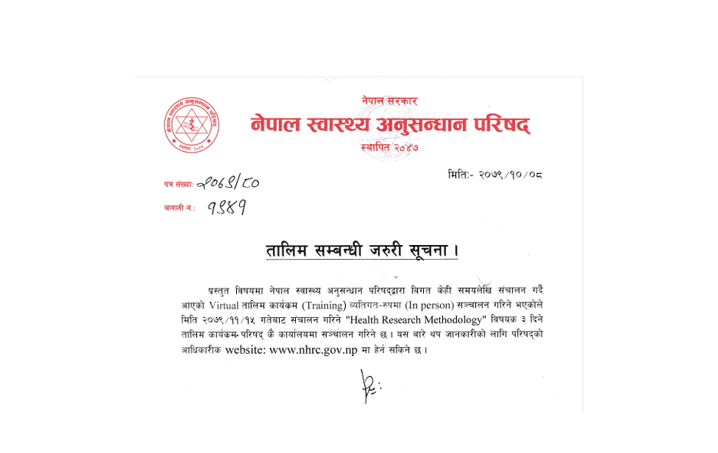
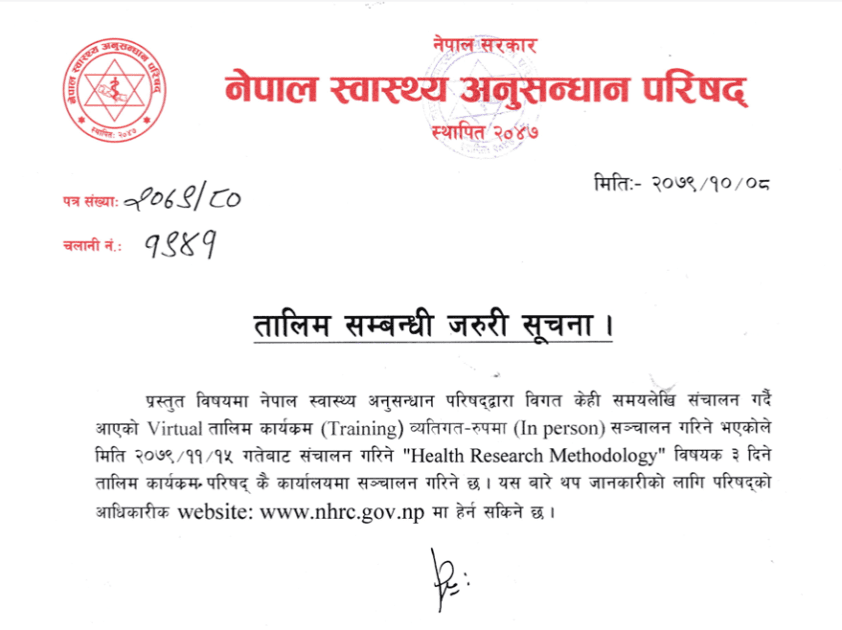
Nepal Health Research Council (NHRC) invites application from interested candidates to join a Virtual Training Workshop on Health Research Methodology.

NHRC Notice
NHRC Notice

Interested candidates can fill out this form to register for training on “Health Research Methodology”. The tentative date for the training is set for Feb 27, 2023 (Falgun 15, 2079) for three days. The training workshop will be conducted, in-person, at NHRC office.

Please fill out the registration form by Feb 26, 2023 (Falgun 14, 2079) 10:00 AM . If you will be selected, you will receive all the details  via email after the registration process is completed.

ONLINE FORM
February 22, 2023 0 comments
0 FacebookTwitterPinterestLinkedinTumblrVKOdnoklassnikiRedditStumbleuponWhatsappTelegramLINEPocketSkypeViberEmail
TDR Clinical Research Leadership fellowship programme
Fellowships, Studentship & ScholarshipsGrants and Funding OpportunitiesInternational Jobs & OpportunitiesNeglected Tropical Diseases (NTDs)Public Health OpportunitiesPublic Health Opportunity

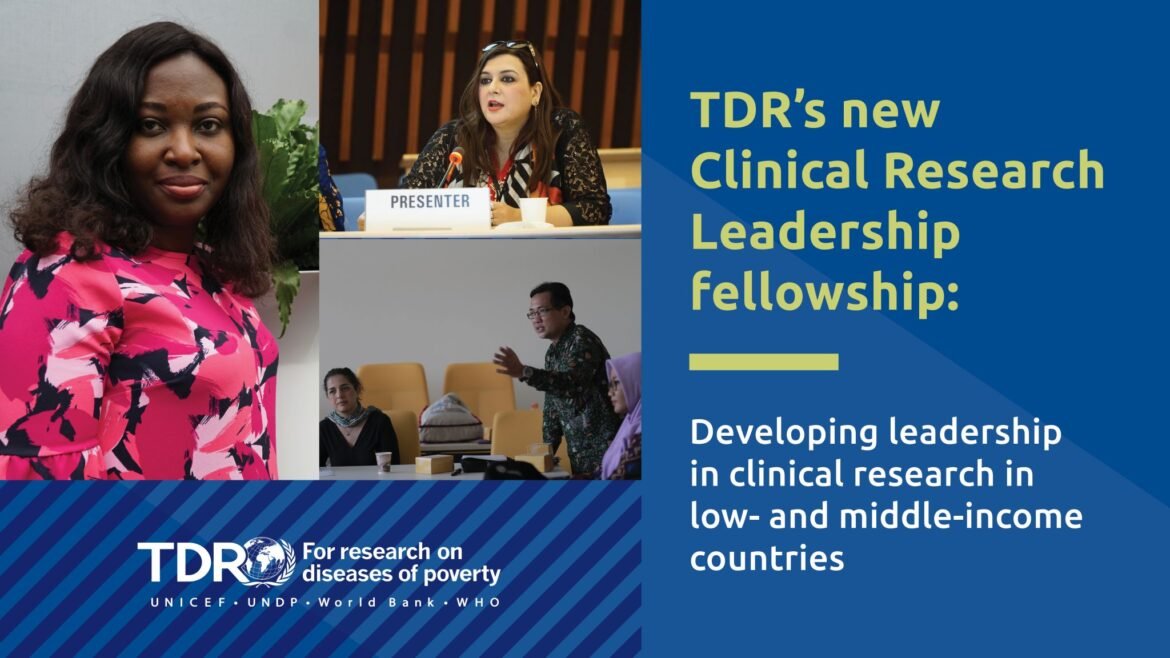
Call for Applications! TDR Clinical Research Leadership fellowship programme

by Public Health Update February 21, 2023
written by Public Health Update

Summary

TDR, the Special Programme for Research and Training in Tropical Diseases, is a global programme of scientific collaboration that helps facilitate, support and influence efforts to combat diseases of poverty. It is co-sponsored by the United Nations Children’s Fund (UNICEF), the United Nations Development Programme (UNDP), the World Bank and the World Health Organization (WHO).

The Clinical Research Leadership (CRL) fellowship programme, launched in 2023, is based on four pillars:

  • Pillar 1:    Improved clinical research skills obtained through flexible placement of fellows at Training Partner Organizations (TPOs).
  • Pillar 2:    Strong clinical research leadership skills acquired through customized learning, coaching and leadership experience at the home institution, geared to each fellow’s needs and interests.
  • Pillar 3:    Enhanced gender equity promoted through active measures to ensure fair participation of women and men and people who do not fit into these binary gender identities.
  • Pillar 4:    Strengthened institutional capacity by maximizing the fellow’s contribution on re-entry.

This new fellowship programme will maximize the value of the clinical research skills obtained through the placement at a TPO by focusing on research leadership, with fellows using their clinical research skills, in conjunction with competencies and capabilities to effectively communicate with, and support, members of a multidisciplinary team. Several actions identified through the contest challenge and focus group discussions with previous fellows will be put in place to enhance gender equity, by increasing the participation of women. An institutional development plan will enable the fellows to maximize their contribution to strengthening their institution on re-entry, as well as developing and managing a research team to undertake a research study.

The CRL training will provide support for a maximum of  24 months to fellows selected through open competition, including placement with a TPO, re-entry at the home institution and institutional development.

The Clinical Research Leadership programme builds on the experience of the Clinical Research and Development Fellowship (CRDF) programme.

Since 1999, a cumulative total of 112 fellows (26 women, 86 men) from 36 LMICs have been selected to be placed with 31 partner organizations. All fellows returned to their home institutions except one who has played a pivotal role in a wide range of R&D projects, including trials for new candidate vaccines and drugs.

Scope

The purpose of the CRL fellowship programme is to provide funding support to researchers and clinical trial staff from LMICs to acquire essential skills in clinical research and development through placements in TPOs. The scheme targets early- to mid career researchers or clinical trial staff who are employed by a legal entity in an LMIC where they are currently conducting clinical research activities in the scope of TDR.

TDR will fund selected fellows to be placed in TPOs to train and develop new research skills on poverty related infectious diseases, including COVID-19, Ebola, HIV/AIDS, tuberculosis, malaria and NTDs. Fellows can only be funded once under this grant scheme. Grants awarded are not transferrable from one individual to another. Placements in TPOs are for a maximum period of twelve months followed by a reintegration period of twelve months in their home institution. Fellows must be committed to return to their home institution for a minimum of two years after completion of the fellowship. Fellows should be able to demonstrate how the experience gained during the training programme will be applied upon return to their home organization.

Expected impact
The aim of the CRL fellowship programme is to develop additional human resources that will increase the amount of high quality research and development of required interventions against poverty related infectious diseases, including COVID-19, Ebola, HIV/AIDS, tuberculosis, malaria and NTDs in LMICs. Fellowships are expected to add significantly to the development of the best and most promising researchers and maximize their contribution to improve the function of research institutions in LMICs, including training of their peers. The programme will strengthen collaboration between research institutions, clinical researchers and staff, pharmaceutical companies and PDPs. The programme will also contribute to the achievement of Sustainable Development Goal 3: “Ensure healthy lives and promote well-being for all at all ages”.

Placements
TPOs may offer placements in the following areas: design and conduct of clinical trials, including operational planning, management and evaluation; clinical development of vaccines, including associated epidemiological studies; assessment of drug development programmes; diagnostics; biostatistics/ epidemiology; data management and pharmacovigilance.

Eligibility

At the deadline for submission of applications, the fellow should:

  • be a national of, and resident in, an LMIC.
  • be a postgraduate (MSc or PhD) or medical/pharmacy graduate conducting clinical research activities in the scope of TDR.
  • have obtained their first degree within 15 years of submission of the application
  • have been a researcher or clinical staff member employed for the last 12 months in an institution with a registered legal entity in an LMIC conducting clinical research activities in the scope of TDR.

Application procedure
The application should be sent in electronic format (Word or PDF only) to cdftdr@who.int (no application form is required). Reference letters must be attached electronically. The following information should be provided:

  1. Full name, with the family name(s) underlined.
  2. Date of birth, gender and nationality (copy of information page of passport or other identification document may be requested later).
  3. Name, address, telephone number and e-mail address of the institution where the applicant is employed. All applicants must have permanent employment.
  4. Telephone number and e-mail address for personal contact and possible interview (if not the same as institutional telephone number in #3 above).
  5. Educational qualifications, including place of study and graduation date (transcripts and copies of qualifications are not required but may be requested later).
  6. A description of each of the following, each 1-page maximum:
  • The applicant’s current post and of the post held immediately before.
  • The applicant’s current work/research interests, including disease(s) interest.
  • Competencies and skills the applicant would like to acquire during the fellowship.
  • How the applicant, if selected, plans to apply the acquired skills and knowledge after returning
    to home country/institution.
  1. An endorsement from the Director of the applicant’s home institution testifying the ability of the applicant to successfully undertake the training proposed and certifying that the applicant, if selected, will be financially supported as a leave of absence. The Director has also to indicate how the proposed training will strengthen the institution’s capability to conduct clinical research upon the return of the fellow.
  2. A list of the applicant’s publications and other abstracts or presentations.
  3. A letter of recommendation from two senior scientists/professors that includes their full name, address, telephone number and e-mail address to be scanned and included with the application.

    Deadline for submission of proposals: Applications must be received at cdftdr@who.int by 17:00 (CET) on 15 March 2023.
READ MORE
February 21, 2023 0 comments
0 FacebookTwitterPinterestLinkedinTumblrVKOdnoklassnikiRedditStumbleuponWhatsappTelegramLINEPocketSkypeViberEmail
Technical University of Munich
International Jobs & OpportunitiesPhDPublic Health OpportunitiesPublic Health Opportunity

PhD Opportunity! Global Health-Impact Evaluation of Adolescent Health Policies and Interventions

by Public Health Update February 21, 2023
written by Public Health Update

Two research associates/ PhD candidates (m/f/d) in the area of ‘Global Health – Impact Evaluation of Adolescent Health Policies and Interventions‘

The Professorship for Public Health and Prevention at the Technical University of Munich is looking for two Research associates/ PhD candidates (m/f/d) in the area of ‘Global Health – Impact Evaluation of Adolescent Health Policies and Interventions‘. The remuneration is based on TV-L, E-13 (75%) and the positions are initially limited to 3 years, with the possibility of extension. Start date will be in spring/summer 2023.

About us

The Technical University of Munich (TUM) is one of the best universities in Europe. TUM stands for outstanding achievements in research and teaching, interdisciplinarity, the promotion of talent and strong alliances with companies and scientific institutions across the globe.

At the Professorship for Public Health and Prevention, the goal of our research is to generate robust scientific evidence on the effectiveness, cost-effectiveness and equity impact of interventions and policies to support decision making in health policy and to ultimately improve population health. To generate this evidence, we apply modern empirical methods from the fields of public health, econometrics, epidemiology and decision analyses and closely cooperate with a range of stakeholders. A specific focus of our work is the prevention of non-communicable diseases. More information on the work of Prof. Michael Laxy and his team can be found at https://www.sg.tum.de/en/php/home/.

About the positions

The overarching goal of this project is to improve adolescent health in the seven project partner countries in sub-Saharan Africa through rigorous population-based intervention and policy research. While both positions will focus broadly on evaluating the effectiveness of policies and interventions in the domains of nutrition & physical activity, sexual & reproductive health, and mental health & violence, the specific methodological approach will differ. One position will focus on conducting impact evaluations of community health worker-delivered interventions using randomized controlled trials embedded within population-based cohort studies. The other position will focus on conducting impact evaluations of population-level policies using routine data and quasi-experimental methods.

Your qualifications

  • Excellent or very good master’s degree in (health) economics, public health, epidemiology, statistics, demography, or a similar field.
  • Expertise and experience in programming in R, SAS or STATA
  • Expertise and experience in empirical data analysis, in particular in methods for impact evaluation using econometric and quasi-experimental methods
  • Interest in global health and public health, particularly related to adolescent health
  • Experience in teaching is preferred
  • Ability to work well in a team and also in an independent manner
  • Ability to work in structured and creative manner

Project tasks

  • Planning and conduct of experimental and/or quasi-experimental impact evaluations of adolescent health interventions and policies
  • Processing, exploration and analysis of population-based cohort and/or routine data
  • Involvement in other project-related activities, for example the planning and conduct of data collection within population-based cohorts, the design and implementation of adolescent health interventions, and the planning and conduct of mixed method process and performance evaluations of such interventions
  • Close collaboration with colleagues in the team and international partners
  • Preparation of research papers and conference presentations

Our offer

  • A 75% E-13 position as a research associate with the opportunity to pursue a doctoral degree (Payment will be based on the Collective Agreement for the Civil Service (TV-L)). The position will initially be limited to three years.
  • An exciting position within a vibrant, diverse and interdisciplinary team
  • Attractive research projects on policy-relevant topics in public health
  • Interesting collaborations with local, national and international research institutions and various stakeholders in public health policy and health care
  • Qualification opportunities through training courses, participation in national and international conferences and research stays with international cooperation partners
  • The opportunity to teach in health science bachelor’s and master’s courses

Application documents

Please send your application documents (cover letter, CV, master thesis or a selected publication, other certificates) at latest by March 31st 2023 per E-Mail in one PDF-document to Jacob Burns, jacob.burns@tum.de. While this is the final deadline, we will consider applications on a rolling basis and may fill the positions before that date.

TUM strives to raise the proportion of women in its workforce and explicitly encourages applications from qualified women. Applications from disabled persons with essentially the same qualifications will be given preference.

Prof. Dr. Michael Laxy

Technical University of Munich

Professorship of Public Health und Prevention

Georg-Brauchle-Ring 60/62, 80992 München

Email: michael.laxy@tum.de

Web: https://www.sg.tum.de/en/php/home/

Data Protection Information:
When you apply for a position with the Technical University of Munich (TUM), you are submitting personal information. With regard to personal information, please take note of the Datenschutzhinweise gemäß Art. 13 Datenschutz-Grundverordnung (DSGVO) zur Erhebung und Verarbeitung von personenbezogenen Daten im Rahmen Ihrer Bewerbung. (data protection information on collecting and processing personal data contained in your application in accordance with Art. 13 of the General Data Protection Regulation (GDPR)). By submitting your application, you confirm that you have acknowledged the above data protection information of TUM.

Kontakt: jacob.burns@tum.de

MORE INFORMATION

Global_Health_Impact_EvaluationResearch associates/ PhD candidates (m/f/d) in the area of ‘Global Health – Impact Evaluation of Adolescent Health Policies and Interventions‘, (Type: application/pdf, Size: 224.8 kB) Save attachment
Official link
February 21, 2023 0 comments
0 FacebookTwitterPinterestLinkedinTumblrVKOdnoklassnikiRedditStumbleuponWhatsappTelegramLINEPocketSkypeViberEmail
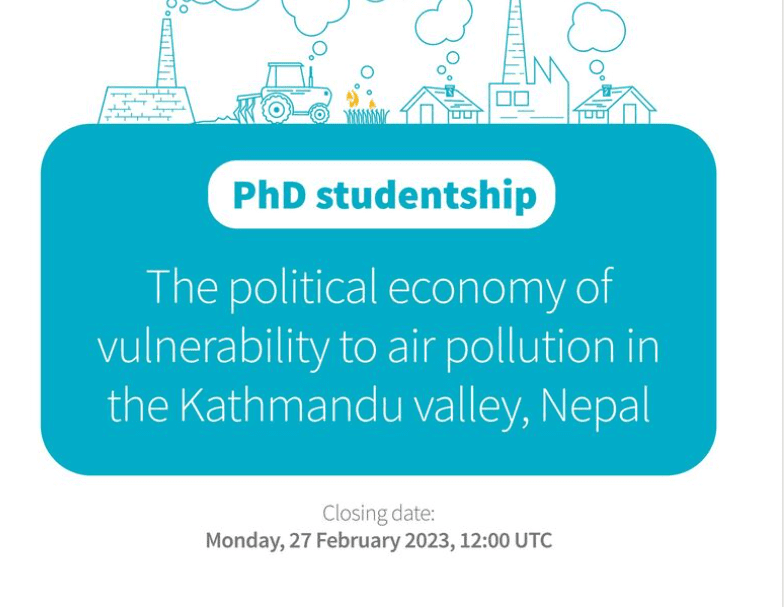
PhD Studentship: The Political Economy of Vulnerability to Air Pollution in the Kathmandu Valley, Nepal
Fellowships, Studentship & ScholarshipsInternational Jobs & OpportunitiesPhDPublic Health OpportunitiesPublic Health Opportunity

PhD Studentship: The Political Economy of Vulnerability to Air Pollution in the Kathmandu Valley, Nepal

by Public Health Update February 21, 2023
written by Public Health Update

The Midlands Graduate School is an accredited Economic and Social Research Council (ESRC) Doctoral Training Partnership (DTP). One of 14 such partnerships in the UK, the Midlands Graduate School is a collaboration between the University of Warwick, Aston University, University of Birmingham, University of Leicester, Loughborough University and the University of Nottingham. 

The University of Birminghamas part of Midlands Graduate School is now inviting applications for an ESRC Doctoral Studentship in association with our collaborative partner, the International Centre for Integrated Mountain Development based in Nepal,to commence in October 2023. The student will be based at the School of Geography, Earth and Environmental Sciences, University of Birmingham, supervised by Dr Rosie Day, Dr Fraser Sugden, and Professor Francis Pope, and will also be supported by ICIMOD throughout, including in fieldwork in Nepal.

This PhD project aims to understand the political economy and spatial geography of air pollution exposure amongst low-income communities of the Kathmandu valley, Nepal, using a combination of qualitative and quantitative data and analysis of data from low-cost portable particulate matter (PM) sensors. It seeks firstly to understand how livelihoods are stratified according to class, caste/ethnicity and gender, and how this impacts daily spatial mobility in terms of the location of one’s residence, length of commute, and time spent in areas recognised as pollution hotspots. The project will secondly seek to understand how these stratified livelihood strategies and mobility patterns affect daily exposure to particulate matter outdoors, in one’s place of work and inside the home. Finally, the project will involve work with government and civil society stakeholders to identify effective interventions in terms of tailored responses to reduce exposure amongst the most vulnerable groups. 

We welcome applications from candidates with a social science background and an interest in air quality, public health and / or urban planning. Knowledge of South Asia would be advantageous. We would expect applicants to be comfortable working in an interdisciplinary environment, and to be willing to work with quantitative datasets as well as more in- depth qualitative data. We would also expect candidates to have the sensitivity and research skills to work with marginalised and vulnerable communities. 

Application Process

To be considered for this PhD, please complete the Collaborative Studentship application form available online here. Shortlisted applicants will also be required to provide transcripts and two references. Shortlisted applicants will be invited for interview (online) between March 10th – 15th.

Application deadline: Monday 27th February 2023, 12:00 midday (UTC)

Midlands Graduate School ESRC DTP

Our ESRC studentships cover fees, a maintenance stipend, and extensive support for research training, as well as research activity support grants. Support is available to both home and international applicants. International applicants if successful will not be asked to cover the difference between home and international fees. For further details, visit: www.mgsdtp.ac.uk/studentships/eligibility/.

Informal enquiries about the research or the Birmingham’s School of Geography, Earth and Environmental Sciences prior to application can be directed to Dr. Rosie Day, r.j.day@bham.ac.uk Dr. Fraser Sugden, f.sugden@bham.ac.uk or Professor Francis Pope f.pope@bham.ac.uk.

Official Info

February 21, 2023 0 comments
0 FacebookTwitterPinterestLinkedinTumblrVKOdnoklassnikiRedditStumbleuponWhatsappTelegramLINEPocketSkypeViberEmail
Health Service Day
PH Important DayPublic HealthPublic Health EventsPublic Health Update

Health Service Day

by Public Health Update February 21, 2023
written by Public Health Update

Nepal Health Service Day

Health Service Day is celebrated every year on 15th Falgun to honour the Nepal Health Service Act which came into effect 26 years ago in 2053 (1997). Nepal Health Service Act was formulated to provide a legal guidance for management of human resources for health and operation of the health services in Nepal.

Health Service Day aims to raise awareness on role of health workers to achieve universal health coverage and SDGs. Health Service Day provides an opportunity to come together, discuss together and act together to strengthen the capacity of health workers, ensure equitable distribution and availability of quality health workforce as per the country health service systems.

Health service award

127A.Health service award :
(1) On the recommendation of the committee referred to in Sub-rule (2), the Government of Nepal shall provide the following health service award to the employees in the Nepal Health Service every year:
(a) Excellent health service award – Rs. 100,000.00 (For One person)
(b) Health service award Amount Number Rs. 50,000.00 (For Four persons)

(2) There shall be a committee as follows to recommend for the award as referred to in Sub-rule (1):
(a) Chief Secretary of the Government of Nepal – Chairperson
(b) Secretary of the Ministry of General Administration -Member
(c) Secretary of the Ministry -Member
(d) Director General of the Department of Health Services -Member
(e) Twelfth level officer designated by the Secretary of the Ministry -Member Secretary

(3) The committee as referred to in Sub-rule (2) shall make recommendation by selecting the employees in the health service on the following grounds:
(a) Recommendation of the concerned Department or Regional Directorate
(b) Work performance evaluation
(c) Work efficiency and work competency,
(d) Seniority, dedication, duty-bound and service done in the remote area.


Read more about Health Service Day
February 21, 2023 0 comments
0 FacebookTwitterPinterestLinkedinTumblrVKOdnoklassnikiRedditStumbleuponWhatsappTelegramLINEPocketSkypeViberEmail
Urgent, accelerated efforts needed for universal eye coverage, vision for all: WHO
Global Health NewsPublic Health NewsPublic Health Update

Urgent, accelerated efforts needed for universal eye coverage, vision for all: WHO

by Public Health Update February 21, 2023
written by Public Health Update

The World Health Organization today called for accelerated action to provide quality, affordable, integrated and people-centered comprehensive eye care for everyone, for addressing the increasing and disproportionate burden of vision impairment and blindness in the WHO South-East Asia Region.

“Nearly 30% of the 2.2 billion people living with vision-impaired or blindness globally, are in WHO South-East Asia Region. This huge burden is unacceptable, as nearly half the global vision impairment could have been prevented or are yet to be addressed,” Regional Director Dr Poonam Khetrapal Singh said inaugurating a high-level meeting of Member countries on ‘Integrated People-Centred Eye Care’ here.

National Eye Health Strategy 2079-2086

Young children and older people are most vulnerable while women, rural populations and ethnic minority groups are more likely to have vision impairment and less likely to access care, she said.

The increased prevalence of vision impairment and blindness in the Region among people of all socio-economic group, also tracks with the rising tide of non-communicable diseases (NCDs) such as diabetes.

In 2019, the Region was home to 87.6 million people with diabetes. Of them, 30.6 million had diabetic retinopathy (eye disease caused by high blood sugar), and 9.6 million had sight-threatening retinopathy (blindness caused by untreated diabetic retinopathy).

The three-day high-level meeting being attended by Ministers of Health in person / virtually, and programme managers from across Member countries of the Region will deliberate on urgent measures to roll out ‘Action plan for integrated people-centred eye care in South-East Asia 2022 – 2030’. The LV Prasad Eye Institute, a comprehensive eye health facility and a World Health Organization Collaborating Centre for Prevention of Blindness, is supporting the meeting.

The regional action plan aims at enabling countries achieve 40% increase in effective coverage of refractive errors, 30% increase in effective coverage of cataract surgery, at least 80% people with diabetes are screened regularly for retinopathy, and at least 80% of those identified with sight-threatening diabetic retinopathy are treated by 2030. The plan also outlines measures that countries can take to eliminate trachoma in the Region by 2025. Two countries in the Region – Nepal and Myanmar – have eliminated trachoma.

“The regional action plan details a series of actionable, evidence based and locally adaptable strategies which need to be implemented with urgency,” the Regional Director said.

People and communities need to be engaged and empowered, with the focus on at-risk and underserved population, to increase health literacy and enhance demand for eye care services, Dr Khetrapal Singh said.

Management of common eye health issues should be mainstreamed into routine health services and current care models must be reoriented to prioritize primary health care and community-based services, she said.

The Regional Director called for vigorously strengthening eye health workforce and emphasised on financial risk protection to enable people access essential medicines, spectacles, low-vision aids, rehabilitation and assistive products.

WHO will continue to provide Member countries its full technical and operational support. Addressing vision impairment with universal eye care is not just a health issue, its critical to achieving multiple Sustainable Development Goals including ending poverty, hunger, education, gender equity and work, Dr Khetrapal Singh said.

21 February 2023  WHO SEARO News release Hyderabad, India


February 21, 2023 0 comments
0 FacebookTwitterPinterestLinkedinTumblrVKOdnoklassnikiRedditStumbleuponWhatsappTelegramLINEPocketSkypeViberEmail
Ninth National Summit of Health Population and Scientists in Nepal
Call for Proposal, EOI & RFPConferencePublic Health Events

Call for Abstracts! the Ninth National Summit of Health Population and Scientists in Nepal

by Public Health Update February 18, 2023
written by Public Health Update

The Nepal Health Research Council (NHRC) is hosting the Ninth National Summit of Health Population and Scientists in Nepal, with the theme “Research for Health: Translating Evidence and Innovation into Actions”.

The NHRC is an apex body of the Government of Nepal (GoN) entrusted with regulating, coordinating, and promoting high quality health and population research in Nepal. Since 2015, the NHRC has hosted annual summits of health and population scientists to generate new knowledge through rigorous research and promote the  use of evidence in decision making by fostering dialogue between researchers, programme designer, implementers and policymakers.

The National Health Policy 2019 of Nepal has put emphasis on health research and its utilization. The utilization of knowledge derived from population and health research has underpinned significant gains in health and economic development of the country.  Knowledge derived from any research may be of little value unless it is put into practice and inform policy as appropriate. Although a large number of studies have been carried in different population and health related issues in Nepal, the use of evidences from such studies in informing policy, programme and practice  has not been fully explored and documented There is a need to assess the country level efforts (through national summit) to link research to action and to develop appropriate mechanisms to strengthen assessing, appraising and translating evidence to inform practice and policy,  and documenting them.

Large numbers of researches are carried with the objective of expanding the horizon of understanding different issues in population and health nationwide.  The policy makers on the other side, often formulate policy with very limited consideration of research evidences, and have few active connections with either independent researchers or the research community. There is an inadequate “evidence-based decision-making culture” in government decision making process which demands the accurate, detailed, valid and reliable information or findings consistently and continuously. So, there is a need of policy-informed research initiatives and evidence-informed policy making which warrants the need to understand various aspects in translating research evidences and information into action through national summit.

Effective knowledge transfer is not a “one off” event, rather it is a powerful and continuous process in which knowledge accumulates and influences thinking over time. The ability to sustain this process and a focus on human interactions is essential. Strengthening channels of communications between researchers and policymakers at the national level is the most practical way to translate evidence and information into action.

The global environmental change including climate change, demographic change, urbanization and other emerging health issues such as non-communicable diseases, COVID-19 pandemic and frequent outbreak of diseases such as cholera, dengue and measles  has highlighted the critical importance of generating contextually tailored evidence through high-quality  research  for health and their use in decision making thereby strengthening health systems resilience to tackle future pandemics, shocks and stressors to the system. The Ninth National Summit with the theme “Research for Health: Translating Evidence and Innovation into Actions” will be a continuum of the previous summits as an annual gathering of researchers, academicians, scientists, practitioners, and policymakers to exchange ideas and health research evidence on national health issues and priorities focusing translation of evidence and innovations into actions. Research for health is a global endeavor, and it may play a unique role to play in ensuring that these efforts can help improve health for all. This year’s national summit seeks to facilitate discussion on how research for health, evidence synthesis and innovations can be translated to evidence informed decision making and practice.

This year’s national summit of health and population scientists aims to bring health systems researchers, practitioners, program designers and policymakers together to discuss new evidences on population and health research, learn  from past emergencies including the COVID-19 pandemic, outbreak of dengue, cholera, measles  and utilize these evidences and lessons into action to improve and transform Nepal’s health system to better prepare it for public health emergencies and future pandemics.

Objectives

  • To provide a unified platform for health and population scientists, policymakers, researchers, academicians, and practitioners to share research evidence on national health priorities
  • To foster networking and dialogue exchange between policymakers and health and population experts
  • To discuss research for health and its importance to inform practices and polices
  • To encourage young researchers and experts to collaborate, innovate and promote research on current health priority areas in Nepal
  • To synthesize evidence for contributing to formulate health sector strategic plan, annual work plan and resource allocations

Thematic areas (Sub-themes)

  1. Health System and Policy
  • Resilient Health Care Delivery System (Health Services, including access to care and its quality)
  • Health Workforce (Human Resources for Health)
  • Universal Health Coverage
  • Health Policy, Management, Leadership, Governance (Stewardship) and policy evidence nexus
  • Health Information Technology in Health Service and Research
  • Equity and Efficiency in Health System
  • Health Economics and Healthcare Financing
  • Human resource for health
  • Public Private Partnership (PPP)
  • Burden of diseases including vital statistics
  • Evidence synthesis
  1. Public (Population) Health
  • Health communication, education and health behavior
  • Sexual Reproductive Maternal Neonatal, Child and Adolescent Health
  • Gender, Equity and Justice
  • Population and Population Dynamics (fertility, mortality and migration)
  • Nutrition, Food Safety and Security
  • Disabilities
  • Public Health Surveillance (i.e. Cancer, Vector-borne diseases etc.)
  • Other (Miscellaneous)
  1. Public health emergencies
  • COVID-19 pandemic related public health and clinical studies
  • Outbreak of dengue, cholera, measles and lessons learnt
  • Other public health emergencies, including public health response and preparedness to disease outbreaks, natural disasters and other emergencies
  • Clinical and Public Health Research
  • Health in altitude including mountain medicine (Physiological changes in different altitudes including mountain medicine)
  • Non-Communicable Diseases
  • Mental Health, Substance Abuse, Dementia and Suicide prevention
  • Geriatric health
  • Ayurveda & Other Traditional and Complementary Medicine
  • Communicable Diseases (Infectious & Tropical Diseases including neglected tropical diseases) from one health perspective
  • Emergency, Trauma and Critical care (including Injuries and Accidents)
  • Antimicrobial resistance (AMR)
  • Inherited diseases (including thalassemia, sickle cell disorder, hemophilia, autism)
  • Other (Miscellaneous)
  • One Health and Global Health
  • Animal studies impacting human health (One Health concept)
  • Wider determinants of health (including Social Determinants of Health)
  1. Biomedical and Translational Research
  • Essential medical products including pharmaceutical products, pharmacovigilance and rational use of drugs
  • Biomedical research
  • Artificial intelligence
  • Innovation in health research
  • Implementation and operational research
  1. Networking, collaboration and partnership in research for health
  • Health research in the federal context
  • Clinical trials in Nepal
  • Drug discovery and partnership in research
  • Alternative medicine, disaster/emergency preparedness/migration health/
  • Digital health
  • Public patient engagement
  • Investment in research
  • Academic-industry partnership
  • Disease registry
  • Drug discovery
  1. Environmental Health and Climate Change
  • Environmental health
  • Occupational health and safety
  • Health care waste management
  • Air pollution and health
  • Environmental toxicology
  • Climate change and health
  • Planetary health
  • Environmental determinants of health

Date: April 10, 2023 – April 12, 2023

Location: Kathmandu, Nepal


Deadline for Abstract Submission

15 March 2023

General Guidelines for abstract submission

  • Only online submission is accepted.
  • Abstract must be original work conducted in Nepal. Abstracts of those works conducted outside the country will not be entertained. In case of a review article (systematic and scoping review) the findings should be relevant to Nepal.
  • Ethical approval letter from ERB of NHRC or IRCs approved by NHRC must be submitted along with the abstract. However, ethical approval may not require for some studies such as systematic review and metanalysis.
  • Abstract must be prepared according to the guidelines provided for the summit. Abstract will only be accepted if submitted online using the supplied template.
  • Abstract should not be resubmitted for any reason other than a notified submission error. If you do not receive a confirmation email please contact the Summit Focal Point.
  • Abstract must contain sufficient information so that it provides an overview of the whole presentation. Please note that full article or extended abstract or presentation copy may be asked for submission as per the decision of the scientific committee. Submission of an abstract acknowledges the author’s consent for publication of the abstract in the Summit Proceeding.

Note: If you are unable to submit online, please contact the Summit Focal Point at: summit@nhrc.gov.np or +977-01-4254220 for further information.

Abstract Layout Guideline

  • Abstract must not exceed 300 words limit. The word limit relates only to the text of the abstract and does not include title, sub headings, authors and author address.
  • Font type must be Arial Font size 12pt.
  • 1.5 line spacing must be used.
  • Images, tables or graphics are not to be included in the abstract body.
  • Abstract must be free of typographical and grammatical errors.
  • The text should be typed unjustified, without hyphenating words at line breaks.
  • Hard returns (enter) should be used only to end headings and paragraphs, not to rearrange lines.
  • Greek and other special characters may be included. If you are unable to reproduce a particular special character, please type out the name of the symbol in full.
  • SI units should be used throughout the abstract.
  • Standard abbreviations may be used for common terms only. Otherwise, any abbreviation should be given in brackets after the first full use of the word.
  • It is the author’s responsibility to ensure all the information provided is correct.
  • Requests for modification in abstract will not be entertained after the selection.  

Template for the Abstract

All abstracts should appear within the format of structure outlined below.

Title

The title should be in bold, sentence case with no full stop at the end.

e.g.: Health-sector responses to address the impacts of climate change in Nepal

Authors

The name of the authors should be in the following format:

e.g.: Meghnath Dhimal1, David Groneberg2, Ulrich Kuch2

Affiliations

Affiliations should include institution, town and country. Where there are multiple affiliations, each should be listed as a separate paragraph. Each institute should appear in the order used against the author names and show the appropriate superscript number.

e.g.: 2Nepal Health Research Council, Kathmandu, Nepal

           2Gothe University, Frankfurt am Main, Germany

Structure of abstracts

Abstracts should be structured into following sections using the following headings typed in bold with no colon at the end, e.g.

  • Background
  • Methodology
  • Results
  • Conclusion
  • Key words

Ethical Approval

The research from which the abstract is prepared should have been ethically approved from the Ethical Review Board at the NHRC or one of the Institutional Review Committees (IRCs) at different institutions. If you consider your abstract as the one that does not require ethical approval, you may submit it and the selection will be subjected to the evaluation of the abstract evaluation committee under the Scientific Committee of the Summit on part of the requirement of ethical approval.

S.N.Name of Institutional Review CommitteeAddress
1Annapurna Neurological Institute & Allied SciencesMaitighar, Kathmandu
2B & B HospitalGwarkhu, Lalitpur
3B.P. Koirala Memorial Cancer HospitalBharatpur, Chitwan
4Bharatpur HospitalBharatpur, Chitwan
5Birat Medical College & Teaching HospitalBiratnagar, Morang
6Biratnagar Eye HospitalBiratnagar, Morang
7BP Koirala Institute of Health SciencesDharan, Sunsari
8Central Institute of Science and Technology (CIST)New baneshwor, Kathmandu
9Chitwan Medical CollegeBharatpur, Chitwan
10Civil Service HospitalNew baneshwor, Kathmandu
11College of Medical Science and Teaching HospitalBharatpur, Chitwan
12Devdaha Medical College and Research Institute Pvt. Ltd.Rupandehi
13Gandaki Medical College and Teaching Hospital and Research CenterKaski
14Grande International HospitalTokha, Kathmandu
15Institute of Medicine (IOM)Maharajgunj kathmandu
16Institute of Science and Technology (IST)Kritipur, Kathmandu
17Kanti Children HospitalMaharajgunj kathmandu
18Kantipur Dental College Teaching Hospital and Research CentreDhapasi, Ring Road
19Karnali Academy of Health ScienceJumla
20Kathmandu Medical College and Teaching Hospital (KMCTH)Sinamangal Kathmandu
21Kathmandu University School of Medical Sciences (KUMS)Dhulikhel, Kavre
22KIST Medical Collge and Teaching HospitalGwarkhu, Lalitpur
23Lumbini Medical College & Teaching Hospital LTDParvas, Palpa
24Manipal Medical College of Medical SciencesPokhara, Nepal
25Manmohan Memorial Institute of Health Sciences                   (MMIHS)Nakhkhu, Lalitpur
26National Academy of Medical Sciences(NAMS)Bir Hospital , Kathmandu
27National Ayurveda Research and Training CenterKritipur, Kathmandu
28National Institute of Neurological and Allied Sciences Pvt. LtdBasbari, Kathmandu
29National Medical College Pvt. LtdBirgunj, Parsa
30Nepal Army Institute of Health Sciences (NAIHS)Sano Bharangang, Kathamandu
31Nepal Cancer Hospital & Research Center Pvt. Ltd.Harisiddhi, Lalitpur
32Nepal Medical CollegeJorpati, Kathmandu
33Nepal Netra Jyoti SangTripureshwor
34Nepalgunj Medical College and Teaching Hospital (NMTH)KohalPur, Banke
35Nobel CollegeSinamangal, Kathmandu
36Nobel Medical College Teaching Hospital ( P) LTDBiratnagar
37Paropakar Maternity and Women’s HospitalThapathali, Kathmandu
38Patan Academy of Health Sciences (PAHS)Lalitpur
39People’s Dental College & Hospital Pvt. LtdNayabazar, Kathmandu
40Pokhara Academy of Health SciencesPokhara, Nepal
41Pokhara University Research Center, Pokhara UniversityLekhanath Marg, Kaski
42Public Health Concern Trust (phect-NEPAL)Pradarsanimarg Kathmandu
43Purbanchal University College of Medical and Allied ScienceMorang
44Scheer Memorial Hospital Medical Institute College of NursingBanepa, Kavre
45Shahid Gangalal National Heart CentreBansbari, Kathmandu
46Shi-Gan Health FoundationNarayangopal Chowk
47Shree Medical and Technical CollegeChitwan
48Shree Rana Ambika Shah Eye Hospital, Lumbini Eye InstituteBhairahawa
49Stupa Health Care Center Cooperation LTD (SHCC)Boudha, Tusal
50Tilganga Institute of Opthalmolohy (TIO)Gaushala, Kathmandu
51Universal College of Medical SciencesBhairahawa
52Yeti Health Science AcademyMaharajgunj, Kathmandu
53Nepal Police HospitalMaharajgunj, Kathmandu
54Star HospitalSanepa, Lalitpur
55Nepal Medicity HospitalLalitpur
56Nepal Police HospitalMaharajganj, Kathmandu
57Madan Bhandari Academy of Health ScienceHetauda, Lalitpur
VISIT OFFICIAL WEBSITE
February 18, 2023 0 comments
0 FacebookTwitterPinterestLinkedinTumblrVKOdnoklassnikiRedditStumbleuponWhatsappTelegramLINEPocketSkypeViberEmail
UNICEF Innovation Fund
Grants and Funding OpportunitiesPublic Health OpportunitiesPublic Health OpportunityResearch & Project GrantsResearch & Project Grants

Application open for UNICEF Innovation Venture Fund

by Public Health Update February 18, 2023
written by Public Health Update

The UNICEF Innovation Fund is looking to make up to 100K equity-free investments to provide early-stage (seed) finance to for-profit technology start-ups that have the potential to benefit humanity.

If you’ve got a start-up registered in one of UNICEF’s programme countries and have a working, open-source prototype (or you are willing to make it open-source) showing promising results, the UNICEF Innovation Fund is looking for you.

What the UNICEF Innovation Fund is looking for:

We are currently looking to invest in companies that are using data science, machine learning, artificial intelligence or similar technologies to build solutions that respond to the following questions:
 

1. Are you using new sources of data such as satellite imagery or social media and applying data science or artificial intelligence techniques to understand the physical world that we live in? 

  • Applying deep learning to analyze satellite imagery and automatically map infrastructure such as schools, health centers, roads or cell towers
  • Using digital footprints from sources like social media or mobility patterns to understand public spaces
  • Exploring ML/AI techniques to help us better understand the physical world that we live in and its rapidly changing environments

2. Do you know how much knowledge is available in your language online? Was it created locally? How is content structured and how do we learn it? In other words, are you trying to use data science and AI to understand the digital world that we live in?

  • Using Natural Language Processing (NLP) or similar techniques to analyze large amounts of text
  • Using ML/AI to understand content structures and knowledge/learning relationships
  • Exploring ML/AI techniques to help us better understand the digital world that we live in as well as its dynamics/changing trends

3. What skills will be in most demand tomorrow? Are you trying to use data science, machine learning or artificial intelligence techniques to generate new insights from data?

  • Using ML/AI to understand the relationships between different variables that impact development indicators (i.e. learning, socio-economic, resilience, health).
  • Applying optimization techniques to improve service delivery, resource allocation or content delivery, for example
  • Predictive analysis to understand changes in the world such as job market trends or the supply and demand of skills

4. Or are you generating and curating data for any of the above?

  • Gathering and combining existing data from different sources
  • Generating new data through field data collection, crowdsourcing or social network platforms
  • Using novel approaches to generate, as well as to validate, large amounts of training data


*When to apply

We encourage you to submit your application when ready as we will be reviewing on an ongoing basis. Only shortlisted companies will be contacted and then requested to submit a more in-depth proposal.

**Deadline February 28.


*Who can apply

  • You must be registered as a private company in a UNICEF programme country;
  • You are working on open-source technology solutions or willing to be open-source under the following licenses or their equivalent: BSD (software), CERN (hardware), or CC-BY (content) 
  • You have an existing prototype of the solution with promising results from initial pilots
  • Your solution has the potential to positively impact society.
  • Your company does not have to be fully down the road of having a ready product, it can be at the very beginning. Our funding is intended to seed an exploration within a company that already exists, that has a strong team and a prototype, and that can be profitable, and successful in the space of data science. Please read the FAQs for more details on the selection criteria

**Women-led projects are encouraged to apply.

Official Link

February 18, 2023 0 comments
0 FacebookTwitterPinterestLinkedinTumblrVKOdnoklassnikiRedditStumbleuponWhatsappTelegramLINEPocketSkypeViberEmail
RRT Guideline
Humanitarian Health & Emergency ResponseNational Plan, Policy & GuidelinesResearch & Publication

Rapid Response Team (RRT) Guideline, 2079

by Public Health Update February 17, 2023
written by Public Health Update

RRT Guideline

The Epidemiology and Disease Control Division (EDCD), DoHS has released a new guideline on Rapid Response Team (RRT) and Emergency Medical Team (EMT) Deployment Guideline 2079 as per the mandate of Public Health Service Act 2075.

This guideline aims to establish a mechanism for managing epidemics consisting of a Rapid Response Team (RRT) at Federal, Provincial and districts and local level. The objectives of these teams is to establish an early warning and reporting mechanism for potential epidemics, ensure preparedness for potential epidemics, manage disease outbreaks, and institutionalize disaster management.

Coordination and Communication flowchart

RRT Coordination and Communication flowchart

DOWNLOAD GUIDELINE

February 17, 2023 0 comments
0 FacebookTwitterPinterestLinkedinTumblrVKOdnoklassnikiRedditStumbleuponWhatsappTelegramLINEPocketSkypeViberEmail
MOOC (Massive Open Online Course)
CoursesInternational Jobs & OpportunitiesOnline & Distance LearningOnline CoursesPublic Health OpportunitiesPublic Health Opportunity

Call for Applications! Research4Life MOOC 8th Edition

by Public Health Update February 15, 2023
written by Public Health Update

Overview

Research4Life users can now register for the Research4Life Massive Open Online Course (MOOC). The free course, which is taught in English, will run from 3 April to 7 May 2023 and will help users to get the most out of the available resources through the Research4Life collections (Hinari, AGORA, OARE, ARDI, and GOALI).

Research4Life is a knowledge platform that provides access to up to 200,000 leading journals, books, and other resources in the fields of health, agriculture, environment, innovation, and law. More than 11,000 institutions in more than 125 low- and middle-income countries are benefiting from Research4Life.

The deadline for applications is 12 March 2023. Successful participants will be informed by 27 March 2023.

Further details about the course will be provided to successful participants ONLY.

Please contact marcia@itoca.org if you have any questions.

Who should apply?

The five-week virtual course (MOOC) is targeted at English-speaking librarians, information professionals, IT specialists, researchers, academics, lecturers, educators, students including graduates and postgraduates, and professionals, such as doctors, policy makers, extensionists, lawyers, social workers, and statisticians in the Research4Life eligible countries and institutions.

Eligible institutions include national universities, professional schools (in medicine, agriculture, pharmacy, public health, socio-legal studies, engineering, etc.), research institutes, teaching hospitals, healthcare centers, government offices, national libraries, agricultural extension centers, and local non-governmental organizations.

How much time does it take?

Participants are expected to spend on average six to eight hours per week on lessons and activities, such as contributing to discussion forums and webinars.

What do you get from this course?

The MOOC allows participants to study their area of interest throughout a five-week period. The course covers topics such as the scholarly communication landscape, information literacy skills, advocacy and capacity development strategies. Additionally, it provides specific information about using the Research4Life Unified Content Portal and the discipline specific (Hinari, AGORA, OARE, ARDI and GOALI) collections.

Participants of the course will be provided with a Certificate of Attendance after completing the exam at the end of the course. Those who pass the exam with a grade of at least 7.0, will receive a Certificate of Achievement.

Course content

Module 1: Scholarly communication and Research4Life: overview on scholarly communication, the publishing landscape, key concepts about Research4Life including the details about the partnership, programmes, eligibility criteria and registration. Lessons included in this module are:

  • Lesson 1.1: Scientific landscape
  • Lesson 1.2: Research assessment and bibliometrics
  • Lesson 1.3: Research4Life

Module 2: Discovery and re-use of scholarly literature explainskey concepts of information literacy skills and competencies, including academic ethics, licensing and academic collaboration tools. Lessons included in this module are:

  • Lesson 2.1: Identifying information sources
  • Lesson 2.2: Using information resources
  • Lesson 2.3: Copyright, licensing and ethical considerations
  • Lesson 2.4: Citing, reference management and collaboration tools

Module 3: Collection-specific browsing and searching discusses the Research4Life Unified Content Portal and the five Research4Life collections, including how to conduct discipline-specific searches, an introduction to Summon to search across all Research4Life resources and the bibliometric analysis tools Scopus, the Lens and Dimensions, which are available through Research4Life. Lessons included in this module are:

  • Lesson 3.1: Research4Life Unified Content Portal
  • Lesson 3.2: Search across Research4Life collections
  • Lesson 3.3: Research assessment tools

Module 4: Additional discipline-specific resources in the five main disciplines of the Research4Life collections. Lessons included in this module are:

  • Lesson 4.1.1: Health sciences
  • Lesson 4.1.2: Evidence-based medicine
  • Lesson 4.2: Agriculture
  • Lesson 4:3 Environment
  • Lesson 4:4 Development and Innovation
  • Lesson 4:5 Global Justice
  • Lesson 4.6: Interdisciplinary resources

Module 5: Dissemination of research output discusses how to disseminate research output, prepare a manuscript for publication, identify the appropriate journal, understand the scholarly publishing and peer review processes and how to promote and monitor your research. Lessons included are:

  • Lesson 5.1. Writing for research
  • Lesson 5.2. Publishing a research article

Module 6: Advocate on Research4Life and facilitate capacity development teaches you how to design advocacy strategies to address decision-makers and upper management. It also guides you on how to train local groups on how to use Research4Life. Lessons included in this module are:

  • Lesson 6.1: Research4Life Advocacy Toolkit
  • Lesson 6.2: Training your audience on how to use Research4Life

Certification

At the end of the course, participants do a graded online exam. There are two types of certification for this course:

  • Certificate of Attendance: for those who complete and submit the exam at the end of the course
  • Certificate of Achievement: for those who complete the exam with 7.0 and higher mark.
APPLY NOW
February 15, 2023 0 comments
0 FacebookTwitterPinterestLinkedinTumblrVKOdnoklassnikiRedditStumbleuponWhatsappTelegramLINEPocketSkypeViberEmail
Newer Posts
Older Posts

Search

Follow Us

Facebook Twitter Instagram Pinterest Linkedin Youtube

Categories

  • Abstracts (25)
  • Activities (91)
  • Adolescent Sexual and Reproductive Health (ASRH) (25)
  • Advice & Tips (4)
  • African Region (5)
  • AI and Health (1)
  • Annual Meeting (6)
  • Antimicrobial Resistance (AMR) (21)
  • Award (19)
  • Awards (16)
  • Books (9)
  • Call for Proposal, EOI & RFP (103)
  • Call for Research Participants (8)
  • Clinical Doctor Jobs (6)
  • Communicable Diseases (107)
  • Competition (20)
  • Conference (129)
  • Consultant (1)
  • Courses (205)
  • Dashboard (2)
  • Digital Health & Health Informatics (10)
  • Drug and Medicine (18)
  • Eastern Mediterranean Region (3)
  • Education (15)
  • Environment (3)
  • Environmental Health & Climate Change (47)
  • European Region (42)
  • Exchange Program (1)
  • Fact Sheet (117)
  • FCHVs (1)
  • Fellowships, Studentship & Scholarships (168)
  • Financial Aid (13)
  • Form Formats (2)
  • Fully funded (22)
  • Global Health News (434)
  • Grants and Funding Opportunities (193)
  • Guest Post (44)
  • Health Assistant Jobs (1)
  • Health Equity (7)
  • Health Financing and Economics (24)
  • Health in Data (115)
  • Health Insurance (5)
  • Health Jobs (52)
  • Health Literacy, Health Education & Promotion (50)
  • Health Organization Profile (42)
  • Health Systems (83)
  • Human Resource for Health (33)
  • Humanitarian Health & Emergency Response (44)
  • Hypertension (5)
  • Implementation Research (48)
  • International Health (3)
  • International Jobs & Opportunities (373)
  • International Plan, Policy & Guidelines (210)
  • Internships (4)
  • Jobs Vacancies (56)
  • Journals (8)
  • Life Style & Public Health Nutrition (39)
  • Live (10)
  • Master's Degree (48)
  • Maternal, Newborn and Child Health (88)
  • Mentorship Program (2)
  • Miscellaneous (16)
  • National Health News (158)
  • National Plan, Policy & Guidelines (468)
  • Neglected Tropical Diseases (NTDs) (51)
  • Non- Communicable Diseases (NCDs) (121)
  • Notice (103)
  • Nursing Jobs (6)
  • Nutritionist Jobs (1)
  • One Health (18)
  • Online & Distance Learning (22)
  • Online Courses (90)
  • Op-Ed Article (3)
  • Opportunities by Region (83)
  • Outbreak News (213)
  • Partially funded (6)
  • PCL Health Science Jobs (3)
  • PH Important Day (534)
  • Pharmacist Jobs (3)
  • PhD (54)
  • Photos (5)
  • Planetary Health (4)
  • PostDoc (14)
  • Presentation Slides (26)
  • Primary Health Care (25)
  • Provincial Plan, Policies and Guidelines (14)
  • Public Health (1,283)
  • Public Health Epidemiology & Biostatistics (13)
  • Public Health Events (306)
  • Public Health Information (20)
  • Public Health Innovation (9)
  • Public Health Jobs (52)
  • Public Health News (554)
  • Public Health Notes (120)
  • Public Health Opportunities (507)
  • Public Health Opportunity (491)
  • Public Health Programs (108)
  • Public Health Seminar (2)
  • Public Health Tools (1)
  • Public Health Update (564)
  • Quality Improvement & Infection Prevention (20)
  • Region of America (8)
  • Reports (184)
  • Research & Project Grants (39)
  • Research & Project Grants (32)
  • Research & Publication (647)
  • Research Articles (10)
  • Road Traffic Accidents (RTA) (9)
  • School of Public Health (60)
  • Self funded (2)
  • South-East Asia Region (26)
  • Success Stories (17)
  • Summer and Winter Courses (40)
  • Summer Courses (28)
  • Sustainable Development Goals (SDGs) (14)
  • Syllabus (61)
  • Symposium (9)
  • Tobacco Control (35)
  • Training (40)
  • Travel Grants (15)
  • Trick, Technique & Skills (8)
  • Uncategorized (3)
  • Undergraduate Degree (7)
  • Universal Health Coverage (36)
  • Universities (29)
  • Universities & School of Public Health (58)
  • Vacancy Announcement (26)
  • Vaccine Preventable Diseases (40)
  • Vector-Borne Diseases(VBDs) (30)
  • Videos (3)
  • View Points (1)
  • Webinar (4)
  • Western Pacific Region (13)
  • Workshop (18)
  • World News (117)
Post New Jobs: Vacancy Announcement Service

Public Health Update (Sagun’s Blog) is a popular public health portal in Nepal. Thousands of health professionals are connected with Public Health Update to get up-to-date public health updates, search for jobs, and explore opportunities.
#1 Public Health Blog for sharing Job opportunities and updates in Nepal

”Public Health Information For All”
– – Sagun Paudel, Founder

  • HOT JOBS
    • Public Health Jobs
    • Medical Doctor Jobs
    • Nursing Jobs
    • Health Assistant Jobs
    • Pharmacist Jobs
    • NGOs Jobs
    • Government Jobs
  • Top Categories
    • National Plan, Policy & Guidelines Top
    • Public Health Calendar
    • Fellowships & Scholarships
    • Health Systems
    • Health Organization Profiles
    • International Jobs & Opportunities
    • Public Health Opportunity

PUBLIC HEALTH INITIATIVE

    • Submit your Vacancies New
    • Partnership Opportunities

Contact: blog.publichealthupdate@gmail.com

https://wa.me/+9779856036932

Public Health Initiative, A Registered Non-profit organization – All Right Reserved. 2011-2024. Contact us. 

Facebook Twitter Instagram Youtube Envelope
Public Health Update
  • Home
  • Public Health
    • Home 1
      • Adolescent Sexual and Reproductive Health (ASRH)
      • Antimicrobial Resistance (AMR)
      • Communicable Diseases
      • Digital Health & Health Informatics
      • Environmental Health & Climate Change
      • Health Financing and Economics
      • Health Equity
    • Home 2
      • Health Literacy, Health Education & Promotion
      • Human Resource for Health
      • Humanitarian Health & Emergency Response
      • Implementation Research
      • International Health
      • Life Style & Public Health Nutrition
      • Maternal, Newborn and Child Health
    • Home 3
      • Neglected Tropical Diseases (NTDs)
      • Non- Communicable Diseases (NCDs)
      • One Health
      • Planetary Health
      • Public Health Epidemiology & Biostatistics
      • Primary Health Care
      • Quality Improvement & Infection Prevention
    • Home 4
      • Road Traffic Accidents (RTA)
      • Sustainable Development Goals (SDGs)
      • Tobacco Control
      • Universal Health Coverage
      • Vaccine Preventable Diseases
      • Vector-Borne Diseases(VBDs)
      • Notices
  • Public Health Update
    • Home 1
      • Public Health News
      • Global Health News
      • Outbreak News
      • National Health News
      • COVID-19
    • Home 2
      • Fact Sheet
      • Health in Data
      • PH Important Day
      • Public Health Events
      • Public Health Programs
    • Home 3
      • Health Systems
      • Health Insurance
      • Health Organization Profile
      • Success Stories
      • Public Health Innovation
  • Public Health Opportunities
    • Fully funded
    • Travel Grants
    • Grants and Funding Opportunities
    • Opportunities by Region
    • International Jobs & Opportunities
    • Research & Project Grants
    • Fellowships, Studentship & Scholarships
    • Conference
  • Jobs
    • Home 1
      • Health Jobs
      • Public Health Jobs
      • Clinical doctor Jobs
      • Health Assistant Jobs
      • Nursing Jobs
      • PCL Health Science Jobs
    • Home 2
      • Dental Jobs
      • Pharmacist Jobs
      • TSLC (Health Jobs)
      • Laboratory Jobs
      • Nutritionist Jobs
  • Downloads
    • International Plan, Policy & Guidelines
    • National Plan, Policy & Guidelines
    • Reports
    • Books
    • Research Articles
  • School of Public Health
    • Home 1
      • Courses
      • Master’s Degree
      • Undergraduate Degree
      • PhD
    • Home 2
      • Universities
      • Syllabus
      • Public Health Notes
      • Mentorship Program
      • Startup Project
    • Home
      • Summer and Winter Courses
      • Summer Courses
      • Online Courses
      • Workshop
      • Training
Public Health Update
  • Home
  • Public Health
    • Home 1
      • Adolescent Sexual and Reproductive Health (ASRH)
      • Antimicrobial Resistance (AMR)
      • Communicable Diseases
      • Digital Health & Health Informatics
      • Environmental Health & Climate Change
      • Health Financing and Economics
      • Health Equity
    • Home 2
      • Health Literacy, Health Education & Promotion
      • Human Resource for Health
      • Humanitarian Health & Emergency Response
      • Implementation Research
      • International Health
      • Life Style & Public Health Nutrition
      • Maternal, Newborn and Child Health
    • Home 3
      • Neglected Tropical Diseases (NTDs)
      • Non- Communicable Diseases (NCDs)
      • One Health
      • Planetary Health
      • Public Health Epidemiology & Biostatistics
      • Primary Health Care
      • Quality Improvement & Infection Prevention
    • Home 4
      • Road Traffic Accidents (RTA)
      • Sustainable Development Goals (SDGs)
      • Tobacco Control
      • Universal Health Coverage
      • Vaccine Preventable Diseases
      • Vector-Borne Diseases(VBDs)
      • Notices
  • Public Health Update
    • Home 1
      • Public Health News
      • Global Health News
      • Outbreak News
      • National Health News
      • COVID-19
    • Home 2
      • Fact Sheet
      • Health in Data
      • PH Important Day
      • Public Health Events
      • Public Health Programs
    • Home 3
      • Health Systems
      • Health Insurance
      • Health Organization Profile
      • Success Stories
      • Public Health Innovation
  • Public Health Opportunities
    • Fully funded
    • Travel Grants
    • Grants and Funding Opportunities
    • Opportunities by Region
    • International Jobs & Opportunities
    • Research & Project Grants
    • Fellowships, Studentship & Scholarships
    • Conference
  • Jobs
    • Home 1
      • Health Jobs
      • Public Health Jobs
      • Clinical doctor Jobs
      • Health Assistant Jobs
      • Nursing Jobs
      • PCL Health Science Jobs
    • Home 2
      • Dental Jobs
      • Pharmacist Jobs
      • TSLC (Health Jobs)
      • Laboratory Jobs
      • Nutritionist Jobs
  • Downloads
    • International Plan, Policy & Guidelines
    • National Plan, Policy & Guidelines
    • Reports
    • Books
    • Research Articles
  • School of Public Health
    • Home 1
      • Courses
      • Master’s Degree
      • Undergraduate Degree
      • PhD
    • Home 2
      • Universities
      • Syllabus
      • Public Health Notes
      • Mentorship Program
      • Startup Project
    • Home
      • Summer and Winter Courses
      • Summer Courses
      • Online Courses
      • Workshop
      • Training
Public Health Initiative, A Registered Non-profit organization – All Right Reserved. 2011-2023