
Public Health Update
  • Home
  • Public Health Update
  • Nepal Health Jobs
    • Public Health Job Board
    • Organization List
  • Opportunities
    • Fellowships, Studentship & Scholarships
    • Grants and Funding Opportunities
    • Fully funded
    • Conference
  • Downloads
    • International Plan, Policy & Guidelines
    • National Plan, Policy & Guidelines
    • Reports
    • Public Health Notes
    • Syllabus
    • Form Formats
  • School of Public Health
    • PhD
    • Master’s Degree
    • Online Courses
  • Notice
  • Home
  • Public Health Update
  • Nepal Health Jobs
    • Public Health Job Board
    • Organization List
  • Opportunities
    • Fellowships, Studentship & Scholarships
    • Grants and Funding Opportunities
    • Fully funded
    • Conference
  • Downloads
    • International Plan, Policy & Guidelines
    • National Plan, Policy & Guidelines
    • Reports
    • Public Health Notes
    • Syllabus
    • Form Formats
  • School of Public Health
    • PhD
    • Master’s Degree
    • Online Courses
  • Notice
LOGIN / REGISTER
Public Health Update
SUBSCRIBE
Public Health Update
  • Home
  • Public Health Update
  • Nepal Health Jobs
    • Public Health Job Board
    • Organization List
  • Opportunities
    • Fellowships, Studentship & Scholarships
    • Grants and Funding Opportunities
    • Fully funded
    • Conference
  • Downloads
    • International Plan, Policy & Guidelines
    • National Plan, Policy & Guidelines
    • Reports
    • Public Health Notes
    • Syllabus
    • Form Formats
  • School of Public Health
    • PhD
    • Master’s Degree
    • Online Courses
  • Notice

All Right Reserved. Designed and Developed by PenciDesign

CoursesFellowships, Studentship & ScholarshipsFully fundedGrants and Funding OpportunitiesPhDPostDoc

Swiss Government Excellence Scholarships 2021-2022

by Public Health Update October 5, 2020
written by Public Health Update

The Swiss Government Excellence Scholarships are aimed at young researchers from abroad who have completed a master’s degree or PhD and at foreign artists holding a bachelor’s degree.

Each year the Swiss Confederation awards Government Excellence Scholarships to promote international exchange and research cooperation between Switzerland and over 180 other countries. Recipients are selected by the awarding body, the Federal Commission for Scholarships for Foreign Students (FCS).

Types of scholarship

  • The research scholarship is available to post-graduate researchers in any discipline (who hold a master’s degree as a minimum) who are planning to come to Switzerland to pursue research or further studies at doctoral or post-doctoral level.
    Research scholarships are awarded for research or study at all Swiss cantonal universities, universities of applied sciences and the two federal institutes of technology. Only candidates nominated by an academic mentor at one of these higher education institutions will be considered.
  • Art scholarships are open to art students wishing to pursue an initial master’s degree in Switzerland.
    Art scholarships are awarded for study at any Swiss conservatory or university of the arts. This scholarship is available to students from a limited number of countries only.

Selection criteria

The FCS assesses scholarship applications according to three criteria:

a) Candidate profile
b) Quality of the research project or artistic work
c) Synergies and potential for future research cooperation.

Selection

Applications are subject to preliminary selection by the relevant national authorities and/or the Swiss diplomatic representation. The short-listed applications are then assessed by the Federal Commission for Scholarships for Foreign Students (FCS), which takes the final decision.

The FCS is composed of professors from all Swiss public universities. Scholarship awards are decided on the basis of academic and scientific excellence.

Awards

The FCS will announce its decisions regarding the new scholarship awards by the end of May at the latest.

Outlook

The FCS will select scholarship holders for the 2021-22 academic year by the end of May 2021. Scholarships for the 2022-23 academic year will be advertised online from August 2021.

Application process

Swiss government scholarships are offered by the Federal Commission for Scholarships for Foreign Students exclusively via Switzerland’s official diplomatic representations in the applicants’ countries of origin.

MORE INFORMATION: OFFICIAL LINK (Countries A – L) (Countries M – Z)


  • Multisectoral Action Plan for the Prevention and Control of NCDs, 2026-2030 (Draft)
  • National Standard Operating Procedure for Early Warning, Alert and Response System (EWARS), 2025
  • Priority Infectious Diseases for Community-Based Surveillance in Nepal
  • Community Based Disease Surveillance Guideline, 2082
  • Political declaration of the fourth high-level meeting of the General Assembly on the prevention and control of NCDs and the promotion of mental health and well-being
October 5, 2020 0 comments
0 FacebookTwitterPinterestLinkedinTumblrVKOdnoklassnikiRedditStumbleuponWhatsappTelegramLINEPocketSkypeViberEmail
DoHS Annual Report 2075/76 (2018/19)
Research & PublicationNational Plan, Policy & GuidelinesReports

DoHS Annual Report 2075/76 (2018/19)

by Public Health Update October 5, 2020
written by Public Health Update

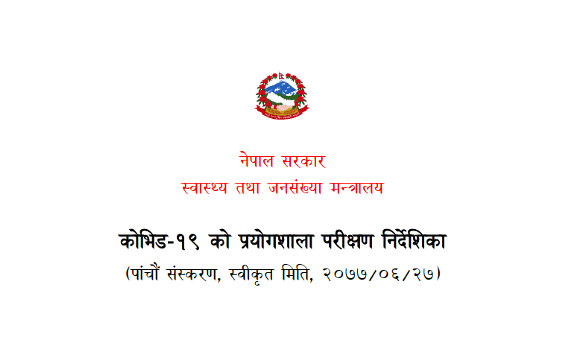
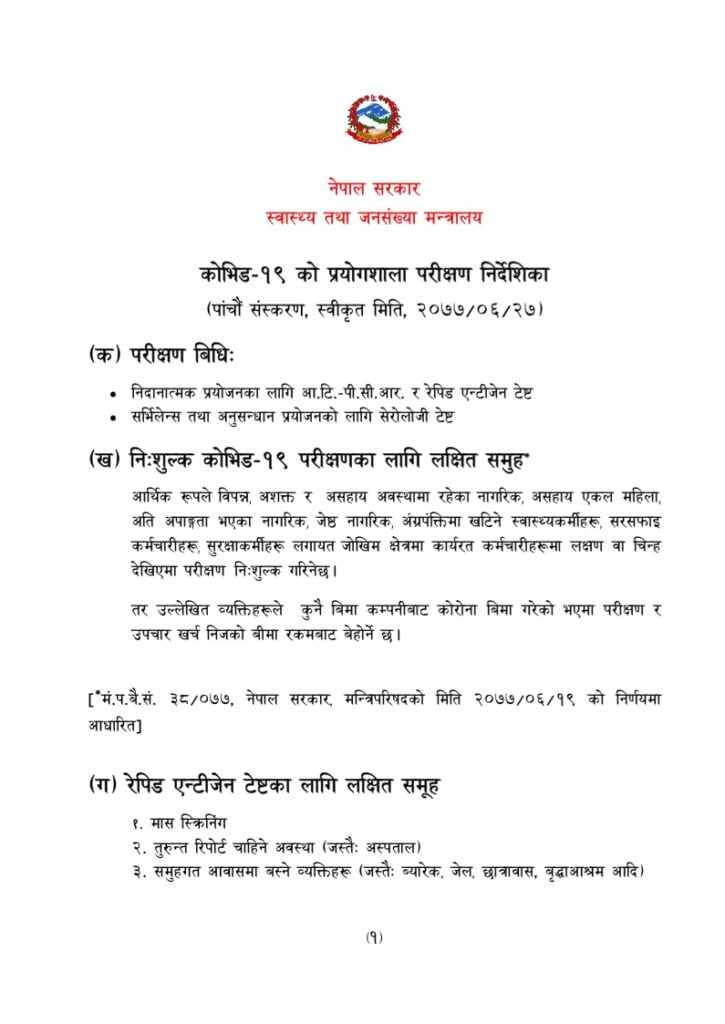
Department of Health Services (DoHS), MoHP published Annual Report for the FY of 2075/76 (2018/19), twenty-fifth consecutive report of it’s kind.

Download now
PDF FILE
Screen Shot 2020 10 05 at 14.01.34
Fact Sheet-1
Screen Shot 2020 10 05 at 14.01.56
Fact Sheet-2

Download now
PDF FILE

Previous reports

  • Annual Report of DoHS 2069/2070 (2012-2013)
  • Annual Report of DOHS 2070/71 (2013/2014)
  • Annual Report of the Department of Health Services (DoHS) – 2071/72 (2014/2015)
  • Annual Report Department of Health Services 2072/73 (2015/2016)
  • Glimpse of Annual Report Department of Health Services 2073/74 (2016/17)
  • Department of Health Services (DoHS) Annual Report 2074/75 (2017/18)


Do you have a website? Looking for the best hosting provider? Here’s a discount code.

Latest Public Health Jobs

Latest Posts

  • Multisectoral Action Plan for the Prevention and Control of NCDs, 2026-2030 (Draft)
  • National Standard Operating Procedure for Early Warning, Alert and Response System (EWARS), 2025
  • Priority Infectious Diseases for Community-Based Surveillance in Nepal
  • Community Based Disease Surveillance Guideline, 2082
  • Political declaration of the fourth high-level meeting of the General Assembly on the prevention and control of NCDs and the promotion of mental health and well-being

Thanks for visiting us.
Disclaimer: The resources, documents, guidelines, and information on this blog have been collected from various sources and are intended for informational purposes only. Information published on or through this website and affiliated social media channels does not represent the intention, plan, or strategies of an organization that the initiator is associated with in a professional or personal capacity, unless explicitly indicated.
If you have any complaints, information, or suggestions about the content published on Public Health Update, please feel free to contact us at blog.publichealthupdate@gmail.com.
#StayUpdated


  • WordPress
  • Link
  • Facebook
  • Mail
  • Facebook
  • Twitter
  • Twitter
  • LinkedIn
  • Instagram
  • Facebook
October 5, 2020 0 comments
0 FacebookTwitterPinterestLinkedinTumblrVKOdnoklassnikiRedditStumbleuponWhatsappTelegramLINEPocketSkypeViberEmail
CoursesOnline & Distance Learning

Online Course: Health Systems Strengthening

by Public Health Update October 4, 2020
written by Public Health Update

Overview

In this course, you’ll explore the complexity of health systems and apply systems thinking to health systems strengthening (HSS). You’ll critique major health system frameworks, analyse health system inequities, and interrogate the evidence for HSS approaches. You’ll be equipped with the knowledge and skills to develop HSS interventions across areas such as health policy, health financing, human resources, supply chain management, quality of care and private sector engagement. This course was developed by the Nossal Institute and UNICEF to equip UNICEF staff to work in HSS; now it’s open to you.

This course would suit middle and high-level health professionals, including health administrators and policy makers, doctors, nurses and others who work to shape health systems. The course focuses primarily on low and middle income country contexts.

Topics

What topics will you cover?

  • Health system structures, functions and components, and how they interact.
  • How to use evidence, and analysis of inequity, to drive interventions to strengthen health systems.
  • Strengthening health systems through action in areas such as health policy, financing, human resources, supply chain management, quality of care and private sector engagement.
  • Using complex systems thinking to address health system problems.

By the end of the course, you’ll be able to…

  • Develop knowledge and skills in health systems strengthening (HSS), to improve outcomes for disadvantaged women and children.
  • Apply complex systems thinking in the design and implementation of HSS interventions.
  • Evaluate HSS interventions for their evidence base, sustainability and capacity to support universal health coverage.
Certificate

UNICEF are offering everyone who joins this course a free digital upgrade, so that you can experience the full benefits of studying online for free. This means that you get:

  • Unlimited access to this course
  • Includes any articles, videos, peer reviews and quizzes
  • Tests to validate your learning
  • A PDF Certificate of Achievement to prove your success when you’re eligible.
JOIN NOW
FUTURE LEARN

  • Multisectoral Action Plan for the Prevention and Control of NCDs, 2026-2030 (Draft)
  • National Standard Operating Procedure for Early Warning, Alert and Response System (EWARS), 2025
  • Priority Infectious Diseases for Community-Based Surveillance in Nepal
  • Community Based Disease Surveillance Guideline, 2082
  • Political declaration of the fourth high-level meeting of the General Assembly on the prevention and control of NCDs and the promotion of mental health and well-being

October 4, 2020 0 comments
0 FacebookTwitterPinterestLinkedinTumblrVKOdnoklassnikiRedditStumbleuponWhatsappTelegramLINEPocketSkypeViberEmail
CoursesOnline & Distance Learning

Free Online Course: COVID-19 Contact Tracing

by Public Health Update October 4, 2020
written by Public Health Update

About Course

The COVID-19 crisis has created an unprecedented need for contact tracing across the country, requiring thousands of people to learn key skills quickly. The job qualifications for contact tracing positions differ throughout the country and the world, with some new positions open to individuals with a high school diploma or equivalent.

In this introductory course, students will learn about the science of SARS-CoV-2 , including the infectious period, the clinical presentation of COVID-19, and the evidence for how SARS-CoV-2 is transmitted from person-to-person and why contact tracing can be such an effective public health intervention. Students will learn about how contact tracing is done, including how to build rapport with cases, identify their contacts, and support both cases and their contacts to stop transmission in their communities. The course will also cover several important ethical considerations around contact tracing, isolation, and quarantine. Finally, the course will identify some of the most common barriers to contact tracing efforts — along with strategies to overcome them.

This course provides information about the basics of COVID-19 and contact tracing and helps you develop some of the skills and background that you need. The course includes examples of contact tracing calls, as well as information about developing effective interviewing skills.

Syllabus – What you will learn from this course

Basics of COVID-19: In this first module, we’ll dig into the science of COVID-19, including what we know about its origins, clinical signs and symptoms, risk factors, diagnosis, transmission, and infectious period.

Basics of Contact Tracing for COVID-19: Now that you’ve learned about the basics of COVID-19, we’ll turn our attention to some of the tools being used to stop the spread: contact tracing, isolation, and quarantine. We’ll also show you how what you’ve already learned about infection and transmission informs the use of these critical public health tools.

Steps to Investigate Cases and Trace Their Contacts: In this module, we’ll walk through the steps of the contact tracing process and provide examples. You’ll also get to watch demonstrations of basic interactions with a case and and a contact.

Ethics of Contact Tracing and Technological Tools: In this module, you’ll learn about the important ethical dimensions of contract tracing, including how we balance the protection of the public’s health with limits on personal privacy and autonomy. We’ll walk through some specific examples to prepare you for some of the issues contact tracers encounter during the course of their work.

Skills for Effective Communication: Effective communication is the cornerstone of a successful contact tracing interaction. That includes building rapport with cases and contacts, active listening, and asking the right kinds of questions. In this module, you’ll watch and read several example interactions that demonstrate both how and how not to conduct yourself as a contact tracer.

Join now

Visit https://www.coursera.org/promo/covid-19-contact-tracing to enroll in this course for free. The promotional price will be applied to your purchase automatically.

This course includes a certificate and the fee is waived. This free course is created by John Hopkins Bloomberg School of Health and courtesy of Bloomberg Philanthropies.


  • Multisectoral Action Plan for the Prevention and Control of NCDs, 2026-2030 (Draft)
  • National Standard Operating Procedure for Early Warning, Alert and Response System (EWARS), 2025
  • Priority Infectious Diseases for Community-Based Surveillance in Nepal
  • Community Based Disease Surveillance Guideline, 2082
  • Political declaration of the fourth high-level meeting of the General Assembly on the prevention and control of NCDs and the promotion of mental health and well-being
October 4, 2020 0 comments
0 FacebookTwitterPinterestLinkedinTumblrVKOdnoklassnikiRedditStumbleuponWhatsappTelegramLINEPocketSkypeViberEmail
Five keys to improving research costing and pricing in low- and middle-income countries
Research & PublicationInternational Plan, Policy & Guidelines

Five keys to improving research costing and pricing in low- and middle-income countries

by Public Health Update October 4, 2020
written by Public Health Update

The Five Keys offer research institutions and funders pointers and guidance on the processes involved in calculating, managing and recovering research costs. It is particularly useful for:

  • Institutional leaders, including chief executive officers and other executives, deputy vice-chancellors for research.
  • Program directors and program officers, including research directors and funder program leaders.
  • Research managers, including grants managers, finance managers/officers, project accountants, project coordinators, learning and development managers/officers.
  • Researchers, including principal investigators, mid-career and emerging researchers.

Five keys to improving research costing and pricing in low- and middle-income countries.

Key 1
Improving relations between funders and research institutions

Narrowing the gaps in understanding between institutions and funders, and promoting relationships based on shared interests.

Key 2
Defining terms and clarifying values
Defining the key concepts and values in research costing and pricing and clarifying those that can cause confusion in grants or contracts.

Key 3
Enabling transparent research costing and pricing
Affirming the importance of transparency, as well as institutional policy and support in enabling research costing and pricing.

Key 4
Optimizing the recovery of indirect costs
Exploring cost categories and securing support for the recovery and distribution of indirect costs from funders and research institutions to support sustainability.

Key 5
Strengthening capacities for grant management
Highlighting the importance of skills and capacity at individual and institutional level and how these can be supported by institutions and funders.

Download now
FULL REPORT

  • WHO TDR Update: Ensuring ethical conduct of implementation research
  • COVID-19 Healthcare Workers Booklet
  • IR toolkit to inform the implementation and scale-up of digital technologies for TB


Do you have a website? Looking for the best hosting provider? Here’s a discount code.

Latest Public Health Jobs

Latest Posts

  • Multisectoral Action Plan for the Prevention and Control of NCDs, 2026-2030 (Draft)
  • National Standard Operating Procedure for Early Warning, Alert and Response System (EWARS), 2025
  • Priority Infectious Diseases for Community-Based Surveillance in Nepal
  • Community Based Disease Surveillance Guideline, 2082
  • Political declaration of the fourth high-level meeting of the General Assembly on the prevention and control of NCDs and the promotion of mental health and well-being

Thanks for visiting us.
Disclaimer: The resources, documents, guidelines, and information on this blog have been collected from various sources and are intended for informational purposes only. Information published on or through this website and affiliated social media channels does not represent the intention, plan, or strategies of an organization that the initiator is associated with in a professional or personal capacity, unless explicitly indicated.
If you have any complaints, information, or suggestions about the content published on Public Health Update, please feel free to contact us at blog.publichealthupdate@gmail.com.
#StayUpdated


  • WordPress
  • Link
  • Facebook
  • Mail
  • Facebook
  • Twitter
  • Twitter
  • LinkedIn
  • Instagram
  • Facebook
October 4, 2020 0 comments
0 FacebookTwitterPinterestLinkedinTumblrVKOdnoklassnikiRedditStumbleuponWhatsappTelegramLINEPocketSkypeViberEmail
Important Notice For Training Workshop
TrainingWorkshop

Registration for Virtual Training Workshop: Research Methodology on Medical Entomology

by Public Health Update October 4, 2020
written by Public Health Update

Nepal Health Research Council (NHRC) calls for application for the training workshop on “Research Methodology on Medical Entomology”. This is the second call for the application and interested with at least bachelor degree in health sciences and related subject are requested to apply as soon as possible. Link for the registration is available in Google form (External link) website.

Schedule

  • 05 – 09 Oct 2020
  • 12 – 16 Oct 2020
  • 18 – 22 Oct 2020

Please fill up this form to register for virtual training workshop about Research Methodology on Medical Entomology conducted by Nepal Health Research Council.

Google form (External link)

For further Details, Please Contact:
Capacity Building Section of NHRC
‘I’el: +977 1 4254220, Email: training@nhrc.gov.np


  • NHRC CPD Guidelines for Providing Credit Hours to Participants of Research Trainings and Conferences
  • Nepal Health Research Council (NHRC)
  • List of Approved Institutional Review Committee (IRC), NHRC
  • National Mental Health Survey, Nepal-2020 Fact Sheet
  • Nepal Multiple Indicator Cluster Survey 2019 (NMICS 2019): Key findings
  • National TB Prevalence Survey, 2018-19 Key findings
  • Global Burden of Disease Study 2016 (NEPAL COUNTRY PROFILE)


Do you have a website? Looking for the best hosting provider? Here’s a discount code.

Latest Public Health Jobs

Latest Posts

  • Multisectoral Action Plan for the Prevention and Control of NCDs, 2026-2030 (Draft)
  • National Standard Operating Procedure for Early Warning, Alert and Response System (EWARS), 2025
  • Priority Infectious Diseases for Community-Based Surveillance in Nepal
  • Community Based Disease Surveillance Guideline, 2082
  • Political declaration of the fourth high-level meeting of the General Assembly on the prevention and control of NCDs and the promotion of mental health and well-being

Thanks for visiting us.
Disclaimer: The resources, documents, guidelines, and information on this blog have been collected from various sources and are intended for informational purposes only. Information published on or through this website and affiliated social media channels does not represent the intention, plan, or strategies of an organization that the initiator is associated with in a professional or personal capacity, unless explicitly indicated.
If you have any complaints, information, or suggestions about the content published on Public Health Update, please feel free to contact us at blog.publichealthupdate@gmail.com.
#StayUpdated


  • WordPress
  • Link
  • Facebook
  • Mail
  • Facebook
  • Twitter
  • Twitter
  • LinkedIn
  • Instagram
  • Facebook
October 4, 2020 0 comments
0 FacebookTwitterPinterestLinkedinTumblrVKOdnoklassnikiRedditStumbleuponWhatsappTelegramLINEPocketSkypeViberEmail
The International Day of Older Persons
Competition

World Sight Day 2020 Photo Competition

by Public Health Update October 4, 2020
written by Public Health Update

The World Sight Day Photo Competition is organised for World Sight Day to promote awareness about eye care and encourage people around the world to participate. The competition, open to professional and amateur photographers, is an opportunity to highlight eye health successes and also document unmet need.

The World Sight Day Photo Competition have been possible because of photographers from around the globe who have generously contributed their images. Over 4,000 eye care photos have been submitted since 2015.

The World Sight Day photo competition is live. IAPB encourages you to share photos that highlight the impact, the strength of our partnerships and highlight the importance of vision everywhere in the world.

Categories

The Photo Contest is open to all: Amateur and Professional Photographers.

Professional:

adjective pro·fes·sion·al \prə-ˈfesh-nəl, -ˈfe-shə-nəl\: relating to a job that requires special education, training, or skill : done or given by a person who works in a particular profession : paid to participate in a sport or activity.

Amateur:

noun am·a·teur \ˈa-mə-(ˌ)tər, -ˌtu̇r, -ˌtyu̇r, -ˌchu̇r, -chər\: a person who does something (such as a sport or hobby) for pleasure and not as a job.

Prizes

Professional: The Professional winner will get USD 1000.

Amateur: The Amateur winner will get a CANON 1200D DSLR CAMERA 

Important Dates

  • The competition will be open till 8 October 2020 – World Sight Day, after which we will pick two winners and 5 runners-up.
  • Winners will be announced on 15 October 2020 and contacted by mail following the official announcement.
Submit Entry

LINK TO PARTICIPATE ON PHOTO COMPETITION


WORLD SIGHT DAY


  • Multisectoral Action Plan for the Prevention and Control of NCDs, 2026-2030 (Draft)
  • National Standard Operating Procedure for Early Warning, Alert and Response System (EWARS), 2025
  • Priority Infectious Diseases for Community-Based Surveillance in Nepal
  • Community Based Disease Surveillance Guideline, 2082
  • Political declaration of the fourth high-level meeting of the General Assembly on the prevention and control of NCDs and the promotion of mental health and well-being
October 4, 2020 0 comments
0 FacebookTwitterPinterestLinkedinTumblrVKOdnoklassnikiRedditStumbleuponWhatsappTelegramLINEPocketSkypeViberEmail
World Sight Day 2020: Hope In Sight
PH Important DayActivitiesPublic HealthPublic Health Events

World Sight Day 2020: Hope In Sight

by Public Health Update October 4, 2020
written by Public Health Update

World Sight Day (WSD) is an annual day of awareness held on the second Thursday of October, to focus global attention on blindness and vision impairment. World Sight Day 2020 is on 8 October 2020. World Sight Day was initiated by the International Agency for the Prevention of Blindness (IAPB) and it became an official IAPB event in the year 2000.

RECOMMENDED: WORLD SIGHT DAY Photo competition

World Sight Day is a common platform for organisations to encourage governments, corporations, institutions and individuals to actively support universal access to eye health.

Theme 2020

The theme for World Sight Day is Hope In Sight.

The recent World Health Assembly resolution for eye health, marks the next major milestone for global eye health. With political commitment to take action to make eye care an integral part of Universal Health Coverage (UHC) and to implement ‘integrated people-centred eye care’ there is #HopeInSight.

This World Sight Day, let’s find the solutions to ensure that everyone, everywhere has access to sight. Let’s pledge to spread the message of #HopeInSight.

Facts

  • Globally, at least 1 billion people have a near or distance vision impairment that could have been prevented or has yet to be addressed.
  • The leading causes of vision impairment and blindness are uncorrected refractive errors and cataracts.
  • The majority of people with vision impairment and blindness are over the age of 50 years.
  • Prevalence of vision impairment in many low- and middle-income regions is estimated to be four times higher than in high-income regions.

Causes

Globally, the leading causes of vision impairment are:

  • uncorrected refractive errors
  • cataract
  • age-related macular degeneration
  • glaucoma
  • diabetic retinopathy
  • corneal opacity
  • trachoma

Source of Info: WHO & International Agency for the Prevention of Blindness (IAPB)

#WorldSightDay #WSD2020 #HopeInSight

WORLD SIGHT DAY Photo competition


Related

  • WORLD SIGHT DAY Photo competition
  • World Sight Day (WSD) 2019: Vision First!
  • World Sight Day is: Eyecare Everywhere! 
  • Make Vision Count – World Sight Day 2017
  • At least 2.2 billion people are blind or visually impaired
  • Make Vision Count – World Sight Day 2017
  • Vision Screening March Month 2020


Do you have a website? Looking for the best hosting provider? Here’s a discount code.

Latest Public Health Jobs

Latest Posts

  • Multisectoral Action Plan for the Prevention and Control of NCDs, 2026-2030 (Draft)
  • National Standard Operating Procedure for Early Warning, Alert and Response System (EWARS), 2025
  • Priority Infectious Diseases for Community-Based Surveillance in Nepal
  • Community Based Disease Surveillance Guideline, 2082
  • Political declaration of the fourth high-level meeting of the General Assembly on the prevention and control of NCDs and the promotion of mental health and well-being

Thanks for visiting us.
Disclaimer: The resources, documents, guidelines, and information on this blog have been collected from various sources and are intended for informational purposes only. Information published on or through this website and affiliated social media channels does not represent the intention, plan, or strategies of an organization that the initiator is associated with in a professional or personal capacity, unless explicitly indicated.
If you have any complaints, information, or suggestions about the content published on Public Health Update, please feel free to contact us at blog.publichealthupdate@gmail.com.
#StayUpdated


  • WordPress
  • Link
  • Facebook
  • Mail
  • Facebook
  • Twitter
  • Twitter
  • LinkedIn
  • Instagram
  • Facebook
October 4, 2020 0 comments
0 FacebookTwitterPinterestLinkedinTumblrVKOdnoklassnikiRedditStumbleuponWhatsappTelegramLINEPocketSkypeViberEmail
The International Day of Older Persons
Global Health NewsPublic Health News

WHO launches portal for global data on the health and well-being of older people

by Public Health Update October 3, 2020
written by Public Health Update

On the International Day of Older Persons, WHO launched the first data portal that brings together in one place data on global indicators for monitoring the health and well-being of people aged 60 and over.

Data is included for indicators such as: percentage of older people aged 60 years and over; healthy life expectancy at age 60; major causes of death in older people; prevalence of common impairments such as hearing and vision loss;  percentage of older people receiving long-term care in residential facilities and in their home; and the percentage of older people living in an age-friendly environment. Also included are indicators for tracking the progress of government commitments to promote the health and well-being of older adults.

Data in the portal is disaggregated by age, sex and country to allow a comprehensive understanding of trends across different population groups, and  to better manage progress towards global goals. Through maps, charts and tables, the portal offers tailored options for visualization and analysis of the data.

During the Decade of Healthy Ageing (2020-2030), endorsed by the World Health Assembly in August 2020, the portal will remain a gateway for accessing all global data related to older persons produced by WHO, other international organizations such as the UNDESA, the ILO, the World Bank and the OECD, as well as academic institutions such as the Institute for Health Metrics and Evaluation.

By the end of 2020, users of the portal will be able to create country profiles as background for conducting situational analyses and initiating policy dialogues with stakeholders. Data will be updated as and when new estimates or information become available.

This information will strengthen the visibility of issues relating to the health and well-being of older people and should ultimately help inform and drive action for national policies and plans to support healthy ageing.

Data Portal

1 October 2020 (WHO)


Do you have a website? Looking for the best hosting provider? Here’s a discount code.

Latest Public Health Jobs

Latest Posts

  • Multisectoral Action Plan for the Prevention and Control of NCDs, 2026-2030 (Draft)
  • National Standard Operating Procedure for Early Warning, Alert and Response System (EWARS), 2025
  • Priority Infectious Diseases for Community-Based Surveillance in Nepal
  • Community Based Disease Surveillance Guideline, 2082
  • Political declaration of the fourth high-level meeting of the General Assembly on the prevention and control of NCDs and the promotion of mental health and well-being

Thanks for visiting us.
Disclaimer: The resources, documents, guidelines, and information on this blog have been collected from various sources and are intended for informational purposes only. Information published on or through this website and affiliated social media channels does not represent the intention, plan, or strategies of an organization that the initiator is associated with in a professional or personal capacity, unless explicitly indicated.
If you have any complaints, information, or suggestions about the content published on Public Health Update, please feel free to contact us at blog.publichealthupdate@gmail.com.
#StayUpdated



  • WordPress
  • Link
  • Facebook
  • Mail
  • Facebook
  • Twitter
  • Twitter
  • LinkedIn
  • Instagram
  • Facebook
October 3, 2020 0 comments
0 FacebookTwitterPinterestLinkedinTumblrVKOdnoklassnikiRedditStumbleuponWhatsappTelegramLINEPocketSkypeViberEmail
CoursesOnline & Distance Learning

WHO COVID-19 Mass Gatherings Risk Assessment Training

by Public Health Update October 3, 2020
written by Public Health Update

Overview

The training describes the risk assessment exercise that WHO has developed to aid health authorities and event organizers in their planning for upcoming mass gatherings amid the current COVID-19 pandemic. WHO has developed a set of COVID-19 risk assessments tools dedicated to generic mass gatherings as well as to sports specific and religious specific mass gatherings. It should be noted, however, that general considerations and advice applicable to the organization of mass gatherings, and addressing risks of any origin, should also be taken into account when planning an event. These risk assessments provide a user-friendly way for health authorities and organizers to understand the level of risk an upcoming mass gathering may hold in further spreading COVID-19, both within a country and globally. All of the tools mentioned can be found on the WHO website. The course has been developed in collaboration with the Johns Hopkins Center for Health Security, WHO Collaborating Centre on Global Health Security.

Learning Objectives

By the end of this course, learners should be able to:

  • define mass gathering and the risk posed by it;
  • explain how a risk assessment can help with public health planning;
  • list the steps involved in:
    • conducting a generic risk assessment for mass gatherings,
    • conducting a risk assessment for religious mass gatherings,
    • conducting a generic risk assessment for sporting mass gatherings; and
  • score risk associated with an upcoming mass gathering and identify ways to increase the safety of participants.

Course duration: Approximately 1 hour.

Certificates: A Confirmation of Participation will be available to participants who complete 100% of the course material.

Please note: The materials used in this course are currently being revised to reflect updates to the technical content. All course participants will be notified once these updates have been made.

Course contents

  • Module 1: Introduction to Mass Gathering Risk Assessment:By the end of this module, you will be able to: explain what a mass gathering is and describe the role of risk assessments and their role in public health planning.
  • Module 2: Generic Mass Gathering Risk Assessment:By the end of this module, you will be able to: list the steps involved in a generic mass gathering risk assessment; and determine an overall risk score using the WHO risk assessment tool and taking into account modification and mitigation measures.
  • Module 3: Sporting Mass Gathering Risk Assessment:By the end of this module, you will be able to: list the steps involved in a sporting mass gathering risk assessment; and determine an overall risk score using the WHO risk assessment tool and taking into account modification and mitigation measures.
  • Module 4: Religious Mass Gathering Risk Assessment:By the end of this module, you will be able to: list the steps involved in a religious mass gathering risk assessment; and determine an overall risk score using the WHO risk assessment tool and taking into account modification and mitigation measures.
JOIN NOW
OPENWHO


  • Multisectoral Action Plan for the Prevention and Control of NCDs, 2026-2030 (Draft)
  • National Standard Operating Procedure for Early Warning, Alert and Response System (EWARS), 2025
  • Priority Infectious Diseases for Community-Based Surveillance in Nepal
  • Community Based Disease Surveillance Guideline, 2082
  • Political declaration of the fourth high-level meeting of the General Assembly on the prevention and control of NCDs and the promotion of mental health and well-being
October 3, 2020 0 comments
0 FacebookTwitterPinterestLinkedinTumblrVKOdnoklassnikiRedditStumbleuponWhatsappTelegramLINEPocketSkypeViberEmail
Newer Posts
Older Posts

Search

Follow Us

Facebook Twitter Instagram Pinterest Linkedin Youtube

Categories

  • Abstracts (25)
  • Activities (91)
  • Adolescent Sexual and Reproductive Health (ASRH) (25)
  • Advice & Tips (3)
  • African Region (5)
  • AI and Health (1)
  • Annual Meeting (6)
  • Antimicrobial Resistance (AMR) (20)
  • Award (19)
  • Awards (16)
  • Books (9)
  • Call for Proposal, EOI & RFP (103)
  • Call for Research Participants (8)
  • Clinical Doctor Jobs (6)
  • Communicable Diseases (107)
  • Competition (20)
  • Conference (128)
  • Consultant (1)
  • Courses (204)
  • Dashboard (2)
  • Digital Health & Health Informatics (10)
  • Drug and Medicine (18)
  • Eastern Mediterranean Region (3)
  • Education (15)
  • Environment (3)
  • Environmental Health & Climate Change (47)
  • European Region (42)
  • Exchange Program (1)
  • Fact Sheet (116)
  • FCHVs (1)
  • Fellowships, Studentship & Scholarships (165)
  • Financial Aid (13)
  • Form Formats (2)
  • Fully funded (22)
  • Global Health News (433)
  • Grants and Funding Opportunities (192)
  • Guest Post (44)
  • Health Assistant Jobs (1)
  • Health Equity (7)
  • Health Financing and Economics (24)
  • Health in Data (113)
  • Health Insurance (5)
  • Health Jobs (52)
  • Health Literacy, Health Education & Promotion (49)
  • Health Organization Profile (42)
  • Health Systems (81)
  • Human Resource for Health (32)
  • Humanitarian Health & Emergency Response (44)
  • Hypertension (5)
  • Implementation Research (48)
  • International Health (3)
  • International Jobs & Opportunities (369)
  • International Plan, Policy & Guidelines (208)
  • Internships (4)
  • Jobs Vacancies (56)
  • Journals (8)
  • Life Style & Public Health Nutrition (39)
  • Live (10)
  • Master's Degree (48)
  • Maternal, Newborn and Child Health (87)
  • Mentorship Program (2)
  • Miscellaneous (16)
  • National Health News (157)
  • National Plan, Policy & Guidelines (468)
  • Neglected Tropical Diseases (NTDs) (51)
  • Non- Communicable Diseases (NCDs) (120)
  • Notice (103)
  • Nursing Jobs (6)
  • Nutritionist Jobs (1)
  • One Health (17)
  • Online & Distance Learning (22)
  • Online Courses (90)
  • Op-Ed Article (3)
  • Opportunities by Region (82)
  • Outbreak News (213)
  • Partially funded (6)
  • PCL Health Science Jobs (3)
  • PH Important Day (532)
  • Pharmacist Jobs (3)
  • PhD (53)
  • Photos (5)
  • Planetary Health (4)
  • PostDoc (14)
  • Presentation Slides (26)
  • Primary Health Care (25)
  • Provincial Plan, Policies and Guidelines (14)
  • Public Health (1,278)
  • Public Health Epidemiology & Biostatistics (13)
  • Public Health Events (305)
  • Public Health Information (20)
  • Public Health Innovation (9)
  • Public Health Jobs (52)
  • Public Health News (552)
  • Public Health Notes (120)
  • Public Health Opportunities (502)
  • Public Health Opportunity (486)
  • Public Health Programs (108)
  • Public Health Seminar (2)
  • Public Health Tools (1)
  • Public Health Update (557)
  • Quality Improvement & Infection Prevention (20)
  • Region of America (8)
  • Reports (182)
  • Research & Project Grants (38)
  • Research & Project Grants (31)
  • Research & Publication (647)
  • Research Articles (10)
  • Road Traffic Accidents (RTA) (9)
  • School of Public Health (60)
  • Self funded (2)
  • South-East Asia Region (26)
  • Success Stories (17)
  • Summer and Winter Courses (39)
  • Summer Courses (27)
  • Sustainable Development Goals (SDGs) (14)
  • Syllabus (61)
  • Symposium (9)
  • Tobacco Control (35)
  • Training (40)
  • Travel Grants (15)
  • Trick, Technique & Skills (8)
  • Uncategorized (3)
  • Undergraduate Degree (7)
  • Universal Health Coverage (36)
  • Universities (29)
  • Universities & School of Public Health (57)
  • Vacancy Announcement (26)
  • Vaccine Preventable Diseases (40)
  • Vector-Borne Diseases(VBDs) (30)
  • Videos (3)
  • View Points (1)
  • Webinar (4)
  • Western Pacific Region (13)
  • Workshop (18)
  • World News (116)
Post New Jobs: Vacancy Announcement Service

Public Health Update (Sagun’s Blog) is a popular public health portal in Nepal. Thousands of health professionals are connected with Public Health Update to get up-to-date public health updates, search for jobs, and explore opportunities.
#1 Public Health Blog for sharing Job opportunities and updates in Nepal

”Public Health Information For All”
– – Sagun Paudel, Founder

  • HOT JOBS
    • Public Health Jobs
    • Medical Doctor Jobs
    • Nursing Jobs
    • Health Assistant Jobs
    • Pharmacist Jobs
    • NGOs Jobs
    • Government Jobs
  • Top Categories
    • National Plan, Policy & Guidelines Top
    • Public Health Calendar
    • Fellowships & Scholarships
    • Health Systems
    • Health Organization Profiles
    • International Jobs & Opportunities
    • Public Health Opportunity

PUBLIC HEALTH INITIATIVE

    • Submit your Vacancies New
    • Partnership Opportunities

Contact: blog.publichealthupdate@gmail.com

https://wa.me/+9779856036932

Public Health Initiative, A Registered Non-profit organization – All Right Reserved. 2011-2024. Contact us. 

Facebook Twitter Instagram Youtube Envelope
Public Health Update
  • Home
  • Public Health
    • Home 1
      • Adolescent Sexual and Reproductive Health (ASRH)
      • Antimicrobial Resistance (AMR)
      • Communicable Diseases
      • Digital Health & Health Informatics
      • Environmental Health & Climate Change
      • Health Financing and Economics
      • Health Equity
    • Home 2
      • Health Literacy, Health Education & Promotion
      • Human Resource for Health
      • Humanitarian Health & Emergency Response
      • Implementation Research
      • International Health
      • Life Style & Public Health Nutrition
      • Maternal, Newborn and Child Health
    • Home 3
      • Neglected Tropical Diseases (NTDs)
      • Non- Communicable Diseases (NCDs)
      • One Health
      • Planetary Health
      • Public Health Epidemiology & Biostatistics
      • Primary Health Care
      • Quality Improvement & Infection Prevention
    • Home 4
      • Road Traffic Accidents (RTA)
      • Sustainable Development Goals (SDGs)
      • Tobacco Control
      • Universal Health Coverage
      • Vaccine Preventable Diseases
      • Vector-Borne Diseases(VBDs)
      • Notices
  • Public Health Update
    • Home 1
      • Public Health News
      • Global Health News
      • Outbreak News
      • National Health News
      • COVID-19
    • Home 2
      • Fact Sheet
      • Health in Data
      • PH Important Day
      • Public Health Events
      • Public Health Programs
    • Home 3
      • Health Systems
      • Health Insurance
      • Health Organization Profile
      • Success Stories
      • Public Health Innovation
  • Public Health Opportunities
    • Fully funded
    • Travel Grants
    • Grants and Funding Opportunities
    • Opportunities by Region
    • International Jobs & Opportunities
    • Research & Project Grants
    • Fellowships, Studentship & Scholarships
    • Conference
  • Jobs
    • Home 1
      • Health Jobs
      • Public Health Jobs
      • Clinical doctor Jobs
      • Health Assistant Jobs
      • Nursing Jobs
      • PCL Health Science Jobs
    • Home 2
      • Dental Jobs
      • Pharmacist Jobs
      • TSLC (Health Jobs)
      • Laboratory Jobs
      • Nutritionist Jobs
  • Downloads
    • International Plan, Policy & Guidelines
    • National Plan, Policy & Guidelines
    • Reports
    • Books
    • Research Articles
  • School of Public Health
    • Home 1
      • Courses
      • Master’s Degree
      • Undergraduate Degree
      • PhD
    • Home 2
      • Universities
      • Syllabus
      • Public Health Notes
      • Mentorship Program
      • Startup Project
    • Home
      • Summer and Winter Courses
      • Summer Courses
      • Online Courses
      • Workshop
      • Training
Public Health Update
  • Home
  • Public Health
    • Home 1
      • Adolescent Sexual and Reproductive Health (ASRH)
      • Antimicrobial Resistance (AMR)
      • Communicable Diseases
      • Digital Health & Health Informatics
      • Environmental Health & Climate Change
      • Health Financing and Economics
      • Health Equity
    • Home 2
      • Health Literacy, Health Education & Promotion
      • Human Resource for Health
      • Humanitarian Health & Emergency Response
      • Implementation Research
      • International Health
      • Life Style & Public Health Nutrition
      • Maternal, Newborn and Child Health
    • Home 3
      • Neglected Tropical Diseases (NTDs)
      • Non- Communicable Diseases (NCDs)
      • One Health
      • Planetary Health
      • Public Health Epidemiology & Biostatistics
      • Primary Health Care
      • Quality Improvement & Infection Prevention
    • Home 4
      • Road Traffic Accidents (RTA)
      • Sustainable Development Goals (SDGs)
      • Tobacco Control
      • Universal Health Coverage
      • Vaccine Preventable Diseases
      • Vector-Borne Diseases(VBDs)
      • Notices
  • Public Health Update
    • Home 1
      • Public Health News
      • Global Health News
      • Outbreak News
      • National Health News
      • COVID-19
    • Home 2
      • Fact Sheet
      • Health in Data
      • PH Important Day
      • Public Health Events
      • Public Health Programs
    • Home 3
      • Health Systems
      • Health Insurance
      • Health Organization Profile
      • Success Stories
      • Public Health Innovation
  • Public Health Opportunities
    • Fully funded
    • Travel Grants
    • Grants and Funding Opportunities
    • Opportunities by Region
    • International Jobs & Opportunities
    • Research & Project Grants
    • Fellowships, Studentship & Scholarships
    • Conference
  • Jobs
    • Home 1
      • Health Jobs
      • Public Health Jobs
      • Clinical doctor Jobs
      • Health Assistant Jobs
      • Nursing Jobs
      • PCL Health Science Jobs
    • Home 2
      • Dental Jobs
      • Pharmacist Jobs
      • TSLC (Health Jobs)
      • Laboratory Jobs
      • Nutritionist Jobs
  • Downloads
    • International Plan, Policy & Guidelines
    • National Plan, Policy & Guidelines
    • Reports
    • Books
    • Research Articles
  • School of Public Health
    • Home 1
      • Courses
      • Master’s Degree
      • Undergraduate Degree
      • PhD
    • Home 2
      • Universities
      • Syllabus
      • Public Health Notes
      • Mentorship Program
      • Startup Project
    • Home
      • Summer and Winter Courses
      • Summer Courses
      • Online Courses
      • Workshop
      • Training
Public Health Initiative, A Registered Non-profit organization – All Right Reserved. 2011-2023