Public Health Update
  • Home
  • Public Health Update
  • Nepal Health Jobs
    • Public Health Job Board
    • Organization List
  • Opportunities
    • Fellowships, Studentship & Scholarships
    • Grants and Funding Opportunities
    • Fully funded
    • Conference
  • Downloads
    • International Plan, Policy & Guidelines
    • National Plan, Policy & Guidelines
    • Reports
    • Public Health Notes
    • Syllabus
    • Form Formats
  • School of Public Health
    • PhD
    • Master’s Degree
    • Online Courses
  • Notice
  • Home
  • Public Health Update
  • Nepal Health Jobs
    • Public Health Job Board
    • Organization List
  • Opportunities
    • Fellowships, Studentship & Scholarships
    • Grants and Funding Opportunities
    • Fully funded
    • Conference
  • Downloads
    • International Plan, Policy & Guidelines
    • National Plan, Policy & Guidelines
    • Reports
    • Public Health Notes
    • Syllabus
    • Form Formats
  • School of Public Health
    • PhD
    • Master’s Degree
    • Online Courses
  • Notice
LOGIN / REGISTER
Public Health Update
SUBSCRIBE
Public Health Update
  • Home
  • Public Health Update
  • Nepal Health Jobs
    • Public Health Job Board
    • Organization List
  • Opportunities
    • Fellowships, Studentship & Scholarships
    • Grants and Funding Opportunities
    • Fully funded
    • Conference
  • Downloads
    • International Plan, Policy & Guidelines
    • National Plan, Policy & Guidelines
    • Reports
    • Public Health Notes
    • Syllabus
    • Form Formats
  • School of Public Health
    • PhD
    • Master’s Degree
    • Online Courses
  • Notice

All Right Reserved. Designed and Developed by PenciDesign

WHO
Global Health NewsOutbreak NewsPublic HealthPublic Health NewsPublic Health UpdateWorld News

WHO Member States conclude negotiations and make significant progress on draft pandemic agreement

by Public Health Update April 17, 2025
written by Public Health Update

Proposal to be submitted to World Health Assembly in May for consideration.

After more than three years of intensive negotiations, WHO Member States took a major step forward in efforts to make the world safer from pandemics, by forging a draft agreement for consideration at the upcoming World Health Assembly in May. The proposal aims to strengthen global collaboration on prevention, preparedness and response to future pandemic threats.

In December 2021, at the height of the COVID-19 pandemic, WHO Member States established the Intergovernmental Negotiating Body (INB) to draft and negotiate a convention, agreement or other international instrument, under the WHO Constitution, to strengthen pandemic prevention, preparedness and response.

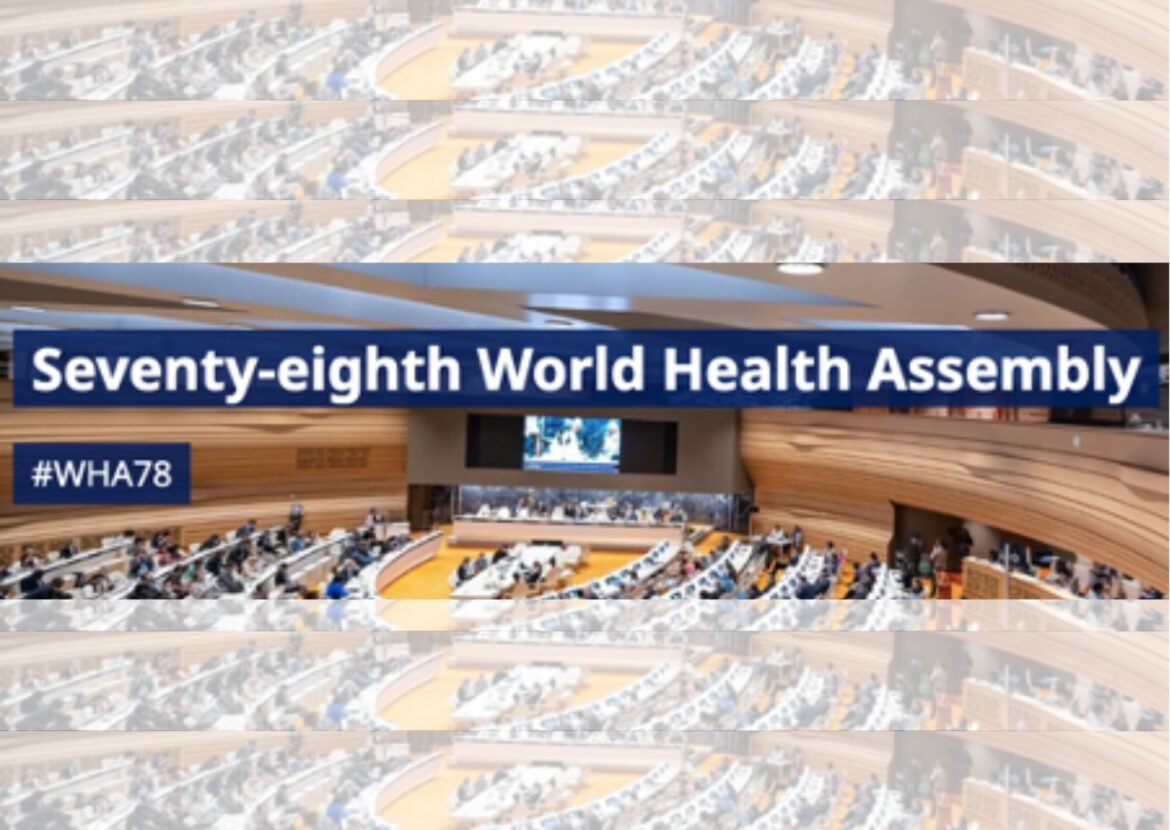
Following 13 formal rounds of meetings, nine of which were extended, and many informal and intersessional negotiations on various aspects of the draft agreement, the INB today finalized a proposal for the WHO Pandemic Agreement. The outcome of the INB’s work will now be presented to the Seventy-eighth World Health Assembly for its consideration.

“The nations of the world made history in Geneva today,” said Dr Tedros Adhanom Ghebreyesus, WHO Director-General. “In reaching consensus on the Pandemic Agreement, not only did they put in place a generational accord to make the world safer, they have also demonstrated that multilateralism is alive and well, and that in our divided world, nations can still work together to find common ground, and a shared response to shared threats. I thank WHO’s Member States, and their negotiating teams, for their foresight, commitment and tireless work. We look forward to the World Health Assembly’s consideration of the agreement and – we hope – its adoption.”

Proposals within the text developed by the INB include establishing a pathogen access and benefit sharing system; taking concrete measures on pandemic prevention, including through a One Health approach; building geographically diverse research and development capacities; facilitating the transfer of technology and related knowledge, skills and expertise for the production of pandemic-related health products; mobilizing  a skilled, trained and multidisciplinary national and global health emergency workforce; setting up a coordinating financial mechanism; taking concrete measures to strengthen preparedness, readiness and health system functions and resilience; and establishing a global supply chain and logistics network.

The proposal affirms the sovereignty of countries to address public health matters within their borders, and provides that nothing in the draft agreement shall be interpreted as providing WHO any authority to direct, order, alter or prescribe national laws or policies, or mandate States to take specific actions, such as ban or accept travellers, impose vaccination mandates or therapeutic or diagnostic measures or implement lockdowns.

Dr Tedros paid tribute to the members of the Bureau who guided the INB process: Co-Chairs Ms Precious Matsoso (South Africa) and Ambassador Anne-Claire Amprou (France), and Vice-Chairs Ambassador Tovar da Silva Nunes (Brazil), Ambassador Amr Ramadan (Egypt), Dr Viroj Tangcharoensathien (Thailand); and Ms Fleur Davies (Australia). Past members included former Co-Chair, Mr Roland Driece (the Netherlands), and former Vice-Chairs Ambassador Honsei Kozo (Japan), Mr Kazuho Taguchi (Japan), and Mr Ahmed Soliman (Egypt). The Director-General also acknowledged the constant support provided by WHO Secretariat colleagues.

INB Co-Chair Ms Matsoso said: “I am overjoyed by the coming together of countries, from all regions of the world, around a proposal to increase equity and, thereby, protect future generations from the suffering and losses we suffered during the COVID-19 pandemic. The negotiations, at times, have been difficult and protracted. But this monumental effort has been sustained by the shared understanding that viruses do not respect borders, that no one is safe from pandemics until everyone is safe, and that collective health security is an aspiration we deeply believe in and want to strengthen.”

Fellow INB Co-Chair, Ambassador Amprou, said the draft agreement is a major step in strengthening the global health security architecture so people of the world would be better protected from the next pandemic.

“In drafting this historic agreement, the countries of the world have demonstrated their shared commitment to preventing and protecting everyone, everywhere, from future pandemic threats,” Ambassador Amprou said. “While the commitment to prevention through the One Health approach is a major step forward in protecting populations, the response will be faster, more effective and more equitable. This is a historic agreement for health security, equity and international solidarity.”

The INB was established in December 2021, at a special session of the World Health Assembly, bringing together Member States and relevant stakeholders, including international organizations, private sector, and civil society. At the World Health Assembly in June 2024, governments made concrete commitments to complete negotiations on a global pandemic agreement within a year. The upcoming Assembly starting 19 May 2025 will consider the proposal developed by the INB and take the final decision on whether to adopt the instrument under Article 19 of the WHO Constitution.

WHO (16 April 2025, News release)


  • World Water Day 2026 | Water & Gender Equality
  • Nepal Antimicrobial Resistance (AMR) Bulletin FY 2081/82
  • Call for applications! Short Course on Qualitative Research Methods in Public Health, 2026
  • World Obesity Day 2026 | 8 Billion Reasons to Act on Obesity
  • Salim Yusuf Emerging Leaders Programme 2026
April 17, 2025 0 comments
0 FacebookTwitterPinterestLinkedinTumblrVKOdnoklassnikiRedditStumbleuponWhatsappTelegramLINEPocketSkypeViberEmail
Declaration of the Eleventh National Summit of Health and Population Scientists in Nepal
ConferencePublic Health Update

Declaration of the Eleventh National Summit of Health and Population Scientists in Nepal

by Public Health Update April 13, 2025
written by Public Health Update

The 11th National Summit of Health and Population Scientists in Nepal, organized by the Nepal Health Research Council (NHRC) from 10–12 April 2025 in Kathmandu, concluded with a collective declaration to advance health research in Nepal.

With the central theme of “Health, Climate, and Population Dynamics: Building Resilient Health Systems for a Sustainable and Equitable Future.” the summit emphasized that a resilient health system is the cornerstone of achieving sustainability and equity.

The summit addressed the interconnectedness of health, climate change, and population dynamics, and highlighted the importance of interdisciplinary research to inform effective health policies and practices. Given the global challenges such as climate change, demographic shifts, emerging health threats, and persistent health disparities, the need for robust, high-quality evidence has become more urgent than ever.

In this context, the delegates of the summit collectively commit to the following six declarations:

  1. Strengthen and harmonize health research governance through revision of institutional and legislative provisions in a collaborative way in the Federal Context for promoting responsible conduct of research, and evidence-based policy formulation, planning and effective implementation
  2. Increase investment in health, population and environment research to promote quality research for evidence informed decision making.
  3. Promote human capital in health research by creating conducive environment for young researchers and retention of experienced researchers in the country.
  4. Strengthen collaboration between researchers, policy makers, academia, scientists, civil society, private sector and community to promote high-quality interdisciplinary research for effective response to existing and emerging health issues and future pandemics through use of new technologies (such as digital, AI) towards strengthening the quality of research.
  5. Promote interdisciplinary research on wider determinants of health, implementation research and clinical research using one health approach.
  6. Enhance health research capacity of researchers through regular trainings, fellowships and grants.

Declaration of the Eleventh National Summit of Health and Population Scientists in Nepal

  • Declaration of Helsinki
  • Gandhinagar Declaration
  • UAE Climate and Health Declaration
  • Declaration of the First Public Health Conference 2020
  • Stockholm Declaration on Road Safety: Achieving Global Goals 2030
  • World Water Day 2026 | Water & Gender Equality
  • Nepal Antimicrobial Resistance (AMR) Bulletin FY 2081/82
  • Call for applications! Short Course on Qualitative Research Methods in Public Health, 2026
  • World Obesity Day 2026 | 8 Billion Reasons to Act on Obesity
  • Salim Yusuf Emerging Leaders Programme 2026
April 13, 2025 0 comments
0 FacebookTwitterPinterestLinkedinTumblrVKOdnoklassnikiRedditStumbleuponWhatsappTelegramLINEPocketSkypeViberEmail
Course on Public Health Systems - Challenges and Opportunities: The Case of Nepal
CoursesInternational Jobs & OpportunitiesOpportunities by RegionPublic Health OpportunitiesPublic Health OpportunitySummer and Winter CoursesSummer Courses

Course on Public Health Systems – Challenges and Opportunities: The Case of Nepal

by Public Health Update April 11, 2025
written by Public Health Update

Overview

The Center for International Health (CIHLMU) in collaboration with the Patan Academy of Health Sciences (PAHS) announces the course “Public Health Systems – Challenges and Opportunities: The Case of Nepal”, to be held from May 5–9, 2025 in Lalitpur, Nepal.

Key information

Date: May 05-09, 2025
Course Language: English
Registration Deadline: April 18, 2025
Course credits: 3 ECTS
Location: Patan Academy of Health Sciences, Nepal

Content

  • An overview of the Public Health delivery system in Nepal
  • Comparison of health care systems in different resource settings
  • Health related challenges from supply side and demand side
  • Public health interventions to address health problems
  • Socio-cultural determinants of health care seeking behaviour in Nepal.

This course has been accredited by tropEd Network for Higher Education Institutions in International Health.

Learning Objectives

At the end of the module, the participants will be able to:

  • Describe the health care delivery system in Nepal,
  • Identify major sources of health-related information,
  • Explain major health problems including challenges and opportunities to address these problems,
  • Identify socio-cultural aspects of care seeking, service delivery and health behaviors,
  • Identify innovations and initiatives to address health problems both from supply side and demand side,
  • Compare problems and challenges of health care systems in developed and developing countries, and
  • Assess and discuss possible health system solutions in a resource-constrained system.

Registration

Registration is NOW OPEN. Click here to register until April 18, 2025.

Cancellation Policy: For cancellations made before the registration deadline, a non-refundable fee of 100 EUR will be charged. For cancellations made after the registration deadline until the course start, a non-refundable fee of 300 EUR will be charged. In case of no-shows or cancellations from the start of the course, the full course fee will be charged.

Course Coordinators in Nepal

  • Sudarshan Paudel – Patan Academy of Health Sciences (Nepal)
  • Prof. Madhusudan Subedi – Patan Academy of Health Sciences (Nepal)
  • Dr. Deepak Paudel – Save the Children (Nepal)

All correspondence (inquiries, organisation and registration) via the Teaching & Training Unit in Munich, ttu@lrz.uni-muenchen.de. Click here to register until April 18, 2025.

Registration Link

  • World Water Day 2026 | Water & Gender Equality
  • Nepal Antimicrobial Resistance (AMR) Bulletin FY 2081/82
  • Call for applications! Short Course on Qualitative Research Methods in Public Health, 2026
  • World Obesity Day 2026 | 8 Billion Reasons to Act on Obesity
  • Salim Yusuf Emerging Leaders Programme 2026
April 11, 2025 0 comments
0 FacebookTwitterPinterestLinkedinTumblrVKOdnoklassnikiRedditStumbleuponWhatsappTelegramLINEPocketSkypeViberEmail
2030 IN SIGHT LIVE Nepal 2025
ConferenceInternational Jobs & OpportunitiesPublic Health OpportunitiesPublic Health Opportunity

2030 IN SIGHT LIVE Nepal 2025

by Public Health Update April 10, 2025
written by Public Health Update

Overview

2030 IN SIGHT LIVE is the only conference dedicated solely to uniting individuals in finding solutions to one of the world’s most critical challenges: ensuring that eye health is accessible to everyone by 2030. As International Agency for the Prevention of Blindness (IAPB)’s flagship global event, 2030 IN SIGHT LIVE gathers leaders, innovators, and changemakers to collaborate, discuss, and take decisive action on the 2030 In Sight Strategy.

The event will unite global leaders in eye health and development stakeholders under the shared purpose of shaping action for impact. Together we will confirm key policy frameworks and activate action to shape political, country, and institutional engagement, essential for ensuring the success of 2030 In Sight Strategy. As we work towards The Global Summit for Eye Health, it is our crucial opportunity to galvanize the energy, enthusiasm, and focus among the IAPB network needed to drive us toward The Summit’s goals.​

Programme aims​

  • Energised Leadership: Reignite passion and commitment among IAPB members towards the 2030 In Sight Strategy, fostering collaboration and alignment with the vision of the Global Summit on Eye Health.​ ​
  • Accelerating Progress: Facilitate collaborative development of collective action plans, share expertise and experience to address critical eye health priorities, leading to tangible outcomes.​
  • Empowered Advocacy: Equip participants with the tools and strategies to collectively champion eye health at national and international levels, fostering unified advocacy efforts for policy change and implementation.

Key Information

  • Event date: 29 April – Member Engagement Groups Day and 30 April – 1 May – 2030 IN SIGHT LIVE
  • Where: Kathmandu, Nepal
  • Venue: The Soaltee Hotel, Tahachal Marg, Kathmandu 44600, Nepal ​

For more information, please visit official IAPB announcement.

Official Info (registration)

The 2030 IN SIGHT LIVE conference is an important global event happening in Nepal. This will not only be a platform to highlight the global and country’s eye health progress and challenges at a global gathering but also an exciting opportunity for local eye health professionals to expand their networks and enhance knowledge. We encourage all Nepali eye health professionals to take advantage of this exciting opportunity and join at 2030 IN SIGHT LIVE!


Related readings
  • Eye Health
  • National Eye Health Strategy 2079-2086
  • Eye Health Strategy
  • World Glaucoma Week 2025: Uniting for a Glaucoma-Free World
  • Urgent, accelerated efforts needed for universal eye coverage
  • World Sight Day: Love Your Eyes!
  • Eye Care Situation Analysis of Nepal
  • At least 2.2 billion people are blind or visually impaired
  • Rapid Assessment of Avoidable Blindness (RAAB) Survey in Nepal 2021
April 10, 2025 0 comments
0 FacebookTwitterPinterestLinkedinTumblrVKOdnoklassnikiRedditStumbleuponWhatsappTelegramLINEPocketSkypeViberEmail
Global Health Norway Conference 2025 - Together for Global Health
Annual MeetingConferenceInternational Jobs & OpportunitiesOpportunities by RegionPublic Health EventsPublic Health OpportunitiesPublic Health Opportunity

Global Health Norway Conference 2025 – Together for Global Health

by Public Health Update April 8, 2025
written by Public Health Update

Overview

The annual Global Health Norway Conference will take place on November 5–6, 2025, in Bergen. This year, the event is hosted by the Centre for International Health at the University of Bergen.

The conference is structured in two main parts; Thematic keynote sessions and scientific abstract presentations.

Programme

Part I: Thematic Keynote Sessions

The first part will feature keynote discussions around four central themes:

  • North-South Collaboration: How can we strengthen cooperation?
    Successful global partnerships between the Global North and South require mutual respect, transparent communication, and shared objectives. Recognizing the historical impacts of colonization is essential for creating fair and balanced relationships.
    Keynote Speaker: Dr. Catherine Kyobutungi, Executive Director of the African Population and Health Research Center (APHRC) and Co-Editor-in-Chief, PLOS Global Public Health.
  • Climate Change: How can we best respond to this global crisis?
    With escalating climate concerns—rising temperatures, sea level rise, and extreme weather events—how do these changes impact global health? One case study to be explored is heat-induced kidney disease.
    Keynote Speakers: Prof. Carl-Gustaf Elinder, Karolinska University Hospital and Karolinska Institutet, Sweden; Prof. Helge Drange, Geophysical Institute, University of Bergen.
  • Research Prioritization: How should we decide what matters most?
    Insights will be shared from the Global Burden of Disease project and discussions will focus on setting research priorities in global health.
    Keynote Speakers: Prof. Simon Øverland, Centre for International Health; Prof. Kjell Arne Johansson, BCEPS; Prof. Emeritus Stein Emil Vollset, University of Bergen.
  • Artificial Intelligence in Global Health: How can we harness its potential?
    AI offers transformative opportunities in global health, from improved diagnostics to personalized care and system optimization.
    Keynote Speaker: Prof. Pinar Heggernes, University of Bergen.

Part II: Scientific Abstract Presentations

Researchers, students, and health professionals are invited to submit abstracts on topics relevant to global health research. Accepted submissions will be presented during the second part of the conference.

  • Abstract submission deadline: April 11, 2025
  • Notification of acceptance: June 30, 2025
  • Fill in this form and upload your abstract here.  

Registration

Registration Link. There is no registration fee.

For more information about the Global Health Norway Network and conference, please visit official webpage.


  • World Water Day 2026 | Water & Gender Equality
  • Nepal Antimicrobial Resistance (AMR) Bulletin FY 2081/82
  • Call for applications! Short Course on Qualitative Research Methods in Public Health, 2026
  • World Obesity Day 2026 | 8 Billion Reasons to Act on Obesity
  • Salim Yusuf Emerging Leaders Programme 2026
April 8, 2025 0 comments
0 FacebookTwitterPinterestLinkedinTumblrVKOdnoklassnikiRedditStumbleuponWhatsappTelegramLINEPocketSkypeViberEmail
Fulbright Foreign Student (Master’s) Program 2026-27
Fellowships, Studentship & ScholarshipsGrants and Funding OpportunitiesInternational Jobs & OpportunitiesOpportunities by RegionPublic Health OpportunitiesPublic Health Opportunity

Fulbright Foreign Student (Master’s) Program 2026-27

by Public Health Update April 8, 2025
written by Public Health Update

Overview

The Fulbright Commission invites applications for the Fulbright Foreign Student Program (FFSP) for Master’s-level study in the United States. Each year, approximately 4,000 students from 160 countries receive Fulbright scholarships, joining a global network of scholars dedicated to fostering international collaboration and cultural exchange. The FFSP offers full funding for a Master’s degree program of up to two years at select U.S. universities. The scholarship covers tuition, travel, living expenses, and other program-related costs, supporting study in any field except Medicine and Nursing. As the U.S. government’s flagship international educational and cultural exchange initiative, the Fulbright Program builds bridges across cultures and strengthens global connections. Selected candidates will begin their program in Fall 2026.

Eligibility Criteria

  • Citizenship: Must be a Nepali citizen and current resident.
  • Work Experience: At least 3 years of post-bachelor’s full-time, professional work in Nepal in a field relevant to the proposed study. Professional recommenders must verify employment details.
  • Education:
    • Minimum 16 years of education: A four-year bachelor’s degree or a bachelor’s plus a Master’s to meet the 16-year requirement.
    • Ineligible: Three-year bachelor’s degree holders without completing a full Master’s, or multiple shorter bachelor’s degrees without a Master’s.
  • Academic Performance:
    • 60% aggregate or 3.0 GPA system
  • English Proficiency (ONLY required once shortlisted): Must demonstrate sufficient proficiency. TOEFL (100+) or GRE scores per subject matter/major requirements. Past valid test scores may be accepted.
  • Visa Eligibility: Must qualify for a non-immigrant J-1 U.S. visa and not hold or be pursuing a U.S. immigrant visa.
  • Submission: Applications must be completed online; no hard copies accepted.

*All grantees receive an exchange visitor (J-1) visa which requires that the individuals return to Nepal upon completion of their academic program. Grantees are not eligible for an immigrant visa, for permanent residence, or for a non-immigrant visa as a temporary worker (“H” visa) or trainee, or as an intra-company transferee (“L” visa) to re-enter the U.S. until they have accumulated two years’ residence in Nepal after returning from the U.S. on an exchange visitor visa. This does not preclude the individual from going to the U.S. on other visas during the two-year period.

Documents required

Application SectionDocuments required
Academic and Professional InformationCV- no more than 2 pages long (See CV format)
Academic MaterialsAttested* copies of Diplomas/Certificates and Mark sheets/Transcripts (arranged in a reverse chronological order; the most recent at the top and the oldest at the bottom; starting from SLC to Bachelors (or Masters if applicable)
Unattested academic materials will not be considered
Test ScoresTOEFL or IELTS and GRE test score reports (This is not mandatory for the application process)
Study Plan (each essay should be maximum 2 pages or no more than 1500 words)See Study Objective and Personal Statement Guidelines
Study/Research Objective
Personal Statement
Writing Sample (Often required for study in the Humanities or Social Sciences)
IDCitizenship, National ID or Passport scan
Additional Information- Additional DocumentsWork sample (Often required for study in the Arts or Art-related fields as well as in Communication and/or Journalism)
Recommendations3 Recommendations: professional and academic references from instructors, professors or work supervisors who know you well

*Attestation of official documents is required: Attestation of photocopies of documents may be made by the issuing institution, Government of Nepal, Tribhuvan University, Kathmandu University or a government approved notary public. USEF-Nepal also provides attestation service.

Documents for attestation can be dropped off from 10:00 AM to 4:00 PM at USEF-Nepal office. You must submit all original academic documents listed below along with clear photocopies. Make sure to photocopy the backside information of your mark sheets.

  1. SLC/SEE: mark sheet and certificate
  2. +2: mark sheet and provisional certificate
  3. Bachelor/Master: TU transcript (if degree is from KU/PU then individual grade sheets are required as well) and provisional certificate.
Timeline
February 1, 2025Fulbright Foreign Student Program Application opens
April 30, 2025Application closes at 23:59 Eastern Time
June, 2025Interviews
July-September, 2025Selected candidates take TOEFL and GRE tests
Fall 2026Selected candidates start their program in the U.S.
Ineligibility
  • Individuals living, studying or working outside of Nepal
  • Individuals holding U.S. degree/s already. Preference will be given to those without prior U.S. or foreign experience
  • Individuals who have previously resided in the U.S. for six months or more during the preceding five years prior to the application submission deadline
  • Individuals with, or in the process of obtaining, U.S. citizenship or U.S. permanent resident status
  • Employees of USEF-Nepal and local employees of U.S. Mission in Nepal who work for the U.S. Department of State, and their spouses and dependent children are ineligible for grants during the period of their employment and for one year following the termination of employment
  • Individuals applying for a degree in Medicine and Nursing.

Program deadline – 11:59 pm (EASTERN TIME) April 30, 2025

Read more and Apply (Official Link)

  • World Water Day 2026 | Water & Gender Equality
  • Nepal Antimicrobial Resistance (AMR) Bulletin FY 2081/82
  • Call for applications! Short Course on Qualitative Research Methods in Public Health, 2026
  • World Obesity Day 2026 | 8 Billion Reasons to Act on Obesity
  • Salim Yusuf Emerging Leaders Programme 2026
April 8, 2025 0 comments
0 FacebookTwitterPinterestLinkedinTumblrVKOdnoklassnikiRedditStumbleuponWhatsappTelegramLINEPocketSkypeViberEmail
World Health Day 2025: Healthy beginnings, hopeful futures
Maternal, Newborn and Child HealthPH Important DayPublic HealthPublic Health EventsPublic Health UpdateQuality Improvement & Infection Prevention

World Health Day 2025: Healthy beginnings, hopeful futures

by Public Health Update April 7, 2025
written by Public Health Update

Overview

Every year, World Health Day on 7th April highlights a critical issue for global health. In 2025, it will kick off a year-long campaign on maternal and newborn health – an issue which underpins lifelong health, stronger communities, and our collective futures. Alongside advocating for actions that improve survival, WHO and partners will work with mums and healthcare professionals to share useful information about healthy pregnancies, births, and postnatal health.

Campaign Goals

  • Raising awareness of gaps in maternal and newborn survival and the need to prioritize women’s longer-term well-being.
  • Advocating for effective investments that improve the health of women and babies.
  • Encouraging collective action to support parents and recognize health professionals who provide critical care.
  • Providing useful health information relating to pregnancy, childbirth, and the postnatal period.

Key facts

  • Each year, nearly 300,000 women die during pregnancy or childbirth, while over 2 million newborns die within their first month of life and another 2 million are stillborn.
  • Roughly 1 preventable death every 7 seconds.
  • Based on current trends, a staggering 4 out of 5 countries are off track to meet targets for improving maternal survival by 2030.
  • One in three (1 in 3) will fail to meet targets for reducing newborn deaths.
  • Around the world, millions of lives are lost each year due to causes that could be prevented with timely, quality care.
  • Approximately 218 million women of reproductive age in low- and middle-income countries have an unmet need for modern contraception.
  • In low- and middle-income countries, every US$ 1 invested in maternal and newborn health is estimated to yield around US$ 9 to US$ 20 in return.
  • Newborn deaths account for nearly 50% of deaths among children under the age of 5 globally, resulting in 2.4 million lives lost each year.
Key messages

WHO is calling for a worldwide reinvigoration of efforts to ensure access to high quality care for women and babies. Women everywhere need access to health providers who listen to their concerns and meet their needs, so that they can plan their lives and protect their health.

Messages for policy makers

Ending preventable deaths

  • Achieving targets: Experience from around the world shows that progress is possible and that we can end preventable maternal and newborn deaths. These investments are not just about survival; they are about ensuring a brighter and hopeful future for women and their children.
  • Investing in human capital: In low- and middle-income countries, every US$ 1 invested in maternal and newborn health is estimated to yield around US$ 9 to US$ 20 in return. Evidence shows that spending on maternal and newborn health is an investment in human capital, not a cost, leading to economic development and happier, healthier societies.
  • No-one left behind: Given the high concentration of maternal and newborn deaths in humanitarian emergencies and fragile settings, ensuring impact and targeting interventions in these contexts will be critical for significantly reducing maternal and newborn deaths.

High-impact investments

  • Antenatal checks: High quality antenatal services – including at least eight checks with a skilled health worker and early ultrasound – are essential for all women to support healthy pregnancies, reduce risks and detect possible complications. Up to 15% of pregnant women have been estimated to develop a potentially life-threatening complication during pregnancy or birth.
  • Lifesaving care during and after birth: At least 70% of all maternal deaths are due to direct obstetric causes like haemorrhage and pre-eclampsia; most of these fatalities occur during labour and birth, along with more than 40% of stillbirths, or shortly after delivery. Access to quality care from skilled providers during and after childbirth is critical, including vital emergency services if dangerous complications occur.
  • Address indirect causes: Infectious diseases and pre-existing health conditions like anaemias, HIV/AIDS, malaria, and diabetes underpin nearly a quarter of maternal mortality. It is vital to improve care, prevention, and early detection of these health conditions that complicate pregnancies and increase risks for millions around the world.
  • Immediate newborn care: Newborn deaths account for nearly 50% of deaths among children under the age of 5 globally, resulting in 2.4 million lives lost each year. All babies need essential care at birth and in their first month of life, including breastfeeding support, so they are protected from infections, can breathe normally, and are warm and well-nourished.
  • Special attention to vulnerable babies: Complications relating to prematurity and low birth weight are the leading cause of death in newborns and children under five. Since small and sick babies require round-the-clock in-patient care, significant investment is needed in special newborn care units, quick referrals, and vital family support.
  • Focus on midwives: Midwifery care models, where midwives provide ongoing support to pregnant women and babies after birth, have been shown to improve survival while reducing preterm births and unnecessary medical interventions. Investing in these models, and ensuring sufficient well-trained midwives, is a cost-effective strategy to improve maternal and newborn health.
  • Access to family planning: Approximately 218 million women of reproductive age in low- and middle-income countries have an unmet need for modern contraception. Addressing this need can significantly reduce unintended pregnancies and related risks.
  • Solutions for low-income contexts: Research is needed to identify cost-effective solutions that tackle the leading causes of maternal and newborn deaths, particularly targeting healthcare settings in poorer countries and fragile contexts.

Beyond survival

  • Compassionate and respectful care: Services must not only be safe and effective, they must also ensure women, newborns and caregivers are treated with dignity, empathy and respect. This includes compassionate care for those affected by stillbirth and miscarriage – requiring dedicated trainings for health workers and bereavement counselling for those in need.
  • Postnatal support: Around a third of women suffer long-term health complications after childbirth, which can increase risks during future pregnancies, while up to 20% of new mothers have been estimated to experience postpartum depression or anxiety. An integrated approach to postnatal care connects physical health, mental health, and social support services in this critical period and beyond.
  • Family-friendly policies: Family-friendly policies and laws are critical to ensure women have the right support to take care of their health and their babies, including paid maternity leave (at least 18 weeks, ideally 6 months or more), legal protections, and workplace support for breastfeeding.
  • Empowering girls and woman: Girls’ access to education is associated with reduced likelihood of maternal death. Ensuring girls can stay in school and take decisions about their health and bodies is critical for improving their health.

Source of information: WHO (Read more: World Health Day 2025)

Related readings
  • WORLD HEALTH DAY
  • World Health Day 2023: 75 years of improving public health
  • WORLD HEALTH DAY 2022: OUR PLANET, OUR HEALTH
  • WORLD HEALTH DAY 2021: BUILDING A FAIRER, HEALTHIER WORLD FOR EVERYONE
  • WORLD HEALTH DAY 2020: #SUPPORTNURSESANDMIDWIVES #COVID19
  • WORLD HEALTH DAY 2019 MARKED IN NEPAL
  • WORLD HEALTH DAY : HEALTH FOR ALL – EVERYONE, EVERYWHERE
  • WORLD HEALTH DAY 2018 (#WORLDHEALTHDAY) MARKED
  • WORLD HEALTH DAY 2018: 70TH ANNIVERSARY YEAR OF WHO
  • KEY MESSAGES FOR WORLD HEALTH DAY 2018
  • DEPRESSION: LET’S TALK – 7 APRIL 2017 | WORLD HEALTH DAY
  • WORLD HEALTH DAY 2016: BEAT DIABETES : ACTIVITIES @ POKHARA
  • WORLD HEALTH DAY 2016 : BEAT DIABETES: SCALE UP PREVENTION, STRENGTHEN CARE, AND ENHANCE SURVEILLANCE
  • WORLD HEALTH DAY-2014 (SMALL BITE : BIG THREAT)
  • WORLD HEALTH DAY 2015: FOOD SAFETY
  • WORLD HEALTH DAY 2012 – ”AGEING AND HEALTH: GOOD HEALTH ADDS LIFE TO YEARS”

April 7, 2025 0 comments
0 FacebookTwitterPinterestLinkedinTumblrVKOdnoklassnikiRedditStumbleuponWhatsappTelegramLINEPocketSkypeViberEmail
World Health Worker Week 2025: 'Health Workers: The Heart of Health'
Human Resource for HealthPH Important DayPublic HealthPublic Health Update

World Health Worker Week 2025: ‘Health Workers: The Heart of Health’

by Public Health Update April 5, 2025
written by Public Health Update

Overview

World Health Worker Week (WHWWeek) is an annual global advocacy campaign dedicated to recognizing the vital contributions of health workers and mobilizing support for greater investments in the health workforce. Founded in 2013 by the Frontline Health Workers Coalition (FHWC), WHWWeek serves as a platform to elevate the voices of health workers across all cadres and to emphasize their critical role as the backbone of health systems worldwide. World Health Worker Week (WHWWeek) will be observed from April 1 to 7, 2025, under the theme “Health Workers: The Heart of Health.”

The campaign aligns with ongoing efforts to achieve Universal Health Coverage (UHC) and strengthen health systems through sustainable health workforce development. It provides an opportunity for governments, civil society, and global health partners to unite in advocating for policies and investments that support, protect, and empower health workers—particularly those serving in primary health care settings and underserved communities.

By 2030, there will be a shortage of 11 million health workers. Increased investment in the health workforce is not only necessary; it is a wise and worthwhile strategy to strengthen global health and achieve development targets. Well-trained, protected, and fairly compensated health workers lie at the core of effective health care. 

Key messages

Strengthen the health workforce.

  • WHO predicts a global shortage of 11 million health workers by 2030, greatly impacting the global capacity for health resource provision. 
  • Studies show that for every dollar invested in the health workforce, there is a 9-fold economic return.
  • A persistent lack of resources, protections, and support greatly inhibits health workers’ ability to provide sustainable health services. Advocacy must be translated into action– namely, policymakers must prioritize greater strategic investment in the global health workforce. 

Investments in health workers deliver returns.

New and traditional donors, including philanthropic organizations, foundations, multilaterals, banks, and the private sector need to step up to close the existing gap in health workforce investment. Increased investment in health workers is good for business, the economy, and the advancement of broader development goals. 

  • To build resilient, sustainable health systems for the future, we must prioritize long-term investment in health workers– providing them with the resources, training and support needed to deliver reliable, high-quality care.
  • Approximately 15% of the global real GDP is lost each year due to poor health. Investment in health has long-term economic yields.
  • Investment in health workers may increase global life expectancy by up to 3.7 years and could save 60 million lives by 2030. 

Top Policy Recommendations to Invest in Health Workers

Protect health workers, who protect our health.

Health workers are the first line of prevention, as well as the principal providers of ongoing health services. The physical and mental health of health workers need to be guarded so that they, in turn, can provide optimal care to their communities.

  • A robust health workforce is vital to the achievement of SDG 3 (Good Health and Well-Being). Collaborative, cross-sectoral efforts must be made to align global health financing and implementation strategies with the needs of health workers everywhere. 
  •  More than 60% of health workers have experienced some form of violence in their career. This threat, alongside additional obstacles such as unsustainable working conditions and inadequate compensation, leads to poor rates of workforce retention. 

Value health workers, who facilitate good health and contribute to economic growth.

  • Health workers are the heart of global health security, playing a crucial role in preventing and responding to pandemics, as well as addressing HIV/AIDS and other infectious diseases, noncommunicable diseases (NCDs), and maternal and child health challenges.
  • Health workers don’t just improve community wellbeing – they are active contributors to global GDP. Healthier communities mean a more robust, productive workforce and lessened absenteeism in schools and employees, thus protecting and supporting global economies. 
  • Women comprise approximately 70% of health and are responsible for more than 75% of unpaid healthcare labor. All health workers must be fairly compensated so they are better able to provide for their families. Furthermore, health workers need to be given access to advancement opportunities, such as training and representation in leadership positions. 

#WHWWeek #healthworkerssavelives

Official #WHWWeek Info


Recommended readings

  • Health practitioner regulation: Design, reform and implementation guidance
  • Procedure for Nepal Health Workforce Management Information System (NHWMIS) 2024
  • Registration Status of Medical Doctors in Nepal
  • Human Resources for Health (HRH) Projection in Nepal (2079-2087)
  • Top Policy Recommendations to Invest in Health Workers
  • WHO convenes the Fifth Global Forum on Human Resources for Health
  • Fifth Global Forum on Human Resources for Health
  • WHO renews alert on safeguards for health worker recruitment
  • World Health Worker Week 2022: Build the Health Workforce Back Better!
  • National Human Resources for Health (HRH) Strategy 2021-2030, Nepal
  • Strategy for Skilled Health Personnel and Skilled Birth Attendants 2020-2025
  • WHO and partners call for urgent investment in nurses


April 5, 2025 0 comments
0 FacebookTwitterPinterestLinkedinTumblrVKOdnoklassnikiRedditStumbleuponWhatsappTelegramLINEPocketSkypeViberEmail
Nepal Public Health Conference 2025
ConferencePublic Health EventsPublic Health OpportunitiesPublic Health Opportunity

Nepal Public Health Conference 2025

by Public Health Update April 1, 2025
written by Public Health Update

The Nepal Public Health Association (NEPHA) announces the Nepal Public Health Conference 2025, to be held on May 16-17, 2025 with the theme “Health System Challenges and Opportunities in the Federal Context.

Related: The 11th National Summit of Health and Population Scientists in Nepal

Sub-themes

This year’s conference will explore critical sub-themes including:

  • Governance and Policy in the Federal Health System
  • Health Financing and Resource Allocation
  • Equity, Access, and Social Inclusion

Call for Abstracts:

Public health researchers are invited to submit abstracts for oral or poster presentations under any of the above sub-themes. The deadline for abstract submission is April 15, 2025*.

Abstract Guidelines:

  • Title Page: Short title, author name(s), affiliation(s), sub-theme, and presentation type (oral/poster).
  • Abstract Sections: Introduction, Methods, Results, and Conclusion.
  • Word Limit: 250 words (MS Word format).
  • Submission Email: nephaconference2025@gmail.com

Registration

We invite public health professionals, researchers, policymakers, students, and other stakeholders to join this important event and contribute to meaningful discussions on strengthening Nepal’s health system in the federal context.

Registration form

Embedded Google Form

Registration Form

Registration Fee: The conference will not charge any fee for registration.

Registration deadline: 30 April, 2025.

Stay tuned for more details on conference venue!


  • World Water Day 2026 | Water & Gender Equality
  • Nepal Antimicrobial Resistance (AMR) Bulletin FY 2081/82
  • Call for applications! Short Course on Qualitative Research Methods in Public Health, 2026
  • World Obesity Day 2026 | 8 Billion Reasons to Act on Obesity
  • Salim Yusuf Emerging Leaders Programme 2026

April 1, 2025 0 comments
0 FacebookTwitterPinterestLinkedinTumblrVKOdnoklassnikiRedditStumbleuponWhatsappTelegramLINEPocketSkypeViberEmail
World Oral Health Day 2025: A Happy Mouth is a Happy Mind”
Non- Communicable Diseases (NCDs)PH Important DayPublic HealthPublic Health EventsPublic Health Update

World Oral Health Day 2025: A Happy Mouth is a Happy Mind

by Public Health Update March 20, 2025
written by Public Health Update

Overview

World Oral Health Day is observed each year on the 20 March. It is an initiative of FDI World Dental Federation. World Oral Health Day calls to unite to help reduce the burden of oral diseases, which affect individuals, health systems and economies everywhere. World Oral Health Day aims to empower people with the knowledge, tools and confidence to secure good oral health. 

Oral Health Country Profile 2022: Nepal

Message by Saima Wazed, Regional Director for WHO South-East Asia

World Oral Health Day, marked annually on 20 March, draws attention to oral health being a key indicator of overall health, well-being and quality of life.

Oral diseases are among the most common noncommunicable diseases worldwide, affecting an estimated 3.5 billion people.The World Health Organization is calling on the countries of the South-East Asia Region and partners for accelerated action, reiterating the commitments of the Bangkok Declaration “No Health Without Oral Health“, adopted at the WHO Global Oral Health Meeting in November 2024.

Oral diseases and conditions cause physical symptoms, functional limitations, and a detrimental impact on emotional, mental and social well-being. Among the six WHO regions, South-East Asia reports the highest number – approximately 900 million cases of oral diseases and conditions – reflecting the region’s large population. Our region also has the highest burden of oral cancer among all WHO regions. This is the leading cancer among males in the region, accounting for 11.2% of all cases.

South-East Asia is also home to countries which are major consumers of proven carcinogens causing oral cancer, such as smokeless tobacco or areca nut. A recent analysis revealed that one in two cases of oral cancer in our region is attributable to smokeless tobacco or areca nut consumption. This essentially indicates the number of cases that could be prevented if smokeless tobacco or areca nut consumption were eliminated from the population, emphasizing the potential impact of primary prevention.

Against this backdrop of high burden of oral diseases and conditions, I reaffirm our commitment to provide actionable guidance and technical support to all countries to implement the WHO South-East Asia Regional Action Plan for Oral Health 2023-2030, and to steer the region towards universal health coverage for oral health by 2030.

The first ever Global Oral Health Meeting, held in Bangkok in November 2024, was a valuable platform for Members States to share knowledge and to learn from experiences of other countries. The National Oral Health Roadmaps formulated at the meeting are strategic planning tools to guide countries in translating their identified priorities into actionable steps in the coming years.

Responding the request of the Member States to WHO for technical support to address the high burden of oral cancer attributable to smokeless tobacco and areca nut consumption, WHO is in the process of formulating a WHO South-East Asia regional roadmap to address the burden of oral cancer. The aim of this tool is to guide Member States in regionally relevant strategies to address the burden of oral cancer and other health outcomes.

While pledging the continued technical support of WHO, I urge all oral health stakeholders to leverage the guidance in accelerating progress towards universal oral health by 2030 in the region.As we are reminded on World Oral Health Day 2025, “ A Happy Mouth is a Happy Mind.”


World Oral Health Day 2025: “A Happy Mouth is… A Happy Mind”

Facts

🦷 Oral diseases affect nearly 3.7 billion people worldwide.
🦷 Nearly 390,000 cases of oral cancers are diagnosed annually.
🦷 Severe periodontal diseases affect more than 1 billion people worldwide.
🦷 Oral diseases, though largely preventable, pose a major global health burden.
🦷 Prevention and treatment for oral health conditions is expensive and usually not part of national UHC benefit packages.
🦷 Most LMICs do not have sufficient services available to prevent and treat oral health conditions.

Protect your oral health:
🪥 Brush twice daily with fluoride toothpaste
🥗 Eat a well-balanced diet, low in free sugars
💧 Drink water instead of sugary drinks
🚭 Quit smoking
🚫 Avoid alcohol consumption
⛑️ Wear protective gear during sports and while riding bikes or motorcycles to prevent facial injuries


Related readings

  • World Oral Health Day
  • World Oral Health Day 2021: Be Proud Of Your Mouth
  • Global Oral Health Status Report: Towards UHC for Oral Health by 2030
  • Accelerate action to achieve universal coverage for oral health
  • 10 tips to look after your teeth – Public Health Update
  • World Oral Health Day: Be Proud of Your Mouth!
  • Global Oral Health Status Report
  • Oral Health Country Profile
  • WHO Global oral health status report 
  • EYE, ENT and Oral Health Manual for Health Workers
  • EYE, ENT and Oral Health Manual for School Teachers and FCHVs
  • World Oral Health Day 2022: Be Proud of Your Mouth for your happiness and well-being
  • World Oral Health Day
  • World Oral Health Day 2021: Be Proud Of Your Mouth
  • World Oral Health Day: ”Say Ahh: Think Mouth Think Health”
  • National Oral Health Policy-2070, NEPAL
  • World Oral Health Day – ”Live MOUTH SMART” #WOHD17 
March 20, 2025 0 comments
0 FacebookTwitterPinterestLinkedinTumblrVKOdnoklassnikiRedditStumbleuponWhatsappTelegramLINEPocketSkypeViberEmail
Newer Posts
Older Posts

Search

Follow Us

Facebook Twitter Instagram Pinterest Linkedin Youtube

Categories

  • Abstracts (25)
  • Activities (91)
  • Adolescent Sexual and Reproductive Health (ASRH) (25)
  • Advice & Tips (3)
  • African Region (5)
  • AI and Health (1)
  • Annual Meeting (6)
  • Antimicrobial Resistance (AMR) (21)
  • Award (19)
  • Awards (16)
  • Books (9)
  • Call for Proposal, EOI & RFP (103)
  • Call for Research Participants (8)
  • Clinical Doctor Jobs (6)
  • Communicable Diseases (107)
  • Competition (20)
  • Conference (128)
  • Consultant (1)
  • Courses (205)
  • Dashboard (2)
  • Digital Health & Health Informatics (10)
  • Drug and Medicine (18)
  • Eastern Mediterranean Region (3)
  • Education (15)
  • Environment (3)
  • Environmental Health & Climate Change (47)
  • European Region (42)
  • Exchange Program (1)
  • Fact Sheet (117)
  • FCHVs (1)
  • Fellowships, Studentship & Scholarships (168)
  • Financial Aid (13)
  • Form Formats (2)
  • Fully funded (22)
  • Global Health News (433)
  • Grants and Funding Opportunities (193)
  • Guest Post (44)
  • Health Assistant Jobs (1)
  • Health Equity (7)
  • Health Financing and Economics (24)
  • Health in Data (115)
  • Health Insurance (5)
  • Health Jobs (52)
  • Health Literacy, Health Education & Promotion (49)
  • Health Organization Profile (42)
  • Health Systems (83)
  • Human Resource for Health (33)
  • Humanitarian Health & Emergency Response (44)
  • Hypertension (5)
  • Implementation Research (48)
  • International Health (3)
  • International Jobs & Opportunities (373)
  • International Plan, Policy & Guidelines (210)
  • Internships (4)
  • Jobs Vacancies (56)
  • Journals (8)
  • Life Style & Public Health Nutrition (39)
  • Live (10)
  • Master's Degree (48)
  • Maternal, Newborn and Child Health (88)
  • Mentorship Program (2)
  • Miscellaneous (16)
  • National Health News (157)
  • National Plan, Policy & Guidelines (468)
  • Neglected Tropical Diseases (NTDs) (51)
  • Non- Communicable Diseases (NCDs) (120)
  • Notice (103)
  • Nursing Jobs (6)
  • Nutritionist Jobs (1)
  • One Health (17)
  • Online & Distance Learning (22)
  • Online Courses (90)
  • Op-Ed Article (3)
  • Opportunities by Region (83)
  • Outbreak News (213)
  • Partially funded (6)
  • PCL Health Science Jobs (3)
  • PH Important Day (533)
  • Pharmacist Jobs (3)
  • PhD (54)
  • Photos (5)
  • Planetary Health (4)
  • PostDoc (14)
  • Presentation Slides (26)
  • Primary Health Care (25)
  • Provincial Plan, Policies and Guidelines (14)
  • Public Health (1,281)
  • Public Health Epidemiology & Biostatistics (13)
  • Public Health Events (306)
  • Public Health Information (20)
  • Public Health Innovation (9)
  • Public Health Jobs (52)
  • Public Health News (552)
  • Public Health Notes (120)
  • Public Health Opportunities (507)
  • Public Health Opportunity (491)
  • Public Health Programs (108)
  • Public Health Seminar (2)
  • Public Health Tools (1)
  • Public Health Update (561)
  • Quality Improvement & Infection Prevention (20)
  • Region of America (8)
  • Reports (184)
  • Research & Project Grants (39)
  • Research & Project Grants (32)
  • Research & Publication (647)
  • Research Articles (10)
  • Road Traffic Accidents (RTA) (9)
  • School of Public Health (60)
  • Self funded (2)
  • South-East Asia Region (26)
  • Success Stories (17)
  • Summer and Winter Courses (40)
  • Summer Courses (28)
  • Sustainable Development Goals (SDGs) (14)
  • Syllabus (61)
  • Symposium (9)
  • Tobacco Control (35)
  • Training (40)
  • Travel Grants (15)
  • Trick, Technique & Skills (8)
  • Uncategorized (3)
  • Undergraduate Degree (7)
  • Universal Health Coverage (36)
  • Universities (29)
  • Universities & School of Public Health (58)
  • Vacancy Announcement (26)
  • Vaccine Preventable Diseases (40)
  • Vector-Borne Diseases(VBDs) (30)
  • Videos (3)
  • View Points (1)
  • Webinar (4)
  • Western Pacific Region (13)
  • Workshop (18)
  • World News (116)
Post New Jobs: Vacancy Announcement Service

Public Health Update (Sagun’s Blog) is a popular public health portal in Nepal. Thousands of health professionals are connected with Public Health Update to get up-to-date public health updates, search for jobs, and explore opportunities.
#1 Public Health Blog for sharing Job opportunities and updates in Nepal

”Public Health Information For All”
– – Sagun Paudel, Founder

  • HOT JOBS
    • Public Health Jobs
    • Medical Doctor Jobs
    • Nursing Jobs
    • Health Assistant Jobs
    • Pharmacist Jobs
    • NGOs Jobs
    • Government Jobs
  • Top Categories
    • National Plan, Policy & Guidelines Top
    • Public Health Calendar
    • Fellowships & Scholarships
    • Health Systems
    • Health Organization Profiles
    • International Jobs & Opportunities
    • Public Health Opportunity

PUBLIC HEALTH INITIATIVE

    • Submit your Vacancies New
    • Partnership Opportunities

Contact: blog.publichealthupdate@gmail.com

https://wa.me/+9779856036932

Public Health Initiative, A Registered Non-profit organization – All Right Reserved. 2011-2024. Contact us. 

Facebook Twitter Instagram Youtube Envelope
Public Health Update
  • Home
  • Public Health
    • Home 1
      • Adolescent Sexual and Reproductive Health (ASRH)
      • Antimicrobial Resistance (AMR)
      • Communicable Diseases
      • Digital Health & Health Informatics
      • Environmental Health & Climate Change
      • Health Financing and Economics
      • Health Equity
    • Home 2
      • Health Literacy, Health Education & Promotion
      • Human Resource for Health
      • Humanitarian Health & Emergency Response
      • Implementation Research
      • International Health
      • Life Style & Public Health Nutrition
      • Maternal, Newborn and Child Health
    • Home 3
      • Neglected Tropical Diseases (NTDs)
      • Non- Communicable Diseases (NCDs)
      • One Health
      • Planetary Health
      • Public Health Epidemiology & Biostatistics
      • Primary Health Care
      • Quality Improvement & Infection Prevention
    • Home 4
      • Road Traffic Accidents (RTA)
      • Sustainable Development Goals (SDGs)
      • Tobacco Control
      • Universal Health Coverage
      • Vaccine Preventable Diseases
      • Vector-Borne Diseases(VBDs)
      • Notices
  • Public Health Update
    • Home 1
      • Public Health News
      • Global Health News
      • Outbreak News
      • National Health News
      • COVID-19
    • Home 2
      • Fact Sheet
      • Health in Data
      • PH Important Day
      • Public Health Events
      • Public Health Programs
    • Home 3
      • Health Systems
      • Health Insurance
      • Health Organization Profile
      • Success Stories
      • Public Health Innovation
  • Public Health Opportunities
    • Fully funded
    • Travel Grants
    • Grants and Funding Opportunities
    • Opportunities by Region
    • International Jobs & Opportunities
    • Research & Project Grants
    • Fellowships, Studentship & Scholarships
    • Conference
  • Jobs
    • Home 1
      • Health Jobs
      • Public Health Jobs
      • Clinical doctor Jobs
      • Health Assistant Jobs
      • Nursing Jobs
      • PCL Health Science Jobs
    • Home 2
      • Dental Jobs
      • Pharmacist Jobs
      • TSLC (Health Jobs)
      • Laboratory Jobs
      • Nutritionist Jobs
  • Downloads
    • International Plan, Policy & Guidelines
    • National Plan, Policy & Guidelines
    • Reports
    • Books
    • Research Articles
  • School of Public Health
    • Home 1
      • Courses
      • Master’s Degree
      • Undergraduate Degree
      • PhD
    • Home 2
      • Universities
      • Syllabus
      • Public Health Notes
      • Mentorship Program
      • Startup Project
    • Home
      • Summer and Winter Courses
      • Summer Courses
      • Online Courses
      • Workshop
      • Training
Public Health Update
  • Home
  • Public Health
    • Home 1
      • Adolescent Sexual and Reproductive Health (ASRH)
      • Antimicrobial Resistance (AMR)
      • Communicable Diseases
      • Digital Health & Health Informatics
      • Environmental Health & Climate Change
      • Health Financing and Economics
      • Health Equity
    • Home 2
      • Health Literacy, Health Education & Promotion
      • Human Resource for Health
      • Humanitarian Health & Emergency Response
      • Implementation Research
      • International Health
      • Life Style & Public Health Nutrition
      • Maternal, Newborn and Child Health
    • Home 3
      • Neglected Tropical Diseases (NTDs)
      • Non- Communicable Diseases (NCDs)
      • One Health
      • Planetary Health
      • Public Health Epidemiology & Biostatistics
      • Primary Health Care
      • Quality Improvement & Infection Prevention
    • Home 4
      • Road Traffic Accidents (RTA)
      • Sustainable Development Goals (SDGs)
      • Tobacco Control
      • Universal Health Coverage
      • Vaccine Preventable Diseases
      • Vector-Borne Diseases(VBDs)
      • Notices
  • Public Health Update
    • Home 1
      • Public Health News
      • Global Health News
      • Outbreak News
      • National Health News
      • COVID-19
    • Home 2
      • Fact Sheet
      • Health in Data
      • PH Important Day
      • Public Health Events
      • Public Health Programs
    • Home 3
      • Health Systems
      • Health Insurance
      • Health Organization Profile
      • Success Stories
      • Public Health Innovation
  • Public Health Opportunities
    • Fully funded
    • Travel Grants
    • Grants and Funding Opportunities
    • Opportunities by Region
    • International Jobs & Opportunities
    • Research & Project Grants
    • Fellowships, Studentship & Scholarships
    • Conference
  • Jobs
    • Home 1
      • Health Jobs
      • Public Health Jobs
      • Clinical doctor Jobs
      • Health Assistant Jobs
      • Nursing Jobs
      • PCL Health Science Jobs
    • Home 2
      • Dental Jobs
      • Pharmacist Jobs
      • TSLC (Health Jobs)
      • Laboratory Jobs
      • Nutritionist Jobs
  • Downloads
    • International Plan, Policy & Guidelines
    • National Plan, Policy & Guidelines
    • Reports
    • Books
    • Research Articles
  • School of Public Health
    • Home 1
      • Courses
      • Master’s Degree
      • Undergraduate Degree
      • PhD
    • Home 2
      • Universities
      • Syllabus
      • Public Health Notes
      • Mentorship Program
      • Startup Project
    • Home
      • Summer and Winter Courses
      • Summer Courses
      • Online Courses
      • Workshop
      • Training
Public Health Initiative, A Registered Non-profit organization – All Right Reserved. 2011-2023