Public Health Update
  • Home
  • Public Health Update
  • Nepal Health Jobs
    • Public Health Job Board
    • Organization List
  • Opportunities
    • Fellowships, Studentship & Scholarships
    • Grants and Funding Opportunities
    • Fully funded
    • Conference
  • Downloads
    • International Plan, Policy & Guidelines
    • National Plan, Policy & Guidelines
    • Reports
    • Public Health Notes
    • Syllabus
    • Form Formats
  • School of Public Health
    • PhD
    • Master’s Degree
    • Online Courses
  • Notice
  • Home
  • Public Health Update
  • Nepal Health Jobs
    • Public Health Job Board
    • Organization List
  • Opportunities
    • Fellowships, Studentship & Scholarships
    • Grants and Funding Opportunities
    • Fully funded
    • Conference
  • Downloads
    • International Plan, Policy & Guidelines
    • National Plan, Policy & Guidelines
    • Reports
    • Public Health Notes
    • Syllabus
    • Form Formats
  • School of Public Health
    • PhD
    • Master’s Degree
    • Online Courses
  • Notice
LOGIN / REGISTER
Public Health Update
SUBSCRIBE
Public Health Update
  • Home
  • Public Health Update
  • Nepal Health Jobs
    • Public Health Job Board
    • Organization List
  • Opportunities
    • Fellowships, Studentship & Scholarships
    • Grants and Funding Opportunities
    • Fully funded
    • Conference
  • Downloads
    • International Plan, Policy & Guidelines
    • National Plan, Policy & Guidelines
    • Reports
    • Public Health Notes
    • Syllabus
    • Form Formats
  • School of Public Health
    • PhD
    • Master’s Degree
    • Online Courses
  • Notice

All Right Reserved. Designed and Developed by PenciDesign

National Eye Health Strategy
National Plan, Policy & GuidelinesPublic HealthResearch & Publication

National Eye Health Strategy 2079-2086

by Public Health Update February 3, 2023
written by Public Health Update

The Ministry of Health and Population (MoHP), Nepal has endorsed the National Eye Health Strategy 2079-2086 aims to ensure quality eye health services to Nepalese.

Download Strategy

Download Strategy

Recommended readings

  • EYE, ENT and Oral Health Manual for Health Workers
  • EYE, ENT and Oral Health Manual for School Teachers and FCHVs
February 3, 2023 0 comments
0 FacebookTwitterPinterestLinkedinTumblrVKOdnoklassnikiRedditStumbleuponWhatsappTelegramLINEPocketSkypeViberEmail
Neglected Tropical Diseases (NTDs)PH Important DayPublic Health Update

World NTDs Day: Act Now. Act Together. Invest in Neglected Tropical Diseases

by Public Health Update February 1, 2023
written by Public Health Update

World Neglected Tropical Diseases Day: Act Now. Act Together. Invest in Neglected Tropical Diseases

 By Dr Poonam Khetrapal Singh, WHO Regional Director for South-East Asia

To mark this year’s World Neglected Tropical Diseases (NTDs) Day, WHO is calling on countries and communities in the South-East Asia Region and across the world to confront the inequalities that drive NTDs, and to make bold, sustainable investments to help free the 1 billion people globally who are vulnerable to their devastating health, social and economic costs. NTDs are a diverse group of 20 conditions that are mainly prevalent in tropical areas.

Globally, they affect more than 1 billion people, cost low- and middle-income countries billions of dollars every year, and perpetuate a cycle of poor educational outcomes and limited professional opportunities, mostly for impoverished communities, where they disproportionately affect women and children. The WHO South-East Asia Region accounts for the second highest NTD burden globally. At least one NTD is endemic to each of the Region’s 11 Member States, and more than 938 million people in the Region require interventions against NTDs. In 2021, the Region accounted for 59% of the global population requiring interventions against lymphatic filariasis (LF), 66.5% of new cases of leprosy, and 56% of children requiring regular deworming against soil-transmitted helminthiases. 

Since 2014, WHO has supported countries of the Region to make rapid, equitable and sustained progress against NTDs, in line with the Region’s Flagship Priority on eliminating NTDs and other diseases on the verge of elimination. In 2016 India was declared yaws-free. Maldives, Thailand and Sri Lanka have eliminated lymphatic filariasis (LF) as a public health problem. Bangladesh is currently being assessed for validation of elimination of LF as a public health problem, and Timor-Leste is now under post-treatment surveillance. Nepal and Myanmar have eliminated trachoma as a public health problem. All kala-azar-endemic implementation units in Bangladesh have now reached the elimination target, which India and Nepal are also close to achieving. India, Indonesia and Nepal continue to roll out triple drug therapy to accelerate action against LF, which Myanmar is also preparing to introduce. Between 2010 and 2020, the Region reduced the total number of people who require interventions against NTDs by a remarkable 20%. 

Across the Region, new challenges and opportunities have emerged. In 2021, WHO launched a global NTD road map that aims to ‘End the neglect’, setting a series of global targets and milestones to prevent, control, eliminate or eradicate NTDs, as well as cross-cutting targets that are aligned with the Sustainable Development Goals. In implementing the road map, the Region aims to accelerate momentum on its Flagship Priority, with a focus on several priorities. 

First, optimizing existing interventions and leveraging new innovations to overcome last-mile gaps and challenges. For LF, the expanded roll-out of triple drug therapy with effective coverage promises to fast-track elimination in the Region’s remaining three LF-endemic countries. For leprosy, increased access to post-exposure prophylaxis will accelerate progress at the sub-national level, increasing protection for at-risk communities. For kala-azar, intensified efforts to detect cases early and ensure complete case management will continue to contain transmission. 

Second, sustaining elimination status in the post-validation phase. When a country is validated for elimination as a public health problem, continued actions are required to maintain the targets, and even to advance interruption of transmission. For this, it is critical that vigilance is sustained, that donor fatigue is avoided, and that stakeholders continue to invest in post-validation interventions such as surveillance platform integration and accelerating R&D of new tools and strategies to make further progress. 

Third, expanding the range of priority NTDs. On an array of NTDs – kala-azar, LF, trachoma and yaws – the Region has made tremendous, path-breaking progress. But where appropriate, countries should increasingly broaden their scope, for example by intensifying action to address snakebite envenoming – for which a new Regional action plan has now been launched – as well as dog-mediated rabies, dengue, schistosomiasis and other parasitic zoonoses such as taeniasis, echinococcosis and food-borne trematodiases. 

The countdown to 2030 has already begun. Since 2014, under the Region’s Flagship Priority, countries have made bold investments, and achieved game-changing results – results that must continue to be built upon.

On World NTD Day, WHO reiterates its commitment to accelerate the Region’s decade-long momentum to end the neglect, eliminate NTDs, and achieve a healthier, more equitable and sustainable future for everyone, everywhere. 

February 1, 2023 0 comments
0 FacebookTwitterPinterestLinkedinTumblrVKOdnoklassnikiRedditStumbleuponWhatsappTelegramLINEPocketSkypeViberEmail
World Leprosy Day 2021 #BeatLeprosy
Global Health NewsPH Important DayPublic Health News

Urgently address gaps in leprosy services and accelerate efforts towards zero leprosy infection and disease: WHO

by Public Health Update January 29, 2023
written by Public Health Update

New Delhi | January 29, 2023
The World Health Organization today called on countries in the South-East Asia Region and globally to urgently address gaps in leprosy services disrupted by the COVID-19 pandemic and to accelerate efforts towards zero leprosy infection and disease, zero leprosy disability, and zero leprosy stigma and discrimination -the vision of the WHO Global Leprosy Strategy 2021-2030. “Leprosy is 100 percent curable when detected early, yet today in addition to COVID-19 related challenges, stigma and discrimination- both institutionalized and informal, continue to impede prompt diagnosis and treatment and facilitate onward spread. This has to change,” said Dr Poonam Khetrapal Singh, Regional Director, WHO South-East Asia. 

In 2021, 140 000 new leprosy cases were reported, with 95 percent of new cases coming from the 23 global priority countries. Of these, 6% were diagnosed with visible deformities or grade-2 disabilities (G2D). Over 6% of new cases were children under the age of 15, with 368 being diagnosed with grade-2 disabilities. Despite a 10% increase in new case reporting from 2020 to 2021, reported cases were 30% lower in 2021 than in 2019. This is not due to a decrease in transmission, but cases remaining undetected due to COVID-19-related disruptions. “Countries must continue to urgently restore leprosy services, with a focus on expanding single dose rifampicin chemoprophylaxis, intensifying active case finding, and ensuring prompt diagnosis and treatment with multidrug therapy,” said Dr Khetrapal Singh.  

The Regional Director stressed on focusing attention on vulnerable populations, including women, children, immigrants, refugees, the elderly, the homeless, residents of deprived leprosy ‘colonies’ and those living in geographically inaccessible areas to end suffering and achieve zero leprosy. With at least 115 discriminatory laws reported to be in place in seven countries, WHO is calling on all countries to immediately and unequivocally revoke discriminatory laws and comply with and implement UN principles and guidelines for elimination of discrimination against persons affected by leprosy and their families. 

Over the past decade, strong progress was achieved in several key areas of leprosy prevention, treatment, and control globally, with new child case detection reduced by 27% between 2010 and 2019, visible deformities at time of diagnosis reduced by 23% between 2014 and 2019 and new child case detection rate reduced to 7.6 per million children as opposed to 9.8 in 2014. With up to 50% of persons affected by leprosy facing psychiatric morbidities such as depression, anxiety disorders and suicide attempts, countries should also increase access for persons affected by leprosy and their families to mental health care, a key feature of the Global Leprosy Strategy, along with scaling up diagnosis and treatment.“Persons affected by leprosy must be engaged, empowered and involved in all aspects of decision-making, including in service design and delivery, and in social and economic activities. For this, community-based organizations and networks should be supported, nurtured and included in decision-making processes while expanding services that strengthen livelihoods,” said the Regional Director.

 “Act Now. End Leprosy.” is this year’s theme for World Leprosy Day. WHO reiterates its steadfast support to leprosy-affected countries in the South-East Asia Region and across the world to drive rapid, equitable and sustained progress towards our targets and goals, achieving zero leprosy infection and disease, zero leprosy disability, and zero leprosy stigma and discrimination by 2030. 

“Leprosy has afflicted humanity for millennia; however, we can be the generation that ends the transmission of leprosy, end suffering, ensuring we leave no one behind, “said Dr Poonam Khetrapal Singh.

January 29, 2023 0 comments
0 FacebookTwitterPinterestLinkedinTumblrVKOdnoklassnikiRedditStumbleuponWhatsappTelegramLINEPocketSkypeViberEmail
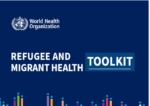
Refugee and Migrant Health Toolkit
International HealthInternational Plan, Policy & GuidelinesPublic Health

One-stop resource toolkit launched on refugee and migrant health

by Public Health Update January 28, 2023
written by Public Health Update

WHO developed a Refugee and migrant health toolkit, a web-based one-stop comprehensive platform of tools and resources, to support the global, regional, and country efforts in implementing health and migration-related activities.

Migration and displacement often impact people’s physical and mental health and well-being, especially for those who were forced to flee their homes. It can leave particular impact on people displaced across borders or within their own country and those in an irregular situation or with vulnerabilities and specific health and protection needs.  

Refugee and migrants could face many factors such as their migratory status; national migration policies; and linguistic, cultural, economic, and social barriers that often hinder their access to health services.

It is essential that countries have strong and inclusive health systems equipped with the necessary knowledge and tools to help decision-makers and health personnel meet the health needs and rights of these populations and advance the health and migration agenda.

“We developed the toolkit to assist countries in designing, developing, and implementing health and migration policies, strategies and services based on evidence and technical soundness,” said Dr Santino Severoni, Director of the WHO Health and Migration Programme. “We hope that Member States will use this single-source, operational and user-friendly toolkit in the implementation of health and migration-related activities, including the Global Action Plan (GAP) “Promoting the health of refugees and migrants, 2019-2023”, and regional action plans with similar goals.”

A one-stop source of information, guidance and tools

The toolkit contains modules for each of the six priorities of the GAP 2019-2023, along with 18 tools:

  • Module 1: short- and long-term public health interventions to promote refugee and migrant health. This module’s tools highlight common communicable and noncommunicable diseases, including mental health, public health emergencies, and immunization.
  • Module 2: mainstreaming refugee and migrant health in the global, regional, and country agenda and access to inclusive people-centred health services. Tools in this module discuss how to mainstream refugees and migrants into plans and initiatives; access to primary health care and infrastructure; maternal and child health; and sexual and reproductive health, along with gender-based violence. 
  • Module 3: tackling the social determinants of health and workers’ and occupational health and safety. Tools in this module highlight urban health, climate change, water and sanitation, occupational and workers’ health and safety, and how these sectors can help close the health equity gap amongst migrants and the overall population.
  • Module 4: country assessment, health monitoring, and health information systems. Tools in this module aim to strengthen the data collection methodology, analytics, health information systems, monitoring, and evaluation of migrant health.
  • Module 5: communication, countering misperception, and increasing community engagement. Tools in this module tackle communication and countering misinformation and the engagement of refugees and migrants in decision-making processes and campaigns at national and local levels for the successful implementation of public health programs.
  • Module 6: collaboration and partnership. This module provides guidance on mechanisms and strategies to enhance cooperation and partnerships across countries, regions, UN system agencies, and other stakeholders to work toward global health and humanitarian collaboration. 

Each module includes a summary of key topics, a list of actions for consideration for stakeholders, links to the latest available guidance, case studies and reports, training materials, and other WHO publications on relevant themes. An introductory section provides essential knowledge concerning refugees’ and migrants’ health, addressing definitions, global trends, legal frameworks, and resolutions.

The tools are not prescriptive. They can be adapted to each specific context, region, and community to inform context-specific analysis and approaches to refugee and migrant health.

The go-to platform for policy-makers, planners, and implementers

WHO Member States, WHO country offices, United Nations partners, and nongovernmental actors working in refugee and migrant health can use the Refugee and migrant health toolkit to implement health programs that are truly equitable and inclusive and to evaluate and bolster national health plans and strategies that promote the health of refugees and migrants and host populations.

DOWNLOAD TOOLS

January 28, 2023 0 comments
0 FacebookTwitterPinterestLinkedinTumblrVKOdnoklassnikiRedditStumbleuponWhatsappTelegramLINEPocketSkypeViberEmail
National ToT on Peer Education & SRHR
Adolescent Sexual and Reproductive Health (ASRH)Public HealthPublic Health OpportunitiesPublic Health OpportunityTraining

Call for Applications! National ToT on Peer Education & SRHR for Young People in Nepal

by Public Health Update January 28, 2023
written by Public Health Update

The 14th National Training of Trainers (NToT) on Peer Education & Sexual Reproductive Health and Rights (SRHR) for Young People in Nepal.

Training Date: 12-17 February 2023

Details :

Y-PEER Nepal in support of partners Working Group on Disabilities and 2030 Agenda and YPEER Asia Pacific Center -Ypeer APand Robert Carr Fund, are pleased to announce the 14th National Training of Trainers of Y-PEER Nepal

All the selected applicants will be informed by 1st week of February 2023.
Apply at https://forms.gle/utpkUsgJWKpbo3oU6

Eligibility :

  • Open to all youths from all Provinces of Nepal
  • Age 16-24 of all gender
  • Willing to learn and share information on SRHR
  • Able to commit full days of the training duration

Cost:

  • All the costs related to the training will be covered by Y-PEER Nepal. There is no cost to attend the training for the selected 25 participants.

Questions: Please write to fura@ypeernepal.org, info@ypeernepal.org send a message on Facebook page, YPEER-Nepal.


January 28, 2023 0 comments
0 FacebookTwitterPinterestLinkedinTumblrVKOdnoklassnikiRedditStumbleuponWhatsappTelegramLINEPocketSkypeViberEmail
Australia Awards Scholarships 2023 Field of Studies (Health Sector)
CoursesGrants and Funding OpportunitiesInternational Jobs & OpportunitiesMaster's DegreeOpportunities by RegionPublic Health OpportunitiesPublic Health Opportunity

Australia Awards Scholarships 2024

by Public Health Update January 28, 2023
written by Public Health Update

Australia Awards are prestigious international Scholarships and Short Courses funded by the Australian Government. Australia Awards equip recipients with the skills and knowledge to drive change and contribute to the economic and social development of their own countries.

All recipients of Australia Awards become part of the Australia Global Alumni network, connecting them to Australia and to each other — building an engaged and influential global network of leaders and advocates, and establishing a network of ambassadors for Australia and its first-class education system.

Application for 2024

Scholarships applications for Master’s programs commencing in 2024 will open 1 February to 1 May 2023.

Scholarships support programs within these priority development sectors:

  • Climate Change
  • Disaster Risk Reduction
  • Economic Development
  • Gender Equality, Disability and Social Inclusion
  • Governance
  • Inclusive Education
  • Natural Resource Management
  • Sustainable Infrastructure Development.

Check eligibility criteria including English language test requirements, and prepare to apply.

Eligibility Criteria

Please visit https://www.dfat.gov.au/sites/default/files/aus-awards-scholarships-policy-handbook.pdf for a comprehensive list of general eligibility requirements.

Personal criteria:

  • Over 18 years old
  • Citizen of Nepal and currently residing in and applying from Nepal
  • Not married, engaged to, or a de facto of a person who holds, or is eligible to hold, Australian or New Zealand citizenship or permanent residency
  • Not applying for a visa to live in Australia permanently
  • Not a current serving military personnel

Study program criteria:

  • Proposed study program is within one of the priority sectors offered
  • Applying for a Master’s program with proposed course of study not more than two years
  • Have not completed a qualification that is deemed to be equivalent to the Australian qualification you are applying for – Scholarships will not be available for courses of study in Australia where the applicant already has achieved that qualification and the qualification is deemed to be equivalent to the Australian qualification at the same level.

Academic and work experience criteria:

  • Possess one of the following:
    • a minimum four-year bachelor’s degree and minimum three years’ relevant full-time work experience earned after the bachelor’s degree; or
    • a three-year bachelor’s degree with at least a one-year master’s degree with a minimum of three years’ relevant full-time work experience earned after the bachelor’s degree; or
    • a two-year bachelor’s degree with at least a two-year master’s degree with a minimum of three years’ relevant full-time work experience earned after the bachelor’s degree.

English language test score criteria:

  • Possess one the following English language test scores valid on 1 January 2024:
    • IELTS (Academic) 6.5 or higher (with all band scores 6.0 or higher)
    • TOEFL (Internet-based) 84 or higher (with all subtest scores 21 or higher)
    • PTE (Academic) 58 or higher (with all communicative skill scores 50 or higher).

Women, people with disability, members of traditionally marginalised groups and public servants will be considered for eligibility with IELTS (Academic) score of 6.0 or higher (with all band scores 5.5 or higher) or an equivalent TOEFL (Internet-based) or PTE (Academic) test score. However, if offered an Australia Awards Scholarship, these applicants must meet the English language requirements of their preferred university and degree before commencing study.

Applicants with disability who require testing accommodations are encouraged to register early for English language tests.

For any clarification, please contact the Australia Awards – Nepal office.

Information sessions and events

To learn more about Australia Awards Scholarships, applicants may attend the following information sessions and events. Please register here to attend.

READY TO APPLY? READ MORE


January 28, 2023 0 comments
0 FacebookTwitterPinterestLinkedinTumblrVKOdnoklassnikiRedditStumbleuponWhatsappTelegramLINEPocketSkypeViberEmail
World Neglected Tropical Diseases Day
Neglected Tropical Diseases (NTDs)PH Important DayPublic HealthPublic Health Events

World NTD Day 2023: Act Now. Act together. Invest in NTDs Day

by Public Health Update January 28, 2023
written by Public Health Update

Overview

The World Neglected Tropical Diseases Day is observed on 30 January each year. The first-ever World NTD Day was celebrated on 30 January 2020. This international day is an opportunity to re-energize the momentum to end the suffering from these 20 diseases that are caused by a variety of pathogens including viruses, bacteria, parasites, fungi and toxins [Public Health Update]

Neglected tropical diseases (NTDs) are widespread in the world’s poorest regions, where water safety, sanitation and access to health care are substandard. NTDs affect over 1 billion people globally and are caused mostly by a variety of pathogens including viruses, bacteria, parasites, fungi, and toxins.

The Road map for Neglected Tropical Diseases (NTDs) 2021–2030

Theme for World NTD Day 2023: Act now. Act together. Invest in neglected tropical diseases

1. Act now, Act together to end NTDs

2023: the year to shine a spotlight on NTDs and the suffering they cause, and to call for comprehensive and universal care for those affected by them. It is our collective responsibility to confront inequalities and put an end to these diseases that are entirely preventable.


2. Keep NTD services accessible through innovation

Access to medicines, diagnostics, and essential technologies for NTDs should be sustained and expanded, including through donations and research & development. Countries and NTD programmes must use innovations that emerged before and during the COVID-19 pandemic to address disruptions and delays caused to the delivery of services.

3. Strengthen NTD integration, cross-sector collaborations and mainstreaming, for stronger country ownership and accountability

The WHO NTD road map 2021-2030 focuses on the value of integrating NTD programmes, establishing links with other sectors (education, nutrition, WASH, animal & environmental health), mainstreaming NTDs within health systems and primary health care services, and promoting country ownership and accountability.

4. Invest sustainably in NTDs for the best returns 

With increased investment, action and collaboration, countries can beat NTDs. NTD programmes are cost-effective interventions and, with the added benefit of drug donations by pharmaceutical companies, the value for money and returns on investment are highly favourable.

Investment in NTDs is also an investment in reducing poverty, and in allowing people and their families to lead healthier, more economically productive lives. Sustainable funding is key to relieving the burden of NTDs.

5. Stay committed to the deliver on the NTD road map 2021-2030

Despite the global COVID-19 pandemic, progress has been achieved during the two years since the publication of the 2021-2030 road map. Countries must continue their commitments to delivering quality NTD services to affected populations.

Source of info: WHO and NTD Day website

Recommended readings

  • Neglected tropical diseases (NTDs)
  • The first-ever World NTD Day
  • World Neglected Tropical Diseases (NTD) Day 2021
  • The Road map for Neglected Tropical Diseases (NTDs) 2021–2030
January 28, 2023 0 comments
0 FacebookTwitterPinterestLinkedinTumblrVKOdnoklassnikiRedditStumbleuponWhatsappTelegramLINEPocketSkypeViberEmail
Third International Community Health Worker Program (CHW) Symposium
ConferencePublic HealthPublic Health EventsPublic Health OpportunitiesPublic Health OpportunitySymposium

Third International Community Health Worker Program (CHW) Symposium

by Public Health Update January 26, 2023
written by Public Health Update

The Government of Liberia, in collaboration with partners, is pleased to announce the abstract application for the 3rd International CHW Symposium is live. The 3rd CHW Symposium aims to facilitate the global exchange of knowledge and solutions to scale and sustain Community Health Programs in order to achieve Universal Health Coverage (UHC). The Symposium has a blended approach that prioritizes and fosters country learning and exchange and amplifies CHW voices and CHW-led advocacy. It aims to elevate country progress on, and accelerate political momentum for, professionalizing and institutionalizing CHWs. It will spotlight country examples of financing, accountability and governance models that show best practice for community health programming.


In order to achieve these goals, the Symposium team welcomes abstracts related to community health workers and/or other community-based and community-led service providers. Abstracts must be aligned to Symposium themes and tracks. Please reference the abstract guidelines for further details on content and logistical requirements. The application form is here. Please note the deadline for abstract applications is February 3rd, 2023. Please email abstract@chwsymposiumliberia2023.org with any questions.

Date: The 3rd International CHW Symposium will host participants on-site in Monrovia, Liberia from 22 – 24 March, 2023. Official Pre-Symposium activities will be held by invitation only on the 20th and 21st of March, 2023.

The 3rd CHW Symposium aims to facilitate the global exchange of knowledge and solutions to scale and sustain Community Health Programs in order to achieve Universal Health Coverage (UHC). The symposium will focus on sharing best practices on the complimentary and necessary systems to support scale.

Symposium objectives:

  1. Foster cross-country learning, exchange and action through engagement with country delegations 
  2. Showcase country experiences with integrating, adapting, scaling and optimizing community health workers (CHW) and community-based and -led outreach programs for high quality, equitable community-based PHC
  3. Amplify CHW and other community-based and -led voices and feature examples of led by them advocacy, organizing and mobilizing and opportunities for partners to support them in these efforts
  4. Elevate country progress on and accelerate political momentum for professionalizing and institutionalizing CHWs and other community-based and -led workers as a part of a broader, enabled, fit-for-purpose health workforce and examine the bottlenecks that impede progress
  5. Spotlight country examples of financing models that demonstrate sustained financing for CHWs and other community-based and community-led workers galvanize coordinated commitments for increased domestic and external financing for community health programming
  6. Enhance accountability and governance by prioritizing measurement and harmonization of existing metrics to monitor progress toward institutionalizing CHW and other community-based and community-led programming and the system that supports them
  7. Leverage new and emerging evidence, best practices and partnerships to share innovations that strengthen CHW and other community-based and community-led workers’ skills and the system that support them
  8. Produce a high-level symposium report that summarizes the current state-of-play and achievements, and articulates priorities and next steps with measurable targets.

Important Dates

Registration opening date: Coming soon!

Virtual registration: will be available for speakers

Abstract Submission: Open now through 3 February 2023 (18:00 pm Eastern Standard Time)


January 26, 2023 0 comments
0 FacebookTwitterPinterestLinkedinTumblrVKOdnoklassnikiRedditStumbleuponWhatsappTelegramLINEPocketSkypeViberEmail
Women’s Health Conference 2023
ConferencePublic HealthPublic Health EventsPublic Health OpportunitiesPublic Health Opportunity

Women’s Health Conference 2023

by Public Health Update January 25, 2023
written by Public Health Update

Overview

Women’s Health Conference 2023 is the first conference in Nepal looking broadly at women’s health. Disparities, discrimination and development challenges put so many women at extreme risk. In order to address this, we need to consider the multifaceted nature of women’s health conditions and explore trends in this sector for a well informed and evidence guided future course of action.

The Conference aims to promote and strengthen the interconnectedness of research, training, policy making, practice and advocacy evidence to expand women’s health agenda in Nepal. To that end, it will provide a platform for participants to discuss and disseminate evidence on what works and what doesn’t work and how successful programs can be expanded to reach different groups in society.

Aims

The conference aims to:

  • To provide a platform for researchers to disseminate their training, research, policy and practice engagement approaches and outcomes to a wider audience.
  • To showcase innovations and successes in women’s health training, education, practices, research and policy engagements from other intervention programmes and projects across Nepal.
  • To strengthen partnerships and collaboration among policy makers and practitioners in the areas of women’s health.
  • To identify priority women’s health areas to inform policy and practice to improve universal health status and services among women.

Event Venue: Kathmandu, Nepal

Date: 9th – 10th March 2023

Call for Papers

There will be five sub themes selected for parallel presentations. The details of the sub themes are as follows:

Sub Themes:
1. Sexual and Reproductive Health and Rights (SRHR)
2. Non-Communicable Diseases (NCDs)
3. Child, Adolescent, Elderly Health
4. Women’s Health in Humanitarian Setting
5. Nutrition

Conference organizer invites all interested persons/organizations to kindly prepare and submit an abstract under the sub-themes mentioned above. The following are the suggested broad areas that could be covered under the above sub themes:

  1. Innovations and approaches
  2. Psychosocial, economic cultural, and religious systems
  3. Human Rights based approaches (HRBA)
  4. Leadership, Governance, Human Resources for Health, Health systems and Policy and
    Empowerment.

The details of the abstract’s guidelines, submission and selection criteria are provided below:

  1. The abstract should address one of the sub themes mentioned above. Please choose the theme which best describes the subject of your abstract in the abstract form.
  2. The text of the abstract should not exceed 300 words (in Times New Roman font size
    12pts). The word limit relates only to the text of the abstract and does not include title, sub headings, authors and author address. Tables and pictures cannot be included inabstracts
    1. The presenting author will be the contact person for all the correspondence about the
      presentation. All submissions will be acknowledged by email, hence, the correct contact
      information (email ID and Mobile) should be provided. It is the author’s
      responsibility to ensure all the information provided is correct. The Secretariat will not
      be responsible for any mis-communications due to wrong contact details.
  3. The title should be short and concise and Use a capital letter for the first letter in the
    title only (DO NOT capitalize each word). You may use standard abbreviations,
    however, mention all abbreviations in brackets after the full word, when it appears for the
    first time.
  4. By submission of an abstract, the author transfers copyright ownership to the organizing
    committee for publications. The Organizing committee reserves the right to reproduce the
    abstract / presentation made in conference in print or electronic media.
  5. Abstracts should be submitted in English.
  6. Abstracts should be submitted through the conferencve website www.whc2023.org in
    whcsecretariat@gmail.com The deadline for abstract submission is 12 February
    2023.
  7. The abstract should cover the following: All abstracts should appear within the format of
    structure outlined below.
    1. Background/contexts: General introduction and the study objectives, the
      hypothesis or a thorough description of the problem/issue;
    2. Methods/approach: Study design, materials and methods used to collect
      data/information, type of analysis used, statistical analysis used (if any), approach
      and intervention for implementation etc;
    3. Results: Specific results, discussion, and conclusion(s) drawn, summarize the
      main outcome.
    4. Lesson learned/recommendation/implication/conclusions
    5. Keywords. (3 key words)
  8. This guideline and abstract form will be available at www.whc202.org.
  9. Accepted abstract, will be published in the abstract book.
  10. An independent Scientific Committee panel will review the abstracts for selection and
    rejection. The committee reserves all rights to assign any accepted abstract for oral or
    poster presentation. The authors will have an option to choose a method presentation – i.e
    either poster or oral at the time of abstract submission. Notification of acceptance or
    rejection will be sent to the corresponding author within 10 days of the close of abstract
    submission deadline, by email.
  11. If you have any questions regarding abstract submission, please contact
    whcsecretariat@gmail.com

Registration and More info: Official website

January 25, 2023 0 comments
0 FacebookTwitterPinterestLinkedinTumblrVKOdnoklassnikiRedditStumbleuponWhatsappTelegramLINEPocketSkypeViberEmail
World Leprosy Day
Global Health NewsPH Important DayPublic HealthPublic Health Events

World Leprosy Day 2023: “Act Now. End Leprosy.”

by Public Health Update January 25, 2023
written by Public Health Update

Overview

World Leprosy Day (WLD) is celebrated on the last Sunday of January but World Leprosy Day is celebrated on 30 January, the anniversary of Mahatma Gandhi’s death in India.

In 2023, World Leprosy Day is Sunday 29 January. This international day is an opportunity to celebrate people who have experienced leprosy, raise awareness of the disease, and call for an end to leprosy-related stigma and discrimination.

The theme of World Leprosy Day 2023 is “Act Now. End Leprosy.” This year’s theme calls attention to three key messages:

  1. Elimination is possible: We have the power and tools to stop transmission and defeat this disease.
  2. Act now: We need the resources and commitment to end leprosy. Prioritize leprosy elimination.
  3. Reach the unreached: Leprosy is preventable and treatable. Suffering from leprosy is needless.

Key facts

  • Leprosy is curable with a combination of antibiotics known as Multi Drug Therapy (MDT). This treatment is available for free across the world. If leprosy is not treated, it can lead to serious complications.
  • Leprosy is at least 4,000 years old, making it one of the oldest diseases known to humanity. However, we believe we can be the generation that finally ends the transmission of leprosy – our target is to achieve 120 countries with zero new autochthonous leprosy cases by 2030.
  • Leprosy still exists! Although around 200,000 people were diagnosed with leprosy each year before COVID-19, this number has fallen by 30% because of disruptions caused by the pandemic to leprosy programmes. Many millions are living with leprosy-related disabilities, particularly across Asia, Africa, and South America.

World Leprosy Day takes place on Sunday 29 January*

#WorldLeprosyDay   #LeaveNoOneBehind   #EndStigma   #ZeroDiscrimination  #BeatLeprosy

Source of info: WHO


January 25, 2023 0 comments
0 FacebookTwitterPinterestLinkedinTumblrVKOdnoklassnikiRedditStumbleuponWhatsappTelegramLINEPocketSkypeViberEmail
Newer Posts
Older Posts

Search

Follow Us

Facebook Twitter Instagram Pinterest Linkedin Youtube

Categories

  • Abstracts (25)
  • Activities (91)
  • Adolescent Sexual and Reproductive Health (ASRH) (25)
  • Advice & Tips (4)
  • African Region (5)
  • AI and Health (1)
  • Annual Meeting (6)
  • Antimicrobial Resistance (AMR) (21)
  • Award (19)
  • Awards (16)
  • Books (9)
  • Call for Proposal, EOI & RFP (103)
  • Call for Research Participants (8)
  • Clinical Doctor Jobs (6)
  • Communicable Diseases (107)
  • Competition (20)
  • Conference (129)
  • Consultant (1)
  • Courses (205)
  • Dashboard (2)
  • Digital Health & Health Informatics (10)
  • Drug and Medicine (18)
  • Eastern Mediterranean Region (3)
  • Education (15)
  • Environment (3)
  • Environmental Health & Climate Change (47)
  • European Region (42)
  • Exchange Program (1)
  • Fact Sheet (117)
  • FCHVs (1)
  • Fellowships, Studentship & Scholarships (168)
  • Financial Aid (13)
  • Form Formats (2)
  • Fully funded (22)
  • Global Health News (434)
  • Grants and Funding Opportunities (193)
  • Guest Post (44)
  • Health Assistant Jobs (1)
  • Health Equity (7)
  • Health Financing and Economics (24)
  • Health in Data (115)
  • Health Insurance (5)
  • Health Jobs (52)
  • Health Literacy, Health Education & Promotion (50)
  • Health Organization Profile (42)
  • Health Systems (83)
  • Human Resource for Health (33)
  • Humanitarian Health & Emergency Response (44)
  • Hypertension (5)
  • Implementation Research (48)
  • International Health (3)
  • International Jobs & Opportunities (373)
  • International Plan, Policy & Guidelines (210)
  • Internships (4)
  • Jobs Vacancies (56)
  • Journals (8)
  • Life Style & Public Health Nutrition (39)
  • Live (10)
  • Master's Degree (48)
  • Maternal, Newborn and Child Health (88)
  • Mentorship Program (2)
  • Miscellaneous (16)
  • National Health News (158)
  • National Plan, Policy & Guidelines (468)
  • Neglected Tropical Diseases (NTDs) (51)
  • Non- Communicable Diseases (NCDs) (121)
  • Notice (103)
  • Nursing Jobs (6)
  • Nutritionist Jobs (1)
  • One Health (18)
  • Online & Distance Learning (22)
  • Online Courses (90)
  • Op-Ed Article (3)
  • Opportunities by Region (83)
  • Outbreak News (213)
  • Partially funded (6)
  • PCL Health Science Jobs (3)
  • PH Important Day (534)
  • Pharmacist Jobs (3)
  • PhD (54)
  • Photos (5)
  • Planetary Health (4)
  • PostDoc (14)
  • Presentation Slides (26)
  • Primary Health Care (25)
  • Provincial Plan, Policies and Guidelines (14)
  • Public Health (1,283)
  • Public Health Epidemiology & Biostatistics (13)
  • Public Health Events (306)
  • Public Health Information (20)
  • Public Health Innovation (9)
  • Public Health Jobs (52)
  • Public Health News (554)
  • Public Health Notes (120)
  • Public Health Opportunities (507)
  • Public Health Opportunity (491)
  • Public Health Programs (108)
  • Public Health Seminar (2)
  • Public Health Tools (1)
  • Public Health Update (564)
  • Quality Improvement & Infection Prevention (20)
  • Region of America (8)
  • Reports (184)
  • Research & Project Grants (39)
  • Research & Project Grants (32)
  • Research & Publication (647)
  • Research Articles (10)
  • Road Traffic Accidents (RTA) (9)
  • School of Public Health (60)
  • Self funded (2)
  • South-East Asia Region (26)
  • Success Stories (17)
  • Summer and Winter Courses (40)
  • Summer Courses (28)
  • Sustainable Development Goals (SDGs) (14)
  • Syllabus (61)
  • Symposium (9)
  • Tobacco Control (35)
  • Training (40)
  • Travel Grants (15)
  • Trick, Technique & Skills (8)
  • Uncategorized (3)
  • Undergraduate Degree (7)
  • Universal Health Coverage (36)
  • Universities (29)
  • Universities & School of Public Health (58)
  • Vacancy Announcement (26)
  • Vaccine Preventable Diseases (40)
  • Vector-Borne Diseases(VBDs) (30)
  • Videos (3)
  • View Points (1)
  • Webinar (4)
  • Western Pacific Region (13)
  • Workshop (18)
  • World News (117)
Post New Jobs: Vacancy Announcement Service

Public Health Update (Sagun’s Blog) is a popular public health portal in Nepal. Thousands of health professionals are connected with Public Health Update to get up-to-date public health updates, search for jobs, and explore opportunities.
#1 Public Health Blog for sharing Job opportunities and updates in Nepal

”Public Health Information For All”
– – Sagun Paudel, Founder

  • HOT JOBS
    • Public Health Jobs
    • Medical Doctor Jobs
    • Nursing Jobs
    • Health Assistant Jobs
    • Pharmacist Jobs
    • NGOs Jobs
    • Government Jobs
  • Top Categories
    • National Plan, Policy & Guidelines Top
    • Public Health Calendar
    • Fellowships & Scholarships
    • Health Systems
    • Health Organization Profiles
    • International Jobs & Opportunities
    • Public Health Opportunity

PUBLIC HEALTH INITIATIVE

    • Submit your Vacancies New
    • Partnership Opportunities

Contact: blog.publichealthupdate@gmail.com

https://wa.me/+9779856036932

Public Health Initiative, A Registered Non-profit organization – All Right Reserved. 2011-2024. Contact us. 

Facebook Twitter Instagram Youtube Envelope
Public Health Update
  • Home
  • Public Health
    • Home 1
      • Adolescent Sexual and Reproductive Health (ASRH)
      • Antimicrobial Resistance (AMR)
      • Communicable Diseases
      • Digital Health & Health Informatics
      • Environmental Health & Climate Change
      • Health Financing and Economics
      • Health Equity
    • Home 2
      • Health Literacy, Health Education & Promotion
      • Human Resource for Health
      • Humanitarian Health & Emergency Response
      • Implementation Research
      • International Health
      • Life Style & Public Health Nutrition
      • Maternal, Newborn and Child Health
    • Home 3
      • Neglected Tropical Diseases (NTDs)
      • Non- Communicable Diseases (NCDs)
      • One Health
      • Planetary Health
      • Public Health Epidemiology & Biostatistics
      • Primary Health Care
      • Quality Improvement & Infection Prevention
    • Home 4
      • Road Traffic Accidents (RTA)
      • Sustainable Development Goals (SDGs)
      • Tobacco Control
      • Universal Health Coverage
      • Vaccine Preventable Diseases
      • Vector-Borne Diseases(VBDs)
      • Notices
  • Public Health Update
    • Home 1
      • Public Health News
      • Global Health News
      • Outbreak News
      • National Health News
      • COVID-19
    • Home 2
      • Fact Sheet
      • Health in Data
      • PH Important Day
      • Public Health Events
      • Public Health Programs
    • Home 3
      • Health Systems
      • Health Insurance
      • Health Organization Profile
      • Success Stories
      • Public Health Innovation
  • Public Health Opportunities
    • Fully funded
    • Travel Grants
    • Grants and Funding Opportunities
    • Opportunities by Region
    • International Jobs & Opportunities
    • Research & Project Grants
    • Fellowships, Studentship & Scholarships
    • Conference
  • Jobs
    • Home 1
      • Health Jobs
      • Public Health Jobs
      • Clinical doctor Jobs
      • Health Assistant Jobs
      • Nursing Jobs
      • PCL Health Science Jobs
    • Home 2
      • Dental Jobs
      • Pharmacist Jobs
      • TSLC (Health Jobs)
      • Laboratory Jobs
      • Nutritionist Jobs
  • Downloads
    • International Plan, Policy & Guidelines
    • National Plan, Policy & Guidelines
    • Reports
    • Books
    • Research Articles
  • School of Public Health
    • Home 1
      • Courses
      • Master’s Degree
      • Undergraduate Degree
      • PhD
    • Home 2
      • Universities
      • Syllabus
      • Public Health Notes
      • Mentorship Program
      • Startup Project
    • Home
      • Summer and Winter Courses
      • Summer Courses
      • Online Courses
      • Workshop
      • Training
Public Health Update
  • Home
  • Public Health
    • Home 1
      • Adolescent Sexual and Reproductive Health (ASRH)
      • Antimicrobial Resistance (AMR)
      • Communicable Diseases
      • Digital Health & Health Informatics
      • Environmental Health & Climate Change
      • Health Financing and Economics
      • Health Equity
    • Home 2
      • Health Literacy, Health Education & Promotion
      • Human Resource for Health
      • Humanitarian Health & Emergency Response
      • Implementation Research
      • International Health
      • Life Style & Public Health Nutrition
      • Maternal, Newborn and Child Health
    • Home 3
      • Neglected Tropical Diseases (NTDs)
      • Non- Communicable Diseases (NCDs)
      • One Health
      • Planetary Health
      • Public Health Epidemiology & Biostatistics
      • Primary Health Care
      • Quality Improvement & Infection Prevention
    • Home 4
      • Road Traffic Accidents (RTA)
      • Sustainable Development Goals (SDGs)
      • Tobacco Control
      • Universal Health Coverage
      • Vaccine Preventable Diseases
      • Vector-Borne Diseases(VBDs)
      • Notices
  • Public Health Update
    • Home 1
      • Public Health News
      • Global Health News
      • Outbreak News
      • National Health News
      • COVID-19
    • Home 2
      • Fact Sheet
      • Health in Data
      • PH Important Day
      • Public Health Events
      • Public Health Programs
    • Home 3
      • Health Systems
      • Health Insurance
      • Health Organization Profile
      • Success Stories
      • Public Health Innovation
  • Public Health Opportunities
    • Fully funded
    • Travel Grants
    • Grants and Funding Opportunities
    • Opportunities by Region
    • International Jobs & Opportunities
    • Research & Project Grants
    • Fellowships, Studentship & Scholarships
    • Conference
  • Jobs
    • Home 1
      • Health Jobs
      • Public Health Jobs
      • Clinical doctor Jobs
      • Health Assistant Jobs
      • Nursing Jobs
      • PCL Health Science Jobs
    • Home 2
      • Dental Jobs
      • Pharmacist Jobs
      • TSLC (Health Jobs)
      • Laboratory Jobs
      • Nutritionist Jobs
  • Downloads
    • International Plan, Policy & Guidelines
    • National Plan, Policy & Guidelines
    • Reports
    • Books
    • Research Articles
  • School of Public Health
    • Home 1
      • Courses
      • Master’s Degree
      • Undergraduate Degree
      • PhD
    • Home 2
      • Universities
      • Syllabus
      • Public Health Notes
      • Mentorship Program
      • Startup Project
    • Home
      • Summer and Winter Courses
      • Summer Courses
      • Online Courses
      • Workshop
      • Training
Public Health Initiative, A Registered Non-profit organization – All Right Reserved. 2011-2023