Public Health Update
  • Home
  • Public Health Update
  • Nepal Health Jobs
    • Public Health Job Board
    • Organization List
  • Opportunities
    • Fellowships, Studentship & Scholarships
    • Grants and Funding Opportunities
    • Fully funded
    • Conference
  • Downloads
    • International Plan, Policy & Guidelines
    • National Plan, Policy & Guidelines
    • Reports
    • Public Health Notes
    • Syllabus
    • Form Formats
  • School of Public Health
    • PhD
    • Master’s Degree
    • Online Courses
  • Notice
  • Home
  • Public Health Update
  • Nepal Health Jobs
    • Public Health Job Board
    • Organization List
  • Opportunities
    • Fellowships, Studentship & Scholarships
    • Grants and Funding Opportunities
    • Fully funded
    • Conference
  • Downloads
    • International Plan, Policy & Guidelines
    • National Plan, Policy & Guidelines
    • Reports
    • Public Health Notes
    • Syllabus
    • Form Formats
  • School of Public Health
    • PhD
    • Master’s Degree
    • Online Courses
  • Notice
LOGIN / REGISTER
Public Health Update
SUBSCRIBE
Public Health Update
  • Home
  • Public Health Update
  • Nepal Health Jobs
    • Public Health Job Board
    • Organization List
  • Opportunities
    • Fellowships, Studentship & Scholarships
    • Grants and Funding Opportunities
    • Fully funded
    • Conference
  • Downloads
    • International Plan, Policy & Guidelines
    • National Plan, Policy & Guidelines
    • Reports
    • Public Health Notes
    • Syllabus
    • Form Formats
  • School of Public Health
    • PhD
    • Master’s Degree
    • Online Courses
  • Notice

All Right Reserved. Designed and Developed by PenciDesign

World Heart Day 2024: Use Heart for Action
Global Health NewsNational Health NewsPH Important DayPublic Health NewsPublic Health UpdateWorld News

World Heart Day 2024: Use Heart for Action

by Public Health Update September 28, 2024
written by Public Health Update

The World Heart Day 2024 is commemorated with a powerful call to “Use Heart for Action“. This emphasizes the urgency of raising awareness on heart health and accelerating actions to prevent, detect early, and manage cardiovascular diseases (CVDs). Cardiovascular diseases remain a significant global health challenge responsible for over 18 million deaths each year. The burden is particularly heavy in the WHO South-East Asia Region, where CVDs account for 3.9 million deaths annually, primarily due to heart attacks and strokes. This represents 30% of all deaths in the region, with nearly half of these occurring prematurely, before the age of 70 years.

The primary causes of this high burden include modifiable lifestyle practices such as tobacco use, unhealthy diets, particularly those high in salt, physical inactivity, and alcohol consumption. In addition, drug treatment of hypertension, diabetes and high lipids are necessary to reduce acute events of CVDs.  In the South-East Asia Region, one in four adults has raised blood pressure, and one in ten has diabetes. Alarmingly, less than 15% of people living with hypertension and diabetes are on effective treatment.

Endorsed by the Seventy-sixth Regional Committee in 2023, the Region is committed to implement the Resolution ‘SEAHEARTS Accelerating prevention and control of cardiovascular diseases in the South-East Asia Region,’ which urges countries to reach the milestones related to reducing risk factors such as tobacco control, salt reduction, and elimination of trans-fatty acids, with efforts to improve the coverage and control of hypertension and diabetes in primary health care, by 2025. Being one of the world’s largest expansions of CVD prevention and control in primary health care, SEAHEARTS initiative aligns well with the World Heart Day theme.

Since the endorsement of the Resolution, our Region has collectively made significant progress on SEAHEARTS milestones. More than 1.97 billion people are protected from the harmful effects of trans-fatty acids through best practices or complementary policy measures. In addition, more than 124 million people are covered with at least three WHO MPOWER measures to protect them from tobacco, and over 59 million individuals with hypertension and diabetes are estimated to receive standard care within public health facilities across the region.

In this background, on the World Heart Day, WHO South-East Asia Region calls for action in several important areas:

First, people must be at the heart of action in every intervention planned and implemented. This includes empowering individuals for adopting healthy lifestyles. Simple steps such as quitting tobacco, reducing salt intake, eating a balanced diet, being less sedentary, and managing stress can significantly reduce the risk of CVD.

Second, national governments need to prioritize actions for creating enabling environments by implementing and enforcing policies for reduction of trans fats in food supplies, strengthen tobacco control laws, and promote initiatives to reduce salt intake.

Third, high-quality and effective primary health care is crucial for the prevention and management of CVDs. Strong leadership and commitment are needed from countries to scale up essential services for screening, early detection, and management of hypertension, diabetes, high lipid profiles in primary health care that is available, accessible, and acceptable. Countries need to demonstrate impact through utilizing digital solutions for better coverage and control rates.

Fourth, Regional and global collaboration is essential to share good practices, mobilize resources, and ensure that all countries have the essential support to address the burden of CVDs.  There is need to strengthen partnerships among stakeholders such as governments, NGOs, and the private sectors for reducing complications and improving acute management of CVDs.

Let us all commit to “Use Heart for Action.” Whether it’s making healthier lifestyle choices, advocating for stronger NCD policies, or collaborating to strengthen primary health care, every action counts. The steps taken today to tackle cardiovascular diseases, will be a step towards a healthier and more sustainable future.  WHO stands ready to support countries and communities to address this important public health problem. Let us act now, for a healthier, heart-strong future.

By Saima Wazed, WHO Regional Director for South-East Asia


  • World Heart Day: #UseHeart to beat cardiovascular disease
  • World Heart Day 2021: Use  To Connect Every 
  • World Heart Day 2019: A simple promise …for MY HEART
  • Public Health Important Day | Day of Public Health Concern
  • World Heart Day 2016 : Power your Life – Public Health Update
  • World Heart Day  | Public Health Update
  • My Heart, Your Heart #WorldHeartDay – Public Health Update
  • Tobacco responsible for 20% of deaths from coronary heart disease
  • WORLD HEART DAY 2014 – Public Health Update
September 28, 2024 0 comments
0 FacebookTwitterPinterestLinkedinTumblrVKOdnoklassnikiRedditStumbleuponWhatsappTelegramLINEPocketSkypeViberEmail
Health practitioner regulation: Design, reform and implementation guidance
Global Health NewsHuman Resource for HealthInternational Plan, Policy & GuidelinesPublic Health NewsPublic Health UpdateWorld News

Health practitioner regulation: Design, reform and implementation guidance

by Public Health Update September 21, 2024
written by Public Health Update

The World Health Organization (WHO) published the first global guidance on health practitioner regulation. Health practitioner regulation: Design, reform and implementation guidance reviews the available evidence and offers policy considerations for designing regulatory systems that protect the public and support national health system goals. It provides practical steps to assess and minimize the gap between regulatory policy and practice that may arise in different contexts. It also offers insights into future strategic directions for research to better link regulation to evidence on health outcomes.

Beyond its established role in ensuring patient safety and ethical practice, the evidence also highlights how health practitioner regulation can generate added value within health systems, including health professions education, equitable distribution, workforce planning and the financial costs associated with health services.

“WHO’s latest guidance comes at a time when the landscape of health and care services is expanding alongside rising public expectations from health workers and regulators. I’m particularly struck by the compelling evidence of the added value regulation and regulators can bring to health systems and health workforce development. Implementing this evidence at scale will generate immediate benefits and I wish to acknowledge the excellent work of the health experts, scientists, regulators and WHO staff who have contributed to this global public good,” said Jim Campbell, Director, Health Workforce.

A robust health workforce is fundamental to deliver the full range of essential health services and the essential public health functions. Achieving the health-related Sustainable Development Goals requires not only the quantitative global growth in health worker employment that has been achieved in recent years, but also addressing persistent challenges like matching demand with supply, creating the right skill mix and strengthening quality and equitable distribution.

The guidance builds on the WHO Global Strategy on Human Resources for Health 2016.

Objective, scope and target audience

This guidance aims to inform the design, reform and implementation of health practitioner regulation and to strengthen regulatory systems and institutions. The term “health practitioner” is used to encompass all health professionals, associate health professionals, including community health workers, personal care workers in health services (allopathy as well as traditional, complementary and integrative medicine), health assistants, the public health workforce, and other health practitioners who are yet to be officially classified, but who are directly involved in patient diagnostics or care.

The target audience includes regulators, policymakers and the wider global health community, including the health service industry, practitioners and academic institutions. The contents of the document were informed by an integrative review of the literature and by advice from a WHO Technical Expert Group on health practitioner regulation.

Key findings

Health practitioner regulatory systems are very diverse, reflecting differences in national health and education systems, legal traditions, political history, economy, governance structure and other sociocultural aspects. There is also substantial variation in the health professions being regulated and in the type of regulation; moreover, few countries have a defined and objective criterion for regulation. Some regulators use risk-based tools to decide on the most appropriate regulatory mechanism.

Advancing the public interest in terms of patient safety is a commonly stated purpose of health practitioner regulation. Historically, such regulation was considered synonymous with elevating the professions being regulated by defining and protecting them. However, excessive inflexibility and unnecessary barriers to entry to the health labour market raise concerns that the interests of the professions are being prioritized over public welfare through regulatory capture.

Furthermore, fragmented and rigid regulatory systems operating in occupational silos can be disconnected from the broader health objectives and from associated reforms in health service delivery. The understanding of public interest has evolved over time from elevating the professions to prioritizing patient safety, enhancing cost-effectiveness and aligning with health system needs. Other common principles underlying regulation are its uniformity, transparency and proportionality to risks and benefits.

Regulatory reforms have taken place across countries to address different priorities, such as the quality and cost of educating health practitioners, their mobility and sustainability, and the transparency and accountability of regulators. For instance, temporary flexibilities in health practitioner regulation were introduced in many countries during the coronavirus disease (COVID-19) pandemic to increase practitioner availability. This provided a strategic opportunity to review the alignment of regulatory systems with broader priorities, such as universal health coverage and health security.

Regulatory practice gap

Increasing numbers of health occupations are being regulated by law, but large gaps exist between regulatory policies, practices and outcomes. A “regulatory practice gap” may occur when the existing regulatory policy is not implemented in practice, or when it does not meet the intended purpose despite being implemented. While these gaps are also common in countries with mature regulatory systems, they are more prominent in low- and middle-income countries. The factors that contribute to the regulatory practice gap include: inappropriate regulatory models; logical assumptions being given precedence over evidence; regulators having limited capacity to carry out their functions, in part because of the size of the workforce to be regulated; and weak governance.

Key considerations

Health practitioner regulation should strike the right balance between addressing the risk of harm to patients and ensuring public access to health services. Under-regulation can place patients at risk of harm from health practitioners, while over-regulation can place the public at risk of harm by reducing or removing access to health services.

It is therefore essential that regulators define patient harm in the specific context, review existing mechanisms for patient safety in terms of the intended goals and identify the reasons behind any divergence. They should also understand the extent to which health practitioner regulation can address the identified gap, their capacity to implement the regulatory measures, and the (direct and indirect) costs and negative consequences that regulation may impose on the health labour market and the health system. The regulatory practice gap can then be reduced by introducing appropriate measures.

Additional and/or more stringent regulatory measures are resource-intensive and may prove challenging to implement. Therefore, depending on the context, alternative interventions could be more effective. A universally applicable, ideal model of a health practitioner regulatory system does not exist. This is because regulation needs to be responsive to individual health system priorities and specificities, which vary between countries. Each country differs in its health system architecture and health service delivery profile, including its system of occupational regulation and the composition and division of labour in its health workforce. A country’s understanding of patient harm may also be influenced by cultural norms. Therefore, health practitioner regulatory systems and their appropriateness should be evaluated periodically to identify any need for reform. Such reforms may range from incremental changes to an overhaul of the entire regulatory system.

Dynamic, effective and agile health practitioner regulation is required to respond to complex health system needs and to keep pace with public expectations. To encourage countries to contextualize health practitioner regulation by focusing on the outcomes, this guidance suggests a progressive process of assessing regulatory gaps and identifying
the most appropriate interventions:

  • understanding the local context and existing systems
  • identifying the main challenges
  • determining the desired outcomes
  • assessing the risk of harm from practitioners
  • deliberating on risk reduction options and the associated impact
  • developing and testing regulatory interventions
  • managing capacity requirements
  • monitoring and evaluation of the regulatory interventions and outcomes.

This guidance presents common principles, key policy considerations and core elements for the design, reform and implementation of health practitioner regulation. The policy considerations on regulation design, reform and implementation are grouped into four categories:

  • Design principles
  • Governance
  • Core functions
  • Health system support

Core functions

  • Setting requirements for entry to practice
  • Accrediting education programmes and licensing practitioners
  • Qualification recognition
  • Enabling competence-based scope of practice
  • Maintaining competence
  • Dealing with noncompliance

Health system support

  • Data to inform planning
  • International mobility and cross-border service delivery
  • Practitioner distribution in rural and underserved areas
  • Dual practice management

Design principles

  • Serves the public interest
  • Proportionality
  • Flexibility in emergencies

Governance

  • Umbrella law and institutional structure
  • Adequate state oversight

The generalizability and applicability of these policy considerations may vary substantially across settings. This should be considered before being adapted as deemed relevant to the local context.

Download: Health practitioner regulation: Design, reform and implementation guidance

  • World Atopic Eczema Day 2026: Breaking the Invisible Burden
  • DEVASTATING FLOODS IN NEPAL: PUBLIC HEALTH IMPACT AND A CALL FOR HUMANITARIAN SUPPORT
  • PEN-Plus Orientation Manual for Mid-Level Health Care Workers
  • National Health Training Strategy 2082
  • Simulation Accreditation Manual for Clinical Training Sites
September 21, 2024 0 comments
0 FacebookTwitterPinterestLinkedinTumblrVKOdnoklassnikiRedditStumbleuponWhatsappTelegramLINEPocketSkypeViberEmail
Strengthening Primary Health Care Leadership: Global Capacity Building Course
CoursesInternational Jobs & OpportunitiesOnline CoursesPrimary Health CarePublic Health OpportunitiesPublic Health Opportunity

Strengthening Primary Health Care Leadership: Global Capacity Building Course

by Public Health Update September 14, 2024
written by Public Health Update

Course overview

This comprehensive 80-hour course, aligned with WHO’s vision for people-centered, resilient and sustainable PHC-centered health systems, empowers leaders to champion health equity, promote social justice and uphold the right to health for all.

Effective leadership is crucial for transformative change in health systems. This course is designed to equip decision and policy-makers with the necessary skills to reorient health systems towards PHC. View a short video here about the course for more information.

Upon completion, participants will:

  • demonstrate a common understanding of PHC and its role in achieving universal health coverage, the health-related Sustainable Development Goals and health security;
  • utilize the PHC operational framework levers to address implementation barriers and drive health system transformation towards PHC;
  • apply evidence-informed strategies and tools to national and subnational policy and planning processes for PHC strengthening; and
  • exhibit leadership through change management in health systems to strengthen the PHC approach.

Learning journey

Delivered through the WHO-Academy digital learning platform, the course emphasizes competency-based learning and practical real-world applications. Participants dedicate 4 to 6 hours weekly to:

  • complete self-paced module content (2-3 hours);
  • participate in synchronous sessions facilitated by global and regional PHC experts (1-2 hours); and
  • engage in course assignments (1-2 hours).

Upon successful completion of course requirements, participants will receive a credential from the WHO Academy.

Ideal candidate profile

  • A senior policy or decision-maker with a minimum experience of 5 years on PHC and/or health systems strengthening, holding a position of influence at national and/or sub-national levels.
  • Highly motivated to enhance leadership skills and committed to advancing PHC for Universal Health Coverage (UHC) and other health-related Sustainable Development Goals (SDGs) in their country or region.
  • Able to articulate how they will apply the knowledge gained from the course to drive PHC-oriented health system reforms.
  • Available to dedicate 4-6 hours per week over the course’s 10-12 weeks duration.
  • Interested to provide constructive feedback as a participant of the pathfinder edition, shaping the continued evolution of the course.

Application

The Pathfinder Edition of the course will be launched in November 2024. Interested participants are invited to note the following details.

Application process

  • We are currently accepting applications for this English-only Pathfinder Edition ofthe course, aiming to enroll a balanced number of participants from each WHO region.
  • Interested candidates should complete the online application form by 4 October 2024, 11:59:00 PM CET.
  • Applications will be reviewed based on alignment with the course’s objectives and the candidate’s potential to influence PHC policies in their country.
  • Selected candidates will be informed by 21 October 2024.

Location: fully remote (online)
Language of delivery: English
Course dates: 4 November 2024 to 7 February 2025 (with a holiday break from 13 December 2024 to 13 January 2025)
Time commitment: 4-6 hours weekly for 10-12 weeks

Please contact the secretariat with any questions at Leadership4phc@who.int.

APPLICATION FORM


  • Back to the future: harnessing the power of primary health care to transform our health systems
  • Astana Declaration on Primary Health Care 2018
  • The Declaration of Alma-Ata on Primary Health Care
  • WHO launches first ever Patient Safety Rights Charter
  • Primary Health Care (PHC) Research Week
  • WHO South-East Asia Region commits to prioritizing and investing more in primary health care
September 14, 2024 0 comments
0 FacebookTwitterPinterestLinkedinTumblrVKOdnoklassnikiRedditStumbleuponWhatsappTelegramLINEPocketSkypeViberEmail
WHO prequalifies the first vaccine against MPOX
Global Health NewsOutbreak NewsPublic HealthPublic Health NewsPublic Health UpdateVaccine Preventable DiseasesWorld News

WHO prequalifies the first vaccine against MPOX

by Public Health Update September 13, 2024
written by Public Health Update

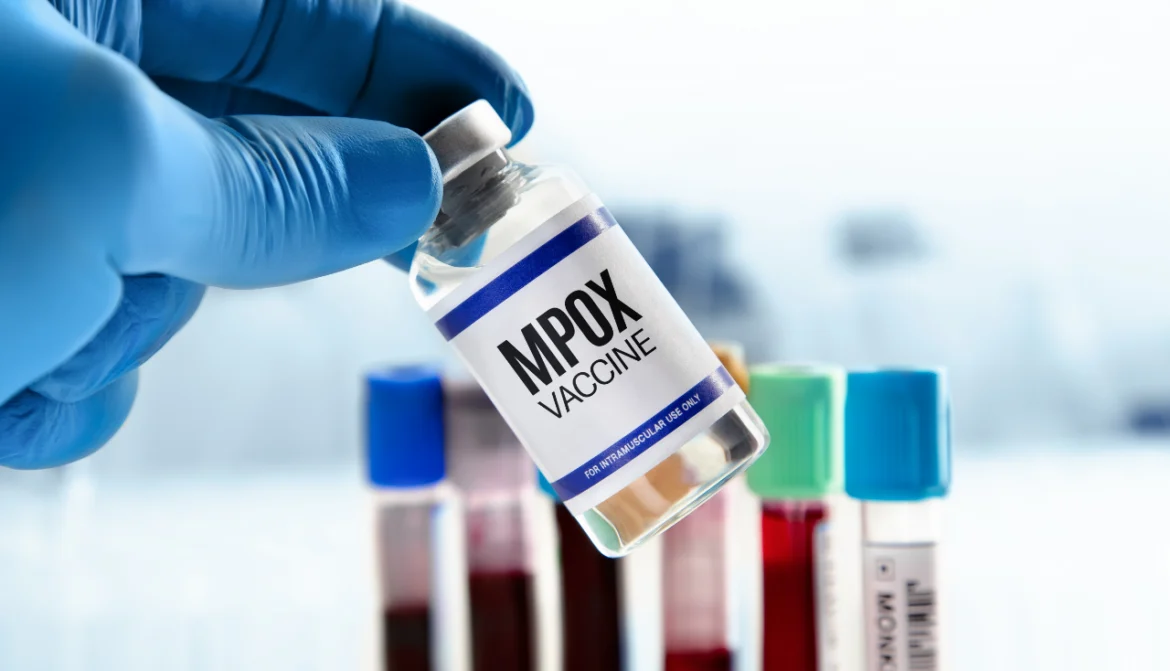
The World Health Organization (WHO) has announced the MVA-BN vaccine as the first vaccine against mpox to be added to its prequalification list.

The prequalification approval is expected to facilitate timely and increased access to this vital product in communities with urgent need, to reduce transmission and help contain the outbreak. WHO’s assessment for prequalification is based on information submitted by the manufacturer, Bavarian Nordic A/S, and review by the European Medicines Agency, the regulatory agency of record for this vaccine.

“This first prequalification of a vaccine against mpox is an important step in our fight against the disease, both in the context of the current outbreaks in Africa, and in future,” said WHO Director-General Dr Tedros Adhanom Ghebreyesus. “We now need urgent scale up in procurement, donations and rollout to ensure equitable access to vaccines where they are needed most, alongside other public health tools, to prevent infections, stop transmission and save lives.”

The MVA-BN vaccine can be administered in people over 18-years of age as a 2-dose injection given 4 weeks apart. After prior cold storage, the vaccine can be kept at 2–8°C for up to 8 weeks.

“The WHO prequalification of the MVA-BN vaccine will help accelerate ongoing procurement of the mpox vaccines by governments and international agencies such as Gavi and Unicef to help communities on the frontlines of the ongoing emergency in Africa and beyond,” said Dr Yukiko Nakatani, WHO Assistant Director-General for Access to Medicines and Health Products. “The decision can also help national regulatory authorities to fast-track approvals, ultimately increasing access to quality-assured mpox vaccine products.”

The WHO Strategic Advisory Group of Experts (SAGE) on Immunization reviewed all available evidence and recommended the use of MVA-BN vaccine in the context of an mpox outbreak for persons at high risk of exposure. While MVA-BN is currently not licensed for persons under 18 years of age, this vaccine may be used “off-label” in infants, children and adolescents, and in pregnant and immunocompromised people. This means vaccine use is recommended in outbreak settings where the benefits of vaccination outweigh the potential risks.

WHO also recommends single-dose use in supply-constrained outbreak situations. WHO emphasizes the need to collect further data on vaccine safety and effectiveness in these circumstances.

Available data shows that a single-dose MVA-BN vaccine given before exposure has an estimated 76% effectiveness in protecting people against mpox, with the 2-dose schedule achieving an estimated 82% effectiveness. Vaccination after exposure is less effective than pre-exposure vaccination.

Good safety profile and vaccine performance has been consistently demonstrated in clinical studies, as well as in real-world use during the ongoing global outbreak since 2022. In light of the changing epidemiology and emergence of new virus strains, it remains important to collect as much data as possible on vaccine safety and effectiveness in different contexts.

Since the triggering of the emergency use listing for mpox vaccines by WHO Director-General on 7 August 2024, WHO has conducted product and programmatic suitability assessments of MVA-BN vaccine.

“The findings of the assessments are particularly relevant in the context of the declaration of a public health emergency of international concern (PHEIC) related to the upsurge of mpox in Africa,” said Dr Rogerio Gaspar, WHO Director for Regulation and Prequalification. “We are progressing with prequalification and emergency use listing procedures with manufacturers of two other mpox vaccines: LC-16 and ACAM2000. We have also received 6 expressions of interest for mpox diagnostic products for emergency use listing so far.”

The escalating mpox outbreak in the Democratic Republic of the Congo and other countries was declared a PHEIC by the WHO Director-General on 14 August 2024. 

Over 120 countries have confirmed more than 103 000 cases of mpox since the onset of the global outbreak in 2022. In 2024 alone, there were 25 237 suspected and confirmed cases and 723 deaths from different outbreaks in 14 countries of the African Region (based on data from 8 September 2024).

WHO Prequalification (PQ) and Emergency Use Listing (EUL) are mechanisms used to evaluate quality, safety and efficacy of medical products, such as vaccines, diagnostics and medicines (optional: including biotherapeutics), and product suitability for use in an low- and middle-income country context. PQ or EUL listed products assist decision for international, regional and country procurement by UN and partner procurement agencies and member states. PQ is based on the review of full set of quality, safety and efficacy data on medical products, including risk management plan and programmatic suitability. EUL is a risk benefit assessment to address urgent demands during public health emergencies based on available limited data. Under EUL, the manufacturers are required to commit to continue generating missing information to fulfil prequalification requirements. Once this information becomes available, a PQ application should be submitted to complete the full process to achieve recommendation for international procurement in both emergency and non-emergency settings. 


  • Interim Guidance on Clinical Management of Mpox (Monkeypox) 2079
  • WHO recommends new name for monkeypox disease
  • Monkeypox
  • World Atopic Eczema Day 2026: Breaking the Invisible Burden
  • DEVASTATING FLOODS IN NEPAL: PUBLIC HEALTH IMPACT AND A CALL FOR HUMANITARIAN SUPPORT
  • PEN-Plus Orientation Manual for Mid-Level Health Care Workers
  • National Health Training Strategy 2082
  • Simulation Accreditation Manual for Clinical Training Sites
September 13, 2024 0 comments
0 FacebookTwitterPinterestLinkedinTumblrVKOdnoklassnikiRedditStumbleuponWhatsappTelegramLINEPocketSkypeViberEmail
Invitation to Join! MoHP Roster of Nepalese Health Professionals Currently Working in Foreign Countries
Health in DataHuman Resource for HealthPublic Health Update

Invitation to Join! MoHP Roster of Nepalese Health Professionals Currently Working in Foreign Countries

by Public Health Update September 11, 2024
written by Public Health Update

The Government of Nepal, Ministry of Health and Population (MoHP), will be organizing a health conference aimed at bringing together Nepalese health professionals working abroad. This event will serve as a platform for knowledge exchange, collaboration, and networking among health professionals who are contributing to the global health sector.

To ensure a comprehensive database of participants, the MoHP kindly requests your support in filling out the attached form with your details and sharing it with other Nepalese health professionals within your network. The MoHP highly values your participation in this initiative, as it seeks to strengthen connections with the global Nepalese health community.

Please note that this form is exclusively intended for “Nepalese Health Professionals” working abroad.

September 11, 2024 0 comments
0 FacebookTwitterPinterestLinkedinTumblrVKOdnoklassnikiRedditStumbleuponWhatsappTelegramLINEPocketSkypeViberEmail
East Asia and Pacific region- IPHU online course on Global Health Governance
CoursesInternational Jobs & OpportunitiesOnline CoursesPublic Health OpportunitiesPublic Health Opportunity

East Asia and Pacific region- IPHU online course on Global Health Governance

by Public Health Update September 10, 2024
written by Public Health Update

The East Asia and Pacific Regional Coordination of the People’s Health Movement (PHM) is pleased to announce an IPHU / training course on “Local Strategies for Global Health: How Grassroots Mobilisation and Advocacy can Contribute to Democratising Global Health Governance”. This is a six session online IPHU Workshop on Democratising Global Health Governance and will take place between 15th Oct ‘24 to 19th Nov 2024 on Tuesdays (weekly) at 6 AM UTC/ 2 PM Manila time.  The course will be conducted in English language. 

The IPHUs is proposed as a strategy to strengthen the articulation between our global and our local activism as a movement and to deepen and broaden our understanding of GHG, encompassing the political economy of capitalism and imperialism and the geopolitics of intergovernmental relations. 

Please make sure that you will be available to join all 6 sessions on 15th Oct, 22nd Oct, 29th Oct, 5th Nov, 13th Nov, 19th Nov (Tuesdays, every week) at  6 AM UTC/ 2 PM Manila time. The course requires putting in 4-8 hours of reading weekly before the sessions so kindly ensure you will be able to put in that time.  Kindly ensure you have good internet connection to be able to attend this online course. The course does not have any registration fees. Certificate will be provided for the course. 

Apply here: https://docs.google.com/forms/d/1JEcXHVRoqZSHDT2Cjm3Hrp_RhfMn4NfS9rU1hzN2tKM/edit

Deadline: 24th September 2024 

More details on curriculum- https://phmovement.org/applications-open-east-and-asia-pacific-region-online-iphu-democratising-global-health-governance-0

APPLY NOW

  • World Atopic Eczema Day 2026: Breaking the Invisible Burden
  • DEVASTATING FLOODS IN NEPAL: PUBLIC HEALTH IMPACT AND A CALL FOR HUMANITARIAN SUPPORT
  • PEN-Plus Orientation Manual for Mid-Level Health Care Workers
  • National Health Training Strategy 2082
  • Simulation Accreditation Manual for Clinical Training Sites
September 10, 2024 0 comments
0 FacebookTwitterPinterestLinkedinTumblrVKOdnoklassnikiRedditStumbleuponWhatsappTelegramLINEPocketSkypeViberEmail
Global Tuberculosis Programme
Communicable DiseasesGlobal Health NewsPublic Health NewsPublic Health UpdateWorld News

WHO releases updated guidelines on TB preventive treatment

by Public Health Update September 9, 2024
written by Public Health Update

The World Health Organization’s Global Tuberculosis Programme has released updated guidelines on TB preventive treatment (TPT), featuring one new strong recommendation on levofloxacin daily for 6 months as an option for TPT among individuals exposed to multidrug- and rifampicin-resistant TB (MDR/RR-TB). It also incorporates relevant recommendations released by WHO since the publication of the previously released WHO TPT guidelines in 2020. The guidelines also streamline other recommendations with the aim of enhancing clarity and adoption by national programmes.

In support of the TPT guidelines, WHO has also updated the operational handbook on TPT that lays down key implementation considerations and steps in the programmatic scaling up of TPT, provides implementation tools and job-aids for adaptation to local contexts and indicators for monitoring and evaluating programmatic management of TPT. The schedule of drug dosages for TPT regimens has been revised based on the latest evidence. The handbook also showcases best practice examples from countries and stakeholders.

The 2024 recommendations for the programmatic management of TPT are released as part of Module 1 of the WHO consolidated TB guidelines series. The guidelines are complemented by an operational handbook, that provides practical advice on how to implement the recommendations at the scale needed to achieve national and global impact. The guidelines and the handbook are the second edition of the documents and update the edition that was first published in 2020.

The 21 recommendations contained in the second edition of the guidelines cover critical steps in programmatic management of TPT. The main changes from the first edition of the guidelines include a new, strong recommendation on TPT for contacts of multidrug- or rifampicin-resistant TB (MDR/RR-TB); the integration of recommendations from the 2021 WHO TB screening guidelines and the 2022 WHO guidelines on testing of TB infection; withdrawal of two older recommendations that presented issues to implementation; revisions to the wording of recommendations to align with current terminology; and updates to the research gaps and references.

The operational limitations that need to be overcome by countries to achieve global targets are highlighted and discussed in greater detail in the accompanying operational handbook that is being released concurrently. The guidelines and handbook are to be used primarily in national TB and HIV programmes, or their equivalents in ministries of health, and for other policy-makers working on TB, HIV and infectious diseases in public and private sectors and in the community.

DOWNLOAD PDF

Recommended readings

  • GLOBAL TUBERCULOSIS REPORT 2021
  • Global Tuberculosis Report 2020
  • Global Tuberculosis Report 2019: Latest status of the tuberculosis epidemic
  • Global Tuberculosis Report 2018
  • WHO Global Tuberculosis report 2015
  • Global tuberculosis report 2014: Improved data reveals higher global burden of tuberculosis
  • National Tuberculosis Programme Annual Report 2018
  • National Tuberculosis Program Update in Nepal #WorldTBDay #EndTB
  • National TB Prevalence Survey, 2018-19 Key findings
  • World Tuberculosis Day 2020! It’s time to End TB!
  • National Guideline on Drug Resistant TB Management 2019, Nepal
  • National Tuberculosis Management Guideline 2019, Nepal
  • Global Tuberculosis Report 2019: Latest status of the tuberculosis epidemic
  • National TB Prevalence Survey, 2018-19 Key findings
  • New WHO recommendations to prevent tuberculosis aim to save millions of lives
  • World Health Organization (WHO) Information Note Tuberculosis and COVID-19
  • World Tuberculosis Day 2020! It’s time to End TB!
  • People-centred framework for tuberculosis programme planning and prioritization, User guide
  • Global Tuberculosis Report 2019: Latest status of the tuberculosis epidemic
  • Dissemination of Findings and Recommendations of Joint External Monitoring Mission(JEMM) of Nepal National Tuberculosis Program
  • National Tuberculosis Programme Annual Report 2018
  • National Strategic Plan for Tuberculosis Prevention, Care and Control 2016 – 2021
  • NTP, Nepal: New TB Treatment Algorithm & Regimen (Updated)
  • WHO announces landmark changes in MDR-TB treatment regimens
  • TB Vaccine results announce a promising step towards ending the emergency
  • 7 million people receive record levels of lifesaving TB treatment but 3 million still miss out
September 9, 2024 0 comments
0 FacebookTwitterPinterestLinkedinTumblrVKOdnoklassnikiRedditStumbleuponWhatsappTelegramLINEPocketSkypeViberEmail
Executive Course in Global Health Diplomacy
CoursesInternational Jobs & OpportunitiesOnline CoursesOpportunities by RegionPublic Health OpportunitiesPublic Health OpportunitySummer and Winter Courses

Executive Course in Global Health Diplomacy

by Public Health Update September 7, 2024
written by Public Health Update

Global Health Diplomacy

Global heath diplomacy is a new emerging interdisciplinary field, bridging public health and international affairs to coordinate global health action. It encompasses a wide variety of health issues and engages with all levels of government, civil society and the private sector, as well as collaborating with other non-health related sectors to solve complex global health problems. Global health diplomacy facilitates coordinated action to adapt to global health crisis and improve global health outcomes. This course will develop important skills that will allow its learners to improve and build capacity in global health diplomacy, both in Canada and globally.

Training in Global Health Diplomacy

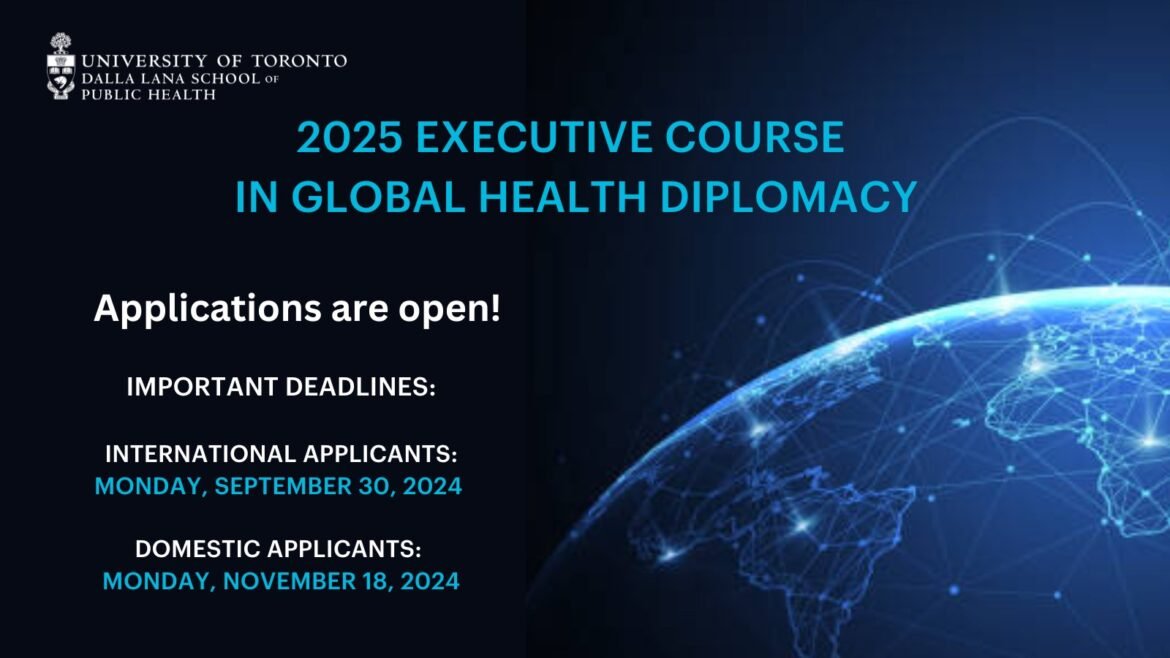
The Centre for Global Health, Dalla Lana School of Public Health’s Executive Course in Global Health Diplomacy is back for a fifth year. In collaboration with the Office of International Affairs for the Health Portfolio, Government of Canada, this executive training course is the first-of-its-kind in Canada. Designed for professionals working in health or health-related sectors, this course will explore a wide range of global health diplomacy issues, with an emphasis on current affairs and urgent global health challenges, while offering a uniquely Canadian approach.

Program

This year’s course will be offered in hybrid format:

  • Module 1: ONLINE | Foundations: Immersing into Global Health Diplomacy | April 2025 – May 2025 
  • Module 2: IN-PERSON | Application: Diplomatic Skill-building | Tuesday June 3 – Thursday June 5th,  2025

Target professionals

The course is designed for professionals working in health or health-related sectors, such as:

  • Diplomats, policy advisors, managers and leaders working in government
  • Professionals working in health, international relations, economics, management, international law, security, or whose portfolios intersect with global health
  • Professionals working for NGOs, philanthropic organizations, the private sector, academia & multilateral organizations
  • Professionals in cross-disciplines interested in learning more about linkages to global health.

Important Dates and deadlines

REGISTRATION OPENSDate: Wednesday, August 21st, 2024
APPLICATION DEADLINEInternational / applicants requiring visas Date: Monday, September 30th, 2024 Domestic / applicants who don’t require a visa Date: Monday, November 18th, 2024
SUCCESSFUL APPLICANTS NOTIFIED BEFOREInternational & visa requiring applicants  Date: Wednesday, November 13th, 2024 Domestic & non-visa requiring applicants  Date: Wednesday, January 8th, 2025

Application process 

To apply, please download the Application Instructions Form. The application package should include: 

  1. Application information (listed in Application Instructions Form) 
  2. Expression of Interest Statement (300-500 words) 
  3. Curriculum Vitae (CV)  

Please submit your application package using the following link: https://forms.gle/rWF6AkBZyfz8cgEdA

Registration fee

Registration for the course is $1,400 CAD, including HST. Tuition fees include online and in-person course materials, teaching expenses, and hospitality costs. 

Financial Assistance

  • A small number of subsidies are available to participants with demonstrated financial need (e.g., students, participants residing in a low- and middle-income country). Applicants who wish to be considered for financial assistance should indicate this in their application package and are encouraged to contact globalhealth.dlsph@utoronto.ca directly for further information.   
  • Participants awarded financial assistance will have their course registration fee waived.
  • Please note all course participants will be responsible for their own travel expenses to attend module 2 (e.g., travel to/from Toronto, accommodations, ground transportation, meals, etc.

For more information please contact the Centre for Global Health at globalhealth.dlsph@utoronto.ca or visit official website.


  • World Atopic Eczema Day 2026: Breaking the Invisible Burden
  • DEVASTATING FLOODS IN NEPAL: PUBLIC HEALTH IMPACT AND A CALL FOR HUMANITARIAN SUPPORT
  • PEN-Plus Orientation Manual for Mid-Level Health Care Workers
  • National Health Training Strategy 2082
  • Simulation Accreditation Manual for Clinical Training Sites

    September 7, 2024 0 comments
    0 FacebookTwitterPinterestLinkedinTumblrVKOdnoklassnikiRedditStumbleuponWhatsappTelegramLINEPocketSkypeViberEmail
    Delhi Declaration on Injury Prevention and Safety Promotion (Safety 2024)
    Global Health NewsPublic HealthPublic Health NewsPublic Health UpdateRoad Traffic Accidents (RTA)World News

    Delhi Declaration on Injury Prevention and Safety Promotion (Safety 2024)

    by Public Health Update September 7, 2024
    written by Public Health Update

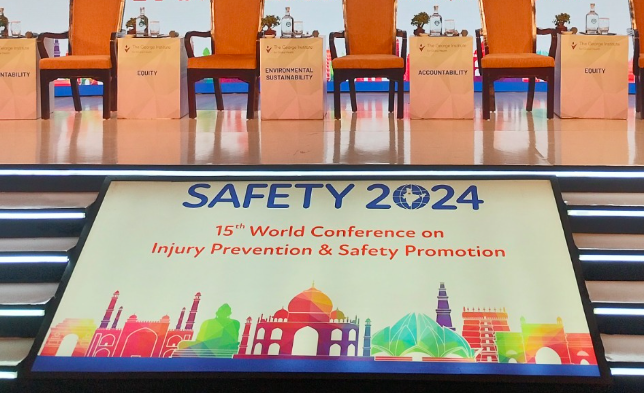
    The 15th World Conference on Injury Prevention and Safety Promotion (Safety 2024) was held between 2nd-4th September 2024 at Taj Palace, New Delhi, India. The conference concluded with 16-Point Delhi Declaration.

    We, the participants of the 15th World Conference on Injury Prevention and Safety Promotion convened in Delhi, India, hereby reaffirm our commitment to addressing the pressing global challenges of injuries and violence, while emphasising the principles of equity, accountability, and environmental sustainability.

    Injuries and violence are a profound global inequity, with over 90% of the burden borne by low- and middle-income countries. Within these countries, those facing the greatest socio-economic disadvantage are most at risk.

    We, the delegates of this conference, stand united in the face of this ongoing crisis. Every year, injuries and violence claim 4.4 million lives, disrupt countless families, and leave millions more suffering from non-fatal injuries with long-term consequences. Progress in some regions remains stagnant, making the need for immediate action even more pressing.

    The human cost is staggering, with young people aged 5-29 years disproportionately affected, with injuries ranking among the top five causes of death in this age group. Beyond the tragic loss of life, the economic costs are devastating, draining billions from national economies.

    However, we refuse to accept this reality. Recognising the need for urgent, coordinated, and sustained preventative action, we declare the following:

    1. Equity

    The persistent disparities observed in injury, and violence prevention and safety promotion, are faced both globally, nationally, and, within regions. Differential exposure, risk, and recovery outcomes are well acknowledged in the injury literature. Complex social determinants of health, including an individual’s socio-economic and health status, race, ethnicity, rurality, gender, and age, compound the inequities in rates of injury, violence, and lived experiences. Vulnerabilities, determined by physical, social, economic, and environmental factors increase the susceptibility of a community to the impact of hazards. Inequities are also evident in response to insufficient resources, poor infrastructure, capacity, and financial resources, as well as inequitable representation of stakeholders as key determinants. These persistent disparities present a global challenge with significant social, political, and economic implications. We commit to prioritise equity in injury and violence prevention policies by incorporating diverse voices, adopting an intersectional lens, and focussing on dismantling systems that create or perpetuate disparities. We hereby declare the following:

    1.1 Co-designing and community-centering: We acknowledge the importance of engaging local communities in identifying injury and violence priorities and understanding risk factors through participatory research and citizen science approaches. We emphasise co-designing culturally appropriate interventions that resonate with diverse populations and address the systems that create the disparities. Additionally, we encourage partnerships with community-based organisations, NGOs, and grassroots movements to mobilise local resources effectively, address local injury prevention needs, guaranteeing policies that are culturally sensitive and attuned to the diverse needs of all populations.

    1.2 Mobilising resources for all and strengthening capacity for multi-sectoral action: We advocate for national and international investment that matches the scale of the challenge. We emphasise the need for resources to be directed to multisectoral responses that address significant infrastructural and capacity- strengthening challenges. Additionally, exploring innovative financing mechanisms while promoting cost-effective analyses will further strengthen the economic and social case for this crucial investment.

    1.3 Engaging Ethical research and knowledge dissemination: To advance injury and violence prevention, we must prioritise fostering diverse leadership, promoting open access to knowledge, and respecting the unique needs and perspectives of vulnerable populations.

    1.4 Driving Policy advocacy and implementation support: It is essential to identify and implement multisectoral responses, particularly in view of our commitment to Universal Health Coverage and Health in All Policies. We advocate for policies that acknowledge and respond to injury and violence prevention. Effective implementation includes influencing transport, housing and urban planning, education, agriculture, finance, taxation, and economic development that promote overall safety.

    2. Accountability

    The optimisation of global resources is critical for achieving sustainable social and economic development, which requires diverting a significant portion of current expenditures from fossil fuel subsidies, armed conflict, and the implementation of wealth taxes. A genuine policy promoting independence, peace, détente, and disarmament would liberate substantial resources that could be redirected toward peaceful endeavours. We hold ourselves accountable for performance towards our commitments stated below, and advocate for political and financial accountability for safer communities.

    2.1 Calling for robust evidence to guide resource allocation: We call upon governments, funders, academia, and policy think tanks to invest in generating robust cost-benefit and cost-effectiveness analyses that support the implementation of known effective solutions across key areas of injury and violence prevention.

    2.2 Addressing the Undeniable influence of commercial determinants on injury and violence prevention: We acknowledge the influence of commercial interests, including marketing, advertising, and product design on patterns of injury and violence. We commit to advocating for policies and regulations that prioritise public health over commercial interests, promote product safety and accountability, and reduce exposure to harmful substances and hazards. Moreover, we recognize that commercial and political determinants play a crucial role in shaping injury and violence prevention outcomes. Peace and a commitment to opposing wars and conflicts are integral to both violence and injury prevention.

    2.3 Committing to global health and development agendas: We pledge to uphold transparency in our actions and initiatives within the scope of the SDGs, Decade of Action for Road Safety, Decade of Action for Healthy Aging, and the Convention on the Elimination of All Forms of Discrimination against Women. We acknowledge our obligation to align with the SDG targets related to health and well-being, including those specific to injury prevention and safety promotion.

      2.4 Accountability through equity-focused indicators: We advocate for the use of equity-focused indicators and metrics to track progress towards reducing disparities in injury and violence rates and ensuring that interventions reach the most marginalised and underserved populations.

      2.5 Citizen scrutiny, engagement, and monitoring: We embrace citizen scrutiny and engagement as essential components of accountability. We commit to fostering mechanisms for public monitoring and feedback, enabling transparency and responsiveness in our injury prevention efforts.

      2.6 Addressing financial asymmetries: We acknowledge and seek to rectify asymmetries in financial assets that contribute to disparities in injury and violence risk and access to preventive measures. We support initiatives such as the Green Climate Fund and the establishment of a Loss and Damage Fund to address climate-related health impacts, including those related to injury and violence.

      2.7 Establishing a Research commission with climate justice perspective: Furthermore, we call for the establishment of a global research commission fostered by a multi-stakeholder partnership of governments, research institutions, and philanthropic foundations dedicated to studying the issues of injury and violence through an equity and social justice lens, specifically integrating a climate justice perspective.

      3. Environmental Sustainability

      The relationship between climate change and injuries and violence remains complex and is not fully understood. As mobility patterns shift, water-related disasters increase, climate-induced migration stressors emerge, the burden of injuries and violence is poised to increase. To address this, proactive mitigation strategies must consider environmental sustainability and the creation of safe, resilient systems. Additionally, secondary effects of climate change such as drought, sea level rise, and displacement indirectly impact the rate of injuries and violence, including drowning, occupational injuries, interpersonal violence, and self-harm. Recognising these intersections is critical for effective injury prevention within the context of climate health agendas.

      3.1 Fostering partnerships across Global health agendas: Recognising the interconnected nature of global challenges, we advocate for the integration of injury and violence prevention into health agendas. By advocating for this integration into key global fora, we aim to raise awareness, shape policies, and garner support for comprehensive interventions that prioritise the reduction of injuries and violence and promote safety on a global scale.

      3.2 Integrating Injury prevention in climate health agendas: We advocate for climate health agendas to be inclusive of injury and violence prevention strategies to mitigate heat-related injuries, enhance disaster preparedness and response systems, promote the safety of coastal and small island communities, and protect agricultural workers from extreme weather conditions and the impact of population displacement.

      3.3 Decarbonising the research and trauma care sector: Acknowledging the interconnectedness of injury and violence prevention and environmental sustainability, we advocate for the adoption of environmentally friendly research activities, and interventions within the field of injury and violence prevention. This includes promoting sustainable practices in research methodologies, reducing the carbon footprint of trauma care facilities, and encouraging the use of renewable energy sources.

      3.4 Embedding climate resilience in injury and violence prevention frameworks: Embedding climate resilience within injury and violence prevention frameworks. This requires fortifying policy and infrastructure to safeguard communities, empowering them through enhanced education and resilience building, and fostering cross-sector collaboration. By implementing these measures, we can effectively mitigate the health impacts of climate-induced stress and minimise injuries and violence in the face of escalating climate-related disasters.

      3.5 Recognising children as active agents in climate change adaptation: We advocate for child and youth participation, including those from marginalised groups, in decision-making processes related to climate change and injury and violence prevention plans. We acknowledge their unique perspectives and capabilities, and their right to an active voice on issues and decisions that affect them.

      The urgent commitment of the 2030 Agenda and Sustainable Development Goals (SDGs) to ‘leave no one behind’ and ‘reach the most vulnerable first’ is paramount in the context of injury and violence prevention.

      September 7, 2024 0 comments
      0 FacebookTwitterPinterestLinkedinTumblrVKOdnoklassnikiRedditStumbleuponWhatsappTelegramLINEPocketSkypeViberEmail
      NuMERAL
      Call for Proposal, EOI & RFPGrants and Funding OpportunitiesLife Style & Public Health NutritionPublic Health OpportunitiesPublic Health Opportunity

      NuMERAL Request for Expressions of Interest

      by Public Health Update August 21, 2024
      written by Public Health Update

      NuMERAL

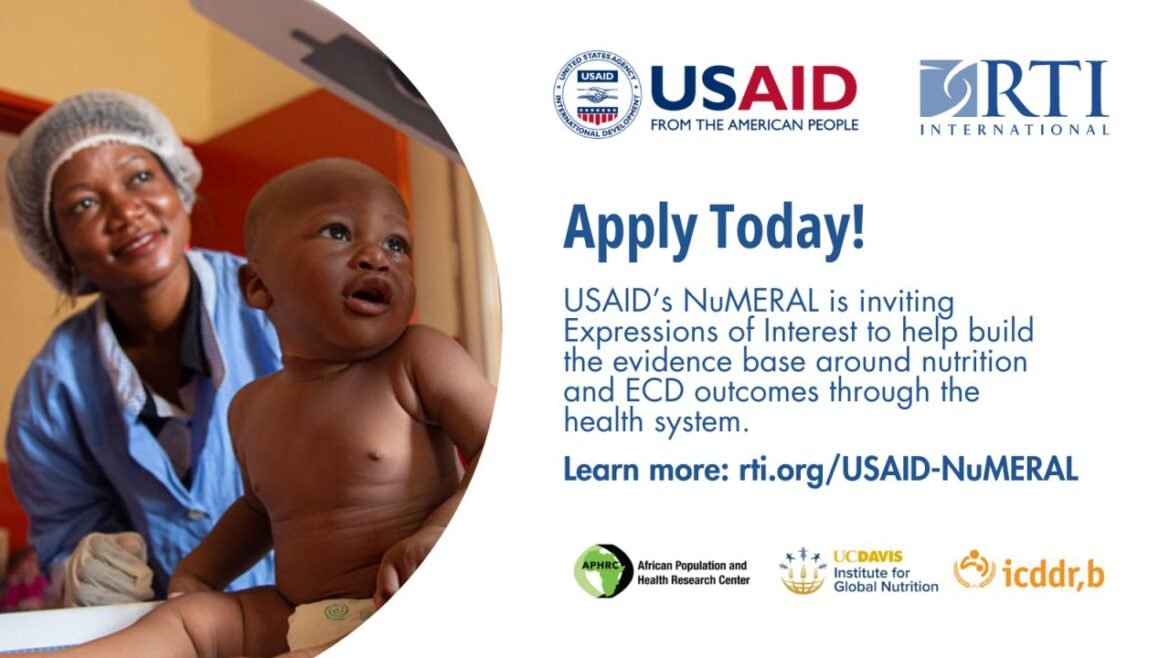
      The USAID-funded Enhancing Nutrition Monitoring, Evaluation, Research, and Learning in the Health Sector Activity (NuMERAL), implemented by RTI International, is inviting Expressions of Interest to conduct research to fill evidence gaps and enhance nutrition and ECD outcomes through the health system.

      Centered on enhancing the capacity of health systems to deliver integrated nutrition and responsive care and early learning services, NuMERAL works to increase locally-led evidence generation and translation of evidence into practice. Proper nutrition, caregiving, and early learning are essential for long-term health, growth, cognition, academic achievement, and productivity. Countries worldwide are committed to improving these outcomes as part of their efforts to achieve the Sustainable Development Goals, which include zero hunger, good health and well-being, and quality education. NuMERAL’s work is vital for strengthening policies and programs that promote better nutrition at the national, regional, and global levels. 

      The NuMERAL consortium is led by RTI International and works in collaboration with the African Population and Health Research Center, International Centre for Diarrhoeal Disease Research; Bangladesh, and the University of California, Davis.

      Request for Expressions of Interest (REOI)

      This is a call inviting local organizations to submit an Expression of Interest (EOI) in response to the “REOI_NUMERAL_001” due October 15, 2024. Efforts resulting from this REOI will aim to improve the delivery of high-quality nutrition and responsive care and early learning (RCEL) services through the health system at scale. NuMERAL seeks EOIs to further explore four priority topics:

      1. Innovative design, implementation strategies, and evaluation of nutrition and/or RCEL services delivered through the health system
      2. Identification of effective models for integrating nutrition and/or RCEL services into the health system
      3. Impact of nutrition and/or RCEL services delivered through the health system on intermediate nutrition and/or ECD outcomes
      4. Additive and synergistic effects of multiple interventions delivered in the same program through the health system on nutrition and/or ECD outcomes.

      Innovative ideas that can strengthen existing national nutrition policies and programs are encouraged. Applicants must have experience, presence, and an organizational mandate to operate in the proposed geographic area. The scope of the activity, eligibility requirements, and submission information are provided here.

      The application process will consist of three phases:

      • Phase 1: Submission of EOI in response to the REOI
      • Phase 2: Selected applicants will participate in a co-creation process with the NuMERAL consortium
      • Phase 3: Development and submission of a full proposalAlthough NuMERAL reserves the right to not award or only partially award applicants, it is anticipated that EOIs selected for co-creation will move on to submitting and receiving a full award.

      EOIs must be submitted by OCTOBER 15, 2024, 05:00 p.m. ET (GMT-4).

      Official Info: RTI International


      • World Atopic Eczema Day 2026: Breaking the Invisible Burden
      • DEVASTATING FLOODS IN NEPAL: PUBLIC HEALTH IMPACT AND A CALL FOR HUMANITARIAN SUPPORT
      • PEN-Plus Orientation Manual for Mid-Level Health Care Workers
      • National Health Training Strategy 2082
      • Simulation Accreditation Manual for Clinical Training Sites
      August 21, 2024 0 comments
      0 FacebookTwitterPinterestLinkedinTumblrVKOdnoklassnikiRedditStumbleuponWhatsappTelegramLINEPocketSkypeViberEmail
      Newer Posts
      Older Posts

      Search

      Follow Us

      Facebook Twitter Instagram Pinterest Linkedin Youtube

      Categories

      • Abstracts (25)
      • Activities (91)
      • Adolescent Sexual and Reproductive Health (ASRH) (25)
      • Advice & Tips (4)
      • African Region (5)
      • AI and Health (1)
      • Annual Meeting (6)
      • Antimicrobial Resistance (AMR) (21)
      • Award (20)
      • Awards (17)
      • Books (9)
      • Call for Proposal, EOI & RFP (103)
      • Call for Research Participants (8)
      • Clinical Doctor Jobs (6)
      • Communicable Diseases (107)
      • Competition (20)
      • Conference (129)
      • Consultant (1)
      • Courses (206)
      • Dashboard (2)
      • Digital Health & Health Informatics (10)
      • Drug and Medicine (18)
      • Eastern Mediterranean Region (3)
      • Education (16)
      • Environment (3)
      • Environmental Health & Climate Change (47)
      • European Region (42)
      • Exchange Program (1)
      • Fact Sheet (118)
      • FCHVs (1)
      • Fellowships, Studentship & Scholarships (168)
      • Financial Aid (13)
      • Form Formats (2)
      • Fully funded (22)
      • Global Health News (440)
      • Grants and Funding Opportunities (193)
      • Guest Post (44)
      • Health Assistant Jobs (1)
      • Health Equity (7)
      • Health Financing and Economics (24)
      • Health in Data (118)
      • Health Insurance (5)
      • Health Jobs (52)
      • Health Literacy, Health Education & Promotion (51)
      • Health Organization Profile (42)
      • Health Systems (85)
      • Human Resource for Health (33)
      • Humanitarian Health & Emergency Response (45)
      • Hypertension (5)
      • Implementation Research (49)
      • International Health (3)
      • International Jobs & Opportunities (374)
      • International Plan, Policy & Guidelines (212)
      • Internships (5)
      • Jobs Vacancies (57)
      • Journals (8)
      • Life Style & Public Health Nutrition (39)
      • Live (10)
      • Master's Degree (48)
      • Maternal, Newborn and Child Health (88)
      • Mentorship Program (2)
      • Miscellaneous (16)
      • National Health News (160)
      • National Plan, Policy & Guidelines (473)
      • Neglected Tropical Diseases (NTDs) (51)
      • Non- Communicable Diseases (NCDs) (123)
      • Notice (103)
      • Nursing Jobs (6)
      • Nutritionist Jobs (1)
      • One Health (18)
      • Online & Distance Learning (22)
      • Online Courses (91)
      • Op-Ed Article (3)
      • Opportunities by Region (83)
      • Outbreak News (213)
      • Partially funded (6)
      • PCL Health Science Jobs (3)
      • PH Important Day (538)
      • Pharmacist Jobs (3)
      • PhD (54)
      • Photos (5)
      • Planetary Health (4)
      • PostDoc (14)
      • Presentation Slides (26)
      • Primary Health Care (25)
      • Provincial Plan, Policies and Guidelines (17)
      • Public Health (1,288)
      • Public Health Epidemiology & Biostatistics (14)
      • Public Health Events (307)
      • Public Health Information (21)
      • Public Health Innovation (9)
      • Public Health Jobs (52)
      • Public Health News (558)
      • Public Health Notes (120)
      • Public Health Opportunities (509)
      • Public Health Opportunity (493)
      • Public Health Programs (108)
      • Public Health Seminar (2)
      • Public Health Tools (2)
      • Public Health Update (574)
      • Quality Improvement & Infection Prevention (20)
      • Region of America (8)
      • Reports (187)
      • Research & Project Grants (39)
      • Research & Project Grants (33)
      • Research & Publication (651)
      • Research Articles (10)
      • Road Traffic Accidents (RTA) (9)
      • School of Public Health (60)
      • Self funded (2)
      • South-East Asia Region (26)
      • Success Stories (17)
      • Summer and Winter Courses (40)
      • Summer Courses (28)
      • Sustainable Development Goals (SDGs) (14)
      • Syllabus (61)
      • Symposium (9)
      • Tobacco Control (35)
      • Training (40)
      • Travel Grants (15)
      • Trick, Technique & Skills (8)
      • Uncategorized (3)
      • Undergraduate Degree (7)
      • Universal Health Coverage (36)
      • Universities (29)
      • Universities & School of Public Health (58)
      • Vacancy Announcement (26)
      • Vaccine Preventable Diseases (40)
      • Vector-Borne Diseases(VBDs) (31)
      • Videos (3)
      • View Points (1)
      • Webinar (4)
      • Western Pacific Region (13)
      • Workshop (18)
      • World News (120)
      Post New Jobs: Vacancy Announcement Service
      Post New Jobs: Vacancy Announcement Service

      Search Box

      Public Health Update (Sagun’s Blog) is a popular public health portal in Nepal. Thousands of health professionals are connected with Public Health Update to get up-to-date public health updates, search for jobs, and explore opportunities.
      #1 Public Health Blog for sharing Job opportunities and updates in Nepal

      ”Public Health Information For All”
      – – Sagun Paudel, Founder

      • HOT JOBS
        • Public Health Jobs
        • Medical Doctor Jobs
        • Nursing Jobs
        • Health Assistant Jobs
        • Pharmacist Jobs
        • NGOs Jobs
        • Government Jobs
      • Top Categories
        • National Plan, Policy & Guidelines Top
        • Public Health Calendar
        • Fellowships & Scholarships
        • Health Systems
        • Health Organization Profiles
        • International Jobs & Opportunities
        • Public Health Opportunity

      PUBLIC HEALTH INITIATIVE

        • Submit your Vacancies New
        • Partnership Opportunities

      Contact: blog.publichealthupdate@gmail.com

      https://wa.me/+9779856036932

      All Right Reserved. 2011-2026. Contact us. 

      Facebook Twitter Instagram Youtube Envelope
      Public Health Update
      • Home
      • Public Health
        • Home 1
          • Adolescent Sexual and Reproductive Health (ASRH)
          • Antimicrobial Resistance (AMR)
          • Communicable Diseases
          • Digital Health & Health Informatics
          • Environmental Health & Climate Change
          • Health Financing and Economics
          • Health Equity
        • Home 2
          • Health Literacy, Health Education & Promotion
          • Human Resource for Health
          • Humanitarian Health & Emergency Response
          • Implementation Research
          • International Health
          • Life Style & Public Health Nutrition
          • Maternal, Newborn and Child Health
        • Home 3
          • Neglected Tropical Diseases (NTDs)
          • Non- Communicable Diseases (NCDs)
          • One Health
          • Planetary Health
          • Public Health Epidemiology & Biostatistics
          • Primary Health Care
          • Quality Improvement & Infection Prevention
        • Home 4
          • Road Traffic Accidents (RTA)
          • Sustainable Development Goals (SDGs)
          • Tobacco Control
          • Universal Health Coverage
          • Vaccine Preventable Diseases
          • Vector-Borne Diseases(VBDs)
          • Notices
      • Public Health Update
        • Home 1
          • Public Health News
          • Global Health News
          • Outbreak News
          • National Health News
          • COVID-19
        • Home 2
          • Fact Sheet
          • Health in Data
          • PH Important Day
          • Public Health Events
          • Public Health Programs
        • Home 3
          • Health Systems
          • Health Insurance
          • Health Organization Profile
          • Success Stories
          • Public Health Innovation
      • Public Health Opportunities
        • Fully funded
        • Travel Grants
        • Grants and Funding Opportunities
        • Opportunities by Region
        • International Jobs & Opportunities
        • Research & Project Grants
        • Fellowships, Studentship & Scholarships
        • Conference
      • Jobs
        • Home 1
          • Health Jobs
          • Public Health Jobs
          • Clinical doctor Jobs
          • Health Assistant Jobs
          • Nursing Jobs
          • PCL Health Science Jobs
        • Home 2
          • Dental Jobs
          • Pharmacist Jobs
          • TSLC (Health Jobs)
          • Laboratory Jobs
          • Nutritionist Jobs
      • Downloads
        • International Plan, Policy & Guidelines
        • National Plan, Policy & Guidelines
        • Reports
        • Books
        • Research Articles
      • School of Public Health
        • Home 1
          • Courses
          • Master’s Degree
          • Undergraduate Degree
          • PhD
        • Home 2
          • Universities
          • Syllabus
          • Public Health Notes
          • Mentorship Program
          • Startup Project
        • Home
          • Summer and Winter Courses
          • Summer Courses
          • Online Courses
          • Workshop
          • Training
      Public Health Update
      • Home
      • Public Health
        • Home 1
          • Adolescent Sexual and Reproductive Health (ASRH)
          • Antimicrobial Resistance (AMR)
          • Communicable Diseases
          • Digital Health & Health Informatics
          • Environmental Health & Climate Change
          • Health Financing and Economics
          • Health Equity
        • Home 2
          • Health Literacy, Health Education & Promotion
          • Human Resource for Health
          • Humanitarian Health & Emergency Response
          • Implementation Research
          • International Health
          • Life Style & Public Health Nutrition
          • Maternal, Newborn and Child Health
        • Home 3
          • Neglected Tropical Diseases (NTDs)
          • Non- Communicable Diseases (NCDs)
          • One Health
          • Planetary Health
          • Public Health Epidemiology & Biostatistics
          • Primary Health Care
          • Quality Improvement & Infection Prevention
        • Home 4
          • Road Traffic Accidents (RTA)
          • Sustainable Development Goals (SDGs)
          • Tobacco Control
          • Universal Health Coverage
          • Vaccine Preventable Diseases
          • Vector-Borne Diseases(VBDs)
          • Notices
      • Public Health Update
        • Home 1
          • Public Health News
          • Global Health News
          • Outbreak News
          • National Health News
          • COVID-19
        • Home 2
          • Fact Sheet
          • Health in Data
          • PH Important Day
          • Public Health Events
          • Public Health Programs
        • Home 3
          • Health Systems
          • Health Insurance
          • Health Organization Profile
          • Success Stories
          • Public Health Innovation
      • Public Health Opportunities
        • Fully funded
        • Travel Grants
        • Grants and Funding Opportunities
        • Opportunities by Region
        • International Jobs & Opportunities
        • Research & Project Grants
        • Fellowships, Studentship & Scholarships
        • Conference
      • Jobs
        • Home 1
          • Health Jobs
          • Public Health Jobs
          • Clinical doctor Jobs
          • Health Assistant Jobs
          • Nursing Jobs
          • PCL Health Science Jobs
        • Home 2
          • Dental Jobs
          • Pharmacist Jobs
          • TSLC (Health Jobs)
          • Laboratory Jobs
          • Nutritionist Jobs
      • Downloads
        • International Plan, Policy & Guidelines
        • National Plan, Policy & Guidelines
        • Reports
        • Books
        • Research Articles
      • School of Public Health
        • Home 1
          • Courses
          • Master’s Degree
          • Undergraduate Degree
          • PhD
        • Home 2
          • Universities
          • Syllabus
          • Public Health Notes
          • Mentorship Program
          • Startup Project
        • Home
          • Summer and Winter Courses
          • Summer Courses
          • Online Courses
          • Workshop
          • Training
      Public Health Initiative, A Registered Non-profit organization – All Right Reserved. 2011-2023