Public Health Initiative, A Registered Non-profit organization – All Right Reserved. 2011-2024. Contact us.
International Self-Care Day (ISD), on 24 July each year, provides a focus and opportunity to raise the profile of healthy lifestyle self-care programmes around the world. ISD is a device developed by the International Self-Care Foundation to promote self-care as a vital foundation of health.
The ISD Date
The International Self-Care Day, 24 July, symbolises that the benefits of self-care are experienced 24 hours a day, 7 days a week. In other words, the benefits of self-care are life-long and do not just relate to a single day. ISD on 24 July simply provides a good focus and opportunity to publicise or report on self-care in action programmes. Programme organisers may work around July 24 as convenient, for example in 2014 for practical convenience organising events on the third Sunday of July.
Each year ISF proposes a general theme for International Self-Care Day. For 24 July 2017, the theme is ‘Get better with Self-Care’
WHAT IS SELF-CARE?
The WHO 1998 definition is:
‘Self-Care is what people do for themselves to establish and maintain health, and to prevent and deal with illness. It is a broad concept encompassing hygiene (general and personal), nutrition (type and quality of food eaten), lifestyle (sporting activities, leisure etc), environmental factors (living conditions, social habits, etc.) socio-economic factors (income level, cultural beliefs, etc.) and self-medication.’

ISF proposes a framework for self-care which can conveniently be visualized and organised around seven ‘pillars’ or ‘domains’:
- Health literacy – includes: the capacity of individuals to obtain, process and understand basic health information and services needed to make appropriate health decisions
- Self-awareness of physical and mental condition – includes: knowing your body mass index (BMI), cholesterol level, blood pressure; engaging in health screening.
- Physical activity – practicing moderate intensity physical activity such as walking, cycling, or participating in sports at a desirable frequency.
- Healthy eating – includes: having a nutritious, balanced diet with appropriate levels of calorie intake.
- Risk avoidance or mitigation – includes: quitting tobacco, limiting alcohol use, getting vaccinated, practicing safe sex, using sunscreens.
- Good hygiene – includes: washing hands regularly, brushing teeth, washing food.
- Rational and responsible use of products, services, diagnostics and medicines – includes: being aware of dangers, using responsibly when necessary.
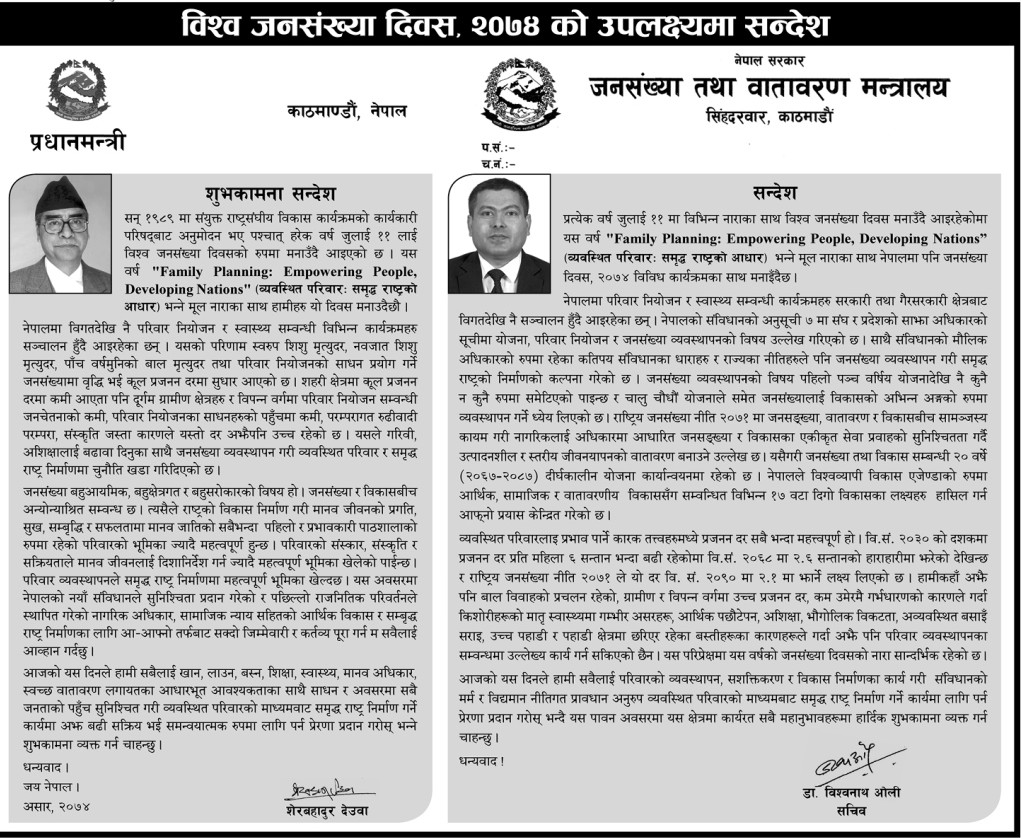
Family Planning: Empowering People, Developing Nations – World Population Day 2017
written by Public Health Update
World Population Day, which seeks to focus attention on the urgency and importance of population issues, was established by the then-Governing Council of the United Nations Development Programme in 1989, an outgrowth of the interest generated by the Day of Five Billion, which was observed on 11 July 1987.
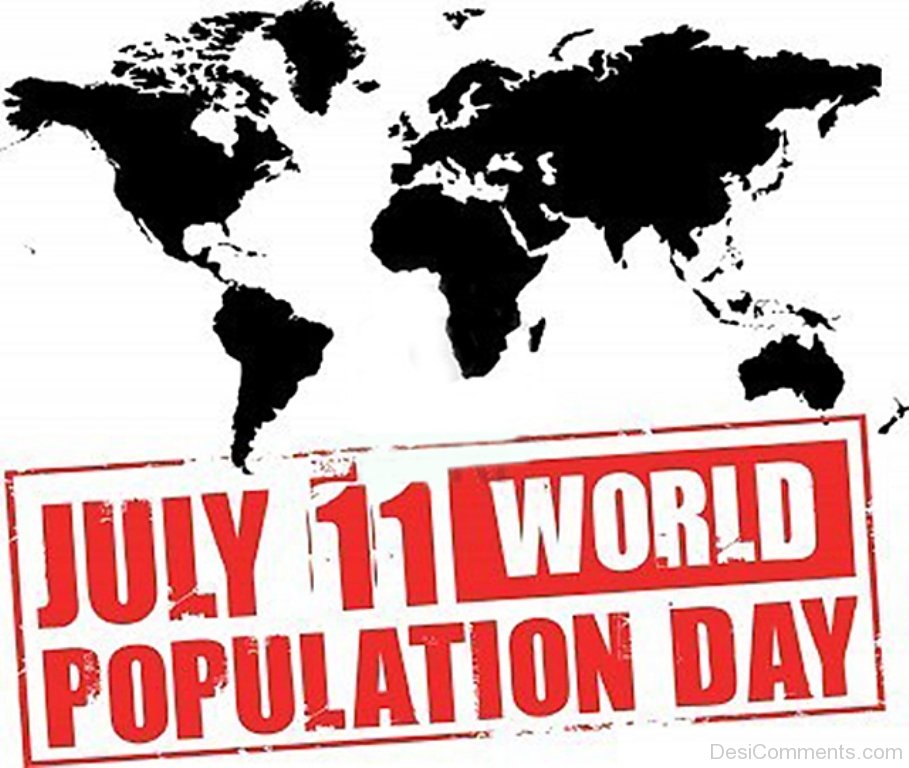
By resolution 45/216 of December 1990, the United Nations General Assembly decided to continue observing World Population Day to enhance awareness of population issues, including their relations to the environment and development.
The Day was first marked on 11 July 1990 in more than 90 countries. Since then, a number of a number of UNFPA country offices and other organizations and institutions commemorate World Population Day, in partnership with governments and civil society.
Family Planning: Empowering People, Developing Nations
Around the world, some 225 million women who want to avoid pregnancy are not using safe and effective family planning methods, for reasons ranging from lack of access to information or services to lack of support from their partners or communities. Most of these women with an unmet demand for contraceptives live in 69 of the poorest countries on earth.
Access to safe, voluntary family planning is a human right. It is also central to gender equality and women’s empowerment, and is a key factor in reducing poverty. Investments in making family planning available also yields economic and other gains that can propel development forward.
In 2017 World Population Day, 11 July, coincides with the Family Planning Summit, the second meeting of the FP2020–Family Planning 2020–initiative, which aims to expand access to voluntary family planning to 120 million additional women by 2020.
Further Reading:
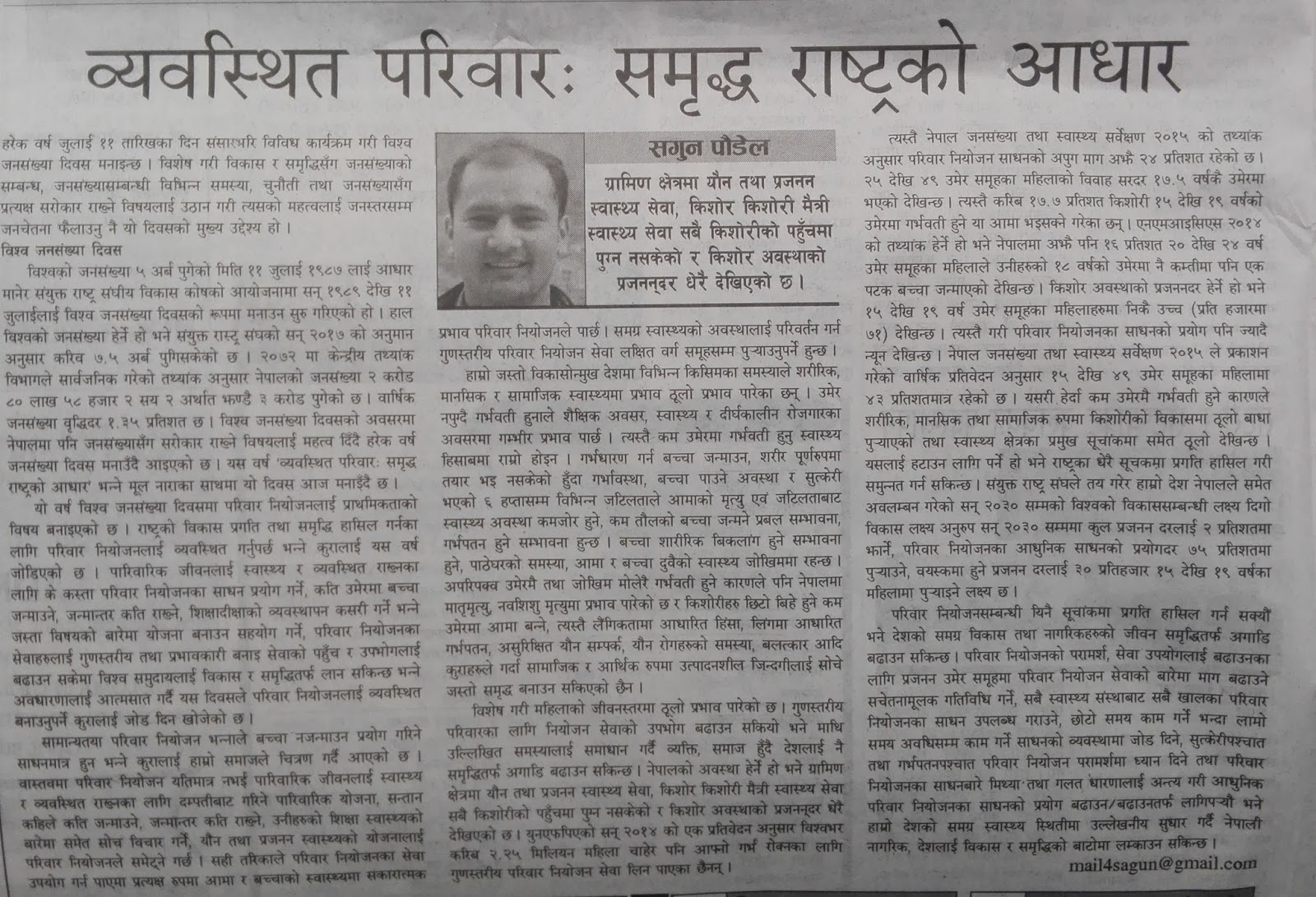
World Population Day 2017 (Preeti Font) from Sagun Paudel
My Nepali Article : Read Here (Samadhan National Daily dated 11th July 2017)
| |
Nepal has its first ever National Population Policy endorsed by the Cabinet. The policy saw the day light when world leaders have just agreed to tackle emerging population and development priorities following the successful completion of 20 years of Programme of Action of the International Conference on Population and Development (ICPD), Cairo, 1994.
[catlist id=1 numberposts=100]
[catlist name=“Public Health Jobs”]
Nepal FP2020 Commitment -2017
Nepal FP2020 Commitment 02017: The Government of Nepal updated its commitment at the Family Planning Summit in London, UK on July 11, 2017.
Nepal is committed to maintaining and sustaining the efforts already initiated including through the implementation of the FP2020 commitments made in March 2015, one month before the devastating earthquake. As such, Nepal reiterates that it will continue to increase government budget in Family Planning by 7% each year up to 2020.
Nepal is committed to “leaving no one behind” and “reaching the unreached” to accelerate the progress of increasing the number of additional users of family planning by an estimated 1 million by 2020, provided the proportion of demand satisfied increases to 71% by then. With a special focus on meeting the family planning need of adolescents and youth,
Nepal will strive to increase the method mix with suitable FP methods of their choices.
COMMITMENTS
- Continue raising financial resources and promoting local-level budgetary allocations for FP that meets on-going policy and programmatic commitments.
- Continue raising the annual government allocation for FP by 7% each year up to 2020. Furthermore, Nepal will engage with external development partners including donors to raise additional commitments.
- Identify barriers to accessing FP services among individuals and couples belonging to special groups including adolescents and youth and formulate polices and strategies to address them.
- Strengthen and gradually scale up adolescent friendly services to cater for the needs of adolescents in all HFs.
- Improve regulatory framework to promote public-private partnership and expand health service delivery points to increase access to quality FP information and services.
- Strengthen enabling environment for family planning, including advocacy to mobilize resources from non-health sectors.
- Strengthen capacity of health institutions and service providers to expand FP service delivery networks, to
respond to the needs of marginalized, rural residents, migrants, adolescents with special focus during the time of emergencies/humanitarian settings. - Increase availability of a broader range of modern contraceptives and improve method mix at different levels of the health care delivery system.
- Increase health care seeking behavior among populations with high unmet need for modern contraception by raising awareness on the importance of FP through various communication methods and media focusing on special groups like ethnic minorities, marginalized and disadvantaged groups.
- Strengthen evidence based/informed learnings for effective programme implementation through research and innovations.
- Introduce eLMIS at the district and gradually to the HFs level by end of 2019
- Effective procurement functions in place for timely procurement of commodities
- Proportion of HFs with “no stock out of FP commodities” increased from 70 to 95% by the end of 2020.
The following text is the commitment made by the Government of Nepal in 2015.
POLICY & POLITICAL COMMITMENTS
Nepal pledges to reposition family planning to foster sustainable social and economic development and to execute the Costed Implementation Plan on FP (2015-2020) within the Nepal Health Sector Program III (2015-2020). Nepal commits to identify barriers to accessing family planning services faced by individuals and couples, including adolescents and youth, those living in rural areas, migrants and other vulnerable or marginalized groups. The government also pledges to formulate policies and strategies to address these barriers. Furthermore, Nepal commits to improving the regulatory framework to promote public-private partnerships.
FINANCIAL COMMITMENTS
The government of Nepal commits to raise and invest the financial resources required to meet its policy and programmatic commitments. In particular, it pledges to increase funding for family planning programs by at least 7 percent annually from 2015 to 2020 and engage with external development partners to raise additional resources. In addition, Nepal pledges to strengthen the enabling environment for family planning by engaging in advocacy to mobilize resources from non-health sectors.
PROGRAM & SERVICE DELIVERY COMMITMENTS
The government of Nepal pledges to broaden the range of modern contraceptives available and improve method mix at different levels of the health care system. Nepal commits to engage in a range of communications and media activities to raise awareness of family planning among populations with a high unmet need for modern contraception, focusing particularly on adolescents and young people. Nepal will expand service delivery points to increase access to quality family planning information and services and facilitate family planning by strengthening delivery networks. The government pledges to support mobilizing resources from other, non-health sectors. Nepal commits to strengthening the evidence base for effective program implementation through research and innovation.
http://www.familyplanning2020.org
RELATED TOPICS

- Family Planning: Empowering People, Developing Nations – World Population Day 2017
- National Family Planning Day (18- Sep 2016)
- Family Planning 2020 (FP2020) Commitment, Nepal
- National Family Planning Costed Implementation Plan (2015-2020)
- #National Family Planning Day (18th Sep 2015)
- National Family Planning Day sep 18th 2014
- Nepal Demographic and Health Survey 2016 Key Indicators Report
- Key findings – The 2015 Nepal Health Facility Survey (2015 NHFS)
- 2016 Health SDG Profile: Nepal
- Sep 26 Every Year !! World Contraception Day
- 2011 Nepal Demographic and Health Survey (NDHS)
- National Female Community Health Volunteers (FCHVs) Program
- National Family Planning Program, Nepal
Sri Lanka is suffering its worst-ever dengue outbreak, with the mosquito-borne virus killing 225 people and infecting more than 76,000 this year. Alarmed by the magnitude of the crisis, the government deployed 400 soldiers and police officers on Tuesday to clear away rotting garbage, stagnant water pools and other potential mosquito-breeding grounds.The number of infections nationwide is already 38 per cent higher than last year, when 55,150 people were diagnosed with dengue and 97 died, according to the Health Ministry. The highest number of cases is in the region around the main city of Colombo, though cases were being reported across the tropical island nation.
In Colombo alone, 25 teams of soldiers, police officers and public health inspectors were knocking on doors at people’s homes, advising them to clear clogged drains and empty outdoor pots that might have filled with rainwater. Health officials were also fumigating public spaces.
Joint United Nations statement on ending discrimination in health care settings
written by Public Health Update
Joint United Nations statement on ending discrimination in health care settings
Joint WHO/UN statement
27 June 2017
United Nations entities recall that a central principle of the 2030 Agenda for Sustainable Development is to “ensure that no one is left behind” and to “reach the furthest behind first”. Recognizing that discrimination in health care settings is a major barrier to the achievement of the Sustainable Development Goals (SDGs), United Nations entities commit to working together to support Member States in taking coordinated multisectoral action to eliminate discrimination in health care settings.
Discrimination in health care settings is widespread across the world and takes many forms. It violates the most fundamental human rights protected in international treaties and in national laws and constitutions.
Discrimination in health care settings is directed towards some of the most marginalized and stigmatized populations – the very populations that States promised to prioritize through the 2030 Agenda, and who are all too often excluded or left behind. Many individuals and groups face discrimination on the basis of their age, sex, race or ethnicity, health status, disability or vulnerability to ill health, sexual orientation or gender identity, nationality, asylum or migration status, or criminal record, often experiencing intersecting or compounding forms of discrimination.
Discrimination affects both users of health care services and health care workers. It serves as a barrier to accessing health services, affects the quality of health services provided, and reinforces exclusion from society for both individuals and groups.
Discrimination in health care settings takes many forms and is often manifested when an individual or group is denied access to health care services that are otherwise available to others. It can also occur through denial of services that are only needed by certain groups, such as women. Examples include specific individuals or groups being subjected to physical and verbal abuse or violence; involuntary treatment; breaches of confidentiality and/or denial of autonomous decision-making, such as the requirement of consent to treatment by parents, spouses or guardians; and lack of free and informed consent.
It is also present in the entrenched gender-based discrimination within the largely female health workforce, as evidenced by physical and sexual violence, wage gaps, irregular salaries, lack of formal employment, and inability to participate in leadership and decision-making.
National laws, policies and practices can also foster and perpetuate discrimination in health care settings, prohibiting or discouraging people from seeking the broad range of health care services they may need. Some laws run counter to established public health evidence and human rights standards. Evidence demonstrates the harmful health and human rights impacts of such laws.
Addressing discrimination in health care settings will contribute to the achievement of many of the SDGs, ensuring that no one is left behind. It is fundamental to securing progress towards SDG 3, Good health and well being, including achieving universal health coverage and ending the AIDS and tuberculosis epidemics; SDG 4, Quality education; SDG 5, Gender equality and women’s empowerment; SDG 8, Decent work and inclusive economic growth; SDG 10, Reduced inequalities; and SDG 16, Peace, justice and strong institutions.
States have an immediate legal obligation to address discrimination. While States bear this primary duty, a multistakeholder and multisectoral response, including a coordinated effort from the United Nations system, is urgently required. Together we must end discrimination in health care settings.
We, the signatory United Nations entities, call upon all stakeholders to join us in committing to taking targeted, coordinated, time-bound, multisectoral actions in the following areas.
Supporting States to put in place guarantees against discrimination in law, policies, and regulations by:
- Reviewing and strengthening laws to prohibit discrimination in the provision and distribution of health care services, as well as in relation to education and employment in the health sector. Laws and policies must respect the principles of autonomy in health care decision-making; guarantee free and informed consent, privacy and confidentiality; prohibit mandatory HIV testing; prohibit screening procedures that are not of benefit to the individual or the public; and ban involuntary treatment and mandatory third-party authorization and notification requirements. All stakeholders should support the clear dissemination, implementation, and monitoring of adherence to such laws and regulations and their translation into policies and practice.
- Reviewing and repealing punitive laws that have been proven to have negative health outcomes and that counter established public health evidence. These include laws that criminalize or otherwise prohibit gender expression, same sex conduct, adultery and other sexual behaviours between consenting adults; adult consensual sex work; drug use or possession of drugs for personal use; sexual and reproductive health care services, including information; and overly broad criminalization of HIV non-disclosure, exposure or transmission.
- Reviewing, strengthening, implementing and monitoring health professional policies, regulations, standards, working conditions and ethics, for the prohibition of discrimination on all grounds in connection to health care settings.
Supporting measures to empower health workers and users of health services through attention to and realization of their rights, roles and responsibilities by:
- Ensuring that the labour rights and standards of health workers, including in the area of occupational safety and health, are fully respected, protected, and fulfilled, and that health workers are free from discrimina
tion and violence in the workplace. Particular attention should be paid to the gendered nature of the health workforce, including through ensuring gender-sensitive sectoral and facility-level policies and health professional regulations operationalizing decent work, gender equality, and formal employment of the health workforce. Health workers should be supported in upholding their legal and ethical responsibilities, including with respect to advancing human rights, and their role as human rights defenders should be protected. - Providing pre-service and in-service education to the health workforce on their rights, roles, and responsibilities related to addressing discrimination in health care settings. Policies, programmes and budgets need to provide for a diverse workforce, including through strengthening educational admission criteria and promoting health workforce educational and career development opportunities for women, youth and persons from rural and marginalized communities.
- Empowering users of health care services so that they are aware of and able to demand their rights. This will enable them to hold those responsible accountable for discrimination-free health care settings through rights literacy, patient charters, social accountability monitoring, community support, and other tools.
Supporting accountability and compliance with the principle of non-discrimination in health care settings by:
- Guaranteeing access to effective mechanisms of redress and accountability. This involves development and implementation of individual, tailor-made remedies and redress procedures for victims of violation, and constructive systems of accountability in health and other sectors to prevent future violations.
- Strengthening mechanisms for reporting, monitoring and evaluation of discrimination. This can be achieved through support for the building and sharing of the evidence base and ensuring the participation of affected communities and health workers in the development of health policies.
Implementing the United Nations Shared Framework for Action on Combating Inequalities and Discrimination by:
- Providing sector-specific and joint guidance and practical tools to raise awareness of human rights standards for non-discrimination as they apply to health care settings.
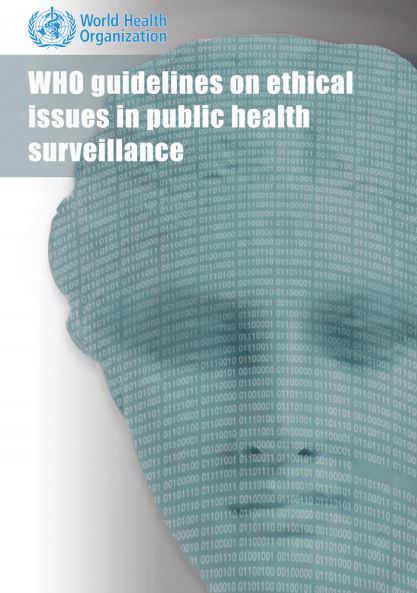
The WHO Guidelines on Ethical Issues in Public Health Surveillance is the first international framework of its kind, it fills an important gap. The goal of the guideline development project was to help policymakers and practitioners navigate the ethical issues presented by public health surveillance. This document outlines 17 ethical guidelines that can assist everyone involved in public health surveillance, including officials in government agencies, health workers, NGOs and the private sector.
Surveillance, when conducted ethically, is the foundation for programs to promote human well-being at the population level. It can contribute to reducing inequalities: pockets of suffering that are unfair, unjust and preventable cannot be addressed if they are not first made visible. But surveillance is not without risks for participants and sometimes poses ethical dilemmas. Issues about privacy, autonomy, equity, and the common good need to be considered and balanced, and knowing how to do so can be challenging in practice.
17 ethical guidelines
- Guideline 1. Countries have an obligation to develop appropriate, feasible, sustainable public health surveillance systems. Surveillance systems should have a clear purpose and a plan for data collection, analysis, use and dissemination based on relevant public health priorities.
- Guideline 2. Countries have an obligation to develop appropriate, effective mechanisms to ensure ethical surveillance.
- Guideline 3. Surveillance data should be collected only for a legitimate public health purpose.
- Guideline 4. Countries have an obligation to ensure that the data collected are of sufficient quality, including being timely, reliable and valid, to achieve public health goals.
- Guideline 5. Planning for public health surveillance should be guided by transparent governmental priority-setting.
- Guideline 6. The global community has an obligation to support countries that lack adequate resources to undertake surveillance.
- Guideline 7. The values and concerns of communities should be taken into account in planning, implementing and using data from surveillance.
- Guideline 8. Those responsible for surveillance should identify, evaluate, minimize and disclose risks for harm before surveillance is conducted. Monitoring for harm should be continuous, and, when any is identified, appropriate action should be taken to mitigate it.
- Guideline 9. Surveillance of individuals or groups who are particularly susceptible to disease, harm or injustice is critical and demands careful scrutiny to avoid the imposition of unnecessary additional burdens.
- Guideline 10. Governments and others who hold surveillance data must ensure that identifiable data are appropriately secured.
- Guideline 11. Under certain circumstances, the collection of names or identifiable data is justified.
- Guideline 12. Individuals have an obligation to contribute to surveillance when reliable, valid, complete data sets are required and relevant protection is in place. Under these circumstances, informed consent is not ethically required.
- Guideline 13. Results of surveillance must be effectively communicated to relevant target audiences.
- Guideline 14. With appropriate safeguards and justification, those responsible for public health surveillance have an obligation to share data with other national and international public health agencies.
- Guideline 15. During a public health emergency, it is imperative that all parties involved in surveillance share data in a timely fashion.
- Guideline 16. With appropriate justification and safeguards, public health agencies may use or share surveillance data for research purposes.
- Guideline 17. Personally identifiable surveillance data should not be shared with agencies that are likely to use them to take action against individuals or for uses unrelated to public health.
Source of info :WHO
International Day against Drug Abuse and Illicit Tracking 2017!! Listen First – Listening to children and youth is the 1st step to help them grow healthy and safe
written by Public Health Update
The International Day against Drug Abuse and Illicit Trafficking is a United Nations International Day against drug abuse and the illegal drug trade. It is observed annually on 26 June.

By resolution 42/112 of 7 December 1987, the General Assembly decided to observe 26 June as the International Day against Drug Abuse and Illicit Trafficking as an expression of its determination to strengthen action and cooperation to achieve the goal of an international society free of drug abuse. This resolution recommended further action with regard to the report and conclusions of the 1987 International Conference on Drug Abuse and Illicit Trafficking.
2017 Theme — Listen First
The 2017 International Day against Drug Abuse and Illicit Tracking was observed on 26 June 2017. The day was observed with the theme Listen First – Listening to children and youth is the rst step to help them grow healthy and safe.The theme for the year is an initiative to increase support for prevention of drug use that is based on science and is thus an elective investment in the well-being of children and youth, their families and their communities.