Public Health Update
  • Home
  • Public Health Update
  • Nepal Health Jobs
    • Public Health Job Board
    • Organization List
  • Opportunities
    • Fellowships, Studentship & Scholarships
    • Grants and Funding Opportunities
    • Fully funded
    • Conference
  • Downloads
    • International Plan, Policy & Guidelines
    • National Plan, Policy & Guidelines
    • Reports
    • Public Health Notes
    • Syllabus
    • Form Formats
  • School of Public Health
    • PhD
    • Master’s Degree
    • Online Courses
  • Notice
  • Home
  • Public Health Update
  • Nepal Health Jobs
    • Public Health Job Board
    • Organization List
  • Opportunities
    • Fellowships, Studentship & Scholarships
    • Grants and Funding Opportunities
    • Fully funded
    • Conference
  • Downloads
    • International Plan, Policy & Guidelines
    • National Plan, Policy & Guidelines
    • Reports
    • Public Health Notes
    • Syllabus
    • Form Formats
  • School of Public Health
    • PhD
    • Master’s Degree
    • Online Courses
  • Notice
LOGIN / REGISTER
Public Health Update
SUBSCRIBE
Public Health Update
  • Home
  • Public Health Update
  • Nepal Health Jobs
    • Public Health Job Board
    • Organization List
  • Opportunities
    • Fellowships, Studentship & Scholarships
    • Grants and Funding Opportunities
    • Fully funded
    • Conference
  • Downloads
    • International Plan, Policy & Guidelines
    • National Plan, Policy & Guidelines
    • Reports
    • Public Health Notes
    • Syllabus
    • Form Formats
  • School of Public Health
    • PhD
    • Master’s Degree
    • Online Courses
  • Notice

All Right Reserved. Designed and Developed by PenciDesign

International Plan, Policy & GuidelinesPublic Health

WHO Framework on integrated people-centred health services

by Public Health Update June 23, 2017
written by Public Health Update


WHO Framework on integrated people-centred health services
Integrated people-centred health services means putting the comprehensive needs of people and communities, not only diseases, at the centre of health systems, and empowering people to have a more active role in their own health.


Report of the High-Level Commission on Health Employment and Economic Growth
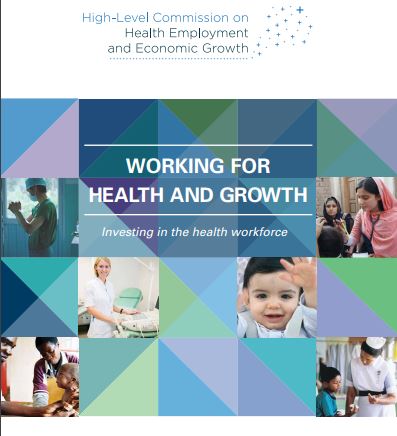
Working for health and growth: investing in the health workforce

cover


The High-Level Commission on Health Employment and Economic Growth was established by United Nations Secretary-General Ban Ki-moon in March 2016. Its task: to make recommendations to stimulate and guide the creation of at least 40 million new jobs in the health and social sectors, and to reduce the projected shortfall of 18 million health workers, primarily in low- and lower-middle-income countries, by 2030. Six months of intensive work and productive discussions, first among the Expert Group and then among the Commissioners, facilitated by ILO, OECD and WHO, have led to this report, which presents the case for more and better investment in the health workforce.


Recommendations of the Commission

The Commission makes ten recommendations that should be read in the context of efforts to strengthen health and social protection systems as well as broader initiatives to implement the 2030 Agenda for Sustainable Development and to meet the targets of the SDGs.

Recommendations to transform the health workforce for the SDGs

job

Job creation

Stimulate investments in creating decent health sector jobs, particularly for women and youth, with the right skills, in the right numbers and in the right places.
gender

Gender equality and rights

Maximize women’s economic participation and foster their empowerment through institutionalizing their leadership, addressing gender biases and inequities in education and the health labour market, and tackling gender concerns in health reform processes.
education 1

Educations, training and competencies

Scale up transformative, high-quality education and lifelong learning so that all health workers have skills that match the health needs of populations and can work to their full potential
org1

Health service delivery and organization

Reform service models concentrated on hospital care and focus instead on prevention and on the efficient provision of high-quality, affordable, integrated, community-based, people-centred primary and ambulatory care, paying special attention to underserved areas
tech1

Technology

Harness the power of cost-effective information and communication technologies to enhance health education, people-centred health services and health information systems.

crises

Crises and humanitarian settings

Ensure investment in the International Health Regulations core capacities, including skills development of national and international health workers in humanitarian settings and public health emergencies, both acute and protracted. Ensure the protection and security of all health workers and health facilities in all settings.

Recommendations to enable change

finacing

Financing and fiscal space

Raise adequate funding from domestic and international sources, public and private where appropriate, and consider broad-based health financing reform where needed, to invest in the right skills, decent working conditions and an appropriate number of health workers.

partnership cooperation

Partnership and cooperation

Promote intersectoral collaboration at national, regional and international levels; engage civil society, unions and other health workers’ organizations and the private sector; and align international cooperation to support investments in the health workforce, as part of national health and education strategies and plans.
migration

International Migration

Advance international recognition of health workers’ qualifications to optimize skills use, increase the benefits from and reduce the negative effects of health worker migration, and safeguard migrants’ rights.
data

Data, Information and Accountability

Undertake robust research and analysis of health labour markets, using harmonized metrics and methodologies, to strengthen evidence, accountability and action.

IMMEDIATE ACTIONS

The Commission calls for urgent action to develop labour market policies to foster the demand for a sustainable health workforce. Government policies are needed to address the systemic issues that result in significant health labour market and public failures.
As the health sector is a growing employer of women, it can greatly contribute to gender equality. Today women are the main providers of care, including in humanitarian crises and conflict settings. Yet gender biases, physical and sexual violence and harassment remain important challenges for health workers.
All countries can do more to prioritize investments in education. Education models should shift away from narrow specializations to focus on lifelong building of locally relevant competencies. Generally, there is a need to relax unnecessary barriers to entry. Addressing geographical inequities is a priority and demographic transitions present opportunities to strengthen youth education for employment in the health sector. Evidence reinforces the effectiveness of community-based health workers, including health professionals as well as other cadres.
Health systems organized around clinical specialities and hospitals will need to shift towards prevention and primary care. There is no prescription for a perfect mix of public and private health-care provision. Governments should adopt policies that cover
the performance of the whole sector. Social business models are emerging as a private-sector, socially oriented solution to serve the unserved. Public policies and regulatory bodies must protect the interests of the public and ensure that professional interests do not dominate.
Rapidly changing technologies are already changing the nature of health services. New cadres of health workers are emerging, enabled by information and communication technologies. Digital technologies also provide opportunities to enhance people’s access to health services, improve the responsiveness of health systems to the needs of individuals and communities, and improve the delivery of a wide range of health services.
Each country should build the capacity of its health workforce and health systems to detect and respond to public health risks and emergencies. In fragile and conflict settings, public health crises also exacerbate countries’ existing shortcomings for providing basic health and social care to their citizens. Furthermore, health workers and facilities have become deliberate targets in conflict settings.
Most countries can secure sustainable health financing, assuming continuing growth in public revenue, with necessary priority to the health workforce. Societal dialogue and political commitment are critical to drive appropriate macroeconomic reforms and health financing policies. Public policies can also attract co-investments by the private sector. But there is likely to be insufficient market demand to create jobs to achieve the SDGs in low-income and fragile countries. The Commission believes collective action on financing should be taken in those countries.
Achieving a fit-for-purpose health workforce requires actions across all sectors involved with the health labour market. These intersectoral processes must engage public and private sectors, civil society, trade unions, health worker associations, nongovernmental organizations, regulatory bodies and training institutions. The Commission believes the role of official development assistance can help operationalize the SDGs and supports national and international accountability mechanisms.
Demand in high- and middle-income countries is likely to continue to drive health worker migration in the years ahead. The Commission recognizes that the international mobility of health workers may bring numerous benefits to source and destination nations and health workers themselves. However, the adverse effects of migration must be mitigated. An updated broader international agreement on health workforce should include provisions to maximize mutuality of benefit.
Institutional capacity to analyse data is needed for labour market analysis and research. The strength of the data architecture depends on the active engag
ement of communities, health workers, employers, training institutions, and professional and regulatory bodies. ILO, OECD and WHO have a key role to play in establishing a set of harmonized metrics to transparently monitor trends of the health labour market.

DOWNLOAD REPORT

Source of Info (WHO)


Get it on Google Play


June 23, 2017 0 comments
0 FacebookTwitterPinterestLinkedinTumblrVKOdnoklassnikiRedditStumbleuponWhatsappTelegramLINEPocketSkypeViberEmail
PH Important Day

Understand and End Financial Abuse of Older People: A Human Rights Issue – World Elder Abuse Awareness Day

by Public Health Update June 15, 2017
written by Public Health Update
The United Nations General Assembly, in its resolution 66/127, designated June 15 as World Elder Abuse Awareness Day. It represents the one day in the year when the whole world voices its opposition to the abuse and suffering inflicted to some of our older generations 

download

“Understand and End Financial Abuse of Older People: A Human Rights Issue”


The 2017 theme underscores the importance of preventing financial exploitation in the context of elder abuse to the enjoyment of older persons’ human rights. In line with the 2030 Sustainable Development Agenda and the Madrid International Plan of Action on Ageing, older people have the right to a life of dignity in old age, free of all forms of abuse, including financial and material exploitation, which could lead to poverty, hunger, homelessness, compromised health and well-being, and even premature mortality.


UN

Abuse of older people on the rise – 1 in 6 affected

World Health Organization News release 
14 JUNE 2017 | GENEVA – Around 1 in 6 older people experience some form of abuse, a figure higher than previously estimated and predicted to rise as populations age worldwide.
A new study, supported by WHO and published in the Lancet Global Health, has found that almost 16% of people aged 60 years and older were subjected to either psychological abuse (11.6%), financial abuse (6.8%), neglect (4.2%), physical abuse (2.6%) or sexual abuse (0.9%). The research draws on the best available evidence from 52 studies in 28 countries from different regions, including 12 low- and middle-income countries.
“The abuse of older people is on the rise; for the 141 million older people worldwide this has serious individual and societal costs,” says Alana Officer, Senior Health Adviser, Department of Ageing and Life Course at WHO. “We must do much more to prevent and respond to the increasing frequency of different forms of abuse.”
Elder abuse and health
Awareness about elder abuse, still largely a taboo topic, has started to increase across the world. It is defined as actions or lack of appropriate action which can cause harm or distress to an older person, occurring within any relationship where there is an expectation of trust. All types of elder abuse can have an impact on the health and wellbeing of the older person.


Psychological abuse is the most pervasive and includes behaviours that harm an older person’s self-worth or wellbeing such as name calling, scaring, embarrassing, destroying property or preventing them from seeing friends and family.
Financial abuse includes illegally misusing an older person’s money, property or assets. Neglect includes the failure to meet an older person’s basic needs, such as food, housing, clothing and medical care.
Health effects of abuse include traumatic injury and pain, as well as depression, stress and anxiety. Elder abuse can lead to an increased risk of nursing home placement, use of emergency services, hospitalization and death.


“Despite the frequency and the serious health consequences, elder abuse remains one of the least investigated types of violence in national surveys, and one of the least addressed in national plans to prevent violence,” Ms Officer adds.

By 2050 the number of people aged 60 and over will double to reach 2 billion globally, with the vast majority of older people living in low- and middle-income countries. If the proportion of elder abuse victims remains constant, the number of people affected will increase rapidly due to population ageing, growing to 320 million victims by 2050.

“Elder abuse is rarely discussed in policy circles, less prioritized for research and addressed by only a handful of organizations,” notes Dr Etienne Krug, Director of the WHO Department for the Management of Noncommunicable Diseases, Disability, Violence and Injury Prevention. “Governments must protect all people from violence. We must work to shed light on this important societal challenge, understand how best to prevent it, and help put in place the measures needed.”

ORIGINAL SOURCE : WHO NEWS RELEASE 


Get it on Google Play


June 15, 2017 0 comments
0 FacebookTwitterPinterestLinkedinTumblrVKOdnoklassnikiRedditStumbleuponWhatsappTelegramLINEPocketSkypeViberEmail
National Plan, Policy & GuidelinesPublic Health NotesReportsResearch & Publication

Annual Report Department of Health Services 2072/73 (2015/2016)

by Public Health Update June 14, 2017
written by Public Health Update
Annual Report Department of Health Services 2072/73 (2015/2016)

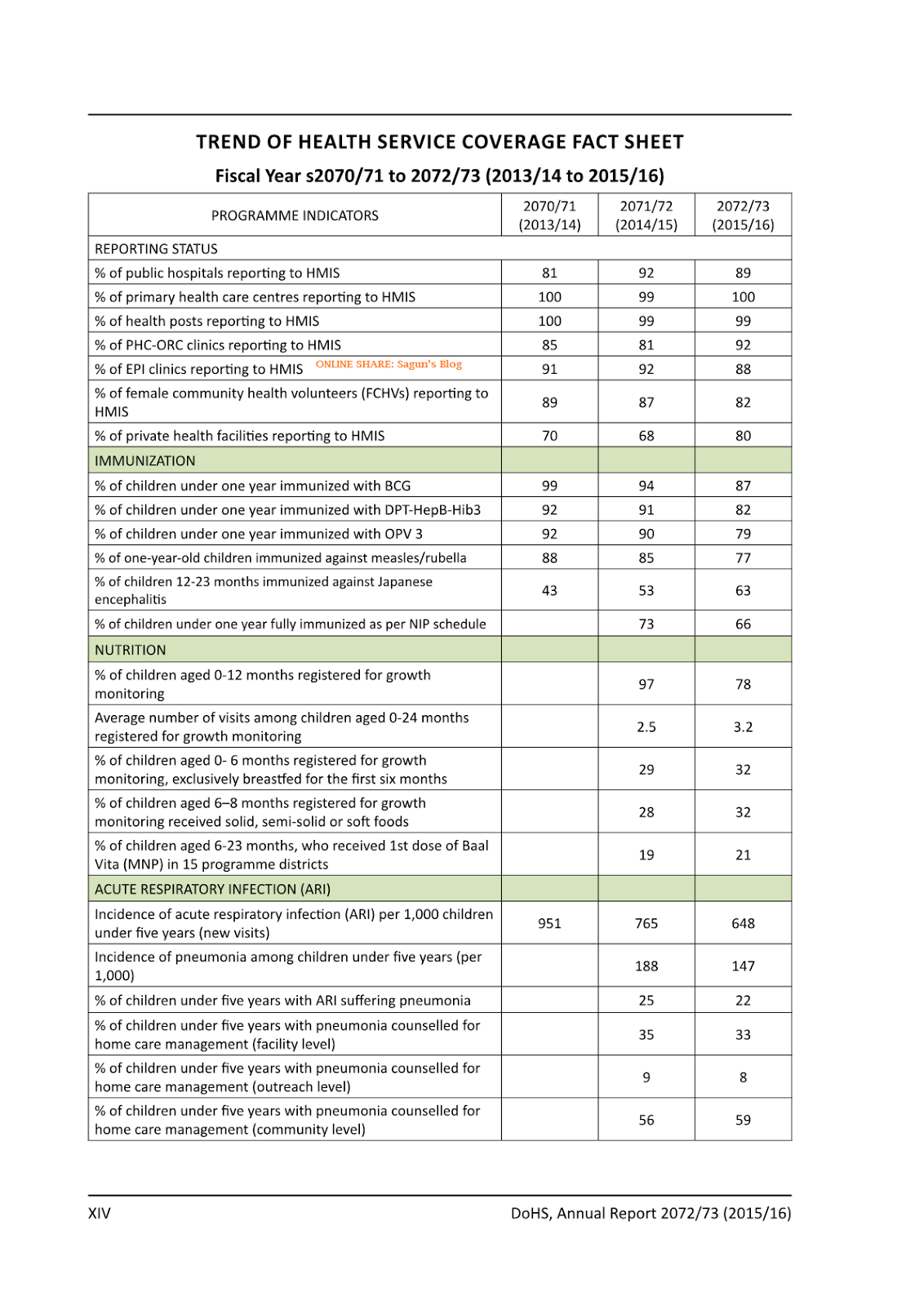
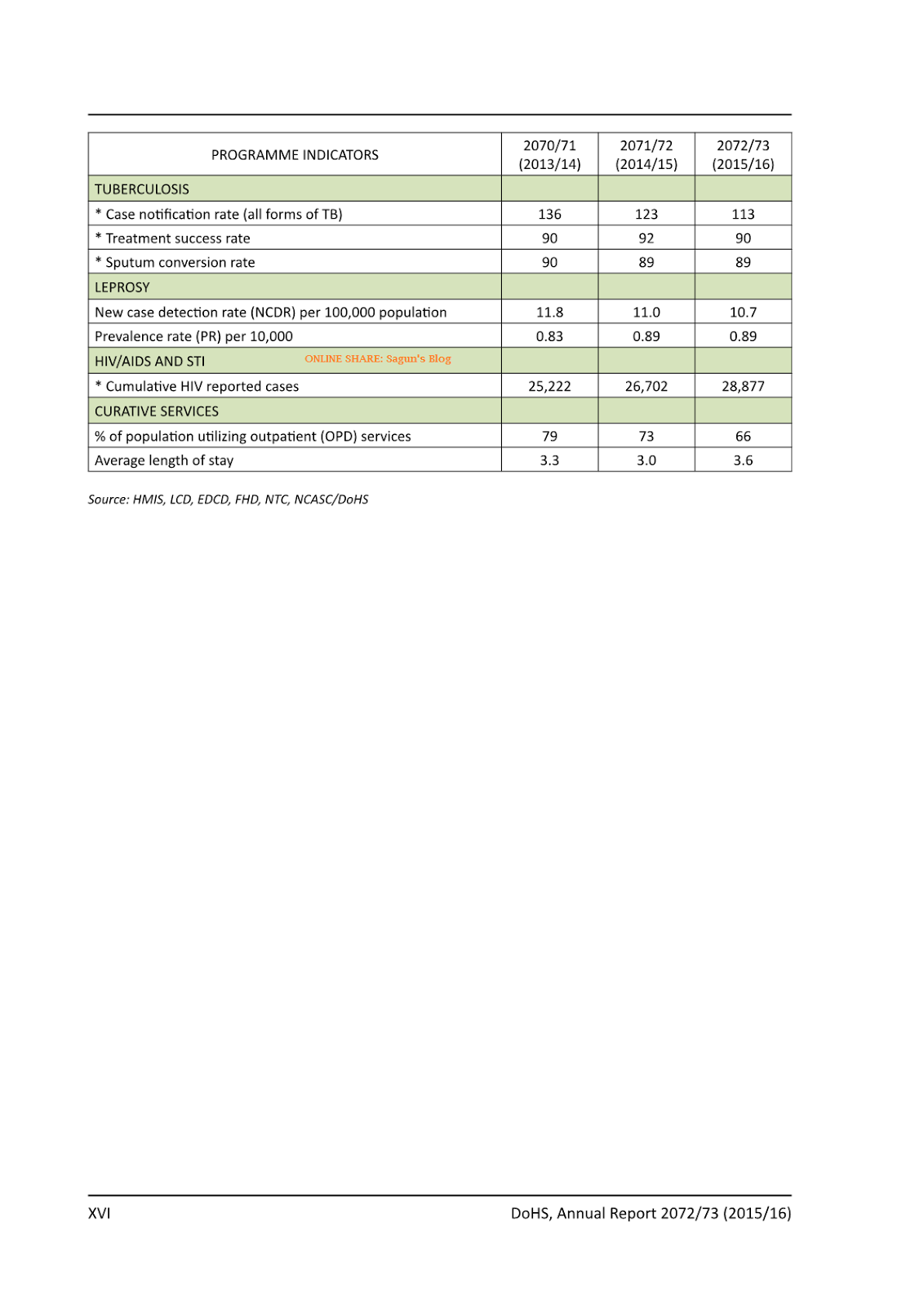
The Annual report of the Department of Health Services (DoHS) for fiscal year 2072/73 (2015/2016) is the twenty-second consecutive report of its kind. This report focuses on the objectives, targets and strategies adopted by Nepal’s health programmes and analyses their major achievements and highlights trends in service coverage over three fiscal years.


This report also identifies issues, problems 
and constraints and suggests actions to be taken by health institutions for further improvements.

DoHS Annual Report 2072 731

DOWNLOAD NOW (DoHS_Annual_Report_2072_73)

DoHS Annual Report 2072 7320
DoHS Annual Report 2072 7321
DoHS Annual Report 2072 7322


Get it on Google Play

Annual Report of DoHS 2069/2070 (2012-2013)
Annual Report of the Department of Health Services(DoHS) – 2071/72 (2014/2015)

June 14, 2017 0 comments
0 FacebookTwitterPinterestLinkedinTumblrVKOdnoklassnikiRedditStumbleuponWhatsappTelegramLINEPocketSkypeViberEmail
National Plan, Policy & GuidelinesPublic HealthResearch & Publication

National Blood Transfusion Policy-2071

by Public Health Update June 14, 2017
written by Public Health Update
images
Nepal Government endorsed the National Blood Transfusion Policy -2071 from the Decision of 2071/4/23. In Past, The National Blood Policy was formulated and implemented in 2050 BS (1993 )and revised in 2063 BS (2006), you can Download this Policy from Website of Ministry of Health And Population or  Direct Download from Here;


CLICK HERE FOR DOWNLOAD


June 14, 2017 0 comments
0 FacebookTwitterPinterestLinkedinTumblrVKOdnoklassnikiRedditStumbleuponWhatsappTelegramLINEPocketSkypeViberEmail
PH Important DayPublic Health

What can you do? Give blood. Give now. Give often – World Blood Donor Day, 14 June 2017

by Public Health Update June 14, 2017
written by Public Health Update
What can you do? Give blood. Give now. Give often – World Blood Donor Day, 14 June 2017

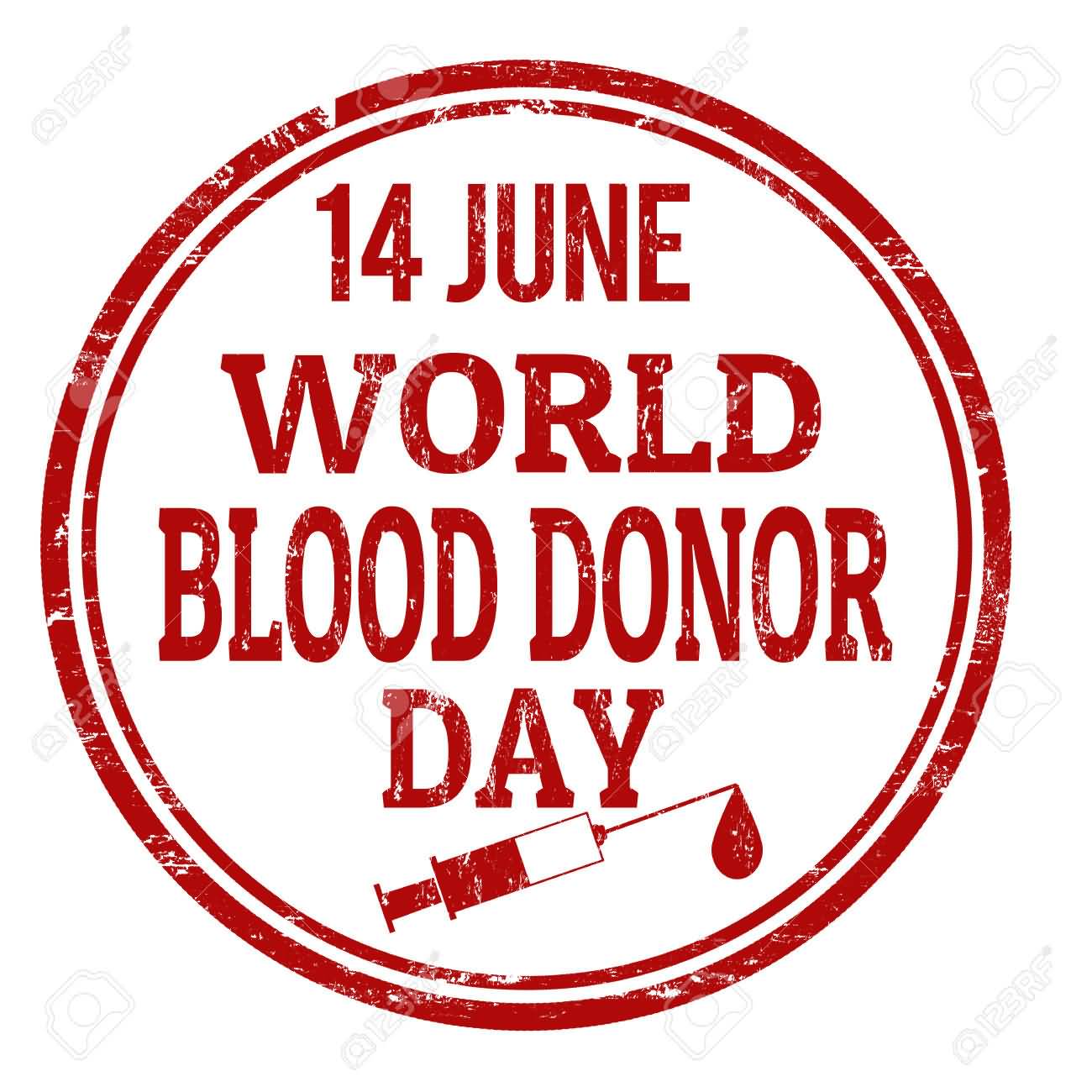
Every year, on 14 June, countries around the world celebrate World Blood Donor Day (WBDD). The event serves to raise awareness of the need for safe blood and blood products and to thank blood donors for their life-saving gifts of blood.


14 June World Blood Donor Day


Blood is an important resource, both for planned treatments and urgent interventions. It can help patients suffering from life-threatening conditions live longer and with a higher quality of life, and supports complex medical and surgical procedures. Blood is also vital for treating the wounded during emergencies of all kinds (natural disasters, accidents, armed conflicts, etc.) and has an essential, life-saving role in maternal and perinatal care.
banner en


A blood service that gives patients access to safe blood and blood products in sufficient quantity is a key component of an effective health system. Ensuring safe and sufficient blood supplies requires the development of a nationally coordinated blood transfusion service based on voluntary non-remunerated blood donations. However, in many countries, blood services face the challenge of making sufficient blood available, while also ensuring its quality and safety.
Focus of this year’s campaign


The lives and health of millions of people are affected by emergencies every year. In the last decade, disasters have caused more than 1 million deaths, with more than 250 million people being affected by emergencies every year. Natural disasters such as earthquakes, floods and storms create considerable needs for emergency health care, while at the same time, often destroying vital health facilities as well. Man-made disasters such as road accidents and armed conflicts also generate substantial health care demands and the need for front-line treatment.

Blood transfusion is an essential component of emergency health care. Emergencies increase the demand for blood transfusion and make its delivery challenging and complex. Adequate supply of blood during emergencies requires a well-organized blood service, and this can only be ensured by engaging the entire community and a blood donor population committed to voluntary unpaid blood donation throughout the year.
Slogan: What can you do? Give blood. Give now. Give often

This year’s campaign will focus on blood donation in emergencies. In crisis or emergency situation, the natural human response is “What can I do? How can I help?”. Therefore, the slogan for the 2017 campaign is: What can you do?, with the secondary message: Give blood. Give now. Give often.


The campaign underlines the role every single person can play in helping others in emergency situations, by giving the valuable gift of blood. It also focuses on the fact that it is important to give blood regularly, so that the blood stock is sufficient before an emergency arises.
The objectives of this year’s campaign
  • to encourage all people to strengthen the emergency preparedness of health services in their community by donating blood;
  • to engage authorities in the establishment of effective national blood donor programmes with the capacity to respond promptly to the increase in blood demand during emergencies;
  • to promote the inclusion of blood transfusion services in national emergency preparedness and response activities;
  • to build wider public awareness of the need for committed, year-round blood donation, in order to maintain adequate supplies and achieve a national self-sufficiency of blood;
  • to celebrate and thank individuals who donate blood regularly and to encourage young people to become new donors as well;
  • to promote international collaboration and to ensure worldwide dissemination of and consensus on the principles of voluntary non-remunerated donation, while increasing blood safety and availability.
WORLD HEALTH ORGANIZATION


Get it on Google Play


June 14, 2017 0 comments
0 FacebookTwitterPinterestLinkedinTumblrVKOdnoklassnikiRedditStumbleuponWhatsappTelegramLINEPocketSkypeViberEmail
Global Health NewsPublic HealthPublic Health News

Bhutan, Maldives eliminate measles

by Public Health Update June 13, 2017
written by Public Health Update
Bhutan, Maldives eliminate measles

WHO/SEAR MEDIA CENTER 
SEAR/PR/1651
New Delhi, 13 June, 2017: 
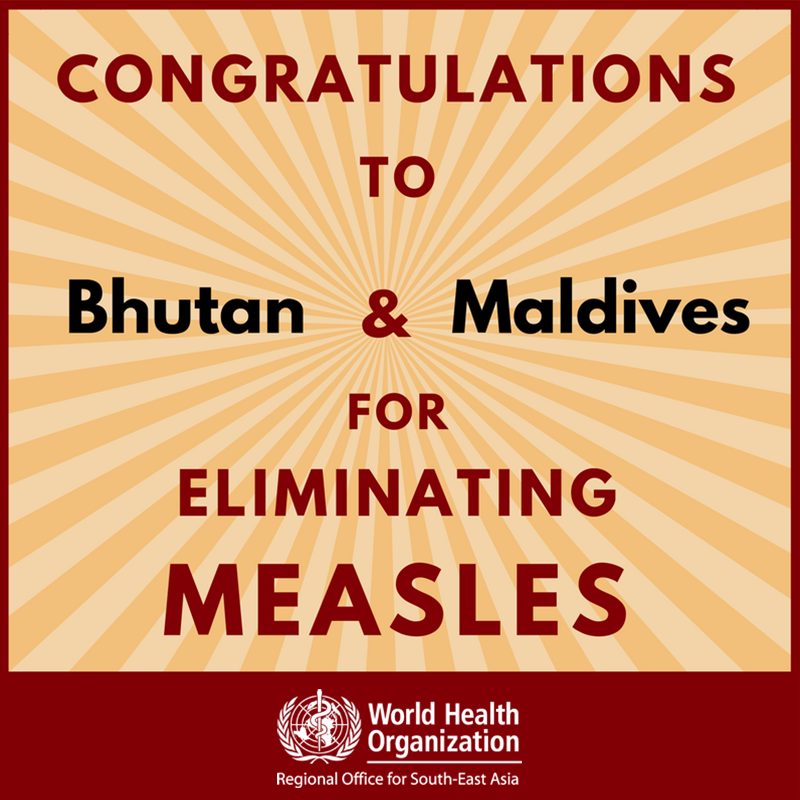
Bhutan and Maldives have eliminated measles, a highly infectious disease that is a major childhood killer globally. The two countries have become the first in WHO South-East Asia Region to be verified for having interrupted endemic measles virus transmission, ahead of the 2020 Regional target.


“Bhutan and Maldives have demonstrated how a highly contagious virus like measles can be eliminated. WHO commends them for this momentous public health achievement,” Dr Poonam Khetrapal Singh, Regional Director of WHO South-East Asia, said, announcing the findings and conclusions of the WHO South-East Asia Regional Verification Commission for Measles Elimination and Rubella control.


The Regional Director said, “The strongest political commitment, alongside the concerted efforts of health workers, officials and partners at all levels, has helped achieve this landmark success, which is a boost to the Region’s effort to eliminate measles and control rubella”.
Bhutan and Maldives launched their Expanded Program on Immunization in 1979 and 1976 respectively, and since then worked indefatigably to increase access to immunization services.


“Both countries achieved and maintained high coverage of measles vaccination, despite geographical challenges. They also established strong laboratory-supported surveillance for measles, and have conducted detailed case investigation and tracking, right up to the very last case,” Dr Khetrapal Singh said.
Maldives has not reported any case of indigenous measles since 2009, and Bhutan since 2012.
To fortify their progress, both countries have been carrying out mass vaccination campaigns with measles and rubella vaccine covering high-risk populations.
“While endemic measles virus transmission has been interrupted, both Bhutan and Maldives continue to be at risk of measles virus importation. Hence, both countries must continue efforts against measles and rubella and protect high-risk populations to effectively deal with any importations,” Dr Khetrapal Singh said.
Measles elimination and rubella control by 2020 has been one of WHO South-East Asia Region’s flagship priority programmes since Dr Khetrapal Singh became Regional Director in February 2014.
An estimated 620000 measles deaths have been averted in 2016 alone following vaccination carried out by Member countries. Nearly 107 million children have been reached with an additional dose of measles vaccine through mass vaccination between 2013 and 2016.
All countries have introduced two doses of measles containing vaccine and have been making focused efforts and progress against measles and rubella. All countries are conducting case-based surveillance for measles and rubella, and Regional surveillance standards have been revised to meet elimination standards. The measles laboratory network has been expanded from 23 laboratories in 2013 to 39 WHO accredited laboratories in 2016.
19145896 1045692448894728 4636786364381330574 n
“To meet the 2020 measles elimination and rubella control goals, all countries need to make greater efforts to increase measles vaccination coverage through childhood immunization programmes, as nearly 4.7 million children remain unvaccinated against measles in the Region annually,” Dr Khetrapal Singh said.
The overarching goal of universal health coverage and the core Sustainable Development Goal theme of leaving no one behind provide new opportunities to further improve immunization programmes, enhance access to new vaccines, and strengthen health systems to sustain the gains made so far, she said.
The measles elimination and rubella control strategy in WHO South-East Asia Region is based on four key approaches – achieving and maintaining at least 95% vaccination coverage with two doses of measles and rubella vaccine through routine and supplementary immunization; developing and sustaining a sensitive case based surveillance that meets recommended performance indicators; developing and maintaining an accredited measles and rubella laboratory network; and strengthening support and linkages for these strategies.


Get it on Google Play


June 13, 2017 0 comments
0 FacebookTwitterPinterestLinkedinTumblrVKOdnoklassnikiRedditStumbleuponWhatsappTelegramLINEPocketSkypeViberEmail
International Plan, Policy & GuidelinesPublic Health

WHO Model List of Essential Medicines (March 2017)

by Public Health Update June 7, 2017
written by Public Health Update
WHO updates Essential Medicines List with new advice on use of antibiotics, and adds medicines for hepatitis C, HIV, tuberculosis and cancer

WHO


6 JUNE 2017 | GENEVA
New advice on which antibiotics to use for common infections and which to preserve for the most serious circumstances is among the additions to the WHO Model list of essential medicines for 2017. Other additions include medicines for HIV, hepatitis C, tuberculosis and leukaemia.


The updated list adds 30 medicines for adults and 25 for children, and specifies new uses for 9 already-listed products, bringing the total to 433 drugs deemed essential for addressing the most important public health needs. The WHO Essential Medicines List (EML) is used by many countries to increase access to medicines and guide decisions about which products they ensure are available for their populations.
In the biggest revision of the antibiotics section in the EML’s 40-year history, WHO experts have grouped antibiotics into three categories – ACCESS, WATCH and RESERVE – with recommendations on when each category should be used. Initially, the new categories apply only to antibiotics used to treat 21 of the most common general infections. If shown to be useful, it could be broadened in future versions of the EML to apply to drugs to treat other infections.


WHO recommends that antibiotics in the ACCESS group be available at all times as treatments for a wide range of common infections. For example, it includes amoxicillin, a widely-used antibiotic to treat infections such as pneumonia.
The WATCH group includes antibiotics that are recommended as first- or second-choice treatments for a small number of infections. For example, the use of ciprofloxacin, used to treat cystitis (a type of urinary tract infection) and upper respiratory tract infections (such as bacterial sinusitis and bacterial bronchitis), should be dramatically reduced to avoid further development of resistance.
The third group, RESERVE, includes antibiotics such as colistin and some cephalosporins that should be considered last-resort options, and used only in the most severe circumstances when all other alternatives have failed, such as for life-threatening infections due to
multidrug-resistant bacteria.


SOURCE OF INFO: WHO

Related Posts:

  • WHO Model List of Essential Medicines (April 2015) 19thedition
  • List of free essential drugs for Health Institutions, Nepal 

DOWNLOAD MOBILE APPLICATION : PUBLIC HEALTH INFO
June 7, 2017 0 comments
0 FacebookTwitterPinterestLinkedinTumblrVKOdnoklassnikiRedditStumbleuponWhatsappTelegramLINEPocketSkypeViberEmail
PH Important DayPublic Health

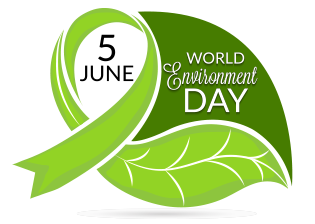
Connecting People to Nature – #WorldEnvironmentDay #I’mWithNature

by Public Health Update June 5, 2017
written by Public Health Update
5th June 2017

‘Connecting People to Nature’, the theme for World Environment Day 2017, implores us to get outdoors and into nature, to appreciate its beauty and its importance, and to take forward the call to protect the Earth that we share. 

5th June 2017 World Environment Day
World Environment Day is the biggest annual event for positive environmental action and takes place every 5 June. This year’s host country Canada got to choose the theme and will be at the centre of celebrations around the planet.


World Environment Day is a day for everyone, everywhere. Since it began in 1972, global citizens have organized many thousands of events, from neighbourhood clean-ups, to action against wildlife crime, to replanting forests.

This year’s theme invites you to think about how we are part of nature and how intimately we depend on it. It challenges us to find fun and exciting ways to experience and cherish this vital relationship.

Since its beginning in 1974, World Environment Day has developed into a global platform for raising awareness and taking action on urgent issues from marine pollution and global warming to sustainable consumption and wildlife crime. Millions of people have taken part over the years, helping drive change in our consumption habits as well as in national and international environmental policy. Below are some of the landmarks of World Environment Day through the years.

Source: World Environment Day 2017


SPECIAL REQUEST :
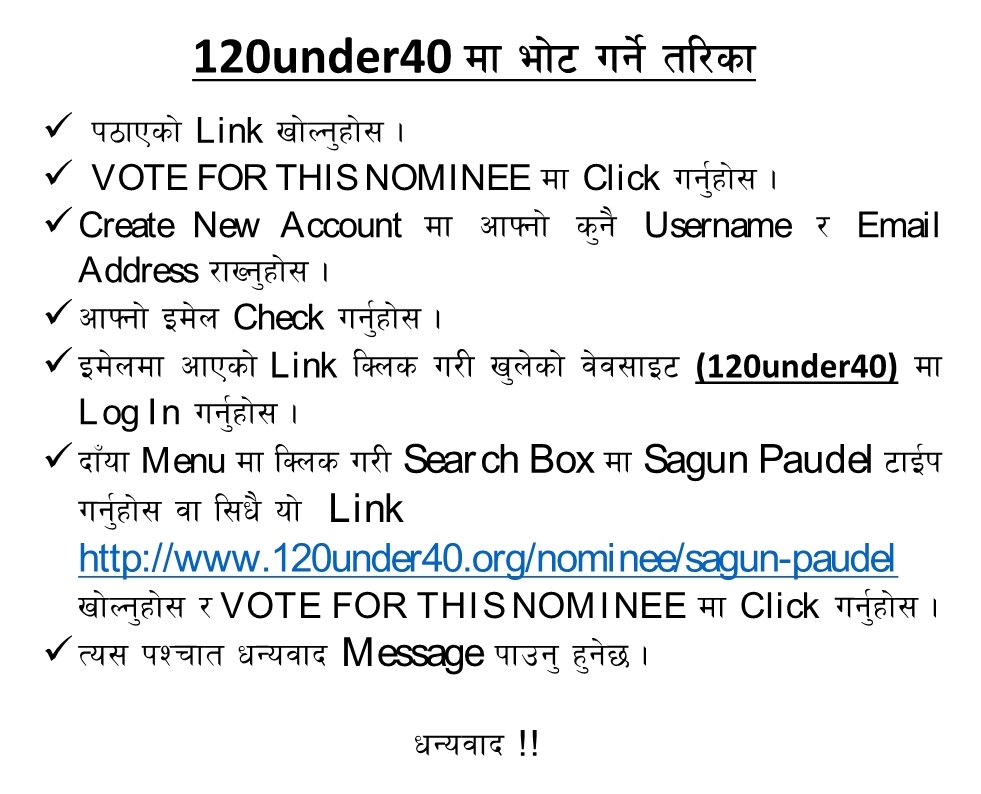
Dear all , I am Sagun Paudel, Nominated as a 120 Under 40 the next generation of next generation of Family Planning Leaders Program. 
Public voting is now open!! Kindly give your vote for Me from June 1 to June 15. I request you to cast your valuable vote in favor of my Nomination !!

Steps for voting:
1) Open this Link : https://t.co/4QOrMTrRwh
2) Click on: vote for this Nominee
3) Create new account ( Entry your USERNAME, EMAIL & PASSWORD then create new account)
4) After creating your account OPEN MY PROFILE PAGE AND VOTE. ( https://t.co/4QOrMTrRwh )
5. Vote Closing date: June 15, 2017.
Thanks for your support.


Voting%2BTechnique1
June 5, 2017 0 comments
0 FacebookTwitterPinterestLinkedinTumblrVKOdnoklassnikiRedditStumbleuponWhatsappTelegramLINEPocketSkypeViberEmail
PH Important DayPresentation SlidesPublic HealthPublic Health EventsTobacco Control

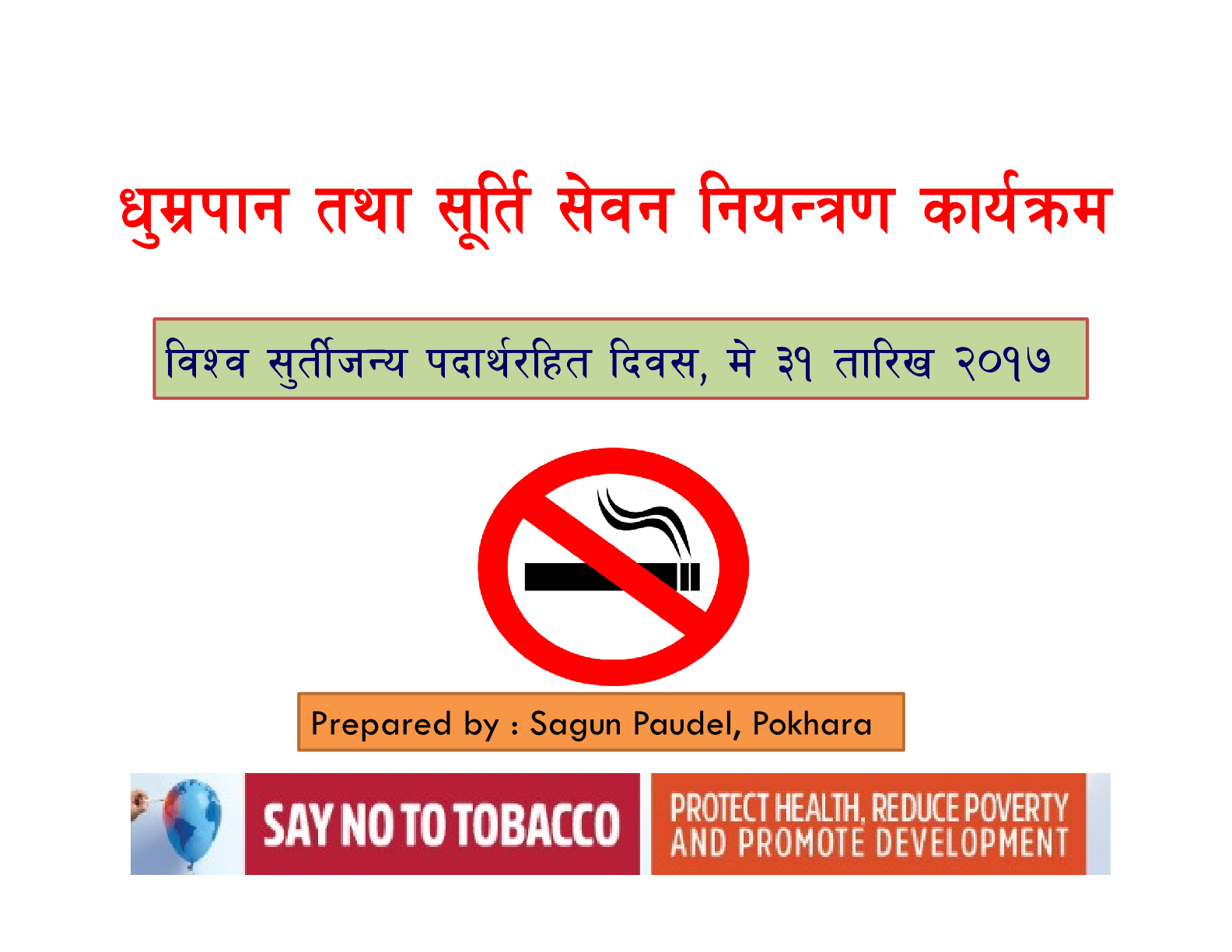
World No Tobacco Day (Presentation)

by Public Health Update May 30, 2017
written by Public Health Update
Every year, on 31 May, WHO and partners mark World No Tobacco Day (WNTD), highlighting the health and additional risks associated with tobacco use, and advocating for effective policies to reduce tobacco consumption. The theme for World No Tobacco Day 2017 is “Tobacco – a threat to development.”


World%2BNo%2Btobacco%2BDay 2017%2B1


RELATED POST: ”Tobacco – a threat to development” – World NoTobacco Day, 31 May 2017


May 30, 2017 0 comments
0 FacebookTwitterPinterestLinkedinTumblrVKOdnoklassnikiRedditStumbleuponWhatsappTelegramLINEPocketSkypeViberEmail
National Health NewsNational Plan, Policy & GuidelinesPublic Health NewsPublic Health ProgramsReportsResearch & Publication

Key features of #Nepalbudget2074/75(Health)

by Public Health Update May 29, 2017
written by Public Health Update
Key features of #Nepalbudget2074/75(Health)

011
1
2

3

4

5

6

7
DOWNLOAD FULL BUDGET SPEECH 


May 29, 2017 0 comments
0 FacebookTwitterPinterestLinkedinTumblrVKOdnoklassnikiRedditStumbleuponWhatsappTelegramLINEPocketSkypeViberEmail
Newer Posts
Older Posts

Search

Follow Us

Facebook Twitter Instagram Pinterest Linkedin Youtube

Categories

  • Abstracts (25)
  • Activities (91)
  • Adolescent Sexual and Reproductive Health (ASRH) (25)
  • Advice & Tips (3)
  • African Region (5)
  • AI and Health (1)
  • Annual Meeting (6)
  • Antimicrobial Resistance (AMR) (21)
  • Award (19)
  • Awards (16)
  • Books (9)
  • Call for Proposal, EOI & RFP (103)
  • Call for Research Participants (8)
  • Clinical Doctor Jobs (6)
  • Communicable Diseases (107)
  • Competition (20)
  • Conference (128)
  • Consultant (1)
  • Courses (205)
  • Dashboard (2)
  • Digital Health & Health Informatics (10)
  • Drug and Medicine (18)
  • Eastern Mediterranean Region (3)
  • Education (15)
  • Environment (3)
  • Environmental Health & Climate Change (47)
  • European Region (42)
  • Exchange Program (1)
  • Fact Sheet (117)
  • FCHVs (1)
  • Fellowships, Studentship & Scholarships (168)
  • Financial Aid (13)
  • Form Formats (2)
  • Fully funded (22)
  • Global Health News (433)
  • Grants and Funding Opportunities (193)
  • Guest Post (44)
  • Health Assistant Jobs (1)
  • Health Equity (7)
  • Health Financing and Economics (24)
  • Health in Data (115)
  • Health Insurance (5)
  • Health Jobs (52)
  • Health Literacy, Health Education & Promotion (49)
  • Health Organization Profile (42)
  • Health Systems (83)
  • Human Resource for Health (33)
  • Humanitarian Health & Emergency Response (44)
  • Hypertension (5)
  • Implementation Research (48)
  • International Health (3)
  • International Jobs & Opportunities (373)
  • International Plan, Policy & Guidelines (210)
  • Internships (4)
  • Jobs Vacancies (56)
  • Journals (8)
  • Life Style & Public Health Nutrition (39)
  • Live (10)
  • Master's Degree (48)
  • Maternal, Newborn and Child Health (88)
  • Mentorship Program (2)
  • Miscellaneous (16)
  • National Health News (157)
  • National Plan, Policy & Guidelines (468)
  • Neglected Tropical Diseases (NTDs) (51)
  • Non- Communicable Diseases (NCDs) (120)
  • Notice (103)
  • Nursing Jobs (6)
  • Nutritionist Jobs (1)
  • One Health (17)
  • Online & Distance Learning (22)
  • Online Courses (90)
  • Op-Ed Article (3)
  • Opportunities by Region (83)
  • Outbreak News (213)
  • Partially funded (6)
  • PCL Health Science Jobs (3)
  • PH Important Day (533)
  • Pharmacist Jobs (3)
  • PhD (54)
  • Photos (5)
  • Planetary Health (4)
  • PostDoc (14)
  • Presentation Slides (26)
  • Primary Health Care (25)
  • Provincial Plan, Policies and Guidelines (14)
  • Public Health (1,281)
  • Public Health Epidemiology & Biostatistics (13)
  • Public Health Events (306)
  • Public Health Information (20)
  • Public Health Innovation (9)
  • Public Health Jobs (52)
  • Public Health News (552)
  • Public Health Notes (120)
  • Public Health Opportunities (507)
  • Public Health Opportunity (491)
  • Public Health Programs (108)
  • Public Health Seminar (2)
  • Public Health Tools (1)
  • Public Health Update (561)
  • Quality Improvement & Infection Prevention (20)
  • Region of America (8)
  • Reports (184)
  • Research & Project Grants (39)
  • Research & Project Grants (32)
  • Research & Publication (647)
  • Research Articles (10)
  • Road Traffic Accidents (RTA) (9)
  • School of Public Health (60)
  • Self funded (2)
  • South-East Asia Region (26)
  • Success Stories (17)
  • Summer and Winter Courses (40)
  • Summer Courses (28)
  • Sustainable Development Goals (SDGs) (14)
  • Syllabus (61)
  • Symposium (9)
  • Tobacco Control (35)
  • Training (40)
  • Travel Grants (15)
  • Trick, Technique & Skills (8)
  • Uncategorized (3)
  • Undergraduate Degree (7)
  • Universal Health Coverage (36)
  • Universities (29)
  • Universities & School of Public Health (58)
  • Vacancy Announcement (26)
  • Vaccine Preventable Diseases (40)
  • Vector-Borne Diseases(VBDs) (30)
  • Videos (3)
  • View Points (1)
  • Webinar (4)
  • Western Pacific Region (13)
  • Workshop (18)
  • World News (116)
Post New Jobs: Vacancy Announcement Service

Public Health Update (Sagun’s Blog) is a popular public health portal in Nepal. Thousands of health professionals are connected with Public Health Update to get up-to-date public health updates, search for jobs, and explore opportunities.
#1 Public Health Blog for sharing Job opportunities and updates in Nepal

”Public Health Information For All”
– – Sagun Paudel, Founder

  • HOT JOBS
    • Public Health Jobs
    • Medical Doctor Jobs
    • Nursing Jobs
    • Health Assistant Jobs
    • Pharmacist Jobs
    • NGOs Jobs
    • Government Jobs
  • Top Categories
    • National Plan, Policy & Guidelines Top
    • Public Health Calendar
    • Fellowships & Scholarships
    • Health Systems
    • Health Organization Profiles
    • International Jobs & Opportunities
    • Public Health Opportunity

PUBLIC HEALTH INITIATIVE

    • Submit your Vacancies New
    • Partnership Opportunities

Contact: blog.publichealthupdate@gmail.com

https://wa.me/+9779856036932

Public Health Initiative, A Registered Non-profit organization – All Right Reserved. 2011-2024. Contact us. 

Facebook Twitter Instagram Youtube Envelope
Public Health Update
  • Home
  • Public Health
    • Home 1
      • Adolescent Sexual and Reproductive Health (ASRH)
      • Antimicrobial Resistance (AMR)
      • Communicable Diseases
      • Digital Health & Health Informatics
      • Environmental Health & Climate Change
      • Health Financing and Economics
      • Health Equity
    • Home 2
      • Health Literacy, Health Education & Promotion
      • Human Resource for Health
      • Humanitarian Health & Emergency Response
      • Implementation Research
      • International Health
      • Life Style & Public Health Nutrition
      • Maternal, Newborn and Child Health
    • Home 3
      • Neglected Tropical Diseases (NTDs)
      • Non- Communicable Diseases (NCDs)
      • One Health
      • Planetary Health
      • Public Health Epidemiology & Biostatistics
      • Primary Health Care
      • Quality Improvement & Infection Prevention
    • Home 4
      • Road Traffic Accidents (RTA)
      • Sustainable Development Goals (SDGs)
      • Tobacco Control
      • Universal Health Coverage
      • Vaccine Preventable Diseases
      • Vector-Borne Diseases(VBDs)
      • Notices
  • Public Health Update
    • Home 1
      • Public Health News
      • Global Health News
      • Outbreak News
      • National Health News
      • COVID-19
    • Home 2
      • Fact Sheet
      • Health in Data
      • PH Important Day
      • Public Health Events
      • Public Health Programs
    • Home 3
      • Health Systems
      • Health Insurance
      • Health Organization Profile
      • Success Stories
      • Public Health Innovation
  • Public Health Opportunities
    • Fully funded
    • Travel Grants
    • Grants and Funding Opportunities
    • Opportunities by Region
    • International Jobs & Opportunities
    • Research & Project Grants
    • Fellowships, Studentship & Scholarships
    • Conference
  • Jobs
    • Home 1
      • Health Jobs
      • Public Health Jobs
      • Clinical doctor Jobs
      • Health Assistant Jobs
      • Nursing Jobs
      • PCL Health Science Jobs
    • Home 2
      • Dental Jobs
      • Pharmacist Jobs
      • TSLC (Health Jobs)
      • Laboratory Jobs
      • Nutritionist Jobs
  • Downloads
    • International Plan, Policy & Guidelines
    • National Plan, Policy & Guidelines
    • Reports
    • Books
    • Research Articles
  • School of Public Health
    • Home 1
      • Courses
      • Master’s Degree
      • Undergraduate Degree
      • PhD
    • Home 2
      • Universities
      • Syllabus
      • Public Health Notes
      • Mentorship Program
      • Startup Project
    • Home
      • Summer and Winter Courses
      • Summer Courses
      • Online Courses
      • Workshop
      • Training
Public Health Update
  • Home
  • Public Health
    • Home 1
      • Adolescent Sexual and Reproductive Health (ASRH)
      • Antimicrobial Resistance (AMR)
      • Communicable Diseases
      • Digital Health & Health Informatics
      • Environmental Health & Climate Change
      • Health Financing and Economics
      • Health Equity
    • Home 2
      • Health Literacy, Health Education & Promotion
      • Human Resource for Health
      • Humanitarian Health & Emergency Response
      • Implementation Research
      • International Health
      • Life Style & Public Health Nutrition
      • Maternal, Newborn and Child Health
    • Home 3
      • Neglected Tropical Diseases (NTDs)
      • Non- Communicable Diseases (NCDs)
      • One Health
      • Planetary Health
      • Public Health Epidemiology & Biostatistics
      • Primary Health Care
      • Quality Improvement & Infection Prevention
    • Home 4
      • Road Traffic Accidents (RTA)
      • Sustainable Development Goals (SDGs)
      • Tobacco Control
      • Universal Health Coverage
      • Vaccine Preventable Diseases
      • Vector-Borne Diseases(VBDs)
      • Notices
  • Public Health Update
    • Home 1
      • Public Health News
      • Global Health News
      • Outbreak News
      • National Health News
      • COVID-19
    • Home 2
      • Fact Sheet
      • Health in Data
      • PH Important Day
      • Public Health Events
      • Public Health Programs
    • Home 3
      • Health Systems
      • Health Insurance
      • Health Organization Profile
      • Success Stories
      • Public Health Innovation
  • Public Health Opportunities
    • Fully funded
    • Travel Grants
    • Grants and Funding Opportunities
    • Opportunities by Region
    • International Jobs & Opportunities
    • Research & Project Grants
    • Fellowships, Studentship & Scholarships
    • Conference
  • Jobs
    • Home 1
      • Health Jobs
      • Public Health Jobs
      • Clinical doctor Jobs
      • Health Assistant Jobs
      • Nursing Jobs
      • PCL Health Science Jobs
    • Home 2
      • Dental Jobs
      • Pharmacist Jobs
      • TSLC (Health Jobs)
      • Laboratory Jobs
      • Nutritionist Jobs
  • Downloads
    • International Plan, Policy & Guidelines
    • National Plan, Policy & Guidelines
    • Reports
    • Books
    • Research Articles
  • School of Public Health
    • Home 1
      • Courses
      • Master’s Degree
      • Undergraduate Degree
      • PhD
    • Home 2
      • Universities
      • Syllabus
      • Public Health Notes
      • Mentorship Program
      • Startup Project
    • Home
      • Summer and Winter Courses
      • Summer Courses
      • Online Courses
      • Workshop
      • Training
Public Health Initiative, A Registered Non-profit organization – All Right Reserved. 2011-2023