Guideline for health institution establishment, operation & upgrade standard – MoH
Health Care Waste Management Guideline- 2014
National Guideline for Sickle Cell Anaemia and Thalassemia
Ambulance Service Operation Guidelines- MoHP
Health Care Waste Management Guideline- 2014
National Guideline for Sickle Cell Anaemia and Thalassemia
Ambulance Service Operation Guidelines- MoHP
World Radiography Day is celebrated on 8 November each year. The date marks the anniversary of the discovery of x-radiation by Wilhelm Roentgen in 1895.
Radiographers worldwide can use the day and the days around the date to promote radiography as a career, as a vital contribution to modern healthcare and as a chance to increase public awareness of diagnostic imaging and radiation therapy.
The International Day of Radiology is an annual event held with the aim of building greater awareness of the value that radiology contributes to safe patient care, and improving understanding of the vital role radiologists play in the healthcare continuum.
Medical imaging is one of the most exciting and progressive disciplines in healthcare and a field of great activity in terms of technological and biological research. X-rays, MRI scans, ultrasound and numerous other medical imaging technologies, as well as the eye-catching images associated with them, are known to many people, but the exact purpose and value of these services is not widely understood.
International Day of Radiology
Radiologists, radiographers, radiological technologists and professionals from related fields will celebrate the International Day of Radiology (IDoR 2020) all over the world. In 2020, the International Day of Radiology will therefore be dedicated to all imaging professionals and their essential role in fighting the COVID-19 pandemic making an indispensable contribution to the diagnosis and treatment of COVID-19 patients.
The motto for 2020 is ‘Radiologists and radiographers supporting patients during COVID-19’. The International Day of Radiology invites everyone to celebrate the critical role that medical imaging has played during the current crisis.
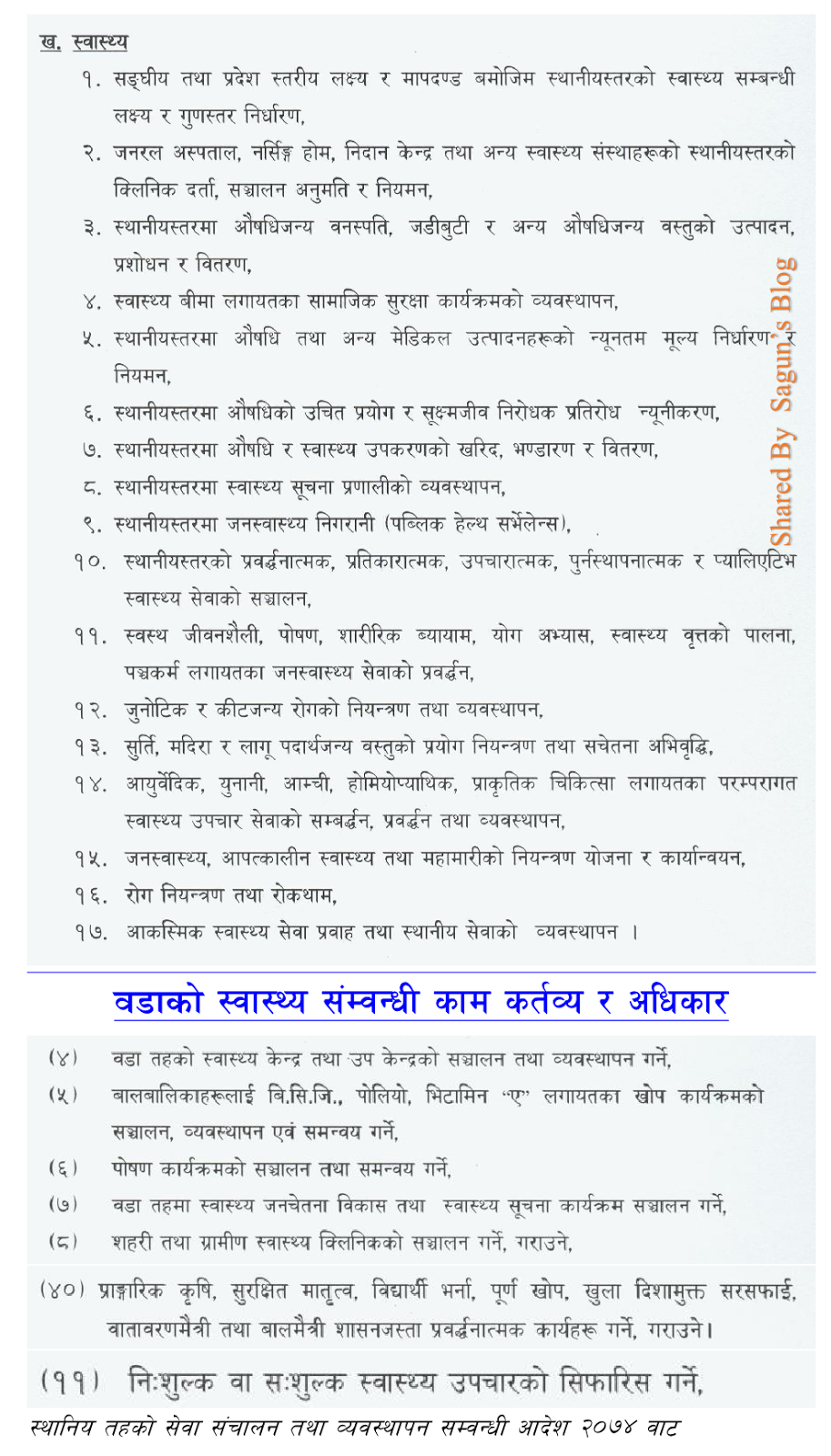
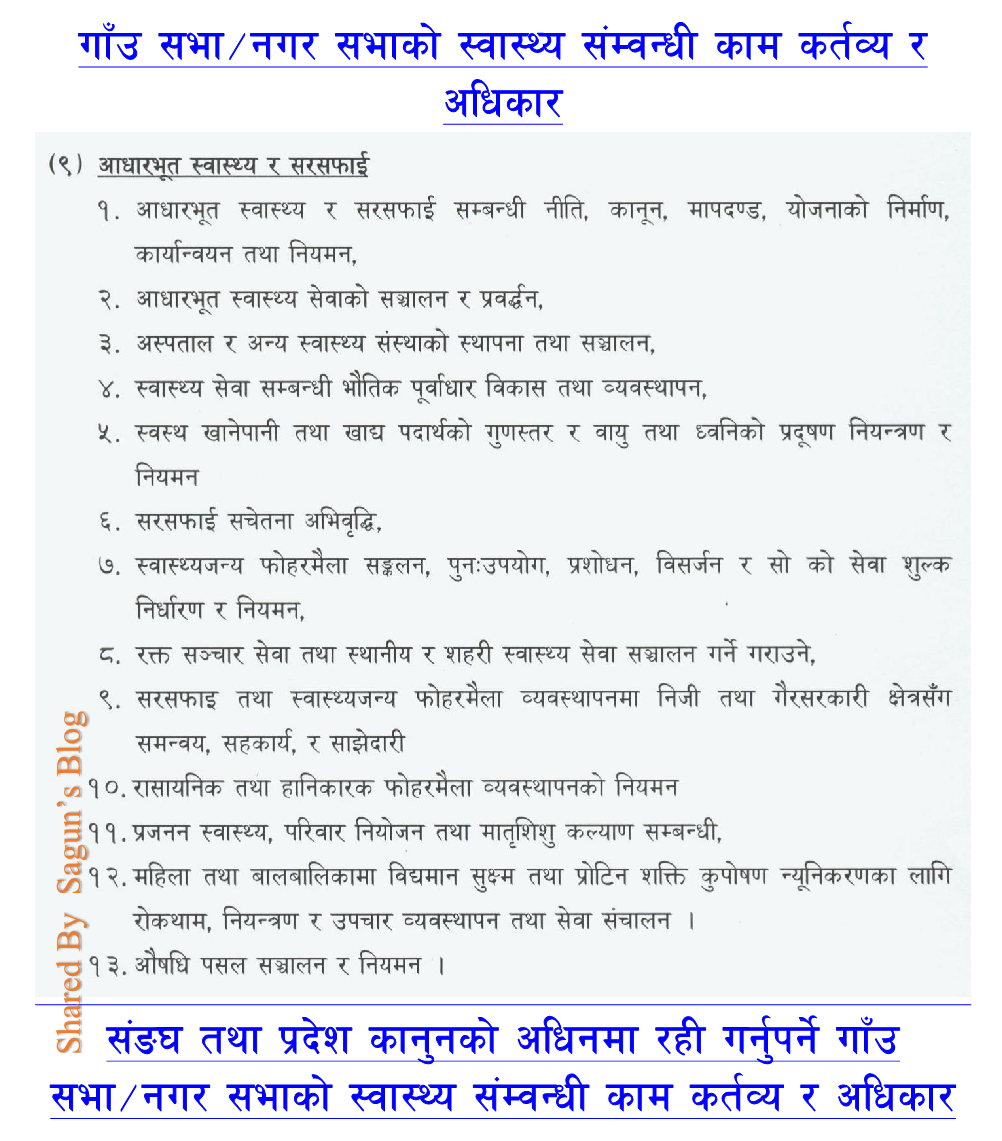
TOR of Health Workers at Local Level
Note: Please use your Computer or Laptop to Download Full Document)
Program Implementation Guidelines – DoHS
Joint news release CDC/GAVI/UNICEF/WHO
26 OCTOBER 2017 | GENEVA/NEW YORK/ATLANTA – In 2016, an estimated 90 000 people died from measles – an 84% drop from more than 550 000 deaths in 2000 – according to a new report published today by leading health organizations. This marks the first time global measles deaths have fallen below 100 000 per year.
Measles elimination is defined as the absence of endemic measles virus transmission in a region or other defined geographical area for more than 12 months, in the presence of a well-performing surveillance system.
“Saving an average of 1.3 million lives per year through measles vaccine is an incredible achievement and makes a world free of measles seem possible, even probable, in our lifetime,” says Dr Robert Linkins, of the Measles and Rubella Initiative (MR&I) and Branch Chief of Accelerated Disease Control and Vaccine Preventable Diseases at the Centers for Disease Control and Prevention. M&RI is a partnership formed in 2001 of the American Red Cross, the US Centers for Disease Control and Prevention, the United Nations Foundation, UNICEF, and WHO.
Since 2000, an estimated 5.5 billion doses of measles-containing vaccines have been provided to children through routine immunization services and mass vaccination campaigns, saving an estimated 20.4 million lives.
“We have seen a substantial drop in measles deaths for more than two decades, but now we must strive to reach zero measles cases,” says Dr Jean-Marie Okwo-Bele, Director of WHO’s Department of Immunization, Vaccines and Biologicals. “Measles elimination will only be reached if measles vaccines reach every child, everywhere.”
The world is still far from reaching regional measles elimination goals. Coverage with the first of two required doses of measles vaccine has stalled at approximately 85% since 2009, far short of the 95% coverage needed to stop measles infections, and coverage with the second dose, despite recent increases, was only 64% in 2016.
Far too many children – 20.8 million – are still missing their first measles vaccine dose. More than half of these unvaccinated children live in six countries: Nigeria (3.3 million), India (2.9 million), Pakistan (2.0 million), Indonesia (1.2 million), Ethiopia (0.9 million), and Democratic Republic of the Congo (0.7 million). Since measles is a highly contagious viral disease, large outbreaks continue to occur in these and other countries in Europe and North America, putting children at risk of severe health complications such as pneumonia, diarrhoea, encephalitis, blindness, and death.
Agencies noted that progress in reaching measles elimination could be reversed when polio-funded resources supporting routine immunization services, measles and rubella vaccination campaigns, and surveillance, diminish and disappear following polio eradication. Countries with the greatest number of measles deaths rely most heavily on polio-funded resources and are at highest risk of reversing progress after polio eradication is achieved.
“This remarkable drop in measles deaths is the culmination of years of hard work by health workers, governments, and development agencies to vaccinate millions of children in the world’s poorest countries,” said Dr Seth Berkley, CEO of Gavi, the Vaccine Alliance, one of the world’s largest supporters of measles immunization programmes. “However we cannot afford to be complacent. Too many children are still missing out on lifesaving vaccines. To reach these children and set ourselves on a realistic road to measles elimination we need to dramatically improve routine immunization backed by strong health systems.”
WHO MEDIA CENTRE
The International Lead Poisoning Prevention Week (ILPPW): From 22 to 28 October 2017 the international lead poisoning prevention week of action will take place, with a particular focus on eliminating lead paint.
Lead poisoning is preventable, yet the Institute for Health Metrics and Evaluation has estimated that, based on 2015 data, lead exposure accounted for 494 550 deaths and 9.3 million disability adjusted life years (DALYs) due to long-term effects on health, with the highest burden in developing regions. Of particular concern is the role of lead exposure in the development of intellectual disability in children. Even though there is wide recognition of this problem and many countries have taken action, exposure to lead, particularly in childhood, remains of key concern to health care providers and public health officials worldwide. WHO
The International Lead Poisoning Prevention Week (ILPPW) raises awareness and promotes actions to address the human health effects of lead exposure, especially for children. During the week, governments, academia, industry and civil society promote efforts to prevent childhood lead poisoning, and specifically laws to eliminate lead in paint.
While many countries have long-established bans on lead paint, it is still legal to sell lead paint for use in
homes, schools and other buildings in more than one third of the world’s countries.
Children living in low- and middle-income countries, where there are few governmental controls on lead, are disproportionately affected.
This year’s ILPPW aims to help individuals, organizations, industry and governments work together to ban lead
from paint.
The ILPPW messages to stakeholders:
''Lead paint is a serious threat to the long-term health of our children. Yet lead paint is still on sale in many countries and is used to decorate homes and schools. WHO calls on all countries to phase out lead paint by 2020 to protect the health of this and future generations. — Dr. Maria Neira, Director, Department of Public Health, Environmental and Social Determinants of Health, World Health Organization
Key Messages:
1. Lead exposure affects human health, especially for children.
2. Lead paint is an important source of lead exposure.
3. We can work together to reduce human health impacts from lead paint.


Source of Info: International Lead Poisoning Prevention Week 2017 resource pack. Geneva: World Health Organization/United Nations Environment Programme; 2017. Licence: CC BY-NC-SA 3.0 IGO
Related Links;
World Polio Day was established by Rotary International over a decade ago to commemorate the birth of Jonas Salk, who led the first team to develop a vaccine against poliomyelitis. Use of this inactivated poliovirus vaccine and subsequent widespread use of the oral poliovirus, developed by Albert Sabin, led to the establishment of the Global Polio Eradication Initiative (GPEI) in 1988. As of 2013, GPEI had reduced polio worldwide by 99%.
Polio is a crippling and potentially fatal infectious disease. There is no cure, but there are safe and effective vaccines. Polio can be prevented through immunization. Polio vaccine, given multiple times, almost always protects a child for life. The strategy to eradicate polio is therefore based on preventing infection by immunizing every child until transmission stops and the world is polio-free.
Acute flaccid paralysis surveillance — The surveillance of acute flaccid paralysis (AFP) has been carried out in all 75 districts since 1998 with 735 routine weekly zero reporting and 79 active surveillance sites. The two main indicators for AFP sensitivity surveillance are i) the non-polio AFP rate (which should be at least 2 per 100,000 among under 15 year olds) and ii) an adequate stool collection rate, which should be more than 80 percent of AFP cases In 2072/73, 455 AFP cases were reported from 67 districts and no cases from 8 districts.
(DoHS Annual Report 2072/73)
October 24, 2016 (RASTRIYA SAMACHAR SAMITI)
Do you have plans to paint your house in blazing colours to make it attractive? If you happen to be harbouring such thoughts, it is now time to shun it or else you will be risking your health according to experts, who claim that the colours used to paint the walls have harmful lead component.
If you happen to be harbouring such thoughts, it is now the time to shun it or else you will be risking your health, according to experts, who claim that the colours used to paint the walls have harmful lead component.
This crucial information was shared at the launch of an awareness programme organised jointly by the Ministry of Health, the Centre for Public Health and Environmental Development and the IPEN with an aim to make Nepal lead-free and to save people from lead poisoning here, on Sunday.
Experts have emphasised that around 853,000 people die annually in the world due to lead poisoning. As much as 6.6 per cent excess lead in the body may invite heart diseases and, in the long run, cause cancer.
The lead poisoning may be transferred from a mother to her baby during pregnancy and, in men, it can cause high blood pressure and even depleted performance of sperm production.
Meanwhile, a week-long international programme aimed at creating awareness over the issue is being held this week (October 23 to 29).
In a health survey carried out by IPEN with 312 blood samples taken from Dharan and 304 from Kathmandu, 65 per cent of the total blood samples examined showed they had the lead content. Among the children examined in Lalitpur and Bhaktapur, 90 per cent exhibited more than five mg of lead content.
In Nepal, the government has formulated a law barring the use of more than 90 PPM lead content in the colour paint, but none of the colour manufacturers were found to have mentioned the amount of lead content in their paint colour buckets.
At the programme, CEPHED Executive Director and environmentalist Ram Charitra Sah called for bringing the 90 PPM threshold to zero level for the sake of people’s good health and to protect their right to live.
Central Union of Painters, Plumbers, Electro and Construction Workers -Nepal (CUPPEC-Nepal) Chairman Krishna Baral, noted that the lead content is not only found in paint colours, but in vehicles’ brake systems and corrugated zinc sheets as well.
Original Source of Info: October 24, 2016 (RASTRIYA SAMACHAR SAMITI)
Public Health Update (Sagun’s Blog) is a popular public health portal in Nepal. Thousands of health professionals are connected with Public Health Update to get up-to-date public health updates, search for jobs, and explore opportunities.
#1 Public Health Blog for sharing Job opportunities and updates in Nepal
”Public Health Information For All”
– – Sagun Paudel, Founder
Contact: blog.publichealthupdate@gmail.com
Public Health Initiative, A Registered Non-profit organization – All Right Reserved. 2011-2024. Contact us.