Public Health Update
  • Home
  • Public Health Update
  • Nepal Health Jobs
    • Public Health Job Board
    • Organization List
  • Opportunities
    • Fellowships, Studentship & Scholarships
    • Grants and Funding Opportunities
    • Fully funded
    • Conference
  • Downloads
    • International Plan, Policy & Guidelines
    • National Plan, Policy & Guidelines
    • Reports
    • Public Health Notes
    • Syllabus
    • Form Formats
  • School of Public Health
    • PhD
    • Master’s Degree
    • Online Courses
  • Notice
  • Home
  • Public Health Update
  • Nepal Health Jobs
    • Public Health Job Board
    • Organization List
  • Opportunities
    • Fellowships, Studentship & Scholarships
    • Grants and Funding Opportunities
    • Fully funded
    • Conference
  • Downloads
    • International Plan, Policy & Guidelines
    • National Plan, Policy & Guidelines
    • Reports
    • Public Health Notes
    • Syllabus
    • Form Formats
  • School of Public Health
    • PhD
    • Master’s Degree
    • Online Courses
  • Notice
LOGIN / REGISTER
Public Health Update
SUBSCRIBE
Public Health Update
  • Home
  • Public Health Update
  • Nepal Health Jobs
    • Public Health Job Board
    • Organization List
  • Opportunities
    • Fellowships, Studentship & Scholarships
    • Grants and Funding Opportunities
    • Fully funded
    • Conference
  • Downloads
    • International Plan, Policy & Guidelines
    • National Plan, Policy & Guidelines
    • Reports
    • Public Health Notes
    • Syllabus
    • Form Formats
  • School of Public Health
    • PhD
    • Master’s Degree
    • Online Courses
  • Notice

All Right Reserved. Designed and Developed by PenciDesign

Guest PostPH Important DayPublic HealthResearch & Publication

The dangers of lead

by Public Health Update October 22, 2017
written by Public Health Update

The dangers of lead

  • With a growing number of lead poisoning cases in children, the harmful effects of heavy metal poisoning must be addressed at the policy level and in the public
– Manish Gautam (The Kathmandu Post: PRINT EDITION – 2015-08-01  |  ON SATURDAY)
Last month, a 14-month-old child from Bhaktapur was taken to Siddhi Memorial Hospital, Bhaktapur, for a routine check up when a team of government researchers approached the child’s family. After the researchers counselled the family in detail, the parents agreed to conduct a test on the child. The team carried with them a portable machine that took blood samples from a tiny prick on the child’s fingertip. The blood was processed and, in less than three minutes, the researchers had a verdict.Surprisingly, the child, who had barely started walking, had a lead level of 40.20 micrograms per decilitre in his blood, which is about 10 times higher than the level recommended by the Center for Disease Control (CDC), USA. According to the CDC, a blood lead level (BLL)of more than 5 µg/dl is harmful. The parents, of course, were completely unaware of this situation.
In a similar case at the Tribhuvan University Teaching Hospital, a 17-month-old child from Kathmandu underwent a blood test that showed that the child’s BLL was 40.30 µg/dl.
A recent government report has painted a grim picture of the current situation of BLL in children aged less than three years.The research, undertaken by the Nepal Health Research Council (NHRC), shows that over 90 percent of children in the country are exposed to the toxic heavy metal, which could significantly deter mental growth in children and has other detrimental effects on their health.
The research was conducted among 312 children visiting Tribhuvan University Teaching Hopsital, Patan Hospital and Siddhi Memorial Hospital, Bhaktapur. The researchers, apart from looking into the demographic and income details, conducted on-the-spot blood tests using said portable machine. Each of these tests cost Rs 6,000.
According to Dr Megh Nath Dhimal, chief of the research unit at the NHRC, only 10 percent of the surveyed children had a normal BLL, while the rest exceeded the national and international average. The study found that 26 percent of the children had 0.1-5 µg/dlBLL, while around 65 percent had a BLL above 5 µg/dl. “The Center for Diseases Control recommends that having a BLL of more than 5 micrograms per deciliter is harmful. Our scenario can only be described as ‘the worst case’,” says Dhimal. He says children are exposed to lead through various means such as toys, paints and lead content in the air.
Quite a few reports in the past have already established a high presence of lead in paints and children’s toys. Research in 2013 revealed that over 50 percent of children’s toys sold in the markets here contained toxins. The report stated that in Kathmandu, 54 percent of the toys were found to contain deadly toxins—28 percent contained lead, 40 percent bromine, 14 percent chromium, 9 percent cadmium and 1 percent mercury. The samples of the toys, mostly manufactured in Nepal, India and China, were collected from footpath vendors and shopping malls.
Lead enters the body through children’s inhaling toxic particles, gnawing on toys and so forth. Similarly, old houses whose coats of paint peel off also release lead in the air. Children who play often with dirt were also found to have a high BLL.
“Children belonging to ethnic groups such as Dalits, Janajatis, Tarai caste groups and religious minorities had 3.4 times higher BLL compared to children from upper-caste communities,” says Dhimal.“While this needs further analysis, it can also be assumed that parents take their children to potential sources of lead in unsafe workplaces. As children spend their entire day playing around without any oversight, they face a significant amount of exposure,” he says.
According to the World Health Organisation, at high levels of exposure, lead attacks the brain and the central nervous system, resulting in coma, convulsions and even death. Children who survive severe lead poisoning may be left with mental retardation and behavioural disruption. “Lead affects children’s brain development, resulting in a reduced intelligence quotient (IQ), behavioural changes such as shortening of the attention span, increased antisocial behaviour and reduced educational attainment,” the WHO states.
While there have been some efforts on the government’s part, experts urge a stringent implementation of provisions regarding lead content and an increasing awareness of the dangers of lead poisoning at the policy level and in the public. In December 2014, the government set a standard of 90 parts per million or 90 milligram of lead per litre paint, whether imported or produced in the country.
Dr Krishna Poudel, director of the Child Health Division, says it is past time that the government focused on lead poisoning. “Only children suspected of lead poisoning are tested at hospitals,” says Dr Poudel. “To be honest, the public still doesn’t understand that lead poisoning is a major problem.”
Poudel added that although the CHD is not currently involved with the lead poisoning cases, they will soon ask the Ministry of Health and Population to conduct an extensive follow-up on the issue.
(The Kathmandu Post: PRINT EDITION – 2015-08-01  |  ON SATURDAY)
The International Lead Poisoning Prevention Week (22 to 28 October 2017) related Posts;

  • Lead content in paint colour detrimental for health

  • The International Lead Poisoning Prevention Week (22 to 28 October 2017)

  • The dangers of lead

  • Lead exposure affecting schoolchildren’s growth

October 22, 2017 0 comments
0 FacebookTwitterPinterestLinkedinTumblrVKOdnoklassnikiRedditStumbleuponWhatsappTelegramLINEPocketSkypeViberEmail
Guest PostPH Important DayPublic HealthResearch & Publication

Lead exposure affecting schoolchildren’s growth

by Public Health Update October 22, 2017
written by Public Health Update

Lead exposure affecting schoolchildren’s growth

Lead exposure affecting schoolchildren’s growth: Published: May 26, 2016 (HIMALAYAN NEWS SERVICE)
Although some of the more reputable schools use lead-free paint in their buildings and classrooms, a majority of schools in the Kathmandu Valley have been found using bright colours, which contain high amount of lead, to paint the classrooms, ignoring their adverse impact on the health of students.
Lead is a silent killer and is taking a heavy toll on children. Lead paint may be found in home, on toys, furniture and on other objects. Decaying lead paint on walls and furniture creates contaminated dust that children easily ingest.
According to a study conducted by Leaders Nepal, most of the paints manufactured in Nepal and imported from various other countries like India, China, the United States, Malaysia, Taiwan, South Korea, Singapore and Austria contain high amount of lead and children are at a higher risk of lead poisoning.
Its symptoms are too subtle to be noticed and by the time parents realise something is wrong, the damage is already done.
“Mostly, Montessori schools use bright colours to attract students but they themselves are unaware of the harmful effects of lead,” said Dhiraj Pokhrel, general secretary of the LEADERS Nepal, adding,“It causes headache, irritability, abdominal pain, vomiting, anemia, weight loss, hearing loss, noticeable learning difficulty, slow speech development and hyperactivity.”
Higher exposure to lead damages the brain and central nervous system to cause coma, convulsions and even death. Children who survive poisoning are often left with intellectual impairment.
The use of paints containing lead should be avoided, says professor at the University of California, Amod Pokhrel.

ORIGINAL LINK: HIMALAYAN NEWS SERVICE

The International Lead Poisoning Prevention Week (22 to 28 October 2017) related Posts;

  • Lead content in paint colour detrimental for health

  • The International Lead Poisoning Prevention Week (22 to 28 October 2017)

  • The dangers of lead

  • Lead exposure affecting schoolchildren’s growth

October 22, 2017 0 comments
0 FacebookTwitterPinterestLinkedinTumblrVKOdnoklassnikiRedditStumbleuponWhatsappTelegramLINEPocketSkypeViberEmail
Global Health NewsInternational Plan, Policy & GuidelinesPublic Health NewsResearch & Publication

7,000 newborns die every day – Levels and Trends in Child Mortality Report 2017

by Public Health Update October 20, 2017
written by Public Health Update

7,000 newborns die every day – Levels and Trends in Child Mortality Report 2017

Over the past 25 years, the world has made significant progress in saving young children’s lives. The rate of child mortality fell 62 per cent from 1990–2016, with under-five deaths dropping from 12.7 million to 5.6 million.
But this progress has not been universal.
A new report from UNICEF and its partners in the Inter-Agency Group for Child Mortality Estimation (IGME), Levels and Trends in Child Mortality: Report 2017, shows the full scope of child and newborn mortality across the world. In addition to global estimates for under-five, infant and newborn mortality, the report for the first time contains estimates on mortality among children aged 5-14.
The data reveal that the rate of newborn deaths is not decreasing as quickly as that of children aged one to five. As a result, newborns account for a growing proportion of child deaths with each passing year.
In 2016 alone, 7,000 newborn babies died every day. Newborn deaths made up 46 per cent of all child deaths, an increase from 41 per cent in 2000.
Most of these deaths are entirely preventable. Prematurity, complications during labour and birth, and infections like sepsis, pneumonia, tetanus and diarrhoea are among the leading causes – all of which can be treated or prevented with simple, affordable solutions.
But these children are also dying because of who they are and the environment they were born into – whether it be an impoverished family, a marginalized community or a country consumed by conflict.
Of all society’s injustices, this is perhaps the greatest: Children in the poorest households are nearly twice as likely to die before the age of five than those from the richest. These deaths are also concentrated geographically, the majority taking place in just two regions: southern Asia and sub-Saharan Africa.
The good news is that ending preventable newborn and child deaths is possible – within our lifetime. With a concerted, coordinated effort among policymakers, businesses, healthcare workers, communities and families, we can work together to provide affordable, quality healthcare for every mother and child.
 

Read


Joint press release:  (7,000 newborns die every day, despite steady decrease in under-five mortality, new report says..)
At current trends, 30 million newborns will die within first 28 days of life between 2017 and 2030

Download Full Report: Levels and Trends in Child Mortality: Report 2017

October 20, 2017 1 comment
0 FacebookTwitterPinterestLinkedinTumblrVKOdnoklassnikiRedditStumbleuponWhatsappTelegramLINEPocketSkypeViberEmail
International Plan, Policy & GuidelinesResearch & Publication

Montevideo Roadmap 2018-2030 on NCDs as a Sustainable Development Priority

by Public Health Update October 20, 2017
written by Public Health Update

Montevideo Roadmap 2018-2030 on NCDs as a Sustainable Development Priority

18 OCTOBER 2017 | MONTEVIDEO – Heads of State and Government and ministers from around the world today committed to new and bold action to reduce suffering and death from noncommunicable diseases (NCDs), primarily heart and lung diseases, cancers and diabetes, the world’s leading killers.
Governments endorsed the Montevideo Roadmap 2018-2030 on NCDs as a Sustainable Development Priority at the opening of the three-day Global Conference on Noncommunicable Diseases in Montevideo, hosted by WHO and the Presidency of Uruguay.
The pledge follows agreement by world leaders to reduce “premature” deaths from NCDs by one-third by 2030 as part of the United Nations’ Agenda for Sustainable Development. Today, NCDs kill 40 million annually, more than any other cause of death. Of these deaths, 15 million occur prematurely among people aged 30-70 years, and 7 million in low- and low-middle income countries. 

Download: Montevideo Roadmap 2018-2030 on NCDs as a Sustainable Development Priority

Media centre (WHO)

National Plan Policies & Documents:
[catlist id=33 numberposts=15]
International Plan Policies & Documents:
[catlist id=124 numberposts=15]

October 20, 2017 0 comments
0 FacebookTwitterPinterestLinkedinTumblrVKOdnoklassnikiRedditStumbleuponWhatsappTelegramLINEPocketSkypeViberEmail
International Plan, Policy & GuidelinesResearch & Publication

Responding to children and adolescents who have been sexually abused: WHO clinical guidelines

by Public Health Update October 20, 2017
written by Public Health Update

Responding to children and adolescents who have been sexually abused: WHO clinical guidelines

Responding to children and adolescents who have been sexually abused: WHO clinical guidelines: Sexual abuse of children and adolescents is a gross violation of their rights and a global public health problem. It adversely affects the health of children and adolescents. Health care providers are in a unique position to provide an empathetic response to children and adolescents who have been sexually abused. Such a response can go a long way in helping survivors recover from the trauma of sexual abuse.
WHO has published new clinical guidelines Responding to children and adolescents who have been sexually abused aimed at helping front-line health workers, primarily from low resource settings, in providing evidence-based, quality, trauma-informed care to survivors. The guidelines emphasize the importance of promoting safety, offering choices and respecting the wishes and autonomy of children and adolescents. They cover recommendations for post-rape care and mental health; and approaches to minimizing distress in the process of taking medical history, conducting examination and documenting findings.

DOWNLOAD GUIDELINE(Responding to children and adolescents who have been sexually abused: WHO clinical guidelines)

National Plan Policies & Documents:
[catlist id=33 numberposts=15]
International Plan Policies & Documents:
[catlist id=124 numberposts=15]

October 20, 2017 0 comments
0 FacebookTwitterPinterestLinkedinTumblrVKOdnoklassnikiRedditStumbleuponWhatsappTelegramLINEPocketSkypeViberEmail
NoticePublic HealthVector-Borne Diseases(VBDs)

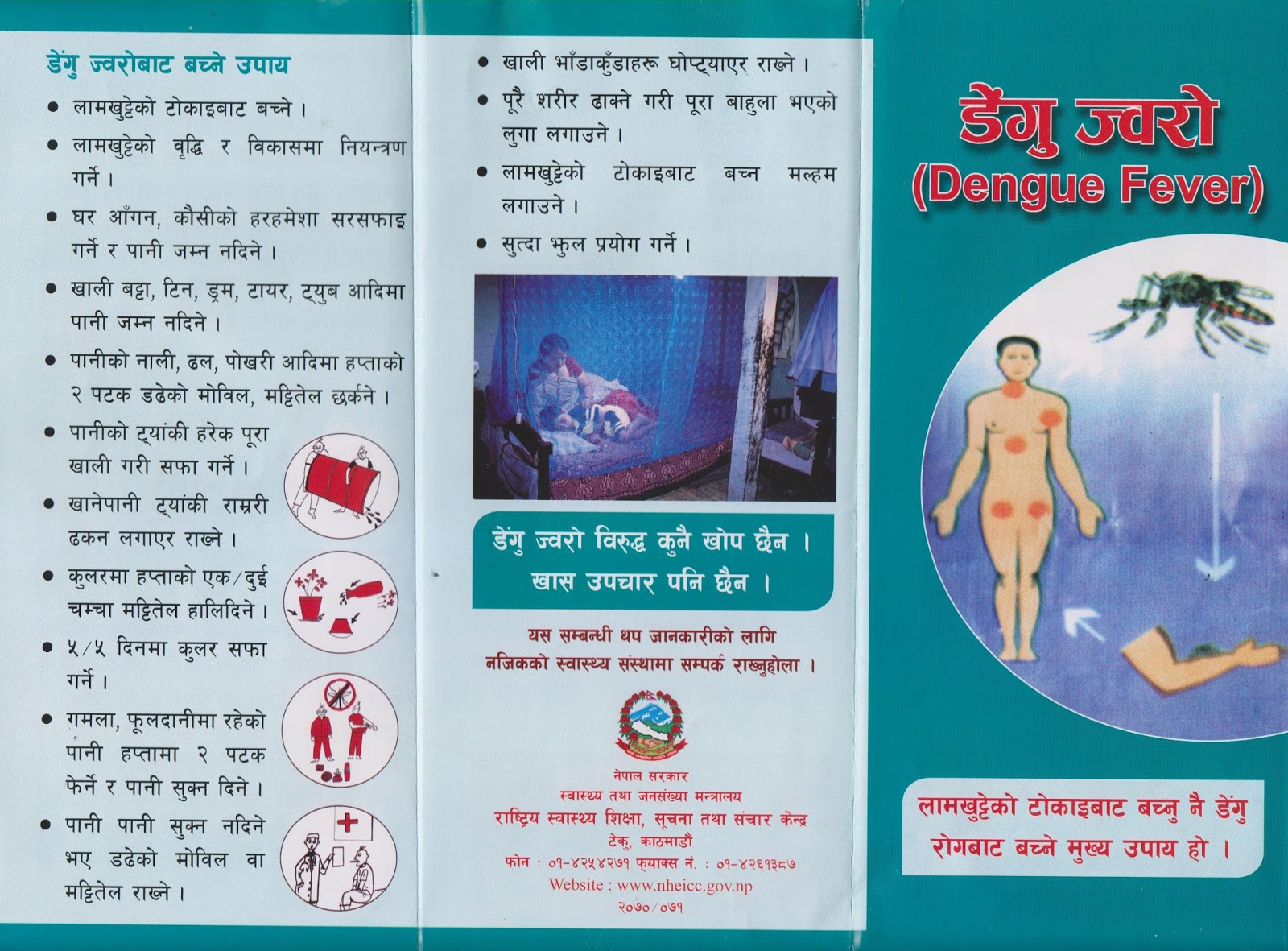
Prevention & Control of Dengue Fever

by Public Health Update October 20, 2017
written by Public Health Update

Prevention & Control of Dengue Fever


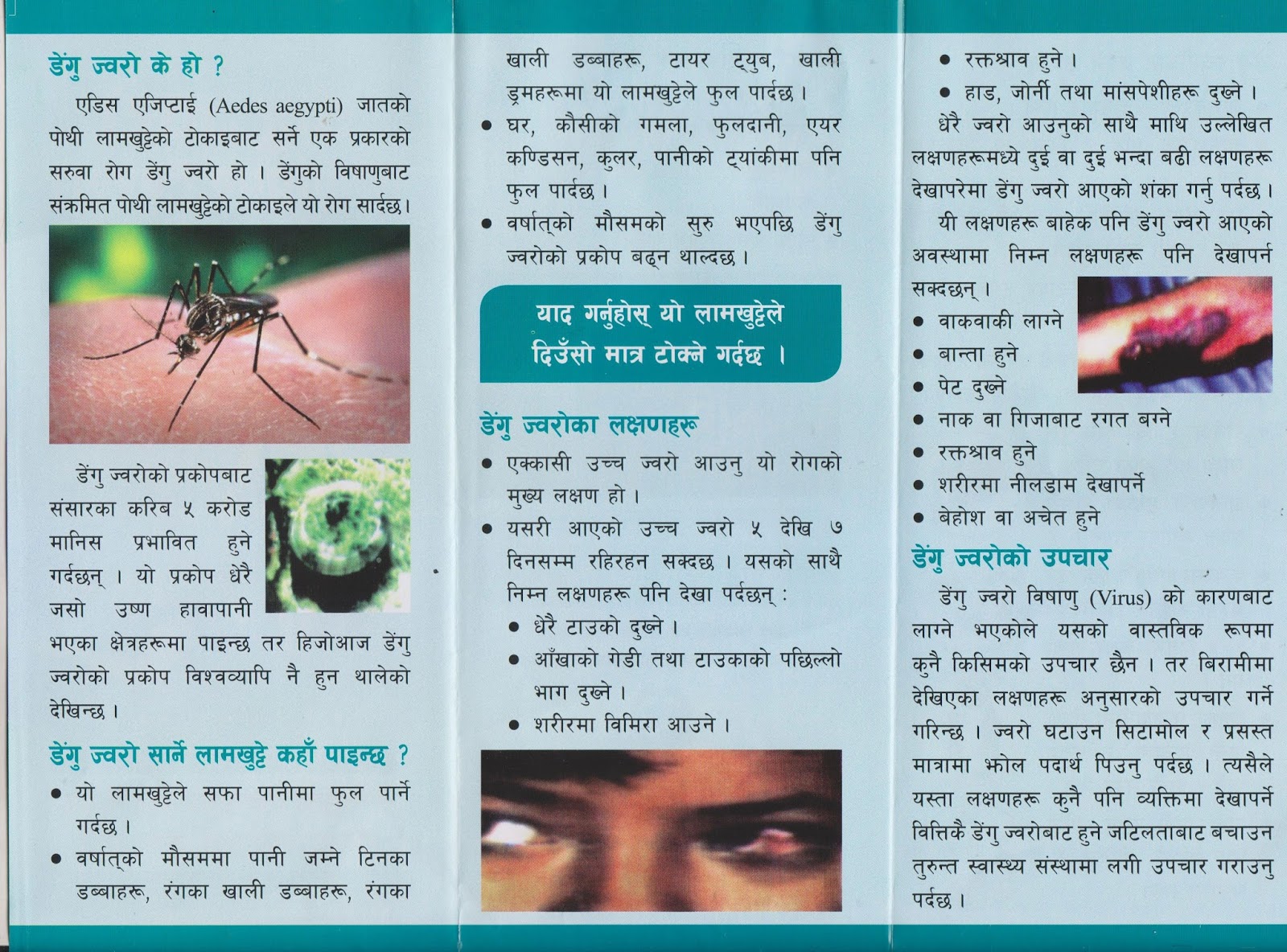
Dengue Front%2B%25281%2529

Dengue Back


T dengueFever enHD AR1
    • Dengue is a mosquito-borne viral infection.
    • The infection causes flu-like illness, and occasionally develops into a potentially lethal complication called severe dengue.
    • Dengue virus is transmitted by female mosquitoes mainly of the species Aedes aegypti and, to a lesser extent, Ae. albopictus. 
    • The global incidence of dengue has grown dramatically in recent decades. About half of the world’s population is now at risk.
    • Dengue is found in tropical and sub-tropical climates worldwide, mostly in urban and semi-urban areas.
    • Severe dengue is a leading cause of serious illness and death among children in some Asian and Latin American countries.
    • There is no specific treatment for dengue/ severe dengue, but early detection and access to proper medical care lowers fatality rates below 1%.
    • Dengue prevention and control depends on effective vector control measures.

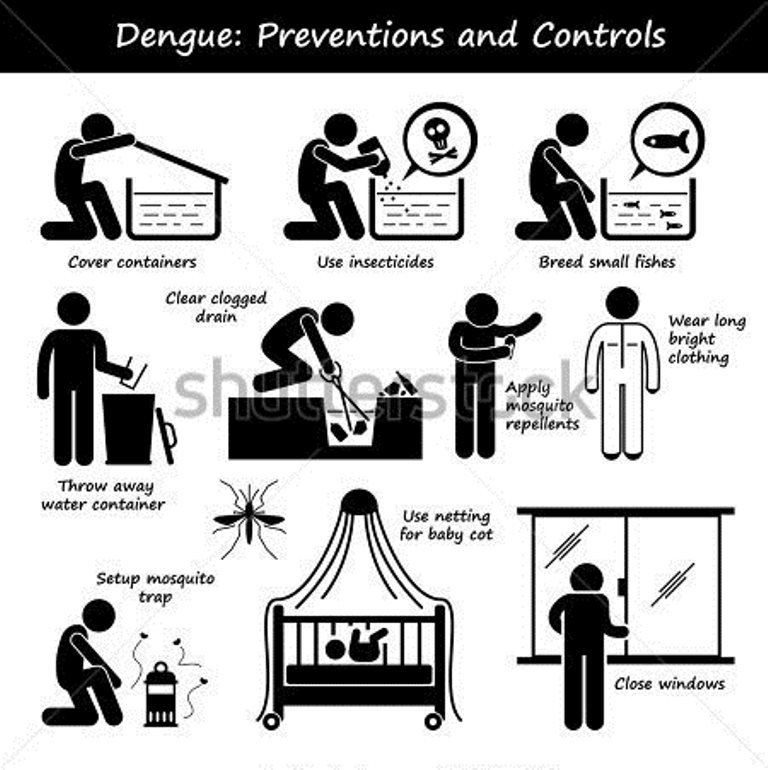
stock vector dengue fever preventions and controls aedes mosquito breeding stick figure pictogram icons 266823248


Prevention and control

At present, the main method to control or prevent the transmission of dengue virus is to combat vector mosquitoes through:
  • preventing mosquitoes from accessing egg-laying habitats by environmental management and modification;
  • disposing of solid waste properly and removing artificial man-made habitats;
  • covering, emptying and cleaning of domestic water storage containers on a weekly basis;
  • applying appropriate insecticides to water storage outdoor containers;
  • using of personal household protection such as window screens, long-sleeved clothes, insecticide treated materials, coils and vaporizers;
  • improving community participation and mobilization for sustained vector control;
  • applying insecticides as space spraying during outbreaks as one of the emergency vector-control measures;
  • active monitoring and surveillance of vectors should be carried out to determine effectiveness of control interventions.
WHO


Prevention & Control of Dengue Fever

Prevention & Control of Dengue Fever


National Guideline on Prevention,  Management and Control of Dengue in Nepal

Key Facts, Prevention & Control of Dengue
Countries in WHO South-East Asia to intensify efforts to control dengue, eliminate malaria
October 20, 2017 0 comments
0 FacebookTwitterPinterestLinkedinTumblrVKOdnoklassnikiRedditStumbleuponWhatsappTelegramLINEPocketSkypeViberEmail
Public HealthPublic Health Programs

Govt to expand health insurance programme in 14 more districts

by Public Health Update October 19, 2017
written by Public Health Update

Govt to expand health insurance programme in 14 more districts

October 19, 2017 (The Himalayan Times, 18 Oct 2017)

The government has selected 14 additional districts to implement its health insurance programme. The Social Health Security Development Committee has selected the 14 districts with plans to expand the government’s health insurance programme in 38 districts across the country within the current fiscal year. The committee has added Bajhang, Bajura, Humla, Mugu, Dolpa, Kalikot, Rukum, Arghakhanchi, Pyuthan, Kapilbastu, Ramechhap, Siraha, Khotang and Bhojpur districts for expansion of programme.
According to Dr Gunaraj Lohani, executive director of the committee, the health insurance programme will be implemented in the newly selected districts within the current fiscal year.
The government is currently implementing the programme in 24 districts across the country. The health insurance programme was started as a pilot project from Baglung, Ilam and Kailali in April 2016. “We plan to expand the programme to all the 77 districts of the country within the next two years,” Dr Lohani added.
According to him, the committee has started to finalise the regulations to implement the newly passed act from the Legislature-Parliament. The Legislature-Parliament had endorsed the long-awaited Health Insurance Bill on October 10.
“We have held discussions numerous times to finalise the regulations according to the provisions of the bill. I hope that within a month we will be able to forward the regulations to the Cabinet through the Ministry of Health,” he said.
The bill has provisioned insurance coverage of medical treatment expenses for all citizens of the country. Those insured will get coverage for services like yoga, immunisation, family planning, safe motherhood, out-patient care, in-patient care, surgery, medicines, emergency care, curative services, rehabilitation, ambulance and other services, as per the provision of the bill.
The government is providing the health insurance policy to a family of five at Rs 2,500. People who sign up for the health insurance policy would get coverage for medical services worth Rs 50,000. According to Lohani, the committee is planning to increase the coverage amount from existing Rs 50,000. “The coverage amount will be finalised through the regulations, and we are planning to increase the amount, but it hasn’t been finalised yet,” he informed.
As per the compulsory provision of the bill, civil servants and migrant workers have to enrol their families in the health insurance policy system. People working in organised firms also have to get their families enrolled to avail health insurance policy benefits.
According to the act, the federal, provincial and local governments will be liable to bear insurance premium of poor and marginalised families. Currently, 233,000 families have signed up for health insurance policy across the country.

Source: The Himalayan Times

RELATED 

  • Package of Essential Noncommunicable (PEN) disease interventions in Nepal
  • Key component of Health included in Constitution of Nepal-2072

22310599 240878259774782 6859275291576716257 n

October 19, 2017 0 comments
0 FacebookTwitterPinterestLinkedinTumblrVKOdnoklassnikiRedditStumbleuponWhatsappTelegramLINEPocketSkypeViberEmail
National Plan, Policy & GuidelinesPublic Health

National Health Policy 2074 (1st Draft)

by Public Health Update October 18, 2017
written by Public Health Update

National Health Policy 2074 (1st Draft)

National Health Policy 2074 (1st Draft) National Health Policy 2074 (1st Draft)

NATIONAL HEALTH POLICY 2071

October 18, 2017 0 comments
0 FacebookTwitterPinterestLinkedinTumblrVKOdnoklassnikiRedditStumbleuponWhatsappTelegramLINEPocketSkypeViberEmail
PH Important DayPublic Health

‘Our Hands, Our Future’ – Global Handwashing Day 2017

by Public Health Update October 15, 2017
written by Public Health Update

‘Our Hands, Our Future’ – Global Handwashing Day 2017

‘Our Hands, Our Future’ – Global Handwashing Day 2017: October 15 is Global Handwashing Day, a global advocacy day dedicated to increasing awareness and understanding about the importance of handwashing with. Every year, Global Handwashing Day is celebrated with events, campaigns, and handwashing programs around the world.
Before each Global Handwashing Day, the Global Handwashing Partnership selects a theme that will inspire celebrants and encourage handwashing with soap beyond October 15. This year’s theme is ‘Our Hands, Our Future’, reminding us that handwashing protects our own health, but also allows us to build our own futures, as well as those of our communities, and the world.

22519507 10211252951699601 6136522294068578770 n

‘Our Hands, Our Future’ – Global Handwashing Day 2017 (Banner: Bishal Subedi)


Thinking of the future, we strive for continued health, well-being, and productivity for ourselves, our families, and our communities. Handwashing is an affordable, effective way to achieve these goals. For example, handwashing with soap could prevent many of the 272 million yearly schooldays lost to diarrheal disease, and 50% of the infections acquired in healthcare settings.
Handwashing with soap has the power to improve access to education for children, protect the health of patients and communities, and reduce inequities. It has an important role in achieving the Sustainable Development Goals—contributing to zero hunger, good health, quality education, reduced inequalities, and more. Efforts on Global Handwashing Day to promote the benefits and practice of handwashing with soap, as well as fostering access to and improving hygiene facilities, will help us work towards a future where that potential is realized.

Source of Info
About 8 in 10 facilities have an improved water source and client latrine. Only about half of facilities have
both soap and running water. - Key findings – The 2015 Nepal Health Facility Survey (2015 NHFS)
  • 5 moments for hand hygiene

  • 6-step hand cleaning technique

  • “Make Handwashing a Habit!” – Global Hand washing Day 2016

  • SAVE LIVES: Clean Your Hands 5 May 2016

  • “Make Handwashing a Habit!” – Global Hand washingDay 2016 

  • 7th annual Global Handwashing Day 2014

  • Global Handwashing Day 

‘Our Hands, Our Future’ - Global Handwashing Day 2017

‘Our Hands, Our Future’ – Global Handwashing Day 2017

October 15, 2017 0 comments
0 FacebookTwitterPinterestLinkedinTumblrVKOdnoklassnikiRedditStumbleuponWhatsappTelegramLINEPocketSkypeViberEmail
PH Important DayPublic Health

#WorldObesityDay 2017 is focusing on tackling the causes of #obesity to avoid #NCDs

by Public Health Update October 11, 2017
written by Public Health Update

#WorldObesityDay 2017 is focusing on tackling the causes of #obesity to avoid #NCDs

#WorldObesityDay 2017 is focusing on tackling the causes of #obesity to avoid #NCDs: World Obesity Day was established in 2015 as an annual campaign with the goal of stimulating and supporting practical actions that will help people achieve and maintain a healthy weight and reverse the global obesity crisis. World Obesity Day is observed on 11 OCT. The objectives of World Obesity Day are to:

  • Increase knowledge and understanding of the challenge of obesity, and what can and should be done to overcome it
  • Encourage governments to take urgent action to meet  their commitment to halt the rise in obesity by 2025
  • Share national experiences of campaigning to enable the spread of best practices
  • Encourage member associations and supporters to get  involved with advocacy and campaigning on obesity related issues.

World Obesity Day is led by the World Obesity Federation as part of their Action Initiative. World Obesity’s mission is to lead and drive global efforts to reduce, prevent and treat obesity.
This World Obesity Day 2017 call on all governments, health service providers, insurers and philanthropic organisations to prioritise investment in tackling obesity. This means investing in obesity treatment services, early intervention and prevention.

World Obesity Day – Calls for Action

1. Invest in treatment services to support people affected by obesity
To tackle obesity it is vital that everyone who wants treatment has access to the best services available. Treatment services around the world must be strengthened. This will require:

  • Recognition that obesity is a disease and needs appropriate professional support
  • Universal access, health coverage and insurance cover for obesity treatments
  • Clear care pathways for people affected by obesity
  • Multi-disciplinary teams to support the treatment of obesity
  • Access to pharmaceuticals and medical devices as appropriate for individual needs
  • Comprehensive follow-up services

 2. Invest in early intervention to improve the success of treatment
Everyone who wants support with weight management should have access to early interventions. Early intervention means investing in:

  • National guidelines for the care and management for all people affected by
    overweight and obesity, particularly those from vulnerable populations
  • Freely available primary health care consultations
  • Health care professionals trained in patient engagement and avoidance of weight stigmatization
  • Group and individual weight management services
  • Personal, family, school and workplace support
  • Universal access to monitoring and continuing care services to support

3. Invest in prevention to reduce the need for treatment
Preventing weight gain and preventing weight re-gain are essential to meeting the World Health Organization targets and are also important for ensuring that obesity treatment is effective. Preventing obesity needs to include:

  • Education to ensure popular support for creating healthy environments
  • Improved local food environments to ensure easy access to affordable healthy food
  • Improved local neighbourhoods which support active leisure and travel
  • Market interventions to support and improve dietary choices
  • Health promotion throughout the life course to protect the health of current and future generations

SOURCE OF INFO 


22228219 1612519755460068 1633038539183600837 n 22424354 1614413845270659 1668254491462178946 o

October 11, 2017 0 comments
0 FacebookTwitterPinterestLinkedinTumblrVKOdnoklassnikiRedditStumbleuponWhatsappTelegramLINEPocketSkypeViberEmail
Newer Posts
Older Posts

Search

Follow Us

Facebook Twitter Instagram Pinterest Linkedin Youtube

Categories

  • Abstracts (25)
  • Activities (91)
  • Adolescent Sexual and Reproductive Health (ASRH) (25)
  • Advice & Tips (3)
  • African Region (5)
  • AI and Health (1)
  • Annual Meeting (6)
  • Antimicrobial Resistance (AMR) (21)
  • Award (19)
  • Awards (16)
  • Books (9)
  • Call for Proposal, EOI & RFP (103)
  • Call for Research Participants (8)
  • Clinical Doctor Jobs (6)
  • Communicable Diseases (107)
  • Competition (20)
  • Conference (128)
  • Consultant (1)
  • Courses (205)
  • Dashboard (2)
  • Digital Health & Health Informatics (10)
  • Drug and Medicine (18)
  • Eastern Mediterranean Region (3)
  • Education (15)
  • Environment (3)
  • Environmental Health & Climate Change (47)
  • European Region (42)
  • Exchange Program (1)
  • Fact Sheet (117)
  • FCHVs (1)
  • Fellowships, Studentship & Scholarships (168)
  • Financial Aid (13)
  • Form Formats (2)
  • Fully funded (22)
  • Global Health News (433)
  • Grants and Funding Opportunities (193)
  • Guest Post (44)
  • Health Assistant Jobs (1)
  • Health Equity (7)
  • Health Financing and Economics (24)
  • Health in Data (115)
  • Health Insurance (5)
  • Health Jobs (52)
  • Health Literacy, Health Education & Promotion (49)
  • Health Organization Profile (42)
  • Health Systems (83)
  • Human Resource for Health (33)
  • Humanitarian Health & Emergency Response (44)
  • Hypertension (5)
  • Implementation Research (48)
  • International Health (3)
  • International Jobs & Opportunities (373)
  • International Plan, Policy & Guidelines (210)
  • Internships (4)
  • Jobs Vacancies (56)
  • Journals (8)
  • Life Style & Public Health Nutrition (39)
  • Live (10)
  • Master's Degree (48)
  • Maternal, Newborn and Child Health (88)
  • Mentorship Program (2)
  • Miscellaneous (16)
  • National Health News (157)
  • National Plan, Policy & Guidelines (468)
  • Neglected Tropical Diseases (NTDs) (51)
  • Non- Communicable Diseases (NCDs) (120)
  • Notice (103)
  • Nursing Jobs (6)
  • Nutritionist Jobs (1)
  • One Health (17)
  • Online & Distance Learning (22)
  • Online Courses (90)
  • Op-Ed Article (3)
  • Opportunities by Region (83)
  • Outbreak News (213)
  • Partially funded (6)
  • PCL Health Science Jobs (3)
  • PH Important Day (533)
  • Pharmacist Jobs (3)
  • PhD (54)
  • Photos (5)
  • Planetary Health (4)
  • PostDoc (14)
  • Presentation Slides (26)
  • Primary Health Care (25)
  • Provincial Plan, Policies and Guidelines (14)
  • Public Health (1,281)
  • Public Health Epidemiology & Biostatistics (13)
  • Public Health Events (306)
  • Public Health Information (20)
  • Public Health Innovation (9)
  • Public Health Jobs (52)
  • Public Health News (552)
  • Public Health Notes (120)
  • Public Health Opportunities (507)
  • Public Health Opportunity (491)
  • Public Health Programs (108)
  • Public Health Seminar (2)
  • Public Health Tools (1)
  • Public Health Update (561)
  • Quality Improvement & Infection Prevention (20)
  • Region of America (8)
  • Reports (184)
  • Research & Project Grants (39)
  • Research & Project Grants (32)
  • Research & Publication (647)
  • Research Articles (10)
  • Road Traffic Accidents (RTA) (9)
  • School of Public Health (60)
  • Self funded (2)
  • South-East Asia Region (26)
  • Success Stories (17)
  • Summer and Winter Courses (40)
  • Summer Courses (28)
  • Sustainable Development Goals (SDGs) (14)
  • Syllabus (61)
  • Symposium (9)
  • Tobacco Control (35)
  • Training (40)
  • Travel Grants (15)
  • Trick, Technique & Skills (8)
  • Uncategorized (3)
  • Undergraduate Degree (7)
  • Universal Health Coverage (36)
  • Universities (29)
  • Universities & School of Public Health (58)
  • Vacancy Announcement (26)
  • Vaccine Preventable Diseases (40)
  • Vector-Borne Diseases(VBDs) (30)
  • Videos (3)
  • View Points (1)
  • Webinar (4)
  • Western Pacific Region (13)
  • Workshop (18)
  • World News (116)
Post New Jobs: Vacancy Announcement Service

Public Health Update (Sagun’s Blog) is a popular public health portal in Nepal. Thousands of health professionals are connected with Public Health Update to get up-to-date public health updates, search for jobs, and explore opportunities.
#1 Public Health Blog for sharing Job opportunities and updates in Nepal

”Public Health Information For All”
– – Sagun Paudel, Founder

  • HOT JOBS
    • Public Health Jobs
    • Medical Doctor Jobs
    • Nursing Jobs
    • Health Assistant Jobs
    • Pharmacist Jobs
    • NGOs Jobs
    • Government Jobs
  • Top Categories
    • National Plan, Policy & Guidelines Top
    • Public Health Calendar
    • Fellowships & Scholarships
    • Health Systems
    • Health Organization Profiles
    • International Jobs & Opportunities
    • Public Health Opportunity

PUBLIC HEALTH INITIATIVE

    • Submit your Vacancies New
    • Partnership Opportunities

Contact: blog.publichealthupdate@gmail.com

https://wa.me/+9779856036932

Public Health Initiative, A Registered Non-profit organization – All Right Reserved. 2011-2024. Contact us. 

Facebook Twitter Instagram Youtube Envelope
Public Health Update
  • Home
  • Public Health
    • Home 1
      • Adolescent Sexual and Reproductive Health (ASRH)
      • Antimicrobial Resistance (AMR)
      • Communicable Diseases
      • Digital Health & Health Informatics
      • Environmental Health & Climate Change
      • Health Financing and Economics
      • Health Equity
    • Home 2
      • Health Literacy, Health Education & Promotion
      • Human Resource for Health
      • Humanitarian Health & Emergency Response
      • Implementation Research
      • International Health
      • Life Style & Public Health Nutrition
      • Maternal, Newborn and Child Health
    • Home 3
      • Neglected Tropical Diseases (NTDs)
      • Non- Communicable Diseases (NCDs)
      • One Health
      • Planetary Health
      • Public Health Epidemiology & Biostatistics
      • Primary Health Care
      • Quality Improvement & Infection Prevention
    • Home 4
      • Road Traffic Accidents (RTA)
      • Sustainable Development Goals (SDGs)
      • Tobacco Control
      • Universal Health Coverage
      • Vaccine Preventable Diseases
      • Vector-Borne Diseases(VBDs)
      • Notices
  • Public Health Update
    • Home 1
      • Public Health News
      • Global Health News
      • Outbreak News
      • National Health News
      • COVID-19
    • Home 2
      • Fact Sheet
      • Health in Data
      • PH Important Day
      • Public Health Events
      • Public Health Programs
    • Home 3
      • Health Systems
      • Health Insurance
      • Health Organization Profile
      • Success Stories
      • Public Health Innovation
  • Public Health Opportunities
    • Fully funded
    • Travel Grants
    • Grants and Funding Opportunities
    • Opportunities by Region
    • International Jobs & Opportunities
    • Research & Project Grants
    • Fellowships, Studentship & Scholarships
    • Conference
  • Jobs
    • Home 1
      • Health Jobs
      • Public Health Jobs
      • Clinical doctor Jobs
      • Health Assistant Jobs
      • Nursing Jobs
      • PCL Health Science Jobs
    • Home 2
      • Dental Jobs
      • Pharmacist Jobs
      • TSLC (Health Jobs)
      • Laboratory Jobs
      • Nutritionist Jobs
  • Downloads
    • International Plan, Policy & Guidelines
    • National Plan, Policy & Guidelines
    • Reports
    • Books
    • Research Articles
  • School of Public Health
    • Home 1
      • Courses
      • Master’s Degree
      • Undergraduate Degree
      • PhD
    • Home 2
      • Universities
      • Syllabus
      • Public Health Notes
      • Mentorship Program
      • Startup Project
    • Home
      • Summer and Winter Courses
      • Summer Courses
      • Online Courses
      • Workshop
      • Training
Public Health Update
  • Home
  • Public Health
    • Home 1
      • Adolescent Sexual and Reproductive Health (ASRH)
      • Antimicrobial Resistance (AMR)
      • Communicable Diseases
      • Digital Health & Health Informatics
      • Environmental Health & Climate Change
      • Health Financing and Economics
      • Health Equity
    • Home 2
      • Health Literacy, Health Education & Promotion
      • Human Resource for Health
      • Humanitarian Health & Emergency Response
      • Implementation Research
      • International Health
      • Life Style & Public Health Nutrition
      • Maternal, Newborn and Child Health
    • Home 3
      • Neglected Tropical Diseases (NTDs)
      • Non- Communicable Diseases (NCDs)
      • One Health
      • Planetary Health
      • Public Health Epidemiology & Biostatistics
      • Primary Health Care
      • Quality Improvement & Infection Prevention
    • Home 4
      • Road Traffic Accidents (RTA)
      • Sustainable Development Goals (SDGs)
      • Tobacco Control
      • Universal Health Coverage
      • Vaccine Preventable Diseases
      • Vector-Borne Diseases(VBDs)
      • Notices
  • Public Health Update
    • Home 1
      • Public Health News
      • Global Health News
      • Outbreak News
      • National Health News
      • COVID-19
    • Home 2
      • Fact Sheet
      • Health in Data
      • PH Important Day
      • Public Health Events
      • Public Health Programs
    • Home 3
      • Health Systems
      • Health Insurance
      • Health Organization Profile
      • Success Stories
      • Public Health Innovation
  • Public Health Opportunities
    • Fully funded
    • Travel Grants
    • Grants and Funding Opportunities
    • Opportunities by Region
    • International Jobs & Opportunities
    • Research & Project Grants
    • Fellowships, Studentship & Scholarships
    • Conference
  • Jobs
    • Home 1
      • Health Jobs
      • Public Health Jobs
      • Clinical doctor Jobs
      • Health Assistant Jobs
      • Nursing Jobs
      • PCL Health Science Jobs
    • Home 2
      • Dental Jobs
      • Pharmacist Jobs
      • TSLC (Health Jobs)
      • Laboratory Jobs
      • Nutritionist Jobs
  • Downloads
    • International Plan, Policy & Guidelines
    • National Plan, Policy & Guidelines
    • Reports
    • Books
    • Research Articles
  • School of Public Health
    • Home 1
      • Courses
      • Master’s Degree
      • Undergraduate Degree
      • PhD
    • Home 2
      • Universities
      • Syllabus
      • Public Health Notes
      • Mentorship Program
      • Startup Project
    • Home
      • Summer and Winter Courses
      • Summer Courses
      • Online Courses
      • Workshop
      • Training
Public Health Initiative, A Registered Non-profit organization – All Right Reserved. 2011-2023