
Public Health Update
  • Home
  • Public Health Update
  • Nepal Health Jobs
    • Public Health Job Board
    • Organization List
  • Opportunities
    • Fellowships, Studentship & Scholarships
    • Grants and Funding Opportunities
    • Fully funded
    • Conference
  • Downloads
    • International Plan, Policy & Guidelines
    • National Plan, Policy & Guidelines
    • Reports
    • Public Health Notes
    • Syllabus
    • Form Formats
  • School of Public Health
    • PhD
    • Master’s Degree
    • Online Courses
  • Notice
  • Home
  • Public Health Update
  • Nepal Health Jobs
    • Public Health Job Board
    • Organization List
  • Opportunities
    • Fellowships, Studentship & Scholarships
    • Grants and Funding Opportunities
    • Fully funded
    • Conference
  • Downloads
    • International Plan, Policy & Guidelines
    • National Plan, Policy & Guidelines
    • Reports
    • Public Health Notes
    • Syllabus
    • Form Formats
  • School of Public Health
    • PhD
    • Master’s Degree
    • Online Courses
  • Notice
LOGIN / REGISTER
Public Health Update
SUBSCRIBE
Public Health Update
  • Home
  • Public Health Update
  • Nepal Health Jobs
    • Public Health Job Board
    • Organization List
  • Opportunities
    • Fellowships, Studentship & Scholarships
    • Grants and Funding Opportunities
    • Fully funded
    • Conference
  • Downloads
    • International Plan, Policy & Guidelines
    • National Plan, Policy & Guidelines
    • Reports
    • Public Health Notes
    • Syllabus
    • Form Formats
  • School of Public Health
    • PhD
    • Master’s Degree
    • Online Courses
  • Notice

All Right Reserved. Designed and Developed by PenciDesign

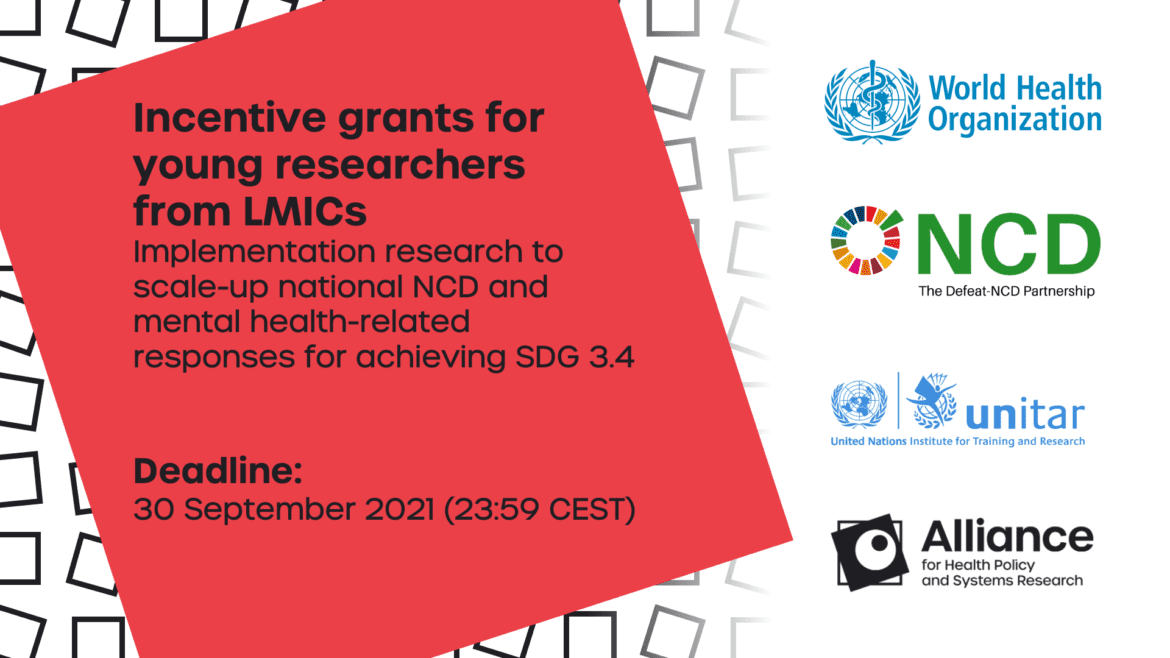
Incentive grants for young researchers from LMICs: Implementation research to scale-up national NCD and mental health-related responses for achieving SDG 3.4 (deadline: 30 September 2021)
Grants and Funding OpportunitiesImplementation ResearchNon- Communicable Diseases (NCDs)Research & Project GrantsResearch & Project Grants

Incentive Grants for Young Researchers from Low- and Middle-Income Countries

by Public Health Update July 22, 2021
written by Public Health Update

Background

The WHO Global NCD Platform and the Defeat-NCD Partnership (UNITAR) in collaboration with the Alliance for Health Policy and Systems Research (WHO) intend to roll out an incentive grants programme to strengthen the capacity for implementation research in low- and middle-income countries. The programme will facilitate the development of and demand for locally-generated research to address context-specific problems and propose action-oriented solutions. The programme will also encourage partnerships among implementers, policy-makers, and researchers to identify the barriers to scaling up NCD and mental health interventions and improve the uptake of research results for effective policy and programme development.

Scope and Activities

It is intended that the grants will support research projects that address the following:

  • Identify gaps, implementation challenges, and national priorities, and propose solutions with the potential to influence policy and practices for NCD prevention and control and promotion of mental health and well-being in LMICs.
  • Engage diverse stakeholders across sectors and actors throughout the research process.
  • Explore the best strategies to create strong partnerships between governments, NGOs, the private sector, researchers, communities, and individuals (particularly vulnerable populations) to address NCD prevention and control and promotion of mental health and well-being.
  • Identify lessons about implementation and propose feasible actionable solutions within the context.
  • The results of this work may inform further research into this area in the future, including testing such practices and mechanisms in various settings.

Themes

The submitted proposals can address a wide variety of issues aimed at scaling up NCD prevention and control and promotion of mental health and well-being, establishing multisectoral and multistakeholder coordination mechanisms, and understanding innovative integrated delivery models to shift from disease-focused treatment approaches to sustainable person-centered health systems. The goal is to accelerate country-level responses towards target 3.4 of the 2030 Agenda for Sustainable Development: By 2030, reduce premature mortality from NCDs through prevention and treatment and promote mental health and well-being.

Outputs
Completed research reports with findings and recommendations;

Policy brief incorporating the outcomes of research and recommendations;
Dissemination of research findings through WHO and the Defeat-NCD Partnership conferences, webinars, and/or other media;
The Global NCD Platform, the Defeat-NCD Partnership, and the Alliance for Health Policy and Systems Research, may consider a potential publication of research results of selected projects in peer-reviewed, open-access journals.

Outcome
Strengthened capacity of individual young researchers in LMICs to carry out research and act as catalysts for institutional change.

Impact
An increased critical mass of researchers with up-to-date skills to identify needs and develop solutions for scaling up interventions for NCD prevention and control and promotion of mental health and well-being in LMICs;

Production of research results with the potential to influence policy and practices for NCD prevention and control and promotion of mental health and well-being at national and global levels.

Eligibility
This call specifically targets individual young researchers, who are enrolled in accredited academic institutions (applicants may refer to the World Higher Education Database (WHED) http://www.whed.net/) and will be conducting research projects as part of their master’s degree requirements. Projects leading to a doctoral degree will only be considered if the research can be completed within 12 months from the date of the grant award.

Priority will be given to researchers based in LMICs. Proposals from LMIC researchers based in institutions of high-income countries may be considered on a case-by-case basis. In all cases, and regardless of where researchers are based, the focus of the research itself must be on LMICs.

The applicants should meet the following eligibility criteria:

  • Be under 35 years of age (a copy of a national passport or other valid identification may be requested for reference purposes only);
  • Be a national of LMIC and conduct research related to LMICs. Priority will be given to researchers enrolled in institutions of LMICs. The list of countries by income group is available for reference at
    https://datahelpdesk.worldbank.org/knowledgebase/articles/906519-world-bankcountry-and-lending-groups;
  • Be enrolled in a course of study at the time of application leading to a graduate degree (master’s in health or a related discipline. Doctoral degree candidates will be considered if they complete the project within 12 months from the date of the award) from an accredited university. (Applicants may refer to the World Higher Education Database
    (WHED) http://www.whed.net/ );
  • Conduct research as part of their academic study;
  • Must not be fully dependent on this incentive grant to conduct their research; proof of the availability of other funding may be required;
  • Be fluent in English, as only submissions in English will be accepted at this time;
  • The researchers should be prepared to submit their Institutional Review Board approval of projects (if required). In addition, the researcher must obtain a letter of permission from the thesis supervisor authorizing the conduct of the study and submission of the proposal to WHO and the Defeat-NCD Partnership for the incentive grant.
  • The researchers should demonstrate the availability of funding for the project as this incentive grant is intended to be complementary not a sole source of support for the research project.

Application process

  • Deadline: Thursday, 30 September 2021, 23:59 CEST, size limit per email: 7MB
  • Applications submitted after this deadline will not be considered.
  • Only successful candidates will be notified by 15 November 2021.
  • Only submissions in English will be considered at this time.
  • Submissions should be directed to GNPgrants@who.int
  • Please use the following subject line: WHO-DNCD grant proposal: Implementation research against NCDs.

READ MORE


Do you have a website? Looking for the best hosting provider? Here’s a discount code.

Latest Public Health Jobs

Latest Posts

  • International Wellness Day: Promoting Global Wellness for All
  • Summit Declaration: The 12th National Summit of Health and Population Scientists in Nepal
  • Joint political declaration on the reform of the global health architecture
  • World Health Day 2026: Together for Health. Stand with Science.
  • World Water Day 2026 | Water & Gender Equality

Thanks for visiting us.
Disclaimer: The resources, documents, guidelines, and information on this blog have been collected from various sources and are intended for informational purposes only. Information published on or through this website and affiliated social media channels does not represent the intention, plan, or strategies of an organization that the initiator is associated with in a professional or personal capacity, unless explicitly indicated.
If you have any complaints, information, or suggestions about the content published on Public Health Update, please feel free to contact us at blog.publichealthupdate@gmail.com.
#StayUpdated

  • WordPress
  • Link
  • Facebook
  • Mail
  • Facebook
  • Twitter
  • Twitter
  • LinkedIn
  • Instagram
  • Facebook
July 22, 2021 0 comments
0 FacebookTwitterPinterestLinkedinTumblrVKOdnoklassnikiRedditStumbleuponWhatsappTelegramLINEPocketSkypeViberEmail
Health Organization ProfileReportsResearch & Publication

Provincial Health Laboratory Profile- Gandaki

by Public Health Update July 20, 2021
written by Public Health Update

Public Health Laboratory, Gandaki Province published a profile of Health Laboratories in Gandaki Province. The profile includes the contact details of laboratories and the human resources available in different laboratories in Gandaki Province.

DOWNLOAD PDF FILE DOWNLOAD PDF FILE


DOWNLOAD PDF FILE


Provincial Epidemiological Profiles- Nepal


Do you have a website? Looking for the best hosting provider? Here’s a discount code.

Latest Public Health Jobs

Latest Posts

  • International Wellness Day: Promoting Global Wellness for All
  • Summit Declaration: The 12th National Summit of Health and Population Scientists in Nepal
  • Joint political declaration on the reform of the global health architecture
  • World Health Day 2026: Together for Health. Stand with Science.
  • World Water Day 2026 | Water & Gender Equality

Thanks for visiting us.
Disclaimer: The resources, documents, guidelines, and information on this blog have been collected from various sources and are intended for informational purposes only. Information published on or through this website and affiliated social media channels does not represent the intention, plan, or strategies of an organization that the initiator is associated with in a professional or personal capacity, unless explicitly indicated.
If you have any complaints, information, or suggestions about the content published on Public Health Update, please feel free to contact us at blog.publichealthupdate@gmail.com.
#StayUpdated


  • WordPress
  • Link
  • Facebook
  • Mail
  • Facebook
  • Twitter
  • Twitter
  • LinkedIn
  • Instagram
  • Facebook
July 20, 2021 0 comments
0 FacebookTwitterPinterestLinkedinTumblrVKOdnoklassnikiRedditStumbleuponWhatsappTelegramLINEPocketSkypeViberEmail
NHRC: Important Notice for Virtual Training Workshops
WorkshopPublic Health OpportunitiesPublic Health OpportunityTraining

NHRC: Important Notice for Virtual Training Workshops

by Public Health Update July 20, 2021
written by Public Health Update

This is to announce that NHRC calls for application for the below mentioned virtual training workshops of Health Research for the fiscal year 2078/2079.

The interested candidates are requested to apply within 7 days of the first publication of this notice, The eligibility criteria for application are attached herewith.

Name of Virtual Trainings:

  • Training Workshop on Health Research Methodology
  • Training Workshop on Health Research Proposal Development and Research Management
  • Training Workshop on Data Management and Analysis
  • Training Workshop on Scientific Writing

Eligibility Criteria for the Training Workshop on Health Research Methodology:

  • Undergraduate candidates: Undergraduate students from the medical, dental, paramedical, nursing and other health-related backgrounds who have completed basic science courses of undergraduate course will be eligible to participate in this training.
  • a Graduates and above are also eligible to participate.

Eligibility Criteria for the Other Training Workshops:

  • Candidates holding at least Bachelor’s Degree in health sciences.
  • Candidates with Bachelor’s Degree in health-related sciences with at least one year of experience in the health sector will be given a higher preference.

Application form for the Entire Training Workshops:

  • Candidates can apply for the training workshops by filling out the NHRC’s application form shared via NHRC’s website.
  • *Note: The candidates who have already participated in any aforementioned Virtual Training Workshops are requested not to apply for the same training workshop again.

Other Terms and Conditions for Training Workshops:

Selection Process: The candidates will be selected on the basis of first come first basis upon fulfilling the minimum criteria. NHRC will conduct virtual training workshops in different batches so all the candidates, fulfilling the minimum criteria, who have applied for the training workshops will be informed regarding their selection and training.

Applicants not fulfilling the above mentioned criteria will not be considered for the
training workshops.The registration fees will be waived to Nepalese students and researchers during
the COVID-19 pandemic period.

Certification criteria: Only participants with full time attendance/participation will be eligible to receive the NHRC’s educational credit certificate.

Call for NHRC Health Research Grant

For further details, please contact

Capacity Building Section of NHRC
Tel.: +977 t 4254220 / 4227 460 / 4255987 / 4246008
Fax: +977 7 +262469
Email : training.nhrc@ gmail. com

Link for the application form: https://forms.gle/EytfpAcqX2pquTx58


Do you have a website? Looking for the best hosting provider? Here’s a discount code.

Latest Public Health Jobs

Latest Posts

  • International Wellness Day: Promoting Global Wellness for All
  • Summit Declaration: The 12th National Summit of Health and Population Scientists in Nepal
  • Joint political declaration on the reform of the global health architecture
  • World Health Day 2026: Together for Health. Stand with Science.
  • World Water Day 2026 | Water & Gender Equality

Thanks for visiting us.
Disclaimer: The resources, documents, guidelines, and information on this blog have been collected from various sources and are intended for informational purposes only. Information published on or through this website and affiliated social media channels does not represent the intention, plan, or strategies of an organization that the initiator is associated with in a professional or personal capacity, unless explicitly indicated.
If you have any complaints, information, or suggestions about the content published on Public Health Update, please feel free to contact us at blog.publichealthupdate@gmail.com.
#StayUpdated


  • WordPress
  • Link
  • Facebook
  • Mail
  • Facebook
  • Twitter
  • Twitter
  • LinkedIn
  • Instagram
  • Facebook
July 20, 2021 1 comment
0 FacebookTwitterPinterestLinkedinTumblrVKOdnoklassnikiRedditStumbleuponWhatsappTelegramLINEPocketSkypeViberEmail
Call for NHRC Health Research Grant
Grants and Funding OpportunitiesPublic Health OpportunitiesPublic Health OpportunityResearch & Project GrantsResearch & Project Grants

Call for NHRC Health Research Grant

by Public Health Update July 20, 2021
written by Public Health Update

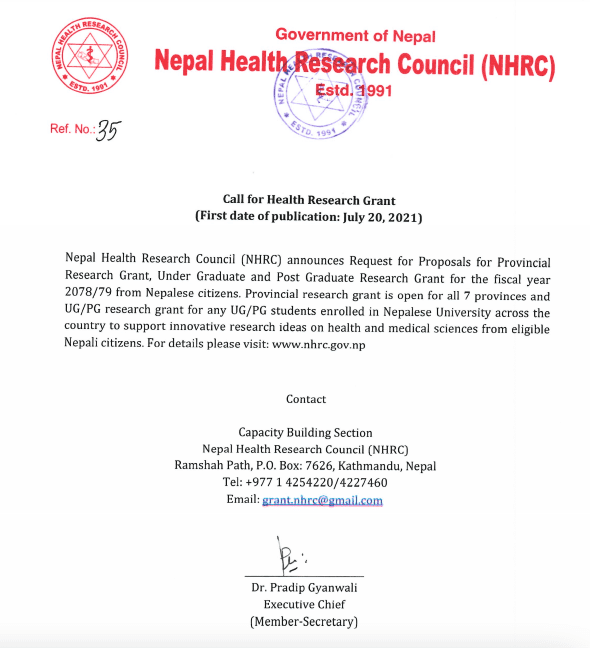
The Nepal Health Research Council (NHRC) announces request for proposals for provincial research grant, Undergraduate and Postgraduate Research Grant for the fiscal year 2078/79 from Nepalese citizens. Provincial research grant is open for all seven provinces and UG/PG research grant for any UG/PG students enrolled in Nepalese University across the country to support innovative research ideas on health and medical sciences for eligible Nepali citizens.

Screen Shot 2021 07 20 at 17.51.18

For details please visit NHRC website.

Call for Health Research Grant

Notice for NHRC Provincial Research Grant

Notice for NHRC Under-Graduate and Postgraduate Research Grant

NHRC: Important Notice for Virtual Training Workshops


Do you have a website? Looking for the best hosting provider? Here’s a discount code.

Latest Public Health Jobs

Latest Posts

  • International Wellness Day: Promoting Global Wellness for All
  • Summit Declaration: The 12th National Summit of Health and Population Scientists in Nepal
  • Joint political declaration on the reform of the global health architecture
  • World Health Day 2026: Together for Health. Stand with Science.
  • World Water Day 2026 | Water & Gender Equality

Thanks for visiting us.
Disclaimer: The resources, documents, guidelines, and information on this blog have been collected from various sources and are intended for informational purposes only. Information published on or through this website and affiliated social media channels does not represent the intention, plan, or strategies of an organization that the initiator is associated with in a professional or personal capacity, unless explicitly indicated.
If you have any complaints, information, or suggestions about the content published on Public Health Update, please feel free to contact us at blog.publichealthupdate@gmail.com.
#StayUpdated


  • WordPress
  • Link
  • Facebook
  • Mail
  • Facebook
  • Twitter
  • Twitter
  • LinkedIn
  • Instagram
  • Facebook
July 20, 2021 1 comment
0 FacebookTwitterPinterestLinkedinTumblrVKOdnoklassnikiRedditStumbleuponWhatsappTelegramLINEPocketSkypeViberEmail
National Plan, Policy & GuidelinesHuman Resource for HealthMaternal, Newborn and Child HealthResearch & Publication

Strategy for Skilled Health Personnel and Skilled Birth Attendants 2020-2025

by Public Health Update July 18, 2021
written by Public Health Update

Vision

To ensure the fundamental rights of the mother and baby to live healthy lives, and to achieve equitable health outcomes.
Mission
All competent professionals, as part of the Maternal Newborn Health (MNH) team provide evidence-informed, human-rights based, socio-culturally sensitive, and respectful quality of care that ensures dignity of women newborns, and their families.

Goal
To reduce maternal and newborn morbidity and mortality through quality health services, provided by SHP/SBAs working in an enabling environment.

Objectives

General Objective
To ensure that the SHP/SBAs have the appropriate clinical skills, comply with the national standards and protocols, and provide evidence-based quality of care. They engage with women in a non-discriminatory and respectful manner so that the women have a positive pregnancy and childbirth experience.

Specific Objectives

  1. To ensure provision for quality maternal and newborn care as per national standards and protocols at all levels of health facilities including referral services.
  2. To ensure that sufficient numbers of SHP/SBAs are trained and deployed at all appropriate levels of health care and contribute towards 79 percent coverage of childbirths by the SHP/SBAs by 2025.35
  3. To build the capacity of SHP/SBAs for better programme management and accountability.
  4. To create an enabling environment for SHP/SBAs by strengthening monitoring, supervision, and support system including onsite coaching and mentoring, and continued education for quality maternal and newborn care.

Strategic Approaches

  • Ensure availability of quality MNH care at service delivery points including referral services.
  • Train SHP/SBAs and strengthen post-training support.
  • Strengthen supervision and monitoring.
  • Build capacity in leadership, management, accountability, and governance.
  • Collaborate for enabling environment.
  • Institutional Arrangements.

DOWNLOAD PDF FILE

DOWNLOAD PDF FILE


Do you have a website? Looking for the best hosting provider? Here’s a discount code.

Latest Public Health Jobs

Latest Posts

  • International Wellness Day: Promoting Global Wellness for All
  • Summit Declaration: The 12th National Summit of Health and Population Scientists in Nepal
  • Joint political declaration on the reform of the global health architecture
  • World Health Day 2026: Together for Health. Stand with Science.
  • World Water Day 2026 | Water & Gender Equality

Thanks for visiting us.
Disclaimer: The resources, documents, guidelines, and information on this blog have been collected from various sources and are intended for informational purposes only. Information published on or through this website and affiliated social media channels does not represent the intention, plan, or strategies of an organization that the initiator is associated with in a professional or personal capacity, unless explicitly indicated.
If you have any complaints, information, or suggestions about the content published on Public Health Update, please feel free to contact us at blog.publichealthupdate@gmail.com.
#StayUpdated


  • WordPress
  • Link
  • Facebook
  • Mail
  • Facebook
  • Twitter
  • Twitter
  • LinkedIn
  • Instagram
  • Facebook
July 18, 2021 0 comments
0 FacebookTwitterPinterestLinkedinTumblrVKOdnoklassnikiRedditStumbleuponWhatsappTelegramLINEPocketSkypeViberEmail
Call for abstracts: 62nd ITM Colloquium
Call for Proposal, EOI & RFPAbstractsConferenceInternational Jobs & OpportunitiesPublic Health EventsPublic Health OpportunitiesPublic Health Opportunity

Call for abstracts: 62nd ITM Colloquium

by Public Health Update July 16, 2021
written by Public Health Update

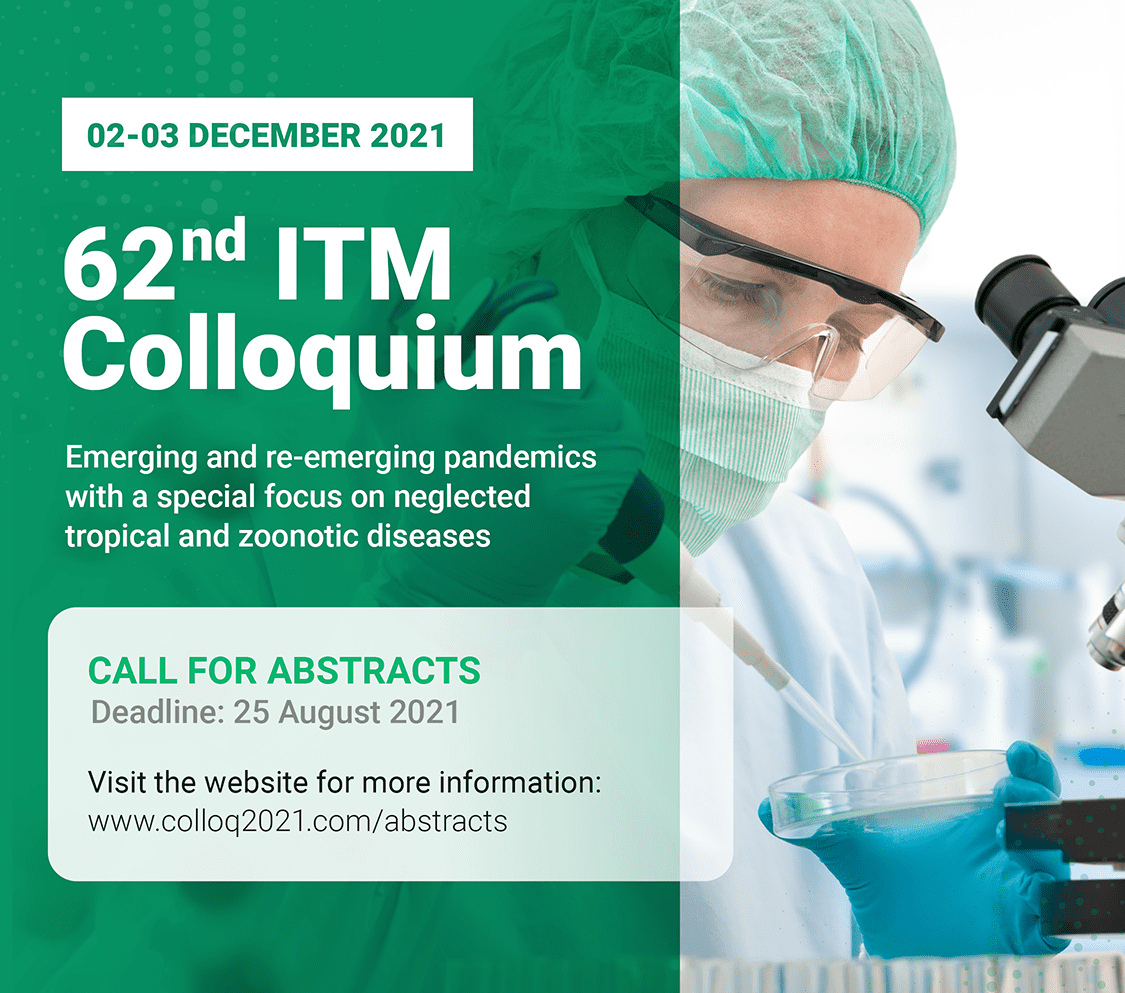
The Department of Veterinary Tropical Diseases, Faculty of Veterinary Science, University of Pretoria, South Africa and the Institute of Tropical Medicine (ITM)  in Antwerp, Belgium, have joined forces for the 62nd ITM Colloquium.

This second virtual edition will take place from 2-3 December 2021 and will cover emerging and re-emerging epidemics, with a special focus on neglected tropical and zoonotic diseases.

Abstract submission is open to all, researchers from the Southern African Development Community (SADC) are particularly encouraged to submit abstracts of their work within the scope of the colloquium. 

Accepted oral presentations will either take place in one of the plenary sessions, or in the break-away sessions, as deemed appropriate by the scientific committee. Abstracts accepted as a poster presentation will be displayed in an online exhibition area.

THREE DAYS OF SCIENTIFIC EXPERTISE

The first virtual version of the ITM colloquium is a large three-day conference that brings COVID-19 experiences from all continents together. The aim is to discuss and reflect on the direct and indirect impact on global and local health.

For this we zoom in on the COVID-19 epidemics and responses in different contexts to retrieve an improved understanding of their heterogeneity. Exploring the potential of some of the scientific innovations which emerged in these epidemics will also be part of this colloquium.

To get a better understanding of the implications of COVID-19 we will assess, together with different experts from all over the world, to what extent the epidemic leads to possibly sustained systemic societal transformations and ask ourselves if and how COVID-19 is a game changer in the health sector and beyond.

This virtual edition of the ITM Colloquium will offer you:

  • 3 scientific sessions each day
  • Interactive breaks
  • Networking opportunities with other experts
  • Social activities between participants

READ MORE AND SUBMIT ABSTRACT


Do you have a website? Looking for the best hosting provider? Here’s a discount code.

Latest Public Health Jobs

Latest Posts

  • International Wellness Day: Promoting Global Wellness for All
  • Summit Declaration: The 12th National Summit of Health and Population Scientists in Nepal
  • Joint political declaration on the reform of the global health architecture
  • World Health Day 2026: Together for Health. Stand with Science.
  • World Water Day 2026 | Water & Gender Equality

Thanks for visiting us.
Disclaimer: The resources, documents, guidelines, and information on this blog have been collected from various sources and are intended for informational purposes only. Information published on or through this website and affiliated social media channels does not represent the intention, plan, or strategies of an organization that the initiator is associated with in a professional or personal capacity, unless explicitly indicated.
If you have any complaints, information, or suggestions about the content published on Public Health Update, please feel free to contact us at blog.publichealthupdate@gmail.com.
#StayUpdated


  • WordPress
  • Link
  • Facebook
  • Mail
  • Facebook
  • Twitter
  • Twitter
  • LinkedIn
  • Instagram
  • Facebook
July 16, 2021 0 comments
0 FacebookTwitterPinterestLinkedinTumblrVKOdnoklassnikiRedditStumbleuponWhatsappTelegramLINEPocketSkypeViberEmail
Hubert H. Humphrey Fellowship Program 2022-2023
Fellowships, Studentship & ScholarshipsInternational Jobs & OpportunitiesPublic Health OpportunitiesPublic Health Opportunity

Hubert H. Humphrey Fellowship Program 2022-2023

by Public Health Update July 14, 2021
written by Public Health Update

The Humphrey Fellowship Program provides mid-career professionals from designated countries around the world with an opportunity to enhance their professional capabilities through participation in specialized, 10-month, non-degree programs developed for small clusters of Humphrey Fellows at selected U.S. universities.

The Hubert H. Humphrey Fellowship Program was established in 1978 as a Fulbright exchange that advances U.S. foreign policy goals through the exchange of mid-career professionals representing approximately 140 eligible countries from all world regions. Humphrey Fellows work in critical fields for collaboration, such as law and human rights, public health, including infectious diseases, climate change, and public policy.

The Humphrey program is not degree-related or aimed at providing scholarly preparation or basic training in a field. The objective is to provide Humphrey Fellows with an overall experience that broadens their perspectives, enhances their capability to assume greater career responsibilities, and provides opportunities to establish useful professional contacts. The programs include various combinations of coursework, independent projects, internships, consultations with U.S. faculty or experts, field trips, and special seminars. Under the guidance of a designated faculty advisor or “coordinator,” Fellows plan programs that best suit their individual career development needs.

For additional information on the Humphrey Fellowship Program, please visit the Humphrey website https://www.humphreyfellowship.org/

Program Components

a. Non-Degree Academic Study

Humphrey Fellows pursue tailored study programs at participating host institutions, where freedom from the requirements of a degree program gives each Fellow the flexibility to pursue a self-directed, individualized program at a host campus. Approximately 13 U.S. campuses have been selected through a competitive process based on their ability to offer institutional and professional resources to host cohorts of Fellows in designated fields of study. Humphrey Fellows may not request placement at any particular university.

Each campus has at least one designated faculty coordinator for academic and administrative support. In addition, faculty advisors assist Fellows in pursuing balanced academic and professional programs. Even though Fellows will spend time in an academic setting and are able to take classes at a U.S. university, the Humphrey Fellowship Program is classified as a non-degree program by the Student and Exchange Visitor Information System (SEVIS). Humphrey Fellows cannot transfer from non-degree status to degree status under any circumstances under their program.

b. Leadership and Professional Development

Professional enrichment activities include professional visits, enhancement skills workshops, conferences, training programs, and a professional affiliation (placement). The professional affiliation provides firsthand exposure to a U.S. work environment on a full-time basis for a minimum period of six weeks. Early in the academic year, each Fellow develops, with assistance from the local campus coordinator and faculty advisors, a detailed plan of practical professional activities geared to the Fellow’s program objectives.

c. Duration

The program arranged for Humphrey Fellows extends from August or early September 2022 to the following June 2023. Applicants who need additional English training may be required to arrive in the United States as early as 20-25 weeks ahead for intensive language study before beginning their regular university programs. Candidates must be able to participate in the full period of the English and/or university programs.

d. Financial Provisions

The Humphrey Fellowship provides:

  • a monthly maintenance stipend
  • accident and sickness coverage
  • tuition and university fees
  • round-trip international travel to the host institution (and to the Fellow’s English-language training program when applicable), and domestic travel to required Humphrey workshops and seminar events
  • settling-in allowance, book allowance
  • computer subsidy (when applicable)
  • and professional development allowance

Humphrey Fellows should plan to bring with them some personal funds to cover incidental expenses not covered in the grant. Humphrey Fellows are responsible for providing travel, insurance, and financial support for any dependents accompanying them to the United States. Please note that Long-Term English program and other orientation centers cannot accommodate dependents. Even if dependent approval is obtained, dependents may not arrive in the United States until the Fellows are settled into their academic year programs and have secured housing (at least 90 days after the Fellow’s arrival) at the primary Hubert H. Humphrey Fellowship host campus.

Eligibility Requirements

Candidates must be policy-makers, managers, or administrators in leadership positions with a commitment to public service from the public or private sectors including non-governmental organizations. Fellowships are competitive and will be awarded on the basis of excellence in professional and personal qualifications as well as leadership potential.

All applicants must
  • Possess Nepali citizenship.
  • Be employed at a mid-career, policy level with progressively more responsible working experience in the government, NGO or private sector.
  • Have at least 5 years of progressively more responsible professional experience in Nepal as of the application submission deadline of July 23, 2021. Volunteer jobs, internships, and work done as a requirement for an academic degree shall not be counted towards the required duration of work experience.
  • The professional experience should be in the relevant field, after the completion of a university degree i.e. a 4-year bachelor’s degree, or if the bachelor’s degree is of 2-year/3-year duration, then a master’s degree is also required. Candidates who have two or more 2-year/3-year bachelor’s degrees in different fields but who do not have a master’s degree are ineligible to apply.
  • Be proficient in speaking, reading and writing English (See the Supplemental English Program.)
  • Be eligible for a non-immigrant J-1 U.S. visa (see Visa Sponsorship below)
  • Have a demonstrable commitment to public service and potential for national leadership.
  • Have a wish to develop problem-solving capacities, enhance capabilities to assume greater career responsibilities, and return to a significant public service role upon completion of the Humphrey Program.
The Humphrey competition is not open to:
  • Recent university graduates (even if they have significant positions),
  • University teachers with no management or policy responsibilities (except in the fields of Substance Abuse Education, Prevention, and Treatment and Teaching of English as a Foreign Language),
  • Individuals who have attended a graduate school in the United States for one academic year or more during the seven years prior to August 2022,
  • Individuals with U.S. in-country experience of any kind lasting more than six months during the five years prior to August 2022,
  • Individuals with, or in the process of obtaining, dual U.S. citizenship or U.S. permanent resident status, and
  • Employees of USEF-Nepal and local employees of the U.S. Mission in Nepal who work for the U.S. Department of State, and their spouses and dependent children (they are ineligible for grants during the period of their employment and for one year following the termination of employment).

Application Section

  • Academic History
  • English Language Testing
  • Additional Information – Supplemental Materials
  • Recommendations

Program Timeline

  • 24:00 Midnight, July 23, 2021 : Application deadline
  • August 2021: Interviews Nominated candidates informed
  • February 2022: ECA reports final selection results
  • August 2022: Program start

Application Deadline: 24:00 Midnight, July 23, 2021

MORE INFORMATION: OFFICIAL LINK


Do you have a website? Looking for the best hosting provider? Here’s a discount code.

Latest Public Health Jobs

Latest Posts

  • International Wellness Day: Promoting Global Wellness for All
  • Summit Declaration: The 12th National Summit of Health and Population Scientists in Nepal
  • Joint political declaration on the reform of the global health architecture
  • World Health Day 2026: Together for Health. Stand with Science.
  • World Water Day 2026 | Water & Gender Equality

Thanks for visiting us.
Disclaimer: The resources, documents, guidelines, and information on this blog have been collected from various sources and are intended for informational purposes only. Information published on or through this website and affiliated social media channels does not represent the intention, plan, or strategies of an organization that the initiator is associated with in a professional or personal capacity, unless explicitly indicated.
If you have any complaints, information, or suggestions about the content published on Public Health Update, please feel free to contact us at blog.publichealthupdate@gmail.com.
#StayUpdated


  • WordPress
  • Link
  • Facebook
  • Mail
  • Facebook
  • Twitter
  • Twitter
  • LinkedIn
  • Instagram
  • Facebook
July 14, 2021 0 comments
0 FacebookTwitterPinterestLinkedinTumblrVKOdnoklassnikiRedditStumbleuponWhatsappTelegramLINEPocketSkypeViberEmail
PostDocFellowships, Studentship & ScholarshipsInternational Jobs & OpportunitiesPublic Health OpportunitiesPublic Health Opportunity

Funding Call – Postdoctoral Fellowships: Outline Stage 2021-22

by Public Health Update July 14, 2021
written by Public Health Update

The British Academy is inviting proposals from early career researchers in the humanities and social sciences wishing to pursue an independent research project, towards the completion of a significant piece of publishable research.

Aims
The British Academy Postdoctoral Fellowship offers outstanding early career researchers the opportunity to strengthen their experience of research and teaching in an academic environment. This scheme aims to help develop the award holder’s curriculum vitae and boost their prospects of obtaining a permanent academic post. The primary emphasis is on the completion of a significant piece of publishable research, and the integration of the award holder into the community of established scholars within their field. The Postdoctoral Fellowship is non-renewable.

Eligibility requirements
The applicant must be a researcher from the humanities and social sciences and be based at an eligible university or research organisation. Suitable institutions include any UK university or recognised research organisation based in the UK. British citizens and any nationals from the EEA are eligible, regardless of where their doctorate was obtained. Anyone of any nationality who has a doctorate from a UK university is eligible. If an applicant does not meet the prior categories, they may be accepted if they can demonstrate “strong prior association” with the UK academic community. Applicants must be of early career status, meaning they must apply within three years from the date of their successful viva voce examination. The applicant must already be of postdoctoral status at the time when the Research Awards Committee meets.

For this next round only, we have decided to extend the eligibility period considering the difficulties faced by researchers as a result of the pandemic. We recognise the impact that COVID-19 may have had on the ability of some researchers to make applications in the past year. If you have completed your viva voce between November 2018 and April 2022 you will be eligible to apply to this round.

Value and duration
The scheme is covered under the Full Economic Costing (FEC) regime. Currently, the Academy funds 80% of salary costs, directly allocated and indirect costs under FEC. The Fellowship is tenable for three years, starting autumn 2021 in a UK-based university or higher education institution.


Application process
Applications must be submitted online using the British Academy’s Grant Management System (GMS), Flexi-Grant®.

The deadline for submissions and UK institutional approval is Thursday 14 October 2021 (17.00 UK time).

Contact details
Email: posts@thebritishacademy.ac.uk  


Do you have a website? Looking for the best hosting provider? Here’s a discount code.

Latest Public Health Jobs

Latest Posts

  • International Wellness Day: Promoting Global Wellness for All
  • Summit Declaration: The 12th National Summit of Health and Population Scientists in Nepal
  • Joint political declaration on the reform of the global health architecture
  • World Health Day 2026: Together for Health. Stand with Science.
  • World Water Day 2026 | Water & Gender Equality

Thanks for visiting us.
Disclaimer: The resources, documents, guidelines, and information on this blog have been collected from various sources and are intended for informational purposes only. Information published on or through this website and affiliated social media channels does not represent the intention, plan, or strategies of an organization that the initiator is associated with in a professional or personal capacity, unless explicitly indicated.
If you have any complaints, information, or suggestions about the content published on Public Health Update, please feel free to contact us at blog.publichealthupdate@gmail.com.
#StayUpdated



  • WordPress
  • Link
  • Facebook
  • Mail
  • Facebook
  • Twitter
  • Twitter
  • LinkedIn
  • Instagram
  • Facebook
July 14, 2021 0 comments
0 FacebookTwitterPinterestLinkedinTumblrVKOdnoklassnikiRedditStumbleuponWhatsappTelegramLINEPocketSkypeViberEmail
UN report: Pandemic year marked by spike in world hunger
ReportsGlobal Health NewsLife Style & Public Health NutritionOutbreak NewsPublic Health News

UN report: Pandemic year marked by spike in world hunger

by Public Health Update July 13, 2021
written by Public Health Update

Africa posting biggest jump. World at critical juncture, must act now for 2030 turnaround.

There was a dramatic worsening of world hunger in 2020, the United Nations said today – much of it likely related to the fallout of COVID-19. While the pandemic’s impact has yet to be fully mapped, a multi-agency report estimates that around a tenth of the global population – up to 811 million people – were undernourished last year. The number suggests it will take a tremendous effort for the world to honour its pledge to end hunger by 2030.  

This year’s edition ofThe State of Food Security and Nutrition in the World is the first global assessment of its kind in the pandemic era. The report is jointly published by the Food and Agriculture Organization of the United Nations (FAO), the International Fund for Agricultural Development (IFAD), the United Nations Children’s Fund (UNICEF), the UN World Food Programme (WFP) and the World Health Organization (WHO).

Previous editions had already put the world on notice that the food security of millions – many children among them – was at stake. “Unfortunately, the pandemic continues to expose weaknesses in our food systems, which threaten the lives and livelihoods of people around the world,” the heads of the five UN agencies write in this year’s Foreword.

They go on to warn of a “critical juncture,” even as they pin fresh hopes on increased diplomatic momentum. “This year offers a unique opportunity for advancing food security and nutrition through transforming food systems with the upcoming UN Food Systems Summit, the Nutrition for Growth Summit and the COP26 on climate change.” “The outcome of these events,” the five add, “will go on to shape the […] second half of the UN Decade of Action on Nutrition” – a global policy commitment yet to hit its stride.

The numbers in detail

Already in the mid-2010s, hunger had started creeping upwards, dashing hopes of irreversible decline. Disturbingly, in 2020 hunger shot up in both absolute and proportional terms, outpacing population growth: some 9.9 percent of all people are estimated to have been undernourished last year, up from 8.4 percent in 2019.

More than half of all undernourished people (418 million) live in Asia; more than a third (282 million) in Africa; and a smaller proportion (60 million) in Latin America and the Caribbean. But the sharpest rise in hunger was in Africa, where the estimated prevalence of undernourishment – at 21 percent of the population – is more than double that of any other region.

On other measurements too, the year 2020 was sombre. Overall, more than 2.3 billion people (or 30 percent of the global population) lacked year-round access to adequate food: this indicator – known as the prevalence of moderate or severe food insecurity – leapt in one year as much in as the preceding five combined. Gender inequality deepened: for every 10 food-insecure men, there were 11 food-insecure women in 2020 (up from 10.6 in 2019).

Malnutrition persisted in all its forms, with children paying a high price: in 2020, over 149 million under-fives are estimated to have been stunted, or too short for their age; more than 45 million – wasted, or too thin for their height; and nearly 39 million – overweight. A full three-billion adults and children remained locked out of healthy diets, largely due to excessive costs. Nearly a third of women of reproductive age suffer from anaemia. Globally, despite progress in some areas – more infants, for example, are being fed exclusively on breast milk – the world is not on track to achieve targets for any nutrition indicators by 2030.

Other hunger and malnutrition drivers

In many parts of the world, the pandemic has triggered brutal recessions and jeopardized access to food. Yet even before the pandemic, hunger was spreading; progress on malnutrition lagged. This was all the more so in nations affected by conflict, climate extremes or other economic downturns, or battling high inequality – all of which the report identifies as major drivers of food insecurity, which in turn interact.

On current trends, The State of Food Security and Nutrition in the World estimates that Sustainable Development Goal 2 (Zero Hunger by 2030) will be missed by a margin of nearly 660 million people. Of these 660 million, some 30 million may be linked to the pandemic’s lasting effects.

What can (still) be done

As outlined in last year’s report, transforming food systems is essential to achieve food security, improve nutrition and put healthy diets within reach of all. This year’s edition goes further to outline six “transformation pathways”. These, the authors say, rely on a “coherent set of policy and investment portfolios” to counteract the hunger and malnutrition drivers.

Depending on the particular driver (or combination of drivers) confronting each country, the report urges policymakers to:

  • Integrate humanitarian, development and peacebuilding policies in conflict areas – for example, through social protection measures to prevent families from selling meagre assets in exchange for food;
  • Scale up climate resilience across food systems – for example, by offering smallholder farmers wide access to climate risk insurance and forecast-based financing;
  • Strengthen the resilience of the most vulnerable to economic adversity – for example, through in-kind or cash support programmes to lessen the impact of pandemic-style shocks or food price volatility;
  • Intervene along supply chains to lower the cost of nutritious foods – for example, by encouraging the planting of biofortified crops or making it easier for fruit and vegetable growers to access markets;
  • Tackle poverty and structural inequalities – for example, by boosting food value chains in poor communities through technology transfers and certification programmes;
  • Strengthen food environments and changing consumer behaviour – for example, by eliminating industrial trans fats and reducing the salt and sugar content in the food supply, or protecting children from the negative impact of food marketing.

The report also calls for an “enabling environment of governance mechanisms and institutions” to make transformation possible. It enjoins policymakers to consult widely; to empower women and youth; and to expand the availability of data and new technologies. Above all, the authors urge, the world must act now – or watch the drivers of hunger and malnutrition recur with growing intensity in coming years, long after the shock of the pandemic has passed.

12 July 2021 Joint News Release Rome Reading time: 4 min (1172 words)


Do you have a website? Looking for the best hosting provider? Here’s a discount code.

Latest Public Health Jobs

Latest Posts

  • International Wellness Day: Promoting Global Wellness for All
  • Summit Declaration: The 12th National Summit of Health and Population Scientists in Nepal
  • Joint political declaration on the reform of the global health architecture
  • World Health Day 2026: Together for Health. Stand with Science.
  • World Water Day 2026 | Water & Gender Equality

Thanks for visiting us.
Disclaimer: The resources, documents, guidelines, and information on this blog have been collected from various sources and are intended for informational purposes only. Information published on or through this website and affiliated social media channels does not represent the intention, plan, or strategies of an organization that the initiator is associated with in a professional or personal capacity, unless explicitly indicated.
If you have any complaints, information, or suggestions about the content published on Public Health Update, please feel free to contact us at blog.publichealthupdate@gmail.com.
#StayUpdated


  • WordPress
  • Link
  • Facebook
  • Mail
  • Facebook
  • Twitter
  • Twitter
  • LinkedIn
  • Instagram
  • Facebook
July 13, 2021 0 comments
0 FacebookTwitterPinterestLinkedinTumblrVKOdnoklassnikiRedditStumbleuponWhatsappTelegramLINEPocketSkypeViberEmail
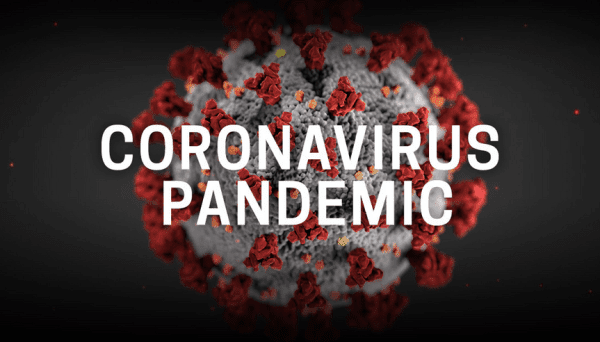
COVID19 Pandemic
Outbreak NewsGlobal Health NewsPublic Health News

WHO recommends life-saving interleukin-6 receptor blockers for COVID-19

by Public Health Update July 7, 2021
written by Public Health Update

WHO recommends life-saving interleukin-6 receptor blockers for COVID-19 and urges producers to join efforts to rapidly increase access

6 July 2021 News release Geneva Reading time: 2 min (454 words)

The World Health Organization (WHO) has updated its patient care guidelines to include interleukin-6 receptor blockers, a class of medicines that are lifesaving in patients who are severely or critically ill with COVID-19, especially when administered alongside corticosteroids. 

These were the findings from a prospective and a living network meta-analysis initiated by WHO, the largest such analysis on the drugs to date. Data from over 10 000 patients enrolled in 27 clinical trials were considered. 

These are the first drugs found to be effective against COVID-19 since corticosteroids were recommended by WHO in September 2020. 

Patients severely or critically ill with COVID-19 often suffer from an overreaction of the immune system, which can be very harmful to the patient’s health. Interleukin-6 blocking drugs – tocilizumab and sarilumab – act to suppress this overreaction.  

The prospective and living network meta-analyses showed that in severely or critically ill patients, administering these drugs reduce the odds of death by 13%, compared to standard care. This means that there will be 15 fewer deaths per thousand patients, and as many as 28 fewer deaths for every thousand critically ill patients. The odds of mechanical ventilation among severe and critical patients are reduced by 28%, compared with standard care. This translates to 23 fewer patients out of a thousand needing mechanical ventilation. 

Clinical trial investigators in 28 countries shared data with WHO, including pre-publication data. Researchers worldwide compiled and analyzed the data. With the support of these critical partnerships, WHO has been able to issue a rapid and trustworthy recommendation for the use of interleukin-6 receptor blockers in severe and critical COVID-19 patients.

“These drugs offer hope for patients and families who are suffering from the devastating impact of severe and critical COVID-19. But IL-6 receptor blockers remain inaccessible and unaffordable for the majority of the world,” said WHO Director-General Dr Tedros Adhanom Ghebreyesus.

“The inequitable distribution of vaccines means that people in low- and middle-income countries are most susceptible to severe forms of COVID-19. So, the greatest need for these drugs is in countries that currently have the least access. We must urgently change this.” 

To increase access and affordability of these life-saving products, WHO calls on manufacturers to reduce prices and make supplies available to low- and middle-income countries, especially where COVID-19 is surging. 

WHO also encourages companies to agree to transparent, non-exclusive voluntary licensing agreements using the C-TAP platform and the Medicines Patent Pool, or to waive exclusivity rights.

In addition, WHO has launched an expression of interest for prequalification of manufacturers of interleukin-6 receptor blockers. Prequalification of innovator and biosimilar products aims to expand the availability of quality-assured products and to increase access through market competition and reduce prices to meet urgent public health needs.

OFFICIAL LINK: 6 July 2021 News release Geneva Reading time: 2 min (454 words)


Do you have a website? Looking for the best hosting provider? Here’s a discount code.

Latest Public Health Jobs

Latest Posts

  • International Wellness Day: Promoting Global Wellness for All
  • Summit Declaration: The 12th National Summit of Health and Population Scientists in Nepal
  • Joint political declaration on the reform of the global health architecture
  • World Health Day 2026: Together for Health. Stand with Science.
  • World Water Day 2026 | Water & Gender Equality

Thanks for visiting us.
Disclaimer: The resources, documents, guidelines, and information on this blog have been collected from various sources and are intended for informational purposes only. Information published on or through this website and affiliated social media channels does not represent the intention, plan, or strategies of an organization that the initiator is associated with in a professional or personal capacity, unless explicitly indicated.
If you have any complaints, information, or suggestions about the content published on Public Health Update, please feel free to contact us at blog.publichealthupdate@gmail.com.
#StayUpdated


  • WordPress
  • Link
  • Facebook
  • Mail
  • Facebook
  • Twitter
  • Twitter
  • LinkedIn
  • Instagram
  • Facebook
July 7, 2021 0 comments
0 FacebookTwitterPinterestLinkedinTumblrVKOdnoklassnikiRedditStumbleuponWhatsappTelegramLINEPocketSkypeViberEmail
Newer Posts
Older Posts

Search

Follow Us

Facebook Twitter Instagram Pinterest Linkedin Youtube

Categories

  • Abstracts (25)
  • Activities (91)
  • Adolescent Sexual and Reproductive Health (ASRH) (25)
  • Advice & Tips (4)
  • African Region (5)
  • AI and Health (1)
  • Annual Meeting (6)
  • Antimicrobial Resistance (AMR) (21)
  • Award (19)
  • Awards (16)
  • Books (9)
  • Call for Proposal, EOI & RFP (103)
  • Call for Research Participants (8)
  • Clinical Doctor Jobs (6)
  • Communicable Diseases (107)
  • Competition (20)
  • Conference (129)
  • Consultant (1)
  • Courses (205)
  • Dashboard (2)
  • Digital Health & Health Informatics (10)
  • Drug and Medicine (18)
  • Eastern Mediterranean Region (3)
  • Education (15)
  • Environment (3)
  • Environmental Health & Climate Change (47)
  • European Region (42)
  • Exchange Program (1)
  • Fact Sheet (117)
  • FCHVs (1)
  • Fellowships, Studentship & Scholarships (168)
  • Financial Aid (13)
  • Form Formats (2)
  • Fully funded (22)
  • Global Health News (434)
  • Grants and Funding Opportunities (193)
  • Guest Post (44)
  • Health Assistant Jobs (1)
  • Health Equity (7)
  • Health Financing and Economics (24)
  • Health in Data (115)
  • Health Insurance (5)
  • Health Jobs (52)
  • Health Literacy, Health Education & Promotion (50)
  • Health Organization Profile (42)
  • Health Systems (83)
  • Human Resource for Health (33)
  • Humanitarian Health & Emergency Response (44)
  • Hypertension (5)
  • Implementation Research (48)
  • International Health (3)
  • International Jobs & Opportunities (373)
  • International Plan, Policy & Guidelines (210)
  • Internships (4)
  • Jobs Vacancies (56)
  • Journals (8)
  • Life Style & Public Health Nutrition (39)
  • Live (10)
  • Master's Degree (48)
  • Maternal, Newborn and Child Health (88)
  • Mentorship Program (2)
  • Miscellaneous (16)
  • National Health News (158)
  • National Plan, Policy & Guidelines (468)
  • Neglected Tropical Diseases (NTDs) (51)
  • Non- Communicable Diseases (NCDs) (121)
  • Notice (103)
  • Nursing Jobs (6)
  • Nutritionist Jobs (1)
  • One Health (18)
  • Online & Distance Learning (22)
  • Online Courses (90)
  • Op-Ed Article (3)
  • Opportunities by Region (83)
  • Outbreak News (213)
  • Partially funded (6)
  • PCL Health Science Jobs (3)
  • PH Important Day (534)
  • Pharmacist Jobs (3)
  • PhD (54)
  • Photos (5)
  • Planetary Health (4)
  • PostDoc (14)
  • Presentation Slides (26)
  • Primary Health Care (25)
  • Provincial Plan, Policies and Guidelines (14)
  • Public Health (1,283)
  • Public Health Epidemiology & Biostatistics (13)
  • Public Health Events (306)
  • Public Health Information (20)
  • Public Health Innovation (9)
  • Public Health Jobs (52)
  • Public Health News (554)
  • Public Health Notes (120)
  • Public Health Opportunities (507)
  • Public Health Opportunity (491)
  • Public Health Programs (108)
  • Public Health Seminar (2)
  • Public Health Tools (1)
  • Public Health Update (564)
  • Quality Improvement & Infection Prevention (20)
  • Region of America (8)
  • Reports (184)
  • Research & Project Grants (39)
  • Research & Project Grants (32)
  • Research & Publication (647)
  • Research Articles (10)
  • Road Traffic Accidents (RTA) (9)
  • School of Public Health (60)
  • Self funded (2)
  • South-East Asia Region (26)
  • Success Stories (17)
  • Summer and Winter Courses (40)
  • Summer Courses (28)
  • Sustainable Development Goals (SDGs) (14)
  • Syllabus (61)
  • Symposium (9)
  • Tobacco Control (35)
  • Training (40)
  • Travel Grants (15)
  • Trick, Technique & Skills (8)
  • Uncategorized (3)
  • Undergraduate Degree (7)
  • Universal Health Coverage (36)
  • Universities (29)
  • Universities & School of Public Health (58)
  • Vacancy Announcement (26)
  • Vaccine Preventable Diseases (40)
  • Vector-Borne Diseases(VBDs) (30)
  • Videos (3)
  • View Points (1)
  • Webinar (4)
  • Western Pacific Region (13)
  • Workshop (18)
  • World News (117)
Post New Jobs: Vacancy Announcement Service

Public Health Update (Sagun’s Blog) is a popular public health portal in Nepal. Thousands of health professionals are connected with Public Health Update to get up-to-date public health updates, search for jobs, and explore opportunities.
#1 Public Health Blog for sharing Job opportunities and updates in Nepal

”Public Health Information For All”
– – Sagun Paudel, Founder

  • HOT JOBS
    • Public Health Jobs
    • Medical Doctor Jobs
    • Nursing Jobs
    • Health Assistant Jobs
    • Pharmacist Jobs
    • NGOs Jobs
    • Government Jobs
  • Top Categories
    • National Plan, Policy & Guidelines Top
    • Public Health Calendar
    • Fellowships & Scholarships
    • Health Systems
    • Health Organization Profiles
    • International Jobs & Opportunities
    • Public Health Opportunity

PUBLIC HEALTH INITIATIVE

    • Submit your Vacancies New
    • Partnership Opportunities

Contact: blog.publichealthupdate@gmail.com

https://wa.me/+9779856036932

Public Health Initiative, A Registered Non-profit organization – All Right Reserved. 2011-2024. Contact us. 

Facebook Twitter Instagram Youtube Envelope
Public Health Update
  • Home
  • Public Health
    • Home 1
      • Adolescent Sexual and Reproductive Health (ASRH)
      • Antimicrobial Resistance (AMR)
      • Communicable Diseases
      • Digital Health & Health Informatics
      • Environmental Health & Climate Change
      • Health Financing and Economics
      • Health Equity
    • Home 2
      • Health Literacy, Health Education & Promotion
      • Human Resource for Health
      • Humanitarian Health & Emergency Response
      • Implementation Research
      • International Health
      • Life Style & Public Health Nutrition
      • Maternal, Newborn and Child Health
    • Home 3
      • Neglected Tropical Diseases (NTDs)
      • Non- Communicable Diseases (NCDs)
      • One Health
      • Planetary Health
      • Public Health Epidemiology & Biostatistics
      • Primary Health Care
      • Quality Improvement & Infection Prevention
    • Home 4
      • Road Traffic Accidents (RTA)
      • Sustainable Development Goals (SDGs)
      • Tobacco Control
      • Universal Health Coverage
      • Vaccine Preventable Diseases
      • Vector-Borne Diseases(VBDs)
      • Notices
  • Public Health Update
    • Home 1
      • Public Health News
      • Global Health News
      • Outbreak News
      • National Health News
      • COVID-19
    • Home 2
      • Fact Sheet
      • Health in Data
      • PH Important Day
      • Public Health Events
      • Public Health Programs
    • Home 3
      • Health Systems
      • Health Insurance
      • Health Organization Profile
      • Success Stories
      • Public Health Innovation
  • Public Health Opportunities
    • Fully funded
    • Travel Grants
    • Grants and Funding Opportunities
    • Opportunities by Region
    • International Jobs & Opportunities
    • Research & Project Grants
    • Fellowships, Studentship & Scholarships
    • Conference
  • Jobs
    • Home 1
      • Health Jobs
      • Public Health Jobs
      • Clinical doctor Jobs
      • Health Assistant Jobs
      • Nursing Jobs
      • PCL Health Science Jobs
    • Home 2
      • Dental Jobs
      • Pharmacist Jobs
      • TSLC (Health Jobs)
      • Laboratory Jobs
      • Nutritionist Jobs
  • Downloads
    • International Plan, Policy & Guidelines
    • National Plan, Policy & Guidelines
    • Reports
    • Books
    • Research Articles
  • School of Public Health
    • Home 1
      • Courses
      • Master’s Degree
      • Undergraduate Degree
      • PhD
    • Home 2
      • Universities
      • Syllabus
      • Public Health Notes
      • Mentorship Program
      • Startup Project
    • Home
      • Summer and Winter Courses
      • Summer Courses
      • Online Courses
      • Workshop
      • Training
Public Health Update
  • Home
  • Public Health
    • Home 1
      • Adolescent Sexual and Reproductive Health (ASRH)
      • Antimicrobial Resistance (AMR)
      • Communicable Diseases
      • Digital Health & Health Informatics
      • Environmental Health & Climate Change
      • Health Financing and Economics
      • Health Equity
    • Home 2
      • Health Literacy, Health Education & Promotion
      • Human Resource for Health
      • Humanitarian Health & Emergency Response
      • Implementation Research
      • International Health
      • Life Style & Public Health Nutrition
      • Maternal, Newborn and Child Health
    • Home 3
      • Neglected Tropical Diseases (NTDs)
      • Non- Communicable Diseases (NCDs)
      • One Health
      • Planetary Health
      • Public Health Epidemiology & Biostatistics
      • Primary Health Care
      • Quality Improvement & Infection Prevention
    • Home 4
      • Road Traffic Accidents (RTA)
      • Sustainable Development Goals (SDGs)
      • Tobacco Control
      • Universal Health Coverage
      • Vaccine Preventable Diseases
      • Vector-Borne Diseases(VBDs)
      • Notices
  • Public Health Update
    • Home 1
      • Public Health News
      • Global Health News
      • Outbreak News
      • National Health News
      • COVID-19
    • Home 2
      • Fact Sheet
      • Health in Data
      • PH Important Day
      • Public Health Events
      • Public Health Programs
    • Home 3
      • Health Systems
      • Health Insurance
      • Health Organization Profile
      • Success Stories
      • Public Health Innovation
  • Public Health Opportunities
    • Fully funded
    • Travel Grants
    • Grants and Funding Opportunities
    • Opportunities by Region
    • International Jobs & Opportunities
    • Research & Project Grants
    • Fellowships, Studentship & Scholarships
    • Conference
  • Jobs
    • Home 1
      • Health Jobs
      • Public Health Jobs
      • Clinical doctor Jobs
      • Health Assistant Jobs
      • Nursing Jobs
      • PCL Health Science Jobs
    • Home 2
      • Dental Jobs
      • Pharmacist Jobs
      • TSLC (Health Jobs)
      • Laboratory Jobs
      • Nutritionist Jobs
  • Downloads
    • International Plan, Policy & Guidelines
    • National Plan, Policy & Guidelines
    • Reports
    • Books
    • Research Articles
  • School of Public Health
    • Home 1
      • Courses
      • Master’s Degree
      • Undergraduate Degree
      • PhD
    • Home 2
      • Universities
      • Syllabus
      • Public Health Notes
      • Mentorship Program
      • Startup Project
    • Home
      • Summer and Winter Courses
      • Summer Courses
      • Online Courses
      • Workshop
      • Training
Public Health Initiative, A Registered Non-profit organization – All Right Reserved. 2011-2023