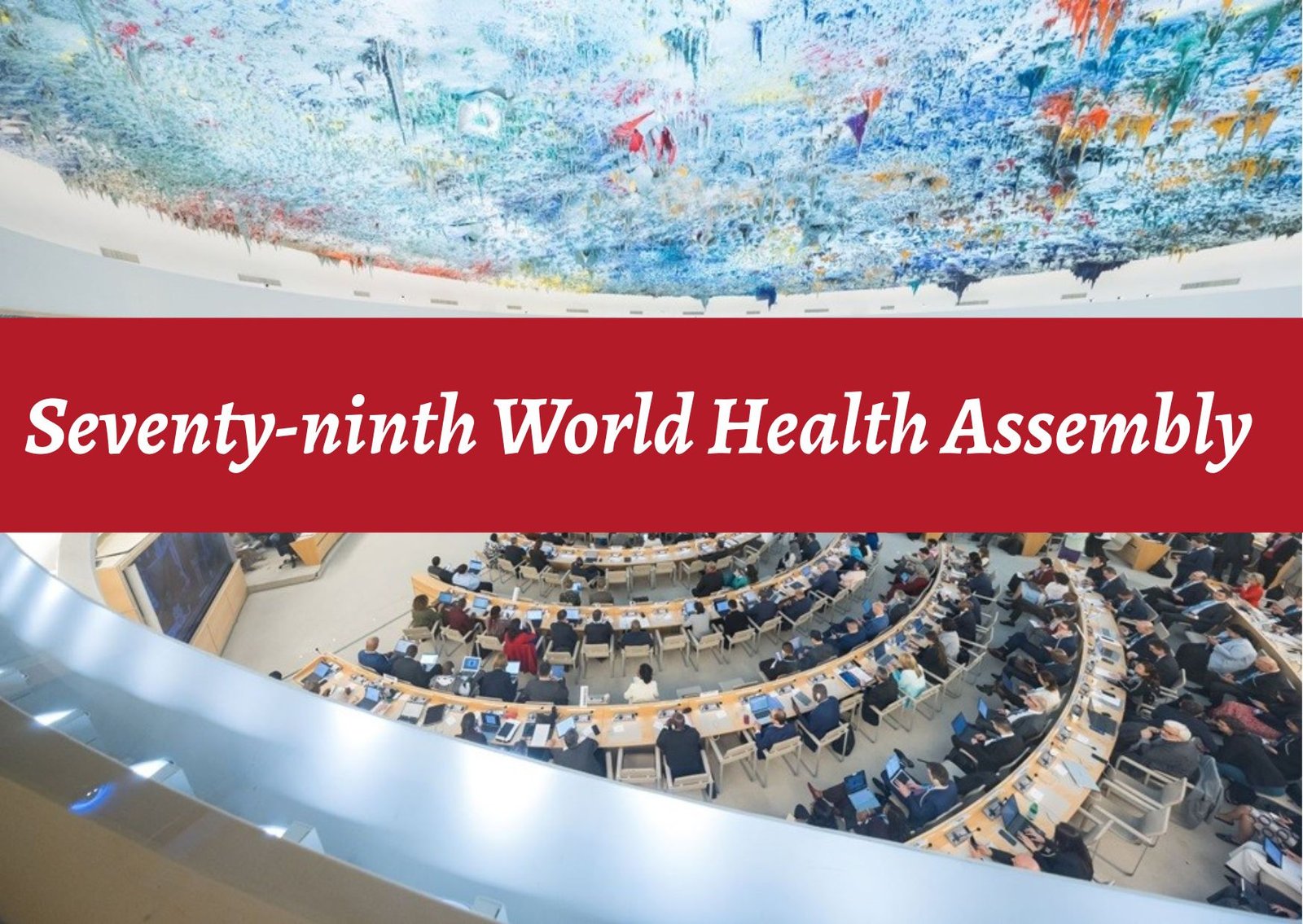
The Seventy-ninth World Health Assembly (WHA79) convened in Geneva from May 18-23, 2026, bringing together global health leaders under the theme “Reshaping global health: a shared responsibility.” Over six days, member states adopted more than 20 decisions and 13 resolutions—ranging from first-ever agreements on stroke and radiation to landmark strides in precision medicine and health workforce ethics.
Here are the major highlights from a pivotal week in global health governance.
Celebrating Public Health Champions
The Secretariat presented certificates of achievement for outstanding public health achievements:
- Algeria, Australia, Burundi, Egypt, Fiji, Libya, Senegal and Tunisia for trachoma elimination;
- Chile for leprosy elimination;
- Kenya for Human African trypanosomiasis elimination;
- Suriname and Timor-Leste for malaria elimination;
- Anguilla, Bahamas, Brazil, Cuba, Denmark, Maldives, Montserrat, Oman, Sri Lanka and Turks and Caicos for the elimination mother-to-child transmission of HIV, HBV and syphilis; and
- Portugal and United Arab Emirates for trans-fat elimination;
In recognition of their outstanding contributions to tobacco control, the following World No Tobacco Day awards certificates were awarded to:
- Dr Louise Mapleh-Kpoto, Minister of Health of Liberia;
- Dr Monica Garcia Gomez, Minister of Health of Spain;
- María Lustemberg Haro, Minister of Public Health of Uruguay; and the Department of Legislation of Viet Nam.
A New President and High-Level Calls to Action
The Assembly opened with the election of Dr. Víctor Elías Atallah Lajam of the Dominican Republic as its President. The 79th World Health Assembly elected Libya, Mali, Poland, Nepal and Papua New Guinea as Vice-Presidents of #WHA79. WHO Director-General Dr. Tedros Adhanom Ghebreyesus presented Awards for Global Health to four individuals, including Dr. Mike Ryan and Dr. Tore Godal, for lifetime contributions to public health.
Major Public Health Wins: From TB to Stroke
First-Ever Stroke Resolution
In a historic move, countries approved the first-ever WHA resolution on stroke. With one in four adults now expected to suffer a stroke in their lifetime, the resolution calls for integrated action on prevention, acute care, and rehabilitation—placing stroke squarely within the NCD agenda.
A New Push to End Tuberculosis
Countries endorsed the development of a post-2030 TB strategy. While 83 million lives have been saved since 2000, TB remains a leading infectious killer. The new strategy will align with primary health care and Universal Health Coverage (UHC) goals.
Recognizing Steatotic Liver Disease (SLD)
Once called “fatty liver disease,” SLD now receives formal recognition as a major NCD challenge, affecting an estimated 1.7 billion people worldwide. The resolution urges countries to integrate SLD into national NCD strategies, focusing on diet, physical activity, and alcohol use.
Pandemic Preparedness: The PABS Annex and Emergency Reforms
Negotiations Extended
Member States agreed to continue drafting the Pathogen Access and Benefit-Sharing (PABS) Annex—a critical component of the WHO Pandemic Agreement. The goal is to ensure equitable access to vaccines and treatments during future pandemics. The outcome is now expected by May 2027 or at a special session in 2026.
Reflecting on a Decade of Emergencies
In a strategic roundtable marking 10 years of the WHO Health Emergencies Programme, leaders reflected on COVID-19 as the “ultimate stress test.” Key takeaways: sustainable financing, AI-enhanced epidemic intelligence, and closing the equity gap in medical countermeasures remain unfinished business.
Landmark Resolutions on Equity and Innovation
Precision Medicine for All
A landmark resolution on precision medicine was adopted, putting equity at the center. While targeted therapies have revolutionized cancer and rare disease care, low- and middle-income countries face major gaps in lab capacity and genomic data. WHO will now develop a global strategy to ensure precision medicine doesn’t widen health inequities.
Smart Pharmacovigilance
Responding to lessons from COVID-19, member states approved a resolution to strengthen global safety monitoring for medicines and vaccines—leveraging AI and real-world data while combating mis- and disinformation.
Emergency, Critical & Operative (ECO) Care Strategy
A new 10-year strategy aims to scale up integrated ECO services, which address 38 million deaths annually. The plan prioritizes health worker training, equipment, and system design to prevent delays in life-saving care.
Ethics, Economics, and the Health Workforce
Amending the WHO Code on Health Worker Recruitment
For the first time in 16 years, the Global Code of Practice on the International Recruitment of Health Personnel was updated. The revisions now explicitly include care workers, clarify rules during emergencies, and encourage co-investment so that recruitment benefits both source and destination countries.
Putting Health at the Heart of Economic Policy
A new strategy on the Economics of Health for All (2026-2030) was adopted, recognizing that health and economic prosperity are deeply intertwined. The strategy calls for integrating health into fiscal, industrial, and social policies—a direct response to the ongoing global health financing crisis.
Addressing Crises in Ukraine, the Middle East, and Beyond
The Assembly did not shy away from active emergencies. Delegates approved decisions on the health emergency in Ukraine (requesting a progress report by 2027) and noted a worsening humanitarian crisis in the occupied Palestinian territory, with nearly 2,000 attacks on healthcare recorded since October 2023. A separate resolution addressed the public health impact of the Middle East escalation on Gulf countries and Jordan.
Closing Thoughts: From Resolutions to Reality
In his closing address, Dr. Tedros reminded delegates that “every resolution you adopt… only has value when it changes what happens in a clinic, in a community, or in a household.”
With major agreements on stroke, radiation safety, antimicrobial resistance (AMR), and teleradiology, WHA79 has laid down an ambitious roadmap. The challenge now is political commitment, sustained financing, and continued cooperation.
As the Assembly adjourned, the message was clear: global health is no longer just about fighting diseases—it’s about reshaping the very systems that determine who lives, and how well.
For a full list of resolutions and daily updates, visit the official WHA79 meeting page.
- World Health Assembly
- Seventy-ninth World Health Assembly WHA79
- World Health Assembly 72 Update #WHA72
- WHA
- Seventy-first World Health Assembly #WHA71 #Live