
Public Health Update
  • Home
  • Public Health Update
  • Nepal Health Jobs
    • Public Health Job Board
    • Organization List
  • Opportunities
    • Fellowships, Studentship & Scholarships
    • Grants and Funding Opportunities
    • Fully funded
    • Conference
  • Downloads
    • International Plan, Policy & Guidelines
    • National Plan, Policy & Guidelines
    • Reports
    • Public Health Notes
    • Syllabus
    • Form Formats
  • School of Public Health
    • PhD
    • Master’s Degree
    • Online Courses
  • Notice
  • Home
  • Public Health Update
  • Nepal Health Jobs
    • Public Health Job Board
    • Organization List
  • Opportunities
    • Fellowships, Studentship & Scholarships
    • Grants and Funding Opportunities
    • Fully funded
    • Conference
  • Downloads
    • International Plan, Policy & Guidelines
    • National Plan, Policy & Guidelines
    • Reports
    • Public Health Notes
    • Syllabus
    • Form Formats
  • School of Public Health
    • PhD
    • Master’s Degree
    • Online Courses
  • Notice
LOGIN / REGISTER
Public Health Update
SUBSCRIBE
Public Health Update
  • Home
  • Public Health Update
  • Nepal Health Jobs
    • Public Health Job Board
    • Organization List
  • Opportunities
    • Fellowships, Studentship & Scholarships
    • Grants and Funding Opportunities
    • Fully funded
    • Conference
  • Downloads
    • International Plan, Policy & Guidelines
    • National Plan, Policy & Guidelines
    • Reports
    • Public Health Notes
    • Syllabus
    • Form Formats
  • School of Public Health
    • PhD
    • Master’s Degree
    • Online Courses
  • Notice

All Right Reserved. Designed and Developed by PenciDesign

National Testing-Guidelines for COVID-19 (Version 5), Nepa
National Plan, Policy & GuidelinesOutbreak NewsResearch & Publication

National Testing-Guidelines for COVID-19 (Version 5), Nepal

by Public Health Update October 15, 2020
written by Public Health Update

The Ministry of Health and Population (MoHP) Nepal has revised the National Testing-Guidelines for COVID-19, Nepal. This is the 5th version of National Testing-Guideline.
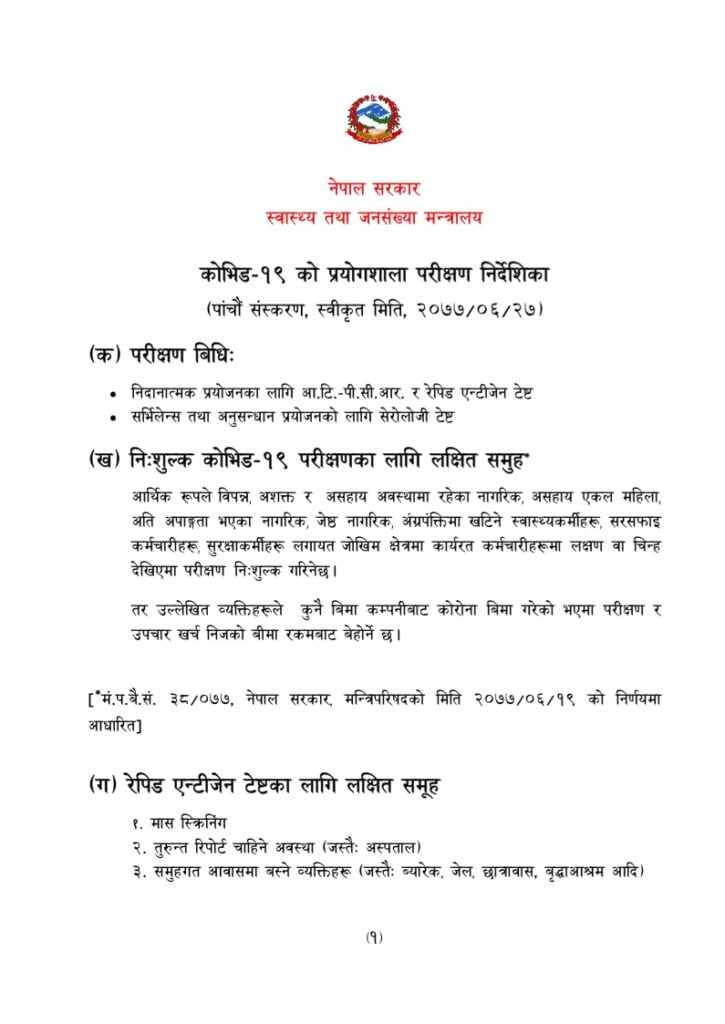
National Testing Guidelines for COVID 19 Version 5

Essential readings

  • List of Laboratories for SARS CoV-2 Rapid Antigen Test in Nepal
  • List of Laboratories for COVID19 testing in Nepal (RT-PCR)
  • List of COVID-19 Hospitals (COVID-19 Care Units) in Nepal
  • National Testing-Guidelines for COVID-19 (Version 5), Nepal (Latest)
  • List of Certified COVID-19 Antigen kits in Nepal

Do you have a website? Looking for the best hosting provider? Here’s a discount code.

Latest Public Health Jobs

Latest Posts

  • Multisectoral Action Plan for the Prevention and Control of NCDs, 2026-2030 (Draft)
  • National Standard Operating Procedure for Early Warning, Alert and Response System (EWARS), 2025
  • Priority Infectious Diseases for Community-Based Surveillance in Nepal
  • Community Based Disease Surveillance Guideline, 2082
  • Political declaration of the fourth high-level meeting of the General Assembly on the prevention and control of NCDs and the promotion of mental health and well-being

Thanks for visiting us.
Disclaimer: The resources, documents, guidelines, and information on this blog have been collected from various sources and are intended for informational purposes only. Information published on or through this website and affiliated social media channels does not represent the intention, plan, or strategies of an organization that the initiator is associated with in a professional or personal capacity, unless explicitly indicated.
If you have any complaints, information, or suggestions about the content published on Public Health Update, please feel free to contact us at blog.publichealthupdate@gmail.com.
#StayUpdated

  • WordPress
  • Link
  • Facebook
  • Mail
  • Facebook
  • Twitter
  • Twitter
  • LinkedIn
  • Instagram
  • Facebook
October 15, 2020 0 comments
0 FacebookTwitterPinterestLinkedinTumblrVKOdnoklassnikiRedditStumbleuponWhatsappTelegramLINEPocketSkypeViberEmail
Global Tuberculosis Report 2020
Communicable DiseasesGlobal Health NewsPublic Health NewsReports

WHO: Global TB progress at risk

by Public Health Update October 15, 2020
written by Public Health Update

Prior to the COVID-19 pandemic, many countries were making steady progress in tackling tuberculosis (TB), with a 9% reduction in incidence seen between 2015 and 2019 and a 14% drop in deaths in the same period. High-level political commitments at global and national levels were delivering results. However, a new report from WHO shows that access to TB services remains a challenge, and that global targets for prevention and treatment will likely be missed without urgent action and investments. 

Recommended reading: Global Tuberculosis Report 2020

Approximately 1.4 million people died from TB-related illnesses in 2019. Of the estimated 10 million people who developed TB that year, some 3 million were not diagnosed with the disease, or were not officially reported to national authorities.

Nepal: National TB Prevalence Survey, 2018-19 Key findings

The situation is even more acute for people with drug-resistant TB. About 465 000 people were newly diagnosed with drug-resistant TB in 2019 and, of these, less than 40% were able to access treatment. There has also been limited progress in scaling up access to treatment to prevent TB.

“Equitable access to quality and timely diagnosis, prevention, treatment and care remains a challenge,” said Dr Tedros Adhanom Ghebreyesus, Director-General of WHO.  “Accelerated action is urgently needed worldwide if we are to meet our targets by 2022.”

About 14 million people were treated for TB in the period 2018-2019, just over one-third of the way towards the 5-year target (2018-2022) of 40 million, according to the report. Some 6.3 million people started TB preventive treatment in 2018-2019, about one-fifth of the way towards the 5-year target of 30 million.

Funding is a major issue. In 2020, funding for TB prevention, diagnosis, treatment and care reached
US$ 6.5 billion, representing only half of the US$ 13 billion target agreed by world leaders in the UN Political Declaration on TB.

The COVID-19 pandemic and TB

Disruptions in services caused by the COVID-19 pandemic have led to further setbacks.  In many countries, human, financial and other resources have been reallocated from TB to the COVID-19 response. Data collection and reporting systems have also been negatively impacted.

According to the new report, data collated from over 200 countries has shown significant reductions in TB case notifications, with 25-30% drops reported in 3 high burden countries – India, Indonesia, the Philippines – between January and June 2020 compared to the same 6-month period in 2019. These reductions in case notifications could lead to a dramatic increase in additional TB deaths, according to WHO modelling.

However, in line with WHO guidance, countries have taken measures to mitigate the impact of COVID-19 on essential TB services, including by strengthening infection control. A total of 108 countries – including 21 countries with a high TB burden – have expanded the use of digital technologies to provide remote advice and support.  To reduce the need for visits to health facilities, many countries are encouraging home-based treatment, all-oral treatments for people with drug-resistant TB, provision of TB preventive treatment, and ensuring people with TB maintain an adequate supply of drugs.

“In the face of the pandemic, countries, civil society and other partners have joined forces to ensure that essential services for both TB and COVID-19 are maintained for those in need,” said Dr Tereza Kaseva, Director of WHO’s Global TB Programme. “These efforts are vital to strengthen health systems, ensure health for all, and save lives.”

A recent progress report from the UN Secretary General outlines 10 priority actions for Member States and other stakeholders to close gaps in TB care, financing and research, as well as advance multisectoral action and accountability, including in the context of the COVID-19 pandemic.

Note for the editors

Global targets


In 2014 and 2015, all Member States of WHO and the UN adopted the UN Sustainable Development Goals (SDGs) and WHO’s End TB Strategy. The SDGs and End TB Strategy both include targets and milestones for large reductions in TB incidence, TB deaths and costs faced by TB patients and their households.

TB is included under Goal 3 Target 3.3 of the SDGs which aims to “end the epidemics of AIDS, tuberculosis, malaria and neglected tropical diseases” by the year 2030.

The WHO End TB Strategy aims for a 90 per cent reduction in TB deaths and an 80 per cent reduction in the TB incidence rate by 2030, compared to the 2015 baseline. Milestones for 2020 include a 20% reduction in the TB incidence rate and a 35% reduction in TB deaths.

Efforts to step up political commitment in the fight against TB intensified in 2017 and 2018 culminating, in September 2018, in the first-ever high-level meeting on TB at the UN General Assembly. The outcome was a political declaration in which commitments to the SDGs and End TB Strategy were reaffirmed. The UN Political Declaration on TB also included 4 new targets for the period 2018-2022:

  • Treat 40 million people for TB disease
  • Reach at least 30 million people with TB preventive treatment for a latent TB infection
  • Mobilize at least US$13 billion annually for universal access to TB diagnosis, treatment and care
  • Mobilize at least US$2 billion annually for TB research

Progress towards global targets

According to the new report, the WHO European Region is on track to achieve key 2020 targets of the WHO End TB Strategy, with reductions in incidence and deaths of 19% and 31%, respectively, over the last 5-year period. The African Region has also made impressive gains, with corresponding reductions of 16% and 19% in the same timeframe. On a global scale, however, the pace of progress has lagged, and critical 2020 milestones of the End TB Strategy will be missed.

Financing

As in previous years, most available TB funding (85%) in 2020 came from domestic sources, with Brazil, Russian Federation, India, China and South Africa providing 57% of the global total.  International donor funding increased from US$ 900 000 in 2019 to US$ 1 billion in 2020. The Global Fund to Fight AIDS, Tuberculosis and Malaria was the single largest source of international TB financing in 2020, while the United States remains the biggest bilateral funder of efforts to end TB.

Research and innovation

Reaching the 2030 global TB targets will require technological breakthroughs by 2025. The world needs affordable and accessible rapid point-of-care tests, as well as new, safer and more effective treatments and vaccines. To meet these challenges, Member States called on WHO in 2018 to develop a Global strategy for TB research and innovation that lays out key steps that governments and non-state actors can undertake. The strategy was adopted by the World Health Assembly in August 2020.

Multisectoral action and accountability

Further progress towards ending TB will depend on action across sectors, underscoring the importance of the implementation of WHO’s multisectoral accountability framework on TB. In 2019 and 2020, WHO worked with high TB-burden countries to ensure the inclusion of accountability mechanisms in national budget planning and pursuing assessment during high-level missions and joint TB programme reviews with engagement of civil society representatives.

TB facts

Tuberculosis (TB) , the world’s deadliest infectious killer, is caused by bacteria(Mycobacterium tuberculosis)that most often affect the lungs. It can spread when people who are sick with TB expel bacteria into the air – for example, by coughing.

Approximately 90 percent of those who fall sick with TB each year live in 30 countries. Most people who develop the disease are adults, and there are more cases among men than women.

TB is preventable and curable. About 85% of people who develop TB disease can be successfully treated with a 6-month drug regimen; treatment has the added benefit of curtailing onward transmission of infection.

Since 2000, TB treatment has averted more than 60 million deaths – although with access to universal health coverage still falling short, many millions have also missed out on diagnosis and care.

14 October 2020 News release Geneva


Recommended readings

Nepal: National TB Prevalence Survey, 2018-19 Key findings

  • Global Tuberculosis Report 2019: Latest status of the tuberculosis epidemic
  • Dissemination of Findings and Recommendations of Joint External Monitoring Mission(JEMM) of Nepal National Tuberculosis Program
  • National Tuberculosis Programme Annual Report 2018
  • National Strategic Plan for Tuberculosis Prevention, Care and Control 2016 – 2021
  • NTP, Nepal: New TB Treatment Algorithm & Regimen (Updated)
  • WHO announces landmark changes in MDR-TB treatment regimens
  • TB Vaccine results announce a promising step towards ending the emergency
  • 7 million people receive record levels of lifesaving TB treatment but 3 million still miss out

More

  • The impact of COVID-19 on the TB epidemic: A community perspective
  • Global Tuberculosis Report 2019: Latest status of the tuberculosis epidemic
  • Global Tuberculosis Report 2018
  • New WHO recommendations to prevent tuberculosis aim to save millions of lives
  • South-East Asia Regional Action Plan on the Programmatic Management of Latent TB Infection launched
  • South-East Asia Regional Action Plan on the Programmatic Management of Latent TB Infection launched
  • NTP, Nepal: New TB Treatment Algorithm & Regimen (Updated)
  • World Tuberculosis Day 2019 – It’s time ! ”Find Treat All #EndTB”
  • Global Tuberculosis Report 2018
  • WHO Global Tuberculosis report 2015
  • Dissemination of Findings and Recommendations of Joint External Monitoring Mission(JEMM) of Nepal National Tuberculosis Program
  • National Tuberculosis Programme Annual Report 2018

  • Multisectoral Action Plan for the Prevention and Control of NCDs, 2026-2030 (Draft)
  • National Standard Operating Procedure for Early Warning, Alert and Response System (EWARS), 2025
  • Priority Infectious Diseases for Community-Based Surveillance in Nepal
  • Community Based Disease Surveillance Guideline, 2082
  • Political declaration of the fourth high-level meeting of the General Assembly on the prevention and control of NCDs and the promotion of mental health and well-being

Do you have a website? Looking for the best hosting provider? Here’s a discount code.

Latest Public Health Jobs

Latest Posts

  • Multisectoral Action Plan for the Prevention and Control of NCDs, 2026-2030 (Draft)
  • National Standard Operating Procedure for Early Warning, Alert and Response System (EWARS), 2025
  • Priority Infectious Diseases for Community-Based Surveillance in Nepal
  • Community Based Disease Surveillance Guideline, 2082
  • Political declaration of the fourth high-level meeting of the General Assembly on the prevention and control of NCDs and the promotion of mental health and well-being

Thanks for visiting us.
Disclaimer: The resources, documents, guidelines, and information on this blog have been collected from various sources and are intended for informational purposes only. Information published on or through this website and affiliated social media channels does not represent the intention, plan, or strategies of an organization that the initiator is associated with in a professional or personal capacity, unless explicitly indicated.
If you have any complaints, information, or suggestions about the content published on Public Health Update, please feel free to contact us at blog.publichealthupdate@gmail.com.
#StayUpdated


  • WordPress
  • Link
  • Facebook
  • Mail
  • Facebook
  • Twitter
  • Twitter
  • LinkedIn
  • Instagram
  • Facebook
October 15, 2020 0 comments
0 FacebookTwitterPinterestLinkedinTumblrVKOdnoklassnikiRedditStumbleuponWhatsappTelegramLINEPocketSkypeViberEmail
Global Tuberculosis Report 2020
ReportsCommunicable DiseasesInternational Plan, Policy & GuidelinesResearch & Publication

Global Tuberculosis Report 2020

by Public Health Update October 15, 2020
written by Public Health Update

The World Health Organization (WHO) has published a global TB report every year since 1997. The purpose of the report is to provide a comprehensive and up to-date assessment of the status of the TB epidemic, and of progress in the response to the epidemic – at global, regional and country levels – in the context of global commitments and strategies.

Recommended for you
National Tuberculosis Management Guideline 2019, Nepal
Nepal: National TB Prevalence Survey, 2018-19 Key findings

Fact sheet

  • 63,000,000 lives saved since 2000 by global efforts to end TB
  • 10,000,000 people fell ill with TB in 2019
  • 1,400,000 people died of TB in 2019
  • 465,000 people fell ill with drug-resistant TB in 2019
  • Tuberculosis (TB) is contagious and airborne.
  • TB was one of the top 10 causes of death worldwide in 2019. It was also the leading killer of people with HIV and a major cause of deaths related to antimicrobial resistance.
  • In 2019, an estimated 10.0 million (range, 8.9 –11.0 million) people fell ill with TB worldwide, of which 5.6 million were men, 3.2 million were women and 1.2 million were children. People living with HIV accounted for 8.2% of the total.
  • Eight countries accounted for two-thirds of the global total: India, Indonesia, China, the Philippines, Pakistan, Nigeria, Bangladesh and South Africa.
  • In 2019, 1.4 million people died from TB, including 208 000 (177 000–242 000) people with HIV. This is a reduction from 2.4 million in 2000.
  • Globally, the TB incidence rate fell by 9% between 2015 to 2019 (from 142 to 130 new cases per 100 000 population), including a reduction of 2.3% between 2018 and 2019.
  • TB treatment saved 63 million lives globally between 2000 and 2019.
  • Globally, 7.1 million people with TB were reported to have been newly diagnosed and notified in 2019 – a small increase from 7.0 million in 2018 but a large increase from 6.4 million in 2017 and 5.7–5.8 million annually in the period 2009–2012. The combined total for 2018–2019 (14.1 million) was 35% of the way towards the 5-year target of 40 million 2018-2022.
  • There is still a large global gap between the estimated number of people who fell ill with TB in 2019 and the number of people newly diagnosed (7.1 million in 2019), due to underreporting of detected cases and underdiagnosis (if people with TB cannot access health care or are not diagnosed when they do). Five countries accounted for more than half of the global gap: India, Nigeria, Indonesia, Pakistan and the Philippines.
  • Globally, 465 000 people fell ill with multidrug or rifampicin-resistant (MDR/RR-TB) in 2019.
  • A global total of 206 030 people with MDR/RR-TB were detected and notified in 2019, a 10% increase from 186 883 in 2018.
  • The treatment success rate for MDR/RR-TB, at 57% globally, remains low.
  • In 2020, funding for TB prevention, diagnosis, treatment and care reached US$ 6.5 billion, representing only half of the US$ 13 billion target agreed by world leaders in the UN Political Declaration on TB.

THE COVID-19 PANDEMIC AND TB – IMPACT AND IMPLICATIONS

The COVID-19 pandemic threatens to reverse recent progress in reducing the burden of TB disease and improving access to care.

The impact of the pandemic on TB services has been severe. Data from several high TB burden countries for the period January- June 2020 show sharp drops in TB notifications.

WHO modelling suggests that a 50% drop in TB case detection over 3 months could result in nearly 400,000 additional TB deaths in 2020 alone.

In response, WHO is working in close coordination with partners and civil society to support countries to maintain the continuity of essential health services, including those for TB.

FULL REPORT
SUMMARY
FACT SHEET

Recommended readings

  • Global Tuberculosis Report 2019: Latest status of the tuberculosis epidemic
  • Dissemination of Findings and Recommendations of Joint External Monitoring Mission(JEMM) of Nepal National Tuberculosis Program
  • National Tuberculosis Programme Annual Report 2018
  • National Strategic Plan for Tuberculosis Prevention, Care and Control 2016 – 2021
  • NTP, Nepal: New TB Treatment Algorithm & Regimen (Updated)
  • WHO announces landmark changes in MDR-TB treatment regimens
  • TB Vaccine results announce a promising step towards ending the emergency
  • 7 million people receive record levels of lifesaving TB treatment but 3 million still miss out

More

  • The impact of COVID-19 on the TB epidemic: A community perspective
  • Global Tuberculosis Report 2019: Latest status of the tuberculosis epidemic
  • Global Tuberculosis Report 2018
  • New WHO recommendations to prevent tuberculosis aim to save millions of lives
  • South-East Asia Regional Action Plan on the Programmatic Management of Latent TB Infection launched
  • South-East Asia Regional Action Plan on the Programmatic Management of Latent TB Infection launched
  • NTP, Nepal: New TB Treatment Algorithm & Regimen (Updated)
  • World Tuberculosis Day 2019 – It’s time ! ”Find Treat All #EndTB”
  • Global Tuberculosis Report 2018
  • WHO Global Tuberculosis report 2015
  • Dissemination of Findings and Recommendations of Joint External Monitoring Mission(JEMM) of Nepal National Tuberculosis Program
  • National Tuberculosis Programme Annual Report 2018

  • Multisectoral Action Plan for the Prevention and Control of NCDs, 2026-2030 (Draft)
  • National Standard Operating Procedure for Early Warning, Alert and Response System (EWARS), 2025
  • Priority Infectious Diseases for Community-Based Surveillance in Nepal
  • Community Based Disease Surveillance Guideline, 2082
  • Political declaration of the fourth high-level meeting of the General Assembly on the prevention and control of NCDs and the promotion of mental health and well-being

Do you have a website? Looking for the best hosting provider? Here’s a discount code.

Latest Public Health Jobs

Latest Posts

  • Multisectoral Action Plan for the Prevention and Control of NCDs, 2026-2030 (Draft)
  • National Standard Operating Procedure for Early Warning, Alert and Response System (EWARS), 2025
  • Priority Infectious Diseases for Community-Based Surveillance in Nepal
  • Community Based Disease Surveillance Guideline, 2082
  • Political declaration of the fourth high-level meeting of the General Assembly on the prevention and control of NCDs and the promotion of mental health and well-being

Thanks for visiting us.
Disclaimer: The resources, documents, guidelines, and information on this blog have been collected from various sources and are intended for informational purposes only. Information published on or through this website and affiliated social media channels does not represent the intention, plan, or strategies of an organization that the initiator is associated with in a professional or personal capacity, unless explicitly indicated.
If you have any complaints, information, or suggestions about the content published on Public Health Update, please feel free to contact us at blog.publichealthupdate@gmail.com.
#StayUpdated


  • WordPress
  • Link
  • Facebook
  • Mail
  • Facebook
  • Twitter
  • Twitter
  • LinkedIn
  • Instagram
  • Facebook
October 15, 2020 0 comments
0 FacebookTwitterPinterestLinkedinTumblrVKOdnoklassnikiRedditStumbleuponWhatsappTelegramLINEPocketSkypeViberEmail
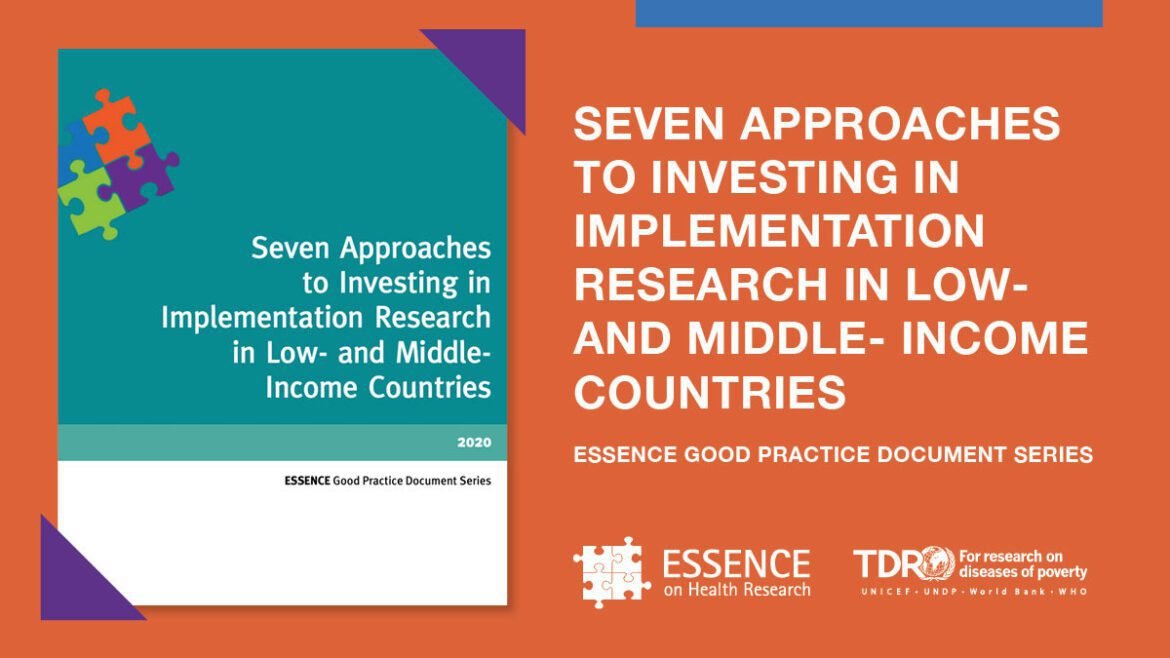
Seven approaches to investing in implementation research in low- and middle- income countries
Implementation ResearchInternational Plan, Policy & GuidelinesResearch & Publication

Seven approaches to investing in implementation research in low- and middle- income countries

by Public Health Update October 12, 2020
written by Public Health Update

Here are the seven approaches to investing in implementation research in low- and middle- income countries.

Implementation research is the scientific study of methods to promote the systematic uptake of proven clinical treatments, practices, organizational, and management interventions into routine practice, and hence to improve health. In this context, it includes the study of influences on patient, healthcare professional, and organizational behavior in either healthcare or population settings.

LEARN MORE ABOUT IMPLEMENTATION RESEARCH

Approach 1: Include stakeholders from the outset
– Address ‘implementation disconnect’
– Support platforms that link funders and researchers with practitioners
and policymakers

Approach 2: Embrace the diversity of being involved in implementation research
Be strategic in thinking and planning

Approach 3: Expect and enable implementation research to evolve
– Clarify terminology and definitions
– Assess methods and frameworks for relevance

Approach 4: International partnerships are important: join one or form one
– Share the load and multiply impact

Approach 5: Integrate training, mentoring and fellowships into implementation research programs
– Enhance funder skills
– Build researcher expertise
– Inspire health practitioners and policymakers
– Lead ethically

Approach 6: Create and communicate clear funding criteria
– The key ingredients of successful IR proposals
– Consider developing and sharing proposal evaluation tools

Approach 7: Embed implementation research into health systems
– Support projects that embed IR skills in health systems
– Facilitate exchange between researchers and policymakers
– Fund research on how IR can influence health policies
– First do no harm

DOWNLOAD FULL REPORT: Seven approaches to investing in implementation research in low- and middle- income countries ESSENCE Good practice document series


READ MORE ABOUT: IMPLEMENTATION RESEARCH AND OPPORTUNITIES


Do you have a website? Looking for the best hosting provider? Here’s a discount code.

Latest Public Health Jobs

Latest Posts

  • Multisectoral Action Plan for the Prevention and Control of NCDs, 2026-2030 (Draft)
  • National Standard Operating Procedure for Early Warning, Alert and Response System (EWARS), 2025
  • Priority Infectious Diseases for Community-Based Surveillance in Nepal
  • Community Based Disease Surveillance Guideline, 2082
  • Political declaration of the fourth high-level meeting of the General Assembly on the prevention and control of NCDs and the promotion of mental health and well-being

Thanks for visiting us.
Disclaimer: The resources, documents, guidelines, and information on this blog have been collected from various sources and are intended for informational purposes only. Information published on or through this website and affiliated social media channels does not represent the intention, plan, or strategies of an organization that the initiator is associated with in a professional or personal capacity, unless explicitly indicated.
If you have any complaints, information, or suggestions about the content published on Public Health Update, please feel free to contact us at blog.publichealthupdate@gmail.com.
#StayUpdated


  • WordPress
  • Link
  • Facebook
  • Mail
  • Facebook
  • Twitter
  • Twitter
  • LinkedIn
  • Instagram
  • Facebook
October 12, 2020 0 comments
0 FacebookTwitterPinterestLinkedinTumblrVKOdnoklassnikiRedditStumbleuponWhatsappTelegramLINEPocketSkypeViberEmail
International Jobs & OpportunitiesPublic Health Opportunity

Harvard T.H. Chan School of Public Health Yerby Fellowship Program

by Public Health Update October 12, 2020
written by Public Health Update

The Harvard Chan Yerby Fellowship Program draws on the rich research environment and intellectual resources of one of the world’s premier public health training institutions. Named for Dr. Alonzo Smythe Yerby, an African-American pioneer in public health, this program aims to expand the diversity of those entering the academic public health field. The program creates a bridge between academic training in public health-related fields and entry-level faculty positions at institutions throughout the United States.

The goal of the program is to advance the intellectual and professional development of each Yerby Fellow. Under the guidance of a senior Harvard Chan School faculty member with compatible interests, Yerby Fellows develop research agendas, receive grant support, and actively pursue publication in peer-reviewed journals. Additionally, Yerby Fellows gain teaching experience and participate in a wide variety of professional development activities.

Yerby Fellows receive a competitive salary with benefits for one year, renewable for a second year upon completion of a successful review of the first year.

Fellowship training is available across the broad range of the School’s activities: laboratory sciences, population sciences, and social and policy sciences. Fellows are based within one of the School’s nine academic departments:

– Biostatistics
– Environmental Health
– Epidemiology
– Global Health and Population
– Health Policy and Management
– Immunology and Infectious Diseases
– Molecular Metabolism
– Nutrition
– Social and Behavioral Sciences

Basic Qualifications

1. Applicants must have earned a doctorate in a public health-related discipline, preferably at the time of application, but in some exceptional circumstances before the fellowship begins.

2. Applicants must be U.S. Citizens, permanent residents, or have been granted Deferred Action for Childhood Arrival (DACA) status by the U.S. Citizenship and Immigration Services at the time of application submission.

3. Applicants who are members of a minority group that is underrepresented in public health will be given special consideration. Underrepresented, as defined by the NIH, includes American Indian or Alaska Native, Black or African American, Hispanic or Latino, and Native Hawaiian or other Pacific Islander. Individuals from other backgrounds that would contribute to academic diversity, including individuals from socioeconomically disadvantaged backgrounds and those with disabilities, are also eligible to apply.

Additional Qualifications      

Ideal applicants will show a demonstrated interest in and experience with independent research, advanced scientific publication, and grant writing.

The Fellowship seeks candidates whose research, teaching, and service will contribute to a stronger, more diverse public health community. The program is particularly interested in scholars with the potential to bring to their research and teaching a critical understanding of the experiences of historically underrepresented groups in higher education.

Special Instructions   

The deadline to apply is November 10, 2020 at 11:59 p.m. EDT. All applications must be submitted through this online application portal.

Recommendation letters are due by November 25, 2020 at 11:59 p.m. EDT. The link to submit recommendation letters will be sent to your references only AFTER you submit your completed application.

Contact Information 

Jennifer Ivers
Associate Dean for Faculty Affairs
ivers@hsph.harvard.edu

Mollie-Anne Maxfield
Faculty Affairs Coordinator for Communications, Appointments, and Postdoctoral Programs
mmaxfiel@hsph.harvard.edu

Contact Email  mmaxfiel@hsph.harvard.edu
Equal Opportunity Employer 

HARVARD is an equal opportunity employer and all qualified applicants will receive consideration for employment without regard to race, color, religion, sex, sexual orientation, gender identity, national origin, disability status, protected veteran status, pregnancy and pregnancy-related conditions or any other characteristic protected by law.

OFFICIAL LINK


  • Harvard T.H. Chan School of Public Health Yerby Fellowship Program
  • Angus Nicholson Honours Scholarship in Science
  • Education Future International Scholarship 2021
  • Call for Applications: Penn CFAR Developmental Pilot Awards
  • Postdoc in Epidemiology- University of Copenhagen

The post Harvard T.H. Chan School of Public Health Yerby Fellowship Program appeared first on Public Health Opportunity.

October 12, 2020 0 comments
0 FacebookTwitterPinterestLinkedinTumblrVKOdnoklassnikiRedditStumbleuponWhatsappTelegramLINEPocketSkypeViberEmail
International Jobs & OpportunitiesPublic Health Opportunity

Angus Nicholson Honours Scholarship in Science

by Public Health Update October 12, 2020
written by Public Health Update

This scholarship is offered by the ANU College of Health and Medicine & the ANU College of Science.  The scholarship has been generously established by Mr Jon Nicholson, in memory of his late father, Dr Angus Nicholson.

Field of study

Science (Honours), Medical Science, Health Science

Eligibility

The award is available each year to a current or prospective ANU student who:

(a) is a domestic or international student

(b) has an outstanding academic record in science

(c) has a demonstrated passion for his or her chosen field of Science

(d) is eligible for enrolment or already enrolled at the University in the Honours year of an undergraduate degree offered by the ANU College of Science or the ANU College of Health & Medicine or an equivalent degree program at another tertiary educational institution.

How to apply

Please note that the application for 2021 will open from 15th September 2020.

To be considered for the award applicants must:

1) Apply by written letter to coursework.scholarships@anu.edu.au setting out one’s passion for science and one’s academic achievements.

2) The applicant must also organise two references from people who are well placed to support the application and comment on this passion, and arrange for referees to send their reports to coursework.scholarships@anu.edu.au

There is no separate application form for this scholarship. However, one must submit all the required documents by the deadline published on the scholarship website to complete the application process.

The application for the 2021 award is open until the deadline of 30th November 2020. 


  • Harvard T.H. Chan School of Public Health Yerby Fellowship Program
  • Angus Nicholson Honours Scholarship in Science
  • Education Future International Scholarship 2021
  • Call for Applications: Penn CFAR Developmental Pilot Awards
  • Postdoc in Epidemiology- University of Copenhagen

The post Angus Nicholson Honours Scholarship in Science appeared first on Public Health Opportunity.

October 12, 2020 0 comments
0 FacebookTwitterPinterestLinkedinTumblrVKOdnoklassnikiRedditStumbleuponWhatsappTelegramLINEPocketSkypeViberEmail
International Jobs & OpportunitiesPublic Health Opportunity

Education Future International Scholarship 2021

by Public Health Update October 12, 2020
written by Public Health Update

Education Future International Scholarship 2021 is offered for Bachelors, Masters degree in the field of All courses. The Education Future International Scholarship is a unique scholarship fund that has been created by the scholarship winners worldwide. All the like-minded winners have come to a decision to fund the next batch of students with whatever they can contribute. This is a concept of giving back to society for the cause of education with a focus on building a brighter and smarter future.

Eligibility criteria:

The Education Future International Scholarship is only offered to the meritorious Indian students for studying overseas at any of the top universities globally.

  • Applicant should be an Indian national with a valid Indian passport
  • Applicant should have a minimum scored 60% in 10th and 12th.
  • Applicants should reflect that they lack means of self-funding their education abroad. Hence, the applicant should be planning to fund himself at least 50% through an education loan.

Eligible areas of study:

  • The applicant should be going to pursue any UG/ PG course overseas to a recognized university/ college outside India. This scholarship cannot be availed for studying in India.
  • This scholarship is open to all subjects of study

Value of the scholarship:

  • The value of each scholarship ranges between 2 lacs to 10 lacs Indian rupees.
  • The number of scholarships varies each year and depends on the quality of applications we receive.
Scholarship timeline:

Applications for the Education Future International Scholarship are accepted on a rolling basis. Hence, the first you apply, the better.

Spring 2021 applications:

If your course start date is between 1 November 2020 and 31 March 2021

  • Applications open- 15 May 2020
  • Application deadline- 15 Oct 2020
  • Final results announcement date: 1st week of December 2020
  • Apply now

Fall 2021 applications:

If your course start date is between 1 April 2021 and 30 October 2021

  • Applications open- 15 July 2020
  • Application deadline- 15 March 2021
  • Final results announcement date: 1st week of July 2021
  • Apply now
Application form:

Students interested in applying for the Education Future International Scholarship should submit the online application. Application form or any sort of documents are not required to be sent offline via post/ courier.


  • Harvard T.H. Chan School of Public Health Yerby Fellowship Program
  • Angus Nicholson Honours Scholarship in Science
  • Education Future International Scholarship 2021
  • Call for Applications: Penn CFAR Developmental Pilot Awards
  • Postdoc in Epidemiology- University of Copenhagen

The post Education Future International Scholarship 2021 appeared first on Public Health Opportunity.

October 12, 2020 0 comments
0 FacebookTwitterPinterestLinkedinTumblrVKOdnoklassnikiRedditStumbleuponWhatsappTelegramLINEPocketSkypeViberEmail
International Jobs & OpportunitiesPublic Health Opportunity

Call for Applications: Penn CFAR Developmental Pilot Awards

by Public Health Update October 12, 2020
written by Public Health Update

The Penn Center for AIDS Research (Penn CFAR) invites Pilot Grant applications offered through its Developmental Core.  Proposals in all areas of HIV/AIDS clinical, basic and bio-behavioral research are welcomed. The CFAR is especially interested in proposals that bridge programmatic areas and, in particular, investigators outside the HIV/AIDS field turning their focus to HIV/AIDS and projects linked with CFAR HIV/AIDS investigators.

We especially encourage proposals that address areas of particular interest, including:

  • Implementation Science to End the HIV Epidemic in Philadelphia, including collaborative projects with the Philadelphia Department of Public Health
  • The overlapping HIV and opioid use epidemics
  • HIV reservoirs and tissue immunology involved in persistence and control
  • AIDS-associated malignancies (basic to clinical, must involve some HIV-linked aspect of study)
  • Comorbidities of HIV, including but not limited to cardiovascular, metabolic, bone, ageing, weight gain, and other complications that persist despite therapy, along with persistent inflammation.

Priority areas

All proposals must address high or medium priority areas in the NIH Priorities for HIV/AIDS research. (https://grants.nih.gov/grants/guide/notice-files/NOT-OD-15-137.html).  These areas are:

  • Reducing the incidence of HIV/AIDS
  • Next generation of HIV therapies (better safety and ease)
  • Research toward a cure
  • HIV-associated comorbidities, coinfections, and complications
  • Cross cutting:  Basic research, health disparities, and training of workforce

Two types of award are available;

A General Pilot Research Award and a Mentored Research Scholar Award, described below.

Amount:  We offer awards up to $60,000 for each grant. Grants are for a one-year period and are not renewable.  It is expected that funds will be available in July 2021. 

Application Deadline:  Monday, January 18th, 2021

The required cover page and instructions can be found on the Developmental Pilot Awards page of the CFAR website.

AWARD TYPES AND ELIGIBILITY

General Pilot Awards: Faculty members

Eligible applicants must have a faculty appointment equivalent to Assistant Professor or Staff Scientist or above in any track at a Penn CFAR institution (or a commitment for such an appointment at the time the award would start).

For junior faculty applicants, a one-page mentorship plan with a senior faculty member is strongly encouraged; for non-HIV/AIDS investigators of any level, a partnership plan with an established HIV/AIDS investigator is also encouraged.

Mentored Research Scholar awards: Young Investigators (Pre-Faculty)

Young investigators at the Instructor/Research Associate/Staff Scientist level who are poised to begin an independent research program within a mentored environment at a Penn CFAR institution are eligible, and must include a letter of support from their scientific mentor.  In addition to the above letters, a one-page mentorship plan is required.  Guidelines for the Mentorship Plan are available through the CFAR website.

Please note that Post-docs and Fellows are not eligible for CFAR Mentored Research Scholar Awards or General Pilot Awards unless they have institutional commitment for a Pre-Faculty (Instructor/Research Associate/Staff Scientist) position at the time the award will start.

Pilot Awards Eligibility
  • New investigators who never have held extramural R01-level support from the NIH
  • Investigators who have not previously been funded by the NIH for work in HIV/AIDS
  • Investigators who have worked in HIV/AIDS who wish to study an area that is a significant departure from their currently funded work
  • New interdisciplinary collaborations involving investigators from different disciplines who have not previously worked together

If you have any questions about eligibility, please contact Developmental Core Director Dr. Pablo Tebas (Pablo.Tebas@pennmedicine.upenn.edu)

Community-based Organizations & Department of Health: Please contact Kate Gordon at gordonk@pennmedicine.upenn.edu for more information about eligibility.

Clinical Studies:  The NIH has restrictions on the type of clinical studies that can be supported by CFAR Pilot Grants. If you are planning to propose a human intervention study (biomedical, behavioral, etc.), please contact Developmental Core Director Pablo Tebas at Pablo.Tebas@pennmedicine.upenn.edu so we can help ensure that your study, if approved, can be supported by CFAR.

Use of Fetal Tissue: Research plans using fetal tissue are not permitted in pilot awards.

International Applications:  

Applications with research activities in Botswana must be discussed with and approved by Dr. Robert Gross prior to preparation of the application.  grossr@pennmedicine.upenn.edu

Applications that include planned research activities at other international sites outside the U.S. should be discussed with Dr. Pablo Tebas prior to preparation of the application. Pablo.Tebas@pennmedicine.upenn.edu

Application Deadline:  Monday, January 18th, 2021

The required cover page and instructions can be found on the Developmental Pilot Awards page of the CFAR website.

*Note that the application should include a brief section that describes how this pilot project will lead to future independent funding.

Note that successful awardees will be contacted at several points throughout the project period for progress reports, mentoring activities, human subjects study record completion, and to participate in feedback seminars. Pilot recipients will be followed for a 5+ year period following the close of the award for additional NIH reporting requirements.

For further information or questions please contact:

Pablo Tebas, M.D.
Director, CFAR Developmental Core
Pablo.Tebas@pennmedicine.upenn.edu
Luis J. Montaner, D.V.M., M.Sc., D.Phil.
Co-Director, CFAR Developmental Core
montaner@wistar.org
Kate Gordon
Executive Director, Penn CFAR
gordonk@pennmedicine.upenn.edu


  • Harvard T.H. Chan School of Public Health Yerby Fellowship Program
  • Angus Nicholson Honours Scholarship in Science
  • Education Future International Scholarship 2021
  • Call for Applications: Penn CFAR Developmental Pilot Awards
  • Postdoc in Epidemiology- University of Copenhagen

The post Call for Applications: Penn CFAR Developmental Pilot Awards appeared first on Public Health Opportunity.

October 12, 2020 0 comments
0 FacebookTwitterPinterestLinkedinTumblrVKOdnoklassnikiRedditStumbleuponWhatsappTelegramLINEPocketSkypeViberEmail
International Jobs & OpportunitiesPublic Health Opportunity

Postdoc in Epidemiology- University of Copenhagen

by Public Health Update October 12, 2020
written by Public Health Update

Department of Public Health – Faculty of Health and Medical Sciences, University of Copenhagen is looking for a highly motivated and dynamic researcher for a 2-3 year postdoc to commerce on January 1st 2021.

The Postdoc will be part of epidemiological research projects, which utilize the opportunities nested within large and complex national and international datasets, including nationwide registers.

Information on the Section of Epidemiology can be found at: https://publichealth.ku.dk/about-the-department/section-epidemiology/

Research

The Postdoc will be part of an interdisciplinary and dynamic research group in Complexity and Big Data Epidemiology at the Section of Epidemiology, Department of Public Health, University of Copenhagen: https://publichealth.ku.dk/about-the-department/section-epidemiology/research-epi/complexity-and-big-data/. We offer creative and stimulating working conditions in an international research environment. Application and development of new causal inference based methodology in epidemiology is one of our core strengths. The candidate will also be part of an international early career training network within the framework of the IDEAR network (www.idear-net.net), which will provide an excellent opportunity for international network building and epidemiological training

Job

The Postdoc will be part of large international epidemiological research projects such as the DANLIFE project, which utilize unique register-based data sources with high-resolution data from infancy into adult life to uncover the impact of childhood social adversities on morbidity and mortality across the life span. The postdoc will also be involved in the Working Environment Resources project aimed at identifying resources at the workplace that can promote employee health. The work tasks include data management of large register-based studies, scientific work related to childhood adversities and/or working environment, statistical analyses of large complex data materials, writing scientific papers and teaching.

Profile

We are looking for a highly motivated and enthusiastic scientist with the following competencies and experience:

  • You have a PhD in Epidemiology, Public Health, Data Science or related sciences
  • You are highly experienced in working with large and complex dataset, preferable also register-based studies
  • You have an active interest in public health and epidemiology
  • Proficient communication skills and ability to work in teams
  • Excellent English skills written and spoken
Place of employment

The place of employment is at Section of Epidemiology, Department of Public Health, University of Copenhagen. We offer creative and stimulating working conditions in dynamic and international research environment.

Terms of employment

The employment as postdoc is a full time and fixed-term position for 2-3 years. Starting date is January 1st 2021 or as soon as possible thereafter.

Salary, pension and terms of employment will be in accordance with the agreement between the Danish Ministry of Finance and AC (Danish Confederation of Professional Associations). Currently, the monthly salary starts at 34,600 DKK/ approx. 4,650 Euro (April 2020-level). Depending on qualifications, a supplement may be negotiated. The employer will pay an additional 17.1 % to your pension fund.

Non-Danish and Danish applicants may be eligible for tax reductions if they hold a Ph.D. degree and have not lived in Denmark for the last 10 years.

The position is covered by the “Memorandum on Job Structure for Academic Staff at the Universities” of June 28, 2013.

Questions

For further information please contact Head of Section, Professor Naja Hulvej Rod nahuro@sund.ku.dk, tel. 35 32 67 35

Foreign applicants may find this link useful: www.ism.ku.dk (International Staff Mobility).

Application procedure

Your online application must be submitted in English by clicking ‘Apply now’ below. Furthermore, your application must include the following documents/attachments – all in PDF format:

Apply now

1. Motivated letter of application (max. one page).

2. CV incl. education, work/research experience, language skills, and other skills relevant for the position.

3. A certified/signed copy of a) Ph.D. certificate and b) Master of Science certificate. If the Ph.D. is not completed, a written statement from the supervisor will do.

4. List of publications.

Application deadline: 14 October 2020, 23.59pm CET

We reserve the right not to consider material received after the deadline, and not to consider applications that do not live up to the abovementioned requirements.

The further process

After the expiry of the deadline for applications, the authorized recruitment manager selects applicants for assessment on the advice of the hiring committee. All applicants are then immediately notified whether their application has been passed for assessment by an unbiased assessor. Once the assessment work has been completed each applicant has the opportunity to comment on the part of the assessment that relates to the applicant him/herself.

You can read about the recruitment process at https://employment.ku.dk/faculty/recruitment-process/

The applicant will be assessed according to the Ministerial Order no. 242 of 13 March 2012 on the Appointment of Academic Staff at Universities.

University of Copenhagen wish to reflect the diversity of society and welcome applications from all qualified candidates regardless of age, disability, gender, nationality, race, religion or sexual orientation. Appointment will be based on merit alone.


  • Harvard T.H. Chan School of Public Health Yerby Fellowship Program
  • Angus Nicholson Honours Scholarship in Science
  • Education Future International Scholarship 2021
  • Call for Applications: Penn CFAR Developmental Pilot Awards
  • Postdoc in Epidemiology- University of Copenhagen

The post Postdoc in Epidemiology- University of Copenhagen appeared first on Public Health Opportunity.

October 12, 2020 0 comments
0 FacebookTwitterPinterestLinkedinTumblrVKOdnoklassnikiRedditStumbleuponWhatsappTelegramLINEPocketSkypeViberEmail
International Jobs & OpportunitiesPublic Health Opportunity

Digital Health Post-Doctoral Research Fellow- Johns Hopkins University Global mHealth Initiative

by Public Health Update October 12, 2020
written by Public Health Update

The Johns Hopkins University Global mHealth Initiative (JHU-GmI) is a University-wide Community of Excellence, housed in the Department of International Health at the Johns Hopkins Bloomberg School of Public Health (JHSPH), that connects faculty, staff, and students in interdisciplinary collaborations in the field of digital health. Our work spans the development of and research in mobile and wireless technologies for patient and population health. JHU-GmI’s mission is to develop responsive innovations and provide rigorous, evidence-based support for mobile information and communication technologies (ICTs) to improve global health. JHU-GmI faculty focus on resource-limited settings where the burden of disease and mortality are the highest. Our access to large field research sites enables real-world validation and evaluation of digital health technologies. We have helped define the direction of the digital health field through our work in building standards, guidelines, and digital innovations and approaches that are widely used.

We are seeking a talented, passionate, and motivated Post-Doctoral Research Fellow to join our team and be a part of the initiatives that are underway. The successful applicant will be an independent thinker that can collaborate effectively across different teams and projects. They must have significant quantitative analytical skills and have expertise in an analysis and data visualization software package. In this role, the post-doctoral research fellow will work with JHU-GmI’s network of investigators and collaborators on projects that employ digital strategies to advance healthcare outcomes in the United States and across several low-income countries. Current projects span a wide range of exciting research and innovation activities around the globe, include an assessment of WhatsApp as a telemedicine platform in primary and specialty healthcare settings in Bangladesh and South Africa, evaluation of a mobile clinical decision-support tool to advance maternal and child health services in Burkina Faso, the use of digital health to measure and improve the uptake of micronutrients in Haiti and Indonesia, and the development and piloting of an AI-chatbot to improve maternal health outcomes. The research scholar will support and lead grant writing, data analyses, and manuscript writing around a range of digital health projects. The candidate will have the opportunity to establish a strong foundation for their careers. The candidate will work closely with Drs. Smisha Agarwal and Alain Labrique. 
This is a one-year position starting December 15, 2020 with possible extension for a second year. This position is remote till at least March 2021, with the expectation that the candidate will relocate to the Baltimore area when University restrictions around COVID-19 are lifted. Given the current travel restrictions, U.S. citizenship or permanent residency is a prerequisite. 

Selection Criteria 

Essential 

  • Ph.D., Sc.D., or equivalent degree in Public Health, Health Informatics, Biostatistics, Data Science, Computer Science, or another related health field 
  • Strong background in quantitative research and data analysis 
  • Knowledge of at least one software package (e.g. R, Stata, SAS) and at least one data visualization software (e.g. Tableau, GIS) 
  • Strong publication track record 
  • Great written and communication skills, detail-oriented, and able to multi-task and prioritize effectively 
  • Be self-directed and motivated to work independently and as a team member 

Desirable 

  • • 1-3 years prior experience in digital health and/or global health 
  • • Prior experience and interest in grant writing and securing grant funding 

To Apply 

Interested candidates must submit a cover letter, a personal statement (no longer than two single-spaced pages), and contact information for 2 referees. The personal statement should detail research and practice interests in alignment with the center’s agenda, highlight published or in-publication work that speak to the candidate’s analytical skills, teaching experience, and goals for the post-doctoral work. 

Application packages should be e-mailed to Ms. Shivani Pandya (Email: spandya6@jhu.edu) with the subject line “Digital Health Post-Doctoral Research Fellow”. 


  • Harvard T.H. Chan School of Public Health Yerby Fellowship Program
  • Angus Nicholson Honours Scholarship in Science
  • Education Future International Scholarship 2021
  • Call for Applications: Penn CFAR Developmental Pilot Awards
  • Postdoc in Epidemiology- University of Copenhagen

The post Digital Health Post-Doctoral Research Fellow- Johns Hopkins University Global mHealth Initiative appeared first on Public Health Opportunity.

October 12, 2020 0 comments
0 FacebookTwitterPinterestLinkedinTumblrVKOdnoklassnikiRedditStumbleuponWhatsappTelegramLINEPocketSkypeViberEmail
Newer Posts
Older Posts

Search

Follow Us

Facebook Twitter Instagram Pinterest Linkedin Youtube

Categories

  • Abstracts (25)
  • Activities (91)
  • Adolescent Sexual and Reproductive Health (ASRH) (25)
  • Advice & Tips (3)
  • African Region (5)
  • AI and Health (1)
  • Annual Meeting (6)
  • Antimicrobial Resistance (AMR) (20)
  • Award (19)
  • Awards (16)
  • Books (9)
  • Call for Proposal, EOI & RFP (103)
  • Call for Research Participants (8)
  • Clinical Doctor Jobs (6)
  • Communicable Diseases (107)
  • Competition (20)
  • Conference (128)
  • Consultant (1)
  • Courses (204)
  • Dashboard (2)
  • Digital Health & Health Informatics (10)
  • Drug and Medicine (18)
  • Eastern Mediterranean Region (3)
  • Education (15)
  • Environment (3)
  • Environmental Health & Climate Change (47)
  • European Region (42)
  • Exchange Program (1)
  • Fact Sheet (116)
  • FCHVs (1)
  • Fellowships, Studentship & Scholarships (165)
  • Financial Aid (13)
  • Form Formats (2)
  • Fully funded (22)
  • Global Health News (433)
  • Grants and Funding Opportunities (192)
  • Guest Post (44)
  • Health Assistant Jobs (1)
  • Health Equity (7)
  • Health Financing and Economics (24)
  • Health in Data (113)
  • Health Insurance (5)
  • Health Jobs (52)
  • Health Literacy, Health Education & Promotion (49)
  • Health Organization Profile (42)
  • Health Systems (81)
  • Human Resource for Health (32)
  • Humanitarian Health & Emergency Response (44)
  • Hypertension (5)
  • Implementation Research (48)
  • International Health (3)
  • International Jobs & Opportunities (369)
  • International Plan, Policy & Guidelines (208)
  • Internships (4)
  • Jobs Vacancies (56)
  • Journals (8)
  • Life Style & Public Health Nutrition (39)
  • Live (10)
  • Master's Degree (48)
  • Maternal, Newborn and Child Health (87)
  • Mentorship Program (2)
  • Miscellaneous (16)
  • National Health News (157)
  • National Plan, Policy & Guidelines (468)
  • Neglected Tropical Diseases (NTDs) (51)
  • Non- Communicable Diseases (NCDs) (120)
  • Notice (103)
  • Nursing Jobs (6)
  • Nutritionist Jobs (1)
  • One Health (17)
  • Online & Distance Learning (22)
  • Online Courses (90)
  • Op-Ed Article (3)
  • Opportunities by Region (82)
  • Outbreak News (213)
  • Partially funded (6)
  • PCL Health Science Jobs (3)
  • PH Important Day (532)
  • Pharmacist Jobs (3)
  • PhD (53)
  • Photos (5)
  • Planetary Health (4)
  • PostDoc (14)
  • Presentation Slides (26)
  • Primary Health Care (25)
  • Provincial Plan, Policies and Guidelines (14)
  • Public Health (1,278)
  • Public Health Epidemiology & Biostatistics (13)
  • Public Health Events (305)
  • Public Health Information (20)
  • Public Health Innovation (9)
  • Public Health Jobs (52)
  • Public Health News (552)
  • Public Health Notes (120)
  • Public Health Opportunities (502)
  • Public Health Opportunity (486)
  • Public Health Programs (108)
  • Public Health Seminar (2)
  • Public Health Tools (1)
  • Public Health Update (557)
  • Quality Improvement & Infection Prevention (20)
  • Region of America (8)
  • Reports (182)
  • Research & Project Grants (38)
  • Research & Project Grants (31)
  • Research & Publication (647)
  • Research Articles (10)
  • Road Traffic Accidents (RTA) (9)
  • School of Public Health (60)
  • Self funded (2)
  • South-East Asia Region (26)
  • Success Stories (17)
  • Summer and Winter Courses (39)
  • Summer Courses (27)
  • Sustainable Development Goals (SDGs) (14)
  • Syllabus (61)
  • Symposium (9)
  • Tobacco Control (35)
  • Training (40)
  • Travel Grants (15)
  • Trick, Technique & Skills (8)
  • Uncategorized (3)
  • Undergraduate Degree (7)
  • Universal Health Coverage (36)
  • Universities (29)
  • Universities & School of Public Health (57)
  • Vacancy Announcement (26)
  • Vaccine Preventable Diseases (40)
  • Vector-Borne Diseases(VBDs) (30)
  • Videos (3)
  • View Points (1)
  • Webinar (4)
  • Western Pacific Region (13)
  • Workshop (18)
  • World News (116)
Post New Jobs: Vacancy Announcement Service

Public Health Update (Sagun’s Blog) is a popular public health portal in Nepal. Thousands of health professionals are connected with Public Health Update to get up-to-date public health updates, search for jobs, and explore opportunities.
#1 Public Health Blog for sharing Job opportunities and updates in Nepal

”Public Health Information For All”
– – Sagun Paudel, Founder

  • HOT JOBS
    • Public Health Jobs
    • Medical Doctor Jobs
    • Nursing Jobs
    • Health Assistant Jobs
    • Pharmacist Jobs
    • NGOs Jobs
    • Government Jobs
  • Top Categories
    • National Plan, Policy & Guidelines Top
    • Public Health Calendar
    • Fellowships & Scholarships
    • Health Systems
    • Health Organization Profiles
    • International Jobs & Opportunities
    • Public Health Opportunity

PUBLIC HEALTH INITIATIVE

    • Submit your Vacancies New
    • Partnership Opportunities

Contact: blog.publichealthupdate@gmail.com

https://wa.me/+9779856036932

Public Health Initiative, A Registered Non-profit organization – All Right Reserved. 2011-2024. Contact us. 

Facebook Twitter Instagram Youtube Envelope
Public Health Update
  • Home
  • Public Health
    • Home 1
      • Adolescent Sexual and Reproductive Health (ASRH)
      • Antimicrobial Resistance (AMR)
      • Communicable Diseases
      • Digital Health & Health Informatics
      • Environmental Health & Climate Change
      • Health Financing and Economics
      • Health Equity
    • Home 2
      • Health Literacy, Health Education & Promotion
      • Human Resource for Health
      • Humanitarian Health & Emergency Response
      • Implementation Research
      • International Health
      • Life Style & Public Health Nutrition
      • Maternal, Newborn and Child Health
    • Home 3
      • Neglected Tropical Diseases (NTDs)
      • Non- Communicable Diseases (NCDs)
      • One Health
      • Planetary Health
      • Public Health Epidemiology & Biostatistics
      • Primary Health Care
      • Quality Improvement & Infection Prevention
    • Home 4
      • Road Traffic Accidents (RTA)
      • Sustainable Development Goals (SDGs)
      • Tobacco Control
      • Universal Health Coverage
      • Vaccine Preventable Diseases
      • Vector-Borne Diseases(VBDs)
      • Notices
  • Public Health Update
    • Home 1
      • Public Health News
      • Global Health News
      • Outbreak News
      • National Health News
      • COVID-19
    • Home 2
      • Fact Sheet
      • Health in Data
      • PH Important Day
      • Public Health Events
      • Public Health Programs
    • Home 3
      • Health Systems
      • Health Insurance
      • Health Organization Profile
      • Success Stories
      • Public Health Innovation
  • Public Health Opportunities
    • Fully funded
    • Travel Grants
    • Grants and Funding Opportunities
    • Opportunities by Region
    • International Jobs & Opportunities
    • Research & Project Grants
    • Fellowships, Studentship & Scholarships
    • Conference
  • Jobs
    • Home 1
      • Health Jobs
      • Public Health Jobs
      • Clinical doctor Jobs
      • Health Assistant Jobs
      • Nursing Jobs
      • PCL Health Science Jobs
    • Home 2
      • Dental Jobs
      • Pharmacist Jobs
      • TSLC (Health Jobs)
      • Laboratory Jobs
      • Nutritionist Jobs
  • Downloads
    • International Plan, Policy & Guidelines
    • National Plan, Policy & Guidelines
    • Reports
    • Books
    • Research Articles
  • School of Public Health
    • Home 1
      • Courses
      • Master’s Degree
      • Undergraduate Degree
      • PhD
    • Home 2
      • Universities
      • Syllabus
      • Public Health Notes
      • Mentorship Program
      • Startup Project
    • Home
      • Summer and Winter Courses
      • Summer Courses
      • Online Courses
      • Workshop
      • Training
Public Health Update
  • Home
  • Public Health
    • Home 1
      • Adolescent Sexual and Reproductive Health (ASRH)
      • Antimicrobial Resistance (AMR)
      • Communicable Diseases
      • Digital Health & Health Informatics
      • Environmental Health & Climate Change
      • Health Financing and Economics
      • Health Equity
    • Home 2
      • Health Literacy, Health Education & Promotion
      • Human Resource for Health
      • Humanitarian Health & Emergency Response
      • Implementation Research
      • International Health
      • Life Style & Public Health Nutrition
      • Maternal, Newborn and Child Health
    • Home 3
      • Neglected Tropical Diseases (NTDs)
      • Non- Communicable Diseases (NCDs)
      • One Health
      • Planetary Health
      • Public Health Epidemiology & Biostatistics
      • Primary Health Care
      • Quality Improvement & Infection Prevention
    • Home 4
      • Road Traffic Accidents (RTA)
      • Sustainable Development Goals (SDGs)
      • Tobacco Control
      • Universal Health Coverage
      • Vaccine Preventable Diseases
      • Vector-Borne Diseases(VBDs)
      • Notices
  • Public Health Update
    • Home 1
      • Public Health News
      • Global Health News
      • Outbreak News
      • National Health News
      • COVID-19
    • Home 2
      • Fact Sheet
      • Health in Data
      • PH Important Day
      • Public Health Events
      • Public Health Programs
    • Home 3
      • Health Systems
      • Health Insurance
      • Health Organization Profile
      • Success Stories
      • Public Health Innovation
  • Public Health Opportunities
    • Fully funded
    • Travel Grants
    • Grants and Funding Opportunities
    • Opportunities by Region
    • International Jobs & Opportunities
    • Research & Project Grants
    • Fellowships, Studentship & Scholarships
    • Conference
  • Jobs
    • Home 1
      • Health Jobs
      • Public Health Jobs
      • Clinical doctor Jobs
      • Health Assistant Jobs
      • Nursing Jobs
      • PCL Health Science Jobs
    • Home 2
      • Dental Jobs
      • Pharmacist Jobs
      • TSLC (Health Jobs)
      • Laboratory Jobs
      • Nutritionist Jobs
  • Downloads
    • International Plan, Policy & Guidelines
    • National Plan, Policy & Guidelines
    • Reports
    • Books
    • Research Articles
  • School of Public Health
    • Home 1
      • Courses
      • Master’s Degree
      • Undergraduate Degree
      • PhD
    • Home 2
      • Universities
      • Syllabus
      • Public Health Notes
      • Mentorship Program
      • Startup Project
    • Home
      • Summer and Winter Courses
      • Summer Courses
      • Online Courses
      • Workshop
      • Training
Public Health Initiative, A Registered Non-profit organization – All Right Reserved. 2011-2023