

Overview
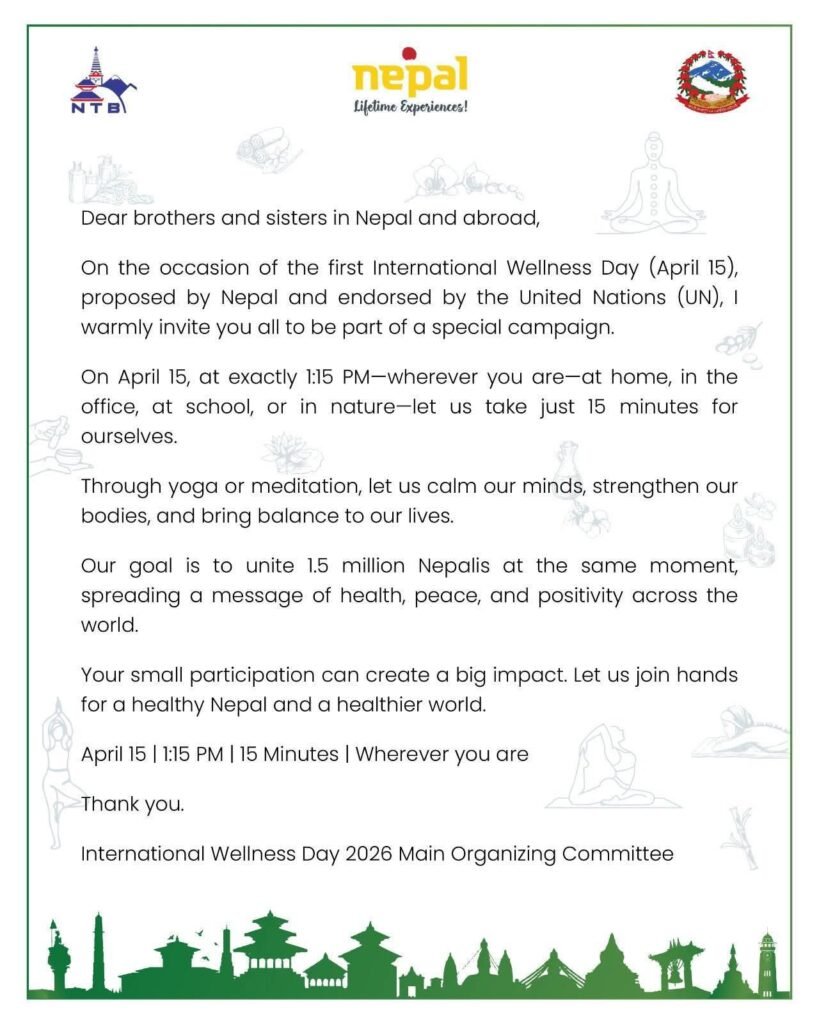
The observance of the first-ever International Wellness Day (15 April) marks a historic step in recognising wellness as a global priority. At a time when health challenges are becoming increasingly complex—ranging from rising non-communicable diseases to mental health concerns—this day highlights the urgent need to shift towards a more holistic and inclusive understanding of health.
The United Nations General Assembly has officially proclaimed April 15 as International Wellness Day, following a resolution introduced by Lok Bahadur Thapa, Nepal’s Permanent Representative to the UN, on March 10. This resolution recognises wellness in its fullest sense—encompassing physical, mental, emotional, social, cultural, and ecological well-being.
Wellness as a Foundation for Human Potential
Wellness is not simply about avoiding illness; it is about enabling individuals to live healthy, fulfilling, and meaningful lives. It plays a vital role in enhancing quality of life, safeguarding human dignity, and empowering people to realise their full potential.
A wellness-oriented approach recognises that health is influenced by multiple factors, including lifestyle, environment, social conditions, and access to care. By addressing these interconnected elements, wellness becomes a powerful pathway to achieving better outcomes for individuals and communities alike.
The Importance of Prevention and People-Centred Care
One of the key pillars of global wellness is prevention. Preventive, lifestyle-based, and people-centred approaches are essential for reducing the burden of disease and improving overall well-being. Encouraging healthy behaviours—such as balanced nutrition, physical activity, adequate rest, and mental well-being—can significantly lower the risk of many preventable conditions.
These approaches are not only effective but also cost-efficient. By preventing illness before it occurs, they reduce healthcare expenditures and ease the strain on health systems. At the same time, people-centred care ensures that health services are responsive to the needs, preferences, and values of individuals, fostering trust and engagement.
Integrating Traditional Knowledge and Modern Medicine
Across the world, Indigenous Peoples and local communities have long practised holistic approaches to wellness, rooted in traditional knowledge systems. These practices emphasise balance, harmony, and a deep connection with nature—principles that remain highly relevant today.
The growing recognition of evidence-based traditional medicine offers an opportunity to strengthen health systems through integration with modern medical practices. Such an approach can enhance accessibility, cultural sensitivity, and effectiveness, particularly in diverse and underserved settings.
By embracing both tradition and innovation, global health systems can become more inclusive and better equipped to address the needs of all populations.
A Platform for Awareness and Collective Action
International Wellness Day serves as a platform for raising awareness, promoting education, and encouraging action. It brings together individuals, communities, and policymakers to share knowledge, exchange experiences, and advocate for wellness-focused approaches.
Importantly, the Day promotes accessible, inclusive, and affordable wellness practices—ensuring that well-being is not limited to a privileged few but is available to everyone, everywhere. It reinforces the idea that small, everyday actions can collectively lead to significant improvements in public health.
Advancing the Sustainable Development Goals
Wellness is central to the 2030 Agenda for Sustainable Development, particularly Goal 3: Good Health and Well-Being. However, its impact extends far beyond health. Promoting wellness contributes to reducing inequalities, supporting economic growth, and building resilient communities.
A strong focus on wellness can also drive progress in mental health, universal health coverage, and equitable access to essential services. In doing so, it helps create societies that are not only healthier but also more inclusive and sustainable.
Simple Tips for Everyday Wellness
While global policies and systems matter, wellness begins with small, consistent actions in our daily lives. Here are some practical tips to support your well-being:
- Stay physically active: Aim for at least 30 minutes of moderate activity each day—walking, stretching, or any form of movement you enjoy.
- Eat a balanced diet: Include a variety of fruits, vegetables, whole grains, and proteins to nourish your body.
- Prioritise mental health: Take time to rest, reflect, or practise mindfulness and relaxation techniques.
- Stay connected: Build and maintain supportive relationships with family, friends, and community.
- Get enough sleep: Quality sleep is essential for both physical and mental recovery.
- Limit harmful habits: Reduce tobacco use, excessive alcohol consumption, and unhealthy processed foods.
- Engage with nature: Spending time outdoors can improve mood, reduce stress, and enhance overall well-being.
A Call to Action
As we mark this first International Wellness Day, it is an opportunity to reflect on our shared responsibility in promoting well-being. Governments, health systems, communities, and individuals all have a role to play in creating environments that support healthy choices and equitable access to care.
Promoting global wellness requires sustained commitment, collaboration, and innovation. By prioritising prevention, valuing diverse knowledge systems, and embracing people-centred approaches, we can move closer to a future where wellness is truly universal.
International Wellness Day is more than a celebration—it is a call to action. A call to invest in well-being, to foster healthier lifestyles, and to build a world where every person has the opportunity to thrive.
Read more: https://www.un.org/en/observances/wellness-day
- World Atopic Eczema Day 2026: Breaking the Invisible Burden
- DEVASTATING FLOODS IN NEPAL: PUBLIC HEALTH IMPACT AND A CALL FOR HUMANITARIAN SUPPORT
- PEN-Plus Orientation Manual for Mid-Level Health Care Workers
- National Health Training Strategy 2082
- Simulation Accreditation Manual for Clinical Training Sites


1 comment
It’s inspiring to see the UN officially recognize April 15 as International Wellness Day. I especially appreciate the focus on “ecological well-being” and the integration of traditional knowledge with modern medicine. This holistic approach is exactly what we need to tackle today’s complex health challenges and ensure wellness is accessible to everyone, not just a privileged few.
Comments are closed.