Public Health Update
  • Home
  • Public Health Update
  • Nepal Health Jobs
    • Public Health Job Board
    • Organization List
  • Opportunities
    • Fellowships, Studentship & Scholarships
    • Grants and Funding Opportunities
    • Fully funded
    • Conference
  • Downloads
    • International Plan, Policy & Guidelines
    • National Plan, Policy & Guidelines
    • Reports
    • Public Health Notes
    • Syllabus
    • Form Formats
  • School of Public Health
    • PhD
    • Master’s Degree
    • Online Courses
  • Notice
  • Home
  • Public Health Update
  • Nepal Health Jobs
    • Public Health Job Board
    • Organization List
  • Opportunities
    • Fellowships, Studentship & Scholarships
    • Grants and Funding Opportunities
    • Fully funded
    • Conference
  • Downloads
    • International Plan, Policy & Guidelines
    • National Plan, Policy & Guidelines
    • Reports
    • Public Health Notes
    • Syllabus
    • Form Formats
  • School of Public Health
    • PhD
    • Master’s Degree
    • Online Courses
  • Notice
LOGIN / REGISTER
Public Health Update
SUBSCRIBE
Public Health Update
  • Home
  • Public Health Update
  • Nepal Health Jobs
    • Public Health Job Board
    • Organization List
  • Opportunities
    • Fellowships, Studentship & Scholarships
    • Grants and Funding Opportunities
    • Fully funded
    • Conference
  • Downloads
    • International Plan, Policy & Guidelines
    • National Plan, Policy & Guidelines
    • Reports
    • Public Health Notes
    • Syllabus
    • Form Formats
  • School of Public Health
    • PhD
    • Master’s Degree
    • Online Courses
  • Notice

All Right Reserved. Designed and Developed by PenciDesign

Global Health NewsPublic Health News

Countries in WHO South-East Asia Region to accelerate road safety measures

by Public Health Update December 1, 2017
written by Public Health Update

Countries in WHO South-East Asia Region to accelerate road safety measures

Media Centre (WHO) SEAR/PR/1672

Phuket, Thailand, 1 December 2017 – Alarmed at the increasing incidence of deaths and injuries in road crashes, mostly involving motorcyclists and other vulnerable road users, countries in WHO South-East Asia Region today committed to accelerate action for road safety.
“Countries across the Region need to drive and fast-track road safety initiatives with highest political commitment to effectively address road traffic injuries which continues to be a leading cause of death in the age group of 15 to 29 years, mostly motorcyclists and other vulnerable road users,” Dr Poonam Khetrapal Singh, WHO Regional Director for South-East Asia, said as Member countries adopted ‘Phuket Commitment’ on road safety at a ministerial meeting here.
The Phuket Commitment calls for prioritization, high-level commitment, united efforts of all stakeholders, knowledge management, enforcement of regulations and time-bound deliveries.
“Everyone needs to participate and share the responsibility – the government, the ministries, the private sector, civil society organizations, non-government organizations, communities and the general public,” Prof Dr Piyasakol Sakolsataydorn, said in his address to the WHO South-East Asia Ministerial Meeting on Accelerating Actions for Implementation of Decade of Actions for Road Safety, organized by WHO and Thailand.
The WHO South-east Asia Region accounts for more than one-quarter of the global road accident deaths. In 2013, as many as 316,000 people were killed in road crashes in the Region. Over 50% of these deaths were of vulnerable road users, primarily motorcyclists, and other two and three-wheeler riders.
The vulnerable road users (VRUs)– comprising of pedestrians, cyclists and riders of powered two and three wheelers – are exposed to greater risks and are disproportionately vulnerable. In some countries nearly 80% of all road traffic deaths are motorcycle riders. 
Many countries in the Region have a large fleet of two-and three-wheelers, which is expanding further. Electricity powered bikes pose significant road safety risks as they are silent, fast and do not require registration in many countries.
With the number of VRUs set to grow further across the Region, countries need to vigorously focus attention on this group to reduce the number of road crash deaths, the Regional Director said.
The State Minister of Bangladesh, Mr Zahid Maleque, State Minister of Health Maldives, Dunya Maumoon were present at the meeting that also sought accelerated implementation of UN Decade of Action for Road Safety 2011-2020 through ‘five road safety pillars’ – road safety management, safer road infrastructure, safer vehicles, safer road users and effective post-crash response.
Over 150 representatives from various sectors such as transport, vehicle standard regulators, police and health, from countries within and outside the Region participated in the meeting.
With less than three years left for reaching the 2020 targets of Decade for Action for Road Safety and SDG target of halving the number of road traffic deaths and injuries, accelerated action is needed in the Region. Addressing socio-cultural issues, reviewing and improving road safety legislation, enforcing infrastructure and vehicle standards, and improving post-crash care remain critical to preventing avoidable deaths and disabilities caused by road crashes – which continue to be a major public health challenge.

Media Centre (WHO) SEAR/PR/1672

RELATED: Regional strategy for road safety in South-East Asia


December 1, 2017 0 comments
0 FacebookTwitterPinterestLinkedinTumblrVKOdnoklassnikiRedditStumbleuponWhatsappTelegramLINEPocketSkypeViberEmail
National Health NewsPublic Health News

More people suffering from HIV/AIDS in the country are receiving antiretroviral drugs

by Public Health Update December 1, 2017
written by Public Health Update

More people suffering from HIV/AIDS in the country are receiving antiretroviral drugs

Kathmandu, November 29 (The Himalayan Times National Daily)
More people suffering from HIV/AIDS in the country are receiving antiretroviral drugs.
According to National Centre for AIDS and STD Control, 19,388 people living with HIV in the country are receiving ART services currently. The number of patients receiving the service in 2016 stood at 16,449. Among 19,388 patients, 75 per cent are receiving antiretroviral drugs and therapy, while 11 per cent have stopped going for follow-up care. The centre said another 11 per cent had died of the disease. “With the availability of free ART services in 68 centres set up by the government, the number of patients receiving the services has increased,” said Bir Bahadur Rawal, section officer at National Centre for AIDS and STD Control. “We have also established 111 community care centres where HIV patients can receive ARV services.”
“Kathmandu has the most number of people living with HIV. Migration of people from different district, increasing number of people having unsafe sex and use of injectable drugs are leading to an increase in the number of HIV patients ,” he said. 
According to World Health Organisation, HIV/AIDS remains one of the world’s most significant public health challenges, particularly in low- and middle-income countries.
THE HIMALAYANTIMES NATIONAL DAILY 

Right to health- World AIDS Day 2017 & KEY FACTS OF NEPAL

DOWNLOAD FACT SHEET

December 1, 2017 0 comments
0 FacebookTwitterPinterestLinkedinTumblrVKOdnoklassnikiRedditStumbleuponWhatsappTelegramLINEPocketSkypeViberEmail
PH Important DayPublic Health

Right to health- World AIDS Day 2017

by Public Health Update December 1, 2017
written by Public Health Update

Right to health- World AIDS Day 2017

Right to health- World AIDS Day 2017: World AIDS Day takes place on the 1st December each year.  In 2015, global leaders signed up to the Sustainable Development Goals, with the aim to achieve universal health coverage (UHC) by 2030. The UHC framework now lies at the centre of all health programmes.
To complement the global World AIDS Day 2017 campaign which promotes the theme “Right to health”, the World Health Organization will highlight the need for all 36.7 million people living with HIV and those who are vulnerable and affected by the epidemic, to reach the goal of universal health coverage.
Under the slogan “Everybody counts”, WHO will advocate for access to safe, effective, quality and affordable medicines, including medicines, diagnostics and other health commodities as well as health care services for all people in need, while also ensuring that they are protected against financial risks.

Key messages to achieve univeral health coverage

  • Leave no one behind.
  • HIV, tuberculosis and hepatitis services are integrated.
  • High-quality services are available for those with HIV.
  • People living with HIV have access to affordable care.
  • The HIV response is robust and leads to stronger health systems

WHO

My health, my right

The right to health is the right of everyone to the enjoyment of the highest attainable standard of physical and mental health, as enshrined in the 1966 International Covenant on Economic, Social and Cultural Rights. This includes the right of everyone, including people living with and affected by HIV, to the prevention and treatment of ill health, to make decisions about one’s own health and to be treated with respect and dignity and without discrimination.
Everyone, regardless of who they are or where they live, has a right to health, which is also dependent on adequate sanitation and housing, nutritious food, healthy working conditions and access to justice.
The right to health is supported by, and linked to, a wider set of rights. Without the conditions to ensure access to justice, the right to a clean environment, the right to be free from violence or the right to education, for example, we cannot fulfil our right to health.
Ending AIDS as a public health threat can only happen if these rights are placed at the centre of global health, so that quality health care is available and accessible for everyone and leaves no one behind.
#myrighttohealth campaign
In the lead-up to 1 December, the #myrighttohealth campaign will explore the challenges people around the world face in exercising their right to health.
The #myrighttohealth campaign will provide information about the right to health and what impact it has on people’s lives. It will also aim to increase the visibility around the need to achieve the full realization of the right to health by everyone, everywhere.
Almost all of the Sustainable Development Goals are linked in some way to health, so achieving the Sustainable Development Goals, which include ending the AIDS epidemic, will depend heavily on ensuring the right to health.

UNAIDS 

Key facts (WHO Media Centre)

  • HIV continues to be a major global public health issue, having claimed more than 35 million lives so far. In 2016, 1.0 million people died from HIV-related causes globally.
  • There were approximately 36.7 million people living with HIV at the end of 2016 with 1.8 million people becoming newly infected in 2016 globally.
  • 54% of adults and 43% of children living with HIV are currently receiving lifelong antiretroviral therapy (ART).
  • Global ART coverage for pregnant and breastfeeding women living with HIV is high at 76% .
  • In 2015, an estimated 44% of new infections occurred among key populations and their partners.
  • It is estimated that currently only 70% of people with HIV know their status. To reach the target of 90%, an additional 7.5 million people need to access HIV testing services. In mid-2017, 20.9 million people living with HIV were receiving antiretroviral therapy (ART) globally.
  • Between 2000 and 2016, new HIV infections fell by 39%, and HIV-related deaths fell by one third with 13.1 million lives saved due to ART in the same period. This achievement was the result of great efforts by national HIV programmes supported by civil society and a range of development partners.

WHO

Nepal Estimates of HIV Infections-2016

2016
 Total PLHIV 32,735
 HIV Prevalence (15-49) 0.17
Male living with HIV 20,232 (62%)
Female living with HIV 12,503 (38%)
Children living with HIV (out of total infections) 1,197 (3.5%)
 HIV Incidence per 1000 0.03
 New HIV infections 942
 Mother Needing eVT services 284
 AIDS Deaths 1,771

 
world aids day 2017 infographic1 world aids day 2017 infographic2 world aids day 2017 infographic3

CHANGE YOUR PROFILE PICTURE 

December 1, 2017 2 comments
0 FacebookTwitterPinterestLinkedinTumblrVKOdnoklassnikiRedditStumbleuponWhatsappTelegramLINEPocketSkypeViberEmail
PH Important DayPublic Health

64th National Tuberculosis Day – 13th Mangsir, 2074

by Public Health Update November 29, 2017
written by Public Health Update

64th National Tuberculosis Day – 13th Mangsir, 2074

”Anyone can be infected with TB, together we can control the spread.”

National Tuberculosis Day is the day celebrated to remark the establishment day of NATA. Every year, on mangsir 13th nata central including its district branches organize various awareness raising programs to celebrate National Tuberculosis Day.  As previous year, this year we have planned for week-long program to commemorate national tuberculosis day.
Slogan of 64th National TB Day:  Anyone can be infected with TB, together we can control the spread.

NATA

64th National Tuberculosis Day – 13th Mangsir, 2074

64th National Tuberculosis Day – 13th Mangsir, 2074


64th National Tuberculosis Day – 13th Mangsir, 2074

64th National Tuberculosis Day – 13th Mangsir, 2074


RELATED POSTS


  • New global commitment to end tuberculosis (2017)
  • WHO report signals urgent need for greater political commitment to end tuberculosis (2017)
  • Align national TB strategies with commitment to end TB by 2030: WHO (2017)
  • National Tuberculosis Programme, NEPAL (2017)
  • World TB Day 2017 – Unite efforts to leave no one behind #UnitetoEndTB (2017)
  • World TB Day – Unite to End TB!! (2016)
  • TB remains a Public health problem (2015)
  • WHO Global Tuberculosis report (2015)
  • World Tuberculosis Day – 24 March (2015)
  • Global tuberculosis report 2014: Improved data reveals higher global burden of tuberculosis (2014)
  • ”DELAMANID” use in treatment of MDR-TB: WHO interim guidance (2014)
  • World Tuberculosis Day 2012 – ‘Stopping TB in My Lifetime’ (2012)
  • World Tuberculosis Day 2012 – ‘Stopping TB in My Lifetime’ (2012)


November 29, 2017 0 comments
0 FacebookTwitterPinterestLinkedinTumblrVKOdnoklassnikiRedditStumbleuponWhatsappTelegramLINEPocketSkypeViberEmail
National Health NewsPublic Health NewsPublic Health Programs

SHSDC plans to increase health insurance coverage amount

by Public Health Update November 26, 2017
written by Public Health Update

SHSDC plans to increase health insurance coverage amount

Kathmandu, November 24 (HIMALAYAN NEWS SERVICE)
Social Health Security Development Committee has planned to increase the amount the government will cover under its health insurance scheme. The amount is likely to be increased to one lakh rupees.
Earlier, the government provided treatment cost up to Rs 50,000 of any member of the insurer’’s family. “Discount will also be provided on the premium amount to be paid by the insurer if no insurance amount is claimed within a year. The move is aimed at attracting more people towards the government’’s health insurance scheme,” said Dr Guna Raj Lohani, executive director, Social Health Security Development Committee.
The Ministry of Health had launched health insurance programme in Baglung, Ilam and Kailali districts as a pilot project last year.

Govt to expand health insurance programme in 14 more districts

The Health Insurance Act, 2017 requires all citizens to get his/her health insured. The act also envisages bringing persons living in old age homes and orphanages under the health insurance scheme.
Civil servants and people going abroad for foreign employment are also required to get their health insured. Similarly, any organisation established under the prevailing laws should involve their employees in the health insurance scheme.

HIMALAYAN NEWS SERVICE

November 26, 2017 1 comment
0 FacebookTwitterPinterestLinkedinTumblrVKOdnoklassnikiRedditStumbleuponWhatsappTelegramLINEPocketSkypeViberEmail
PH Important DayPublic Health

International Day for the Elimination of Violence Against Women 2017

by Public Health Update November 25, 2017
written by Public Health Update

International Day for the Elimination of Violence Against Women 2017

The 25th of every Nov has been designated “International Day for the Elimination of Violence Against Women 2017” by the United Nations, This day helps to raise awareness and take action to end violence against women and girls. 
The 16 Days of Activism Against Gender-Based Violence is a global campaign spanning from 25 November through 10 December (Human Rights Day)  is taking place this year against the backdrop of an unprecedented global outcry. 


2017 Theme: Leave no one behind

UNiTE leads the 16 Days of Activism against Gender-Based Violence campaign, which aims to raise public awareness and mobilize people everywhere to bring about change. The theme of the campaign for 2017 is “Leave no one behind: end violence against women and girls.” This theme reinforces the UNiTE Campaign’s commitment to a world free from violence for all women and girls around the world, while reaching the most underserved and marginalized, including refugees, migrants, minorities, indigenous peoples, and populations affected by conflict and natural disasters, amongst others, first. 

United Nations 


Key facts: (WHO Media Centre) 

  • Violence against women – particularly intimate partner violence and sexual violence – is a major public health problem and a violation of women’s human rights.
  • Global estimates published by WHO indicate that about 1 in 3 (35%) of women worldwide have experienced either physical and/or sexual intimate partner violence or non-partner sexual violence in their lifetime.
  • Most of this violence is intimate partner violence. Worldwide, almost one third (30%) of women who have been in a relationship report that they have experienced some form of physical and/or sexual violence by their intimate partner in their lifetime.
  • Globally, as many as 38% of murders of women are committed by a male intimate partner.
  • Violence can negatively affect women’s physical, mental, sexual, and reproductive health, and may increase the risk of acquiring HIV in some settings.
  • Men are more likely to perpetrate violence if they have low education, a history of child maltreatment, exposure to domestic violence against their mothers, harmful use of alcohol, unequal gender norms including attitudes accepting of violence, and a sense of entitlement over women.
  • Women are more likely to experience intimate partner violence if they have low education, exposure to mothers being abused by a partner, abuse during childhood, and attitudes accepting violence, male privilege, and women’s subordinate status.
  • There is evidence that advocacy and empowerment counselling interventions, as well as home visitation are promising in preventing or reducing intimate partner violence against women.
  • Situations of conflict, post conflict and displacement may exacerbate existing violence, such as by intimate partners, as well as and non-partner sexual violence, and may also lead to new forms of violence against women.

Change your profile picture 

November 25, 2017 0 comments
0 FacebookTwitterPinterestLinkedinTumblrVKOdnoklassnikiRedditStumbleuponWhatsappTelegramLINEPocketSkypeViberEmail
ReportsResearch & Publication

Descriptive Epidemiology of Scrub Typhus in Nepal, 2017

by Public Health Update November 23, 2017
written by Public Health Update

Descriptive Epidemiology of Scrub Typhus in Nepal, 2017

EXECUTIVE SUMMARY

Scrub typhus is a mite borne acute febrile infectious illness that is caused by Orientia tsutsugamushi. Very few attempts were made in Nepal before 2014 to investigate the presence of this disease. A total of 101 confirmed scrub typhus cases were reported from 16 districts in 2015. The magntitude of the outbreak was so disastrous in 2016 that by the end of third week of December, 831 cases of scrub typhus was reported in 47 of the 75 districts and fatalties reaching to 14. A national wide epidemiological study was thus felt necessary to understand the distribution of the disease. This study in addition documents entomological and rodentological evidence to confirm the presence of the outbreak. Line listing data of scrub typhus cases reported to EDCD were compiled and used for analysis. Data was collected from January to October 2016. Chitwan district was selected for rodentological and entomological study based on the severity and prevalence of the disease. Rodents were trapped; mites collected and laboratatory investigation of rodents and chiggers was done to confirm the presence of Orientia tsutsugamushi. Human blood samples were also collected from suspected scrub typhus patients and both IgM Elisa and IFA, the gold standard assay was done to confirm the presence of the parasite.
Although 831 cases were reported in the country during April-December 2016 in Nepal, complete line listing was available for only 401 cases. Around sixty percent (59.4%) of the cases were female while the median age of the cases was 25 years. Majority of the cases belonged to Janajati/Aadhibasi (44.4%) and Brahmin/Chhetri (44.1%) ethnic groups. From Tarai 81.5% of the cases were reported while on the regional basis, the central region (45.6%) had the highest number of reported cases. Chitwan was the most affected district contributing to 34.4% of the total cases. The outbreak peaked during the month of August and September.
Out of 12 rodents trapped, three were positive for chigger mites. Representative human serum samples tested by IFA confirmed the presence of Orientia tsutsugamushi in Nepal. Out of the 61 samples, 29 cases were confirmed scrub typhus positive by IFA. Similalry, two out of nine rodent serum samples were confirmed scrub typhus positive by IFA. One of the three chiggers’ samples was also confirmed positive by PCR. Thus, there is clear evidence of circulation of Orientia tsutsugamushi in Nepal. The study hints the potential of scrub typhus outbreak in Nepal and there is a clear need of early preparedness and control measures.
Karki KB, Acharya BP, Dhimal M, Aryal KK, Sharma GN, Khanal P, Ranabhat K, Dumre SP, Jha AK. Descriptive Epidemiology of Scrub Typhus in Nepal. Kathmandu, Nepal, 2017. Nepal Health Research Council (NHRC).

DOWNLOAD FULL DOCUMENTS 

READ NEPALI VERSION 

RELATED 

  • Health Sector Response to Flood and Landslide – 2017 (Published by EDCD)
  • Interim guideline on use of Oseltamivir (Tamiflu) – EDCD
  • Disease Control: Malaria (Background, Vision, Mission, Goals, Objectives & Target), Nepal
  • Post Disaster Conference on ”REVIEW OF HEALTH SECTOR RESPONSE TO EARTHQUAKE DISASTER IN NEPAL” (June 27th-28th 2015
  • Important Notice – DoHS/Epidemiology and Disease Control Division
  • Diseases Control Program in Nepal : Lymphatic Filariasis

National Plan Policies & Documents:
[catlist id=33 numberposts=15]

November 23, 2017 0 comments
0 FacebookTwitterPinterestLinkedinTumblrVKOdnoklassnikiRedditStumbleuponWhatsappTelegramLINEPocketSkypeViberEmail
National Health NewsPublic Health News

Global Food and Security Strategy launched in Nepal

by Public Health Update November 19, 2017
written by Public Health Update

Global Food and Security Strategy launched in Nepal


Strategy to boost farm sector, improve nutrition introduced Global food security
Nov 18, 2017-The US government, in partnership with the Agricultural Development and Health ministries, launched a five-year Global Food Security Strategy (GFSS) on Friday to boost agricultural productivity and improve nutrition in Nepal.
The strategy builds on the US government’s ongoing Feed the Future initiative and will support Nepal’s Agriculture Development Strategy (ADS) and Multi-Sector Nutrition Plan. Nepal is one of only 12 countries worldwide selected by the US government to implement this strategy. The total cost of the GFSS has not been disclosed. 
The US Agency for International Development (USAID) is currently running two projects under its Feed the Future initiative—$32.7 million Knowledge-Based Integrated Sustainable Agriculture in Nepal (KISAN II) and $15 million Nepal Seed and Fertilizer Programme. These ongoing projects will be integrated with the border GFSS project once it is fully implemented. 
“The new strategy emphasises investments throughout the agriculture value chain to better connect producers to markets, which will improve access to safe, high-quality food and generate income and job opportunities, particularly among youth,” said US Embassy Chargé d’Affaires Michael C Gonzales. Over the next five years, the GFSS will forge new partnerships and greater collaboration among the government, donors, businesses and civil society to accelerate growth and employment in Nepal’s agriculture sector while enhancing nutrition.
As Nepal has endorsed the ADS, a farm blueprint with a 20-year vision and a 10-year planning horizon, and the Multi-Sector Nutrition Plan, the GFSS will play an important role in harnessing the potential of the agricultural sector and increasing incomes of millions of Nepalis, he said. The ADS that envisages transforming Nepal’s farm sector in the face of common challenges such as climate change, food price volatility, low productivity and water stress was implemented in the last fiscal year.
“Nepal has made impressive strides in reducing hunger and malnutrition over the past two decades. It has set an ambitious goal to graduate from low-income country to middle-income country status by 2030. Hence, the policy goals of the ADS and Multi-Sector Nutrition Plan highlight priorities to address hunger, malnutrition and poverty,” said Gonzales. 
23658427 1717011805015687 494072989563839742 n

Photo: USAID NEPAL

“Through the GFSS, we want to maximize the impact to improve the livelihood of the people, particularly targeting disadvantaged communities, women and young people in the agriculture sector.” Nepal has held on to the top position among South Asian countries in the campaign to reduce hunger. According to the 2017 Global Hunger Index (GHI) released by the International Food Policy Research Institute (IFPRI), Nepal experienced rapid improvements in  reducing hunger and is nearing the ‘moderate’ from the ‘serious’ category, largely due to declines in undernourishment, child stunting and child mortality.
Agriculture Secretary Suroj Pokhrel said that the GFSS would strengthen small holders and marginalized farming communities with higher incomes.  The US government claimed that over the past five years, the Feed the Future initiative in Nepal had helped an estimated 1 million Nepalis to increase income through improved agricultural productivity and enhanced nutrition.  As a result, poverty dropped by 36 percent between 2013 and 2015, stunting decreased from 49 percent to 36 percent from 2006 to 2016, and average farmer sales increased from $250 per year to an estimated $700 per year in the 24 south-western and central districts where the US programme has been implemented, the US Embassy said. 


Original Source of Info: http://kathmandupost.ekantipur.com/news/2017-11-18/strategy-to-boost-farm-sector-improve-nutrition-introduced.html

November 19, 2017 1 comment
0 FacebookTwitterPinterestLinkedinTumblrVKOdnoklassnikiRedditStumbleuponWhatsappTelegramLINEPocketSkypeViberEmail
Public Service Commission Syllabus
Public Health NotesSyllabus

Public Service Commission Syllabus for Public Health Administrator

by Public Health Update November 19, 2017
written by Public Health Update

Overview

Paper I General Subject
Part I: Management 50 marks
– 6 × 5 = 30 (Short answer)
– 2 × 10 = 20 (Long answer)
Part II: General Health Issues 50 marks
Full Marks: 100
No. of Questions & Weightage
– 4 × 5 = 20 (Short answer)
– 3 × 10 = 30 (Long answer)
Time Allowed: 3 hours

Paper II: Technical Subject
Full Marks: 100
Time Allowed: 3 hours
No. Questions & Weightage
– 4 × 15 = 60 (Critical Analysis)
– 2 × 20 = 40 (Problem Solving)

Paper I General Subject (Management and General Health Issues)

Part I: Management

  1. Management: – concept, principles, functions, scope, role, level and skills of managers
  2. Hospital management
  3. Health manpower recruitment and development
  4. Participative management: concept, advantages and disadvantages, techniques of participation
  5. Time management: concept, advantages, and disadvantages
  6. Conflict management: concept, approaches to conflict, levels of conflict, causes of conflict and strategies for conflict management
  7. Stress management: concept, causes and sources of stress, techniques of stress management
  8. Appreciative inquiry: concept, basic principles and management
  9. Financial management: concept, approaches, budget formulation and implementation, auditing and topics related to fiscal management
  10. Human resource management: concept, functions and different aspects
  11. Planning: concept, principles, nature, types, instrument and steps
  12. Leadership: concept, functions, leadership styles, leadership and management effectiveness
  13. Coordination: concept, need, types, techniques, and approaches of effective coordination
  14. Communication: concept, communication process and barrier to effective communication, techniques for improving communication

Part II: General Health Issues

  1. Present Constitution of Nepal (health and welfare issues)
  2. National Health Policy, 2071
  3. Second long term health plan (1997-2017)
  4. Health services act 2053, health service regulation, 2055
  5. Organizational structure of Ministry of Health at National, Regional and District and Below
  6. International health agencies: role and responsibilities of WHO, UNICEF,
  7. UNFPA and interagency relationships
  8. Professional council and related regulations
  9. Medical ethics in general and its application
  10. Indigenous and traditional faith healing and health practices
  11. Supervision, types and its usage in health sector
  12. Monitoring and evaluation system in health
  13. Health management information system
  14. Health insurance and financing in health care
  15. Effects of environment in public health: air pollution, domestic pollution, noise
  16. pollution
  17. Importance of water, sanitation and hygiene in public health
  18. Effects of disaster in public health: deforestation, landslide, flood, earthquake and fire
  19. Health volunteers involvement in health service delivery
  20. Community involvement in health service delivery
  21. Counseling: – concept, type, importance and its application in health service delivery

Paper II: Technical Subject

A. Epidemiology, Statistics and Research
1. Epidemiology
1.1. Definition and commonly accepted concepts, approaches, methods, incidence, prevalence, association and causation, disease prevention and control
1.2. Aim and use of epidemiology
1.3. Epidemiology of diseases (Infectious and non-communicable disease)
1.4. Dynamics of disease transmission-source of reservoir, Mode of transmission susceptible host, immunity and immunizing agents.
1.5. Investigation of an epidemic
1.6. Screening of diseases
1.7. Health Indicators.
2. Diseases Control
2.1. Prevention and control of communicable and non-communicable disease.
3. Health Statistics
3.1. Sources of health information; Health Management Information System.
3.2. Tabulation graphic and diagrammatic representation of data.
3.3. Statistical methods: averages, dispersion distribution, sampling and sampling size test significance, correlation and regression.
4. Demography
4.1. National population policy
4.1.1. Population trends – World and Nepal
4.1.2. Measure of population dynamics
4.1.3. Factors affecting fertility, mortality and migration
4.1.4. Urbanization
4.1.5. Life expectancy
5. Research Methodology
5.1. Operational and health system research
5.2. Research proposal development
5.3. Literature review
5.4. Objectives and hypothesis setting
5.5. Priorities in health research
5.6. Nepal Health Research Council
5.7. Budgeting
B: Health Service Delivery
1. National Health Programs
1.1. Epidemiology and Disease Control Programme: Malaria Tuberculosis, Leprosy, JE, Zoonosis, sexually Transmitted Diseases, HIV/AIDS etc.
1.2. Reproductive Health- Safe motherhood, new borne care, family planning Adolescent reproductive health, safe abortion, care of elderly women, RTI/STD/HIV/DIS, infertility prevention and treatment.
1.3. Child health
1.3.1. Care of the newborn; Integrated Management of childhood illness.
1.3.2. Growth and development
1.3.3. Care of the under fives
1.3.4. Right of the child
1.3.5. Management and control of child illness
1.3.6. Immunization
1.4. Nutrition
1.4.1. Food and nutrients with nutritional profiles
1.4.2. Nutritional problems
1.4.3. Nutritional factors in selected diseases
1.4.4. Assessment of nutritional status
1.4.5. Food toxication, additives, fortification
1.4.6. Nutritional programs
2. Environmental Health
2.1. Internal and external and ecological factors responsible for impairing health.
2.2. Management and control of basic and fundamental environmental factors
2.2.1. Water, Air, Ventilation, Lighting, Noise, Housing
2.2.2. Solid waste disposal and control
2.2.3. Excreta disposal and control
2.3. Medical entomology-mosquito, housefly, sand-fly, lice, fleas, bugs etc. control
2.4. Insecticides-safe use and resistance
2.5. Rodents control
3. Occupational Health
3.1. Occupational Environment
3.2. Occupational hazards
3.3. Health problems due to industrialization
3.4. Management, Prevention (medical, engineering and legislation) and control of
3.4.1. Occupational diseases and conditions like Pneumoconiosis, lead poisoning, cancers, and dermatitis and radiation hazards
3.4.2. Occupational hazards of agricultural workers
3.4.3. Accidents in industries
3.4.4. Measures for the general health protection of workers.
4. School health
4.1. Curriculum, instruction and training
4.2. Health school environment
4.3. School community cooperation for better health
5. Essential Care Services (EHCS)
5.1. EHCS at the district level and below
5.2. Health care services beyond district level-tertiary and specialized care

Syllabus

  • Public Service Commission Syllabus Health Education Teaching Administrator
  • Public Service Commission Syllabus for Health Education Technician
  • Public Service Commission For ANM Syllabus
  • Public Service Commission Syllabus for AHW
  • Public Service Commission Syllabus Health Assistant
  • Public Service Commission Syllabus for AHW
  • Syllabus for Postgraduate Integrated Entrance Examination
  • Syllabus for Public Health Licensing Examination 2073 – Nepal Health Professional Council
  • Syllabus for Public Health Officer 7th Level Examination – Public Service Commission


Do you have a website? Looking for the best hosting provider? Here’s a discount code.

Latest Public Health Jobs

Latest Posts

  • World Water Day 2026 | Water & Gender Equality
  • Nepal Antimicrobial Resistance (AMR) Bulletin FY 2081/82
  • Call for applications! Short Course on Qualitative Research Methods in Public Health, 2026
  • World Obesity Day 2026 | 8 Billion Reasons to Act on Obesity
  • Salim Yusuf Emerging Leaders Programme 2026

Thanks for visiting us.
Disclaimer: The resources, documents, guidelines, and information on this blog have been collected from various sources and are intended for informational purposes only. Information published on or through this website and affiliated social media channels does not represent the intention, plan, or strategies of an organization that the initiator is associated with in a professional or personal capacity, unless explicitly indicated.
If you have any complaints, information, or suggestions about the content published on Public Health Update, please feel free to contact us at blog.publichealthupdate@gmail.com.
#StayUpdated


  • WordPress
  • Link
  • Facebook
  • Mail
  • Facebook
  • Twitter
  • Twitter
  • LinkedIn
  • Instagram
  • Facebook
November 19, 2017 0 comments
0 FacebookTwitterPinterestLinkedinTumblrVKOdnoklassnikiRedditStumbleuponWhatsappTelegramLINEPocketSkypeViberEmail
PUBLIC SERVICE COMMISSION
Public Health NotesSyllabus

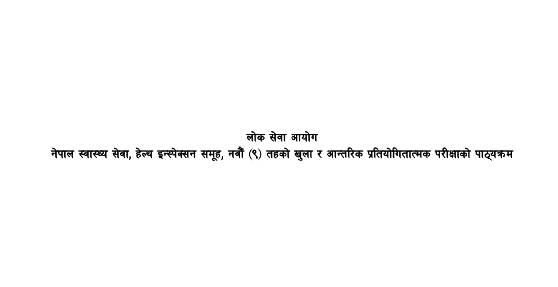
Public Service Commission Syllabus for Public Health Officer

by Public Health Update November 19, 2017
written by Public Health Update

Syllabus for Public Health Officer 7th Level Examination – Public Service Commission

7th

[1st Paper]

HEALTH INSPECTION RELATED

1 Health and Public Health (5%) (Questions-5)

1.1. Meaning of health and disease, Factors that influence health, concept of health and disease, Dimension of disease, Measurement of health, disease and well being
1.2 Public health concept, Historical development and changing concept
 

2 Health Planning and Management (20%) (Questions-20)

2.1 Approaches, models, methods and practices
2.2 Need assessment, planning cycle, Planning, monitoring and evaluation
2.3 Strategic and operational planning
2.4 Inventory management
2.5 Drug management
2.6 Financial management
2.7 Health economics, Health care financing: Basic concepts and economic evaluation of health care services
2.8 Health care need assessment
2.9 Decentralization in health management
2.10 Quality assurance in health care
 

3 General Epidemiology (10%) (Questions-10)

3.1 Definition, concepts, approaches, aims, and use of epidemiology
3.2 Epidemiological methods, Incidence, Prevalence, association and causation, disease prevention and control
3.3 Epidemiology of communicable and non communicable diseases
3.4 Dynamics of disease transmission
3.5 Investigation of an epidemics
3.6 Screening of diseases
3.7 Health indicators
 

4 Health Statistics (5%) (Questions-5)

4.1 Sources of health information, Health information system
4.2 Tabulation, graphic and diagrammatic presentation of data
4.3 Statistical methods; Measures of central tendency, Measures of variability
4.4 Sampling size, Sampling survey and test of significance, correlation and regression

5. Demography (5%) (Questions-5)

5.1 Population trends-world and national
5.2 Measures of population dynamics
5.3 Factors affecting fertility, mortality and migration
5.4 Urbanization, Life expectancy
 

6 Applied Epidemiology and Disease Control (20%) (Questions-20)

6.1 Epidemiology, Prevention and control of communicable diseases including: Measles, Diphtheria, Whooping cough, Acute respiratory tract infection, Rubella, Mumps, Influenza, Tuberculosis, Viral hepatitis, Food poisoning, Typhoid fever, Intestinal worms, Acute diarrhoeal diseases, Filaria, Leishmaniasis, Malaria, Japanese encephalitis, Rabies, Tetanus, Trachoma, Leprosy, STD and HIV/AIDS
6.2 Prevention and control of non-communicable diseases
6.3 Concept of Control, elimination and eradication of diseases
 

7 Food and Nutrition (5%) (Questions-5)

7.1 Nutritional profiles
7.2 Nutritional problems
7.3 Assessment of nutritional status
7.4 Food intoxication, additives and fortification;
 

8 Environmental Health (5%) (Questions-5)

8.1 Management and control of basic and fundamental factors; Water, Air, Lighting, Noise, Housing
8.2 Solid waste disposal and control
8.3 Excreta disposal and control
8.4 Medical entomology-Mosquito, housefly, sand fly, lice, fleas, bugs etc. control
8.5 Insecticides safe use and resistance
8.6 Rodents control

9 Occupational Health (5%) (Questions-5)

9.1 Occupational environment and safety
9.2 Occupational hazards
9.3 Management and prevention of occupational hazards
9.4 Measures for general health protection of workers
 

10 Health Education and Health Promotion (10%)

10.1 Concept, Objectives and principles and their importance
10.2 Methods of health education
10.3 Health education medias and production
10.4 Behavior change communication (BCC)
10.5 Community organization and participation
10.6 Communication and information: concepts and importance
10.7 School health program: concepts, areas and importance
 

11 Primary Health Care (PHC), Essential Health Care Services (EHCS) and Millennium Development Goals (MDGs) (5%) (Questions-5)

11.1 Concept, Components, Status and Prospects
12 International Health 5%
12.1 External development partners and their priorities
12.2 UN agencies: WHO, UNICEF, UNDP, UNFPA, UNAIDS and World Bank
12.3 Bilateral agencies working in Nepal: USAID, JICA, GTZ, DFID, SDC, CIDA, AUSAID, NORAD, FINIDA, KOIKA

[2nd Paper]

HEALTH INSPECTION RELATED

Section A- 30 Marks

1 Health Policies Issues (10%) (Questions-1)

1.1 National Health Policy 1991
1.2 Current National Population Policy
1.3 Second Long Term Health Plan (1997-2017)
1.4 Health Sector in Current Five Year Plan

4. Health Issues and Regulations (20%) (Questions-2)

4.1 Health act, 2053 and Health regulation, 2054
4.2 Current financial administration regulation
4.3 Local governance and decentralization in health
4.4 Health and human right
4.5 Professional council and related regulations
4.6 Ethical issues in health

Section B- 30 Marks

2 Introduction, Objectives, Strategies, Targets and Current Status of National Health programs (30%) (Questions-3)

2.1 Family Planning, Safe Motherhood, Immunization Program, Nutrition, Integrated management of Childhood illness (IMCI), Malaria, Tuberculosis, Leprosy, Sexually transmitted Infections (STI) and HIV/AIDS
2.2 National health training center: basic, refresher and other continuous medical education programme
2.3 National Health Education Information and Communication Center: Critical overview of functions and roles
2.4 Development of District Health Profiles
2.5 Female Community Health Volunteers Programme (FCHV)
2.6 Primary Health Care Outreach Programme (PHC-ORC)
2.7 Disaster Management and Early Warning Reporting System(EWARS)
2.8 Health Sector Reform Program: Strategy and planning programs
2.9 Health Economics and Financing Unit (HEFU)
2.10 Health Management Information System (HMIS)
2.11 Logistic Management Information System (LMIS)
2.12 Human Resource Information Center (HURIC)


Section C- 20 Marks

3 Management of Public Health Programme in the District with Special Reference to (20%)(Questions-2)

3.1 Family Planning, Safe Motherhood, Immunization Program, Nutrition, Integrated management of Childhood illness (IMCI), Malaria, Kala-azar, J.E. and other Vector borne diseases, Tuberculosis, Leprosy, Sexual transmission diseases (STD) and HIV/AIDS.
3.2 Training activities in the district;
3.3 Health education, information and communication activities in the District
3.4 Management of Camps


Section D- 20 Marks

5 Management Issues in Nepal Health Services (20%) (Questions-2)

5.1 Personnel management: concept, principles, nature
5.2 Human resource management: concept, functions and different aspects
5.3 Community organization: Concepts, principles and process
5.4 Supervision, monitoring and evaluation of health care system: Principles, practice and importance
5.5 Inter and intra-sectoral coordination in health services
5.6 Indigenous and traditional health care system including Ayurveda and other system: Concepts, status and their analytical study
5.7 Analytical study of organizational structure of Ministry of Health and Population and functions

DOWNLOAD 1ST PAPER

DOWNLOAD 2ND PAPER 

Syllabus

  • Public Service Commission Syllabus Health Education Teaching Administrator
  • Public Service Commission Syllabus for Health Education Technician
  • Public Service Commission For ANM Syllabus
  • Public Service Commission Syllabus for AHW
  • Public Service Commission Syllabus Health Assistant
  • Public Service Commission Syllabus for AHW
  • Syllabus for Postgraduate Integrated Entrance Examination
  • Syllabus for Public Health Licensing Examination 2073 – Nepal Health Professional Council
  • Syllabus for Public Health Officer 7th Level Examination – Public Service Commission


Do you have a website? Looking for the best hosting provider? Here’s a discount code.

Latest Public Health Jobs

Latest Posts

  • World Water Day 2026 | Water & Gender Equality
  • Nepal Antimicrobial Resistance (AMR) Bulletin FY 2081/82
  • Call for applications! Short Course on Qualitative Research Methods in Public Health, 2026
  • World Obesity Day 2026 | 8 Billion Reasons to Act on Obesity
  • Salim Yusuf Emerging Leaders Programme 2026

Thanks for visiting us.
Disclaimer: The resources, documents, guidelines, and information on this blog have been collected from various sources and are intended for informational purposes only. Information published on or through this website and affiliated social media channels does not represent the intention, plan, or strategies of an organization that the initiator is associated with in a professional or personal capacity, unless explicitly indicated.
If you have any complaints, information, or suggestions about the content published on Public Health Update, please feel free to contact us at blog.publichealthupdate@gmail.com.
#StayUpdated


  • WordPress
  • Link
  • Facebook
  • Mail
  • Facebook
  • Twitter
  • Twitter
  • LinkedIn
  • Instagram
  • Facebook
November 19, 2017 1 comment
0 FacebookTwitterPinterestLinkedinTumblrVKOdnoklassnikiRedditStumbleuponWhatsappTelegramLINEPocketSkypeViberEmail
Newer Posts
Older Posts

Search

Follow Us

Facebook Twitter Instagram Pinterest Linkedin Youtube

Categories

  • Abstracts (25)
  • Activities (91)
  • Adolescent Sexual and Reproductive Health (ASRH) (25)
  • Advice & Tips (3)
  • African Region (5)
  • AI and Health (1)
  • Annual Meeting (6)
  • Antimicrobial Resistance (AMR) (21)
  • Award (19)
  • Awards (16)
  • Books (9)
  • Call for Proposal, EOI & RFP (103)
  • Call for Research Participants (8)
  • Clinical Doctor Jobs (6)
  • Communicable Diseases (107)
  • Competition (20)
  • Conference (128)
  • Consultant (1)
  • Courses (205)
  • Dashboard (2)
  • Digital Health & Health Informatics (10)
  • Drug and Medicine (18)
  • Eastern Mediterranean Region (3)
  • Education (15)
  • Environment (3)
  • Environmental Health & Climate Change (47)
  • European Region (42)
  • Exchange Program (1)
  • Fact Sheet (117)
  • FCHVs (1)
  • Fellowships, Studentship & Scholarships (168)
  • Financial Aid (13)
  • Form Formats (2)
  • Fully funded (22)
  • Global Health News (433)
  • Grants and Funding Opportunities (193)
  • Guest Post (44)
  • Health Assistant Jobs (1)
  • Health Equity (7)
  • Health Financing and Economics (24)
  • Health in Data (115)
  • Health Insurance (5)
  • Health Jobs (52)
  • Health Literacy, Health Education & Promotion (49)
  • Health Organization Profile (42)
  • Health Systems (83)
  • Human Resource for Health (33)
  • Humanitarian Health & Emergency Response (44)
  • Hypertension (5)
  • Implementation Research (48)
  • International Health (3)
  • International Jobs & Opportunities (373)
  • International Plan, Policy & Guidelines (210)
  • Internships (4)
  • Jobs Vacancies (56)
  • Journals (8)
  • Life Style & Public Health Nutrition (39)
  • Live (10)
  • Master's Degree (48)
  • Maternal, Newborn and Child Health (88)
  • Mentorship Program (2)
  • Miscellaneous (16)
  • National Health News (157)
  • National Plan, Policy & Guidelines (468)
  • Neglected Tropical Diseases (NTDs) (51)
  • Non- Communicable Diseases (NCDs) (120)
  • Notice (103)
  • Nursing Jobs (6)
  • Nutritionist Jobs (1)
  • One Health (17)
  • Online & Distance Learning (22)
  • Online Courses (90)
  • Op-Ed Article (3)
  • Opportunities by Region (83)
  • Outbreak News (213)
  • Partially funded (6)
  • PCL Health Science Jobs (3)
  • PH Important Day (533)
  • Pharmacist Jobs (3)
  • PhD (54)
  • Photos (5)
  • Planetary Health (4)
  • PostDoc (14)
  • Presentation Slides (26)
  • Primary Health Care (25)
  • Provincial Plan, Policies and Guidelines (14)
  • Public Health (1,281)
  • Public Health Epidemiology & Biostatistics (13)
  • Public Health Events (306)
  • Public Health Information (20)
  • Public Health Innovation (9)
  • Public Health Jobs (52)
  • Public Health News (552)
  • Public Health Notes (120)
  • Public Health Opportunities (507)
  • Public Health Opportunity (491)
  • Public Health Programs (108)
  • Public Health Seminar (2)
  • Public Health Tools (1)
  • Public Health Update (561)
  • Quality Improvement & Infection Prevention (20)
  • Region of America (8)
  • Reports (184)
  • Research & Project Grants (39)
  • Research & Project Grants (32)
  • Research & Publication (647)
  • Research Articles (10)
  • Road Traffic Accidents (RTA) (9)
  • School of Public Health (60)
  • Self funded (2)
  • South-East Asia Region (26)
  • Success Stories (17)
  • Summer and Winter Courses (40)
  • Summer Courses (28)
  • Sustainable Development Goals (SDGs) (14)
  • Syllabus (61)
  • Symposium (9)
  • Tobacco Control (35)
  • Training (40)
  • Travel Grants (15)
  • Trick, Technique & Skills (8)
  • Uncategorized (3)
  • Undergraduate Degree (7)
  • Universal Health Coverage (36)
  • Universities (29)
  • Universities & School of Public Health (58)
  • Vacancy Announcement (26)
  • Vaccine Preventable Diseases (40)
  • Vector-Borne Diseases(VBDs) (30)
  • Videos (3)
  • View Points (1)
  • Webinar (4)
  • Western Pacific Region (13)
  • Workshop (18)
  • World News (116)
Post New Jobs: Vacancy Announcement Service

Public Health Update (Sagun’s Blog) is a popular public health portal in Nepal. Thousands of health professionals are connected with Public Health Update to get up-to-date public health updates, search for jobs, and explore opportunities.
#1 Public Health Blog for sharing Job opportunities and updates in Nepal

”Public Health Information For All”
– – Sagun Paudel, Founder

  • HOT JOBS
    • Public Health Jobs
    • Medical Doctor Jobs
    • Nursing Jobs
    • Health Assistant Jobs
    • Pharmacist Jobs
    • NGOs Jobs
    • Government Jobs
  • Top Categories
    • National Plan, Policy & Guidelines Top
    • Public Health Calendar
    • Fellowships & Scholarships
    • Health Systems
    • Health Organization Profiles
    • International Jobs & Opportunities
    • Public Health Opportunity

PUBLIC HEALTH INITIATIVE

    • Submit your Vacancies New
    • Partnership Opportunities

Contact: blog.publichealthupdate@gmail.com

https://wa.me/+9779856036932

Public Health Initiative, A Registered Non-profit organization – All Right Reserved. 2011-2024. Contact us. 

Facebook Twitter Instagram Youtube Envelope
Public Health Update
  • Home
  • Public Health
    • Home 1
      • Adolescent Sexual and Reproductive Health (ASRH)
      • Antimicrobial Resistance (AMR)
      • Communicable Diseases
      • Digital Health & Health Informatics
      • Environmental Health & Climate Change
      • Health Financing and Economics
      • Health Equity
    • Home 2
      • Health Literacy, Health Education & Promotion
      • Human Resource for Health
      • Humanitarian Health & Emergency Response
      • Implementation Research
      • International Health
      • Life Style & Public Health Nutrition
      • Maternal, Newborn and Child Health
    • Home 3
      • Neglected Tropical Diseases (NTDs)
      • Non- Communicable Diseases (NCDs)
      • One Health
      • Planetary Health
      • Public Health Epidemiology & Biostatistics
      • Primary Health Care
      • Quality Improvement & Infection Prevention
    • Home 4
      • Road Traffic Accidents (RTA)
      • Sustainable Development Goals (SDGs)
      • Tobacco Control
      • Universal Health Coverage
      • Vaccine Preventable Diseases
      • Vector-Borne Diseases(VBDs)
      • Notices
  • Public Health Update
    • Home 1
      • Public Health News
      • Global Health News
      • Outbreak News
      • National Health News
      • COVID-19
    • Home 2
      • Fact Sheet
      • Health in Data
      • PH Important Day
      • Public Health Events
      • Public Health Programs
    • Home 3
      • Health Systems
      • Health Insurance
      • Health Organization Profile
      • Success Stories
      • Public Health Innovation
  • Public Health Opportunities
    • Fully funded
    • Travel Grants
    • Grants and Funding Opportunities
    • Opportunities by Region
    • International Jobs & Opportunities
    • Research & Project Grants
    • Fellowships, Studentship & Scholarships
    • Conference
  • Jobs
    • Home 1
      • Health Jobs
      • Public Health Jobs
      • Clinical doctor Jobs
      • Health Assistant Jobs
      • Nursing Jobs
      • PCL Health Science Jobs
    • Home 2
      • Dental Jobs
      • Pharmacist Jobs
      • TSLC (Health Jobs)
      • Laboratory Jobs
      • Nutritionist Jobs
  • Downloads
    • International Plan, Policy & Guidelines
    • National Plan, Policy & Guidelines
    • Reports
    • Books
    • Research Articles
  • School of Public Health
    • Home 1
      • Courses
      • Master’s Degree
      • Undergraduate Degree
      • PhD
    • Home 2
      • Universities
      • Syllabus
      • Public Health Notes
      • Mentorship Program
      • Startup Project
    • Home
      • Summer and Winter Courses
      • Summer Courses
      • Online Courses
      • Workshop
      • Training
Public Health Update
  • Home
  • Public Health
    • Home 1
      • Adolescent Sexual and Reproductive Health (ASRH)
      • Antimicrobial Resistance (AMR)
      • Communicable Diseases
      • Digital Health & Health Informatics
      • Environmental Health & Climate Change
      • Health Financing and Economics
      • Health Equity
    • Home 2
      • Health Literacy, Health Education & Promotion
      • Human Resource for Health
      • Humanitarian Health & Emergency Response
      • Implementation Research
      • International Health
      • Life Style & Public Health Nutrition
      • Maternal, Newborn and Child Health
    • Home 3
      • Neglected Tropical Diseases (NTDs)
      • Non- Communicable Diseases (NCDs)
      • One Health
      • Planetary Health
      • Public Health Epidemiology & Biostatistics
      • Primary Health Care
      • Quality Improvement & Infection Prevention
    • Home 4
      • Road Traffic Accidents (RTA)
      • Sustainable Development Goals (SDGs)
      • Tobacco Control
      • Universal Health Coverage
      • Vaccine Preventable Diseases
      • Vector-Borne Diseases(VBDs)
      • Notices
  • Public Health Update
    • Home 1
      • Public Health News
      • Global Health News
      • Outbreak News
      • National Health News
      • COVID-19
    • Home 2
      • Fact Sheet
      • Health in Data
      • PH Important Day
      • Public Health Events
      • Public Health Programs
    • Home 3
      • Health Systems
      • Health Insurance
      • Health Organization Profile
      • Success Stories
      • Public Health Innovation
  • Public Health Opportunities
    • Fully funded
    • Travel Grants
    • Grants and Funding Opportunities
    • Opportunities by Region
    • International Jobs & Opportunities
    • Research & Project Grants
    • Fellowships, Studentship & Scholarships
    • Conference
  • Jobs
    • Home 1
      • Health Jobs
      • Public Health Jobs
      • Clinical doctor Jobs
      • Health Assistant Jobs
      • Nursing Jobs
      • PCL Health Science Jobs
    • Home 2
      • Dental Jobs
      • Pharmacist Jobs
      • TSLC (Health Jobs)
      • Laboratory Jobs
      • Nutritionist Jobs
  • Downloads
    • International Plan, Policy & Guidelines
    • National Plan, Policy & Guidelines
    • Reports
    • Books
    • Research Articles
  • School of Public Health
    • Home 1
      • Courses
      • Master’s Degree
      • Undergraduate Degree
      • PhD
    • Home 2
      • Universities
      • Syllabus
      • Public Health Notes
      • Mentorship Program
      • Startup Project
    • Home
      • Summer and Winter Courses
      • Summer Courses
      • Online Courses
      • Workshop
      • Training
Public Health Initiative, A Registered Non-profit organization – All Right Reserved. 2011-2023