
Public Health Update
  • Home
  • Public Health Update
  • Nepal Health Jobs
    • Public Health Job Board
    • Organization List
  • Opportunities
    • Fellowships, Studentship & Scholarships
    • Grants and Funding Opportunities
    • Fully funded
    • Conference
  • Downloads
    • International Plan, Policy & Guidelines
    • National Plan, Policy & Guidelines
    • Reports
    • Public Health Notes
    • Syllabus
    • Form Formats
  • School of Public Health
    • PhD
    • Master’s Degree
    • Online Courses
  • Notice
  • Home
  • Public Health Update
  • Nepal Health Jobs
    • Public Health Job Board
    • Organization List
  • Opportunities
    • Fellowships, Studentship & Scholarships
    • Grants and Funding Opportunities
    • Fully funded
    • Conference
  • Downloads
    • International Plan, Policy & Guidelines
    • National Plan, Policy & Guidelines
    • Reports
    • Public Health Notes
    • Syllabus
    • Form Formats
  • School of Public Health
    • PhD
    • Master’s Degree
    • Online Courses
  • Notice
LOGIN / REGISTER
Public Health Update
SUBSCRIBE
Public Health Update
  • Home
  • Public Health Update
  • Nepal Health Jobs
    • Public Health Job Board
    • Organization List
  • Opportunities
    • Fellowships, Studentship & Scholarships
    • Grants and Funding Opportunities
    • Fully funded
    • Conference
  • Downloads
    • International Plan, Policy & Guidelines
    • National Plan, Policy & Guidelines
    • Reports
    • Public Health Notes
    • Syllabus
    • Form Formats
  • School of Public Health
    • PhD
    • Master’s Degree
    • Online Courses
  • Notice

All Right Reserved. Designed and Developed by PenciDesign

PH Important DayPublic Health

Blood Connects us All – World Blood Donor Day

by Public Health Update June 14, 2018
written by Public Health Update

Blood Connects us All – World Blood Donor Day

Every year, on 14 June, countries around the world celebrate World Blood Donor Day. The event serves to thank voluntary, unpaid blood donors for their life-saving gifts of blood and to raise awareness of the need for regular blood donations to ensure the quality, safety and availability of blood and blood products for patients in need.
 
Transfusion of blood and blood products helps save millions of lives every year. It can help patients suffering from life-threatening conditions live longer and with a higher quality of life, and supports complex medical and surgical procedures. It also has an essential, life-saving role in maternal and child care and during the emergency response to man-made and natural disasters.
 
A blood service that gives patients access to safe blood and blood products in sufficient quantity is a key component of an effective health system. An adequate supply can only be ensured through regular donations by voluntary, unpaid blood donors. However, in many countries, blood services face the challenge of making sufficient blood available, while also ensuring its quality and safety.

The theme for  2018 is ‘Blood Connects us All’.

The slogan of this day is ‘Be there for someone else, Share Life, Give Blood’

WORLD HEALTH ORGANIZATION

June 14, 2018 0 comments
0 FacebookTwitterPinterestLinkedinTumblrVKOdnoklassnikiRedditStumbleuponWhatsappTelegramLINEPocketSkypeViberEmail
Global Health NewsMaternal, Newborn and Child HealthPublic HealthPublic Health News

India has achieved groundbreaking success in reducing maternal mortality

by Public Health Update June 11, 2018
written by Public Health Update

India has achieved groundbreaking success in reducing maternal mortality

By Dr Poonam Khetrapal Singh, WHO Regional Director for South-East Asia

WHO commends India for its groundbreaking progress in recent years in reducing the maternal mortality ratio (MMR) by 77%, from 556 per 100 000 live births in 1990 to 130 per 100 000 live births in 2016. India’s present MMR is below the Millennium Development Goal (MDG) target and puts the country on track to achieve the Sustainable Development Goal (SDG) target of an MMR below 70 by 2030.


Four key actions are responsible for India’s remarkable achievement.

  • First, India has made a concerted push to increase access to quality maternal health services. Since 2005, coverage of essential maternal health services has doubled, while the proportion of institutional deliveries in public facilities has almost tripled, from 18% in 2005 to 52% in 2016 (including private facilities, institutional deliveries now stand at 79%).
  • Second, state-subsidized demand-side financing like the Janani Shishu Suraksha Karyakram – which allows all pregnant women delivering in public health institutions to free transport and no-expense delivery, including caesarian section – has largely closed the urban-rural divide traditionally seen in institutional births. Overall, 75% of rural births are now supervised, as compared to 89% of urban deliveries.
  • Third, India has put significant emphasis on mitigating the social determinants of maternal health. Women in India are more literate than ever, with 68% now able to read and write. They are also entering marriage at an older age, with just 27% now wedded before the age of 18. These factors alone have enabledIndian women to better control their reproductive lives and make decisions that reflect their own interests and wants.
  • Finally, the governmenthas put in substantive efforts to facilitate positive engagement between public and private health care providers. Campaigns such as the Pradhan Mantri Surakshit Matritva Abhiyan have been introduced with great impact, allowing women access to antenatal check-ups, obstetric gynecologists and to track high-risk pregnancies – exactly what is needed to make further gains and achieve the SDG targets.

 
India’s achievements are already having wide-ranging human impact, and are of immense inspiration to WHO Member States, both in the Region and beyond. As per WHO South-East Asia’s Flagship Priority of advancing maternal, newborn, child and adolescent health, the Organization will continue to provide technical and operational support as and where needed in India and across the Region to end preventable deaths due to pregnancy and childbirth and to ensure every woman has full control over her reproductive life.

WHO SEARO

June 11, 2018 0 comments
0 FacebookTwitterPinterestLinkedinTumblrVKOdnoklassnikiRedditStumbleuponWhatsappTelegramLINEPocketSkypeViberEmail
Guest PostPublic HealthResearch & Publication

Nepal in the pathway of reaching the first 90 of the 90-90-90 goal through task shifting.

by Public Health Update June 10, 2018
written by Public Health Update

Nepal in the pathway of reaching the first 90 of the 90-90-90 goal through task shifting.

Sanjeev Raj Neupane and Dr Imran Muhammad

Many developing countries around the world are facing acute shortage of trained health workforce. For achieving Universal Health Coverage trained and adequate number of health workforce is a must. Achieving universal health coverage is impossible without having the right people; with the right skills, in the right place. Many health programmes are facing serious problem due to shortage of trained health workforce. HIV programmes are also severely affected due to lack of trained health workforce. To tackle the HIV epidemic; the problem of shortage of human resources must be tackled. Without tackling the problem of shortage of human resources; the battle against HIV can’t be won. Production and training of health workforce is not only in the control of health ministries. Besides this the production and training of health workforce needs long time; huge investments and multi-sectoral involvement. We cant wait until there will be adequate human resources to tackle the problem of HIV epidemic. So the concept of “Task Shifting” which has already been used successfully in many other public health programs is being replicated in the field of HIV also.

(Figure Source: WHO HIV/AIDS Programme; Task Shifting to Tackle Health Worker Shortages)
Task shifting is a process of delegation of roles and responsibilities from specialized health workers to less specialized health workers or to the community people. In the absence of specialized physicians some of their tasks could be delegated to Medical officers; some of the tasks of medical officers could be delegated to Nurses; some of the tasks of nurses could be delegated to community health workers and some of the tasks of community health workers could be delegated to People living with HIV (PLHIV) themselves. However this needs to operate in public health approach. Regulation and training must be in the centre in the task shifting process.
To end the AIDS epidemic UNAIDS has come with an ambitious goal of 90-90-90 which simply means by 2020; 90% of all people living with HIV will know their HIV status; 90% of diagnosed HIV positive people will receive sustained antiretroviral therapy and 90% of all people receiving antiretroviral therapy will have HIV viral load suppressed. Once this three part target is achieved 73% of all people living with HIV worldwide will be virally suppressed. Modelling data suggest that achieving these targets by 2020 will enable the world to end AIDS epidemic by 2030, which in turn will generate profound health and economic benefits.
But with the current strategies and current pace it is almost impossible to achieve the ambitious goal of 90-90-90 by 2020. Public health scientists and HIV activists around the world are proposing different fast track strategies and approaches that could help world achieve the ambitious 90-90-90 target. One of the strategy proposed for achieving the first 90 is HIV testing by lay providers (which is often called Community led HIV testing). In 2015; WHO recommended that members of key population who are trained can independently conduct safe and effective HIV testing using rapid diagnostic tests. Many people are currently using similar kind of rapid diagnostic test kits for detection of blood sugar in home just by reading the user manual that comes with the test kit. The rapid diagnostic test kits are also similar so trained member of a key population can perform the HIV screening test accurately.
Since WHO recommended HIV testing by lay providers in 2015; many countries around the world are in the process of adopting this WHO recommendation as per their country epidemic. Nepal has already endorsed in its National HIV Strategic Plan 2016-21 that Nepal will also implement Community led HIV testing. Accordingly Nepal has already developed National Guideline for Community Led HIV testing and Nepal is all set to roll out of HIV testing by Lay providers in next few months. Once this is rolled out Nepal will be the first country in South Asia to implement HIV testing by Lay Providers and hopefully this new approach will help Nepal to reach the first 90 of the lofty 90-90-90 target.
June 10, 2018

Sanjeev Raj Neupane and Dr Imran Muhammad


More From Author

Road Traffic Accident (RTA) or Massacre?

Involvement of people living with diseases in the NCD response

Bringing Antiretroviral Therapy (ART) services one step closer to people’s door

June 10, 2018 0 comments
0 FacebookTwitterPinterestLinkedinTumblrVKOdnoklassnikiRedditStumbleuponWhatsappTelegramLINEPocketSkypeViberEmail
Global Health NewsInternational Plan, Policy & GuidelinesPublic Health NewsReportsResearch & Publication

Global Health 50/50 Report (2018)

by Public Health Update June 9, 2018
written by Public Health Update

Global Health 50/50 Report (2018)

 
Global Health 50/50 is an independent initiative created to advance accountability and action for gender equality in global health. Its Advisory Council is an informal group whose members guide the initiative and serve as its Ambassadors in their personal capacities.

‘Gender blind after all this time’: Few global health organizations promoting gender-responsive actions within their own institutions

First-ever gender-related policy and practice analysis of 140 leading health organizations spotlights inadequate and limited focus on the promotion of gender equality in programmes and the workplace LONDON, 8 March 2018​ – A new landmark report launched today on International Women’s Day reveals that only a select group of the world’s top global health organizations have placed gender equality at the centre of their operations, both programmatically and institutionally. The 2018 Global Health 50/50 Report – the first of its kind – provides an in-depth look at the extent to which the organizations analysed in the study understand, define, programme, resource, and monitor gender as a determinant of health, or as an indicator of equality within their own organization. Developed by Global Health 50/50, an independent initiative housed by the University College London Centre for Gender and Global Health, the report provides a unique assessment of seven domains that zero in on an organization’s commitment to gender equality. The development of the report was supported in part by a grant from Wellcome Trust.
The domains of the study include: public statement of commitment to gender equality; gender defined in institutional policies and consistent with global norms; programmatic policies in place to guide gender-responsive action; sex-disaggregated data collected and reported; workplace policies and practices with specific measures to promote gender equality in place; gender parity in governance bodies and senior management; and gender of the head of the organization and of the head of its governing body. The 140 organizations involved in the study are those from the United Nations system; bilateral and multilateral development institutions; philanthropic organizations and funders; civil society and nongovernmental organizations; public-private partnerships; and the private sector.

Mixed picture of gender equality progress in global health

An overarching finding of the study highlights that global health organizations have yet to fully commit to gender equality, with only one out of three stating a commitment to gender equality to benefit the health of all people. Worryingly, one-third have no stated committed to gender equality, and the remainder of the organizations are silent on specific actions related to gender and/or women and girls. The report underscores that decision-making power remains in the hands of men, although women constitute the vast majority of people working in global health, accounting for 67% of employees in the health and social sectors. Further findings include:

  • Fewer than one-third of organizations define gender in a manner that is consistent with global norms, a prerequisite for effective and equitable programming;
  • Only 40% of organizations mention gender in their programme and strategy documents;
  • Two-thirds of organizations do not disaggregate their programme data by sex;
  • 43 organizations (30%) make no reference to workplace gender equality;
  • 20% of organizations have achieved gender parity on their boards;
  • A quarter (25%) of organizations have achieved gender parity at the level of senior management;
  • 69% of organizations are headed by men; and
  • 80% of board chairs are men.

While the report points to significant discord in whether organizations are internalizing their commitment to gender equality, it equally captures actors that, at least when it comes to commitment, policy and representation, are advancing gender equality in global health. The report identifies 18 high-scoring organizations. The nine highest-scoring organizations are: BRAC; Deutsche Gesellschaft für Internationale Zusammenarbeit (GIZ); GAVI; The Global Fund to Fight AIDS, TB and Malaria; Population Reference Bureau; Save the Children International; Swedish International Development Cooperation Agency (Sida); Joint United Nations Programme on HIV/AIDS (UNAIDS); and UNICEF.
An additional ten high-scorers identified in the report include: CARE; European Commission; Food and Agriculture Organization of the UN (FAO); FHI360; Jhpiego; the Partnership for Maternal, Newborn & Child Health (PMNCH); Stop TB; United Nations Population Fund (UNFPA); UN Women; and the World Health Organization (WHO).

Recommended actions for change

A significant feature of the Global Health 50/50 Report is the set of evidence-informed recommendations it presents across the seven domains of organizational commitment to gender equality. The recommendations were developed in consultation with GH5050’s Advisory Council Some of the recommendations in the report include:

  • Leaders in organizations need to exercise commitment to gender equality and incentivize policies and practices that respond to evidence on the impact of gender on the health, well-being and careers of women and men;
  • Organizations should put in place policies and processes to ensure a common understanding and ownership of the definition of gender, and the practices required to achieve gender equality;
  • Move beyond the tendency to conflate gender with women;
  • Embed gender markers in the review and approval process of all new programmes and initiatives;
  • Demonstrate and implement zero tolerance for sexual and gender harassment; and
  • Set time-bound targets for reaching gender parity in senior management and governing bodies.

Download report: Global Health 50/50 Report (2018)

June 9, 2018 0 comments
0 FacebookTwitterPinterestLinkedinTumblrVKOdnoklassnikiRedditStumbleuponWhatsappTelegramLINEPocketSkypeViberEmail
Fact SheetHealth in DataMaternal, Newborn and Child HealthNational Plan, Policy & GuidelinesPublic HealthPublic Health NotesPublic Health UpdateReportsResearch & Publication

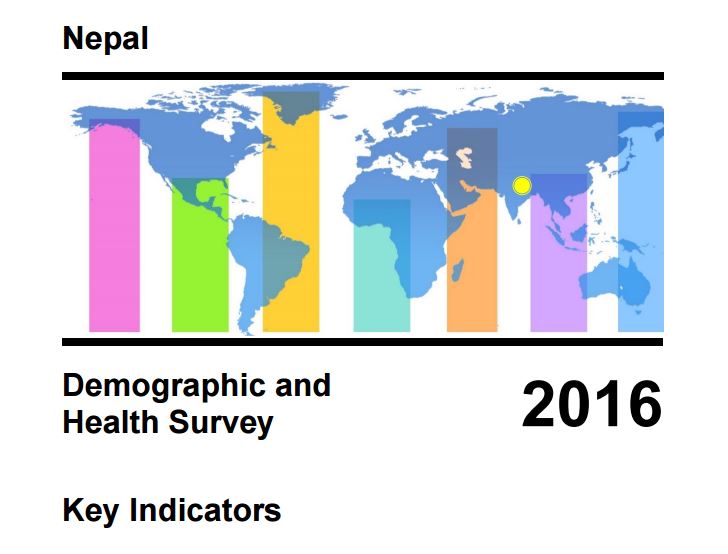
Nepal Demographic and Health Survey 2016 Key Indicators Report

by Public Health Update June 3, 2018
written by Public Health Update
The 2016 Nepal Demographic and Health Survey (NDHS) is the fifth Demographic and Health Survey (DHS) conducted in Nepal. It was implemented by New ERA under the aegis of the Ministry of Health (MOH). Data collection took place from June 19, 2016, to January 31, 2017.

Funding for the 2016 NDHS was provided by the United States Agency for International Development(USAID). ICF provided technical assistance through The DHS Program, which assists countries in the collection of data to monitor and evaluate population, health, and nutrition programs.

NDHS

SURVEY OBJECTIVES

The primary objective of the 2016 NDHS project is to provide up-to-date estimates of basic demographic and health indicators. Specifically, the 2016 NDHS collected information on fertility levels, marriage, fertility preferences, awareness and use of family planning methods, breastfeeding practices, nutrition, maternal and child health and mortality, awareness and behavior regarding HIV/AIDS, women’s empowerment and domestic violence, and other sexually transmitted infections (STIs), and other healthrelated issues such as smoking, knowledge of tuberculosis, and prevalence of hypertension.
The information collected through the 2016 NDHS is intended to assist policymakers and program managers in the Ministry of Health and other organizations in designing and evaluating programs and strategies for improving the health of the country’s population. The 2016 NDHS also provides indicators relevant to the Nepal Health Sector Strategy (NHSS) – 2016-2021 and the Sustainable Development Goals (SDGs).

Ministry of Health, Nepal; New ERA; and ICF. 2017. Nepal Demographic and Health Survey 2016: Key Indicators. Kathmandu, Nepal: Ministry of Health, Nepal.


June 3, 2018 1 comment
0 FacebookTwitterPinterestLinkedinTumblrVKOdnoklassnikiRedditStumbleuponWhatsappTelegramLINEPocketSkypeViberEmail
National Plan, Policy & GuidelinesReportsResearch & Publication

Glimpse of Annual Report Department of Health Services 2073/74 (2016/17)

by Public Health Update June 3, 2018
written by Public Health Update

Glimpse of Annual Report Department of Health Services 2073/74 (2016/17), Government of Nepal Ministry of Health and Population Department of Heallth Serviices Kathmandu, Nepal

DOWNLOAD

Glimpse of Annual Report Department of Health Services 2073/74 (2016/17), Government of Nepal Ministry of Health and Population Department of Heallth Serviices Kathmandu, Nepal

  • Annual report of the Department of Health Services (DoHS) 2073/74 (2016/2017)

  • Annual Report Department of Health Services 2072/73 (2015/2016)

  • Annual Report of the Department of Health Services (DoHS) – 2071/72 (2014/2015)

  • Annual Report of DOHS 2070/71 (2013/2014)

  • Annual Report of DoHS 2069/2070 (2012-2013)

June 3, 2018 0 comments
0 FacebookTwitterPinterestLinkedinTumblrVKOdnoklassnikiRedditStumbleuponWhatsappTelegramLINEPocketSkypeViberEmail
National Plan, Policy & GuidelinesResearch & Publication

NGO/INGO लाई सरकारले कसरी नियमन र नियन्त्रण गर्दै छ ?(राष्ट्रिय सदाचार नीति २०७४ मस्यौदा)

by Public Health Update June 3, 2018
written by Public Health Update

1 1 2 1 3

DOWNLOAD

June 3, 2018 0 comments
0 FacebookTwitterPinterestLinkedinTumblrVKOdnoklassnikiRedditStumbleuponWhatsappTelegramLINEPocketSkypeViberEmail
International Plan, Policy & GuidelinesReportsResearch & Publication

Time to deliver: report of the WHO Independent High-Level Commission on NCDs

by Public Health Update June 2, 2018
written by Public Health Update

Time to deliver: report of the WHO Independent High-Level Commission on Noncommunicable Diseases

Summary: Billions of people around the world are affected by noncommunicable diseases (NCDs) and mental disorders at all stages of the life course, from childhood to old age. Four diseases – cardiovascular diseases, cancers, chronic respiratory diseases, and diabetes, account for most of the NCD burden.
In 2015, countries agreed on the Sustainable Development Goals, which includes a specific NCD target within Goal 3 on health, which is a one-third reduction of premature NCD mortality by 2030 through prevention and treatment of NCDs and the promotion of mental health and well-being (SDG target 3.4). Despite the many proven interventions and commitments to combat NCDs, progress has been slow and uneven globally. Challenges to achieving these commitments include lack of political will and priority setting, the impact of economic, commercial and market factors, and insufficient financing and capacity. The WHO Independent High-level Commission on NCDs was convened by the WHO Director-General in October 2017 to advise him on how countries can accelerate progress towards achieving SDG target 3.4. Taking into account previous work, as well as additional innovative thinking, the Commission agreed on six key recommendations.

  • 01 START FROM THE TOP: Political leadership and responsibility, from capitals to villages
  • 02 PRIORITIZE AND SCALE UP: Governments should identify and implement a specific set of priorities within the overall NCD and mental health agenda, based on public health needs. 
  • 03 EMBED AND EXPAND: NCDS WITHIN HEALTH SYSTEMS AND UNIVERSAL HEALTH COVERAGE: Governments should reorient health systems to include health promotion and the prevention and control of NCDs and mental health services in their UHC policies and plans, according to national contexts and needs. 
  • 04 COLLABORATE AND 04 REGULATE: Governments should increase effective regulation, appropriate engagement with the private sector, academia, civil society, and communities, building on a whole-of-society approach to NCDs, and share experiences and challenges, including policy models that work.)
  • 05 Finance: Governments and the international community should develop a new economic paradigm for funding action on NCDs and mental health.
  • 06 ACT FOR ACCOUNTABILITY: Governments should strengthen accountability to their citizens for action on NCDs.

DOWNLOAD REPORT 

Time to deliver: report of the WHO Independent High-level Commission on Noncommunicable Diseases. Geneva: World Health Organization; 2018. Licence: CC BY-NCSA 3.0 IGO.

June 2, 2018 0 comments
0 FacebookTwitterPinterestLinkedinTumblrVKOdnoklassnikiRedditStumbleuponWhatsappTelegramLINEPocketSkypeViberEmail
Guest PostPublic HealthResearch & Publication

Road Traffic Accident (RTA) or Massacre?

by Public Health Update June 1, 2018
written by Public Health Update

Road Traffic Accident (RTA) or Massacre?


Sanjeev Raj Neupane

I was reading an article during lunch break by one of my friend about “Karnali highway and Prosperity Dreams” I was distracted by news about Road Traffic Accident in the western part of Nepal claiming 13 lives and injuring 10 people. I was haunted by the news for a whole day. At the end of the day, I quickly scanned all the online portals; social media; twitter handle of the National media. For everyone, this was like just one more column in their newspaper or one more feed to update in the twitter handle. I don’t know why but as a public health professional I was haunted by this news and the more frustrating for me was the ease with which all of us (media; health professionals, students, teachers, bankers, businessmen, travelers and you and me) showed indifference to this news. We all reacted as if nothing has happened and this is just a normal thing in Nepal. Have we become so selfish that a dozen of innocent people who die in the middle of the road because of someone else’s mistake makes us no difference? Have we become so busy that we scroll the news of people dying in road traffic accident just like every other news on the newsfeed? Or have we become such a pure development worker who needs another workshop in a good hotel to raise this issue?
I googled to see the casualties related to Road Traffic Accident that happen every year in Nepal. I was surprised to see the figures staggeringly high. A newspaper article “Road accident fatalities continue unabated” mentions that on an average there were 28 road accidents and six people die every day in the Fiscal Year 2016/17. According to the statistics published by Nepal Police, a total of 2,385 persons were killed (weren’t they murdered ?) in 10,178 road accidents in the fiscal year 2016/17 and the death toll are on the increasing trend. The Global Burden of Disease by Institute of Health Metrics and Evaluation shows that in 2016 there were 15.9 deaths for every 100,000 population due to Road Injuries in Nepal
The Wikipedia defines “Massacre as a killing, typically of multiple victims, considered morally unacceptable, especially when perpetrated by a group of political actors against defenseless victims”. If we follow the dictionary definition the accident that happened in Western part of Nepal today killing 13 people and injuring many others is not a Road Traffic Accident but a mass massacre. Were there multiple victims ? “Yes”……Was it morally acceptable ? “No. Not at all”. Was it perpetrated by a group of political actors ? “Partially Yes”. [Different transport companies affiliated under different political parties operate in Syndicate which is not yet practically eradicated although the government claims this has been eradicated] and all those dying are the innocent defenseless victims traveling to their destination. So this is no different than a mass massacre but the only difference is that the massacre happens once in ages but the road traffic accident are happening everyday and we don’t care about it. Would we have reacted in the same way if there really had been a real massacre ? Would the newspapers and the online portal would have taken it just like another piece of news if there had been a mass massacre? How vigilant our traffic police and security personnel would have been if there was a real massacre ? How often would the politicians have raised the issue in parliament only if there was a real massacre ? How many protests and demonstrations would have been done by political parties and their affiliations if there had been a real massacre ?  Every massacre don’t happen with bullets; guns; swords, bombs; missiles or other weapons of mass destruction. Currently we are facing mass massacre in the form of Road Traffic Accidents but we don’t care about it. Isn’t this inhuman?

Sanjeev Raj Neupane, Technical Specialist for Global Fund Programs, Save the Children US

More from Author;

Bringing Antiretroviral Therapy (ART) services one step closer to people’s door

Involvement of people living with diseases in the NCD response

June 1, 2018 0 comments
0 FacebookTwitterPinterestLinkedinTumblrVKOdnoklassnikiRedditStumbleuponWhatsappTelegramLINEPocketSkypeViberEmail
PH Important DayPublic HealthTobacco Control

''Tobacco Breaks Hearts'' World No Tobacco Day 2018

by Public Health Update May 31, 2018
written by Public Health Update

”Tobacco Breaks Hearts” World No Tobacco Day 2018

Every year, on 31 May, WHO and partners mark World No Tobacco Day (WNTD), highlighting the health and other risks associated with tobacco use, and advocating for effective policies to reduce tobacco consumption.

World No Tobacco Day 2018 aims to:

  • Highlight the links between the use of tobacco products and heart and other cardiovascular diseases.
  • Increase awareness within the broader public of the impact tobacco use and exposure to second-hand smoke have on cardiovascular health.
  • Provide opportunities for the public, governments and others to make commitments to promote heart health by protecting people from use of tobacco products.
  • Encourage countries to strengthen implementation of the proven MPOWER tobacco control measures contained in the WHO FCTC.

The focus of World No Tobacco Day 2018 is “Tobacco and heart disease.” The campaign will increase awareness on the:

  • link between tobacco and heart and other cardiovascular diseases (CVD), including stroke, which combined are the world’s leading causes of death;
  • feasible actions and measures that key audiences, including governments and the public, can take to reduce the risks to heart health posed by tobacco.

How tobacco endangers the heart health of people worldwide

World No Tobacco Day 2018 will focus on the impact tobacco has on the cardiovascular health of people worldwide.
Tobacco use is an important risk factor for the development of coronary heart disease, stroke, and peripheral vascular disease.
Despite the known harms of tobacco to heart health, and the availability of solutions to reduce related death and disease, knowledge among large sections of the public that tobacco is one of the leading causes of CVD is low.

Facts about tobacco, heart and other cardiovascular diseases

Cardiovascular diseases (CVD) kill more people than any other cause of death worldwide, and tobacco use and second-hand smoke exposure contribute to approximately 12% of all heart disease deaths. Tobacco use is the second leading cause of CVD, after high blood pressure.
The global tobacco epidemic kills more than 7 million people each year, of which close to 900 000 are non-smokers dying from breathing second-hand smoke. Nearly 80% of the more than 1 billion smokers worldwide live in low- and middle-income countries, where the burden of tobacco-related illness and death is heaviest.
The WHO MPOWER measures are in line with the WHO Framework Convention on Tobacco Control (WHO FCTC) and can be used by governments to reduce tobacco use and protect people from NCDs. These measures include:

  • Monitor tobacco use and prevention policies;
  • Protect people from exposure to tobacco smoke by creating completely smoke-free indoor public places, workplaces and public transport;
  • Offer help to quit tobacco (cost-covered, population-wide support, including brief advice by health care providers and national toll-free quit lines);
  • Warn about the dangers of tobacco by implementing plain/standardized packaging, and/or large graphic health warnings on all tobacco packages, and implementing effective anti-tobacco mass media campaigns that inform the public about the harms tobacco use and second-hand smoke exposure.
  • Enforce comprehensive bans on tobacco advertising, promotion and sponsorship; and
  • Raise taxes on tobacco products and make them less affordable.

Key facts

  • Tobacco kills up to half of its users.
  • Tobacco kills more than 7 million people each year. More than 6 million of those deaths are the result of direct tobacco use while around 890 000 are the result of non-smokers being exposed to second-hand smoke.
  • Around 80% of the world’s 1.1 billion smokers live in low- and middle-income countries.

WHO


Ministry of Health to be made tobacco-free zone

Tobacco Control Convention Strategy-2030 launched

WHO issues new guidance on tobacco product regulation towards maximum protection of public health

Sri Lanka has been selected to receive dedicated international support on tobacco control

”Tobacco – a threat to development” – World No Tobacco Day, 31 May 2017

World No Tobacco Day (Presentation)

The 12th Asia Pacific Conference on Tobacco (APACT12th)

WHO report on the global tobacco epidemic, 2015

World No Tobacco Day 2014-Raising tax on tobacco

World No Tobacco Day 2012

nheicc
wntd 2018 poster 630
wntd 2018 infographic 100million heart
world no tobacco day

May 31, 2018 0 comments
0 FacebookTwitterPinterestLinkedinTumblrVKOdnoklassnikiRedditStumbleuponWhatsappTelegramLINEPocketSkypeViberEmail
Newer Posts
Older Posts

Search

Follow Us

Facebook Twitter Instagram Pinterest Linkedin Youtube

Categories

  • Abstracts (25)
  • Activities (91)
  • Adolescent Sexual and Reproductive Health (ASRH) (25)
  • Advice & Tips (3)
  • African Region (5)
  • AI and Health (1)
  • Annual Meeting (6)
  • Antimicrobial Resistance (AMR) (21)
  • Award (19)
  • Awards (16)
  • Books (9)
  • Call for Proposal, EOI & RFP (103)
  • Call for Research Participants (8)
  • Clinical Doctor Jobs (6)
  • Communicable Diseases (107)
  • Competition (20)
  • Conference (128)
  • Consultant (1)
  • Courses (205)
  • Dashboard (2)
  • Digital Health & Health Informatics (10)
  • Drug and Medicine (18)
  • Eastern Mediterranean Region (3)
  • Education (15)
  • Environment (3)
  • Environmental Health & Climate Change (47)
  • European Region (42)
  • Exchange Program (1)
  • Fact Sheet (117)
  • FCHVs (1)
  • Fellowships, Studentship & Scholarships (168)
  • Financial Aid (13)
  • Form Formats (2)
  • Fully funded (22)
  • Global Health News (433)
  • Grants and Funding Opportunities (193)
  • Guest Post (44)
  • Health Assistant Jobs (1)
  • Health Equity (7)
  • Health Financing and Economics (24)
  • Health in Data (115)
  • Health Insurance (5)
  • Health Jobs (52)
  • Health Literacy, Health Education & Promotion (49)
  • Health Organization Profile (42)
  • Health Systems (83)
  • Human Resource for Health (33)
  • Humanitarian Health & Emergency Response (44)
  • Hypertension (5)
  • Implementation Research (48)
  • International Health (3)
  • International Jobs & Opportunities (373)
  • International Plan, Policy & Guidelines (210)
  • Internships (4)
  • Jobs Vacancies (56)
  • Journals (8)
  • Life Style & Public Health Nutrition (39)
  • Live (10)
  • Master's Degree (48)
  • Maternal, Newborn and Child Health (88)
  • Mentorship Program (2)
  • Miscellaneous (16)
  • National Health News (157)
  • National Plan, Policy & Guidelines (468)
  • Neglected Tropical Diseases (NTDs) (51)
  • Non- Communicable Diseases (NCDs) (120)
  • Notice (103)
  • Nursing Jobs (6)
  • Nutritionist Jobs (1)
  • One Health (17)
  • Online & Distance Learning (22)
  • Online Courses (90)
  • Op-Ed Article (3)
  • Opportunities by Region (83)
  • Outbreak News (213)
  • Partially funded (6)
  • PCL Health Science Jobs (3)
  • PH Important Day (533)
  • Pharmacist Jobs (3)
  • PhD (54)
  • Photos (5)
  • Planetary Health (4)
  • PostDoc (14)
  • Presentation Slides (26)
  • Primary Health Care (25)
  • Provincial Plan, Policies and Guidelines (14)
  • Public Health (1,281)
  • Public Health Epidemiology & Biostatistics (13)
  • Public Health Events (306)
  • Public Health Information (20)
  • Public Health Innovation (9)
  • Public Health Jobs (52)
  • Public Health News (552)
  • Public Health Notes (120)
  • Public Health Opportunities (507)
  • Public Health Opportunity (491)
  • Public Health Programs (108)
  • Public Health Seminar (2)
  • Public Health Tools (1)
  • Public Health Update (561)
  • Quality Improvement & Infection Prevention (20)
  • Region of America (8)
  • Reports (184)
  • Research & Project Grants (39)
  • Research & Project Grants (32)
  • Research & Publication (647)
  • Research Articles (10)
  • Road Traffic Accidents (RTA) (9)
  • School of Public Health (60)
  • Self funded (2)
  • South-East Asia Region (26)
  • Success Stories (17)
  • Summer and Winter Courses (40)
  • Summer Courses (28)
  • Sustainable Development Goals (SDGs) (14)
  • Syllabus (61)
  • Symposium (9)
  • Tobacco Control (35)
  • Training (40)
  • Travel Grants (15)
  • Trick, Technique & Skills (8)
  • Uncategorized (3)
  • Undergraduate Degree (7)
  • Universal Health Coverage (36)
  • Universities (29)
  • Universities & School of Public Health (58)
  • Vacancy Announcement (26)
  • Vaccine Preventable Diseases (40)
  • Vector-Borne Diseases(VBDs) (30)
  • Videos (3)
  • View Points (1)
  • Webinar (4)
  • Western Pacific Region (13)
  • Workshop (18)
  • World News (116)
Post New Jobs: Vacancy Announcement Service

Public Health Update (Sagun’s Blog) is a popular public health portal in Nepal. Thousands of health professionals are connected with Public Health Update to get up-to-date public health updates, search for jobs, and explore opportunities.
#1 Public Health Blog for sharing Job opportunities and updates in Nepal

”Public Health Information For All”
– – Sagun Paudel, Founder

  • HOT JOBS
    • Public Health Jobs
    • Medical Doctor Jobs
    • Nursing Jobs
    • Health Assistant Jobs
    • Pharmacist Jobs
    • NGOs Jobs
    • Government Jobs
  • Top Categories
    • National Plan, Policy & Guidelines Top
    • Public Health Calendar
    • Fellowships & Scholarships
    • Health Systems
    • Health Organization Profiles
    • International Jobs & Opportunities
    • Public Health Opportunity

PUBLIC HEALTH INITIATIVE

    • Submit your Vacancies New
    • Partnership Opportunities

Contact: blog.publichealthupdate@gmail.com

https://wa.me/+9779856036932

Public Health Initiative, A Registered Non-profit organization – All Right Reserved. 2011-2024. Contact us. 

Facebook Twitter Instagram Youtube Envelope
Public Health Update
  • Home
  • Public Health
    • Home 1
      • Adolescent Sexual and Reproductive Health (ASRH)
      • Antimicrobial Resistance (AMR)
      • Communicable Diseases
      • Digital Health & Health Informatics
      • Environmental Health & Climate Change
      • Health Financing and Economics
      • Health Equity
    • Home 2
      • Health Literacy, Health Education & Promotion
      • Human Resource for Health
      • Humanitarian Health & Emergency Response
      • Implementation Research
      • International Health
      • Life Style & Public Health Nutrition
      • Maternal, Newborn and Child Health
    • Home 3
      • Neglected Tropical Diseases (NTDs)
      • Non- Communicable Diseases (NCDs)
      • One Health
      • Planetary Health
      • Public Health Epidemiology & Biostatistics
      • Primary Health Care
      • Quality Improvement & Infection Prevention
    • Home 4
      • Road Traffic Accidents (RTA)
      • Sustainable Development Goals (SDGs)
      • Tobacco Control
      • Universal Health Coverage
      • Vaccine Preventable Diseases
      • Vector-Borne Diseases(VBDs)
      • Notices
  • Public Health Update
    • Home 1
      • Public Health News
      • Global Health News
      • Outbreak News
      • National Health News
      • COVID-19
    • Home 2
      • Fact Sheet
      • Health in Data
      • PH Important Day
      • Public Health Events
      • Public Health Programs
    • Home 3
      • Health Systems
      • Health Insurance
      • Health Organization Profile
      • Success Stories
      • Public Health Innovation
  • Public Health Opportunities
    • Fully funded
    • Travel Grants
    • Grants and Funding Opportunities
    • Opportunities by Region
    • International Jobs & Opportunities
    • Research & Project Grants
    • Fellowships, Studentship & Scholarships
    • Conference
  • Jobs
    • Home 1
      • Health Jobs
      • Public Health Jobs
      • Clinical doctor Jobs
      • Health Assistant Jobs
      • Nursing Jobs
      • PCL Health Science Jobs
    • Home 2
      • Dental Jobs
      • Pharmacist Jobs
      • TSLC (Health Jobs)
      • Laboratory Jobs
      • Nutritionist Jobs
  • Downloads
    • International Plan, Policy & Guidelines
    • National Plan, Policy & Guidelines
    • Reports
    • Books
    • Research Articles
  • School of Public Health
    • Home 1
      • Courses
      • Master’s Degree
      • Undergraduate Degree
      • PhD
    • Home 2
      • Universities
      • Syllabus
      • Public Health Notes
      • Mentorship Program
      • Startup Project
    • Home
      • Summer and Winter Courses
      • Summer Courses
      • Online Courses
      • Workshop
      • Training
Public Health Update
  • Home
  • Public Health
    • Home 1
      • Adolescent Sexual and Reproductive Health (ASRH)
      • Antimicrobial Resistance (AMR)
      • Communicable Diseases
      • Digital Health & Health Informatics
      • Environmental Health & Climate Change
      • Health Financing and Economics
      • Health Equity
    • Home 2
      • Health Literacy, Health Education & Promotion
      • Human Resource for Health
      • Humanitarian Health & Emergency Response
      • Implementation Research
      • International Health
      • Life Style & Public Health Nutrition
      • Maternal, Newborn and Child Health
    • Home 3
      • Neglected Tropical Diseases (NTDs)
      • Non- Communicable Diseases (NCDs)
      • One Health
      • Planetary Health
      • Public Health Epidemiology & Biostatistics
      • Primary Health Care
      • Quality Improvement & Infection Prevention
    • Home 4
      • Road Traffic Accidents (RTA)
      • Sustainable Development Goals (SDGs)
      • Tobacco Control
      • Universal Health Coverage
      • Vaccine Preventable Diseases
      • Vector-Borne Diseases(VBDs)
      • Notices
  • Public Health Update
    • Home 1
      • Public Health News
      • Global Health News
      • Outbreak News
      • National Health News
      • COVID-19
    • Home 2
      • Fact Sheet
      • Health in Data
      • PH Important Day
      • Public Health Events
      • Public Health Programs
    • Home 3
      • Health Systems
      • Health Insurance
      • Health Organization Profile
      • Success Stories
      • Public Health Innovation
  • Public Health Opportunities
    • Fully funded
    • Travel Grants
    • Grants and Funding Opportunities
    • Opportunities by Region
    • International Jobs & Opportunities
    • Research & Project Grants
    • Fellowships, Studentship & Scholarships
    • Conference
  • Jobs
    • Home 1
      • Health Jobs
      • Public Health Jobs
      • Clinical doctor Jobs
      • Health Assistant Jobs
      • Nursing Jobs
      • PCL Health Science Jobs
    • Home 2
      • Dental Jobs
      • Pharmacist Jobs
      • TSLC (Health Jobs)
      • Laboratory Jobs
      • Nutritionist Jobs
  • Downloads
    • International Plan, Policy & Guidelines
    • National Plan, Policy & Guidelines
    • Reports
    • Books
    • Research Articles
  • School of Public Health
    • Home 1
      • Courses
      • Master’s Degree
      • Undergraduate Degree
      • PhD
    • Home 2
      • Universities
      • Syllabus
      • Public Health Notes
      • Mentorship Program
      • Startup Project
    • Home
      • Summer and Winter Courses
      • Summer Courses
      • Online Courses
      • Workshop
      • Training
Public Health Initiative, A Registered Non-profit organization – All Right Reserved. 2011-2023