Public Health Update
  • Home
  • Public Health Update
  • Nepal Health Jobs
    • Public Health Job Board
    • Organization List
  • Opportunities
    • Fellowships, Studentship & Scholarships
    • Grants and Funding Opportunities
    • Fully funded
    • Conference
  • Downloads
    • International Plan, Policy & Guidelines
    • National Plan, Policy & Guidelines
    • Reports
    • Public Health Notes
    • Syllabus
    • Form Formats
  • School of Public Health
    • PhD
    • Master’s Degree
    • Online Courses
  • Notice
LOGIN / REGISTER
Public Health Update
SUBSCRIBE
Public Health Update
  • Home
  • Public Health Update
  • Nepal Health Jobs
    • Public Health Job Board
    • Organization List
  • Opportunities
    • Fellowships, Studentship & Scholarships
    • Grants and Funding Opportunities
    • Fully funded
    • Conference
  • Downloads
    • International Plan, Policy & Guidelines
    • National Plan, Policy & Guidelines
    • Reports
    • Public Health Notes
    • Syllabus
    • Form Formats
  • School of Public Health
    • PhD
    • Master’s Degree
    • Online Courses
  • Notice

All Right Reserved. Designed and Developed by PenciDesign

Call for Members! End TB Global Youth Network
International Jobs & OpportunitiesNoticePublic Health Opportunities

Call for Members! End TB Global Youth Network

by Public Health Update August 22, 2020
written by Public Health Update

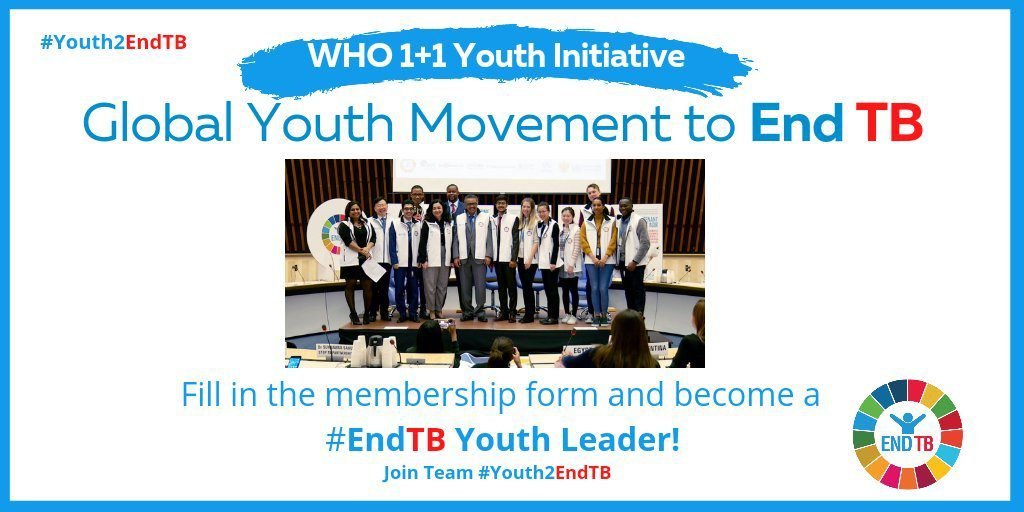
WHO 1+1 Youth Initiative Global Youth Movement to End TB

World Health Organization launched a new initiative called 1+1 on the occasion of World Tuberculosis Day In 2019. The initiative aims at advancing engagement with young people, and amplifying their voices to end TB. This initiative builds strongly on strategies and initiatives beyond TB such as the UN Strategy for Youth.  
Call for Members! End TB Global Youth Network

Little Actions = Big impact

The 1+1 initiative relies on small actions that young people can excel at. Utilizing the untapped resource of youth, we can benefit from a social multiplier effect. If each one reaches one, we can reach the millions we need to end this epidemic

Vision

Scaling up of global, regional and national actions to prioritize, invest in and engage with young people in the fight to end TB. This will serve to meet their specific needs and realize their rights, as well as tap into their potential as agents of change.

Goals and objectives
  • Mobilizing and empowering young people in the fight to end TB and harnessing their multiplier effect through the 1+1 campaign,
  • Recognizing the contribution and participation of young people as important stakeholders in the fight to end TB, and
  • Respecting the diversity of young people and engaging them across the spectrum.

End TB Global Youth Network Membership Form: External Link

More info: gtbprogramme@who.int

Related readings

  • Global Tuberculosis Report 2019: Latest status of the tuberculosis epidemic
  • National TB Prevalence Survey, 2018-19 Key findings
  • National Tuberculosis Program Update in Nepal #WorldTBDay #EndTB
  • National Tuberculosis Programme Annual Report 2018
  • World Tuberculosis Day 2020! It’s time to End TB!


⚡ Looking for expert analysis, policy briefs, and high-level reviews on Nepal's health sector?

We are now offering premium subscription services to deliver timely, evidence-backed policy briefs, comprehensive technical reviews, and strategic analysis straight to your inbox. Tap into specialized consultant expertise and stay ahead on Nepal's emerging health strategies.

👉 [Contact Us]

Do you have a website? Looking for the best hosting provider? Here’s a discount code.

Latest Public Health Jobs

Latest Posts

  • World Atopic Eczema Day 2026: Breaking the Invisible Burden
  • DEVASTATING FLOODS IN NEPAL: PUBLIC HEALTH IMPACT AND A CALL FOR HUMANITARIAN SUPPORT
  • PEN-Plus Orientation Manual for Mid-Level Health Care Workers
  • National Health Training Strategy 2082
  • Simulation Accreditation Manual for Clinical Training Sites

Thanks for visiting us.
Disclaimer: The resources, documents, guidelines, and information on this blog have been collected from various sources and are intended for informational purposes only. Information published on or through this website and affiliated social media channels does not represent the intention, plan, or strategies of an organization that the initiator is associated with in a professional or personal capacity, unless explicitly indicated.
If you have any complaints, information, or suggestions about the content published on Public Health Update, please feel free to contact us at blog.publichealthupdate@gmail.com.
#StayUpdated
  • WordPress
  • Link
  • Facebook
  • Mail
  • Facebook
  • Twitter
  • Twitter
  • LinkedIn
  • Instagram
  • Facebook
August 22, 2020 8 comments
0 FacebookTwitterPinterestLinkedinTumblrVKOdnoklassnikiRedditStumbleuponWhatsappTelegramLINEPocketSkypeViberEmail
World Health Assembly adopts global strategy to accelerate cervical cancer elimination
Fact SheetGlobal Health NewsInternational Plan, Policy & GuidelinesNon- Communicable Diseases (NCDs)Public Health News

World Health Assembly adopts global strategy to accelerate cervical cancer elimination

by Public Health Update August 21, 2020
written by Public Health Update

19 August 2020: The World Health Assembly has adopted the global strategy to accelerate the elimination of cervical cancer as a public health problem.

Cervical cancer is a preventable and curable disease, as long as it is detected early and managed effectively. Yet it is the fourth most common form of cancer among women worldwide, and the most common cancer among women living with HIV, who are six times as likely to develop cervical cancer. In 2018, the disease claimed the lives of more than 300 000 women.

Cancer of the cervix is also a disease that reflects global inequity. Its burden is greatest in low- and middle-income countries, where access to public health services is limited and screening and treatment for the disease have not been widely implemented. In 2018, nearly 90% of all deaths worldwide occurred in low- and middle-income countries.  Further, the proportion of women with cervical cancer who die from the disease is greater than 60% in these countries, which is more than twice the number in many high-income countries, where it is as low as 30%.

The human papillomavirus (HPV) is the primary cause of cervical cancer, and the HPV vaccine is a safe and effective way to protect women against infection from HPV. But as of 2020, less than a quarter of low-income countries have introduced the HPV vaccine into their national immunization schedules, while more than 85% of high-income countries have done so. Similar disparities are also observed in the establishment of cervical cancer screening programmes.

“Most of these women are not diagnosed early enough, and lack access to life-saving treatment,” said Dr Tedros Adhanom Ghebreyesus, WHO Director-General, when he issued the Call to Action in 2018. “These women are raising children, caring for their families and contributing to the social and economic fabric of their communities. If we don’t act, deaths from cervical cancer will rise by almost 50% by 2040.” With the elimination strategy’s adoption by the World Health Assembly, Dr Princess Nothemba Simelela, WHO Assistant Director-General for Strategic Programmatic Priorities, said the resolution presents an opportunity for leaders and advocates “to end the inequity and restore women’s dignity.” 

The path to eliminating cervical cancer

To eliminate cervical cancer, all countries must reach and maintain an incidence rate of below four per 100 000 women. Attaining this goal requires strategic action, and WHO outlines the necessary actions in its global strategy, envisioning a world where cervical cancer is eliminated as a public health problem and keeping the 2030 agenda on SDGs.

WHO’s strategy of elimination rests on three main pillars: 

  • prevention through vaccination
  • screening and treatment of precancerous lesions
  • treatment and palliative care for invasive cervical cancer

All three pillars must be implemented collectively and at scale to achieve the goal of elimination. HPV vaccination offers long-term protection against cervical cancer. Screening and treatment of precancerous lesions can prevent pre-cancer from developing into cancer.  For those who are identified with invasive cancer, timely care and treatment saves lives, while palliative care can greatly reduce pain and suffering.

Targets or milestones

Based on the three key pillars of the global strategy, WHO recommends a set of targets or milestones that each country should meet by 2030 to get on the path to eliminate cervical cancer within the century:

  • 90% of girls fully vaccinated with the HPV vaccine by the age of 15;
  • 70% of women screened using a high-performance test by the age of 35, and again by the age of 45; and
  • 90% of women identified with cervical disease receive treatment (90% of women with pre-cancer treated and 90% of women with invasive cancer managed).

Projections show that achieving the 90-70-90 targets by 2030 can reduce the median cervical cancer incidence rate by 10% by 2030, and by 2120, 70 million cases could be averted. Additionally, an estimated 62 million cervical cancer deaths could be averted by 2120. In the meantime, implementing the strategy will save lives today.

A robust monitoring system, including population-based cancer registries, is essential to keep track of the progress and to make course corrections.

Cervical cancer elimination would also result in positive economic and societal outcomes. By 2030, around 250 000 women will remain productive members of the workforce, adding an estimated US $28 billion to the world’s economy: US $700 million as a direct result of increased workforce participation and about US $27 billion as an indirect benefit of good health.

COVID-19 could disrupt efforts to reach the targets outlined in the global strategy. In the midst of the pandemic, access to lifesaving treatments remains crucial. It is critical to ensure that essential health services continue, with all appropriate safety precautions in place, so that no more women die from this preventable disease.

Eliminating cervical cancer is within reach

Cervical cancer stands as one of the world’s greatest public health failures, but through strong action and aligned intervention, elimination is within reach for all countries. The technology and tools exist to prevent this disease, along with proven measures for early diagnosis and treatment.

“Through cost-effective, evidence-based interventions, including human papillomavirus vaccination of girls, screening and treatment of precancerous lesions, and improving access to diagnosis and treatment of invasive cancers, we can eliminate cervical cancer as a public health problem and make it a disease of the past,” said Dr Tedros.

The moment has arrived for an ambitious, concerted and inclusive strategy to accelerate the elimination of cervical cancer as a global public health problem. It is our collective responsibility to bring it to fruition: policy makers, healthcare providers, civil society, the research community, and the private sector all have important roles to play. Now is the time to act.

WHO


Related readings

  • Fact Sheet of Population-Based Cancer Registry and Cancer Incidence and Mortality in Nepal
  • World Cancer Day 2020: ”I Am and I Will” #WorldCancerDay


⚡ Looking for expert analysis, policy briefs, and high-level reviews on Nepal's health sector?

We are now offering premium subscription services to deliver timely, evidence-backed policy briefs, comprehensive technical reviews, and strategic analysis straight to your inbox. Tap into specialized consultant expertise and stay ahead on Nepal's emerging health strategies.

👉 [Contact Us]

Do you have a website? Looking for the best hosting provider? Here’s a discount code.

Latest Public Health Jobs

Latest Posts

  • World Atopic Eczema Day 2026: Breaking the Invisible Burden
  • DEVASTATING FLOODS IN NEPAL: PUBLIC HEALTH IMPACT AND A CALL FOR HUMANITARIAN SUPPORT
  • PEN-Plus Orientation Manual for Mid-Level Health Care Workers
  • National Health Training Strategy 2082
  • Simulation Accreditation Manual for Clinical Training Sites

Thanks for visiting us.
Disclaimer: The resources, documents, guidelines, and information on this blog have been collected from various sources and are intended for informational purposes only. Information published on or through this website and affiliated social media channels does not represent the intention, plan, or strategies of an organization that the initiator is associated with in a professional or personal capacity, unless explicitly indicated.
If you have any complaints, information, or suggestions about the content published on Public Health Update, please feel free to contact us at blog.publichealthupdate@gmail.com.
#StayUpdated



  • WordPress
  • Link
  • Facebook
  • Mail
  • Facebook
  • Twitter
  • Twitter
  • LinkedIn
  • Instagram
  • Facebook
August 21, 2020 0 comments
0 FacebookTwitterPinterestLinkedinTumblrVKOdnoklassnikiRedditStumbleuponWhatsappTelegramLINEPocketSkypeViberEmail
Massive Open Online Course on implementation research in Spanish
CoursesImplementation ResearchNeglected Tropical Diseases (NTDs)Online Courses

Massive Open Online Course on implementation research in Spanish

by Public Health Update August 20, 2020
written by Public Health Update

Massive open online course (MOOC) on implementation research: infectious diseases of poverty

Implementation research (IR) is important for designing strategies or solutions to overcome bottlenecks that prevent proven and innovative public health interventions from reaching the people who need them. This ensure that these interventions are used in a manner that results in the outcome for which they were intended. Such solutions include how to overcome barriers to adoption of drugs, diagnostics or preventive measures that improve health for people at risk of malaria, tuberculosis, NTDs or other infectious diseases. IR can help to ensure that health solutions reach the people who need them and are used in ways that generate intended results.

This course is a step-by-step online training for public health researchers and decision-makers, disease control programme managers, academics and others that focuses on how to design and demonstrate robust IR projects to improve control of infectious diseases of poverty and generate better health outcomes.

Application process

This course is open to all applicants. No technical or scientific background is required, though a health background will be an advantage.
Language: English with subtitles in Spanish, English and French. Deadline to register: 1 September 2020.

Implementation Research (IR) Initiative in Nepal

The course starts on 2 September 2020.
To register, please click here
For further information: ir-mooc@cideim.org.co


WHO TDR


⚡ Looking for expert analysis, policy briefs, and high-level reviews on Nepal's health sector?

We are now offering premium subscription services to deliver timely, evidence-backed policy briefs, comprehensive technical reviews, and strategic analysis straight to your inbox. Tap into specialized consultant expertise and stay ahead on Nepal's emerging health strategies.

👉 [Contact Us]

Do you have a website? Looking for the best hosting provider? Here’s a discount code.

Latest Public Health Jobs

Latest Posts

  • World Atopic Eczema Day 2026: Breaking the Invisible Burden
  • DEVASTATING FLOODS IN NEPAL: PUBLIC HEALTH IMPACT AND A CALL FOR HUMANITARIAN SUPPORT
  • PEN-Plus Orientation Manual for Mid-Level Health Care Workers
  • National Health Training Strategy 2082
  • Simulation Accreditation Manual for Clinical Training Sites

Thanks for visiting us.
Disclaimer: The resources, documents, guidelines, and information on this blog have been collected from various sources and are intended for informational purposes only. Information published on or through this website and affiliated social media channels does not represent the intention, plan, or strategies of an organization that the initiator is associated with in a professional or personal capacity, unless explicitly indicated.
If you have any complaints, information, or suggestions about the content published on Public Health Update, please feel free to contact us at blog.publichealthupdate@gmail.com.
#StayUpdated


  • WordPress
  • Link
  • Facebook
  • Mail
  • Facebook
  • Twitter
  • Twitter
  • LinkedIn
  • Instagram
  • Facebook
August 20, 2020 0 comments
0 FacebookTwitterPinterestLinkedinTumblrVKOdnoklassnikiRedditStumbleuponWhatsappTelegramLINEPocketSkypeViberEmail
World Humanitarian Day (WHD)
Global Health NewsOutbreak NewsPH Important DayPublic Health

World Humanitarian Day (WHD) #RealLifeHeroes

by Public Health Update August 19, 2020
written by Public Health Update

Providing life-saving support during the pandemic

World Humanitarian Day (WHD) was designated in memory of the 19 August 2003 bomb attack on the Canal Hotel in Baghdad, Iraq, killing 22 people, including the chief humanitarian in Iraq, Sergio Vieira de Mello. In 2009, the United Nations General Assembly formalized the day as World Humanitarian Day.
On WHD, the world commemorates humanitarian workers killed and injured in the course of their work, and we honour all aid and health workers who continue, despite the odds, to provide life-saving support and protection to people most in need.

This year World Humanitarian Day comes as the world continues to fight the COVID-19 pandemic over recent months. Aid workers are overcoming unprecedented access hurdles to assist people in humanitarian crises in 54 countries, as well as in a further nine countries which have been catapulted into humanitarian need by the COVID-19 pandemic.

#RealLifeHeroes

#RealLifeHeroes is a global campaign that celebrates humanitarians – a “thank you” to the people who have committed their lives to helping others. The campaign focuses on what drives humanitarians to continue to save and protect lives despite conflict, insecurity, lack of access and risks linked to COVID-19.

SOURCE OF INFO: UN

Related links

  • International Youth Day 2020: “Youth Engagement for Global Action”
  • World Hepatitis Day 2020: “Hepatitis-free future”
  • International Day of Yoga: “Yoga for Health – Yoga at Home”
  • World Blood Donor Day: Safe blood saves lives! Give blood and make the world a healthier place


⚡ Looking for expert analysis, policy briefs, and high-level reviews on Nepal's health sector?

We are now offering premium subscription services to deliver timely, evidence-backed policy briefs, comprehensive technical reviews, and strategic analysis straight to your inbox. Tap into specialized consultant expertise and stay ahead on Nepal's emerging health strategies.

👉 [Contact Us]

Do you have a website? Looking for the best hosting provider? Here’s a discount code.

Latest Public Health Jobs

Latest Posts

  • World Atopic Eczema Day 2026: Breaking the Invisible Burden
  • DEVASTATING FLOODS IN NEPAL: PUBLIC HEALTH IMPACT AND A CALL FOR HUMANITARIAN SUPPORT
  • PEN-Plus Orientation Manual for Mid-Level Health Care Workers
  • National Health Training Strategy 2082
  • Simulation Accreditation Manual for Clinical Training Sites

Thanks for visiting us.
Disclaimer: The resources, documents, guidelines, and information on this blog have been collected from various sources and are intended for informational purposes only. Information published on or through this website and affiliated social media channels does not represent the intention, plan, or strategies of an organization that the initiator is associated with in a professional or personal capacity, unless explicitly indicated.
If you have any complaints, information, or suggestions about the content published on Public Health Update, please feel free to contact us at blog.publichealthupdate@gmail.com.
#StayUpdated


  • WordPress
  • Link
  • Facebook
  • Mail
  • Facebook
  • Twitter
  • Twitter
  • LinkedIn
  • Instagram
  • Facebook
August 19, 2020 0 comments
0 FacebookTwitterPinterestLinkedinTumblrVKOdnoklassnikiRedditStumbleuponWhatsappTelegramLINEPocketSkypeViberEmail
Call for Proposal, EOI & RFPGrants and Funding OpportunitiesPublic Health Opportunities

Request for Proposal! Advocacy programs on Addressing Health Nepal Impacts of Air Pollution in Kathmandu, Nepal

by Public Health Update August 18, 2020
written by Public Health Update

The mission of WHO is the attainment by all peoples of the highest possible level of health The World Health Organization (WHO), Country Office for Nepal is seeking qualified, experienced and legally authorized institution for carrying out Advocacy Programs on Addressing Health Impacts of Air Pollution in Kathmandu, Nepal. (Please see below link for ToR). 

The proposal should include detailed resume of team experts, Institutional Profile Legal documents, experience in desired field along with detailed technical and financial proposal

The proposal shall be submitted in the below address on or before the official business closing time of 5:30 PM by Monday, 31 August 2020. The proposal must be submitted in a sealed envelope by marking “PROPOSAL for Advocacy Programs on Addressing Health Impacts of Air Pollution in Kathmandu, Nepal” to:

World Health Organization (WHO) 
UN House, Pulchowk, Lalitpur
G.P.O. Box No. 108
Kathmandu, Nepal 
For more details of the activity, please visit the below website:
http://www.who.int/Nepal Procurement


  • World Atopic Eczema Day 2026: Breaking the Invisible Burden
  • DEVASTATING FLOODS IN NEPAL: PUBLIC HEALTH IMPACT AND A CALL FOR HUMANITARIAN SUPPORT
  • PEN-Plus Orientation Manual for Mid-Level Health Care Workers
  • National Health Training Strategy 2082
  • Simulation Accreditation Manual for Clinical Training Sites

⚡ Looking for expert analysis, policy briefs, and high-level reviews on Nepal's health sector?

We are now offering premium subscription services to deliver timely, evidence-backed policy briefs, comprehensive technical reviews, and strategic analysis straight to your inbox. Tap into specialized consultant expertise and stay ahead on Nepal's emerging health strategies.

👉 [Contact Us]

Do you have a website? Looking for the best hosting provider? Here’s a discount code.

Latest Public Health Jobs

Latest Posts

  • World Atopic Eczema Day 2026: Breaking the Invisible Burden
  • DEVASTATING FLOODS IN NEPAL: PUBLIC HEALTH IMPACT AND A CALL FOR HUMANITARIAN SUPPORT
  • PEN-Plus Orientation Manual for Mid-Level Health Care Workers
  • National Health Training Strategy 2082
  • Simulation Accreditation Manual for Clinical Training Sites

Thanks for visiting us.
Disclaimer: The resources, documents, guidelines, and information on this blog have been collected from various sources and are intended for informational purposes only. Information published on or through this website and affiliated social media channels does not represent the intention, plan, or strategies of an organization that the initiator is associated with in a professional or personal capacity, unless explicitly indicated.
If you have any complaints, information, or suggestions about the content published on Public Health Update, please feel free to contact us at blog.publichealthupdate@gmail.com.
#StayUpdated


  • WordPress
  • Link
  • Facebook
  • Mail
  • Facebook
  • Twitter
  • Twitter
  • LinkedIn
  • Instagram
  • Facebook

August 18, 2020 0 comments
0 FacebookTwitterPinterestLinkedinTumblrVKOdnoklassnikiRedditStumbleuponWhatsappTelegramLINEPocketSkypeViberEmail
CoursesInternational Jobs & OpportunitiesOnline CoursesSchool of Public Health

e-Learning summer school ‘the Health of Refugees and Migrants: ensuring accessibility, promoting health, and saving lives’

by Public Health Update August 12, 2020
written by Public Health Update

“The Health of refugees and migrants: ensuring accessibility, promoting health, and saving lives”

 Summer School on “The Health of refugees and migrants: ensuring accessibility, promoting health, and saving lives” will be held onlinefrom 19 to 23 October 2020.

The School is conducted in close collaboration with WHO Regions. It is designed for policy-makers, officers from the Ministries of Health and other Ministries as well as experts from academic and research institutions and NGOs with experience in health and migration. The course is limited to 100 attendees.

WHO has promoted refugee and migrant health capacity building in several countries and regions of the world including three previous editions of this summer school on migration and health.

The e-learning Summer School comprises an offline introductory module and five online modules which cover the core topics of refugee and migrant health, the context of universal health coverage and the health security and healthier refugee and migrant populations in alignment with the WHO triple billion goals and the Global Action Plan ‘Promoting the Health of Refugees and Migrants’. Participants will have the opportunity to be connected live to health and migration projects implemented on the ground and receive direct feedback by actors dealing with field operations.

Course Format

The School is designed to be an online learning event consisting of 5 modules delivered daily. Synchronous learning requires that participants be present at the same time online since modules are delivered in real-time. Each module has a duration of 90 minutes including presentations, panel discussions, interviews from the field and, Q&A sessions.

Scope of the modules

Module 1. Understanding universal health coverage (UHC) for refugees and migrants

  • Introduce the 13th  WHO Global Programme of Work and its implications on refugee and migrant health; its global challenges and opportunities in moving towards achieving  UHC for refugees and migrants . It will include a panel discussion on access to health services for refugees and migrants in different WHO Regions.

Module 2. Promoting healthier refugee and migrant populations

  • Focus on available refugee and migrant health epidemiological patterns and the existing challenges and achievements for collecting comparable health and epidemiological data in refugee and migrant populations.

Module 3. Addressing health needs and rights of refugees and migrants during emergencies

  • Inform participants of challenges, achievements and best practices  in addressing refugee and migrant health rights and needs during massive influxes and complex emergencies.

Module 4. Connecting to field operations

  • Provide participants an opportunity to connect to live to health and migration  projects on the ground and receive a direct feedback by actors dealing with field operations. The module includes a panel discussion on intercountry and interregional coordination.

Module 5. COVID-19 and the health of refugees and migrants

  • Inform participants of COVID-19 health risks and its impacts on the health status of refugees and migrants and recommended actions

The deadline of the application is 15 September 2020.

APPLICATION FORM


⚡ Looking for expert analysis, policy briefs, and high-level reviews on Nepal's health sector?

We are now offering premium subscription services to deliver timely, evidence-backed policy briefs, comprehensive technical reviews, and strategic analysis straight to your inbox. Tap into specialized consultant expertise and stay ahead on Nepal's emerging health strategies.

👉 [Contact Us]

Do you have a website? Looking for the best hosting provider? Here’s a discount code.

Latest Public Health Jobs

Latest Posts

  • World Atopic Eczema Day 2026: Breaking the Invisible Burden
  • DEVASTATING FLOODS IN NEPAL: PUBLIC HEALTH IMPACT AND A CALL FOR HUMANITARIAN SUPPORT
  • PEN-Plus Orientation Manual for Mid-Level Health Care Workers
  • National Health Training Strategy 2082
  • Simulation Accreditation Manual for Clinical Training Sites

Thanks for visiting us.
Disclaimer: The resources, documents, guidelines, and information on this blog have been collected from various sources and are intended for informational purposes only. Information published on or through this website and affiliated social media channels does not represent the intention, plan, or strategies of an organization that the initiator is associated with in a professional or personal capacity, unless explicitly indicated.
If you have any complaints, information, or suggestions about the content published on Public Health Update, please feel free to contact us at blog.publichealthupdate@gmail.com.
#StayUpdated


  • WordPress
  • Link
  • Facebook
  • Mail
  • Facebook
  • Twitter
  • Twitter
  • LinkedIn
  • Instagram
  • Facebook
August 12, 2020 1 comment
0 FacebookTwitterPinterestLinkedinTumblrVKOdnoklassnikiRedditStumbleuponWhatsappTelegramLINEPocketSkypeViberEmail
CoursesInternational Jobs & OpportunitiesOnline CoursesPublic Health OpportunitiesSchool of Public Health

Enrolment open: ‘Research and Proposal Writing in the Sciences’

by Public Health Update August 12, 2020
written by Public Health Update

Research and Proposal Writing in the Sciences course

Research and Proposal Writing in the Sciences course is designed for researchers and scientists in developing countries, particularly those working in a scientific field (life sciences / natural sciences / other related fields). It is suitable for early career researchers, or those with limited experience in publishing papers in reputable peer-reviewed journals.
If you are a researcher in the social sciences or humanities you will still benefit from most of the content on the course.

Main topics covered in the course: 

  • Literature review
  • Research and publication ethics
  • Writing and publishing a research paper
  • Writing a grant proposal

Course duration and Course dates

 8 weeks (8th September to 2nd November 2020)

Course leaders

INASP team – Andy Nobes, Josie Dryden, Ravi Murugesan – along with experienced guest facilitators from the AuthorAID network.

How do I enrol?

Complete information about the course along with enrolment instructions are available on the INASP Moodle website: https://moodle.inasp.info/course/view.php?id=206. You will need to create an INASP Moodle account if you don’t already have one. Please follow the instructions carefully (you may need to click on the above link again after registering your account).

Please note that although this is an open course, organizer may have to limit enrolment due to server capacity. INASP designs and runs capacity development activities that cater for both women and men’s interests and needs. We use methods that increase active participation and an inclusive learning environment, adopting attitudes and behaviours that value differential experiences and perspectives and ensuring listening and respect for each other’s experiences and views.


⚡ Looking for expert analysis, policy briefs, and high-level reviews on Nepal's health sector?

We are now offering premium subscription services to deliver timely, evidence-backed policy briefs, comprehensive technical reviews, and strategic analysis straight to your inbox. Tap into specialized consultant expertise and stay ahead on Nepal's emerging health strategies.

👉 [Contact Us]

Do you have a website? Looking for the best hosting provider? Here’s a discount code.

Latest Public Health Jobs

Latest Posts

  • World Atopic Eczema Day 2026: Breaking the Invisible Burden
  • DEVASTATING FLOODS IN NEPAL: PUBLIC HEALTH IMPACT AND A CALL FOR HUMANITARIAN SUPPORT
  • PEN-Plus Orientation Manual for Mid-Level Health Care Workers
  • National Health Training Strategy 2082
  • Simulation Accreditation Manual for Clinical Training Sites

Thanks for visiting us.
Disclaimer: The resources, documents, guidelines, and information on this blog have been collected from various sources and are intended for informational purposes only. Information published on or through this website and affiliated social media channels does not represent the intention, plan, or strategies of an organization that the initiator is associated with in a professional or personal capacity, unless explicitly indicated.
If you have any complaints, information, or suggestions about the content published on Public Health Update, please feel free to contact us at blog.publichealthupdate@gmail.com.
#StayUpdated


  • WordPress
  • Link
  • Facebook
  • Mail
  • Facebook
  • Twitter
  • Twitter
  • LinkedIn
  • Instagram
  • Facebook

August 12, 2020 0 comments
0 FacebookTwitterPinterestLinkedinTumblrVKOdnoklassnikiRedditStumbleuponWhatsappTelegramLINEPocketSkypeViberEmail
Public Health Update | Up to date public health info & Opportunities
ReportsNational Plan, Policy & GuidelinesNon- Communicable Diseases (NCDs)Public HealthResearch & Publication

Fact Sheet of Population-Based Cancer Registry and Cancer Incidence and Mortality in Nepal

by Public Health Update August 11, 2020
written by Public Health Update

Population Based Cancer Registry (PBCR)

Nepal Health Research Council (NHRC) published four different reports on Cancer Incidence and Mortality in Rukum Districts in 2018, Cancer Incidence and Mortality in Kathmandu Valley in 2018, Cancer Incidence and Mortality in SSDM Districts in 2018 and Population Based Cancer Registries at Kathmandu, Bhaktapur, Lalitpur, Siraha, Saptari, Dhanusha, Mohattari, West Rukum and East Rukum Districts, Nepal, 2018. According to summary report Nepal Health Research Council (NHRC) has started Population Based Cancer Registry (PBCR) since January 2018. Currently, three PBCRs have been established in 9 districts out of 77
districts of the country. The districts are Kathmandu, Bhaktapur, Lalitpur, Siraha, Saptari, Dhanusha, Mohattari and East and West Rukum.

Related: Quality of Essential Medicines in Public Health Care Facilities of Nepal, 2019

Objective

The objective of the registry is to generate evidence on cancer incidence, patterns and trends and mortality related to cancer in the given territory and defined population, and to enhance national capacity for sustainable PBCR in the country. The registry data are useful to plan cancer control activities as well as to strengthen cancer care services by the government of Nepal.

Study highlights and results

  • The Kathmandu Valley incidence rate is higher for males and lower for females than the GLOBOCAN estimated incidence rate for Nepal, however comparable with many of the urban registries in India.
  • In Rukum registry, cancer incidence rates are lower than the Kathmandu Valley Cancer registry, however it is comparable with other rural registries in India.
  • In Siraha, Saptari, Dhanusha, Mohattari (SSDM) registry, incidence rates are lower compared to the urban and rural registries in Nepal and India.
  • Lungs cancer is high in all the geographical areas of Nepal, the AAR ranging from 2.6 to 23.7 per 100,000.
  • Cervical cancer is high in rural part of Nepal but less in urban region. In urban area breast cancer is higher.
  • Within Kathmandu Valley though lungs cancer is common, the rates of lungs cancer are much higher in Lalitpur and Bhaktapur compared to Kathmandu. Similarly in Bhaktapur district the cancer of mouth and larynx is more common in contrast to other 2 districts.
  • Gallbladder and stomach cancer are found to be common in all the districts among both the sexes. Within the districts, the incidence rate of gallbladder is very high in Bhaktapur and Lalitpur district and comparable to the urban areas of India.
  • In the SSDM the incidence of mouth cancer is the commonest among males which was not found as common in other two registry area in the hill and mountain.
Recommendations from this study
  • Researchers suggest and recommend Ministry of Health and Population (MoHP) to develop the National cancer control strategy which is an urgent and important need of the time.
  • Based on the findings of the PBCR data, intervention programs should be planned and launched in various regions of the country focusing on the special cancer site for that region. Concerned Provincial and local government authority should be engaged in planning and intervention of the programs.
  • Establishment of a separate cancer wing in the MoHP to look after all the issues related to cancer.
  • As Lung cancer is commonest in all the areas of Kathmandu valley, existing awareness program needs to be strengthen to encourage smoking/tobacco cessation. Information Technology (IT) based and community based interventions for “quit tobacco” is a good tool for this.
  • Kathmandu Valley and SSDM PBCR shows Breast cancer as the most common cancer in female, thus government of Nepal as well as concern authority should need to give priority for the breast cancer awareness,screening and early detection to reduce the future burden of breast cancer in Nepal.
  • In SSDM and Rukum, cervical cancer is the commonest in females. Cervical Cancer is one of the Cancer amenable for all level of prevention and is the priority of Nepal Government. Activities like awareness, screening, vaccination, prevention, early detection and treatment to be carried out in a systematic manner to cover the maximum population across the country.
  • Establishment of early detection centers are highly recommended in the semi urban and rural areas like SSDM and Rukum.
  • It is necessary to conduct the risk factors study of the common cancer like Lungs, head and neck, stomach, gallbladder, urinary bladder, colorectal cancer in order to strengthen cancer prevention strategies and activities.
  • Government should need to focus towards digitalization of uniform medical recording system with some mandatory variable in all government and private health facilities. This will help to minimize work duplicate and save both human and financial resources at nation level.
  • Death is one of the vital statistics, which is also linked with human development index of the country, however, collecting death information is quite challenging in Nepal. Thus government should need to give emphasis towards strengthening the death recording system including cause of death.
  • Cancer survival studies to be undertaken. Similarly, it is recommended to do a cross sectional survey in order to check the completeness of registry data especially in the SSDM districts.

Download reports

  • Cancer Incidence and Mortality in Rukum Districts in 2018
  • Cancer Incidence and Mortality in Kathmandu Valley in 2018
  • Cancer Incidence and Mortality in SSDM Districts in 2018
  • Population Based Cancer Registries at Kathmandu, Bhaktapur, Lalitpur, Siraha, Saptari, Dhanusha, Mohattari, West Rukum and East Rukum Districts, Nepal, 2018.

⚡ Looking for expert analysis, policy briefs, and high-level reviews on Nepal's health sector?

We are now offering premium subscription services to deliver timely, evidence-backed policy briefs, comprehensive technical reviews, and strategic analysis straight to your inbox. Tap into specialized consultant expertise and stay ahead on Nepal's emerging health strategies.

👉 [Contact Us]

Do you have a website? Looking for the best hosting provider? Here’s a discount code.

Latest Public Health Jobs

Latest Posts

  • World Atopic Eczema Day 2026: Breaking the Invisible Burden
  • DEVASTATING FLOODS IN NEPAL: PUBLIC HEALTH IMPACT AND A CALL FOR HUMANITARIAN SUPPORT
  • PEN-Plus Orientation Manual for Mid-Level Health Care Workers
  • National Health Training Strategy 2082
  • Simulation Accreditation Manual for Clinical Training Sites

Thanks for visiting us.
Disclaimer: The resources, documents, guidelines, and information on this blog have been collected from various sources and are intended for informational purposes only. Information published on or through this website and affiliated social media channels does not represent the intention, plan, or strategies of an organization that the initiator is associated with in a professional or personal capacity, unless explicitly indicated.
If you have any complaints, information, or suggestions about the content published on Public Health Update, please feel free to contact us at blog.publichealthupdate@gmail.com.
#StayUpdated


  • WordPress
  • Link
  • Facebook
  • Mail
  • Facebook
  • Twitter
  • Twitter
  • LinkedIn
  • Instagram
  • Facebook
August 11, 2020 1 comment
0 FacebookTwitterPinterestLinkedinTumblrVKOdnoklassnikiRedditStumbleuponWhatsappTelegramLINEPocketSkypeViberEmail
Research & PublicationNational Plan, Policy & GuidelinesReports

Quality of Essential Medicines in Public Health Care Facilities of Nepal, 2019

by Public Health Update August 11, 2020
written by Public Health Update

Nepal Health Research Council published a research report entitled, ”Quality of Essential Medicines in Public Health Care Facilities of Nepal, 2019.”

Result of study

To assess the quality of essential medicines available in public health care facilities of Nepal, Nepal Health Research Council conducted a cross sectional descriptive study in 21 districts representing all seven provinces. The result of this study shows that out of 244 batches of 20 different generics of essential medicines, 37 batches failed to meet the required pharmacopeial standards which constitute 23 (62.16%) batches of medicines supplied by Government of Nepal and 14(37.83%) batches purchased from local resources. Among 62 health facilities, only 13% of health facilities were found to follow the medicine storage guidelines regarding sunlight protection, humidity protection, heat protection and maintenance of ventilation. Maximum temperature and humidity record was found to be 37°C and 86% respectively.

Conclusion of study

A high number of essential medicines available in public health facilities are found to be substandard indicating great public health threat in Nepal. Altogether 37 batches of seven generics of essential medicines were found substandard.

Recommendations

  • There should be provision to assess the quality of essential medicines supplied in health facilities.
  • Stringent rules and regulations should be made along with their effective implementation to prevent substandard/counterfeit medicines from entering into pharmaceutical supply chain.
  • All the infrastructures required for storage of medicines should be established and maintained in all Regional medical stores and health facilities.
  • DDA should strengthen its resources to ensure quality of medicines that are widely being used in pharmaceutical market of Nepal.
FULL RESEARCH REPORT IS AVAILABLE AT WWW.NHRC.GOV.NP


⚡ Looking for expert analysis, policy briefs, and high-level reviews on Nepal's health sector?

We are now offering premium subscription services to deliver timely, evidence-backed policy briefs, comprehensive technical reviews, and strategic analysis straight to your inbox. Tap into specialized consultant expertise and stay ahead on Nepal's emerging health strategies.

👉 [Contact Us]

Do you have a website? Looking for the best hosting provider? Here’s a discount code.

Latest Public Health Jobs

Latest Posts

  • World Atopic Eczema Day 2026: Breaking the Invisible Burden
  • DEVASTATING FLOODS IN NEPAL: PUBLIC HEALTH IMPACT AND A CALL FOR HUMANITARIAN SUPPORT
  • PEN-Plus Orientation Manual for Mid-Level Health Care Workers
  • National Health Training Strategy 2082
  • Simulation Accreditation Manual for Clinical Training Sites

Thanks for visiting us.
Disclaimer: The resources, documents, guidelines, and information on this blog have been collected from various sources and are intended for informational purposes only. Information published on or through this website and affiliated social media channels does not represent the intention, plan, or strategies of an organization that the initiator is associated with in a professional or personal capacity, unless explicitly indicated.
If you have any complaints, information, or suggestions about the content published on Public Health Update, please feel free to contact us at blog.publichealthupdate@gmail.com.
#StayUpdated


  • WordPress
  • Link
  • Facebook
  • Mail
  • Facebook
  • Twitter
  • Twitter
  • LinkedIn
  • Instagram
  • Facebook
August 11, 2020 0 comments
0 FacebookTwitterPinterestLinkedinTumblrVKOdnoklassnikiRedditStumbleuponWhatsappTelegramLINEPocketSkypeViberEmail
National Plan, Policy & GuidelinesOutbreak NewsResearch & Publication

Interim Guidance for Dental Practices During COVID-19 in Nepal

by Public Health Update August 11, 2020
written by Public Health Update

This guideline was prepared by Nepal Dental Association, Endorsed by Nepal Medical Council and Approved by Ministry of Health and Population.

DOWNLOAD PDF FILE

Dental staff and dental practitioners (Dental health care providers) are considered to be at highest risk of acquiring the infection because of prolonged face to face exposure to patients, exposure to respiratory secretions and aerosols produced during procedures like ultrasonic scaling and cavity/access preparation using a high speed air rotor with water jet cooling systems. Dental procedures causing splatters, fomites and aerosols can propel a high viral load in the procedure room thereby increasing the risk of cross infection between dental practitioners, patients, in-between consecutive patients as well as dental auxiliary staffs. Recent observations have proven that salivary glands act as the reservoir virus for Active and live virus have been isolated from saliva of patients who were asymptomatic or were considered free of the disease suggesting that COVID-19 transmitted by asymptomatic infection may originate from infected saliva.

This interim guidance is based on evidences, guidelines and researches and is being published to introduce the essential knowledge to protect and prevent COVID-19 in dental setup and nosocomial infection in dental settings. It is an attempt to provide recommended management protocols for dental practitioners and specialists working at different levels of dental care providing set ups (dental colleges, postgraduate institutes, dental hospitals, dental departments at government hospitals, private clinics) with strict and effective infection control mechanism in place. This interim guidance is dynamic document and subject to editing, changes and further recommendations as and when new validated evidences, researches evolves.

Objective

This interim guidance provides a guideline for dental patients’ management during and after the COVID-19 pandemic. These will safeguard dental health care providers from acquiring COVID-19 infections and prevent cross transmission among patients.

The overall aim of this interim guidance is to allow dental practice to be resumed at all levels with highest standards of safety to the patients, to ensure safety of staff and dental professionals involved in the treatment and prevent transmission of COVID-19.

DOWNLOAD PDF FILE


⚡ Looking for expert analysis, policy briefs, and high-level reviews on Nepal's health sector?

We are now offering premium subscription services to deliver timely, evidence-backed policy briefs, comprehensive technical reviews, and strategic analysis straight to your inbox. Tap into specialized consultant expertise and stay ahead on Nepal's emerging health strategies.

👉 [Contact Us]

Do you have a website? Looking for the best hosting provider? Here’s a discount code.

Latest Public Health Jobs

Latest Posts

  • World Atopic Eczema Day 2026: Breaking the Invisible Burden
  • DEVASTATING FLOODS IN NEPAL: PUBLIC HEALTH IMPACT AND A CALL FOR HUMANITARIAN SUPPORT
  • PEN-Plus Orientation Manual for Mid-Level Health Care Workers
  • National Health Training Strategy 2082
  • Simulation Accreditation Manual for Clinical Training Sites

Thanks for visiting us.
Disclaimer: The resources, documents, guidelines, and information on this blog have been collected from various sources and are intended for informational purposes only. Information published on or through this website and affiliated social media channels does not represent the intention, plan, or strategies of an organization that the initiator is associated with in a professional or personal capacity, unless explicitly indicated.
If you have any complaints, information, or suggestions about the content published on Public Health Update, please feel free to contact us at blog.publichealthupdate@gmail.com.
#StayUpdated


  • WordPress
  • Link
  • Facebook
  • Mail
  • Facebook
  • Twitter
  • Twitter
  • LinkedIn
  • Instagram
  • Facebook
August 11, 2020 0 comments
0 FacebookTwitterPinterestLinkedinTumblrVKOdnoklassnikiRedditStumbleuponWhatsappTelegramLINEPocketSkypeViberEmail
Newer Posts
Older Posts

Search

Follow Us

Facebook Twitter Instagram Pinterest Linkedin Youtube

Categories

  • Abstracts (25)
  • Activities (91)
  • Adolescent Sexual and Reproductive Health (ASRH) (25)
  • Advice & Tips (4)
  • African Region (5)
  • AI and Health (1)
  • Annual Meeting (6)
  • Antimicrobial Resistance (AMR) (21)
  • Award (20)
  • Awards (17)
  • Books (9)
  • Call for Proposal, EOI & RFP (103)
  • Call for Research Participants (8)
  • Clinical Doctor Jobs (6)
  • Communicable Diseases (107)
  • Competition (20)
  • Conference (129)
  • Consultant (1)
  • Courses (206)
  • Dashboard (2)
  • Digital Health & Health Informatics (10)
  • Drug and Medicine (18)
  • Eastern Mediterranean Region (3)
  • Education (16)
  • Environment (3)
  • Environmental Health & Climate Change (47)
  • European Region (42)
  • Exchange Program (1)
  • Fact Sheet (118)
  • FCHVs (1)
  • Fellowships, Studentship & Scholarships (168)
  • Financial Aid (13)
  • Form Formats (2)
  • Fully funded (22)
  • Global Health News (440)
  • Grants and Funding Opportunities (193)
  • Guest Post (44)
  • Health Assistant Jobs (1)
  • Health Equity (7)
  • Health Financing and Economics (24)
  • Health in Data (118)
  • Health Insurance (5)
  • Health Jobs (52)
  • Health Literacy, Health Education & Promotion (51)
  • Health Organization Profile (42)
  • Health Systems (85)
  • Human Resource for Health (33)
  • Humanitarian Health & Emergency Response (45)
  • Hypertension (5)
  • Implementation Research (49)
  • International Health (3)
  • International Jobs & Opportunities (374)
  • International Plan, Policy & Guidelines (212)
  • Internships (5)
  • Jobs Vacancies (57)
  • Journals (8)
  • Life Style & Public Health Nutrition (39)
  • Live (10)
  • Master's Degree (48)
  • Maternal, Newborn and Child Health (88)
  • Mentorship Program (2)
  • Miscellaneous (16)
  • National Health News (160)
  • National Plan, Policy & Guidelines (473)
  • Neglected Tropical Diseases (NTDs) (51)
  • Non- Communicable Diseases (NCDs) (123)
  • Notice (103)
  • Nursing Jobs (6)
  • Nutritionist Jobs (1)
  • One Health (18)
  • Online & Distance Learning (22)
  • Online Courses (91)
  • Op-Ed Article (3)
  • Opportunities by Region (83)
  • Outbreak News (213)
  • Partially funded (6)
  • PCL Health Science Jobs (3)
  • PH Important Day (538)
  • Pharmacist Jobs (3)
  • PhD (54)
  • Photos (5)
  • Planetary Health (4)
  • PostDoc (14)
  • Presentation Slides (26)
  • Primary Health Care (25)
  • Provincial Plan, Policies and Guidelines (17)
  • Public Health (1,288)
  • Public Health Epidemiology & Biostatistics (14)
  • Public Health Events (307)
  • Public Health Information (21)
  • Public Health Innovation (9)
  • Public Health Jobs (52)
  • Public Health News (558)
  • Public Health Notes (120)
  • Public Health Opportunities (509)
  • Public Health Opportunity (493)
  • Public Health Programs (108)
  • Public Health Seminar (2)
  • Public Health Tools (2)
  • Public Health Update (574)
  • Quality Improvement & Infection Prevention (20)
  • Region of America (8)
  • Reports (187)
  • Research & Project Grants (39)
  • Research & Project Grants (33)
  • Research & Publication (651)
  • Research Articles (10)
  • Road Traffic Accidents (RTA) (9)
  • School of Public Health (60)
  • Self funded (2)
  • South-East Asia Region (26)
  • Success Stories (17)
  • Summer and Winter Courses (40)
  • Summer Courses (28)
  • Sustainable Development Goals (SDGs) (14)
  • Syllabus (61)
  • Symposium (9)
  • Tobacco Control (35)
  • Training (40)
  • Travel Grants (15)
  • Trick, Technique & Skills (8)
  • Uncategorized (3)
  • Undergraduate Degree (7)
  • Universal Health Coverage (36)
  • Universities (29)
  • Universities & School of Public Health (58)
  • Vacancy Announcement (26)
  • Vaccine Preventable Diseases (40)
  • Vector-Borne Diseases(VBDs) (31)
  • Videos (3)
  • View Points (1)
  • Webinar (4)
  • Western Pacific Region (13)
  • Workshop (18)
  • World News (120)
Post New Jobs: Vacancy Announcement Service

Search Box

Public Health Update (Sagun’s Blog) is a popular public health portal in Nepal. Thousands of health professionals are connected with Public Health Update to get up-to-date public health updates, search for jobs, and explore opportunities.
#1 Public Health Blog for sharing Job opportunities and updates in Nepal

”Public Health Information For All”
– – Sagun Paudel, Founder

  • HOT JOBS
    • Public Health Jobs
    • Medical Doctor Jobs
    • Nursing Jobs
    • Health Assistant Jobs
    • Pharmacist Jobs
    • NGOs Jobs
    • Government Jobs
  • Top Categories
    • National Plan, Policy & Guidelines Top
    • Public Health Calendar
    • Fellowships & Scholarships
    • Health Systems
    • Health Organization Profiles
    • International Jobs & Opportunities
    • Public Health Opportunity

PUBLIC HEALTH INITIATIVE

    • Submit your Vacancies New
    • Partnership Opportunities

Contact: blog.publichealthupdate@gmail.com

https://wa.me/+9779856036932

All Right Reserved. 2011-2026. Contact us. 

Facebook Twitter Instagram Youtube Envelope
Public Health Update
  • Home
  • Public Health
    • Home 1
      • Adolescent Sexual and Reproductive Health (ASRH)
      • Antimicrobial Resistance (AMR)
      • Communicable Diseases
      • Digital Health & Health Informatics
      • Environmental Health & Climate Change
      • Health Financing and Economics
      • Health Equity
    • Home 2
      • Health Literacy, Health Education & Promotion
      • Human Resource for Health
      • Humanitarian Health & Emergency Response
      • Implementation Research
      • International Health
      • Life Style & Public Health Nutrition
      • Maternal, Newborn and Child Health
    • Home 3
      • Neglected Tropical Diseases (NTDs)
      • Non- Communicable Diseases (NCDs)
      • One Health
      • Planetary Health
      • Public Health Epidemiology & Biostatistics
      • Primary Health Care
      • Quality Improvement & Infection Prevention
    • Home 4
      • Road Traffic Accidents (RTA)
      • Sustainable Development Goals (SDGs)
      • Tobacco Control
      • Universal Health Coverage
      • Vaccine Preventable Diseases
      • Vector-Borne Diseases(VBDs)
      • Notices
  • Public Health Update
    • Home 1
      • Public Health News
      • Global Health News
      • Outbreak News
      • National Health News
      • COVID-19
    • Home 2
      • Fact Sheet
      • Health in Data
      • PH Important Day
      • Public Health Events
      • Public Health Programs
    • Home 3
      • Health Systems
      • Health Insurance
      • Health Organization Profile
      • Success Stories
      • Public Health Innovation
  • Public Health Opportunities
    • Fully funded
    • Travel Grants
    • Grants and Funding Opportunities
    • Opportunities by Region
    • International Jobs & Opportunities
    • Research & Project Grants
    • Fellowships, Studentship & Scholarships
    • Conference
  • Jobs
    • Home 1
      • Health Jobs
      • Public Health Jobs
      • Clinical doctor Jobs
      • Health Assistant Jobs
      • Nursing Jobs
      • PCL Health Science Jobs
    • Home 2
      • Dental Jobs
      • Pharmacist Jobs
      • TSLC (Health Jobs)
      • Laboratory Jobs
      • Nutritionist Jobs
  • Downloads
    • International Plan, Policy & Guidelines
    • National Plan, Policy & Guidelines
    • Reports
    • Books
    • Research Articles
  • School of Public Health
    • Home 1
      • Courses
      • Master’s Degree
      • Undergraduate Degree
      • PhD
    • Home 2
      • Universities
      • Syllabus
      • Public Health Notes
      • Mentorship Program
      • Startup Project
    • Home
      • Summer and Winter Courses
      • Summer Courses
      • Online Courses
      • Workshop
      • Training
Public Health Initiative, A Registered Non-profit organization – All Right Reserved. 2011-2023