
Public Health Update
  • Home
  • Public Health Update
  • Nepal Health Jobs
    • Public Health Job Board
    • Organization List
  • Opportunities
    • Fellowships, Studentship & Scholarships
    • Grants and Funding Opportunities
    • Fully funded
    • Conference
  • Downloads
    • International Plan, Policy & Guidelines
    • National Plan, Policy & Guidelines
    • Reports
    • Public Health Notes
    • Syllabus
    • Form Formats
  • School of Public Health
    • PhD
    • Master’s Degree
    • Online Courses
  • Notice
  • Home
  • Public Health Update
  • Nepal Health Jobs
    • Public Health Job Board
    • Organization List
  • Opportunities
    • Fellowships, Studentship & Scholarships
    • Grants and Funding Opportunities
    • Fully funded
    • Conference
  • Downloads
    • International Plan, Policy & Guidelines
    • National Plan, Policy & Guidelines
    • Reports
    • Public Health Notes
    • Syllabus
    • Form Formats
  • School of Public Health
    • PhD
    • Master’s Degree
    • Online Courses
  • Notice
LOGIN / REGISTER
Public Health Update
SUBSCRIBE
Public Health Update
  • Home
  • Public Health Update
  • Nepal Health Jobs
    • Public Health Job Board
    • Organization List
  • Opportunities
    • Fellowships, Studentship & Scholarships
    • Grants and Funding Opportunities
    • Fully funded
    • Conference
  • Downloads
    • International Plan, Policy & Guidelines
    • National Plan, Policy & Guidelines
    • Reports
    • Public Health Notes
    • Syllabus
    • Form Formats
  • School of Public Health
    • PhD
    • Master’s Degree
    • Online Courses
  • Notice

All Right Reserved. Designed and Developed by PenciDesign

Global Health NewsHumanitarian Health & Emergency ResponseOutbreak NewsPublic HealthPublic Health Epidemiology & BiostatisticsPublic Health News

Statement on the meeting of the International Health Regulations (2005) Emergency Committee regarding the outbreak of novel coronavirus (2019-nCoV)

by Public Health Update January 24, 2020
written by Public Health Update

Statement on the meeting of the International Health Regulations (2005) Emergency Committee regarding the outbreak of novel coronavirus (2019-nCoV)

The meeting of the Emergency Committee convened by the WHO Director-General under the International Health Regulations (IHR) (2005) regarding the outbreak of novel coronavirus 2019 in the People’s Republic of China, with exportations currently reported in the Republic of Korea, Japan, Thailand and Singapore, took place on Wednesday, 22 January 2020, from 12:00 to 16:30 Geneva time (CEST) and on Thursday, 23 January 2020, from 12:00 to 15:10.
The Committee’s role is to give advice to the Director-General, who makes the final decision on the determination of a Public Health Emergency of International Concern (PHEIC). The Committee also provides public health advice or suggests formal temporary recommendations as appropriate.

Recommended post: Novel #Coronavirus (2019- #nCoV): Advice for the Public

Proceedings of the meeting

Members and advisors of the Emergency Committee were convened by teleconference.

The Director-General welcomed the Committee and thanked them for their support. He turned the meeting over to the Chair, Professor Didier Houssin.

Professor Houssin also welcomed the Committee and gave the floor to the Secretariat.

On 22 January, representatives of WHO’s legal department and the department of compliance, risk management, and ethics briefed the Committee members on their roles and responsibilities.

Committee members were reminded of their duty of confidentiality and their responsibility to disclose personal, financial, or professional connections that might be seen to constitute a conflict of interest. Each member who was present was surveyed and no conflicts of interest were judged to be relevant to the meeting.

The Chair then reviewed the agenda for the meeting and introduced the presenters.

On 23 January, representatives of the Ministry of Health of the People’s Republic of China, Japan, Thailand and the Republic of Korea updated the committee on the situation in their countries. There have been increased numbers of reported cases in China, with 557 confirmed as of today.

Conclusions and Advice

On 22 January, the members of the Emergency Committee expressed divergent views on whether this event constitutes a PHEIC or not. At that time, the advice was that the event did not constitute a PHEIC, but the Committee members agreed on the urgency of the situation and suggested that the Committee should be reconvened in a matter of days to examine the situation further.

After the announcement of new containment measures in Wuhan on 22 January, the Director-General asked the Emergency Committee to reconvene on 23 January to study the information provided by Chinese authorities about the most recent epidemiological evolution and the risk-management measures taken.

Chinese authorities presented new epidemiological information that revealed an increase in the number of cases, of suspected cases, of affected provinces, and the proportion of deaths in currently reported cases of 4% (17 of 557). They reported fourth-generation cases in Wuhan and second-generation cases outside Wuhan, as well as some clusters outside Hubei province. They explained that strong containment measures (closure of public-transportation systems in Wuhan City, as well as other nearby cities). After this presentation, the EC was informed about the evolution in Japan, Republic of Korea, and Thailand, and that one new possible case had been identified in Singapore.

The Committee welcomed the efforts made by China to investigate and contain the current outbreak.

The following elements were considered as critical:

Human-to-human transmission is occurring and a preliminary R0 estimate of 1.4-2.5 was presented. Amplification has occurred in one health care facility. Of confirmed cases, 25% are reported to be severe. The source is still unknown (most likely an animal reservoir) and the extent of human-to-human transmission is still not clear. 

Several members considered that it is still too early to declare a PHEIC, given its restrictive and binary nature. 

Based on these divergent views, the EC formulates the following advice:
To WHO

The Committee stands ready to be reconvened in approximately ten days’ time, or earlier should the Director-General deem it necessary.

The Committee urged to support ongoing efforts through a WHO international multidisciplinary mission, including national experts. The mission would review and support efforts to investigate the animal source of the outbreak, the extent of human-to-human transmission, the screening efforts in other provinces of China, the enhancement of surveillance for severe acute respiratory infections in these regions, and to reinforce containment and mitigation measures. A mission would provide information to the international community to aid in understanding of the situation and its potential public health impact.

WHO should continue to provide all necessary technical and operational support to respond to this outbreak, including with its extensive networks of partners and collaborating institutions, to implement a comprehensive risk communication strategy, and to allow for the advancement of research and scientific developments in relation to this novel coronavirus.

In the face of an evolving epidemiological situation and the restrictive binary nature of declaring a PHEIC or not, WHO should consider a more nuanced system, which would allow an intermediate level of alert. Such a system would better reflect the severity of an outbreak, its impact, and the required measures, and would facilitate improved international coordination, including research efforts for developing medical counter measures.


To the People’s Republic of China

  • Provide more information on cross-government risk management measures, including crisis management systems at national, provincial, and city levels, and other domestic measures.
  • Enhance rational public health measures for containment and mitigation of the current outbreak.
  • Enhance surveillance and active case finding across China, particularly during the Chinese New Year celebration.
  • Collaborate with WHO and partners to conduct investigations to understand the epidemiology and the evolution of this outbreak, including specific investigations to understand the source of the novel coronavirus, notably the animal reservoir, and animals involved in the zoonotic transmission, as well as the understanding of its full potential for human-to-human transmission, and where transmission is taking place, the clinical features associated with infection, and the required treatment to reduce morbidity and mortality.
  • Continue to share full data on all cases with WHO, including genome sequences, and details of any health care worker infections or clusters.
  • Conduct exit screening at international airports and ports in the affected provinces, with the aims early detection of symptomatic travelers for further evaluation and treatment, while minimizing interference with international traffic.
  • Encourage screening at domestic airports, railway stations, and long-distance bus stations as necessary.


To other countries

It is expected that further international exportation of cases may appear in any country. Thus, all countries should be prepared for containment, including active surveillance, early detection, isolation and case management, contact tracing and prevention of onward spread of 2019-nCoV infection, and to share full data with WHO.

Countries are required to share information with WHO according to the IHR.

Technical advice is available here.  Countries should place particular emphasis on reducing human infection, prevention of secondary transmission and international spread and contributing to the international response though multi-sectoral communication and collaboration and active participation in increasing knowledge on the virus and the disease, as well as advancing research. Countries should also follow travel advice from WHO.


To the global community

As this is a new coronavirus, and it has been previously shown that similar coronaviruses required substantial efforts for regular information sharing and research, the global community should continue to demonstrate solidarity and cooperation, in compliance with Article 44 of the IHR (2005), in supporting each other on the identification of the source of this new virus, its full potential for human-to-human transmission, preparedness for potential importation of cases, and research for developing necessary treatment.

The Director-General thanked the Committee for its advice.

23 January 2020  Statement Geneva, Switzerland


Novel #Coronavirus (2019- #nCoV): Advice for the Public

Infection prevention and control during health care when novel coronavirus (nCoV) infection is suspected

Novel #Coronavirus (2019- #nCoV): Advice for the Public

China virus outbreak shows Asia needs to step up infection preparation

WHO advice for international travel and trade in relation to the outbreak of pneumonia caused by a new coronavirus in China

January 24, 2020 0 comments
0 FacebookTwitterPinterestLinkedinTumblrVKOdnoklassnikiRedditStumbleuponWhatsappTelegramLINEPocketSkypeViberEmail
Health Literacy, Health Education & PromotionMiscellaneousNoticeOutbreak NewsPublic Health

Novel #Coronavirus (2019- #nCoV): Advice for the Public

by Public Health Update January 23, 2020
written by Public Health Update

Novel #Coronavirus (2019- #nCoV): Advice for the Public

RECOMMENDED: OUTBREAK UPDATE

FAQ scaled

FAQ scaled Flyer nCoV 23 Jan 2020 1 scaled Flyer nCoV 23 Jan 2020 2 scaled

Novel #Coronavirus (2019- #nCoV): Advice for the Public

MASK

Advice for Public


Infection prevention and control during health care when novel coronavirus (nCoV) infection is suspected

WHO advice for international travel and trade in relation to the outbreak of pneumonia caused by a new coronavirus in China

China virus outbreak shows Asia needs to step up infection preparation


Novel Coronavirus (2019-nCoV) advice for the public

WHO’s standard recommendations for the general public to reduce exposure to and transmission of a range of illnesses are as follows, which include hand and respiratory hygiene, and safe food practices:

  • Frequently clean hands by using alcohol-based hand rub or soap and water;
  • When coughing and sneezing cover mouth and nose with flexed elbow or tissue – throw tissue away immediately and wash hands;
  • Avoid close contact with anyone who has fever and cough;
  • If you have fever, cough and difficulty breathing seek medical care early and share previous travel history with your health care provider;
  • When visiting live markets in areas currently experiencing cases of novel coronavirus, avoid direct unprotected contact with live animals and surfaces in contact with animals;
  • The consumption of raw or undercooked animal products should be avoided. Raw meat, milk or animal organs should be handled with care, to avoid cross-contamination with uncooked foods, as per good food safety practices.

Novel #Coronavirus (2019- #nCoV)

Novel #Coronavirus (2019- #nCoV)

Novel #Coronavirus (2019- #nCoV)

Novel #Coronavirus (2019- #nCoV)

Novel #Coronavirus (2019- #nCoV)

Novel #Coronavirus (2019- #nCoV)

Novel #Coronavirus (2019- #nCoV)

Novel #Coronavirus (2019- #nCoV)


5isolate

Novel #Coronavirus (2019- #nCoV)

Novel #Coronavirus (2019- #nCoV)

Novel #Coronavirus (2019- #nCoV)

Novel #Coronavirus (2019- #nCoV)

Novel #Coronavirus (2019- #nCoV)

Novel #Coronavirus (2019- #nCoV)


Novel #Coronavirus (2019- #nCoV)

Novel #Coronavirus (2019- #nCoV)

Novel #Coronavirus (2019- #nCoV)

Novel #Coronavirus (2019- #nCoV)

11wetmarkets work2

Novel #Coronavirus (2019- #nCoV)

Novel #Coronavirus (2019- #nCoV)

Novel #Coronavirus (2019- #nCoV)


Novel #Coronavirus (2019- #nCoV)

Novel #Coronavirus (2019- #nCoV)

Novel #Coronavirus (2019- #nCoV)

Novel #Coronavirus (2019- #nCoV)

Novel #Coronavirus (2019- #nCoV)

Novel #Coronavirus (2019- #nCoV)

Novel #Coronavirus (2019- #nCoV)

Novel #Coronavirus (2019- #nCoV)

January 23, 2020 0 comments
0 FacebookTwitterPinterestLinkedinTumblrVKOdnoklassnikiRedditStumbleuponWhatsappTelegramLINEPocketSkypeViberEmail
Global Health NewsHumanitarian Health & Emergency ResponseInternational Plan, Policy & GuidelinesOutbreak NewsPublic HealthPublic Health NewsPublic Health UpdateResearch & Publication

Infection prevention and control during health care when novel coronavirus (nCoV) infection is suspected

by Public Health Update January 21, 2020
written by Public Health Update

Infection prevention and control during health care when novel coronavirus (nCoV) infection is suspected (Interim guidance)

This guidance is intended for health-care workers (HCWs), health-care managers, and teams working in infection prevention and control.

DOWNLOAD PDF FILE


WHO advice for international travel and trade in relation to the outbreak of pneumonia caused by a new coronavirus in China

Infection prevention and control during health care when novel coronavirus (nCoV) infection is suspected

China virus outbreak shows Asia needs to step up infection preparation

January 21, 2020 0 comments
0 FacebookTwitterPinterestLinkedinTumblrVKOdnoklassnikiRedditStumbleuponWhatsappTelegramLINEPocketSkypeViberEmail
Global Health NewsHumanitarian Health & Emergency ResponseOutbreak NewsPublic HealthPublic Health NewsPublic Health Update

China virus outbreak shows Asia needs to step up infection preparation

by Public Health Update January 21, 2020
written by Public Health Update

China virus outbreak shows Asia needs to step up infection preparation

Region is safer after epidemic lessons but new diseases always arising

Author: Dr Takeshi Kasai
Regional Director for the Western Pacific, World Health Organization

In early January, the World Health Organization was notified by China that 41 people in Wuhan, the country’s seventh most populous city, had been hospitalized with what appeared to be a mystery strain of pneumonia. Many were reported to be workers in or visitors to a live animal market.

Chinese authorities have now made a preliminary determination of a new, previously undetected coronavirus as the cause of the respiratory illness, and over the weekend shared the virus’s genetic sequencing to enable other countries to quickly diagnose potential new cases.

Any outbreak of an undetermined disease prompts concern across Asia and beyond, and memories remain strong of the 2003 outbreaks of severe acute respiratory syndrome, or SARS, and bird flu, which infected thousands, killed hundreds and sparked massive disruption to global travel and trade.

 In the past two decades, China has rapidly strengthened its capacity to prepare for and respond to public health threats and, in the face of the latest challenge, moved swiftly to investigate the cause, isolate patients and trace their close contacts. Authorities also closed the implicated market and are conducting environmental assessments.

WHO immediately activated all three of its levels — China country office, regional office and headquarters — and stands ready to launch a broader response, if needed.

Recommended: Infection prevention and control during health care when novel coronavirus (nCoV) infection is suspected

WHO advice for international travel and trade in relation to the outbreak of pneumonia caused by a new coronavirus in China

This New Year’s wake-up call reminds us to be vigilant against SARS, bird flu and the causes of more recent outbreaks in the region, including dengue, measles, polio, influenza, Middle East respiratory syndrome, Zika and a range of other emerging diseases. In fact, two of the last four influenza pandemics began in the Western Pacific Region — home to 1.9 billion people and a hot spot for outbreaks of emerging infectious diseases and natural disasters. These were threats that put people’s health and safety and economic development at risk.

At a time like this, it is fair to ask: are we safer from health security threats than we were a decade ago, following the H1N1 influenza pandemic? Or than we were when SARS emerged 17 years ago?

In many respects, we are safer, having learned important lessons from dozens of other outbreaks and emergencies.

The 37 countries and areas that make up the Western Pacific Region, from Mongolia to New Zealand, have made considerable progress in strengthening systems for preparedness and response, guided by WHO. Most now have emergency operations centers and rapid response teams, and have introduced field epidemiology training programs and event-based surveillance systems for early identification and monitoring. China’s rapid identification of a new coronavirus last week, and its quick action to share the virus sequence with other countries, is testament to the strength of this approach.

As a result, many countries can respond quickly to disease outbreaks, and some have the capacity to support their neighbors. All of this has made the region — and the world — safer.

But we are not completely safe.

Our surveillance teams identify, on average, two disease outbreak events every week, and the context in which these events occur is far more complex than before, due to rapid urbanization and dramatic increases in the movement of people and goods. In addition, climate change has increased the frequency and impact of natural disasters and expanded the geographic reach of epidemic-prone diseases. As a result, the region is being impacted by diseases, such as MERS and yellow fever, that seemed unlikely just a few years ago.

And social media are spreading rumors faster than viruses spread disease — often passing along incorrect information that can make situations worse.

But there is good news: we have the power to strengthen systems for handling health security threats for decades to come. Specifically, we urge our member states and partners to focus on five key points to reinforce health security.

First, we need to extend and modernize disease surveillance systems at the local level, so that health services detect and report emerging infectious diseases quickly and at the source.

Second, we need to strengthen decision-making systems to ensure rapid responses. The earlier we detect an event, the more complex and challenging the decision-making becomes, because it often takes place in the context of more uncertainty. Responding in this environment requires conducting systematic assessments that draw upon multiple sources of information and intelligence.

Third, we have to communicate more effectively so that we engage all relevant sectors and communities, to be better prepared for responding to health emergencies and outbreaks.

Fourth, in a region that is a recognized hot spot for diseases from animals, we must continue to strengthen collaboration between the animal and human health sectors, including to address the growing threat of antimicrobial resistance, or drug-resistant infections.

Finally, we need to continue to strengthen collaboration and coordination between countries for so-called global public health goods — those things that universally benefit all of us, such as clean air and water and protection from infectious diseases.

No one can undertake this journey alone — not a single country, nor a single organization. We must work together, reaching across sectors, to prepare for the next pandemic. We must test and update response plans time and again. We must continue to strengthen the systems required to implement responses. And we must keep up momentum to continue improving health security.

These simple steps — by WHO, member states and our partners — can further strengthen the initiatives and programs we already have in place to ensure health systems are ready for and capable of responding to disease outbreaks, keeping people safe.

15 January 2020 (World Health Organization)


WHO advice for international travel and trade in relation to the outbreak of pneumonia caused by a new coronavirus in China

Infection prevention and control during health care when novel coronavirus (nCoV) infection is suspected

WHO advice for international travel and trade in relation to the outbreak of pneumonia caused by a new coronavirus in China

January 21, 2020 0 comments
0 FacebookTwitterPinterestLinkedinTumblrVKOdnoklassnikiRedditStumbleuponWhatsappTelegramLINEPocketSkypeViberEmail
National Plan, Policy & GuidelinesResearch & Publication

Guideline for Management of Health Workers in Contract Services 2076

by Public Health Update January 20, 2020
written by Public Health Update

Guideline for Management of Health Workers in Contract Services 2076

DOWNLOAD: KARAR KARYABIDHI

DOWNLOAD: KARAR KARYABIDHI

DOWNLOAD: Sudurpashchim Pradesh

DOWNLOAD: Sudurpashchim Pradesh


Recent Posts

  • Vacancy announcement for Research Lead – PHASE Nepal 
  • Palika Coordinator- Nepal Red Cross Society CEHP
  • Lack of new antibiotics threatens global efforts to contain drug-resistant infections
  • Request for Proposals (RFP)-The World Health Organization, Nepal
  • WHO advice for international travel and trade in relation to the outbreak of pneumonia caused by a new coronavirus in China
  • Vacancy Announcement: Physician, Monitoring and Documentation Officer, Field Supervisor and Data Enumerator
  • Health Officer- World Vision International Nepal (WVIN)
  • Palika Advisor- Nepal Red Cross Society – CEHP
  • Consultancy Service to conduct Baseline Survey and Business Case Development- TLM
  • Minimum Service Standards (MSS) Tool for Health Post
  • Ethical considerations for health policy and systems research
  • Vacancy announcement: BPH, Medical Officer, HA, Staff Nurse, ANM & AHW
  • Asian Development Bank Japan Scholarship Program 2020
  • Nepal Nursing Council (NNC) Licensing Exam Notice
  • Deputy Chief of Party (DCOP), Technical Advisor & MEAL Manager – ADRA Nepal
  • Vacancy for various positions- Patan Academy of Health Sciences
  • Research Assistant (RIGHT Project)- The Leprosy Mission
  • Vacancy: Senior Health Project Officer for the Canadian Red Cross
  • WHO’s list of urgent global health challenges for the new decade
  • TMRP Global Health Pump Priming Awards 2020

PUBLIC HEALTH UPDATE


NATIONAL DOCUMENTS


ADOLESCENT SEXUAL AND REPRODUCTIVE HEALTH (ASRH) 


ANTIMICROBIAL RESISTANCE (AMR) 


CALL FOR PROPOSAL, EOI & RFP 


Clinical doctor jobs 


COMMUNICABLE DISEASES 


CONFERENCES 


COURSES 


Dental Jobs 


DIGITAL HEALTH & HEALTH INFORMATICS 


ENVIRONMENTAL HEALTH & CLIMATE CHANGE 


FACT SHEET


FELLOWSHIPS, STUDENTSHIP & SCHOLARSHIPS


GOVERNMENT FORM AND FORMATS


GRANTS AND FUNDING OPPORTUNITIES 


Health Assistant Jobs 


HEALTH ECONOMICS 


HEALTH IN DATA  


Health Jobs 


HEALTH LITERACY, HEALTH EDUCATION & PROMOTION 


HEALTH SYSTEM 


HUMAN RESOURCE FOR HEALTH 


HUMANITARIAN HEALTH & EMERGENCY RESPONSE 


IMPLEMENTATION RESEARCH 


IMPORTANT NOTICES 


INTERNATIONAL DOCUMENTS, PLAN, POLICIES AND GUIDELINES 


INTERNATIONAL HEALTH


International Jobs & Opportunities


Internships


Laboratory Jobs 


LIFE STYLE & PUBLIC HEALTH NUTRITION


MASTER


NATIONAL DOCUMENTS


NEGLECTED TROPICAL DISEASES (NTDs)


NON- COMMUNICABLE DISEASES (NCDs)


Nursing Jobs 


ONE HEALTH


ONLINE COURSES 


Ophthalmology Jobs 


PCL Health Science Jobs 


Pharmacist Jobs 


PhD


PLANETARY HEALTH


PLANETARY HEALTH


PRIMARY HEALTH CARE


PUBLIC HEALTH EPIDEMIOLOGY & BIOSTATISTICS


PUBLIC HEALTH IMPORTANT DAYS


PUBLIC HEALTH JOBS


Public Health Jobs


PUBLIC HEALTH PROGRAMS


QUALITY IMPROVEMENT & INFECTION PREVENTION


RESEARCH & PROJECT GRANTS


ROAD TRAFFIC ACCIDENTS (RTA) 


SCHOOL OF PUBLIC HEALTH


SUCCESS STORIES 


SUMMER COURSES


TOBACCO CONTROL 


TSLC (Health Jobs) 


UNDERGRADUATE


UNIVERSAL HEALTH COVERAGE


UNIVERSITIES


VACCINE PREVENTABLE DISEASES


VECTOR-BORNE DISEASES (VPDs)

January 20, 2020 0 comments
0 FacebookTwitterPinterestLinkedinTumblrVKOdnoklassnikiRedditStumbleuponWhatsappTelegramLINEPocketSkypeViberEmail
Antimicrobial Resistance (AMR)Global Health NewsPublic HealthPublic Health NewsPublic Health Update

Lack of new antibiotics threatens global efforts to contain drug-resistant infections

by Public Health Update January 18, 2020
written by Public Health Update

Lack of new antibiotics threatens global efforts to contain drug-resistant infections

Declining private investment and lack of innovation in the development of new antibiotics are undermining efforts to combat drug-resistant infections, says the World Health Organization (WHO).
Two new reports reveal a weak pipeline for antibiotic agents. The 60 products in development (50 antibiotics and 10 biologics) bring little benefit over existing treatments and very few target the most critical resistant bacteria (Gram-negative bacteria).
While pre-clinical candidates (those in early-stage testing) are more innovative, it will take years before they reach patients.
“Never has the threat of antimicrobial resistance been more immediate and the need for solutions more urgent,” says Dr Tedros Adhanom Ghebreyesus, Director-General of WHO. “Numerous initiatives are underway to reduce resistance, but we also need countries and the pharmaceutical industry to step up and contribute with sustainable funding and innovative new medicines.”
The reports (Antibacterial agents in clinical development – an analysis of the antibacterial clinical development pipeline and its companion publication, Antibacterial agents in preclinical development) also found that research and development for antibiotics is primarily driven by small- or medium-sized enterprises with large pharmaceutical companies continuing to exit the field.

17 January 2020  News release Geneva


[READ MORE: WHO]


Recommended Readings

  • WHO lists top 10 threats to global health in 2019
  • World Health Organization Model List of Essential Medicines (21st List 2019)
  • WHO priority pathogens list for research and development (R&D) of new antibiotics
  • WHO announces updates on new molecular assays for the diagnosis of tuberculosis and drug resistance


PUBLIC HEALTH UPDATE


ADOLESCENT SEXUAL AND REPRODUCTIVE HEALTH (ASRH) 


ANTIMICROBIAL RESISTANCE (AMR) 


CALL FOR PROPOSAL, EOI & RFP 


Clinical doctor jobs 


COMMUNICABLE DISEASES 


CONFERENCES 


COURSES 


Dental Jobs 


DIGITAL HEALTH & HEALTH INFORMATICS 


ENVIRONMENTAL HEALTH & CLIMATE CHANGE 


FACT SHEET


FELLOWSHIPS, STUDENTSHIP & SCHOLARSHIPS


GOVERNMENT FORM AND FORMATS


GRANTS AND FUNDING OPPORTUNITIES 


Health Assistant Jobs 


HEALTH ECONOMICS 


HEALTH IN DATA  


Health Jobs 


HEALTH LITERACY, HEALTH EDUCATION & PROMOTION 


HEALTH SYSTEM 


HUMAN RESOURCE FOR HEALTH 


HUMANITARIAN HEALTH & EMERGENCY RESPONSE 


IMPLEMENTATION RESEARCH 


IMPORTANT NOTICES 


INTERNATIONAL DOCUMENTS, PLAN, POLICIES AND GUIDELINES 


INTERNATIONAL HEALTH


International Jobs & Opportunities


Internships


Laboratory Jobs 


LIFE STYLE & PUBLIC HEALTH NUTRITION


MASTER


NATIONAL DOCUMENTS


NEGLECTED TROPICAL DISEASES (NTDs)


NON- COMMUNICABLE DISEASES (NCDs)  


Nursing Jobs 


ONE HEALTH


ONLINE COURSES 


Ophthalmology Jobs 


PCL Health Science Jobs 


Pharmacist Jobs 


PhD


PLANETARY HEALTH


PLANETARY HEALTH


PRIMARY HEALTH CARE


PUBLIC HEALTH EPIDEMIOLOGY & BIOSTATISTICS


PUBLIC HEALTH IMPORTANT DAYS


PUBLIC HEALTH JOBS


Public Health Jobs


PUBLIC HEALTH PROGRAMS


QUALITY IMPROVEMENT & INFECTION PREVENTION


RESEARCH & PROJECT GRANTS


ROAD TRAFFIC ACCIDENTS (RTA) 


SCHOOL OF PUBLIC HEALTH


SUCCESS STORIES 


SUMMER COURSES


TOBACCO CONTROL 


TSLC (Health Jobs) 


UNDERGRADUATE


UNIVERSAL HEALTH COVERAGE


UNIVERSITIES


VACCINE PREVENTABLE DISEASES


VECTOR-BORNE DISEASES (VPDs)

January 18, 2020 0 comments
0 FacebookTwitterPinterestLinkedinTumblrVKOdnoklassnikiRedditStumbleuponWhatsappTelegramLINEPocketSkypeViberEmail
Global Health NewsHealth Literacy, Health Education & PromotionNoticeOutbreak NewsPublic HealthPublic Health NewsPublic Health Update

WHO advice for international travel and trade in relation to the outbreak of pneumonia caused by a new coronavirus in China

by Public Health Update January 18, 2020
written by Public Health Update

WHO advice for international travel and trade in relation to the outbreak of pneumonia caused by a new coronavirus in China

On 31 December 2019, a cluster of pneumonia of unknown etiology was reported in Wuhan City, Hubei Province of China. On 9 January Chinese authorities reported in the media that the cause of this viral pneumonia was initially identified as a new type of coronavirus, which is different from any other human coronaviruses discovered so far . Coronaviruses are a large family of respiratory viruses that can cause diseases ranging from the common cold to the Middle-East Respiratory Syndrome and the Severe Acute Respiratory Syndrome (SARS).

CORONA VIRUS

The clinical signs and symptoms of the patients reported in this cluster are mainly fever, with a few patients having difficulty in breathing, and chest radiographs showing bilateral lung infiltrates. Some cases were operating dealers or vendors in Huanan Seafood Market. From the currently available information, preliminary investigation suggests that there is no significant human-to-human transmission, and no infections among health care workers have occurred. More information is required to better understand the mode of transmission and clinical manifestation of this new virus. The source of this new virus is not yet known.

Protect yourself & others from getting sick:

Wash your hands

  • after coughing or sneezing
  • when caring for the sick
  • before, during & after you prepare food
  • before eating
  • after toilet use
  • when hands are dirty
  • after handling animals or animal waste

#coronavirus

International travellers: practice usual precautions

While the cause of the pneumonia seems to be a novel coronavirus, transmission potential and modes of transmission remain unclear. Therefore, it would be prudent to reduce the general risk of acute respiratory infections while travelling in or from affected areas (currently Wuhan City) by:

  • avoiding close contact with people suffering from acute respiratory infections;
  • frequent hand-washing, especially after direct contact with ill people or their environment;
  • avoiding close contact with live or dead farm or wild animals;
  • travellers with symptoms of acute respiratory infection should practice cough etiquette (maintain distance, cover coughs and sneezes with disposable tissues or clothing, and wash hands).

Health practitioners and public health authorities should provide to travellers information to reduce the general risk of acute respiratory infections, via travel health clinics, travel agencies, conveyance operators and at points of entry.

If a traveller on board of an aircraft/a ship has signs and symptoms indicative of acute respiratory infections, the model of Maritime declaration of health (Annex 8 of IHR) or the health part of the aircraft general declaration (Annex 9 of IHR) can be used to register the health information onboard and submit to POE health authorities when required by a State Party.

A passenger locator form can be used in the event of a sick traveller detected on board a plane. This form is useful for collecting contact information for passengers and can be used for follow-up if necessary. Travellers should also be encouraged to self-report if they feel ill. The cabin crew should follow the operational procedures recommended by International Air Transport Association (IATA) with regard to managing suspected communicable disease on board an aircraft.

International traffic: no restrictions recommended

Wuhan city is a major domestic and international transport hub. Currently, there are no reports of cases outside of Wuhan City. Given the heavy population movements, expected to significantly increase during the Chinese New Year in the last week of January, the risk of cases being reported form elsewhere is increased.

WHO does not recommend any specific health measures for travellers. It is generally considered that entry screening offers little benefit, while requiring considerable resources. In case of symptoms suggestive to respiratory illness before, during or after travel, the travellers are encouraged to seek medical attention and share travel history with their health care provider. WHO advises against the application of any travel or trade restrictions on China based on the information currently available on this event.

As provided by the International Health Regulations (2005) (IHR), countries should ensure that:

  • routine measures, trained staff, appropriate space and stockpile of adequate equipment in place at points of entry for assessing and managing ill travellers detected before travel, on board conveyances (such as planes and ships) and on arrival at points of entry;
  • procedures and means are in place for communicating information on ill travellers between conveyances and points of entry as well as between points of entry and national health authorities;
  • safe transportation of symptomatic travellers to hospitals or designated facilities for clinical assessment and treatment is organized;
  • a functional public health emergency contingency plan at points of entry in place to respond to public health events.

10 January 2020, World Health Organization


PUBLIC HEALTH UPDATE


ADOLESCENT SEXUAL AND REPRODUCTIVE HEALTH (ASRH) 


ANTIMICROBIAL RESISTANCE (AMR) 


CALL FOR PROPOSAL, EOI & RFP 


Clinical doctor jobs 


COMMUNICABLE DISEASES 


CONFERENCES 


COURSES 


Dental Jobs 


DIGITAL HEALTH & HEALTH INFORMATICS 


ENVIRONMENTAL HEALTH & CLIMATE CHANGE 


FACT SHEET 

FELLOWSHIPS, STUDENTSHIP & SCHOLARSHIPS 

GOVERNMENT FORM AND FORMATS


GRANTS AND FUNDING OPPORTUNITIES 


Health Assistant Jobs 


HEALTH ECONOMICS 


HEALTH IN DATA  


Health Jobs 


HEALTH LITERACY, HEALTH EDUCATION & PROMOTION 


HEALTH SYSTEM 


HUMAN RESOURCE FOR HEALTH 


HUMANITARIAN HEALTH & EMERGENCY RESPONSE 


IMPLEMENTATION RESEARCH 


IMPORTANT NOTICES 


INTERNATIONAL DOCUMENTS, PLAN, POLICIES AND GUIDELINES 


INTERNATIONAL HEALTH


International Jobs & Opportunities


Internships


Laboratory Jobs 


LIFE STYLE & PUBLIC HEALTH NUTRITION


MASTER


NATIONAL DOCUMENTS


NEGLECTED TROPICAL DISEASES (NTDs)


NON- COMMUNICABLE DISEASES (NCDs)  


Nursing Jobs 


ONE HEALTH


ONLINE COURSES 


Ophthalmology Jobs 


PCL Health Science Jobs 


Pharmacist Jobs 


PhD


PLANETARY HEALTH


PLANETARY HEALTH


PRIMARY HEALTH CARE


PUBLIC HEALTH EPIDEMIOLOGY & BIOSTATISTICS


PUBLIC HEALTH IMPORTANT DAYS


PUBLIC HEALTH JOBS


Public Health Jobs


PUBLIC HEALTH PROGRAMS


QUALITY IMPROVEMENT & INFECTION PREVENTION


RESEARCH & PROJECT GRANTS


ROAD TRAFFIC ACCIDENTS (RTA) 


SCHOOL OF PUBLIC HEALTH


SUCCESS STORIES 


SUMMER COURSES


TOBACCO CONTROL 


TSLC (Health Jobs) 


UNDERGRADUATE


January 18, 2020 0 comments
0 FacebookTwitterPinterestLinkedinTumblrVKOdnoklassnikiRedditStumbleuponWhatsappTelegramLINEPocketSkypeViberEmail
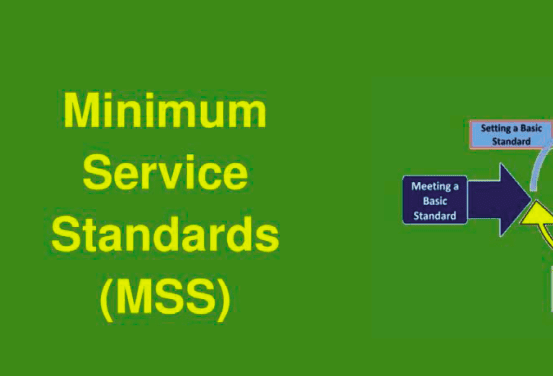
Minimum Service Standards (MSS)
Public HealthHealth SystemsNational Plan, Policy & GuidelinesQuality Improvement & Infection PreventionResearch & Publication

Minimum Service Standards (MSS) Tools

by Public Health Update January 17, 2020
written by Public Health Update

Minimum Service Standards (MSS) for hospitals/ health posts is the service readiness and availability of tool for optimal requirement of the hospitals/ health posts to provide minimum services that are expected from them. This tool entails for preparation of service provision and elements of service utilization that are deterministic towards functionality of hospital/health facilities to enable working environment for providers and provide resources for quality health service provision.

MSS for hospitals reflect the optimally needed minimum criteria for services to be provide but in itself is not an “ideal” list of the maximum standards. This checklist of MSS is different than a program specific quality improvement tool as it will outline the equipment, supplies, furniture, human resource required for carrying out service but not detail out the standards operating procedures of any service.

Minimum Service Standards (MSS) Tool for Health Post

  • DOWNLOAD PDF FILE
  • HP MSS Reporting Form 2076.pdf
  • HP MSS Assessment Sheet 2076 (1).pdf
  • HP MSS Assessment Sheet (Annexes) 2076 (2).pdf
  • HP MSS Implementation Orientation Guidelines 2076.pdf
  • HP MSS Tool Final 2076.pdf
  • स्वास्थ्य चौकीको लागि कुल MSS अङ्कको आधारमा कलर कोडिंग स्कोर कार्ड 2076.pdf

MSS TOOLS FOR SECONDARY B HOSPITAL

  • MSS-assessment-tool-self-and-Joint-Secondary-B-Hospitals
  • MSS-Data-Entry-excel-sheet-_Secondary-B-Hospitals
  • MSS-Secondary-B-Hospitals-with-higher-services

MSS TOOLS FOR PRIMARY HOSPITAL

  • MSS-Data-Entry-excel-sheet-_Primary-Hospital_MSS
  • MSS-assessment-tool-self-and-Joint-Primary-Hospital
  • MSS-Book-Primary-Hospitals

Minimum Service Standards for Tertiary Hospitals

DOWNLOAD PDF FILE


Related Readings

  • Implementation Guide for Minimum Service Standards (MSS)
  • Handbook for national quality policy and strategy- World Health Organization
  • Delivering quality health services: a global imperative for universal health coverage
  • Quality primary care key to advancing universal health coverage: WHO
  • World Quality Day 2017– Celebrating everyday leadership

National Documents

  • Public Health Service Act 2075
  • Right to Safe Motherhood and Reproductive Health Act 2075
  • Key component of Health included in Constitution of Nepal-2072
  • Health Contents – Constitution of Nepal
  • Nepal Health Sector Strategy(NHSS) Implementation Plan 2016-21
  • National Health Policy 2076- MoHP
  • Health Policy 2076 | MoSD, Karnali Province- Nepal


Do you have a website? Looking for the best hosting provider? Here’s a discount code.

Latest Public Health Jobs

Latest Posts

  • Multisectoral Action Plan for the Prevention and Control of NCDs, 2026-2030 (Draft)
  • National Standard Operating Procedure for Early Warning, Alert and Response System (EWARS), 2025
  • Priority Infectious Diseases for Community-Based Surveillance in Nepal
  • Community Based Disease Surveillance Guideline, 2082
  • Political declaration of the fourth high-level meeting of the General Assembly on the prevention and control of NCDs and the promotion of mental health and well-being

Thanks for visiting us.
Disclaimer: The resources, documents, guidelines, and information on this blog have been collected from various sources and are intended for informational purposes only. Information published on or through this website and affiliated social media channels does not represent the intention, plan, or strategies of an organization that the initiator is associated with in a professional or personal capacity, unless explicitly indicated.
If you have any complaints, information, or suggestions about the content published on Public Health Update, please feel free to contact us at blog.publichealthupdate@gmail.com.
#StayUpdated


  • WordPress
  • Link
  • Facebook
  • Mail
  • Facebook
  • Twitter
  • Twitter
  • LinkedIn
  • Instagram
  • Facebook
January 17, 2020 0 comments
0 FacebookTwitterPinterestLinkedinTumblrVKOdnoklassnikiRedditStumbleuponWhatsappTelegramLINEPocketSkypeViberEmail
Health SystemsImplementation ResearchInternational Plan, Policy & GuidelinesPublic HealthResearch & Publication

Ethical considerations for health policy and systems research

by Public Health Update January 17, 2020
written by Public Health Update

Ethical considerations for health policy and systems research

A publication from the Alliance for Health Policy and Systems Research (WHO) with the Global Health Ethics Unit (WHO)

Overview

This document, prepared by the Global Health Ethics team at WHO in collaboration with the Alliance for Health Policy and Systems Research, responds to a request from researchers and RECs for advice on interpreting existing research ethics principles in the context of HPSR. It lists the ethical challenges encountered in HPSR and provides a framework to guide researchers and RECs in answering some of the questions posed above when reviewing or conducting HPSR.

This document is a necessary, critical first step towards raising awareness about the unique ethical challenges that HPSR poses and advocates for comprehensive ethical guidance in HPSR for both RECs and researchers. The document provides researchers and RECs with a series of “points to consider” for clear identification, consideration and communication of ethical issues in HPSR.

Sections

The document comprises three sections: a brief overview of the field and the ethical challenges of HPSR, 14 considerations about the ethical dimensions of HPSR and six case studies in which the considerations are applied.

After reading this document, researchers will better understand relevant ethical issues in their HPSR study protocols and respond effectively to REC comments and questions; and REC members will be better able to identify aspects of an HPSR project that fall within its purview, identify ethical issues raised by the study and better communicate comments and questions to researchers.

DOWNLOAD PDF FILE: Ethical considerations for health policy and systems research. Geneva: World Health Organization; 2019. Licence: CC BY-NC-SA 3.0 IGO.


Related readings

Implementation Research (IR) in Health: A Practical Guide

Implementation Research (IR) toolkit(Participants Manual & Facilitator’s Guide)


For more information about Implementation Research, Opportunities and local partnership in Nepal;

Implementation Research (IR) Initiative in Nepal

IMPLEMENTATION RESEARCH


Facebook: https://www.facebook.com/Implementationresearch Twitter: https://twitter.com/ir_nepal


January 17, 2020 0 comments
0 FacebookTwitterPinterestLinkedinTumblrVKOdnoklassnikiRedditStumbleuponWhatsappTelegramLINEPocketSkypeViberEmail
Global Health NewsPublic HealthPublic Health NewsPublic Health Update

WHO’s list of urgent global health challenges for the new decade

by Public Health Update January 14, 2020
written by Public Health Update

WHO’s list of urgent global health challenges for the new decade

Climate
Conflict
Inequality
Access to medicines
Infectious diseases
Epidemics Harmful products
Health workers
Adolescent health
Public trust
New technologies
Antibiotic resistance
Clean health care

13 January 2020

As a new year and a new decade kick off, WHO is releasing a list of urgent, global health challenges. This list, developed with input from our experts around the world, reflects a deep concern that leaders are failing to invest enough resources in core health priorities and systems. This puts lives, livelihoods and economies in jeopardy. None of these issues are simple to address, but they are within reach. Public health is ultimately a political choice.

The challenges are not listed in order of priority. All are urgent, and many are interlinked. 

  1. Elevating health in the climate debate
  2. Delivering health in conflict and crisis
  3. Making health care fairer
  4. Expanding access to medicines
  5. Stopping infectious diseases
  6. Preparing for epidemics
  7. Protecting people from dangerous products
  8. Investing in the people who defend our health
  9. Keeping adolescents safe
  10. Earning public trust
  11. Harnessing new technologies
  12. Protecting the medicines that protect us
  13. Keeping health care clean

WORLD HEALTH ORGANIZATION


WHO announces updates on new molecular assays for the diagnosis of tuberculosis and drug resistance

WHO launches new report on global tobacco use trends

World Antibiotic Awareness Week: Prescription for action from WHO

National NCD risk factor survey (WHO-STEP survey) 2019, Nepal

January 14, 2020 0 comments
0 FacebookTwitterPinterestLinkedinTumblrVKOdnoklassnikiRedditStumbleuponWhatsappTelegramLINEPocketSkypeViberEmail
Newer Posts
Older Posts

Search

Follow Us

Facebook Twitter Instagram Pinterest Linkedin Youtube

Categories

  • Abstracts (25)
  • Activities (91)
  • Adolescent Sexual and Reproductive Health (ASRH) (25)
  • Advice & Tips (3)
  • African Region (5)
  • AI and Health (1)
  • Annual Meeting (6)
  • Antimicrobial Resistance (AMR) (20)
  • Award (19)
  • Awards (16)
  • Books (9)
  • Call for Proposal, EOI & RFP (103)
  • Call for Research Participants (8)
  • Clinical Doctor Jobs (6)
  • Communicable Diseases (107)
  • Competition (20)
  • Conference (128)
  • Consultant (1)
  • Courses (204)
  • Dashboard (2)
  • Digital Health & Health Informatics (10)
  • Drug and Medicine (18)
  • Eastern Mediterranean Region (3)
  • Education (15)
  • Environment (3)
  • Environmental Health & Climate Change (47)
  • European Region (42)
  • Exchange Program (1)
  • Fact Sheet (116)
  • FCHVs (1)
  • Fellowships, Studentship & Scholarships (165)
  • Financial Aid (13)
  • Form Formats (2)
  • Fully funded (22)
  • Global Health News (433)
  • Grants and Funding Opportunities (192)
  • Guest Post (44)
  • Health Assistant Jobs (1)
  • Health Equity (7)
  • Health Financing and Economics (24)
  • Health in Data (113)
  • Health Insurance (5)
  • Health Jobs (52)
  • Health Literacy, Health Education & Promotion (49)
  • Health Organization Profile (42)
  • Health Systems (81)
  • Human Resource for Health (32)
  • Humanitarian Health & Emergency Response (44)
  • Hypertension (5)
  • Implementation Research (48)
  • International Health (3)
  • International Jobs & Opportunities (369)
  • International Plan, Policy & Guidelines (208)
  • Internships (4)
  • Jobs Vacancies (56)
  • Journals (8)
  • Life Style & Public Health Nutrition (39)
  • Live (10)
  • Master's Degree (48)
  • Maternal, Newborn and Child Health (87)
  • Mentorship Program (2)
  • Miscellaneous (16)
  • National Health News (157)
  • National Plan, Policy & Guidelines (468)
  • Neglected Tropical Diseases (NTDs) (51)
  • Non- Communicable Diseases (NCDs) (120)
  • Notice (103)
  • Nursing Jobs (6)
  • Nutritionist Jobs (1)
  • One Health (17)
  • Online & Distance Learning (22)
  • Online Courses (90)
  • Op-Ed Article (3)
  • Opportunities by Region (82)
  • Outbreak News (213)
  • Partially funded (6)
  • PCL Health Science Jobs (3)
  • PH Important Day (532)
  • Pharmacist Jobs (3)
  • PhD (53)
  • Photos (5)
  • Planetary Health (4)
  • PostDoc (14)
  • Presentation Slides (26)
  • Primary Health Care (25)
  • Provincial Plan, Policies and Guidelines (14)
  • Public Health (1,278)
  • Public Health Epidemiology & Biostatistics (13)
  • Public Health Events (305)
  • Public Health Information (20)
  • Public Health Innovation (9)
  • Public Health Jobs (52)
  • Public Health News (552)
  • Public Health Notes (120)
  • Public Health Opportunities (502)
  • Public Health Opportunity (486)
  • Public Health Programs (108)
  • Public Health Seminar (2)
  • Public Health Tools (1)
  • Public Health Update (557)
  • Quality Improvement & Infection Prevention (20)
  • Region of America (8)
  • Reports (182)
  • Research & Project Grants (38)
  • Research & Project Grants (31)
  • Research & Publication (647)
  • Research Articles (10)
  • Road Traffic Accidents (RTA) (9)
  • School of Public Health (60)
  • Self funded (2)
  • South-East Asia Region (26)
  • Success Stories (17)
  • Summer and Winter Courses (39)
  • Summer Courses (27)
  • Sustainable Development Goals (SDGs) (14)
  • Syllabus (61)
  • Symposium (9)
  • Tobacco Control (35)
  • Training (40)
  • Travel Grants (15)
  • Trick, Technique & Skills (8)
  • Uncategorized (3)
  • Undergraduate Degree (7)
  • Universal Health Coverage (36)
  • Universities (29)
  • Universities & School of Public Health (57)
  • Vacancy Announcement (26)
  • Vaccine Preventable Diseases (40)
  • Vector-Borne Diseases(VBDs) (30)
  • Videos (3)
  • View Points (1)
  • Webinar (4)
  • Western Pacific Region (13)
  • Workshop (18)
  • World News (116)
Post New Jobs: Vacancy Announcement Service

Public Health Update (Sagun’s Blog) is a popular public health portal in Nepal. Thousands of health professionals are connected with Public Health Update to get up-to-date public health updates, search for jobs, and explore opportunities.
#1 Public Health Blog for sharing Job opportunities and updates in Nepal

”Public Health Information For All”
– – Sagun Paudel, Founder

  • HOT JOBS
    • Public Health Jobs
    • Medical Doctor Jobs
    • Nursing Jobs
    • Health Assistant Jobs
    • Pharmacist Jobs
    • NGOs Jobs
    • Government Jobs
  • Top Categories
    • National Plan, Policy & Guidelines Top
    • Public Health Calendar
    • Fellowships & Scholarships
    • Health Systems
    • Health Organization Profiles
    • International Jobs & Opportunities
    • Public Health Opportunity

PUBLIC HEALTH INITIATIVE

    • Submit your Vacancies New
    • Partnership Opportunities

Contact: blog.publichealthupdate@gmail.com

https://wa.me/+9779856036932

Public Health Initiative, A Registered Non-profit organization – All Right Reserved. 2011-2024. Contact us. 

Facebook Twitter Instagram Youtube Envelope
Public Health Update
  • Home
  • Public Health
    • Home 1
      • Adolescent Sexual and Reproductive Health (ASRH)
      • Antimicrobial Resistance (AMR)
      • Communicable Diseases
      • Digital Health & Health Informatics
      • Environmental Health & Climate Change
      • Health Financing and Economics
      • Health Equity
    • Home 2
      • Health Literacy, Health Education & Promotion
      • Human Resource for Health
      • Humanitarian Health & Emergency Response
      • Implementation Research
      • International Health
      • Life Style & Public Health Nutrition
      • Maternal, Newborn and Child Health
    • Home 3
      • Neglected Tropical Diseases (NTDs)
      • Non- Communicable Diseases (NCDs)
      • One Health
      • Planetary Health
      • Public Health Epidemiology & Biostatistics
      • Primary Health Care
      • Quality Improvement & Infection Prevention
    • Home 4
      • Road Traffic Accidents (RTA)
      • Sustainable Development Goals (SDGs)
      • Tobacco Control
      • Universal Health Coverage
      • Vaccine Preventable Diseases
      • Vector-Borne Diseases(VBDs)
      • Notices
  • Public Health Update
    • Home 1
      • Public Health News
      • Global Health News
      • Outbreak News
      • National Health News
      • COVID-19
    • Home 2
      • Fact Sheet
      • Health in Data
      • PH Important Day
      • Public Health Events
      • Public Health Programs
    • Home 3
      • Health Systems
      • Health Insurance
      • Health Organization Profile
      • Success Stories
      • Public Health Innovation
  • Public Health Opportunities
    • Fully funded
    • Travel Grants
    • Grants and Funding Opportunities
    • Opportunities by Region
    • International Jobs & Opportunities
    • Research & Project Grants
    • Fellowships, Studentship & Scholarships
    • Conference
  • Jobs
    • Home 1
      • Health Jobs
      • Public Health Jobs
      • Clinical doctor Jobs
      • Health Assistant Jobs
      • Nursing Jobs
      • PCL Health Science Jobs
    • Home 2
      • Dental Jobs
      • Pharmacist Jobs
      • TSLC (Health Jobs)
      • Laboratory Jobs
      • Nutritionist Jobs
  • Downloads
    • International Plan, Policy & Guidelines
    • National Plan, Policy & Guidelines
    • Reports
    • Books
    • Research Articles
  • School of Public Health
    • Home 1
      • Courses
      • Master’s Degree
      • Undergraduate Degree
      • PhD
    • Home 2
      • Universities
      • Syllabus
      • Public Health Notes
      • Mentorship Program
      • Startup Project
    • Home
      • Summer and Winter Courses
      • Summer Courses
      • Online Courses
      • Workshop
      • Training
Public Health Update
  • Home
  • Public Health
    • Home 1
      • Adolescent Sexual and Reproductive Health (ASRH)
      • Antimicrobial Resistance (AMR)
      • Communicable Diseases
      • Digital Health & Health Informatics
      • Environmental Health & Climate Change
      • Health Financing and Economics
      • Health Equity
    • Home 2
      • Health Literacy, Health Education & Promotion
      • Human Resource for Health
      • Humanitarian Health & Emergency Response
      • Implementation Research
      • International Health
      • Life Style & Public Health Nutrition
      • Maternal, Newborn and Child Health
    • Home 3
      • Neglected Tropical Diseases (NTDs)
      • Non- Communicable Diseases (NCDs)
      • One Health
      • Planetary Health
      • Public Health Epidemiology & Biostatistics
      • Primary Health Care
      • Quality Improvement & Infection Prevention
    • Home 4
      • Road Traffic Accidents (RTA)
      • Sustainable Development Goals (SDGs)
      • Tobacco Control
      • Universal Health Coverage
      • Vaccine Preventable Diseases
      • Vector-Borne Diseases(VBDs)
      • Notices
  • Public Health Update
    • Home 1
      • Public Health News
      • Global Health News
      • Outbreak News
      • National Health News
      • COVID-19
    • Home 2
      • Fact Sheet
      • Health in Data
      • PH Important Day
      • Public Health Events
      • Public Health Programs
    • Home 3
      • Health Systems
      • Health Insurance
      • Health Organization Profile
      • Success Stories
      • Public Health Innovation
  • Public Health Opportunities
    • Fully funded
    • Travel Grants
    • Grants and Funding Opportunities
    • Opportunities by Region
    • International Jobs & Opportunities
    • Research & Project Grants
    • Fellowships, Studentship & Scholarships
    • Conference
  • Jobs
    • Home 1
      • Health Jobs
      • Public Health Jobs
      • Clinical doctor Jobs
      • Health Assistant Jobs
      • Nursing Jobs
      • PCL Health Science Jobs
    • Home 2
      • Dental Jobs
      • Pharmacist Jobs
      • TSLC (Health Jobs)
      • Laboratory Jobs
      • Nutritionist Jobs
  • Downloads
    • International Plan, Policy & Guidelines
    • National Plan, Policy & Guidelines
    • Reports
    • Books
    • Research Articles
  • School of Public Health
    • Home 1
      • Courses
      • Master’s Degree
      • Undergraduate Degree
      • PhD
    • Home 2
      • Universities
      • Syllabus
      • Public Health Notes
      • Mentorship Program
      • Startup Project
    • Home
      • Summer and Winter Courses
      • Summer Courses
      • Online Courses
      • Workshop
      • Training
Public Health Initiative, A Registered Non-profit organization – All Right Reserved. 2011-2023