

Public Health Update
  • Home
  • Public Health Update
  • Nepal Health Jobs
    • Public Health Job Board
    • Organization List
  • Opportunities
    • Fellowships, Studentship & Scholarships
    • Grants and Funding Opportunities
    • Fully funded
    • Conference
  • Downloads
    • International Plan, Policy & Guidelines
    • National Plan, Policy & Guidelines
    • Reports
    • Public Health Notes
    • Syllabus
    • Form Formats
  • School of Public Health
    • PhD
    • Master’s Degree
    • Online Courses
  • Notice
  • Home
  • Public Health Update
  • Nepal Health Jobs
    • Public Health Job Board
    • Organization List
  • Opportunities
    • Fellowships, Studentship & Scholarships
    • Grants and Funding Opportunities
    • Fully funded
    • Conference
  • Downloads
    • International Plan, Policy & Guidelines
    • National Plan, Policy & Guidelines
    • Reports
    • Public Health Notes
    • Syllabus
    • Form Formats
  • School of Public Health
    • PhD
    • Master’s Degree
    • Online Courses
  • Notice
LOGIN / REGISTER
Public Health Update
SUBSCRIBE
Public Health Update
  • Home
  • Public Health Update
  • Nepal Health Jobs
    • Public Health Job Board
    • Organization List
  • Opportunities
    • Fellowships, Studentship & Scholarships
    • Grants and Funding Opportunities
    • Fully funded
    • Conference
  • Downloads
    • International Plan, Policy & Guidelines
    • National Plan, Policy & Guidelines
    • Reports
    • Public Health Notes
    • Syllabus
    • Form Formats
  • School of Public Health
    • PhD
    • Master’s Degree
    • Online Courses
  • Notice

All Right Reserved. Designed and Developed by PenciDesign

Global Health NewsOutbreak NewsPublic HealthPublic Health News

International community rallies to support open research and science to fight COVID-19

by Public Health Update May 29, 2020
written by Public Health Update

International community rallies to support open research and science to fight COVID-19

29 May 2020 

News release

Geneva

WHO and Costa Rica launch landmark COVID-19 Technology Access Pool

29 countries and several international partners and institutions have signed up to support the COVID-19 Technology Access Pool (C-TAP) an initiative aimed at making vaccines, tests, treatments and other health technologies to fight COVID-19 accessible to all.

The Pool was first proposed in March by President Carlos Alvarado of Costa Rica, who joined WHO Director-General Dr Tedros Adhanom Ghebreyesus today at the official launch of the initiative. 

“The COVID-19 Technology Access Pool will ensure the latest and best science benefits all of humanity,” said President Alvarado of Costa Rica. “Vaccines, tests, diagnostics, treatments and other key tools in the coronavirus response must be made universally available as global public goods”. 

“Global solidarity and collaboration are essential to overcoming COVID-19,” said WHO Director-General Dr Tedros Adhanom Ghebreyesus. “Based on strong science and open collaboration, this information-sharing platform will help provide equitable access to life-saving technologies around the world.” 

The COVID-19 (Technology) Access Pool will be voluntary and based on social solidarity. It will provide a one-stop shop for scientific knowledge, data and intellectual property to be shared equitably by the global community. 

The aim is to accelerate the discovery of vaccines, medicines and other technologies through open-science research, and to fast-track product development by mobilizing additional manufacturing capacity. This will help ensure faster and more equitable access to existing and new COVID-19 health products. 

There are five key elements to the initiative:

  • Public disclosure of gene sequences and data;
  • Transparency around the publication of all clinical trial results;
  • Governments and other funders are encouraged to include clauses in funding agreements with pharmaceutical companies and other innovators about equitable distribution, affordability and the publication of trial data;
  • Licensing any potential treatment, diagnostic, vaccine or other health technology to the Medicines Patent Pool – a United Nations-backed public health body that works to increase access to, and facilitate the development of, life-saving medicines for low- and middle-income countries.
  • Promotion of open innovation models and technology transfer that increase local manufacturing and supply capacity, including through joining the Open Covid Pledge and the Technology Access Partnership (TAP).

With supportive countries across the globe, C-TAP will serve as a sister initiative to the Access to COVID-19 Tools (ACT) Accelerator and other initiatives to support efforts to fight COVID-19 worldwide.

WHO, Costa Rica and all the co-sponsor countries have also issued a “Solidarity Call to Action” asking relevant stakeholders to join and support the initiative, with recommended actions for key groups, such as governments, research and development funders, researchers, industry and civil society.

WHO and Costa Rica co-hosted today’s launch event, which began with a high-level session addressed by the WHO Director-General and President Alvarado in addition to Prime Minister Mia Mottley of Barbados and Aksel Jacobsen, State Secretary, Norway. There were video statements by President Lenín Moreno of Ecuador; President Thomas Esang Remengesau Jr., of Palau; President Lenín Moreno of Ecuador; , Michelle Bachelet, United Nations High Commissioner for Human Rights; Jagan Chapagain, Secretary General of the International Federation of Red Cross and Red Crescent Societies; and Retno Marsudi, Minister for Foreign Affairs for Indonesia. Leaders from across the UN, academia, industry and civil society joined for a moderated discussion.

To date, the COVID-19 Technology Access Pool is now supported by the following countries: Argentina, Bangladesh, Barbados, Belgium, Belize, Bhutan, Brazil, Chile, Dominican Republic, Ecuador, Egypt, El Salvador, Honduras, Indonesia, Lebanon, Luxembourg, Malaysia, Maldives, Mexico, Mozambique, Norway, Oman, Pakistan, Palau, Panama, Peru, Portugal, Saint Vincent and Grenadines, South Africa, Sri Lanka,Sudan, The Netherlands, Timor-Leste, Uruguay, Zimbabwe

Other international organizations, partners and experts have also expressed support to the initiative and others can join them using the website.


The Solidarity Call to Action follows from numerous international commitments, including: Global Sustainable Development Goal 3, target 3b;  The WHO Global Strategy and Plan of Action on Public Health, Innovation and Intellectual Property (GSPA- PHI) and the WHO Roadmap for access to medicines, vaccines and health products 2019-2023; the UN General Assembly Resolution on “International cooperation to ensure global access to medicines, vaccines and medical equipment to face COVID-19” (A/RES/74/274); and the 73rd World Health Assembly Resolution on the “COVID-19 response” (WHA73.1).


29 May 2020  News release Geneva


[wp-rss-aggregator source=”67394″]
May 29, 2020 0 comments
0 FacebookTwitterPinterestLinkedinTumblrVKOdnoklassnikiRedditStumbleuponWhatsappTelegramLINEPocketSkypeViberEmail
Health Financing and EconomicsNational Health NewsNational Plan, Policy & GuidelinesPublic Health NewsResearch & Publication

Budget Speech for FY 2020-21 #Nepal #Budget2077 #Budget2020

by Public Health Update May 28, 2020
written by Public Health Update

Budget Speech for FY 2020-21 #Nepal #Budget2077 #Budget2020


DOWNLOAD PDF


Budget Speech


Budget Speech for FY 2020-21 #Nepal #Budget2077 #Budget2020

#NepalBudget2076 #Budget2019 #Budget2076 #HealthBudget

HIGHLIGHTS

May 28, 2020 0 comments
0 FacebookTwitterPinterestLinkedinTumblrVKOdnoklassnikiRedditStumbleuponWhatsappTelegramLINEPocketSkypeViberEmail
National Plan, Policy & GuidelinesOutbreak NewsPublic HealthResearch & Publication

COVID-19 Healthcare Workers Booklet

by Public Health Update May 26, 2020
written by Public Health Update

COVID-19 Healthcare Workers Booklet

DOWNLOAD PDF FILE

DOWNLOAD PDF FILE


Mental health status among health workers in Nepal during COVID-19 pandemic (Policy brief)

Call for Application! TDR Postgraduate Scholarship in Implementation Research, BRAC University

COVID-19’s impact on children’s mentality

Mental Health and Coronavirus disease (COVID19)

Nepal Disaster Risk Reduction and Management Authority COVID19 Dashboard

May 26, 2020 0 comments
0 FacebookTwitterPinterestLinkedinTumblrVKOdnoklassnikiRedditStumbleuponWhatsappTelegramLINEPocketSkypeViberEmail
AbstractsNon- Communicable Diseases (NCDs)Public HealthReportsResearch & PublicationResearch Articles

Mental health status among health workers in Nepal during COVID-19 pandemic (Policy brief)

by Public Health Update May 26, 2020
written by Public Health Update

Mental health status among health workers in Nepal during COVID-19 pandemic (Policy brief)

Health workers facing stigma are at higher risk of mental health outcomes, a study has shown.

A cross-sectional web-based survey conducted between April 26 to May 12, 2020, in Nepal shows that, health workers who faced stigma were significantly more likely to have anxiety, depression, insomnia, and COVID-19 related fear as compared to those who did not face any stigma. Study shows that, health workers who had a previous history of medication for mental health problems had a higher likelihood of having anxiety, depression, and insomnia as compared to those without previous history.

Recommended: Policy Brief: COVID-19 and the Need for Action on Mental Health

The team also found that nurses had a higher chance of having anxiety, and COVID-19 related fear as compared to other health professions, inadequate precautionary measures in the workplace were associated with higher odds of having anxiety and depression as compared to those who had adequate precautionary measures. Similarly, COVID-19 related fear was positively significant among health workers working in the affected district as comparison to those working in non- affected district.

Furthermore, study identified that health workers who were younger and aware of government incentives for health workers during COVID-19 were significantly less likely to have depression as compared to older and non-aware of such incentives. The Janajati ethnic group had higher odds of having anxiety and insomnia as compared to the Brahmin/Chhetri ethnic group. Similarly, those who had less work experience had lower odds of having insomnia as compared to those with higher work experience. Presence of a family member with chronic disease was significantly associated with the presence of COVID-19 related fear.

A total of 475 health workers working in public and private health facilities and involved in COVID-management have participated in the study.

The researchers of the study recommend to promote public awareness for reducing the stigma faced by health care workers and there should be a good support system in the workplace including the provision of adequate protective measures, incentives, and management of workload. Special support might be required for nurses to reduce their psychological distress.

The study suggests that family support for health workers having family members with chronic disease and those with a previous history of medication for mental health problems should be encouraged. 


DOWNLOAD POLICY BRIEF (PDF FILE) 


DOWNLOAD POLICY BRIEF (PDF FILE) 


COVID19 & Mental Health: Effects and tips to keep our mind healthy!

Mental Health and Coronavirus disease (COVID19)

Mental health and psychosocial considerations during the COVID-19 outbreak

Policy Brief: COVID-19 and the Need for Action on Mental Health

Develop and implement strategies to prevent suicide and promote mental health

May 26, 2020 0 comments
0 FacebookTwitterPinterestLinkedinTumblrVKOdnoklassnikiRedditStumbleuponWhatsappTelegramLINEPocketSkypeViberEmail
Call for Application! TDR Postgraduate Scholarship in Implementation Research, BRAC University
Call for Proposal, EOI & RFPCoursesFellowships, Studentship & ScholarshipsGrants and Funding OpportunitiesImplementation ResearchMaster's DegreeSchool of Public Health

Call for Application! TDR Postgraduate Scholarship in Implementation Research, BRAC University

by Public Health Update May 26, 2020
written by Public Health Update

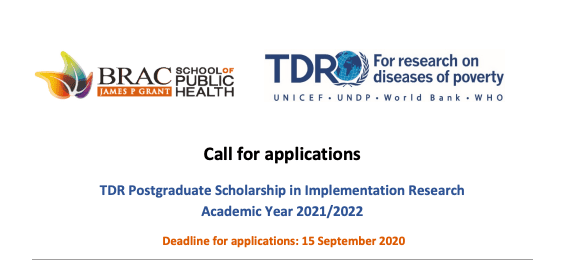
Call for applications TDR Postgraduate Scholarship in Implementation Research Academic Year 2021/2022

The BRAC James P. Grant School of Public Health (BRAC JPGSPH) at BRAC University in Dhaka, Bangladesh, is pleased to announce a Call for Applications for the award of TDR Postgraduate Training Scholarships for one year Master of Public Health (MPH) 2021-22 Programme beginning in January 2021. Taught in English, the MPH Programme is a 12-month full-time programme which promotes problem-based experiential learning. The scholarship is supported by TDR, the Special Programme for Research and Training in Tropical Diseases, hosted by the World Health Organization in Geneva, Switzerland.

Candidates and residents in low- and middle income countries (LMICs) of WHO South-East Asia and Western Pacific Regions are eligible to apply. The training will focus on courses relevant to a career in implementation research, which is a growing field that supports the identification of health system bottlenecks and approaches to addressing them. It is particularly useful in low- and middle- income countries (LMICs) where many health interventions do not reach those who could be benefitted from them. The goal of this scheme is to enhance graduate training capacity and boost the number and quality of researchers in LMICs. Further information on implementation research is available from: http://adphealth.org/irtoolkit/ A limited number of scholarships will be offered to both national and international candidates for the 2021/2022 academic year on the Master Programme in Public Health.

The scholarship recipients will conduct their Thesis/Summative Learning Project (SLP) on implementation research on infectious diseases of poverty, including neglected tropical diseases, malaria and tuberculosis, in Bangladesh. Recipients will be enrolled as postgraduate students.

ELIGIBILITY FOR THE SCHOLARSHIP

The candidate must be eligible for both MPH Programme and TDR Scholarship. After online application, if the applicant successfully fulfils the requirements of the MPH Programme (the written and oral tests), the applicant will be invited to interview for the TDR Scholarship.

Implementation Research 

The applicants must meet BRAC University post-graduation admission criteria.

Applicants should:

  • Meet standard minimum University requirements for international postgraduate students at https://www.bracu.ac.bd/admissions/postgraduate:
    Minimum CGPA 3 out of 4 for Bachelor’s Degree o Minimum GPA of 3 in O-Levels in five subjects and A-Levels in two subjects or equivalent as per BRAC University scale
  • 2 – 3 years of professional public health experience Preferred o Proficiency in oral and written English and basic Mathematics
  • Basic Computer skills including Microsoft Office and Data Analysis Software.
  • Have a 4-Year Bachelor’s Degree or 3 Years Bachelor plus 1-Year Master’s/Postgraduate Diploma Degree in Medicine, Anthropology, Social Science or Public Health;
  • Be nationals of and residents in low- and middle-income countries (as defined by the World Bank) of WHO South-East Asia and Western Pacific Regions;
  • Be under 35 years of age at the time of application for the Master’s programme;
  • Be interested in developing a career in implementation research on infectious diseases of poverty, including neglected tropical diseases, malaria and tuberculosis;
  • Submit a statement of purpose on the reason for pursuing a career in infectious diseases of poverty;
  • Priority will be given to the applicant with 1-2 years of professional public health experience in infectious diseases of poverty, including neglected tropical diseases, malaria and tuberculosis. Women are encouraged to apply.
  • Candidates from less privileged areas or groups, or with disabilities, are encouraged to apply.

THE SCHOLARSHIP PACKAGE

  • One return economy airfare between the home country of the student and Bangladesh
  • Tuition and academic fees
  • Basic medical and accident insurance
  • Monthly stipend to cover living expenses including accommodation equivalent to local living cost
  • Support for Thesis/Summative Learning Project (SLP) expenses during data collection

Implementation Research 

APPLYING FOR THE TDR POSTGRADUATE SCHOLARSHIP SCHEME AT BRAC UNIVERSITY

To apply for a TDR Postgraduate Scholarship, you must complete the following two steps:

Step 1:  Apply for Master Programme Students must submit their online applications for MPH Programme at BRAC JPGSPH at http://bracjpgsph.org/index.php/mph/admission/forms or http://admissions.bracu.ac.bd/academia/admissionProcess/listAvailablePublishedCircularForAdmission

Step 2.: Complete the TDR postgraduate scholarship application form and email this form to: fauzul.kabir@bracu.ac.bd; koushik@bracu.ac.bd.

APPLICATION & SELECTION PROCESS

The candidate will be required to apply online for both MPH Programme and TDR scholarship form. After the online application is successfully completed, the application will be reviewed based on MPH programme requirements. Once the MPH programme requirements are met, candidates will be contacted for assessment through written test and viva. The written test and viva can take place in country conducted by panel of experts.

Due to COVID-19 pandemic situation, the assessment can be done online. Candidate’s qualifications will be reviewed on the basis of TDR Scholarship requirements. If the candidate successfully fulfils the TDR Scholarship requirements, he or she will be invited to participate in a TDR scholarship specific interview by BRAC JPGSPH.

The final approval of this scholarship and placement of students will depend on the situation of COVID-19 in the WHO South-East Asia and Western Pacific Regions. Finally, the selected students will be required to confirm acceptance of the offer by submitting a Statement of Undertaking and a Fitness Certificate as per the regulation of BRAC University.

APPLICATION DEADLINE

The application deadline is 15 September 2020. However, the selection and placement of candidates will depend on COVID-19 pandemic situation in the WHO South-East Asia and Western Pacific regions.

For more information on the scheme at BRAC JPGSPH, please contact:

  • Fauzul Kabir, Assistant MPH Coordinator, Master of Public Health Programme, BRAC James P. Grant School of Public Health Email: fauzul.kabir@bracu.ac.bd Phone: +880-2-9827501 – 4 Extension – 6034
  • Md. Koushik Ahmed Deputy Director Master of Public Health Programme & Coordinator, WHO TDR Postgraduate Training Scheme on Implementation Research BRAC James P. Grant School of Public Health Email: koushik@bracu.ac.bd Phone: +880-2-9827501 – 4 Extension – 6015

Call for Application! TDR Postgraduate Scholarship in Implementation Research, BRAC University


[wp-rss-aggregator source=”67394″]


Implementation Research 


May 26, 2020 0 comments
0 FacebookTwitterPinterestLinkedinTumblrVKOdnoklassnikiRedditStumbleuponWhatsappTelegramLINEPocketSkypeViberEmail
Fact SheetGuest PostOutbreak NewsPublic HealthPublic Health UpdateResearch & Publication

Despite Pandemic and Lockdown; Women still continue to suffer!

by Public Health Update May 24, 2020
written by Public Health Update

Despite Pandemic and Lockdown; Women still continue to suffer!

Alisha Bhandari

The novel coronavirus infection has so far claimed three lives in Nepal, while close to 548 people have been infected with the disease. The government had first imposed the nationwide lockdown on March 24 which was repeatedly extended. On May 6, the government extended the lockdown till May 18. Government isn’t sure how long it would have to battle against the coronavirus pandemic, it is mulling over allowing people staying in quarantine centers to do productive work so that they could contribute to the national economy while following social distancing rules. Lockdown in its own invites various problems and tension to an individual ranging in wide variation from economic problem to triggering mental health problems.

However , women apart from problems of lockdown and pandemic problems are still suffering from domestic violence. Among the recorded cases, 198 cases are of domestic violence, 29 cases of social violence, among social violence 14 cases are of forced marriage and child marriage, 11 cases blaming on character, 4 cases of mental torture by condemning as bokshi (witch). Similarly, 48 cases of rape, 10 cases of attempt to rape, 12 cases of sexual abuse, 5 cases of murder, and 2 cases are under investigation to figure out whether the cases are of suicide or murder, 16 cases of suicide, 2 cases of attempt to suicide. 2 cases of attempt to murder, 2 cases of human trafficking and 10 cases of cyber-crime were recorded.

WOREC, Nepal

WOREC, Nepal


Three hundred thirty six cases of violence against women and girls committed during lockdown from 33 districts of Nepal. GBV cases were documented from following districts:  Dhanusha 33, Morang 59, Rukum 9, Kailali 40, Kanchanpur 1,  Dang 20, Kathmandu 11, Bhaktapur 1, Bardiya 12, Siraha 47, Saptari 1, Sarlahi 2, Udaypur 22, Sunsari 21, Banke 2, Syngja 2, Baglung 1, Mahotari 9 , Rauthat 4, Parsha 2, Terahthum 1, Okhaldhunga 1, Gulmi 1, Sindhuli 2,Solukhumbu 1. Dhading 11, Bajhang 14, Gorkha 1, Lamjung 1, Humla 1, Kapilvastu 1, Salyan 1, Chitwan 1.

23

WOREC, Nepal

Possible Solution

Though, domestic violence have been deep rooted in the society, it demands combined effort of multisectoral stakeholder and EDP’s to make people aware about gender based violence and domestic violence. Following possible solution could be adopted to mitigate domestic violence.

  1. Funding women’s full participation in civil society. Women who are active in civil society can be highly effective in influencing global, regional and national treaties, agreements and laws and in exerting pressure to ensure their implementation. More money needs to flow toward supporting women’s active participation in civil society.
  2. Scaling up prevention efforts that address unequal gender power relations as a root cause of gender-based violence. Some programs have effectively structured participatory activities that guide the examination of gender norms and their relationship to power inequities, violence and other harmful behaviors. They work with multiple stakeholders across the socio-ecological spectrum and across multiple sectors. But, we need to do a better job of evaluating these programs so we can move them from limited, small-scale pilots to larger-scale, societal-change programs.
  3. Addressing the needs of child survivors, including interventions to disrupt the gender-based violence cycle. In shelters and services for women, it is common to see children of all ages in waiting rooms or safe houses. But, it is rare to see anyone working with these children, who have experienced a traumatic event. Sometimes they are victims, but most likely they are witnesses to violence against their mothers. We lack trained professionals to work with children who have experienced gender-based violence, especially when the perpetrators are parents or other family members.
  4. Developing guidance for building systems to eliminate gender-based violence. There is ample global guidance on how to address gender-based violence through certain sectors, such as health, or through discrete actions, such as providing standards for shelters or training for counselors. But, we are missing practical guidance for building the whole system from A to Z — putting laws into practice, raising awareness of services and creating budgets.
  5. Developing support programs for professionals experiencing second hand trauma. After three years of working with a program to address school-related gender-based violence, I had to walk away. Despite my commitment to ending gender-based violence, I simply could not hear another awful story. My experience is not unique. Burnout is a reality, and we lack qualified people to deal with gender-based violence survivors.

References

  1. Stopping Violence Against Women: A Challenge to Governments (Human Rights Watch Backgrounder, June 2000 – Five Years after the UN Conference on Women – Beijing Plus Five) [Internet]. Hrw.org. 2020 [cited 23 May 2020]. Available from: https://www.hrw.org/legacy/backgrounder/wrd/fiveplus.htm
  2. WOREC, Nepal [Internet]. Worecnepal.org. 2020 [cited 23 May 2020]. Available from: https://www.worecnepal.org/aboutus.php
  3. 16 ways to end violence towards girls [Internet]. Plan International. 2020 [cited 23 May 2020]. Available from: https://plan-international.org/ending-violence/16-ways-end-violence-girls
  4. WHO | Gender and women’s mental health [Internet]. Who.int. 2020 [cited 23 May 2020]. Available from: https://www.who.int/mental_health/prevention/genderwomen/en/
  5. “Johns Hopkins University COVID-19 Dataset”. Johns Hopkins University COVID-19 Dataset. Retrieved 25 April 2020

Alisha Bhandari , Student, BPH 7th Semester, Central College, Pokhara University


READ MORE : GUEST POSTS


Want to submit an article?

Send us your articles to mail4sagun@gmail.com with your name and photo. Public Health Update encourages public health students and professionals to submit views and voices.


COVID19 & Mental Health: Effects and tips to keep our mind healthy!

Are we ignoring the traditional medicine and inviting the poison calls in Corona Battle?

Recommended online courses on hypertension

Mental Health and Coronavirus disease (COVID19)

10 innovative things you can do during lockdown [Public Health Students Edition]

Opportunities and Challenges in Education due to COVID-19

COVID-19 and Health Facts: Immunity boosting foods and right eating pattern

Coronavirus disease (COVID-19) and the Economy

The Situation of Country after COVID-19 | Moiz Khan

A state of Dual Pandemic: COVID-19 & Falsified Products
Digital advocacy in context of COVID-19 | Rashmi Acharya

The science of hand sanitizers

Tips for staying healthy in lockdown | Anushree Acharya

Digital advocacy in context of COVID-19 | Rashmi Acharya


Follow us on Social Media Networks

  • Play Store: Public Health Info
  • Google News Profile: Public Health Update
  • Facebook Profile Sagun Paudel [5000 Friends & 6,100+ Followers]
  • Facebook Page: Public Health Update [6,900+ Followers] Sagun’s Blog [40,200 + Followers] Public Health NOW [5200 + Followers] All Nepal BPH Students [3100 + Followers]
  • Facebook Groups : Public Health Update [10,300 + Members] Public Health Vacancies [20,600+ Members] Nepal NGO INGO GOV Job Vacancy (Paid and Stipend) [51,000+ Members] Job Vacancy Nepal Health care Doctor Nurse Medical Career [19,000+ Members] Nepal Public Health Professional [21,000+ Members] Public health professionals, Nepal [25,600+ Members] Nepal Public Health Society [3400+ Members]
  • Twitter : Sagun Paudel [1300 + Followers]: Public Health Update [370 + Followers] Twitter List (Public Health Update)
  • LinkedIn: Public Health Update [77 + Followers] Sagun Paudel
  • LinkedIn Group: Jobs/Opportunities for Public Health Professionals [320+ Followers]
  • Tumblr Profile Sagun Paudel [20 + Followers]
  • Reddit Profile [Sagun Paudel] Reddit List [Public Health Update ]
  • Official What’s App Group [Public Health Update] https://chat.whatsapp.com/LeRHIMYodYa5J1txp3IQcm
  • Official Viber group [Public Health Update] https://invite.viber.com/?g2=AQBiIY9rydvieEt%2FpJg7Di3dXX9vY27y8Nj%2BP0Y2nduJROSeN3snAJiPL0Co1d1I
  • Instagram Sagun Paudel 1,350 + Followers Public Health Update (100+ Followers)
May 24, 2020 0 comments
0 FacebookTwitterPinterestLinkedinTumblrVKOdnoklassnikiRedditStumbleuponWhatsappTelegramLINEPocketSkypeViberEmail
Guest PostPublic HealthResearch & Publication

COVID-19’s impact on children’s mentality

by Public Health Update May 23, 2020
written by Public Health Update

COVID-19’s impact on children’s mentality

Shiwani Pokhrel

Coronavirus Disease-2019 (COVID-19) is creating immense psychosocial disturbances like other pandemics and emerging disease outbreaks. The disease involves an unfamiliar threat that is difficult to detect and challenging to distinguish from more benign illnesses. Due to the lack of pharmaceutical interventions, it has dramatically upset everyday bodily habits, social interactions and economic exchanges.1

According to WHO, “A child is a person 19 years or younger”.2 The COVID-19 crisis has a potentially far-reaching, long-term negative impact on children around the world. The impact is likely to be devastating, even though children who contract COVID-19 appear to have less severe symptoms and lower mortality rates than other age groups. More than 1.5 billion students are out of school. Widespread job and income loss and economic insecurity among families are likely to increase rates of child labor, sexual exploitation, teenage pregnancy, and child marriage. Stresses on families, particularly those living under quarantines and lockdowns, are increasing the incidence of domestic violence. As the global death toll from COVID-19 increases, large numbers of children will be orphaned and vulnerable to exploitation and abuse.3

Pic. credit : Sanjeev dahal

Pic. credit : Sanjeev dahal

The intense social isolation, stress, and uncertainty surrounding COVID-19 are shaping up to be its mental health pandemic. For many children, the COVID-19 crisis will mean limited or no education or falling further behind their peers. More than 91% of the world’s students are out of school, due to school closures in at least 188 countries. In recent surveys by Save the Children of over 6000 children and parents in the US, Germany, Finland, Spain, and the UK, up to 65% of the children struggled with boredom and feelings of isolation. The crisis has exposed vast disparities in countries’ emergency preparedness, internet access for children, and availability of learning materials. Although much focus has turned to online learning platforms, many public schools are not set up to use them or do not have the technology and equipment to provide online teaching. Nearly half of the world has no internet access.3-5

Child abuse is less likely to be detected during the COVID-19 crisis, as child protection agencies have reduced monitoring to avoid spreading the virus, and teachers are less able to detect signs of ill-treatment with schools closed. Experts estimate that the global total of COVID-19 deaths could eventually reach 10 to 40 million, which will inevitably leave many children without one or both parents or other caregivers. Orphaned children are particularly vulnerable to trafficking and other exploitation, including sexual exploitation, forced begging, selling goods on the streets, and other child labor. Older children often drop out of school to try to support younger siblings. The COVID19 crisis also heightens the risk of online child sexual exploitation. As the COVID-19 pandemic overwhelms health systems, children may no longer receive immunizations or have access to lifesaving basic health care.4.

Human Rights Watch urges governments to take urgent measures to protect children’s rights, including by

  • Prioritizing efforts to continue education for all children, using all available technology;
  • Providing economic assistance, including cash transfers, to low-income families that will be hit first and hardest, to help them meet basic needs without resorting to child labor or child marriage;
  • Minimizing disruptions in children’s access to essential and life-saving healthcare services;
  • Increasing efforts to identify children orphaned by COVID-19 and expanding networks of extended family and foster care;
  • Expanding public education, awareness campaigns, hotlines, and other services for children at risk of violence in the home or online sexual exploitation;
  • Transferring children deprived of liberty to family-based care and ensuring suitable accommodation and sanitation for refugee, migrant, and internally displaced children.

A rights-respecting response to the COVID-19 crisis will not only alleviate potentially far-reaching harm during the pandemic but can also benefit children over the long term, Human Rights Watch said. Expanding internet access for children will generally increase children’s access to information, and their ability to organize and express themselves. The economic crisis linked to COVID-19 may prompt governments to strengthen guarantees of economic and social rights and social protections for poor communities and vulnerable families. Such steps can, over the long term, improve food security and reduce rates of child poverty, child labor, and child marriage.4

References:

  1. Schoch-Spana,Monica. 2020, March 20. Retrieved from URL: https://blogs.scientificamerican.com/observations/covid-19s-psychosocial-impacts/ [Last accessed on 2020 May 13].
  2. Definition of key terms-World Health Organization. 2013. Retrieved from URL: https://www.who.int/hiv/pub/guidelines/arv2013/intro/keyterms/en/ [Last accessed on 2020 May 14].
  3. COVID-19’s Devastating Impact on Children. 2020, April 9. Retrieved from URL: https://www.hrw.org/news/2020/04/09/covid-19s-devastating-impact-children [Last accessed on 2020 May 14].
  4. Minchillo, John. 2020, March 19. Retrieved from URL: https://news.berkeley.edu/2020/04/17/covid-19-mental-health-and-well-being-for-ourselvesand-our-children/ [Last accessed on 2020 May 15].
  5. Children at risk of lasting psychological distress from coronavirus lockdown’: Save the Children. 2020, May 7. Retrieved from URL: https://reliefweb.int/report/world/children-risklasting-psychological-distress-coronavirus-lockdown-save-c [Last accessed on 2020 May 15].

READ MORE : GUEST POSTS


Want to submit an article?

Send us your articles to mail4sagun@gmail.com with your name and photo. Public Health Update encourages public health students and professionals to submit views and voices.


COVID19 & Mental Health: Effects and tips to keep our mind healthy!

Are we ignoring the traditional medicine and inviting the poison calls in Corona Battle?

Recommended online courses on hypertension

Mental Health and Coronavirus disease (COVID19)

10 innovative things you can do during lockdown [Public Health Students Edition]

Opportunities and Challenges in Education due to COVID-19

COVID-19 and Health Facts: Immunity boosting foods and right eating pattern

Coronavirus disease (COVID-19) and the Economy

The Situation of Country after COVID-19 | Moiz Khan

A state of Dual Pandemic: COVID-19 & Falsified Products
Digital advocacy in context of COVID-19 | Rashmi Acharya

The science of hand sanitizers

Tips for staying healthy in lockdown | Anushree Acharya

Digital advocacy in context of COVID-19 | Rashmi Acharya


Follow us on Social Media Networks

  • Play Store: Public Health Info
  • Google News Profile: Public Health Update
  • Facebook Profile Sagun Paudel [5000 Friends & 6,100+ Followers]
  • Facebook Page: Public Health Update [6,900+ Followers] Sagun’s Blog [40,200 + Followers] Public Health NOW [5200 + Followers] All Nepal BPH Students [3100 + Followers]
  • Facebook Groups : Public Health Update [10,300 + Members] Public Health Vacancies [20,600+ Members] Nepal NGO INGO GOV Job Vacancy (Paid and Stipend) [51,000+ Members] Job Vacancy Nepal Health care Doctor Nurse Medical Career [19,000+ Members] Nepal Public Health Professional [21,000+ Members] Public health professionals, Nepal [25,600+ Members] Nepal Public Health Society [3400+ Members]
  • Twitter : Sagun Paudel [1300 + Followers]: Public Health Update [370 + Followers] Twitter List (Public Health Update)
  • LinkedIn: Public Health Update [77 + Followers] Sagun Paudel
  • LinkedIn Group: Jobs/Opportunities for Public Health Professionals [320+ Followers]
  • Tumblr Profile Sagun Paudel [20 + Followers]
  • Reddit Profile [Sagun Paudel] Reddit List [Public Health Update ]
  • Official What’s App Group [Public Health Update] https://chat.whatsapp.com/LeRHIMYodYa5J1txp3IQcm
  • Official Viber group [Public Health Update] https://invite.viber.com/?g2=AQBiIY9rydvieEt%2FpJg7Di3dXX9vY27y8Nj%2BP0Y2nduJROSeN3snAJiPL0Co1d1I
  • Instagram Sagun Paudel 1,350 + Followers Public Health Update (100+ Followers)
May 23, 2020 0 comments
0 FacebookTwitterPinterestLinkedinTumblrVKOdnoklassnikiRedditStumbleuponWhatsappTelegramLINEPocketSkypeViberEmail
National Plan, Policy & GuidelinesResearch & Publication

Interim Guidance for RMNCH services in COVID 19 Pandemic

by Public Health Update May 22, 2020
written by Public Health Update

Interim Guidance for RMNCH services in COVID 19 Pandemic

Family Welfare Division, Department of Health Services, Ministry of Health and Population
(Approved Date: 21-05-2020)

This guide has been developed by the RH sub-cluster which reports to the Health Cluster at MoHP and will be updated as and when new evidences are available.

Guiding principles for SRMNCH services

  1. Ensuring access to RMNCAH services while ensuring physical distance (social distance)
  2. Early detection and timely access to emergency services for women and newborn with complications
  3. Protection of staff and pregnant women/newborn from COVID 19, and minimizing cross infections
  4. Ensuring availability of equipment and commodities necessary of providing SRMNCAH services (PPE, drugs, commodities)
  5. Supporting service providers for their movement and phone interaction with pregnant women and mothers
  6. Ensuring pregnant women, mothers and newborn for their movement for access to health services.
  7. This interim guidance for continuation of essential RH services includes overall guidance for
    program managers in Section 1 and guidance for specific services in Section 2.

DOWNLOAD NEPALI VERSION


Guidance for Managers

For all services:

  • Helpline is available for women to consult for problems during pregnancy and childbirth and for advice and accessing MNH, FP, SAS and Child health related services
  • Ensure for health facilities to establish screening and triage of women visiting for all reproductive health services
  • Ensure PPE at all health facilities as recommended in Annex 1.
  • Pregnant or lactating should not be given duty at sites with possibility for direct care of COVID 19 cases (clinical care, sample extraction, emergency, ICU, fever clinic). Consider deploying the pregnant and lactating health service providers to support other activities such as education or training needs.
  • All HP/PHC/hospitals including NGOs should provide ANC, delivery, PNC, SAS, child health and IMNCI, immunization and nutrition services as applicable.
  • MNH providers will support mothers and newborn through ANC and PNC teleconsultation services. Pregnant women will be advised to come to the Health facility if necessary; home visit will be provided to Postpartum women and baby if necessary
  • Health facilities need to follow up on postpartum mothers and newborns through phone on Day 1, 3, 7 and 28 and conduct home visit if necessary.
  • All birthing centers, BEONC and CEONC sites should provide regular delivery services (C-section, complication management) for women without COVID 19 symptoms and ready to provide delivery service for women with COVID 19 symptoms when referral is not possible
  • Provide short term family planning methods from HP/PHC/Hospitals/NGO clinics/Pharmacies.
  • Surgical contraception will be deferred as per MoHP guidelines
  • Supply of FP commodities (EC pills,Condom) in quarantine center exit point
  • Ensure Condom boxes and condom supply in strategic location.
  • Coordinate with kirana and hotels increase supply of condom and display the availability of condom in each shops (managers can supply the Condom in Kirana pasal for free distribution) but report should be kept how many supply in kiranas. Monitor regularly the availability in such stores/shops
  • Manage telehealth service for FP client and disseminate this information in local catchment area/people with use of public media
  • Routine SAS including MA, MVA, second trimester abortion and Post abortion care services including post abortion Family Planning services will be provided from listed health facilities and certified health services providers
  • Managers in Palika to ensure availability of adequate PPE, drugs, FP, SAS, MA, MNH, Child Health and immunization related commodities and supplies including Misoprostol (Matri Surakshya Chakki), Clean delivery kits and Chlorhexidine for new born cord care.
  • Ensure FP commodities are also available at listed MA sites.
  • Lifting of the 200m/500m rule for MA dispensation to ensure continued access to MA against an issued prescription.
  • Home service / out-of-facility provision of MA by trained providers of I/NGOs.
  • All registered Chemists and pharmacists allowed to store and dispense MA drugs approved by DDA.
  • Support and arrange transport and ensure availability of free ambulance services (ensure PPE for drivers and cleaning of ambulance) for referral services.
  • Coordination and facilitation with local government for movement of clients/beneficiaries to the health facility.

Guidance for Health Facility in-charge and service providers:

1. General Preparation and planning

  • Be aware about the local plan for COVID-19 – testing sites for COVID and designated hospitals (Annex 2)
  • Prepare a referral plan including contact details of ambulance
  • Ensure IPC and PPE is available
  • Triage or screening facility is available at the health facility
  • Have a dedicated room for COVID suspected or confirmed cases.

Note:

  • Routine infection control precautions should be instituted for care during every service delivery regardless of whether or not the woman and child has symptoms of COVID 19.
  • Respectful maternity care should be provided to all women.

2. Establish screening place at the entrance of health facility to screen all patients/clients and accompanying person entering the health facility

  • Consider arranging single entrance for clients into the health facility.
  • Ensure physical distancing in the waiting room of at least 1 meter between two clients
  • Use separate site and equipment to screen pregnant women
  • Follow IPC and PPE as per the PPE guideline (Annex 1)
  • All waste should be treated as potentially infectious waste. The Healthcare Waste Management Guidelines, MoHP (2014) and Nepal Medical Council Interim Guidance for Infection Prevention and Control When COVID-19 is Suspected (April 2020) should be followed for disposal of waste management
  • Arrange for mask and sanitizer for clients
  • Have posters available on the safe removal of masks
  • Arrange for facility for hand washing with soap and water or alcohol-based sanitizer.
  • Reduce the waiting period and restrict attendance or visitors where possible.

3. OPD/ANC clinic set-up/FP/SAS clinic

  • The room has hand washing/alcohol based hand rub for use.
  • Staff should follow regular hand hygiene practices – hand washing before and after touching each patient.
  • Offer hand wash or alcohol hand rub for the women before entering the health facility and leaving the health facility
  • All surfaces should be cleaned thoroughly after any contact by patient or staff

READ MORE: DOWNLOAD ENGLISH VERSION


COVID19 Resources: Guidelines and Documents- Ministry of Health and Population 

COVID19: WHO calls for stronger whole of society approach in South-East Asia Region

Nepal Disaster Risk Reduction and Management Authority COVID19 Dashboard

COVID-19: A mirror to existing health inequity


Follow us on Social Media Networks

  • Play Store: Public Health Info
  • Google News Profile: Public Health Update
  • Facebook Profile Sagun Paudel [5000 Friends & 6,100+ Followers]
  • Facebook Page: Public Health Update [6,900+ Followers] Sagun’s Blog [40,200 + Followers] Public Health NOW [5200 + Followers] All Nepal BPH Students [3100 + Followers]
  • Facebook Groups : Public Health Update [10,300 + Members] Public Health Vacancies [20,600+ Members] Nepal NGO INGO GOV Job Vacancy (Paid and Stipend) [51,000+ Members] Job Vacancy Nepal Health care Doctor Nurse Medical Career [19,000+ Members] Nepal Public Health Professional [21,000+ Members] Public health professionals, Nepal [25,600+ Members] Nepal Public Health Society [3400+ Members]
  • Twitter : Sagun Paudel [1300 + Followers]: Public Health Update [370 + Followers] Twitter List (Public Health Update)
  • LinkedIn: Public Health Update [77 + Followers] Sagun Paudel
  • LinkedIn Group: Jobs/Opportunities for Public Health Professionals [320+ Followers]
  • Tumblr Profile Sagun Paudel [20 + Followers]
  • Reddit Profile [Sagun Paudel] Reddit List [Public Health Update ]
  • Official What’s App Group [Public Health Update] https://chat.whatsapp.com/LeRHIMYodYa5J1txp3IQcm
  • Official Viber group [Public Health Update] https://invite.viber.com/?g2=AQBiIY9rydvieEt%2FpJg7Di3dXX9vY27y8Nj%2BP0Y2nduJROSeN3snAJiPL0Co1d1I
  • Instagram Sagun Paudel 1,350 + Followers Public Health Update (100+ Followers)

[wp-rss-aggregator source=”67394″]

May 22, 2020 0 comments
0 FacebookTwitterPinterestLinkedinTumblrVKOdnoklassnikiRedditStumbleuponWhatsappTelegramLINEPocketSkypeViberEmail
Guest PostResearch & Publication

COVID-19: A mirror to existing health inequity

by Public Health Update May 22, 2020
written by Public Health Update

COVID-19: A mirror to existing health inequity

Swostika Thapaliya

Health inequity are  potentially avoidable and  unfair differences in health status  between groups of people who are more and less advantaged socially  which pushes discriminated groups at further disadvantage on health. Pandemics, throughout the history have affected different people in different ways and Covid-19 pandemic doesn’t shy away from it. Rather it has pulled the curtain back on existing health inequity in our surrounding.

Covid-19 has plunged itself into a society with existing health inequities which contributes to the very conditions that make people more susceptible to the infection and its complication. Poor population lacking access and affordability to quality health services in normal circumstances are left most vulnerable during these times of crisis. Lack of information and misinformation on these populations can have drastic impacts on the quality of their health. These populations are more likely to have poor sanitation and hand hygiene practices, occupation that exposes them to higher risk of infection and chronic conditions which are not resolved.  They also tend to ignore government warnings on health. This puts them at a higher risk of Covid-19 related morbidity and mortality.

In the context of our country itself, during the nationwide lockdown, people who can afford the luxury of their homes are staying in while the underprivileged migrant workers are walking hundreds of kilometers back home. Furthermore, Government of Nepal has allowed private hospitals to carryout testing of Covid-19. This might increase the testing rates, but if government is not expanding its testing to reach the susceptible population, this decision of the government results in inequity in the phase of diagnosis itself; someone who is not exposed to the infection but rich will have access to the test kit but someone susceptible but poor has to wait for the government to conduct the test. Everyone even in quarantine is not yet tested and a person died of Covid-19 related complication but was tested only after his death.

We have seen that the rate of infection is significantly higher in the young males residing in the districts bordering India. They are mostly those people who work in the neighboring country not emphasizing on the preventive measures. This brings our attention to the occupational disparities. There have been instances where health workers are not provided with essential protective gears  and they have exposed themselves to the risk of infection  which in turn is a very big danger to the community itself, whereas non health workers ,who are not exposed to the risk are seen wearing them. It also raises the question about the people who are doing the food services, deliveries, cleaning and maintenance in the hospitals concerning the degree of exposure and protection they are receiving.

Though low and middle income countries like ours have less resources to combat this pandemic lacking basic infrastructures of health and sanitation, social protection and safety at work, social dialogue and strong institutions, Covid-19 as unfortunate as it is can be an opportunity to formulate public health policies and programs that not only concerns about health and economy but also on mitigating the disproportionate distribution of resources. Since everything is connected, it would be wise to have a health equity related perspective while assessing the needs of the society, developing policies and assuring the programs to help people thrive. Scholarly research and strong evidences are required to tackle the outbreaks of health inequity in the midst of Covid-19 pandemic. This is a call to include health equity perspective in our health departments so that a more robust infrastructure could be developed which could strengthen the health system of our country in order to manage the dynamics of public health care not just immediately but also in future.

Swostika Thapaliya, First year-Bachelor of Public health, Central Department of Public Health, Institute of Medicine-Tribhuwan University


READ MORE : GUEST POSTS


Want to submit an article?

Send us your articles to mail4sagun@gmail.com with your name and photo. Public Health Update encourages public health students and professionals to submit views and voices.


COVID19 & Mental Health: Effects and tips to keep our mind healthy!

Are we ignoring the traditional medicine and inviting the poison calls in Corona Battle?

Recommended online courses on hypertension

Mental Health and Coronavirus disease (COVID19)

10 innovative things you can do during lockdown [Public Health Students Edition]

Opportunities and Challenges in Education due to COVID-19

COVID-19 and Health Facts: Immunity boosting foods and right eating pattern

Coronavirus disease (COVID-19) and the Economy

The Situation of Country after COVID-19 | Moiz Khan

A state of Dual Pandemic: COVID-19 & Falsified Products
Digital advocacy in context of COVID-19 | Rashmi Acharya

The science of hand sanitizers

Tips for staying healthy in lockdown | Anushree Acharya

Digital advocacy in context of COVID-19 | Rashmi Acharya


Follow us on Social Media Networks

  • Play Store: Public Health Info
  • Google News Profile: Public Health Update
  • Facebook Profile Sagun Paudel [5000 Friends & 6,100+ Followers]
  • Facebook Page: Public Health Update [6,900+ Followers] Sagun’s Blog [40,200 + Followers] Public Health NOW [5200 + Followers] All Nepal BPH Students [3100 + Followers]
  • Facebook Groups : Public Health Update [10,300 + Members] Public Health Vacancies [20,600+ Members] Nepal NGO INGO GOV Job Vacancy (Paid and Stipend) [51,000+ Members] Job Vacancy Nepal Health care Doctor Nurse Medical Career [19,000+ Members] Nepal Public Health Professional [21,000+ Members] Public health professionals, Nepal [25,600+ Members] Nepal Public Health Society [3400+ Members]
  • Twitter : Sagun Paudel [1300 + Followers]: Public Health Update [370 + Followers] Twitter List (Public Health Update)
  • LinkedIn: Public Health Update [77 + Followers] Sagun Paudel
  • LinkedIn Group: Jobs/Opportunities for Public Health Professionals [320+ Followers]
  • Tumblr Profile Sagun Paudel [20 + Followers]
  • Reddit Profile [Sagun Paudel] Reddit List [Public Health Update ]
  • Official What’s App Group [Public Health Update] https://chat.whatsapp.com/LeRHIMYodYa5J1txp3IQcm
  • Official Viber group [Public Health Update] https://invite.viber.com/?g2=AQBiIY9rydvieEt%2FpJg7Di3dXX9vY27y8Nj%2BP0Y2nduJROSeN3snAJiPL0Co1d1I
  • Instagram Sagun Paudel 1,350 + Followers Public Health Update (100+ Followers)
May 22, 2020 0 comments
0 FacebookTwitterPinterestLinkedinTumblrVKOdnoklassnikiRedditStumbleuponWhatsappTelegramLINEPocketSkypeViberEmail
Guest PostPublic HealthResearch & Publication

COVID19 & Mental Health: Effects and tips to keep our mind healthy!

by Public Health Update May 22, 2020
written by Public Health Update

COVID19 & Mental Health: Effects and tips to keep our mind healthy

Bipin Kumar Yadav

As the days are passing, the numbers of CoVID-19 cases are also increasing (Currently 304 cases, 2 deaths) in our country Nepal. The most effective way to break the chain of infection is to continue lockdown in the country. The Nepal government has decided to extend the lockdown till Jestha 20 (2nd June) to reduce the transmission of disease in the country. On the contrary, the lockdown may bring or have brought many mental effects or problems in the people. It will have an extreme effect on the mental health of the people.

According to the study done by Transcultural Psychosocial Organization (TPO), 25% of the surveyed people said that they were facing psychosocial problems due to CoVID-19 pandemic. There has been an increase in the number of patients seeking help for anxiety, panic attacks and depression according to a psychologist at TPO Nepal.

The disturbances in the social life, interruption in the daily routine  of people, staying away from friends, family or peer support group have made people to feel lonely and think unwanted things which leads to depression and eventually will be the reason of suicide.

Psychologists also say that, people may show trauma related mental health disorder or Post traumatic stress symptoms like nightmares, Panic attacks, eating disorder, cognitive delay and severe anxiety.

According to a psychology professor at St. Joseph’s evening college, Bengaluru, the CoVID- 19 situation can trigger the symptoms of Obsessive Compulsive Disorder (OCD) like washing hands, sanitizing door handles, etc.

People may also face the substance use disorder, as many people are taking alcohol and substance to cope with the stress and anxiety during the lockdown.

The people who will be mainly affected during this lockdown will be businessmen who are bearing loss due to lockdown, students due to postponed exams (SEE students and +2 students), health professionals, farmers and daily wage workers due to financial crisis.

Mental health and physical health are always related. Mental health directly affects our physical health (like poor mental health is a risk factor for chronic physical condition).

So what should we do to keep our mind healthy?  Here are some tips to keep our mind healthy during lockdown:

  • Minimizing our screen time; if we are turning to social media in high doses, then we can be mentally devastated by listening the unhealthy news about CoVID-19 happening outside.
  • Being hopeful; we should remind ourselves that we are not alone and this period will not last forever and everything will be fine.
  • Enjoy a healthy diet and have a good exercise; we should have a good breakfast, drink water, have a healthy snack and eat a balanced diet and have a good exercise in home. It will help us to be physically fit and will directly affect our mental health.
  • Connect with others; we should keep in touch with friend and people who support us, through phone calls or any social media platforms. It will help us to feel better.
  • Spend time in balcony or terrace; spending time in balcony or terrace to go those lonely feelings and intrusive thoughts.
  • Learn new skills; we can learn new skills like cooking, learning musical instruments, etc. which will make our mind busy and help to be mentally healthy.
  • Reading books and listening to music; it can help to change our mood and feel better.
  • Drink less alcohol and avoid all other drugs; many people have started to take alcohol to cope stress during lockdown which can lead to problem like urge to drink, addiction problem and withdrawal symptoms after leaving alcohol.
  • Maintain good sleep hygiene; Sleep is essential to physical health and our immune system which will also affect our mental health. We should fix our wake up time and bed time which should be consistent. Sleep is also a promoter of emotional wellness and help to beat stress, depression and anxiety.

It is clear that lockdown have had or will affect the mental health of the people. When it comes to mental Health, our country is late to react or ignores it. It is still a stigma in our society and communities. We still are afraid to talk about our mental conditions.

Our country can educate people about expected mental impact and reactions and make people understand that it is normal and can also launch a website to address mental issues during the lockdown and provide services for people showing acute mental problems.

Bipin Kumar Yadav, BPH, 5th Semester, National Academy for Medical Sciences, Purbanchal University


READ MORE : GUEST POSTS


Want to submit an article?

Send us your articles to mail4sagun@gmail.com with your name and photo. Public Health Update encourages public health students and professionals to submit views and voices.


Are we ignoring the traditional medicine and inviting the poison calls in Corona Battle?

Recommended online courses on hypertension

Mental Health and Coronavirus disease (COVID19)

10 innovative things you can do during lockdown [Public Health Students Edition]

Opportunities and Challenges in Education due to COVID-19

COVID-19 and Health Facts: Immunity boosting foods and right eating pattern

Coronavirus disease (COVID-19) and the Economy

The Situation of Country after COVID-19 | Moiz Khan

A state of Dual Pandemic: COVID-19 & Falsified Products
Digital advocacy in context of COVID-19 | Rashmi Acharya

The science of hand sanitizers

Tips for staying healthy in lockdown | Anushree Acharya

Digital advocacy in context of COVID-19 | Rashmi Acharya


Follow us on Social Media Networks

  • Play Store: Public Health Info
  • Google News Profile: Public Health Update
  • Facebook Profile Sagun Paudel [5000 Friends & 6,100+ Followers]
  • Facebook Page: Public Health Update [6,900+ Followers] Sagun’s Blog [40,200 + Followers] Public Health NOW [5200 + Followers] All Nepal BPH Students [3100 + Followers]
  • Facebook Groups : Public Health Update [10,300 + Members] Public Health Vacancies [20,600+ Members] Nepal NGO INGO GOV Job Vacancy (Paid and Stipend) [51,000+ Members] Job Vacancy Nepal Health care Doctor Nurse Medical Career [19,000+ Members] Nepal Public Health Professional [21,000+ Members] Public health professionals, Nepal [25,600+ Members] Nepal Public Health Society [3400+ Members]
  • Twitter : Sagun Paudel [1300 + Followers]: Public Health Update [370 + Followers] Twitter List (Public Health Update)
  • LinkedIn: Public Health Update [77 + Followers] Sagun Paudel
  • LinkedIn Group: Jobs/Opportunities for Public Health Professionals [320+ Followers]
  • Tumblr Profile Sagun Paudel [20 + Followers]
  • Reddit Profile [Sagun Paudel] Reddit List [Public Health Update ]
  • Official What’s App Group [Public Health Update] https://chat.whatsapp.com/LeRHIMYodYa5J1txp3IQcm
  • Official Viber group [Public Health Update] https://invite.viber.com/?g2=AQBiIY9rydvieEt%2FpJg7Di3dXX9vY27y8Nj%2BP0Y2nduJROSeN3snAJiPL0Co1d1I
  • Instagram Sagun Paudel 1,350 + Followers Public Health Update (100+ Followers)
May 22, 2020 0 comments
0 FacebookTwitterPinterestLinkedinTumblrVKOdnoklassnikiRedditStumbleuponWhatsappTelegramLINEPocketSkypeViberEmail
Newer Posts
Older Posts

Search

Follow Us

Facebook Twitter Instagram Pinterest Linkedin Youtube

Categories

  • Abstracts (25)
  • Activities (91)
  • Adolescent Sexual and Reproductive Health (ASRH) (25)
  • Advice & Tips (3)
  • African Region (5)
  • AI and Health (1)
  • Annual Meeting (6)
  • Antimicrobial Resistance (AMR) (20)
  • Award (19)
  • Awards (16)
  • Books (9)
  • Call for Proposal, EOI & RFP (103)
  • Call for Research Participants (8)
  • Clinical Doctor Jobs (6)
  • Communicable Diseases (107)
  • Competition (20)
  • Conference (128)
  • Consultant (1)
  • Courses (204)
  • Dashboard (2)
  • Digital Health & Health Informatics (10)
  • Drug and Medicine (18)
  • Eastern Mediterranean Region (3)
  • Education (15)
  • Environment (3)
  • Environmental Health & Climate Change (47)
  • European Region (42)
  • Exchange Program (1)
  • Fact Sheet (116)
  • FCHVs (1)
  • Fellowships, Studentship & Scholarships (165)
  • Financial Aid (13)
  • Form Formats (2)
  • Fully funded (22)
  • Global Health News (433)
  • Grants and Funding Opportunities (192)
  • Guest Post (44)
  • Health Assistant Jobs (1)
  • Health Equity (7)
  • Health Financing and Economics (24)
  • Health in Data (113)
  • Health Insurance (5)
  • Health Jobs (52)
  • Health Literacy, Health Education & Promotion (49)
  • Health Organization Profile (42)
  • Health Systems (81)
  • Human Resource for Health (32)
  • Humanitarian Health & Emergency Response (44)
  • Hypertension (5)
  • Implementation Research (48)
  • International Health (3)
  • International Jobs & Opportunities (369)
  • International Plan, Policy & Guidelines (208)
  • Internships (4)
  • Jobs Vacancies (56)
  • Journals (8)
  • Life Style & Public Health Nutrition (39)
  • Live (10)
  • Master's Degree (48)
  • Maternal, Newborn and Child Health (87)
  • Mentorship Program (2)
  • Miscellaneous (16)
  • National Health News (157)
  • National Plan, Policy & Guidelines (468)
  • Neglected Tropical Diseases (NTDs) (51)
  • Non- Communicable Diseases (NCDs) (120)
  • Notice (103)
  • Nursing Jobs (6)
  • Nutritionist Jobs (1)
  • One Health (17)
  • Online & Distance Learning (22)
  • Online Courses (90)
  • Op-Ed Article (3)
  • Opportunities by Region (82)
  • Outbreak News (213)
  • Partially funded (6)
  • PCL Health Science Jobs (3)
  • PH Important Day (532)
  • Pharmacist Jobs (3)
  • PhD (53)
  • Photos (5)
  • Planetary Health (4)
  • PostDoc (14)
  • Presentation Slides (26)
  • Primary Health Care (25)
  • Provincial Plan, Policies and Guidelines (14)
  • Public Health (1,278)
  • Public Health Epidemiology & Biostatistics (13)
  • Public Health Events (305)
  • Public Health Information (20)
  • Public Health Innovation (9)
  • Public Health Jobs (52)
  • Public Health News (552)
  • Public Health Notes (120)
  • Public Health Opportunities (502)
  • Public Health Opportunity (486)
  • Public Health Programs (108)
  • Public Health Seminar (2)
  • Public Health Tools (1)
  • Public Health Update (557)
  • Quality Improvement & Infection Prevention (20)
  • Region of America (8)
  • Reports (182)
  • Research & Project Grants (38)
  • Research & Project Grants (31)
  • Research & Publication (647)
  • Research Articles (10)
  • Road Traffic Accidents (RTA) (9)
  • School of Public Health (60)
  • Self funded (2)
  • South-East Asia Region (26)
  • Success Stories (17)
  • Summer and Winter Courses (39)
  • Summer Courses (27)
  • Sustainable Development Goals (SDGs) (14)
  • Syllabus (61)
  • Symposium (9)
  • Tobacco Control (35)
  • Training (40)
  • Travel Grants (15)
  • Trick, Technique & Skills (8)
  • Uncategorized (3)
  • Undergraduate Degree (7)
  • Universal Health Coverage (36)
  • Universities (29)
  • Universities & School of Public Health (57)
  • Vacancy Announcement (26)
  • Vaccine Preventable Diseases (40)
  • Vector-Borne Diseases(VBDs) (30)
  • Videos (3)
  • View Points (1)
  • Webinar (4)
  • Western Pacific Region (13)
  • Workshop (18)
  • World News (116)
Post New Jobs: Vacancy Announcement Service

Public Health Update (Sagun’s Blog) is a popular public health portal in Nepal. Thousands of health professionals are connected with Public Health Update to get up-to-date public health updates, search for jobs, and explore opportunities.
#1 Public Health Blog for sharing Job opportunities and updates in Nepal

”Public Health Information For All”
– – Sagun Paudel, Founder

  • HOT JOBS
    • Public Health Jobs
    • Medical Doctor Jobs
    • Nursing Jobs
    • Health Assistant Jobs
    • Pharmacist Jobs
    • NGOs Jobs
    • Government Jobs
  • Top Categories
    • National Plan, Policy & Guidelines Top
    • Public Health Calendar
    • Fellowships & Scholarships
    • Health Systems
    • Health Organization Profiles
    • International Jobs & Opportunities
    • Public Health Opportunity

PUBLIC HEALTH INITIATIVE

    • Submit your Vacancies New
    • Partnership Opportunities

Contact: blog.publichealthupdate@gmail.com

https://wa.me/+9779856036932

Public Health Initiative, A Registered Non-profit organization – All Right Reserved. 2011-2024. Contact us. 

Facebook Twitter Instagram Youtube Envelope
Public Health Update
  • Home
  • Public Health
    • Home 1
      • Adolescent Sexual and Reproductive Health (ASRH)
      • Antimicrobial Resistance (AMR)
      • Communicable Diseases
      • Digital Health & Health Informatics
      • Environmental Health & Climate Change
      • Health Financing and Economics
      • Health Equity
    • Home 2
      • Health Literacy, Health Education & Promotion
      • Human Resource for Health
      • Humanitarian Health & Emergency Response
      • Implementation Research
      • International Health
      • Life Style & Public Health Nutrition
      • Maternal, Newborn and Child Health
    • Home 3
      • Neglected Tropical Diseases (NTDs)
      • Non- Communicable Diseases (NCDs)
      • One Health
      • Planetary Health
      • Public Health Epidemiology & Biostatistics
      • Primary Health Care
      • Quality Improvement & Infection Prevention
    • Home 4
      • Road Traffic Accidents (RTA)
      • Sustainable Development Goals (SDGs)
      • Tobacco Control
      • Universal Health Coverage
      • Vaccine Preventable Diseases
      • Vector-Borne Diseases(VBDs)
      • Notices
  • Public Health Update
    • Home 1
      • Public Health News
      • Global Health News
      • Outbreak News
      • National Health News
      • COVID-19
    • Home 2
      • Fact Sheet
      • Health in Data
      • PH Important Day
      • Public Health Events
      • Public Health Programs
    • Home 3
      • Health Systems
      • Health Insurance
      • Health Organization Profile
      • Success Stories
      • Public Health Innovation
  • Public Health Opportunities
    • Fully funded
    • Travel Grants
    • Grants and Funding Opportunities
    • Opportunities by Region
    • International Jobs & Opportunities
    • Research & Project Grants
    • Fellowships, Studentship & Scholarships
    • Conference
  • Jobs
    • Home 1
      • Health Jobs
      • Public Health Jobs
      • Clinical doctor Jobs
      • Health Assistant Jobs
      • Nursing Jobs
      • PCL Health Science Jobs
    • Home 2
      • Dental Jobs
      • Pharmacist Jobs
      • TSLC (Health Jobs)
      • Laboratory Jobs
      • Nutritionist Jobs
  • Downloads
    • International Plan, Policy & Guidelines
    • National Plan, Policy & Guidelines
    • Reports
    • Books
    • Research Articles
  • School of Public Health
    • Home 1
      • Courses
      • Master’s Degree
      • Undergraduate Degree
      • PhD
    • Home 2
      • Universities
      • Syllabus
      • Public Health Notes
      • Mentorship Program
      • Startup Project
    • Home
      • Summer and Winter Courses
      • Summer Courses
      • Online Courses
      • Workshop
      • Training
Public Health Update
  • Home
  • Public Health
    • Home 1
      • Adolescent Sexual and Reproductive Health (ASRH)
      • Antimicrobial Resistance (AMR)
      • Communicable Diseases
      • Digital Health & Health Informatics
      • Environmental Health & Climate Change
      • Health Financing and Economics
      • Health Equity
    • Home 2
      • Health Literacy, Health Education & Promotion
      • Human Resource for Health
      • Humanitarian Health & Emergency Response
      • Implementation Research
      • International Health
      • Life Style & Public Health Nutrition
      • Maternal, Newborn and Child Health
    • Home 3
      • Neglected Tropical Diseases (NTDs)
      • Non- Communicable Diseases (NCDs)
      • One Health
      • Planetary Health
      • Public Health Epidemiology & Biostatistics
      • Primary Health Care
      • Quality Improvement & Infection Prevention
    • Home 4
      • Road Traffic Accidents (RTA)
      • Sustainable Development Goals (SDGs)
      • Tobacco Control
      • Universal Health Coverage
      • Vaccine Preventable Diseases
      • Vector-Borne Diseases(VBDs)
      • Notices
  • Public Health Update
    • Home 1
      • Public Health News
      • Global Health News
      • Outbreak News
      • National Health News
      • COVID-19
    • Home 2
      • Fact Sheet
      • Health in Data
      • PH Important Day
      • Public Health Events
      • Public Health Programs
    • Home 3
      • Health Systems
      • Health Insurance
      • Health Organization Profile
      • Success Stories
      • Public Health Innovation
  • Public Health Opportunities
    • Fully funded
    • Travel Grants
    • Grants and Funding Opportunities
    • Opportunities by Region
    • International Jobs & Opportunities
    • Research & Project Grants
    • Fellowships, Studentship & Scholarships
    • Conference
  • Jobs
    • Home 1
      • Health Jobs
      • Public Health Jobs
      • Clinical doctor Jobs
      • Health Assistant Jobs
      • Nursing Jobs
      • PCL Health Science Jobs
    • Home 2
      • Dental Jobs
      • Pharmacist Jobs
      • TSLC (Health Jobs)
      • Laboratory Jobs
      • Nutritionist Jobs
  • Downloads
    • International Plan, Policy & Guidelines
    • National Plan, Policy & Guidelines
    • Reports
    • Books
    • Research Articles
  • School of Public Health
    • Home 1
      • Courses
      • Master’s Degree
      • Undergraduate Degree
      • PhD
    • Home 2
      • Universities
      • Syllabus
      • Public Health Notes
      • Mentorship Program
      • Startup Project
    • Home
      • Summer and Winter Courses
      • Summer Courses
      • Online Courses
      • Workshop
      • Training
Public Health Initiative, A Registered Non-profit organization – All Right Reserved. 2011-2023