Public Health Update
  • Home
  • Public Health Update
  • Nepal Health Jobs
    • Public Health Job Board
    • Organization List
  • Opportunities
    • Fellowships, Studentship & Scholarships
    • Grants and Funding Opportunities
    • Fully funded
    • Conference
  • Downloads
    • International Plan, Policy & Guidelines
    • National Plan, Policy & Guidelines
    • Reports
    • Public Health Notes
    • Syllabus
    • Form Formats
  • School of Public Health
    • PhD
    • Master’s Degree
    • Online Courses
  • Notice
LOGIN / REGISTER
Public Health Update
SUBSCRIBE
Public Health Update
  • Home
  • Public Health Update
  • Nepal Health Jobs
    • Public Health Job Board
    • Organization List
  • Opportunities
    • Fellowships, Studentship & Scholarships
    • Grants and Funding Opportunities
    • Fully funded
    • Conference
  • Downloads
    • International Plan, Policy & Guidelines
    • National Plan, Policy & Guidelines
    • Reports
    • Public Health Notes
    • Syllabus
    • Form Formats
  • School of Public Health
    • PhD
    • Master’s Degree
    • Online Courses
  • Notice

All Right Reserved. Designed and Developed by PenciDesign

Non- Communicable Diseases (NCDs)Guest Post

Depression and Suicide: The Hidden Crisis

by Public Health Update September 17, 2020
written by Public Health Update

Aahana Sapkota, Public Health student

The World Health Organization (WHO) defines health as “a state of complete physical, mental and social well-being and not merely the absence of disease or infirmity.” Yet there is debating question with regards to mental well-being: Can we achieve the complete state of well-being for real? There is always a time when we feel sad, low, demotivated or discouraged resulting in psychological issues if we fail to cope up.

Depression is common and serious mood disorder that cause distressing symptoms that negatively affects how you feel, act or think. Suicide is simply intentional killing of one-self. You may wonder whenever you heard someone intent to take own life especially a person of apparently sound mind and attitude. Suicidal thoughts are common when people are in stress or experiencing depression.

On Sat, June 13, 2020, 38-year-old Bhagwati attempted to kill herself at her home in Dolakha. Her children yelled for help. But by the time neighbors arrived, she was already unconscious. She was rushed to the district hospital, which referred her to Kathmandu as her condition was critical. “She was brought to our hospital on Sunday morning,” Dr Basudev Karki, a consultant psychiatrist at the Nepal Mental Hospital, told the post. “Her condition remains critical.” Karki said Bhagwati had been under stress after her husband lost his job during the lockdown. The family was under pressure to repay their loan and Bhagwati was especially worried about being unable to provide for her children, according to relatives.  

Patient Statistics

Depression has become a common illness worldwide, with more than 322 million people affected. About 900,000 people in Nepal are suffering from depression.

Global Burden of Disease alongside the World Health Organization estimates that around 800,000 people die from suicide every year. Globally, 1.4% of deaths were from suicide.

The increasing cases of suicides are also attributed to depression, as a person suffering from depression for a long time has 70 percent chance of committing suicide at any time.

The data compiled by Nepal Police shows that suicide cases across the country have increased by a staggering 20%. In first month of the nationwide lockdown, a total of 487 people committed suicide. The number is 20% more in comparison to the month of Falgun (mid-February to mid-March). “The increase in the number of suicide cases is somehow linked to the lockdown and the global COVID-19 pandemic. During lockdown, people suffered from mental illness such as anxiety, depression, fear of getting illness, among different problems. All these reasons have some connections behind the increase in the number of suicide cases,” Dr Sagun Ballav Pant, an assistant professor of psychiatry at the Tribhuvan University Teaching Hospital (TUTH).  

Causes and Risk Factors of Depression

Depression is one of the most common mental disorders caused by a combination of genetic, environmental, biological, physical and psychological factors.

Risk factors include:

  • Genetic features
  • Change in the brain neurotransmitter levels
  • Certain physical illness and medication
  • Major life changes, trauma, stress
  • Poor nutrition
  • Light pattern

According to experts, social insecurity, gender inequality, disturbed social harmony and fear of natural disaster have contributed to increasing depression cases in Nepal.

Risk Factor for Suicide

Most people who commit suicide suffer from depression and other mental illness. Public health experts say that suicide is just a symptom, and that the real reason is poor mental health status.

Risk factors include:

  • Depression
  • Substance abuse
  • Alcohol use
  • Schizophrenia
  • Economic condition
  • Mood and personality disorder
  • History of other disorder (anxiety, post-traumatic stress)
  • Hormone changes
Key risk factor for suicide aligned with relevant intervention
Key risk factor for suicide aligned with relevant intervention- WHO (2014)

Types of Depression

Depending on the causes, risk factors, and symptoms, depression are of several forms. Following are some common forms of depression:

  • Major depression – is the most common type of depression. A person with major depression experience recurrent episodes and constant state of sadness.
  • Persistent depressive disorder (also called Dysthymia) – is a depressed mood that last for at least 2 years. A person experience both major and mild depressive episodes.
  • Bipolar disorder (also called Manic Depressive Disorder) – consist of both manic and depressive episodes.
  • Psychotic depression – hallucination or delusions are present; person becomes catatonic or stuck in bed.
  • Postpartum depression– occurs during pregnancy or child birth. Affects mother mood so she may feel disconnected from her child.
  • Premenstrual dysphoric disorder – occurs during second half of the menstrual cycle and affects individual’s ability to function normally.  
  • Seasonal affective disorder – is currently called major depressive disorder with seasonal pattern. It is triggered by a disturbance in the normal circadian rhythm of the body.
  • Atypical depression – refers as a depressive disorder with atypical feature.  It causes irritability, relationship problem, overreacting and oversleeping.
  • Situational depression – is triggered by life changing events, trauma.
Signs and Symptoms

The signs and symptoms of depression include:

  • A low or depressed mood
  • Reduce interest and pleasure in activity once enjoyed
  • Feelings of hopelessness, guilt, helplessness and worthlessness
  • Irritability and retardation
  • Change in appetite
  • Sleep disturbance
  • Difficulty concentrating, remembering or making decision
  • Weight changes
  • Fatigue and lack of energy
  • Feeling restless
  • Recurrent thoughts of death or suicide
  • Physical symptoms like aches, pains, cramps or digestive problems

Not everyone who is depressed experience all symptoms. Some experience few of them while others may experience many or all. Symptoms experienced may vary depending on the stage of illness.

Treatment

Depression, even the most severe cases can be treated and most people see improvements in their symptoms when treated with medication, psychotherapy or combination of both.

Common treatment type:

  • Medication
  • Food and diet
  • Psychotherapy
  • Supportive counseling
  • Behavioral activation
  • Cognitive behavioral therapy
  • Hospitalization
  • Self-help strategies
  • Electroconvulsive therapy (ECT)

World Health Organization launched a year-long campaign this year with a slogan ‘Depression, Let’s Talk’. Another program of World Health Organization, mental health Gap Action Program (mhGAP) aims to help countries increase services for people with mental, neurological and substance abuse disorders.

Health Foundation Nepal has been running different health projects in Dang district of Nepal and serving community since 2013. HFN provides psychosocial counseling training to the community health workers and mental health awareness programs in local schools and communities in regular basis. HFN has been implementing maternal mental health project through Smile Mothers (SIM) Campaign 2020. In collaboration with a local organization, Movement for Inspiration Nepal (MOFIN), HFN has been actively working on establishing the psychiatric care and rehabilitation center in Kuirepani, Dang.

 Life becomes more challenging when you’re dealing with depression. But there are some ways to cope with depression or symptoms of depression to improve your quality of life.

  • Develop good nutrition
  • Improve your sleep
  • Reduce your stress level
  • Develop a strong support network
  • Learn how to stop negative thoughts
  • Exercise
Myths and Misconceptions about Depression

Depression is all in your head: The general people only see emotional side of depression but depression is physical, biological and psychological disorder that takes time and treatment to manage.

Depression is only brought on by traumatic events: Traumatic situation doesn’t cause depression; life changing events only heightens an already existing issue in someone who deals with depression.

Medication can only manage depression: Medication is also one of the types to treat depression. Therapy, especially Cognitive Behavioral Therapy (CBT) is effective to help people in depression.

Dealing with depression is normal part of life: Even though your life goes through many changes, being depressed is not something with which you have to live. It is possible to manage your depression and seek help.

Everyone experience depression in same way: People experiencing depression may have physical differences in their brain. The change in brain, hormones, can influence the severity of moods, thoughts, and physical issues.

Depression is weakness: Believing depression as a weakness is the stigmatized condition of society. Depression is biological and psychological condition that doesn’t link with how strong you are.

Talking about depression makes it worse: Because of the stigma associated with mental health condition is society, people believe that talking about depression worse it’s condition.

Keeping busy cures depression: Spending time with family and friends, getting recommendation about exercise helps to reduce depression. But it is myth that throwing themselves in works, busy schedules and finding new hobby cures depression.

Myths about Suicide

  • People, who talk about suicide, do not mean to do it.
  • Someone who is suicidal is determined to die.
  • Most suicide happens suddenly without warning.
  • Only people with mental disorder are suicidal.
  • Once someone is suicidal, she/he will always be suicidal.
  • Talking about suicide will lead to and encourage suicide.
  • People who die by suicide are selfish and take the easy way out.
  • People who want to die always find a way.

Evidence based Intervention for Suicide Prevention

The following chart, taken from the report Preventing suicide: a global imperative, summarizes the key risk factors for suicide- as per WHO analysis of available evidence- aligned with relevant intervention.

Aahana Sapkota, Public Health student, CiST College


  • World Atopic Eczema Day 2026: Breaking the Invisible Burden
  • DEVASTATING FLOODS IN NEPAL: PUBLIC HEALTH IMPACT AND A CALL FOR HUMANITARIAN SUPPORT
  • PEN-Plus Orientation Manual for Mid-Level Health Care Workers
  • National Health Training Strategy 2082
  • Simulation Accreditation Manual for Clinical Training Sites

Want to submit an article?

Send us your articles via ONLINE FORM with your name and photo. Public Health Update encourages public health students and professionals to submit views and voices.


September 17, 2020 0 comments
0 FacebookTwitterPinterestLinkedinTumblrVKOdnoklassnikiRedditStumbleuponWhatsappTelegramLINEPocketSkypeViberEmail
NoticeUniversities

Postgraduate Level in Health Professional Education (Detail Notice)

by Public Health Update September 16, 2020
written by Public Health Update

Medical Education Commission, Sanothimi, Bhaktapur published a notice for Entrance Examination of Postgraduate Level in Health Professional Education.

Entrance Examination Date

  • MD/MS (Doctor of Medicine/Master of Surgery): 13 Oct 2020
  • MD Ayurveda (Kayachikitsa): 13 Oct 2020
  • Master in Nursing/ Midwifery/MSc Nursing: 13 Oct 2020
  • MPH (Master of Public Health) MSc. PH (Master of Science in Public Health), MPHN, MHPE, MPH (Public Health Service Management): 14 Oct 2020
  • M Phil in Clinical Psychology: 14 Oct 2020
  • MDS (Master in Dental Surgery): 15 Oct 2020
  • Master in Pharmacy (M. PHARM), MSc. Pharmacy, Master of Pharmaceutical Science : 15 Oct 2020
  • Msc. MIT (Master of Science in Medical Imaging Technology): 15 Oct 2020
  • Msc Clinical/ Medical biochemistry & Msc. Clinical Medical Microbiology: 15 Oct 2020
  • M. Optom (Master in Optometry): 15 Oct 2020

ONLINE Application form

Online Application Form will open from 2077 Ashwin 01 (10:00am). Application submission deadline is 2077 Ashwin 15 (05:00 pm).

ONLINE FORM LINK

Seats for MPH

Screen Shot 2020 09 16 at 21.16.37

DOWNLOAD FULL NOTICE (PDF FILE)

DOWNLOAD FULL NOTICE (PDF FILE)


Recommended: Medical Education Commission Syllabus for Postgraduate Entrance Examination (2020)


Related readings

  • Preventive Medicine & Community Health MCQs, Master of Public Health
  • 100 MCQs for Master of Public Health
  • Sociology MCQs, Master of Public Health
  • Health Management and Health Economics MCQs, Master of Public Health
  • Environmental & Occupational Health MCQs, Master of Public Health
  • Demography MCQs, Master of Public Health
  • Research Methodology & Bio-stat MCQs, Master of Public Health
  • Health Education MCQs, Master of Public Health

Reference materials for entrance preparation

  • Department of Health Services (DoHS) Annual Report 2074/75 (2017/18)
  • Key Indicators: The Nepal Demographic and Health Survey (1996 NDHS- 2016 NDHS)
  • The 2016 Nepal Demographic and Health Survey (2016 NDHS)
  • Nepal Multiple Indicator Cluster Survey 2019 (NMICS 2019): Key findings
  • National Tuberculosis Programme Annual Report 2018
  • Organogram and Reporting Mechanism of Nepalese Health System in Federal Context
  • The Ministry of Health and Population (MoHP), Nepal
  • Department of Health Services (DoHS), Ministry of Health and Population
  • Department of Ayurveda and Alternative Medicine (DoAA)
  • Curative Service Division (CSD)- Department of Health Services
  • Department of Drug Administration (DDA), Ministry of Health and Population
  • National Immunization Schedule, Nepal (Revised)
  • What is Public Health Emergency of International Concern (PHEIC)?
  • Epidemiology and Disease Control Division, Department of Health Services

⚡ Looking for expert analysis, policy briefs, and high-level reviews on Nepal's health sector?

We are now offering premium subscription services to deliver timely, evidence-backed policy briefs, comprehensive technical reviews, and strategic analysis straight to your inbox. Tap into specialized consultant expertise and stay ahead on Nepal's emerging health strategies.

👉 [Contact Us]

Do you have a website? Looking for the best hosting provider? Here’s a discount code.

Latest Public Health Jobs

Latest Posts

  • World Atopic Eczema Day 2026: Breaking the Invisible Burden
  • DEVASTATING FLOODS IN NEPAL: PUBLIC HEALTH IMPACT AND A CALL FOR HUMANITARIAN SUPPORT
  • PEN-Plus Orientation Manual for Mid-Level Health Care Workers
  • National Health Training Strategy 2082
  • Simulation Accreditation Manual for Clinical Training Sites

Thanks for visiting us.
Disclaimer: The resources, documents, guidelines, and information on this blog have been collected from various sources and are intended for informational purposes only. Information published on or through this website and affiliated social media channels does not represent the intention, plan, or strategies of an organization that the initiator is associated with in a professional or personal capacity, unless explicitly indicated.
If you have any complaints, information, or suggestions about the content published on Public Health Update, please feel free to contact us at blog.publichealthupdate@gmail.com.
#StayUpdated


  • WordPress
  • Link
  • Facebook
  • Mail
  • Facebook
  • Twitter
  • Twitter
  • LinkedIn
  • Instagram
  • Facebook
September 16, 2020 0 comments
0 FacebookTwitterPinterestLinkedinTumblrVKOdnoklassnikiRedditStumbleuponWhatsappTelegramLINEPocketSkypeViberEmail
The impact of COVID-19 on the TB epidemic: A community perspective
Public HealthCommunicable DiseasesReportsResearch & Publication

The impact of COVID-19 on the TB epidemic: A community perspective

by Public Health Update September 15, 2020
written by Public Health Update

September 15th: In a report released today, stark figures are found highlighting the impact of COVID-19 on people affected by TB. As the world grapples with its response to the pandemic, tuberculosis (TB) is having a resurgence.

2020, due to COVID-19 and lockdowns 3 million people might die of tuberculosis. In the next year, we could see about 2 million TB deaths: an additional 525,000 TB deaths on top of the annual 1.5 million – eliminating over 10 years of progress (as the Global Fund outlined on 14 September). TB interventions and service providers are being reassigned, depleted and diverted while TB programs, healthcare workers and TB affected communities must innovate and overcome this new challenge.

A survey collecting voices from the ground affected by TB was launched on May 26, 2020. Separate questions and findings were collected for people with TB, frontline healthcare workers, program and policy officers, TB researchers, and TB advocates.

Recommended: National TB Prevalence Survey, 2018-19 Key findings

Findings present lived experiences, lessons learned, advocacy recommendations, and opportunities for mitigating the damage done by COVID 19 to get countries back on track to achieving elimination targets, as well as building back better to end TB.

Key findings

COVID-19 has had an enormous impact on the number of people seeking and receiving healthcare for TB.

  • 75% OF ADVOCATES FROM GLOBAL FUND ELIGIBLE COUNTRIES reported a decrease in TB testing during the pandemic.
  • 73% reported a decrease in TB testing during the pandemic.

Build back better: There is an urgent need for a recovery plan to get TB responses back on track to reach United Nations High- Level Meeting (UN HLM) TB targets and commitments to end TB by 2030. COVID-19 has demonstrated the important role that affected communities play in responding to health crises, reporting barriers to access, supporting peers and filling gaps in services. The pandemic is an opportunity for national TB responses to be more people-centred and to involve communities.

COVID-19 is driving people with TB into poverty, and social isolation is increasing inequities and human rights related barriers to TB services.
Qualitative and quantitative findings indicate that people with TB urgently need nutritional and socioeconomic support.

Provide social protection: COVID-19 has emphasized the critical importance of social protection systems. There is an urgent need to promote equity and access to financial support, transportation, healthcare and food for all people with TB, free from discrimination and to involve communities.

Health systems around the world are weak and ill equipped to respond to simultaneous COVID-19 and TB epidemics.

  • There is not enough personal protective equipment (PPE) for people working in TB, resulting in unsafe and challenging working conditions.
  • Healthcare workers reported lacking PPE to safely care for people with TB and COVID-19.
  • Policy and program officers reported an increase in stockouts and delays of TB medicines.

Strengthen healthcare: Frontline health care workers and health volunteers have been the first line of defence against COVID-19 around the world. Yet, COVID-19 has weakened health systems everywhere, forcing healthcare workers to contend with unsafe working conditions. Healthcare systems need to address TB and COVID-19 in an integrated way. Fever and cough are symptoms of both TB and COVID-19, and simultaneous screening and diagnostic services are needed in both public and private health sectors.

People working in the TB field are seeing significant interruptions and diversions of their work and research to COVID-19.

  • GLOBALLY 50%+ OF HEALTHCARE WORKERS reported reductions in TB services where they worked, particularly in private settings.
  • Advocates from Global Fund implementing countries expressed frustration with political attention being diverted to COVID-19 and its dominance of the information and media space.
Build Capacity: Essential TB health services and research should never grind to a halt. The ‘covidization’ of research and the overall health sector (communication, politics, implementation and research) has diverted attention away from TB activities. Interruptions need to be addressed, under- scored by real time data received from those on the ground.

TB funding has decreased significantly since the beginning of the pandemic.

  • 53% ADVOCATES said funding for TB was diverted to the COVID-19 response FROM GLOBAL FUND IMPLEMENTING COUNTRIES.
Invest: COVID-19 has diverted funding away from TB. To meet the UN HLM TB targets and commitments, TB financing must reach US$13 billion a year by 2022. The US$3.3 billion funding gap posted in 2019 is being amplified by the additional funding required to address pandemic related disruptions.

Many health facilities and programs have adapted the ways they deliver services and resources in response to COVID-19, which presents an opportunity for the future of TB care and prevention.

Innovate and adapt: COVID-19 has made health a priority on the political agenda, and it must remain a priority beyond the pandemic. There are opportunities to draw on this momentum to strengthen the overall TB response by adapting strategies and taking advantage of innovative digital health platforms. A new paradigm is required to effectively meet current challenges and to champion the human rights, empowerment and engagement of people affected by TB.

READ MORE: OFFICIAL LINK


National TB Prevalence Survey, 2018-19 Key findings

World Tuberculosis Day 2020! It’s time to End TB!

Rapid Communication: Key changes to the treatment of drug-resistant tuberculosis

WHO announces updates on new molecular assays for the diagnosis of tuberculosis and drug resistance

WHO calls for urgent, aggressive actions to combat COVID-19, as cases soar in South-East Asia Region

Align national TB strategies with commitment to end TB by 2030: WHO


⚡ Looking for expert analysis, policy briefs, and high-level reviews on Nepal's health sector?

We are now offering premium subscription services to deliver timely, evidence-backed policy briefs, comprehensive technical reviews, and strategic analysis straight to your inbox. Tap into specialized consultant expertise and stay ahead on Nepal's emerging health strategies.

👉 [Contact Us]

Do you have a website? Looking for the best hosting provider? Here’s a discount code.

Latest Public Health Jobs

Latest Posts

  • World Atopic Eczema Day 2026: Breaking the Invisible Burden
  • DEVASTATING FLOODS IN NEPAL: PUBLIC HEALTH IMPACT AND A CALL FOR HUMANITARIAN SUPPORT
  • PEN-Plus Orientation Manual for Mid-Level Health Care Workers
  • National Health Training Strategy 2082
  • Simulation Accreditation Manual for Clinical Training Sites

Thanks for visiting us.
Disclaimer: The resources, documents, guidelines, and information on this blog have been collected from various sources and are intended for informational purposes only. Information published on or through this website and affiliated social media channels does not represent the intention, plan, or strategies of an organization that the initiator is associated with in a professional or personal capacity, unless explicitly indicated.
If you have any complaints, information, or suggestions about the content published on Public Health Update, please feel free to contact us at blog.publichealthupdate@gmail.com.
#StayUpdated


  • WordPress
  • Link
  • Facebook
  • Mail
  • Facebook
  • Twitter
  • Twitter
  • LinkedIn
  • Instagram
  • Facebook
September 15, 2020 0 comments
0 FacebookTwitterPinterestLinkedinTumblrVKOdnoklassnikiRedditStumbleuponWhatsappTelegramLINEPocketSkypeViberEmail
The report of the Lancet NCDI Poverty Commission has been published. Report shows that non-communicable diseases and injuries (NCDIs) account for more than a third of their burden of disease.
Research & PublicationInternational Plan, Policy & GuidelinesNon- Communicable Diseases (NCDs)Public HealthReportsUniversal Health Coverage

Bridging a Gap in Universal Health Coverage for the Poorest Billion

by Public Health Update September 15, 2020
written by Public Health Update

The report of the Lancet NCDI Poverty Commission has been published. Report shows that non-communicable diseases and injuries (NCDIs) account for more than a third of their burden of disease. These condition includes almost 8,00,000 deaths annually among those aged younger than 40 years, more than HIV, tuberculosis, and maternal deaths combined.

Report suggests that progressive implementation of affordable, cost-effective, and equitable NCDI interventions between 2020 and 2030 could save the lives of more than 4·6 million of the world’s poorest, including 1·3 million who would otherwise die before the age of 40 years.

The key message of report highlights that; National governments should set and adjust priorities based on the best available local data on NCDIs and the specific needs of the worst off. The International development assistance for health should be augmented and targeted to ensure that the poorest families affected by NCDIs are included in progress towards universal health care.

The Lancet Article (PDF FILE)

The Lancet NCDI Poverty Commission: bridging a gap in universal health coverage for the poorest billion

The Lancet NCDI Poverty Commission


⚡ Looking for expert analysis, policy briefs, and high-level reviews on Nepal's health sector?

We are now offering premium subscription services to deliver timely, evidence-backed policy briefs, comprehensive technical reviews, and strategic analysis straight to your inbox. Tap into specialized consultant expertise and stay ahead on Nepal's emerging health strategies.

👉 [Contact Us]

Do you have a website? Looking for the best hosting provider? Here’s a discount code.

Latest Public Health Jobs

Latest Posts

  • World Atopic Eczema Day 2026: Breaking the Invisible Burden
  • DEVASTATING FLOODS IN NEPAL: PUBLIC HEALTH IMPACT AND A CALL FOR HUMANITARIAN SUPPORT
  • PEN-Plus Orientation Manual for Mid-Level Health Care Workers
  • National Health Training Strategy 2082
  • Simulation Accreditation Manual for Clinical Training Sites

Thanks for visiting us.
Disclaimer: The resources, documents, guidelines, and information on this blog have been collected from various sources and are intended for informational purposes only. Information published on or through this website and affiliated social media channels does not represent the intention, plan, or strategies of an organization that the initiator is associated with in a professional or personal capacity, unless explicitly indicated.
If you have any complaints, information, or suggestions about the content published on Public Health Update, please feel free to contact us at blog.publichealthupdate@gmail.com.
#StayUpdated


  • WordPress
  • Link
  • Facebook
  • Mail
  • Facebook
  • Twitter
  • Twitter
  • LinkedIn
  • Instagram
  • Facebook
September 15, 2020 0 comments
0 FacebookTwitterPinterestLinkedinTumblrVKOdnoklassnikiRedditStumbleuponWhatsappTelegramLINEPocketSkypeViberEmail
National Family Planning Day
Maternal, Newborn and Child HealthPH Important DayPublic HealthPublic Health Events

National Family Planning Day 2077

by Public Health Update September 14, 2020
written by Public Health Update

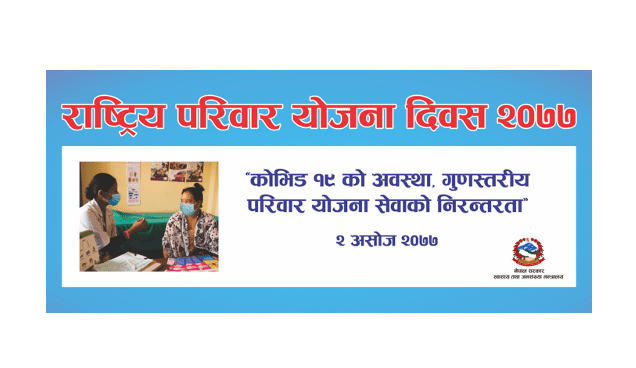
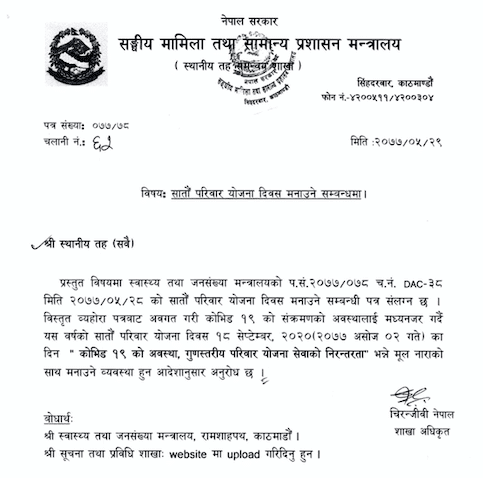
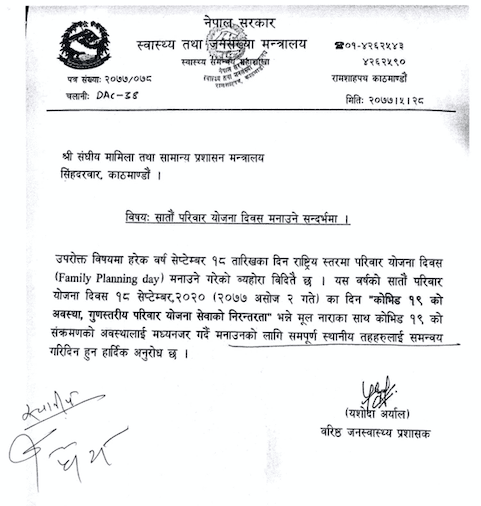
National Family Planning Day takes place every year on 18 September to raise awareness about the family planning and it’s important.

Screen Shot 2020 09 14 at 20.57.49
Photo: UNFPA Nepal (Country Website) 
Screen Shot 2020 09 14 at 20.59.49
National Family Planning Day 2020

Screen Shot 2020 09 14 at 20.59.30
National Family Planning Day 2020

Key message

Published by UNFPA NEPAL (Publicly available)

With many people spending more time at home amid the ongoing movement restrictions due to the COVID-19 pandemic, there is the possibility of increased pregnancies, which may be due to planning a family, increased unprotected sex or increased sexual activity because couples are less occupied by other recreational activities outside of the home. In the latter two situations, there is a probability that the usual contraceptive methods (especially short-acting reversible methods such as condoms or oral contraceptive pills) will only be available for a limited period of time and couples are likely to run out of stocks quite soon. 

The situation is more complex for couples who had not been using a method earlier and were planning to start one around this time. For couples using reversible contraceptive methods, there might be a need for replacement (due to side effects, complications, or completion of duration), or switching to another method. During such scenarios, going out to procure a contraceptive could be relatively difficult because of limitations in access to health services caused by the lockdown, and also because of the fear associated with the risk of acquiring the infection when venturing out of the house. This could lead to a reduction in contraceptive utilization, and a surge in unintended and unplanned pregnancies.

Access to safe, voluntary family planning is a human right. Family planning is central to gender equality and women’s empowerment, and it is a key factor in reducing poverty. Many women in Nepal are not able to use safe and effective family planning methods due to a lack of access to information or services and support from their partners or communities. The COVID-19 pandemic has made matters worse. The 7th National Family Planning Day provides an opportunity to highlight the importance of family planning.

Working together with development partners UNFPA has been supporting the federal, provincial and local governments to promote family planning by: ensuring a steady, reliable supply of quality contraceptives; strengthening the national health system; advocating for policies supportive of family planning; and gathering data to support this work. UNFPA also provides technical support to the Government of Nepal to develop evidence and policies that help increase access to family planning.

Family planning has long been considered a priority in Nepal and the majority of contraceptives and other commodities have been procured using the government budget including pool funds. In recent years, however, there have been several constraints related to procurement, supply chain management and inventory management which have led to a number of development partners’ direct support in these areas in order to sustain the momentum for family planning.

The Ministry of Health made a commitment to FP2020 in March 2015, just before the massive earthquake of 25 April 2015. The federal government and some provincial governments committed to identify and address barriers to family planning, broaden the range of available contraceptives and improve the method mix, as well as increase the budget for family planning on a yearly basis by 7%. Prior to signing off on the FP2020 commitment, the Ministry of Health had endorsed a five-year Costed Implementation Plan for Family Planning (2015-2020), which outlined the resources required for scaling up the family planning programme and the commodity needs.

Despite progress over the past 10 years in Nepal, 24% of married women still have an unmet need for family planning. Only 15% of married women or girls aged 15-19 use a modern form of contraception. In Nepal, 17% of adolescent women age 15-19 are already mothers or pregnant with their first child. Women in rural areas have an average of 2.9 children, compared to 2.0 children among women in urban areas. Women with no education have 1.5 more children than women who have graduated from high school. One in four married women in Nepal have an unmet need for family planning: 8% want to delay childbearing, while 16% want to stop childbearing.


Recommended readings

  • Kathmandu Declaration on: National Conference on Family Planning 2075
  • #National Family Planning Day (18th Sep 2015)
  • 2011 Nepal Demographic and Health Survey (NDHS)
  • 2016 Health SDG Profile: Nepal
  • Barriers to Family Planning Use in Eastern Nepal: Results from a Mixed Methods Study
  • Family Planning ” Opportunities, challenges & Priorities in Nepal
  • Family Planning 2020 (FP2020) Commitment, Nepal
  • Family Planning: Empowering People, Developing Nations – World Population Day 2017
  • Key findings – The 2015 Nepal Health Facility Survey (2015 NHFS)
  • National Family Planning Costed Implementation Plan (2015-2020)
  • National Family Planning Day (18- Sep 2016)
  • National Family Planning Day sep 18th 2014
  • National Family Planning Program, Nepal
  • National Female Community Health Volunteers (FCHVs) Program
  • Nepal Demographic and Health Survey 2016 Key Indicators Report
  • Nepal FP2020 Commitment -2017
  • SDG 3 Targets and Indicators for Nepal (2014–2030)
  • Sep 26 Every Year !! World Contraception Day


⚡ Looking for expert analysis, policy briefs, and high-level reviews on Nepal's health sector?

We are now offering premium subscription services to deliver timely, evidence-backed policy briefs, comprehensive technical reviews, and strategic analysis straight to your inbox. Tap into specialized consultant expertise and stay ahead on Nepal's emerging health strategies.

👉 [Contact Us]

Do you have a website? Looking for the best hosting provider? Here’s a discount code.

Latest Public Health Jobs

Latest Posts

  • World Atopic Eczema Day 2026: Breaking the Invisible Burden
  • DEVASTATING FLOODS IN NEPAL: PUBLIC HEALTH IMPACT AND A CALL FOR HUMANITARIAN SUPPORT
  • PEN-Plus Orientation Manual for Mid-Level Health Care Workers
  • National Health Training Strategy 2082
  • Simulation Accreditation Manual for Clinical Training Sites

Thanks for visiting us.
Disclaimer: The resources, documents, guidelines, and information on this blog have been collected from various sources and are intended for informational purposes only. Information published on or through this website and affiliated social media channels does not represent the intention, plan, or strategies of an organization that the initiator is associated with in a professional or personal capacity, unless explicitly indicated.
If you have any complaints, information, or suggestions about the content published on Public Health Update, please feel free to contact us at blog.publichealthupdate@gmail.com.
#StayUpdated


  • WordPress
  • Link
  • Facebook
  • Mail
  • Facebook
  • Twitter
  • Twitter
  • LinkedIn
  • Instagram
  • Facebook
September 14, 2020 0 comments
0 FacebookTwitterPinterestLinkedinTumblrVKOdnoklassnikiRedditStumbleuponWhatsappTelegramLINEPocketSkypeViberEmail
Guideline for Operation of COVID-19 Temporary Hospitals 2077
National Plan, Policy & GuidelinesOutbreak NewsResearch & Publication

Guideline for Operation of COVID-19 Temporary Hospitals 2077

by Public Health Update September 14, 2020
written by Public Health Update

The Ministry of Health and Population, Nepal has endorsed a Guideline for Operation of COVID-19 Temporary Hospitals at Local level- 2077.

Download now
GUIDELINE

  • The Ministry of Health and Population (MoHP), Nepal
  • COVID19 Resources: Guidelines and Documents- Ministry of Health and Population 
  • List of Laboratories for COVID19 testing in Nepal
  • COVID-19 Insurance Scheme in Nepal (CORONA Insurance)
  • Interim Guidance for Dental Practices During COVID-19 in Nepal
  • Guideline for Clinical Audit | Curative Service Division
  • National Testing Guidelines for COVID-19, Nepal (Version 3, 2077/04/14)
  • Health Care Waste Management in the Context of COVID-19 Emergency (Interim Guidance)


⚡ Looking for expert analysis, policy briefs, and high-level reviews on Nepal's health sector?

We are now offering premium subscription services to deliver timely, evidence-backed policy briefs, comprehensive technical reviews, and strategic analysis straight to your inbox. Tap into specialized consultant expertise and stay ahead on Nepal's emerging health strategies.

👉 [Contact Us]

Do you have a website? Looking for the best hosting provider? Here’s a discount code.

Latest Public Health Jobs

Latest Posts

  • World Atopic Eczema Day 2026: Breaking the Invisible Burden
  • DEVASTATING FLOODS IN NEPAL: PUBLIC HEALTH IMPACT AND A CALL FOR HUMANITARIAN SUPPORT
  • PEN-Plus Orientation Manual for Mid-Level Health Care Workers
  • National Health Training Strategy 2082
  • Simulation Accreditation Manual for Clinical Training Sites

Thanks for visiting us.
Disclaimer: The resources, documents, guidelines, and information on this blog have been collected from various sources and are intended for informational purposes only. Information published on or through this website and affiliated social media channels does not represent the intention, plan, or strategies of an organization that the initiator is associated with in a professional or personal capacity, unless explicitly indicated.
If you have any complaints, information, or suggestions about the content published on Public Health Update, please feel free to contact us at blog.publichealthupdate@gmail.com.
#StayUpdated


  • WordPress
  • Link
  • Facebook
  • Mail
  • Facebook
  • Twitter
  • Twitter
  • LinkedIn
  • Instagram
  • Facebook
September 14, 2020 0 comments
0 FacebookTwitterPinterestLinkedinTumblrVKOdnoklassnikiRedditStumbleuponWhatsappTelegramLINEPocketSkypeViberEmail
COVID19 TRAINING
Public Health OpportunitiesNotice

Virtual Training on”Strengthening Health Workforce Preparedness and Response to COVID-19”

by Public Health Update September 14, 2020
written by Public Health Update

Pratiman-Neema Memorial Foundation and The Ministry of Social Development of Province 5 of Nepal, in partnership with Brown University, The University of New Mexico, USA is going to organize a training program on ”Strengthening Health Workforce Preparedness and Response to COVID-19”.

COVID19 TRAINING
COVID19 TRAINING

Duration: One day Virtual training program (approx. 2 to 2.5 hrs)

Date: September 17 onwards.

Cost: FREE

Interested health workers, paramedics and students from health and allied sciences are invited to join this training session.

Included modules on training are;

  • COVID -19 background
  • Infection
  • Prevention and Control
  • Screening and Triage
  • Diagnosis and Management & Risk Communication and
  • Public Health Messaging

Trainer : Kishor Acharya (MBBS), Master trainer, ToT Program

Certificate: Course completion certificate will be provided at the end.

For more information: poudelanup31@gmail.com.

Registration link: Google Sheet


⚡ Looking for expert analysis, policy briefs, and high-level reviews on Nepal's health sector?

We are now offering premium subscription services to deliver timely, evidence-backed policy briefs, comprehensive technical reviews, and strategic analysis straight to your inbox. Tap into specialized consultant expertise and stay ahead on Nepal's emerging health strategies.

👉 [Contact Us]

Do you have a website? Looking for the best hosting provider? Here’s a discount code.

Latest Public Health Jobs

Latest Posts

  • World Atopic Eczema Day 2026: Breaking the Invisible Burden
  • DEVASTATING FLOODS IN NEPAL: PUBLIC HEALTH IMPACT AND A CALL FOR HUMANITARIAN SUPPORT
  • PEN-Plus Orientation Manual for Mid-Level Health Care Workers
  • National Health Training Strategy 2082
  • Simulation Accreditation Manual for Clinical Training Sites

Thanks for visiting us.
Disclaimer: The resources, documents, guidelines, and information on this blog have been collected from various sources and are intended for informational purposes only. Information published on or through this website and affiliated social media channels does not represent the intention, plan, or strategies of an organization that the initiator is associated with in a professional or personal capacity, unless explicitly indicated.
If you have any complaints, information, or suggestions about the content published on Public Health Update, please feel free to contact us at blog.publichealthupdate@gmail.com.
#StayUpdated


  • WordPress
  • Link
  • Facebook
  • Mail
  • Facebook
  • Twitter
  • Twitter
  • LinkedIn
  • Instagram
  • Facebook
September 14, 2020 2 comments
0 FacebookTwitterPinterestLinkedinTumblrVKOdnoklassnikiRedditStumbleuponWhatsappTelegramLINEPocketSkypeViberEmail
COVID19 Pandemic
National Health NewsCommunicable DiseasesHealth Literacy, Health Education & PromotionNotice

List of Laboratories for COVID19 testing in Nepal

by Public Health Update September 14, 2020
written by Public Health Update

PCR test Laboratories for COVID-19 in Nepal

Following hospitals and laboratories are allowed to conduct PCR test for COVID-19 in Nepal.

Recommended reading: List of Laboratories for SARS CoV-2 Rapid Antigen Test

  • National Testing-Guidelines for COVID-19 (Version 5), Nepal
  • National Testing Guidelines for COVID-19, Nepal (Version 3, 2077/04/14)
  • National Testing Guidelines for COVID-19
S.No.Name of designated COVID-19 Lab/InstitutionProvinceGovernment/
Private
Contact No. 
 1BP Koirala Institute of Health Science, Dharan Province 1Government 025-525555
 2Koshi Hospital, Morang Province 1Government 021-530103
 3Provincial Public Health Laboratory 1, Biratnagar Province 1Government 
 4Mechi Hospital, Jhapa Province 1Government 023-520172
 5Kankai COVID Lab, JhapaProvince 1Government 
 6Birat medical College and Teaching Hospital, BiratnagarProvince 1Private021-421182
 7Neurocardio and Multispeciality Hospital, BiratnagarProvince 1Private021-417484
8 Nobel Medical college and Teaching Hospital, BiratnagarProvince 1Private021-460736
9Provincial Public Health Laboratory 2, Dhanusha Province 2Government 
10Narayani Hospital, Birgunj Province 2Government 051-521993
11Gajendra Narayan Singh Hospital, Rajbiraj, SaptariProvince 2Government 031-520155
12Bardibas Hospital, MohattariProvince 2Government 
13 Gaur Hospital, RautahatProvince 2Government 
14National Public Health laboratory (NPHL), Kathmandu BagmatiGovernment 01-5352421
15Sukra Raj Tropical and Infectious Disease Hospital, Kathmandu BagmatiGovernment 01-4253396
16Kathmandu University School of Medical Sciences, Dhulikhel BagmatiPrivate 01-490497
17Bharatpur COVID-19 Diagnostic Lab, Chitwan BagmatiGovernment 056 – 530854
18Patan Academy of Health Sciences (PAHS), Lalitpur BagmatiGovernment 01-5545112
19Bir Hospital, Kathmandu BagmatiGovernment 01-4221988
20Vector Borne Disease Research and Training Center (VBDRTC), Hetauda BagmatiGovernment 057-521826
057-520572
21Tribhuvan University and Teaching Hospital (TUTH) BagmatiGovernment 01-4412303
22Nepal Police Hospital Laboratory, Kathmandu BagmatiGovernment 01-4412530
23  Nepal Armed Police Force Hospital (APF), Kathmandu BagmatiGovernment 01-4315224
24Prasuti Griha ( Paropakar Maternity and Women’s Hospital) Kathmandu BagmatiGovernment 01-4260405
25Leprosy mission Nepal, Anandaban, Lele, LalitpurBagmatiPrivate 01- 6218382
26Nepal Korea Friendship Hospital, Kathmandu BagmatiGovernment 01- 6633442
27Birendra Army Hospital BagmatiGovernment 01-4274019
28Central Diagnostics Laboratory  and  Research Center BagmatiPrivate 01-4417177
29 Bidh Laboratory, Lalitpur BagmatiPrivate 01-5260149
30 Sooriya Healthcare, Kathmandu BagmatiPrivate 01-4001714
31 Kathmandu Medical College BagmatiPrivate 01-4469064
32 Star Hospital, Kathmandu BagmatiPrivate01-5540478
33 B & B Hospital, Lalitpur BagmatiPrivate01-55531930 
34 Nepal Medicity Hospital BagmatiPrivate01- 4217766
35 Chitwan Medical College, Bharatpur BagmatiPrivate056-532933 
36 Intrepid Nepal, Kathmandu BagmatiPrivate 01-4216921
37Decode Genomics and Research Center, Kathmandu BagmatiPrivate 01-4116637
38HAMS hospital, Dhumbarahi, Kathmandu  BagmatiPrivate 01-4377404,
01-4377704,
01-4376925
39Kirtipur Nagarpalika COVID LabBagmatiGovernment 
40BP Koirala Memorial Cancer Hospital, BharatpurBagmatiGovernment 056-524501
41Pokhara Academy of Health Science (WR Hospital) GandakiGovernment 061-520461
42Provincial Tuberculosis Center, Pokhara GandakiGovernment 061-5257551
43Provincial Public Health Laboratory 5, Bhairahawa Province 5Government 071-543978
44Bheri Hospital, Nepalgunj Province 5Government 081-520120
45 Nepalgunj Medical College, KohalpurProvince 5Private 
46 Gulmi COVID-19 LabProvince 5Government 
47Rapti Academy of Health Sciences Province 5Government 082-5544253
48 Lumbini Provincial Hospital, Butwal Province 5Government 071-540200
49Bageshwori Diagnostic and Polyclinic, Banke Province 5Private 
50National Path Lab and Research Center, Rupandehi Province 5Private 071-541207
51Province Hospital Surkhet KarnaliGovernment 
52Chaurjahari Municipality PCR laboratory,Rukum (west) KarnaliGovernment 
53Karnali Academy of Health Sciences KarnaliGovernment 087-520115
54COVID-19 Testing Laboratory, Dailekh KarnaliGovernment 
55Seti Provincial Hospital, Dhangadi Sudur PaschimGovernment 091-525911
56Vetenary Lab Research Center,surkhet Sudur PaschimGovernment 
57Dadeldhura Hospital Laboratory, Dadeldhura Sudur PaschimGovernment 096-410372
58 Doti Hospital, DotiSudur PaschimGovernment 
59Baitadi Hospital LaboratorySudur PaschimGovernment 
60Bajhang Hospital LaboratorySudur PaschimGovernment 
61International Organization for Migration Nepal (IOM)BagmatiPrivate01-4426250
62Nepal Medical College, AttarkhelBagmati Private 
63Manmohan Medical College and Teaching Hospital, SwayambhuBagmati Private 
64Life Care Diagnostics, PokharaGandaki Private 
65Alka Hospital, LalitpurBagmati Private 
66Modern Diagnostic, KathmanduBagmati Private 
67Alfa Health Care & Diagnostic Center, KathmanduBagmati Private 
68Siddhi Poly Path Lab, KathmanduBagmati Private 
69Kantipur Hospital, KathmanduBagmati Private 
70B-Sure Diagnostic Center, BiratnagarProvince 1 Private 
71Universal College of Medical Science, BhairahawaProvince 5 Private 
72Janamaitri HospitalBagmatiPrivate 
73Palpa Hospital COVID-19 LabGandakiGovernment 
74Lumbini Medical CollegeProvince 5Private 
75Trishuli HospitalBagmatiGovernment 
76National Medical College, BirgunjProvince 2Private 
Updated date: Nov. 6, 2020 (Source: NPHL)

Recommended reading: List of approved COVID-19 antigen kits in Nepal

Essential readings

  • List of Laboratories for SARS CoV-2 Rapid Antigen Test in Nepal
  • List of Laboratories for COVID19 testing in Nepal (RT-PCR)
  • List of COVID-19 Hospitals (COVID-19 Care Units) in Nepal
  • National Testing-Guidelines for COVID-19 (Version 5), Nepal (Latest)
  • List of Certified COVID-19 Antigen kits in Nepal

Cost of Polymerase Chain Reaction (PCR) test for COVID-19 in Nepal

The Ministry of Health and Population (MoHP) reduced the cost of Polymerase Chain Reaction (PCR) test for COVID-19. The cost of PCR test has been lowered to Rs 2,000 from 4,400. (Sept 14, 2020)

Related

  • COVID-19 Insurance Scheme in Nepal (CORONA Insurance)
  • Comparative Evaluation of Commercially available Rapid Diagnostic Test Kits for the use of Screening of Suspected Cases of Novel Coronavirus infection in Nepal
  • Ninety Percent of countries report disruptions to essential health services since COVID-19 pandemic
  • List of Designated Hospitals, Hub Hospitals, Provincial Hospitals and Medical Colleges/ Academia


⚡ Looking for expert analysis, policy briefs, and high-level reviews on Nepal's health sector?

We are now offering premium subscription services to deliver timely, evidence-backed policy briefs, comprehensive technical reviews, and strategic analysis straight to your inbox. Tap into specialized consultant expertise and stay ahead on Nepal's emerging health strategies.

👉 [Contact Us]

Do you have a website? Looking for the best hosting provider? Here’s a discount code.

Latest Public Health Jobs

Latest Posts

  • World Atopic Eczema Day 2026: Breaking the Invisible Burden
  • DEVASTATING FLOODS IN NEPAL: PUBLIC HEALTH IMPACT AND A CALL FOR HUMANITARIAN SUPPORT
  • PEN-Plus Orientation Manual for Mid-Level Health Care Workers
  • National Health Training Strategy 2082
  • Simulation Accreditation Manual for Clinical Training Sites

Thanks for visiting us.
Disclaimer: The resources, documents, guidelines, and information on this blog have been collected from various sources and are intended for informational purposes only. Information published on or through this website and affiliated social media channels does not represent the intention, plan, or strategies of an organization that the initiator is associated with in a professional or personal capacity, unless explicitly indicated.
If you have any complaints, information, or suggestions about the content published on Public Health Update, please feel free to contact us at blog.publichealthupdate@gmail.com.
#StayUpdated


  • WordPress
  • Link
  • Facebook
  • Mail
  • Facebook
  • Twitter
  • Twitter
  • LinkedIn
  • Instagram
  • Facebook
September 14, 2020 0 comments
0 FacebookTwitterPinterestLinkedinTumblrVKOdnoklassnikiRedditStumbleuponWhatsappTelegramLINEPocketSkypeViberEmail
Ministry of Health and Population (MOHP) Nepal
Fellowships, Studentship & ScholarshipsInternational Jobs & OpportunitiesNotice

Scholarship Opportunity! Chulabhorn Graduate Institute & JDS Programme

by Public Health Update September 13, 2020
written by Public Health Update

The Ministry of Health and Population invites application from eligible candidates for the following scholarship opportunities.

The Project for Human Resource Development Scholarship (JDS) Programme, funded by the Government of Japan, is now accepting applications from government sector workers, who wish to obtain post graduate degrees from Japanese Universities, starting from the academic year 2021. The courses will be taught in English, and the duration is two years for Master’s degree, and three years for Doctoral degree. The total number of participants from Nepal will be 20 for Master’s degree and 2 for Doctoral degree per year.

The government of Japan is offering the JDS Scholarship Programme to government officials in Nepal as a way of providing them with opportunities for academic research at Japanese graduate schools.

The JDS Scholarship Programme targets, primarily, highly capable young government officers who are expected to engage in formulating and implementing social and economic development plans and to become leaders of Nepal in the 21st century.

Application Period: From 0:00 on Monday September 21st to 17:00 on Friday October 2nd, 2020.

The JDS Project for Nepal Phase 2

  • Eligibility: As same as last year
    (1) Master’s Program
    Applicants should be/have:
  • Nepali nationals
  • between the ages of 25 and 40 (both inclusive) as of April 1st, 2021.
    (should be born between April 2nd, 1980 and April 1st, 1996)
  • a Bachelor’s degree. (Those who will apply to Kyushu University have to have a Bachelor’s degrees
    in Law)
  • at least 3 years of work experience in Civil Service at the time of applications.
  • gazetted civil servants currently employed in following organizations
    ・All ministries
    ・All agencies under ministries
    ・All constitutional bodies
    ・All other institutions and authorities
    ・All courts
    or civil servants (Level 7 and above) originally recruited by the federal government and
    deputed/adjusted to 7 provincial and 753 local governments.
  • a strong will to work for the development of Nepal after their return home.
  • in good health.
  • English language proficiency sufficiently fluent for studying in Japan.
    Applicants should not be/have:
  • serving in the military.
  • previously acquired a master’s degree after studying abroad on a scholarship awarded by the
    Government of Nepal or any other development partners.
  • currently receiving, or planning to receive, another scholarship through the assistance by the
    Government of Nepal or any other development partners.
    (2) Doctoral Program
    Applicants should be/have:
  • Nepali nationals
  • between the ages of 30 and 45 (both inclusive) as of April 1st, 2021.
    (should be born between April 2nd, 1975 and April 1st, 1991)
  • at least 5 years of work experience in Civil Service at the time of applications
  • gazetted civil servants (Under Secretary and above) currently employed in following organizations
    ・All ministries
    ・All agencies under ministries
    ・All constitutional bodies
    ・All other institutions and authorities
    ・All courts
    or civil servants (Level 9 and above) originally recruited by the federal government and
    deputed/adjusted to 7 provincial and 753 local governments.
    5.hold a master’s degree (including universities in Nepal).
    6.returned to and served for the country for certain years (involving actual work and/or research
    preparation) set by Civil Service Act after completion of Master’s course.
    7.in good health.
    8.sufficient English language ability to pursue a doctor’s degree
    Applicants should not be/have:
    1.serving in the military.
    2.previously acquired a doctoral degree after studying abroad on a scholarship awarded by the
    Government of Nepal or any other development partners.
    3.currently receiving, or planning to receive, another scholarship to acquire doctoral degree through
    the assistance by the Government of Nepal or any other development partners.
MoHP Scholarships

Chulabhorn Graduate Institute Post-graduate Scholarship Program

MoHP-Scholarships1
MoHP-Scholarships

The Chulabhorn Graduate Institute (CGI) is a multidisciplinary post-graduate academic institute established in 2005, under the initiative of Professor Dr. Her Royal Highness Princess Chulabhorn Mahidol. More info: available on website.


⚡ Looking for expert analysis, policy briefs, and high-level reviews on Nepal's health sector?

We are now offering premium subscription services to deliver timely, evidence-backed policy briefs, comprehensive technical reviews, and strategic analysis straight to your inbox. Tap into specialized consultant expertise and stay ahead on Nepal's emerging health strategies.

👉 [Contact Us]

Do you have a website? Looking for the best hosting provider? Here’s a discount code.

Latest Public Health Jobs

Latest Posts

  • World Atopic Eczema Day 2026: Breaking the Invisible Burden
  • DEVASTATING FLOODS IN NEPAL: PUBLIC HEALTH IMPACT AND A CALL FOR HUMANITARIAN SUPPORT
  • PEN-Plus Orientation Manual for Mid-Level Health Care Workers
  • National Health Training Strategy 2082
  • Simulation Accreditation Manual for Clinical Training Sites

Thanks for visiting us.
Disclaimer: The resources, documents, guidelines, and information on this blog have been collected from various sources and are intended for informational purposes only. Information published on or through this website and affiliated social media channels does not represent the intention, plan, or strategies of an organization that the initiator is associated with in a professional or personal capacity, unless explicitly indicated.
If you have any complaints, information, or suggestions about the content published on Public Health Update, please feel free to contact us at blog.publichealthupdate@gmail.com.
#StayUpdated


  • WordPress
  • Link
  • Facebook
  • Mail
  • Facebook
  • Twitter
  • Twitter
  • LinkedIn
  • Instagram
  • Facebook
September 13, 2020 0 comments
0 FacebookTwitterPinterestLinkedinTumblrVKOdnoklassnikiRedditStumbleuponWhatsappTelegramLINEPocketSkypeViberEmail
CoursesFellowships, Studentship & ScholarshipsFinancial AidFully fundedGrants and Funding OpportunitiesMaster's DegreeOpportunities by RegionSouth-East Asia RegionUniversities & School of Public Health

Chulabhorn Graduate Institute and ASEAN Foundation Joint Post-graduate Scholarship Programme in Science and Technology

by Public Health Update September 13, 2020
written by Public Health Update

Chulabhorn Graduate Institute and ASEAN Foundation Joint Post-graduate Scholarship Programme in Science and Technology

Chulabhorn Graduate Institute – ASEAN Foundation Joint Post-graduate Scholarship Programme in Science and Technology (Academic Year 2021).

The Chulabhorn Graduate Institute (CGI) and the ASEAN Foundation (AF) have entered into an agreement to develop highly qualified human resources in the area of science and technology within ASEAN Member States through the Chulabhorn Graduate Institute – ASEAN Foundation Post-graduate Scholarship Programme in Science and Technology.

The CGI is a multidisciplinary post-graduate academic institute established in 2005, under the initiative of Professor Dr. Her Royal Highness Princess Chulabhorn Mahidol. The aim of CGI is to employ the most recent interactive teaching techniques used in world leading educational and research institutions to train trainees in the programme to be effective thinkers and leaders in their field of expertise, to better serve their countries’ needs towards sustainable development. The CGI is presently offering programmes leading to Master’s and Doctoral Degree in Applied Biological Sciences: Environmental Health, Environmental Toxicology, and Chemical Science.

The ASEAN Foundation is an organization from and for the people of ASEAN. Three decades after ASEAN was established, the ASEAN Leaders recognised that there remained inadequate shared prosperity, ASEAN awareness, and contact among the people of ASEAN. It was of this concern that the ASEAN Leaders established the ASEAN Foundation during the ASEAN’s 30th Anniversary Commemorative Summit in Kuala Lumpur, Malaysia, on 15 December 1997. The ASEAN Foundation exists because of one vision: to build a cohesive and prosperous ASEAN Community. As an ASEAN’s body, the ASEAN Foundation is tasked to support ASEAN mainly in promoting awareness, identity, interaction, and development of the people of ASEAN.

This year, ten (10) scholarships are available for ASEAN nationals (except Thai citizen) who are interested to pursue a Master’s Degree at the CGI. Selection of successful applicants will be based on merit.

Eligibility

Scholarships are open to bonafide ASEAN nationals (except Thai citizen) who meet the following qualifications:

  • Under 30 years of age
  • Hold a Bachelor Degree with a cumulative GPA of at least 2.75 in one of the following fields:
    • Sciences: Chemistry, Biology, Biological Sciences, Molecular Biology, Environmental Sciences
    • Medical Sciences: Medicine, Medical Technology
    • Pharmacy or Pharmaceutical Sciences

Applicants from other related fields are also welcome to apply.

  • Have experience in scientific laboratory research
  • Must have demonstrated English proficiency, preferably on one of two recognised tests of language proficiency (TOEFL, IELTS)
  • Must provide a statement of purpose explaining their interests in the study

Field of Study

  • Applied Biological Sciences: Environmental Health
  • Environmental Toxicology
  • Chemical Sciences

Scholarship Coverage

The scholarship will cover tuition and other academic fees (credit fee, laboratory expenses, refresher course, enrollment fee, thesis fee, production of thesis documents), round trip airfare, visa fee, first settlement allowance, relocation allowance, accommodation, monthly stipend, book allowance, health insurance, and others.

Award Period

The scholarship award will cover six (6) weeks refresher courses and follow by a period of two (2) years Master’s Degree study, subject to an annual review of the scholar’s satisfactory progress.

Refresher Courses will tentatively commence in June 2021 while the academic programme will commence in August 2021.

Application Procedure

Applicants should complete the Chulabhorn Graduate Institute – the ASEAN Foundation Post-graduate Scholarship Programme’s application form and submit together with other supporting documents through the following channel:

  • Send via e-mail the scan file of the application form and all the supporting document to: The Chulabhorn Graduate Institute (CGI Scholarship Programme) 906 Kamphangphet 6 Road, Laksi, Bangkok 10210 THAILAND
    E-mail: cgi_academic@cgi.ac.th
  • After step (1) send all the original documents via postal services to the address as stated in (1).

No consideration will be given to application with incomplete supporting documents.

Supporting Document

Following documents must be submitted together with application form:

  1. Full Academic Transcript
  2. Three Recommendation Letters
  3. Statement of Purpose explaining interest of study
  4. Medical History Report
  5. Other supporting documents to facilitate application screening

Application Period

  • Applications for the CGI-AF Scholarship Programme is due on 30 October 2020.

Notification of the Award

  • Successful applicants will be notified of the outcome by the CGI around February 2021.

For more information, please contact
Name: The Chulabhorn Graduate Institute
Address: The Chulabhorn Graduate Institute 906 Kamphaengphet 6 Road, Talat Bang Khen, Laksi, Bangkok 10210 THAILAND
E-mail: cgi_academic@cgi.ac.th
Website: www.cgi.ac.th
Tel Number: (66 2) 554-1900 ext. 2130, 2138
Fax Number: (66 2) 554-1991

Name: The ASEAN Foundation
Address: Jl. Sam Ratulangi No.2, Menteng,Jakarta – 10350 INDONESIA
E-mail: secretariat@aseanfoundation.org
Website: www.aseanfoundation.org
Tel Number: (62 21) 3192-4828 / 3192- 4833
Fax Number: (62 21) 3192-6078


Similar Opportunities 

  • List of funding agencies and scholarships to study at KIT
  • Master Programmes at KIT Royal Tropical Institute and Scholarships
  • Orange Knowledge Scholarships Programme 2020
  • Institute of Tropical Medicine, Antwerp Scholarships
  • Institute of Tropical Medicine, Antwerp Short Courses 2020
  • Chulabhorn Graduate Institute and ASEAN Foundation Joint Post-graduate Scholarship Programme in Science and Technology
September 13, 2020 0 comments
0 FacebookTwitterPinterestLinkedinTumblrVKOdnoklassnikiRedditStumbleuponWhatsappTelegramLINEPocketSkypeViberEmail
Newer Posts
Older Posts

Search

Follow Us

Facebook Twitter Instagram Pinterest Linkedin Youtube

Categories

  • Abstracts (25)
  • Activities (91)
  • Adolescent Sexual and Reproductive Health (ASRH) (25)
  • Advice & Tips (4)
  • African Region (5)
  • AI and Health (1)
  • Annual Meeting (6)
  • Antimicrobial Resistance (AMR) (21)
  • Award (20)
  • Awards (17)
  • Books (9)
  • Call for Proposal, EOI & RFP (103)
  • Call for Research Participants (8)
  • Clinical Doctor Jobs (6)
  • Communicable Diseases (107)
  • Competition (20)
  • Conference (129)
  • Consultant (1)
  • Courses (206)
  • Dashboard (2)
  • Digital Health & Health Informatics (10)
  • Drug and Medicine (18)
  • Eastern Mediterranean Region (3)
  • Education (16)
  • Environment (3)
  • Environmental Health & Climate Change (47)
  • European Region (42)
  • Exchange Program (1)
  • Fact Sheet (118)
  • FCHVs (1)
  • Fellowships, Studentship & Scholarships (168)
  • Financial Aid (13)
  • Form Formats (2)
  • Fully funded (22)
  • Global Health News (440)
  • Grants and Funding Opportunities (193)
  • Guest Post (44)
  • Health Assistant Jobs (1)
  • Health Equity (7)
  • Health Financing and Economics (24)
  • Health in Data (118)
  • Health Insurance (5)
  • Health Jobs (52)
  • Health Literacy, Health Education & Promotion (51)
  • Health Organization Profile (42)
  • Health Systems (85)
  • Human Resource for Health (33)
  • Humanitarian Health & Emergency Response (45)
  • Hypertension (5)
  • Implementation Research (49)
  • International Health (3)
  • International Jobs & Opportunities (374)
  • International Plan, Policy & Guidelines (212)
  • Internships (5)
  • Jobs Vacancies (57)
  • Journals (8)
  • Life Style & Public Health Nutrition (39)
  • Live (10)
  • Master's Degree (48)
  • Maternal, Newborn and Child Health (88)
  • Mentorship Program (2)
  • Miscellaneous (16)
  • National Health News (160)
  • National Plan, Policy & Guidelines (473)
  • Neglected Tropical Diseases (NTDs) (51)
  • Non- Communicable Diseases (NCDs) (123)
  • Notice (103)
  • Nursing Jobs (6)
  • Nutritionist Jobs (1)
  • One Health (18)
  • Online & Distance Learning (22)
  • Online Courses (91)
  • Op-Ed Article (3)
  • Opportunities by Region (83)
  • Outbreak News (213)
  • Partially funded (6)
  • PCL Health Science Jobs (3)
  • PH Important Day (538)
  • Pharmacist Jobs (3)
  • PhD (54)
  • Photos (5)
  • Planetary Health (4)
  • PostDoc (14)
  • Presentation Slides (26)
  • Primary Health Care (25)
  • Provincial Plan, Policies and Guidelines (17)
  • Public Health (1,288)
  • Public Health Epidemiology & Biostatistics (14)
  • Public Health Events (307)
  • Public Health Information (21)
  • Public Health Innovation (9)
  • Public Health Jobs (52)
  • Public Health News (558)
  • Public Health Notes (120)
  • Public Health Opportunities (509)
  • Public Health Opportunity (493)
  • Public Health Programs (108)
  • Public Health Seminar (2)
  • Public Health Tools (2)
  • Public Health Update (574)
  • Quality Improvement & Infection Prevention (20)
  • Region of America (8)
  • Reports (187)
  • Research & Project Grants (39)
  • Research & Project Grants (33)
  • Research & Publication (651)
  • Research Articles (10)
  • Road Traffic Accidents (RTA) (9)
  • School of Public Health (60)
  • Self funded (2)
  • South-East Asia Region (26)
  • Success Stories (17)
  • Summer and Winter Courses (40)
  • Summer Courses (28)
  • Sustainable Development Goals (SDGs) (14)
  • Syllabus (61)
  • Symposium (9)
  • Tobacco Control (35)
  • Training (40)
  • Travel Grants (15)
  • Trick, Technique & Skills (8)
  • Uncategorized (3)
  • Undergraduate Degree (7)
  • Universal Health Coverage (36)
  • Universities (29)
  • Universities & School of Public Health (58)
  • Vacancy Announcement (26)
  • Vaccine Preventable Diseases (40)
  • Vector-Borne Diseases(VBDs) (31)
  • Videos (3)
  • View Points (1)
  • Webinar (4)
  • Western Pacific Region (13)
  • Workshop (18)
  • World News (120)
Post New Jobs: Vacancy Announcement Service

Search Box

Public Health Update (Sagun’s Blog) is a popular public health portal in Nepal. Thousands of health professionals are connected with Public Health Update to get up-to-date public health updates, search for jobs, and explore opportunities.
#1 Public Health Blog for sharing Job opportunities and updates in Nepal

”Public Health Information For All”
– – Sagun Paudel, Founder

  • HOT JOBS
    • Public Health Jobs
    • Medical Doctor Jobs
    • Nursing Jobs
    • Health Assistant Jobs
    • Pharmacist Jobs
    • NGOs Jobs
    • Government Jobs
  • Top Categories
    • National Plan, Policy & Guidelines Top
    • Public Health Calendar
    • Fellowships & Scholarships
    • Health Systems
    • Health Organization Profiles
    • International Jobs & Opportunities
    • Public Health Opportunity

PUBLIC HEALTH INITIATIVE

    • Submit your Vacancies New
    • Partnership Opportunities

Contact: blog.publichealthupdate@gmail.com

https://wa.me/+9779856036932

All Right Reserved. 2011-2026. Contact us. 

Facebook Twitter Instagram Youtube Envelope
Public Health Update
  • Home
  • Public Health
    • Home 1
      • Adolescent Sexual and Reproductive Health (ASRH)
      • Antimicrobial Resistance (AMR)
      • Communicable Diseases
      • Digital Health & Health Informatics
      • Environmental Health & Climate Change
      • Health Financing and Economics
      • Health Equity
    • Home 2
      • Health Literacy, Health Education & Promotion
      • Human Resource for Health
      • Humanitarian Health & Emergency Response
      • Implementation Research
      • International Health
      • Life Style & Public Health Nutrition
      • Maternal, Newborn and Child Health
    • Home 3
      • Neglected Tropical Diseases (NTDs)
      • Non- Communicable Diseases (NCDs)
      • One Health
      • Planetary Health
      • Public Health Epidemiology & Biostatistics
      • Primary Health Care
      • Quality Improvement & Infection Prevention
    • Home 4
      • Road Traffic Accidents (RTA)
      • Sustainable Development Goals (SDGs)
      • Tobacco Control
      • Universal Health Coverage
      • Vaccine Preventable Diseases
      • Vector-Borne Diseases(VBDs)
      • Notices
  • Public Health Update
    • Home 1
      • Public Health News
      • Global Health News
      • Outbreak News
      • National Health News
      • COVID-19
    • Home 2
      • Fact Sheet
      • Health in Data
      • PH Important Day
      • Public Health Events
      • Public Health Programs
    • Home 3
      • Health Systems
      • Health Insurance
      • Health Organization Profile
      • Success Stories
      • Public Health Innovation
  • Public Health Opportunities
    • Fully funded
    • Travel Grants
    • Grants and Funding Opportunities
    • Opportunities by Region
    • International Jobs & Opportunities
    • Research & Project Grants
    • Fellowships, Studentship & Scholarships
    • Conference
  • Jobs
    • Home 1
      • Health Jobs
      • Public Health Jobs
      • Clinical doctor Jobs
      • Health Assistant Jobs
      • Nursing Jobs
      • PCL Health Science Jobs
    • Home 2
      • Dental Jobs
      • Pharmacist Jobs
      • TSLC (Health Jobs)
      • Laboratory Jobs
      • Nutritionist Jobs
  • Downloads
    • International Plan, Policy & Guidelines
    • National Plan, Policy & Guidelines
    • Reports
    • Books
    • Research Articles
  • School of Public Health
    • Home 1
      • Courses
      • Master’s Degree
      • Undergraduate Degree
      • PhD
    • Home 2
      • Universities
      • Syllabus
      • Public Health Notes
      • Mentorship Program
      • Startup Project
    • Home
      • Summer and Winter Courses
      • Summer Courses
      • Online Courses
      • Workshop
      • Training
Public Health Initiative, A Registered Non-profit organization – All Right Reserved. 2011-2023