
Neither of the men, one diagnosed HIV positive 30 years ago and the other in 2011, have ever been ill, and the AIDS-causing virus cannot be detected with routine tests of their blood.
''DELAMANID'' use in treatment of MDR-TB: WHO interim guidance
- Proper patient inclusion: Special caution is required when delamanid is used in people aged 65 and over, in adults living with HIV, patients with diabetes, hepatic or severe renal impairment, or those who use alcohol or substances. Use in pregnant and breastfeeding women and children is not advised.
- Adherence to WHO recommendations when designing MDR-TB treatment regimens: When delamanid is included in treatment, all principles on which WHO-recommended MDR-TB treatment regimens are based must be followed, particularly the inclusion of four effective second-line drugs as well as pyrazinamide. Delamanid should not be introduced alone into a regimen in which the companion drugs are failing to show effectiveness.
- Effective treatment and monitoring: Treatment must be closely monitored for effectiveness and safety, using sound treatment and management protocols that have been approved by the relevant national authorities.
- Pharmacovigilance and management of adverse events: active pharmacovigilance measures must be in place to ensure early detection and proper management of adverse drug reactions and potential interactions with other drugs.
- Informed consent: Patients must be fully aware of the potential benefits and harms of the new drug, and give informed consent before embarking on treatment
ACHIEVEMENT AND PROGRESS TOWARDS HEALTH RELATED MDGS IN NEPAL(Draft of my Seminar)
Secretary-General’s Message for 2014
Global tuberculosis report 2014: Improved data reveals higher global burden of tuberculosis
”This is the nineteenth global report on tuberculosis (TB) published by WHO in a series that started in 1997. It provides a comprehensive and up-to-date assessment of the TB epidemic and progress in implementing and financing TB prevention, care and control at global, regional and country levels using data reported by over 200 countries that account for over 99% of the world’s TB cases. The report is accompanied by a special supplement that marks the 20th anniversary of the establishment of the Global Project on Anti-TB Drug Resistance Surveillance. The supplement highlights the latest status of knowledge about the epidemic of multidrug-resistant TB (MDR-TB) and the programmatic response.”Hand washing with soap is a “do-it-yourself vaccine” that prevents infections and saves lives. -Globalhandwashing.org
Hand washing is easy to do and it’s one of the most effective ways to prevent the spread of many types of infection and illness in all settings—from our home and workplace to child care facilities and hospitals. Clean hands can stop germs from spreading from one person to another and throughout an entire community.
- When should you wash your hands?
- Before, during, and after preparing food
- Before eating food
- Before and after caring for someone who is sick
- Before and after treating a cut or wound
- After using the toilet
- After changing diapers or cleaning up a child who has used the toilet
- After blowing your nose, coughing, or sneezing
- After touching an animal, animal feed, or animal waste
- After touching garbage
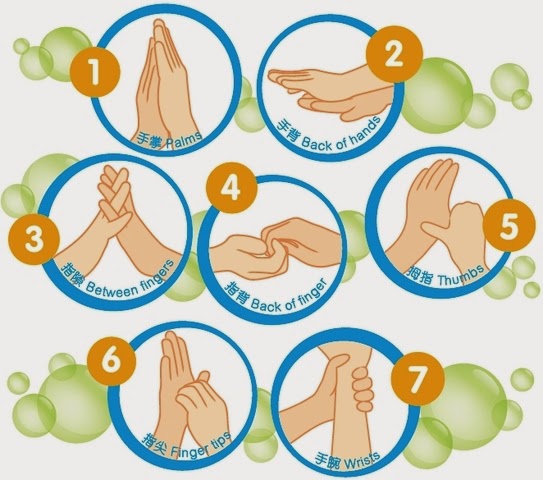
What is the right way to wash your hands?
- Wet your hands with clean, running water (warm or cold), turn off the tap, and apply soap.
- Lather your hands by rubbing them together with the soap. Be sure to lather the backs of your hands, between your fingers, and under your nails.
- Scrub your hands for at least 20 seconds. Need a timer? Hum the “Happy Birthday” song from beginning to end twice.
- Rinse your hands well under clean, running water.
- Dry your hands using a clean towel or air dry them.
SOURCE OF INFORMATION
I just get some photos from Dilip kumar Ishwor sir from Dhanusha and Sarlahi district, Saath Saath Project, implemented by Rural Development Foundation (RDF).
Thankyou very much for your sharing.
|
|
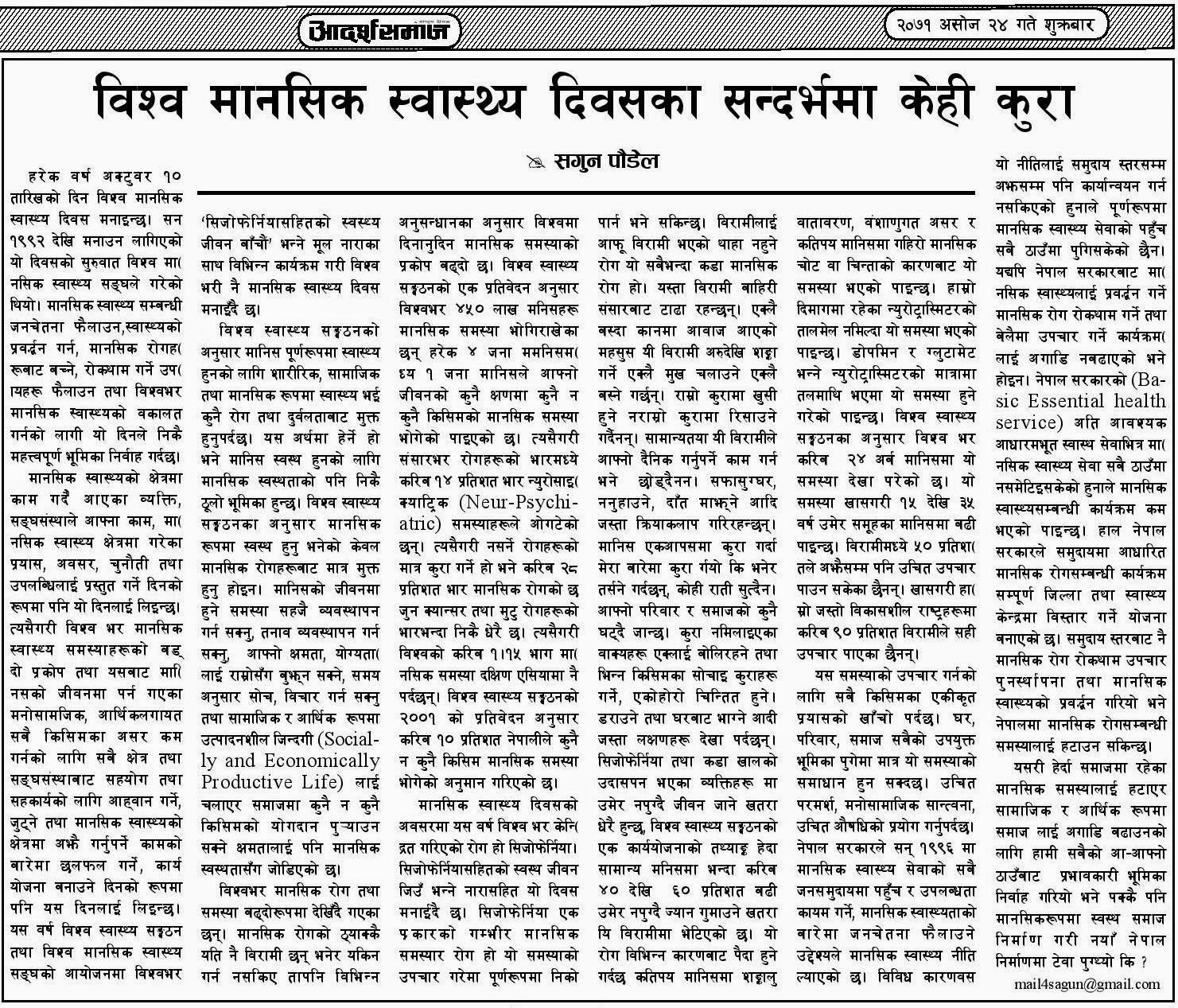
- Schizophrenia is a severe form of mental illness affecting about 7 per thousand of the adult population, mostly in the age group 15-35 years. Though the incidence is low (3-10,000), the prevalence is high due to chronicity.
- Facts
- Schizophrenia affects about 24 million people wordwide.
- Schizophrenia is a treatable disorder, treatment being more effective in its initial stages.
- More than 50% of persons with schizophrenia are not receiving appropriate care.
- 90% of people with untreated schizophrenia are in developing countries.
- Care of persons with schizophrenia can be provided at community level, with active family and community involvement.
Source: World Health Organization.
DOWNLOAD NOW CLICK HERE
National Antibiotic Treatment Guideline-2014
Public Health Update (Sagun’s Blog) is a popular public health portal in Nepal. Thousands of health professionals are connected with Public Health Update to get up-to-date public health updates, search for jobs, and explore opportunities.
#1 Public Health Blog for sharing Job opportunities and updates in Nepal
”Public Health Information For All”
– – Sagun Paudel, Founder
PUBLIC HEALTH INITIATIVE
Contact: blog.publichealthupdate@gmail.com


.jpg)


.jpg)