
Public Health Update
  • Home
  • Public Health Update
  • Nepal Health Jobs
    • Public Health Job Board
    • Organization List
  • Opportunities
    • Fellowships, Studentship & Scholarships
    • Grants and Funding Opportunities
    • Fully funded
    • Conference
  • Downloads
    • International Plan, Policy & Guidelines
    • National Plan, Policy & Guidelines
    • Reports
    • Public Health Notes
    • Syllabus
    • Form Formats
  • School of Public Health
    • PhD
    • Master’s Degree
    • Online Courses
  • Notice
LOGIN / REGISTER
Public Health Update
SUBSCRIBE
Public Health Update
  • Home
  • Public Health Update
  • Nepal Health Jobs
    • Public Health Job Board
    • Organization List
  • Opportunities
    • Fellowships, Studentship & Scholarships
    • Grants and Funding Opportunities
    • Fully funded
    • Conference
  • Downloads
    • International Plan, Policy & Guidelines
    • National Plan, Policy & Guidelines
    • Reports
    • Public Health Notes
    • Syllabus
    • Form Formats
  • School of Public Health
    • PhD
    • Master’s Degree
    • Online Courses
  • Notice

All Right Reserved. Designed and Developed by PenciDesign

PH Important Day

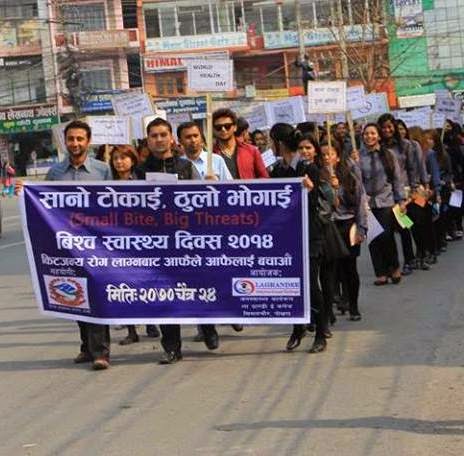
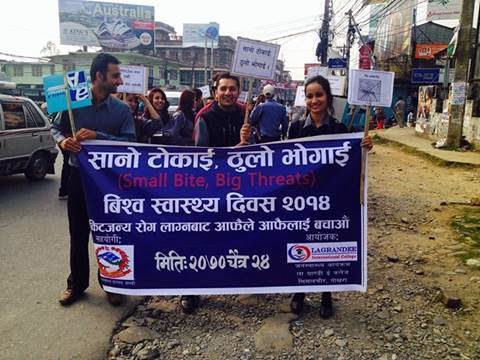
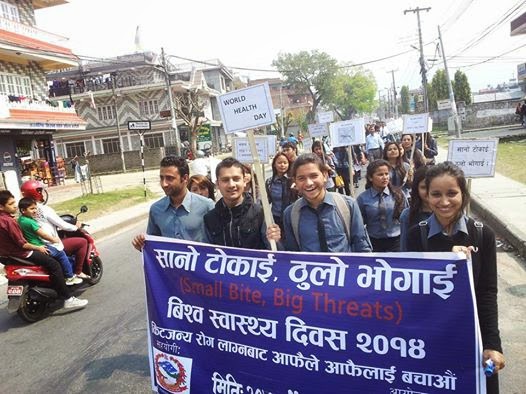
World Health Day-2014 (Small Bite : Big Threat) (Past Event)

by Public Health Update April 7, 2015
written by Public Health Update
Past event of World Health Day
Rally Organized by LA GRANDEE International College with Support of District Public Health Office- Kaski
10014686 761577733874613 8899778992923693345 n

10152895 682344371831361 1321069601 n

10547424 145587005641260 6422618362259277401 n
KEY MESSAGE

Vectors spread diseases

Mosquitoes, flies, ticks, bugs and freshwater snails can spread diseases that cause serious illness and death.
Diseases are preventable
Diseases such as malaria, dengue, leishmaniasis and yellow fever are preventable, yet they have the biggest impact on some of the world’s poorest people.
50% of population is at risk
More than half of the world’s population is at risk of these diseases. Increased travel, trade and migration make even more people vulnerable.
Protect yourself
You can protect yourself and your family by taking simple measures that include sleeping under a bednet, wearing a long-sleeved shirt and trousers and using insect repellent.

whd banner

Source: WHO
April 7, 2015 0 comments
0 FacebookTwitterPinterestLinkedinTumblrVKOdnoklassnikiRedditStumbleuponWhatsappTelegramLINEPocketSkypeViberEmail
PH Important DayPublic HealthPublic Health Events

World Health Day 2015: Food safety

by Public Health Update April 7, 2015
written by Public Health Update
World Health Day 2015: Food safety


7 April 2015 – World Health Day


“From farm to plate, make food safe.”
‪#‎Safefood‬


Over 200 diseases are caused by unsafe food containing harmful bacteria, parasites, viruses, chemical substances.2 millionIt is estimated that two million deaths occur every year from contaminated food or drinking water.


whd poster
Unsafe food is linked to the deaths of an estimated 2 million people annually – including many children. Food containing harmful bacteria, viruses, parasites or chemical substances is responsible for more than 200 diseases, ranging from diarrhoea to cancers.
New threats to food safety are constantly emerging. Changes in food production, distribution and consumption; changes to the environment; new and emerging pathogens; antimicrobial resistance – all pose challenges to national food safety systems. Increases in travel and trade enhance the likelihood that contamination can spread internationally.


10 facts on food safety

More than 200 diseases are spread through food.
Millions of people fall ill every year and many die as a result of eating unsafe food. Diarrhoeal diseases alone kill an estimated 1.5 million children annually, and most of these illnesses are attributed to contaminated food or drinking water. Proper food preparation can prevent most foodborne diseases.
Contaminated food can cause long-term health problems.
The most common symptoms of foodborne disease are stomach pains, vomiting and diarrhoea. Food contaminated with heavy metals or with naturally occurring toxins can also cause long-term health problems including cancer and neurological disorders.
Foodborne diseases affect vulnerable people harder than other groups.
Infections caused by contaminated food have a much higher impact on populations with poor or fragile health status and can easily lead to serious illness and death. For infants, pregnant women, the sick and the elderly, the consequences of foodborne disease are usually more severe and may be fatal.
There are many opportunities for food contamination to take place
Today’s food supply is complex and involves a range of different stages including on-farm production, slaughtering or harvesting, processing, storage, transport and distribution before the food reaches the consumers.
Globalization makes food safety more complex and essential.
Globalization of food production and trade is making the food chain longer and complicates foodborne disease outbreak investigation and product recall in case of emergency.
Food safety is multisectoral and multidisciplinary
To improve food safety, a multitude of different professionals are working together, making use of the best available science and technologies. Different governmental departments and agencies, encompassing public health, agriculture, education and trade, need to collaborate and communicate with each other and engage with the civil society including consumer groups.
Food contamination also affects
the economy and society as a whole.
Food contamination has far reaching effects beyond direct public health consequences – it undermines food exports, tourism, livelihoods of food handlers and economic development, both in developed and developing countries.
Some harmful bacteria are becoming resistant to drug treatments.
Antimicrobial resistance is a growing global health concern. Overuse and misuse of antimicrobials in agriculture and animal husbandry, in addition to human clinical uses, is one of the factors leading to the emergence and spread of antimicrobial resistance. Antimicrobial-resistant bacteria in animals may be transmitted to humans via food.
Everybody has a role to play in keeping food safe.
Food safety is a shared responsibility between governments, industry, producers, academia, and consumers. Everyone has a role to play. Achieving food safety is a multi-sectoral effort requiring expertise from a range of different disciplines – toxicology, microbiology, parasitology, nutrition, health economics, and human and veterinary medicine. Local communities, women’s groups and school education also play an important role.
Consumers must be well informed on food safety practices.
People should make informed and wise food choices and adopt adequate behaviors. They should know common food hazards and how to handle food safely, using the information provided in food labelling.


Five keys to safer food

Food safety is a shared responsibility. It is important to work all along the food production chain – from farmers and manufacturers to vendors and consumers. For example, WHO’s Five keys to safer food offer practical guidance to vendors and consumers for handling and preparing food:

Key 1: Keep clean
Key 2: Separate raw and cooked food
Key 3: Cook food thoroughly
Key 4: Keep food at safe temperatures
Key 5: Use safe water and raw materials.

WORLD HEALTH ORGANIZATION
April 7, 2015 0 comments
0 FacebookTwitterPinterestLinkedinTumblrVKOdnoklassnikiRedditStumbleuponWhatsappTelegramLINEPocketSkypeViberEmail
Global Health NewsPublic Health News

Life expectancy to be up by 2034

by Public Health Update April 7, 2015
written by Public Health Update
Thehimalayantimes News

Rajan Pokhrel 

Kathmandu, April 6

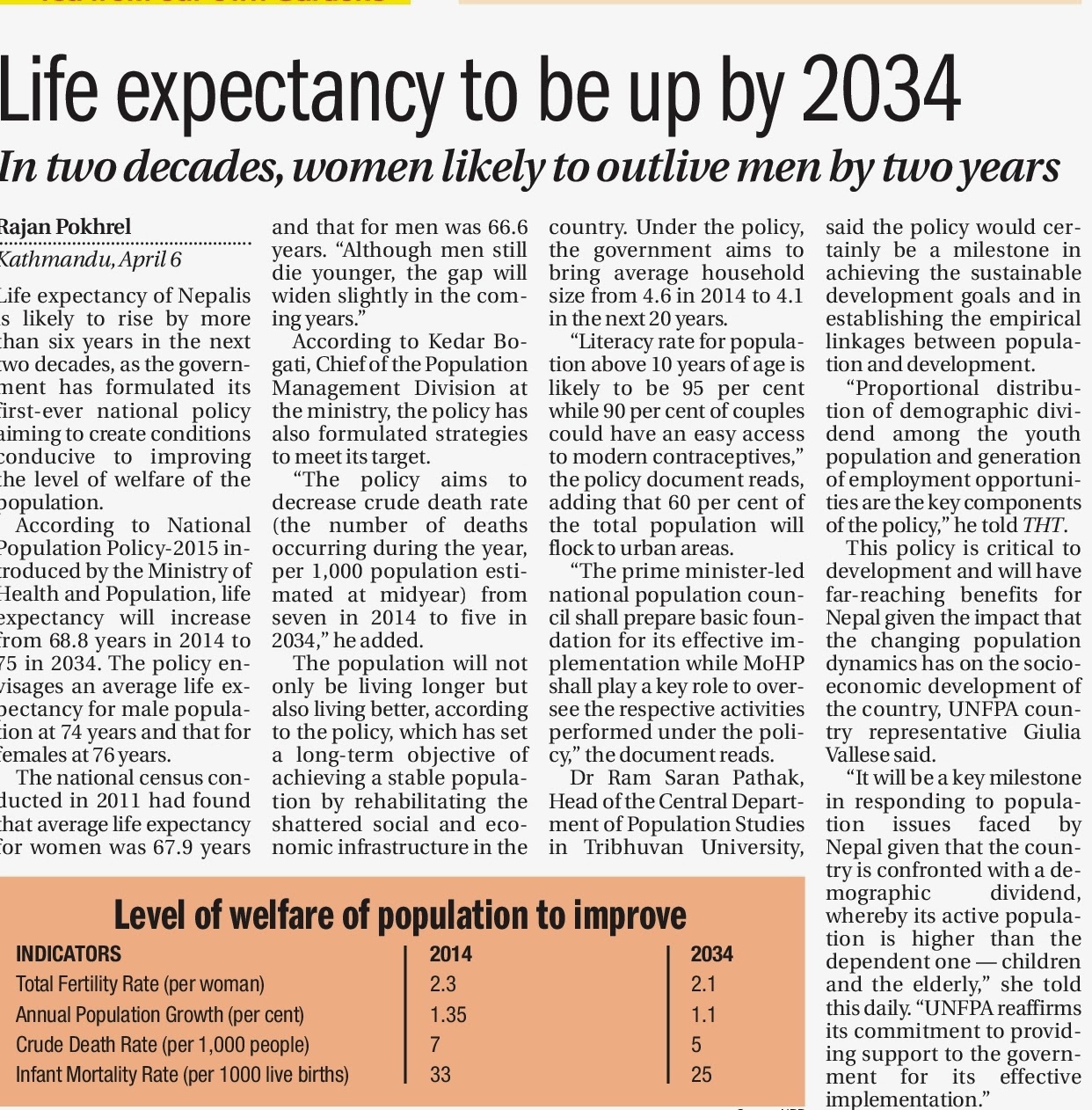
Life expectancy to be up by 2034
In two decades, women likely to outlive men by two years
Level of welfare of population to improve


Life expectancy of Nepalis is likely to rise by more than six years in the next two decades, as the government has formulated its first-ever national policy aiming to create conditions conducive to improving the level of welfare of the population.According to National Population Policy-2015 introduced by the Ministry of Health and Population, life expectancy will increase from 68.8 years in 2014 to 75 in 2034. The policy envisages an average life expectancy for male population at 74 years and that for females at 76 years. The national census conducted in 2011 had found that average life expectancy for women was 67.9 years and that for men was 66.6 years. “Although men still die younger, the gap will widen slightly in the coming years.”According to Kedar Bogati, Chief of the Population Management Division at the ministry, the policy has also formulated strategies to meet its target. “The policy aims to decrease crude death rate (the number of deaths occurring during the year, per 1,000 population estimated at midyear) from seven in 2014 to five in 2034,” he added.

d29077930
thehimalayantimes.com
The population will not only be living longer but also living better, according to the policy, which has set a long-term objective of achieving a stable population by rehabilitating the shattered social and economic infrastructure in the country. Under the policy, the government aims to bring average household size from 4.6 in 2014 to 4.1 in the next 20 years. “Literacy rate for population above 10 years of age is likely to be 95 per cent while 90 per cent of couples could have an easy access to modern contraceptives,” the policy document reads, adding that 60 per cent of the total population will flock to urban areas.“The prime minister-led national population council shall prepare basic foundation for its effective implementation while MoHP shall play a key role to oversee the respective activities performed under the policy,” the document reads.Dr Ram Saran Pathak, Head of the Central Department of Population Studies in Tribhuvan University, said the policy would certainly be a milestone in achieving the sustainable development goals and in establishing the empirical linkages between population and development. “Proportional distribution of demographic dividend among the youth population and generation of employment opportunities are the key components of the policy,” he told THT. 

This policy is critical to development and will have far-reaching benefits for Nepal given the impact that the changing population dynamics has on the socio-economic development of the country, UNFPA country representative Giulia Vallese said. “It will be a key milestone in responding to population issues faced by Nepal given that the country is confronted with a demographic dividend, whereby its active population is higher than the dependent one — children and the elderly,” she told this daily. “UNFPA reaffirms its commitment to providing support to the government for its effective implementation.”

Source: NPP

April 7, 2015 0 comments
0 FacebookTwitterPinterestLinkedinTumblrVKOdnoklassnikiRedditStumbleuponWhatsappTelegramLINEPocketSkypeViberEmail
Public HealthPublic Health Notes

Annual Report of DOHS 2070/71 (2013/2014)

by Public Health Update March 28, 2015
written by Public Health Update
The Annual Report of the Department of Health Services (DoHS) for fiscal year 2070/71 (2013/2014) is the 20th consecutive report of its kind.


The report focuses on the objectives, targets, strategies adopted by the programs and analyses the achievements of the major activities and attempts to highlight trends in the service coverage of the services over the preceding three fiscal years. This report also identifies issues, problems, constraints and suggests actions to be taken by the related health institutions for further improvements. The executive summary highlights the key issues and observations emerging from the analysis of each programme.

DOWNLOAD REPORT: CLICK HERE
proxy?url=http%3A%2F%2F2.bp.blogspot.com%2F
DOWNLOAD REPORT: CLICK HERE
March 28, 2015 0 comments
0 FacebookTwitterPinterestLinkedinTumblrVKOdnoklassnikiRedditStumbleuponWhatsappTelegramLINEPocketSkypeViberEmail
Public HealthPublic Health Programs

TB remains a Public health problem

by Public Health Update March 25, 2015
written by Public Health Update
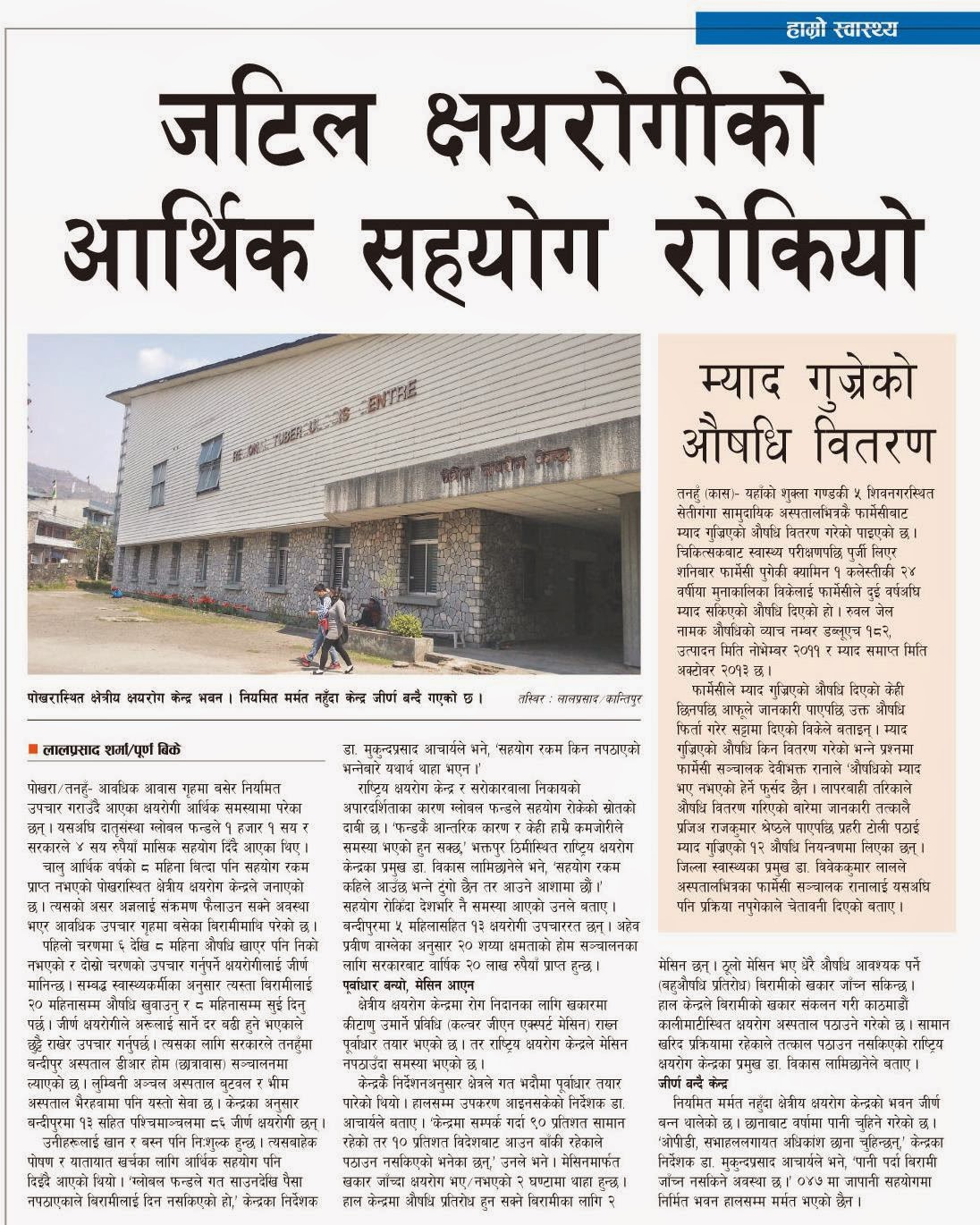
Tuberculosis still continues to remain a public health problem in Nepal, with the major challenge being reaching the unreached and finding missing cases. According to National Tuberculosis Centre‚ there were 37,025 notified cases of TB who underwent DOTS (directly observed treatment, short-course) treatment in fiscal year 2014-15. However, around 10,000 TB patients miss their treatment annually. At a programme organised to mark World Tuberculosis Day today, Health Secretary Shanta Bahadur Shrestha said the government was committed to achieving the goal of eliminating TB. 

proxy?url=http%3A%2F%2F4.bp.blogspot.com%2F
Himalayan News Service,Kathmandu, March 24


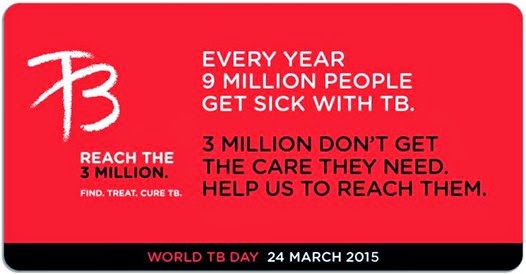
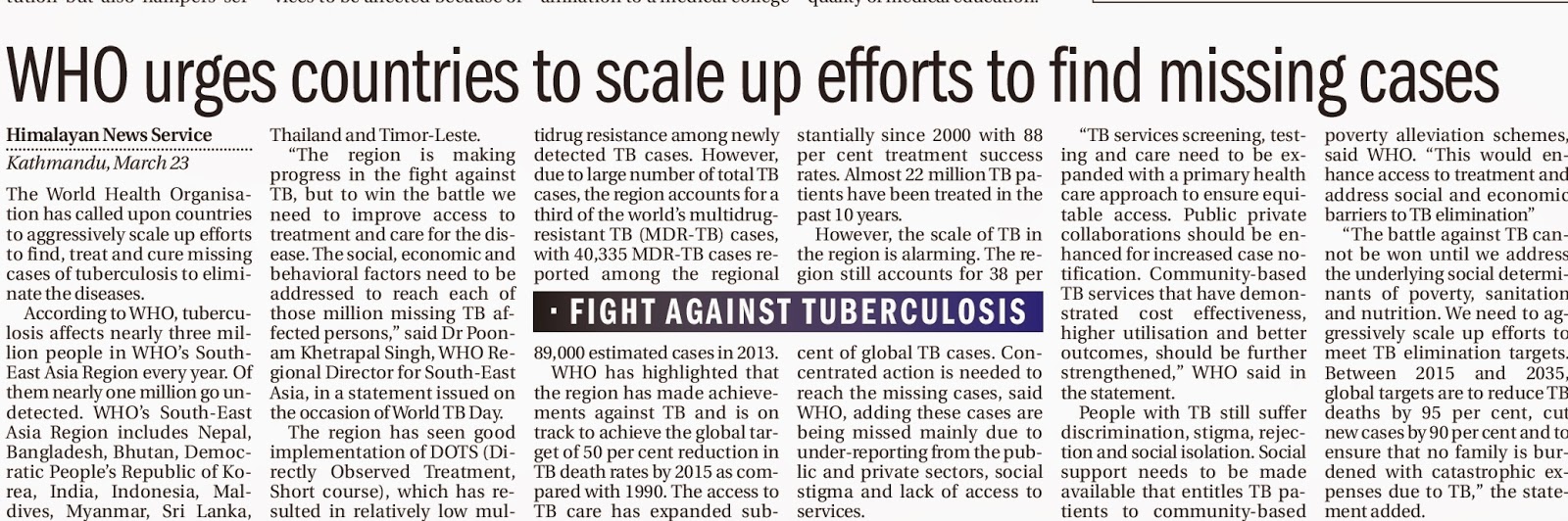
World Tuberculosis Day is marked every year on March 24. Marking the day, the World Health Organisation has called for new commitments and new action in the global fight against tuberculosis,


which WHO describes as one of the world’s top infectious killers.There has been tremendous progress in recent years in fight against tuberculosis, but with 20,000 new sputum positive cases and 5,000-7,000 deaths every year in Nepal according to NTC data, it is still an ongoing epidemic. According to WHO, in 2013, nine million people fell ill with TB and 1.5 million died.According to NTC, 45 per cent of total population are infected with TB and 40,000 people get TB every year in Nepal.Officials at NTC said they were working with an objective to reduce human suffering and socio-economic burden resulting from TB.Last year, NTC launched two mobile vans in bid to reach the unreached and according to an official, the project has been successful in finding hidden cases. The target population included slum dwellers, prisoners, factory workers, people living with HIV and family members of TB patients. According to Health Research and Social Development Forum, last year, 103,867 were screened, of which 14,623 were microscopically tested and 6,159 were tested using Xpert. As many as 654 patients were diagnosed for TB and 66 for Multi-Drug Resistant TB during the screening.

ORIGINAL SOURCE OF INFORMATION
March 25, 2015 0 comments
0 FacebookTwitterPinterestLinkedinTumblrVKOdnoklassnikiRedditStumbleuponWhatsappTelegramLINEPocketSkypeViberEmail
PH Important DayPublic HealthPublic Health Events

World Tuberculosis Day – 24 March 2015

by Public Health Update March 24, 2015
written by Public Health Update
10922597 863303910382862 1841732831345409664 n
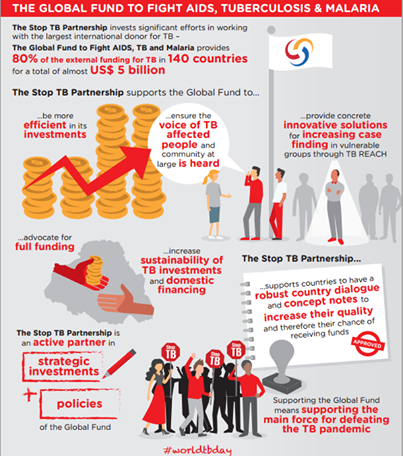
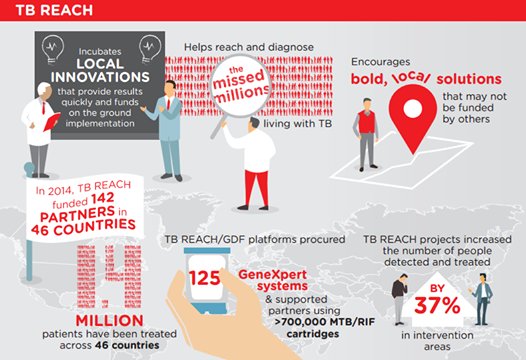
STOP TB PARTNERSHIP

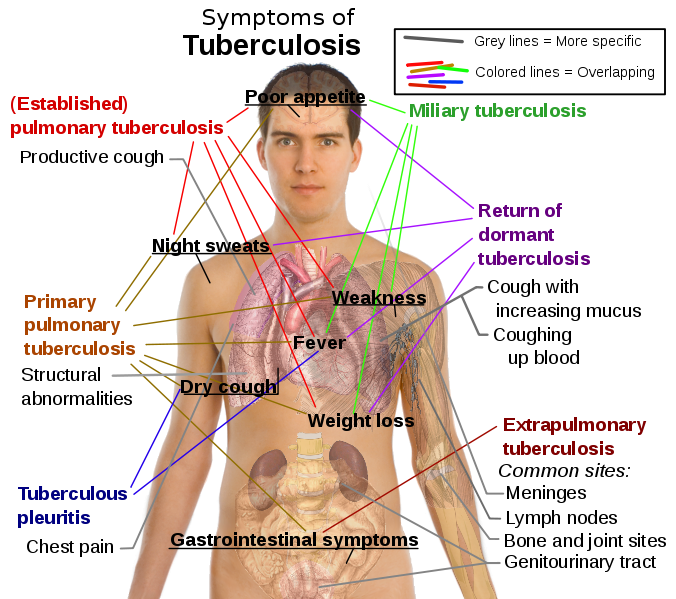
tuberculosis symptoms
https://para410.files.wordpress.com/2011/03/tuberculosis-symptoms.png

World TB Day, falling on March 24th each year, is designed to build public awareness that tuberculosis today remains an epidemic in much of the world, causing the deaths of nearly one-and-a-half million people each year, mostly in developing countries. It commemorates the day in 1882 when Dr Robert Koch astounded the scientific community by announcing that he had discovered the cause of tuberculosis, the TB bacillus. At the time of Koch’s announcement in Berlin, TB was raging through Europe and the Americas, causing the death of one out of every seven people. Koch’s discovery opened the way towards diagnosing and curing TB. –STOP TB PARTNERSHIP

d59145452
Thehimalayantimes (24th March 2015)


Tuberculosis (TB) is caused by bacteria (Mycobacterium tuberculosis) that most often affect the lungs. Tuberculosis is curable and preventable.

TB is spread from person to person through the air. When people with lung TB cough, sneeze or spit, they propel the TB germs into the air. A person needs to inhale only a few of these germs to become infected.

About one-third of the world’s population has latent TB, which means people have been infected by TB bacteria but are not (yet) ill with the disease and cannot transmit the disease.

Key facts
  • Tuberculosis (TB) is second only to HIV/AIDS as the greatest killer worldwide due to a single infectious agent. 
  • In 2013, 9 million people fell ill with TB and 1.5 million died from the disease. 
  • Over 95% of TB deaths occur in low- and middle-income countries, and it is among the top 5 causes of death for women aged 15 to 44.
  • In 2013, an estimated 550 000 children became ill with TB and 80 000 HIV-negative children died of TB.
  • TB is a leading killer of HIV-positive people causing one fourth of all HIV-related deaths.
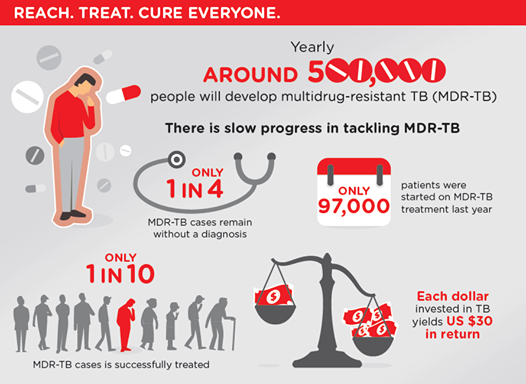
  • Globally in 2013, an estimated 480 000 people developed multidrug resistant TB (MDR-TB).
  • The estimated number of people falling ill with TB each year is declining, although very slowly, which means that the world is on track to achieve the Millennium Development Goal to reverse the spread of TB by 2015.
  • The TB death rate dropped 45% between 1990 and 2013.
  • An estimated 37 million lives were saved through TB diagnosis and treatment between 2000 and 2013.
    TB153358824
    Kantipur News Paper 23rd March 2015

      11051879 10152646136697373 8133667997697395707 n
      STOP TB PARTNERSHIP

      11071818 10152646134392373 7392236832535639674 n
      STOP TB PARTNERSHIP

      11075302 10152645651112373 8231262558503355700 n
      STOP TB PARTNERSHIP
      March 24, 2015 0 comments
      0 FacebookTwitterPinterestLinkedinTumblrVKOdnoklassnikiRedditStumbleuponWhatsappTelegramLINEPocketSkypeViberEmail
      Public Health NotesPublic Health Programs

      Chlorhexidine Cord Care Program in Nepal (Published by MoHP)

      by Public Health Update March 11, 2015
      written by Public Health Update
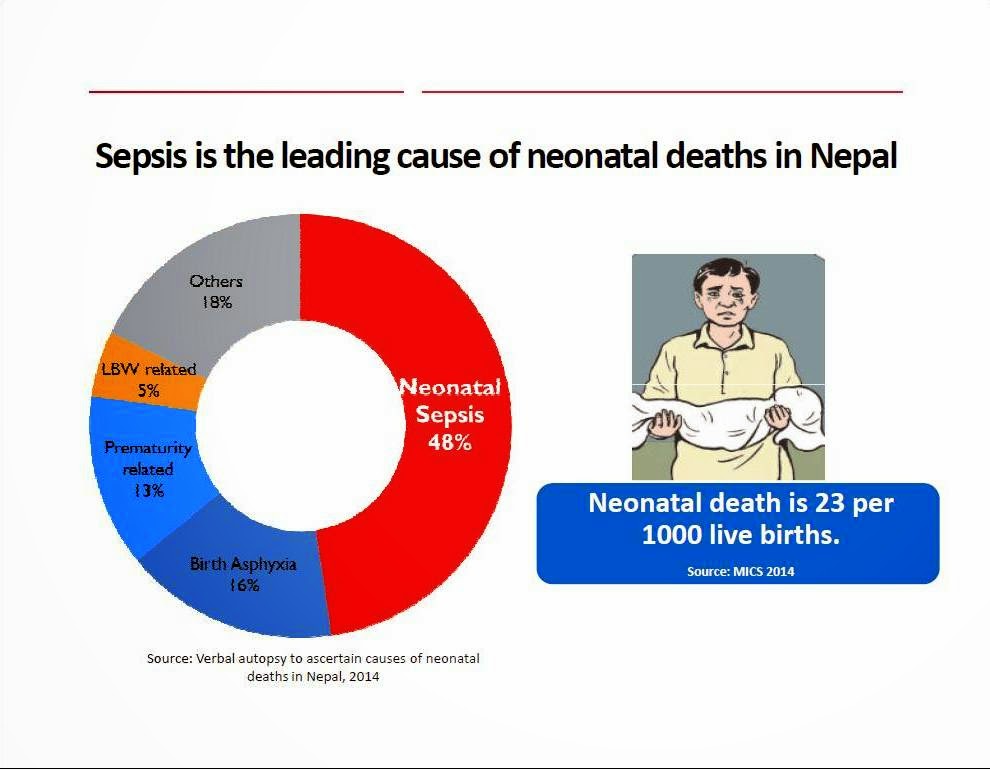
      The neonatal mortality rate in Nepal is 23 per 1,000 live births and major cause of neonatal death is infection. Among newborns, exposure of the freshly cut cord stump to pathogens through hands instruments, cloths etc. may lead to infection and death.


      Chlorhexidine is a broad-spectrum antiseptic that is safe and effective for reducing bacterial colonization on the skin and umbilical stump of newborns. Pooled analysis of studies including study of 2006 in Sarlahi, Nepal has shown that immediate cleansing of the umbilical cord with 4% chlorhexidine (equivalent to 7.1% Chlorhexidine Digluconate w/v) reduces mortality risk by about 23%. After this a study was conducted in Maternity hospital, Thapathali and demonstrated that a gel preparation was as effective as an aqueous preparation. Another study on acceptability was done at the community level and demonstrated a clear preference for a gel preparation. Then a pilot was done in four districts (Bajhang, Jumla, Banke and Parsa) to determine the coverage and compliance in the Nepalese context and within the existing public health service delivery system.

      Picture1

       Based on the encouraging results of all studies conducted in Nepal, the government of Nepal approved the use of 4% chlorhexidine for umbilical cord care as part of essential newborn care on 23rd December, 2011 (2068 Poush 8, BS). 


       It has already been scaled up to 49 districts as of February 2015 and included in Health Management Information System, Essential Drug List, Community Based Integrated Management of Newborn and Childhood Illness program and pre-service curriculum of Auxiliary Nurse Midwife. Ministry of Health and Population was awarded with USAID Pioneers Prize 2013 for thechlorhexidine cord care program. USAID through JSI R&T’s Chlorhexidine Navi Care Program and other partners are supporting government to scale up chlorhexidine cord care program in Nepal.

      DOWNLOAD FULL REPORT FROM WEBSITE OF MOHP: CLICK HERE
      March 11, 2015 0 comments
      0 FacebookTwitterPinterestLinkedinTumblrVKOdnoklassnikiRedditStumbleuponWhatsappTelegramLINEPocketSkypeViberEmail
      Public Health

      Panel formed to review MMR status

      by Public Health Update March 1, 2015
      written by Public Health Update
      CLICK HERE:ORIGINAL SOURCE ORIGINAL SOURCE ORIGINAL SOURCE
      Rajan Pokhrel
      Kathmandu, February 28
      THEHIMALAYANTIMES
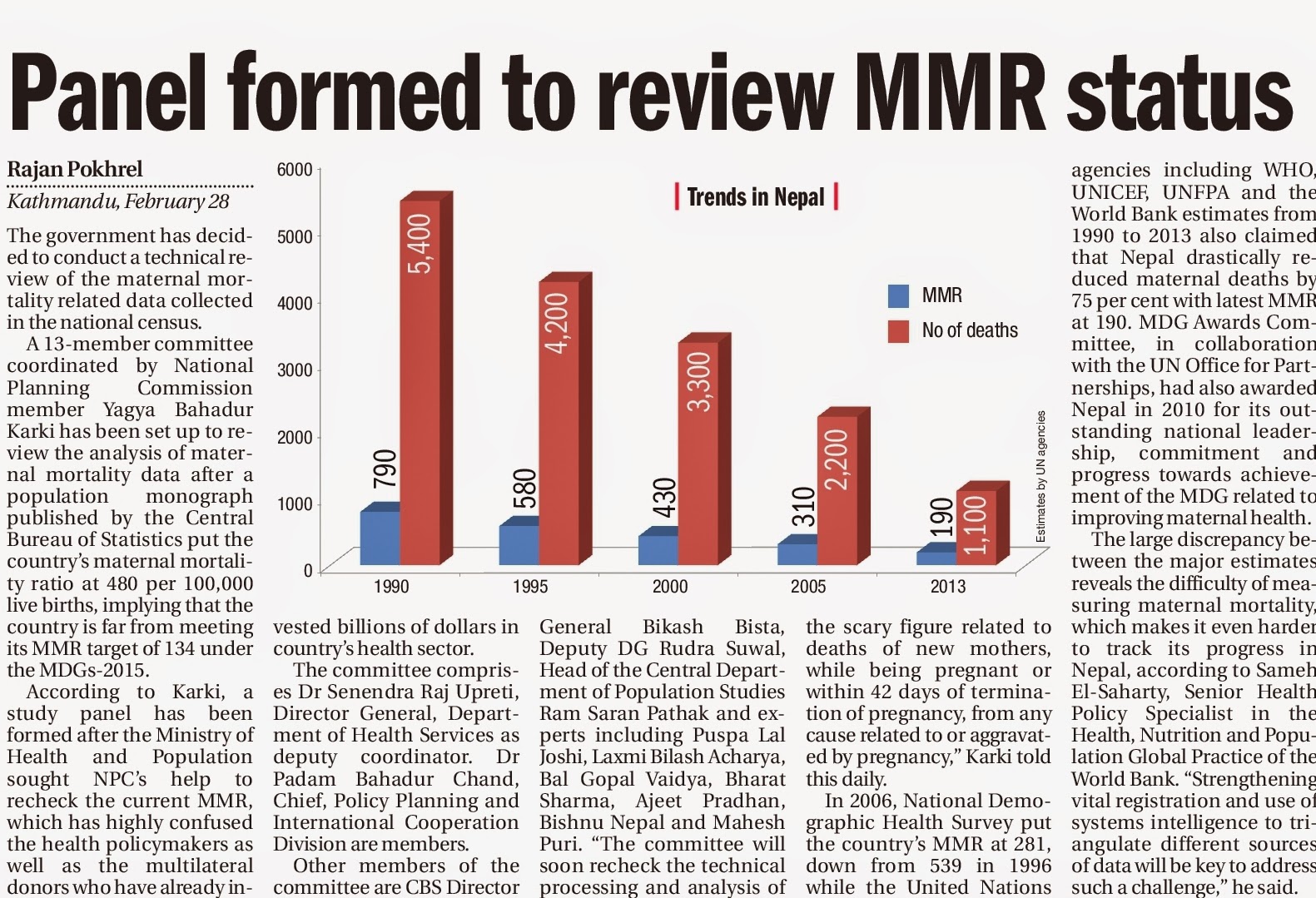
      The government has decided to conduct a technical review of the maternal mortality related data collected in the national census.A 13-member committee coordinated by National Planning Commission member Yagya Bahadur Karki has been set up to review the analysis of maternal mortality data after a population monograph published by the Central Bureau of Statistics put the country’s maternal mortality ratio at 480 per 100,000 live births, implying that the country is far from meeting its MMR target of 134 under the MDGs-2015.

      d54278370
      THEHIMALAYANTIMES

      According to Karki, a study panel has been formed after the Ministry of Health and Population sought NPC’s help to recheck the current MMR, which has highly confused the health policymakers as well as the multilateral donors who have already invested billions of dollars in country’s health sector.The committee comprises Dr Senendra Raj Upreti, Director General, Department of Health Services as deputy coordinator. Dr Padam Bahadur Chand, Chief, Policy Planning and International Cooperation Division are members. Other members of the committee are CBS Director General Bikash Bista, Deputy DG Rudra Suwal,


      Head of the Central Department of Population Studies Ram Saran Pathak and experts including Puspa Lal Joshi, Laxmi Bilash Acharya, Bal Gopal Vaidya, Bharat Sharma, Ajeet Pradhan, Bishnu Nepal and Mahesh Puri. “The committee will soon recheck the technical processing and analysis of the scary figure related to deaths of new mothers, while being pregnant or within 42 days of termination of pregnancy, from any cause related to or aggravated by pregnancy,” Karki told this daily.In 2006, National Demographic Health Survey put the country’s MMR at 281, down from 539 in 1996 while the United Nations agencies including WHO, UNICEF, UNFPA and the World Bank estimates from 1990 to 2013 also claimed that Nepal drastically reduced maternal deaths by 75 per cent with latest MMR at 190. 


      MDG Awards Committee, in collaboration with the UN Office for Partnerships, had also awarded Nepal in 2010 for its outstanding national leadership, commitment and progress towards achievement of the MDG related to improving maternal health.The large discrepancy between the major estimates reveals the difficulty of measuring maternal mortality, which makes it even harder to track its progress in Nepal, according to Sameh El-Saharty, Senior Health Policy Specialist in the Health, Nutrition and Population Global Practice of the World Bank. “Strengthening vital registration and use of systems intelligence to triangulate different sources of data will be key to address such a challenge,” he said.
      March 1, 2015 0 comments
      0 FacebookTwitterPinterestLinkedinTumblrVKOdnoklassnikiRedditStumbleuponWhatsappTelegramLINEPocketSkypeViberEmail
      National Health NewsPublic Health News

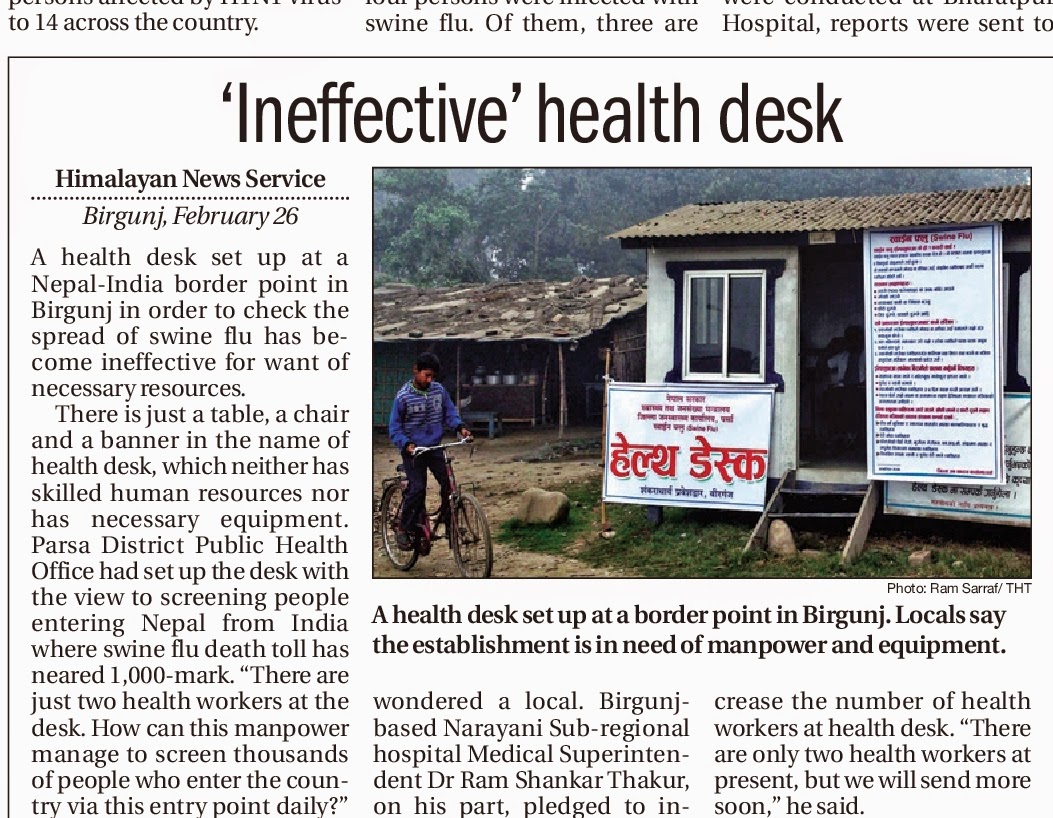
      Swine flu Updates

      by Public Health Update March 1, 2015
      written by Public Health Update
      d54296126
      THE HIMALAYANTIMES

      d54282400%2B(1)
      THE HIMALAYANTIMES
      March 1, 2015 0 comments
      0 FacebookTwitterPinterestLinkedinTumblrVKOdnoklassnikiRedditStumbleuponWhatsappTelegramLINEPocketSkypeViberEmail
      Public Health

      Swine Flu updates

      by Public Health Update February 27, 2015
      written by Public Health Update

      d52403246
      thehimalayantimes


      February 27, 2015 0 comments
      0 FacebookTwitterPinterestLinkedinTumblrVKOdnoklassnikiRedditStumbleuponWhatsappTelegramLINEPocketSkypeViberEmail
      Newer Posts
      Older Posts

      Search

      Follow Us

      Facebook Twitter Instagram Pinterest Linkedin Youtube

      Categories

      • Abstracts (26)
      • Activities (91)
      • Adolescent Sexual and Reproductive Health (ASRH) (25)
      • Advice & Tips (4)
      • African Region (5)
      • AI and Health (1)
      • Annual Meeting (6)
      • Antimicrobial Resistance (AMR) (21)
      • Award (20)
      • Awards (17)
      • Books (9)
      • Call for Proposal, EOI & RFP (103)
      • Call for Research Participants (9)
      • Clinical Doctor Jobs (6)
      • Communicable Diseases (107)
      • Competition (20)
      • Conference (130)
      • Consultant (1)
      • Courses (206)
      • Dashboard (2)
      • Digital Health & Health Informatics (10)
      • Drug and Medicine (18)
      • Eastern Mediterranean Region (3)
      • Education (16)
      • Environment (3)
      • Environmental Health & Climate Change (47)
      • European Region (42)
      • Exchange Program (1)
      • Fact Sheet (118)
      • FCHVs (1)
      • Fellowships, Studentship & Scholarships (168)
      • Financial Aid (13)
      • Form Formats (2)
      • Fully funded (22)
      • Global Health News (440)
      • Grants and Funding Opportunities (193)
      • Guest Post (44)
      • Health Assistant Jobs (1)
      • Health Equity (7)
      • Health Financing and Economics (24)
      • Health in Data (118)
      • Health Insurance (5)
      • Health Jobs (52)
      • Health Literacy, Health Education & Promotion (51)
      • Health Organization Profile (42)
      • Health Systems (85)
      • Human Resource for Health (33)
      • Humanitarian Health & Emergency Response (45)
      • Hypertension (5)
      • Implementation Research (49)
      • International Health (3)
      • International Jobs & Opportunities (374)
      • International Plan, Policy & Guidelines (212)
      • Internships (5)
      • Jobs Vacancies (57)
      • Journals (8)
      • Life Style & Public Health Nutrition (39)
      • Live (10)
      • Master's Degree (48)
      • Maternal, Newborn and Child Health (88)
      • Mentorship Program (2)
      • Miscellaneous (16)
      • National Health News (160)
      • National Plan, Policy & Guidelines (473)
      • Neglected Tropical Diseases (NTDs) (51)
      • Non- Communicable Diseases (NCDs) (123)
      • Notice (103)
      • Nursing Jobs (6)
      • Nutritionist Jobs (1)
      • One Health (18)
      • Online & Distance Learning (22)
      • Online Courses (91)
      • Op-Ed Article (3)
      • Opportunities by Region (83)
      • Outbreak News (213)
      • Partially funded (6)
      • PCL Health Science Jobs (3)
      • PH Important Day (538)
      • Pharmacist Jobs (3)
      • PhD (54)
      • Photos (5)
      • Planetary Health (4)
      • PostDoc (14)
      • Presentation Slides (26)
      • Primary Health Care (25)
      • Provincial Plan, Policies and Guidelines (17)
      • Public Health (1,288)
      • Public Health Epidemiology & Biostatistics (14)
      • Public Health Events (307)
      • Public Health Information (21)
      • Public Health Innovation (9)
      • Public Health Jobs (52)
      • Public Health News (558)
      • Public Health Notes (120)
      • Public Health Opportunities (510)
      • Public Health Opportunity (493)
      • Public Health Programs (108)
      • Public Health Seminar (2)
      • Public Health Tools (2)
      • Public Health Update (574)
      • Quality Improvement & Infection Prevention (20)
      • Region of America (8)
      • Reports (187)
      • Research & Project Grants (39)
      • Research & Project Grants (33)
      • Research & Publication (651)
      • Research Articles (10)
      • Road Traffic Accidents (RTA) (9)
      • School of Public Health (60)
      • Self funded (2)
      • South-East Asia Region (26)
      • Success Stories (17)
      • Summer and Winter Courses (40)
      • Summer Courses (28)
      • Sustainable Development Goals (SDGs) (14)
      • Syllabus (61)
      • Symposium (9)
      • Tobacco Control (35)
      • Training (40)
      • Travel Grants (15)
      • Trick, Technique & Skills (8)
      • Uncategorized (3)
      • Undergraduate Degree (7)
      • Universal Health Coverage (36)
      • Universities (29)
      • Universities & School of Public Health (58)
      • Vacancy Announcement (26)
      • Vaccine Preventable Diseases (40)
      • Vector-Borne Diseases(VBDs) (31)
      • Videos (3)
      • View Points (1)
      • Webinar (4)
      • Western Pacific Region (13)
      • Workshop (18)
      • World News (120)
      Post New Jobs: Vacancy Announcement Service
      Post New Jobs: Vacancy Announcement Service

      Search Box

      Public Health Update (Sagun’s Blog) is a popular public health portal in Nepal. Thousands of health professionals are connected with Public Health Update to get up-to-date public health updates, search for jobs, and explore opportunities.
      #1 Public Health Blog for sharing Job opportunities and updates in Nepal

      ”Public Health Information For All”
      – – Sagun Paudel, Founder

      • HOT JOBS
        • Public Health Jobs
        • Medical Doctor Jobs
        • Nursing Jobs
        • Health Assistant Jobs
        • Pharmacist Jobs
        • NGOs Jobs
        • Government Jobs
      • Top Categories
        • National Plan, Policy & Guidelines Top
        • Public Health Calendar
        • Fellowships & Scholarships
        • Health Systems
        • Health Organization Profiles
        • International Jobs & Opportunities
        • Public Health Opportunity

      PUBLIC HEALTH INITIATIVE

        • Submit your Vacancies New
        • Partnership Opportunities

      Contact: blog.publichealthupdate@gmail.com

      https://wa.me/+9779856036932

      All Right Reserved. 2011-2026. Contact us. 

      Facebook Twitter Instagram Youtube Envelope
      Public Health Update
      • Home
      • Public Health
        • Home 1
          • Adolescent Sexual and Reproductive Health (ASRH)
          • Antimicrobial Resistance (AMR)
          • Communicable Diseases
          • Digital Health & Health Informatics
          • Environmental Health & Climate Change
          • Health Financing and Economics
          • Health Equity
        • Home 2
          • Health Literacy, Health Education & Promotion
          • Human Resource for Health
          • Humanitarian Health & Emergency Response
          • Implementation Research
          • International Health
          • Life Style & Public Health Nutrition
          • Maternal, Newborn and Child Health
        • Home 3
          • Neglected Tropical Diseases (NTDs)
          • Non- Communicable Diseases (NCDs)
          • One Health
          • Planetary Health
          • Public Health Epidemiology & Biostatistics
          • Primary Health Care
          • Quality Improvement & Infection Prevention
        • Home 4
          • Road Traffic Accidents (RTA)
          • Sustainable Development Goals (SDGs)
          • Tobacco Control
          • Universal Health Coverage
          • Vaccine Preventable Diseases
          • Vector-Borne Diseases(VBDs)
          • Notices
      • Public Health Update
        • Home 1
          • Public Health News
          • Global Health News
          • Outbreak News
          • National Health News
          • COVID-19
        • Home 2
          • Fact Sheet
          • Health in Data
          • PH Important Day
          • Public Health Events
          • Public Health Programs
        • Home 3
          • Health Systems
          • Health Insurance
          • Health Organization Profile
          • Success Stories
          • Public Health Innovation
      • Public Health Opportunities
        • Fully funded
        • Travel Grants
        • Grants and Funding Opportunities
        • Opportunities by Region
        • International Jobs & Opportunities
        • Research & Project Grants
        • Fellowships, Studentship & Scholarships
        • Conference
      • Jobs
        • Home 1
          • Health Jobs
          • Public Health Jobs
          • Clinical doctor Jobs
          • Health Assistant Jobs
          • Nursing Jobs
          • PCL Health Science Jobs
        • Home 2
          • Dental Jobs
          • Pharmacist Jobs
          • TSLC (Health Jobs)
          • Laboratory Jobs
          • Nutritionist Jobs
      • Downloads
        • International Plan, Policy & Guidelines
        • National Plan, Policy & Guidelines
        • Reports
        • Books
        • Research Articles
      • School of Public Health
        • Home 1
          • Courses
          • Master’s Degree
          • Undergraduate Degree
          • PhD
        • Home 2
          • Universities
          • Syllabus
          • Public Health Notes
          • Mentorship Program
          • Startup Project
        • Home
          • Summer and Winter Courses
          • Summer Courses
          • Online Courses
          • Workshop
          • Training
      Public Health Initiative, A Registered Non-profit organization – All Right Reserved. 2011-2023