- Objective and Progress of JAR 2015-16
- Progress against NHSS RF and DLIs
- Sector Priorities and Overview of Nepal Health Sector Strategy Implementation Plan
- Progress Made in Public Financial Management (PFM)
- Logistic Management Division Procurement and Supply Chain
- Local Health Governance _Field experience _decentralization
- External Development Partners Working in the Health Sector
- AIN PARTNERSHIP WITH MOH, PROSPECT, CHALLENGE AND WAY FORWARD
- Director General_Program Implementation and Service Delivery Issues, Challenges and Way Forward
- Department of Drug Administration Issues, Challenges and Way forward
- Department of Ayurveda presentation JAR-2017
- Health Infrastructure Development,Post-Earthquake Reconstruction
- Field Observation – Reconstruction and Recovery of Health Services after Earthquake
- Social Health Security Program
- Priorities for Next Annual Work Plan and Budget
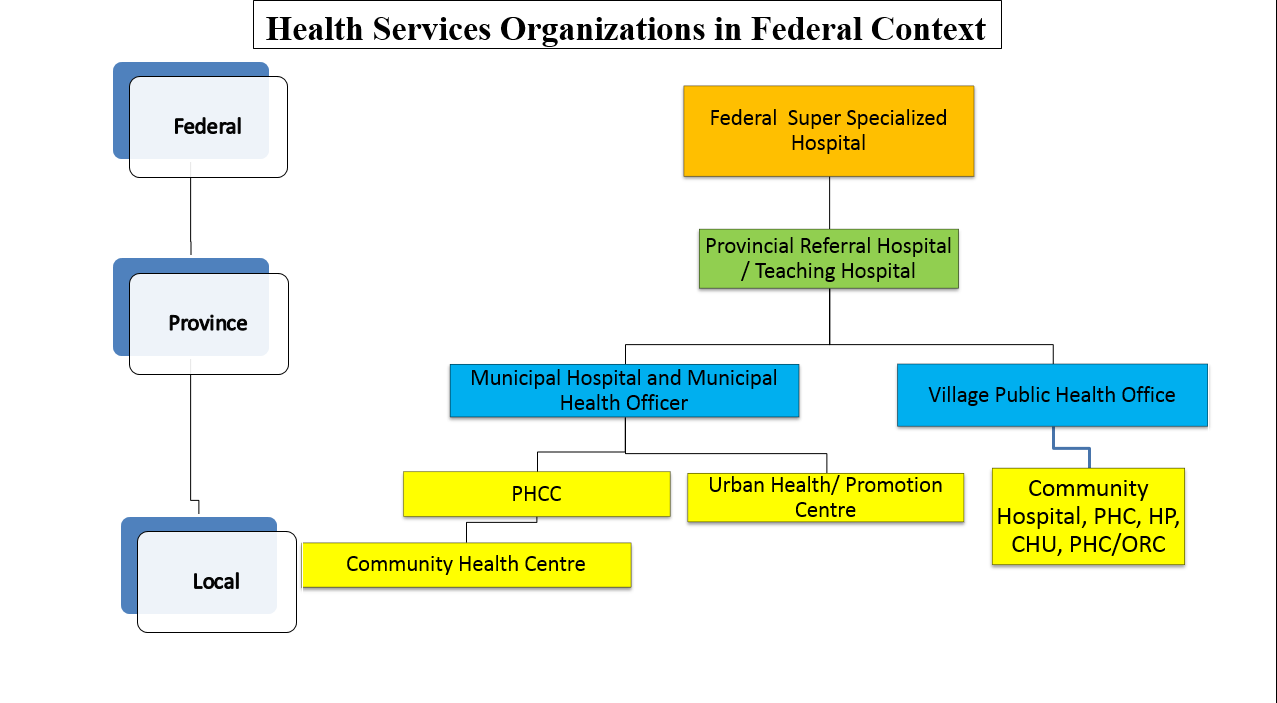
- Health Care Delivery System in Federal Context

Original Source of Info:
http://www.onlinemastersinpublichealth.com/online-masters-public-health-programs/
Featured Online MPH Programs
Tuition and Opportunity Cost (60%) – Direct program costs are estimated using data reported on each school’s website. Opportunity cost is estimated as the average earnings of a Bachelor’s degree holder in the location of the main campus of the school, over the period of time estimated for completion of the degree. For programs that are explicitly designed to be completed part time, opportunity cost is measured as the average earnings over a two year period.
Featured Public Health Programs
1. University of North Carolina

budget $1077.16 per credit hour. For more information click here.
2. University of West Florida

3. Fort Hays State

4. University of Alabama Birmingham

5. University of South Florida

6. American Public University

7. University of Florida

8. Liberty University

9. University of Illinois Springfield

10. Walden University

11. Nova Southeastern University

12. Kaplan

13. Creighton University

14. University of Massachusetts

15. George Washington University

years. With focus areas in Health Communication, Health Policy, Program Planning and Evaluation, and Global Health students are sure to find something that interests them. Tuition for George Washington is on the higher end at $61,425 per year. For all of the pertinent facts please follow this link.
16. University of Nebraska Medical Center

17. University of New England

18. University of Southern California

19. Florida A&M University

20. Capella University
21. Loyola University Chicago

22. Grand Canyon University

23. A.T. Still University

24. Des Moines University

e the option of completing the program one course at a time. Click here to learn more about the programs available at Des Moines University.
25. Benedictine University
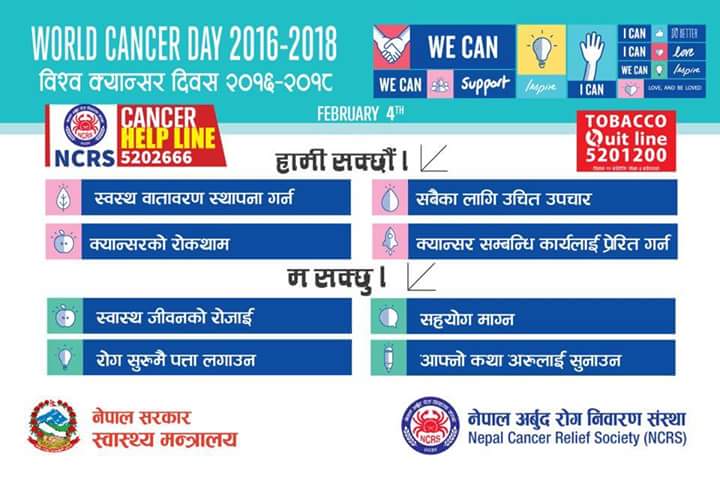
World Cancer Day (The theme of the World Cancer Day 2017 is “We can. I can.”)
It is celebrated to plan some new strategies as well as implement some new programs which help to aware more people about this disease. This event is organized on annual basis under the supervision of Union for International Cancer Control (UICC) and other leading health organizations involved for cancer fighting.
“We must do more to end the many tragedies that cancer inflicts. About one third of cancers can be prevented, while others are curable if diagnosed and treated early. And even when cancer is advanced, patients should benefit from palliative care.”
Ban Ki-moon
- physical carcinogens, such as ultraviolet and ionizing radiation;
- chemical carcinogens, such as asbestos, components of tobacco smoke, aflatoxin (a food contaminant), and arsenic (a drinking water contaminant); and
- biological carcinogens, such as infections from certain viruses, bacteria, or parasites.
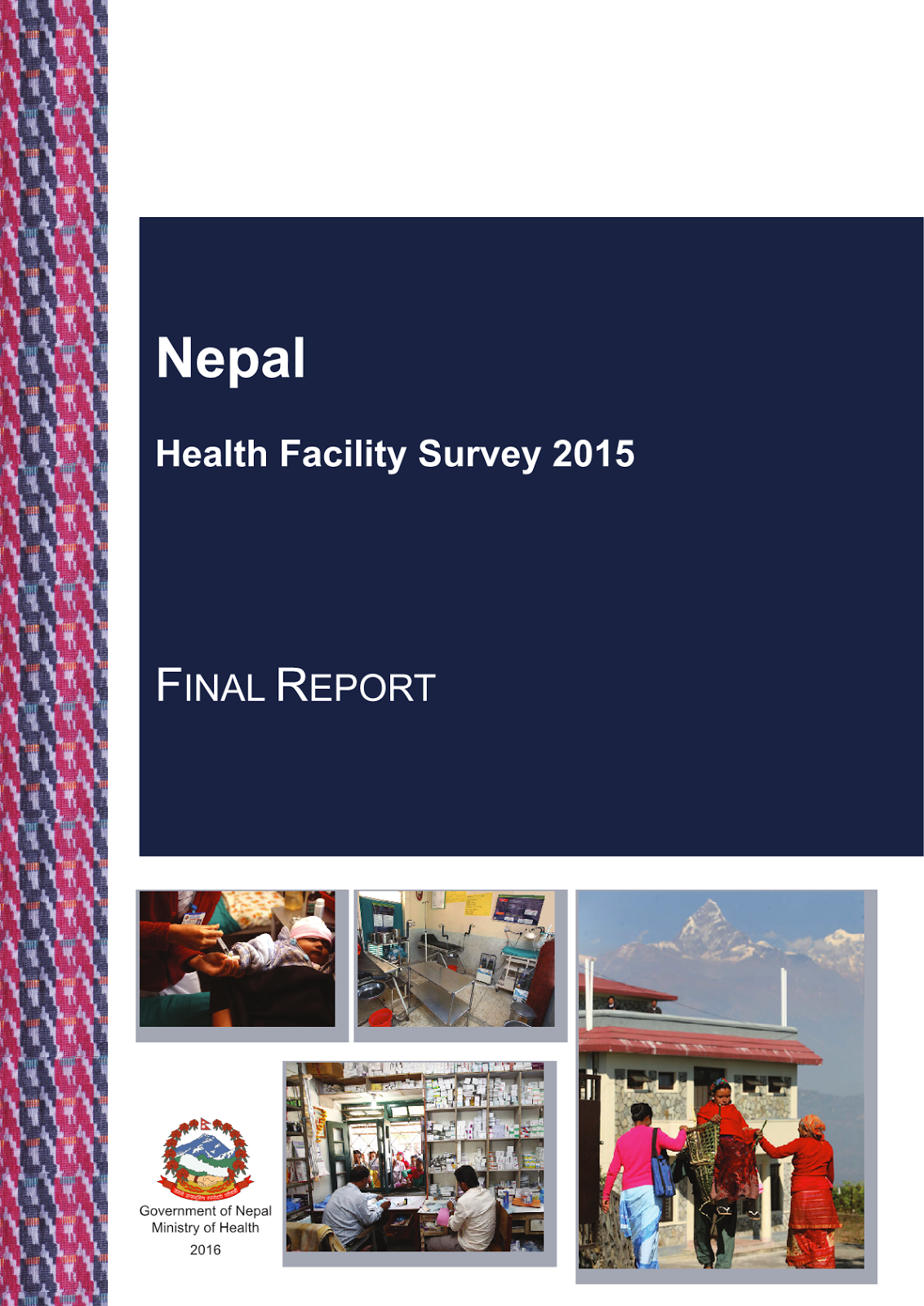
Key findings – The 2015 Nepal Health Facility Survey (2015 NHFS)
The NHFS collected information on the general readiness of facilities to provide quality health services. The survey also obtained information on the availability of each of the following services: child health care; maternal and newborn care; family planning; services for sexually transmitted infections (STIs), HIV/AIDS, tuberculosis- and malaria-related conditions; and services for non-communicable diseases (NCDs) (diabetes, cardiovascular diseases, and chronic respiratory diseases). For each of these services, the 2015 NHFS assessed whether components considered essential for quality service delivery were present and functioning. The 2015 NHFS provides representative results for Nepal, for different facility types (public hospitals, primary health care centers [PHCCs], health posts [HPs], urban health centers [UHCs], standalone HIV testing and counseling sites [HTCs], and private hospitals), for different managing authorities (government and private), for each of the three geo-ecological regions in the country, the survey was also designed for representative results for each of the 13 development-ecological zones and for the area affected by the 2015 earthquake (14 districts).
FACILITY-LEVEL INFRASTRUCTURE, RESOURCES, MANAGEMENT, GENERAL SERVICE READINESS, AND QUALITY OF CARE
- About 8 in 10 facilities have an improved water source and client latrine, half of facilities have regular electricity, and one-fifth of facilities have communication equipment. However, only 1 in 10 facilities have a computer with Internet access. With the exception of an adult weighing scale, a blood pressure apparatus, and a light source, public health facilities are more likely to have basic equipment available than private health facilities.
- Only about half of facilities have both soap and running water.
- Nearly all health facilities in Nepal offer child curative care, family planning, antenatal care, malaria diagnosis and/or treatment, and non-communicable disease services. Sexually transmitted infection (STI) diagnosis or treatment services are less commonly available.
- About two-thirds of Nepal health facilities offer the package of basic client services (outpatient curative care for sick children, child growth monitoring, child vaccinations, any modern method of family planning, antenatal care, and services for STIs).
- Of 18 tracer medicines, only chloramphenicol capsules/applicap, cotrimoxazole suspension or dispersible pediatric dose tablets, and RHZ (isoniazid + rifampicin + pyrazinamide) are available in less than half of health facilities.
- Only 37 percent of facilities conduct regular management meetings, and 35 percent involve the community in these meetings.
- Around two thirds of facilities have both routine staff training and personal supervision.
- Outpatient curative care for sick children is available in almost all health facilities in Nepal at least five days per week.
- Eighty-five percent of facilities offer all three basic child health interventions: outpatient curative care for sick children, routine growth monitoring, and routine childhood vaccination. Ninety-four percent of facilities provide routine vitamin A supplements for children.
- ORS, zinc tablets, albendazole, vitamin A capsules, and paracetamol syrup/suspension were available in 85 percent or more of the facilities offering child curative care services. Similarly, amoxicillin was available in one-quarter, cotrimoxazole in one-half and gentamycin in about two third of the facilities offering child curative care services.
- A thermometer, stethoscope, and timer were available in more than 9 in 10 facilities.
- Fifty-four percent of health facilities providing child curative care had soap and running water or alcohol-based hand disinfectant for hand cleansing.
- More than 7 of every 10 providers of child health services have received recent supervision, and 3 of every 10 have received recent in-service training related to child health.
- Providers assessed all three main symptoms (fever, cough/difficult breathing and diarrhea) in one-quarter of ob
served consultations and checked for all three major danger signs (ability to eat or drink anything, vomiting and convulsion) in only 2 percent of consultations.
- Almost all (97 percent) health facilities in Nepal offer (that is, provide, prescribe, or counsel clients on) at least three temporary modern family planning methods. Government health facilities are more likely to offer modern family planning methods than private health facilities.
- Combined oral contraceptive pills, male condoms, and progestin-only injectables (Depo) are the most commonly offered family planning methods. Long-acting reversible contraceptives (implants and intrauterine contraceptive devices [IUCDs]) are offered at half of health facilities where family planning services are available.
- Virtually all facilities where family planning services are available are able to provide male condoms, oral contraceptives, and injectables to clients at the facility. However, only around one in five facilities where family planning services are available provide IUCDs and implants at the facility.
- Ninety-five percent of health facilities that provide family planning methods actually had every method they provide available on the day of the visit.
- Overall, 16 percent of the interviewed family planning service providers reported that they had received in-service training related to family planning in the 24 months before the assessment .
- Just over 1 in 10 family planning service providers have ever received in-service training on long-acting reversible contraceptive methods.
- Hand-washing supplies were seen in just over half of health facilities offering family planning services.
- Overall, the environment for family planning counseling is poor. Visual and auditory privacy and confidentiality were assured in only 6 percent of the family planning consultations observed in the survey.
- There was almost no discussion of sexually transmitted infections or condoms during observed consultations. Method-specific side effects were discussed in a little more than one in five consultations.
ANTENATAL CARE SERVICES
- About 98 percent of health facilities in Nepal offer antenatal care (ANC) services.
- One in four health facilities offering ANC had at least one staff member who had received inservice training in ANC within the 24 months before the assessment.
- Twenty-five percent of facilities had ANC guidelines available on the day of the assessment.
- More than half of facilities had soap and running water or alcohol-based hand disinfectant for infection prevention available at the service site on the day of the assessment.
- Ninety percent of health facilities had all essential ANC medicines (combined iron and folic acid tablets, and albendazole tablets) available for ANC clients.
- Almost half of all observed ANC clients were counseled on nutrition during pregnancy. One third of clients were advised on issues relating to the progress of their pregnancy. Two out of ten clients were counseled on importance of at least four ANC visits and on birth/planning/preparedness measures.
- Seven in 10 ANC providers had received personal supervision in the six months preceding the survey.
- Two of every 10 facilities offering ANC provide at least some services for prevention of mother-to-child transmission (PMTCT) of HIV.
- Only 6 percent of facilities offering ANC had insecticide-treated nets available to give to ANC clients for malaria prevention.
- Around half of health facilities in Nepal provide normal vaginal delivery services. Almost all hospitals and primary health care centers (PHCCs) offer these services.
- Just over one-third of facilities that offer normal vaginal delivery service had at least one interviewed staff member who had received relevant in-service training in the preceding 24 months.
- Six out of 10 facilities that offer normal vaginal delivery care have emergency transport available.
- Around 9 in 10 facilities that offer normal vaginal delivery services had injectable uterotonic (oxytocin) and an intravenous fluid infusion set on the day of assessment, and more than 70 percent had injectable magnesium sulphate.
- On average, 11 percent of facilities had all medicines regarded as essential for delivery care. Seventy-seven percent of zonal and above hospitals had all essential delivery care medicines on the day of the assessment, as compared with only 5 percent of health posts (HPs).
- Nearly 4 in 10 health facilities had carried out neonatal resuscitation.
- More than two-thirds of zonal and above hospitals had carried out all comprehensive emergency obstetric and newborn care (CEmONC) signal functions at least once in the three months preceding the survey, as compared with one-fifth of district hospitals.
- Only 3 percent of PHCCs had performed all basic emergency obstetric and newborn care (BEmONC) signal functions at least once in the three months preceding the survey.
- More than 90 percent of facilities routinely carry out a number of essential newborn care functions including keeping the infant warm, starting breastfeeding soon after birth, and putting the baby skin-to-skin on the mother’s abdomen.
- About 6 percent of health facilities in Nepal have an HIV testing system.
- Almost one-third of facilities that have HIV testing capacity have adequate hand cleaning supplies—either running water and soap or alcohol-based hand disinfectant—at the HIV testing location.
- Five percent of all facilities offer HIV care and support services.
- Twelve percent of facilities offer antiretroviral therapy (ART) services. Among facilities offering these services, 80 percent had the first-line ART regimen available in the facility on the day of the assessment.
- Three out of every four facilities offer sexually transmitted infection (STI) services. However, less than 1 in 10 facilities have at least one provider with recent training on the diagnosis and treatment of STIs, and only 16 percent of facilities have the capacity to screen for syphilis infection.
- A majority of health facilities in Nepal offer services for the diagnosis and/or management of chronic respiratory diseases, and 73 percent of facilities offer services for cardiovascular diseases.
- About one in five health facilities offer services for the diagnosis and/or management of diabetes.
- On average, no more than 5 percent of facilities offering services for diabetes, cardiovascular diseases, or chronic respiratory diseases have providers who received training in these services during the 24 months preceding the survey.
- The availability of guidelines for provision of non-communicable disease (NCD) services is consistently low.
- Equipment such as a blood pressure apparatus, weighing scale, and stethoscope is available in a majority of facilities that provide NCD services. Other equipment, such as height boards, peak flow meters, and spacer devices, is less available.
- The availability of essential medicines for these conditions is low in most facilities other than hospitals.
- TB diagnostic services were mostly concentrated at the primary health care center (PHCC) level and above.
- Nationally, TB treatment services were available in 86 percent of health facilities.
- TB diagnostic and treatment services together were available only in a third (30 percent) of facilities.
- Only one-third of facilities offering tuberculosis diagnosis and/or treatment services had diagnosis and treatment guidelines available. Facilities in the mountain region were least likely to have guidelines.
- Only 17 percent of facilities that offer tuberculosis diagnosis and/or treatment services had staff with any recent in-service training related to TB.
- Only 10 percent of facilities had the capacity to carry out TB smear microscopy or x-ray services for the diagnosis of TB.
- Less than 1 percent of facilities had the capacity to carry out culture and rapid diagnostic tests.
- Only 4 percent of facilities offering tuberculosis diagnosis and/or treatment services also had HIV diagnostic capacity.
- First-line anti-TB drugs were available in the majority (77 percent) of facilities.
- Half of Nepal’s health facilities offer diagnosis and treatment for malaria.
- About one-fifth of health facilities have at least one staff member recently trained in malaria diagnosis and/or treatment.
- Sixty percent of facilities that offer malaria diagnosis and/or treatment services had first-line medicines (mainly chloroquine and primaquine) for the treatment of malaria available on the day of the assessment visit.
- Despite the policy of promoting free distribution of bed nets to antenatal care clients, only 11 percent of health facilities th
at provide malaria services had long-lasting insecticide-treated mosquito nets (LLINs) in stock for distribution.
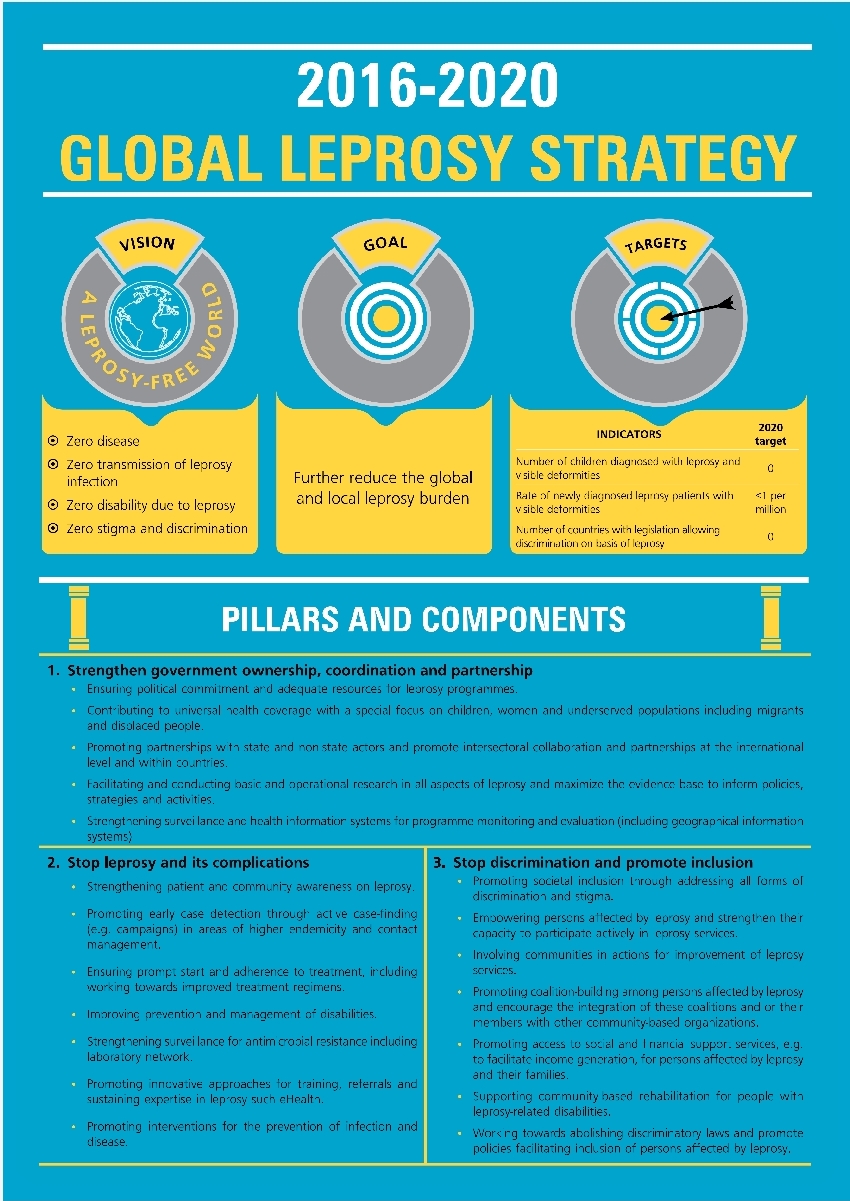
- Ensuring political commitment and adequate resources for leprosy programmes.
- Contributing to universal health coverage with a special focus on children, women and underserved populations including migrants and displaced people.
- Promoting partnerships with state and non-state actors and promote intersectoral collaboration and partnerships at the international level and within countries.
- Facilitating and conducting basic and operational research in all aspects of leprosy and maximize the evidence base to inform policies, strategies and activities.
- Strengthening surveillance and health information systems for programme monitoring and evaluation (including geographical information systems).
- Strengthening patient and community awareness of leprosy.
- Promoting early case detection through active case-finding (such as campaigns) in areas of higher endemicity and contact management.
- Ensuring prompt start of and adherence to treatment, including working towards improved treatment regimens.
- Improving prevention and management of disabilities.
- Strengthening surveillance for antimicrobial resistance including laboratory network.
- Promoting innovative approaches for training, referrals and sustaining expertise in leprosy, such as e-health.
- Promoting interventions for the prevention of infection and disease.
- Promoting societal inclusion by addressing all forms of discrimination and stigma.
- Empowering persons affected by leprosy and strengthening their capacity to participate actively in leprosy services.
- Involving communities in action for improvement of leprosy services.
- Promoting coalition-building among persons affected by leprosy and encouraging the integration of these coalitions and or their members with other community-based organizations.
- Promoting access to social and financial support services, for example to facilitate income generation, for persons affected by leprosy and their families.
- Supporting community-based rehabilitation for people with leprosy-related disabilities.
- Working towards abolishing discriminatory laws and promoting policies facilitating inclusion of persons affected by leprosy.
- The targets of the new global strategy to be met by 2020 are:
- Zero disabilities among new paediatric patients.
- A grade-2 disability rate of less than 1 case per 1 million people.
- Zero countries with legislation allowing discrimination on basis of leprosy.
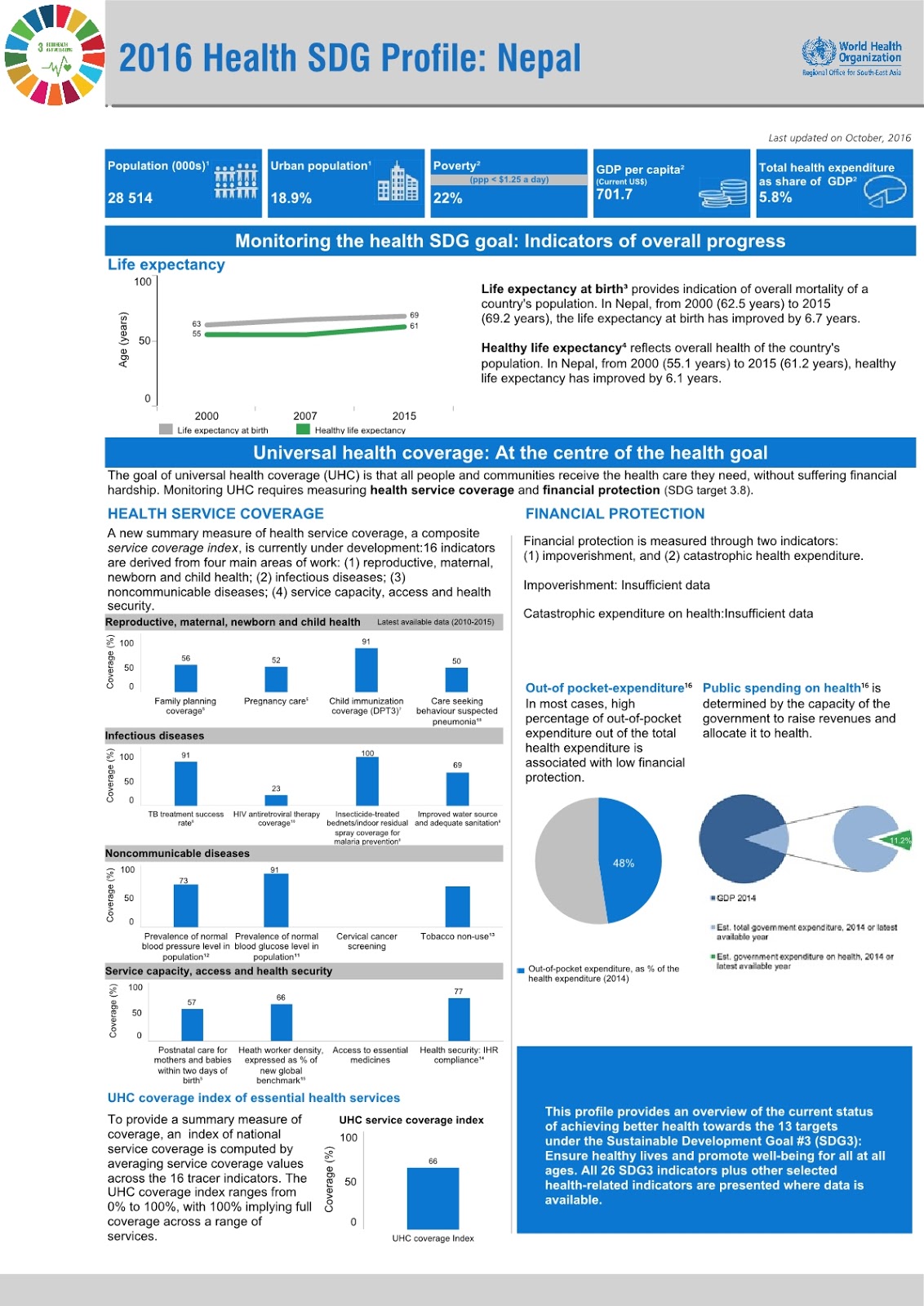
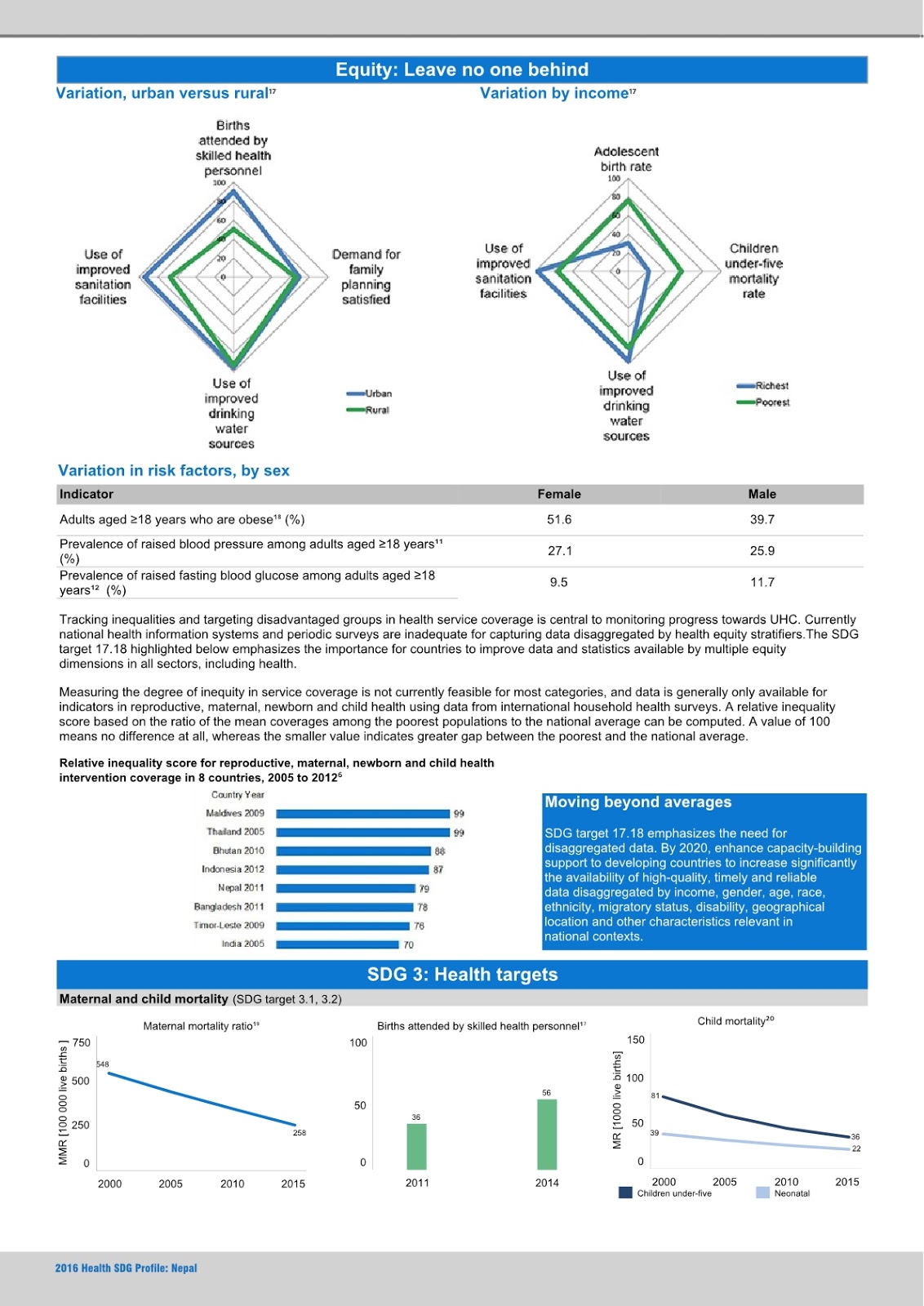
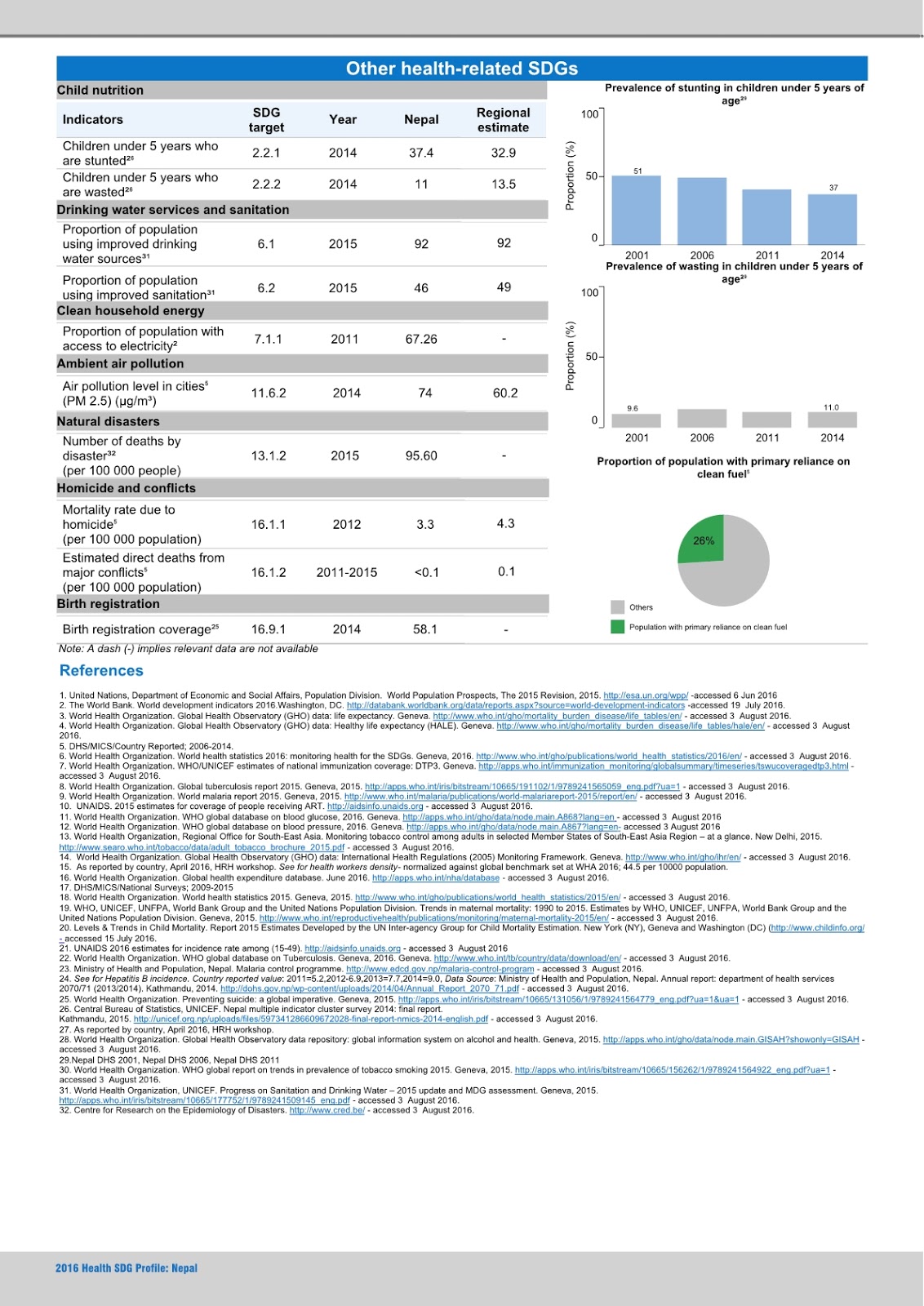
2016 Health SDG Profile: Nepal
![]() |
| WHO (ORIGINAL SOURCE) |
![]() |
| WHO (ORIGINAL SOURCE) |
![]() |
| WHO(ORIGINAL SOURCE) |
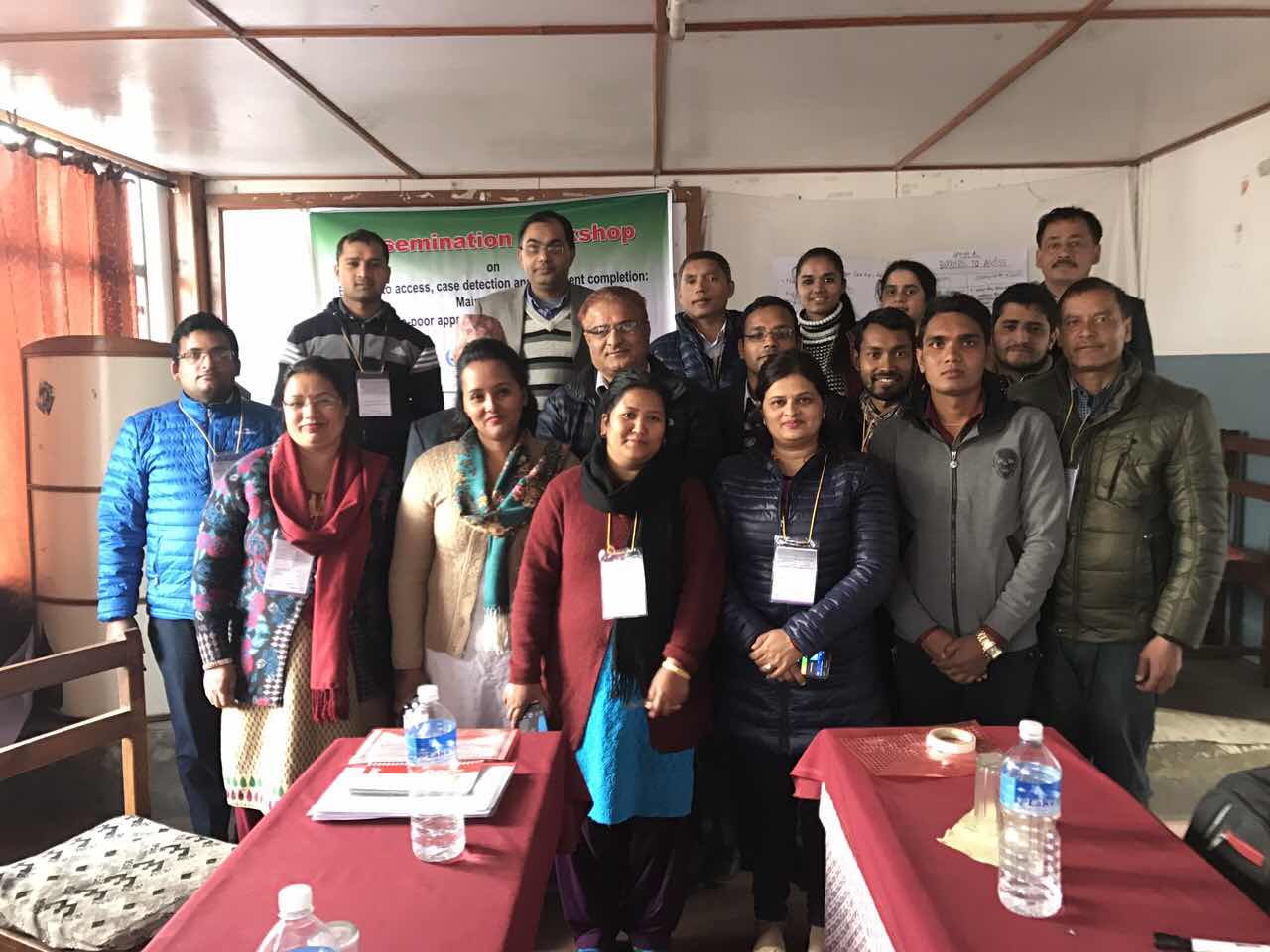
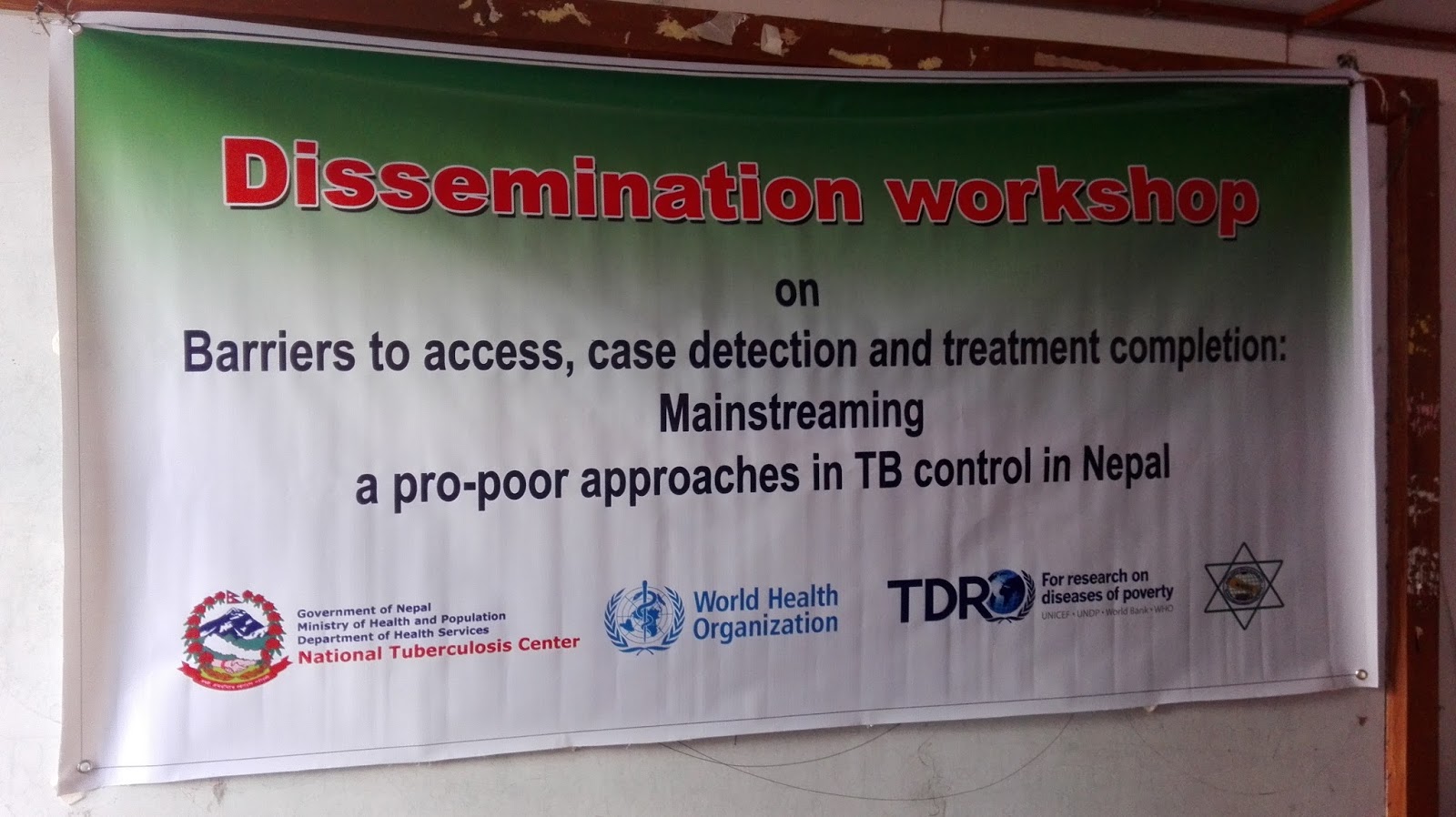
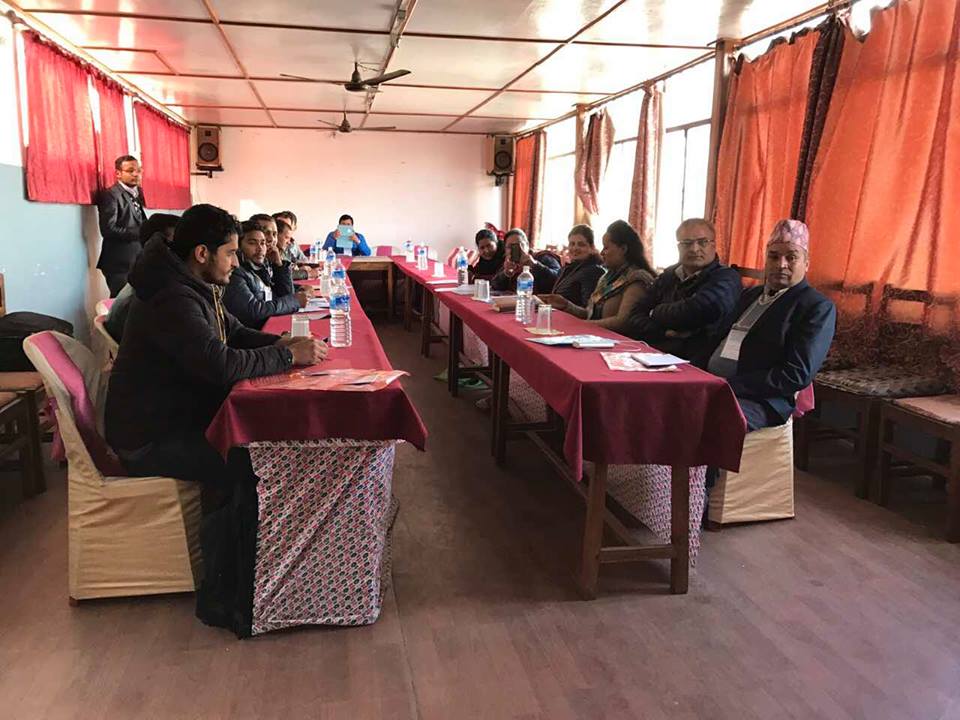
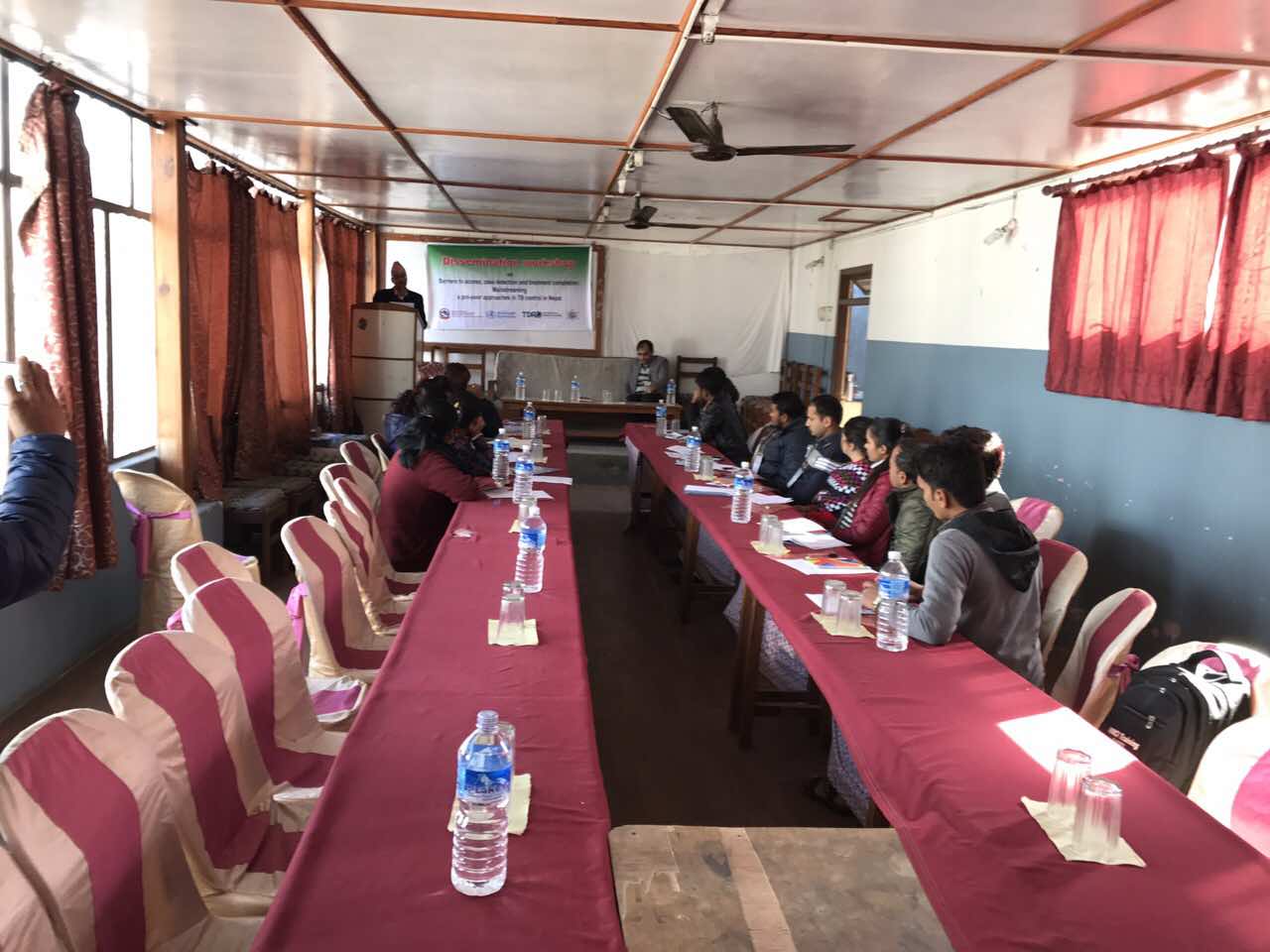
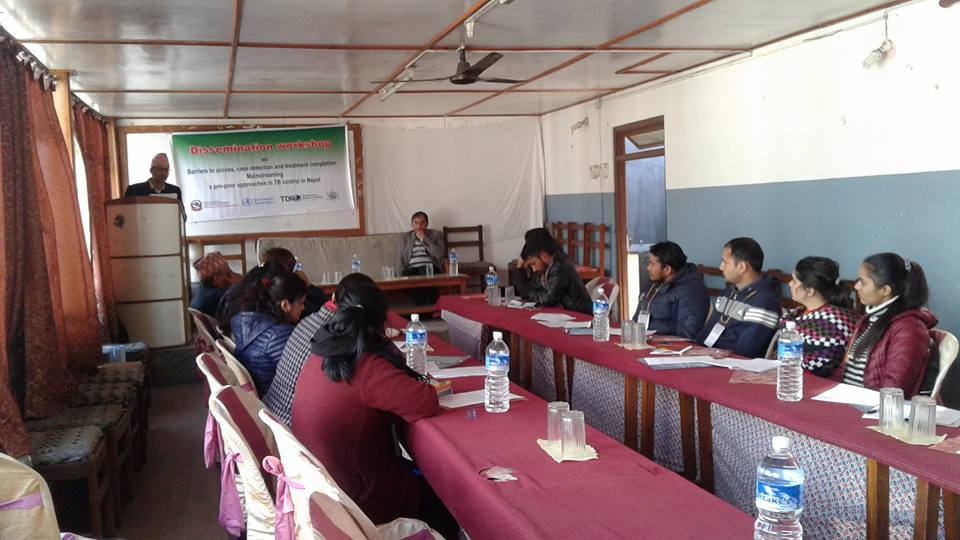
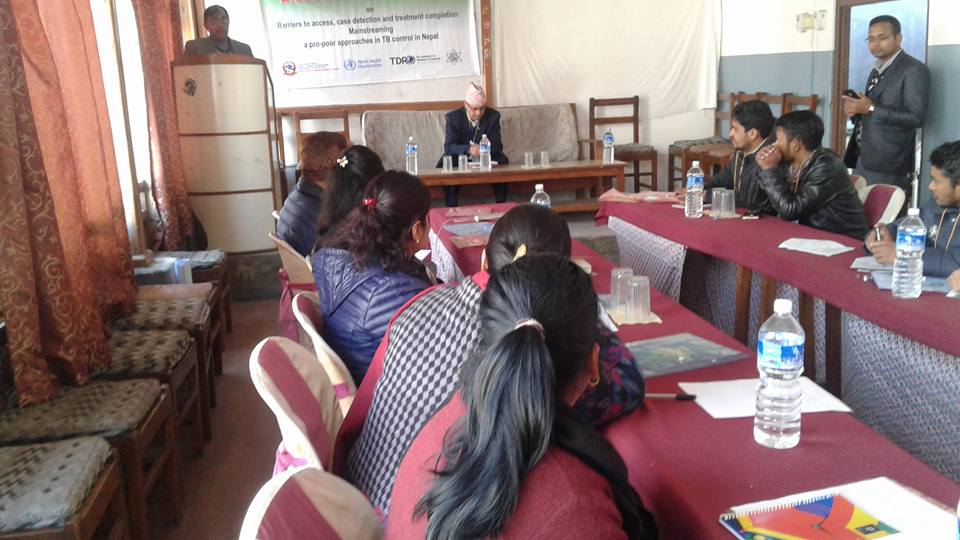
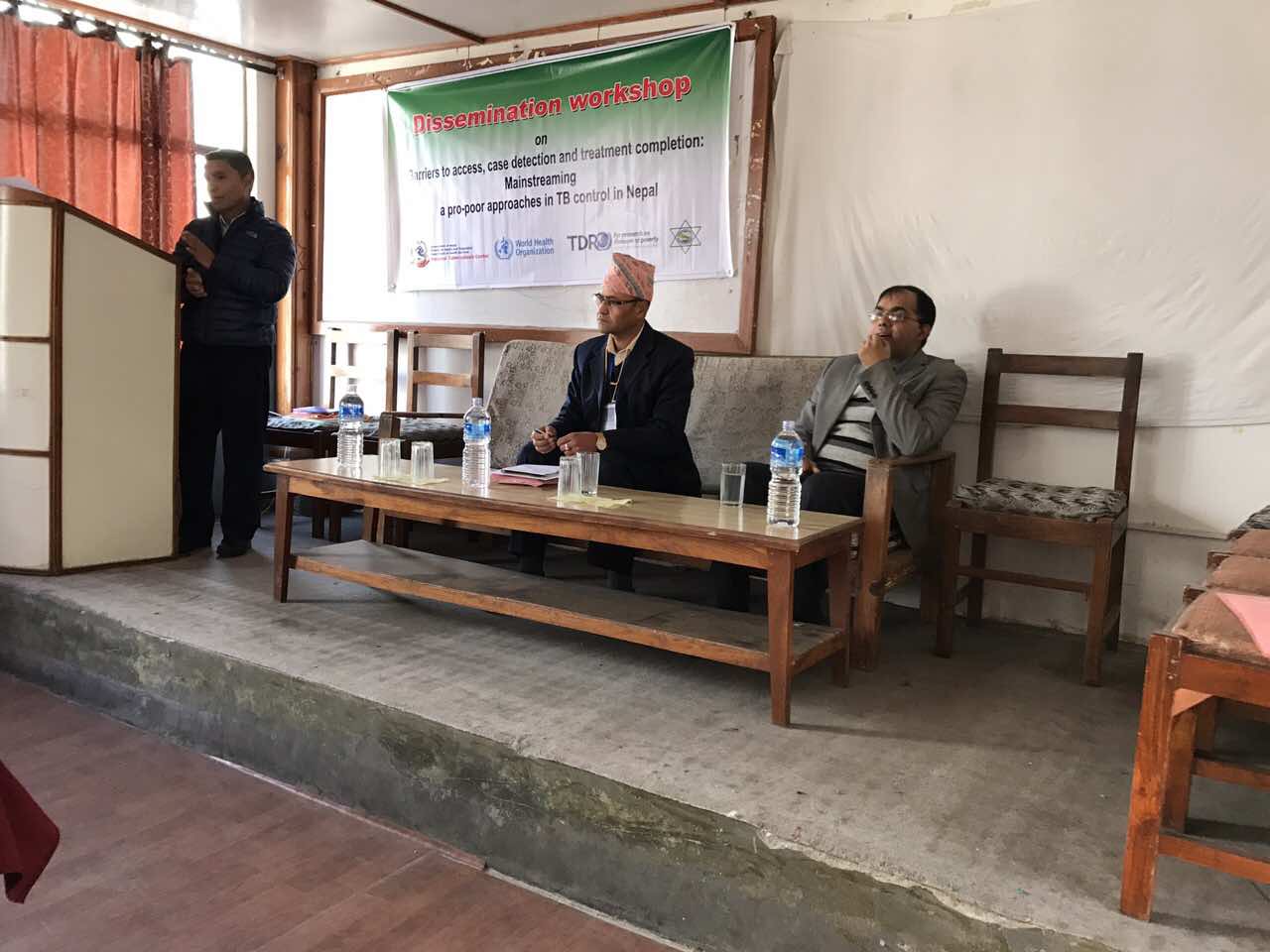
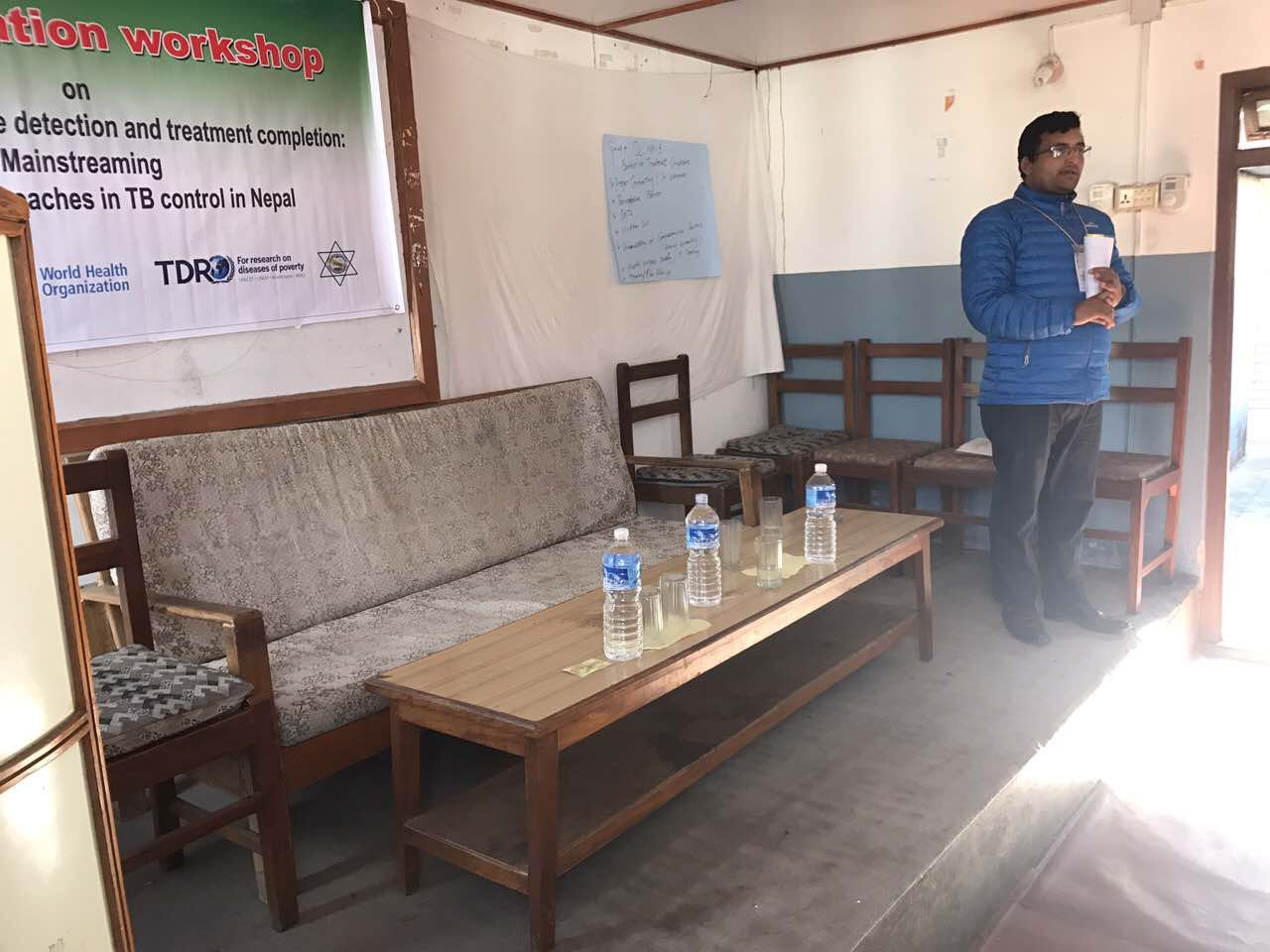
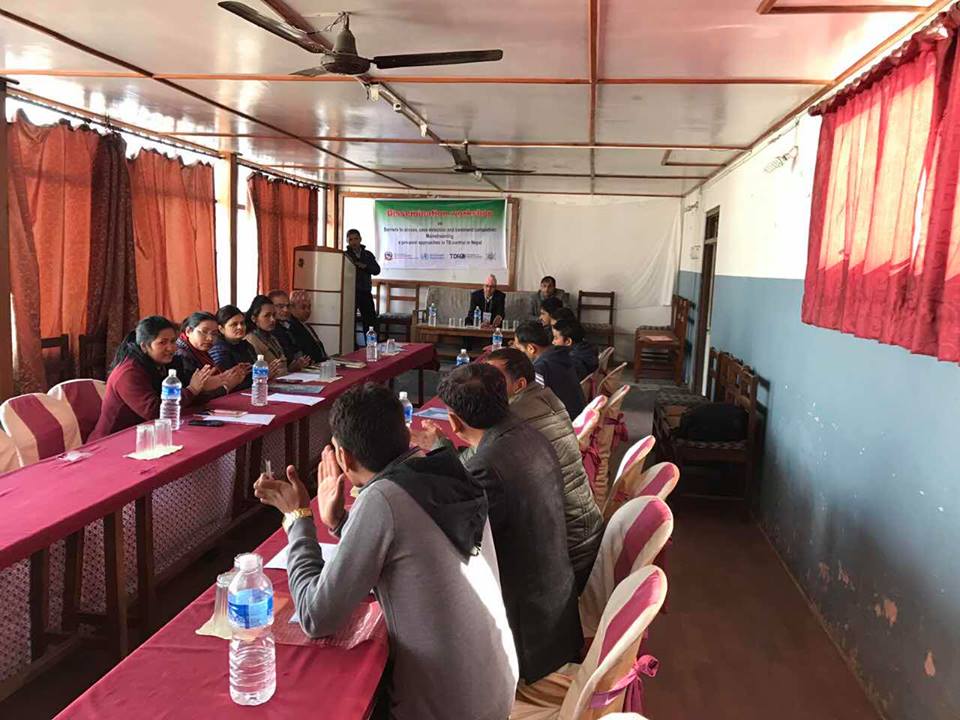
Dissemination workshop on ‘‘Barriers to access, case detection and treatment completion: Mainstreaming a pro-poor approaches in TB control in Nepal’’
Pokhara
A dissemination workshop on ‘‘Barriers to access, case detection and treatment completion: Mainstreaming a pro-poor approaches in TB control in Nepal’’ took place on 5th January 2017 at Pokhara. The workshop was organized by the Manmohan Memorial Institute of Health Sciences in collaboration with National Tuberculosis Center & WHO TDR.
List of Essential Medicines for Basic Health Services in Nepal
The Government of Nepal provides 98 types of essential medicines free of cost at different health care facilities of Nepal. Here is the list of essential medicines which are available free of cost at different health care facilities; Basic Health Service Center/ Health Post, Primary Hospital and Primary Healthcare Centers.
List of Free Medicines
| S. No. | Medicine Name | Dosage form | Strength | Availability | Procurement authority | |||
| Basic Health Service Center/ Health Post | Primary Hospital/ Primary Healthcare Center | Local | Province | Federal | ||||
| 1 | Acetylsalicylic acid (aspirin) | Tablet | 75 mg | ✓ | ✓ | ✓ | ||
| 2 | Adrenaline (epinephrine) | Injection | 1mg in 1ml | ✓ | ✓ | ✓ | ||
| 3 | Albendazole | Chewable Tablet | 400 mg | ✓ | ✓ | ✓ | ||
| Suspension | 200 mg/5ml | ✓ | ✓ | ✓ | ||||
| 4 | Aluminium hydroxide gel + Magnesium hydroxide (Antacid) | Tablet | 250 mg+250mg | ✓ | ✓ | ✓ | ||
| 5 | Amitriptyline | Tablet | 10 mg | ✓ | ✓ | ✓ | ||
| Tablet | 25 mg | ✓ | ✓ | ✓ | ||||
| 6 | Amlodipine | Tablet | 5mg | ✓ | ✓ | ✓ | ||
| 7 | Amoxicillin | Oral Tablet | 500 mg | ✓ | ✓ | ✓ | ||
| Power for oral suspension | 125mg/5ml, 100 ml | ✓ | ✓ | ✓ | ||||
| Dispersible Tablets | 125 mg | ✓ | ✓ | ✓ | ||||
| 250 mg | ✓ | ✓ | ✓ | |||||
| 8 | Ampicillin | Powder for IV/IM injection | 250 mg vial | ✓ | ✓ | |||
| 500 mg vial | ✓ (IMNCI) | ✓ | ✓ | |||||
| 9 | Artemether + Lumefantrine (AL) (Artemisinin-based Combination Therapy – ACT) | Tablet | 20mg+120 mg | ✓ | ||||
| 10 | Artesunate | Injection | 60 mg ampoules | ✓ | ✓ | ✓ | ||
| 11 | Atropine | Injection | 0.6mg in 1 ml ampoule | ✓ | ✓ | ✓ | ||
| 12 | Azithromycin | Tablet | 250 mg | ✓ | ✓ | ✓ | ||
| Tablet | 500 mg | ✓ | ✓ | ✓ | ||||
| 13 | BCG Vaccine | Injection | 0.05 ml/dose | ✓ | ✓ | ✓ | ||
| 14 | Benzathine benzylpenicillin | Powder for Injection | 1200000 IU | ✓ | ✓ | |||
| 15 | Calamine | Lotion | 15% wv 30 ml | ✓ | ✓ | ✓ | ||
| 16 | Calcium gluconate | Injection | Inj 1g per 10ml | ✓ (Birthing Centre only) | ✓ | ✓ | ||
| 17 | Carbamazepine | Tablet | 200mg | ✓ | ✓ | ✓ | ||
| Tablet | 100mg | ✓ | ✓ | ✓ | ||||
| Oral liquid | Oral liquid 100mg/5ml | ✓ | ✓ | ✓ | ||||
| 18 | Cefixime | Tablet | 200mg | ✓ | ✓ | |||
| 19 | Ceftriaxone | Powder for Injection | 250mg/vial | ✓ | ✓ | |||
| Powder for Injection | 500mg/vial | ✓ | ✓ | |||||
| Powder for Injection | 1gm w/vial | ✓ | ✓ | |||||
| 20 | Cetirizine HCL | Tablet | 10mg | ✓ | ✓ | ✓ | ||
| Syrup | 5mg/5ml | ✓ | ✓ | ✓ | ||||
| 21 | Charcoal, activated | powder in sachet | 10g | ✓ | ✓ | ✓ | ||
| 22 | Chlorhexidine (CHX) | Solution | Solution, 0.2% oral 50 ml | ✓ | ✓ | ✓ | ||
| Ointment | 4%, 5gm | ✓ | ✓ | ✓ | ||||
| 23 | Chloroquine (CQ) | Tablet | 150mg | ✓ | ✓ | ✓ | ||
| 24 | Ciprofloxacin | Tablet | 250 mg | ✓ | ✓ | ✓ | ||
| Tablet | 500 mg | ✓ | ✓ | ✓ | ||||
| Eye/Ear drops | 0.3% w/v, 5ml | ✓ | ✓ | ✓ | ||||
| Eye ointment | 0.3%, 5g | ✓ | ✓ | ✓ | ||||
| Injection | 200 mg/100ml | ✓ | ✓ | |||||
| 25 | Clotrimazole | Skin cream | 1%, 25 g | ✓ | ✓ | ✓ | ||
| Vaginal Tablets | 100mg | ✓ | ✓ | ✓ | ||||
| Mouth paint | 1% w/v, 15 ml | ✓ | ✓ | ✓ | ||||
| 26 | Clove Oil | Liquid | 5ml | ✓ | ✓ | ✓ | ||
| 27 | Cloxacillin | Capsules | 250 mg | ✓ | ✓ | ✓ | ||
| Capsules | 500 mg | ✓ | ✓ | ✓ | ||||
| Powder for oral liquid | 12mg/5 ml in 100 ml | ✓ | ✓ | ✓ | ||||
| 28 | Combined Oral Contraceptive (COC) | Tablet | 30 pills, 21 pills, containing 150 mcg levonorgestrel and 30 mcg ethinylestradiol and 7 pills containing iron | ✓ | ✓ | ✓ | ||
| 29 | Cotrimoxazole (Sulphamethoxazole and Trimethoprim 5:1) | Tablets | 400 mg + 80 mg | ✓ | ✓ | ✓ | ||
| Tablets | 800 mg + 160mg | ✓ | ✓ | ✓ | ||||
| Syrup | 200mg + 40mg/5m, 50 ml | ✓ | ✓ | ✓ | ||||
| 30 | Dapsone, Clofazimine, Rifampicin (MDT Combi Pack) | Tablet | MB adult blister pack, MB Chld blister pack (a/c to DOTS Program) | ✓ | ✓ | ✓ | ||
| 31 | Dexamethasone | Injection | 4mg in 1ml ampoule | ✓ | ✓ | |||
| 32 | Dextrose (glucose) | Injection/solution | 5%, 500ml | ✓ | ||||
| 25% of 50 ml Amp | ✓ (Birthing Centre only) | ✓ | ✓ | |||||
| 33 | Diazepam | Injection | 2ml amp (5ml/ml) | ✓ | ✓ | ✓ | ||
| Tablet | 5mg | ✓ | ✓ | ✓ | ||||
| 34 | Diclofenac Sodium | Tablet | 50 mg | ✓ | ✓ | ✓ | ||
| Injection | 3ml ampoule (25mg/ml) | ✓ | ✓ | ✓ | ||||
| 35 | Doxycycline | Capsule | 100mg | ✓ | ✓ | ✓ | ||
| 36 | Ferrous sulphate and folic acid | Tablet | 60 mg elemental iron plus 400 mcg folic acid | ✓ (Birthing Centre only) | ✓ | ✓ | ||
| 37 | FIPV Vaccine | Injection | 0.1 ml | ✓ | ✓ | ✓ | ||
| 38 | Fluconazole | Capsule | 150 mg | ✓ | ✓ | ✓ | ||
| 39 | Fluoxetine | Capsule | 20 mg | ✓ | ✓ | ✓ | ||
| 40 | Folic acid | Tablet | 5 mg | ✓ | ✓ | ✓ | ||
| 41 | Furosemide | Tablet | 40 mg | ✓ | ✓ | ✓ | ||
| 42 | Gentamicin | Injection | 40 mg/ml in 2ml | ✓ (IMNCI) | ✓ | ✓ | ||
| 43 | Gentian Violet | Aqueous solution | 1%, 10 ml | ✓ | ✓ | ✓ | ||
| 44 | Glimepiride | Tablet | 1mg | ✓ | ✓ | ✓ | ||
| Tablet | 2mg | ✓ | ✓ | ✓ | ||||
| 45 | HPV Vaccine | Injection | 0.5ml/ dose | ✓ | ✓ | ✓ | ||
| 46 | HRZE | Tablet | Combination medication; H-INH, R- Rifampicin, Z- Pyrazinamide, E- Ethambul A/c to DOTS program | ✓ | ✓ | ✓ | ||
| 47 | Hydrocortisone | Powder for Injection | 100 mg in vial | ✓ | ✓ | |||
| 48 | Hyoscine butylbromide | Injection | 20 mg/ml | ✓ | ✓ | ✓ | ||
| Tablet | 10 mg | ✓ | ✓ | ✓ | ||||
| 49 | Ibuprofen | Tablet | 200mg | ✓ | ✓ | ✓ | ||
| Tablet | 400mg | ✓ | ✓ | ✓ | ||||
| Syrup | 100 mg/5ml | ✓ | ✓ | ✓ | ||||
| 50 | Japanese Encephalitis Injection | Injection | 0.5ml/dose | ✓ | ✓ | ✓ | ||
| 51 | Levonorgestrel (LNG) | Implant | implant (2 rods, 75 mg each) Tab0.75 mg (2-tablet pack) | ✓ | ✓ | ✓ | ||
| 52 | Lignocaine hydrochloride | Injection | 2% in vial, 30ml | ✓ | ✓ | ✓ | ||
| 53 | Lignocaine with adrenaline 1:10,000 | Injection | 2% plus Adrenalin 1:10,000, 30 ml | ✓ | ✓ | ✓ | ||
| 54 | Losartan | Tablets | 25mg | ✓ | ✓ | ✓ | ||
| Tablets | 50mg | ✓ | ✓ | ✓ | ||||
| 55 | Magnesium sulphate | Injection | 500 mg/ml in 2 ml ampoule | ✓ (Birthing Centre only) | ✓ | ✓ | ||
| 56 | Measles-Rubella Vaccine | Injection | 0.5ml / dose | ✓ | ✓ | ✓ | ||
| 57 | Medroxyprogesterone (Acetate DMPA) | Injection | 150 mg/ml in 1 ml vial | ✓ | ✓ | ✓ | ||
| 58 | Metformin | Tablet | 500mg | ✓ | ✓ | ✓ | ||
| Tablet | 1000mg | ✓ | ✓ | ✓ | ||||
| 59 | Methyldopa | Tablet | 250 mg | ✓ | ✓ | ✓ | ||
| 60 | Metoclopramide | Tablet | 10 mg | ✓ | ✓ | ✓ | ||
| Solution | 5mg/5ml | ✓ | ✓ | ✓ | ||||
| Injection | 5mg/ml in 2 ml ampoule | ✓ | ✓ | ✓ | ||||
| 61 | Metronidazole | Tablet | 200 mg | ✓ | ✓ | ✓ | ||
| Tablet | 400 mg | ✓ | ✓ | ✓ | ||||
| Oral liquid | 200 mg/5ml, 90 ml | ✓ | ✓ | ✓ | ||||
| Injection | 500 mg/100 ml | ✓ | ✓ | |||||
| 62 | Mifepristone + Misoprostol | Tablet | Comb pack includes 200 mg + 4 (200) mcg | ✓ | ✓ | ✓ | ||
| 63 | Misoprostol | Tablet | 200 mcg | ✓ | ✓ | ✓ | ||
| 64 | Neomycin Skin | Ointment | 2% w/w 10 gm | ✓ | ✓ | ✓ | ||
| 65 | Nifedipine | Tablet | 10 mg | ✓ | ✓ | ✓ | ||
| 66 | Nitrofurantion | Tablet | 100 mg | ✓ | ✓ | ✓ | ||
| 67 | Normal Saline (NS) | Solution | 0.9% infusion solution, 500 ml | ✓ | ✓ | ✓ | ||
| 68 | OPV (Oral Polio Vaccine) | Oral | 2 drop/dose | ✓ | ✓ | ✓ | ||
| 69 | Oral Rehydration Salts (ORS) | Powder | WHO Formula sachet/liters | ✓ | ✓ | ✓ | ||
| 70 | Oxygen | Inhalation | Medical gas | ✓ | ✓ | ✓ | ||
| 71 | Oxymetazoline | Nasal drop | 0.025%, 10 ml | ✓ | ✓ | ✓ | ||
| 0.05% 10 ml | ✓ | ✓ | ✓ | |||||
| 72 | Oxytocin | Injection | 10 IU/ml | ✓ (Birthing Centre only) | ✓ | ✓ | ||
| 73 | Paracetamol | Injection | 150 mg/ml in 2ml ampoule | ✓ | ✓ | ✓ | ||
| Tablet | 500 mg | ✓ | ✓ | ✓ | ||||
| Syrup | 125mg/5ml, 50 ml | ✓ | ✓ | ✓ | ||||
| 74 | PCV Vaccine (Pneumococcal Conjugate Vaccine) | Injection | 0.5 ml | ✓ | ✓ | ✓ | ||
| 75 | Pentavalent vaccine (DPT, Hep B and Hemophilus Influenza B) | Injection | 0.5ml | ✓ | ✓ | ✓ | ||
| 76 | Permethrin | Lotion | 1% 100ml | ✓ | ✓ | ✓ | ||
| Cream | 5% w/v 30 g | ✓ | ✓ | ✓ | ||||
| 77 | Pheniramine | Injection | 22.75mg/ml 2ml | ✓ | ✓ | ✓ | ||
| 78 | Phenobarbital | Tablet | 30 mg | ✓ | ✓ | |||
| Injection | 100 mg/ml | ✓ | ✓ | |||||
| 79 | Povidone iodine | Solution | 5% w/v 500 ml | ✓ | ✓ | ✓ | ||
| 80 | Pralidoxime Sodium | Injection | 500 mg, 20 ml | ✓ | ✓ | ✓ | ||
| 81 | Prednisolone | Tablet | 5mg | ✓ | ✓ | ✓ | ||
| 10 mg | ✓ | ✓ | ✓ | |||||
| 20 mg | ✓ | ✓ | ✓ | |||||
| 82 | Primaquine | Tablet | 7.5 mg | ✓ | ✓ | ✓ | ||
| 83 | Pyridoxine | Tablet | 10mg | ✓ | ✓ | ✓ | ||
| 84 | Ranitidine | Tablet | 150 mg | ✓ | ✓ | ✓ | ||
| Injection | 25mg/ml in 2 ml ampoule | ✓ | ✓ | ✓ | ||||
| 85 | Ringer’s Lactate (RL) | Solution | 500 ml | ✓ | ✓ | ✓ | ||
| 86 | Risperidone | Tablet | 1 mg | ✓ | ✓ | ✓ | ||
| 2 mg | ✓ | ✓ | ✓ | |||||
| 87 | Rotavirus Vaccine | Injection | 1.5 ml | ✓ | ✓ | ✓ | ||
| 88 | Salbutamol | Solution for nebulization | 1 mg/ml of 15 ml | ✓ | ✓ | ✓ | ||
| Oral Liquid | 2mg/5ml | ✓ | ✓ | ✓ | ||||
| MDI | 100 mcg | ✓ | ✓ | ✓ | ||||
| 89 | Silver Sulfadiazine | Cream | 0.2% w/v 15g | ✓ | ✓ | ✓ | ||
| 90 | Tetanus diphtheria (Td) booster vaccine | Injection | 0.5ml/dose | ✓ | ✓ | ✓ | ||
| 91 | Tetanus Toxoid (TT) | Injection | 0.5ml/dose | ✓ | ✓ | ✓ | ||
| 92 | Tetracycline | Eye ointment | 1%, 5g | ✓ | ✓ | ✓ | ||
| 93 | Tinidazole | Tablet | 500mg | ✓ | ✓ | ✓ | ||
| 94 | Sodium Valporate | Tablet | 200 mg | ✓ | ✓ | ✓ | ||
| 95 | Vitamin A | Capsule | 200,000 IU | ✓ | ✓ | ✓ | ||
| 50,000 IU | ✓ | ✓ | ✓ | |||||
| 96 | Vitamin B complex | Tablet | Thiamine 10 mg, riboflavin 10 mg, pyridoxine 3 mg, cyanocobalamin 15 mcg (Therapeutic dose) | ✓ | ✓ | ✓ | ||
| 97 | Vitamin K1 | Injection | 1mg/0.5 ml | ✓ | ✓ | ✓ | ||
| 98 | Zinc sulphate | Dispersible tablets | 10 mg | ✓ | ✓ | ✓ | ||
| 20 mg | ✓ (IMNCI) | ✓ | ✓ | |||||
Medicine Name
- Acetylsalicylic acid (aspirin)
- Adrenaline (epinephrine)
- Albendazole
- Aluminum hydroxide gel + Magnesium hydroxide (Antacid)
- Amitriptyline
- Amlodipine
- Amoxicillin
- Ampicillin
- Artemether + Lumefantrine (AL) (Artemisinin-based Combination Therapy – ACT)
- Artesunate
- Atropine
- Azithromycin
- BCG Vaccine
- Benzathine benzylpenicillin
- Calamine
- Calcium gluconate
- Carbamazepine
- Cefixime
- Ceftriaxone
- Cetirizine HCL
- Charcoal, activated
- Chlorhexidine (CHX)
- Chloroquine (CQ)
- Ciprofloxacin
- Clotrimazole
- Clove Oil
- Cloxacillin
- Combined Oral Contraceptive (COC)
- Cotrimoxazole (Sulphamethoxazole and Trimethoprim 5:1)
- Dapsone, Clofazimine, Rifampicin (MDT Combi Pack)
- Dexamethasone
- Dextrose (glucose)
- Diazepam
- Diclofenac Sodium
- Doxycycline
- Ferrous sulphate and folic acid
- FIPV Vaccine
- Fluconazole
- Fluoxetine
- Folic acid
- Furosemide
- Gentamicin
- Gentian Violet
- Glimepiride
- HPV Vaccine
- HRZE
- Hydrocortisone
- Hyoscine butylbromide
- Ibuprofen
- Japanese Encephalitis Injection
- Levonorgestrel (LNG)
- Lignocaine hydrochloride
- Lignocaine with adrenaline 1:10,000
- Losartan
- Magnesium sulphate
- Measles-Rubella Vaccine
- Medroxyprogesterone (Acetate DMPA)
- Metformin
- Methyldopa
- Metoclopramide
- Metronidazole
- Mifepristone+ Misoprostol
- Misoprostol
- Neomycin Skin
- Nifedipine
- Nitrofurantion
- Normal Saline (NS)
- OPV (Oral Polio Vaccine)
- Oral Rehydration Salts (ORS)
- Oxygen
- Oxymetazoline
- Oxytocin
- Paracetamol
- PCV Vaccine (Pneumococcal Conjugate Vaccine)
- Pentavalent vaccine (DPT, Hep B and Hemophilius Influenza B)
- Permethrin
- Pheniramine
- Phenobarbital
- Povidone iodine
- Pralidoxin Sodium
- Prednisolone
- Primaquine
- Pyridoxine
- Ranitidine
- Ringer’s Lactate (RL)
- Risperidone
- Rotavirus Vaccine
- Salbutamol
- Silver Sulfadiazine
- Tetanus diphtheria (Td) booster vaccine
- Tetanus Toxoid (TT)
- Tetracycline
- Tinidazole
- Sodium Valproate
- Vitamin A
- Vitamin B complex
- Vitamin K1
- Zinc sulphate
List of surgical items
| S. No. | Particulars | Unit | Specification | Availability | Procurement authority | |||
| Basic Health Service Center/ Health Post | Primary Hospital/ Primary Healthcare Center | Local Level | Province | Federal | ||||
| 1 | Absorbent cotton | Roll | Net 400 gm | ✓ | ✓ | ✓ | ||
| 2 | Adhesive Tape | Roll | 4″ | ✓ | ✓ | ✓ | ||
| 3 | Bandage | Than | 18m*19cm | ✓ | ✓ | ✓ | ||
| 4 | Catgut | Packet | catgut 2.0 | ✓ | ✓ | ✓ | ||
| 5 | Chlorine powder | Packet | 200G/Sachet | ✓ | ✓ | ✓ | ||
| 6 | Condom (Male) | Packet | ✓ | ✓ | ✓ | |||
| 7 | Disposable syringes | Packet | 3ml, 5ml | ✓ | ✓ | ✓ | ||
| 8 | Gauze | Than | 18m*19cm | ✓ | ✓ | ✓ | ||
| 9 | I and D set | Packet | ✓ | ✓ | ✓ | |||
| 10 | IV cannula | Packet | 18/20/24 g | ✓ | ✓ | ✓ | ||
| 11 | IV set | Packet | Different sizes | ✓ | ✓ | ✓ | ||
| 12 | Phenol | Bottle | 500 ml | ✓ | ✓ | ✓ | ||
| 13 | Rectified spirit | Bottle | 500 ml | ✓ | ✓ | ✓ | ||
| 14 | Rubber catheter | packet | Different sizes | ✓ | ✓ | ✓ | ||
| 15 | Silk | Packet | silk 2.0 | ✓ | ✓ | ✓ | ||
| 16 | surgical blade | packet | Different sizes | ✓ | ✓ | ✓ | ||
| 17 | Surgical gloves (Disposal) | Pairs | 6.5,7 | ✓ | ✓ | ✓ | ||
| 18 | Suture set | Packet | ✓ | ✓ | ✓ | |||
| Note: Suture set contains straight artery forcef, curve artery forcef, sponge holding forcef, tooth forcef, needle holder, bowel 100ml and eye towel. Similarly, I and D set inclues artery forcef, scapel, bowel 100ml, sponge holding forcef and eye towel | ||||||||
⚡ Looking for expert analysis, policy briefs, and high-level reviews on Nepal's health sector?
We are now offering premium subscription services to deliver timely, evidence-backed policy briefs, comprehensive technical reviews, and strategic analysis straight to your inbox. Tap into specialized consultant expertise and stay ahead on Nepal's emerging health strategies.
👉 [Contact Us]
Do you have a website? Looking for the best hosting provider? Here’s a discount code.
Latest Public Health Jobs
Latest Posts
- Call for Registration! National Health Promotion Conference 2026
- World Atopic Eczema Day 2026: Breaking the Invisible Burden
- DEVASTATING FLOODS IN NEPAL: PUBLIC HEALTH IMPACT AND A CALL FOR HUMANITARIAN SUPPORT
- PEN-Plus Orientation Manual for Mid-Level Health Care Workers
- National Health Training Strategy 2082
Thanks for visiting us.
Disclaimer: The resources, documents, guidelines, and information on this blog have been collected from various sources and are intended for informational purposes only. Information published on or through this website and affiliated social media channels does not represent the intention, plan, or strategies of an organization that the initiator is associated with in a professional or personal capacity, unless explicitly indicated.
If you have any complaints, information, or suggestions about the content published on Public Health Update, please feel free to contact us at blog.publichealthupdate@gmail.com.
#StayUpdated
Universal Health Coverage (UHC) means everyone can access the quality health services they need without financial hardship.WHO: All people, including the poorest and most vulnerable.WHAT: Full range of essential health services, including prevention, treatment, hospital care and pain control.HOW: Costs shared among entire population through pre- payment and risk-pooling, rather than shouldered by the sick. Access should be based on need and unrelated to ability to pay.
UHC means that all individuals and communities receive the health services they need without suffering financial hardship. It includes the full spectrum of essential, quality health services, from health promotion to prevention, treatment, rehabilitation, and palliative care.
- family planning
- antenatal and delivery care
- full child immunization
- health-seeking behaviour for child illness.
- tuberculosis treatment
- HIV antiretroviral treatment
- coverage of insecticide-treated bed nets for malaria prevention
- adequate sanitation.
- prevention and treatment of raised blood pressure
- prevention and treatment of raised blood glucose
- cervical cancer screening
- tobacco (non-)use.
- basic hospital access
- health worker density
- access to essential medicines
- health security: compliance with the International Health Regulations.
- All UN Member States have agreed to try to achieve universal health coverage (UHC) by 2030, as part of the Sustainable Development Goals.
- UHC provides access to quality essential health services; safe, eff
ective, and affordable essential medicines and vaccines; and protection from financial risk. - At least 400 million people globally lack access to one or more essential health services.
- Every year 100 million people are pushed into poverty and 150 million people suffer financial catastrophe because of out-of-pocket expenditure on health services.
- On average, about 32% of each country’s health expenditure comes from out-of-pocket payments.
- Ensuring equitable access requires a transformation in how health services are funded, managed, and delivered so that services are centred around the needs of people and communities.
- More than 18 million additional health workers will be needed by 2030 to meet the health workforce requirements of the Sustainable Development Goals and UHC targets, with gaps concentrated in low- and lower-middle-income countries.
- Globally, two thirds (38 million) of 56 million deaths each year are still not registered.
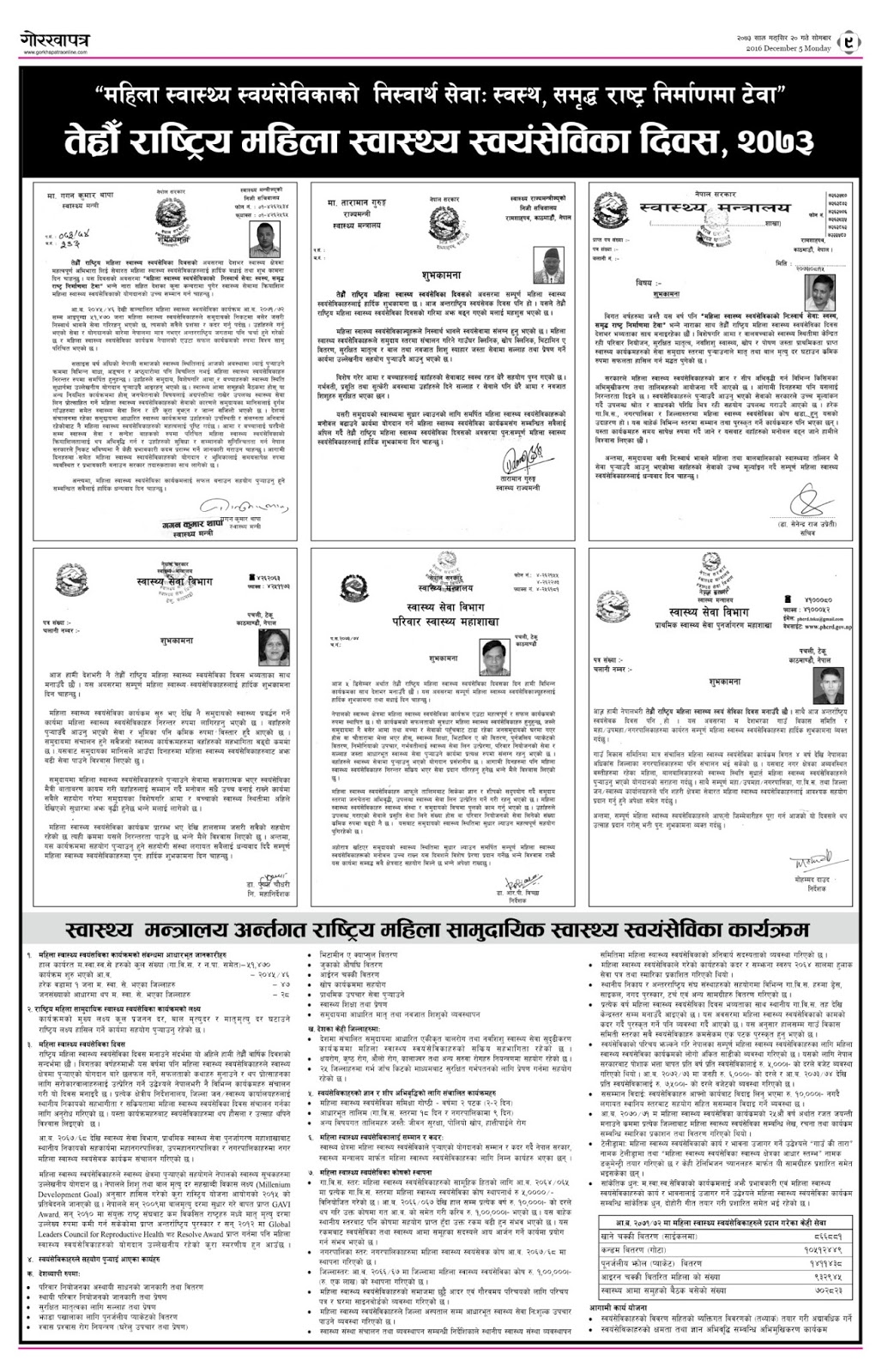
Explanation of logo:
When a small pebble is thrown into a pond, it creates a wave, which gradually spreads all over the surface of pond. Similarly, the activities of FCHV starts at ward level and gradually spreads to VDC level. Subsequently, the district will be covered with such actions and ultimately, whole nation will be developed through FCHV’s action The innermost circle shows that the action starts at community or ward level by individual FCHV, (as community is the center of health activities) Second circle shows the action is spread in the enti re VDC Third circle depicts whole district will be covered by FCHV’s actions The outermost circle shows that the action of FCHV will cover the whole nation. ——————————–National Female Community Health Volunteer Program Strategy
The major role of the FCHV is to advocate healthy behaviors of mothers and community people to promote safe motherhood, child health, family planning, and other community based health promotion and service delivery. FCHVs distribute condoms and pills, ORS packets and vitamin A capsules, treat pneumonia cases and refer and serious cases to health institution along with motivation and education to community people. Similarly, they also distribute iron tablets to pregnant women.
rengthened national program for consistency and continuous support to each FCHV.
- To prepare a pool of self‐motivated volunteers as a focal person to bridge health programs with community
- To prepare a pool of volunteers to provide community based health services
- To activate women to tackle common health problems by imparting relevant knowledge and skills
- To increase the community participation in improving health
- To develop FCHV as a motivator for health
- To increase utilization of health care services through demand creation.
Role of FCHV
- The main role of FCHV will be concentrated on the health promoti onal activities of mothers and children in their working area. Besides, they will also help in promoti ng uti lization of available health services and raise awareness on health through MGH
- FCHV will help in various health programs such as family planning, safer motherhood, newborn care, immunizati on, nutrition, communicable and epidemic diseases, acute respiratory diseases and diarrheal diseases control, environmental sanitation, health education and other national programs
- FCHV will also provide recommended services like drug distribution and diseases management as directed by Nepal government based on community based approach
- Other health programs also might involve FCHV through their guidelines. However, the involvement of FCHV in other programs should be mandatorily endorsed by central level FCHV Coordinati on sub-committee.
- FCHV has to submit an annual report to local health institution and her MGH.
- FCHV has to submit a monthly report of her activities to local health worker or supervisor every month
- FCHV can be selected by her respective MGH for a term of 5 years
- FCHVs are entitled to abide by the code of ethics.