Public Health Update
  • Home
  • Public Health Update
  • Nepal Health Jobs
    • Public Health Job Board
    • Organization List
  • Opportunities
    • Fellowships, Studentship & Scholarships
    • Grants and Funding Opportunities
    • Fully funded
    • Conference
  • Downloads
    • International Plan, Policy & Guidelines
    • National Plan, Policy & Guidelines
    • Reports
    • Public Health Notes
    • Syllabus
    • Form Formats
  • School of Public Health
    • PhD
    • Master’s Degree
    • Online Courses
  • Notice
LOGIN / REGISTER
Public Health Update
SUBSCRIBE
Public Health Update
  • Home
  • Public Health Update
  • Nepal Health Jobs
    • Public Health Job Board
    • Organization List
  • Opportunities
    • Fellowships, Studentship & Scholarships
    • Grants and Funding Opportunities
    • Fully funded
    • Conference
  • Downloads
    • International Plan, Policy & Guidelines
    • National Plan, Policy & Guidelines
    • Reports
    • Public Health Notes
    • Syllabus
    • Form Formats
  • School of Public Health
    • PhD
    • Master’s Degree
    • Online Courses
  • Notice

All Right Reserved. Designed and Developed by PenciDesign

PH Important DayPublic Health

World Sight Day is: Eyecare Everywhere! 

by Public Health Update October 11, 2018
written by Public Health Update

World Sight Day is an annual day of awareness to focus global attention on blindness and vision impairment, and is held on 11th October each year.
Established by the World Health Organization (WHO) in 2000, World Sight Day is the main advocacy event for raising awareness about blindness and vision impairment for VISION 2020: The Right to Sight, a global initiative created by WHO and the International Agency for the Prevention of Blindness (IAPB).

IAPB encourages our members and partners to continue using the WHO Global Action Plan’s rolling theme: Universal Eye Health This year, the call to action for World Sight Day is: Eyecare Everywhere! 

Facts:

  • 89% of vision impaired people live in low and middle-income countries and 55% of vision impaired people are women. 
  • The prevalence of vision loss trebles with each decade over the age of 40.
  • 90% of blindness & vision impairment is preventable or treatable if it’s detected early enough. 
  • #75% of blindness and vision impairment is avoidable.

MORE INFO

Trachoma is a disease of the eye caused by Chlamydia trachomatis
Nepal: first country in South-East Asia validated for eliminating trachoma
Make Vision Count – World Sight Day 2017

October 11, 2018 0 comments
0 FacebookTwitterPinterestLinkedinTumblrVKOdnoklassnikiRedditStumbleuponWhatsappTelegramLINEPocketSkypeViberEmail
Global Health NewsPublic HealthPublic Health Programs

Trachoma is a disease of the eye caused by Chlamydia trachomatis

by Public Health Update October 11, 2018
written by Public Health Update

What is trachoma?

Trachoma is a disease of the eye 1f441? caused by infection with the bacterium Chlamydia trachomatis. It spreads through contact with infective eye or nose discharges. Infection is particularly common in young children.
Ocular or nasal discharge can be transmitted directly from person to person, or be mediated by flies which have been in contact with the eyes and noses of infected people. Transmission is associated with poor sanitation and hygiene, which increase the availability of eye discharges and encourage the breeding of flies.
Globally, trachoma is responsible for the blindness or visual impairment of about 1.9 million people. Blindness from trachoma is irreversible.
tracoma

GET 2020

In 1996, WHO launched the WHO Alliance for the Global Elimination of Trachoma by the year 2020 (GET2020). With other partners in the Alliance, WHO supports country implementation of the SAFE strategy (Surgery for trichiasis, Antibiotics to clear infection, Facial cleanliness, and Environmental improvement to limit transmission) and strengthening of national capacity through epidemiological assessment, monitoring, surveillance, project evaluation and resource mobilization.
Elimination of trachoma is inexpensive, simple and highly cost-effective, yielding a high rate of net economic return.

Global progress on elimination 

In 1998, the World Health Assembly resolved to eliminate trachoma as a public health problem worldwide (WHA 51.11). Since then, significant progress has been made and an increasing number of endemic countries are meeting targets and preparing documentation of national elimination of trachoma as a public health problem.(1)
In 2014, the WHO South-East Asia Regional Director Dr Poonam Khetrapal Singh identified elimination of neglected tropical diseases as one of the flagship priority programmes. Since then countries in the Region, including Nepal, have been making concerted efforts to eliminate these diseases.
1- Six countries claim to have achieved elimination goals: China, Gambia, Ghana, Islamic Republic of Iran, Iraq and Myanmar. WHO has validated six countries for having eliminated trachoma as public health problem: Cambodia, Lao People’s Democratic Republic, Mexico, Morocco, Nepal and Oman.

READ MORE (ORIGINAL INFO: WHO)

October 11, 2018 2 comments
0 FacebookTwitterPinterestLinkedinTumblrVKOdnoklassnikiRedditStumbleuponWhatsappTelegramLINEPocketSkypeViberEmail
PH Important DayPublic Health

Nepal: first country in South-East Asia validated for eliminating trachoma

by Public Health Update October 11, 2018
written by Public Health Update

Nepal: first country in South-East Asia validated for eliminating trachoma

21 May 2018 | Kathmandu | New Delhi | Geneva – The World Health Organization (WHO) has validated Nepal for having eliminated trachoma as a public health problem – a milestone, as the country becomes the first in WHO’s South-East Asia Region to defeat the world’s leading infectious cause of blindness.

“Nepal’s achievement is commendable and results from strong political commitment, intense community engagement and impressive leadership demonstrated by civil society,” Dr Khetrapal Singh.

Trachoma was the second leading cause of preventable blindness in Nepal in the 1980s.

“This remarkable achievement demonstrates what political commitment and sustained partner support can do,” said Dr Tedros Adhanom Ghebreyesus, WHO Director-General. “It is a big step towards health for everyone and comes at a time when Nepal accelerates its fight against other neglected tropical diseases.”

A letter acknowledging validation was presented yesterday to Nepal’s Minister of State for Health and Population Ms Padma Kumari Aryal by the WHO South-East Asia Regional Director Dr Poonam Khetrapal Singh and the WHO Director-General Dr Tedros Adhanom Ghebreyesus in Geneva, Switzerland where the World Health Assembly is taking place.
In 2002, the Government of Nepal stepped up efforts to eliminate the disease with the establishment of a national trachoma programme. From 2002 to 2005, following the implementation of sustained control activities, the prevalence of active (inflammatory) trachoma fell by 40%.

“The fight against trachoma gained momentum due to strong government commitment and leadership backed by community engagement and the support of health workers and volunteers” said Ms Padma Kumari Aryal, Minister of State for Health and Population. “Other factors that boosted control and elimination activities included funding from and excellent coordination among key partners(1) and donors.”

The Government of Nepal, through the Ministry of Water Supply and Sanitation, provided incentives to local communities and districts to build and maintain latrines – measures that were crucial to improving sanitation and reducing disease-carrying flies.
To increase awareness, the national trachoma programme collaborated with the Ministry of Education to include a module on trachoma in the school curriculum.

“We managed to accelerate awareness about the disease and sanitation through education campaigns involving brochures, posters, flipcharts, radio announcements, and programmes in schools and village health centres,” said Mr Sailesh Mishra, Executive Director, Nepal Netra Jyoti Sangh (NNJS). “These were run by teachers and local health volunteers.”

Approximately 30 000 operations were provided to manage trichiasis, and almost 15 million doses of azithromycin were distributed. Between 2002 and 2014, eye hospitals and dozens of eye centres and clinics with trained staff were established across Nepal.
Azithromycin is donated by the pharmaceutical company Pfizer through the International Trachoma Initiative and was delivered in Nepal by NNJS with support from the United States Agency for International Development-funded ENVISION project, implemented by RTI International.
A series of surveys conducted progressively from 2005 to 2015 showed that active trachoma in children had been brought below the elimination prevalence threshold. Low prevalence was maintained after mass antibiotic treatment was discontinued.

CRITERIA FOR ELIMINATION

Several criteria are used to assess a country’s claim for having eliminated trachoma as a public health problem. These include:

  • less than 5% of children aged 1–9 years have signs of active trachoma (trachomatous inflammation–follicular), which can be treated with antibiotics, in each previously-endemic district;
  • less than 0.2% of people aged 15 years and older have trachomatous trichiasis, which requires eyelid surgery, in each previously-endemic district; and
  • a health system which can identify and manage new cases of trachomatous trichiasis.

1- Partners include the International Trachoma Initiative, Nepal Netra Jyoti Sangh, Pfizer Inc., RTI International, the United States Agency for International Development and Tropical Data, all of which have worked in partnership with the Ministry of Health for many years.

WORLD HEALTH ORGANIZATION SEARO

WHO
Ddth7MpW4AEpVPr who padma e1526872264186

Trachoma is a disease of the eye caused by Chlamydia trachomatis

October 11, 2018 1 comment
0 FacebookTwitterPinterestLinkedinTumblrVKOdnoklassnikiRedditStumbleuponWhatsappTelegramLINEPocketSkypeViberEmail
PH Important DayPublic Health

Make Vision Count – World Sight Day 2017

by Public Health Update October 11, 2018
written by Public Health Update

Make Vision Count – World Sight Day 2017

Make Vision Count – World Sight Day 2017: World Sight Day (WSD) is an annual day of awareness held on the second Thursday of October, to focus global attention on blindness and vision impairment. World Sight Day 2017 is on 12 October 2017.
This year, the ‘Call to Action‘ for World Sight Day is: Make Vision Count
WSD is co-ordinated by IAPB under the VISION 2020 Global Initiative. The theme, and certain core materials are generated by IAPB. All events are organised independently by members and supporter organisations.

According to estimates from the World Health Organization (WHO) Prevention of Blindness and Deafness Programme:
  • About 285 million people are visually impaired worldwide: 39 million are blind and 246 million have low vision (severe or moderate visual impairment)
  • 4 out of 5 blind or visually impaired people are avoidably so–preventable cause are as high as 80% of the total global visual impairment burden
  • About 90% of the world’s visually impaired people live in developing countries
  • Globally, uncorrected refractive errors are the main cause of visual impairment
  • Cataracts are the leading cause of blindness
  • 65% of visually impaired, and 82% of blind people are over 50 years of age, although this age group comprises only 20% of the world population
  • Top causes of visual impairment: refractive errors, cataracts and glaucoma
  • Top causes of blindness: cataracts, glaucoma and age-related macular degeneration
  • The number of people visually impaired from infectious diseases has greatly reduced in the last 20 years

The International Agency for the Prevention of Blindness (IAPB)

VISION 2020

VISION 2020 is a global initiative that aims to eliminate avoidable blindness by the year 2020. It was launched on 18 February 1999 by the World Health Organization together with the more than 20 international non-governmental organisations involved in eye care and prevention and management of blindness that comprise the International Agency for the Prevention of Blindness (IAPB). VISION 2020 is a partnership that provides guidance, technical and resource support to countries that have formally adopted its agenda.

Mission

The mission of the VISION 2020 Global Initiative is to eliminate the main causes of all preventable and treatable blindness as a public health issue by the year 2020.

Objectives

VISION 2020: The Right to Sight accomplishes its mission as it attains the three major objectives: 

  • Raise the profile, among the key audiences, of the causes of avoidable blindness and the solutions that will help to eliminate the problem.
  • Identify and secure the necessary resources around the world in order to provide an increased level of prevention and treatment programmes.
  • Facilitate the planning, development and implementation of the three core Vision 2020 strategies by National Programmes.

Core strategies

  • Disease control: facilitate the implementation of specific programmes to control and treat the major causes of blindness.
  • Human resource development: support training of ophthalmologists and other eye care personnel to provide eye care. 
  • Infrastructure and appropriate technology development: assist to improve infrastructure and technology to make eye care more available and accessible.

WORLD HEALTH ORGANIZATION

DOWNLOAD: EPIDEMIOLOGY OF BLINDNESS IN NEPAL

October 11, 2018 0 comments
0 FacebookTwitterPinterestLinkedinTumblrVKOdnoklassnikiRedditStumbleuponWhatsappTelegramLINEPocketSkypeViberEmail
Public Health

Young People and Mental Health in a Changing World #WorldMentalHealthDay

by Public Health Update October 10, 2018
written by Public Health Update

Young People and Mental Health in a Changing World #worldmentalhealthday:  World Mental Health Day is observed on 10 October every year, with the overall objective of raising awareness of mental health issues around the world and mobilizing efforts in support of mental health.The Day provides an opportunity for all stakeholders working on mental health issues to talk about their work, and what more needs to be done to make mental health care a reality for people worldwide. this year World Mental Health Day is focused on Young Peoples with the theme. ”Young People and Mental Health in a Changing World”.
Key facts

  • One in six people are aged 10–19 years.
  • Mental health conditions account for 16% of the global burden of disease and injury in people aged 10–19 years.
  • Half of all mental health conditions start by 14 years of age but most cases are undetected and untreated.
  • Globally, depression is one of the leading causes of illness and disability among adolescents.
  • Suicide is the third leading cause of death in 15–19 year olds.
  • The consequences of not addressing adolescent mental health conditions extend to adulthood, impairing both physical and mental health and limiting opportunities to lead fulfilling lives as adults.
  • Mental health promotion and prevention are key to helping adolescents thrive.

World Health Organization  

123 1
12345


Recommendation of International Mental Health Conference Nepal (IMHCN) 2018

One in five people facing mental health problems

Informing the World: How to Change Public Attitudes to Mental Health

Mental health in the workplace – World Mental Health Day 2017

Mental Health Policy, Nepal

Standard Treatment Protocol for mental health services into the Primary Health Care System

World Mental Health Day- 2016 : Psychological First Aid

World Mental Health Day- 2015 (Photos: Pokhara)

World Mental Health Day 2014- “Living with schizophrenia”

Dignity in Mental Health: World Mental Health Day 2015

October 10, 2018 0 comments
0 FacebookTwitterPinterestLinkedinTumblrVKOdnoklassnikiRedditStumbleuponWhatsappTelegramLINEPocketSkypeViberEmail
Global Health NewsPublic Health News

Malaysia eliminates mother-to-child transmission of HIV and syphilis

by Public Health Update October 8, 2018
written by Public Health Update
Malaysia eliminates mother-to-child transmission of HIV and syphilis

8 October 2018, Joint News Release, Manila, Philippines
Malaysia today became the first country in the World Health Organization (WHO) Western Pacific Region to be certified as having eliminated mother-to-child transmission of HIV and syphilis.
“Thanks to Malaysia’s efforts over the past several years, parents can now ensure their babies are born free of HIV and syphilis and have a healthy start to life,” said Dr Shin Young-soo, WHO Regional Director for the Western Pacific. “Elimination could not have been achieved without Malaysia’s strong commitment to ensuring access to quality and affordable health services for all women, children and families.”
WHO Director-General Dr Tedros Adhanom Ghebreyesus and Dr Shin presented Malaysia’s Minister of Health, Dr Dzulkefly Ahmad, with a certificate of elimination during the session of the WHO Regional Committee for the Western Pacific, which opened today in Manila, Philippines.
As treatment for prevention of mother-to-child-transmission is not 100% effective, elimination of transmission is defined as a reduction of transmission to such a low level that it no longer constitutes a public health problem.
Criteria for Elimination WHO’s Global guidance on criteria and processes for validation: Elimination of mother-to-child transmission of HIV and syphilis outlines the process and indicators that countries need to meet for validation:Impact Indicators – must be met for at least 1 year:

  • fewer than 50 new paediatric HIV infections due mother-to-child transmission of HIV per 100 000 live births;
  • HIV mother-to-child transmission rate of less than 5% in breastfeeding populations, less than 2% in non-breastfeeding populations; and
  • fewer than 50 new cases of mother-to-child transmission of syphilis per 100 000 live births.

Process Indicators – must be met for at least 2 years:

  • ≥95% of pregnant women receive at least one antenatal visit;
  • ≥95% of pregnant women are tested for HIV and syphilis; and
  • ≥95% of infected pregnant women receive adequate treatment.

A country that is “validated” has met the internationally set targets at a specific point in time. They are required to maintain ongoing programmes after validation.
Malaysia eliminates mother-to-child transmission of HIV and syphilis

Read more: WHO 8 October 2018, Joint News Release, Manila, Philippines
October 8, 2018 1 comment
0 FacebookTwitterPinterestLinkedinTumblrVKOdnoklassnikiRedditStumbleuponWhatsappTelegramLINEPocketSkypeViberEmail
Public Health

Various Positions- UNDP Nepal

by Public Health Update October 8, 2018
written by Public Health Update

Various Positions- UNDP Nepal : The UNDP Nepal is seeking applications from qualified and result oriented Nepalese citizens for following positions:
kantipur 2018 10 08 page 013

FOR MORE INFORMATION PLEASE VISIT OFFICIAL ANNOUNCEMENT 

October 8, 2018 1 comment
0 FacebookTwitterPinterestLinkedinTumblrVKOdnoklassnikiRedditStumbleuponWhatsappTelegramLINEPocketSkypeViberEmail
National Plan, Policy & GuidelinesPublic HealthPublic Health Programs

Fractional Dose of Inactivated Polio Vaccine-fIPV

by Public Health Update October 4, 2018
written by Public Health Update

Fractional Dose of Inactivated Polio Vaccine-fIPV

Fractional Dose of Inactivated Polio Vaccine-fIPV: The Government of Nepal is preparing to add Fractional-Dose Inactivated Poliovirus Vaccine (fIPV) very soon.  A schedule of fractional intradermal doses administered at 6 and 14 weeks ensures early and appropriately-timed protection. The 2 fractional doses should be separated by a minimum interval of 4 weeks. 2 fractional doses of IPV, given intradermally at 6 and 14 weeks provide higher seroconversion rates than a single full dose (intramuscular) given at 14 weeks.3 FIPV FCHV Leaflet 2018 Final page 001

1 FIPV Brochure 2018 Final page 001
 
2 FIPV Factsheet 2018 nep Final page 0012 FIPV Factsheet 2018 nep Final page 002
fIPV
The National Immunization Programme (NIP) is a priority 1 (P1) programme of the Government of Nepal. Launched as the Expanded Programme on Immunization in 2034 BS (1977/78). Previously Eleven antigens are provided through the national programme to eligible infants, children and mothers through more than 16,000 outreach sessions, including in geographically and economically hard-to-reach and marginalized communities. Now government is planning to add more antigens to control diarrohoea caused by rota virus & FIPV.


National Immunization Schedule, Nepal (Revised)


The National Immunization Programme (National Immunization Schedule), Nepal
27th March 2014 : Historical Day in field of Public Health to end Polio in Nepal
National Immunization Schedule 
Key Strategies for polio eradication 
Nepal Demographic and Health Survey 2016 Key Indicators Report (Short Notes)
Nepal Demographic and Health Survey 2016 Key Indicators Report
World Immunization Week 2017 #VaccinesWork
Sub-National Immunization Day- 2015
Nepal Multiple Indicator Cluster Survey (NMICS) 2014 Key Findings Report
World Polio Day 24 October 2017- Promoting health through the life-course
October 4, 2018 1 comment
0 FacebookTwitterPinterestLinkedinTumblrVKOdnoklassnikiRedditStumbleuponWhatsappTelegramLINEPocketSkypeViberEmail
Notice

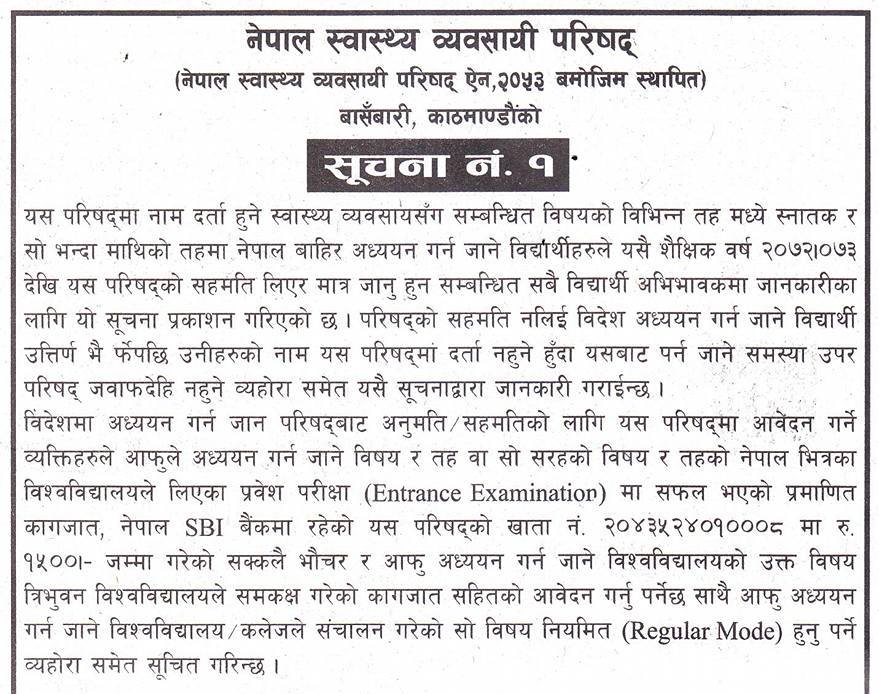
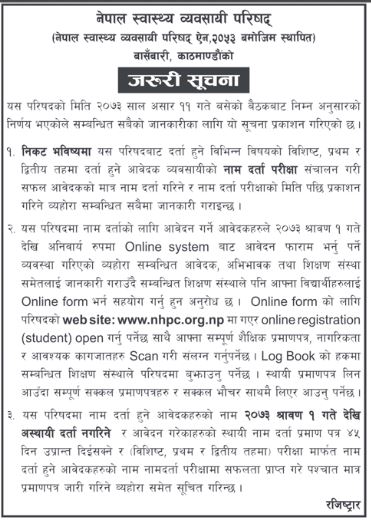
Important Notices – Nepal Health Professional Council (NHPC)

by Public Health Update October 3, 2018
written by Public Health Update
Important Notices – Nepal Health Professional Council (NHPC)


12042657 10153260141884403 5362158495946049507 n
Kantipur(17th Sep 2015)


Important Notices – Nepal Health Professional Council (NHPC)
NHPC
Kantipur (1 July 2016)


October 3, 2018 0 comments
0 FacebookTwitterPinterestLinkedinTumblrVKOdnoklassnikiRedditStumbleuponWhatsappTelegramLINEPocketSkypeViberEmail
ConferenceHealth Literacy, Health Education & PromotionTobacco Control

Resolutions of 12th Asia Pacific Conference on Tobacco or Health (APACT12)

by Public Health Update October 2, 2018
written by Public Health Update

RESOLUTIONS of THE 12th APACT CONFERENCE Bali, Indonesia; 12-15 Sept 2018

Conference theme: “Tobacco Control for Sustainable Development Goals: Ensuring A Healthy Generation”
We, the participants of 12th Asia Pacific Conference on Tobacco or Health (APACT12), representing 28 countries, are deeply concerned that the Asia-Pacific region faces the onslaught of the tobacco epidemic, which claims several million lives every year. The tobacco industry has targeted the region to promote and sell even more tobacco and grow its business, and this is a big threat to public health. The tobacco industry is part of the problem and not the solution. We condemn the tobacco industry’s tactics to undermine, delay, obstruct and dilute public health efforts. Tobacco touches most of the Sustainable Development Goals (SDGs). The Asia Pacific region needs to step-up efforts to accelerate the implementation of the SDGs and the World Health Organization Framework Convention on Tobacco Control (WHO FCTC).
These recommendations follow the numbering of the SDGs:

  1. SDG #1 (No poverty) and FCTC Article 6 (Price measures): To make tobacco less affordable particularly to youth and the poor, and to help tobacco users quit, by increasing tax to a minimum of 75% of retail price on all tobacco products.
  2. SDG #2 (Zero hunger) and FCTC Article 17 (Tobacco farming): To address hunger by growing food in place of tobacco. At least ten countries will put in place definite plans to shift tobacco growers to growing more food crops. Use of child labour in tobacco cultivation must be eliminated by 2025. We call upon the International Labour Organisation (ILO) to end its collaboration with the tobacco industry immediately to align with the decision of the UN Economic and Social Council (ECOSOC).
  3. SDG #3 (Good health and well-being) and FCTC: To protect the health and economic wellbeing of its people and to align with the rest of Asia Pacific region, Indonesia to ratify the WHO FCTC within one year.
  4. SDG #3 (Good health and well-being) and FCTC Article 11 (Packaging and labelling): All countries should adopt prominent graphic pack warnings, and ban pack displays at retail outlets within the next 2 years. A minimum of 8 countries in the region to introduce plain packaging.
  5. SDG #3 (Good health and well-being) and FCTC Article 13 (Tobacco Advertising Promotion and Sponsorship (TAPS) Ban): To ban the use of social media to boost their image and sales.
  6. SDG #4 (Quality Education) and FCTC Article 12 (Education and research): To strengthen and resource public education so that all the public are aware of the harm of tobacco and including information on cessation.
  7. SDG #5 (Gender equality) and FCTC 4.2d (Gender specific measures): To end the targeting of girls by the tobacco industry by TAPS, packaging and product design. All tobacco control measures to incorporate gender specific perspectives.
  8. SDG #11 (Sustainable cities and communities) and FCTC Article 8 (Smoke Free environment): To ensure sustainable and clean cities, and to protect the public from exposure to tobacco smoke, each jurisdiction should adopt 100% smoke-free policies in all workplaces and public places, and to adopt effective enforcement strategies to ensure compliance.
  9. SDG #13 (Climate action) and FCTC Article 18 (Protection of the environment): We recommend the 13th APACT to include debate and discussion on the environmental harms caused by tobacco.
  10. SDG #16 (Peace and justice) and FCTC Article 5.3 (Protecting public policy from tobacco industry interference): To prohibit the tobacco industry from influencing the implementation of SDGs. Consistent with FCTC Articles 5.3 and the implementing guidelines, each state should monitor, expose and ban tobacco industry, their allies and front groups from participating in tobacco control policy development.
  11. SDG #17 (Partnership) and FCTC Article 5.3 3 (Protecting public policy from tobacco industry interference): Partnership with the tobacco industry is detrimental to all SDGs and the FCTC. To ensure good governance, governments, scientists, research entities, and civil society organizations must reject or terminate all partnerships or support from the tobacco industry, including the Philip Morris International-funded Foundation for a Smoke-free World, and other initiatives of the tobacco industry. Governments should not promote tobacco trade and also should divest from tobacco businesses.
  12. SDG #17 (Partnership) and FCTC Article 26 (Sustainable financial mechanism for tobacco control): Government should prioritize sustainable funding for tobacco control.
  13. There is an irreconcilable conflict between the manufacture and marketing of tobacco products and the right to health. We adopt the Cape Town Declaration on Human Rights and a Tobacco-free World.
  14. Towards tobacco free generation: To empower youth involvement and advocacy as a means to achieving a tobacco-free generation.

APACT 12th Youth Vision: Choose Youth Not Tobacco!

APACT 12th Youth Vision: Choose Youth Not Tobacco!


APACT12

APACT12

The 12th Asia Pacific Conference on Tobacco (APACT12th)

October 2, 2018 0 comments
0 FacebookTwitterPinterestLinkedinTumblrVKOdnoklassnikiRedditStumbleuponWhatsappTelegramLINEPocketSkypeViberEmail
Newer Posts
Older Posts

Search

Follow Us

Facebook Twitter Instagram Pinterest Linkedin Youtube

Categories

  • Abstracts (26)
  • Activities (91)
  • Adolescent Sexual and Reproductive Health (ASRH) (25)
  • Advice & Tips (4)
  • African Region (5)
  • AI and Health (1)
  • Annual Meeting (6)
  • Antimicrobial Resistance (AMR) (21)
  • Award (20)
  • Awards (17)
  • Books (9)
  • Call for Proposal, EOI & RFP (103)
  • Call for Research Participants (9)
  • Clinical Doctor Jobs (6)
  • Communicable Diseases (107)
  • Competition (20)
  • Conference (130)
  • Consultant (1)
  • Courses (206)
  • Dashboard (2)
  • Digital Health & Health Informatics (10)
  • Drug and Medicine (18)
  • Eastern Mediterranean Region (3)
  • Education (16)
  • Environment (3)
  • Environmental Health & Climate Change (47)
  • European Region (42)
  • Exchange Program (1)
  • Fact Sheet (118)
  • FCHVs (1)
  • Fellowships, Studentship & Scholarships (168)
  • Financial Aid (13)
  • Form Formats (2)
  • Fully funded (22)
  • Global Health News (440)
  • Grants and Funding Opportunities (193)
  • Guest Post (44)
  • Health Assistant Jobs (1)
  • Health Equity (7)
  • Health Financing and Economics (24)
  • Health in Data (118)
  • Health Insurance (5)
  • Health Jobs (52)
  • Health Literacy, Health Education & Promotion (51)
  • Health Organization Profile (42)
  • Health Systems (85)
  • Human Resource for Health (33)
  • Humanitarian Health & Emergency Response (45)
  • Hypertension (5)
  • Implementation Research (49)
  • International Health (3)
  • International Jobs & Opportunities (374)
  • International Plan, Policy & Guidelines (212)
  • Internships (5)
  • Jobs Vacancies (57)
  • Journals (8)
  • Life Style & Public Health Nutrition (39)
  • Live (10)
  • Master's Degree (48)
  • Maternal, Newborn and Child Health (88)
  • Mentorship Program (2)
  • Miscellaneous (16)
  • National Health News (160)
  • National Plan, Policy & Guidelines (473)
  • Neglected Tropical Diseases (NTDs) (51)
  • Non- Communicable Diseases (NCDs) (123)
  • Notice (103)
  • Nursing Jobs (6)
  • Nutritionist Jobs (1)
  • One Health (18)
  • Online & Distance Learning (22)
  • Online Courses (91)
  • Op-Ed Article (3)
  • Opportunities by Region (83)
  • Outbreak News (213)
  • Partially funded (6)
  • PCL Health Science Jobs (3)
  • PH Important Day (538)
  • Pharmacist Jobs (3)
  • PhD (54)
  • Photos (5)
  • Planetary Health (4)
  • PostDoc (14)
  • Presentation Slides (26)
  • Primary Health Care (25)
  • Provincial Plan, Policies and Guidelines (17)
  • Public Health (1,288)
  • Public Health Epidemiology & Biostatistics (14)
  • Public Health Events (307)
  • Public Health Information (21)
  • Public Health Innovation (9)
  • Public Health Jobs (52)
  • Public Health News (558)
  • Public Health Notes (120)
  • Public Health Opportunities (510)
  • Public Health Opportunity (493)
  • Public Health Programs (108)
  • Public Health Seminar (2)
  • Public Health Tools (2)
  • Public Health Update (574)
  • Quality Improvement & Infection Prevention (20)
  • Region of America (8)
  • Reports (187)
  • Research & Project Grants (39)
  • Research & Project Grants (33)
  • Research & Publication (651)
  • Research Articles (10)
  • Road Traffic Accidents (RTA) (9)
  • School of Public Health (60)
  • Self funded (2)
  • South-East Asia Region (26)
  • Success Stories (17)
  • Summer and Winter Courses (40)
  • Summer Courses (28)
  • Sustainable Development Goals (SDGs) (14)
  • Syllabus (61)
  • Symposium (9)
  • Tobacco Control (35)
  • Training (40)
  • Travel Grants (15)
  • Trick, Technique & Skills (8)
  • Uncategorized (3)
  • Undergraduate Degree (7)
  • Universal Health Coverage (36)
  • Universities (29)
  • Universities & School of Public Health (58)
  • Vacancy Announcement (26)
  • Vaccine Preventable Diseases (40)
  • Vector-Borne Diseases(VBDs) (31)
  • Videos (3)
  • View Points (1)
  • Webinar (4)
  • Western Pacific Region (13)
  • Workshop (18)
  • World News (120)
Post New Jobs: Vacancy Announcement Service

Search Box

Public Health Update (Sagun’s Blog) is a popular public health portal in Nepal. Thousands of health professionals are connected with Public Health Update to get up-to-date public health updates, search for jobs, and explore opportunities.
#1 Public Health Blog for sharing Job opportunities and updates in Nepal

”Public Health Information For All”
– – Sagun Paudel, Founder

  • HOT JOBS
    • Public Health Jobs
    • Medical Doctor Jobs
    • Nursing Jobs
    • Health Assistant Jobs
    • Pharmacist Jobs
    • NGOs Jobs
    • Government Jobs
  • Top Categories
    • National Plan, Policy & Guidelines Top
    • Public Health Calendar
    • Fellowships & Scholarships
    • Health Systems
    • Health Organization Profiles
    • International Jobs & Opportunities
    • Public Health Opportunity

PUBLIC HEALTH INITIATIVE

    • Submit your Vacancies New
    • Partnership Opportunities

Contact: blog.publichealthupdate@gmail.com

https://wa.me/+9779856036932

All Right Reserved. 2011-2026. Contact us. 

Facebook Twitter Instagram Youtube Envelope
Public Health Update
  • Home
  • Public Health
    • Home 1
      • Adolescent Sexual and Reproductive Health (ASRH)
      • Antimicrobial Resistance (AMR)
      • Communicable Diseases
      • Digital Health & Health Informatics
      • Environmental Health & Climate Change
      • Health Financing and Economics
      • Health Equity
    • Home 2
      • Health Literacy, Health Education & Promotion
      • Human Resource for Health
      • Humanitarian Health & Emergency Response
      • Implementation Research
      • International Health
      • Life Style & Public Health Nutrition
      • Maternal, Newborn and Child Health
    • Home 3
      • Neglected Tropical Diseases (NTDs)
      • Non- Communicable Diseases (NCDs)
      • One Health
      • Planetary Health
      • Public Health Epidemiology & Biostatistics
      • Primary Health Care
      • Quality Improvement & Infection Prevention
    • Home 4
      • Road Traffic Accidents (RTA)
      • Sustainable Development Goals (SDGs)
      • Tobacco Control
      • Universal Health Coverage
      • Vaccine Preventable Diseases
      • Vector-Borne Diseases(VBDs)
      • Notices
  • Public Health Update
    • Home 1
      • Public Health News
      • Global Health News
      • Outbreak News
      • National Health News
      • COVID-19
    • Home 2
      • Fact Sheet
      • Health in Data
      • PH Important Day
      • Public Health Events
      • Public Health Programs
    • Home 3
      • Health Systems
      • Health Insurance
      • Health Organization Profile
      • Success Stories
      • Public Health Innovation
  • Public Health Opportunities
    • Fully funded
    • Travel Grants
    • Grants and Funding Opportunities
    • Opportunities by Region
    • International Jobs & Opportunities
    • Research & Project Grants
    • Fellowships, Studentship & Scholarships
    • Conference
  • Jobs
    • Home 1
      • Health Jobs
      • Public Health Jobs
      • Clinical doctor Jobs
      • Health Assistant Jobs
      • Nursing Jobs
      • PCL Health Science Jobs
    • Home 2
      • Dental Jobs
      • Pharmacist Jobs
      • TSLC (Health Jobs)
      • Laboratory Jobs
      • Nutritionist Jobs
  • Downloads
    • International Plan, Policy & Guidelines
    • National Plan, Policy & Guidelines
    • Reports
    • Books
    • Research Articles
  • School of Public Health
    • Home 1
      • Courses
      • Master’s Degree
      • Undergraduate Degree
      • PhD
    • Home 2
      • Universities
      • Syllabus
      • Public Health Notes
      • Mentorship Program
      • Startup Project
    • Home
      • Summer and Winter Courses
      • Summer Courses
      • Online Courses
      • Workshop
      • Training
Public Health Initiative, A Registered Non-profit organization – All Right Reserved. 2011-2023