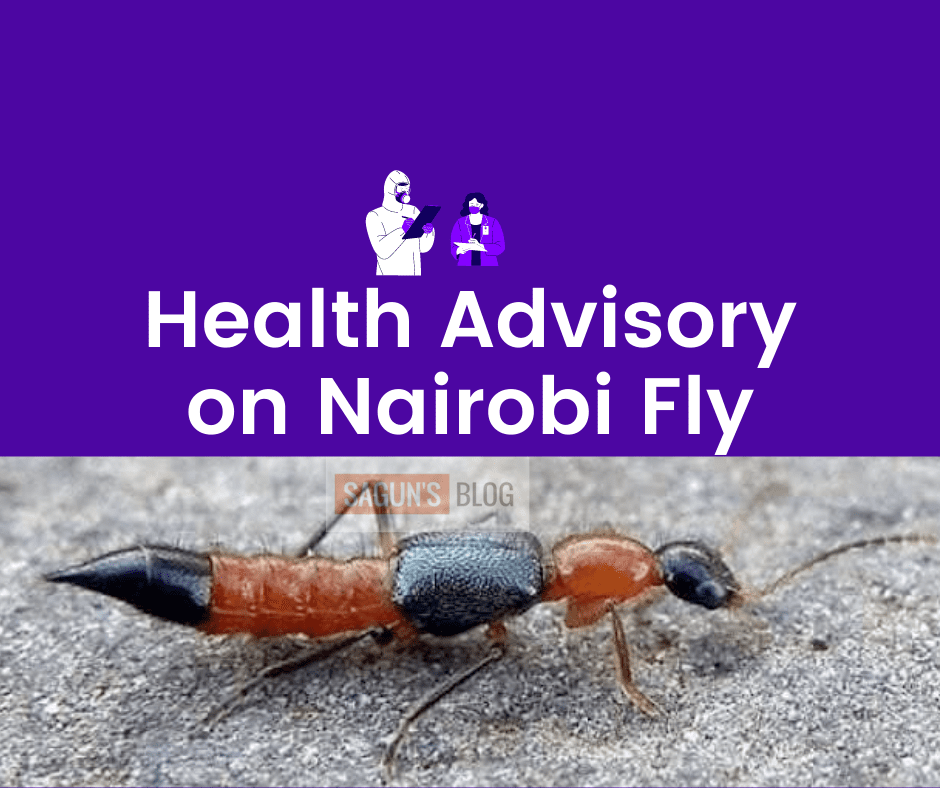

What is Nairobi Fly?
Nairobi flies are small, orange and black-coloured insects also known as Kenyan flied or dragon bugs. These flies are generally found in high rainfall, hot and humid regions. The bud doesn’t bite but it causes skin irritations once the acid is released from the bug. These flies do not bite or sting but release a potent acidic substance that causes burns.
Prevention
- Reduce contact with the bug by using bed nets, wearing long-sleeve cloths, and avoiding sitting under lights at night, closing windows, and keeping the house clean.
- Wash the skin area thoroughly with soap and water.
- Avoiding going outside in the evening.
- Flies should be gently blown off and not disturbed or touched.
Management:
- Immediately wash the affected area and apply cold and wet compresses.
- Consult with health workers immediately.
MORE INFO: FOLLOW UPDATES…
Do you have a website? Looking for the best hosting provider? Here’s a discount code.
Latest Public Health Jobs
Latest Posts
- Nepal Netra Jyoti Sangh Receives Prestigious WHO Regional Award for Public Health Champion
- WHO Global Internship Programme – Applications Now Open!
- Free Online Course on Implementation Research (IR) 2026
- World Drowning Prevention Day 2026: Unite to Turn the Tide
- Help Shape the Future of Obesity Prevention and Care: Participate in the MAPPS II Global Surveys
Thanks for visiting us.
Disclaimer: The resources, documents, guidelines, and information on this blog have been collected from various sources and are intended for informational purposes only. Information published on or through this website and affiliated social media channels does not represent the intention, plan, or strategies of an organization that the initiator is associated with in a professional or personal capacity, unless explicitly indicated.
If you have any complaints, information, or suggestions about the content published on Public Health Update, please feel free to contact us at blog.publichealthupdate@gmail.com.
#StayUpdated