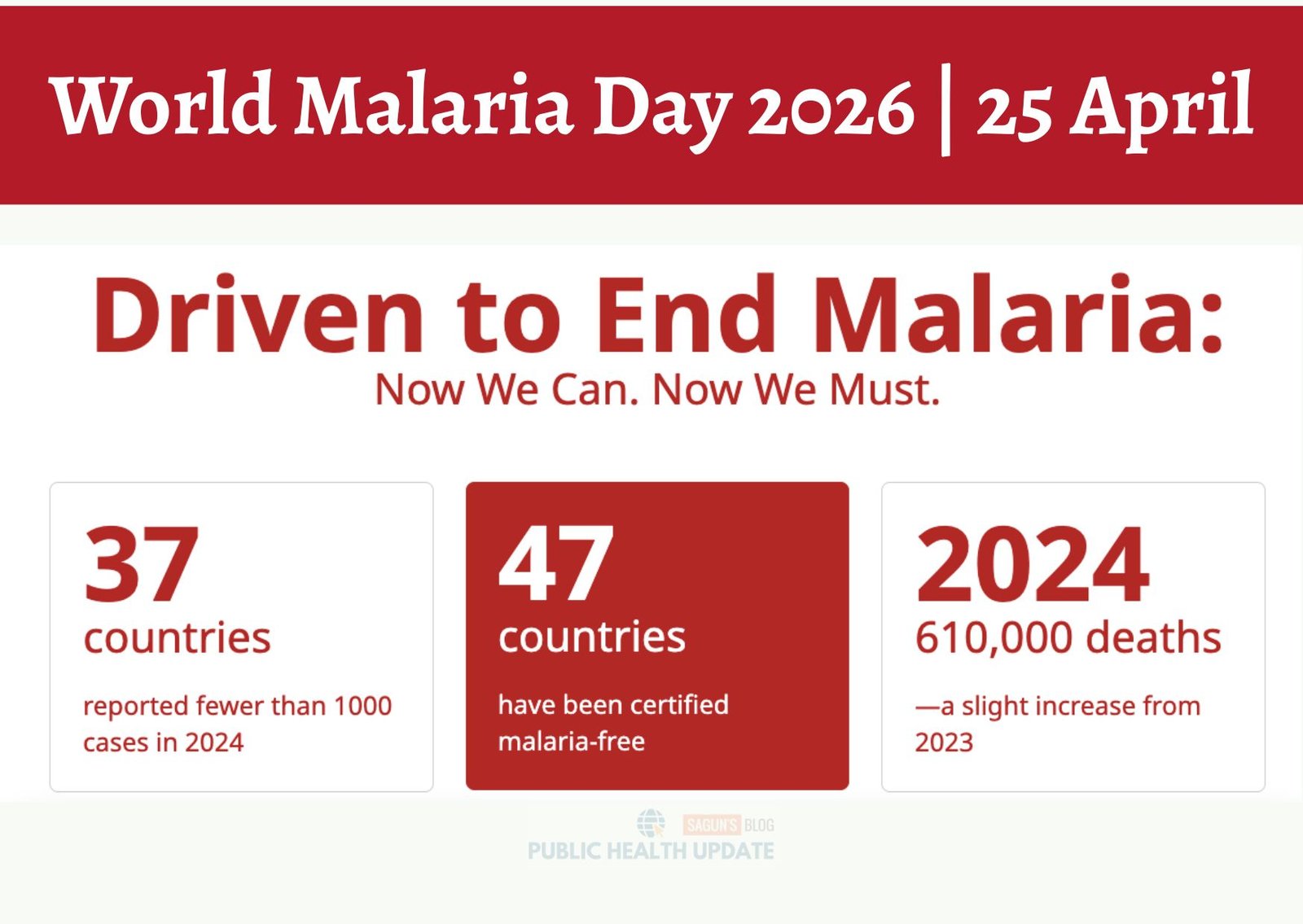
The theme of World Malaria Day 2026—“Driven to End Malaria: Now We Can. Now We Must.”—is both a message of hope and a call to action.
Overview
Each year, World Malaria Day (25 April) serves as a global reminder of both the progress made and the urgent work still required to eliminate one of the world’s oldest and deadliest diseases. It is a moment to reflect, to re-commit, and to mobilize collective action.
Malaria is often described as a preventable and treatable disease. Yet, in 2024 alone, it caused an estimated 282 million cases and 610,000 deaths worldwide. Behind these numbers are lives lost too soon—most of them among the most vulnerable. In high-burden regions, nearly three out of four malaria deaths occur in children under five.
This stark reality makes malaria more than a health issue. It is a reflection of global inequities—of where people are born, the strength of health systems, and the consistency of political and financial commitment.
Progress Worth Recognizing
Over the past two decades, the global malaria response has achieved remarkable gains. An estimated 2.3 billion cases and 14 million deaths have been averted since 2000. Countries once heavily burdened are moving toward elimination, and 47 countries have now been certified malaria-free.
Scientific innovation is accelerating progress. New tools—from improved diagnostics to next-generation mosquito nets—are strengthening malaria control strategies. Among the most significant breakthroughs is the introduction of malaria vaccines.
A Turning Point: Malaria Vaccines
Today, 25 countries across Africa are delivering malaria vaccines through routine childhood immunization programmes, targeting approximately 10 million children each year. This marks a historic shift in the fight against malaria.
Each vaccinated child represents more than individual protection—it signals a broader transformation in public health. It demonstrates that long-standing challenges can be addressed through sustained research, global collaboration, and political will. Every dose administered brings us closer to a future where malaria is no longer a leading cause of child mortality.
A Fragile Moment in the Fight
Despite this progress, the global malaria response is at a crossroads.
Biological threats are evolving. Resistance to artemisinin-based therapies—the cornerstone of malaria treatment—is emerging in multiple regions. Insecticide resistance is widespread, reducing the effectiveness of traditional vector control tools. At the same time, genetic mutations in malaria parasites are beginning to compromise diagnostic accuracy.
Beyond biology, systemic pressures are intensifying. Climate change is reshaping transmission patterns, expanding malaria risk into new areas. Conflict and humanitarian crises continue to disrupt essential health services. Rapid urbanization, coupled with the spread of invasive vectors such as Anopheles stephensi, presents new and complex challenges.
Perhaps most concerning is the persistent funding gap. Global investment in malaria remains far below what is required, threatening to stall—or even reverse—the progress achieved so far.
From Control to Elimination
The global health community now stands at a pivotal moment. The tools to end malaria exist, but tools alone are not enough. Success depends on how effectively they are implemented, sustained, and adapted to local contexts.
Moving from control to elimination will require:
- Sustained and strategic financing to ensure interventions reach those most in need
- Strong country leadership, with nationally tailored strategies
- Continued investment in innovation, alongside equitable access to new tools
- Meaningful community engagement, recognizing communities as active partners
- Stronger integration of evidence into policy and practice.
As public health professionals, researchers, and global health advocates, we have both the tools and the responsibility to act.
🟢 No one should die from a preventable and treatable disease.
#WorldMalariaDay #EndMalaria #GlobalHealth #HealthPolicy #PublicHealth #HealthEquity #MalariaElimination #NowWeCanNowWeMust